Johnny Cash

0

The ‘Unearthed’ box set

‘Johnny Cash: Live Recordings from the Louisiana Hayride’

‘Livin’, Lovin’, Losin’: Songs of the Louvin Brothers’

Walk The Line: The dearly departed Johnny Cash is now getting well-deserved tribute after tribute.

Cash and Carry

New CDs spotlight Johnny Cash’s extraordinary career

By Greg Cahill

In March 1998, shortly after Johnny Cash won the 1998 Grammy award for Best Country Album for Unchained (American), the Man in Black made headlines when his record label took out a controversial ad in the music trade magazine Billboard. The full-page ad depicted a younger Cash flipping his middle finger, accompanied by a short text that sarcastically thanked country radio stations for dumping him from their play lists a decade earlier and derided “the country music establishment in Nashville,” which he felt had unfairly cast him aside at the height of his career.

It was classic Cash, a rare artist who left this world with his integrity intact. As daughter Roseanne Cash pointed out last week at an all-star Nashville tribute to her late father, who died Sept. 12 from complications of diabetes, Johnny Cash was a walking paradox. Over a career that spanned more than five decades, Cash earned a reputation as the tender-hearted crooner who was a master of the murder ballad, a man equally familiar with devils (his own) and angels, and a liberal-minded performer whose antiwar stance flew in the face of his conservative country peers.

The outtakes and previously unreleased material from those now-infamous American Records sessions fuel a new five-CD box set, Unearthed (American/Lost Highway), featuring 79 tracks and a 104-page clothbound booklet with extensive liner notes and a lengthy interview with Cash. The American material introduced Cash–who first crossed over to the pop charts with his 1956 hit “I Walk the Line”–to a whole new generation, thanks to the haunting 1994 MTV hit “Delia’s Gone” and powerful, stripped-down interpretations of such contemporary rock songs as Trent Reznor’s “Hurt” and Depeche Mode’s “Personal Jesus,” both from his Grammy-winning 2002 recording American IV: The Man Comes Around.

Before his death, Cash had indeed gotten the last laugh on his detractors. In August he was nominated for four Country Music Association Awards for Single of the Year and Music Video of the Year (“Hurt”), Album of the Year, and Vocal Event of the Year (“Tears in the Holston River” with the Nitty Gritty Dirt Band). His video for “Hurt” won an MTV Video Music Award for Best Cinematography and was nominated for Video of the Year, Best Male Video, Best Direction, Best Art Direction, and Best Editing.

The first four discs in the Unearthed set comprise 64 never-before-heard recordings. A fifth CD contains tracks from Cash’s four Grammy award-winning albums with producer and American Recordings founder Rick Rubin.

Disc one (“Who’s Gonna Cry”), disc two (“Trouble in Mind”), and disc three (“Redemption Songs”) feature such unreleased gems as “Trouble in Mind” and solo acoustic versions of “Long Black Veil” and “Flesh and Blood.” The discs also contain Cash’s renditions of Steve Earle’s “Devil’s Right Hand,” Roy Orbison’s “Down the Line,” and Neil Young’s “Heart of Gold” and “Pocahontas.”

Other highlights include some of Cash’s extraordinary unreleased duets, including Bob Marley’s “Redemption Song” with Joe Strummer, Cat Stevens’ “Father and Son” with Fiona Apple, Chuck Berry’s “Brown-Eyed Handsome Man” with Carl Perkins, “Cindy” with Nick Cave, and “Like a Soldier” with Willie Nelson.

All of that material has been culled from the recording sessions for American Recordings (1994), Unchained (1996), American III: Solitary Man (2000), and American IV: The Man Comes Around (2002).

Disc four is a new spiritual album titled “My Mother’s Hymn Book,” featuring 15 solo acoustic performances drawn from Cash’s mother Carrie’s book of hymns that she taught him as a boy. Disc five, titled “Best of Cash on American,” features previously released tracks from the four acclaimed American Recording releases.

Meanwhile, Cash can be heard on two other recent discs. Johnny Cash: Live Recordings from the Louisiana Hayride (Scene Records) captures the country legend in concert at the beginning of his career. Recorded between 1956 and 1963 from Shreveport, La.’s KWKH on Saturday nights, Cash can be heard amid the screaming girls with his longtime backup band the Tennessee Two (guitarist Luther Perkins and bassist Marshall Grant), who helped define Cash’s trademark sound. The sound quality is spotty at times, but the performances are astounding throughout.

While the Lousiana Hayride era found Cash exploring the carnal side of life, his contribution to the new Livin’, Lovin’, Losin’: Songs of the Louvin Brothers (Universal South), a soothing duet with Pam Tillis on the bluegrass spiritual “Keep Your Eyes on Jesus,” finds him getting right with God as he recites a parable from the Gospels and warns against succumbing to the pleasures of this world.

Vince Gill probably said it best: “If God has a voice, I’m sure he sounds just like Johnny Cash.”

From the November 20-26, 2003 issue of the North Bay Bohemian.

© Metro Publishing Inc.

Bidets

0

So Fresh, So Clean: The Bidematic attaches to the toilet, bathing the user’s underside with fresh Sonoma County water.

A Bidet Runs through It

How a simple stream of water can change one man’s life

By R. V. Scheide

Ladies and gentlemen, please forgive me, but there’s just no polite way to say this: I haven’t wiped my ass for more than a month. Since installing a bidet in my bathroom at home, I no longer have to rub myself raw with toilet paper. Instead, I direct a bubbling fountain of cool, soothing Sonoma County tap water toward my nether region. In seconds, I’m clean as a whistle. Thanks to my new bidet, keeping clean down there is no longer a problem.

But it definitely was a problem at one time, and I know I wasn’t alone in sharing it. Who among us has not experienced the nagging itch caused by an inadequately cleansed bottom? Yet serious discussion of the topic is strictly taboo and rarely occurs in our culture, even within academic circles.

Instead of asking whether wiping has failed us as a hygienic technique, we point the stained finger of shame and ridicule at ourselves. I once knew a man nicknamed Skidmark because someone had seen his soiled underwear while he was changing for work in the company locker room. What role, if any, did toilet paper play in his humiliation? No one dared to ask.

It’s as if all alternative solutions have been flushed from our minds. Bidets are for sissies like the Japanese and the French. Here in the good old U.S.A., we wipe. We wipe harder, we wipe faster, and most of all, we wipe more. According to toilet-paper industry estimates, it takes 15 million trees annually to satisfy our voracious appetite for butt-wipe. Toilet paper production reached 100 million rolls per day in 2001. One of the latest marketing trends is larger packaging, like the 96-roll bundle offered by discount toilet-paper company ShitBegone (www.shitbegone.com). The company’s motto speaks for us all: “Wipe your mind and your ass will follow.”

All of this merely compounds what Jorge Rebagliati has come to call our “problem.” The Santa Rosa resident and entrepreneur grew up using bidets in his native Argentina, and upon emigrating to the United States, found our culture’s custom more than a little abrasive. On a visit back home, a relative introduced him to a product that has been manufactured in Argentina for the past 20 years, an easy-to-install plumbing fixture that turns any standard toilet bowl into a bidet. Rebagliati had a revelation.

“This is the answer to your problem,” he tells me in his Santa Rosa living room, proudly holding the device, called the Bidematic, up for display. Rebagliati has become its sole U.S. importer, hoping to mainstream use of the product via his one-man company, Quest. Tall, gangly, with gray-tinted red hair, Rebagliati began appearing at local trade shows last December with a banner proclaiming the device to be “the solution to your problems.”

“I didn’t know I had a problem,” more than one person commented snidely. Others skittered away from the Bidematic like it was a chrome spider waiting to spring out of the bowl. “Come closer,” he’d tell them with his lilting accent. “It’s not going to hurt you.” He realized he had a hard sell on his hands when even his progressive friends shied away from the bidet. So far, he’s only sold about 60 of them.

“It’s a paradox,” Rebagliati explains. “Here, there are so many gadgets, you can get a gadget for anything you can think of . . . yet the bidet is still something of a hurdle.”

It was a hurdle I felt compelled to leap. With little urging, Rebagliati loaned me a demo model, a cold-water unit that retails for $129 (a hot-and-cold-water model retails for $147). Unlike the standalone bidet most people are familiar with, the Bidematic is easily installed on your existing toilet, saving space and actually making the whole operation more efficient, since you don’t have to get off one commode to squat and clean yourself over another.

Photograph by R. V. Scheide

Man With a Mission: Jorge Rebagliati has a solution for your ‘problem.’

The Bidematic is a simple enough device, comprised of a control valve and a hinged wand that swings out to the center of the toilet bowl for use and folds neatly back under the rim out of sight afterward. It attaches to the bowl using one of the seat-cover bolts; a braided stainless-steel line attaches to the toilet’s water-supply valve. After installing the demo, I opened the unit’s control valve, and a small fountain of water bubbled straight up out of six tiny nozzles in the wand’s tip. I eagerly anticipated the next morning’s constitutional.

The time came, and after doing my business, I swung the wand out to the center of the bowl and slowly cracked open the Bidematic’s supply valve. I heard the water bubbling up out of the wand, then felt a gentle, cooling spray. I opened the valve further, and the spray intensified into a firm, pulsing jet. If my anus could sigh, it would have. I became an instant convert.

In the month that has passed since then, my appreciation for the bidet has only grown. Like most people who take the plunge, I’ve found that cold water is plenty warm enough for the task and even pleasing to a certain degree. I keep a towel handy for drying off afterward. Because I am so much cleaner, I feel better about myself; there’s a new jaunt to my step.

Wiping is so ingrained in our culture (not to mention our rear ends) that I still sometimes catch myself unconsciously reaching for the roll, like Rush Limbaugh reaching for the Oxycontin. Another aspect of bidet use points more directly to a possible cause of its lack of widespread acceptance in the United States. Because you don’t throw wads of paper into the bowl, you can actually see your own stool.

It startled me the first couple of times, until I realized it has always been down there, hidden beneath a curtain of toilet paper. That’s where we’d like to keep it: hidden. As UC Santa Barbara anthropology professor Francesca Bray notes: “In American culture, excreta must be completely disassociated from the individual generating them. They should be invisible, unscented, and above all anonymous.”

In her study “American Modern: The Foundation of Western Civilization,” (viewable online at www.anth.ucsb.edu/ faculty/bray/toilet/index.html), Bray explores a variety of cultural attitudes toward what might be the most taken-for-granted technological development of the industrial age: the porcelain toilet and the vast system of hidden, underground sewers that support its use. She acknowledges our technological contributions to the field, but still finds us wanting.

“[A]re Americans the world’s cleanest people? They scent their toilet paper and decorate it with flowers, but unlike the Japanese, they are not ‘a people who like to wash their bottoms,’ and neither the French bidet nor the Japanese Toto toilet finds many customers in the United States. We think taking cleanliness so far is dirty.”

Bray, reached by telephone in Santa Barbara, said that assessment is continually verified by “the horrified, shocked reactions of students” every time she presents “American Modern” in class. Why is that we don’t like talking about our own shit?

“It’s just such a delicate question to ask,” she chuckles.

There’s surprisingly little hard data available on the subject of our ablutions. A survey by online retailer Toilet Paper World at www.toiletpaperworld.com finds that the average person uses 57 sheets of toilet paper per day. A smaller informal study revealed that only 60 percent of the respondents look at the paper after wiping. How do the 40 percent who don’t look know that they’re clean? They don’t, and apparently it doesn’t bother them.

“We don’t want to know where our shit goes,” says Larry Robinson, a Sebastopol City Council member and practicing psychoanalyst. “Every organism’s waste is another organism’s food, but there’s some notion that we as human beings are above the cycle of life and death. We don’t want to know what comes out the other end.”

A scholar of European history, Robinson traces our break with nature back to the plagues of the Middle Ages and the industrial revolution that followed. By the 19th century, our modern system of enclosed, underground sewers was in place, just in time for Scott Paper’s introduction of the first toilet-paper roll in 1890. Since then, there’s been no looking back. Our break, Robinson postulates, has metastasized into an abject terror of sexuality and defecation.

“Our ethos of conquest and environmental destruction has distracted us from nature and our own bodies,” he says.

The widespread use of bidets might just help us mend this break with nature, at least according to some distributors of the device. In another one of the many paradoxes swirling around the issue of our own bowel movements, the United States manufactures most of the world’s bidets, yet personal use here remains sporadic. According to American bidet distributor Magic John, “If every household in the U.S. replaced just one roll of 500-sheet virgin-fiber bathroom tissue with 100 percent recycled ones or our bidet, we could save 297,000 trees, 1.2 million cubic feet of landfill space, equal to 1,400 full garbage trucks, and 122 million gallons of water, a year’s supply for 3,500 families of four.”

The water savings cited would come from the manufacturing side of the toilet-paper equation–it takes an enormous amount of water and energy to transform wood into paper. Jorge Rebagliati is convinced that there would also be significant savings of water on our end locally if we all started using bidets. While I have been unable to find a study that compares the two hygienic methods, Susan Keach, an environmental compliance inspector for the Sonoma County Water Agency, thinks the idea has merit.

“It couldn’t hurt to keep the paper out of the water,” she says. Keach became fascinated with human-waste disposal after viewing raw sewage effluent through an electron microscope while a student at UC Davis. As if paraphrasing Robinson, she relates a detailed explanation about how the appetite of microbes for human waste has been harnessed by technology down at the local sewage plant. After they do the dirty work, digesting toxic sewage sludge and excreting a less toxic bio-solid, the microbes are wiped out with chlorine in typical human fashion. The little buggers literally eat shit and die, spending the entirety of their minute lives in a murky stew of feces, dissolved toilet paper, chicken blood, tampons, dental floss, condoms, and anything else that gets flushed down the drain.

Even though toilet paper is designed to completely dissolve in water, the chemicals in it, including carcinogenic dioxins, still become part of the waste stream. Having less paper would make it simpler to reclaim so-called gray water, but Keach doesn’t expect people to rush out and buy bidets anytime soon.

“As long as people flush the toilet and it doesn’t come back up, things are pretty good for most people,” she says. As a culture, we don’t want to know anything more than that. She has a friend who can’t even say the word “poop,” and instead refers to going number two as “the other.” It’s that old, dark fear of what lies beneath. We wash the darkness out to sea, regardless of how much water it takes. “People just think we’ll make more,” Keach says.

Perhaps the most favorable evidence supporting the widespread use of bidets comes from the health field, but once again objective medical data available to the general public is about as thin as the tissue most of us wipe our butts with. We’re left with plausible-sounding claims such as those made by the manufacturer of the Biffy Personal Rinse, a bidet that’s similar to the device being marketed by Rebagliati: “The Biffy Personal Rinse was developed by physicians and nurses for your personal health. Rubbing with paper is not only unclean and archaic, it is very irritating to delicate tissues and spreads bacteria around the rectal and vaginal areas.

“The resulting contamination can feel uncomfortable and lead to vaginal colonization. The problem is more than one of aesthetics and discomfort. Using toilet paper is a major cause of bladder and urinary tract infections. The Biffy is effective at reducing or eliminating urinary tract infections.”

The bidet is recommended by doctors as a primary treatment for hemorrhoids, rashes, anal fissures, and anorectal itching. Some physicians advise their female patients to wash their genitals with a bidet every time they change a feminine pad to maintain ideal cleanliness. It’s also suggested for women recovering from childbirth, patients recovering from colon-rectal surgery, and the disabled who, for whatever reason, can no longer wipe. In more than a few ads for bidets, doctors claim the device may even prevent colon cancer, but I’ve found no study so far that substantiates that.

Despite the lack of hard data, it seems reasonable that just the thought of a device that might prevent surgeons from one day removing a substantial portion of your rectum would create a frenzied run on bidets. We’re tremendously concerned about what we put into our bodies, as countless fad diets demonstrate. But the same has so far not held true for what comes out of our bodies, at least in this country. Our fear of shit trumps even our fear of death.

The writers at the irreverent website Poop Report (www.poopreport.com) aren’t afraid to look at their own shit–or anybody else’s, come to think of it. They’re on a mission to wipe out poop’s terrifying aura, and part of that mission includes the promotion of bidet use. A writer who goes by the name Colon Bowell describes his first experience with the bidet: “I’ve felt the winds of change blow through my bathroom,” he writes. “For once, this wind was not flatulence. Instead, it came in the form of a cool, comforting geyser of water, hosing down my overused undercarriage.”

Bowell thinks that the lack of acceptance for bidets in the United States stems mostly from men, who view them either with a sort of homophobic disgust or as products for the affluent, women, and the infirm. The website recently held a contest to rename the bidet to make it more marketable to red-blooded he-men. “Buttsink” was the top vote-getter, followed by “the rear admiral” and “the gravy drain.”

“Bidet manufacturers of the world, take note,” the Poop Report reports. “Your product has a new name and a new target market. You can’t sell a man a bidet, but you can sell a man a buttsink. And men of the world, take note. You can have a pain-free ass-cleaning experience without feeling like a sissy. You don’t have to feel intimidated or threatened–it’s not a bidet, it’s a buttsink.”

Heath Doolin, a sales manager for Magic John, which markets more than a dozen different Japanese-manufactured bidets in the United States, thinks it’s going to take more than a name change for bidets to become the next big thing.

“Generally, when it comes to private areas like that, people will stick to the tried and true, what they grew up with,” he says. “Once people try it, they find it really works. Before I first started, I thought it was weird. I didn’t want water shooting all over.”

Phone calls to several North Bay plumbing supply stores confirmed that the primary market for the device remains a few affluent home owners who want the latest gadget, customers from cultures where bidets are more accepted, and patients seeking treatment for medical conditions–the same customers Doolin deals with on a daily basis.

“It’s still in its infancy, but we’re getting more and more calls every day,” he says. He thinks it’s going to take some sort of widespread recognition, such as a national hotel chain adopting the bidet, before it really takes off.

“It’s going to take a revolution,” says Jorge Rebagliati. It’s a battle he doesn’t mind leading. “I have a natural instinct to break taboos.”

He’s approached the Santa Rosa Water Conservation Program as well as the Marin Municipal Water District about using the Bidematic as water-conservation device. They’ve yet to get back to him. He’s traveled to Las Vegas, where one major hotel expressed interest in the device before turning him down. An ad in the San Francisco Chronicle produced a few sales, and he’s planning to put up a website soon. And there’s always the construction trade shows.

He’s the Che Guevara of the derriere, this lanky redhead tilting his chrome-plated brass wand at the windmills of our ignorance, at our unspeakable problem. In me, he has already found a convert. Whether he will succeed in his mission, I do not know. However, I do know that if it comes, the revolution will be sanitized.

Bidet-curious? The Bidematic can be purchased locally from Jorge Rebagliati Quest, 707.578.6049. Check out the Biffy Personal Rinse at www.biffy.com. A variety of different bidets can be viewed at www.magicjohn.com.

From the November 20-26, 2003 issue of the North Bay Bohemian.

© Metro Publishing Inc.

‘Master and Commander: The Far Side of the World’

0

Come Sail Your Ship Around Me: ‘Master and Commander’ re-creates the harrowing world of life on the high seas.

Boat Show

Historian Dean King on Patrick O’Brian and the new film ‘Master and Commander’

Writer David Templeton takes interesting people to interesting movies in his ongoing quest for the ultimate postfilm conversation. This is not a review; rather, it’s a freewheeling, tangential discussion of life, alternative ideas, and popular culture.

I love the way the movie opens,” says author and ship-lit authority Dean King. He’s talking about the new epic film Master and Commander: The Far Side of the World, based on the novels of Patrick O’Brian. The film is directed by Peter Weir and stars Russell Crowe as the swashbuckling Captain Jack Aubrey and Paul Bettany as the bug-collecting surgeon Dr. Stephen Maturin.

“It’s a kind of a surreal and eerie beginning,” notes King, “with those long shots of the men sleeping below decks, tightly packed in close quarters, every man in a hammock swaying back and forth. . . . And then, just a few minutes later in that first battle with the French ship, I really liked the way the cannon balls were shown being fired into the ship. It was amazing! To see the incredible damage those cannon balls could do to a wooden ship, to see it up close–it was very exciting and really was superbly done.”

Dean King knows his way around ships and cannon balls, and knows quite a bit, too, about Patrick O’Brian and the Aubrey/Maturin seafaring adventures, all 20 novels’ worth. King is the author of numerous books including A Sea of Words: A Lexicon and Companion to the Complete Seafaring Tales of Patrick O’Brian; Harbors and High Seas; and Patrick O’Brian: A Life. He is also the mastermind behind the Heart of Oak Sea Classics series, in which King has discovered, restored, and rereleased a number of forgotten books (Joseph Conrad’s The Rover and James Norman Hall’s Doctor Dogbody’s Leg) about the sea and the men and the ships who sailed her in the 18th century.

It is a period that O’Brian made his mark describing in the Aubrey/Maturin novels that first began appearing in 1970. O’Brian, who died in 2000, was a legendarily crusty character who did not much care for movies, so one can only guess what he’d think of the new film. The Far Side of the World, the novel from which most of the film’s events are taken, was the 10th book in the series.

According to King, the old man of the sea might have enjoyed the excitement around the movie and the fresh attention it has brought to his books, but he would probably have mixed feelings about the finished project.

“Patrick O’Brian was never very happy about the ancillary projects to his books,” says King. “He never liked the books-on-tape versions of his novels. Even when his own publishing house persuaded him to participate in a cookbook project–Lobscouse and Spotted Dog: Which It’s a Gastronomic Companion to the Aubrey/Maturin Novels–he did so very reluctantly. O’Brian, I think, had no patience for anything that shone a light on something other than Patrick O’Brian.”

Getting back to King’s own personal views of the film, he admits that it pulls off a difficult trick: it gives you a sense of what it must have been like to be trapped on a sailing ship at sea with a hundred smelly men and a captain fond of rum and bad puns.

“That’s very true to the spirit of the books,” he says. “O’Brian had a way of dropping you right down into the life of the ship.”

The release of Master and Commander comes not long after the unexpectedly popular Pirates of the Caribbean, and coincides with the highly-rated Horatio Hornblower movies on cable TV. It’s ironic that after years and years during which a swashbuckler resurrection has been repeatedly attempted by Hollywood, and during which these attempts have been repeatedly scuttled (remember Mel Gibson’s dreary Bounty? Or Cutthroat Island?), suddenly seafaring movies are back on the horizon. This is good for King, good for fans of the genre, and certainly good for those who will now be anticipating an Aubrey/Maturin sequel.

“At the moment, there is a great enthusiasm and appreciation for these kinds of stories, and for this kind of seafaring literature,” says King. “That’s not going to go away anytime soon.”

‘Master and Commander’ is now playing in the North Bay.

From the November 20-26, 2003 issue of the North Bay Bohemian.

© Metro Publishing Inc.

Stefano Scodanibbio

0

Double Duty: Stefano Scodanibbio’s work on the double bass had John Cage swooning with superlatives.

Bass Motives

Stefano Scodanibbio explores the uncharted terrain of the double bass

By Greg Cahill

Stefano Scodanibbio is not a household name, and unless we all learn how to pronounce it, this avant classical composer and innovative double bassist may remain unknown. “Just one thing,” Scodanibbio says during a phone interview from a Southern California hotel room, “Stefano. Accent on the first syllable.”

“Oops, sorry.”

“That’s OK,” he offers, “all Americans do it.”

That said, understand this: Calling Scodanibbio a bass player is like suggesting that Paganini was a fiddler. Or that Jimi Hendrix was just a guitar picker. Or that Magellan was a cruise-ship captain. “Stefano Scodanibbio is amazing; I haven’t heard better double bass playing than Scodanibbio’s,” the late composer John Cage marveled upon first hearing the musician. “He is really extraordinary. His performance was absolutely magic.”

But making magic is hard work. And, during a phone interview from his L.A. hotel room, Scodanibbio confesses to being “stressed” as he prepares for a busy U.S. tour that brings him this week to Sonoma State University. That tour recently found Scodanibbio joining composer and pianist Terry Riley at the ultrahip three-day All Tomorrow’s Parties festival, held onboard the Queen Mary in Long Beach. This year, The Simpsons creator Matt Groening curated the indie-music fest, hand-picking Scodanibbio and such other acts as Iggy Pop and the Stooges, Sonic Youth, Cat Power, and the Shins.

Pretty good company.

For a sample of what makes Scodanibbio so special, spin the 2001 recording Six Duos, on which Scodanibbio performs with violist Dov Scheindlin, violinist Irvine Arditti, and cellist Rohan de Saram, the latter two of the London-based Arditti Quartet, those intrepid interpreters of contemporary music. Throughout this haunting release, Scodanibbio can be heard exploring a surreal-sounding microtonal alien world landscaped with what Wire magazine dubbed “exquisite tone, nifty arabesques, and, most importantly, [a] range of percussive effects [that] are all devastating.”

Scodanibbio, whose early musical interests ranged from guitar to saxophone, didn’t start playing double bass until age 18. He arrived on the scene at the height of the double-bass renaissance, which started in the 1960s when Bertram Turetsky began soliciting solo works from top contemporary composers. “I think that the double bass was the most neglected of the stringed instruments for characteristics that in the past were considered negative–the big body, the length of the strings, the great distance between the notes,” he says. “But now those are considered positive characteristics with a wide spectrum of possibilities.”

Scodanibbio, who began composing as a teenager, already had a grasp of the fundamentals of contemporary music when he began his double-bass studies at the Rossini Conservatory in Pesaro, Italy. “I also had the good fortune to study with the big European master of concert bass, Fernando Grillo, who after Turetsky in my opinion has been the most important bass player of the past 50 years,” he adds.

But it was the book Six Memos for the Next Millennium, a collection of lectures on literary values by postmodern novelist Italo Calvino, that laid the groundwork for Scodanibbio’s unique musical philosophy. Calvino’s landmark work assigned a series of attributes–lightness, quickness, exactitude, visibility, and multiplicity (a sixth lecture on consistency was preempted by Calvino’s death)–that could serve the writer in the 21st century. “These are all attributes that could be transformed to the double bass,” Scodanibbio says, “an instrument that until recently was considered to have none of these characteristics.”

Over the years, Scodanibbio has developed and refined several new techniques for the instrument. But he regards himself first and foremost a seeker. “All I can say is that all the others are bass players because I don’t consider myself ‘a bass player,'” he says with no hint of conceit. “My interest in music is not the instrument itself but the composition. I need the double bass simply to express a deep desire that I have within myself to discover something new.

“At first, it was very clear to me that double bass was full of potentialities to be explored–those potentialities were just there, waiting, and they just needed someone to do this job, this dirty job,” he adds with a laugh. “At the time, for whatever reason, nobody else wanted that task. So I took it up.”

Stefano Scodanibbio performs a solo bass concert on Friday, Nov. 14, at 8pm at SSU’s Warren Auditorium, 1801 Cotati Ave., Rohnert Park. $12 general; $8 students and seniors. 707.664.2353.

From the November 13-19, 2003 issue of the North Bay Bohemian.

© Metro Publishing Inc.

Holiday Detours

0

Holiday Staple: ‘The Nutcracker’ gets dusted off and pulled out of the attic again, this year playing all over the North Bay, including Stapleton Ballet’s show at the Marin Center.

Holiday Detours

Take a trip through the North Bay’s marvelous holiday events

By R. V. Scheide

Over the river and through the woods, to grandmother’s house we go. . . . But first, a few minor detours. There are magnificent Victorian homes strewn with holiday lights and decorations to see, marvelous Thanksgiving and Christmas dinners to eat, orchestras and choirs and jug bands to hear, dancers and actors to amuse and enlighten us, dozens of craft fairs to choose from. And the list goes on . . . and on . . . and on. Let no one say the North Bay doesn’t appreciate the holiday season. As this partial list of local celebratory events indicates, we’re quite clearly obsessed with it. But that’s OK, because Grandma has plenty of patience. Just make sure you buy her something nice, and don’t keep her waiting too long.

Bright Lights, Little Cities

Yountville Festival of Lights. The entire wine country town of Yountville will be set aglow with thousands of white lights for this 12th annual month-long festival. A holiday parade, tree-lighting ceremony, ice carving, free gourmet food and wine samples, live musicians and entertainers, and great shopping make this a small-town Christmas celebration to remember. Nov. 24, begins 2pm. Free. 707.944.0904.

Winter Wonderland and Parade of Lights. Bright holiday lights add cheer to the little city by the bay. Nov. 28-29, San Rafael. 415.453.8388.

Kenwood Festival of Lights. Five Kenwood wineries–Blackstone, Chateau St. Jean, Landmark, St. Francis, and Stone Creek–light up Sonoma Valley for this 17th annual festival. Gourmet food and wine pairings and live music and entertainment guarantee a great time. Available designated drivers ($15 extra) ensure a safe ride home. Proceeds benefit Star of the Valley Church’s Neighbor to Neighbor program. Advanced tickets required. Nov. 29, 6-9pm. Kenwood. $25. 800.423.4766.

Santa’s Riverfront Arrival and Horse and Wagon Procession. Santa and Mrs. Claus steam ashore via the tugboat Petaluma, dispersing hundreds of candy canes to gleeful children before joining a stunning, horse-drawn procession of decorated wagons and stagecoaches through Petaluma’s historic downtown district. Nov. 29. Santa lands at Weller Street at noon; procession begins at 1pm. 707.762.9348.

Napa Holiday Parade and Tree Lighting. The theme of the 41st annual Napa Holiday Parade and Tree Lighting is “Home for the Holidays.” Brightly decorated holiday floats, hot chocolate and cookies, and the all-important chestnuts roasting on an open fire will be featured. Mayor Ed Henderson performs the tree-lighting honors. Nov. 29. Parade begins at 4:30pm on First Street. Napa. 707.257.0322.

Win a Decorated Tree. Save time during the holiday season by placing the highest silent bid on decorated trees displayed by downtown Petaluma merchants. Sponsored by the Petaluma Downtown Association, the auction benefits local charities and schools. Nov. 29-Dec. 14. 707.762.9348.

Petaluma City of Lights Driving Tour. If it isn’t clear by now, the residents of this historic Victorian riverfront town go all out during the holidays, adorning houses and storefronts with thousands of lights for the annual decorating competition. Dec. 5-26. To request a free City of Lights Driving Tour map, send a business-size SASE to Petaluma Visitor Center, 800 Baywood Drive, Ste. A, Petaluma, CA 94954. For more information, call the center toll free at 877.273.8258 or go to www.visitpetaluma.com.

Holiday Lighting Ceremony. The San Anselmo chamber of commerce lights up the holidays with typical Marin flare. Dec. 6, 3-7pm. Creek Park, San Anselmo. Free. 415.454.2510.

Trentadue Winery Parade of Lights. Gondola rides, winetasting, Christmas carols, and Santa complement a massive holiday light display at this Alexander Valley winery. Dec. 5, 5-8:30pm. Trentadue Winery, 19170 Geyserville Ave., Geyserville. $5 for tasting (includes $1 donation to Redwood Empire Food Bank). 888.332.3032. www.trentadue.com.

Holiday Arts Festival. Celebrate the 38th annual festival with the friendly residents of San Geronimo. Sit on Santa’s lap and enjoy hot mulled cider, homemade soups, breads and desserts, and the wonderful Lagunitas School Chorus and Band. Dec. 6, noon-8pm. San Geronimo Valley Cultural Center, 6350 Sir Francis Drake Blvd., San Geronimo. 415.488.9385.

Mill Valley Winterfest. What would the holidays be without a little bit of the white stuff? Mill Valley blankets its historic town square with snow for the 10th annual Winterfest Celebration. Santa will be there, of course, along with the Caroling Kids of SingersMarin, music by the Tam High School band, and–yep, you betcha–chestnuts roasting on an open fire. It’s all capped off with a tree-lighting ceremony that illuminates the square’s redwood grove. Bring an unwrapped toy to benefit Toys for Tots. Dec. 7, 11am-5:30pm. Town Square, Mill Valley. 415.394.6500.

Heritage Homes Holiday Parlor Tour. Costumed docents greet visitors for self-guided tours of lavishly decorated parlors in four turn-of-the-century private homes. Dec. 7, 6-9pm. Various Petaluma locations. $15. For tickets, send SASE with enclosed check payable to Heritage Homes to P.O. Box 2152, Petaluma, CA 94953.

Luther Burbank Holiday Open House. Luther Burbank Home and Gardens celebrates the season with its 24th annual self-guided tour of this fabulous Victorian-era home in all its holiday glory. Costumed docents, children’s crafts, fresh-baked cookies, and spiced tea make for a delightful outing. Dec. 7, 10am-4pm. Luther Burbank Home and Gardens, Santa Rosa and Sonoma avenues, Santa Rosa. Free. 707.524.5445.

Victorian Inns Tour Experience. Healdsburg’s classic Victorian inns in all their holiday charm. Dec. 14, 2-4pm. Featured inns are Madrona Manor, 1001 Westside Road; Haydon Street Inn, 321 Haydon St.; Camellia Inn, 211 North St.; Grape Leaf Inn, 539 Johnson St.; and Healdsburg Inn on the Plaza, 110 Matheson St. Healdsburg. Free. 707.433.5228.

Holiday Candlelight Tour. Explore wine country’s most treasured architectural wonders, all decked out for the season on this docent-guided, go-at-your-own pace walking tour presented by Napa County Landmarks. Tour features eight Victorian and period homes in the historic Napa Abajo neighborhood, antique car show, hot and cold libations, and dessert. Dec. 13, 3-8pm. Tour meets at Napa Women’s Club, Franklin and Elm streets, Napa. $25 general admission; $22 members; $10 children under 12. Tickets available by mail, telephone, or, if available, on the day of event. 707.255.1836. www.napacountylandmarks.org.

Holiday Lighted Boat Parade. Did someone say Petaluma takes the holidays seriously? They weren’t kidding, if the glow from this lighted flotilla of yachts and other watercraft anchored in the Petaluma River Turning Basin is any indication. Dec. 13, 6:30pm. Best viewed from Great Petaluma Mill, 6 Petaluma Blvd. N. and B Street. Those interested in participating or in need of more info can call the visitors’ center at 707.769.0429.

Holiday Lights of Cloverdale. The North Coast Wine and Visitor Center presents awards to homes and businesses for Most Lights, Best Decorated, Most Creative, and People’s Choice. Winetasting, appetizers, and trolley tours. Dec. 20, 5-9pm. North Coast Wine and Visitor Center, 105 N. Cloverdale Blvd., Cloverdale. Free. 707.894.0818.

Sounds for the Season

Music from the Masters. The award-winning 47-piece Napa High School Orchestra perform their annual fall concert at the Jarvis Conservatory. Directed by Harry Cadelago, the orchestra have toured from Hawaii to England. Proceeds benefit Napa High School’s music program. Nov. 19, 7:30pm. Jarvis Conservatory, 1711 Main St., Napa. $20 adults; $10 students. 707.255.5445.

A Winter Talisman. Master Scots fiddler Johnny Cunningham and Irish vocalist Susan McKeown team up to present the winter traditions of their homelands via Celtic poetry, music, and song. They still cut the cold with whiskey in Scotland and Ireland, and many of the tunes are old-time drinking ditties. Be fortified. Nov. 21, 8pm. Sebastopol Community Center, 390 Morris St., Sebastopol. $25 reserved; $20 advance general; $23 at the door. 707.823.1511.

A Serenade to Music. Guest soloists Sharon Daniels and Dan Sullivan join the Santa Rosa Symphonic Chorus for this fall concert featuring pieces by Ralph Vaughan Williams and other English composers. Nov. 22, 8pm; Nov. 23, 3pm. Santa Rosa High School Auditorium, 1235 Mendocino Ave., Santa Rosa. $15 adults; $10 seniors and students. 707.579.6030.

Young People’s Chamber Orchestra. Two dozen gifted young musicians compose this string-chamber orchestra directed by Santa Rosa Symphony principal violinist Linda Ghidossi-DeLuca. The program includes Handel’s Harp Concerto, Vittorio Monti’s “Csárdás,” and A Village Wedding, a world premiere by composer in residence Thomas Goss. Nov. 22, 8pm. First United Methodist Church, 1551 Montgomery Drive, Santa Rosa. Tickets available at the door. $8 adults; $5 students and seniors. 707.546.7097, ext. 225.

Brilliant Gifts. Conductor Leif Bjaland and master cellist Min-Ji Kim lead the Marin Symphony through works by Beethoven, Barber, and Dvorák. Nov. 23 and 25, 7:30pm. Marin Center’s Veterans Auditorium, 10 Avenue of the Flags, San Rafael. Tickets are $22, $37, and $49 (50 percent off with student ID). 415.499.6800.

San Francisco Gay Men’s Choir. The San Francisco Gay Men’s Choir graces Santa Rosa with its manifold voices this season once again. And, once again, their performance benefits the worthy Face to Face/Sonoma County AIDS Network. Dec. 14, 5pm reception; 6pm performance. Jackson Theater, Sonoma Country Day School, 4400 Day Schoo Place, Santa Rosa. $20. 707.544.1581.

Carols in the Caves. You don’t have to be a spelunker to enjoy eccentric acoustic musical improvisator David Auerbach’s strange and wonderful Carols in the Caves events. Auberbach plays his interpretations of holiday favorites on his own handmade instruments Nov. 29, 7:30pm, Sebastinani Vineyards and Winery, 389 Fourth St., Sonoma; Dec. 6-7, 7pm, Scug Carneros Winery, 602 Bonneau Road, Sonoma; Dec.13-14, 2pm, Hans Fahden Vineyards, 4855 Petrified Road, Calistoga; Dec. 20-21, 2pm, Frazier Winery, 60 Rapp Lane, Napa; Dec. 27, 7:30pm, and Dec. 28, 7pm, A Year’s End Concert, Buena Vista Winery, 18000 Old Winery Road, Sonoma. $38 all events. 702.224.4222. www.carolsinthecaves.com.

Occidental Community Choir. The Occidental Community Choir blend original, traditional, and inspirational music in their 25th annual celebration of the holidays and the winter solstice. Recipient of the Bohemian‘s 2003 Indy Award for being a “cultural gem,” the choir, directed by Doug Bowes, will perform four local concerts this season. Dec. 6, 8pm, and Dec. 7, 3pm, St. Phillips Catholic Center, Occidental ($10; free ages 14 and under); Dec. 13, 8pm, Sebastopol United Methodist Church, Sebastopol ($10; free ages 14 and under); Dec. 14, 3pm, Church of Incarnation, Santa Rosa (free for all ages). 707.547.0204.

The Edlos. The zany a cappella group return to the North Bay with their special blend of musical/theatrical performance guaranteed to make audiences laugh, sigh, swoon, cry, or all of the above. Dec. 5, 8pm, Raven Theater, 115 North St., Healdsburg ($18 adults; $10 ages 17 and under), 707.433.6335, www.healdsburgpat.org; Dec. 13, 8pm, Showcase Theater, Marin Center, 10 Avenue of the Flags, San Rafael. 415.499.6800.

Ancient Glory: Early Music for the Christmas Season. Northern California’s oldest Renaissance ensemble, the Festival Consort, exclusively perform music from the 15th, 16th, and 17th centuries using period instruments such as shawms, recorders, crumhorns, and the hurdy-gurdy. Dec. 8, 12:15pm, Santa Rosa Junior College, Newman Auditorium,1501 Mendocino Ave., Santa Rosa, 707.527.4372; Dec. 10, 7pm, Petaluma Campus, 680 Sonoma Mountain Parkway, Petaluma. Both events are free. 707.778.3801.

Holiday Choral Concert. The renowned Jarvis Conservatory in Napa leads three top local high school choral ensembles–the Napa High School Chamber Choir, Santa Rosa High School Chamber, and Monte Vista Chamber Choir from Danville–in this annual event. Proceeds go directly to the schools’ music programs. Dec. 13, 7pm. Jarvis Conservatory, 1711 Main St., Napa. $25 adults; $15 students. 707.255.5445.

Family Concerts at Churchill Manor. Pocket Opera maestro and pianist Donald Pippin, soprano Marcia Cope-Hart, mezzo Margery Tede, and baritone Tim Campell perform selections from Hansel and Gretel, The Magic Flute, and other holiday fare. This family-oriented event is sponsored by Napa Valley Music Associates. Dec. 14, 2:30pm. Churchill Manor, 485 Brown St., Napa. $20 (discounts available for students, seniors, and families with children under 12). 707.252.8671.

Christmas Jug Band. Rancho Nicasio goes hillbilly deluxe for the holidays with the Bay Area’s renowned Christmas Jug Band. Featuring the Accordions from Hell, these mirthful lads know how to make merry. Dec. 14, call for time. Rancho Nicasio, On the Town Square, Nicasio. Call for ticket prices. 415.662.2219. www.ranchonicasio.com.

‘Tis the Season. Director Betty Zukov and accompanist Susan Nelson lead the Healdsburg Community Chorus in a concert of holiday hits. Dec.14, 4pm; Dec 15, 7pm. Healdsburg Community Church, 1100 University Ave., Healdsburg. $8 adults; $6 seniors and children under 12. 707.433.8513.

Chanticleer: An Orchestra of Voices. San Francisco’s internationally acclaimed 12-man a cappella choral ensemble pay a visit to Petaluma during their annual Christmas tour of the Bay Area. Dec. 15, 6pm and 8:30pm. St. Vincent Church, 35 Liberty St., Petaluma. General: $25; $37 and $34 reserved. Students and seniors: $22; $34 and $31 reserved. 800.407.1400. www.chanticleer.org.

Free Band Concert. Co-directors Lew Sbrana and Bert Williams lead the Healdsburg Community Band through a slew of holiday classics. Dec. 16, 7:30pm. Raven Theater, 115 North St., Healdsburg. Free. 707.433.6335. www.healdsburgpat.org.

Redwood Empire Sing-Along Messiah. The 23rd annual performance of George F. Handel’s Messiah, with conductor R. Daniel Earl, guest soloists Lisa May of Castro Valley, Katharine Willens of Sebastopol, and tenor Andrew DelMonte of Windsor. The Baroque Sinfonia orchestra and a 100-voice onstage chorus help the audience sing along. Proceeds benefit Hospital Chaplaincy Services in Sonoma County. Dec. 17, 7:30pm. LBC, 50 Mark West Springs Road, Santa Rosa. $16; $12 seniors and students. 707.537.6809. www.sing-along-messiah.org.

All-Star Jug Band. Playing the jug is easy–just put your lips together and blow. OK, it’s not that easy, but these local musical stars put on one heck of a holiday hootenanny. Dec. 20. Call for time. Raven Theater, 115 North St., Healdsburg. Call for ticket prices. 707.433.6335. www.healdsburgpat.org.

Adult Holiday Concert. St. Vincent’s Church hosts Petaluma Sings! a collaboration between Petaluma Women’s Chorus and the Cinnebar Chamber Singers, in a performance of Ariel Ramirez’s folk drama of the Nativity, Navidad Nuestra. Dec. 20, 8pm. St. Vincent’s Church, 35 Liberty St., Petaluma. $12; $10 seniors and students; $8 children 12 and under. 707.763.8920.

Christmas Jug Band. One needn’t be a hobo to appreciate this eight-man all-acoustic jug-band combo. A 25-year favorite on the Bay Area Yuletide circuit, their first album, Mistletoe Jam, has just been re-released on CD. Dec. 20, 3pm and 7:30pm. Marin Center’s Veterans Auditorium, 10 Avenue of the Flags, San Rafael. Call for ticket prices. 415.499.6800.

‘Tis the Season: World Traditions. SingersMarin, five choral ensembles led by artistic director Jan Pedersen Schiff, celebrate holiday traditions from around the world, including Hanukkah songs and traditional winter favorites. Dec. 20, 1pm and 5pm. Marin Center’s Veterans Auditorium, 10 Avenue of the Flags, San Rafael. Tickets are $26 and $21; $14 seniors and children under 12. 415.499.6800.

Holiday Concert by Candlelight. The Marin Symphony Chamber Orchestra and Chamber Chorus perform by candlelight at St. Raphael’s Church for two special holiday concerts. Conducted by Stephen McKersie, the concerts feature the music of Durante, Bach, Rutter, and Biebel, plus an audience sing-along of traditional carols. Dec. 6, 7:30pm; Dec. 7, 4pm. St. Raphael’s Church, 1004 Fifth Ave., San Rafael. 415.479.8100.

Kwanzaa Celebration. Sausalito’s Bay Area Discovery Museum holds its 16th annual Kwanzaa Celebration, a joyous, fun-filled event that honors African-American family and community. Highlights include hands-on activities for children and adults, live dance and musical performances, and soul food. Dec. 26, noon-4pm. Bay Area Discovery Museum, 557 McReynolds Road, Sausalito. 415.487.4398. www.badm.org.

Dance Through the Holidays

”Twas the Night before Christmas.’ Teresa Lubarsky’s Healdsburg Ballet perform a full-length story ballet based on the classic Christmas poem. Dec. 6, 7:30pm; Dec. 7, 2:30pm. Jackson Theater, Sonoma Country Day School, 4400 Day School Place, Santa Rosa. $17 adults; $12 seniors and children under 12. 707.431.7617.

Stapleton Ballet ‘Nutcracker.’ Join Clara on a dreamy, magical journey to the Land of the Sweets in the Stapleton Ballet’s production of The Nutcracker. Featuring extravagant sets and costumes and 100 trained ballet dancers, artistic director Virginia Stapleton’s rendition of the holiday favorite is a perennial hit. Dec. 6, 1pm and 5pm; Dec. 7, 1pm. Marin Center’s Veterans Auditorium, 10 Avenue of the Flags, San Rafael. $21; $14 youth and seniors. 415.499.6800.

Marin Ballet ‘Nutcracker.’ The North Bay’s most lavish production of the holiday classic, Marin Ballet’s Nutcracker features costumes by David O. Roberts and sets designed at New York’s Metropolitan Opera by Miguel Romeo. Performers include professional guest dancers and 150 students from Marin’s nationally recognized dance training center. Dec. 13 and 14, 1pm and 5pm. Marin Center’s Veterans Auditorium, 10 Avenue of the Flags, San Rafael. $28; $16 youth and seniors. 415.499.6800.

‘Not a Nutcracker.’ The superlative Savage Jazz Dance Company perform to Duke Ellington’s interpretation of Tchaikovsky’s Nutcracker in a new work artistic director Reginald Ray-Savage nicknamed Not a Nutcracker. Proceeds benefit Marin County’s Cascade Canyon School in Fairfax. Dec. 14, 2pm. Showcase Theater, Marin Center, 10 Avenue of the Flags, San Rafael. $30 adults; $15 students 17 and under. 415.499.6800.

Ballet Califia’s ‘Nutcracker.’ Ballet Califia cofounder and artistic director David McNaughton presents Tchaikovsky’s Christmas classic. Dec. 19, 8pm; Dec. 20, 2:30pm and 8pm; Dec. 21, 2:30pm. Spreckels Performing Arts Center, 5409 Snyder Lane, Rohnert Park. $16; $12 seniors and youth. 707.588.3430.

Sophie and the Enchanted Toy Shop. An enchanting, full-length children’s ballet performed by more than 90 dancers from Marin Dance Theater. Watch in awe as Valentina Ballerina and the Dancing Bear come to life amid a Dickensian street scene. Dec. 20, 1pm and 5pm. Marin Center’s Veterans Auditorium, 10 Avenue of the Flags, San Rafael. Tickets are $21 and $26; $14 seniors and children under 12. 415.499.6800.

Ballet Folklórico de Mexico de Amalia Hernández. Mexico’s finest dance company bring Christmas south-of-the-border-style to the North Bay. An accomplished, colorful company, Ballet Folklórico de Mexico de Amalia Hernández is just the ticket for dance fans searching for something new this Christmas. Dec. 28, 3pm. Marin Center’s Veterans Auditorium, 10 Avenue of the Flags. $25-$45; $18 students under 18. 415.499.6800.

‘Las Posadas.’ Las Posada (The Inns) is a bilingual event based on the traditional Mexican celebration honoring Mary and Joseph. The story of their journey to Bethlehem is told through music and dance in an atmosphere that promotes sharing between cultures. Sponsored by the Mother Lode Musical Theater and Dance Palace Community Center in Pt. Reyes Station. Dec. 13, 2pm. The Dance Palace, Fifth and B streets, Pt. Reyes Station. Free. 415.663.1075.

Seasoned Musicals and Drama

‘The Lion in Winter.’ A staged reading of James Goldman’s novel set around Christmas 1183 and Henry II’s comedic efforts to choose a successor to the throne. Presented by the Sonoma Community Center and Sonoma Readers’ Theatre. Nov. 14-15 and 21-22, 8pm. Backstage Theater, Sonoma Community Theater, 276 E. Napa St., Sonoma. $8; $7 members. 707.938.4626, ext. 1.

‘Joseph and the Amazing Technicolor Dreamcoat.’ The Novato Community Players present the biblical saga of Joseph and his coat of many colors. Nov. 14-15 and 21-22, 8pm; Nov. 16 and 23, 3pm. The Novato Community House, 908 Machin Ave., Novato. 415.892.3005.

‘My Three Angels.’ The Ross Valley Players present a holiday play with a twist: the three angels referred to in the title are convicts, the unlikely saviors of a family living in French Guyana. Directed by Linda Dunn. Nov. 14-15, 21-22, 28-29, Dec. 5-6, 12-13, and 19-20, 8pm; Dec. 4, 11, and 18, 7:30pm; Dec. 7, 14, and 21, 2pm. The Barn Theater, Marin Art and Garden Center, 30 Sir Francis Drake Blvd., Ross. $17; $14 youth 14 and under; $12 for all on Thursdays. 415.456.9555.

Four Days of Storytelling and Cartooning Fun. The Charles M. Schulz Museum presents storytellers and cartoonists Joe Wos and Kevin Fagan for a special Thanksgiving engagement. Wos will demonstrate his famous quick-drawing comedy and teach a cartooning workshop; Fagan presents a “chalk talk” of his popular comic strip, “Honeybunch.” Joe Wos appears Nov. 26, 12:30pm, 2:30pm, and 4:30pm, and Nov. 28, 2pm and 3:45pm. Fagan appears Nov. 28, 1pm. Charles M. Schulz Museum, 2301 Hardies Lane, Santa Rosa. $8 adults; $5 seniors; free for members and students under 18 with ID. 707.579.4452. www.schulzmuseum.org.

‘A Christmas Carol.’ Director Sarah Rose Best and Dreamweavers Theatre present Dickens’ classic holiday tale of personal transformation. This postmodern update is a play within a play, as characters from a traveling theater troupe become the roles they’ve been playing onstage. Dec. 5-6, 12-13, and 19-20, 8pm; Dec. 7, 14, 21, and 24 (Christmas Eve), 2pm. Dreamweavers Theatre, 1637 Imola Ave., Napa. 707.255.5483.

‘It’s a Wonderful Life.’ Frank Capra has nothing on the Cinnabar Young Repertory Theater’s live production of the classic holiday film. Dec. 5-6, 12-13, and 19-20, 7:30 pm; Dec. 14 and 21, 2pm. Cinnabar Theater, 3333 Petaluma Blvd. N., Petaluma. $12; $8 children 12 and under. 707.763.8920. www.cinnabartheater.org.

‘Fully Committed.’ Becky Mode’s critically acclaimed play is one-man tour de force directed by and starring Argo Thompson. A special holiday production by Actors Theatre. Dec 11-13 and 18-20, 8pm; Dec. 14 and 21, 2 pm. Actors Theatre, LBC, 50 Mark West Springs Road, Santa Rosa. $22; $18 seniors; $15 youth 21 and under. 707.523.4185. www.actorstheatre.com.

‘Pinocchio.’ Imagination Foundation’s annual production features young actors drawn from the community in the classic tale of the puppet boy whose nose grows when he tells a lie. Dec. 15-16, call for time and ticket prices. Raven Theater, 115 North St., Healdsburg. 707.433.6335. www.healdsburgpat.org.

Faire Thee Well

Holiday Art Sale. The Sebastopol Center for the Arts opens up its doors for a sale and members’ show. Buy yourself a little something special–forget the gifts. It starts Nov. 20 and goes all the way through Jan. 4, so post-holiday gifting is entirely sanctioned. Center for the Arts, 6780 Depot Street, Sebastopol. Free. 707.829.4797. www.sebarts.org.

Gifts ‘n’ Tyme. Napa Valley Exposition event with 82 booths featuring handmade arts and crafts and homemade foods. Nov. 21, 11am-6pm; Nov. 22, 10am-6pm; Nov. 23, 11am-5pm. Chardonnay Hall, Napa Valley Exposition, 575 Third St., Napa. 925.372.8961.

Holiday Jubilee. Bring your shopping list to this juried exhibition of crafts and food items. Nov. 21, 11am-7pm; Nov. 22, 11am-5pm. Sonoma Country Day School, 4400 Day School Place, Santa Rosa. $5 adults; $2 children. 707.431.7617. www.holidayjubilee.com.

Cultural Center Craft Faire. Bypass the holiday crowds and head to bucolic San Geronimo for homemade gifts such as jewelry, clothing, candles, etc. Nov. 22, 10am-6pm; Nov. 23, noon-5pm. San Geronimo Valley Cultural Center, 6350 Sir Francis Drake Blvd., San Geronimo. 415.488.9385.

Season of Hope Craft Fair. Homemade crafts for the holidays. Nov. 28-29, 9am-4pm. American Legion Hall, 1240 Pearl St., Napa. 707.265.0685.

Chateau Souverain Crafts Fair. Homemade crafts and specialty-food vendors highlight this fair in the quaint little town of Geyserville. Nov. 28-29, Chateau Souverain, 400 Souverain Road, Geyserville. 707.433.8281.

Christmas Crafts Faire. Handcrafted, affordable gifts include jewelry, pottery, dolls, dried-flower arrangements, ceramics, ornaments, and much more. Proceeds benefit Russian River Watershed Protection Committee. Nov. 28-30, 10am-5pm. Santa Rosa Veterans Auditorium, 1351 Maple Ave., Santa Rosa. 707.869.0054.

Herbal Holiday Gift Making. Autumn Summers teaches how to make gifts from the heart using herbs, spices, and flowers. Learn how to make your own lip balm, dream pillows, creams, bath salts, and more. Dec. 6, 10am-2:30pm. California School of Herbal Studies, 9309 Hwy. 116, Forestville. $45-$60 sliding scale. 707.887.7457.

Spirit of Christmas Crafts Faire. For the 27th annual event at the Sonoma County Fairgrounds, a new Santa’s North Pole village theme provides the holiday spirit, along with hundreds of vendor booths, wine and food tasting, and more. Nov. 28, Dec. 5, and 12, noon-8pm; Nov. 29-30, Dec. 6-7, and 13-14, 10am-6pm. Sonoma County Fairgrounds, 1350 Bennett Valley Road, Santa Rosa. $5 adults; $2 seniors and kids; seniors free on Friday. 707.575.9355.

Dance Palace Holiday Crafts Fair. Handcrafted gifts and delicious refreshments in scenic Pt. Reyes Station. Dec. 5-7, the Dance Palace, Fifth and B streets, Pt. Reyes Station. 415.663.1075.

Holiday Craft Faire. Dec. 5-6. Novato. 415.893.7940.

Antique and Collectors’ Fair. Elegant china, silver, glassware, pottery, linens, Christmas ornaments and much more are available at this antique showcase. Dec. 6, 10am-6pm; Dec. 7, 10am-5pm. Exhibit Hall, Marin Center, 10 Avenue of the Flags, San Rafael. $5 at door only. www.goldengateshows.com.

Annual Holiday Crafts Fair. The Occidental Community Council presents the 18th annual crafts fair, featuring hand-woven shawls, ornaments, one-of-a-kind jewelry, ethnic pottery, and more. Dec. 13-14, 10am-5pm, Occidental Community Center, corner of Graton Road and Bohemian Highway, Occidental. 707.874.1673.

Holiday Wining and Dining

Holiday Affair. Ferrari-Carano kicks off the season with its 17th annual harvest and holiday celebration featuring fine food and wine, and strolls through beautiful gardens. Nov. 15, 11am-4pm. Ferrari-Carano, 8761 Dry Creek Road, Healdsburg. $15. 800.831.0381.

Holiday Dinner. St. Francis Winery pulls out all the stops for its final dinner of the year. Menu features field greens with stilton, prime rib with au jus and Yorkshire pudding, and Zinfandel sorbet, plus an excellent selection of St. Francis wines. Nov. 15, 6:30-9:30pm. St. Francis Winery, 100 Pythian Road, Santa Rosa. $95 public; $85 Patrons Wine Club members. 800.543.7713.

Holiday Open House. Paradise Ridge Winery unveils the highly anticipated Rockpile Appellation 2000 Cabernet Sauvingnon, and the public is invited. Meet the owners and the winemakers, sample wines and delicious hors d’oeuvres, and appreciate new art by Pamela Stefl. Nov. 28, 11am-5:30pm. Paradise Ridge Winery, 4545 Thomas Lake Harris Drive, Santa Rosa. Free. 707.528.9463.

Heart of Sonoma Valley Holiday Open House. Wineries in Glen Ellen and Kenwood throw open their doors in the spirit of the season. Two days of gourmet food and wine pairings at Arrowood, Blackstone, Chateau St. Jean, Family Wineries, Kunde Estate, Ledson, Mayo, St. Francis, Stone Creek, Wellington, and the Wine Room. Nov. 28-29, 11am-4:30pm. Kenwood and Glen Ellen. $20; free for designated drivers. 800.543.7713, ext. 242.

Holiday Ball. Support the Queen of the Valley at the third annual holiday ball, featuring gourmet dining, dancing, and live and silent auctions. Proceeds benefit Queen of the Valley Hospital. Black tie welcome, but optional. Dec. 7, 5:30pm-11pm. Silverado Country Club, 1600 Atlas Peak Road, Napa. $175 per person. 707.251.1882.

Holiday Victorian Tea. Be prim and proper as the Petaluma Historical Library and Museum hosts its annual Victorian Tea. Servants in authentic dress serve tea in authentic bone china, inside elaborately decorated Victorian museum. Proceeds benefit museum. Dec. 7 reserved seatings at 11am, 2pm, and 5pm. Petaluma Historical Library and Museum, 20 Fourth St., Petaluma. 877.273.8258.

Lifting Spirits

Toys for Tots Motorcycle Run. Fire up the bike, strap on some toys to donate to disadvantaged youth, and join the Cloverdale Lions Club for its annual Toys for Tots Motorcycle Run. Motorcycles rendezvous at Cloverdale Citrus Fair Parking Lot in Cloverdale. Nov. 28, 9am registration, 11am run. 707.894.5585.

Light and Song in the Dark of the Year. John Tarrant, director of Pacific Zen Institute, and Gator Beat bandleader Rich Domingue lead a meditation inside James Turrell’s installation Raemar to prepare for the hectic holidays. Dec. 3, 6-8pm. Sonoma County Museum, 425 Seventh St., Santa Rosa. Free. Reservations required. 707.579.1500.

Holiday Blues. When a family member or a loved one faces a life-threatening illness, the holidays can be especially trying. Hospice is here to help. For those who have recently lost a loved one, Hospice of Petaluma and Memorial Hospice in Santa Rosa offer special drop-in support clinics to cope with stress and grief that can come with the holidays. Nov. 18-Dec. 30, Tuesday evenings, Memorial Hospice, 821 Mendocino Ave., Santa Rosa, 707.568.1094; Nov. 18-Dec. 30, Hospice of Petaluma, 416 Payran St., Petaluma, 707.778.6242.

Service of Remembrance. Sutter VNA and Hospice hosts annual service to honor the memory of loved ones who have passed on. Candles will be lighted and names read during this nondenominational service. Call 707.535.5780 to RSVP and have the name of your loved one read at this very special event. Dec. 3, 6:30-7:30pm. Sonoma Country Day School, 4400 Day School Place, Santa Rosa. 707.535.5780.

Light Up a Life. Help Hospice of Petaluma lift sagging spirits by attending the annual tree-lighting ceremony. A $10 donation purchases a light to symbolize the life, hopes, and dreams of a loved one. Lights will help illuminate three majestic evergreen trees through holiday season. Dec. 5, 7pm. Center Park, Petaluma Boulevard North, Petaluma. 707.778.6242.

From the November 13-19, 2003 issue of the North Bay Bohemian.

© Metro Publishing Inc.

Tom Everhart

0

© (1998-99) U.F.S., Inc. Snoopy by Everhart TM

Dog Days: Tom Everhart’s work shows both an appreciation for and an evolution of Charles Schulz’s characters. Shown: ‘Nobody Barks in L.A.’

Peanuts Paean

Tom Everhart treats some familiar characters in new ways

By Charyn Pfeuffer

Tom Everhart is frequently mislabeled a “pop artist,” making it easy to misunderstand his lively, large-scale paintings riffing off a familiar character–in this case, the work of one Charles “Sparky” Schulz.

Everhart, speaking from his Venice, Calif., studio, says he’s the first fine artist to align himself with a cartoonist to create a body of work springing from a place of personal feeling and conscious connection. Everhart, whose show “Under the Influence” opens at the Charles M. Schulz Museum on Nov. 15, actually never thought of Schulz as a cartoonist “so much as an artist of cartoon, with the sensibilities of a fine artist,” he says.

It’s common for pop artists to appropriate a familiar icon or image to create consumer-friendly colorful reproductions or versions. Everhart’s works, however, are more about art, modification, and a two-decade friendship than about imitating isolated characters featured in a black-and-white comic strip. Although Everhart works within the limitations of Schulz’s strips, he extracts brilliant details, such as Schroeder’s toy piano, Pig Pen’s dust balls, and Spike’s tumbleweeds, to present a new way of seeing beyond what is expected.

Everhart’s long-time personal relationship with Charles Schulz was the foundation of what can be likened to the most functional of marriages. During the first decade of their friendship, Everhart worked with Schulz on special, nonstrip projects, while still pursuing his painting full-time. (Schulz was always in complete control of the strip, from development to drawing.)

After a cancer diagnosis in the late ’80s, Everhart had a wake-up call in the way he viewed the world. His own body of work (skeleton and landscape paintings) was feeling stale, so the impact of Schulz’s visual work and emotional support on Everhart’s artwork was inevitable. And although it was welcomed, it was certainly a major artistic risk.

“On the big checklist of dos and don’ts in the art world, taking a commercial character and creating a body of work from it is somewhat taboo,” says Everhart. “Take Philip Guston, for example. When he strayed from abstract expressionism to cartoon imagery, he pissed off all of the contemporary critics he hated and inspired all of the artists he liked.

“You can either face your emotions honestly or be scared to death of what the art world may think,” he says of Schulz’s trust and encouragement to balance the “Peanuts” characters within his own artistic direction and work.

When Everhart moved to Venice in 1997, the stunning surroundings of Southern California allowed his work to further grow and evolve. His vision was no longer veiled by self-imposed limitations, and he was able to look closely at wide-open spaces, like clear stretches of sky and sea, and find a renewed visual energy. His recent dot technique is a direct painterly articulation of this visual energy–from gazing at vast horizons and seeing small dots moving about. This new approach to color application is another example of how Everhart continues to be challenged and influenced by his surroundings and must constantly experience new ways of seeing.

“Under the Influence” will feature 12 full-scale paintings created at Everhart’s Venice studio. Bringing this exhibition to Santa Rosa is clearly a bittersweet event for the artist, who remembers a time before architects had been hired or ground had been broken on the Charles Schulz Museum. He and Schulz dreamed of a place that would properly show the influence of Schulz on Tom’s work. Guests who navigate the galleries from Schulz’s beautiful black-and-white ink drawings to Everhart’s energized masterpiece will witness the physical influence of the cartoonist, if they open their eyes wide and truly watch and see.

Tom Everhart will be giving a slide show lecture on at 2pm, on Nov. 15-16. There are a limited amount of tickets available. The exhibit runs Nov. 15-March 15. Charles M. Schulz Museum, 2301 Hardies Lane, Santa Rosa. 707.579.4452. www.schulzmuseum.org.

From the November 13-19, 2003 issue of the North Bay Bohemian.

© Metro Publishing Inc.
Beeswax and Soya Candles

0

Burning Bright

Beeswax and soya candles are a safe alternative to harmful paraffin candles

By Bill Strubbe

While rearranging paintings in her home, Cathy Crystal noticed gray smudges on the wall around the frames. Baffled, she discovered similar gray “ghosting” bordering electrical outlets and air vents. “We don’t allow smoking in our house and have a stove exhaust, so it didn’t make sense,” recalls the California nutritionist. A week later, when lighting a constellation of votives on the mantle before an evening soiree, the source of the mystery soot dawned on her.

In 2001 the American Lung Association issued warnings that candles are a common unrecognized cause of poor indoor air quality. The National Association of Home Builders has received increasing reports implicating candles as a major cause of black soot deposition, which damages home interiors, not to mention skin and lungs. These microscopic particles–smaller than 2.5 microns–are recognized by the EPA as responsible for aggravating respiratory illnesses, especially in children.

Candles, per se, are not problematic; rather, the culprits are paraffin, colorants, synthetic scents, and lead wicks. Paraffin is the last product after asphalt in petroleum refining. The grayish-black sludge is decolored with 100 percent strength bleach, creating dioxins, before further processing. The resulting wax contains a host of toxins, including benzene and toluene, both recognized as possible carcinogens by the EPA. Industry regulations do not require candle manufacturers and retailers to disclose hazardous compounds, or to provide a comprehensive ingredient list, even upon consumer request.

“We do know that there are irritants in the burning of paraffin and petrochemicals,” explains Chris Molinari, vice president of global communications at the Aveda gift company, which uses only beeswax and essential oils in its candle products. “And from a sustainability perspective, as a brand, we do not use any materials that are not from a renewable source.”

The multibillion dollar candle industry has boomed in the last decade. Fragrance intensity boosts sales, and many manufacturers simply dump in more synthetic oils, then claim dubious aromatherapy benefits. “A lot of big companies are jumping on the bandwagon and saying their products are aromatherapeutic, when they’re not,” says Cheryl Hoard, president of the National Association for Holistic Aromatherapy. “They’re using synthetic fragrances instead of essential oils.”

Though U.S. candle makers voluntarily agreed 25 years ago to prohibit lead-core wicks, some imported candles still contain the toxic metal, the burning of which results in airborne lead particles that can be respired. A study conducted by the University of Michigan School of Public Health found that burning a candle with a lead-core wick inside a room for an hour can raise to unsafe levels airborne lead particles. (Rub wick tip on paper; if there’s a pencil-like mark, toss it.)

But the good news is that candles made from natural wax sources–beeswax, soya, bayberry, and palm–are benign and burn clean. Beeswax, derived from flowers and bees, is nontoxic, naturally aromatic, and when burned emits beneficial negative ions that actually help purify the air. But beeswax supplies are limited, making it expensive.

Recently a renewable, nonpolluting candle wax has entered the market: soya wax. While researching cost-cutting measures for beeswax candles for the Body Shop, candle maker Michael Richard of Iowa created a viable market for what is considered a surplus commodity. “Currently I use only about 2 million pound of soy oil a year, but I hope the amount will increase as the health hazards of paraffin–about 2 to 3 billion pounds annually used in candles–become more well-known,” says Richards, who now trains people to become cottage-industry chandlers. “With about 18 billion pounds of soy oil produced every year, it’s possible to replace petroleum wax without planting more soy beans.”

‘Tis the Season to Be Cautious

Based on statistics compiled by the National Fire Prevention Association, over the last decade, candle fires throughout the United States have almost tripled from the 5,460 reported in 1990. In 1999 an estimated 15,040 home fires started by candles were reported to fire departments, resulting in an estimated 102 deaths, 1,473 injuries, and estimated property loss of $278 million.

Not surprisingly, with candle sales peaking during the winter holidays, it’s also peak hazard season for home fires. Statistically, fires ignited by candles almost double in December. On Christmas Day in 1999 (the last year data was compiled), five times the average of home fires were reported. The second and third most hazardous fire-risk days are New Years Day and Christmas Eve.

Safety Tips:

* Extinguish all candles when leaving the room or going to sleep.

* Keep candles away from flammable materials such as books, clothing, Christmas trees, decorations, etc.

* Don’t place lit candles in windows, where blinds and curtains can come in contact with them.

* Use candle holders that are sturdy, won’t tip over easily, are made from nonflammable material, and are large enough to collect dripping wax.

* Place candle holders on a sturdy, uncluttered surface and do not put them where children or pets can knock them over.

* Keep candle wicks trimmed to one-quarter inch, and extinguish taper and pillar candles when they burn to within two inches of the holder. Votives and containers should be extinguished before the last half-inch of wax melts.

* Avoid using candles with combustible items (such as dried flowers) embedded in them.

From the November 13-19, 2003 issue of the North Bay Bohemian.

© Metro Publishing Inc.

Grizzly Studios

0

Photograph by Rory McNamara

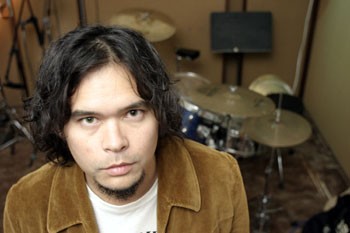
Monsters of Rock: Roger Tschann has been courted by L.A. music execs and may yet move to where the money is. But for now, Grizzly is his home.

Behind the Music

Beyond the doors of Roger Tschann’s Grizzly Studios, legends are made

By Sara Bir

You hear stories. Oh, you hear stories: plates of petrified spaghetti in the sink; crusty punk rockers in gorilla suits with bottles of Jim Beam, standing in the driveway heckling passers-by; shock-rock bands smearing feces (or something like it) all over the studio walls.

Bands on speed. Bands with crazy people on speed. Bands that aren’t even old enough to drive yet and have to have their moms drop them off at the studio, where they get all jacked up on junk food and soda. Bands that sit in front of a television playing fat-fetish porn as the studio is readied . . .

So the first thing you notice about Grizzly Studios–the actual, real life studio, not the one of legend–is that it’s really not that bad. Where once there was a lot full of weeds there is now a brand-new deck, and the studio itself is clear of McDonald’s wrappers and used condoms and empty beer cans–all the flotsam typically associated with rock bands gone wild. The sofa’s pretty beat up, and recording equipment is strewn about, though not wildly. “The reason these cables are not put away,” Roger Tschann says, gesturing toward a few piles of recording equipment, “is because we use them.”

Maybe Grizzly Studios used to be that bad. As it is now, the bathroom looks in better shape than most public restrooms found in fast-food joints, even though it has no sink. But you know how stories are. They gain momentum upon each retelling, and any place as storied as Grizzly is bound to be the victim of wild exaggeration for dramatic effect.

Or maybe not. Some of these stories are true, and others may be slightly less true. But they’re all good ones.

Someday someone could write a book about Sonoma County’s underground music scene. It would make a great read, but not too many people would care, save the ones from the bands and maybe their moms and girlfriends or boyfriends. After a while, you learn that everyone in the scene is in some kind of band. It’s like one huge band with 1,000 different side projects–one big, happy/miserable incestuous family. Some people you know by name; others, just by sight, and you will never know their names, just their faces and they way they lurk in corners and nod their heads to the music.

Probably half of that book would take place at Petaluma’s Grizzly Studios, where Roger Tschann has been recording bands since 1993 or so. Sometimes he’s credited as producer, sometimes he’s credited as engineer, and sometimes he’s not credited at all. What started in his mom’s garage moved to grander digs where partyers have puked, legends have been created, and about a million bands have recorded. Most of them are locals, but some come from Santa Cruz, Oakland, and L.A. One band even drove all the way from New Jersey to record.

What makes Grizzly great is also what makes it not so great. “Grizzly is very comfortable,” says Jon Fee, bass player for the Rum Diary, who have recorded an EP and two albums there since 1999. “Which is wonderful, but it can also become a band’s worst enemy when it’s time to work.”

Ah, yes. Fun, comfort. Translated into rock-musician terms, that means partying. And party the musicians have. The studio itself looks like it’s seen some rock. “You can’t have on the big, bright lights. You gotta have these,” Tschann says, flipping on a set of red and blue track lights that cast a seedy glow. “You close the door, you don’t know whether it’s day or night outside. You’re in your own world in here.”

It’s difficult to put a finger on exactly which world that is–small-time rock stardom? Fledgling greatness? The sordid lair of rock incarnate, going on nonstop right under our community’s nose?

“Having a career like this encourages you to have a certain rock ‘n’ roll lifestyle,” confesses Tschann in his usual dry yet dramatic delivery, at turns self-deprecating and self-glorifying. He has longish, dark, unkempt hair; and has sported variations of a Fu Manchu/goatee arrangement for years. “It’s not the jet-set rock ‘n’ roll lifestyle–people come here and they’re all rock ‘n’ rollers. I’ve curbed my rock ‘n’ roll lifestyle a lot, and you will see that reflected in the organization and tidiness of the place. There used to be a lot more rock ‘n’ roll, let me tell you.”

This coming from a man who uses the tag line “Smells like ass” in his studio’s advertisements. But he’s grown up since then. And he’s put some stuff away, most of it in a narrow storage room full of junk. “I’m kind of a pack rat. I have a hard time throwing things away,” explains Tschann as he pulls out a flat piece of plastic that’s covered in spray paint. “This is one of the stencils they used to make the promo packs for Little Tin Frog’s press kit. We’re talking 1996.”

It’s precisely such junk–plus a library of recordings by hundreds of bands that have come, gone, and come again–that makes Tschann an archivist of North Bay music by default. “Pretty much every band that ever existed in the North Bay,” Tschann says, pointing to a shelf crammed with tapes, “almost any band–they’re up there.”

Scanning their labels, you can receive a crash-course in North Bay music of the past decade or so: SFB, Meriwether, Skitzo, the Tonkas, Shut Up Donny, Cannonball, the Wunder Years, Farewell to Steam.

Those are all older recordings, though. As for the new stuff, it just keeps on coming. “Yesterday,” Tschann says, flipping through a legal pad that makes up his recording schedule, “Go Time was here–California ska, kind of Sublime-ish.” Also recently at Grizzly: Sorry about the Fire, Enslavior, Traction, and some metal band called Crucial Torque.

So that’s ska, emo, and metal. “There’s definitely trends in music, and that’s reflected from people who come in here,” says Tschann. “It affects me, too; I get into whatever everybody else is into. A lot of the bands that come to me are on the heavier side–maybe punk, metal. Most of the time, I record rock groups or live acoustic kind of things. It runs the gamut from bluegrass to bands like Inkwell, heavy pop stuff.”

Grizzly’s bread and butter are local bands, who come to the studio for dependable recording that’s within their budget. “There’s such a need for what he does. There’s a lot of recording studios around the county, but I wouldn’t really want to go to any one of them,” says Gabe Meline, whose band, Santiago, recorded an album at Grizzly this summer. Meline works at the Last Record Store in Santa Rosa and has been in many North Bay bands over the years (including, for a few months, a Bruce Springsteen cover band with Tschann). “It’s incredibly affordable, the sound quality is magnificent. Roger hangs out at shows; you can get drunk at a party with him. He’s a good person.”

“Grizzly is basically the Honda Accord of studios,” says the Rum Diary’s Fee. “It ain’t a BMW and it ain’t a Pinto. What makes it great is the finished recording product will always provide you with an honest description of the band. Roger will never make you sound better than you are, and he’ll never make you sound worse.”

Not everyone would agree, though. Some maintain that crappy bands with crappy equipment can go to Grizzly and come out with a decent-sounding recording, because Tschann will do what he can to make them sound good. Whether that’s a good thing or not is up to the listener.

Sometimes bands–particularly bands from farther away–will camp out at Grizzly for the duration of their recording. “It’s kind of fun. I like doing albums that way,” Tschann says. “It’s almost like a vacation for them, and it’s cool because we’ll barbecue and drink beer and hang out and record an album–like going to camp or something.”

Camp Grizzly is typically what spawns the best stories–and the most trash. “If I had the gumption to bring my recycling in, I’d be a wealthy man.” Tschann theorizes. “Every week there’s a trash can full of beer bottles, because every week four or five bands come through.”

A few months ago, Los Dryheavers came up from Watsonville with an entire library of wrestling videos to keep them entertained while recording their new album. That’s the tamer side of Grizzly. There’s a story involving closed-circuit video cameras and the unwitting participants of a sexual encounter who got spied on. There’s a story about a band who smoked crack. Or the band who dressed up like the Village People . . .

And then there’s Casey, who Tschann insists is “the future of rock ‘n’ roll.” Casey (Tschann says he doesn’t remember his last name) was a not-quite-all-there guy with the singing voice of Kermit the Frog, who played guitar and wrote strange little songs prodigiously. He’d hire a session drummer, book studio time at Grizzly, and record an album. Not as crazy as Wesley Willis, Casey was as serious. Sample lyric: “Minerals in my gray teeth / Minerals in my gray teeth . . .” When Casey moved to Portland, Grizzly lost its most unique client.

Tschann grew up in Petaluma, listening to “everything from glam metal to death metal to punk rock to shoegazer stuff.” He used to play guitar in various bands, and when he convinced some friends of his to chip in to buy an ADAT (a recording device about the size of a VCR), the recording bug bit.

Tschann began acquiring equipment and set it all up in his mom’s garage–“a bunch of rinky-dink microphones and stuff,” he says. “Sure enough, it didn’t sound like a record, just some rinky-dink studio. But it didn’t sound that much worse than what all of my friends were getting out of going to more legit studios. And I was doing it super cheap. I got more and more into it, and eventually it became this obsession.”

Figuring he could make a go at doing this for a living, Tschann quit his job at the T-shirt silk-screening place where he worked and put all of the money he made into buying more gear. The first band he recorded was called Lungbutter.

“I’m lucky that my mom let me do it in her garage for a few years. It was cool of her. She’d had just about enough. But I bet she kind of misses it now. Tattooed skinhead kids using the bathroom–‘Hi, Mrs. Tschann.'”

In 1997, Tschann moved from his mom’s garage to the “Ranch,” as it’s called, a house in an unassuming east Petaluma neighborhood. Tschann gutted it and converted it into what advertisements for Grizzly claim, perhaps only half-jokingly, is “quite simply the best recording facility in the whole wide world.”

At the time bassist Josh Staples and his then-girlfriend (and presently wife and bandmate in the New Trust) Sara Sanger rented out the house next door to Grizzly. In the early ’90s they started Flying Harold Records, which eventually put out albums by locals Cropduster, Adam Theis Ensemble, the Conspiracy, and others. Roger had become a partner in the label in 1994 with a release by Eric Lindell and the Reds.

Also launched at the house not long afterwards was Section M, a zine covering underground music in the North Bay with an irreverent but ultimately charming tone. It was a bit of a golden age for music up here. Venues were plentiful; bands like the Conspiracy, Edaline, and Cropduster developed major local followings; and idealism ran high.

Later that same year, Flying Harold, proving to be too time-consuming for its partners to support and stay sane (Roger often spent 60-plus hours working in the studio, Staples’ band was frequently gone on tour, and Sanger was a full-time student with a full-time job), ceased to be. In 2001, the all-ages Inn of the Beginning, which hosted many local and touring bands in a midsized, hospitable venue, closed its doors. Most recently, Section M, in want of manpower and funding it never had in the first place, went on hiatus. These events all went down over an extended period, but they’ve been somewhat indicative of how diffused the music scene has become in the North Bay.

“Santa Rosa’s a provincial town, and people involved in the music scene in Santa Rosa are in love with the idea that none of the really remarkable bands from here are going to go anywhere,” says Meline “And that’s unfortunate. There’s a sort of nihilism that pervades us all, a romanticism of failure, and I think that actually affects the fact that Roger hasn’t had a big hit.”

Tschann himself is in a band. Tschann’s alter ego (“Pedactor”) plays drums in Aphrodisiax, a full-on assault of ’80s metal, sort of on the Guns N’ Roses tip, with songs about evil women and drinking too much. Scott “Scotty Steele” Morris–formerly of the Invalids, currently an engineer at Grizzly–does the vocals. Aphrodisiax don’t play too many shows, but their CD sounds really good. Go figure.

A few years ago, an A&R guy from Virgin called Tschann. He had noticed some very nice-sounding records sent his way, and they were all recorded at a Grizzly Studios. Then someone from Capitol called. The big-time music industry came a-courting. “For a while there, I was talking to people from the L.A. world, and they were all saying that I should move to L.A. I’ve weighed my options, and I’m still thinking about maybe doing that at some point. But I like being up here. I like that I have some history here. Plus, I don’t like L.A. that much. Maybe I would like it if I tried it out for a while, but it doesn’t appeal to me very much right now.”

In any case, Tschann isn’t as content to sit in his pink bathrobe recording bands in a room full of empty beer cans as he used to be. Grizzly studios is growing up, sort of. “Back in the day, I’d sit there and hold the bands’ hands through the whole process a lot more than I do now.” he says. “I was often not credited as producing, but I never really cared. I just wanted to make some cool records. But to get on that industry track–it’s a lot more of a different style of operating. I know I need to make some sort of next step, because I’ve been cruising along like this for a while. And maybe,” he trails off, “the next step is moving to L.A. . . .”

And it’s true. You get older, restless, ponderous about what else in the world there is for you to do and where you could be doing it. But Grizzly Studios is here now, and as long as it is, both the 16-year-old next door who just learned to play bass last year and the slightly balding mandolin virtuoso know where they can leave a record of their art for all posterity. And for hella cheap, too.

“Roger once told me his studio was the cheapest whore in town,” says Fee. “I wouldn’t know where to start with naming every single band or artist that has recorded at his Grizzly–he’s pretty much nailed us all! And to think he’s supposed to be the whore in this equation? Go figure.”

“I just like music,” Tschann says. “Music’s cool. Almost everyone listens to music, and I think it helps to shape people’s identity. It certainly has shaped my identity. If I wasn’t doing this, I don’t know what kind of stupid person I’d be. I like thinking of myself as some sort of maverick studio dude.”

A Grizzly Sampler

Over the past seven years, some of the best and brightest recordings of the North Bay (and beyond) have come from Grizzly Studios. Here’s a crib sheet.

Cropduster, ‘A Strange Sort of Prayer,’ 1998
The swan song of Flying Harold Records. Nearly every person spoken to for this story cites Cropduster’s heartbreaking alt-country masterpiece as their favorite record to come out of Grizzly. Says Gabe Meline: “That record is as if the heavens opened up and the descending angel of all that is good landed in Grizzly Studios.”

Cannonball, ‘Hiphopulation,’ 2001
Trombonist extraordinaire and Sonoma County native Adam Theis plays ringleader to Cannonball’s funky circus of creative rapping and be-bop jazz.

The Pattern, ‘Immediately,’ 2001
Well, that whole ‘garage band revival’ thing didn’t last too long, did it? Perhaps Oakland’s Pattern, who dropped a string of singles and just one album in three short years before disbanding last month, sensed this. But they were a blast of a band, and on Immediately they distilled all of the energy from their terse, loud, and raunchy live sets into a six-song EP with hooks, sneers, and leers aplenty.

Sin in Space, ‘Asteroid Band,’ 2001
Santa Cruz’s Sin in Space have sadly imploded (too much rock ‘n’ roll lifestyle), but they leave behind Asteroid Band, whose crystalline simplicity and upbeat aggressiveness call to mind Trompe le Monde-era Pixies in all of the best ways. The recording is clear as a bell. No tuneless emo-esque singing or messy fusion of 50 underground music styles here, and thank God. You play this CD and you know what you get.

Skitzo, ‘Got Sick?’ 2000
Decades will pass and civilizations will fall, but Sonoma County will always have Skitzo. This album’s cover features a photo of lead puker Lance Ozanix’s face imposed upon a woman’s genitalia, so it looks like her–well, her you know–is puking. Metal, metal, metal, sick and addictive.

From the November 13-19, 2003 issue of the North Bay Bohemian.

© Metro Publishing Inc.

Seaweed Cafe

0

Photograph by Michael Amsler

Seaside Sanctuary: Co-owners Melinda Montanye and Jackie Martine have designed the Seaweed Cafe to be a comfortable, sophisticated, yet unpretentious West County destination.

Savoring Seaweed

The Seaweed Cafe offers guests the royal treatment

By Davina Baum

The New York Times‘ Sunday Styles section this past weekend featured an entertaining story about the business of restaurant reviews in Britain. It seems that the idea of anonymity is thrown out the kitchen window altogether. Reviewers are widely known, they take sides, and they’re damn nasty. The major reviewers are celebrities and are treated as such–under duress, of course, since the restaurants are at their mercy; what they write in the national papers can make or break a business.

Though they might disagree, as a whole, American restaurants therefore have it easy in a land where reviewers remain anonymous (in any principled media outlet): Treat everyone like a queen or king, serve them your very best, and word of mouth and a review here and there will reflect that.

This, it seems, might be the unspoken philosophy of Bodega Bay’s Seaweed Cafe. Tucked into a little strip between Highway 1 and the marina, between a tackle shop and a gallery (convenient if the need for pile worms or blown glass arises), the warm, small space–with its yellow walls hung with bright watercolors–seats maybe 30 people. The tables, set rather tightly with miniature pepper plants, run the length of the restaurant, facing the galley kitchen. Space is at a premium, but the staff manage to dance around each other rather gracefully.

Four of us stepped into this comforting atmosphere on a damp Saturday night and were greeted kindly. I must admit that our companions were, by chance, neighbors with the chef. But by the looks of happy patrons (and tables are close enough to peer onto their plates and chat amicably), any special treatment was shared equally.

The menu features a four-course prix fixe menu ($48) as well as tantalizing à la carte selections. The wines are entirely culled from west Sonoma County–a great selection. About five are offered by the glass, written on a chalk board. We started with a bottle of the Davis Bynum 1999 Russian River Valley Merlot ($37).

One of our companions got the prix fixe menu, while the rest of us chose from the à la carte menu. Though this caused some problems in the pacing (the four courses of the prix fixe struggling to jibe with the three courses of the à la carte diners), it was the best way to sample from across the menu.

Of the starters, the smoked sturgeon on a potato pillow ($12) was almost a meal in itself. Three meaty, pale slices of sturgeon were draped seductively over a rather ample potato cake, which was topped with generous spoonfuls of blackest-night squid-ink roe and a pale-green wasabi roe. Bites of the mellow, smoked fish with the bright, salty roe and creamy potato were swoony-good. Seaweed salad and pickled cucumbers and daikon completed the plate–a riot of sea delights.

The rabbit terrine ($8) was beautifully herbed and gamy. The garden greens ($9) were bathed lightly in a citrusy vinaigrette and served with a generous slab of Point Reyes blue cheese–though some grapes slipped and slid around the plate, eluding the fork.

Finishing off the Bynum, we moved on to the Unti 2001 Dry Creek Valley Syrah ($24). The entrées continued to impress. Roasted duck Magret ($27)–perfectly medium rare–was served with grilled radicchio, risotto-style rice, turnips, chestnuts, and rich chanterelle and morel mushrooms.

Baked butter beans with duck sausage and clams ($18.95), which our server pointed to as one of Seaweed Cafe’s specialties, was served in a casserole dish, hot out of the oven, where the tomatoey broth had been given a chance to mingle with the small, meaty clams, the tangy sausage, and the creamy beans.

The only misstep of the evening was the glazed sturgeon roasted on alder wood ($23). The slightly underdone fish was meaty, moist, and delicious, but the strong flavor of the coriander seed crust overwhelmed the fish and had to be scraped off. The quinoa cake it sat on was bland and the accompanying greens too bitter.

(A brief aside to talk about the bathroom. A small tin atop the toilet holds tampons, a minor touch that may not mean much to half the population but signifies a departure from typical restaurants. The local maps on the walls in the bathroom may extend your stay there.)

The prix fixe menu started with a trio of Hog Island sweetwater oysters, dressed in red and green roe (flavored with wasabi and daikon). The sweet little bivalves luxuriated in their juices, providing bites of salty warmth. They were followed by braised beef cheeks (the menu also offers a choice of crab Voltaire or a potato tortilla and roasted tomatoes with stuffed cherry peppers), tender chunks of meat served in a casserole with turnips, chestnuts, and carrots–a perfect winter dish. The Joe and Mary Matos’ St. George mini fondue arrived with four points of toast, too few to lap up the delicious, sharp, and very runny raw cow’s milk cheese.

The prix fixe ended with a persimmon pudding, a seasonal, creamy delight topped with a buttermilk cream. This was the best of the desserts. The Meyer lemon tart ($7) and Victoria chocolate tart ($8) each sat atop a tough crust, both fillings suffering a gluey demise. The dessert wine list could be more extensive. The only choices are an Eric Ross 1999 port ($4.50) and the Iron Horse 1997 classic brut ($38). The West County wineries make some wonderful late harvest wines that would fill in the gaping hole there. Espresso–served in votive candleholders–and large mugs of coffee ended our meal.

Throughout, our server was charming and helpful, although the wait for our first course was a little long and silverware was not readily replaced between courses.

The Seaweed also serves breakfast and lunch daily except Tuesday and Wednesday, and brunch on weekends. Their menu for each meal is extensive. The weekday breakfast, which includes things like French toast with poached fruits and fried trout with bacon and spaghetti squash, makes one dream of endless slow mornings waiting for the fog to burn off.

The focus on local, seasonal foods is trendy and familiar, but Seaweed Cafe has no pretense whatsoever; in fact, its casual name belies the sophistication coming from the kitchen. Its intentions have nothing to do with trends and everything to do with quality and taste, and their treatment of guests allows everyone a touch of royalty.

Breakfast and lunch, 8:30am-2:30pm, Thursday-Monday; dinner, 5:30-9:30pm, Friday-Sunday. 1580 Eastshore Road, Bodega. Call for reservations. 707.875.2700.

From the November 13-19, 2003 issue of the North Bay Bohemian.

© Metro Publishing Inc.
Loading Zone

0

Photograph by Katrina Van Winkle

Arts and Craft: The cast of ‘Dinner with Friends’: at top, David Lear; middle, from left: Jan Freifeld, Cynthia Abrams, Clark Miller, and Al Liner; bottom: Christina O’Reilly and Corisa Aaronson.

In the Zone

In Loading Zone, actors are doin’ it for themselves

By Davina Baum

Corisa Aaronson is sitting in one corner of a small room in the Lincoln Arts Center, stretching her limbs and emitting deep, yogalike ha’s. Clark Miller is pacing about the room, looking slightly worried. David Lear–wiry and monklike in a skullcap–is tasked, as director, with getting his actors motivated this evening. He has Miller and another actor, Jan Freifeld, engage in a warmup exercise that involves them trading barbs.

The first run is stilted, awkward. Lear stops them, pushing them to get into character. The second run is more naturalistic; the two are riffing off the characters they are playing in the Donald Margulies play Dinner with Friends, taking digs at each other about their relationships with their wives. It’s clear they know their alter egos pretty deeply.

Next, Aaronson and Cynthia Abrams perform the exercise. Lear is clearly happy with the results, and he gets Aaronson and Miller started on Scene 2, Act I, in which Miller, playing Tom, surprises his wife, Beth (played by Aaronson), at home after her return from a dinner party with their best friends. Tom realizes that Beth has told their friends about their breakup, something he had wanted them to do together.

The actors work and rework their lines, with Lear stopping them, working through the emotions, studying their gestures, their timing, their voices. After two hours, they’ve made it through about half the scene.

As Al Liner, the show’s stage manager, puts it: “There is no end result; it’s all about the process.”

Loading Zone is Corisa Aaronson, Cynthia Abrams, Christina O’Reilly, David Lear, and Al Liner. Jan Freifeld and Clark Miller are joining the group for this production. The group emerged from Aaronson, Lear, and Liner working together at Studio Be, Lennie Dean’s now-defunct theatrical studio and acting school. The impulse to perfect their craft has kept the group together almost three years, workshopping two days a week. The performance of Dinner with Friends–running Nov. 7 through Dec. 13–is presented almost as a side thought.

“About a year ago,” Lear says, sitting with Aaronson, O’Reilly, Liner, and me at Wolf’s Coffee in downtown Santa Rosa, “Corisa came in with Dinner with Friends, and I thought that it was a great piece to work on in the shop. . . . We worked on it off and on for a year and one night Al said we should do this [for the public]. It’s not like we took this play on to present it to the public, not at all; that’s not the focus. It emerged out of our work with it.”

The players are so intensely involved in working their craft, it seems to come as a surprise to them that an audience may have an interest in looking in. But, as O’Reilly notes, “Performing is craft also, because you don’t know what you’ve done or what you’ve got until you perform. It’s a chance to take all the work that we’ve done and put it in front of an audience and see how deep it goes and what the effect is.”

A smart audience will want to look in on this craftcentric group. In this rehearsal–a full month before the play goes up–the actors immediately draw their audience (me, as well as Liner, Freifeld, Abrams, and O’Reilly, sitting on the side) in. Their characters, Tom and Beth, are truly alive–emotional beings, separate from Aaronson and Miller’s real lives.

As the couple fight, Lear suggests that they pick up the cadence. As the fight crescendos and they’re nailing it, Liner is sitting on the sidelines, pumping his fist, and Lear is hovering over the actors. They are transcending their lines; they are really speaking to each other.

This depth of character comes in part from the luxury of time, according to the members. Instead of the typical market-driven theater group, which has a season and a production calendar, Loading Zone has the freedom to do what it wants, when it wants.

“I don’t see our group having an outcome,” asserts Lear, who seems to have been labeled the highly respected grumpy iconoclast of the group. “Loading Zone is a gymnasium where we work out our craft, hone it, and try on new techniques, combine them, and by combining them, we come out with something that is exciting, serious, that makes us nervous.”

Liner–who acts as the goofy, personable foil to Lear’s gravitas–adds that the play went through many experimental stages; originally he and Lear were going to each do both male parts. “The whole thing was, ‘Let’s do this and practice our craft.’ It’s never been about, ‘Let’s try and pull in an audience.’ We’re doing it for ourselves.”

Dinner with Friends is not an obscure, arty play; it’s entirely accessible. It’s about you, it’s about your friends and your relationships–how they fall apart, how they stick together. It’s even been made into a film, starring Dennis Quaid and Andie MacDowell. In choosing a mainstream play to mount, Loading Zone wasn’t trying to make any statements; it was “right for [them] at the time,” as Lear says, “because of some of the work we were doing in technique. It dealt with the aspect of human nature that we were actually working on. . . . The more we worked on it, the deeper we went.

“We telescoped further and further in, we started freeforming the things we were finding out about it, and then we go back to the written word. It might be mainstream, but it depends what people do with it that makes it different and takes it above mainstream pop stuff.”

The quintet, who all have various full-time or part-time day jobs, have worked elsewhere in the county’s theater scene–Aaronson at Cinnabar and Liner and Lear at Actors Theatre. Their impulse with Loading Zone comes largely from the need to break free from restrictions–artistic, market, or just personal.

“That’s why I’m a part of Loading Zone,” says Lear, “because it offers me the opportunity to do the kind of work I want to do, the kind of work that wouldn’t necessarily be acceptable in other theaters in the county. This is where I can try out my ideas and see if they work or not.” Their ideas run the gamut, and the group casts a wide net in their theatrical methods.

With the time the group allows themselves, and their commitment to craft, it behooves Loading Zone to explore all sides of the characters, using different techniques. Jerzy Grotowski is a favorite. The Polish director trained actors to focus away from themselves and used very active movement. The arrival of Christina O’Reilly into the Loading Zone group brought the inclusion of “authentic movement”–a dance technique, really, “where you let yourself go” says Lear. The combination of these methods and others allowed for further exploration of the characters.

The members are careful not to disparage other local theater companies, but they stress that Loading Zone is fundamentally different. Liner notes that “[in] a lot of other theater companies, because of the short period of time, you have just enough time to learn your lines and go stand where you have to stand. But if you really are going to connect as a human being and be real, I have to hear what you’re saying. Not only the words, but what you mean. So we are really studying all that stuff.”

Says O’Reilly, “There’s an embodiment, there’s a dimensionality that happens in the characters. . . . You can go very deep into the characters because it’s taken all that time to integrate fully into each person, it’s not just something that’s a cloak.”

Liner came into Loading Zone with a very inside-out method of acting, and he says that working through all the different methods has made him a better actor. In rehearsal, Lear stops the actors often, forcing them to verbalize how they, as their characters, are feeling at that moment, and how they should be physicalizing their emotions.

The group isn’t out to best all the other theater groups in the area; they don’t see themselves as competitors. As each member often stresses, they are there to hone their craft and do their best. Each comes to Loading Zone with different goals beyond craft. Liner, for example, is more interested in film than theater. O’Reilly is writing plays. “The outcome, though, for all of us together is delving into our crafts,” says Liner. “That’s the unifying factor. How that comes to fruition for each of us might be different, but we all still go headfirst into our craft.”

The Loading Zone production of ‘Dinner with Friends’ runs Nov. 7 through Dec. 13, Thursday-Saturday, at 8pm, and Sun, Nov. 30, at 2pm. Lincoln Arts Center, Studio 208, 709 Davis St., Santa Rosa. $15-$18. 707.765.4843.

From the November 6-12, 2003 issue of the North Bay Bohemian.

© Metro Publishing Inc.

Johnny Cash

The 'Unearthed' box set'Johnny Cash: Live Recordings from the Louisiana Hayride''Livin', Lovin', Losin': Songs of the Louvin Brothers'Walk The Line: The dearly departed Johnny Cash is now getting well-deserved tribute after tribute. Cash and CarryNew CDs spotlight Johnny Cash's extraordinary careerBy Greg CahillIn March 1998, shortly after Johnny Cash won the 1998 Grammy award for Best Country Album...

Bidets

So Fresh, So Clean: The Bidematic attaches to the toilet, bathing the user's underside with fresh Sonoma County water.A Bidet Runs through ItHow a simple stream of water can change one man's lifeBy R. V. ScheideLadies and gentlemen, please forgive me, but there's just no polite way to say this: I haven't wiped my ass for more than a...

‘Master and Commander: The Far Side of the World’

Come Sail Your Ship Around Me: 'Master and Commander' re-creates the harrowing world of life on the high seas.Boat ShowHistorian Dean King on Patrick O'Brian and the new film 'Master and Commander' Writer David Templeton takes interesting people to interesting movies in his ongoing quest for the ultimate postfilm conversation. This is not a review; rather, it's a freewheeling,...

Stefano Scodanibbio

Double Duty: Stefano Scodanibbio's work on the double bass had John Cage swooning with superlatives. Bass MotivesStefano Scodanibbio explores the uncharted terrain of the double bassBy Greg CahillStefano Scodanibbio is not a household name, and unless we all learn how to pronounce it, this avant classical composer and innovative double bassist may remain unknown. "Just one thing," Scodanibbio says...

Holiday Detours

Holiday Staple: 'The Nutcracker' gets dusted off and pulled out of the attic again, this year playing all over the North Bay, including Stapleton Ballet's show at the Marin Center.Holiday DetoursTake a trip through the North Bay's marvelous holiday eventsBy R. V. ScheideOver the river and through the woods, to grandmother's house we go. . . . But first,...

Tom Everhart

© (1998-99) U.F.S., Inc. Snoopy by Everhart TMDog Days: Tom Everhart's work shows both an appreciation for and an evolution of Charles Schulz's characters. Shown: 'Nobody Barks in L.A.'Peanuts PaeanTom Everhart treats some familiar characters in new waysBy Charyn PfeufferTom Everhart is frequently mislabeled a "pop artist," making it easy to misunderstand his lively, large-scale paintings riffing off a...

Beeswax and Soya Candles

Burning BrightBeeswax and soya candles are a safe alternative to harmful paraffin candlesBy Bill StrubbeWhile rearranging paintings in her home, Cathy Crystal noticed gray smudges on the wall around the frames. Baffled, she discovered similar gray "ghosting" bordering electrical outlets and air vents. "We don't allow smoking in our house and have a stove exhaust, so it didn't make...

Grizzly Studios

Photograph by Rory McNamaraMonsters of Rock: Roger Tschann has been courted by L.A. music execs and may yet move to where the money is. But for now, Grizzly is his home.Behind the MusicBeyond the doors of Roger Tschann's Grizzly Studios, legends are madeBy Sara BirYou hear stories. Oh, you hear stories: plates of petrified spaghetti in the sink; crusty...

Seaweed Cafe

Photograph by Michael AmslerSeaside Sanctuary: Co-owners Melinda Montanye and Jackie Martine have designed the Seaweed Cafe to be a comfortable, sophisticated, yet unpretentious West County destination. Savoring SeaweedThe Seaweed Cafe offers guests the royal treatmentBy Davina BaumThe New York Times' Sunday Styles section this past weekend featured an entertaining story about the business of restaurant reviews in Britain. It...

Loading Zone

Photograph by Katrina Van WinkleArts and Craft: The cast of 'Dinner with Friends': at top, David Lear; middle, from left: Jan Freifeld, Cynthia Abrams, Clark Miller, and Al Liner; bottom: Christina O'Reilly and Corisa Aaronson.In the ZoneIn Loading Zone, actors are doin' it for themselvesBy Davina BaumCorisa Aaronson is sitting in one corner of a small room in the...
11,084FansLike
4,606FollowersFollow
6,928FollowersFollow