
North Bay Wildlife

0

Photograph by Michael Amsler

Going Native: A visit to one of the North Bay’s wildlife centers offers the opportunity to observe animals and learn about their habitats and habits. Shown: Safari West.

Wild and Wooly

Whether you desire casual observation or hands-on contact, numerous opportunities exist in the North Bay to hang out with the animal world

Just inside the pleasantly noisy courtyard at WildCare in San Rafael–which encompasses a wild animal rehabilitation center and the Terwilliger Nature Education Center–a worker, hose in hand and a pail at her feet, is attempting to feed fish to some of the resident birds in the outdoor bird pond. These once-wild, fish-craving characters include a pair of crotchety pelicans named Fred and Scoma, a quartet of cormorants, and three gulls, all of which have damaged wings and are unable to fly or survive in the great wide open.

A number of freeloading herons and gulls, nonresidents all, are waiting on the rooftops and fence posts for the opportunity to swoop in and snatch a fish from Fred and Scoma and the other not-so-speedy seabirds. These outsiders (you know they don’t belong here if they can actually fly) are kept at bay with judiciously aimed squirts of water from the hose.

All around the courtyard are pens and cages containing other unreleasables, known around here as “animal ambassadors”: Azor the kestrel (missing a wing after being shot with a BB gun), Vlad the turkey vulture, Kali the red-tailed hawk, Aurora the bald eagle, Leonard and Eullalie the ravens, Sage the opossum, and Willow the wood duck. These are the unlucky ones (if being loved and adored and hand-fed fish can be called unlucky), because, though fully recovered and completely free of pain, their injuries have rendered them incapable of feeding or defending themselves the way most of the other patients here, upon their release back into the wild, are able to do.

“We look at them as ambassadors for their species,” says Melanie Piazza, director of animal care for WildCare, which encompasses a multiroom clinic and a large educational classroom. “Thousands of children come through here for our camps and school visits, and hundreds of walk-in adults and families, and they see these beautiful animals they wouldn’t get to see up-close anyplace else. Hopefully, those children will gain an appreciation for these animals, so when they see them in the wild, they won’t be tempted to shoot them or catch them or do anything bad to them.”

That said, for the majority of the wounded and orphaned animals brought in to WildCare, the goal is always to release them again, back to whatever lake, pond, forest, hill, or marshy field they came from. It’s a goal that is successfully met thousands of times a year.

“If they are native and they are wild, they come here,” says Justine MacLean, volunteer manager for WildCare. “We get foxes, bobcats, opossums, songbirds, pelicans, cormorants, raptors, hawks, woodpeckers, squirrels, and bats,” she says, reciting only a fraction of the total, adding, “Actually, we’re due for a bucket of bats coming to us from the Humane Society any minute now.”

As if on cue, the bats–hidden from view in a small carrying container–are hustled in through the front gate, across the courtyard, and into the hospital area,where a team of staff and volunteers are waiting to examine the newcomers. According to MacLean, WildCare is 95 percent volunteer-run and presently operates with the help of around 400 active volunteers, between 70 and 125 of whom work with the animals in the hospital. Many of these are foster-team members, who take home the clinic’s many assorted creatures and give them whatever care is needed until they are ready for release.

With so many sacrificing their sleep time to play host to baby beasts and wounded birds, it’s clear that people are getting something out of this relationship. On WildCare’s volunteer application, candidates are asked why they wish to become a volunteer. According to MacLean, the top answer is “I love animals.”

WildCare is one of many institutions in the North Bay where regular folks are given the opportunity to come into contact with animals they’d normally only see from a distance and would rarely ever get to know personally. Many organizations have been established to preserve, study, rescue, and/or rehabilitate
a wide range of animals, and most of these institutions offer the public special opportunities to meet and greet some of the beautiful beasts.

For those who feel drawn to do more than just look, there are plenty of opportunities for volunteers to take their affinity for animals to a deeper, more mutually rewarding level. The Marine Mammal Center, in the Marin Headlands, rescues and treats injured and orphaned marine animals–seals, sea lions, dolphins, whales, and sea otters–and runs an educational program that brings in over 60,000 school kids a year.

As for other animal-rescue and adoption programs, there are an abundance of such groups in the North Bay, including of course, the Humane Society and other animal shelters, along with independently operated groups such as the Sonoma County Bird Rescue Center, Forgotten Felines, Reptile Rescue, Turtle Rescue, and Sonoma County Wildlife Rescue. In Petaluma, teenagers care for dozens of onsite animals at the Petaluma High School Wildlife Museum (the largest student-run museum in the United States) and work up to their elbows with fish at Casa Grande High School’s on-campus salmon hatchery.

All of these organizations depend on animal-loving sponsors and volunteers. Without exception, the volunteers and regular staff workers claim their hours spent with the animals are fascinating, rejuvenating, joyous, and inspirational–words one might expect to hear from someone describing a spiritual practice.

“The feeling of working with animals–of working for the animals–is incredibly satisfying,” says Susan Holzer, volunteer coordinator of the Santa Rosa Humane Society, which boasts 180 active volunteers. “Our people often say they get more out of their contact with these animals than they put into it. It simply feels good to be around animals.”

“Hey honey, how ya doin’?”

With a few affectionate words of greeting, naturalist Bud Higgins cuts the motor on Safari West’s massive 1952 Dodge power wagon, glances into the back seat to see that his passengers are aware of what’s about to happen, and warmly addresses the very large, very imposing adult ostrich now rising up and trotting over to check us all out.

“Hi honey, what’s up?” Higgins says.

The ostrich, frighteningly tall, pokes her head in among the outstretched hands of the sightseers, nibbling curiously as she works her way from person to person, all around the vehicle.

Being bitten by an ostrich is not so bad as one might think. And there’s something undeniably exciting and wondrous about staring face to face with a creature so alien, so dinosaur-like. At any rate, Higgins informs us, it’s the feet we should be wary of, not the beak. “An ostrich’s feet are built to defend it,” he says. “If it wanted to, an ostrich could disembowel a lion–or you or me–with one good swipe of its talons.”

At Safari West, located on 400 acres in the hills of Santa Rosa, visitors have a rare opportunity to observe animals that would normally not be seen outside their native land of Africa. Roaming the interior portion of the preserve are groups of zebras, elands, Watusi cattle, springboks, Thomson’s gazelles, wildebeests, Cape buffalo, and others. Elsewhere on site, one can make the acquaintance of giraffes, lemurs, cheetahs, warthogs, African crested porcupines, fennecs, and five dozen separate bird species, including the African spoonbill, the sacred ibis, the golden pheasant, and more.

“Safari West is not a zoo,” says Higgins, one of Safari West’s team of naturalists and backcountry tour guides, starting up the truck again and heading deeper into the hills. “We are a living, breathing, working, functioning wildlife preserve,” he says, “with emphasis–and I mean strong emphasis–on the word “preserve.” We work with a lot of endangered species. We also work with a lot of animals that are actually extinct in the wild, and we’re helping to bring their numbers up in North America.”

There is one herd of creatures visitors are not likely to pay attention to on their tour of Safari West: the herd of volunteers. These people work behind the scenes, cutting fish and mice into bite-sized pieces in the bird kitchen, trimming hoofs of giraffes, hauling feed from one end of the preserve to the other, helping deliver babies, and generally assisting the veterinarians in their care of the birds and the beasts.

Safari West–and its nonprofit research and educational organization, Friends of Safari West–is also host to numerous research projects being conducted by students and staff from UC Davis and Sonoma State university. Currently, there is an ongoing study exploring the behavior of the Cape buffalo. To encourage such scientific exploration, Safari West has developed a thriving internship program for high school and college students, giving participants a chance to test-drive a possible career in the veterinary sciences or animal care. Many of Safari West’s older interns and volunteers do make career switches, jumping into animal-related fields after finding something meaningful and powerful during their time among the ring-tailed lemurs and Watusi cattle.

“Being around animals is a special privilege,” says Peter Lang, owner of Safari West, originally started as a private preserve and research facility before Lang opened it up to the public about 10 years ago. It is the only location of its kind to exclusively feature African animals, many of which came to Safari West after time spent in zoos and amusement parks (such as Los Angeles’ long extinct Lion Country Safari drive-through attraction).

“Not many people get to experience that closeness to these kinds of animals,” says Lang. “Some people see them only once in their lifetime. We see these animals every day. We are all really very lucky.”

“It’s very special,” agrees Peter’s wife, Nancy Lang, who served 20 years curating the aviary at the San Francisco Zoo. “We live here, and the thrill of seeing these wild creatures doesn’t ever go away. The passion remains. Every day is different out here. Every day is a challenge.”

The only wild animals one is likely to encounter at Slide Ranch, out on the Marin coast, are the squealing packs of untamed school kids out on a field trip or perhaps the local mountain lion who’s been making off with the ranch’s resident chickens and ducks. Part of the Golden Gate National Park system, the 33-year-old Slide Ranch is, as executive director Ross Herbertson eloquently describes it, “a spectacular location on the edge of the continent, the ocean waves chewing away at the foot of the coastal bluffs, with the animals grazing upon the rolling hillsides.”

The nonprofit educational center is a working farm, sustaining a small team of teachers-in-residence, that fosters a respect for animals, plants, the earth–and the food chain. In so doing, visitors are given the opportunity to work the farm. “Virtually every program participant gets to milk one of the goats, work in the garden, feed the chickens,” says Herbertson.

While a pen full of buff Orpingtons might not seem as glamorous as a dazzle of zebras (“Not a herd,” Bud Higgins will tell you, “a dazzle”), there is no doubt that chickens and goats, when you are given the opportunity to touch them and care for them, can be every bit as exciting and eye-opening.

“Particularly for the children,” says David Haskell, who runs the volunteer program at Slide Ranch. “Some of the power of this place is the connection to what some animals actually do for us. They provide us with food.” Food, according to the Slide Ranch credo, is how all things connect to the earth. “Not just the fowl,” Haskell says, “but the ruminants–the sheep and the goats–which are bred and raised, sheared for their wool, and occasionally slaughtered for food. That’s the cycle of life on a farm.”

What Slide Ranch is all about, according to Haskell, is connecting people to the earth. The ranch does that with its children’s programs, and its energetic volunteer program gives adults the opportunity to spend time on the premises and have some of that connection too.

“That’s very important to us,” says Haskell, who’s been building the volunteer corps since moving from New Zealand to Muir Beach about a year ago. There’s always plenty to do on a ranch. Particularly important to Haskell are the sheep- and goat-breeding programs (talk about close contact), where, for instance, more hands are always needed to transport a ewe that’s in heat to the ram who’s ready to pass on his genes.

In the near future, Haskell hopes to develop a butterfly program. “I’d like to get a group of volunteers interested in planting a butterfly garden,” he says, standing at the edge of the ranch’s magical-looking garden area on the hillside overlooking the ocean. “Perhaps when we know those chrysalis will be pupating and metamorphosing in April or May, maybe we can have a butterfly celebration where we all gather to watch the butterflies emerge from their cocoons. Butterflies are wonderful pollinators.”

Since 1970, 145,000 people have come out to Slide Ranch, which last year alone saw 7,000 visitors walk through the gate. While those numbers can’t be substantially increased–the Golden Gate National Park system has set rigid limits on how many bodies the land can accommodate at a given time–a long-planned, multimillion dollar expansion and “renewal” of Slide Ranch is about to begin, intended to increase the quality of the ranch’s experience and enhance visitors’ sense of connection to animals and the earth.

“That sense of connection is a healing thing,” Haskell says. “When I come out of nature, I feel renewed. That’s what people take away with them after a day out here on the farm with the animals.”

The underlying philosophies that guide and motivate each of these organizations are as varied as the volunteers and workers and caregivers who sacrifice their spare time to experience all of this day-to-day contact with animals. Whether patching up animals to return to the wild, keeping animals in captivity to protect them from extinction and to educate the public, or even celebrating certain animals as food, what these institutions have in common is an appreciation for the importance of the earth’s many birds, bugs, and colorful creatures.

Another thing they hold in common is an awareness that working with animals is not all magic and awe. Sometimes such contact can bring heartbreak and sadness. For one thing, these critters can hurt you. To work with animals, all volunteers must get tetanus shots and, in some cases, are required to have rabies shots as well. Occasionally, though most of these organizations exist to preserve the lives of their animals, tragedy occurs and animals are lost. At WildCare, which deals with so many wounded and orphaned beasts and birds, death is far from uncommon.

Safari West has seen problems, too. In 1995, while the Langs were transporting a number of animals from Southern California to Safari West, two lechwes (a kind of antelope) died–one from dehydration and one after being gored by another animal–and Safari West was subsequently charged and fined $1,500 by the USDA, which oversees the animal care at such facilities.

Though such incidents are rare, and though caregivers make every effort to avoiding injury to themselves, they are part of the experience. “Working with wild animals is a far cry from working with domestic animals, like cows or cats,” says Safari West’s media rep Aphrodite Caserta. “Although they share many medical problems with domestic animals, wild animals also have an entirely different range of diseases and problems. Added to that, they are unpredictable and, well, simply wild.”

She points out that, like all other conscientious live-animal parks, preserves, and caregiving institutions, Safari West has stringent policies and procedures in place to train its people in proper handling techniques. This helps minimize the risk to both the staff and volunteers, and to the animals under their care. As a member of the American Zoo and Aquarium Association, Safari West also provides professional development and training to all onsite staff in order to reduce such occurrences.

“There are good days and bad days,” says Lang. “There is life, but sometimes there is death, and we all take it hard when it happens, but we try to learn from it. This kind of work can be painful–literally. We all get bitten and scratched, dragged and kicked, pecked and stepped on, and sometimes we have to deal with the death of an animal. Still, the victories outshine the difficulties.”

Back at WildCare, Justine MacLean is trying to explain what it is about the animals that draws people to visit or become volunteers. “Most people realize that the only contact wild animals have with humanity is negative for the wild animal,” she says. “What people who come here are trying to do, many times, is to address that in their own lives. They are trying to make compensation for the damage we do by having cars, by cutting down habitats, by wreaking the kind of general destruction that human beings inflict on nature, intentionally or not.

“There is some part of humanity that is lost when you are not in contact with animals,” MacLean continues. Can that lost part be found in coming face to face with an opossum or a red-winged blackbird . . . or a bat? “Absolutely,” she says. “When you are working face to face with a bat, you start to see things that are absolutely amazing. For some people, there’s something in those animals–not just bats, but all animals–that reminds them of what’s human in themselves, while for others it’s just the opposite. They see that there’s absolutely nothing human about these animals.”

While WildCare works to acclimatize its animal ambassadors to the presence of people, the rest of the facility’s clients are deliberately left as untamed as possible. It is not uncommon for a foster caregiver to come rushing in, delighted, and when someone asks what’s up, she’ll reply, “My opossum bit me!”

“That’s a good sign,” says MacLean. “That’s what we like to see. She’s foster-caring an opossum, and it bit her. In other words, it hates her guts. That’s beautiful, because when it comes time for the release and we open that box to set him free, he’s not going to sit around blinking at you; he’s not become so unafraid of humans that he’ll turn around and be caught by someone or hit by a car–he’s going to run. It’s natural for a wild animal to have an aversion to humanity, and we try to do nothing to cure them of that aversion.”

Looking up, Piazza and MacLean see a Humane Society animal-control officer walking in with another closed container. “Oh my God,” they both exclaim, with just a hint of a laugh. “More bats!”

Want to talk to the animals? Volunteer positions are almost always available at the Bay Area’s numerous animal promoting institutions. To learn more about the volunteer program at WildCare in San Rafael, call 415.453.1000, ext. 21, to register for an orientation. Safari West holds volunteer interviews the third Sunday of each month at 4pm. For further information send an e-mail to vo*******@********st.com or call 707.579.2551. To learn more about volunteer opportunities with the Humane Society of Sonoma County, contact Susan Holzer at sh*****@**********ne.org or call 707.542.0882, ext. 218. Slide Ranch at Muir Beach in Marin County has a range of volunteer positions and is open to suggestions for volunteer-force projects at the ranch. Call David Haskell at 415.381.6155 or visit the website at www.slideranch.org.

From the November 27-December 3, 2003 issue of the North Bay Bohemian.
© Metro Publishing Inc.

Geoff Muldaur

0

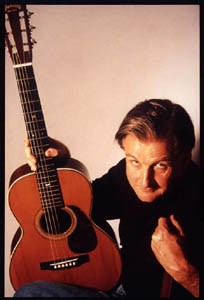
Bix Deluxe: Geoff Muldaur brings back famed Jazz Age pioneer Bix Beiderbecke from the dead.

Bix Lives

New Geoff Muldaur CD fetes a Jazz Age titan

By Greg Cahill

“There are only three white blues singers,” Celtic folk-rocker Richard Thompson once said. “Geoff Muldaur is at least two of them.”

A former North Bay resident (his daughter, singer Jenny Muldaur, is a fixture on the local scene) known for his precise fingerstyle picking, Geoff Muldaur is indeed working in tandem these days, channeling the late Jazz Age composer and cornet player Bix Beiderbecke. Muldaur’s newest album, Private Astronomy: A Vision of the Music of Bix Beiderbecke, brings together a vibrant mix of big names and top session players under the moniker of the Futuristic Ensemble. This remarkable CD features new chamber orchestrations for Beiderbecke’s little-known piano compositions with vocals by Muldaur, and a cast of friends that includes Loudon Wainwright III, Martha Wainwright, and the Harmony Boys.

“This album really has taken over my life for a while,” Muldaur notes. “Twenty years in the making and here it is. Rather hard to believe.”

Beiderbecke’s music has proved a passion for a lot of hot-jazz fans, as evidenced by all those “Bix Lives” bumper stickers. Leon “Bix” Beiderbecke was born into a middle-class, German-immigrant merchant family in the river town of Davenport, Iowa. A prodigious musical talent, he forsook the formalities of classical studies for the Chicago jazz scene, and embarked on a journey that would take him to stardom in New York.

During his short life, Beiderbecke collaborated with Hoagy Carmichael, Bing Crosby, Eddie Lang, Joe Venuti, Paul Whiteman, and many other greats of the Roaring Twenties. He and his colleagues embraced a new modernism in which the adventurous compositions of Ravel, Debussy, and Stravinsky played as large a part in their approach as jazz or blues.

The Prohibition era was not, however, a time of moderation. Beiderbecke’s sensitive soul found solace in bootleg booze. He died in New York in 1931, just 28 years old.

Now Muldaur and the Futuristic Ensemble have introduced Beiderbecke to a new generation. The cost of touring with the whole band has proved prohibitive (Muldaur did assemble an 18-member chamber orchestra for a special show on Oct. 21 at Joe’s Pub in New York), but you’ll have the chance to hear them in action on Dec. 6, when NPR Radio’s popular show A Prairie Home Companion hosts this unique group.

Meanwhile, Muldaur performs a night of American roots music on Saturday, Nov. 29, at the Freight and Salvage Coffee House, 1111 Addison St., Berkeley. He will be accompanied by guitarist Tony Marcus of the Cheap Suit Serenaders, and Fritz Richmond on washtub bass and jug. Showtime is 8pm. Admission is $17.50 advance or $18.50 at the door. 510.548.1761.

Adventures in Clubland

If you knew Peter Case as the plucky new wave rocker with the mod-inflected, L.A. power-pop band the Plimsouls, then you’re really dating yourself. If you know of Case as a contemporary folkie credited with helping launch the whole unplugged craze, then step to the head of the class. If you don’t know Case at all, get with it. His bittersweet, sometimes autobiographical songs describe his battle with the bottle (how else do you explain all those UFO sightings?), his search for spirituality, and his breakup with ex-wife Victoria Williams.

Case also produced one of the best blues tributes ever: his acclaimed 2001 CD Avalon Blues, which feted the late Mississippi John Hurt and brought together Beck, Steve Earle, Gillian Welch, and Lucinda Williams, among others. The highlight of that star-studded outing was Case’s own duet with ex-Blaster Dave Alvin on “Monday Morning Blues.” Catch up to Case on Wednesday, Dec. 3, at 9pm at Sweetwater Saloon, 153 Throckmorton Ave., Mill Valley. Admission is $10. 415.388.2820.

The Radiators–whose Colorado-by-way-of-New-Orleans jams have been listed as a major influence by Phish, the Spin Doctors, Widespread Panic, and a host of others–return for a four-night run Thursday, Dec. 4, through Sunday, Dec. 7, at 19 Broadway in Fairfax. Tickets prices and showtimes vary. Call 415.485.0375 for details.

Speaking of 19 Broadway, music legend Dave Mason will perform two nights at the Fairfax nightspot. Mason, a former bandmate of Steve Winwood in Traffic and a member of Fleetwood Mac from 1993 to 1995, has leant his hot licks to some of the biggest albums in rock history. Those sessions include the Rolling Stones’ Beggar’s Banquet, George Harrison’s All Things Must Pass, and Jimi Hendrix’s Electric Ladyland (you can hear him on “All Along the Watchtower”). A solid set of credentials. Mason plays Friday, Dec. 12, and Saturday, Dec. 13, at 9:30pm. Tickets are $25 advance, $30 day of the show.

From the November 27-December 3, 2003 issue of the North Bay Bohemian.

© Metro Publishing Inc.

Cancer

0

Race for the Cause

A vast new study attempts to get to the bottom of Marin’s high cancer rates

By Joy Lanzendorfer

It’s becoming common knowledge that Marin County has one of the highest breast-cancer rates in the United States. Women who live there are 38 percent more likely to be diagnosed with breast cancer than are women in any place else in the country. Breast-cancer rates in Marin County increased 60 percent from 1991 to 1999.

And it’s not just breast cancer. Marin County has higher incidents of all types of cancer, including an alarmingly high rate of prostrate cancer. Men in Marin County are 25 percent more likely to be diagnosed with prostate cancer than are men in other places in California.

It’s a problem that has puzzled many people. Marin County isn’t what many people think of when they imagine places with high cancer rates, like industrialized cities or the deserted towns of dust and trailers seen in Erin Brockovich.

Instead, Marin is filled with green space, set against the graceful backdrop of Mount Tamalpais. Its real estate is among the most expensive in the nation. Though it’s right beside a major city, all the icky winds from industrial plants and refineries are supposed to blow east, not north. The people who live there are more likely to be affluent, liberal, and educated, and, stereotypically speaking, those are the people who are supposed to be doing everything right when it comes to health–eating organic foods, drinking moderate amounts of wine, exercising, and loving nature (in fact, Bolinas just voted as a town to officially love nature).

So what’s the problem?

A new study by the Marin Cancer Project and UC San Francisco plans to find out.

Earlier this month, some 1,000 volunteers conducted surveys at nearly 100,000 Marin households in an effort to look at possible causes of the high cancer rate. The survey asked a range of questions looking into genetics, lifestyle choices, exposure to toxicity, environmental causes, and other factors.

“We’re looking at anything that distinguishes Marin,” says Geraldine Oliva, director of UCSF Family Health Outcomes Project. “Why Marin? Is it something about Marin the place or is it something about the people who live in Marin? Everybody has their theories, but what makes this different is the magnitude of what we’re trying to do by looking at most possible causes.”

With the survey, researchers are casting a wide net hoping to find a trend. Not only are they looking at a variety of data within Marin County, they hope to compare it to similar data from outside Marin as well. People from all over can help this effort by taking an anonymous version of the survey online at www.marincancerproject.org. This is the first project of this scale to try to address the discrepancy of the cancer rate in Marin with that of the rest of the country.

There are many possible reasons why Marin’s cancer rates are so high. It could be due to lifestyle choices relating to diet, stress, or a number of other factors. It could be the fact that Marin has a high number of biotechnology and computer entrepreneurs, not to mention artists, all of whom work with toxic chemicals. Rumors abound of possible government dumping of radioactive waste, raising questions about what could be in Marin’s water or soil. Researchers are hoping the surveys will give them a direction for future studies.

UC San Francisco and the Marin Cancer Project also released the results of a study comparing Marin County’s demographics with 33 other California counties. Researchers used data from the U.S. Census Bureau and cancer databases to look at cancer rates of specifically chosen counties with both similar and dissimilar demographics, such as income level, home ownership, population growth, age, and length of residence.

But the study found no strong correlation between cancer rates in counties that are either like Marin or completely unlike it. Both similar and dissimilar counties had medium, high, and low cancer rates with no clear pattern.

“We looked at demographics first because it’s easy to write breast-cancer rates off to demographics,” says Judi Shils, director of the Marin Cancer Project. “You can assume it’s because Marin has rich, white women who are not breastfeeding, but that doesn’t seem to be the case. So now we’re looking at other possibilities.”

Breast cancer has been a known problem in Marin County since 1989, but it went on for years before people started searching for answers. Since Shils founded the Marin Cancer Project in 2002, public interest in the issue has skyrocketed.

“I had no idea how big the problem was until I went to a meeting on the subject,” says Shils. “Now the topic has started getting money and additional focus from the government. There has been a groundswell from the community.”

From the November 27-December 3, 2003 issue of the North Bay Bohemian.
© Metro Publishing Inc.

Presents of Mind

0

Presents of Mind

Express your love with gifts that don’t take up space

Way, way back in the early 1970s, when Top 10 radio was a crime against humanity (wait a minute– it’s still a crime against humanity!), there was an especially sappy song that became a nationwide sensation. It even inspired a Coca-Cola commercial. It was Burt Bacharach and Hal David’s “What the World Needs Now,” sung by the 5th Dimension, and right after establishing that what the world needs now is love, sweet love, the musical bridge asserts, “Lord, we don’t need another mountain / There are mountains and hillsides enough to climb / There are oceans and rivers enough to cross, / enough to last till the end of time.”

While this song is still banned in certain civilized countries (talk about a weapon of mass destruction!), and though its intrinsic insipidness has not been diminished with time (nor has its anti-environment message), we’ll say one thing about it: It perfectly sums up the most pressing problem that exists regarding Christmas today.

In short, we don’t need more stuff, but we could use more love.

Lord, we don’t need another knickknack, we have knickknacks and doodads enough to fill the garage and the closets till the end of time. So what does one give the loved one whose cupboards are already full of the whimwhams and trifles of Christmases past?

It’s easy. You express your love by giving a clutterless gift, by which we mean a gift that does not linger about in true physical form. These are gifts of the mind and the heart, but they are gifts without corporeal matter or substance. Such gifts might include things like naming a star after a lucky relative or buying a love one some real estate on the moon, which you could do if you wanted by calling the Ministry of Federal Star Registration in Palm Springs (800.528.STAR) or by visiting the Lunar Embassy at www.lunarembassy.com.

Gift certificates and gift cards are always a good clutterless gift, but unless they are cards from a restaurant or a movie theater, they will probably result in yet more clutter. So to help the holiday shopper who has set out to disseminate less gewgaws, baubles, and bric-a-brac, here are a few suggestions for gifts that cannot and will not spend the year gathering dust in the back of someone’s storage space. Aside from a possible paper certificate or disposable gift packet, these thoughtful gifts communicate your friendship and your love without having the bad taste to actually exist.

This is your clutterless gift guide.

Physical Love

One time-honored method of expressing your love is to nag your family members about the state of their health. Down deep, the phrase “Are you getting enough exercise, dear?” is really just another way of saying, “I care about you, and I don’t want you to suffer a heart attack just yet.” To that end, why not give the, ahem, gift of health by slipping someone a trip to the gym or a date with a personal trainer. Sure, if you wanted to go the whole enchilada, you could buy someone a full-on membership to a health club, but if you are hoping to dole out your love in smaller portions, there are a number of North Bay health institutions that have invented clever ways to help.

Curves for Women, currently the fastest-growing health franchise in America, has over 6,000 locations from coast to coast, with several in the North Bay, including Santa Rosa, Cotati, Rohnert Park, Petaluma, Sebastopol, Napa, Novato, Fairfax, and San Rafael. Serving only women, in small, pleasant, well-organized facilities, Curves for Women uses an extremely gentle fitness approach and has developed schedule-friendly 30-minute workouts for busy women. For the holidays, Curves is offering gift certificates beginning at around $75. Should this appeal to the woman-loving, health-supporting gift giver in you, you can find the nearest Curves in the phone book or on their website at www.curvesinternational.com.

Innovative Fitness is a Canada-based company with a unique approach to fitness, focusing specifically on smart personal training without all the trappings of a big health club. They now have a facility in San Rafael and for the holidays are offering a clever gift idea. Instead of stocking stuffers, you can give a “Sneaker Stuffer,” a gift-certificate program ranging in price and scope from the $49.99 “Pump Up” sneaker stuffer (a 60-minute health and fitness consultation with a 60-minute personal training session), all the way to the $199 “Firm Up” stuffer (a 60-minute health and fitness consultation, a 60-minute health and fitness evaluation, and three 60-minute personal training sessions). To find out more, check the website at www.innovativefitness.com or call Vince Danielson at 415.454.1657.

Jaws of Love

There is no grander expression of love than to suggest the adoption of a baby and the formation of a new kind of family bond. But let’s face it: babies smell, they make a lot of noise, they injure the once-healthy sex lives of their parents, and they should not, as a general rule, be left in the care of others for months or years at a time, at least not until they are old enough for boarding school.

How useful then that we can adopt certain animals at a reasonable fee and enjoy the sense of connection we feel to the animal kingdom, without ever having to have the filthy things in our own homes. There are few animal preserves or animal welfare organizations on this planet that have not established some sort of adoption program as a way of raising money for their important work. There are usually hyphens involved: adopt-a-dolphin, adopt-a-wolf, adopt-a-wombat, adopt-a-bat programs . . . Imagine the thrill you’ll create when you give a loved one his or her very own adopt-a-shark membership. Sharks are dangerous and toothy, and are really quite excellent as gifts, especially for that young lawyer on your Christmas list.

The Fox Shark Research Foundation in Sydney, Australia, offers an especially nice adopt-a-shark program and, unlike other such programs, does not force embarrassing names, like Lumpy and Scarface, on the sharks your money supports. Founded by one-time great white shark victim Rodney Fox, the organization has been working to promote the preservation and scientific understanding of the endangered great white.

Adoption packages range in price and come with different goodies and “privileges.” The standard package runs $100 Australian (about $75 American), and allows a “parent” to choose from a list of identified sharks that have been tagged and now live off the Neptune Islands. Your shark-loving loved one will receive an adoption certificate, a photo of the shark, and a bunch of statistics about shark markings and other scientific stuff, along with regular updates about how the little maneater is doing. To adopt, visit the website at www.sharkfoundation.com.

Backseat Love

Most people live in a place without ever learning much about it, never exploring the nooks and crannies just outside their front door. Golden Gate Jeep Tours in San Francisco (www.goldengatejeepttours.com) has a number of road-riding packages that will take your loved one on private guided tours, in a jeep, to the hidden corners of San Francisco, the Sequoia Redwoods, or off the beaten track at Muir Woods. Packages are pricey but worth it. Not only do riders get the trip through the hills and byways of the North Bay, they get a driver who is a knowledgeable source of historical and geographical information. Tours tend to run around $200 per person, but a gift of a backroad tour is one that will certainly not be forgotten and will definitely not end up in next year’s garage sale.

For the economical gift giver, a company called Extranomical Tours (www.extranomical.com) offers dirt-cheap minivan tours of the wine country ($39 per person), Muir Woods ($19 per person), and even Yosemite ($85 per person). Call Golden Gate Jeep Tours at 415.457.4400 and Extranomical Tours at 866.231.3752.

Universal Love

Let’s just say it straight-up: Your Uncle Charlie really doesn’t need anything new. He’s already got everything. Mom and Dad just want to know that you still think of them from time to time. And your boss does not need or want an assortment of collectible cheeses. Truth is, most of the people on your gift list don’t really need anything.

But there are people on this planet who do need things. There is a family in Burundi that could use a goat. A village in a Haiti, where they are ill from lack of clean drinking water, could use a new well. There are children in dozens of poverty-stricken countries who would like to go to school or be immunized against deadly diseases. There are plenty of people who’d love a few fruit trees, which could feed their families and provide income. Homeless kids in America need some new clothes.

You can give these things through World Vision, an organization that provides lifesaving items, medical supplies, tools, and other necessities to poor people around the globe. Through World Vision’s gift program (www.worldvisiongifts.org), you can send a child to school for a year for just $50, which includes tuition, school supplies, and a uniform. The cool thing is you can do it in your loved one’s name.

For $75 you can buy a goat for that family in Burundi, and your friend will receive a special card describing the gift and its impact. On the World Vision website, there are over a hundred such gifts. Want to give that water well in Uncle Charlie’s name? World Vision will show you how, and your donation will spread the love around a whole lot further than you would by giving anyone another thingamabob. After all, as Burt Bacharach has firmly established, it’s love, sweet love that the world needs now, not another Chia Pet.

Going Giftless

How to gracefully give the gift of nothing

By Sara Bir

Quite some time ago, I quit giving my family Christmas presents. We are just not a fun clan to shop for. Dad always wants computer accessories, but none of us understand exactly what. My brother likes to shop for camping gear nearly as much as he enjoys using it, and my aunt’s condo is too small to house knickknacks. Mom always says, “I just want to see my kids and have world peace.”

So a few Christmases ago, we made it official: no presents. No stress, no shopping, no returns, no exchanges, no wading through novelty shops at the mall. Just pure, unmitigated holiday dee-light. It’s very liberating. But in order for it to work, there are a few basic guidelines.

Get everyone in on it. A giftless Christmas will only work if everyone in your family–not just you, obviously–participates. If there’s a sole dissenter, point out that since no one else is buying presents, he or she will accordingly get none. That’ll get ’em to your side right quick.

Go somewhere cool and new. How many Christmases have you spent holed up in the house, eating too many crackers with port cheese spread and growing testier with every passing minute? There’s a whole world out there to explore, so why not do it on Christmas? Visit people who you know don’t have many guests and are as fed up with boring Christmases as you are. Camp out at a National Park. Go on a day hike (warning: on Christmas day, every family in the world decides to go to Muir Woods). Play exciting and different board games. Pretend you are Jewish and go see the sing-along Fiddler on the Roof at Osher Marin JCC in San Rafael.

Overcompensate with food. No one said you have to save money by not buying gifts. Splurge on a really nice dinner at an elegant restaurant you’ve always wanted to try–better yet, make something at home, something decadent. And don’t forget: Christmas cookies are better than gifts!

Keep the grog flowing. While self-medicating with wines and spirits is, frankly, a depressing method for overcoming holiday woes, it does not mean that keeping the eggnog virgin will make the troops merry. Get some good shit and drink it–it’s Christmas!

Don’t renege on the ungifting. Last year, I saw this Spanish soap that my mother has always liked but never been able to find. So I bought a bar (costing all of $5) and gave it to her. She was scandalized, claiming I had ruptured the purity of our new family tradition. I learned my lesson. Next time I see something for Mom, I’m saving it for her birthday.

Have young kids? It won’t work. The main reason Christmas was ever fun in the first place–outside of Christmas break, animated Christmas specials on television, and the sudden proliferation of sweets–is toys. Piles and piles of new toys. Wait until everyone is grown up to play the ungifting game, just to be fair.

From the November 27-December 3, 2003 issue of the North Bay Bohemian.
© Metro Publishing Inc.

Sassafras

0

Photograph by Michael Amsler

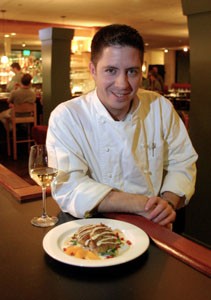
Bring on the Sass: Sassafras executive chef Jack Mitchell, pictured with his artfully plated crab cakes, took over the restaurant this summer.

In From the Cold

Sassafras is a warm respite from bad office-park juju

By Davina Baum

Sassafras begins at a disadvantage. This is for one reason only, and it has nothing to do with the excellent food served within: If one is concerned about one’s soul, avoiding office parks is job one. And driving into the office park on North Dutton Avenue, I feel my soul being sucked away.

Of course, the workers who labor away within the Santa Rosa Business Park probably feel otherwise. They can walk to Sassafras, and this should make them happy. Perhaps a midweek lunch at Sassafras counteracts the daily soul sucking. I hope so. Executive chef Jack Mitchell–he took over from longtime proprietor Michael Hirschberg this summer–seems to be doing his best to mollify the effect of the jarring environs with his revamped menu.

Entering the roomy restaurant, the office-park feeling doesn’t immediately recede–just look out the window and the fluorescent glow of an adjacent office numbs the eyes. Small potted plants in the window are a minor distraction from the sucking of the soul. The Matisse-flavored design in dark reds and greens on the partition screens mirrors the upholstery and seems to have been ordered from an office catalog. But the lighting is warm and the couches in the bar area inviting, and an expertly made negroni ($6)–Campari, gin, and sweet vermouth–soothes the office-park jitters. And it only gets better from there.

Seated at a corner booth, my friend and I take in the menu, which is pleasingly peppered with seafood and seasonal produce selections. A few vegetarian options are available, such as ample salad choices and, from the entrées, a warm vegetable gateau, which is explained to us as a layered production of vegetables topped with cheese. Our server offers to have the kitchen split our starters on two plates, a thoughtful suggestion that avoids forks fighting for that last lettuce leaf.

The Dungeness crab cakes ($12)–first of the season–are creamy with sweet crab meat and beautifully plated with orange wedges and pomegranate seeds. The two plump cakes sit on a bed of fennel slaw, a crisp counter to the cakes. The red oakleaf lettuce salad with toasted pecans, Bartlett pears, and gorgonzola ($6) indeed includes all these ingredients, although the dressing is almost nonexistent.

With our entrées we order wine, but the mini carafes are mixed up by the server or the bartender. The server directs us to figure out which is which–although we’re not here for a tasting exercise (a large table at the front of the house is, actually, conducting a blind tasting). The wines are distinct, luckily. The Jepson Mendocino Viognier ($6) is perfumey with nectarine overtones; the Nalle Riesling ($5) is pleasantly dry.

The grilled half chicken ($17) again showcases the kitchen’s artistic impulses. The deconstructed leg and breast sit in a deep-red cranberry coulis, contrasting against the orange of baked butternut squash chunks. The chicken is juicy, and the flavors sing of autumn goodness.

Pan-seared rainbow trout ($16) sits on top of a field-mushroom hash and is stuffed with bacon, apples, and onions. It’s a deeply comforting dish, the trout cooked to moist perfection and the hash melding with a rich sauce on the side.

Desserts are an indulgent affair. The menu offers a number of dessert wine flights and spiked coffee drinks, if you prefer your after-dinner sugar in liquid and fermented form. We sampled the ice cream sandwich ($6), which arrived poised on a plate criss-crossed with rich caramel sauce and whipped cream. The chocolate cookies, which had been dipped in a delicious bittersweet chocolate, hugged a slab of cinnamon ice cream.

The bread pudding ($6) was moist and light, as bread pudding should be. The heaviness, though, came from the bourbon sauce it was sitting in, which was alcoholic enough to get a buzz going. Our server ceded that in future the chef was going to tweak the sauce a little because of the alcohol content–probably not a dessert for the kids.

On another occasion, I sample the pizzas. They’re good-sized and eminently shareable. Labeling them “flatbread” pizza, though, is misleading. The dough is yeasty and bubbling, more soft than crisp, more American than flatbread Italian. The housemade chorizo ($10) is crumbly, smoky, and delicious, generously spread over the pie with feta and lime zest. The lime gives a welcome citrus punch to the flavor. A more basic tomato pie ($10) is punched up by ample garlic, but it has a touch too much cheese–mozzarella, feta, and chèvre combine into a gooey mess.

Sassafras rises above its undistinguished environs. In the summer, the outdoor patio–overlooking a concrete sea of parking lots–is quite nice. You can close your eyes and pretend that you are somewhere else, or just focus on the plates in front of you, where more pleasant distractions lie.

Lunch, Monday-Friday, 11:30am-5:30pm; dinner daily, from 5:30pm. 1229 North Dutton Ave., Santa Rosa (in the Santa Rosa Business Park). 707.578.7600.

From the November 27-December 3, 2003 issue of the North Bay Bohemian.

© Metro Publishing Inc.

Turkeys

0

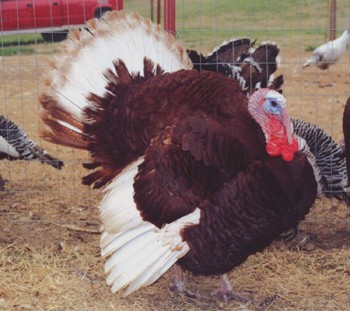
The Proud, The Few, The Turkeys: The bourbon red is a heritage breed turkey that Slow Food is working to preserve.

From Pen to Table

Turkeykind has experienced major changes over the past 50 years

By Sara Bir

Rare. Endangered. Vanishing. Critical. These are not terms commonly associated with turkeys, as 269 million are raised annually in the United States alone. Yet for a handful of breeds–the proud, and, sadly, the few–that is indeed the case. Over the past century, drastic changes in farming, as well as in the American diet, have whittled down to the thousands stocks of turkey breeds such as bourbon red, Narragansett, and American bronze. And the way to save them is by eating them.

That’s the theory Slow Food is pushing. The international group, which promotes the preservation of ever disappearing traditions of eating, cooking, and farming, has launched a campaign to bring so-called heritage turkeys–breeds that represent a tiny fraction of the U.S. market–back to the table. The Healdsburg chapter of the group has been promoting two local purveyors of heritage turkeys: Willie Bird and S&B Farms.

The turkey has indeed had a long, strange journey from its Central American origins (when, 11 million years ago, it diverged from the pheasant) to its most common present-day incarnation. One of the first animals in the Americas to be domesticated, turkeys were so important to the Aztecs that they held two religious festivals a year dedicated to the birds. Spanish explorers brought turkeys back to Europe, whose inhabitants quickly took to the exotic bird.

When the Pilgrims came to the New World, they not only brought over domesticated turkeys, they began cross-breeding them with the native, wild species they saw. The noble fowl’s dignity has since suffered. Changes in 20th-century farming streamlined poultry production and narrowed down the number of breeds raised. Before the ’50s, broad-breasted bronze turkeys were the most common commercial breed. In 1937 a team of researchers discovered methods for artificially inseminating breeding turkeys, which allowed specific traits to be bred into the turkeys raised commercially.

The public’s hunger for lean, mild breast meat led to the broad-breasted white, the Anna Nicole Smith of the poultry world. George Nicholas, founder of the Sonoma-based Nicholas Turkey Breeding Farm, played a major role in the development of the broad-breasted white, which dominates today’s market. (Nicholas, inducted into the Poultry Industry Hall of Fame in 1983, was recognized in 1998 by the Press Democrat as one of the 50 people who shaped Sonoma County). Also known as large whites, broad-breasted whites cannot run, fly, or reproduce on their own. Because they are all white, they have the advantage of not having dark, inky pinfeathers on their carcasses when plucked as turkeys with darker feathers will.

According to the National Turkey Federation, 2002 per capita consumption of turkey in the United States was 17.7 pounds per person; in 1970, that figure was 8.1 pounds per person. Accordingly, U.S. turkey production has more than tripled in that time.

We consume turkey year-round in many forms, the majority of which are designed not to taste like turkey but other things: turkey ham, turkey burgers, turkey bacon, turkey sausage, that slimy turkey luncheon meat. And then November comes around. Butterball, Perdue, Foster Farms. Frozen turkeys, encased in white plastic like misshapen giant alien eggs, sit unceremoniously dumped into frozen food cases by the dozens.

Considering the brining, trussing, stuffing, basting, and carving devoted to the perfect bird–the centerpiece of the Thanksgiving meal–we seem to care very little about its history before that. There’s a discrepancy between the handsome images of full-grown toms strutting with their colorful tails fanned out and the pallid, goose-pimpled carcasses that sit in our refrigerators thawing the few days prior to the big T-day event. Most of us are not even old enough to remember what turkeys tasted like before broad-breasted whites came along.

There are options, though, and this is where the heritage birds come in. Santa Rosa’s Willie Bird, whose free-range turkeys have long had a holiday cult following, raised 200 bourbon reds (once an important commercial bird) for this November, and Sylvia Mavawalla’s S&B Farms raised 36 Narragansetts. Heritage birds are heartier, have firmer flesh, more dark meat, and a more distinct turkey flavor.

At S&B Farms in east Petaluma, the Narragansetts cluck and titter contentedly in a large pen enclosed by black nylon mesh because Narragansetts like to fly. Named for Narragansett Bay in Rhode Island, the birds are the oldest turkey variety in the United States. Fewer than 1,000 of them are alive today. With their salmon-colored feet standing out against their feathers’ speckled black pattern, the Narragansetts have large whites, black Spanish, and standard bronze turkeys to keep them company. The birds get a lot of attention and space, and are raised using what Mavawalla calls “old-time farming methods. We feed them hay–they love grasses and hay.”

Mavawalla has about 50 turkeys in all this year on the farm she and her husband, Bajun, have had since 1979, where they raise geese, rabbits, chickens, pigeons, cattle, sheep, pigs, and goats, in addition to turkeys. This year marks the Mavawallas’ first go with the Narragansetts, though. It hasn’t been very easy so far. The birds can be very sensitive to weather and changes in diet, and Mavawalla lost over half of her Narragansetts when the feed store could not get her regular feed in on time and she had to use a different brand.

Mavawalla dresses each goose and turkey individually. Normally she can do three to four in an hour, but a tricky one can take longer. “What you’re getting here is everything that came out of that bird,” she says. So you know that the heart, neck, liver, and gizzard came from the turkey you bought–unlike, say, a Butterball, whose giblet sack can sometimes disconcertingly contain two hearts and no liver.

S&B Farms’ advertising is all word-of-mouth, though there is a sign at the end of their property that reads “Fresh-Dressed Turkey and Goose.” Mavawalla says her customers come early. She’s now sold-out of Narragansetts, but has other heritage birds still available. “About half of the ones I’ve sold are to my regular customers,” she says. “We have a walk-in clientele, and most of it is immigrants in the Hispanic trades. They’re not into buying something old and dead from the market. They want it fresh–buy it live and take it home and do it themselves. Most of the geese are sold to people with a European-type background, and their tradition is to have a goose for the holidays.”

At S&B Farms, you can’t just waltz in and ask for a 14-pound heritage turkey on the spot, like you can at the grocery store. “The last hatch that I can get is the end of June. Turkeys, at five months, are enormous. So if you want to butcher it so you get a 10- or 15-pounder, you’ve got to do it while they are very young,” explains Mavawalla. “Plus you’re not getting a lot of flavor out of it, and you’ve got to put it in the freezer and keep it for several months. That’s one of the things about the heritage [breeds] having more flavor, because they are older.”

Heritage turkeys don’t come cheap. Both S&B Farms’ and Willie Bird’s heritage birds sell at their dressed weight for $4 per pound. If you’re buying a 20-pound bird, that’s an $80 investment. Compare that to your average Butterball, which will run $1.29 per pound or less.

Mavawalla isn’t sure she’ll raise the more demanding heritage turkeys next year, but Willie Bird (whose bourbon reds were spoken for months ago) will.

Of course, it’s not realistic that all 269 million turkeys raised in 2004 be heritage breeds. In fact, it’s just plain impossible, because heritage breeds were not developed to be raised in the numbers that large whites are. But if you want a bird with more history, care, and attention invested in it, your options are either pay the premium or raise your own. For a special holiday meal, a heritage bird may be worth it. “The only way to really guarantee [that they’ll still be around],” says Mavawalla, “is to make it worthwhile raising them and to start eating them.”

Willie Bird is sold-out of bourbon reds, but you can always get your foot in the door. To be placed on the mailing list for next year’s heritage turkey project, e-mail your name and contact information to tu*****@*********sa.org. To order a turkey or goose from S&B Farms, call Sylvia Mavawalla at 707.763.4793. Learn more about heritage turkeys from Slow Food’s website at slowfoodusa.org.

From the November 20-26, 2003 issue of the North Bay Bohemian.
© Metro Publishing Inc.

‘No. 11 (Blue and White)’

0

Not That Innocent: Alex (Kelly Campbell) and Reid (Brian Mackey) struggle with power and sexuality.

Behind Closed Doors

‘No. 11 (Blue and White)’ depicts a dark side of high school life

By R. V. Scheide

In the foyer of Sonoma State University’s Evert B. Person Theatre, where No. 11 (Blue and White) is now playing, various fliers on the wall provide the cold, hard statistics on rape in the United States. The numbers that grabbed my attention were these: the average age of a rape victim in the United States is about 14; the average age of a perpetrator is slightly over 16.

If those figures can be believed, then clearly there are some things we’re not doing right when it comes to educating teens, male and female, about proper sexual conduct. No. 11 (Blue and White), by up-and-coming playwright Alexandra Cunningham, is a grim, sometimes darkly humorous look at just how far the situation has deteriorated.

“How far will you go to protect the devil you know?” the playbill teases, and in this case the devil is Reid, star of a private East Coast prep school’s lacrosse team and a player in every sense of the word. As his mother (Deah James) informs us, the girls have been knocking on his door since he was in grade school. Now a spoiled, indifferent senior, Reid is one of those guys who’s always gotten what he wanted–with the exception of his first girlfriend, Alex, who broke up with him during his freshman year but remains his best friend and confidante.

Tall, blond, and handsome, Brian Mackey is perfectly cast as the selfish and defiant Reid. Kelly Campbell plays the role of Alex, the ex-girlfriend, who relishes in reminding Reid with flirtatious aplomb that there’s one thing he can’t have.

The drama unfolds against a simple, effective set designed by Elizabeth Langley featuring graffiti-covered walls, some lockers, and a disc jockey who spins the play’s hip-hop soundtrack (compiled by sound designer Brooks Werner) without ever directly entering the action. Movable metal tables serve as useful props for creating, say, the dining room at high school for one scene, a teenager’s bedroom the next.

The 13 members of the Sonoma State Center for Performing Arts student cast frequently pair off and take turns standing and delivering simultaneous, seemingly unrelated monologues in rectangles of light projected on either side of the stage. For instance, as Reid’s mother speaks to the PTA about protecting our kids, a girl explains how she lost her virginity after getting drunk at a party.

The play–directed by Paul Draper–is heavily dependent on rhythmic timing, and when cast and crew hit on all cylinders (which isn’t all the time), the overall look and feel is not unlike Rent as layers of dialogue, sound, and imagery build upon one another in a sort of collage/homage to teenage angst.

When Reid’s current girlfriend, Paige (Jennifer Luker), leaves town days before the season’s final lacrosse game, the coach (Damian Sagastume) advises Reid, “While the cat’s away . . .” First Tammy (Catherine Morse) makes a play for him, but Reid, after shoving her hard against the lockers, says without conviction that he’s determined to be faithful. At a party, he ends up offering Lindsay (Kelly Rose Anderson) a ride home. A shy but attractive wallflower, she’s flattered by the high school star’s attention. On the way home, he rapes her.

The audience never sees the rape, just Lindsay’s disheveled appearance as she tries to explain to her clueless father (Matt Farrell) what happened. Anderson’s gutsy portrayal of the just-raped Lindsay is utterly convincing and is the standout performance of the play. She can’t bring herself to report the crime, even to her own father, and we feel the pain of her dilemma.

Meanwhile, Reid is relishing his power and next sexually assaults Tammy. Tammy fights back and finds the whole school aligned against her, especially Alex, who unflinchingly backs her ex-beau. How far will Alex go to protect the devil she knows? All the way, it turns out.

The most disconcerting aspect of No. 11 (Blue and White) is this blind devotion that Alex and the rest of the in-crowd bestow upon the alleged rapist–even in the face of overwhelming evidence against him. I’m not so sure that’s the way the real world works, but if Cunningham is right, we’re in a lot deeper trouble than I imagined.

‘No. 11 (Blue and White)’ plays Nov. 21 at 8pm and Nov. 23 at 2pm. Sonoma State University, 1801 E. Cotati Ave., Rohnert Park. $12 general; $10 faculty and administration; $8 students and seniors. 707.664.2353.

From the November 20-26, 2003 issue of the North Bay Bohemian.
© Metro Publishing Inc.

Nina Gerber

1

Photograph by Anne Hamersky

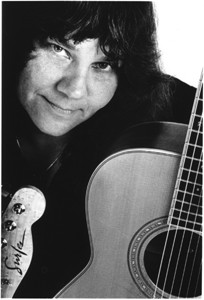
Songs of Humility: Nina Gerber has been described by her admirers as ‘smoky and soulful.’

Just Plain Folk

In venues big or small, Nina Gerber delights

By Jordan Rosenfeld

The very word “folksinger” is humble–a singer for the folks, real folks like you and me for whom music is often a respite and a balm. Depending on the generation in which you became familiar with the term, you might imagine enormous stadiums swaying to Simon and Garfunkel or an intimate setting where the folksinger, in this case, Nina Gerber, is so close you could see her breath on a cold night.

“I like playing small venues. I do a lot of house concerts. I enjoy the smaller more intimate settings for their informal feeling,” says Gerber.

“The thing about folk music is that you don’t really expect to make it big,” she adds. “So as long as I can keep working, playing good music with good people and can make a comfortable living, I’m happy and fortunate. The business of music is the unfortunate part. I don’t like to have to deal with a lot of promoters.”

Gerber did respond to one “promoter,” Barbara Arhon, the Petaluma music teacher who founded and produces the Petaluma Folk Music Series in which Gerber will be performing with singer-songwriter Kathy Kallick on Nov. 22. The series is housed in equally humble quarters, the cozy and inviting atmosphere of the Petaluma Coffee Cafe.

Arhon notes that “the series itself has done very well; almost all concerts have sold out. It’s been a combination of unknown singer-songwriters and very known, like Nina. It draws a nice crowd of people who appreciate music. I ended up at the Coffee Cafe because they are open to new ideas and enrichment of the community. It was like a dare to myself. I thought I could find something, and it just worked out.”

Let it be known that Nina Gerber, who has been playing music most of her life, is no stranger to audiences of as many as 20,000. She played with music phenomenon Kate Wolf for years and even arranged and co-produced some of Wolf’s albums.

“My folks forced me to take band in elementary school in Sebastopol,” says Gerber. “I played clarinet for a couple of years and then switched to French horn. I was really bad at both, and I’m surprised that it didn’t sour me on music completely. But it was good for me to learn about music and the musical language at an early age.

“I don’t remember exactly when I started playing guitar, but I do remember that I was 15 years old the first time I heard Kate Wolf perform in Sebastopol. At that moment, I knew I wanted to be a professional musician, and more importantly, be in Kate’s band. I started taking mandolin lessons with Don Coffin, who was in Kate’s band and married to her. I went to every gig I possibly could attend, borrowing my parents’ car.

“After a couple of years, Kate asked me to fill in for Don for a few gigs, and by 1978, I was working with her full-time. Most definitely, Kate Wolf was the most influential person in my musical life. She moved me so deeply that I decided to become a musician.”

Gerber’s newest album is Sweet Dreams: Lullabies for Guitar. She says of this album, “No matter what age, we can always use a little help to relax and unwind, especially in these crazy times. This recording of acoustic guitar instrumentals is an attempt to help calm and soothe.”

Nina Gerber plays with Kathy Kallick on Nov. 22 at 7:30pm at Petaluma Coffee Cafe, 189 H St., Petaluma. Upcoming performers at the Petaluma Folk Music Concert Series include: SIBL Project Singers ($10), Dec. 6; Steven Seskin ($15), Jan. 31; Brian Joseph ($10), March 27; Dust Bowl Minstrel Singers ($10), April 17; Silk and Steel, and Cindy Kalmenson ($15), May 15. All shows start at 7:30pm at the Petaluma Coffee Cafe. For more information, call Barbara Arhon at 707.781.3272 or visit www.geocities.com/petalumafolk/concerts.

From the November 20-26, 2003 issue of the North Bay Bohemian.

© Metro Publishing Inc.

Sonoma State University

0

Education for Some

Budget constraints force Sonoma State to advance application deadlines

By Joy Lanzendorfer

From the beginning, the mission of the California State University system has been to provide an education to all students who want one. If you complete the basic requirements, like taking the SAT or ACT and passing four years of high school English, there should be a place for you somewhere within the system. It’s a state bargain: a decent education for anyone who wants it for one low, low price.

But thanks to the budget cuts, if students want to take advantage of this deal, they’d better act now and get going on their applications, or the bargain of a lifetime might pass them by.

Sonoma State University, which is part of the CSU system, is limiting the number of students it is accepting for fall 2004. Next year the school can only afford to replace the some 1,300 students graduating in the spring. Normally, SSU adds between 300 and 400 new students a year at a 3 percent to 4 percent growth rate, but this year it is struggling to simply take care of the students already enrolled. Along with most California universities, SSU has had to raise tuition twice in the last two years and is cutting its budget as much as possible.

As part of the process of restricting next year’s incoming class, SSU is moving the fall application deadline to Nov. 30 from its usual mid-December date. Students who apply before that date increase their chances of getting into SSU next year. And in fact, the sooner they get their applications in, the better.

“We are setting up the classes early this year, because we can’t miss our target for next year,” says spokesperson Susan Kashack. “So moving up the deadline will help us to know the numbers.”

The only exception to the deadline is that transfer students can still send in applications after Nov. 30. Sonoma State guarantees it will accept all eligible transfer students, according to Kashack.

Sonoma State is not the only CSU school forced to restrict the number of incoming freshmen. Some schools are so full they can hardly accept new students at all. Others are only restricting certain types of students, such as transfers. These changes come at a time when more students than ever are applying for admission and many people are returning to school because of the economy.

All this, and no one even knows the 2004-2005 budget yet. It’s possible CSU schools may have to raise tuition a third time.

“We don’t know yet what will happen in the fall,” says Clara Potes-Fellow, spokesperson for the CSU system. “But at this point, CSU doesn’t plan to fund enrollment growth. Many schools will only be replacing students who leave and will not be accommodating new students.”

By moving up the application date, SSU is creating a first-come, first-serve scenario, where all eligible students are accepted until the school reaches its quota for next year. Which begs the question: instead of pushing up the application deadline, why not just pick the best students from the bunch or make it a little tougher to get into SSU in the first place?

The reason SSU isn’t doing either of those things, according to Kashack, is that the school wants everyone to have a crack at being educated.

“We accept as many students as we can,” says Kashack. “Part of our mission is that we are here to teach everyone who wants to go to college and is ready. The big difference is that starting in 2004, that may no longer be possible. We have to make sure that the students who are already here are getting taught properly before we can take on more new students.”

But if the budget crisis continues long enough or if SSU continues to grow in popularity, it may have to consider raising the bar for basic entrance requirements, believes Doug Pepe, counselor at El Molino High School.

“So far, SSU has guaranteed admissions and hasn’t raised the bar,” Pepe says. “Other individual CSU campuses have, such as Cal Poly in San Luis Obispo, one of the most competitive campuses to get into. It has a number of requirements beyond the minimum. In the future, as admission gets tighter, SSU might have to do that as well.”

Students are facing a tough year ahead. Not only is there more competition for fewer slots, tuition is much higher than it was just a short time ago. Classes are likely to be crowded and limited, especially for incoming freshmen, and many students will have to take on more debt to pay for it all.

One thing is certain: it’s not a great time to be starting college in California.

From the November 20-26, 2003 issue of the North Bay Bohemian.

© Metro Publishing Inc.

Nurseries

0

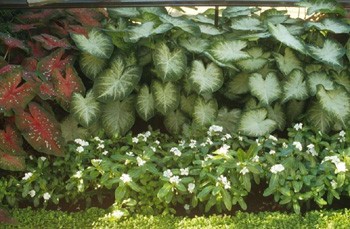
How Does Your Garden Grow?: Plants are the gift that keeps on giving, and local nurseries offer a bit of everything.

Pay Dirt

Growing gifts just keep on giving

By Gretchen Giles

On a leaden fall day, some 18 young ones are loaded onto a truck to go east for the winter. Averaging about 20-feet-high, these delicate youths must leave hardier stock behind as they set off to a life of relative ease, vacationing in the temperate leafy climate of Vacaville until spring. The crane has hoisted, a tarpaulin cover is tucked tenderly around them with rope, and these youngsters head–perhaps woefully, perhaps actually not–out of the Neon Palms’ rural Santa Rosa parking lot.

Retailing palm trees of all sizes and varieties, Neon Palm (3525 Stony Point Road; open Monday-Saturday, 10am-5pm, and Sunday, noon-5pm; 707.585.8100) is just one of the many North Bay nurseries specializing in unique, rare, or just plain different plant stocks. While black thumbs proudly abound, each of us has at least one green thumb lurking somewhere on the holiday list–that person who can actually get an avocado tree to grow out of a pit–who deserves a gift.

With this in mind, we set forth to suss out some of the niche plant shops and grow-grounds around, where unusual living gifts can be bought and green thumbs heartily applied. While such established botanical businesses as Harmony Farm Supply, Bassignani Nursery, and the Sloat Garden Center certainly aren’t to be treated like dirt, we sought here to keep from the general to the particular.

Turning to watch his youthful truckload disappear out the drive, Neon Palms acting manager Mike Hewitt assures that a date palm can grow to be over 200 years old, and that the cost will reflect such hard-earned longevity. But a queen palm, the human-sized type with the pineapple-shaped base and a raft of crazy featherlike leaves springing from it, retails in the $45 to $220 range. And the Guadalupe fan, whose trunk resembles nothing so much as an elephant’s leg topped with swordlike fronds, can be placed under a decorated evergreen for roughly $85 to $250.

In the town of Tomales, almost no plant towers higher than a person at the Mostly Natives Nursery (27235 Hwy. 1, Tomales; open Wednesday-Saturday, 10am-4pm, and Sunday, 11am-4pm; 707.878.2009). Named for what it mostly stocks, Mostly Natives features plants found along the trail and on the hillsides stretching from the Pt. Reyes National Seashore north to the Mendocino Coast. Simply going to this nursery may be one of the best ways to settle all arguments provoked by those plants regularly spotted in life and seemingly never parsed in the guidebooks.

For the extra romantic gift giver, $30 (averaging $4 to $7 per plant) could ably produce an entire sketch of the flora featured on a favorite love-hike. Take Douglas iris, add sticky monkey, plant in new sprigs of coyote bush and blue-eyed grass, and most of the high portion of the Muddy Hollow Trail is suddenly encapsulated, a lack of bunnies notwithstanding.

A trip to Pond and Garden (6225 Stony Pt. Road, Cotati; call for winter hours, 707.792.9141) quickly reveals this nursery to be about much more than the fish. Learning of ecstatic reports by other visitors of the spiritual vibe at his place makes co-owner Scott Wilson laugh gently. And then he begins to point out–as do all niche nursery owners asked–exactly all of the plants that he won’t be selling.

“Oh, I’m keeping this hostage for a while,” Wilson smiles, pointing to a bonsai he trained as a teenager 32 years ago. “I’ll get rid of it some day.” Featuring unique steel sculpture (figures by Cricket Seagull are $500 to $700), Pond and Garden is one of the largest retail outlets in the Bay Area to specialize in water plants and “features,” but also has one-of-a-kind conifers, acrobatic pigeons, free mosquito fish, and a heady array of unusual bromeliads, most of which Wilson, again, won’t sell. “But I’ll sell the cuttings,” he says with a promising grin.

Merilee Maertz, co-owner of California Carnivores (2833 Old Gravenstein Hwy. S., Sebastopol; open Thursday-Sunday, 10am-4pm; 707.824.0433), doesn’t need to rely on cuttings now that tissue-culture technology has made reproducing carnivorous plants so much easier. Ducking into the nursery’s hot room, she pulls back the lid of a pitcher plant’s elongated death-pocket to reveal its two sharp fangs. Later, standing in her propagation area, a collection of perhaps 40 children’s plastic swimming pools filled entirely with water-needy flesh-eating plants, Maertz explains that the fanged pitcher was one of only eight kept in the United States just a few years ago. Now she can produce as many as she needs.

Some carnivorous plants can consume as many as 20 flies a day, though Maertz doesn’t keep them for their pesticidal abilities. Those such as the sun pitcher from Venezuela ($100) feature long trails of delicate orchidlike flowers that would be welcome in any formal room; such so-called killer plants are actually quite gorgeous.

California Carnivores doesn’t miss any jokes either, selling Little Shop of Horrors videotapes, “killer plants” puzzles ($8.99), and T-shirts ($18-$24.95) near its register. “I wonder who Audrey should eat next,” Maertz slyly asks, looking at the life-sized display of the man-eating plant from Horrors consuming a Halloween witch in the nursery’s main room. “Santa!” one of her employees happily chirps.

Considering that he owns a place called the Great Petaluma Desert (5010 Bodega Ave., Petaluma; open Friday-Sunday, 10am-4pm; 707.778.8278), it’s surprising to hear Jerry Wright proclaim, “I’m not into cactus. I keep saying that I’ve evolved.” With some 500 species of succulents and, yes, even some cacti available at his nursery, what Wright has evolved into is some serious international importation. Featuring succulents from South Africa, Madagascar, and beyond, Wright says that he has one of the largest collections of caudiforms in the world. He is met with a blank stare. “Plants with a caudex,” he says slowly. Blink. For those in the know, average walk-in customer sales range from $200 to $1,000, and business booms on the Internet.

Like a little Bolinas oasis high up in Occidental, Western Hills Nursery (16250 Coleman Valley Road; open by appointment only through February; 707.874.3731) has one small sign that can only be seen when traveling past in one direction. Owner Maggie Wych likes it that way. A former potato field plowed under some 30 years ago, a three-acre circuit of paths and ponds and bridges now entirely surrounds the retail area, a simple stroll revealing many plants surprising to the eye: hydrangeas with curly stems, maples with curly limbs, and something that appears to be a curly pine.

Wych likes the unusual, propagating from cuttings and seed. “No fruit, no veg,” she says in her distinct English accent. “Other people do that really well, and I just keep to what I do best.” Because of the near-magical setting of the nursery, she encourages people to buy gift certificates rather than plants as presents; it gives an excuse to come back.

Later, she perhaps speaks for all nursery owners when she says, “This is an absolute labor of love. I absolutely adore it. It’s really all that I’m doing all of the time.”

One of a Kind

That’s not all! Here are some other nurseries that help to slake the one-of-a-kind lust.

Bamboo Sourcery. Specializing in that fast-growing grasslike stuff, Bamboo Sourcery not only sells over 200 varieties of bamboo stock, but recently added furniture, fencing, and garden accessories crafted from it to their roster. 666 Wagnon Road, Sebastopol. Plants, $15-$80, regular stock; $15-$250, collectors’ stock. Open by appointment only. 707.823.5866.

Farwell and Sons Rhododendrons. Like roses, rhododendrons both suffer from and are blessed with unusual names. With varieties ranging from the Mrs. G. W. Leak to the saffron meadow to the President Roosevelt to the simple ZZ, Farwell and Sons has some 100 different types of exotic, newly hybridized, and traditional rhodies to choose among. 12983 Bodega Highway, Freestone. Plants, $24-$42.50 each. Open Thursday-Monday, 10am-5pm. 707.823.8415

Geraniaceae. This Kentfield nursery offers only that hardiest of plants, the geranium. But unlike the familiar, dull pinky-red flower, Geraniaceae specializes in unusual kinds of geranium in petal shapes new to nature. In order to keep their stock handy, not all varieties are available for sale, though they will propagate a plant on request. Plants, $4-$7. 122 Hillcrest Ave., Kentfield. Open by appointment only. 415.461.4168.

Petaluma Rose Company. A small, family-run operation that not only sells many different varieties of bare-root and established roses, but also offers practical area advice on getting yours to bloom and keep on blooming in North Bay climes. 581 Gossage Ave., Petaluma. Open Wednesday-Saturday, 9am-4:30pm; Sunday- Monday, by appointment only; closed Tuesdays. 707.769.8862.

Trees of Antiquity. Give the taste of 100 years ago through the certified organic heirloom stock preserved and propagated by Trees of Antiquity. Based in Healdsburg, this outfit doesn’t have a garden to wander per se, but online and catalogue purchasers of their old-fashioned fruits can ably pick their goodies up at the space shared by California Carnivores, where the Trees of Antiquity guys have arranged to drop stock off to customers. Plants, $7-$30. For details, call 805.467.9909. www.treesofantiquity.com.

Wildwood Farm. Specializing in Japanese and other Asian maples, the Wildwood Farm has over 300 varieties of these highly prized trees. The addition of a well-conceived sculpture garden makes for a fun shopping experience. Average price for a two-year-old tree is $35-$125. 10300 Sonoma Hwy., Kenwood. Open Wednesday- Sunday, 9:30am-4pm. 707.833.1161.

From the November 20-26, 2003 issue of the North Bay Bohemian.

© Metro Publishing Inc.

North Bay Wildlife

Photograph by Michael AmslerGoing Native: A visit to one of the North Bay's wildlife centers offers the opportunity to observe animals and learn about their habitats and habits. Shown: Safari West.Wild and WoolyWhether you desire casual observation or hands-on contact, numerous opportunities exist in the North Bay to hang out with the animal world Just inside the pleasantly noisy...

Geoff Muldaur

Bix Deluxe: Geoff Muldaur brings back famed Jazz Age pioneer Bix Beiderbecke from the dead. Bix LivesNew Geoff Muldaur CD fetes a Jazz Age titanBy Greg Cahill"There are only three white blues singers," Celtic folk-rocker Richard Thompson once said. "Geoff Muldaur is at least two of them." A former North Bay resident (his daughter, singer Jenny Muldaur, is a...

Cancer

Race for the CauseA vast new study attempts to get to the bottom of Marin's high cancer ratesBy Joy LanzendorferIt's becoming common knowledge that Marin County has one of the highest breast-cancer rates in the United States. Women who live there are 38 percent more likely to be diagnosed with breast cancer than are women in any place else...

Presents of Mind

Presents of MindExpress your love with gifts that don't take up space Way, way back in the early 1970s, when Top 10 radio was a crime against humanity (wait a minute-- it's still a crime against humanity!), there was an especially sappy song that became a nationwide sensation. It even inspired a Coca-Cola commercial. It was Burt Bacharach and...

Sassafras

Photograph by Michael AmslerBring on the Sass: Sassafras executive chef Jack Mitchell, pictured with his artfully plated crab cakes, took over the restaurant this summer.In From the ColdSassafras is a warm respite from bad office-park jujuBy Davina BaumSassafras begins at a disadvantage. This is for one reason only, and it has nothing to do with the excellent food served...

Turkeys

The Proud, The Few, The Turkeys: The bourbon red is a heritage breed turkey that Slow Food is working to preserve.From Pen to TableTurkeykind has experienced major changes over the past 50 yearsBy Sara BirRare. Endangered. Vanishing. Critical. These are not terms commonly associated with turkeys, as 269 million are raised annually in the United States alone. Yet for...

‘No. 11 (Blue and White)’

Not That Innocent: Alex (Kelly Campbell) and Reid (Brian Mackey) struggle with power and sexuality. Behind Closed Doors'No. 11 (Blue and White)' depicts a dark side of high school lifeBy R. V. ScheideIn the foyer of Sonoma State University's Evert B. Person Theatre, where No. 11 (Blue and White) is now playing, various fliers on the wall provide the...

Nina Gerber

Photograph by Anne HamerskySongs of Humility: Nina Gerber has been described by her admirers as 'smoky and soulful.'Just Plain FolkIn venues big or small, Nina Gerber delightsBy Jordan RosenfeldThe very word "folksinger" is humble--a singer for the folks, real folks like you and me for whom music is often a respite and a balm. Depending on the generation in...

Sonoma State University

Education for SomeBudget constraints force Sonoma State to advance application deadlinesBy Joy LanzendorferFrom the beginning, the mission of the California State University system has been to provide an education to all students who want one. If you complete the basic requirements, like taking the SAT or ACT and passing four years of high school English, there should be a...

Nurseries

How Does Your Garden Grow?: Plants are the gift that keeps on giving, and local nurseries offer a bit of everything.Pay DirtGrowing gifts just keep on givingBy Gretchen GilesOn a leaden fall day, some 18 young ones are loaded onto a truck to go east for the winter. Averaging about 20-feet-high, these delicate youths must leave hardier stock behind...
11,084FansLike
4,606FollowersFollow
6,928FollowersFollow