North Bay Theater

0

Catholic Tastes: Hoochi-Doo’s production of ‘Nunsense’ is among the offerings gathered together under NBTG’s diverse new umbrella.

All Together Now

For the North Bay’s struggling theater companies, hard times are surprisingly conjuring good times

Two years ago, the future of the North Bay theater scene looked as bleak, depressing and hopeless as the final act of an Arthur Miller play. Throughout Marin, Sonoma and Napa counties, theater companies large and small were suffering an array of serious setbacks: declining audience numbers, skimpy box-office profits, a drying-up of corporate and community arts grants, a decrease in young actors signing up for tuition-based theatrical programs, a steady exodus of local theatrical talent and a Brigadoon-like evaporation of reliable volunteers.

A number of companies–the Sonoma County Repertory Theatre, the Santa Rosa Players, Studio Be, the Odyssey Theater Company–were still smarting from having recently lost prominently located performance spaces. Some groups’ boards of directors were splintering apart in disagreement over how to move forward. And though few talked about it publicly, competition between stage companies was as fierce as ever, following decades of artistic turf wars that pitted one group of theater artists against another, each fighting for a piece of the local theater audience. The behind-the-scenes drama had become so juicy that, as actress and teacher Lennie Dean once noted, “it would make a great show, part comedy, part tragedy–if only anyone had the guts to put the real drama onstage.”

Even more dramatic–and potentially devastating–was the fact that, with many companies focusing their energies on matters of emergency survival, diehard theater fans were beginning to notice a certain artistic anemia setting in. While there were certainly exceptions to the trend, it was clear to many that local theater was becoming safe, predictable, lacking in excitement and alarmingly absent of significant and creative derring-do. Fewer and fewer patrons were coming to fill the empty seats. As professional trend analysts began predicting the demise of small- to medium-sized theater companies in America, Northern California appeared to be right in line with the prediction.

There was plenty of desperate talk. Theater, it seemed, had come to a major fork in the road, and every company had to choose whether to close, stay the course and hope for the best, or begin forging a new, untested path. The latter course would require boldness and courage, some quick, creative thinking and a dose of survivalist-level ingenuity. For the North Bay theater community, it would mean learning to do something few of them had ever been especially good at: working together.

Which brings us to the present.

Bed to Boards

“Today, everything is the same–and yet everything has changed,” pronounces Elly Lichenstein, artistic and executive director of Cinnabar Theater in Petaluma. “Two years ago,” she says, “it was all bad news. The traditional sources of funding had pretty much dried up, and a lot of us were scrambling for different sources. Now–and I don’t want to sound too rosy, because who knows how any of this is going to pan out–new foundations are starting to be built, people are trying some neat new things, and throughout the theater community there is a sense of hope again, a sense of possibility.

“I’d say that artistically, Sonoma County theater has never been this strong. In the middle of all this serious adversity there’s suddenly a palpable sense of excitement, and I think the quality of the shows is up.”

When Lichenstein says “real diversity,” she is not being dramatic. Cinnabar–which houses an award-winning opera company, a theater company, several youth ensembles, a summer music festival, an opera-in-the-schools program and several choruses–is currently facing one of its most drastic challenges: the imminent loss of $70,000 in annual transient occupancy tax funds. Monies raised by a tax on city hotel rooms, these dollars are specifically intended to support cultural programs and institutions that bring in tourism.

The city has announced it will likely exercise its option to dump such revenue into the general fund. If the city goes through with this option, Cinnabar will face a major financial crisis, as that $70,000, used for marketing and promotion of Cinnabar shows and programs, is 15 percent of the theater’s overall budget.

“It’s going to hurt us badly,” Lichenstein predicts. “We can only hope that people will show up in droves to tell the city council they want Cinnabar to continue to be supported. If we can’t afford to promote our programs, it will be very difficult to continue operating at this level.”

In spite of this predicament, Lichenstein affirms her observation that the mood of uncertainty does seem to be dissipating. Jennifer King, newly appointed executive and co-artistic director of the Sonoma County Repertory Theatre, now less formally known as “the Rep,” agrees.

“There’s an extraordinary movement taking place in the North Bay at the moment,” she says. “Because things have been so difficult, what was once competition has turned into collaboration. This is such an exciting time right now for theater, because there’s an infrastructure now in place, with all the theater companies working to help one another. . . . I’ve never seen anything like it.”

How did this happen? What kind of cultural alchemy has taken place to bring about such a transformation, an attitudinal evolution from chronic despair to giddy exuberance? How can the North Bay’s theater community sustain this rising artistic heat, and can it possibly be made to last long enough for audiences to catch the fever?

Photograph by Michael Amsler

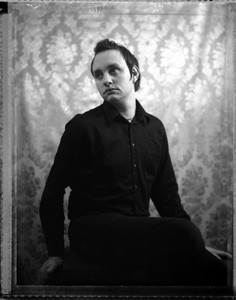
Brain Thrust: Award-winning area playwright John Moran contributes original works to the Rep.

Company!

“I think, by and large, we’ve all tightened our belts,” remarks Argo Thompson, artistic director of Actors Theatre. “We’ve all buckled down and come up with innovative ways to continue doing what is most important to each of us. The doom and gloom we were feeling a couple of years ago has definitely subsided to a great degree. Theater companies never have a problem dreaming big, and that has definitely continued, and those dreams have been tempered, over the last couple of years, by a sense of stark reality. Now things are actually looking up, because we’re finding creative ways to reach those dreams.”

Some companies are cutting staff to make ends meet, many are staging shows with smaller casts or finding ways to stage them less expensively. Others are taking the opposite approach, choosing to spend money in ways that will generate more excitement. In recent months, a number of companies–most prominently the Pacific Alliance Stage Company and the Rep–have dealt with the departure of beloved artistic directors (Jim dePriest and Michael Grice, respectively), by bringing in certified theatrical stars as replacements.

Hector Correa (see below) is a San Francisco director and actor who is widely considered one of the most inventive and groundbreaking members of his generation. King, who worked with the Rep until six years ago, is back after stints in leadership with the California Shakespeare Festival and the Dallas Theater Center. Many companies–Cinnabar, the Rep–have been bringing in guest directors, powerful visionaries eager to take advantage of whatever is building in the North Bay, hoping to translate it into stage magic.

The most earthshaking development, however, is the foundation of the North Bay Theater Group (www.nbtg.org). Two years ago, when the alliance was first forming, there were only a handful of companies involved, with little certainty that it would amount to anything. Now there are 26 companies involved, meeting together every month to brainstorm and plot and dream, and the resulting power of that combined force is, according to all involved, reshaping the way theater is made north of the Golden Gate.

“The NBTG has done a great deal towards making coherent the local theater community,” Lichenstein says. “Everyone is cooperating now, and while at first it was just for survival, now I think it’s for fun. It’s so much more fun to collaborate and cooperate than to be jealous and resent one another’s successes.”

The 20-plus members of the North Bay Theater Group include major longtime theatrical institutions with their own theaters, educational programs and colleges, fledgling companies and traveling troupes. In Marin, these include the Novato Community Players and the Ross Valley Players; in Sonoma County, Actors Theatre, the Cinnabar, Get a Clue Productions, Hoochi-Doo Productions, the Independent Eye, the Pacific Alliance Stage Company, the Pegasus Theater Company, Healdsburg’s Raven Players, the Santa Rosa Junior College theater arts department and its prestigious Summer Repertory Theater, the Santa Rosa Players, Sonoma County Playback Theater, Sonoma County Repertory Theatre, Sonoma’s Theater at the Center and the Upstart Crows Young Shakespeare Company; in Napa County, Cheese (yep, that’s a company, formerly the Otter Spigots), Dreamweavers Theatre and the Napa Valley College; and farther abroad, the Ukiah Players and the Willits Community Theatre.

“We’ve got theater companies with different levels of experience working together,” King notes, “and the ones with less experience are bringing a lot of freshness, while the people who’ve been in theater for years and years are sharing their know-how. That balance is creating something that is quite magical.” Echoing Lichenstein’s description of newfound camaraderie among theater groups, she adds that “there is no longer the propensity for companies to hold on to actors that there was before. A few years ago, if you performed at one company, then you’d better be loyal and not do any shows at another company. If you did, you’d be treated as a traitor and might not be given roles anymore.

“That’s gone now,” King continues. “That’s nonexistent. We are all working together to create the best shows possible, so actors are suddenly crossing over. Actors who are working at Actors Theatre are being given parts here at the Rep. People who work here are doing shows at Cinnabar. We’re trading cast lists. That whole ‘if you work there, you’ll never work here again’ thing is gone. To me, it’s an extraordinary evolution that’s taken place over the last couple of years. It’s having a profound effect on the North Bay theater community.”

Some of the NBTG’s resource-sharing efforts are merely practical. The NBTG website features information about shows on stages from Marin to Mendocino, with regular updates and news about the theater community. By joining together, several companies can have their advertising flyers and postcards printed up at once, saving money individually by having the work done jointly at bulk rate.

Observing a reciprocal “you scratch my back and I’ll scratch yours” attitude (actually, it’s more like “you plug our show and we’ll plug yours”), companies are finding ways to tell audiences about other companies’ shows. Folks attending Cinnabar Theater’s recent production of Tony Kushner’s Illusion were informed at the curtain talk before the show that their Cinnabar ticket stub would get them $5 off at the door to Arms and the Man during its run at the Rep.

Some collaborations cross county lines, as with Hoochi-Doo Productions, a Sonoma County-based “nomadic” company that uses different facilities for each new production. In May, Hoochi-Doo will join forces with the Ross Valley Players for a production of Into the Woods. Says Kim Taylor, publicist for both companies, “Hoochi-Doo had the musical, the Ross Valley Players had the theater, and after a little wave of the magic wand, the two theater companies have banded together. Collaboration is the latest trend among theater companies in the North Bay.”

No example of two theater companies banding together is more eye-opening than the current merging of Actors Theatre and the Santa Rosa Players, companies with entirely different artistic goals. Actors Theatre focuses on contemporary plays and the use of semiprofessional actors; the Santa Rosa Players are devoted to classic Broadway musicals and “museum plays,” with casts made up mainly of amateur performers from the community. They maintain entirely disparate audiences.

“We had two separate boards, two separate theaters, two separate budgets, two separate production companies,” says Argo Thompson. “The establishment of the North Bay Theater Group first threw us together, we started talking, and after a while we realized we can save a whole lot of money if we just do the whole thing together. Actors Theatre had a structure of employees in place and a system for delivering public relations and promoting their shows–all of which SRP didn’t have. But SRP has a core group of volunteers helping get their shows up that Actors Theatre didn’t have. Having one board with twice as many members as before, having one staff, one set of books–you can imagine the economies we’re starting to enjoy now with the merger.”

Santa Rosa’s city council, Thompson adds, is encouraged by the merger, seeing it as a model of what nonprofit groups can create together. “There are over 200 nonprofit organizations in Sonoma County alone,” Thompson says. “And to have them working together in their fields is vital.”

The merger will be legally finalized in July, with each company retaining its name and its brand, but the companies are already united under a common board of directors and have just launched their first artistic collaboration in the new musical The Bachelors, using talent and crew from both companies. By putting the play on the subscription schedule of both companies, it also means that for the first time, faithful Actors Theatre supporters are sitting side by side with longtime Santa Rosa Players fans.

“Each of us has had our own particular niche in the performing community,” agrees Pam Zainer of the Santa Rosa Players. “Being able to do join forces and do a play together– a bold contemporary musical–introduces two distinct audiences to a medium they might not ordinarily have gone to see.”

The next obvious step is to begin sharing one theater. To that end, the two companies have set out to build a new performance space, refurbishing the former Del Monte packing plant, an old brick warehouse on Sixth Street, just off of Railroad Square in Santa Rosa. To be named the Sixth Street Playhouse, the new facility will house operations for both companies, who will alternate productions on the stage of the playhouse’s 170-seat theater, with plans for more Bachelor-like collaborations and the occasional repertory event. Thompson envisions perhaps having the Santa Rosa Players perform Michael Frayn’s large-scale farce Noises Off in repertory every other night as counterpoint to Frayn’s minimalist drama Copenhagen. First, of course, the Sixth Street Playhouse will have to be built.

The World’s a Stage

“This is the ticket counter,” says Thompson, leading a tour through the cavernous warehouse, on the cement floor of which is marked out in masking tape the outline of each room: the lobby, the restrooms, the dressing rooms and the stage area itself. “Here’s the theater,” he says, stepping over a line of tape into another section with marks showing where the stage, the orchestra pit, the control room and those 170 seats will be. “Nobody will ever be more than 27 feet away from the stage,” he says. “There will be incredible sightlines. It’s going to be a fairly intimate theater for a room this size.”

The total cost of the project is $800,000, but with $250,000, Thompson says they’ll be able to move in and begin staging productions, even with only the first in a three-phase process completed. “If we had all of that money dropped in our lap right now,” he says, “we could complete the project this summer and open in the fall. Realistically, we’ll probably enter with phase one. So come fall, we’ll be here, but in what capacity–at what level of completion we’ll be at that point–I can’t say.”

Of course, the next step for the Sixth Street Playhouse, and the entire North Bay theater community, is to take the dreams, the excitement and the newfound cooperation, and find ways to excite the people who buy the tickets. Unless the public begins to embrace theater as an important part of everyday life, none of this will matter.

The responsibility, says acting teacher Lennie Dean, now falls to the theater companies. “We must begin creating vital, important theater,” she says, “the kind of theater that newspapers write about, not just to review, but because it is news. The way it was news when the Matthew Shepard story was turned into The Laramie Project. That’s the kind of theater that matters, and that’s the kind of theater that’s going to make theatergoers out of the people who haven’t had a reason to go yet.”

“We must now create a culture of theatergoers in Sonoma County and beyond,” King adds. “We have to take the buzz that’s growing here in Sebastopol at the Rep, and in Marin and in Santa Rosa and Napa and Petaluma, and by creating the best theater we possibly can, turn that buzz into a revolution. It’s happened before in this country and in these counties, and I believe it’s about to happen again.”


Strong Man

Hector Correa raises the bar

“I’ve always had a strong desire and passion for creating good theater,” says actor-director Hector Correa, newly appointed artistic director of the Pacific Alliance Stage Company. “Theater is what I think about all the time. How to make it better, how to make it more exciting. So I decided I’d come and try and do that here, to bring something to this space, to continue building its reputation as a place where people know they will see good theater. My goal is to create as good a theater as possible.”

The Pacific Alliance Stage Company, based at Rohnert Park’s Spreckels Performing Arts Center, is Sonoma County’s only equity company (the Actors’ Equity Association being the national stage actors union). Now in its 14th season, Pacific Alliance was created by former artistic director Michael Grice, a certified legend among local theater fans, who departed in order to take a position with the Gallo Arts Center in Modesto. It only made sense, then, in replacing a legend, to bring in another legend.

Correa, who’s been directing for 11 years, first came to Bay Area attention as the lead in the West Coast premiere of Kiss of the Spider Woman in San Francisco. Since then he’s performed in or directed hundreds of plays, with a résumé that includes stints with Eureka Theater, Marin Theater, Berkeley Repertory Theatre, Magic Theater, American Conservatory Theater and the San Francisco Shakespeare Festival. His productions include the world premiere of Real Women Have Curves, which he directed for El Teatro de la Esperanza, and the West Coast premier of Tony Kushner’s Homebody/Kabul, in which he acted in a production by the Berkeley Rep.

“Hector has tons of energy, tons of knowledge, tons of talent,” says Elly Lichenstein, artistic and executive director of Cinnabar Theater. “His arrival on the scene,” she says, “is going to raise the whole bar for theater in the North Bay.”

According to his agreement with the company, Correa will be programming the schedule of plays for each season (he inherited the current season from Grice), and will direct at least three of those plays.

“Programming is a challenge,” he admits with a laugh. “You have to be fearless, but not reckless.” Though still finalizing plans for the next season, he says he’s considering doing a Tennessee Williams play, probably A Streetcar Named Desire, and will balance the rest of the schedule with comedies, new works and one musical, which will likely be Cabaret. “I would also love to do a Shakespeare,” he says. “I don’t know if this company has ever done Shakespeare on this stage, but I don’t think so. Shakespeare is a very strong background I have.”

The other challenge is in building a company of actors who will create an aura of energy and, he says, even a sense of celebrity, with audiences eventually getting to know certain actors and making sure to see every show they appear in. But first the Oakland resident will have to get to know local performers.

“I really do want to see and get to know the North Bay theater artists, directors and actors, and to welcome them here,” he says. “I know that if you only bring talent in from elsewhere–like San Francisco does in always bringing people up from L.A.–you are not creating a strong theater community the way you would by giving local artists opportunities on your stages. I believe Sonoma County has the potential to become a spot that people visit from other counties. Once people start talking about how exciting and alive the theater scene is up here, this region–and certainly Spreckels–will become an important theater destination.”

–D.T.

From the date-date issue of the North Bay Bohemian.
© Metro Publishing Inc.

‘Shampoo’

0

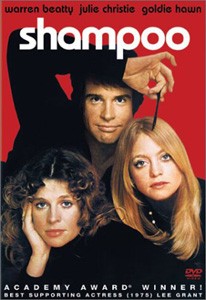
Hair Today, Gone Tomorrow: What Beatty needed was a madam to guide him.

In a Lather

Former madam Heidi Fleiss on the importance of goals

In its ongoing quest for the ultimate postfilm conversation, Talking Pictures takes interesting people to interesting movies.

“Guess what my favorite movie is,” says Heidi Fleiss, standing in her Hollywood hills kitchen, clad in her preferred movie-watching garb of self-designed fluffy pink pajamas (part of her Heidiwear lingerie line), making a second stab at microwaving some popcorn. Meeting to screen Hal Ashby’s 1975 classic sex-farce Shampoo starring Warren Beatty, a film Fleiss has somehow never seen, I find myself in the kitchen of the notorious former Hollywood madam making helpful popcorn-zapping suggestions while she challenges me to guess her most beloved film.

Heidi Fleiss’ favorite movie? I think to myself. Pretty Baby? The Happy Hooker? Cannibal Women in the Avocado Jungle of Death?

Becket,” she proclaims, interrupting my thoughts. “Becket. With Peter O’Toole and Richard Burton.”

I know the film. Henry II facing off against the Archbishop of Canterbury. It’s all about sex and madness. Corruption and greed.

“It’s about power and how to use it,” Fleiss asserts firmly. “It addresses the issues we all have to face in life: betrayal, love, anger and loyalty, society, politics, religion. I’ve always been very interested in that stuff, especially the subject of power. Ever since I was a kid, organizing all the neighborhood girls out on babysitting jobs, taking a piece of the profits for myself. Power is one of the great themes of literature.” It’s a theme she explored, in depth, in last year’s quirky, coffee-table memoir Pandering, and which she revisits in her newest work, The Player’s Handbook: The Ultimate Guide for Women, in stores in May.

We return to that theme two hours later, after successfully making the popcorn and kicking back in Fleiss’ plush, large-screen home theater to watch the DVD of Shampoo–the misadventures of spineless, motorcycle-riding, compulsively womanizing hairdresser George (Beatty), who can’t keep his pants on and thus loses both the woman he loves (Julie Christie) and his dream of owning his own hair salon. In Fleiss’ opinion, poor George ranks as one of the least powerful players in cinematic history.

“He’s an idiot!” she shouts, laughing. “A total idiot. What he needed was to sit down and try to imagine where he’d be in 10 years, to ask himself, ‘What do I want out of life? What will give me happiness, structure and balance?’ George is all over the place. You can tell by the bewildered look on his face. He’s totally dumbfounded and distracted by everything. He has no goals, no direction, no balance, no structure.”

“George has goals,” I say, surprised to find myself defending the guy. “He’s got the goal of owning his own shop.”

“Yeah, but he can’t make it happen,” she replies. “And why? Because he’s a fuckup! If George had stood up tall and said, ‘I want that shop and I’m gonna get it,’ he could have walked into that bank and gotten the loan. He could have shown them all how good he was–and I’m sure one of his many women was rich enough and willing enough to have cosigned the loan. It would have been easy.”

George, as legend has it, was based on several real-life hairdressers from Los Angeles, the late Gene Shacove being the primary model.

“I knew Gene really, really well,” Fleiss says. “I once ditched him at the Playboy Mansion. We were very close friends.

“Even in the illegal wiretaps of my phone,” she continues, referring to the police investigation that led to her 1994 arrest and subsequent three-year imprisonment for money laundering and attempted pandering, “there was a 45-minute conversation with Gene where he told me all about his penis and different options for getting it up.”

“Bet the LAPD loved that,” I remark.

“They were perverts,” she says shortly.

Ahem, back to the movie. Fleiss liked it, calling it a surprisingly realistic portrayal of sex and relationships. “Most people want to see a fantasy about sex,” she says. “They don’t want anything ugly, and face it, sometimes sex and relationships are ugly.

“Trust me,” she adds, laughing. “If anyone knows that, I do.”

From the March 24-31, 2004 issue of the North Bay Bohemian.

© Metro Publishing Inc.

Josh Staples

0

Photograph by Sara Sanger

Angst for the Memories: Josh Staples can actually smile, and does so often, particularly when a free lunch is in the offing.

Rock ‘n’ Taco

Taking Josh Staples out to lunch

By Sara Bir

Have you ever noticed that about 75 percent of star interviews appearing in mainstream press outlets mention whatever the famous person happens to be eating by the third paragraph? “‘I had to go on a macrobiotic diet to fit into the latex lion-wrestling suit I wore during the filming of Charlie’s Angel’s III,’ says Cameron Diaz, gingerly sifting through a pressed sea vegetable salad at Rayon, the trendy new L.A. eatery that she and Justin Timberlake recently opened together. ‘But I absolutely can’t live without chocolate! I eat half a gram a day.'”

There will be no such tomfoolery here. Having lunch with musician, graphic artist and man about town Josh Staples is hardly such a namby-pamby affair, and this is no mainstream press outlet. “I’d rather have shows every night than sit around a computer,” Staples says as he nibbles two unassuming and possibly healthful vegetarian tacos at Santa Rosa’s Mazatlan.

It’s the type of eatery where you wouldn’t expect to see a bona fide rock star noshing tacos on a late weekday afternoon. Staples, however, is not a bona fide rock star; he is way too nice, and will undoubtedly remain so, no matter how big his two very active bands–the punkishly terse New Trust or lavishly balladeering Velvet Teen–become.

Rubbing elbows with such pleasant company is, in this instance, not a privilege reserved only for upper-echelon journalists such as myself. Now, thanks to the wonder of the Internet, mere mortals can also dine with polite and cordial homegrown rock royalty. All you need do is visit www.joshstaples.com and peruse the “Take Josh Staples Out to Lunch!” offer, in which Staples proclaims, “Marvel at the rich tales of debauchery and danger that Josh is weaving–live before your very eyes! . . . You see, the rock and roll lifestyle has left Josh Staples and many more like him without some minor privileges you may take for granted–like money or food–so really, you’d be doing the art world a service.”

“I kind of put it on there as a joke, but I figured someone’s going to have to do it,” Josh admits. Has this mad scheme actually worked? Oh, yes. And yours truly is not the first kind soul to take Josh Staples out to lunch. “This would be the third,” he says, “but I flaked on one. It was very bad of me. There were these two girls who were supposed to take me to La Bufa, but it was the day before I was going on tour, and I had so much to do. My bad. It won’t happen again.”

Damn straight it won’t happen again, buster, because like any faithful starving musician, Josh understands that there is indeed such a thing as a free lunch. And before you start to get too many ideas, note that I have already looked on Beck’s and Thurston Moore’s websites, where no such comparable offers exist.

Let us pretend, however, that you could go to lunch with any ol’ rock musician you please. Why choose Staples? In my experience, there are plenty of very personable folks in crappy bands and plenty of jerky assholes in great bands. But with Josh, you not only get the best of both worlds, you’re able to hang out with a portion of two fine bands simultaneously.

At Mazatlan, I opt for a Negra Modelo, but Josh, in a very un-rock-star maneuver, kindly declines the tipple. He’s taking a break from recording vocals with Velvet Teen frontman Judah Nagler for the band’s upcoming string-laden Elysium mini-LP, which should be out sometime this summer. In between playing shows with both bands, Josh will record an LP with the New Trust, also due out sometime this year. Phew! How does this guy stay sane?

In all likelihood we can thank his wife, Sara Sanger, who plays in the New Trust as well. If getting along with a band is really like being married to four people at once, you might as well actually be married to one of them, right? And she does not object to her husband’s dining with total strangers–one of which could be you. Friend, you can’t afford not to.

From the March 24-31, 2004 issue of the North Bay Bohemian.

© Metro Publishing Inc.

‘Woman’s Work: Making Quilts, Creating Art’

0

Sewing Circles: A detail from a quilt by artist Nancy Pagani.

Blanket Concept

Bay Area artists do more than just patch art together

By Gretchen Giles

The very nature of the quilt as an object brings up comforting, domestic images. Quilts are used to warm and solace, to ensure succor against cold winter nights. They are crafted to greet a new baby, to embrace a new marriage. They are traditionally made by a group of women, formed together in a “bee,” who trade recipes and secrets as they handstitch, cut, iron and sew the blanket together. Like a female barn raising, quilts conjure images of community and country handicraft, smiling women with plump arms and grandmotherly ways, hot back porches and cold iced tea.

But if a quilt is simply defined by what it is–and at the strictest level, it is merely three layers somehow attached together–a wildly free concept of the homely quilt begins to arise. Could it be made with paper rather than fabric, include sculptural elements, be reduced to two attached layers or one layer with no addition? How far can this object be deconstructed before it can no longer bear its name? The quilt, in fact, may never be used to warm, to succor or to greet; it may just be a new and challenging canvas for the artist to work upon.

The collective of 10 Bay Area artists formed under the Fault Line Studios moniker make quilts that break soundly from usual assumptions. East Bay artist Alexandra Von Burg, who began her professional life as a studio assistant to Andy Warhol, likens the work to collage, to building, and resolutely states, “Instead of making a quilt, I make a piece of art.” Another collective member, Tiburon film editor Charlotte Grossman, has made a documentary about their efforts, philosophy and surprisingly radical art titled Woman’s Work: Making Quilts, Creating Art, showing March 28 and 30 on KQED-TV. While each works alone in her studio, the artists come together regularly to critique each other’s work, offer ideas and share information–most of it surrounding the fascinating vagaries of dye.

This is emphatically not a “bee.”

By and large, the artists featured in Woman’s Work are smiling women with plump arms who look to possess grandmotherly ways, yet who resolutely reject every single element traditional to quilting except, perhaps, a shared passion for fabric. Collective members discuss the sociopolitical side of fabric and its emotional life in all of the folding and washing and sewing and touching that women have historically done. The wistful nature of a fabric scrap assuredly has another allure, one piece from mother’s dress being placed here, a scrap from a special gown placed there.

Oakland artist Sue Mary Fox, who describes beginning her career as a “mercenary” seamstress for haute couture and who includes creating costumes for alternative circuses on her résumé, was drawn to quilting in part because she simply can’t stand to see waste. Claudia Comay, originally from Columbia, came to the art form when her child was born, laughing now to remember that she thought that an activity involving hot irons, sharp pins and several different types of scissors would be safer around babies. Comay’s large, bold abstract quilts are based on nature; the film shows her working on images derived from a group of rocks she found on a recent trip to the Southwest.

While some of the artists bow to the geometric patterning of traditional quilts, Gerrie Peterson, who was born on a San Rafael chicken ranch and trained as a historical architect specializing in refurbishing buildings to exact reproduction, uses the textures–the actual feel and burnish–of old buildings to inform her abstract images. Geneticist Karin Lusnak forms sheer silk squares into three-dimensional masks that she then works into the fabric canvas of each piece, learning in the process to override her scientific bent for exactitude and instead allow accidents to flourish. Marcia Stein makes oversized graphic pieces that conjure painter Alex Katz’s distinctive style, and Nina Shortridge creates abstracts that could easily be mistaken for acrylic rather than fabric.

Each shows a flash of intelligent irritation when asked to address whether her work is merely craft. One explains, “The brilliance of our foremothers is that they got to make art that was culturally approved.”

Says another shortly, “The question of what is an art quilt is like the question of what art itself is.”

Decide for yourself when ‘Woman’s Work: Making Quilts, Creating Art’ screens on Sunday, March 28, at 5pm and again on Tuesday, March 30, at 1:30pm, on KQED. Check listings for details.

From the March 24-31, 2004 issue of the North Bay Bohemian.

© Metro Publishing Inc.

Curt Lubiszewski

0

Case Closed

Rohnert Park officer cleared in abuse trial

By R. V. Scheide

Curt Lubiszewski, a Rohnert Park California Highway Patrol officer accused of three counts of domestic abuse and one count of vandalism, was found not guilty on all charges in Sonoma County Superior Court Feb. 24. It took a jury of seven women and five men just two hours to reach the unanimous decision.

“Several of the women jurors approached Curt in the hallway afterwards, hugging him and stating that he did not deserve to be put on trial,” brother Mark Lubiszewski told the Bohemian. “Others remained afterward to shake his hand in sympathy of his plight.”

The allegations made against Lubiszewski were the subject of an Aug. 7, 2003, Bohemian news story, “Our Boys in Beige.” Ex-girlfriend Mitzie Grabner had accused the CHP officer of intimidation and violence against her during their two-year relationship.

The case highlighted the ongoing controversy regarding the investigation of law-enforcement officers charged with domestic abuse. Critics say that domestic-violence charges against police officers are often not fully investigated because law-enforcement officials have a tendency to protect their own.

That’s particularly troublesome in light of studies showing that rates of domestic abuse are much higher among police officers than they are among the general population. According to the National Center of Women and Policing, police officers are two to four times more likely to be batterers, and 40 percent of officers reported that they had hit their wives in the past year, compared with 10 percent of the general population.

The Purple Berets, a Santa Rosa-based advocacy group for victims of domestic violence, took and interest in Grabner’s case. The group was instrumental in helping the family of Maria Theresa Macias, murdered by her abusive husband in 1996, secure a $1 million settlement against the Sonoma County Sheriff’s Department for failing to properly investigate Macias’ longstanding allegations against her husband, who committed suicide after killing her.

“I have no fear when I’m telling the truth,” Grabner said last July at a demonstration organized by the Purple Berets in front of the CHP’s Rohnert Park office. Last year, Lubiszewski’s ex-wife, Bonnie Garrett, also alleged that Lubiszewski had been abusive during their entire eight-year marriage.

In the 15 cases involving abusive police officers Purple Berets founder Tanya Branning had previously handled, no witnesses or victims had ever stepped forward. With a number of witnesses corroborating Grabner’s story, the Purple Berets were eventually able to persuade the Sonoma County District Attorney to file charges against Lubiszewski.

The Purple Berets’ involvement in the case became an issue during the trial. According to Lubiszewski’s attorney, Steven Turer, Grabner was a woman who couldn’t keep her story straight and was influenced by Brannan “to be significantly more accusatory.”

Grabner spent five days on the stand. Bob Waner, who prosecuted the case for the Sonoma County District Attorney, said that “the jury found inconsistencies in her story, and they felt Mitzie was being influenced by Ms. Brannan of the Purple Berets and that Ms. Brannan had a particular agenda.”

But Brannan argues that the verdict is further evidence the legal system does not treat victims of spousal abuse fairly, noting that the court allowed only one 1997 incident of alleged abuse from Lubiszewski’s previous marriage to be admitted in the trial.

What happens next? The Purple Berets plan to meet with the district attorney soon to propose allowing the spouses of abusive police officers to report directly to the district attorney’s office.

Beret founder Brannan is still inclined to believe that Grabner is telling the truth. “The bottom line is we come out of this proud,” Brannan says. “We all went through hell, and justice wasn’t served in this case. But it ain’t over till the skinny lady sings–and they hate it when I sing!”

From the March 17-24, 2004 issue of the North Bay Bohemian.

© Metro Publishing Inc.

Polar Bears

0

: Polar Bears Shane Goepel, Ben Henning and Matthew Izen skatin’ toward fame. –>

Polar Bears warm up

By Gabe Meline

It’s a Saturday afternoon at the Redwood Empire Ice Arena, and the members of a rock band are lacing up their skates. Not much has changed at the rink in the last 15 years. The faux Alpine village décor, Swiss flags, yellowed ceiling tiles and fake plastic tree are all exactly as I remember them.

The cafe, where each menu item is named after a “Peanuts” character, still smells like stale coffee. Additionally, it blows my mind that Skippy Baxter, the instructor who long ago taught me to ice skate, is still here lecturing a gaggle of leotard-clad preteens about the importance of toe picks. With such completely preserved details in place, it is a minor disturbance to the childhood-memory continuum that I am about to take Polar Bears out on the ice for an interview.

I figure they asked for it. After a name change from the Set Up to Polar Bears (not the Polar Bears, they are quick to note), it was only a matter of time before someone threw them into the most arctic environment Sonoma County has to offer. And indeed, it is cold as the Zamboni makes its rounds. The large clock ticks down to the afternoon open session, and guitarist Matthew Izen exudes confidence. “We’re Polar Bears,” he points out. “We’ve been doing this ice thing for ages.”

The new name is fitting for a group of three very soft-spoken guys who, upon donning instruments, make a furious noise capable of eating the skin off your face. Much like their animal counterparts, Polar Bears seem friendly at first but onstage unleash random attacks. In the same way a polar bear might ravage a baby seal for breakfast, the band frequently leaves audience members scathed by a rhythmic and complex barrage of sound. Theirs is a music far removed from “wine country” rock (though it’s true that one member sports a tattooed Gillian Welch lyric); closer comparisons can be made to Washington, D.C.’s Q and Not U or the overdriven antics of At the Drive-In.

The lights come down at the ice arena now, and the PA system starts cranking out tired Top 40 pop hits. Surrounded by young children, we are easily the tallest people on the rink. It’s tempting to race around like maniacs, but the conspicuously dark-clothed band is courteous to the small tykes in pastel tutus. They’re also gracious as they talk about their new EP, Shorts Are for Warm, just released on Petaluma’s Pandacide Records.

“It’s a pretty big leap,” remarks Ben Henning, bassist and lead vocalist. “We’ve been able to record some music in a way that is not only professional but artistically fulfilling.”

The five songs on Shorts Are for Warm represent Polar Bears at a very focused period, when infectious dance beats have crept into the interloping bass and guitar lines that define the band’s technical hardcore style. While Henning and Izen scream through songs titled “Does This Casket Make Me Look Fat?” or “Last Time This Happened I Got Fired,” there’s an undercurrent of mischievous ass-shaking to the abrasion. For its source, look no further than the north wall of the ice rink, where drummer Shane Goepel is busy spinning haphazard three-sixties and avoiding reprimand by the Ice Arena staff in yellow “Peanuts” T-shirts.

Dancing isn’t the only thing to look forward to at a Polar Bears performance. On most nights, the band attempt to play as close to the crowd as possible, often shunning the traditionally coveted stage in favor of performing on the floor. “It’s not like we’re some dance Gestapo,” Henning explains. “We just thrive on that intimate level.”

Or as Izen quickly and succinctly declares: “It’s energy, it’s always energy!”

Polar Bears are poised to take their energy on the road for a three-week tour of the United States and were poised to celebrate Shorts Are for Warm‘s release with a hometown show on the floor of the Phoenix Theatre before an earthquake retrofit of the venue cancelled the gig. It’s a busy time for the band, but out on the ice Izen and Goepel are clownishly trying to skate backwards without falling and cracking open their heads. Henning is more concerned with cautiously edging his way around the perimeter of the rink.

“Suddenly it becomes very hard to speak about playing in my band,” he confesses. “I’m fearing for my life.”

Polar Bears’ new EP ‘Shorts Are For Warm’ is in stores now. For more band information, check out www.polarbearpatrol.com.

From the March 17-24, 2004 issue of the North Bay Bohemian.

© Metro Publishing Inc.

Keller Williams

0

: Keller Williams plays and plays and plays . . . and sings for you. –>

Keller Williams is jam’s mad scientist

By Greg Cahill

He’s one of a kind, all right. A singer and songwriter known for his laconic wit, Keller Williams is a virtuoso guitarist, a jam master and a tech whiz who has managed to combine all of those talents into a single high-energy package that has earned him the title “Jam’s Mad Scientist.”

Onstage, the multi-instrumentalist is an affable young Virginian who performs with a variety of acoustic and electric guitars and basses while twiddling the knobs on a bank of electronics that provide drum loops and assorted bleeps and squawks. Williams performs with a homespun twist that the Austin Chronicle recently noted flouts the clinical feel that mars many jam bands. His intricate guitar work borrows heavily from the late Michael Hedges, one of his idols. Performing for a decade and recording for the past five years, Williams brings his one-man jam to the Mystic Theatre Saturday, March 20.

At his best, Williams pairs his go-with-the-flow sensibilities and complex musical mélange–a mix of rock, jazz, funk and bluegrass that is reminiscent of the String Cheese Incident, a jam band with which he is affiliated–with gentle, often humorous lyrics. For instance, his “Freeker by the Speaker” muses about the “rave girl with a lollipop binky and a face full of metal” who attends one of his shows.

The quirky “One Hit Wonder” relates the tale of “a simple little ditty with a sharp catchy hook and three little cowboy chords that you learn from a book” that lands the coveted position at the top of the charts. His own flirtation with the charts is limited to the recent college-radio hit “Love Handles,” a quirky ode to his flabby hips.

But Williams can get down and dirty, as evidenced by the jazzy instrumental “Mental Instra” from his 2002 album Laugh. That same year, Williams flexed his sinewy knack for musical experimentation by releasing a remix version of Laugh called, appropriately enough, Dance. In the liner notes, he suggests that Dance “can be best absorbed when played at high volume, while standing directly in the center point of the speakers, with a dozen of your closest friends, in the middle of the night, on a plush, soft putting green of a backwoods public golf course.”

Who could argue with that?

Meanwhile, the wide world is waking up to Williams, thanks to his newly syndicated radio show, Keller’s Cellar: Somewhat Ruleless Radio, in which the eccentric musician gets to share his eclectic record collection. It’s only airing on nine stations around the country, but you can check it out online at www.ktbg.fm, compliments of KTBG (90.9-FM) in Kansas City, Mo.

Keller Williams performs Saturday, March 20, at 9:30pm. Mystic Theatre, 21 Petaluma Blvd. N., Petaluma. $22. 707.765.2121.

The Cramps, Live at Napa State Mental Hospital (Target Video)

This newly released DVD brings fresh meaning to the old adage about the inmates running the asylum. In June 1978, the New York psychobilly band the Cramps–whose music was once described in Trouser Press as “a uniquely weird pastiche of rock ‘n’ roll, psychedelia and a monster-movie/ junk-food/swamp-creature aesthetic”–played to a room full of patients at the Napa State Mental Institute San Francisco-based director Joe Rees of Target Video was there with an early hand-held Sony video camera to capture this truly strange event in all its grainy, sometimes out-of-focus, black-and-white splendor.

“Somebody told me you guys were crazy,” lead singer Lux Interior tells the audience at one point, “but I’m not sure about that.” Sure enough, it’s often hard to distinguish the performers from the patients as enthusiastic fans grab the mic or saunter zombielike across the makeshift stage and perform their own medicated-minstrel show. The DVD also features clips from other Target releases showing such early punkers as MDC (Millions of Dead Cops), Flipper, Crucifix, Throbbing Gristle and an amazing performance of the band Crime dressed as cops and playing for inmates at San Quentin State Penitentiary.

–G.C.

From the March 17-24, 2004 issue of the North Bay Bohemian.

© Metro Publishing Inc.

Best of 2004

0

[ ‘Best of’ Index ]

The Best of the North Bay 2004

Culture
[ Writer’s Choice | Readers’ Choice ]

Everyday
[ Writer’s Choice | Readers’ Choice ]

Food & Drink
[ Writer’s Choice | Readers’ Choice ]

Kids
[ Writer’s Choice | Readers’ Choice ]

Recreation
[ Writer’s Choice | Readers’ Choice ]

Romance
[ Writer’s Choice | Readers’ Choice ]

Surrealists, Scalawags and Saints

We, the best of everything

Defining the North Bay is a little like writing a thesaurus; if you don’t use a lot of words, you’re probably cheating somebody. We are defined in part by our geography, in part by our history and in part by our artistic pursuits, families, daily rounds, dinner tables and outdoor pleasures.

In other words, the Best of the North Bay is us–we the people of Sonoma, Marin and Napa. We soul-searching sinners and sad-sack sages. We self-service gas shackers, sand sculptors and scribes. We self-supporting CEOs sipping sodas on Sundays in Sonoma. We sofa surfers seeking sex with steamy strangers. We single-minded Soroptimists; we sun-seeking Sagittarians seeking swamis with swagger. We cinema-sampling sophisticates and solar-addled seers; we sultry solo song singers; we sushi-slurping samurai. We Sanskrit-scribbling scholars from SSU sharing sharp-sighted insights with straight-shooting psychologists. We sexy, saucy savages sporting sandals with our suits. We salmon-scented scientists seeking sustainable solutions to system-wide extinctions. We silver-tongued supporters of socially sanctioned same-sex shilly-shallying. We semisnobbish cyclists snubbing the snotty snail snuffers steering slick, sleek sedans through San Anselmo.

We sauna-soaking socialites; we sober-sighted soothsayers; we single-minded Socialists. We solicitous supporters of simple Saturday solitudes. We insatiably salty sailors sharing simple snacks with sloppy, slothful slackers slipping sinister substances from their short-sleeved shirts. We stage hands and stuntpersons and students of Stanislavski, staging stupendous displays of Shakespeare’s sexiest sonnets. We sheep-shearing showoffs; we sorcerers and somnambulists; we self-sacrificing surfers spending solstice on safari. We skiers and skaters and scofflaw scoundrels; we sheriffs and sherpas; we swashbuckling septuagenarians; we surrealists and scalawags and saints.

Put another way: the rich milieu of the North Bay is what you see when you walk down the street. Here then, are a few of our favorite sights.

–David Templeton

Writer’s Choice contributors: Davina Baum, Sara Bir, Yosha Bourgea, Greg Cahill, Gretchen Giles, Lacey Graham, Andrea Hollingshead, Heather Irwin, Jill Koenigsdorf, Joy Lanzendorfer, Jordan E. Rosenfeld, R.V. Scheide and David Templeton.

From the March 17-24, 2004 issue of the North Bay Bohemian.

© Metro Publishing Inc.

Tiburon International Film Festival

0

Tiburon’s little festival that can

By Gretchen Giles

Like the incredulous tagline of the old Berkeley Farms diary ads (“Cows? In Berkeley?”), there is, almost incredibly, an international film festival . . . in Tiburon?

Yep. Now in its third year, this six-day event ambitiously shows some 240 films from 50 countries at the Tiburon Playhouse’s three screens, March 12-18. Eclectic and broad, offerings include films that were shot in Tiburon (such as Hugh Grant’s forgettable Nine Months, interesting solely because it was indeed shot in Tiburon), a look at the masterly state of modern Polish cinema and a tribute to Charlie Chaplin as seen through two new and revealing documentaries.

Film producer Saul Zaentz (Amadeus, One Flew over the Cuckoo’s Nest) joins producer Lloyd Silverman (Snow Falling on Cedars) and Pixar Studios’ Brad Bird to discuss the past, present and future of filmmaking in a Saturday morning panel. Director George Stevens (Shane) will be honored, as will Italian director Luchino Visconti (Death in Venice) and documentary directory Robert Snyder (Michelangelo)–all of which is rich but traditional film-festival fare.

What is most unusual about the TIFF is its slate of five movies made by Marin-based filmmakers.

San Rafael video producer and editor Jeffrey French is among them. An associate of Francis Coppola’s Zoetrope Virtual Studio, an online community of filmmakers, French workshopped every detail of his short feature, the 27-minute Win Each Way, through his Zoetrope Virtual Studio comrades.

Shot both in England and at San Rafael’s Mayflower Inn–as close as it comes to a traditional British pub on this side of the pond– Win Each Way concerns itself with a dart contest between two old chums. One has gone off to pursue his dream of becoming a professional jockey; the other has stayed in the village, and when he loses his life savings on a horse race in which his friend the jockey rides, the two settle the debt over darts.

French calls Win Each Way (the title is taken from English horse-racing slang) a “calling card” for the feature-length film he’s currently raising money and interest for. Titled Mugs Away, slang meaning that the loser goes first, that project is also about darts.

“My films aren’t really about darts, but darts are the backdrop,” he protests with a laugh. “I went to film school and was trying to find something that I felt passionate about to use as a [metaphor] for my feature filmmaking,” French says by phone from his San Rafael home. “I started playing [darts] six years ago and fell in love with it. I felt it to be a very beautiful sport, or rather,” he laughs, “it is while you’re playing it; it’s not much fun just to watch. There’s a lot going on at a dart board, a competition between two people–it’s like chess.”

Win Each Way has already screened in the U.K. at the Cardiff Screen Festival, but the Tiburon festival marks its rather grand U.S. premiere. French is hoping that this “calling card” will be enough to help him reach his rather modest–in filmmaking terms–goal of the $1 million needed to produce Mugs Away.

“I’m shooting this on a very low budget, and a lot of it will come from the good graces of people in Liverpool,” he says, explaining that that coastal city is eager to help artists in anticipation of being Europe’s “City of Culture” in 2008. With that deadline looming, Liverpool is madly helping artists in order to help get cultured-up, and French is obliging by setting Mugs Away there.

“They’ll loan me locations,” French explains, “and the film office there will help me with casting. Plus, I’ve been all over England and I just love that city. I really like the people. They’re very superstitious, and a lot of my stories are about how superstitions affect people’s lives.”

Promoting one film while scrambling to lay the foundation to make another is a full-time job on its own. French handles it sanguinely. “I’m very lucky that after 10 years of working in film and video production, I’ve been building up markers,” he says. “I’m calling them in now.”

The Tiburon International Film Festival begins on Friday, March 12, and screens films through Thursday, March 18. An extensive listing of all films and events is found at www.tiburonfilfestival.com or call 415.381.4123.

From the March 10-17, 2004 issue of the North Bay Bohemian.

© Metro Publishing Inc.

Cabbage

0

Cabbage without the corned beef

By Gretchen Giles

A stupid and lazy camper often gets her comeuppance in the form of a bear, and this stupid and lazy camper huddled in her tent at 3am last summer as an adolescent male bear tore apart a zippered canvas cooler containing a week’s worth of fruit and veggies that certain stupid and lazy people had left out in the open air. When a weary dawn finally broke, apricot pits gooed over with the rich thickness of bear spit lay everywhere, the grapes had been trod and actually shat upon, the carrots had vanished, the lettuce was trompled, the apples were eaten and the melon had been broken and brutally slurped.

All that remained–untouched, inviolate and wholly intact–was one perfect green globe of damned cabbage.

When even a rampaging bear won’t eat that which seems destined to find its highest expression in cole slaw–a dish that the children believe is humorous to refer to as “cold slop”–how can we expect others to embrace its cruciferous goodness?

I admit that I came to this vegetable late in life, having read enough Irish novels describing the sickly smell of the stuff overboiling in water to have snubbed it at the store. But an Irishman who has never written a novel showed me that an epiphany awaited, a culinary aha! moment, naturally enough accompanied by plenty of butter.

Despite its limp, annual surrender when paired with its good buddy the corned beef, cabbage has a standalone gorgeousness when washed, cored, quartered and slow-cooked in generous amounts of butter. Cut the head tenderly, rinse well, shake the water from its leaves and place it in a large heavy pot over low heat. As it warms, use a wooden spoon to gently caress it into the butter until its firm quarters eventually yield to your ministrations. The result is unconscionably sexy, but warming and freshly simple.

I’m not too worried about contracting mad cow disease, but its arrival on these shores certainly highlighted several aspects of the slaughterhouse industry that make me literally gag when I stand in a mass-market supermarket surveying packages of beef. What this means to those closest to me is that we no longer eat beef, save the one $12 splurge on two pounds of the type of ground round coming from a pampered Bolinas animal who, after a lifetime of nibbling fresh greens on the sacred Marin County headlands, simply dies of gratitude before the rancher’s feet. (It tasted, one cannot help but note, no different than that which comes from an animal who had spent a cramped nightmarish existence jammed into a yard with thousands of other unfortunates.)

Which means that in one sad Sebastopol household, the cabbage will be served this year without the corned beef.

But slice up four lovely, crisp cooking apples to sauté in butter (a theme is emerging), and make a gorgeous mash of creamy Yukon Gold potatoes, perhaps dotted with crème frâiche and extra helpings of our friend butter, and the meat seems suddenly de trop.

The beautiful Nigella Lawson, the English Aphrodite of the cooking world, recommends uncooked cabbage for those nights when friends–yes, women–come over to talk about absolutely nothing for long, airy hours around the kitchen table. Adapting her recipe from the eponymous cookbook Best of Nicole Routhier, Lawson suggests that this is an Asian-style slaw, but not really. It’s best, she says on the iVillage.com U.K. portal, served on a large flat platter, “ideal for picking at with an outstretched fork over a drawn-out evening.”

Vegetarian goddess and veggie-painter Mollie Katzen recommends cabbage that’s been magically altered, specifically sauerkraut, as the “mystery” ingredient in her Savory Apple Casserole. Writing in her Enchanted Broccoli Forest cookbook, she notes that guests may wonder what’s in this dish, but that a secretive smile is the best response.

What’s most marvelous about these recipes is that any stupid and lazy sometimes camper with opposable thumbs who’s mastered knives and fire can make them. Take that, you bear!

Nigella Lawson’s Vietnamese Chicken and Mint Salad

We adapt from Routhier and Lawson, replacing metric with measurements Americans can understand. Mostly.

1 hot chile, preferably a Thai variety
1 large garlic clove, peeled and minced
1 tbsp. sugar
1 1/2 tsp. rice vinegar
1 1/2 tbsp. fresh lime juice
1 1/2 tbsp. Vietnamese or Thai fish sauce (nuoc nam or nam pla)
1 1/2 tbsp. olive oil
1 bunch of green onions, cleaned and finely chopped
1 small cabbage, shredded
1 medium carrot, shredded, julienned or grated
1 full chicken breast (two halves), cooked and cut into fine strips
1 large bunch of fresh mint, cleaned and chopped
Salt and freshly ground pepper to taste

1. In a bowl, combine the chile, garlic, sugar, vinegar, lime juice, fish sauce, oil and onion. Salt and pepper to taste. Put to one side for half an hour.
2. On a big plate or in a bowl, mix the cabbage, carrot, chicken and mint. After the dressing has had a chance to marry, pour it gently over the chopped ingredients. Mix slowly and with patience (yes, Nigella demands patience!), until all is thinly and evenly coated. Taste for salt and pepper balance.
3. Serve on a flat plate with more mint chopped on top.

Savory Apple Casserole by way of Mollie Katzen

Katzen suggests using a 2-quart casserole dish, but we think that a 9 X 13-inch buttered baking pan makes serving this much easier. We also think that browning several fatty yummy sausages and sneaking them into the mix would be wonderful, but then again, we’re only fiscal vegetarians and emphatically not by choice.

1 tbsp. butter
1 c. minced yellow onion
2 tsps. dry mustard
1 32-ounce jar sauerkraut, rinsed and drained
6 medium-sized tart apples, unpeeled and thinly sliced
2 tbsps. flour
1 tsp. cinnamon
Dash of salt
Pinch of cloves
Dash of nutmeg
2 tbsps. brown sugar
1/3 lb. grated sharp cheddar
1/2 c. good bread crumbs
3/4 c. minced walnuts

1. Preheat the oven to 375°F. Butter the pan and set aside.
2. Melt the butter in a medium-sized skillet. Add the onion and mustard, and sauté over medium heat for about 5 minutes, or until the onion softens. Add the sauerkraut and cook for about 5 more minutes. Set aside.
3. Toss together the apple slices, flour, salt and spices in a large bowl. Add the sugar and mix well.
4. Layer the ingredients, beginning with the apple mixture, then the onion-sauerkraut mixture and half the cheese. Repeat the layers until all ingredients are used.
5. Sprinkle the top with bread crumbs and walnuts. Cover with foil, and bake for 30 minutes, then uncover and bake another 15 minutes, to let the top brown. Serve hot.

From the March 10-17, 2004 issue of the North Bay Bohemian.

© Metro Publishing Inc.

North Bay Theater

Catholic Tastes: Hoochi-Doo's production of 'Nunsense' is among the offerings gathered together under NBTG's diverse new umbrella.All Together NowFor the North Bay's struggling theater companies, hard times are surprisingly conjuring good times Two years ago, the future of the North Bay theater scene looked as bleak, depressing and hopeless as the final act of an Arthur Miller play. Throughout...

‘Shampoo’

Hair Today, Gone Tomorrow: What Beatty needed was a madam to guide him.In a LatherFormer madam Heidi Fleiss on the importance of goals In its ongoing quest for the ultimate postfilm conversation, Talking Pictures takes interesting people to interesting movies."Guess what my favorite movie is," says Heidi Fleiss, standing in her Hollywood hills kitchen, clad in her preferred movie-watching...

Josh Staples

Photograph by Sara SangerAngst for the Memories: Josh Staples can actually smile, and does so often, particularly when a free lunch is in the offing.Rock 'n' TacoTaking Josh Staples out to lunchBy Sara BirHave you ever noticed that about 75 percent of star interviews appearing in mainstream press outlets mention whatever the famous person happens to be eating by...

‘Woman’s Work: Making Quilts, Creating Art’

Sewing Circles: A detail from a quilt by artist Nancy Pagani.Blanket ConceptBay Area artists do more than just patch art togetherBy Gretchen GilesThe very nature of the quilt as an object brings up comforting, domestic images. Quilts are used to warm and solace, to ensure succor against cold winter nights. They are crafted to greet a new baby, to...

Curt Lubiszewski

Case ClosedRohnert Park officer cleared in abuse trialBy R. V. ScheideCurt Lubiszewski, a Rohnert Park California Highway Patrol officer accused of three counts of domestic abuse and one count of vandalism, was found not guilty on all charges in Sonoma County Superior Court Feb. 24. It took a jury of seven women and five men just two hours to...

Polar Bears

: Polar Bears Shane Goepel, Ben Henning and Matthew Izen skatin' toward fame. -->Polar Bears warm upBy Gabe MelineIt's a Saturday afternoon at the Redwood Empire Ice Arena, and the members of a rock band are lacing up their skates. Not much has changed at the rink in the last 15 years. The faux Alpine village décor, Swiss flags,...

Keller Williams

: Keller Williams plays and plays and plays . . . and sings for you. -->Keller Williams is jam's mad scientistBy Greg CahillHe's one of a kind, all right. A singer and songwriter known for his laconic wit, Keller Williams is a virtuoso guitarist, a jam master and a tech whiz who has managed to combine all of those...

Best of 2004

The Best of the North Bay 2004CultureEverydayFood & DrinkKidsRecreationRomanceSurrealists, Scalawags and SaintsWe, the best of everythingDefining the North Bay is a little like writing a thesaurus; if you don't use a lot of words, you're probably cheating somebody. We are defined in part by our geography, in part by our history and in part by our artistic pursuits, families,...

Tiburon International Film Festival

Tiburon's little festival that canBy Gretchen GilesLike the incredulous tagline of the old Berkeley Farms diary ads ("Cows? In Berkeley?"), there is, almost incredibly, an international film festival . . . in Tiburon?Yep. Now in its third year, this six-day event ambitiously shows some 240 films from 50 countries at the Tiburon Playhouse's three screens, March 12-18. Eclectic and...

Cabbage

Cabbage without the corned beefBy Gretchen GilesA stupid and lazy camper often gets her comeuppance in the form of a bear, and this stupid and lazy camper huddled in her tent at 3am last summer as an adolescent male bear tore apart a zippered canvas cooler containing a week's worth of fruit and veggies that certain stupid and lazy...
11,084FansLike
4,606FollowersFollow
6,928FollowersFollow