‘The Drawer Boy’

0

‘FARM’ MEN: Joseph Parks, Will Marchetti and Robert Ernst.

–>Country Matters

Memory and truth collide in magical ‘Drawer Boy’

Hector Correa is the Barry Bonds of the North Bay theater world. Since signing on last spring as the new artistic director of Rohnert Park’s celebrated Pacific Alliance Stage Company, Correa has miraculously managed to produce one home run after another. Correa inherited last year’s lineup mid-season but has personally selected the new season’s five plays (The Drawer Boy, The Female Odd Couple,A Streetcar Named Desire, A Perfect Ganesh and Oh, Kay!). Statistics would indicate that sooner of later Correa is destined to toss us a show that doesn’t completely hang together. But if Correa’s season opening production of Michael Healey’s Drawer Boy is any indication, his winning streak is in no danger of losing steam.

Based on an obscure footnote in the history of Canadian arts, The Drawer Boy was partly inspired by a unique grassroots theater project. Back in the early 1970s, a group of young actors spent several weeks living among the farm communities of Southern Ontario, collecting firsthand material about the lives of Canadian farmers. The resulting production, sponsored by Toronto’s Theater Passe Muraille, was called The Farm Show and was a gritty blend of farm facts and politics.

In The Drawer Boy, a three-person comedy-drama first performed in Toronto in 1999, an earnest but not too savvy actor named Miles (Joseph Parks) talks himself onto the farm of aging bachelors Angus (Will Marchetti) and Morgan (Robert Ernst) as part of The Farm Show experiment. Morgan, crusty and guarded, but not without a certain sense of humor, agrees to let Miles stay in exchange for the young man’s help around the farm. That “help” consists mainly of performing absurd chores: scrubbing rocks with a brush, rotating the eggs from one hen to the next so as to protect each chicken and egg from becoming too attached. Miles is not sure how much to believe, though the city-bred actor does buy Morgan’s story about low-producing dairy cows living under constant stress from their knowing that the least productive of their number is the next to be slaughtered.

What Miles most wants to know is how Angus came to suffer from short-term memory loss. Mild-mannered but easily spooked, Angus is happy enough, making sandwiches, baking bread and counting stars, but forgets nearly everything he is told and has to be reintroduced to Miles every few minutes. Miles soon becomes suspicious of Morgan’s unwillingness to discuss the situation beyond cryptically insisting that a WW II injury, a blow to the head following an explosion, caused Angus’ affliction.

When Miles eventually learns the truth–or at least, what he believes is the truth, something to do with a boy who draws pictures (the titular “drawer boy”)–that story becomes part of Miles’ enactment for The Farm Show, performed for the two men. Unexpected consequences result for the two bachelor farmers, who each react differently to a performance of the finished show. Is it the magic of live theater or the power of long-dormant memories that begins to wake Angus out of his sleepwalking state? Whatever it is, Morgan prefers things the way they’ve been, and Miles, clearly unprepared for the response his meddling receives, must now try to undo the damage his “art” has created.

Alternately funny, tense and gently moving, this is a fine, carefully crafted play, performed here with an ingeniously designed set in Spreckels’ small Bettie Condiotti Theater. The acting is superb and is in itself a reason to go see the show. Parks perfectly captures the clueless bravado and self-important sweetness of Miles’ youthful activism. Ernst, as the hardened, guilt-ridden Morgan, gives a performance so good, so clear and so real, that you’d swear Correa had found someone who’d been working on a farm for the last 30 years and put that guy in the play. As Angus, Marchetti is amazing, simultaneously revealing gentleness, sadness, pent-up frustration, intelligence and simplicity, effectively showing several layers of wounded humanity at once. When Angus’ inevitable awakening occurs, it is as thrilling as it is heartbreaking, words that also describe The Drawer Boy, a truly remarkable, not-to-be-missed production.

‘The Drawer Boy’ runs Thursday-Sunday through Oct. 17. Spreckels Performing Arts Center, 5409 Snyder Lane, Rohnert Park. Thursday at 7:30pm; Friday-Saturday at 8pm; Sunday at 2:30pm. $15-$20 (lowest rate, Thursday only). 707.588.3434.

From the September 29-October 5, 2004 issue of the North Bay Bohemian.

© Metro Publishing Inc.

No End to the New Normal

0

DECEPTION DOLLARS: Here in the new normal, it comes as no surprise that such bills are manufactured in Canada. –>

No End to the New Normal

Dark reflections on the presidential campaign to this point

By R. V. Scheide

On Wednesday, Sept. 8, when I was working out of my home office with three television sets tuned to CNN, CNBC and FOX as usual, an image on one of the screens caught my attention: a metallic saucer-shaped object jutted out of desert floor like a scene from The Day the Earth Stood Still. There was no comforting voiceover from the news anchor, just a stunned silence, and for a split-second I thought, “They’re here!” fully expecting a Martian to step out of the spacecraft and declare, “Take me to your leader.”

What I’d witnessed, of course, was the live crash landing of Genesis after the spacecraft’s parachutes failed to deploy. But if a little green man had hopped out of the wreckage, I wouldn’t have been surprised. That’s the way things have been going lately here in the “new normal.”

Here in the new normal, nothing is as it seems. Fingernail clippers are lethal weapons. The Artist Formerly Known as Cat Stevens is a terrorist. Our brutal occupation of Iraq is liberation. “This is going to make you free,” throbs the techno soundtrack on a commercial for the Hummer 2, the tanklike vehicle that gets 10 miles per gallon. Sure, maybe after we “liberate” Iraq’s oil reserves.

Not that I’m complaining. That’s not allowed in the new normal. The phrase was first coined to describe the recovery process for survivors of the Oklahoma City bombing, who were searching for a “new normal” in the wake of that tragedy. After the terrorist attack on Sept. 11, 2001, the phrase took on a fresh, more Orwellian tone. In today’s new normal, no one, particularly mainstream journalists, dares question authority, no matter how towering the falsehood. To do so is to risk being branded unpatriotic and banished to the margins of societal discourse.

What or who accounts for this state of affairs, this new normal in which the truth is forbidden? There are many factors involved, but if a Martian actually did request to be taken to our leader, I know exactly what I’d do.

I’d send him straight to the office of Vice President Dick Cheney, dark architect of the new normal.


In fact, the former Halliburton CEO appears to be the first government official to use the phrase in the post-9-11 era, when just days after the attack he called for a “new normalcy” that recognizes “an understanding of the world as it is” when making future policy decisions concerning the security of the United States and its citizens. Or, as Cheney recently put it within the hallowed elegance of the Senate floor, “Fuck off.”

The new normal quickly became a staple on CNN’s flagship program, News Night with Aaron Brown, which sent reporter Candy Crowley out on a nationwide search for the elusive construct. America was at war, and wherever she roamed, Crowley found a populace willing to share the sacrifice, whether that meant curtailing long-cherished constitutional rights here at home or killing thousands of innocents abroad. Activists and MBAs held hands in Berkeley. The mayor of St. Louis offered to cut the city’s budget. Don’t ask what your country can do for you, ask what you can do for your country.

Host Aaron Brown took a more whimsical view, grudgingly accepting the sacrifices and marveling that after a few months, things had calmed down enough so that News Night could once again run the occasional baseball feature. In one new-normal segment, grateful Afghanis watched TV for the first time, oblivious to the destruction around them. A trip to the North Pole revealed that even Santa Claus checks his mail for anthrax. All of us were sharing in the sacrifice.

“I saw a poll today showing that only one in every 10 Americans would say that life has returned to normal,” Brown said on a broadcast in late 2001. “When asked that question, I assume that people think normal is the way things used to be, and in that regard, normal is gone and it’s not coming back. Things aren’t going to be the way they used to be. Too much has changed.”

As the new normal settled into a series of politically motivated elevations in the terrorist threat level by Tom Ridge’s Department of Homeland Security, it seemed no sacrifice was too large. At least, that’s the way it was until this July, when Ridge floated the idea of postponing the presidential election because of terrorism. Brown had finally been pushed too far.

“It’s one thing to have to take your shoes off at the airport, that sort of new normal is tolerable,” Brown said. “It is quite another to postpone a national election.”

It’s nice to know someone has limits–overthrowing the country is apparently going too far, even in the new normal. But as far as mainstream new media are concerned, just about anything else goes.

Nowhere is this more apparent than in the coverage of the current presidential campaign. Arguably no president has ever run for reelection with a more abysmal record than George W. Bush. On every front, foreign and domestic, Bush is, to use the phrase he recently coined when referring to conditions on the ground in Iraq, a “catastrophic success.”

The war in Iraq has become an inextricable quagmire, as predicted; more than 1,000 Americans have so far lost their lives, with no end in sight. Bush stands to be the first president since Herbert Hoover to preside over a net loss of jobs, nearly 1 million on his watch, and his ill-advised tax cuts for the rich have plunged the country from record surplus into record deficit. As the 9/11 Commission Report revealed, even national security, the president’s supposed strong suit, is suspect. Despite adequate forewarning of the attacks, the Bush administration failed to take measures that conceivably might have prevented the tragedy.

Yet these facts are rarely reported in detail. That’s why, when asked by pollsters which candidate will keep America safer, a majority continue to prefer George W. Bush to Democratic presidential contender John Kerry. Likewise, a large percentage continues to believe that weapons of mass destruction were discovered in Iraq, despite full evidence to the contrary. On the campaign stump, Bush and Cheney repeatedly conflate the war on terror with the war on Iraq as if they were the same thing; no one in the corporate media questions this blatantly false assertion. When Cheney recently said the nation would be at an increased risk of terrorist attack if Kerry is elected, Aaron Brown twisted uncomfortably in his chair as CNN political analyst Jeff Greenfield explained that wasn’t really what Cheney said.

Of course, mainstream media have long been in the business of manufacturing consent, as Noam Chomsky and other critics have noted. What’s different about the new normal is the openness in which this manufacturing takes place. Witness the tortured evolution of the Bush administration’s rationale for unilaterally invading Iraq. First, relying in part on intelligence cooked up by Cheney’s secret Office of Special Plans, the administration declared Saddam Hussein and his alleged weapons of mass destruction an imminent threat to the United States. When no actual WMDs were found, evidence of “WMD-related programs” was sought. When that hole came up dry, we were suddenly informed that we’d gone into the nation-building business. Talk about a flip-flop. The only “news” program that picked up on it was The Daily Show with Jon Stewart.

That’s because “flip-flop” is an RNC-talking point especially reserved for candidate Kerry. Remember that $87 billion spending bill he voted for before he voted against that’s become a standard Republican taunt? Of the $18.4 billion allocated for reconstruction, so far only $1 billion has been spent. No wonder Kerry was leery. Meanwhile, the only organization that appears to have received any of the billions of taxpayer dollars that have poured into Iraq is Halliburton, which received a $13 billion no-bid contract to construct bases, deliver mail and provide food and shelter to U.S. troops. Former Halliburton CEO Cheney swears he wielded no influence on the deal, which will establish a series of permanent military bases in Iraq for the unexpressed purpose of controlling Iraq’s oil reserves, the second largest in the world. More fuel for those Hummers that are gonna make us all free.

Perhaps that’s why Cheney and Co. were in full gloat at the Republican National Convention held in New York City last month, just a hop, skip and a jump away from Ground Zero. In a triumph of image over substance, speaker after speaker embraced one of the main tenets of the new normal: when in doubt, lie.

Republican California Governor Arnold Schwarzenegger, born in 1947, recalled Soviet tanks rolling through his Austrian neighborhood. The Russians were long gone by 1946.

The crowd cheered.

Zell Miller, the turncoat Democratic senator from Georgia, attacked John Kerry for supposedly voting against a list of weapon systems that virtually accounted for the entire military-industrial complex. How dare Kerry call the liberation of Iraq an occupation, Miller thundered, like a deranged preacher.

The delegates roared.

It was easily the ugliest speech ever delivered at a political convention, demonstrating why some of Miller’s closest associates worry that he’s in the beginning stages of Alzheimer’s. The CNN pundit team was ashen-faced afterward, nearly speechless. For a moment, it looked like the new normal might be finished. Wolf Blitzer snapped out of the semi-permanent coma he’s been in since 1988, recalling his days on the Pentagon beat, when then-Defense Secretary Cheney had sought to cut the very same weapons systems Kerry had vetoed.

The outrage soon fizzled out, and by convention’s end, the Republicans were rewarded with a 12-point bounce in the polls.


On Sept. 8, the same day Genesis plummeted to earth, CBS’ 60 Minutes aired the infamous story on the discrepancies in George W. Bush’s Texas Air National Guard record. Part of Dan Rather’s report was old news–former Texas Lt. Governor Ben Barnes’ claim that he pulled strings to help a young George W. Bush get into the guard in 1968 has been public knowledge since at least 1999. But Rather’s report also included four documents allegedly written by the late Lt. Col. Jerry Killian, one of Bush’s Guard commanders. The memos appeared to confirm long-held suspicions that Bush had disobeyed a direct order by not showing up for a physical and that the Bush family had exerted pressure to “sugarcoat” the young pilot’s record.

The problem was that CBS didn’t properly authenticate the documents, which turned out to come from Bill Burkett, a Democrat and Texas Guard official who has a longstanding feud with Bush, hardly an unimpeachable source. Conservatives trolling the Internet quickly picked up on the document discrepancies, and in the media frenzy that ensued, Rather and CBS were forced to back away from the documents, if not the story. Despite the fact that Bush’s Guard record remains in doubt and no one knows for sure if the documents are real, Republicans were quick to claim victory against their most hated adversary, the so-called liberal media.

This tired shibboleth, “the liberal media,” predates the new normal and remains one of the conservative movement’s most potent prevarications. There simply is no such thing as a monolithic “liberal media.” Like every other major network, CBS is owned by a larger parent corporation, in its case the cable television conglomerate Viacom. It’s a safe bet CBS will never do a story that might threaten the parent company’s existence, for instance, maligning a Republican administration that as been exceedingly helpful in paving the way for further media consolidation. That goes double in the new normal. Although Rather would never admit it, at least in the United States, BBC investigative reporter Greg Palast reports that the CBS anchor was unusually forthcoming when he appeared before a BBC audience in 2002.

“It’s that fear that keeps journalists from asking the toughest of the tough questions,” Rather said. “It’s an obscene comparison, but there was a time in South Africa when people would put flaming tires around people’s necks if they dissented. In some ways, the fear is that you will be necklaced here. You will have a flaming tire of lack of patriotism put around your neck.”

Rather isn’t kidding. And he is by no means the only journalist to be punished under the strict tenets of the new normal. Consider the case of tell-all celebrity biographer Kitty Kelly, whose latest book, The Family, documents among other things Dubya’s alleged former cocaine habit. Appearing on three successive mornings on NBC’s Today Show to tout the book, Kelly was nearly eviscerated by co-host Matt Lauer, who behaved as if the lawyers at Doubleday hadn’t already fully vetted the tome. “Maybe I should go into the witness protection program,” Kelly quipped.

Or consider the recent appearance of Pulitzer Prize-winning journalist Seymour Hersh on CNN’s Late Edition with Wolf Blitzer. In the Vietnam era, Hersh broke the My Lai massacre story, in which American soldiers mercilessly murdered the inhabitants of an entire village. This year, he broke the Abu Ghraib prison-abuse scandal. Hersh appeared on the program with former Bush speechwriter David Frum (who coined the phrase “axis of evil”) and spent the entire session being brutally browbeaten by both men for his use of anonymous sources–as if Hersh’s sources in the intelligence community had nothing to fear by going public.

Contrast that to the treatment afforded the Swift Boat Veterans for Truth. True, some networks refused to have Swift Boat leader John O’Neil, (the Republican operative with ties that go all the way back Nixon) on their programs, but FOX and MSNBC let O’Neil prattle on for days, often without challenging his false, unsubstantiated assertions regarding John Kerry’s record in Vietnam. The Swift Boat story has been utterly refuted, but that didn’t stop the group’s commercial from running in key battleground states in the week leading up to the Republican National Convention. According to one poll released the day the convention started, the mud was already sticking: Bush had pulled a 10-point gap on Kerry.

That’s the way it goes here in the new normal. George W. Bush, who has yet to definitively prove he showed up for Guard duty in Alabama, gets a free pass. John Kerry, whose heroic record in Vietnam is well-documented, gets the shaft–more than half of the people recently polled on the subject say there’s something suspect about Kerry’s service.

In a sense, the Democratic Party has only itself to blame. During the primary campaign, the Democratic National Committee demonstrated it was all too willing to abandon the truth, as angrily espoused by former frontrunner Howard Dean, in favor of that elusive quality known as “electability.” Massachusetts Senator John Kerry, a genuine war hero, fit the bill. Now they’re stuck with a candidate who voted in favor of the war and of what is arguably the most anti-democratic legislation ever passed by Congress, the Patriot Act.

How bad is the Patriot Act? Here’s how the Washington, D.C.-based Lawyers Committee for Human Rights put it in its report released last year, Assessing the New Normal: “Some of the changes now part of this new normal are sensible and good. But the new normal is also defined by dramatic changes in the relationship between the U.S. government and the people it serves, changes that have meant the loss of particular freedoms for some, and worse, a detachment from the rule of law as a whole. . . . [T]he United States has become unbound from the principles that have long held it to the mast.”

That’s not exactly the vessel I want to be sailing on heading into stormy weather. The presidential race has boiled down to the traditional choice between the lesser of two evils. Kerry now says he’ll bring the troops home before the end of his first term and that he’s willing to take a second look at the Patriot Act, and for that Republicans call him a flip-flopper. I guess that makes me one, too. No matter who wins, the new normal isn’t going away anytime soon. How can it, when both candidates are running on platforms stressing national security? So I’ve changed my mind about what I’m going to do if that little green man ever shows up in his flying saucer.

“Slide over,” I’ll tell him. “I’m driving.”

From the September 29-October 5, 2004 issue of the North Bay Bohemian.

© Metro Publishing Inc.
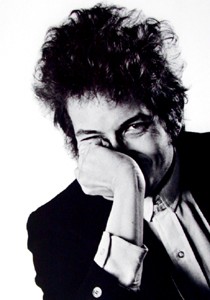
Barry Melton

0

LE POISSON: Barry Melton and his band played in Paris earlier this year. Not bad for a bunch of old hippies. –>

Line on the Fish

Psychedelic relic Barry Melton’s dual life

By Bruce Robinson

Lawyer by day, rock and roller by night. No, it’s not the premise for another lame high-concept television series, it’s the real-life duality for Barry Melton.

Melton, the long-time musical partner of Country Joe McDonald, is still “the Fish” when performing, wearing the nickname proudly as an artifact of the ’60s. It first surfaced when the duo cut a record for a Berkeley antiwar teach-in they held in 1965. “It was a joke,” Melton recalls. “We were looking for a silly name that fit the occasion.”

But the Fish stuck and, at times, expanded. “Being both singular and plural, whatever band we had at the time would be known as the Fish,” he explains. “But we had a dozen different bands over the years, and I’m the only consistent element of those. I suppose that Joe and I as ‘Country Joe and the Fish’ are sort of like Fleetwood Mac being Mick Fleetwood and John McVie and whoever they happen to be playing with.”

These days, when Melton performs, he is usually flanked by a cadre of other alumni from the Summer of Love’s musical scene, including Peter Albin (Big Brother and the Holding Company) on bass, Banana (Youngbloods) on keyboards and Roy Blumenfield (Blues Project) on drums. They’ll hold forth together at the Los Robles Lodge in Santa Rosa on Friday, Oct. 1.

As for the music they share, “It’s fairly straight-ahead rock and roll, but we leave a lot of room to improvise,” Melton says. And he sees that structured spontaneity as the psychedelic era’s most enduring musical contribution. “I think that we took rock and roll, which was pretty rigidly ordered back then, and we stretched it out a little, kind of like a rubber band, in the sense that we made lots of room for improvisation.” The old band’s famous “Fish Cheer” (“Gimme an f, gimme a u . . .”) was immortalized when Country Joe and the Fish performed at Woodstock, and 35 years after the fact, Melton admits to retaining “a hodgepodge of vague recollections” about the event. “I do remember flying over to the concert itself on the day of the concert with Joe Cocker in a helicopter, looking out over the treetops and seeing people dotted throughout the woods for miles before we got to the festival site itself,” he says. “And I remember looking out at the size of the crowd and thinking how enormous it was and what a big deal it was.

“But of course,” he adds with a chuckle, “the thing that made it a big deal is that it got filmed.”

But Melton does not see Woodstock as the celluloid peak for Country Joe and the Fish, assigning that honor to the less widely seen Monterey Pop, shot two years earlier. “I think of Monterey Pop as being the more historic of those movies, because Monterrey Pop was at a more idealistic time, at the beginning of the counterculture ’60s musical movement, instead of the end, which Woodstock was.”

About a decade after Woodstock, Melton started to tire of the rock and roll lifestyle, and began taking law school correspondence courses as a path to a more stable life with his wife and kids. “What musicians do on the road is watch TV or read books anyway,” he shrugs, “so this was just reading books that were more boring.” After five years, he got his degree, passed the bar and went to work.

“I’ve been doing criminal defense work for the 22 years that I’ve been a lawyer,” he says, numbering five of those as the pubic defender for Mendocino County. These days he holds that office in Yolo County, northwest of Sacramento. “My office handles 10,000 cases a year, so in some way I’m involved in the entire gamut of antisocial behavior from driving without a license to first-degree murder,” he observes. And he still gets to deal with some of it firsthand. “During the budget season I have a lot of administrative work to do and when that’s done I get to be a lawyer again for six or eight months of the year.”

Is it hard to reconcile his legal duties with being an old hippie playing rock and roll? Melton says no.

“I think they balance each other really well,” he says. “It’s like the right and left sides of my brain. I get to deal with my linear side and my nonlinear side. It’s actually kind of cool.”

The public defender for Yolo County and his band play on Friday, Oct. 1, at the Los Robles Lodge as part of their ‘Roots’ series. 1985 Cleveland Lane, Santa Rosa. 8:30pm. $10-$13. 707.588.0707.

From the September 29-October 5, 2004 issue of the North Bay Bohemian.

© Metro Publishing Inc.
Zebulon’s

0

Zebulon’s takes jazz–and the arts–to a higher level

By R. V. Scheide

Walking into Zebulon’s Lounge in downtown Petaluma, science isn’t the first thing that comes to mind. The narrow but deep space is dark, even in daylight; the only significant source of light comes from designer fixtures hanging above the bar in back like bright red nipples. Abstract paintings hung on the walls and maroon curtains draped from the ceiling in the rear add a touch of understated elegance. A dozen tables and a few plush couches face toward the front of the place, where a smallish bandstand sits framed against a plate-glass window.

This is quite obviously a nightclub, the only authentic jazz venue in the North Bay, but nevertheless, founder Trevor Zebulon Cole says he owes it all to science–or rather, the bachelor’s degree he earned in biochemistry. “Business and science are very similar,” says Cole, who with spiky, tousled dark hair and neatly trimmed goatee hardly looks like your standard lab rat. “It’s about coming up with a viable solution to the problem.”

Back in 2002, the problem, as Cole saw it, was that there was no place to see good, live jazz on a regular basis in the North Bay. For that you had to go to Yoshi’s in the East Bay or Jazz at Pearl’s in the city. It was puzzling, considering the number of top-flight jazz musicians living in the North Bay, and Cole figured he couldn’t possibly be the only music lover in the area who was tired of driving that far to see live jazz.

Two years later, it turns out he figured right. Zebulon’s quickly established itself on the jazz map, with North Bay jazz fans and musicians as well as jazz giants from as far away as Japan, Italy, Finland, Amsterdam and Cuba. Discriminating aficionados now know that just about any night of the week, good and even great music can be heard at Zebulon’s.

However, the club is no singular sensation–it takes a little bit more than that to win a Boho Award. Since its inception, Zebulon’s has also served as an art gallery, exhibiting the work of local and international abstract expressionist painters. Realizing that local writers really had no sort of meeting place, Cole helped to establish the Livewire Literary Salon, where the cream of the North Bay literati gather every other week to swap readings.

2004 Boho Awards
Bill Bowker
COPIA
Vicki Kumpfer
Marin Shakespeare Co.
Zebulon’s Lounge

“The idea of a salon is nearly absent from our culture,” Cole notes. It’s that scientific mind of his again; he saw the lack as a problem and he solved it. That’s the same impetus behind Cole’s latest project, the Sonoma County Union of the Arts (SCUA), a nonprofit organization formed by Cole and local musician Todd Grady to keep musicians busy doing what the love the most: playing music.

“We wanted to promote jobs for musicians and artists and at the same time promote art and music within the community,” Cole says. To that end, musicians have been so far dispatched to five elementary schools in Petaluma’s Old Adobe School District, where they provide fourth, fifth and sixth-graders with musical instruction. The organization hopes to begin classes in three more districts by next spring; eventually, it plans to go county-wide.

“That’s the difference between us and other art collectives,” Cole says. “We’re focusing strongly on the educational component.”

In addition to receiving financial support from the Petaluma Education Foundation, SCUA holds occasional fundraisers, including the Not So Silent Film Festival at the Raven Theater, in which a six-piece jazz chamber orchestra comprised of local musicians provides originally scored music for classic silent films. It’s a win-win situation, raising money for SCUA and putting musicians to work at the same time.

On a Thursday night, as a healthy crowd forms for local jazz band the Alex Aspinal Quartet–fresh-faced kids in their 20s with some serious chops–it’s clear that Zebulon’s is thriving. That comes as no surprise to Cole.

“To other people, maybe it’s surprising. Petaluma isn’t exactly known for it’s jazz–at least it wasn’t,” Cole says. “But it’s not surprising to me, because I planned it. I worked out a business plan. If it hadn’t worked, that would have been surprising.”

You could call it better listening through science.

The next Not So Silent Film Festival, a benefit for SCUA, takes places on Friday, Sept. 24, at the Raven Theater. 115 North St., Healdsburg. 7pm. $5-$10. 707.433.6335.

From the September 22-28, 2004 issue of the North Bay Bohemian.

© Metro Publishing Inc.
Rock the Vote, Gently

0

Can a bunch of shaggy-haired musicians really sway an election?

By Sara Bir

Last week I finally broke down and bought the Association’s Greatest Hits! on CD. Now, I have no problem admitting my deep affection for the Association–but I also have no problem recognizing that, as bands go, they’re pretty square. Seriously, some of their songs are just a couple steps above Up with People in the vapid peppiness department.

But as my new CD played, I began to consider the band’s lyrical content more closely. Specifically, there’s an antiwar song on there called “Requiem for the Masses,” replete with passages in Latin (deep!). It’s atypically macabre for the Association (“Red was the color of his blood flowing thin / Pallid white was the color of his lifeless skin”), but then again, it was written in 1967, a time I understand was charged with turbulent unrest among a rapidly shifting, dissatisfied youth culture. Even the easy-listening Association were in on it!

Since I wasn’t alive back then, this is all just a hunch, but I have a suspicion that, despite a perceptible level of turbulent unrest among America’s current rapidly shifting, dissatisfied youth culture, our present climate isn’t quite the same. I’m talking about openly relishing songs that stick it to the man, man. We’re in the midst of a war many feel is of dubious justification, our sitting president executes his motives with all the finesse of a sledgehammer and the upcoming election is going to be close enough to split hairs. It’s the stuff of protest music, a call to arms for activists with pens and guitars in hand.

And activists have responded indeed. Folks famous and unknown have voiced their desire for change in methods both grass-roots (organizations like Punk Voter, Bands against Bush and Music for America) and Hollywood gloss (Barbra Streisand’s one-woman crusade against the Bush administration). While I myself am very much convinced that George W. Bush is a total wanker and must be stopped, I’m not feeling it.

There’s a part of me (yes, it’s a very cynical part) that feels patronized whenever a celebrity emerges at an event, encouraging us to cast ballots this way or that way. If I’m going to vote on the blue side in this election, it’s not going to be because someone (yes, I’m talking to you, Moby!) jammed with John Kerry at a fundraiser in New York. It makes me pretty embarrassed, in fact.

But it’s jaded to underestimate the purity of motives behind folks like Moby, who hopefully are only trying to use their fame to tug on the media’s sleeves for what they perceive will result in the greater good of the world. Does it accomplish much in terms of voter turnout?

Bluegrass and country musician Ricky Skaggs–an active Bush supporter–mused on the public efforts of anti-Bush artists in an Associated Press article this past August: “I don’t think that’s going to make a big difference in the election. . . . The American people, they’re not going to let Bruce Springsteen or anybody else or Ricky Skaggs or Marty Raybon or Billy Dean choose who they vote for.” OK, so maybe he could have phrased it better, but he’s got a good point. People don’t vote according to the tastes of their favorite singers. Or do they? God, that’s a scary thought.

Ultimately, protest songs function as a form of expression more than persuasion: the president does something that pisses you off bad, so you go and write a song about it. Those who feel alienated politically can, though a protest song, become united as part of one big, angry family. They can let some steam off their chests and remind the rest of the world where they’re coming from, just to sock it to ’em. And I should not allow my retroactive tastes (the music of Rock against Bush bands like NOFX and Sugarcult makes me want to vomit) to prevent me from becoming part of a larger community.

On Nov. 2, I will blast my Association CD at full volume and strut off to the polls to perform my civic duty and be a true American.

From the September 22-28, 2004 issue of the North Bay Bohemian.

© Metro Publishing Inc.

Vicky Kumpfer

0

Arts coordinator Vicky Kumpfer takes it to the streets

By Gretchen Giles

When Vicky Kumpfer was hired as a recreation specialist by the city of Santa Rosa to oversee two community centers and cultural activities at City Hall, there was a small “footnote” in the job description, she laughs, “about decorating the walls.”

Eleven years later, Kumpfer still works for the city, but she’s forged a job of her own, one that never existed before. Recently recognized with the new title of arts coordinator for the city of Santa Rosa, she still spends three nights a week at the Steele Lane or Finley Park rec centers, overseeing the distribution of chairs for classes and meetings, but decorating, as it were, has become her full-time job.

Such decoration extends far beyond mere walls, though Kumpfer oversees some 20 gallery-style art installations a year at the three civic centers. “I really try to make the exhibits reflect the breadth of the creativity in our community,” she says, seated in a quiet corner of the Finley Center while a senior citizen’s swing dance, replete with live band, blares on in the midday light of a recent afternoon.

“The only thing I haven’t done is an installation,” she says, laughing at the reporter’s assertion that it’s because no one likes them.

2004 Boho Awards
Bill Bowker
COPIA
Vicki Kumpfer
Marin Shakespeare Co.
Zebulon’s Lounge

Trained as a sculptor, Kumpfer was a professional studio artist in Utah before moving with her husband, the sculptor Shojy Uemura, to the North Bay some 11 years ago so that he could be closer to the San Francisco gallery scene.

“I never intended to work for a city,” she says of her work with the Parks and Recreation Department. “But instead of moving on, I felt that I was strategically placed to grow something. I have hoped to create an awareness with the community of what it is to support artists. They keep the culture of our community.”

During her tenure, Kumpfer established the Art in the Park program, moving it eventually to its current summertime placement in Santa Rosa’s infamous Juilliard Park in order, she says, to introduce families to a swathe of green better known to the nefarious. Primarily pairing live music with visual arts and food, Art in the Park also offers theater and even dance. “Every time we do a ballet, attendance goes down,” Kumpfer says, “but if I can give even one child some inspiration, I’ve done my job.”

Citing her favorite catch-phrase, “You don’t have to get art, art will get you,” Kumpfer is dedicated to placing art in public places. “I’m able to touch a broader audience,” she explains, “whereas with a museum or gallery, people who walk in the door already know what they’ve come for. It’s an opportunity to help people understand what art is in our lives.”

To that end, she has coordinated the placement of 15 sculptures all over downtown Santa Rosa as a civic art walk. Working as the executive director at the teen-based Art Start program in 2001, she oversaw the painting and installation of 40 decorative benches throughout the city. “They’ve now cut back to 20 a year,” she chuckles. “That was a big project.”

Kumpfer helped to curate the work placed at the Vineyard Creek Hotel along the Prince Memorial Parkway, introduced the Italian street painting festival at the annual Rose Parade, volunteered at what is now the Museum of Contemporary Art at the LBC for nine years and introduced a codicil to the city’s general plan stipulating that Santa Rosa establish an arts general commission. She’s also the brainstorm behind the installation that MacArthur grant recipient, Sebastopol sculptor Ned Kahn, will place next year on the outside of the dreary SBC building at Third Street and Mendocino Avenue.

But the program that makes Kumpfer proudest is the introduction this year of Santa Rosa into the National Arts Program, an annual exhibit in select cities that helps to fund artists’ education–by offering matching tuition funds, for example–as well as materials for their work and exhibition opportunities. “I’m very excited about being able to help grow the arts,” she says. “My goal is to grow art and culture in this area. I believe in artists as community builders. We’re so franchised with big-box [culture]; I’d like to see more support for bringing identity to a location. But it’s up to the artists and the community to ask for it.”

Later, she reflects, “I would never have imagined that I would be doing this for a living. I still consider myself an artist. I’m just being creative in a very different way.”

From the September 22-28, 2004 issue of the North Bay Bohemian.

© Metro Publishing Inc.
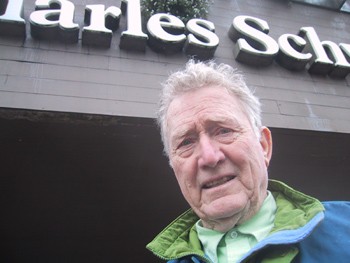
Bill Bowker

0

Bill Bowker, KRSH DJ and music promoter

By Greg Cahill

He’s a man on a mission. Bill Bowker, the silver-haired DJ and music promoter, is a ubiquitous presence on the Sonoma County entertainment scene, spreading the gospel of blues and roots music. He is at once a serious music fan and a mover and shaker who works year-round to book world-class acts (including shows in Petaluma, Healdsburg, Forestville and Santa Rosa) and uses the local airwaves to help the rest of us keep our cool during the afternoon commuter crunch.

Where else on commercial radio are you going to hear the folksy filigree of Celtic-rocker Richard Thompson, the homespun humor of troubadour Todd Snider and the gritty growl of blues giant Howlin’ Wolf in a single set?

And he’s been doing this for 25 years.

These days, Bowker’s familiar voice can be heard seven days a week on KRSH FM-95.9, where he hosts the coveted weekday afternoon drive-time spot. An early supporter of Americana (American roots music based on the traditions of country, including progressive country, alt-country, bluegrass and new-grass), the 60-year-old broadcaster eschews the chance to sleep in on Saturday mornings in order to host the seminal KRSH Americana program from 8am to 10am. On Sunday evenings, he provides the soulful sounds of the popular Blues with Bowker program from 7pm to 10pm.

He’s also the driving force behind the Sonoma County Blues Festival, serves as the genial host at the annual Blues on the River fest and frequently handles those same duties from the Luther Burbank Center’s stage. True to the old blues adage “I’ll sleep when I’m dead,” Bowker can be seen several nights a month emceeing, along with longtime business partner and fellow KRSH DJ Doug Smith, at the red-hot Roots at Los Robles concert series.

2004 Boho Awards
Bill Bowker
COPIA
Vicki Kumpfer
Marin Shakespeare Co.
Zebulon’s Lounge

Raised in Southern California, Bowker is a New Jersey native who developed a passion for music and radio at a time when ’60s rock altered the airwaves with the advent of so-called underground FM, which boasted free-form programming focused not on singles but album sides.

Shortly after high school and a stint at broadcasting school, Bowker joined KUDU, a small Ventura radio station. His first day on the job was Aug. 15, 1969, the opening day of the three-day Woodstock Music Festival held in upstate New York. KUDU broadcast country music on its AM side; the automated FM side was devoted to Top 40. Bowker and others soon convinced the station owner to experiment with a looser format from 7pm to 3am each day. “It was all album cuts. The first thing I played was Cream’s ‘Crossroads,'” he recalls, “and from there, we went into everything that was the antithesis of Top 40 radio: John Coltrane, John Lee Hooker–anything that would upset authority.”

With the increasing corporatization of FM radio in Los Angeles, Bowker later turned his back on “the big bucks and politics” that began to dominate the industry. In 1979 he and his family moved to Santa Rosa.

“I was just glad to get out of there,” he says.

In laid-back Sonoma County, he went on the air at the legendary North Bay under-ground FM station KVRE (now the Fox), one of the region’s last, where he stayed for 10 years.

It was in 1990, during a stint DJ-ing at the short-lived Studio KAFE, that Smith and Bowker soon started booking blues shows together. Smith and Bowker Productions began producing roots and blues shows at the Mystic Theatre, the Raven and other local venues. Today it is one of the top booking agencies in the North Bay–scarcely a week goes by without a Smith and Bowker show somewhere–and the duo are known for hosting affordable concerts that are often accessible to fans of all ages.

“We kept saying, ‘We’re not going to do this anymore,'” says Bowker of the early hassles he and Smith encountered. “But we kept coming back to it.”

Since joining KRSH in 1993, Bowker has become one of the area’s best-known air personalities, championing the blues and roots music that is closest to his heart.

“I’m still drawn by the rawness, honesty and authenticity of it,” he says. “This music is very vital and very important, and it needs to be out there. It’s the stuff I really care about, and I find that once others become aware of it, they also fall in love with it. The reward is having someone who’s never heard of a particular artist come up to you at a show or call you at the station and say, ‘Hey, man, thanks for making me aware of this artist.’

“That’s the gratifying part.”

From the September 22-28, 2004 issue of the North Bay Bohemian.

© Metro Publishing Inc.

Marin Shakespeare Co.

0

Marin Shakespeare Co. keeps life in the boy

Shakespeare would be exceedingly proud. Robert and Lesley Currier have been creatively and enthusiastically overseeing the Marin Shakespeare Festival since its theatrical resurrection 15 years ago (more on that later) at Dominican University in San Rafael. The Curriers, not surprisingly, are rather impressed by William Shakespeare of Stratford upon Avon. But it’s not just the Bard’s plays or witty and poetic writing that inspires them. The Curriers are also fans of Big Willy’s little-discussed style as a theater-world businessman, a guy with an eye for what audiences want.

“Shakespeare was trying to sell tickets, he was trying to get people in the seats–and that’s what we’re trying to do,” laughs Lesley Currier. For the record, that not just what they are trying to do; it’s what they are succeeding at doing. This summer alone, the Marin Shakespeare Festival was host to tens of thousands of theatergoers. The Curriers secret: they’ve borrowed a few tricks from the S-man himself. “Shakespeare’s writing is so amazing, and so beautiful and rich,” says Lesley, “but we believe that Shakespeare’s shows, when they were being performed for the first time, were also meant to be a lot of fun for their audiences, not dry and important theater, but fun theater. We work hard to make those plays fun when we stage them here.”

Cases in point: the 2004 season included a production of Othello, staged in order to heighten the play’s soap-opera qualities, and the currently running Wild West version of The Taming of the Shrew.

As meaningful and entertaining as the Marin Shakespeare Company is for its numerous festival-goers, the Curriers bring their work to a wider audience, offering weekly classes for the inmates at San Quentin Prison, doing outreach with lower-income kids living in Marin City and spending more time in the classroom than some students do.

The other major impact of the festival is the one experienced by the actors and crew. Equity and non-Equity alike (Equity being the international theatrical union to which most actors aspire to join), the MSF employs over 100 cast and crew members each summer, all joining forces at Dominican’s beautiful Forest Meadows Amphitheater, where they work together to design, build, light, costume and perform the festival’s yearly triple feature of shows. Much like in Shakespeare’s days, they are a varied crew.

2004 Boho Awards
Bill Bowker
COPIA
Vicki Kumpfer
Marin Shakespeare Co.
Zebulon’s Lounge

“There’s a whole gamut of actors and technical people who work here,” explains Robert. “Older actors, a lot of them non-Equity, are happy as a clam to play any part we need them to play; they just enjoy being a part of these shows. Then we have a lot of young people on their way up, and if they are successful with us, they often can turn Equity. We’ve turned several actors Equity, because we can do that.”

The Shakespeare Festival originally began at the Marin Art and Garden Center in Ross in 1961, moving in 1967 to Forest Meadows, where Dominican University’s lit-loving nuns were easily persuaded to develop an open-air Shakespearean stage that included–get this–a moat. By 1973, however, the original stage company dissolved, leaving Marin without an annual festival. Luckless it remained for another 17 years. Then, in 1990, while living in Ukiah–where Robert had helped start the Ukiah Playhouse–the Curriers were tapped to take on a new version of the MSF.

“We got a call out of the blue one night, saying, ‘Would you like to come to Marin and restart the Shakespeare Festival?'” says Lesley. “We came down, and the first time we walked this space, we were so charmed. We had a vision of what we could do here, and 15 years later, that vision is still successful.”

The Curriers are especially proud that so many established actors from across the Bay Area and beyond are eager to participate in this rustic, somewhat eccentric festival.

“Shakespeare is more than a living for us,” Lesley says, “It’s a passion. And people want to work here. To have a good reputation as a place that people want to work within the Bay Area means a lot of us.”

That’s something else the Curriers have in common with Mr. Shakespeare.

“We’re actors ourselves, so of course we love actors,” says Robert, who, along with Lesley, understudies every gender-appropriate role every year, ready to step in should an actor become ill.

“And if that’s not enough,” he adds with a laugh, “we also throw great parties.”

Like we said, Shakespeare would be proud.

From the September 22-28, 2004 issue of the North Bay Bohemian.

© Metro Publishing Inc.

‘Beggar’s Holiday’

0

MTC resurrects Duke Ellington’s long lost musical

John Gay’s Beggar’s Opera, first staged in 1728, has inspired numerous adaptations over the centuries, most notably Brecht and Weil’s Threepenny Opera, which gave birth to the notably eerie pop standard “Mack the Knife.” In the mid 1940s, the great Duke Ellington joined forces with writer and lyricist John Latouche to work up a jazz-musical version of The Beggar’s Opera, creating what would be Ellington’s only Broadway musical, Beggar’s Holiday. The show premiered in 1946, was praised by critics and picketed by moralists objecting to the show’s casual interracial romances, and then closed after a mere 108 performances.

One of the musical’s producers was a young Dale Wasserman, who would go on to write Man of la Mancha and the stage version of One Flew Over the Cuckoo’s Nest. Wasserman never forgot Beggar’s Holiday, and now, almost 60 years after its original debut and demise, the award-winning writer has teamed up with the Marin Theatre Company to create a revamped, updated, radically rewritten version of Duke Ellington’s long-forgotten musical.

With additional tinkering, it is highly possible that Beggar’s Holiday will end up back on Broadway in the near future, though it’s unlikely that Ellington, were he still alive, would recognize the show. This is not necessarily a bad thing; after all, the original show was not a financial success. Jazz purists, however, will probably object to the liberties taken with Ellington’s score. Musical director Don York, who’s served as musical director of the touring productions of Beauty and the Beast, Fosse and The Producers, has substantially rearranged the score, injecting tinges of funk, blues and rock here and there, while Broadway-ing up many of the arrangements so completely that, aside from a few identifiable Ellington songs– “Brown Penny,” “The Wrong Side of the Railroad Tracks” and “Tomorrow Mountain,” the latter having been lusciously recorded by Lena Horne–the musical score could have been written by almost anyone.

That said, the music works quite well, regardless of its not being strictly faithful to its roots. Alternately frisky and romantic, Beggar’s Holiday arrives with a first-class score and more than its share of tuneful, memorable songs, well performed by a tight, talented cast. Directed by MTC artistic director Lee Sankowich and featuring Christopher Neal Jackson (The Lion King‘s original Broadway Simba) in the lead role of the beggar, this is a fun, entertaining show that will do the trick for anyone who craves light, frothy, feel-good musicals with just a touch of social criticism and political humor.

The show begins before the lights go down in the theater, as numerous street people, hookers and panhandlers begin taking the stage, teasing the crowd, soliciting donations and, in the case of one whimsical bag lady, launching into a raspy rant that quickly becomes what is easily the most entertaining turn-off-your-cell-phone speech I’ve ever witnessed.

From the pack emerges a blind beggar (Jackson) who, with the song “In Between,” reveals the secret to maintaining his sanity in the midst of misery: he pretends he’s someone else. From then on, with a few brief interludes with the Beggar as narrator, the show becomes his dream-reality, in which he is the handsome, promiscuous criminal Happy Mac (there’s always a Mac), the leader of a colorful band of petty thieves, Fingersmith, Highbinder, Wireboy and Gunsel, well-defined by a hard-working quartet of character actors Michael LeRoy Brown, Robert Brewer, John Patrick Moore and James Monroe Iglehart, respectively.

There is a romance, three of them, actually, as the oversexed Happy Mac charms and beds the innocent Polly (a wonderful Dani Marcus), before moving on to impetuous Lucy (Virginia Wilcox), all while stringing along the dangerously practical Miss Jenny (Cathleen Riddley). The plot is mostly fluff, involving Happy Mac’s capture and escape from the law, all while he holds to an optimistic insistence, in spite of everything, that tomorrow will be better than today.

That message, like Beggar’s Holiday itself, may not be all that meaty, but it’s pleasant and pretty, and sometimes, pleasant and pretty is exactly what we need.

‘Beggar’s Holiday’ runs Tuesday-Sunday through Oct. 10. Thursday-Saturday at 8pm; Wednesday at 7:30pm; Sunday at 2pm and 7pm; special matinees, Sept. 22 and 30 at 1pm. Marin Theatre Company, 397 Miller Ave., Mill Valley. $28-$46. 415.388.5208.

From the September 22-28, 2004 issue of the North Bay Bohemian.

© Metro Publishing Inc.

The Clash

0

New Clash reissue offers rare demos

By Greg Cahill

Agit-rocker Billy Bragg once called the Clash “the greatest rebel rock band of all time.” In 1979, at the dawn of the ultra-conservative Thatcher-Reagan era, a source of apocalyptic fear over nuclear annihilation, this now-legendary punk band–with their high-energy (often reggae-tinged) grooves, radical stance and working-class themes–set out to do what any great rebel rock band would do in such dire times: record the last rock album.

The double album, demo’d that spring under the title The Last Testament, was released a week before Christmas 1979 as London Calling. The album’s graphic design, including the title and the band’s name, duplicated the typeface and colors of Elvis Presley’s debut album, which had depicted the dreamy-eyed pop idol strumming his acoustic guitar. But the classic Pennie Smith black-and-white photo on the cover of London Calling, depicting bassist Paul Simonon smashing his Fender bass on the stage of the Palladium in New York, captured all the anger and angst of the punk era.

Inside, the tracks provided a snarling soundtrack for Britain’s civil unrest, featuring strong songs, written mostly by the team of Joe Strummer and guitarist Mick Jones (the Lennon-McCarthy of punk music), that denounced police brutality, racial and class inequality and aligned the band with the burgeoning socialist movement, all set to a highly danceable and innovative mix of rockabilly, ’50s rock, Phil Spector wall-of-sound pop, Motown soul, modern rock, lounge, jazz, ska and Third World beats.

It was nothing short of a musical revelation.

That remarkable sound is still fresh today. You can hear the Clash’s “Should I Stay or Should I Go” on a current TV car commercial, and the band’s influence can be heard all over the new Green Day album, American Idiot, and in the music of dozens of other less talented imitators. Yet that sound gelled just two year’s after a debut album deemed by CBS Records as too strident for U.S. audiences–an album that became the biggest-selling indie record of its time.

This week, 25 years after its initial release, London Calling has been reissued by Epic/Legacy as a three-disc set that won’t disappoint fans. In addition to a digitally remastered CD of the album’s 19 original tracks, this deluxe edition includes a DVD chronicling the making of the album (suffice to say, the album’s manic producer Guy Stevens is the star of that insightful documentary) and a third disc featuring 21 newly discovered demos known as The Vanilla Tapes, recorded between May and June of 1979.

The Vanilla Tapes, so-called because the demos were recorded at the Vanilla recording studio in a converted rubber factory in the London suburb of Pimlico, is one of the most sought-after rarities in rock history. Long believed to be lost, The Vanilla Tapes showed up in March when Mick Jones found an old cassette version in a cardboard storage box while moving from his Holland Park house.

For Clash fans, The Vanilla Tapes are the Holy Grail of late-’70s and early-’80s punk rock. Among the highlights are “Paul’s Tune,” an instrumental that finds bassist Simonon teaching the band how to play what would later become the defiant anthem “The Guns of Brixton,” as well as a raw, instrumental version of “Working and Waiting” (later renamed “Clampdown”), and four previously unknown Clash songs.

The Vanilla Tapes offer an inside glimpse to the creative process that spawned London Calling, which included the classic-rock staple “Train in Vain” and displayed the band’s maturing songwriting. The apocalyptic title track served as a call to arms for the punk generation, extolling the death of the counterculture (“That phony Beatlemania has bitten the dust”).

London Calling is significant because it embodies a band that had rejected the cynicism prevalent in so much ’70s punk rock. The album is a statement of purpose from a group that had no illusions that it could ever create profound societal changes, but felt determined to stand up and urge fans to fight the power nonetheless.

“We were groping in the dark,” the late Joe Strummer notes in the 45-minute documentary about the making of the album.

“If Karl Marx couldn’t [change the world], then what was the chance that four guitarists from London were going to change it? But we did try.”

From the September 22-28, 2004 issue of the North Bay Bohemian.

© Metro Publishing Inc.

‘The Drawer Boy’

'FARM' MEN: Joseph Parks, Will Marchetti and Robert Ernst. -->Country MattersMemory and truth collide in magical 'Drawer Boy' Hector Correa is the Barry Bonds of the North Bay theater world. Since signing on last spring as the new artistic director of Rohnert Park's celebrated Pacific Alliance Stage Company, Correa has miraculously managed to produce one home run after another....

No End to the New Normal

DECEPTION DOLLARS: Here in the new normal, it comes as no surprise that such bills are manufactured in Canada. -->No End to the New NormalDark reflections on the presidential campaign to this pointBy R. V. ScheideOn Wednesday, Sept. 8, when I was working out of my home office with three television sets tuned to CNN, CNBC and FOX as...

Barry Melton

LE POISSON: Barry Melton and his band played in Paris earlier this year. Not bad for a bunch of old hippies. -->Line on the FishPsychedelic relic Barry Melton's dual lifeBy Bruce RobinsonLawyer by day, rock and roller by night. No, it's not the premise for another lame high-concept television series, it's the real-life duality for Barry Melton. Melton, the...

Zebulon’s

Zebulon's takes jazz--and the arts--to a higher levelBy R. V. ScheideWalking into Zebulon's Lounge in downtown Petaluma, science isn't the first thing that comes to mind. The narrow but deep space is dark, even in daylight; the only significant source of light comes from designer fixtures hanging above the bar in back like bright red nipples. Abstract paintings hung...

Rock the Vote, Gently

Can a bunch of shaggy-haired musicians really sway an election?By Sara BirLast week I finally broke down and bought the Association's Greatest Hits! on CD. Now, I have no problem admitting my deep affection for the Association--but I also have no problem recognizing that, as bands go, they're pretty square. Seriously, some of their songs are just a couple...

Vicky Kumpfer

Arts coordinator Vicky Kumpfer takes it to the streetsBy Gretchen GilesWhen Vicky Kumpfer was hired as a recreation specialist by the city of Santa Rosa to oversee two community centers and cultural activities at City Hall, there was a small "footnote" in the job description, she laughs, "about decorating the walls."Eleven years later, Kumpfer still works for the city,...

Bill Bowker

Bill Bowker, KRSH DJ and music promoterBy Greg CahillHe's a man on a mission. Bill Bowker, the silver-haired DJ and music promoter, is a ubiquitous presence on the Sonoma County entertainment scene, spreading the gospel of blues and roots music. He is at once a serious music fan and a mover and shaker who works year-round to book world-class...

Marin Shakespeare Co.

Marin Shakespeare Co. keeps life in the boy Shakespeare would be exceedingly proud. Robert and Lesley Currier have been creatively and enthusiastically overseeing the Marin Shakespeare Festival since its theatrical resurrection 15 years ago (more on that later) at Dominican University in San Rafael. The Curriers, not surprisingly, are rather impressed by William Shakespeare of Stratford upon Avon. But...

‘Beggar’s Holiday’

MTC resurrects Duke Ellington's long lost musical John Gay's Beggar's Opera, first staged in 1728, has inspired numerous adaptations over the centuries, most notably Brecht and Weil's Threepenny Opera, which gave birth to the notably eerie pop standard "Mack the Knife." In the mid 1940s, the great Duke Ellington joined forces with writer and lyricist John Latouche to work...

The Clash

New Clash reissue offers rare demosBy Greg CahillAgit-rocker Billy Bragg once called the Clash "the greatest rebel rock band of all time." In 1979, at the dawn of the ultra-conservative Thatcher-Reagan era, a source of apocalyptic fear over nuclear annihilation, this now-legendary punk band--with their high-energy (often reggae-tinged) grooves, radical stance and working-class themes--set out to do what any...
11,084FansLike
4,446FollowersFollow
6,928FollowersFollow
