‘Amazing Luminous Fountain’

0

: Bruce Conner’s photogram ‘Teardrop Angel.’ –>

‘Amazing Luminous Fountain’ marks new era for di Rosa

By Gretchen Giles

Like so much else at Napa’s di Rosa Preserve, this began as a sly joke among artists. Filling a suitcase-sized box with personal correspondence, various arcana, a bag of dust and the artist Bruce Nauman’s forgotten detritus, Woodacre artist William T. Wiley pronounced it the Beatnik Meteor, and in 1970 proposed a swap with the late artist Ed Kienholz. Whoever bought the Meteor would be privileged to barter it for a watercolor painting by Kienholz. Nauman’s castoffs were just part of the fun; the artist had borrowed Wiley’s studio and untidily left some of his stuff behind.

Always game for a good joke, avid collector Rene di Rosa purchased Meteor and stowed it among his thousands of other pieces of California art.

Imagine di Rosa Preserve executive director Jack Rasmussen’s delight, then, to open Meteor some two years ago and discover the 34-year-old time capsule that Wiley had gleefully created. In addition to the bag of dust once swept up from the Whitney Museum by conceptual artist Terry Fox (part of a “dust exchange” the two men agreed upon) were Upson board letters that Nauman had dictated were to be his contribution to a 1968 exhibit at Oregon’s Portland Art Museum that, when hammered up over a portico per his directions, spell out the marvelous incantation “The True Artist Is an Amazing Luminous Fountain.”

Looking for some way to organize and showcase the sprawling di Rosa collection, certainly the largest privately held aggregation of California art available for public perusal, Rasmussen realized that Beatnik Meteor was “emblematic of the collection” and organized a touring show of di Rosa’s treasures around Nauman’s glimmering title. Just returned from a well-received exhibition in Washington, D.C., where East Coasters fairly gawked at the freedom of the California aesthetic, “Fountain” has briefly alit home. After a fair winter at the di Rosa, the exhibit travels to Palm Springs and Santa Cruz before landing in Miami Beach just in time for the international Basel Art Fair next year.

In conjunction with the Preserve’s exhibition, its sister space, the downtown storefront gallery Off the Preserve, hosts a benefit auction of work donated by artists collected in the “Fountain” show, some of whom will speak about their art on Saturday, Oct. 9

Standing in the Preserve’s Gatehouse Gallery recently, Rasmussen directs the visitor to pieces that, gathered together for the exhibit from the Preserve’s boisterous collection, signify a certain place and time that won’t come again. “I set out to identify the love of the collector,” he says rather poetically.

Rasmussen also set out to identify the rambunctious spirit that informs the work of Rene di Rosa’s very spirited group of favorite artists. A former San Francisco Chronicle reporter whose inheritance allowed him to buy prime Carneros land before anyone thought to plant vineyards there, di Rosa, now a robust 85, enrolled at UC Davis to study viticulture in the early ’60s and quickly grew bored. “He hung out in the art department instead,” Rasmussen explains.

Lucky him. Boasting a roster of art stars, Davis easily had the most vital art department on the West Coast at the time. Freed by the ease of cash, di Rosa purchased exactly and only what he liked, artwork that has humor, word play and fun. He and his late wife Veronica filled their home–now part of a public tour–with the fruits of their idiosyncratic tastes.

Di Rosa continues to collect new work, but “Fountain” shows art from a particular time, one that nicely hails the late funk daddy, Wally Hedrick. Writing in the accompanying exhibit catalogue, Rasmussen salutes Hedrick as “the embodiment of the independent, nonconformist spirit” that imbued Bay Area art. Isis by Jay DeFeo, Hedrick’s former wife, is displayed, as is a surprising amount of ceramics, most notably by the late Robert Arneson, whose War Head Stockpile sculpture of dead bodies formed into a familiarly shaped waist-high male object remains sadly relevant. Rasmussen chose the plethora of ceramic work in order to help inform. “I felt that people didn’t know abut ceramics on the East Coast,” he explains,” and it’s such a part of the Bay Area scene.”

Other work ranges from that of Petaluma artist and Burning Man collaborator David Best, early efforts by Squeak Carnwarth and Deborah Butterfield’s emblematic mud and hay horse to the late Viola Frey’s huge Picasso-informed sculpture, West Marin artist Clayton Bailey’s fantastically endowed Male Chair and Ray de Forest’s whimsical dogs and summer-art-camp fantasies. Nauman’s Cocoon usually hangs in the di Rosa’s former home, rather overlooked among the jumble. Now it’s in a plastic box to keep hands and dust away, but its origins remain humble, Rasmussen relating that DeFeo used to hang her wrapped Christmas gifts from the ceiling, something that her former roommate Nauman thought to be, simply put, pretty neat.

Entirely accessible, the “Fountain” exhibit marks perhaps a new era in the di Rosa Preserve’s lifeline.

“We’ve been perceived as being secretive and private, and we don’t want to be either secretive or private,” sighs marketing director Judy Daniels, entering the Gatehouse Gallery.

The di Rosa’s conundrum, as Daniels sees it, is that this local jewel is currently only available to the highly organized. Located smack on the side of Highway 12 in Napa, visitors cannot currently just pull over on a whim to visit the 217-acre parcel laid with a private lake and studded with whimsical sculptures, two galleries and an art-filled home. Only those who reserve time in advance may see the galleries and take a guided tour of the grounds. All of that is about to change, as a new permit allows the di Rosa to welcome drop-in visitors Tuesday-Sunday, beginning on Nov. 9. Admission will be just $3 to those who wish only to view the collection housed in the Gatehouse Gallery.

“Fountain” arrives home just in time to help mark this new phase at the Preserve. Having sifted through literally thousands of artworks to compile the collection, Rasmussen sighs with pleasure. “You could do 20 different shows here,” he pronounces, “without a problem.”

‘The True Artist Is an Amazing Luminous Fountain’ continues at the di Rosa Preserve through May 2005. By appointment only until Nov. 9, then open Tuesday-Saturday, 9:30am-3:30pm. A conversation with Preserve artists is scheduled for Saturday, Oct. 9, at 6:30pm at Off the Preserve, 1142 Main St., Napa. Free (reservations required). 707.253.8300. The benefit auction is scheduled for Saturday, Oct. 30, from 6:30pm at the Preserve itself. $150. 5200 Carneros Hwy., Napa. 707.226.5991.

From the October 6-12, 2004 issue of the North Bay Bohemian.

© Metro Publishing Inc.

‘Ladder 49’

0

: Joaquin Phoenix smolders in ‘Ladder 49.’ –>

Fireman and author Earl Emerson smokes ‘Ladder 49’

In its ongoing quest for the ultimate postfilm conversation, Talking Pictures takes interesting people to interesting movies.

“I just want to say a couple things right off,” begins Lt. Earl Emerson, the bestselling author (Into the Inferno, Vertical Burn) and longtime firefighter with the Seattle Fire Department. It is early Sunday morning, and Emerson is at home, gearing up to talk about Ladder 49, the new fire-fighting flick starring John Travolta and Joaquin Phoenix. Emerson saw the film Friday night, before reporting to his station for a 24-hour shift, which he only just completed. It was, he says, an eventful two-dozen hours.

After sitting through an oxygen-mask class, Emerson’s crew had fill-in duty, holding down the fort at another station while that crew went to mask class, a tricky situation, he explains, because every time there was an alarm, the visiting firefighters had to consult a map to see how to get to the fires, most of which turned out to be of the food-on-the-stove variety.

“Usually, you don’t get more than one food-on-the-stove call in a shift,” Emerson reports. “We had four in a row, so I don’t know what was going on in Seattle last night.”

The high point, in a personal sense, was when Emerson noticed a copy of his new book–the excellent kick-ass thriller Pyro (Ballantine; $24.95), about a pyromaniac who seems to hate firefighters–sitting on the bunk of a fireman whose station he was babysitting. As Emerson tells it, after debating the issue for a while, he finally grabbed the book and signed it, inscribing it with the manly message, “Thanks for saving my butt at that big fire last week. If it weren’t for you, I wouldn’t be here. Earl Emerson.”

“I have no idea who the guy is,” Emerson laughs. “But, hey, weren’t we talking about the movie?”

Oh, yeah. The movie.

In Ladder 49, Phoenix plays a sensitive fireman trapped inside a burning building, tearfully flashbacking to all the most important moments of his life–first day on the job, first fire, first date, first kid, first work-related death–while his boss (Travolta) works the scene to find his fallen comrade and get him out of the flames.

“Let me just say,” Emerson comments with a slight bad-boy chuckle, “if that guy, Joaquin Phoenix, was in our station, I would not want to be his partner. Everywhere he went, somebody got killed or fell through a roof. It’s like, wow, this guy is bad news. We have people like that in the fire department–and I tend to avoid them.”

Was it Phoenix’s knack for getting into extreme-temperature trouble that alarmed Emerson, or the way the guy seemed always right on the verge of bursting into tears?

“Both,” Emerson laughs. “The other thing is, these guys never seem to have any normal alarms. Every time the bell hit, it’s like, ‘Oh my God! Somebody’s either going to die or get their faced burned off!’ In a real station, you’d have a lot more calls to go help someone with diabetes check their blood sugar. We didn’t see any of that.”

In spite of the glaring absence of blood-sugar scenes, Emerson admits to enjoying Ladder 49. “It didn’t have a plot and the actors weren’t so great, but you know, it held up remarkably well when you consider all the deficiencies,” he says. Recognizing that this isn’t exactly high praise, Emerson adds, “It was an enjoyable tearjerker, a real five-hanky movie, wasn’t it? Every time the bagpipes and the kilts came out, I started crying.”

So . . . firemen do cry?

“Yeah, but I only cry at fire movies and war movies,” he explains, “so it’s OK.”

Ladder 49 is destined to hold a special place in the hearts of firefighters, Emerson surmises, if only because it’s a better flick than Backdraft. That film, with Kurt Russell and Billy Baldwin, is still the focus of firefighter mockery, partly for its over-the-top fire scenes, but mainly, says Emerson, for the macho catch-phrases spouted by the fictional firemen.

“For years we were running around saying, ‘You go, I go!'” Emerson chortles. “We’d go out on some routine aid call–something like helping someone with diabetes–and before going in to take her blood sugar we’d say, ‘Hey man, you go . . . I go.'”

If being superior to Backdraft isn’t enough to encourage one to see Ladder 49, Emerson offers this additional endorsement.

“It’s a great date movie for firefighters,” he assures. “If you’re a fireman and you want to get laid, take her to see Ladder 49. It’s a sure-fire winner.”

From the October 6-12, 2004 issue of the North Bay Bohemian.

© Metro Publishing Inc.
Small Portions

0

Minute Meals

Where have all the big plates gone? Napa’s Wine Garden and other eateries make small the new big.

By Heather Irwin

Doesn’t anyone serve normal portions anymore? Because when it comes to plate size, small is the new big–as in micro-sized portions that arrive on doll-sized dishes. Not that I’m complaining all that loudly, mind you. I like the idea of lots of little noshes made for sharing. But it must be acknowledged that all this miniature plate-wrangling comes with inevitable food foibles that have reached near epidemic proportions around the North Bay.

For example, there’s the “What sounds good to you?” syndrome marked by everyone ordering semibland small plates that each thinks the group will like. Compromise is never a good idea, in my book. I say screw the guy who can’t stomach garlic or cilantro. He can order the cheese plate and shut up already.

There’s also the “Oh, I couldn’t eat another bite” behavior displayed by the ravenously hungry who are politely suffering out of misplaced modesty and goodwill. These folks are marked by their wan and distraught look after a small-plate dinner. Being hungry, however, is better than being labeled the “nonsharer”–that unfortunate who appears pained at the idea of others sticking their forks in her meal, and insists on ordering her own plate with a pinched, prissy face. (Yeah, you know who you are.)

The most common ailment we’ve found, however, is the embarrassing itching and burning of the “Eyes bigger than my wallet” affliction. This is typically caused by anxiety over not having enough food (see above) or overly zealous waiters looking for a big tip. Watch for these signs: items that seem like a heck of a deal (steak for $8!) and include large portions of microgreens or anything heirloom. These inevitably end up draining your pockets of that pesky cash when adding up the stack of cute but costly little plates before you.

Tragically, science has yet to find a cure for these (and other) small-plate faux pas. The good news, however, is that new menu labels, such as those at Yountville’s newest restaurant, Wine Garden, are going a long way toward making small-plate dining safe again.

Neatly organized into six sections, chef Michael Bilger’s menu deftly alerts eaters to the rough phylum and class of each of the dishes. The “Ocean and Stream” section, for example, lists six types of seafood plates. “Field and Farm” covers the veggie and cheese landscape. “Ranch and Range” is all about meat, and so on.

Owned by the Nords, one of Napa’s premier grape-growing families, Wine Garden is a showcase of their grapes and local(ish) ingredients like Hog Island oysters, quail, pork and field greens. Focusing primarily on American cuisine, the menu takes a dip south with ingredients like okra, cornmeal, bourbon and succotash, but ends up firmly in the fresh, local, adorable NorCal food genre.

Start with oysters (prepared three ways: raw, fried or grilled), regardless of your personal issues about the slimy little buggers. The standout winner is the crispy cornmeal crust topped with chili aioli and little pickled veggies ($10). Four come in an order and are easily one of the best items on the menu, with a knockout combination of crunch, zingy greens and splash of sauce spicier than your grandmother in fishnets.

Here’s where the dinner gets really fun. The restaurant offers a decanter of either still or sparkling water (choose sparkling), distilled in-house. Yep, homemade water just like mama used to brew. After your whistle is wetted, check out the wine list, led by a selection of “Fun Flights.” Dorky name, cool idea.

The flights reflect varietal and terroir pairings from local wineries that use the Nord family’s grapes. With a selection of about 30 wines by the glass from Mumm, Charles Krug, Destino, Elyse, Mayo, Sterling, Merryvale and August Briggs, this is a terrific chance to sample some pretty amazing wines. The “Light and Toasty” flight ($12) was a great first flight, with the absolutely peachy Sauvignon Blanc (Flying Horse, ’03), the oaky yet fruit-forward St. Supery ’01 Chardonnay and the slightly fuller Destino ’02 Chardonnay.

Pairing well with our next dish from the aptly named “Ocean and Stream” section was the trout almondine with summer beans ($10), which our server steered us toward, but the Boy had his heart set on the Florida rock shrimp hush puppies with spicy remoulade ($9). Boy’s spidey-sense on this dish was right on, as we were subsequently presented with a pile of shrimp-filled mouth poppers topped with fried lemon peel and a kicky sauce that both bit and cooled with creaminess. My only critique is the lack of local seafood (ahi, Idaho trout, Maine crab, Florida shrimp, Alaskan halibut are offered), though that argument, I’m told, depends on the day, as the menu changes with what’s fresh.

Acquiescing to the Boy’s dagger eyes at our not having ordered the Pinot Noir flight, we ordered the Pinot Cubed flight, with an unfiltered and very funky (not in a good way) Green Truck ’02. The “oh my God” moment of the night was the first sip of the Elyse ’02, followed by the August Briggs ’02. Sheer heaven.

Hopping back from heaven to the Garden (which you’ll see on the acre or so of land surrounding the restaurant), we next tried the fried green tomatoes and okra with pickled vegetables ($7) from the “Field and Farm” section. I’m not that familiar with fried green tomatoes, but anything covered in cornmeal and fried up crispylike tends to be OK in my book. The tomatoes (which were sort of red and green) were soft and warm, with lots of tangy flavor, and the okra (again, not a staple in my house) was, well, very okra-y–sort of green and grass-flavored. Realizing that perhaps we were working the fry cook a bit hard, we considered how the BLT salad ($7) makes good use of seasonal heirloom tomatoes, Point Reyes blue cheese and bacon. Mmmm, bacon.

Making our way through the menu, it was a toss up between the molasses glazed pork belly with a Santa Rosa plum compote ($10) or the grilled hangar steak ($13). What edged the steak out front was its pairing with a pile of sweet and succulent red onions and the bacon and chive “smashers” (mashed potatoes, roughly, to you and me).

On the side, the macaroni gratin with Vermont cheddar, ham and cherry tomatoes ($5) was an evil sin of a dish but a fitting addition. Bubbling tantalizingly in its little copper pot, the Boy dared me–dared me, ha!–to eat it single-handedly. Though my stomach failed me and I ended up in shame, I would have gladly licked the pot clean if I could have.

For dessert (the pain! the agony! where’s my spoon?), the peach upside-down cake with ginger ice cream and bourbon vanilla sauce ($10) nearly cost me my hand as the Boy lunged, licked and savored this down-home dessert. The snap of the ginger ice cream saved it from being overly saccharine and gooey. I was more interested, however, in the “Ode to the Diner” (a reference to the restaurant’s former life as the Yountville Diner), featuring two buttermilk milkshakes topped with candied cherries ($6).

Two small additional side notes about the Wine Garden make me love it even more. First off, unlike most other Yountville eateries, kids are welcome here, and not in a “we’ll tolerate the brats” way. There is a funky little kids menu that includes a hand-dipped corn dog (the Boy had to promise not to order it) and seven-year-old-approved chicken fingers and veggie sticks. How very refreshing.

Additionally, check out the bathroom. Though I can only speak for the women’s room, it’s worth looking up at the domed ceiling which is topped with a cork and a corkscrew coming through it. Suddenly, you’re in a wine bottle, er, restroom. Either way, it’s fun. Just remember to wash your hands.

Wine Garden, 6476 Washington St., Yountville. Open daily, 11am-11pm. 707.945.1002.

Other Small Sizers

Barndiva (231 Center St., Healdsburg, 707.431.0100) has a similar style of breaking up the small-plates menu, though its plates are categorized by “Light,” “Spicy” or “Comfort.” By choosing your meal according to similar ingredients or themes like sandwiches or fish, you can order your food by mood.

Willi’s Seafood (403 Healdsburg Ave., Healdsburg, 707.433.9191) features killer small plates of seafood like spicy calamari, tuna tartare with coconut milk and a lobster roll sandwich.

In October, the former Popina Restaurant in Sonoma will reopen as 707 with a small-plate menu broken up into sections similar to the Wine Garden’s (“Dairy,” “Ranch,” “Farm,” etc.). We’ll look forward to chef Randy’s triumphant return (and hope that his prices will be a little more manageable to us peons this time).

–H.I.

From the October 6-12, 2004 issue of the North Bay Bohemian.

© Metro Publishing Inc.
Soft Rock

0

Ninety-Nines

Between soft rock and a hard place

By Sara Bir

There comes a time in a rock music critic’s life when you realize that you are really, really washed up and not in touch with anything cutting edge or even relevant in the current musical climate. One morning you wake up and, in a moment of brutal honesty, confess to yourself that you have no idea who this Franz Ferdinand guy is or you realize that at some point they started playing Modest Mouse songs at the Gap and you completely missed it. How is it that my mom knows more about Wilco than I do? Alternative music is supposed to be the way people who can’t relate to the rest of the world relate to each other, so why have I stopped caring about it?

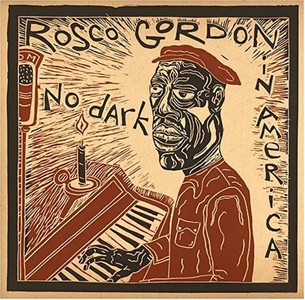
I blame our record player. Mr. Bir Toujour and I finally procured a working one about a month ago, and my already spotty pop-cultural literacy has gone downhill ever since. The record player sparked a cavalcade of vinyl recovered from a hippie neighbor’s yard sale and various thrift stores, most of it in scratched, dusty, uncollectible condition–but play it we do, and to excess. How can a music fan be concerned with Bjork’s new album when there’s Jethro Tull to be heard? For people like me (who, not having been born yet, were unable to spend most of the ’70s playing records and smoking pot), there’s an entire era–multiple eras!–waiting to be unearthed. To wit:

Genesis, Invisible Touch

At least five-eighths of the songs on this album were released as singles. Sure, I liked them in fifth grade, but they stand on their own now for their musical complexity when removed from roller-rink nostalgia. This album is good despite Phil Collins. Play Invisible Touch back-to-back with Collins’ solo No Jacket Required and see what I mean.

Mike Oldfield, Tubular Bells

OK, so I went out and bought the Fiery Furnaces’ critically lauded new album Blueberry Boat in a desperate attempt to expose myself to something new and exciting. It’s massive, intricate, operatic, unwieldy–a mind-boggling achievement. But Blueberry Boat kind of gives me a headache. Tubular Bells does not give me a headache, plus it has that growling “Piltdown man” part. And dude, this was, like, in The Exorcist!

Johnny Rivers, Realization

Here we have a psychedelic Johnny Rivers really getting in touch with his inner self, man. Outside of the Johnny Rivers front photo featuring a bad goatee and love beads, you can tell this album came out in the ’60s because it includes “Hey Joe.” Yes, even Johnny Rivers covers “Hey Joe,” and it’s this really great, bloated version with a backing choir and everything. Plus, there’s “Summer Rain,” as wonderful a pop song as you can ask for.

Dionne Warwick, Your Favorite Bacharach- David Hits

A Columbia House thing, probably not even a real album. But it’s still excellent to play while making dinner, and a lot less depressing than Billie Holiday.

Sessions Presents Mellow Gold

The best three-record set of easy-listening music ever! Seals and Crofts, early Hall and Oates, the Doobie Brothers, “Midnight at the Oasis”–oh God, this record is heaven! Jackson Browne in any other context is indigestible.

History: America’s Greatest Hits

America is distinguished for sounding kind of like Neil Young. I have Neil Young albums, but guess what? I probably listen to America just as much, if not more often. This alone should condemn me to hell. Why am I allowed to write about music?

The catch here is that, keeping a limited budget in mind, I typically purchase only records in the 99 cent price range. For 99 cents, you can’t buy undisputed classics–you get rejects. For 99 cents, you get Orleans. Stuff that’s mostly suited not for smoking pot, but for drinking Tab. Stuff you can’t even be ironic about liking. But I do like it (well, except for Orleans). Sincerity in embracing 99 cent records is so, so beyond wearing a reproduction vintage Def Leppard T-shirt, folks–and that’s what the cutting edge is made of. Franz Ferdinand, take note!

From the October 6-12, 2004 issue of the North Bay Bohemian.

© Metro Publishing Inc.
2004 Mill Valley Film Festival

0

FEMME FATALE: 14-year-old actress Celeste Marie Davis also wrote ‘Purgatory House,’ in which she stars.

–>FOREVER YOUNG: Kate Winslet and Johnny Depp co-star in the Barrie bio ‘Finding Neverland.’

–>Sex Scene

The 2004 Mill Valley Film Festival reveals a few naked truths–and a whole lot more

Film festivals can tell us a lot about the state of the cinematic art, and possibly the reigning social attitude, merely by an examination of how each new festival hangs together. Except for those festivals organized around a very specific theme–science fiction/ horror movies, gay and lesbian movies, movies made for under $1,000 by recovering alcoholics from Fresno–the average film festival strives to be a vast salad bar of eclectic thematic subjects, origins and cinematic styles. That said, one cannot help but notice while skimming the program listing of the average film festival that certain mini themes frequently appear and a large number of films do seem to fall together into topical groups.

Consider last year’s Mill Valley Film Festival (MVFF), which included The Barbarian Invasions, Japanese Story, Sylvia, A Family Undertaking, My Life without Me, Pieces of April, Mystic River, The Station Agent and Wilbur Wants to Kill Himself, all of them about people dealing with death. The mortality theme was pronounced enough that many attendees began affectionately referring to the event as “the Mill Valley Death Festival.”

For the 2004 MVFF, running Oct. 7-17, the organizing Film Institute of Northern California has put together a first-rate lineup of over 100 films, shorts and special screenings, only a handful of which deal overtly with death and dying: Johnny Depp’s whimsical Finding Neverland, William Hurt’s Blue Butterfly, the satirical football and capital-punishment comedy Death and Texas and the buzz-inducing Purgatory House, in which a group of teen suicides are sentenced to eternity in a hellish halfway house.

A perusal of this year’s films reveals other small filmic groupings of similar subject matter. There are music films (Blues Divas, The Grateful Dead Movie, The Nomi Song, Timbuktoubab and the closing night blues documentary Lightning in a Bottle); films that were either made in the Bay Area or made by local filmmakers (notably the youth-directed compilation of shorts titled Barbie, Frankenstein and Friends featuring the hilarious antibiography Michael Patten’s Life by Novato high school junior Michael Patten); and animated films (the piratical French adventure Black Mór’s Island, Bill Plympton’s ghoulish Hair High and The Dark Side of the ‘Toon).

Oddly, the festival also features not one but two films dealing in part with . . . college admissions officers: Melissa Painter’s Admissions (starring Six Feet Under‘s Lauren Ambrose) and P.S., in which admissions officer Laura Linney discovers that an incoming freshman (Topher Grace) is the reincarnation of her long-dead high school sweetheart (which actually qualifies this film for the death-and-dying subset).

What does this mean? We have no idea. But whether it means anything or not, one can’t deny that films, like celebrity deaths and election season lies, do tend to come along in breathtaking clusters.

“It’s interesting how that happens,” agrees film producer Gail Mutrux, whose producing credits include Quiz Show, Nurse Betty and Donnie Brasco. “I remember a few years ago, the year of In the Bedroom and Monster’s Ball and a few others. That was the year we all got to see movies about families dealing with the death of a child. There was just something in the air.”

So what’s in the air now?

“Well, coming out of the Toronto Film Festival,” she replies, “it looks like we’re about to see a lot of films that deal in some way with sex.”

Bingo.

A glance at this year’s MVFF lineup–one or two offerings of which were also unveiled earlier in Toronto–reveals that sex and sexual politics is the new death and dying. For 10 stimulating days, the MVFF will be treating us to a whole range of films that take a look at issues of sex, sexuality, gender identity, male-female, male-male and female-female relationships. One notable entry is the film that Mutrux will be bringing to the festival. The sure-to-be-controversial Kinsey, starring Liam Neeson and Laura Linney (hey, here’s another trend) tells the story of sex researcher Alfred Kinsey, who set out in the late 1940s to scientifically categorize adult sexual behavior with the same clinical inquiry afforded plants and animals. Directed by Bill Condon (Gods and Monsters), the film is magnificently done, and though a little bit over-earnest at times, ranks as one of the most provocative and daring films of the year. It’s already raising the hackles of certain Kinsey-unfriendly media watchers.

“A lot of politically conservative people still blame Kinsey for the sexual revolution, and, of course they don’t like that the sexual revolution even occurred,” says Mutrux. “These are the same people who believe there shouldn’t be sex education in schools, which came about, one could argue, because Alfred Kinsey showed that there was a need for sexual education. Anyway, that’s just the political side of it. The movie’s also very entertaining.”

No argument there. Then again, what’s not entertaining about a middle-aged, bisexual entomologist with a statistically larger than average penis who surrounds himself with handsome researchers (occasionally offering full frontal nudity) and sets out to take thousands of sexual histories from a wide cross-section of Americans? The cast is great (especially Linney, who plays Kinsey’s remarkably durable wife), and the story is told with an astonishing amount of period detail, much of which sets up the exact flavor of sexual repression, along with all the misinformation and sexual superstition that existed before Kinsey’s Report. What surprised Mutrux about the film, which she spent eight years trying to bring to the screen, was the reaction it received from the ratings board.

“The MPAA gave us an R rating,” she proudly states, “and they did it very quickly. We really were expecting to get an NC-17, and we were preparing to have to go in and argue with them, but they didn’t give it an NC-17. In fact, they told us they actually learned a lot from the movie. Can you believe that?”

Along with Kinsey, the festival includes Vera Drake, the latest work of art from Mike Leigh (director of Naked, Topsy-Turvy, Secrets and Lies, and the subject of his own MVFF tribute event on Oct. 12). The film, which won the Golden Lion at the Venice Film Festival, follows a saintly English abortionist (the luminous, Oscar-destined Imelda Staunton) in the 1950s.

Director Richard Eyre’s Stage Beauty is set in the early 17th century, when women were still forbidden to perform on the stage. Billy Crudup stars as an actor famous for his portrayals of women, whose life is upended when the king abolishes the prohibition against women actors. With women free to play female roles, there is no longer a need for his specialty, and his entire professional and sexual identity are challenged as he has to learn how to play a man as convincingly as he once played a woman.

A few more sexual politic highlights include Antares, an entertaining, sexually explicit Austrian drama exposing the messy lives of three couples in a Viennese housing community. Paul Cox’s Human Touch follows the sexual reawakening of a young music teacher, whose chilly life starts to melt when she begins posing nude for a famous photographer, and Nicole Kassal’s astonishing drama The Woodsman prompts Kevin Bacon into giving the best performance of his life as a convicted pedophile attempting to rebuild his own life after 12 years in prison.

Also of note is Allison Berg’s Witches in Exile, a mesmerizing documentary about the Kukuo Witch Camp in Northern Ghana, which examines the gender discrimination that has sentenced thousands of women to refugee camps as accused witches, and the surprising culture they create together.

Like we said–there’s something to appeal to everybody’s tastes.

Surely, Dr. Kinsey would approve.

As with all film festivals, scheduling is hectic at the MVFF. The best way to follow screenings is on its website (www.mvff.com). Note: due to remodeling of the CinéArts Seqouia Theater, all films scheduled for that venue will be held at San Rafael’s Century Regency 6 (280 Smith Ranch Road). 925.866.9559.

‘Baby’ Face: Josh Kornbluth’s new cinematic monologue, ‘Red Diaper Baby,’ chronicles his upbringing, replete with a father determined that he head the American communist party.

–>Ego Strip

Josh Kornbluth’s ‘Baby’ premieres at MVFF

Josh Kornbluth is excited.

He is excited that actress Laura Linney will be at the Mill Valley Film Festival. “I’ve been in love with her ever since that movie she made with Mark Ruffalo,” he says of You Can Count on Me, “the one with the title no one can ever remember.” He is excited at the possibility of hanging out with Dustin Hoffman, about whom he reveals, “He kinda likes my work, and he evidently used to read a transcript of Red Diaper Baby to his family at dinnertime.” And he’s excited to meet director Mike Leigh who, he shrugs, “is probably not that excited about the idea of meeting me.”

So it’s not, you know, a sexual excitement, though Kornbluth isn’t ruling that out as a near-future possibility. What’s stirred the conspicuous enthusiasm of the famous Berkeley-based monologist (Love and Taxes) and filmmaker (Haiku Tunnel) is the sudden realization that the world premiere of his new film–Red Diaper Baby, a live “concert” version of Kornbluth’s very first show–will be playing alongside a whole passel of high-profile films, many of them dealing with the subjects of gender, sex and sexuality.

“Oh, it’s an honor to be connected with sex in any way,” he says, “at my age especially. So that’s really cool. But then, Red Diaper Baby is a perfect fit for this year’s festival because it does have a very explicit 20-minute sex scene in it. Now, the fact that I’m the person standing there alone onstage in front of a filmed audience describing this sexual encounter, I realize, makes it somewhat less titillating to contemplate, but Red Diaper Baby is a coming-of-age story, so of course, that means sex. So my movie will fit in. Really well.”

Red Diaper Baby couples the story of Kornbluth’s slapstick sexual awakening with memories from his unorthodox upbringing among a community of passionate New York communists. His late father, who raised him to become the leader of the American communist revolution (“That didn’t work out, did it?” Kornbluth winks), is a central figure in Red Diaper Baby and is part of the reason why this show, more than all the others, is the one he felt most protective of as it went through various stages of adaptation for the big screen.

Kornbluth, citing a desire for “real control” over any filmed versions of his autobiographical material, explains that he’s divided his one-man shows into two categories: those in which he was more or less the same age he is now, or close enough to get away with portraying himself accurately in a narrative film, as he did in the Sundance hit Haiku Tunnel; and those monologues that recall an adolescent or otherwise far-too-youthful Kornbluth, a vision of himself that he’d rather take to film as a monologue, describing the time rather than bringing in an actor to attempt some sort of impersonation.

“These monologues, these memories, are the essential DNA of my life story,” Kornbluth says, “so I think I want those stories to be preserved and presented as, you know, what they began as: solo pieces. I’m very pleased with Red Diaper Baby, the movie. Actually, I’m kind of over-the-moon about it. It turned out just like I dreamed it would.” The film will be granted a limited theatrical release (it opens at the Smith Rafael Film Center a week after the festival) and then will run on the Sundance Channel before being released on DVD and video. If nothing else, Kornbluth sees the film as an important personal artifact.

“I feel like, you know, if my arms and legs should start to fall off now,” he says, “there will be this permanent record of what I was like in performance, a record of me performing, with my arms and legs, before I became, you know, the rolling-ball monologist. But my arms and legs feel fine, so don’t worry.”

Glad to hear that. But let’s get back to talking about sex.

“‘Little Fucker’ was my father’s nickname for me when I was little,” Kornbluth points out, a fact that is brought hilariously to life in the movie. “And I always felt that, in order to lead the revolution, as he told me I must, I needed to somehow become a Big Fucker. Maybe that’s part of what helped the movie get into the Mill Valley Film Festival.

“Usually,” he laughs, “sex doesn’t help me much in the movie industry, but maybe this is one occasion where it did.”

Red Diaper Baby, with in-person appearances by Josh Kornbluth, director Doug Pray and producer Brian Benson, screens on Friday, Oct. 15, at 6:45pm at the Smith Rafael Film Center, 1118 Fourth St., San Rafael. 925.866.9559.

–D.T.

From the September 29-October 5, 2004 issue of the North Bay Bohemian.

© Metro Publishing Inc.
Swirl n’ Spit

0

Swirl ‘n’ Spit
Tasting Room of the Week

Simi Winery

By Heather Irwin

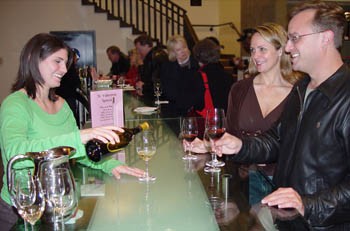
Note to self: Never go winetasting on a Friday. Or a Saturday, for that matter. Sneak out at lunchtime on a Tuesday, because on a recent TGIF visit to Simi Winery, the crowds were standing two deep and I had to elbow my way to the bar just to be ignored by the overworked tasting staff for another five minutes. Not that it’s their fault. To be fair, Simi is one of the most popular destination wineries in Dry Creek. Though as the crowds start to thin after the lunchtime crush, I’m still left swirling the last drops of my pour for several minutes as others get served. In fact, an over-zealous neighboring taster takes advantage of a bottle left unattended on the bar and helps himself–and me–to a generous pour of Merlot. Though I’m feeling a little guilty, it’s vindicating.

Lowdown: The tasting room is pretty much your standard fare. It’s not the facility, however, but what’s in your glass that brings folks far and wide to this gem of a winery just outside Healdsburg. Simi is renowned for its Chardonnay, Sauvignon Blanc and Cabernet Sauvignon, all of which are pretty darned tasty–and worth the seemingly endless wait.

Mouth value: Start out with the ’02 Sauvignon Blanc ($14) to get your taste buds firing. This limited release has all the usual characteristics of Sauvignon Blancs–peachy, floral, tropical. But unlike many others, it doesn’t yearn to be a smarmy imitation of a piña colada. The tropics stay subdued and end with a crisp, nicely acidic finish. The ’02 Sonoma County Chardonnay ($16) again typifies the understated charm of Simi’s wines. The butter and oak in the ’02 accessorize rather than define the wine. Think if it as the Harry Winston sparkle to your black Ralph Lauren gown. Or maybe the chili on your chili cheese fries.

The Sonoma County Merlot ($22) is a softer style Merlot, with only 5 percent Cabernet Sauvignon mixed in. The lack of strong tannins lets flavors like cocoa and cinnamon come out. The lack of Cab muscle doesn’t make this wine wimpy, however. The grapes stand up with plenty of body and fruit even without brute force. The ’02 Alexander Valley Cabernet Sauvignon ($25) is the best of the bunch with lots of depth and lush fruit. Though this Cab has plenty of power, it’s a gentle giant with a delicate touch on the palate.

Don’t miss: Not many people know this, but if we can keep this between us, I’ll tell you: Sake’O (505 Healdsburg Ave., Healdsburg, 707.433.2669) has the best sushi chef in the North Bay. Exaggeration? Not likely. Witness the magic. One bite of tuna belly and you’re hooked, quite possibly, for life.

Five second snob: Simi led the way in female-friendly winemaking. In 1973, Simi hired Mary Ann Graf, the first woman winemaker with collegiate training. Paired with Andre Tchelistcheff, they went on to win many awards. In 1979 pioneering enologist Zelma Long took over the winemaking duties. Long, who is one of the most celebrated winemakers in California, was CEO of Simi until her recent retirement. Steve Reeder is the current winemaker at Simi.

The spot: Simi Winery, 16275 Healdsburg Ave., Healdsburg. The tasting room is open from 10am to 5pm daily. $5 tasting fee. 707.473.3213.

From the September 29-October 5, 2004 issue of the North Bay Bohemian.

© Metro Publishing Inc.

Taxing Traffic

0

Nexus A & M: Traffic is an issue that simply won’t speed up and go away. Two new propositions address it.

–>Taxing Traffic

Ballot measures seek to improve North Bay transportation woes

By Joy Lanzendorfer

In November, an old issue will pop up again on the Sonoma and Marin ballots. If passed, two new measures would, among other things, widen Highway 101 from Windsor to Larkspur in exchange for higher sales tax.

Adding a lane to 101 has a bad history with voters. Sonoma County residents have already said no to paying for highway widening three times–in 1990, 1998 and 2000. In Marin County, a similar measure was shot down in 1998. Given the repeated rejection by voters, some may wonder why the issue is up for vote yet again.

“Why is it needed?” rhetorically asks Suzanne Wilford, executive director of the Sonoma County Transportation Authority, with a laugh. “Do you live in Sonoma County?”

Such transportation problems as clogged freeways, traffic jams and potholes confront locals every time we get behind the wheel. But at the same time, these measures face competition from other government bodies seeking to clot their hemorrhaging budgets with an extra tax here and there (and there and there), putting pressure on proponents to explain exactly how the money will be used.

If Marin’s Measure A, or the Traffic Relief and Better Transportation Act, passes, sales taxes will increase a half-cent from 7.25 percent to 7.75 percent. Sonoma County would only see a quarter-cent increase, from 7.5 percent to 7.75 percent.

Currently, Marin County has the lowest sales tax in the Bay Area. The proposed tax increase is estimated to generate $14 million a year for 20 years, equaling some $280 million. Over half of that amount, $154 million, would go to public transit, in particular the bus system, which was seriously affected by the recent Golden Gate Transit cuts. The next biggest chunk of 26.5 percent ($74.2 million) would improve local infrastructure like roads, bikeways and sidewalks. Another 11 percent would alleviate the traffic problems caused by parents taking their kids to school, which accounts for almost a quarter of Marin County’s morning traffic. And finally, 7.5 percent ($21 million), would go to widening Highway 101’s carpool lane from Terra Linda to Larkspur.

However, thanks to what is arguably the most controversial component of Measure A, the county will have to wait until 2015 to get that portion of the freeway widened if it doesn’t pass, according to Marin County Supervisor Cynthia Murray.

“We saved for 15 years, collecting the money to widen that part of the freeway, and we still ran short,” she says. “Waiting another decade is just not acceptable.”

Sonoma County’s Measure M, known as the Traffic Relief Act, would raise an estimated $470 million over 20 years. Of that, 40 percent ($188 million), would go to widening 101 from Windsor to south of Petaluma. Another 40 percent would go to roadway improvement, from fixing potholes to widening and extending important roads. Finally, 19 percent ($89.3 million), would go to bus routes, local transit and passenger rail.

Of the $89.3 million allocated to alternative transport, $23 million would go to the Sonoma Marin Area Rail Transit (SMART), the project to create a rail system from Sonoma County through Marin. That money wouldn’t be available to SMART until 2006. At that time, a new ballot measure will propose raising sales tax another quarter-cent to fund the rest of the passenger rail project.

If Measure M fails, SMART will run out of money next year.

“If it doesn’t pass, it will be very difficult to keep the rail project from going into hibernation,” says Steve Birdlebough, co-chair of Taxpayers for Better Transportation.

Marin’s measure has seen “unbelievably light” opposition so far, according to Murray. Much of that may be because the people who drafted the bill paid close attention to why the last bill failed.

“The accountability we’re offering the public helps, but it’s also what’s in the plan,” says Murray. “We took out the more controversial parts of the last plan and pared it down to the most critical projects. So there’s nothing in the plan for rail, nothing for open space, nothing about the Marin-Sonoma narrows.”

With three rejections under its belt, Sonoma County will have to jump more hurdles than Marin in order to pass the bill. Many locals don’t want to pay for widening 101 because California’s gas tax, one of the culprits of California’s higher gas prices, is supposed to pay for road improvements like widening major freeways.

“It’s double taxation,” says Fred Levine, executive director of the Sonoma County Taxpayers’ Association. “The state has already funded the widening of Highway 101, even though the state shifted the money to the general fund.”

In the last few years, the state has taken money out of transportation and put it into the general fund, citing tight budgets. The state has also suspended Proposition 42, which requires it to put the money back into transportation within a certain amount of time.

But even if that had never happened, there still wouldn’t be enough money to widen 101 because, says Wilford, the gas tax has not increased since 1990.

“As the cost and needs go up and the revenue stays the same, the gap is getting wider and wider, and it’s harder to meet the needs,” she says.

With state funding becoming unreliable, 17 counties accounting for 80 percent of the state’s population are now so-called self-help counties, meaning they have taken on more responsibility for transportation issues through local taxes.

Since state government has repeatedly broken promises as to how and when it would use tax revenues, some critics worry that the taxes proposed by measures A and M won’t be used for their intended purposes. To combat this concern, both counties plan to establish citizen oversight committees to ensure the funds go where they are supposed to.

In Sonoma County, some residents are upset that after years of waiting, the newest highway lane between Rohnert Park and Santa Rosa was a carpool lane. With few people using the lane at rush hour, many feel that it has had little impact on traffic problems.

The county was required to make the third lane a carpool lane because of environmental strings that came with federal funding. Despite appearances, Wilford assures that the lane has reduced traffic.

Though widening 101 continues to be a sore spot, the real controversy for the Sonoma County measure may lie in maintaining SMART. While there’s support for the rail project in theory, some bristle when it comes to paying for it and others are flat out against it.

“The county didn’t consider a sales tax until they were sidetracked by SMART running out of funds,” says Levine. “I think Measure M is a ruse to keep the SMART bureaucracy going. But I think the taxpayers are smart enough to know when they are being had.”

From the September 29-October 5, 2004 issue of the North Bay Bohemian.

© Metro Publishing Inc.

Bodega Bay

0

Bella Donna: Breakfast chef Sarah Sundance wears her whites at the Naked Lady Cafe. –>

Travelin’ Tummy

Eating your way to Bodega Bay (and back again)

By Heather Irwin

If an army travels on its stomach, consider me a one-woman battalion. A girl needs to eat, after all. And to keep up my morale through a weekend of driving through West County, lazing about, reading the newspaper and window shopping, I need to know that a good meal is just around the next bend in the road. Screw the MREs, I need some serious Bohemian grub.

So through the apple orchards and forests, just past the carved burl furniture and incense shops I go, finding plenty of new, old and downright tasty stops en route to Bodega Bay (and back). Regardless of time, route or direction, this trip is about letting wanderlust get to wandering. And lust? That’s up to you. Let’s hup-to, private.

Accidental Tourists: Occidental

Winding along the Bohemian Highway in a borrowed Mercedes convertible, I’m lost in thoughts of rapturous meals past. I’m dreaming of banquets and parties with friends and family enjoying food, wine . . . until, that is, my son threatens to hurl right on the rich, very-much-not-mine leather interior. Seems the 40-mile-per-hour curves don’t agree with his seven-year-old tummy, and we’ve dawdled far too long on this lazy Sunday morning hunting out just the right place to eat. The time for breakfast, he makes very clear, is right now.

Heading into Occidental, I lay out the choices. The Naked Lady Cafe, I say, winking and smiling. (The “naked” humor is totally lost on him, as is my desire to stop there first.) Or, I say, with the flattest inflection I can muster, the place with all the people waiting outside looking really hungry. Being seven, a contrarian and a ravenous carnivore, he chooses the place with the longest line and the most bacon. Fifteen or so stomach-growling minutes later, we find ourselves seated at Howard’s Station Cafe (3611 Bohemian Hwy, Occidental, 707.874.2838) with a good part of the rest of Sonoma County.

Primo potatoes soften my irritation and hunger pains. The cubed and grilled tubers are piled ridiculously high, then smothered in salsa, sour cream, cheese and roasted mushrooms. Evil, I say. But as the morning sunlight streams into the windows and onto the worn wood floors, and the happy chatter surrounds us, I can think of almost no other place I’d rather be. Except maybe down the street at the Naked Lady Cafe (3782 Bohemian Hwy., Occidental, 707.874.2408), I remind my son.

After stuffing ourselves without mercy at Howard’s, we stop at the Lady for a quick ham and cheese croissant and coffee, which, compared to the prospect of the menu’s Red Flannel Hash and Eggs Benedict, pales wanly in comparison. Not until a week or so later do I discover just how wanly. The Benedict Florentine ($9.95) is dangerously good with some of the best hollandaise sauce I’ve experienced. Lemony and creamy, it drips over perfectly cooked eggs and sautéed greens.

The Naked Lady Cafe involves very little (OK, none) of the advertised female nudity. Naked, it seems, refers instead to the simple, most organic and local produce and meats that go into the mostly Californian- and Italian-inspired dishes.

Lunch and brunch at this newish/oldish restaurant is served most weekends from 11am to 2pm, with daily specials like a tiger shrimp salad sandwich on focaccia, fresh fish and the aforementioned Benedict Florentine (eggs Benedict is a menu staple). Though the restaurant itself has been around for years, the new name and menu have only been offered a few months. The restaurant’s interior is a simple affair, with just a handful of tables and a small eating bar stretching nearly the length of the small cafe. There’s a walk-up counter for pastries and coffee. Large windows overlook the narrow Bohemian Highway, where you can watch the world, or at least the tourists, go by.

On a hot Sunday afternoon, two girlfriends and I decide to sit outside on the small patio and share our lunch with some fairly eager bees. Despite our uninvited guests, the standout winner on the lunch side of the menu is the BLAT, which aside from just being fun to say, is disarmingly tasty. A take on the BLT, this monster sandwich has crispy bacon, butter lettuce, tomatoes and avocado with a house-made mayonnaise on hearty slabs of homemade bread. The side salad of organic designer greens is barely dressed with vinaigrette and pepper. The Naked Lady Cafe is open for dinner Tuesday through Sunday with a focus on simple, hearty plates and pizzas.

And just in case you’re planning to call your friends or check your voicemail in Occidental, forget it. Most cell phones go dead until you hit Highway 12, and the only payphone in town is located near Negri’s (3700 Bohemian Hwy., Occidental, 707.823.5301), the unintentionally funky retro-Italian home-style eatery. Fresh raviolis await you amid the been-there-since-the-’60s décor.

Elvis Eats Here: Sebastopol

I’m being stared at by a giant pompadoured Elvis head as I eat my brisket. And that’s OK, I think, looking at his full, pink lips–as long as he doesn’t try to steal any of my fries. King or not, I don’t share.

Nestled onto the roadside, the Mojo Cafe (9890 Bodega Hwy., Sebastopol, 707.829.3065) is a bit of Louisiana Cajun in, er, apple country.

Wiping the last bits of sauce from our lips, noses, fingers, ears and chins, we decide we aren’t done with Sebastopol yet. Not by a long shot. Gorge your inner meat-lover at the tiny walk-up window of Inn the Dog House (150 Weeks Way, Sebastopol, 707.829.8353), then redeem yourself the following day by gathering organic, vegan and oh-so-wholesome goodies of every hue and stripe in the Sunday farmers market or across the street at Slice of Life (6970 McKinley St., Sebastopol, 707.829.6627), where there’s no pesky worry of eating any animal flesh in your tofu scramble, pressed vegan burger or organic soy mozzarella pizza.

Despite the fact that weddings bells are (mercifully) in my past, I can’t help but look a little wistfully at the amazing two-, three- and four-tiered creations made by Patisserie Angelica (6821 Laguna Parkway, Sebastopol, 707.827.7998). Chef Condra Easley, trained in Paris, creates insane pastries, cakes and other highly caloric goodies that will make you weep with joy that you never have to squeeze into another wedding dress again.

In serious threat of imminent food-coma, it’s a wise idea to get a jolt of joe at Coffee Catz (6761 Sebastopol Ave., Sebastopol, 707.829.6600). Aside from the fact that sitting in a mock-Victorian parlor inside a mock train station is really cool, there’s usually a chess game or a jazz combo going on somewhere inside.

Journey as Destination: Bodega Bay

By the time I’ve reached Bodega Bay, I’m suddenly less than hungry. Did I mention grabbing a sticky bun at Wild Flour Bread (140 Bohemian Hwy., Freestone, 707.874.2438) and a stroll through the wild flower gardens out back? There are two stops, however, that can’t be missed before this journey ends. The fish and chips at Lucas Wharf Restaurant (595 S. Hwy. 1, Bodega Bay, 707.875.3571) are served up as hot and yummy as the local fishing dudes who hang around by the deli counter. Bring on the extra tartar sauce, grrrrr.

Meanwhile, the Seaweed Cafe (1580 Eastshore Road, Bodega Bay, 707.875.2700) is all about super local and super fresh seafood and produce, as in, hey, was this still swimming this morning? Dinner is only offered Thursday through Sunday, and brunch from 9am to 2:30pm Saturday and Sunday, so you may have to make a point of planning out your trip ahead of time. The deftly prepared seafood, however, makes this journey’s end a true destination. And I’m much too full to fight.

From the September 29-October 5, 2004 issue of the North Bay Bohemian.

© Metro Publishing Inc.
Alejandro Escovedo

0

POR VIDA: A new disc hails Alejandro Escovedo’s career. –>

True Believer

New CD pays tribute to a cowpunk legend

By Greg Cahill

America is a land of ghosts. From the spooky pine forests of Maine’s lake region to the streets of Sonoma, where hundreds of dead Indians sleep beneath streets lined with posh bistros and art galleries, this is a nation frozen in the twilight between the living and the dead.

Singer and songwriter Alejandro Escovedo–a longtime peddler in heartache and despair, and the subject of a great new two-disc tribute album–is no stranger to the spectral nature of existence.

The wayward son of San Francisco’s first family of percussion (his half-brother, Pete Escovedo, played percussion for Santana; his cousin, Sheila E., made a big splash with Prince), Alejandro began his own music career in the mid-’70s with the seminal San Francisco punk band the Nuns. He later moved to New York, where he cofounded the legendary cowpunk band Rank and File, along with ex-Dils Tony and Chip Kinman. The band moved to Texas, where Escovedo had once dreamed of becoming a bullfighter and later a baseball pitcher. But he left the band after the release of their classic eponymous debut and started a promising roots-rock outfit called the True Believers.

The record industry proved a faithless lover. Capitol Records dropped the True Believers after one critically acclaimed album and shelved a follow-up that didn’t see the light of day for a decade.

“After the True Believers broke up, I really wasn’t sure what I was going to do,” Escovedo said a couple of years ago during a phone interview from his home outside of Austin, Texas. “I wasn’t sure that I’d ever even play music again, because I’d put so much time into that band and then to see it taken away the way it was . . . it was really devastating.”

He grew disillusioned and fell into a six-year limbo, working at a local record store and playing in a garage band in Austin. “I believed in the rock ‘n’ roll dream–to some extent,” he said. “But I really got a sense of how corrupt and fucked up and what a lie all that really was. It gave me a different perspective on music.”

Escovedo would bounce back several years later to become the patron saint of the then-emerging Austin roots-music scene. But it was a hard road. And somewhere along the way Escovedo contracted a blood-born virus that has come back to haunt him.

After a show in Phoenix last year, he collapsed and was hospitalized, his body weakened by a cirrhotic liver infected by hepatitis C. Friends in the music industry rallied to his aid, performing a series of benefit concerts to offset the cost of care for the uninsured musician.

Now a stunning two-CD set, Por Vida: A Tribute to the Songs of Alejandro Escovedo (Or Music) gathers covers of Escovedo’s often mournful ghost stories performed by such rock, blues and roots-rock luminaries as Lucinda Williams (who opens the tribute CD with the bluesy “Pyramid of Tears”), Steve Earle, Peter Buck of R.E.M., John Cale, Calexico, the Cowboy Junkies, the Jayhawks, Los Lonely Boys, Charlie Musselwhite, Howe Gelb, Rosie Flores and many others.

At their best, these artists evoke the depths of Escovedo’s sometimes grim and claustrophobic songs, several of which were inspired by the 1992 suicide of his estranged wife. Those particular songs, first recorded on his solo debut, Gravity, earned him Musician of the Year honors at the 1993 Austin Music Awards.

Escovedo’s own albums are cloaked in lush chamber-folk arrangements that he says helped reinvigorate his creative drive through their blatant noncommerciality, but these covers often rock; check out the snarling desperation of Steve Earle and Reckless Kelly’s “Paradise” or Jon Dee Graham’s vulnerable “Helpless” or the boho groove of Giant Sand frontman Howe Gelb’s “She Towers Above.”

Still it is Bob Neuwirth’s sparse, wistful rendition of “Rosalie”–a plaint from a man ruminating on a stack of faded love letters from a woman “across an ocean of powder and dust”–that best captures the exquisitely forlorn nature that is at the heart of so many of Escovedo’s songs.

As a body of work, these 32 tracks written during the past 13 years and filled with brutal honesty represent a remarkable achievement by a songwriter who refused to let the music industry bury his love for his art. It is sad and ironic that it has taken this latest tragedy in his life to bring a wider audience to the doorstep of one of rock’s finest and most underappreciated songwriters.

Yet it’s clear that Escovedo, who contributes the blistering new track “Break This Time” to close the album, isn’t feeling sorry for himself. “Whoever told you,” he sings, “there’d be no danger, nothing to fear, in this house of pain?”

From the September 29-October 5, 2004 issue of the North Bay Bohemian.

© Metro Publishing Inc.

‘Aging Out’

0

FUTURE SHOCK: Daniella and Veasna discuss their plans.

–>Journey’s End

‘Aging Out’ examines what it means to be all alone and 18

By Gretchen Giles

Daniella’s got a baby on her hip and a glint in her eye. A 20-year-old foster “child” who has opted to stay in the system until she turns 21, Daniella is now anxious to “age out.” Her baby’s father, Veasna, is also in foster care; a Cambodian orphan, he’s acquired a hip-hop accent during his time in the system and is loath to leave his comfortable group home.

Meanwhile, Risa has just turned 18 and is the first in her family of 12 siblings to graduate from high school. She’s won a scholarship to UC Santa Barbara and is only the second client her social worker has ever had who has attained a savings account, checking account, job and college placement. She’s ready to leave her 10th foster facility and go it alone. Almost. And David’s been in the system since he was abandoned by his mother at age six weeks. Mentally fragile, uneducated and angry, David is also on the cusp of release from foster care. Freedom to David means little more than the chance to burgle, drink and score crystal meth.

What sets each of these young people apart is a life spent as wards of the state. What makes them exactly like any other young person about to step alone into the world are the fierce unknowns awaiting them. But what again sets them apart is that no one is there to help them. Daniella has no relative to watch the baby or knit a blanket. Risa sets up her side of the dorm room alone while her roommate’s family sets up hers together. David can take a bus to the Alaskan fisheries and no one will know where he is; worse, almost no one will care.

Followed in documentary filmmaker Roger Weisberg’s award-winning Aging Out–showing Thursday, Sept. 30, at Rialto Lakeside Cinemas–Daniella, Risa and David’s stories serve as shorthand sketches for the 20,000 or so young people who turn 18 and are released each year from the U.S. foster care system. According to a February 2003 report from California’s Little Hoover Commission, about 40,000 children enter foster care in this state alone each year. Upon aging out, about one-third haven’t finished high school, a quarter will be homeless for some time, half remain unemployed and another quarter are destined to be arrested.

Screening as a benefit, Aging Out shows here to help raise funds for the United Way’s new transitional housing facility, a 26-bed oasis on Santa Rosa’s Yulupa Avenue that will allow new adults the break they need to get jobs, save money and establish themselves cautiously in the world. Clients will be expected to pay roughly 30 percent of their income in rent for the privilege–estimated to be between $225 to $375 a month–and will learn such basics as bill-paying, how to secure a lease, the steps necessary in job application and other adult essentials.

While growing up always comes with its adjacent pains, that delicate time of late-adolescence/early adulthood can be particularly treacherous to navigate. Young people with two supportive parents, a solid education and a beckoning college often have trouble making the transition and moving forward. Those not blessed with families, education–fine or otherwise–or college opportunities find it that much harder to be 18.

Daniella goes to college at night; Veasna sleeps in the student lounge with the baby on his chest, waiting for her classes to end. They don’t live together–the system can’t provide for that. They want to make their own family. “I feel guilty,” Daniella says, looking at an old photograph of her birth family, including the father who beat her so badly that she finally called the police on him herself, “because I keep wanting to be part of that family.”

While Risa has everything to be congratulated about, the strain begins to show. She begins to experiment with “every drug except heroin,” hears voices and has a psychotic episode that leaves her in the hospital for three weeks, voids her UC scholarship and lands her back with her final foster mother, a kind woman who takes her back even though the state won’t fund it.

Given several chances and even the unlikely friendship of a sympathetic cab driver, David can’t help but steal and drink and smoke dope. He bounces around from one bad experience to another, finally landing back on the doorstep of the only people he knows as family, the first foster parents who took him in as a baby and regretfully let him go as a five-year-old when he became too violent to keep. Vowing in the end that he’s had enough of dope-smokers and druggies, David shoulders a backpack and boards a Greyhound bus for Alaska.

“The only thing I’m proud of is my defiance,” he says sadly. “But that gets old, man.”

‘Aging Out’ screens on Thursday, Sept. 30,
at 7:15pm in benefit for the Social Advocates for Youth’s new transitional housing facility. Rialto Cinemas Lakeside, 551 Summerfield Road, Santa Rosa. $20. 707.544.3299, ext. 231.

From the September 29-October 5, 2004 issue of the North Bay Bohemian.

© Metro Publishing Inc.

‘Amazing Luminous Fountain’

: Bruce Conner's photogram 'Teardrop Angel.' -->'Amazing Luminous Fountain' marks new era for di RosaBy Gretchen GilesLike so much else at Napa's di Rosa Preserve, this began as a sly joke among artists. Filling a suitcase-sized box with personal correspondence, various arcana, a bag of dust and the artist Bruce Nauman's forgotten detritus, Woodacre artist William T. Wiley...

‘Ladder 49’

: Joaquin Phoenix smolders in 'Ladder 49.' -->Fireman and author Earl Emerson smokes 'Ladder 49' In its ongoing quest for the ultimate postfilm conversation, Talking Pictures takes interesting people to interesting movies."I just want to say a couple things right off," begins Lt. Earl Emerson, the bestselling author (Into the Inferno, Vertical Burn) and longtime firefighter with the Seattle...

Small Portions

Minute MealsWhere have all the big plates gone? Napa's Wine Garden and other eateries make small the new big.By Heather IrwinDoesn't anyone serve normal portions anymore? Because when it comes to plate size, small is the new big--as in micro-sized portions that arrive on doll-sized dishes. Not that I'm complaining all that loudly, mind you. I like the idea...

Soft Rock

Ninety-NinesBetween soft rock and a hard placeBy Sara BirThere comes a time in a rock music critic's life when you realize that you are really, really washed up and not in touch with anything cutting edge or even relevant in the current musical climate. One morning you wake up and, in a moment of brutal honesty, confess to yourself...

2004 Mill Valley Film Festival

FEMME FATALE: 14-year-old actress Celeste Marie Davis also wrote 'Purgatory House,' in which she stars. -->FOREVER YOUNG: Kate Winslet and Johnny Depp co-star in the Barrie bio 'Finding Neverland.' -->Sex SceneThe 2004 Mill Valley Film Festival reveals a few naked truths--and a whole lot more Film festivals can tell us a lot about the state of the cinematic...

Swirl n’ Spit

Swirl 'n' SpitTasting Room of the WeekSimi WineryBy Heather IrwinNote to self: Never go winetasting on a Friday. Or a Saturday, for that matter. Sneak out at lunchtime on a Tuesday, because on a recent TGIF visit to Simi Winery, the crowds were standing two deep and I had to elbow my way to the bar just to be...

Taxing Traffic

Nexus A & M: Traffic is an issue that simply won't speed up and go away. Two new propositions address it. -->Taxing TrafficBallot measures seek to improve North Bay transportation woesBy Joy LanzendorferIn November, an old issue will pop up again on the Sonoma and Marin ballots. If passed, two new measures would, among other things, widen Highway 101...

Bodega Bay

Bella Donna: Breakfast chef Sarah Sundance wears her whites at the Naked Lady Cafe. -->Travelin' TummyEating your way to Bodega Bay (and back again)By Heather IrwinIf an army travels on its stomach, consider me a one-woman battalion. A girl needs to eat, after all. And to keep up my morale through a weekend of driving through West County, lazing...

Alejandro Escovedo

POR VIDA: A new disc hails Alejandro Escovedo's career. -->True BelieverNew CD pays tribute to a cowpunk legendBy Greg CahillAmerica is a land of ghosts. From the spooky pine forests of Maine's lake region to the streets of Sonoma, where hundreds of dead Indians sleep beneath streets lined with posh bistros and art galleries, this is a nation frozen...

‘Aging Out’

FUTURE SHOCK: Daniella and Veasna discuss their plans. -->Journey's End'Aging Out' examines what it means to be all alone and 18By Gretchen GilesDaniella's got a baby on her hip and a glint in her eye. A 20-year-old foster "child" who has opted to stay in the system until she turns 21, Daniella is now anxious to "age out." Her...
11,084FansLike
4,446FollowersFollow
6,928FollowersFollow

