Cookbooks

0

: Now is the season of our baking. –>

Rake in the flavors of fall with comfort-food cookbooks

By Ruth Tobias

So long, peaches and berries. See you later, heirloom tomatoes and corn. Goodbye, watermelon. We’ll miss you all–but you can bet we’ll be finding some measure of comfort in more filling fare. That goes doubly for avid cooks who are keen to exchange the outdoor grill for the kitchen, preparing the likes of casseroles, cobblers and stews for a rain-boot-stomping, steam-exhaling crowd. As it happens, a slew of new cookbooks devoted to just such a scenario is here to welcome them back inside. The following are especially good fun.

‘Autumn from the Heart of the Home,’ by Susan Branch (Little, Brown and Company; $25.95) Boasting a homemade-scrapbook design–all gingham and cursive script and snippets of wisdom–this supersweet little cookbook also contains just enough quirks to keep it from getting sticky. Cynics and urbanites should skip the prefatory chapter on handicrafts (with instructions for making your own place settings, gift baskets and so on) and get straight to the recipes. They’re more sophisticated than you might expect under the circumstances, striking a balance between thoughtful takes on historical or regional specialties and sure-fire dinner-party material.

Think steamers, Indian shuck (corn) bread with maple butter, scallop chowder and eggnog cappuccino; imagine butternut soup served in shot glasses and new potatoes stuffed with fontina. And there’s no one so jaded that he or she can’t be charmed by the idea of a trinket-filled fortune cake or real hot chocolate with marshmallows made from scratch. Indeed, a taste of mellowness is exactly what autumn at its best provides.

‘You’re Cookin’ It Country: My Favorite Recipes and Memories,’ by Loretta Lynn (Rutledge Hill Press; $24.99) If Branch straddles the picket fence of nostalgia, Loretta Lynn (yes, that Loretta Lynn), not surprisingly, hurdles way over the top to wallow in boisterous, mostly endearing kitsch. In the preface, Lynn reminisces about the poor old, good old days when “we ate anything and everything we could find in Butcher Holler, Kentucky” (including possum), something she goes on to prove with recipes that (a) sound ridiculous, (b) are ridiculous, (c) are ridiculously easy and (d) are the utmost in guilty pleasure (possum excepted).

Laden with ingredients like Crisco, Velveeta, Saltines and Cool Whip, these dishes are bound to blast away the impending winter blues with a barrage of carbs and fat grams. For instance, after breakfasting on enormous “cat-head” biscuits smothered in chocolate gravy, you could opt for a lunch of vegetable soup and tossed salad, the primary ingredients are ground beef and bacon, respectively. Dinner might be chicken and dumplings, or chicken-fried steak and gravy, or maybe fried country ham and red-eye gravy, paired with any of several “country-fried” sides (including corn, creamed corn and corn fritters).

For dessert you’ve got your “gooey cake,” made with nothing but the best: German-chocolate-cake mix from a box, sweetened condensed milk from a can, caramel topping from a jar, whipped topping from a tub and crushed Heath Bars. Of course, if you need a little something to tide you over between meals, you could always fry up some pickles or bologna sandwiches–that’s right, fry them. Lynn also peppers the book with family photos and goofy anecdotes with titles like “Loretta Learns to Can.” Rarely has the sheepish phrase “you gotta love it” been so apt.

‘Retro Baking: 100 Classic Contest Winners Updated for Today,’ by Maureen Fischer (Collectors Press; $16.95) Rounding out the retro recipes is this funky, cartoon-colored collection based on the winners of those amateur contests sponsored by women’s magazines, small-town newspapers and companies like Pillsbury and Quaker Oats that have been a hallmark of culinary Americana for decades. Decked out in wink-wink period graphics and space-age fonts, the recipes indeed hark back to a time when novelty products–powdered mixes, canned fillings and so on–were just beginning to replace cooking from scratch; here, fortunately, the latter are restored.

Even so, Fischer’s text is, if not kiddie-level, certainly user-friendly, true to the breezy ease of the originals. Thus–just like the beaming, creamy-skinned, white-apron-and-black-pump-clad housewives in the pictures–you too can present family and friends with an old-fashioned Sunday supper, complete with oven-fresh dinner rolls, biscuit-topped beef casserole and cranberry cobbler for dessert. Or whip up after-school snacks like sugar cookies and spice cake. Or prepare for the holidays with an assortment of cakes and pies: four-layer caramel and devil’s food, lemon and coconut.

You get the pretty picture. There’s nothing here too technically taxing (if you can sift, knead, beat and fold, you’re pretty much set) or too fancy for unfussy taste buds, just basic baked goods done right, with a hint of 21st-century sass.

‘Gratins: Savory and Sweet Recipes from Oven to Table,’ by Tina Salter (Ten Speed Press; $18.95) As long as you’ve got the oven on, we suggest you check out this charming homage to the one-pot dish known as a gratin. As the author notes in the introduction, for all their homey dishevelment, gratins–or “baked dishes with a rich creamy interior and a crisp, golden topping”–possess a rather elegant bearing, such that “in France . . . the aristocracy is often referred to as le gratin, much as we would talk about the ‘upper crust.'”

Salter’s inventive, sophisticated recipes uphold that reputation. Imagine starting a dinner à deux with a sexy surprise like gratinéed figs with prosciutto and chèvre, or posing at a pal’s potluck with a Parmesan-topped polenta-portobello bake. Envision wowing the in-laws come Thanksgiving with a striking mélange of green apples, Yukon golds and sweet potatoes, or giving the boss’ beetle-brows a boost when you serve sesame-seed-crusted salmon steaks, set off by a jade-green herb sauce, at your annual dinner party.

In other words, imagine being fabulous; gratins, granting far more leeway and forgiveness than their carefully constructed culinary counterparts, let you be just that–at least until dinner’s over. (Luckily, you can extend your gastronomic glory through dessert with, say, a peach melba, glowing beneath a crust of almonds and amaretti.)

‘The Taste of the Season: Inspired Recipes for Fall and Winter,’ by Diane Rossen Worthington (Chronicle Books; $24.95) The most broadly conceived of the group, Worthington’s book will hold you day in and day out–from breakfast to dessert, in sickness (hello, chicken soup with matzah balls) and in health, whether the cook in you is feeling ambitious or shiftless, and whether the diner in you harbors a yen for Italian or a hankering for Asian.

For instance, since saying “cinnamon-streusel sour-cream coffee cake” takes nearly as long as making one, the dish may indeed become, as Worthington assures, “your standby for last-minute brunches” (assuming you have the sort of friends who drop by unexpectedly on a weekend morning expecting a home-cooked meal, in which case you’ve got a bigger problem than just choosing the appropriate dish). By contrast, crispy roast duck with lavender-honey sauce requires a certain amount of time and effort–and a dash of seasoned confidence–but the results are worthy of a black-tie gala.

Meanwhile, if your tastes span the globe, you’ll be pleased to find Worthington’s versions of everything from Creole gumbo to the Indonesian fried-rice staple known as nasi goreng, from Tuscan ribollita (the classic bread and cabbage stew on which eggplant puts an intriguing spin) to good old red, white and blue (not literally) chocolate-peanut-butter brownies. The Taste of the Season is a meaty compendium of cold-weather cuisine; what’s more, since it has a companion volume in The Taste of Summer, fans need not fret over finding a worthy complement when the temperatures once again soar. After all–hard as it is to believe now, on the cusp of autumn–they will.

Second Helpings

Themed recipe collections offer additional inspiration for fall menus

Still hungry? Here are a few other choice guides to hearty eats. All are available at www.jessicasbiscuit.com (or Amazon.com, if you must).

Steaks, Chops, Roasts and Ribs, by the editors of Cook’s Illustrated (America’s Test Kitchen; $35) Ever the tireless investigators, Christopher Kimball and company take their cleavers and tenderizers to the gristly subject of meat, prefacing the assiduously tested recipes with a comprehensive guide to the various cuts and their preferred cooking methods.

Grilled Cheese: 50 Recipes to Make You Melt, by Marlena Spieler (Chronicle Books; $16.95) Mouthwatering photos complement highly imaginative recipes from the San Francisco Chronicle‘s adventurous gourmet–think veal scaloppine and pesto-zucchini heroes or Jack quesadillas on pumpkin tortillas.

Crazy for Casseroles: 275 All-American Hot-Dish Classics, by James Villas Taking a regional approach, this 2003 cookbook presents distinctly New England, Northwestern, Deep Southern and other versions of everybody’s favorite anything-goes concoction.

50 Chowders: One-Pot Meals–Clam, Corn and Beyond, by Jasper White Published in 2000, 50 Chowders features White shucking away while adding a touch of the unexpected–abalone here, pheasant there.

–R.T.

From the October 20-26, 2004 issue of the North Bay Bohemian.

© Metro Publishing Inc.

‘Botany 12’

0

: West County painter Pamela Glasscock’s painstaking work is showcased. –>

New exhibits at Sonoma County Museum marry artists with the natural world

By M. V. Wood

Sometimes it’s within the very clutches of death that some people realize the meaning of life. For others it happens on that mystical night as they’re staring up at the stars. For artist Amanda Haas, her epiphany came one day as she was backing out of her driveway. She realized that the meaning of life was right there, entrenched in exactly what she was doing day after day: backing out of the driveway, folding the laundry, pruning her rose bushes. It was the repetition of sunrise and sunset, light and shadow, the blooming and withering of life itself.

“After 23 years of living in the same house, I was backing out of the driveway, and I thought of all the other countless times I had done the very same thing,” says Haas, whose installation piece That’s All I Have is part of the “Botany 12” exhibit opening Oct. 15 at the Sonoma County Museum. “It hit me that this is what life is about. It’s the layers upon layers of meaningless repetition that pile up to form meaning.”

One part of Haas’ artwork is made up of bags and bags of rose clippings. Not only do these serve as a metaphor for the repetitive cycle of life and death, but as each layer was created out of the repetition of clipping another and yet another withered rose, the layers piled up, forming a meaningful representation of the moments, minutes and several seasons of Haas’ very life.

“I’m not sure why I ended up using roses to try and communicate this through my art,” Haas shrugs. “It just seemed right.”

According to Natasha Boas, curator of the show, more and more artists seem to be integrating plants into their work. “As a curator, I like to capture the moment, I like to capture where the rush of energy is at a particular time, and right now there’s a lot around plants,” she says. “There’s something in the air. In my line of work, you see lots and lots of new art every day, and I just kept noticing all these images of plants and references to them, and the use of organic materials. And so I became curious about the artists’ relationships to plants.”

The resulting multimedia show, “Botany 12,” consists of the works of 12 artists from Sonoma County, the greater Bay Area and New York. Area artists include painters Pamela Glasscock, Tony King, William O’Keeffe and Adam Wolfert. Some of the works, such as the pieces by Glasscock, seem like illustrations traditionally found in botany textbooks.

“You have to keep in mind that the illustrative tradition of botanica has always been at the intersection of art and science,” Boas says. “The illustrations are a product of not only careful scientific observation, but also of myth and fiction and of our own human psychology. For example, Pamela is obsessively meticulous with her observations. She’s very detailed and precise. And then she goes and takes these very precise, very scientific depictions of different plants and paints them all together on the same canvas, in some kind of fictional garden that would never occur naturally. I’ve told Pamela that she’s a scientist gone mad.”

Stephani Syjuco’s works are similar to Glasscock’s in that they too bear a resemblance to traditional botanical prints. But instead of cross-sections of plants, diagramming the pistons and petals and such, Syjuco renders cross-sections of gadgets and technology. The parallels drive the viewer to consider how, in this century, we have blurred the lines between the natural and the artificial.

The works of Philip Ross also explore that link between nature, technology and art. For this show, his piece is a self-contained battery-powered survival capsule for one living plant. In this manmade, controlled hydroponic environment, the plant’s roots are submerged in nutrient-infused water while LED lights supply the needed illumination. The glass enclosures allow for a clear view of the plant. And the artwork itself allows for a clear view of how much technology and resources are necessary when a living thing is cut off from the rest of the natural world.

Although each of the works in the show depicts a different perspective in the relationship between the artist and plants, there is a recurring idea in that all the artists have a definite respect, even awe, for the world of flora. After all, in that relationship between people and plants, we need them a lot more than they need us. The catalog for the show carries an excerpt from The Botany of Desire in which author Michael Pollan reminds us to not jump too quickly to the judgment that humans are more highly evolved than plants:

“Plants are so unlike people that it’s very difficult for us to appreciate fully their complexity and sophistication. Yet plants have been evolving much, much longer than we have, have been inventing new strategies for survival and perfecting their designs for so long that to say that one is the more ‘advanced’ really depends on how you define that term, on what ‘advances’ you value. Naturally, we value abilities such as consciousness, tool-making and language, if only because these have been the destination of our own evolutionary journey thus far. Plants have traveled all that distance and then some–they’ve just traveled in a different direction.

“Plants are nature’s alchemists, expert at transforming water, soil and sunlight into an array of precious substances, many of them, beyond the ability of human beings to conceive, much less manufacture. While we were nailing down consciousness and learning to walk on two feet, they were by the same process of natural selection inventing photosynthesis (the astonishing trick of converting sunlight into food) and perfecting organic chemistry.”

While “Botany 12” is being shown downstairs in the museum, the “Sonoma Botany” exhibit, which consists of 12 plants on loan from SSU and UC Davis, is being shown upstairs. All 12 plants have had an important impact on Sonoma County history and culture, and the exhibit serves to underscore this complex relationship between the world of plants with that of human society.

Included in the collection is the Blennosperma bakeri, named after the county’s famed botanist Milo Baker. Also known as “Sonoma Sunshine,” the endangered wildflower had a major impact on deterring development in the county’s seasonal wetlands. Also included is the Apocynum cannabinum, better know as dogbane or Indian hemp. It is an indigenous plant traditionally used by Indian people for cordage and net-making. Once plentiful, it is now endangered; the 3.3-acre Dogbane Preserve just south of the Luther Burbank Center off Highway 101 is one of the largest stands of dogbane left in the western United States.

‘Botany 12’ and ‘Sonoma Botany’ exhibit Oct. 15 through Feb. 13, 2005. A free reception for the artists and public is slated for Saturday, Oct. 23, from 4pm to 6pm. Sonoma County Museum, 425 Seventh St., Santa Rosa. 707.579.1500.

From the October 13-19, 2004 issue of the North Bay Bohemian.

© Metro Publishing Inc.
Propositions

0

Taking the Initiative

This year’s ballot is a daunting proposition

By R. V. Scheide

Democracy is supposed to be an adventure, and this year’s presidential election is shaping up to be all that and more, a genuine nailbiter. “Comeback Kerry” is living up to his nickname; Dubya is wilting down the home stretch. It’s a real horserace, coming down to a photo finish. Thank God that Kerry’s got a bigger nose. Freedom doesn’t get any better than this.

Then there’s the California Secretary of State’s Voter Information Guide, the thick pamphlet detailing the 16 statewide ballot propositions that was recently stuffed in the mailboxes of millions of registered voters. That’s right, it’s time for that biennial rite of the California fall, Initiatives Gone Wild! What ails the state? The 16 propositions offer significant clues, provided one can actually remain conscious perusing 156 pages of ponderous prose that knows no narrative but numbers 59 through 72. Any way you slice it, the guide is a one-way ticket straight to the heart of Dullsville. Don’t we pay legislators enough to read this stuff for us?

Apparently not, according to the Public Policy Institute of California (PPIC), a private nonprofit, nonpartisan research organization that conducts studies for the Legislature. The PPIC reports that “Californians . . . appear to have a greater trust in the state’s voters than in their elected officials when it comes to making public policy decisions.”

In other words, we’re all doomed.

But that’s no reason not to whistle through the graveyard. The initiative process, established by constitutional amendment in 1911, was a tool designed by progressives to turn voter outrage against a legislature totally corrupted by corporations such as the Southern Pacific Railroad. Since the 1970s, and particularly since the passage of Proposition 13 in 1978, the process has morphed into what the PPIC calls the “initiative industrial complex,” where just about anyone with $2 million or so to spare can place a pet project on the ballot–or mount opposition to someone else’s pet project.

Indeed, none of the propositions on this November’s ballot enjoy the sort of groundswell of public support property-tax relief engendered in the late 1970s. That’s not to say that this crop of propositions isn’t important–pass or fail, the outcome of the 16 initiatives will affect state spending decisions measured in the billions of dollars. That’s not chump change, considering Gov. Arnold Schwarzenegger recently borrowed $15 billion to balance the state’s $100 billion-plus budget, and another multibillion dollar deficit is on the way next year. Acknowledging the weakness of both the state’s fiscal condition and the current economic recovery are perhaps the two most important factors to consider when evaluating this election’s propositions.

A primary symptom of the country’s overall economic weakness can be found in the fact that five of the propositions directly or indirectly concern healthcare, the price of which is exploding even as millions nationwide have been forced into the ranks of the uninsured.

Two of these five propositions, 61 and 71, seek approval for new state bonds. If passed, Proposition 61 authorizes the state to issue $750 million in general obligation bonds to support capital improvements at children’s hospitals throughout the state. With interest, the estimated total tab for taxpayers is $1.5 billion. Proposition 71 would authorize the state to issue $3 billion in general obligation bonds with a total taxpayer tab of $6 billion.

Propositions 63, 67 and 72 seek to raise taxes or fees to fund healthcare-related services. Proposition 63, if passed, would place a 1 percent tax on personal incomes above $1 million to provide dedicated funding for expansion of state and county mental health services and programs, decimated from years of neglect. Proposition 67 would boost the existing surcharge on telephone use within California by 3 percent, raising $500 million annually to pay physicians, hospitals and clinics for uncompensated emergency care and to fund other first-responder services. The phone tax would be limited to 50 cents on residential lines, but unlimited on cell and business phones. Proposition 72, a referendum on Senate Bill 2, passed shortly before Gov. Gray Davis’ recall, seeks to limit the share employees are required to pay for employer-provided health insurance to 20 percent. Currently, there are no limits, and thanks to the aforementioned rise in the cost of insurance, employee contributions to health plans have increased by 70 percent in the last three years.

These healthcare propositions illustrate a fundamental problem of the initiative process. Each responds to very real needs, but that doesn’t necessarily mean each represents the wisest solution to the problem. Legislators used to figure this stuff out for us, but now we’re on our own. For example, Proposition 71 addresses the Bush administration’s continued refusal to federally fund stem-cell research, which someday might create cures for maladies ranging from Alzheimer’s to spinal cord injuries.

Even though the state is entitled to royalties from any such discoveries that may eventually pay for the initiative, there’s no guarantee those discoveries will occur, and few would argue that the state’s current fiscal condition warrants subsidizing the private corporations who conduct the bulk of stem-cell research to the tune of $3 billion plus interest. Twenty Nobel Prize winners support Proposition 71, but they don’t have to pay for it. We do.

Another sign of the state’s desperate financial straits can be found in the appearance of yet two more initiatives concerning Indian gaming, Propositions 68 and 70, both of which use the lure of easy money in the form of a tax on Indian gaming revenue to entice voters. Never mind that numerous studies have shown that lower-income people–those who can least afford it–tend to gamble more than middle- and upper-income earners. Concerns about regressive taxation went out the window in the 1990s, when the state established the lottery, opening the casino door to the tribes in the first place.

Crime issues always make popular propositions, and two grace this year’s ballot, Propositions 66 and 69. The first seeks to modify 1994’s “three strikes” law by requiring increased sentences only when the current conviction is for a specified violent or serious felony. However, to sweeten the pot for the tough-on-crime crowd, the initiative also increases the penalty for sexual predators of children by requiring a 25-year-to-life sentence for anyone convicted of a second sexual offense. Two strikes and they’re out. Proposition 69 is a little scarier, requiring the collection of DNA samples from all felons, as well as from adults and juveniles arrested–arrested, not convicted–of specified crimes.

The remaining propositions represent a potpourri of competing interests. Proposition 62 seeks to change the primary system so that voters, no matter what party affiliation, can select any candidate they wish. But only the top two vote-getters, even if they’re both Greens, advance to the general election. Proposition 60 would keep things the way they are now, allowing all parties that compete in the primaries to advance their top candidate to the general election.

Proposition 64 is a transparent end-run around the state’s unfair competition law that would prohibit parties not directly injured by a corporation’s bad actions–such as attorneys who file environmental protection lawsuits–from doing such things as filing environmental protection lawsuits. Proposition 59, sponsored by the Legislature, would constitutionalize the public’s access to state information, except of course information generated by the Legislature itself, which is exempt from the legislation. Proposition 60A would mandate that proceeds from the sale of state property be used to pay down bond debt.

Speaking of bond debt, the two remaining propositions on the ballot have yet to appear in the official voter guide. The recently nullified Proposition 65 would have prohibited the state from shifting money from cities and counties into the state general fund. If Proposition 65 were already in effect, for example, it would have forced Gov. Schwarzenegger and the Legislature to renegotiate the recently passed state budget. Apparently the initiative’s backers had second thoughts, orphaning Proposition 65 in favor of Proposition 1A, soon to appear in voter’s mailboxes as a supplement. It lets Arnold and the Legislators raid local coffers for two more years–when the crazy initiatives gone wild process rolls around once again.

From the October 13-19, 2004 issue of the North Bay Bohemian.

© Metro Publishing Inc.

Swirl ‘n’ Spit

0

Swirl ‘n’ Spit
Tasting Room of the Week

Windsor Vineyards

By Heather Irwin

Lowdown: Oddly enough, the Windsor Vineyards tasting room is located neither in Windsor nor on a vineyard. In fact, the Healdsburg tasting room is the only place you can buy the wine unless you’re ordering from the winery’s catalog. (There are also tasting rooms in New York and Tiburon.) The two-pronged claim to fame of this winery is that it is the oldest and largest mail-order wine distributor in the country and that it will put your name on the label. In fact, that’s pretty much the hard sell in the tasting room–ordering bottles of wine with customized labels for your wedding, business, bar mitzvah . . . whatever. Which is cute and all, but I’m really here for the wine.

Mouth value: There’s a large number of wines to choose from at Windsor, and it’s a bit of a toss-up on where to focus. Self-proclaimed as one of the top three most awarded wineries in the United States, Windsor offers high hopes. Maybe it was the day, my taster or the friendly but mostly unknowledgeable staff (know how much residual sugar is in your Gewürtz, folks), but I found the wines to fall pretty solidly in the tasty but not mind-blowing range. The good news is that the servers at Windsor are willing to pour pretty much whatever you’re interested in, giving breadth if not depth to the experience.

The 2003 Mendocino Sauvignon Blanc Private Reserve ($15) is pleasant, but it pales in comparison to last week’s truly great Sauvignon Blanc from Hanna Winery. There’s little of the obvious fruit and floral signature, and the sharpness of the alcohol pierces the palate a bit too sharply for such a subtle wine. A better choice is the 2003 Alexander Valley Gewürztraminer ($10). The wine is a little on the sweet side (OK for a Gewürtz) but has more depth and character. Don’t be afraid to give the 2003 Rose ($12) a shot. This cute little Shiraz blend is tart and rosy.

At the recent Sonoma Harvest Fair, Windsor’s 2002 Alexander Valley Carignane ($17.75) won a best of class. At a heady 15.6 percent alcohol, this is feisty brew with lots of chew. I was less impressed with both the 2001 Sonoma Meritage ($26), which lacked real definition and character, and the 2001 Sonoma Signature Series Merlot ($25.75). The 2000 Alexander Valley Cabernet Sauvignon ($24.50) improved with each sip, though on first blush it seemed a bit pallid. There’s little of the beefy fruit or oak quality that many other Cabs from this area display. But after a few moments of breathing, there was a softness and lushness that redeemed it.

Don’t miss: If poochie is panting for a little swirl and spit of his own, drop him by Fideaux (43 North St., Healdsburg, 707.433.9935) for a quick lap out of the “Dogs Rule, Cats Drool” water basin outside. He’ll especially appreciate the leg-lifting puppy clocks. At least he’s not alone now.

Five-second snob: The winery was started in 1959 by local legend Rodney Strong, who had the idea to create the customized labels for his wine-buying clients. The company now claims to have some 1 million customers worldwide. That’s a lot of labels.

Spot: Windsor Vineyards, 308-B Center St., Healdsburg. 800.204.9463

From the October 13-19, 2004 issue of the North Bay Bohemian.

© Metro Publishing Inc.
Harvest Season

0

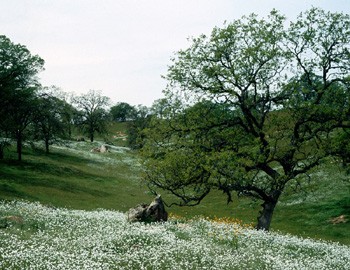
: Tierra Farms in Healdsburg specializes in fiery chipotles. –>

Fall foods from Harvest Fair to harvest table

By Heather Irwin

Tiny ants swarm the stage in waves. Unconcerned by yellow caution tape, they march straight for titanic cinnamon buns, boldly carrying off bits of buttery frosting and yeasty crumbs. There is every reason to believe that they may soon attack the chocolate chip cookies and leave no bit of fudge un-nibbled. Regardless of blue-ribbon status or Best of Show trophies, the sweets succumb one by one to the insect soldiers. Toothily carved pumpkins sit idly by, pondering their own fate.

Wandering around the Food and Crafts building at the recent Sonoma County Harvest Fair, there is no mistaking this event as the official opening to the season of bounty in the North Bay–for both man and, er, insect. The air is suddenly crisp; fruits and vegetables arrive in truckloads from the field, making their way into award-winning preserves and the slightly droopy food displays that the ants are now ravaging. Carmel apples and pumpkins are suddenly everywhere, and suckling pigs, it seems, really have learned how to fly. Or at least run around a sawdust track really, really fast. And honestly, who wouldn’t shake a haunch at the prospect of a plate full of melted frozen yogurt and Oreos at the end of a hard run?

But with a borrowed John Deere baseball cap on my head and a Willie Bird turkey leg firmly in my hand, I can’t help but notice how October’s Fair is a vastly more sober creature than its summer-time cousin. The rides are fewer, the music less thumping and the animals (most notably the turkeys) are all looking a little more nervous. Scarecrows, pumpkins and dried cornstalks bode finality instead of the boundless cotton-candy optimism of July.

The crush is nearly over and children, now in jackets and long sleeves, take turns savagely stomping grapes under purple-stained toes to a pulpy demise. Pumpkins weighing 600 pounds or more brutishly upstage summer’s fading tomatoes and zucchinis, though admittedly, the preponderance of bad Chinese food and garlic fries adds an air of continuity.

A wide-eyed newcomer to Sonoma County at harvest time, I’m thrilled by this season of plenty. I love the truckloads of grapes nearly running me off Highway 101 every morning. I love getting box after box of figs from our friends (no, I really do). And of course, I adore the sweet smell of manure on a fall day. Ahhhhh . . . This newly-minted country girl with her newly-minted cowboy hat and unbroken-in boots is finally going to be at one with the land from which fall’s bounty comes–and leave the damned kitten heels at home.

I’ll note, however, that the concept of appropriate farmwear hadn’t yet occurred to me when attending a recent harvest dinner at the popular Tierra Farms stand (Highway 101 and Airport Road, Santa Rosa, 707.573.1700). The outdoor dinner celebrated the season’s bounty and served as a regional confab for the local chapters of the slow food movement to discuss the currently abysmal state of agribusiness (among other things). Agribusiness, eco-activism, whatever–if Dry Creek Kitchen’s Mateo Granados is cooking, I’m there. Unfortunately, I didn’t quite get the memo that the dinner was, well, literally in the field, as in sitting among the veggies on straw bales–jeans, T-shirts and comfortable shoes strongly suggested.

Sweating it out in my heels and black slacks, however, it took exactly five minutes for me to become one of the night’s most enthusiastic converts of the back-to-the-land, sustainable-farming philosophy of Tierra’s brother-and-sister team Lee and Wayne James.

It becomes apparent very quickly that the James’ little farm stand off Airport Road isn’t about being cute or organically hip. It is about walking the walk and talking the talk of creating fruits and vegetables that are delicious, ecological, regional and socially conscious, no matter what. And, as it turns out, that’s a mighty tall order.

Their farm is only a few acres on land rented from the county. Surrounded by housing developments and the nearby freeway to the west, the farm’s staff comprises the Jameses, an earnest young intern who gave up life in the city to live on their farm and a small handful of seasonal farm workers who help Wayne with the really gritty day-to-day laboring.

On a blazing hot evening, standing barefoot amid the rows of chiles and beans, Wayne explains to a virtual who’s who of slow foodies his unique farming philosophy and practices. Nodding and listening intently in their wide-brimmed straw hats and eco-friendly shoes, the members of his audience arre made up of ferocious advocates of preserving local and regional foods; supporting farmers like Wayne and educating the public about things like genetic modification and the perils of agribusiness and fast food. You don’t want to be caught packing a Burger King wrapper around these folks.

This makes them champions, while at the same time, a little off-putting to those of us who shop at, ahem, Safeway. Not to mention, cough, Costco. Because while natural, sustainable, socially conscious food is, without any argument, better for both humans and the earth, it can get damned pricey. We’ve all had sticker shock at buying $5 organic salad greens or wondering why exactly a plate of free-range, organic, local food at the now-defunct Popina cost something like three times as much as dinner at the Olive Garden.

Realistically, $5 salad greens and $25 entrées aren’t something a lot of the general public can afford day-to-day. In fairness, big farms (without getting into a deep political argument about the admitted dangers of pesticides, animal cruelty, fertilizers and unfair labor practices) do bring down the price of food to a level most of us can afford. Never mind what it tastes like, I want my 99 cent carrots!

But looking at the cracked and weather-worn hands and feet of Wayne as he talks with such absolute passion and earnestness about his quest for his regional, eco-friendly, sustainable, socially conscious produce leaves me wondering if maybe I’m not being a little unreasonable about all of this.

Consider his plight. Every day he and hundreds of other small farmers struggle with things as simple as how to properly market themselves and as complex as water rights and land ownership. He and his sister Lee have taught themselves nearly everything they know about the best ways to fertilize (not always organically) or keep pests away from their crops. And, frankly, they’re barely breaking even. This isn’t a money-making quest, they’re quick to point out. It is a labor of love.

Additionally, the siblings have put thousands of dollars into the rented land
in the form of irrigation, fertilization and other necessary improvements needed to operate their farm. And at this point, Wayne says he may soon lose his water rights and have to negotiate a higher price for water, a price he may not be able to afford. This is the daily stuff that he and so many other farmers have to overcome. And frankly, many of them are just tired of the fight.

Fortunately, Wayne and his sister aren’t giving up that easily. At least not yet. The pair have made a nationally known business selling their Tierra Farms dried chiles and chile products (jams, moles, chipotles) and operate their farm stand five days a week to the delight of their neighbors and local fans. A number of restaurants swear by their produce, despite having to pay higher prices than they would for less conscientious fruits and veggies.

As we line up with our plates in front of Mateo’s home-style cooking, the love and passion put into this food–from seed to table–becomes crystal clear. Each bean, tomato and piece of corn came right from this land. You can see the pride in Wayne’s face as he holds each vegetable tenderly and Mateo’s pleasure at the richness of the produce. The bounty of this farm this fall is more delicious than you could imagine. This food is grown with thought toward the future and respect for agriculture’s past. And that, when you really think about it, is priceless.

From the October 13-19, 2004 issue of the North Bay Bohemian.

© Metro Publishing Inc.
Autumn Classics

0

: The Ugly Casanovas wheeze into fall. –>

Rock for a fall mood

By Karl Byrn

Rock music is full of “summer classics”–fun music about carefree thrills and relaxing in the sun. Well-loved music like the Beach Boys’ Endless Summer, the Drifters’ Golden Hits, and Sly and the Family Stone’s “Hot Fun in the Summertime” all play along with rock’s youthful, communal pleasure principle.

Autumn classics are less obvious. They offer thrills as well, but with a dramatic turn to mature reflection. Rock for a fall mood gives a sentimental nod to its sunny past, but more strikingly, it uncovers themes of reluctant change, decay and lonely self-assessment. Summer classics are airy and optimistic; autumn music is moody, pondering where it’s been and where it dreads to go.

These discs have images, ideas and intentions befitting “autumn classics”:

‘September of My Years,’ Frank Sinatra

Melancholic and martini mellow, September isn’t the crisp big-band swing from the June of Frank’s years. But the easy-listening ballad orchestration isn’t so easy–every nuance of every song is saturated with a forlorn sigh. The song titles reveal how purposeful this album is: “Last Night When We Were Young,” “It Was a Very Good Year,” “Don’t Wait Too Long,” “Hello, Young Lovers.” Sinatra isn’t just reflecting; he’s willing us his hazy wisdom so thoroughly that the final cover of Kurt Weill’s “September Song” is a moot point.

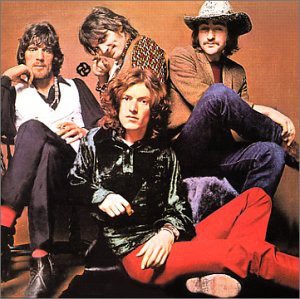
‘Sharpen Your Teeth,’ Ugly Casanova

Odd, wheezing arrangements hum with embers of life on this side project from Isaac Brock of alt-rockers Modest Mouse. Ripe autumn-decay imagery applies to both relationships and the body. The pungent awareness on “Hotcha Girls” that “Old folks’ homes smell so much like my own” is evocatively unpleasant. It’s almost a relief when the band finally moans the last instrumental jaunt “So Long to the Holidays.”

‘Night Moves,’ Bob Seger

Early on in the title track, Seger almost has a great summer classic going, missing his “sweet, sweet summertime” of awkward small-town teenage sex. But the final verse wises up, soberly noting, “Strange how the night moves / With autumn closin’ in.” There’s still heat on cuts like “The Fire Down Below,” though tracks like “Mainstreet” and “Rock and Roll Never Forgets” reach for one last chance while admitting that things are cooling down.

‘The College Dropout,’ Kanye West

This recent chart-topper is about wrestling with decision making. With his first turn as a rapper-artist, all-star hip-hop producer West creates a character who’s at a crossroads of back-to-school bitterness and self-definition. It’s a story of disappointment set somewhere between “Graduation Day,” fraternities and the tasty smells of holiday-based “Family Business.” The hit “Jesus Walks” scares the character from restless doubt back to his roots.

‘Tim,’ The Replacements

Punk bard Paul Westerberg opens this flailing album about failure, beckoning that “it’s time for decisions to be made.” One of those decisions is “quitting school and going to work / And never going fishing.” Another is only visiting relatives’ graves on holidays. The blade-twisting final ballad “Here Comes a Regular” uses unfinished chores as a metaphor for alcoholic remorse: “Summer’s passed / It’s too late to cut the grass / Ain’t much to rake anyways in the fall.”

‘Astral Weeks,’ Van Morrison

Morrison’s best early solo songs, “Brown-Eyed Girl” and “T.B. Sheets,” were a contrast of warm, playful remembrance and a cold death stare. Astral Weeks was his next step, exploding both threads into a wispy, epic glance over the shoulder. At this juncture of reminiscence and farewell, his jazz-folk Celtic soul smiles, bleeds, shudders and hunkers down.

‘Vol. 4,’ Black Sabbath

Ozzy’s first band excelled at winter music, and here, the trudging frostbite of “Snowblind” is ready to rock into late January. But Vol. 4 really suits autumn. The band state the obvious in a non-Sabbath way (the piano ballad “Changes”) and act like they want to wake up in the sand after a July beach party (the acoustic instrumental “Laguna Sunrise”). Oz muses over the past, but he mainly shows his age by repeatedly worrying about losing his mind.

‘Bookends,’ Simon and Garfunkel

A brisk New York City chill hangs over this folk-pop gem. “At the Zoo” is a pure fall Polaroid, while “Mrs. Robinson” is a complex tale of denial. The stark two-minute track “Voices of Old People” is exactly what it says, yet that bit of realism is followed by the gorgeous younger-days ballad “Old Friends.” There’s also desperation (“A Hazy Shade of Winter”) and dissatisfaction (“Fakin’ It”). Finally, there’s the repeating “Bookends Theme,” which returns to old friends.

From the October 13-19, 2004 issue of the North Bay Bohemian.

© Metro Publishing Inc.

Theater Discounts

0

: Going to the theater needn’t break the bank. There are several low-cost options here in the North Bay. –>

There’s more than one way to scalp a ticket

There is an age-old question, right up there–in terms of significance and endurance–with such perplexing questions as “What do women want?” and “What exactly is Spam?” Those are both excellent questions, and while enterprising authors and playwrights are hard at work answering them right now, the question I hear all the time is “Why are theater tickets so expensive?”

The North Bay currently boasts more than 60 stage companies and dozens of live theatrical venues that each roll out new plays and musicals on a regular basis. Still, whenever I attempt to wax eloquent in public about the joys and pleasures of local theater, perhaps launching into a spirited description of a show I’ve just seen, somebody always says something like, “I’d go to theater more often, but . . . why do the tickets have to be so expensive?”

There are many answers to this question, but they are boring ; they are technical and political, and have to do with royalties and rent and publicity costs, and frankly, most people don’t really care why theater costs between $15 and $46 a seat, depending on the show and the venue. What people really want to know is how they can get the tickets for less.

Fortunately, there are ways.

Most of the Bay Area’s theatrical groups understand that not everyone can afford the price they must charge in order to break even, so they offer various programs and systems that make it a little easier for some of us to go to the show. Nearly every company with a regular season has subscription rates, which are discounts made available when you purchase tickets for the entire season. For example, the Sonoma Country Repertory Theater offers generous budget-balancing subscription packages: seven $18 plays for $105 (a $21 savings!), with seniors getting those seven shows for $85, and students and educators stealing them at a mere $55. If you can pay for a season up front and you like a particular theater company’s offerings, season tickets are the way to go.

Children and seniors are almost always offered tickets at a discount price, but what about high school and college students? Many theater companies, including Actors Theatre and the Santa Rosa Players, offer what are called “student rush tickets,” making unsold seats available for $8 to $10 just minutes before curtain for those bearing student IDs.

Additionally, some companies (including the Marin Shakespeare Company and the Sonoma County Rep) are beginning to offer “pay what you can” days, usually held on off-nights–Sundays for Marin Shakespeare and Thursdays for the Rep–when patrons are allowed to literally pay whatever they can for a seat. The Ross Valley Players have a regular Thursday night “all tickets for $15” program.

Perhaps the most radical development in theatrical discounting, though, is based on a program that the San Francisco theater community has been experimenting with for a while now: half-price tickets for same day shows. In a welcome collaboration between the North Bay Theater Group–which is an alliance of theater companies from Marin to Ukiah–and the Convention and Visitors Bureau of Santa Rosa, a half-price ticket window has been established at Santa Rosa’s Visitors Center in Railroad Square.

Participating theaters make unsold tickets available the day of that show, and thrill-seeking theatergoers can snap them up for half of the regular ticket price by showing up in person at the Visitors Center.

There is always a chance, of course, that the show you hope to see will be sold-out or that the theater company in question, in anticipation of selling out, has chosen to hang on to its remaining tickets in hopes of selling them for full price at the door. But if you are willing to take a chance, the half-price ticket booth is the way to go, and it’s especially handy for anyone entertaining out-of-town guests and looking for a frugal way to spend an evening at the theater.

There’s one other way to see low-cost (OK, completely free!) theater, and it’s shocking that more people haven’t figured this out. Theater groups from Spreckels to the Marin Theater Company always need volunteers to usher and handle concessions, and volunteers get to see the show for free. It’s fun, and it doesn’t get any cheaper than that.

Any more questions?

From the October 13-19, 2004 issue of the North Bay Bohemian.

© Metro Publishing Inc.
Miles Davis

0

: New Miles Davis compilation is compleat. –>

New Miles Davis box set is pure bliss

By Greg Cahill

“I knew right away that this was going to be a motherfucker of a group,” Miles Davis wrote in his 1989 autobiography, Miles, referring to the stellar combo that would go on to create landmark sessions and spawn Seven Steps to Heaven and several other albums. “For the first time in a while, I found myself feeling excited inside, because if they were playing that good in a few days, what would they be playing like in a few months? Man, I could just hear that shit popping all over the place.”

Davis had reason to be excited. In 1963, four years after the release of his modal masterpiece Kind of Blue (the biggest-selling jazz album of all time) and its follow-up, Sketches of Spain, he was in a transitional space and looking for a new direction.

Between April 16, 1963, and Sept. 25, 1964, Davis would record with four different five-piece units–which would include pianist Victor Feldman, and tenor saxophonists Sam Rivers and George Coleman–before ending up with one of the greatest jazz quintets of all time, featuring Davis on trumpet, Wayne Shorter on tenor saxophone, Herbie Hancock on piano, Ron Carter on bass and then-17-year-old Tony Williams on drums.

The newly released seven-CD box set Seven Steps: The Complete Columbia Recordings of Miles Davis, 1963-1964 (Sony/Legacy) gathers 50 digitally remastered 24-bit tracks, including eight previously unreleased (three of which are unedited for the first time), chronicling one of the most creative periods in the jazz master’s vibrant career. Those sessions provided the grist for such classic LPs as Seven Steps to Heaven, My Funny Valentine, Miles Davis in Europe and Four and More, among others.

It was Davis’ crucial post-Coltrane period, a brief era that produced some of the musician’s best-known material and would culminate in the formation of his second great quintet.

The tracks are arranged chronologically, beginning with the legendary studio sessions and moving through extraordinary live concert dates recorded in France, Los Angeles, New York, Tokyo and Berlin, performances that ignited a passion for American jazz among worldwide audiences. Thanks to these live recordings, it’s possible to witness the explosive growth of this ensemble. By the time the group reached a February 1964 date at Lincoln Center in New York, the hard-bopping muscularity of George Coleman was in peak form and in sharp contrast to the edgier explorations of his replacement, Sam Rivers. Miles rectified that situation in September of 1964 when he hired the sympathetic Wayne Shorter to fill the reed slot.

Shorter, Hancock, Carter and Williams would remain pivotal players in Davis’ ever changing lineup of sidemen, contributing to 1965’s Live at the Plugged Nickel and 1969’s revolutionary fusion album In a Silent Way.

For Davis, this was a heady period, one that foretold many of his future problems. At the time these recordings were made, producer Bob Blumenthal notes, the trumpeter owned a five-story New York brownstone, drove a Ferrari and earned nearly $200,000 a year. He was named one of GQ‘s best-dressed men and was the subject of Playboy‘s first interview. He also developed many of the health problems, including sickle cell anemia, that would contribute to his 1991 death.

But these sessions reveal an artist who, even if he hadn’t reinvented himself quite yet, was capable of considerable creative growth. Even his peers were amazed. When jazzman Jimmy Heath caught Davis’ group at the Showboat in Philadelphia in May 1963, shortly after the new album was completed, he told Davis: “Man, they’re great, but I wouldn’t want to be up there playing with them every night. Miles, them motherfuckers are gonna set everybody on fire!”

The glow of those incendiary sessions still burns.


Spin du Jour

Frank Zappa, ‘QuAUDIOPHILIAc’ (DTS Entertainment/Barking Pumpkin)

Before his untimely death at the age of 53 in 1993, avant-rocker Frank Zappa dabbled with surround sound and predicted the advent of downloadable music. With the release of this 10-track DVD-Audio disc, his son Dweezil has helped realize that multichannel dream. Culled from the Zappa family vault by archivist Joe Travers, QuAUDIOPHILIAc brings together previously unreleased performances, both live (from the 1975 UCLA Royce Hall concerts) and from the studio, of such compositions as “Rollo” and “Venusian Time Bandits,” along with tracks from Sheik Yerbouti, Shut Up ‘N Play Yer Guitar and Orchestral Favorites, all in glorious 5.1 surround sound. Bonus features include a vintage video of Zappa discussing advanced surround playback. A true visionary.

–G.C.

From the October 13-19, 2004 issue of the North Bay Bohemian.

© Metro Publishing Inc.
Bettye LaVette

0

: Bettye LaVette in action. –>

Mugge returns to Mill Valley Film Fest

By Greg Cahill

Filmmaker Robert Mugge really didn’t know much about Bettye LaVette when Alligator Records owner Bruce Iglauer invited the award-winning documentarian to catch the singer last January during a comeback concert at a Chicago blues club. LaVette, a sinewy 58-year-old songstress who scored her first R&B hit in 1962 at the age of 16 before slipping into obscurity, proved a revelation even to blues buff Mugge.

“Bettye just blows you away with the drama of her performance,” he says of LaVette during a phone interview from his production studio in Clarksdale, Miss. “She’s like an actress inhabiting a role. She either paces or dances across the stage and just gets so deeply into these songs–she begs and pleads and cries. You’re just almost overwhelmed by the emotion of it all.”

Thanks to Mugge–who has included LaVette in an upcoming eight-part public television series called Blues Divas–a lot of folks are going to fall under LaVette’s spell. North Bay audiences will get a chance to preview two installments in the Blues Divas series–one featuring LaVette, the other showcasing folk-blues legend Odetta–when they premiere at this year’s Mill Valley Film Festival Oct. 13-14.

The programs mark the long-awaited return of Mugge to the Mill Valley event. Over the years, he has become the most prolific, and arguably the most proficient, documentarian of American roots music. Among his credits are such critically acclaimed films as Deep Blues, which first introduced mainstream audiences to the Fat Possum label artists; Hellhounds on My Trail: The Afterlife of Robert Johnson; and Last of the Mississippi Jukes, all of them insightful films that have allowed Mugge to explore the musical culture of the fabled Blues Corridor, running from Memphis to New Orleans through the Mississippi Delta.

His latest project, Blues Divas, enlists such incredible blueswomen as Odetta, LaVette, Irma Thomas, Ann Peebles, Mavis Staples, Deborah Coleman, Denise La Salle and Renee Austin–to serve as tour guides. Filmed in the heartland of the blues in Clarksdale, Miss., at actor Morgan Freeman’s Ground Zero nightclub, the two hour-long films presented in Mill Valley incorporate recent concert footage (shot during one long weekend) and intimate interviews conducted by Freeman, a Clarksdale resident and fellow blues buff.

In addition to LaVette’s powerhouse performance, Odetta–a legend of the ’60s folk revival who has continued to delve into deep blues–is captured in concert weaving songs by Victoria Spivey, Bessie Smith and other blues giants with colorful backstories, all set to sparse piano accompaniment.

Mugge points out that the series title, Blues Divas, fits these talented, but underappreciated, performers quite well. “Many of them just have a regal air about them that lets you know you’re dealing with a queen,” he says. “They know how good they are, they know what they’ve accomplished. The society may not have recognized their contributions to the extent that it should, and in this current pabulum youth culture that passes for popular culture, these women may be totally on the fringes, but they know history will record how good they are.

“One of the reasons I’m doing this series,” he continues, “is because it’s criminal if they are not documented doing what they are so brilliant at.”

‘Blues Divas: Bettye LaVette’ screens on Wednesday, Oct. 13, at 7pm; ‘Odetta’ screens Thursday, Oct. 14, at 9pm. For details, go to www.mvff.org. The Sweetwater Saloon salutes Mugge’s films with a Blues Diva night of its own on Oct. 13 at 9pm with Sugar Pie DeSanto. 153 Throckmorton Ave., Mill Valley. $20. 415.388.2820.

Spin Du Jour

Various Artists, ‘The Centennial Collection’ (BMG/Bluebird)

BMG Records kicked off this impressive reissue series in April to mark the 100th anniversary of the births of two jazz giants: Fats Waller and Glenn Miller. But the CD/DVD series–culled from the vaults of RCA Victor and Bluebird, home to some of the most legendary jazz recordings of all time–has expanded to include double-disc anthologies by Duke Ellington (which include previously unreleased Blanton-Webster material), Coleman Hawkins, Benny Goodman, Glenn Miller and Artie Shaw. For the most part, these digitally remastered, 24-bit tracks span the early to mid-20th century, including vintage 1927 recordings of a young Ellington and the familiar WW II-era big-band hits of Miller. However, the real star of this series is the DVD material, drawn from film appearances, short subjects, rare TV spots and live European concert footage. The remarkable film clip of Benny Goodman rehearsing and performing at the 1966 Belgian Jazz Festival with a small combo that featured trumpeter Doc Cheatham alone is worth the price of admission.

–G.C.

From the October 6-12, 2004 issue of the North Bay Bohemian.

© Metro Publishing Inc.

Napa County Voters

Into Thin Air

Napa County voters worry that their votes may not be counted–ever

By Tara Treasurefield

There’s no question that computers have dramatically transformed our way of life during the past few decades. Computers are a part of virtually every daily transaction we complete, from filling up at the local gas station to purchasing gorceries at the market to depositing funds and checking balances at the bank or online from home. So it seems natural to think that something as basic as registering the votes of citizens in the upcoming election would lend itself well to computerization.

However, as voters across the country have discovered, including those in Napa County–the only North Bay county that currently uses computerized touch-screen voting machines–such devices are fraught with problems that can undermine the democratic process. For well over a year, leading computer scientists have repeatedly warned that paperless electronic voting systems are risky. The central issue is that without paper there is no way for voters to verify the accuracy of their ballots and no way to conduct a meaningful audit of an election.

You mark a vote on the screen and–pffft! –it’s gone into the thin air of cyberspace, with no way of knowing if it was actually recorded. In addition, at least four nationally recognized studies have exposed significant security issues with computerized voting systems. Napa County uses the AVC Edge by Sequoia Voting Systems Inc., one of the systems evaluated last year by Compuware, a computer consulting firm based in Michigan. In its report, Compuware revealed that every system it analyzed had “several security issues, which if left unmitigated would provide an opportunity for an attacker to disrupt the election process or throw the election results into question.”

With the election only weeks away, critics of computerized voting say the best available alternative is to use an absentee ballot instead. That way, a written record of your vote is created and retained.

But as Napa County voters discovered in last March’s primary, even that is no guarantee that all the votes will be counted accurately. In the March primary, absentee ballots were mismailed, misplaced, invalidated, lost and–according to an expert who testified during a postelection trial–even revised by someone other than the original voter.

That fact has left some Napa voters in a quandary. Which method of voting is safer: paperless touch screens or absentee ballots?

It’s a question that has no clear-cut answer.

Napa County registrar of voters John Tuteur, who installed new security measures after his county’s March primary, assures that touch screens and absentee ballots are equally safe. Since that controversial primary, Tuteur says he has no qualms about using the touch-screen machines. Still, he encourages voters who distrust the devices to vote using the absentee ballot.

But Napa businessman Lowell Downey has no intention of placing his vote in the memory banks of a machine. “I have a computer-driven business here, and I know the chances of failure,” he says. “Hard drives fail, computers fail, information is lost. What if we lost a block of votes? I don’t think we can risk committing the democratic process to computer technology without a paper trail.”

Napa County contractor Glynn Barry will also vote absentee. Still bristling from problems he encountered with a Sequoia voting machine in the March primaries, Barry says, “I wanted to write in something that wasn’t on the ballot. It was almost impossible. I’d try to spell something and a letter wouldn’t come up. I whacked the machine a few times, and when that didn’t help, I gave up.”

Independent computer programmer Jeremiah Akin validates Barry’s worst fears. Based in Southern California, Akin conducts workshops throughout the country demonstrating how simple it is to manipulate Sequoia Voting Systems software.

“Before an election, when few people are around, you can change the ballot definition so votes will be recorded incorrectly,” he says. “Anyone who has access to the machines would be the biggest threat– county employees and county contractors who have access to the machines or networks.”

The opportunities for election fraud don’t end there, as votes can also be manipulated during and after an election.

“Someone could override information in the database,” Akin says. “Someone could put false information into the database. Someone could change one of the cards [where votes are recorded]. It would be very difficult for the public to check. It can be modified and changed back.”

State officials in Nevada, recognizing the impossibility of meaningful recounts and audits without a printed record of every vote cast, contracted with Sequoia to add printers to the company’s touch screens. As a result, the September primary in Nevada was backed up by a paper trail. “That’s definitely a huge step in the right direction,” Akin agrees.

Though Napa County slow-growth advocate Harold Kelly distrusts paperless voting machines, he’ll use one in November. The reason? He lost all confidence in absentee ballots after the defeat of Supervisor Mike Rippey, an environmentalist, in the March primary, when, in addition to the mismailed and misplaced absentee ballots mentioned above, scanners also failed to count thousands of absentee ballots due to a calibration error by Sequoia personnel.

“If Supervisor Mike Rippey lost fair and square, that’s one thing,” Kelly says. “But if there was hanky-panky going on, I’m really shocked. I hope that wasn’t the case.”

After the primary, Rippey sued registrar of voters John Tuteur and Harold Moskowite, his opponent in the election, on election fraud charges. Rippey eventually lost the case on appeal.

Whether through malice or incompetence, Sequoia personnel appear to have created problems in several elections. For instance, according to the Napa County Elections Task Force report, Sequoia employees evidently miscalibrated equipment intended to count absentee ballots in their recent primary, resulting in thousands of those documents going unremarked. Similarly, the county clerk of Humboldt, Nev., reported that, due to an alleged error by Sequoia personnel who were on hand to assist in a September primary election, votes gathered from six precincts went uncounted until election officials discovered the problem. Nonetheless, Tuteur describes Sequoia personnel as “trusted vendors,” and will use them again in November to set up and program voting equipment and help count the ballots.

All things considered, Akin urges all Napa County voters to use absentee ballots, particularly if they don’t mail them in. “There are a lot of problems with absentee ballots,” he says. “But you automatically cut down a lot of possibilities if you bring your ballot in to your county election department or precinct, especially on election day, when plenty of people are around and watching.”

Seconding Akin’s advice, Lowell Downey says, “We’re not talking about going to the store and having a computer come up with the wrong price on your mozzarella. We’re talking about your vote. We’re talking about democracy.”

From the October 6-12, 2004 issue of the North Bay Bohemian.

© Metro Publishing Inc.

Cookbooks

: Now is the season of our baking. -->Rake in the flavors of fall with comfort-food cookbooksBy Ruth TobiasSo long, peaches and berries. See you later, heirloom tomatoes and corn. Goodbye, watermelon. We'll miss you all--but you can bet we'll be finding some measure of comfort in more filling fare. That goes doubly for avid cooks who are keen...

‘Botany 12’

: West County painter Pamela Glasscock's painstaking work is showcased. -->New exhibits at Sonoma County Museum marry artists with the natural worldBy M. V. WoodSometimes it's within the very clutches of death that some people realize the meaning of life. For others it happens on that mystical night as they're staring up at the stars. For artist Amanda Haas,...

Propositions

Taking the InitiativeThis year's ballot is a daunting propositionBy R. V. ScheideDemocracy is supposed to be an adventure, and this year's presidential election is shaping up to be all that and more, a genuine nailbiter. "Comeback Kerry" is living up to his nickname; Dubya is wilting down the home stretch. It's a real horserace, coming down to a photo...

Swirl ‘n’ Spit

Swirl 'n' SpitTasting Room of the WeekWindsor VineyardsBy Heather IrwinLowdown: Oddly enough, the Windsor Vineyards tasting room is located neither in Windsor nor on a vineyard. In fact, the Healdsburg tasting room is the only place you can buy the wine unless you're ordering from the winery's catalog. (There are also tasting rooms in New York and Tiburon.) The...

Harvest Season

: Tierra Farms in Healdsburg specializes in fiery chipotles. -->Fall foods from Harvest Fair to harvest tableBy Heather IrwinTiny ants swarm the stage in waves. Unconcerned by yellow caution tape, they march straight for titanic cinnamon buns, boldly carrying off bits of buttery frosting and yeasty crumbs. There is every reason to believe that they may soon attack the...

Autumn Classics

: The Ugly Casanovas wheeze into fall. -->Rock for a fall moodBy Karl ByrnRock music is full of "summer classics"--fun music about carefree thrills and relaxing in the sun. Well-loved music like the Beach Boys' Endless Summer, the Drifters' Golden Hits, and Sly and the Family Stone's "Hot Fun in the Summertime" all play along with rock's youthful, communal...

Theater Discounts

: Going to the theater needn't break the bank. There are several low-cost options here in the North Bay. -->There's more than one way to scalp a ticket There is an age-old question, right up there--in terms of significance and endurance--with such perplexing questions as "What do women want?" and "What exactly is Spam?" Those are both excellent questions,...

Miles Davis

: New Miles Davis compilation is compleat. -->New Miles Davis box set is pure blissBy Greg Cahill"I knew right away that this was going to be a motherfucker of a group," Miles Davis wrote in his 1989 autobiography, Miles, referring to the stellar combo that would go on to create landmark sessions and spawn Seven Steps to Heaven and...

Bettye LaVette

: Bettye LaVette in action. -->Mugge returns to Mill Valley Film FestBy Greg CahillFilmmaker Robert Mugge really didn't know much about Bettye LaVette when Alligator Records owner Bruce Iglauer invited the award-winning documentarian to catch the singer last January during a comeback concert at a Chicago blues club. LaVette, a sinewy 58-year-old songstress who scored her first R&B hit...

Napa County Voters

Into Thin AirNapa County voters worry that their votes may not be counted--everBy Tara TreasurefieldThere's no question that computers have dramatically transformed our way of life during the past few decades. Computers are a part of virtually every daily transaction we complete, from filling up at the local gas station to purchasing gorceries at the market to depositing funds...
11,084FansLike
4,446FollowersFollow
6,928FollowersFollow
