
The Byrne Report

The Byrne Report

Bubble Heads

MORNINGS BEFORE the first bell, English teacher Daniel Alderson stands under the flagpole at Sonoma Valley High School reading out loud from Ray Bradbury’s novel Fahrenheit 451, which is about a government that burns books. Along with other political classics, such as George Orwell’s 1984 and Aldous Huxley’s Brave New World, Fahrenheit 451 may soon be iced out of the curriculum at Sonoma Valley High–at least for remedial readers and Spanish-speaking students.

The soft-spoken Alderson is organizing a series of read-ins to protest this consequence of George W. Bush’s ironically labeled No Child Left Behind Act (NCLB). According to Alderson, NCLB is proving to be a windfall for test and textbook manufacturers and consultants even as it dumbs down the nation’s educational system, striking particularly hard at immigrant children who do not always pick the right bubble to shade on multiple-choice tests.

It all began in March when the U.S. Department of Education informed the Sonoma Valley Unified School District that it had failed to meet NCLB’s standardized-testing performance criteria. Bush’s program ties federal funding to average student scores on the California High School Exit Exam and the state’s main achievement test, CAT6. The district’s 4,630 students collectively failed to meet NCLB testing standards, which were formulated by neocon ideologues. The NCLB formula sorts young people into learning categories via their scores on these “bubble tests,” which are well-known to be inadequate measures of learning ability.

The district, which has a high concentration of Latino students, has been placed on “performance improvement” status, a Kafkaesque netherworld from which there is virtually no escape, unless parents, teachers and students make common cause with Alderson. (Note to students: for insight into the NCLB mindset, read The Trial by Franz Kafka.)

Alderson correctly asserts that “PI” status could require teachers to use only watered-down, state-certified literature (and business-letter writing techniques) in mandatory classes for the bubble-test-challenged. Dumbed-down curricula would be dispensed according to strict time schedules and “teaching scripts.” Classes would be monitored by federally recompensed consultants.

Sonoma Valley District superintendent D. Kim Jamieson says that being dumped into PI status “is as real as a heart attack. If we don’t get out of it, we will be taken over by the state.” Each year under NCLB, the benchmarks are increased, making it that much harder to statistically improve. Eventually 100 percent of all students–including the learning disabled and newly arrived Spanish speaking students–will have to pass the bubble tests.

If NCLB’s benchmarks are not met within two years, the staff of a PI district can be fired, the curriculum can be replaced and the schools can be transformed into privately managed charter institutions. For example, scary Christian Dominionists could contract to take over Sonoma Valley schools, throwing out lessons they abhor, such as Darwin’s description of biological evolution, Freud’s psychological method of transference, Heisenberg’s uncertainty principle in physics and references to the works of Karl Marx, Jean Paul Sartre and Michael Moore.

Jamieson suggests that Alderson (“One of our best teachers”) is taking a worst-case scenario from a state-required survey written by a group of consultants that was handed out to Sonoma Valley High teachers in May. Having read this survey, I think that Alderson is understating the extent to which NCLB is undermining public-school education in America. The survey actually buttresses Alderson’s main point: that Spanish-speaking and economically poor students are going to be forced out of elective courses into remedial reading and mathematics courses geared toward answering bubble-test questions. Science and history courses will follow the same path. The bubble answers will be “embedded” in the reading material, like reporters in Iraq or ticks on a dog. Our children will become bubble heads.

The survey “aligns” certain categories of students with “approved” textbooks manufactured by McGraw-Hill, Hampton-Brown and Scholastic. Consultant Nancy Todd, who helped write the survey, says that revised curriculums currently under discussion will not apply to all students, but only to underperforming students who tend to be Hispanic and “English language learners” and students of “low socioeconomic status” (using NCLB jargon). The district awarded its consultants a no-bid contract worth 40 percent of the funds budgeted for PI work, including conducting the survey and starting to concoct a bubble-positive curriculum.

Alderson remarks that teachers need to do a better job with uninterested students, but, contrary to the dictates of NCLB, this should be done by providing them with exciting, relevant literature and the freedom to experiment with ideas. He notes that several states are figuring out how to refuse federal education money so they will not have to comply with NCLB. Only 11 percent of California’s K-12 budget comes from Washington, D.C. Let’s fill the gap with the salaries of fired prison guards and unemployed NCLB consultants.

From the June 1-7, 2005 issue of the North Bay Bohemian.

© Metro Publishing Inc.

Bilingual Debate

0

Progress Report: Like all students, Latinos do better when parents are able to easily communicate with teachers.

Communication Breakdown

Request for bilingual secretary ignites controversy

By R. V. Scheide and Matt Palmieri

Latino parents pressing the Cloverdale Unified School District for a bilingual secretary at the district’s middle school have ignited a controversy tinged with racism in this small, northern Sonoma County community.

The conflagration was sparked after members of Washington School’s English Learner Advisory Council (ELAC), a group of Spanish-speaking parents led by president Marina Trevizo, requested a bilingual secretary at the monthly school-board meeting last February. They were answered by a series of articles and letters to the editor in the local newspaper, the Cloverdale Reveille, that left some Latinos fuming.

Such tensions illustrate the needs of a Latino community that is growing statewide even as education budgets come under increasing pressure. More than one-third of the 632 students at Washington School are Latino. Meanwhile, in a budget cycle that includes last year, this year and next year, the district will see nearly $1 million lopped off its annual $10 million budget, according to Washington School principal Tonya Giusso.

“We can’t hire a bilingual secretary, because there’s a hiring freeze, and we can’t just cut a secretary to put a new bilingual secretary in,” Giusso explains. “If we could, we would, because obviously there’s a need for one.”After the ELAC request at the school board meeting in February, Cloverdale Unified School District superintendent Claudia Rosatti responded with an article that was published on the front page of the Cloverdale Reveille on March 2.

In the article–which was also subsequently mailed to parents in letter form–Rosatti defended the district’s efforts in providing English as a second language (ESL) services to both adults and students. The issue at hand–whether the district should provide a bilingual secretary at Washington School–was the fourth item on a lengthy list. After pointing out that last year the district had responded to the ELAC’s request by hiring a bilingual person to answer calls at Washington School for one hour at the beginning and the end of each day, Rosatti finally cut to the chase.

“Beyond the above-mentioned position, the District has explored whether it was legally obligated to hire a full time bilingual secretary, or other clerical position,” Rosatti wrote. “The answer from all sources was that there was no legal obligation to do so.”

The response didn’t exactly go over well with Spanish-speaking parents, reports Oscar Guajardo, a counselor at the Cloverdale Boys and Girls Club who has worked closely with the ELAC.

“It’s not just about legality,” he insists. “School is a business, and if you want your child to succeed, you want somebody who can communicate with them. This goes beyond the bilingual issue; this is about respect and dignity.” And, he adds, it is not a new issue.

“Parents have been telling the school again and again. Cloverdale is like the Cinderella stepsister of Sonoma County.”

Guajardo also says Rosatti made it sound as if the district itself was paying for all of the ESL programs, when in fact most of them are federally funded, and many are endangered by future cuts in funding. In fact, Guajardo formerly worked as bilingual counselor at the Jefferson grade school in Cloverdale and one day a week at Washington until his services were cut due to lack of available funds last year.

Adding insult to the minor injury caused by Rosatti’s article was an editorial in the same issue by Reveille editor Bonny Hanchett, which stated that Hispanics have “overlooked the many accommodations that the Cloverdale Unified School District is providing for parents” and that “it would be more productive to encourage such parents to dedicate themselves to the task of learning English.”

It was left up to letter writer Gari Jones to throw gasoline on the flames in the next issue of the Reveille on March 9.

“Marina Treviso has pushed her exclusively Hispanic agenda too far,” Jones wrote. “She won’t learn English and wants the rest of us to pay for it? In light of severe budget restraints and cuts, if the threats Treviso made are a joke and if our Hispanic community wants to be taken more seriously, they should challenge this woman with her antagonistic views.” Jones’ rant reached a fiery conclusion: “As hard as we work and as much as we give, we ask for nothing. Marina Treviso should ask for even less.”

“We’re pretty open with our letters to the editor,” Hanchett replied when asked about Jones’ letter, which caused a firestorm in Cloverdale’s Latino community. That included Latino students at Washington School, a number of whom wrote their own letters to the editor in response. Yet when those letters were delivered to the Reveille offices, Hanchett refused to print them, according to multiple sources contacted by the Bohemian.

“We are studying the Constitution in school this week,” one eighth-grader wrote. “This week, in life, I learned about racism.”

From the June 1-7, 2005 issue of the North Bay Bohemian.
© Metro Publishing Inc.

Swirl n’ Spit

0

Swirl n’ Spit

Benziger Winery

By Heather Irwin

Lowdown: Tucked in the hillside above Jack London’s Valley of the Moon, Benziger Winery is in the middle of a grand experiment in preserving the land that London loved so much.

One of just a handful of wineries that has undergone a massive transformation from standard agricultural practices to biodynamic farming, Benziger is at the forefront of a new viticulture movement. The idea goes far beyond organics to a sort of whole-earth philosophy that takes into account every aspect of farming. From recycling organic material to using specialized ground covers, no chemical pesticides and minimizing the impact on soil, animals and insects, this radically earth-friendly technique is applied to all of the winery’s 43 acres.

To no one’s surprise, what has resulted is a stunning selection of wines gaining national attention and proving that wines grown with nontraditional farming practices compete and often outclass their competitors.

Mouth value: The tasting room at Benziger is a convivial spot, but sometimes overcrowded, especially after tours. Spend an extra $5 for a biodynamic tasting that affords a more private room with your own tasting guide and some of the wineries very best wines. The 2004 Estate Sauvignon Blanc ($27) is crisp and clear with lots of citrus overtones but much drier and less fruity than the sometimes fruit-salad-like varietal. The 2002 Sonoma Mountain Estate Red ($45) is a big Bordeaux blend with complex flavors that, despite its youth, has soft tannins and easy drinkability. The 2002 Tribute ($65), another blend of Cabernet, Cabernet Franc, Merlot and Petit Verdot, has been wowing critics. This is a very Cabby Cab‹big, bold flavors and tannins that demand to be recognized. Though pleasing, this will cellar well for at least 10 years.

A note: Biodynamic and reserve wines are only sold at the winery. Because of the complexity of the farming process, they do cost slightly more than some comparable wines. Beauty has a price.

Don’t miss: There’s plenty to see and enjoy at the Benziger compound, including a daily 45-minute tram ride tour of the vineyards, wildlife sanctuaries and caves. Also check out the small outdoor wine exploration area to learn more about viticulture.

Five-second snob: Biodynamics were invented in the 1920s by scientist Rudolf Steiner, who is also credited with founding the Waldorf education system. The winery began working toward biodynamics in 1993, and didn’t achieve certification until 2000, attesting to the rigorous rules and processes involved in becoming fully biodynamic.

Spot: Benziger Family Winery, 1883 London Ranch Road, Glen Ellen. Open daily, 10am to 5pm. Tram tours, $10. Biodynamic tasting, $10; regular tasting, $5. 888.490.2739.

From the May 25-31, 2005 issue of the North Bay Bohemian.

© Metro Publishing Inc.

Ken Brown

1

Photograph by Rory McNamara

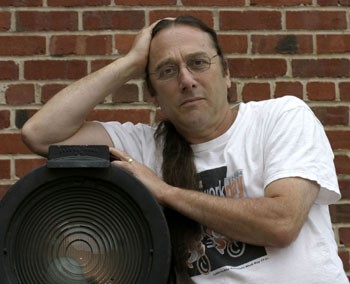
Ren Man: Former Sonoma mayor Ken Brown serves his community through the gamut, whether as janitor or theater producer.

Town Squire

Ken Brown and the art of (Sonoma) living

By Jordan E. Rosenfeld

While not exactly a Luddite, Sonoma City Council member Ken Brown got rid of his checkbook in favor of cash 10 years ago, doesn’t own a television, bicycles as his primary form of transportation and only began using his office computer after it sat on his desk for five years. Yet, says, Brown, “I always wanted to be an executive; I like to be in control.”

Fortunately, the town of Sonoma, Brown’s personal and public domain, lends itself to just such kinds of seeming contradictions.

“Sonoma is home to eccentrics and people who think outside the box. I mean totally outside the box,” he chuckles.

Brown himself is easily among them. He believes that it’s “totally loony to drive on freeways” and he avoids flying in airplanes. “Everything I need is right here,” he says, gesturing beyond the window of his office in the Sonoma Community Center. Brown does all of his shopping, for example, in the town where he has lived for more than 25 years and raised three children who are now mostly grown, and where he is now raising a fourth child, three-year-old daughter Eden, with wife, Jewel. He is also general manager of the Sonoma Community Center and has recently begun to produce its theater, a lagging art in Sonoma which he helped financially reinvigorate.

In many ways, Brown is the poster child for the Sonoma lifestyle, working, socializing and advocating for where he lives. “I have every intention of keeping my life as it is,” he says firmly.

Clad in his laid-back uniform of T-shirt, khakis and long ponytail, Brown, also Sonoma’s former mayor, is one of the town’s most recognizable public figures, but not necessarily the traditional image of a government figure.

“I think I’ve successfully dispelled the notion that I’m just a long-haired hippie,” he laughs. In fact, he considers himself just another blue-collar worker, hailing “from a line of blue-collar workers,” a detail that he feels makes him an ideal city council member. “I’m proud to be a politician,” he says with a smile. “I finally realized there have to be politicians in civilization, because we provide the mechanism to realize citizens’ desires. I provide a unique service in that I’m truly able to speak for the average citizen’s experience, because I am one.”

Being a member of the city council also taps into what he says he loves about being the producer of the Community Center’s theater.

“The city council meetings are like theater. I started going to them back in the ’80s when I was the first commissioner of arts and culture in town. There’s a script–the agenda–and people often have prepared remarks, but as the dialogue unfolds, it’s like improv. The mayor is like the director and the audience is the public. You have a microphone, and you’re definitely onstage. I love the interaction and how that evolves over time. The whole fabric of the town is alive at public meetings.”

Brown made his first run for office against two incumbents in 1998 and lost by 150 votes.

“I got overconfident,” he says.

Undaunted, he ran again and was elected in 2000 by one vote. He plans to stay on the council, he says, until they have to “drag” him away. “The desires of the citizens match my own,” he says, adding, “I’ve learned to be really aware of the law of unintended consequences, to take the long view because Sonoma is very small; every decision is felt all over.”

If holding a steady job, raising a family and being a civil servant seem like plenty to Brown, they are just a few of the many columns that prop up his sense of purpose.

“Being immersed in community life since the early ’70s, I’ve seen how important community service is to the life of a city,” he says.

Becoming producer for the Community Center’s theater six months ago fulfills his desire to support what he calls the “tremendous community” of artists who reside and practice their art in the community. As producer, Brown has opened up the two theaters–the intimate Backstage Theatre and the larger Andrews Hall–to rentals and co-productions, which has brought the theater budget into the black.

Having just directed Steel Magnolias, Brown is content to produce the season finale of The Shadow Box, a drama running at the Backstage Theatre through June 4.

“I always look forward to work,” he says. “I love my job and my community.” Brown gives special thanks to Jerry Casson, the woman whom he considers his mentor, who was nominated by President Franklin D. Roosevelt to be the first social services commissioner in Sonoma. Along with Dan Ruggles, Dr. Carol Andrews and his wife, Catherine, Casson founded the Community Center some 25 years ago as well as being on the ground floor with Meals on Wheels and Pets Lifeline, nonprofits that still flourish today.

The Vintage House Senior Center is also dedicated to Casson. Brown hopes to raise money for a public art statue in Casson’s honor. “I’m blessed to have had Jerry indoctrinate me,” he says. “I was not long out of the army when I came to Sonoma in 1974. I was driving a caravan for the Community Center, and Jerry said to me, ‘Are you awake or asleep?’ I said, ‘I’m awake, I think.’ She said, ‘Good, if you’re really awake, get to work.'”

Since that admonition, Brown has held a variety of jobs at the Community Center. “I’ve been everything from the janitor to the board president to everything in between,” he says. In the early days of working for the Community Center, he and his wife even lived in a tiny apartment on the grounds.

In addition to his Community Center work, Brown hosts two radio shows on the Sonoma Valley’s public radio station, KSVY 91.3-FM, and is the force behind the Center of the Universe Cafe, monthly arts dinners that promote good food, good conversation and great community.

“Sonoma has an identity, and underlying everything is that this town has a spiritual quality that allows for self-reflection,” Brown says. “Healers work and live here. It is resplendent in nonprofits that do the work of a parks and recreation department. Not only that, but this is one of the few cities in the U.S. that operates in the black.

“If the world could turn its eye to the art of Sonoma living, I think it would be astonished.”

‘Shadow Box,’ produced by Ken Brown and directed by Mike Reynolds, plays Thursday­Saturday through June 4. Sonoma Community Center, Backstage Theatre, 276 E. Napa St., Sonoma. 8pm. $11-$13. 707.938.4626.

From the May 25-31, 2005 issue of the North Bay Bohemian.

© Metro Publishing Inc.

Open Mic

0


Open Mic

Suicide, Unplugged

By Hank Mattimore

DO INDIVIDUALS HAVE a right to take their own lives? That’s a question that came into national focus earlier this year, during the debate over removing the late Terri Schiavo’s feeding tube. Now, proposed legislation co-authored by California assemblywoman Patty Berg, D-Eureka, is adding a whole new dimension to the debate. The bill goes beyond the right of an individual to take his or her life and makes it legal to have a doctor assist in a patient’s suicide.

Like Berg, who watched her husband die horribly after suffering a severe stroke in 1987, I am not unaware of the agony good people endure in standing by helplessly while their loved ones suffer from a terminal illness. I personally have experienced this in the case of a close friend of mine, a woman of keen intelligence and wit, who suffered for months, kept alive way beyond her time. I wanted desperately to put her out of her nightmare. There was a moment, standing alone by her bedside, that if I had possessed the courage and was not afraid of the legal consequences, I may well have done the deed.

So I understand the feelings of Assemblywoman Berg and those supporting the legislation in wanting to provide a legal means to end seemingly needless suffering. Those who are promoting this legislation are, I firmly believe, moved by compassion. They want to do no less for their loved ones than we do for our animals.

However, what is important here, it seems to me, is to ensure that legislation balances the rights of the individual with the common good of society. We are a country built on the values of rugged individualism, so it is all too easy for us to get so caught up in demanding our personal rights that we overlook the bigger picture: the greater good of society.

It’s one thing to pose the question “Does an individual have the right to commit suicide?” and quite another to ask, “Should we pass a law that allows a doctor to assist him in taking his own life?” That’s a far more complex question. Will the common good be served by making it legal for our medical healers to take on the role of legal accomplices to suicide? I don’t think so.

I question passing a law that might have the effect of having patients look on doctors not only as protectors of life but as purveyors of death. I’m suspicious of legislation that could tempt overly budget conscious health organizations to encourage people to consider a painless way of death rather than prolonging life at considerably more cost. And if it were all perfectly legal for a doctor to help grandma off herself before she has spent all her finances, isn’t it at least possible that the grandkids could encourage her to take that “unselfish” way out?

The law of unintended consequences says yes. In Holland, legislation that started out with good and compassionate intent is now being invoked by doctors to put severely disabled babies to death. In this country, laws legalizing capital punishment had all sorts of safeguards built in to make sure no innocent person was ever put to death. Sadly, we are finding out through DNA technology that our safeguards were full of holes. We need to be very careful in passing legislation that can have consequences that go far beyond what we can foresee. We are talking here about the sanctity of life.


Hank Mattimore is a Santa Rosa resident and the author of ‘The Priest Who Couldn’t Cheat.’ The Byrne Report will return next week.


From the May 4-10, 2005 issue of the North Bay Bohemian.

© Maintained by .


‘Doing Time, Doing Vipassana’

0

Mind Reform: Tihar Prison inspector general Kiran Bedi in prayer.

Personal Time

‘Vipassana’ doc showcases the power of meditative insight

By Jeff Latta

What could possibly make hardened criminals locked up in one of the worst prisons on earth say that they are actually glad to be there? What powerful force could drive violent offenders to weep joyfully and unabashedly? The answer is vipassana, an ancient meditation technique that could unlock the key to true rehabilitation in the world’s prison systems and the subject of the fascinating documentary Doing Time, Doing Vipassana.

A form of Buddhist meditation that emphasizes looking into one’s own mind for the roots of–and solutions to–one’s problems, vipassana literally means to see things as they truly are. During vipassana meditation, a participant is encouraged to focus on the natural inhalation and exhalation of his or her own breath. One’s awareness of physical sensations is eventually heightened to an incredible degree due to the newly discovered focus, and one can begin to see the connection between reactions to outside forces and the physical sensations experienced at the time.

A person can see how reactions can be changed through careful consideration and mindfulness. It is this key element which is said to be the breakthrough for the convicts who practice it. With this realization, they can change their violent and destructive habits, and get started on the path to true rehabilitation.

Doing Time, Doing Vipassana, opening May 27 at Rialto Cinemas Lakeside and the Smith Rafael Film Center, is a brief and direct film that is nothing if not clear-cut. Shot on the cheap, it features a straightforward narration that tells the tale of meditation’s role as a vital rehabilitation technique in India’s violent and overcrowded Tihar Prison. The emphasis of the film is on providing information, not surprising considering that Doing Time is produced by the Vipassana Research Institute.

There are very few moments when viewers gets the sense they are watching a movie; the film often feels more like an instructional video. One notable and effective exception is when filmic techniques are used to show how the distractions of the real world can weigh heavily on the mind of a vipassana practitioner. Quick edits and sped-up camerawork show a barrage of images from food to people to prison cells, while a voiceover explains how clear the mind can become when these distractions are finally dealt with.

But the most potent and convincing elements of the film are the firsthand accounts from prisoners and guards who have adopted the practice. That’s right, the guards, too. Before agreeing to provide his teachings to the inmates at Tihar Prison, vipassana instructor S. N. Goenka insisted that the guards (particularly the most violent and corrupt ones) participate in a 10-day beginning intensive course that features 10 hours of silent meditation per day. Kiran Bedi, the inspector general of Tihar at the time, wholeheartedly agreed and even took part in the course herself.

A three-time murderer tells the story of how he has found inner peace through meditation, seeking forgiveness from the loved ones of those he had killed and becoming a surrogate family member to many of them. A foreign tourist incarcerated for years on an alleged drug charge says he is glad he was sent to prison. But the documentary astutely and realistically does not show meditation to be an instantaneous solution that turns everyone into a saint; in the film, prisoners discuss how difficult it can be to muster the mental effort required to adhere to their newfound insights.

Yet the remarkable success of the Tihar program, now host to a permanent vipassana center, remains a powerful tool of persuasion to other prisons around the world that might be considering adopting this ideal, including San Quentin. With the technique already being implemented in a few key prisons in the United States and a three-year study currently endorsed and funded by the U.S. National Institutes of Health, this positive reform may one day be instituted in all our prisons.

Vipassana is even endorsed by Rivers Cuomo, the eccentric frontman for the rock group Weezer, so perhaps a full-fledged fad is not far off. Imagine a world where the latest trend across Hollywood involves 10 days of forced silence–now that’s true bliss.

‘Doing Time, Doing Vipassana’ opens Friday, May 27, at the Rialto Cinemas Lakeside (551 Summerfield Road, Santa Rosa, 707.525.4840) and the Smith Rafael Film Center (1118 Fourth St., San Rafael, 415.454.1222).

From the May 11-17, 2005 issue of the North Bay Bohemian.

© Metro Publishing Inc.

News of the Food

0

News of the Food

Memorial Day Mentionables

By R. V. Scheide

The Memorial Day weekend provides an excellent opportunity for some cross-county winery hopping, with a barbecue and/or brewery occasionally thrown in for good measure. Following are some select events in the North Bay designed to whet your Memorial Day whistle.

Napa County

The Napa County Soroptimist Club comprises well-meaning women who apparently have no problem supporting the (responsible) imbibing of wine, beer and spirits, if this Memorial Day benefit tasting featuring 20 Napa County wineries and 10 breweries is any indication. Featured vendors include Saintsbury, Prager Port and Wine Works, Chimney Rock, Sierra Nevada Brewery, the Hess Collection, Pavi Winery, Solo Rosa, Robert Hunter Winery, Domaine la Due and Bell Cellars. Saturday, May 28, noon-4pm.

JV Wine and Spirits, 426 First St., Napa. $5 (21 and over). 707.253.2624.Chateau Potelle Winery provides two memorable Memorial Day options. Jean-Noel and Marketta Fourmeaux host afternoon tastings and hors d¹oeuvres, no RSVP required, Saturday and Sunday, May 28 and 29, 11am-6pm. $10 per person. On a more exclusive note, the winery hosts a special Memorial Day alfresco dinner under the stars for the first 75 people who make reservations on Saturday, May 28, 6pm-10pm. $100 per person. Chateau Potelle Winery, 3875 Mount Veeder Road, Napa. 707.255.9440.

Sonoma County

Barbecue with a Tuscan point of view is the order of the day at Viansa Winery and Italian Marketplace, with live music and plenty of barbecued chicken, Italian sausage, hot dogs, hamburgers, salmon and baby back ribs, and portabella mushrooms. Saturday-Sunday, May 28-29, 11am-2pm. Viansa Winery and Italian Marketplace, 25200 Arnold Drive, Sonoma. Cost varies. 800.995.4740.

Wine educator Stephen Pavy gives tours of the lovely Wild Oak Vineyard as part of a musical Memorial Day weekend at St. Francis Winery. Kick back, relax and sip a little vino Saturday-Sunday, May 28-29, 10am-5pm. St. Francis Winery, 100 Pythian Road, Santa Rosa. $10, includes glass. 800.543.7713.

Marin County

Marin gets in on the Memorial Day food-and-drink action with the San Rafael Wine Festival, featuring samples from more than 50 local wineries and restaurants. Port and chocolate tasting, beer garden, champagne deck, auction and live music liven things up. Saturday, May 28, 1-5pm. 1408 Mission Ave., San Rafael. $40-$45. 415.453.9001.

From the May 25-31, 2005 issue of the North Bay Bohemian.

© Metro Publishing Inc.

Briefs

0

Briefs

Wal-Mart Hits Wall

On Friday, May 20, Napa County Superior Court Judge Raymond Guadagni brought construction of a Wal-Mart Supercenter in American Canyon to a screeching halt when he activated a work stoppage order he’d previously approved on May 3. The judge activated the order after one of the groups that is suing to stop the project, American Canyon Community United for Responsible Growth, posted a $180,000 bond required by the court. The judge is scheduled to hear arguments in the lawsuit, which alleges American Canyon officials violated the California Environmental Quality Act when planning the new Supercenter, beginning June 27.

Repeat When Necessary

When at first you don’t succeed, try, try again. That’s a lesson that hasn’t been wasted on the West Sonoma County Union High School District, the nearby Harmony School District and the Marin County community of Fairfax, each of which is reprising previously failed ballot measures for a special election on June 7. The two school districts seek to raise the annual parcel tax to $26 and $52 respectively; identical proposals were shot down by voters in March. The increases are specifically targeted to help the districts retain vital library services, provide art and music instruction, and reduce class sizes. Meanwhile, in Fairfax, Measure F seeks to increase parcel taxes to $125 annually, necessary, city officials say, to provide crucial public services in light of Fairfax’s ongoing budget deficit.

Coast Guard

Beauty, it seems, is in the eye of the beholder. When U.S. Rep. Lynn Woolsey, D-Petaluma, surveys the Sonoma Coast, she sees a vibrant ecosystem worthy of protection under the National Marine Sanctuary program, as proposed by her latest bill, HR 1712. When George W. Bush looks at the same thing, he sees blighted emptiness, devoid of ubiquitous offshore drilling platforms erupting likes sores from the skin of his own childhood playing ground, the environmentally devastated Gulf of Mexico. “Let’s not forget the irrevocable damage to our environment that offshore drilling causes,” Woolsey said on the floor of the House last week. “This devastation can be seen in the Gulf of Mexico, where outer continental shelf pipelines crossing coastal wetlands are estimated to have destroyed more coastal salt marsh than can be found in the stretch of coastal land running form New Jersey through Maine.”

R. V. Scheide

From the May 25-31, 2005 issue of the North Bay Bohemian.

© Metro Publishing Inc.

Shakespeare Plays

0

Will Bill

North Bay’s open spaces prepare for the best of the Bard

By David Templeton

Among the many particular joys that make summer in the North Bay so delicious are local thespians’ penchant for producing Shakespeare epics in big, open places. Over the years, a number of open-air Shakespeare events have arisen, from the classy Shakespeare at Stinson to the cozy Sebastopol Shakespeare Festival. Last year, Marin, Sonoma and Napa counties boasted no less than six separate Shakespeare happenings with a total of 10 distinct plays.

This year, the stage is set for even more Elizabethan fun as a brand-new company brings several weekends of free Shakespeare to the Windsor Town Green, amounting to a total of 14 distinct productions to be held out under the nighttime skies all across the three counties. Oops, make that two counties; with the Napa Shakespeare Festival still shut down with budgetary woes, and with nothing Bard-like going on at the Napa Community College, it’s up to Sonoma and Marin counties to fill the Will bill. And fill it they shall. Here, in hunched brevity, are some of the highlights.

The eccentric and eclectic Shakespeare at Stinson festival (www.shakespeareatstinson.org) appears to have an “oppressive regime” theme going on this summer, as it kicks off with Shakespeare’s entertaining vision of poor England under the control of a megalomaniac hunchback in Richard III (Dick 3 for short, running through June 26), then moves on to Tom Stoppard’s eerie-funny Rosencrantz and Guildenstern are Dead (July 8-Aug. 14), a reimagining of Hamlet set in a creepy police-state Elsinore and told from the point of view of Shakespeare’s two least self-actualized characters. The festival ends with director Hector Correa’s production of Kander and Ebb’s Cabaret (Aug. 19-Oct. 9), set in pre-WW II Berlin and featuring no Shakespeareans but plenty of half-naked dancing girls. 415.868.1115.

The grand and glorious Marin Shakespeare Company festival (www.marinshakespeare.org), held as ever at Dominican’s magical Forest Meadows Amphitheatre, appears this year to be a celebration of the mismatched Italian couple, launching in July with Shakespeare’s crazy buddy-comedy Two Gentlemen of Verona (July 8-Aug. 14) and concluding in August with the ever-popular meditation on young love and poor communication, Romeo and Juliet (Aug. 26-Sept. 25). Adding some weirdness to the mix, Marin Shakespeare will also be letting loose with a Monty Python-esque staging of Beaumont and Fletcher’s farcical Jamesian laugh-fest The Knight of the Burning Pestle (July 15-Aug. 14).

Melodrama trades off with mellow comedy in Sebastopol’s Ives Park, as the Sebastopol Shakespeare Festival, presented by the Sonoma County Repertory Theater (www.the-rep.com), takes to the outdoor stage with A Bad Day at Gopher’s Breath (July 8-July 17), which organizers describe as “a great romantic drama of the Wild West” and which features rival gangs of bank robbers facing off on one particularly bad day. After a brief overlay indoors for a Main Street Theatre run of The Complete Works of William Shakespeare (abridged) (July 22-Aug. 7), they return to the park for the gender-bending Twelfth Night (Aug. 12-21). 707.823.0177.

Though it’s uncertain whether Carl Hamilton’s fledgling Sandlot Shakespeare company (www.sandlotshakespeare.com) will be back at Gundlach Bundschu Winery this summer, Kate Kennedy’s Avalon Players (www.sonomashakespeare.com) will definitely return to Gundlach Bundschu with a double-whammy featuring this year’s other production of Romeo and Juliet (July 15-24), as well as Shakespeare’s two-pairs-of-twins-separated-at-birth farce A Comedy of Errors (Aug. 19-Sept. 4). 707.996.3234.

This brings us to the new kids on the block, Windsor’s ambitious (and totally free!) Shakespeare on the Green festival (July 22-Aug. 14), stampeding out of the gate with a 12-perfomance run of two Shakespeare plays: A Midsummer Night’s Dream (bad fathers, drugged lovers, tricksy fairies, donkey-headed thespians) and Much Ado about Nothing (spontaneous betrothals, love under false pretenses, improbable conclusions). With a board of directors that includes former SCR director Jim dePriest, the freshman venture looks to be the real thing, with weekend performances on Windsor’s Town Green preceded by such fun stuff as jugglers and morris dancers. 707.529.3453.

From the May 25-31, 2005 issue of the North Bay Bohemian.

© Metro Publishing Inc.

Lakeport

0


Outta Town

Punk royalty and other musings on the small-town scene

By Gabe Meline

The cloistered city of Lakeport is not widely thought of as punk-rock central, but at least it can boast the generally unknown distinction of hosting AFI’s very first show.

It was the beginning of the kind of career that every kid who starts a band dreams of. By now, the East Bay band is a punk-rock institution, having traveled all over the world and sold quite literally millions of records, which is just plain incredible to fathom for someone who watched them amble onto a Lakeport stage and play their first show back in 1992.

It wasn’t supposed to happen, actually. The show was booked at the Lake County Fairgrounds and was already full with six bands when a group of Ukiah kids showed up and asked if they could play. No one wanted to add another band at the last minute, but they were so earnest and funny that no one had the heart to tell them no.

“We’re called AFI,” said a perpetually smiling kid who introduced himself as Dave. “We don’t have very many songs, so we won’t play too long.”

“What does AFI stand for?” I asked.

He got all excited. It was probably the first time anyone had asked him what his band’s name meant. “A Bunch of Fuckin’ Idiots!” he said.

I added up the acronym in my head. “But what about the B?” I asked. You’d think he’d been waiting forever for the chance to blurt out his response: “That’s why we’re a bunch of fuckin’ idiots!”

Even though we hung out for the duration of the night after they performed–and played countless shows together in the next few years–I wasn’t totally blown away by AFI. They were just another band playing a style of punk that had been done to death already, and I was over it. What set them apart, though, even at that first show, was their captivating, unbridled energy.

The kid who introduced himself as Dave turned out to be the lead singer. He, in particular, stole the show, running laps across the stage as if it were too small for him. He contorted his body and screamed his lines with all the vitality and desperation of someone dying to get out of Ukiah. It only lasted for 25 minutes or so, but AFI had made their mark; my band played next, and AFI were a tough act to follow.


AFI’s subsequent worldwide popularity has gradually transformed that first gig into local lore, but what was truly exciting in Lakeport at the time was that a punk-rock show was even happening at all in such a remote town.

It didn’t, however, exactly set off a movement. Shows around Lakeport since have been infrequent and unorganized, but that’s been changing thanks to former Santa Rosa resident Cristi McElhenny, who moved up there last year, booked her first show and observed the demographic that showed up.

“They’re all so young,” she says, “and there’s nothing for these kids to do.”

On a recent night at Lakeside Lanes, the local bowling alley where McElhenny rents a side room behind the video arcade, the audience represents a cross-section of the town’s small population. A kid coming through the door wearing a Dead Kennedys T-shirt and pink satin shorts is followed by two prepubescent girls in pastel team caps and low-rise designer jeans. Thuggish-looking guys in starter jackets lurk outside and smoke alongside people with piercings and face tattoos. Before the show starts, two drummers play together until the better of the two gets up and starts riding her skateboard around the room. There are six bands scheduled to play on this night but no PA system, when unexpectedly a seventh band shows up and offers the use of their PA in exchange for coveted Lake County real estate: a slot on the bill. They wind up playing last.

“If you are caught drinking in the parking lot, you will be eighty-sixed for good!” McElhenny announces from the stage. “Do not get caught drinking in the parking lot!”

Between bands, two girls approach the door and peek into the show curiously. They are straight-laced types who, in a large city, would either recoil in horror or at least ask what kind of music the bands play. But this is the only thing to do in Lakeport tonight, so they each pay $5 to get in.

Overstimulated or perhaps bored, people leave the show periodically to play Dance Dance Revolution in the arcade room or to not get caught drinking in the parking lot. During the sixth band’s set, a forty-something man in a ponytail storms into the room.

“Who’s in charge here?” he demands. “You’ve got to keep an eye on your musicians, man, because I just caught one of them pissing on the floor of my shop next door! We have bathrooms here, you know. It’s just not cool!”

Fortunately McElhenny has had few problems with the law, and has been showered with widespread community support for her efforts. After all, most adults in this community also grew up here and realize the struggle that their own children face. “This is really a unique situation,” McElhenny says. “I feel like it’s almost destiny.”

Truly, the obvious success of these shows is that local youthful energy, in danger of festering, is being redirected into creative action which revitalizes a disconnected existence. Whether or not the crowd here actually realizes this is debatable; most people at the show are simply looking for a good time. Some of the local kids hang out in the parking lot at night’s end to offer a widespread opinion about their town. “Lakeport sucks,” one of them says, “but we’re not from here.”

“Yeah,” stresses his friend, “we’re from Kelseyville.

“Kelseyville’s cool.”

Off Kilter, Archaeopteryx, Band A and Criminal Subculture perform at Lakeside Lanes on Saturday, May 28. 872 Lakeport Blvd., Lakeport. 7pm, $5. 707.263.4828.

From the May 25-31, 2005 issue of the North Bay Bohemian.

© Metro Publishing Inc.

The Byrne Report

The Byrne ReportBubble Heads MORNINGS BEFORE the first bell, English teacher Daniel Alderson stands under the flagpole at Sonoma Valley High School reading out loud from Ray Bradbury's novel Fahrenheit 451, which is about a government that burns books. Along with other political classics, such as George Orwell's 1984 and Aldous Huxley's Brave New World, Fahrenheit 451 may soon...

Bilingual Debate

Progress Report: Like all students, Latinos do better when parents are able to easily communicate with teachers.Communication BreakdownRequest for bilingual secretary ignites controversyBy R. V. Scheide and Matt PalmieriLatino parents pressing the Cloverdale Unified School District for a bilingual secretary at the district's middle school have ignited a controversy tinged with racism in this small, northern Sonoma County community....

Swirl n’ Spit

Swirl n' SpitBenziger Winery By Heather IrwinLowdown: Tucked in the hillside above Jack London's Valley of the Moon, Benziger Winery is in the middle of a grand experiment in preserving the land that London loved so much.One of just a handful of wineries that has undergone a massive transformation from standard agricultural practices to biodynamic farming, Benziger is at...

Ken Brown

Photograph by Rory McNamaraRen Man: Former Sonoma mayor Ken Brown serves his community through the gamut, whether as janitor or theater producer.Town SquireKen Brown and the art of (Sonoma) livingBy Jordan E. RosenfeldWhile not exactly a Luddite, Sonoma City Council member Ken Brown got rid of his checkbook in favor of cash 10 years ago, doesn't own a television,...

Open Mic

Open MicSuicide, UnpluggedBy Hank Mattimore DO INDIVIDUALS HAVE a right to take their own lives? That's a question that came into national focus earlier this year, during the debate over removing the late Terri Schiavo's feeding tube. Now, proposed legislation co-authored by California assemblywoman Patty Berg, D-Eureka, is adding a whole new dimension to the debate. The bill goes...

‘Doing Time, Doing Vipassana’

Mind Reform: Tihar Prison inspector general Kiran Bedi in prayer.Personal Time'Vipassana' doc showcases the power of meditative insightBy Jeff LattaWhat could possibly make hardened criminals locked up in one of the worst prisons on earth say that they are actually glad to be there? What powerful force could drive violent offenders to weep joyfully and unabashedly? The answer is...

News of the Food

News of the FoodMemorial Day MentionablesBy R. V. ScheideThe Memorial Day weekend provides an excellent opportunity for some cross-county winery hopping, with a barbecue and/or brewery occasionally thrown in for good measure. Following are some select events in the North Bay designed to whet your Memorial Day whistle.Napa CountyThe Napa County Soroptimist Club comprises well-meaning women who apparently have...

Briefs

BriefsWal-Mart Hits Wall On Friday, May 20, Napa County Superior Court Judge Raymond Guadagni brought construction of a Wal-Mart Supercenter in American Canyon to a screeching halt when he activated a work stoppage order he'd previously approved on May 3. The judge activated the order after one of the groups that is suing to stop the project, American Canyon...

Shakespeare Plays

Will BillNorth Bay's open spaces prepare for the best of the BardBy David TempletonAmong the many particular joys that make summer in the North Bay so delicious are local thespians' penchant for producing Shakespeare epics in big, open places. Over the years, a number of open-air Shakespeare events have arisen, from the classy Shakespeare at Stinson to the cozy...

Lakeport

Outta TownPunk royalty and other musings on the small-town sceneBy Gabe MelineThe cloistered city of Lakeport is not widely thought of as punk-rock central, but at least it can boast the generally unknown distinction of hosting AFI's very first show.It was the beginning of the kind of career that every kid who starts a band dreams of. By now,...
11,084FansLike
4,606FollowersFollow
6,928FollowersFollow