Ask Sydney

February 14-20, 2007

Dear Sydney, my stepmom keeps hitting on me! She’s been in my life since I was eight, and now, 20-plus years later, I find her embracing a little longer, with a little more “hips,” and, well, those goodbye/hello smooches keep getting longer in duration. What was once thought of as cute and affectionate has quickly turned into uncomfortable and strangely satisfying. Right now I’m not sure which is the bigger problem: the obvious implications of a parent coming on to her kids–or even her kids’ friends, come to think of it–or the fact that I’ve caught myself with flashes of her when engaging in sexual-type acts. It really grosses me out. Not in a million years would I actually do something with her, but I wonder why, why is it actually taking a hold in my life? Do you think it might be due to my tenuous relationship with my dad, and is in some way a silent rebellion? Please help.–Family Man

Dear FM: There are certain lines that should never be crossed, and this is one of them. Your stepmother is behaving inappropriately, and it’s just too unfortunate that you have to be the victim of her misbehavior. I suggest you keep your distance. We all have our issues, and parents and step-parents are no exception. But coming on to your step-kid is only “fun” in the movies. In real life, it’s sick. While direct confrontation may not be the path you want to take with this, I would definitely make sure you avoid the lingering hugs at all costs. She may mean nothing by it, but regardless, she should be more sensitive to your boundaries.

As for those latent nasty desires, don’t worry about them. Fantasies are supposed to be twisted; that’s why they’re fantasies, so you don’t actually have to experience them. Give yourself a break. Sometimes the mind has a strange sense of humor. You know you don’t want to screw your own stepmother. Your relationship with your father may have something to do with it, but then again, probably not. Desire can be completely ludicrous, and for no apparent reason other then boredom. No doubt your stepmother is suffering from a version of this herself.

Dear Sydney, I need help with my girlfriend. We have plenty of big issues, of course, but I really need advice with one of the smaller ones. When she gets undressed (and I’ll start this by saying that I think she is super-hot), she always takes off her pants first and then her shirt. So for a few seconds, she is standing there, “Fanny No Pants,” with her top half totally covered. I can’t say for certain why this bothers me, but it really does. I find it dirty in an unattractive way. I’ve talked to her about it, but she insists that she doesn’t want her “cupcakes” to get cold. She’s a nifty lady, and I don’t want to come off as an obsessive prude–but I have to close my eyes every time she gets undressed. What can I do?–Fluff Shy

Dear Fluff: Do you have any idea how many lonely people there are out there who would give their left nipple to have a super-hot girl take her pants off in front of them, shirt or no shirt? Life is not a striptease, I’m sorry to say, and most of us, once we become comfortable in a relationship, and sometimes way before that, display eccentric and or practical methods for undressing. You can tell her how you feel, but chances are she’s going to ignore you. Unless the conditions are completely nonhostile and warm, she’s going to be quicker to whip off her pants then she will be to whip off her shirt. Cold tits may look nice, but they’re kind of a bummer, and cold shoulders can send a positive chill to the bone. Just be happy she’s taking her clothes off at all, and try not to close your eyes at the sight of the woman you love wearing nothing but a sweater. It’s February; give the girl a break. If she keeps it up well into July, then she’s probably self-conscious. If this is the case, then heap on an inordinate supply of compliments and tender administrations, and see if you can get her shirt off in more creative ways. Or buy a space heater. The Presto HeatDish is my personal favorite.

Dear Sydney, I came home one day last week, and the kitchen was mostly clean, except I noticed that one dirty glass was in the sink. It was my dirty glass. The thing is, though, my boyfriend was the last one to leave the house, and he did all of his dishes, but he left my glass unwashed. This really irked me. Our schedules were not in alignment for the next few days, so I didn’t have a chance to tell him about it. When I finally did, he got very defensive and said that it was “baffling” to him that I would still be thinking about a dirty dish from three days ago, and that I would “lecture” him about it for four minutes. I believe communication is important, especially if you are living together. Do you think I was being unreasonable?–Kitchen Witch

Dear Unrinsed: A rising irritation at the sight of your unwashed glass left standing in the sink could happen to anyone. But consider the possibility that he might not have left your glass in the sink on purpose. Maybe he quit cleaning up before he was done with the job. Some people do that, and though this is a generally frowned-upon behavior, it is not as bad as leaving your glass there out of some form of vindictiveness. If he did leave your glass there intentionally, you could feel hurt, but better to discard the hurt and just be puzzled by it. You don’t know what he was thinking in the moment. It was just one moment. It was just one glass. Give him the chance to fuck up every once and a while, to have a bad thought. If it becomes chronic and he never washes your dishes or begins leaving your laundry sitting in the basket while he washes only his own, then ask him what’s going on. He must have some rationale for his behavior and once you know what it is, it will be easier to deal with the issue and actually resolve it. You don’t just leave your lover’s glass sitting there, alone in the sink, for no reason. Find out the reason, and the answer will follow. Though direct confrontation has its benefits, sometimes you can save yourself needless hard feelings by understanding that some things are better left noted and observed rather than accosted.

No question too big, too small or too off-the-wall.

No Contest

0

February 14-20, 2007

Does pop music have standards to define quality? Standing in line at the bank the other day, I heard “Can’t Fight This Feeling” by REO Speedwagon and made a mental note that it’s surely among the worst hit records ever made. Suddenly, the guy in front of me started happily whistling along.

The Recording Academy sets standards with its Grammy Awards, mixing the big industry class of film’s Oscars with the silliness of the People’s Choice Awards. They have a storied history of blowing it. By contrast, the Rock and Roll Hall of Fame, whose induction ceremonies air on March 12, has since 1986 been building an authentic museum of great music in Cleveland.

The Dixie Chicks swept the top categories at the 49th annual Grammy Awards, winning for album, record and song of the year. Their 2006 work was worthy, but the sweep stiffed obvious “Crazy” by Gnarls Barkley, who merely scored for best alternative album. Then again, the top nominees weren’t much to chose from–who in his right mind thought Justin Timberlake might have made the best album of 2006?

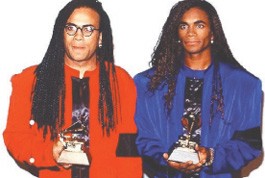
Grammy mishaps are legendary. The fake group Milli Vanilli won best new artist in 1989 (an award rescinded in scandal), while a washed-up Jethro Tull won the first best metal award in 1988, the year Metallica hit the Top 40. The Academy often seems to recognize great music by mistake: Elvis Presley only won for two gospel records; James Brown won just twice in R&B categories; and the Rolling Stones only won for best rock album and video for the marginal Voodoo Lounge as late as 1994.

The vast list of all-time greats whom the Academy has stiffed is egregious. Think Diana Ross and/or the Supremes ever won? Or huge hit-makers Creedence Clearwater Revival? Never. And neither have such giants as Chuck Berry, the Beach Boys, Curtis Mayfield, Led Zeppelin, Sam Cooke, the Who or Neil Young.

These Grammy-less greats are all in the Rock and Roll Hall of Fame, along with the best, most important artists of rock’s first four decades. The Hall is built to reward longevity and impact, as inductees become eligible 25 years after their first record is released. Along with essential artists, the Hall also inducts such nonperformers as producers, songwriters and media personalities, and even has categories for sidemen and early influences. As a result, the Hall’s history lesson includes key figures like label owner Sam Phillips, blues wailer Bessie Smith, songwriter Doc Pomus, promoter Bill Graham and our own Johnny Otis.

Not surprisingly, three of this year’s five Hall of Fame inductees have never won a Grammy. R.E.M. and Van Halen both won in 1991 in minor rock categories. But Patti Smith, Grandmaster Flash and the Ronettes (or, for that matter, Phil Spector) have never won. It may be unfair to compare the Hall’s test of time to the Grammy focus on the popular moment, but the Academy has a proven knack for ignoring contemporary critical consensus. The most frequent entries on best-of-2006 lists, like indie-rockers the Hold Steady, alt-folkie Neko Case and rapper Ghostface Killah, weren’t even nominated.

Will those acts someday be in the Hall of Fame? This year does mark a turning point for the Hall, with the induction of its first rapper, Grandmaster Flash, and R.E.M., its first alternative band without ’70s origins. The Hall’s bias toward American roots and boomer aesthetics will be tested as more hip-hop and indie rock bands become eligible. I’m unhappy that they have yet to induct KISS or Alice Cooper, but there’s no reason to think they won’t continue honoring rock’s past and future.


Letters to the Editor

February 7-13, 2007

Michael R. Klein Responds

I am writing to respond to two recent articles by Peter Byrne about me and my efforts on behalf of my friends, Dianne Feinstein and Richard Blum ( Jan. 24; The Byrne Report, Jan. 31). Without seeking to address all of Byrne’s many inaccuracies, I want your readers to know the following core points.

I did not assist Sen. Feinstein to use her position to enhance her husband’s investments in Perini Corp. or URS. In fact, the opposite is true, as I will explain.

When Blum Capital invested in Perini, a construction business, in 1997, Richard and I negotiated three conditions designed to preclude any suggestion that the senator would or could help Perini:

First, Perini would not lobby or contact the senator at all.

Second, Perini would stop bidding on federally funded work in California, so that on issues relating to her constituents, she need not worry about being seen to aid Perini.

Finally, Perini, acting through me, would periodically alert a senior staffer in the senator’s office to any proposed Perini bid that might depend on new funding, so that the Senator could avoid any action to aid Perini. Perini complied with all three conditions, and they worked. The record is clear that the senator never, not once, proposed, voted for or otherwise supported any measure that would specifically benefit Perini. Indeed, what this system of alerts also revealed over the time that Blum Capital had its investment (1997-2005) was that every federally funded job that Perini planned to bid for previously had been funded, typically by general multibillion dollar, multi-year appropriation bills which never provided a single special, targeted or other specific benefit for Perini. Byrne’s suggestions to the contrary are based on misunderstandings, mischaracterizations or outright lies.

The same is true regarding URS, for a different reason. Blum Capital had invested in URS before his wife became a senator. After we had negotiated the anti-conflict assurances with Perini, Richard asked URS to do the same, but URS declined except to promise not to lobby the senator. Thus the senator was not informed what federally funded business URS might be seeking. Again, she never, not once, proposed, voted for or promoted any legislation that she understood would specifically benefit URS.

As to Astar Air Cargo, as Byrne finally acknowledged after reciting a series of arguments made by DHL competitors when I and Richard invested in Astar Air Cargo, every single one of those arguments was found to be groundless by an administrative law judge and then affirmed by the Department of Transportation after a full litigated hearing in which those competitors failed to prove any of them. By the way, contrary to Byrne’s description of Astar’s business, only about 5 percent of Astar’s flying has involved the military; its basic business is flying commercial packages around the United States for DHL.

Finally, I must address Byrne’s mischaracterization of me as a “war profiteer” engaged in a massive cover-up of ethical misconduct. That is both false and offensive. Less than 1 percent of my net worth and less than 5 percent of my income has come from military- or civil-government-related revenue. My principal asset is CoStar Group Inc., a business I founded that sells commercial real estate data embedded in software.

The principal source of my earnings has been as a partner of a law firm where much of my career involved investigating and disclosing corporate misconduct. That firm, Wilmer Cutler & Pickering (now Wilmer Hale), has for decades been a leader in providing free representation for a wide range of public-interest causes (last month, it was among those criticized by a Bush administration official for providing free representation to Guantanamo detainees). I have been involved in a wide range of anti-war and other public-interest activities throughout my life.

As to the Sunlight Foundation, my involvement in it as a co-founder and its principal financial supporter (thus far over $4 million) is a source of great pride to me, my colleagues, our grantors and grantees. Sunlight is all about bringing transparency to the Congress, and we practice what we preach. Your readers can visit www.sunlightfoundation.com and judge for themselves. Thus, Byrne’s description of me and Sunlight as “systematically purchasing control over the agendas of congressional watchdog groups and journalists” to cover up my activities or Blum’s as war profiteers is an extraordinarily bizarre assertion having no relationship to reality. Little else in his articles is any more accurate.

Michael R. Klein, Washington, D.C.

Editor’s note: We did Mr. Klein the courtesy of reprinting his letter as sent. However, the Bohemian stands by the facts as reported.


Artisanal Hooey

0

February 7-13, 2007

Splitting his time between Guerneville and Manhattan, acclaimed consultant Clark Wolf graces these pages with the occasional diatribe from the periodic local.

I was gently chided recently when I suggested that artisan foods are a little bit like pornography as defined by the Supreme Court; that is, they may be hard to describe, but you know ’em when you see ’em.

Well, OK, that may be a stretch. But what do we do when a big kitchen equipment company spends large amounts on glossy ads for its new Artisan Mixer? Huh? I’m thinking that artisan machinery might include a wooden bowl and a flat rock. OK–and a stick or a millstone. Mortar and pestle anyone?

Back in the ’70s, when most of us associated the word “artisan” with a renaissance wood carver or a Berkeley hand-letter printer, the buzz word for gastro-swooning was “homemade.” These days, the very notion is almost laughable, if not illegal, when it comes to many commercially sold edibles. But back then, the h-word was invoked on countless menus, often able to illicit a tingle or a tear for those longing for even the vestigial warmth and safety of a grandmother’s kitchen that, for many, never really existed.

Marion Cunningham, the beloved author of the modern Fanny Farmer and a clutch of other benchmark cookbooks who turned 85 earlier this month, used to say, “Well, dear–homemade bread that’s lousy, well dear–it’s lousy bread.”

Today the a-word is yet another culturally endangered species. I suppose we can try to protect the word (and the notion) by calling out those who abuse it, especially when it’s used to profit some who may well threaten the economic viability of others. I really do want to enjoy great artisan cheeses, ales, jams, even some of that home-style, hearth-evoking “country” bread if it has nice flavor, or (as the bakery folks say) a good crumb and–another favorite Marion Cunningham phrase–“provides a pleasant chew.” I strongly support people and groups who take a careful gander, who sniff and chomp at foods before they pronounce, and who declare it so when valuable, painstaking efforts result in delicious stuffs to eat and drink.

But when people boast of helping a network of unnamed farmers by producing a tasty, if unnecessary, treat while they angle for a national contract with Whole Foods, I begin to wonder: Is this just 21st-century cocktail party chat? Will they “build the brand” (God, I hate that phrase) and then cash out, leaving farmland wreckage in their wake? Are they sure that Armani is the right look for the local farmers market?

This may be why one initially rather moving, well-intended so-called movement called Slow Food–begun as a demonstrable reaction to the arrival of the McDonald’s Happy Meal in Italy–has so mutated stateside. In Italy, it’s an argument about nuance, but the culture of food and wine works from a solid communal base. Here, one good and treasured idea comes up, and six people want to make it into a national chain. Funds are raised to preserve heirloom apples at expensive luncheons for overdressed dilettantes in a generic luxury setting, right near what might be an actual experience in an orchard in question. (It’s usually more fun to sit on the lawn with the staff, under a flowering bush.)

I hate to give them any more ink than they already get–even of the cranky sort–but I also have to mention the truly hateful experiences I’ve had in the Whole Foods in Sebastopol. Once a lovely local natural foods store called Food for Thought, this neo-corporate outpost is too small for WF’s usual footprint, and so much has been sacrificed in favor of house brands where, for me, a lot of the charm and value of the place once lived.

But the worst was the third week of last August, when E. coli-infused spinach was on everyone’s lips (talked about, not eaten) at a time when nearly anyone could have been buying not-in-a-bag local greens, except at the local Whole Foods. I mean, really, the third week of August? In North America? Whole Foods was under attack (thank you, Michael Pollan) for focusing more on its regional/national distribution centers than on local farmers, so it spent a boatload on–what else?–marketing and signs (plastic coated, thank you very much) to tout its “Local Seasonal” program. Yet at the height of harvest, it had just five local varieties out front and actually boasted of having “Local Heirloom Gravenstein Apples!” This, on a road called Gravenstein Highway. Big whoop, guys. (The call over the loud speaker to the staff to make sure that everything was “full and fresh at four” in readiness for the pre-dinner rush was just too lame to bear. I fled.)

As a recovering English major–more a semanticist than a grammarian; more interested in being understood than being correct–I really don’t mind a word like “artisan” having more than one popular meaning, as long as they all work well. As James Beard used to say, “For me, Gourmet is a magazine, not a person,” to which I’d add, “and gay can also sometimes just mean ‘cheery.'”

So let’s let the artisan step forward, wipe hands on apron and break into song, for all I care. And then let’s unplug the hype machine and lock it away.

Clark Wolf is the president of the Clark Wolf Company, specializing in food, restaurant and hospitality consulting.

Quick dining snapshots by Bohemian staffers.

Winery news and reviews.

Food-related comings and goings, openings and closings, and other essays for those who love the kitchen and what it produces.

Recipes for food that you can actually make.

Lost in Space

0

February 7-13, 2007

The 2007 Sex Issue:

I‘m lost. For the first time in my life, I don’t know who I am. First I was a son, then a student, later a fiancé and eventually a husband. I’m still married, but my wife and I have decided to divorce. Fittingly, there’s no word to describe who I am right now.

When you choose to marry, society and language recognize you as a fiancé. The word is a bestowal of approval. You’re on the road that your family, your society and perhaps your religion have always believed you should travel down.

There’s no word for someone who is dissolving a marriage. There are no rituals, no gatherings of friends or relatives, and of course no culminating celebration.

But there is something to recognize. Moving from marriage to divorce is a rite of passage, one that ends about half of all marriages in the United States. Yet there’s no map for charting this challenging course. And no word to describe who I am right now. I’m even groping for metaphors. Am I drifting, unmoored, like a boatman without a rudder? Or a hiker lost in the snowy mountains who can’t find his way home?

The night before last I dreamt I was alone in a spaceship that was unable to return to Earth. In this dream, I had the horrible realization that I would ultimately die in space. Death was not imminent, which made it worse: I might survive for a while but would orbit endlessly until I expired.

I didn’t fear death in this dream; I feared not dying on terra firma, not returning to the earth that gave me life, never again having my bare feet touch a warm sandy beach or a cool forest floor.

Never again to be embraced by gravity.

Language grounds us. By telling us who we are, words give us a way to figure out how we fit into the mosaic of our world. Without this identification, we can drift.

Deep down, I know that identification ultimately comes from within, not from how others see us. I often think of the story of the Indian sadhu who goes into a bank. The teller asks him to identify himself, so the sadhu pulls out a hand mirror, examines his reflection, and says, “Oh yes, it is I.”

I realize words can be confining. But by identifying us, words confer expectation and limitation, and sometimes these demands are hard to bear.

But right now, I yearn for connection. I want a tether to the larger world, a world I feel I’m losing, and one that, because I’m no longer traveling down the prescribed road, sometimes feels like it’s letting go of me.

For the moment, I’m still married, but I’ve recently removed our ring. As I write this, it’s been less than a month since we agreed to divorce. I’ve just moved to a new place, leaving my wife, my home and my cat. Leaving a set of familiar routines my wife and I have developed during more than a decade together.

After we file our papers and complete the legal chores, we will be divorced. And there will then be a word for who I am: divorcé.

In my spaceship dream, I somehow manage to point the spacecraft back toward Earth. I see a long runway in the distance and prepare to land there. I don’t feel I can properly control my craft, so I brace for a rough landing.

As I descend, I see that the runway is a busy avenue on Manhattan, where I was born. There’s no way I can abort the landing. My thoughts rocket from fear of injuring myself to concern about hurting people on the ground.

I slam against the earth and everything goes black. When I come to, I look around and hope I haven’t wounded anyone. I think I’ve landed safely, without causing serious harm to anyone, but I’m not sure.

I get out of the spacecraft, immensely grateful to have returned home. My feet are back on the ground. I’ve begun, just barely begun, to reclaim my place, to find my way.

Michael Shapiro is the author of ‘A Sense of Place: Great Travel Writers Talk About Their Craft, Lives, and Inspiration.’ He lives in Sebastopol.


Hard Baggage

0

February 7-13, 2007

The 2007 Sex Issue:

When it comes to the ways of love and romance, no aphrodisiac is quite so potent as travel. On the road, freed from the dull routines and restrictions of home, you become more open, more daring, more willing to seize the moment. Away from home, the people you meet, be they locals or fellow travelers, seem sexier, more exotic, less repressed–and this makes you feel sexy, exotic, liberated. Freed from your past, happily anonymous and filled with a sense of possibility, you are never more willing (or able) to fall headlong into a love affair.

The only downside is this: Don’t try to rekindle things when you get home. It simply doesn’t work. Regardless of how great you and your lover felt in Rio; regardless of how seamlessly the two of you bonded in Paris; regardless of memories you cherish from Koh Samui, you are only inviting heartbreak if you try to resume the romance in Hackensack or Burbank or Minnetonka.

I used to wonder why this was the case. Why, after sharing intense travel experiences, my relationships with the intriguing women I met in Cuzco or Tel Aviv would sour into a series of uninspired e-mails, awkward phone calls and (the occasional) anticlimactic reunions. Why would everything change once we’d stopped traveling?

I finally got a clue to the problem several winters ago in Thailand, when I met a Belgian woman I’ll call Katia. Willowy and doe-eyed, with a sexy pout and effortless European grace, Katia would have been out of my league back home, but in the colorful madness of Bangkok, we somehow fell into an easy love affair. Together, we took a train down to Khao Sok National Park in southern Thailand, where we stayed in a tree-house hotel, swam the jungle-rivers, drank Mekhong whiskey and shared the stories of our lives. After a week, when it came time for Katia to fly back to Brussels, I felt like we had really connected, that our time together had amounted to something special.

Katia must have felt the same way, since, over the course of the next several weeks, she told me how much she missed me, how much she cared for me and how much our time together had meant to her. When she eventually invited me to join her in Brussels for Christmas, I didn’t hesitate: I bought a plane ticket and flew out as soon as I could.

Once I arrived in Brussels, things fell apart almost immediately. When I tried to put my arm around her as we walked to meet her friends at a bar, Katia curtly warned me not to touch her in front of her friends (“They know I’m not sentimental like that”). Once in the bar, Katia continually scolded me–for eating too much, for not sitting up straight, for not asking her friends the right kind of questions. For some reason, I’d suddenly become an embarrassment to Katia, an uncultured American fool who couldn’t do anything right.

The disappointment went both ways. Back in Thailand, Katia was laid-back and affectionate, and she’d talked about her passionate calling to design jewelry. In Brussels, I discovered that she was a shrill busybody who used her art studio mainly to play computer games. When we visited Belgian museums, Katia sneered at my ignorance of art history; when I read a book on the train to Louven, she scolded me for not looking out at the scenery; when we ate dinner with her parents, she lost her temper when I didn’t pay enough attention to the conversation (which, I reminded her, was mostly in Dutch). In Thailand, Katia had found pleasure in the simplest moments; in Brussels, the only times she seemed remotely satisfied were when we were arguing.

After a week of being trapped in a small Brussels apartment with Katia, I had a realization: Despite everything that had happened between us in Thailand, she was still a complete stranger to me. I had fallen for Thailand as much as I’d fallen for Katia, and she had done the same. The world we’d experienced together as travelers was, in many ways, a transient fantasy–and the mountaintop experiences we’d shared in Asia amounted to a sandcastle by the time I’d arrived in Europe.

Indeed, if the anonymity and renewal of travel makes love bloom easier, returning to the noise of your home life makes road-romance reunions that much harder. Despite all the memories you’ve shared on the road, you can’t pick up the relationship where it left off, because that place is now thousands of miles away.

Last summer, after having not communicated for four years, Katia sent me an e-mail suggesting we meet up and talk. We met–as friends–in Paris, and I felt like I got to know my old Belgian lover for the first time.


Mistletoe Underpants

0

music & nightlife |

The 2007 Sex Issue:
Hot 13 Challenge | Sex Way After 60 | Words for Loss | Sex & Travel

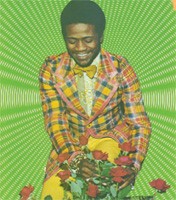
Hot as grits: It ain’t hot if it ain’t Al.

By Sara Bir

When you invite the public to send you the sexiest 13-song make-out mix possible, you learn a few things. Sadness is hot. Romance is hotter. And, discounting Peter Gabriel’s “In Your Eyes,” which I personally don’t find hot or even vaguely appealing, funk is the hottest of all. Yes, vox populi has spoken, and “In Your Eyes,” the king of the Hot 13, appeared on the most mixes, with songs by Chris Isaak, Al Green and Marvin Gaye not far behind. Trumping all artists in sheer volume of songs was the ever-popular 1963 Stan Getz/Joao Gilberto collaboration that gave us “The Girl from Ipanema.” Ah, the suave bossa nova sounds of Getz/Gilberto, a titan among make-out albums!

The competition was stiff; a few entries went head to head. But in the end, there was one winner of the Hot 13 Challenge. Selecting one winning entry was tough because so much notable action went on within each Hot 13. Slowly, there emerged several distinct categories:

Best Marching to the Beat of His Own Drummer Nielzine’s Hot 13 was by far the most rambunctious and rollicking. It rocked–and it was the only Hot 13 to contain country music like Willie Nelson and Hank III. (What, folks, is country music not sexy?) Featuring favorites from Iggy Pop, Elvis, Motörhead and AC/CD, this is the tape–yes, cassette tape–you want with you if you want to park your Impala down by the lake after 11pm on a school night with hopes of making it all the way to home plate.

Best Intro Mike Adamski excerpted the scene in Spinal Tap where Nigel Tufnel plays a melancholy instrumental on the piano called “Lick My Love Pump.” Letting your special someone know you are in the cult of the Tap is a brilliant way to get things started; you establish a sense of humor, which all sane people find sexy.

Most Backfired Intro Robin Williams doing “Elmer Fudd Sings Bruce Springsteen.” Sorry, Jimmy Aquino, but what worked for Mike did not work on your otherwise solid entry; Robin Williams just does not get our juices flowing the same way a be-mulleted Nigel does, for some reason.

Best Title Jimmy Aquino redeems his Fudd misstep by naming his disc “You So Fine I Wanna Smack Myself.”

Most Universally Loathed Entry Em Pee’s, whose audacity won few fans. Ween’s “Put the Coke on My Dick” and E-Rotic’s “Fritz Love My Tits” moved no loins.

Most Creative Use of Loophole An anonymous reader noticed that, unlike last year’s Sad 13 Challenge–in which no artist could be represented more than three times–there were no such limits this year. So they entered the Beach Boys’ Pet Sounds, which is 13 songs long. Smart, yes, but standing Brian Wilson’s creativity in for your own won’t win you this contest.

Foxiest Presentation petitsbijoux, whose rose-bedecked Hot 13 included red glitter heats and chocolate-flavored condoms upon heart-shaped doilies.

Most Repetitive Entry The one with the Hollies’ “The Air That I Breathe” on it 13 times. As one judge charitably pointed out, “There’s not a bad song on there.”

Best Narrative Arc Kate Wilson’s Hot 13 traced a scenario of wining and dining, then foreplay, with the love act taking place during Pink Floyd’s “Great Gig in the Sky.” The hypothetical couple marries, discovers “You Can’t Always Get What You Want,” and things take a downward turn with Nick Cave and the Bad Seeds’ “Sorrowful Wife.” Kate’s disc concludes with Tom Waits’ “It’s Over.” “So much for romance,” she notes.

Greatest Devotion to R. Kelly Moteo, who included four R. Kelly tracks on his Hot 13. Props to Moteo: none of those songs was “Ignition.”

Best Musical Viagra Long songs, extended singles and remixes–a strategy many Hot 13-ers seized.

We are happy to announce the Hot 13 Challenge winner, David Gross. We chose David’s entry because of the sheer greatness of its songs, plain and simple. Here they are:

“You Sure Love to Ball,” Marvin Gaye
“Rock Me Easy Baby (Part I),” IsaacHayes
“Fever,” Little Willie John
“Work with Me Annie,” Hank Ballard & the Midnighters
“Nuki Suki,” Little Richard
“It’s Ecstasy When You Lay Down Nextto Me,” Barry White
“Go Slow,” Julie London
“The Look of Love,” Dusty Springfield
“Let’s Get It On,” Marvin Gaye
“Get Up (I Feel Like Being A) SexMachine,” James Brown
“Girl Talk,” Howard Roberts
“The Girl from Ipanema,” Stan Getz & Astrud Gilberto
“Let’s Stay Together,” Al Green

Can you believe David’s was the only Hot 13 to include “Fever”? Lyrically, almost all of the songs adhere to the actions of a make-out session–one session that went well, since it ends with “Let’s Stay Together.” Both “Nuki Suki” and “Sex Machine” are long songs that repeat themselves, which can be boring for casual listening, but in the context of coupling, may be very well-suited to sustaining a groove without impeding on the more important matters at hand. Judges objected to the placement of “The Girl from Ipanema” so late in the disc, although it could be argued that by that point the imaginary pair was basking in a relaxed afterglow, smoking cigarettes and holding each other contentedly.

David wins a gift certificate for a $200 “pleasure party” for himself and, like, lots of his friends, to Pleasure of the Heart in San Rafael. Congrats, David!

The rest of those who answered the clarion call of the Hot 13 get our hearty thanks. You introduced us to many a sexy song, and we’ve posted your track lists on www.myspace.com/hot13challenge.

This was just so hot.


FIND A MUSIC REVIEW

Black and Blue

0

the arts | stage |

‘Topdog/Underdog’: Michael Asberry and David E. Moore.

By David Templeton

The best plays, it seems, are the hardest to describe. Often, the minute someone senses that a play I am describing contains material that is complex, unhappy or uncomfortable–plays commonly thought of as “difficult”–their eyes glaze over and they ask if I’ve seen any good comedies lately. Last weekend I saw two “difficult” shows: Suzan-Lori Parks’ Topdog/Underdog and Robert Ernst’s Catherine’s Care. The first is good. The other is very good, but already I am struggling with how to best describe them so you might actually envision yourself going out and seeing them. Because you should.

With Topdog/Underdog, which won the Pulitzer Prize for Drama in 2002 and was nominated for two Tony awards that same year, Actors Theatre makes its biggest, boldest move in a season it has otherwise loaded with safe, mainstream, decidedly non-“difficult” plays. Parks–whose experimental works are a blend of history, mythology and dreamscape drama–uses the tight two-person structure of Topdog to dabble in ideas about the characteristics, beliefs and wounds we inherit, from our parents, our society and the collective culture of our race and ancestry. Specifically, Parks looks at the condition of African Americans, though the wider issues are as humanly all-encompassing and identifiable as the story of Cain and Abel.

Lincoln (Michael Asberry) and Booth (David E. Moore) are brothers, their adversarial names a cruel joke from a father whose sense of humor was better developed than his sense of loyalty to his family. Living on their own since Dad walked out while they were still boys (Mom had already split years before that), Lincoln and Booth, now in adulthood, are devoted to one other, as protective and generous as they have the means to be. They are also rivals, trigger-cocked in a state of constant competition and one-upmanship.

Lincoln appears to be the better adjusted of the two. Played with reserved intensity by Asberry, he was once the king of street hustlers, master of the Three-card Monte con game. When tragedy struck, he quit and is now working in a shabby seaside arcade, dressing up (in whiteface) as Abraham Lincoln, waiting for paying customers to shoot him in the head with a cap gun.

Lincoln brings his pay home to the one-room apartment he shares with Booth, who is an agile shoplifter (as demonstrated hilariously in one well-done second act scene where he produces piles of boosted goods from under his clothes). Booth aspires to learn the lucrative three-card con, if only Lincoln would teach him the secrets of the hustle. “You know I don’t touch the cards,” Lincoln calmly reiterates, as Booth, lamely emulating his brother’s moves, practices the game and the patter in front of a mirror.

Booth, as written, is an electrifying bundle of angry, self-deluded energy and oversized, unattainable dreams, and Moore captures his manic instability without crushing the desperate craving for respect or the fragile affection he obviously feels, a bit resentfully, toward his older brother. As the title suggests, Topdog/Underdog is a play in which the characters take turns turning the tables on each other, always strategizing how he might gain the upper hand. The quality of the acting is unquestionably high-caliber, arguably the finest two performances given in an Actors Theatre production since the company moved to its new Sixth Street Playhouse digs two years ago. Each actor has the ability to communicate volumes while speaking only a few words, as when Lincoln warns Booth with a calm but terrifying threat, “Don’t push me.”

The writing, though gorgeously powered by the urban street talk and rapid-fire vernacular of African-American culture, sometimes suffers from the plotting structure and leap-frogging character turns of the grand Greek myths and Biblical fables that inspired Parks. Lincoln is said to be a master of the con game, but when we finally see him work the cards, it proves to be less than dazzling, and some of the character’s more extreme revelations might have been better hinted at in the performance that leads up to them.

The direction by David Lear is tight and intimate–made more so by Lear’s decision to place some of the audience on stage observing the action close-up–and the show-stopping contest between the brothers is paced so well, so infused with heartbreak and danger, the mounting tension is nearly unbearable.

There is tension, too, in San Rafael’s ALTERTheater’s “experimental musical” Catherine’s Care, but it is gentler and somehow sweeter, the tension of someone waiting for the last and final shoe to drop. Impeccably and daringly performed by a cast of four–Tamar Cohn, Craig Jessup, Jenna Johnson and Carla Spindt–and inventively directed by Jon Tracy, Catherine’s Care was written by Robert Ernst, a celebrated experimentalist and the co-founder of the legendary Berkeley theater troupe, the Blake Street Hawkeyes.

Ernst crafted the script through a series of actor-writer-musician workshops, and tells the story–or the last chapter, anyway–of Catherine (played with tremendous force and focus by Johnson), an independent, defiant woman whose life and belongings have been reduced to one room in a care facility for the aged. As she slips in and out of sedated sleep, she encounters people from her past, including her husband (who died young and now seems to have become a crow) and a younger version of herself, whom she doesn’t much like.

This is an unconditionally odd play, as strange and illogical as a hallucination. Characters frequently burst into song, backed up by a live band that includes playwright Ernst on drums and harmonica. Catherine, in pain and barely able to move, is set free only in her dreams, which include disturbing, unexplained images of violence and that crow-husband guy, who shows up to snuggle comfortingly when Catherine is at her lowest.

Performed with minimal props on a stretch of carpet in a former thrift store, the show is as spare and stripped down as Catherine’s existence, but like Catherine, is so much more than the reduced sum of its parts. This is bravura theater work, bold, brave and different. By the time it reaches its inevitable conclusion–joyous and sad and heartbreaking all at once–Catherine’s Care has become that most difficult to describe of all plays: an overwhelmingly emotional drama that works magic on the heart by first baffling the brain.

‘Topdog/Underdog’ runs Thursday-Sunday through Feb. 24. Thursday-Saturday at 8pm; matinees, Saturday-Sunday at 2pm. Sixth Street Playhouse, 52 West Sixth St., Santa Rosa. $17-$25. 707.523.4185. ‘Catherine’s Care’ runs Thursday-Sunday through Feb. 18. Thursday at 7:30pm; Friday-Saturday at 8pm; Sunday at 5pm. Post-show discussions Feb. 11 and 16. 1557 Fourth St., San Rafael. $20. 415.454.2787.


View All


Museums and gallery notes.


Reviews of new book releases.


Reviews and previews of new plays, operas and symphony performances.


Reviews and previews of new dance performances and events.

King of Twang

0

music & nightlife |

Photograph by Amy C. Elliot
Titan of the telecaster: King of the Dieselbilly: Mr. Bill Kirchen.

By Greg Cahill

He’s the undisputed dieselbilly king, a master of the Fender Telecaster whose twangy guitar licks helped rocket Commander Cody and His Lost Planet Airmen to the top of the pop charts in 1972 with the hit single “Hot Rod Lincoln.”

Bill Kirchen still packs plenty of punch, as evidenced on his latest album, Hammer of the Honky-Tonk Gods, released last week. The album, Kirchen’s first in five years, features longtime collaborator Nick Lowe on bass and Marin musician Austin DeLone on keyboards, among others.

It’s a catchy collection of tender ballads (“Rocks into Sand”), drinking songs (“Skid Row in My Mind”), rockabilly raves (“Heart of Gold”) and blue collar anthems (“Working Man”) that rival the best of the Blasters, all steeped in no-nonsense trash, twang and thunder.

And the secret of that twang?

“If I told you that, I’d have to kill you,” he jokes during a sound check at Sweetwater Saloon in Mill Valley. “Like anything else, twang is in the ear of the beholder, I guess. But I’m just hearing something in my head and trying to get it out into the airwaves. I like that big shredding crunch, but I also like the clean guitar sound when you hear the string go boiiiiing!

“I tend to spend a lot of time in the bottom quadrant of the guitar,” adds Kirchen, a lanky figure with a mischievous grin. “I get dizzy above the seventh fret and I get a nose bleed once I move past the 12th fret, so I tend to hang around down there on the fat strings.”

Kirchen, who brings his band to the Last Day Saloon next week, can sport a thick, bluesy tone that can rival Mark Knopfler one moment or he can echo the twanginess of the best Nashville pickers the next.

“I came up through classical music [as a trombonist] and then moved up through the folk scare–you know, figuring out Pete Seeger’s How to Play the Banjo book,” he says. “I liked that finger-picking style of Mississippi John Hurt and wanted to learn to play like him. When I first got into playing electric guitar, I discovered Buck Owens and Don Rich, and Merle Haggard and Roy Nichols, and James Burton with Elvis and Ricky [Nelson]. Those were the guys that really knocked me out, along with Gene Vincent and a bunch of other guys. So I really got a crash course in the late ’60s in the hillbilly, Western and rock ‘n’ roll guitar of the ’30s, ’40s and ’50s.

“To this day, I know almost nothing about all of the mid-’60s English guys.”

Kirchen grew up in Ann Arbor, Mich., where he attended high school with Iggy Pop and Bob Seger. In the late ’60s, after leading the hippie rock band the Seventh Seal in Ann Arbor, he helped form Commander Cody and His Lost Planet Airman and relocated them to the San Francisco Bay Area in 1969. The band–a mix of rockabilly revival, Western swing and cosmic cowboy ethos–recorded seven albums before breaking up in 1975. Rolling Stone named their Live from Deep in the Heart of Texas one of the 100 best albums of all time.

During the 1970s, Kirchen met Nick Lowe, then a member of Rockpile and a pivotal figure on London’s pub-rock scene, while touring England with Commander Cody. He was later reintroduced to Lowe through DeLone, then an ex-pat playing in the seminal pub-rock band Eggs over Easy.

Kirchen became a regular fixture on the North Bay music scene, playing with the Moonlighters until moving his family to Maryland in 1987.

He reemerged in 1994 and has recorded seven solo albums, all critically acclaimed, and contributed his twangy Tele to Lowe’s smash 1994 comeback album The Impossible Bird.

“I learned a lot from him making that album,” Kirchen says.

But onstage, it’s all about those celebrated chops as evidenced by his perennial showstopper, a stylistic smorgasbord of classic guitar licks, from Chuck Berry to Duane Eddy to Link Wray.

“That’s my ‘Hot Rod Lincoln’ medley,” he says. “I throw about 30 or 40 guitar quotes into the space of about eight minutes.

“It’s my big Wayne Newton climax.”

Bill Kirchen and his Buckshot Boys perform on Sunday, Feb. 11, at the Last Day Saloon, 120 Fifth St., Santa Rosa. 4pm. $10-$12; all ages. 707.545.2343.


FIND A MUSIC REVIEW

Love Struck

0

January 7-13, 2007

What’s the perfect soundtrack for this often confusing emotion that actor Peter Ustinov once characterized as “an endless act of forgiveness”? Filmmaker John Waters, the King of Sleaze, thinks he has the answer.

A Date with John Waters is the latest CD compilation from the outrageous director who brought us such heartwarming cinematic portraits of misfits and miscreants as Pecker and Pink Flamingos. Waters scours his record collection to compile this campy companion to the 2004 party CD A John Waters Christmas, which also blended the stupid and the sentimental (who can forget “Here Comes Fatty Claus”?).

A Date with John Waters kicks off with the saccharine 1956 puppy-love ballad “Tonight I Belong to You” (recorded by 11- and 14-year-old sisters Patience and Prudence) and then soars into Elton Motello’s gender-bending anthem “Jet Boy Jet Girl.” Clarence Frogman Henry’s quirky “Ain’t Got No Home” fits nicely with John Prine and Iris Dement’s homespun country duet “In Spite of Ourselves.” Ike and Tina Turner’s soulful “All I Can Do Is Cry” has new meaning in light of revelations about Ike’s alleged spousal abuse. The aged ensemble actress Edith Massey, who appeared in five of Waters’ films and fronted the punk band Edie and the Eggs, delivers her dizzying Jersey girl spin “Big Girls Don’t Cry.” Ray Charles is on board (“Night Time Is the Right Time”) and so is Dean Martin (“Hit the Road to Dreamland”). And Josie Cotton gives us the rockin’ “Johnnie Are You Queer” from the 1983 Valley Girl soundtrack.

But it’s Mink Stole who steals the show with “Sometimes I Wish I had a Gun.”

Hmm, guess forgiveness isn’t always an option . . .


Ask Sydney

February 14-20, 2007 Dear Sydney, my stepmom keeps hitting on me! She's been in my life since I was eight, and now, 20-plus years later, I find her embracing a little longer, with a little more "hips," and, well, those goodbye/hello smooches keep getting longer in duration. What was once thought of as cute and affectionate has quickly turned into...

No Contest

February 14-20, 2007Does pop music have standards to define quality? Standing in line at the bank the other day, I heard "Can't Fight This Feeling" by REO Speedwagon and made a mental note that it's surely among the worst hit records ever made. Suddenly, the guy in front of me started happily whistling along.The Recording Academy sets standards with...

Letters to the Editor

February 7-13, 2007Michael R. Klein RespondsI am writing to respond to two recent articles by Peter Byrne about me and my efforts on behalf of my friends, Dianne Feinstein and Richard Blum ( Jan. 24; The Byrne Report, Jan. 31). Without seeking to address all of Byrne's many inaccuracies, I want your readers to know the following core...

Artisanal Hooey

February 7-13, 2007Splitting his time between Guerneville and Manhattan, acclaimed consultant Clark Wolf graces these pages with the occasional diatribe from the periodic local.I was gently chided recently when I suggested that artisan foods are a little bit like pornography as defined by the Supreme Court; that is, they may be hard to describe, but you know 'em when...

Lost in Space

February 7-13, 2007The 2007 Sex Issue: I'm lost. For the first time in my life, I don't know who I am. First I was a son, then a student, later a fiancé and eventually a husband. I'm still married, but my wife and I have decided to divorce. Fittingly, there's no word to describe who I am right...

Hard Baggage

February 7-13, 2007The 2007 Sex Issue: When it comes to the ways of love and romance, no aphrodisiac is quite so potent as travel. On the road, freed from the dull routines and restrictions of home, you become more open, more daring, more willing to seize the moment. Away from home, the people you meet, be they locals...

Mistletoe Underpants

music & nightlife | The 2007 Sex Issue: Hot 13 Challenge | Sex Way After 60 | Words for...

Black and Blue

the arts | stage | 'Topdog/Underdog': Michael Asberry and...

King of Twang

music & nightlife | ...

Love Struck

January 7-13, 2007What's the perfect soundtrack for this often confusing emotion that actor Peter Ustinov once characterized as "an endless act of forgiveness"? Filmmaker John Waters, the King of Sleaze, thinks he has the answer.A Date with John Waters is the latest CD compilation from the outrageous director who brought us such heartwarming cinematic portraits of misfits and miscreants...
11,084FansLike
4,446FollowersFollow
6,928FollowersFollow