


FOLLOW US
Family Lies
Trimming the Herd
Singular Status

April 11-17, 2007
According to popular theory, the age of digital downloading spells the death of the compact disc and thus, by default, the death of the album. If so, then what’s left? If the new model for distribution and consumption of rock/pop is now just song files purchased randomly for mp3 players, then it’s not unreasonable to expect a rebirth of the single.
While disc sales have been in decline for several years, music download sites have proliferated, largely as legal “for profit” sites due to the aggressive arm of the major labels crushing peer-to-peer file-sharing sites. These pay-to-download sites seem eager to promote hit tracks, usually featuring their list of the week’s top 10 downloaded songs. The home page of Napster.com, for example, has a hot button going directly to fully listenable versions (not just samples) of their top 10.
Historically, singles have never been a profit center for the record industry, but rather a tool for marketing albums. In the ’60s and ’70s, consumers enjoyed the A- and B-sides of vinyl 45 rpm records, but radio stations often received singles pressed with only the label’s chosen hit A-side. Sometime in the late ’80s, after the compact disc replaced the vinyl LP, the industry stopped manufacturing singles altogether (on vinyl, cassette or disc) except for specialty markets like club DJs. As product, the single has often been the bridesmaid and not the bride.
Though there haven’t been substantial sales numbers for singles in the last 15 years, downloading has suddenly returned the sale of hit songs to a place of power on the charts. Singles are poised to be an essential profit engine that’s much greater than ever imagined. Downloads of singles are now crucial to the Billboard charts, where the mighty Hot 100 has always been an amalgam of radio play and sales.
The single song file itself is today’s driving mode of consumption. Even the indie obscurities of MySpace are presented and buzzed about as songs and demos. In the mainstream, American Idol finalists, like rocker Daughtry and country songstress Carrie Underwood, are guaranteed to have top-selling (that is, top-downloaded) songs.
Even with this reborn potential for sales, the single is still being viewed as a mere promo. Billboard notes in its explanation of chart data that “while the consumer’s decision to purchase is a significant vote of popularity, singles have a job that extends beyond being a sales vehicle: to capture radio play and, hopefully, stimulate album sales.” In a recent marketing ploy, iTunes begin offering reduced prices on full albums from which consumers had already purchased at least one track.
So this means the album isn’t dead after all? More likely, the new music market model simply reaffirms the value of the hit. How else did we all get so much from Gnarls Barkley’s “Crazy,” the first song to hit No. 1 based on downloads?
In his 1989 survey of 1,001 classic singles The Heart of Rock & Soul, music critic Dave Marsh noted, “In our society, there’s an essential cultural need for a unitary, memorable musical motif. At some point . . . this desire may have been consciously manufactured by shrewd entrepreneurs or some other stratum of cultural manipulators, but it hardly seems eradicable today. There may have been societies in which people preferred long compositions evolving into one coherent theme . . . but that’s not the case in any of the urban, industrial societies in which rock and roll is created and consumed.”
That communal desire for immediacy anchors the opposing reactions my family had to a disc I burned last week of the top 10 downloaded songs on iTunes. “There isn’t a ‘Satisfaction’ or a ‘Born to Run’ on there,” my wife complained, sharing my generational bias toward significance. “I don’t buy albums,” commented my 19-year-old daughter. “I just download songs I hear that I like.” They both want songs with impact. I enjoy top 10 singles like Akon’s sensitive reggae-lite hit “Don’t Matter” and Fall Out Boy’s rocking “This Ain’t a Scene, It’s an Arms Race,” knowing that there are many more strong single tracks, regardless of format, waiting to become hits.
Dutch Courage

April 11-17, 2007
In Paul Verhoeven’s Black Book, the rich, beautiful and talented Rachel (Carice van Houten) has a little problem. It’s 1945 in occupied Holland, and she’s Jewish. Her current residence–a cubbyhole in the barn of a Bible-walloping farmer–was accidentally bombed. She’s left in the cold, with only a sizable packet of diamonds and a wad of $100 bills that would choke an elephant.
Fortunately, the Dutch resistance intervenes and gets her aboard a canal boat to Belgium. The craft is machine-gunned by the Nazis. She survives scratchless, except for a demure ricochet wound to the forehead.
Later, during an assignment for the resistance, Rachel is picked up on by a sensitive SS officer, Ludwig Müntze (Sebastian Koch). She has to make the decision: Will she prostitute herself for the resistance?
As in Paul Verhoeven’s Starship Troopers, Black Book has indecision about whether this is erotica, comedy or a serious statement about the underground fight against the Nazis. Critiquing the ruthlessness of the resistance is not new; a 1996 French movie here titled A Self Made Hero did a memorable job of it. Black Book supposedly has merit as Verhoeven’s return to his Dutch roots. To be fair, this director’s first film since Hollow Man has elements of national color and regional humor.
Some have resented Verhoeven for the titillation of his work (American critics can get punitive when they get aroused), and it’s true the Dutch have a more relaxed attitude toward skin. Thus, the deliberate Gouda cheesecake throughout this film, as Rachel suns herself in her underwear and indulges in frequent bouts of toplessness even in a cold climate. Verhoeven refers to his most famous scene–Sharon Stone crossing her legs in Basic Instinct–in showing Rachel bleaching her pubic hair so as to better play the part of a natural blonde.
Maybe the universal appeal of sex is supposed to leaven the references to today’s occupations, as in this utterly subtle line when a Nazi officer is speaking to the Dutch Gestapo, congratulating them: “You fight against the terrorists for our fatherland.” As that line suggests, Black Book is not a movie to take seriously. It’s simplistic, madly nostalgic and larded with romantic visions of the end of the war. Koch is nearly as magnetic as he was in The Lives of Others, and Van Houten has a hundred years of Hollywood good-time girls behind her to draw upon (Stella Stevens comes to mind when watching Rachel smirk as another man bites the dust).
But because of the episodic and heartless direction in Black Book, because of the dramatic last-minute escapes and the glossy, adventure movie sheen here, Verhoeven is still what he has been for years: a director in the international style. And that means the same thing as an architect who builds in an international style, like an airport hotel.
Verhoeven may think his lack of tone in this story is the ultimate kind of moral relativism, and that it’s daring to suggest that an SS man could be kind and resistance leaders could be brutal. It’s not just a matter of self-respect or the respect of your contemporaries. Once you make a movie as lowball as Showgirls, with such bottom-grade coincidences and ultrabasic melodrama, you never really come back.
‘Black Book’ opens Friday, April 13, at the Century CineArts Sequoia, 24 Throckmorton Ave., Mill Valley. 415.388.4862.
New and upcoming film releases.
Browse all movie reviews.
Birds on a Page

Ask Sydney
April 11-17, 2007
Dear Sydney, my daughter-in-law wants to go out with her girlfriends once a week, and this always seems to include excessive drinking at her friend’s house or at local bars. She does not get home until 1 in the morning sometimes, and drinks and drives. She’s been trying to get my verbal support as a way of justifying her behavior to my son (her husband), who doesn’t like it when she goes out. She has also been asking me to babysit the baby so she can go out. I would be OK with the babysitting if she were going to a movie, but I just can’t justify helping her go out to engage in what I feel is destructive behavior. What should I say when she asks for my help? They are young parents, so it’s extra hard for me to remain unattached to their behavior.–Mama in the Middle
Dear MIM: They may be young, but if they’re old enough to become parents and get married, you cannot expect to be able to control the dynamics of their relationship any more than you can control the behavior of your daughter-in-law. It’s not your responsibility to watch the baby so Mom can party, this is true, but what needs to concern you in this situation is the safety and well-being of your grandchild. Try to look at things from this perspective rather than from the point of view of judging, supporting or not supporting your daughter-in-law’s behavior.
You are under no obligation to babysit, but perhaps babysitting would be in everyone’s best interest. Better that the baby is safe with you than partying with her or his parents or riding in a car with someone who has been drinking. Who goes out when is something for the happy newlyweds to work out with each other. In fact, you should feel free to tell your daughter-in-law, when she asks, that it’s not really any of your business how she chooses to socialize and that you have no interest in either defending or condemning her decisions. But by no means should you refuse to babysit on the grounds that by doing so you would be supporting her freedom-loving lifestyle. Refuse to babysit if you don’t want to babysit, but don’t do it as a means of controlling your daughter-in-law’s behavior. This won’t work anyway, and better to feel slightly used than to have your grandchild exposed to her parent’s occasionally life-endangering shenanigans.
Dear Sydney, my husband and I live with my in-laws who are very religious. When I first moved in they were respectful of my choice not to join their religion, but lately, now that they are more comfortable with me, they are trying to push their beliefs on me. My husband and I can’t afford our own place just yet. What should I do so that our living situation is more bearable for a few more months?–Sinner
Dear Sinner: Here’s the bad news: As long as you are living with them, they can push anything on you they damn well please, including their religious beliefs. This does not mean that you have to convert, only that you are obligated to endure their religious paradigms as long as you are living together. With this in mind, it makes the most sense for you to focus your energies on moving out. Therein lies your salvation! In the mean time, be quietly respectful; after all, chances are they are just doing what they feel is crucial for your salvation. They don’t want to turn you into something bad; they want to save your soul!
Then again, considering the chaos that organized religion has wrought upon the world to this date, it could be considered wrong to be passive when confronted with someone else’s burning desire to convert you. You could stand up to them and assert your own views. But before you do, remember that religion is an emotional life vest that many seem to find it impossible to live without, and it is neither your job nor your responsibility to divest them of it. Just keep your trap shut and save up money for first and last. After that, you can draw the line between yourself and their religious overtures at whatever point makes you feel the most comfortable.
Dear Sydney, my partner recently discovered he has an STD, one that he says he has had for a while but just didn’t know it. I’m afraid that he might have come by it more recently. Maybe I’m just being paranoid. How do I know for sure? Should I ask him or just let it be for our marriage’s sake which, honestly, is pretty strained at this point by this unwelcome addition to our relationship.–Worried
Dear Worried: Well, first of all, this is a terrible bummer and the fact that it’s depressingly common does nothing to shine a ray of sunshine on the situation. STD’s are embarrassing, they’re painful and sometimes they can be deadly. There’s nothing good about them; they’re like the mosquito, simply irredeemable. With this in mind, it is in your best interest to take this situation with utmost seriousness. Do your STD homework. Some STDs can lay dormant, showing no symptoms for years at a time, especially in men who often fail to get regular STD check-ups (as compared to the yearly visit to the gynecologist you had better be getting).
I don’t know what it is he has acquired, so I can’t say for sure, but it’s certainly possible that he picked something up before the two of you met and just never knew about it. On the other hand, sometimes something like this can be a sign of more difficult things. Sit down and talk candidly about this with him. Express your concerns and fears. Why are you feeling suspicious? Are there any other indications that things in your marriage may be amiss? Or are you reacting to the news with emotions that are, quite understandably, a little excessive and paranoid? See what he has to say, and above all, try not to hold it against him.
The risk of STDs are a burden that all sexually active people must share. Remember that sometimes it only takes one mistake, and that’s it. At this point, your biggest concern should be doing your research and making sure that the two of you deal with your health issues appropriately. Make sure you both go to the doctor or a health clinic, and if you want to do some research on your own (always a good idea), check out www.plannedparenthood.org, where you can find all kinds of fun and friendly STD facts.
‘Ask Sydney’ is penned by a Sonoma County resident. Inquire at www.asksydney.com.
No question too big, too small or too off-the-wall.
Local Lit
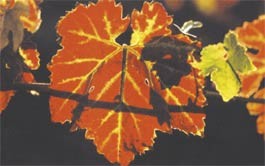
Fuel to the Fire
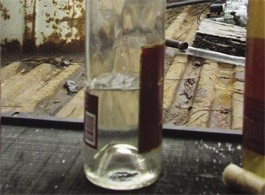
Wasted: ‘Junk’ wine becomes fuel for cars when in the hands of the Green Energy Network geniuses.
Behind a one-time pencil manufacturing plant in the rolling hills south of Sebastopol, Damon Knutson is brewing the antidote to Big Oil. Using windfall apples and “junk” wine that local vintners can’t sell, he is out to demonstrate that decentralized production of ethanol from locally grown agricultural waste is beneficial and viable, both economically and environmentally.
Believing that “oil and our consumption of gasoline had a lot to do with what happened on 9-11,” Knutson dove into an exploration of alternative fuels, first studying hydrogen and then biodiesel before concluding that ethanol “seemed to be the best answer for renewable energy.” Having met other like-minded folks during those inquiries, he says, “We formed a group of community enthusiasts who use ‘E’ and are trying to promote the production and use of it.” Thus the Green Energy Network (GEN) was born, as a modern, socially acceptable application of an old, disreputable practice.
“We’re basically making moonshine,” Knutson explains cheerfully, showing off the newly cleared space where a low-tech, decidedly homemade apparatus is being set up. “Ethanol is alcohol, very strong alcohol, about 180 proof. You can actually burn about 140 proof, but if you’re going to mix it with gasoline, which is how we do it, you want to get the water out, and 180 proof is basically 90 percent alcohol and 10 percent water.”
Most members of the small collective use “splash blending” to combine the ethanol with conventional gasoline, usually in a ratio of 25 percent to 50 percent ethanol per tankful. “At 25 percent, you definitely notice more push,” reports Kevin Counter, an experienced mechanic and GEN member. That extra power comes with a slight decline in mileage–which becomes more noticeable as the ratio is increased–but a significant drop in exhaust emissions. Having tested 30-plus cars of varying age and make, Counter says, “Almost every car at 25 percent gets about half the emissions of the car on regular gas. It’s unreal how clean the car will run after its been running on 25 percent ethanol.”
Most any car produced since 1984–the year when rubber-based hoses and gaskets that can be dissolved by ethanol were phased out–can use splash blending without modification (although new model owners may find that doing so invalidates their warranty). “I’m using my Volvo with 50 percent, and it’s running great,” exults GEN enthusiast Tui Wilschinsky. “The sluggish Volvo engine is peppy.”Beginning with just a gallon or two of ethanol mixed with the usual petrol, Wilschinsky explains, “You slowly clean out your engine.” A more abrupt transition would “release so much crud, you’d gum up your engine.”
Higher concentrations do require some minor adaptations, but Knutson has converted his Nissan sedan to run at 85 percent ethanol. They have also modified a Taurus that now burns 95 percent, and the new generation of “flex-fuel” vehicles coming out of Detroit are manufactured to operate at the E-85 standard, 85 percent ethanol.
Initially, GEN “imported” corn-based ethanol from Nebraska, just to have fuel on hand to experiment with. But the larger vision was always to produce their own, which they first did with a gift of “27 cases of bad wine,” donated, Knutson says, by a local vintner who would prefer to remain anonymous. With a little trial and error, they soon attained 160 proof, using a seven-foot distillation column and “just a 55-gallon drum sitting on top of a propane burner,” says Brian Eberly, the young engineer who assembled the column.
Satisfied that the concept was sound, Eberly oversaw the construction of a new, larger and more energy-efficient system able to process 2,500 gallons of raw materials at a rate of 30 gallons per hour, resulting about eight hours later in approximately 250 gallons of fuel. Using a small gas-powered generator (converted to run on ethanol, of course), the process begins with the wine being pumped through a series of heat exchangers connected to the generator’s exhaust port. It passes through a second chamber with a heating element (much like a home water heater) and, having reached 185 degrees, or boiling temperature, it enters the boiler, which was formerly a sturdy metal beer keg.
From there, water and alcohol vapor rise from the liquid up the column, with the heavier water dropping out while the vapor enters a coil at the top which has cold wine circulating around it. This warms the wine and cools the vapor, which condenses back into a liquid with the desired 180 proof. As more wine enters the boiler, the leftover “wash” is pushed out into more heat exchangers that transfer its warmth to cold wine, before the wash winds up in a storage tank, awaiting reuse as vineyard irrigation, fertilizer or even animal feed.
As a whole, the system is approximately 90 percent efficient, Eberly says. “For every 100 gallons we make, 10 gallons goes into running the generator.”
The big remaining variable is the raw material. While just about any kind of vegetable matter can be converted to alcohol, wine has the immediate and obvious advantage of already being alcoholic. Windfall apples work, too, but they must be fermented first. As Eberly explains, “Anything you make from fruit is called ‘wine’; if you make it from grains, it’s called ‘beer.'”
Regardless of nomenclature, there just aren’t large volumes of ag waste readily available these days. So Knutson is investigating growing his own raw material, in the form of Jerusalem artichokes. “They’re not actually an artichoke, they’re actually a sunflower,” he elaborates, and “they produce in the neighborhood of 600 to 1,500 gallons of ethanol per acre,” which contrasts quite favorably with 60 gallons per acre for the soy that is grown for biodiesel. The Jerusalem artichoke is also known for its willingness to grow abundantly in poor soils and with minimal cultivation, attributes that the GEN experimenters plan to gauge in some test plots over the coming months.
The goal is an easily scalable alternative to corn, the heavily subsidized, petrochemical intensive source for most commercially produced ethanol in this country. According to Knutson, “Corn only generates about 300 gallons per acre,” while Brazilian manufacturers are using that country’s widely grown sugar cane. “The figures I’ve seen are anywhere from 600 to 1,200 gallons per acre, 662 gallons per acre by one report,” he says. “That’s pretty good.”
But that’s production on an industrial scale. Brian Eberly’s vision runs in the opposite direction, where every large farm or vineyard has its own still onsite. “That way we don’t have to truck the raw materials around, and the wash is right there to irrigate their farms,” he says. “It’s much easier to transport 100 gallons of fuel than it is a truckload of apples.”
Getting there will require some substantive changes in current law. “In California, there is only one station where you can buy ethanol legally,” Knutson notes. It’s in San Diego. “There are some other test sites, four or five of them, and then there are people like us that are doing it under the radar. In the Midwest, where the fuel is plentiful, it’s actually cheaper than gasoline, so California needs to do something to bring a clean fuel to the masses.”
In attempting “to do some of the guinea pig work” for the Golden State, Knutson and the few dozen others who have participated in the Green Energy Network’s experimental efforts have been doing it as a “hobby.” But Knutson assures, “We have a bigger picture in mind. We want to see this take hold as a business or economic model that can sustain itself. And that’s how we’re forming it: community shared fuel.”
Wine Tasting
“Wine tasting.” Quick, what comes to mind? An alien invasion from planet Tommy Bahama? Although it’s a big hit with out-of-towners, sometimes for local residents, the activity suffers from the same “special occasion” stigma that wine itself does. At best, it’s something to do when the relations fly in. At worst, it’s tragically uncool.
(Overheard, one snarky video store employee said in reference to the movie Sideways, “If I wanted to see desperate loser wine tasters, I’d just go outside!” Ha ha! But over a decade ago it was the apogee of hip to grimly suck malt liquor out of 40-ounce bottles while wearing 1970s athletic apparel. You kids got anything new on that? I didn’t think so.)
It’s astounding, the locals young and old who have never been, or only “that one time.” Teetotalers notwithstanding, what’s not to like about free wine, offered in a kaleidoscope of ever-changing variety? Try before you buy? You don’t have to recite pseudo-technical babble to appease the angry wine gods. Wines and their characteristics are like people; you only really get to know them over time, so relax. Just don’t tie your sweater over your polo.
Kokomo Winery could hardly have made it easier. Their new little urban tasting room is right off Santa Rosa’s downtown freeway exit. View of a parking lot. No bucolic preciousness here, and on my evening visit–myself notwithstanding–no desperate losers.
Backstory: Kokomo means “here.” Where? Kokomo, Ind. Why? This guy Erik Miller lands in Dry Creek Valley, finds his calling, etcetera, names winery after his home town. And? Opens the tasting room in the one city that thinks it’s in the Midwest instead of the capital of wine country. That’s the best part.
So how’s the wine? Other than the sweet and crisp 2005 Mendocino County Sauvignon Blanc ($16), it’s about the reds. The 2005 Perotti Zinfandel ($22) nearly jumps up out of the glass to give a raspberry-flavored smooch on the nose. The 2005 Timber Crest Zinfandel ($26) took me on a pleasant ramble through a country junkyard, brambleberry vines spilling over rusted cars, a nostalgic whiff of oil. Yes, the 2005 Petite Sirah ($22) is tannic, don’t panic. Steak, blackberries and cigar–it’s an entrée, a dessert and a vice. The 2005 Pinot Noir ($45) hints subtly of smoked Tofurky and spice, while the 2005 Dry Creek Valley Syrah ($22) comes on like a forest fire, all pine cones and smoke.
But so much for what I say. Check it out for yourself. Kokomo offers food and special discounts at its grand opening on Sunday, April 15. Ooh, I wanna take you down to Kokomo Winery Tasting Room, 305 Davis St., Santa Rosa. Open daily, noon to 7pm. 707.542.6580.
Morsels
April 11-17, 2007
The Italian Wines 2007 extravaganza last month at San Francisco’s Fort Mason brought together 127 Italian wineries, nearly 150 wines, a plethora of alien grapes and the best-dressed crowd of wine enthusiasts to march west of Sardinia.
Italians evidently will travel to other continents in order to taste wines grown in their neighbors’ backyards. Seems preposterous, but at the Fort that Thursday, it seemed that nearly everyone was tall, slender and sexy, with chins high in the air, dressed to kill, of impeccable posture and confident stride, and speaking in the sing-song cadence of Italian.
As for the wines themselves, they mostly tasted like dirt, or terroir, I should say. The wines might have tasted a bit more distinct had not almost all of them been relentlessly blended, but that’s how the Europeans do it, mostly. This results in faceless, homeless drifters in a land of stately Zinfandels, proud Petite Sirahs, reserved Chardonnays and other distinguished North Bay purebreds.
One wine whose affiliation I didn’t bother to note carried flavors of lemon rind, spilled beer, arugula, thriving compost and beta carotene. I looked at the label and saw a storm of Italian hieroglyphics, showered with accents forward and back and several alphabets’ worth of vowels.
“Perdon, Madame, qu’est-ce que c’est, por favor?” I queried.
“This is 100 percent Merlot, and it sells itself, at $100 per bottle.”
“Why so mucho?”
“Because the maestro made less than 600 cases last year,” she snickered.
This was a perfect textbook example of scarcity–not quality–driving the price of wine, and somehow people fall for this scheme. Truly, I’ve tasted Merlot more memorable from the corner wine shop that cost $5.
There were relatively few Americans on the premises, near as I could tell. They could be distinguished from the Italians primarily by their stunning lack of style and grace. But Steven Segal was there, and he made a strong representation for us North Americans. From the cheese table, he analyzed the situation with his characteristic nobleness. He stood tall in black leather boots, blue jeans, a silky gray button-up shirt, his hair tied back in that classic ponytail we have all come to love. But as I approached him to ask for his autograph, he suddenly belted out “Ciao bella!” at a passing raven-haired farmgirl who broke into a laugh of familiarity. “Nothing but an Italian,” I grumbled as I snapped shut my notebook. “They probably stomp grapes together back home.” Another day of my life, and still I had never met Steven Segal.
Before departing, my date and I sampled the 2003 Chianti Classico Vigni Casi from Castello di Meleto. It tasted like fine bottled water with a hint of rich limestone dust. The 2003 Tenores Badde Nigolosu, on the other hand, was the finest wine we experienced, like a Zinfandel of softened pepper notes over a foamy sweetness of blueberry pudding. The 2004 Gewürztraminer Passito Terminum, also a nice one, tasted perfectly of pineapple.
But overall, the blended terroir of the wines made them drab and unremarkable–not what I had expected of Italian wine. I recall the ZAP festival and can say I’ve had better vino, but I stand convinced that Italians are the most beautiful people on earth.
Quick dining snapshots by Bohemian staffers.
Winery news and reviews.
Food-related comings and goings, openings and closings, and other essays for those who love the kitchen and what it produces.
Recipes for food that you can actually make.
Singular Status
April 11-17, 2007According to popular theory, the age of digital downloading spells the death of the compact disc and thus, by default, the death of the album. If so, then what's left? If the new model for distribution and consumption of rock/pop is now just song files purchased randomly for mp3 players, then it's not unreasonable to expect a...
Dutch Courage
April 11-17, 2007In Paul Verhoeven's Black Book, the rich, beautiful and talented Rachel (Carice van Houten) has a little problem. It's 1945 in occupied Holland, and she's Jewish. Her current residence--a cubbyhole in the barn of a Bible-walloping farmer--was accidentally bombed. She's left in the cold, with only a sizable packet of diamonds and a wad of $100 bills...
Ask Sydney
April 11-17, 2007 Dear Sydney, my daughter-in-law wants to go out with her girlfriends once a week, and this always seems to include excessive drinking at her friend's house or at local bars. She does not get home until 1 in the morning sometimes, and drinks and drives. She's been trying to get my verbal support as a way of...
Morsels
April 11-17, 2007 The Italian Wines 2007 extravaganza last month at San Francisco's Fort Mason brought together 127 Italian wineries, nearly 150 wines, a plethora of alien grapes and the best-dressed crowd of wine enthusiasts to march west of Sardinia.Italians evidently will travel to other continents in order to taste wines grown in their neighbors' backyards. Seems preposterous, but at...

Copyright © Weeklys All rights reserved.
Our Publications
