Yes We Can Can

0

music & nightlife |

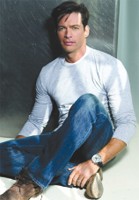
Hometown boy: Harry Connick Jr.’s extra attention these days is entirely devoted to restoration of New Orleans.

By Gabe Meline

It’s been over a year and a half since Hurricane Katrina struck New Orleans, but when Harry Connick Jr. calls me on a recent morning, it’s all we end up talking about. He has one word to describe the spirit of the city: “Depressed.”

Connick explains: “They can’t live in their houses, most of the people. The majority of the population can’t come home. It’s bad. It’s really bad.”

For most of America, the devastation in New Orleans that once dominated the news has been relegated to out-of-sight, out-of-mind status while much of the city remains in shambles. “These types of situations have a tendency to get on the back burner,” Connick says, “and we’re just not gonna let that happen. I think I have a moral and ethical responsibility to stay on top of it.”

With his most recent album, Oh, My Nola, and especially with his cofounding of the Musicians’ Village in New Orleans, Connick is working hard to ensure that his beloved hometown is both remembered and rebuilt after the catastrophe. He appears May 26 at the Sonoma Jazz + festival.

Connick was in Cape Cod visiting friends when Katrina hit, but after hearing the news, he borrowed a plane from NBC to fly down as quickly as possible. “I was just helpless,” he recalls. “When they said 80 percent of the city was flooded, it was hard to imagine. I was in shock.”

The storm hit on Monday; Connick was there on Tuesday. A fan recognized him on the street and brought him to the Convention Center, where he found thousands of people waiting to be helped. Two of them were dead on the sidewalk. Connick still can’t pinpoint exactly how the sight affected him.

“It’s like if somebody hits you in the head with a baseball bat and you happen to survive it,” he says. “It’s just a painful experience that you go through and eventually get over. It was rough to see.”

Though Connick’s official press release from Columbia Records states that he maintains a “focus on solutions instead of casting blame,” Connick assures me that he casts plenty of blame, but not publicly. There’s one person he would have liked to have seen in New Orleans in the days after the storm: President Bush.

“I think he should have been down there,” Connick says, “and I don’t know why he wasn’t. He’s our president, and it’s nice to give him the benefit of the doubt, but I think he absolutely should have been down there and had his sleeves rolled up. If you look back 40 years, there was another president from Texas [Lyndon B. Johnson] who, after a hurricane in New Orleans, was trudging through the sludge, tryin’ to help people.”

Then there’s Connick’s friend the trumpet player whose entire family lost their home and whom Connick was helping sponsor to get a house out of town. “But when they found out he was black,” Connick fumes, “they actually said ‘We don’t want those people here.’ I mean, it’s 2007. It just makes no sense at all.”

And so it was that this past week, during the New Orleans Jazz and Heritage Festival, that Connick was back in the Upper Ninth Ward painting houses in the Musicians’ Village he co-founded with musician Branford Marsalis. The Habitat for Humanity-sponsored project will supply affordable housing–largely for displaced musicians–and with 50 single-family homes already completed, it’s been the most successful rebuilding project in the city so far. “There doesn’t have to be a bunch of red tape,” says Connick, referring to the many charity donations and state relief programs tied up in bureaucracy. “You just raise the money, put your mind to it and get the work done.”

On his current tour, every night, Connick performs Allen Toussaint’s “Yes We Can Can”–a song he sees as the theme for New Orleans. “It’s so simple in its sentiment. It basically says, ‘I know we can do this.’ As cliché as it sounds, that’s kind of what we need to be saying right now.

“It’s just gonna take a long time,” he summarizes. “If you look back in history at natural disasters in other places–I mean, we ain’t even reached two years yet. These things sometimes take decades to repair. So, you know, we’re doin’ all right.”

Harry Connick Jr. performs with his big band as part of the Sonoma Jazz + Festival on Saturday, May 26. 151 First St. W., Sonoma. $60-$110. For more info, visit www.sonomajazz.org.


FIND A MUSIC REVIEW

Sippin’ Suds

0

May 16-22, 2007

Imagine a beer so rich that it can only be described in the eloquent language of wine drinkers, a beer so noble that it may age and improve for years like whiskey, and a beer so big that it dwarfs even the greatest of the Belgian ales.

You are now imagining barley wine.

“Barley wine is a symphony of beer,” says Tony Magee, president of Lagunitas Brewing Company in Petaluma. “It’s everything about beer with the volume cranked up as loud as it goes. Barley wine is like turning up your little fender amp to 11.”

Like numerous other microbreweries in the United States, Lagunitas makes its own barley wine each winter, a highly praised brew called Old Gnarleywine. But Magee demands that any discussion of this grand old ale first include a tip of the hat to the man who introduced barley wine to America three decades ago: Fritz Maytag, owner of Anchor Brewing Company in San Francisco.

“I’d just made my first ale in the spring of ’75,” Maytag recalls. “It was Liberty Ale, but I wasn’t satisfied with it. I thought it was inferior, so I made a voyage to England.”

With a company partner and a photographer friend, Maytag toured the pubs of England for several weeks, searching the fatherland of brewing for a beverage of pure malt and heavy on the hops–“the old style of brewing,” he calls it. But Maytag’s expedition revealed, to his disappointment, that British beer makers had largely abandoned their traditional styles and techniques. The traveling trio tasted numerous beers thin and airy, composed largely of sugar, not malt, and without the explosion of hops Maytag had anticipated in Old World brews.

But perseverance–or perhaps fate–at last introduced the drinkers to a dark, rich, malty ale, the likes of which Maytag had never before tasted. “We asked what it was, but all the guys in the bar laughed and said, ‘Oh that’s just barley wine! Old ladies drink it after dinner!'”

But Maytag tasted in this beer all the qualities he had been looking for. He and his companions probed the brewmaster and by the end of the evening had effectively secured the recipe. They fled for home, and, back in San Francisco in their small brewery, they immediately got to work stewing up their–and America’s–first batch of barley wine.

“It was very high gravity, and we dry-hopped it, which was a radical thing to do then,” Maytag says. “We put it away until the spring, and when we tried it, we just loved it.”

Upon attempting to market this promising new beverage, the Bureau of Alcohol, Tobacco and Firearms would not stand for a beer to be called “wine,” so Maytag ducked under the radar and labeled it as “barleywine.” The disguised name slipped past the feds and thus was born Old Foghorn Barleywine Style Ale, now an American classic.

The late 1970s melted into the ’80s, and as booze-loving legislators eased up the various home brewing restrictions left over from the tight days of Prohibition, microbreweries like New Albion, Sierra Nevada and Pacific Coast Brewing Company sprang to life, each producing a barley wine today. The beer is a demanding child. It requires more ingredients than other brews, longer boiling times, a special attention to the progress of the hard-working and sometimes struggling yeast, and months of aging in both barrel and bottle. Thus, only small-scale brewers, who possessed the creativity and liberty to explore, could address these requirements, and with the rise of the microbreweries, barley wine found its niche in America.

Bass devised the name “barley wine” in 1903, but the beer’s lineage extends back centuries under other titles. “Old ale,” “strong ale” and “stock ale” all refer in ancient texts to brews something like the strong and rich barley wines we know today. Brewers produced such beverages for noblemen, and often they utilized the same grains once or twice more to create progressively weaker beers, beverages designated for the poor, the women and the children.

Strangely enough, it is those same watery, tasteless styles that the big American breweries have nominated the kings and emperors of beers, leaving whiskey and wine for the noblemen. But all that is changing.

“Consumers are into the idea of stronger beers,” Magee says. “They’re becoming more willing to go up the steps of higher alcohol beers, and barley wine is about as high as you can get.”

It’s true. Not even the praised ales of Belgian monks can match a stiff barley wine, and a few noble examples of the latter reside comfortably up in the lofty kingdom of Zinfandels and ports. Drake’s Brewing Company, for one, makes a barley wine of 14.7 percent, and Dogfish Head Olde School, a brew from Delaware, runs 15, but the average specimen contains about 9 percent or 10 percent alcohol by volume.

That’s a fine thing on its own, but most significant is that this high density of alcohol will preserve the beer and thus allow it to age. Many other beers must be opened within several months of bottling, and at tasting festivals, such brews are sampled in a horizontal fashion, meaning that one sips numerous beers of a single type, from the same vintage, and from a range of breweries. Barley wine, however, easily lends itself to the distinguished art of vertical tasting, in which numerous vintages of the same beer from the same brewer are stacked up and sampled one by one, granting tasters a glimpse at the changes, subtle and stark, that overcome an aged beverage with the passage of the years.

“Beer is a big organic soup,” says Magee. “All these organisms in it have half-lives, and they disappear a bit at a time. Our barley wine has a pronounced hop end at first, but that softens up within a few months. The malt comes around and eventually the hops dissipate completely and you’re left with a nice, silky malt drink.” Magee feels that most barley wines will peak at a year and says that after that “they just get interesting.”

But Donald Barkley, master brewer at Ukiah’s Mendocino Brewing Company, once tasted a Thomas Hardy’s Ale that had been aged for 20 years. “It was absolutely delightful,” he recalls. “The overall flavors of sweetness and the rich body just boomed out of it.”

Other qualities to taste for in a fine barley wine include a trace of hops, multiple layers of malt, a full mouth-feel and a finish that lasts two to three minutes. This may sound more like the refined hobby of winetasting than knocking back a cold one at Miller time, and, indeed, for some beer drinkers barley wine may be too much to handle at the day’s end.

“For any beer to be really popular it has to be dumbed down for the masses,” says Arne Johnson, brewmaster at Marin Brewing Company. “That basically means taking away a beer’s flavor. People don’t want to think about all that when they’re just getting drunk.”

According to Barkley, the light-bodied, six-pack-a-day approach to beer drinking is a contrived product of the post-World War II era, when mass marketers and national distributors bought up the small breweries, sucked the flavor and body out of beer, and marketed the pale liquid as something to be guzzled cases at a time.

“But that’s not the history of beer,” he says, “and what we’re seeing today with the microbreweries is a return to the traditional values of this fine beverage. We’re right now turning back the clock to a more healthful time, when people combined good flavors, good friends and good beers, and enjoyed them, and in the spectrum of beers becoming available today, barley wine is one of the shining stars.”

Our short list of area barley wine makers

Anchor Brewing Company: “Old Foghorn,” 8 percent to 10 percent ABV, year-round.

Lagunitas Brewing Company: “Olde Gnarleywine,” 9.9 percent ABV, seasonal, just released! 1280 N. McDowell Blvd., Petaluma. 707.769.4495.

Mendocino Brewing Company: “Talon True Style Barley Wine Ale,” 10.5 percent ABV, seasonal release.

Marin Brewing Company: “Old Dipsea,” 9 percent ABV, year-round. 1809 Larkspur Landing Circle, Larkspur. 415.461.4677.

Moylan’s: “Old Blarney,” 10 percent ABV, year-round. 15 Rowland Way, Novato. 415.897.0100.

North Coast Brewing Company: “Old Stock Ale,” 11.7 percent ABV, year-round. 455 N. Main St., Fort Bragg. 707.964.2739.

Russian River Brewing Company: “Old Gubbillygotch Barleywine,” 9.5 percent ABV, seasonal; in February. 725 Fourth St., Santa Rosa. 707.545.BEER.

Speakeasy: “Old Godfather Barley Wine-Style Ale,” 10.2 percent ABV, only available on tap.

Third Street Aleworks: “Old Redwood Square Barleywine,” 9.7 percent ABV, seasonal to winter holidays. 610 Third St., Santa Rosa. 707.523.3060.

–A.B.

Quick dining snapshots by Bohemian staffers.

Winery news and reviews.

Food-related comings and goings, openings and closings, and other essays for those who love the kitchen and what it produces.

Recipes for food that you can actually make.

Moods for Moderns

0

May 16-22, 2007

Whenever election season rolls around it seems a new slew of Elvis Costello reissues and retrospectives accompanies it. With nearly 30 proper albums in as many years, there’s plenty to reflect on. And while we wait out the months until our own regime change, a new Universal acquisition bestows upon us Elvis Costello Originals, a set of his first 11 albums and two new hits packages.

Costello’s first decade of music is persistently astounding, a formidable, fertile period of Beatle-esque pop music experimentation that, with the help of his crack band the Attractions, transcended the confines of the punk/new wave aesthetic in a way only the Clash had succeeded. His work’s legacy, of course, is intact: My Aim is True is still overrated in its entirety; This Year’s Model remains the true start to the renaissance; the mediocrity of Punch the Clock and Goodbye Cruel World accentuate their surrounding records’ brilliance; and while a guilty reminder that sometimes pain equals great art, Blood and Chocolate still kicks the shit out of virtually any rock record since its 1986 release.

Modern-day lenses also prove serendipitous, with his vitriol still potent, from the fascism motifs of 1979’s classic Armed Forces to the prophetic Americana excursion King of America, which opens with the near-perfect W report card “Brilliant Mistake.” More trivially, it’s difficult to ponder Costello’s ’86 pseudonym Napoleon Dynamite without thinking of the popular film. Though producers insist the name’s a coincidence, it’s hard to ignore the line in “Poor Napoleon” that states, “One day they’ll probably make a movie out of all of this.”

In a wise move, these releases don’t attempt to compete with Rhino’s recent two-disc reissues and instead offer novelty in their LP-replicating packaging (although the case’s small size makes his debut’s audacious message “Elvis is King” nearly illegible). This also marks the first time his early catalogue will be available digitally, reminding us that physical packaging of music in general is itself a relic and giving the fake circular impressions on Get Happy!!! a more updated significance. These releases are perfect for the uncommitted vinyl enthusiast.

The hits package The First 10 Years is an effective introduction to the Costello, but Rock and Roll Music, the thematic up-tempo collection, would’ve been a better companion piece if solely comprised of non-hits, featuring “Shabby Doll” or “Next Time Round” instead of “Pump It Up” once again. The set does end poignantly on an unreleased demo of “Welcome to the Working Week,” a reminder of Costello’s forgotten day-job dreaming and a teaser for a possible excavation of archives. Though his emergence was certainly less earth shattering as the king, the Elvis who actually wrote his own songs is certainly worth just as much attention.


Morsels

May 16-22, 2007

Be transported by wine, food, song and more in the largest-ever Sonoma Valley Passport event. While the different appellations within this 18-mile-long valley have held individual festivals before, this is the first time a single ticket provides admission to more than 40 wineries valley-wide. “We expect that we will probably be pouring 250 wines in a two-day period,” explains Grant Raeside, executive director of the sponsoring organization, the Sonoma Valley Vintners and Growers Alliance. Laughing, he adds, “I don’t recommend tasting them all, but that’s how many we’ll be pouring.” Association members created a promotional video that’s running on YouTube, apparently the first such use by a wine group.

Static photos on a standard website don’t tell the whole story, Raeside asserts. “This video podcast gave us an opportunity to allow the great characters we have in this valley to talk about their histories, their generations and their wines.” A film crew shot six hours of video, which was edited down into an eight-minute podcast highlighting Sonoma Valley wine industry’s range of people and products. “We have such a diverse area,” Raeside says. “That’s why we can grow more grapes than any other area in the world. We have close to 80 varietals.” By this time next year, the Alliance hopes to be the first association with short online videos giving a glimpse into the tasting room of each member, giving consumers a glimpse inside the winery doors.

But the best way to do that is at the Passport Event, which will be a lot more than the standard wine and food festival, Raeside promises. Each winery has its own theme, from ancient Greece to Western rodeos, plus vertical tastings, reserve wines, food pairings, music and other entertainment–and at many sites, a chance to chat with the winemaker or winery owners. “We tried to plan an event that we would like to go to,” Raeside adds. “This has really been a community effort to put this together.”

Sonoma Valley Passport uncorks Saturday-Sunday, May 19-20, from 11am to 4pm. Check in required at Viansa, St. Francis, Valley of the Moon or Sebastiani Vineyards wineries; $45-$40 in advance, $55-$60 at the door and $10 for designated drivers. 707.935.0803. www.sonomavalleywine.com.

Quick dining snapshots by Bohemian staffers.

Winery news and reviews.

Food-related comings and goings, openings and closings, and other essays for those who love the kitchen and what it produces.

Recipes for food that you can actually make.

Grey Skies

0

May 16-22, 2007

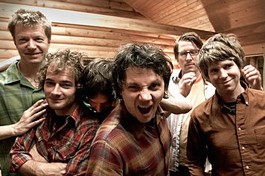
The 21st century has been anything but boring for Wilco. Whether being dropped from their major label for a record that became a modern classic (2002’s Yankee Hotel Foxtrot), Jeff Tweedy’s rehab stint, and a few more rounds of their serial lineup changes, the Chicago band that’s embodied the potential of the so-called “alt country” genre has had plenty from which to draw inspiration. That’s why it’s so perplexing that Sky Blue Sky is so insipid. Wilco’s follow-up to 2004’s wonderfully eclectic A Ghost is Born, their first with their three-year-old lineup (an eternity for the group), is so uniformly lackluster that it usurps their debut A.M.‘s title as the biggest stain on an otherwise glorious catalogue.

“Hands down, this has been the easiest Wilco record to make,” Tweedy said recently of their first entirely studio-composed album. This proves true, starting with the uninspired opener “Either Way.” Over gentle piano, percussion and strings that never heighten into noteworthiness, Tweedy waxes mundane about pop music’s most common subject. “Maybe you still love me, maybe you don’t,” he sings, “Either you will or you won’t.”

The rest of the album is not much better, with instrumentation evoking 1970s-radio soft rock or ragtime rhythms that have served the band best in moderation (Imagine “Jesus, Etc.” or “Hummingbird” for a straight hour!). Even the steadily simmering “Side With the Seeds,” easily the set’s highlight, suffers from a crescendo that never reaches a worthy sonic zenith. Elsewhere familiar arrangements (“You Are My Face” echoes the charming “The Late Greats” and the title track evokes “Far Far Away”) only accentuate the problem.

Furthermore, Tweedy’s unique beat-poet take on country-western lyrical themes have been replaced with impotent naturalistic imagery and bumper sticker philosophy, worst on the closer “On and On and On.” “On and on and on we’ll stay together, yeah,” Tweedy says in his mildly raspy croon, “On and on and on, we’ll be together yeah.” It’s hard to believe that he’s the same writer who just a few years previous wrote the deliciously odd opening couplet “I am an American aquarium drinker, I assassin down the avenue.”

Other than Sky Blue Sky‘s loose, jazzy feel and pure, sprightly solos throughout, free jazz ax man Nels Cline is not the innovative new band member as expected. But he is the most prominent other member since former guitarist Jay Bennett, exhibited on the plaintive “Please Be Patient With Me” where he provides sole jangly accompaniment to Tweedy’s acoustic solo setup. He also sounds like the only musician besides Tweedy who gets to show off, with even resident basher Glenn Kotche confined to the tiniest of drum fills and cymbal taps.

With catchier melodies, Sky Blue Sky would be a great summer album, but it stands as a riddle: Why would two such adventurous musical souls as Tweedy and Cline make their inaugural document so subdued? Is convention the new avant-garde? At least the album’s final line gives us hope. “You and I will try to make it better, yeah,” Tweedy assures us. For the sake of Wilco’s legacy, let’s hope so.


Making of a Millennial

0

May 16-22, 2007


A friend once told me that as California goes, so too goes the country. If that’s the case–that our state is a glimpse into the future of trends, culture and politics–what then is the future of California? There is no crystal ball, but getting a poll from young people as to how they see their lives and their futures may be as close to it as we’re going to get.

New America Media based in San Francisco recently conducted such a poll with 600 young people across the state from ages 16 to 22. Produced in association with the firm Bendixen & Associates, the end result is a report called California Dreamers: A Public Opinion Portrait of the Most Diverse Generation the Nation Has Known.

The title reflects a sentiment that seemed to rise out of the numbers across geographic, racial and even class distinctions: this is a generation that is redefining race, community and even the American Dream.

New America Media and Bendixen have a history of tapping into the usually unheard opinions of America, having developed the first multilingual poll a few years back and polling on issues such as how immigrant communities feel about the immigration debate, how Latinos feel about higher education and how Asians felt about tsunami relief.

Most of these polls revealed a sentiment that was often contrary to the English-only polls. To get an accurate barometer of young people, New America Media went again to the language of its target population: technology; the poll was conducted entirely through cell phones. The youth surveyed were surprising, hopeful yet grounded, when they answered questions about their educational and career goals, their stresses and fears and their relationships to one another.

Perhaps most striking were the responses to questions around race and ethnicity. Participants (who were given $10 for their time) overwhelmingly embraced the increasing diversity of the state in concept and practice. Over 80 percent said they think increasing racial and ethnic diversity is a good thing, and 65 percent said they have dated someone outside of their race. They anticipate racial barriers to break down even further in the future, with 87 percent of respondents saying they would marry, or have a life partner, outside of their race.

These trends toward inclusiveness hold true even when taken beyond the immediate relationship. Anti-immigrant sentiment is a more critical issue for this generation than racism or discrimination, the poll concludes. A dramatic 82 percent of respondents say they support giving undocumented immigrants a chance to earn legal status and citizenship.

Part of the redefining of race and ethnicity might also be due to this generation’s reinvention of identity itself. Indicative perhaps of the global culture, or the demographic shift of a post-minority generation (59 percent of respondents are youth of color and 49 percent immigrants or the children of immigrants), young people are more likely to define themselves by personal styles than by their race or ethnicity. When asked the question “What characteristic defines you?” the most popular answer was “music or fashion.” Young people are defining themselves more by what they do than by what box they check on the census.

In terms of framing what issues they feel most concerned with, young people ranked family breakdown and neighborhood violence as their top issues. Given the litany of options around them that were also on the survey–global warming, war, poverty and more–the choice of home and block was very telling. Jean Melesaine, a 21-year-old writer and organizer, says that she was not surprised. “We want what we haven’t had. Most of us grew up in broken homes, and we’ve seen the impact of that. We want to create what was not given to us,” she says.

It is, perhaps, this sense of building that has fueled this generation with a spirit of optimism toward the future of California. Despite staggeringly defeating numbers of increasing incarceration rates, climbing college tuition, soaring housing costs, young people say they will do better than their parents. And not only do they think they will do well–78 percent of respondents said their lives will be better in 10 years–it is their belief in how they will achieve their goals that is surprising. Contrary to the natural skepticism associated with youth, 96 percent said this statement best describes their view of the future: “If I work hard, I can achieve my goals.”

Oddly, when asked to name the career of their choice, a small, yet significant number, about 25 percent, said “sniper” or “sharpshooter.” Bendixen had no explanation for the answer.

That 25 percent aside, which is either hoping the war in Iraq will last or likely just got too attached to their video games, the findings of the poll should give us confidence. Sandy Close, executive director of New America Media, says that the findings are as much about today as they are about tomorrow.

“These young people represent the forefront of the cultural continuum,” she says. “To gauge their hopes, fears and perspectives about the future is to glimpse who we are becoming as a society.”


Do Wrong-Wrong

0

May 16-22, 2007


Phil Spector, the legendary “Wall of Sound” innovator responsible for the aural texture of ’60s rock and soul classics as well as an entire school of recording theory, is on trial for the 2003 shooting death of actress Lana Clarkson of Cloverdale, a death that occurred in Spector’s L.A. home after a night of drinking.

Knowing that Spector is the prime suspect, I’ve lately had trouble listening to his music. This past holiday season, I couldn’t play a personal favorite, Spector’s charming collection A Christmas Gift for You. Likewise, I squirmed a bit when the Ronettes, featuring Spector’s ex-wife Ronnie, were inducted into the Rock and Roll Hall of Fame in March. The charges against Spector feel like the sordid finale to the producer’s sad, sick history of violent intimidation of women.

Listening now to Spector’s music, music essential to the DNA of rock, feels quite uncomfortable in the face of his trial for murder. That discomfort raises a few questions. What’s our threshold for bad behavior by rock heroes? How much can we take before shunning their music? What bad behavior is truly untenable? Does it matter as long as the music sounds great?

Unless you favor the misconception that rock culture is mere entertainment, you have a line somewhere, some standard that you can’t let your music heroes cross. It may be just the “no sellout” punk ethos or the parallel hip-hop impulse to “keep it real.” Or that line may be real consequential actions that violate common social standards–like murder. Or child abuse. Grown man Michael Jackson has habitually preyed on 11-year-old male children, and those actions have tainted my interest in the strength of his great hits like “Billie Jean” and “I’ll Be There.”

Spector may not escape his trial as easily as Jacko did; there are five former girlfriends testifying that at various times, a drunken Spector threatened them at gunpoint. That testimony could highlight the most salient point of pure music appreciation in his murder trial: Spector’s actions over the years have violated the integrity of his art. All-time gems like “Be My Baby” and “Da Doo Ron Ron” are grand statements of sweet, innocent romance, but Spector’s serial intimidation of women spoils that vision. Likewise, it’s hard to imagine Jacko as the suave, modern romantic presented in his art.

Similar in recent rock news, though not as vile, is the knighting of Bono. The U2 singer has been conspicuously disingenuous, partnering with sweatshop leaders the Gap, evading taxes and continuing to meet with powerful economic conservatives. His lack of integrity is now the first thing I think of when I hear the rallying, anthemic guitar riff of “New Year’s Day.” U2’s best music shouts and demands a glorious everyman struggle, but don’t be surprised to see Bono at Republican fundraisers in 2008.

Some unacceptable behavior doesn’t necessarily betray its music. Most of the hype about ex-Libertines guitarist Pete Doherty has to do with the British rocker’s drug relapses and drug busts, with secondary attention to the fact that his new band Babyshambles basically sucks. But this isn’t a moral lapse. What else would we expect of Doherty after the Libertines’ ragged music and his uneasy tabloid success?

Of course, good behavior doesn’t guarantee good music. Metal guitar hero Tom Morello is honest with the pro-union sentiments on his new solo acoustic disc One Man Revolution, released under the pseudonym the Nightwatchman. But his dry folk stylings in the tradition of Woody Guthrie and Bruce Springsteen are duller than Death Valley.

Perhaps there’s no line between terrific art and terrible artists. Maybe my judgment of Spector, Jackson and Bono is blurring the worth of very human, fallible heroes. But if Springsteen turned into Bono and started hanging out with George Bush, I’d lose a lot of trust for his music. Rock depends less on freedom and bigness than on authenticity, and that’s one place where Spector’s art has collapsed around his actions.


Letters to the Editor

May 16-22, 2007

Dude, oh dude

Sara Bir’s piece is a vitriolic piece of tripe (May 9). To her credit, there is no hidden rhetoric. Her band bigotry is big and bold and available for everyone to see. She manages to froth out an article on naming a band complete with bullet points and veiled insults to local groups who happen to use the Emmas and Jacobs of today.

I openly wonder why Ms. Bir, who is immersed in the local music scene, would patently insult a good number of hardworking DIY outfits that call this area home.

Maybe it is too much assume, then, that Ms. Bir would be intelligent enough to eloquently broaden our layman-like artistic horizons. Instead, she chooses to be an arrogant scenester blowhard showcasing her disdain and absolute contempt for those with artistic aspirations that differ from her narrow view.

I also have to question whether the Bohemian has become home base for a few disenfranchised scenesters to launch formulaic, self-absorbed detritus at unsuspecting readers and the artistic community at large. If true, loyal readers will have to wield a large shovel to dig through the garbage the Bohemian continues to heap upon them.

Ryan Lynch, Sonoma

Mr. Lynch, a member of the band Val Papadins–which received a glowing profile in our pages less than two short years ago–is not alone in slamming us tough on the bad-band-name piece. We do remind that the only local band mentioned was Polar Bears and then only in context of a recent run on “bear” names. We never once, for example, made mention of Orjazzm, our in-house worst local band-name winner, because they’ve promised to change it . . .

Big little problems

I read with interest (“Size Matters,” May 9). The biggest problem that we face is that the Small Business Administration insures loans to citizens of other countries. When we sold our business, the buyers were foreign citizens, yet they received an SBA loan. They defaulted on it, and the taxpayers picked up the bill. The buyers are free to return to their home country and start over. This happens every day, yet American citizens are routinely denied SBA loans. I believe that the SBA should only insure loans to citizens. Why should the American government insure loans to people who haven’t made the commitment of citizenship to our country?

This is a huge issue, and it is costing us a fortune!

Monique Verrier, Healdsburg

Complete disgust

(“No Right to Bear Arms,” April 25) is an insult to every American citizen who believes in the Constitution of the United States. His facts are not facts, and he is speaking from emotion only. Many people are reading this article with complete disgust for him and your website. You’ll notice tons of hits from gun forums, and I’m one of them.

As a military veteran, a Second Amendment supporter and constitutionalist, I believe that Byrne has every right to say what he chooses, but he must also deal with those consequences when he does.

To be succinct, this man is bad for your business.

Clyde T. O’Briant, Riverside

Go ahead and shoot

Thank you for Peter Byrne’s recent column, “No Right to Bear Arms.” It was an interesting read. Unfortunately, he seems to be gravely misinformed.

1. I don’t know where you live, but in the rest of the nation, you don’t need to fill out federal forms, swear under penalty of perjury and pass a criminal background check to buy a pack of chewing gum. Perhaps your municipality is more restrictive.

2. It is an axiomatic fiction that when guns are not legally available, homicides and suicides decrease dramatically. The data just doesn’t support your assertion.

3. The United States Supreme Court has not addressed the issue of whether the Second Amendment applies to individuals. The Miller case cited by the Legal Community Against Violence deals with the utility of certain weapons in a militia.

4. Reputable legal scholars disagree on the interpretation of the Second Amendment. Scholars such as Harvard’s Laurence Tribe favor an individualist view. Further, the 5th District Court of Appeals and most recently the District of Columbia Court of Appeals ruled that the Second Amendment guarantees and individual’s right to bear arms. Please see Parker v. District of Columbia available with a simple Internet search. The debate is far from settled.

Charles La Rue, La Cañada


Get Ready for Betty

0

May 16-22, 2007

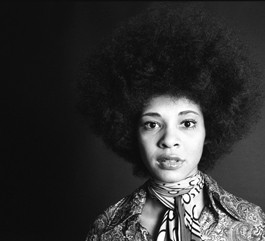
When Betty Davis first started making records, it’s possible there might have been something that sounded like her–a squealing spaceship, perhaps, or a jackknifed rig. One thing’s for sure, it wouldn’t have been human. Even this week, when Davis’ first two albums, Betty Davis and They Say I’m Different, are seeing the light of day for the first time in 30 years, finding an equal to Davis in both sound and attitude is impossible.

Before Lil’ Kim, Salt-n-Pepa, Millie Jackson, Chaka Khan and even a few crucial years before Tina Turner’s solo work, Betty Davis created an explosively sexual persona of independent fierceness, through which she growled, kicked and grinded her way. A prolific songwriter, her first song, written at the age of 12, was “I’m Going to Bake That Cake of Love.” By 1973, the same sentiment had grown up a little with her debut album’s opening track: “If I’m in Luck, I Might Get Picked Up.” The prowl was afoot.

As much as others may want to elevate the erroneous assumption that Davis was the first woman to sing about getting laid, Davis’ legacy–other than the stellar, gut-kicking funk she recorded–lies in her headstrong determination to make on her own terms it in a male-dominated business. A published songwriter for the Chambers Brothers even before she met and married Miles Davis–whose name she took at the altar and to whom she introduced her downtown friend Jimi Hendrix–she never dreamed of living in the volatile trumpeter’s shadow. But after Miles Davis jealously shelved an album the couple had been working on for Columbia, Betty strapped on her silver, thigh-hugging, high-heeled boots and walked out.

Quick to find new musical partners, Davis came to San Francisco and inked a deal for her first record, assembling a mind-blowing band: Graham Central Station’s Larry Graham on bass, Neal Schon of Santana and Journey on guitar, Merl Saunders on piano and Tower of Power’s Greg Adams on trumpet, to name just a few. She even enlisted three sisters named Pointer to sing backups, and the songs, all written and arranged by Davis, were vicious, visceral and undoubtedly ahead of their time. But despite the support of fans like Richard Pryor, Muhammad Ali, Maurice White and Cecil Taylor, Davis’ career fizzled out at the end of a decade, a star that burned hot and blinding for a quick flash before disappearing altogether.

These days, Davis lives in quiet obscurity somewhere outside Pittsburgh, turning down interviews and shying away from the spotlight. She’s acquiesced to the reissues of Betty Davis and They Say I’m Different, but will say no more about her reasons for retirement, her relationship with Miles or even what she’s been doing for the last 30 years. It’s hard to believe, but maybe, in some residual stroke of determination, she wants to let the music that she made speak for itself.

Betty Davis and They Say I’m Different, both reissued by Light in the Attic Records, are in stores this week.


Right Thinking

0

May 16-22, 2007


It’s a fair bet that almost nobody in the North Bay under the age of 50 has heard of the Eagle Forum. Maybe that’s how the California branch of the 80,000-member-strong right-wing political organization managed to slip into Rohnert Park practically undetected for a March 31 education conference. Presentations at the event covered everything from gay marriage to world government.

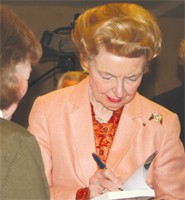
Starting at 9am and running into an evening dinner session, the conference attracted some 150 middle-aged white people who filled the large, round dining tables in the Vineyard Room of the Doubletree Hotel. There, they listened to a variety of speakers, including their guru, the 81-year-old notorious anti-feminist Phyllis Schlafly.

Touted as the leader of the women’s conservative movement, Schlafly–and the Eagle Forum–were leaders in defeating the Equal Rights Amendment (ERA) during the 1970s. If the ERA had been ratified, this federal constitutional amendment would have guaranteed equal rights to all Americans regardless of gender.

Schlafly chose the name “Eagle Forum” because she was “impressed with how the eagle flies into the wind and then uses the wind to raise it even higher,” according to Orlean Koehle, president of the Eagle Forum of California and a main organizer of the recent conference.

Over the years, and with Schlafly still at the helm, the Eagle Forum has branched out to promote a full spectrum of “pro-family” and “Christian values” issues. Her signature blonde bouffant still impeccably in place, Schlafly was forceful, articulate and even humorous at the March conference, expounding without notes her latest political thorn in her side: “activist” judges. “There’s one good thing that George Bush said,” she quipped. “He won’t stand for activist judges.”

While Eagle Forum members support Bush for his “pro-family” platform, it turns out they oppose his policy of creating closer ties between the United States, Canada and Mexico. Strangely, the conference was not exactly a Bush administration love-fest.

Lashing out at the federal judiciary, Schlafly admonished the circuit courts for decisions involving the Boy Scout jamboree, parents’ rights in schools, teaching about Islam in public schools, the Ten Commandments, the Pledge of Allegiance, immigration, abortion and pornography. “The federal courts are uniformly antiparent and pro-public schools,” she complained. “Their decisions are mostly pro-homosexuality. Diversity is becoming the new religion of public schools.”

She also objected to the Massachusetts state court decision in favor of same-sex marriage, saying one of the judges, who comes from South Africa, was influenced by “foreign sources.”

“Now we have liberal majorities on all of the circuits except the 15th,” she continued. “And you can’t count on Republican presidents; seven out of the nine last appointments were made by Republicans.”

Her goal, she said, is to pass legislation to “limit the jurisdiction of the Supreme Court in areas where we don’t trust them.” Admitting that’s a hopeless task under a Democratic Congress, she exhorted her followers to “get together in study groups” the way the early Eagle Forum members did when they were fighting the ERA. “This is the way we’re going to take back the American self-government,” she said. “The Democrats won the last election by choosing candidates just a hair to the left of the Republicans.”

Koehle, a Santa Rosa resident, has been doing her homework for several years. She said she first became concerned about the schools when two of her children were required to take the California Learning Assessment Test. The test, which is no longer administered by the state, asked leading questions, according to Koehle. “There was an obvious agenda,” she says. “I became involved in standing up for what I thought was a very scary situation in the public schools.”

So she started a couple of local organizations to fight against what she sees as a liberal bias in the schools, then decided to join the Eagle Forum. Now she also works two to three days a week as a substitute teacher. “It lets me see what’s going on in our public schools,” she explains.

According to the speech she delivered at the Eagle Forum conference, one of the things Koehle saw was an emphasis on teaching children about Islam in seventh-grade world history. She said the state-approved text includes 78 pages about Islamic history and only 46 pages about Christianity. And it requires students to read and memorize such Islamic documents as the “Five Pillars of Islam,” but does not make the same demands concerning such Christian literature as the Bible.

Even worse, according to Koehle, the textbook appears to be biased in favor of Islam. “Throughout this book, it always mentions how tolerant the Muslims were of the Jews and Christians. Everything is always favorable about Islam,” she said. “There is always a little slant against the Christians. It’s part of the multiculturalism being taught today, that all cultures are equal.”

An independent survey of the text World History: Medieval and Modern Times instead reveals some 91 pages about Christianity and its historical influences, 65 pages about Islam and the Muslim Empire, 25 pages about Judaism and fewer pages about other religions, such as Hinduism and Buddhism.

As a long-term substitute teacher, Koehle said that when religion is on the lesson plan, she spends her time teaching about Christianity instead of Islam. “If I’m going to be teaching a religion, I want to teach the religion of my choice,” she told the conference to laughter and applause.

Koehle was also part of a group that protested against the Diversity Day program in Santa Rosa high schools a few years ago. Earlier this year, she testified on behalf of a family that is suing the Santa Rosa schools for alleged religious discrimination. At the conference, she talked about the possibility of suing the schools once again over the teaching of Islam.

“We believe in traditional education based on Judeo-Christian values,” Koehle told the Eagle Forum audience. She indicated that the current public school philosophy is based on the “Prussian” model, where “children belong to the state” rather than to their parents. “Such a system would make it ideal for a dictator to come in and take over,” she warned, setting up what would be a common theme for the conference: fear of domination from within or without the U.S.

The public school system is a main focus for members of the Eagle Forum. Not only are they attempting to inhibit teaching about diversity, but they also view environmental education as a danger.

Susan O’Donnell specializes in what she believes are “internationalist” influences in American education, with an emphasis on bashing the National Education Association for promoting so-called “progressive” education. “Our national education system is becoming of a branch of UNESCO,” she warned.

But the biggest threat to America’s schoolchildren, according to O’Donnell, is the teaching of environmentalism, or “sustainability,” with the primary culprits being Al Gore and the Green Party.

“Did you know Al Gore is causing people to go to therapists because of his global-warming theories?” she asked. “There’s a new malady: eco-anxiety. His film An Inconvenient Truth is targeted at children to advance a political agenda below the radar.”

As she continued, her voice grew louder until she was almost screaming. “Education for sustainability is a tool for the Green movement. They’re going to the children first because the American people would say no,” she exhorted, evoking Hitler, Lenin and Marx as examples.

“This is systems thinking. The goal is to completely transform education. It teaches the ideology of the Green Party by incorporating sustainability into all of the curriculum. This is ecological child abuse. The Greens have gotten God out of our schools. Humanism is the new order–that land cannot be bought and sold. This transcends all other systems. It diminishes the value of individual success, which is the cornerstone of our nation.” At this point, some audience members groaned. “If this continues unchecked it will result in rapid, nationwide indoctrination of our children to support the Green Party.”

In the same vein, Koehle described a classroom she observed where, after saying the Pledge of Allegiance, students also intoned a “pledge to the earth.”

“A little blue earth flag was hanging up next to the American flag,” she said, her voice filled with incredulity.

In a telephone interview some time later, Sebastopol Councilman Larry Robinson, one of four elected Sonoma County officials who are members of the Green Party, chuckled at O’Donnell’s evaluation of Green Party power.

“I appreciate their estimation of the Green Party and wish it were so, but there are only 7,000 registered Green Party members in Sonoma County. And the idea that the Green Party wants a world government, or to tell people what to do, is 180 degrees off. The Green Party wants decisions to be made at the most local level possible. Land-use decisions should be made by local governments and even neighborhoods. Of course, issues that affect the global picture clearly need to be worked out at the international level by international agreement. Wind blowing and rivers running don’t stop at national borders.”

In Robinson’s opinion, the Eagle Forum’s aversion to environmentalism has an economic basis or religious basis–or both. “It’s a misunderstanding of what sustainability is, or some other agenda,” he says. “Some religious-right people believe we are in the End Times and that resources should be consumed as quickly as possible in order to bring about the Second Coming of Christ,” he said. “This marries perfectly with the agenda of the extractive industries. Corporations are only interested in the next quarter’s profits. The Republicans are in both streams,” he concluded.

But Forum members’ fears about internationalism aren’t limited to attacking the left end of the political spectrum. They also rail against the Bush administration for its alleged promotion of something called “The North American Union.”

“We’re so upset with President Bush because he won’t stand up for American sovereignty,” Koehle said.

The North American Union is a phrase coined by a trilateral independent task force composed of representatives from the United States, Mexico and Canada that advocates a greater social and economic connection between the three countries. Eagle Forum members and others on the far right believe the task force’s report is a blueprint for a political union between the three countries, like the European Union. They fear it would impinge on U.S. sovereignty.

“We don’t want our laws harmonized with Canada and Mexico,” Koehle said in a telephone interview. “The European Union really has become a government for all 27 nations, and we’re afraid the North American Union would be like that.”

But Andy Merrifield, a political science professor at Sonoma State University, dismisses those fears, saying relations between the three countries of North America are not likely to include political homogenization.

“It’s a semi-offshoot of NAFTA,” Merrifield said. “I don’t know anybody who seriously thinks it’s going to be anything but a trade agreement. It is not similar to the European Union. There is no parliament that would hold power over the governments of the United States, Canada and Mexico.”

Merrifield reminds that it took the Europeans 50 years to create the E.U. and that the union’s parliament is more of a debating society with no real jurisdiction over the political affairs of its member nations. He also predicted it would be “500 years” before the United States would consider a political union with Canada and Mexico.

Another tenet of the Eagle Forum and other far right groups is the inalienable right to private property. Sebastopol resident Maria Donnelly spoke about her successful opposition to a plan to protect rivers and streams by requiring landowners to increase riparian corridor setbacks in the 2020 update of the Sonoma County general plan. Resistance to the plan has led the county to reconsider it.

“We have affected change because we have been sitting there at every meeting of the board of supervisors and the planning commission,” Donnelly explains.

This local effort, in which she was joined by Koehle, reflects the Eagle Forum belief that American democracy is based on the right to private property and that all efforts to protect wildlife habitat threatens to destroy that right. She described United Nations projects to protect and restore wildlife habitats around the world as “communism at its finest. Al Gore is leading America and the world down the path of destruction,” she decried.

Of course, a gathering of the religious right would not be complete without a choral arrangement of the Seven Deadly Sins, according to its own interpretation of the Bible.

At the conference, there were verses about assisted suicide, gay marriage, abortion and the “religious left.” The choir included a doctor from Sebastopol, a right-wing talk show host, the head of the Sacramento-based Campaign for Children and Families and a Petaluma priest who opposes the Episcopal Church’s acceptance of homosexuality.

Dr. Steven Crane, an emergency-room physician at Palm Drive Hospital in Sebastopol, linked assisted suicide with abortion and the financial difficulties hospitals are facing in Sonoma County and around the nation.

“God is withdrawing support from hospitals [because they perform abortions and allow expiring patients to die],” he warned. “That’s why they are failing. There have been 40 million abortions since Roe v. Wade,” he continued. “That’s a generation of children. I am concerned that abortion is intimately connected with assisted suicide. There won’t be enough young people to take care of the old people.”

The hero du jour of the local religious right came to the podium, fresh from a graveside memorial for one of his parishioners. Pastor David Miller of St. John Anglican Church in Petaluma, formerly St. John Episcopal Church, wept as he described his church’s withdrawal from the American Episcopal Convention over the national church’s acceptance of gay marriage and gay leadership. “The Episcopal Convention undermines the authority of the Bible,” he said to a chorus of amens from the audience.

Hughes had the last word when she claimed that “the ‘political left’ is manipulating the church to win the 2008 election. “I believe they are using religion to manipulate, to get a vote. All of a sudden the liberals have got religion. They have books saying how to take back the country from the right wing. Will the voters get it? They’ll get it if we tell them,” she said.

But despite Eagle Forum members’ obvious enthusiasm, Merrifield believes their anti-ERA heyday is over and dismisses their efforts as marginal.

“They are maybe useful in rallying the troops,” he said, “but at 80,000 strung all over this country in little groups, they are very small.”

Still, not unlike the far left, Eagle Forum members can affect local change, such as Maria Donnelly’s effort to protect private property rights in the Sonom County general plan update. And their conviction appears to be deeply rooted and even amiable. But Merrifield feels that it is misplaced.

“The reality is, they’re talking about a world that never existed, an America that never was,” he said.


Yes We Can Can

music & nightlife | Hometown boy: Harry Connick Jr.'s...

Sippin’ Suds

May 16-22, 2007Imagine a beer so rich that it can only be described in the eloquent language of wine drinkers, a beer so noble that it may age and improve for years like whiskey, and a beer so big that it dwarfs even the greatest of the Belgian ales. You are now imagining barley wine. "Barley wine is a...

Moods for Moderns

May 16-22, 2007Whenever election season rolls around it seems a new slew of Elvis Costello reissues and retrospectives accompanies it. With nearly 30 proper albums in as many years, there's plenty to reflect on. And while we wait out the months until our own regime change, a new Universal acquisition bestows upon us Elvis Costello Originals, a set of...

Morsels

May 16-22, 2007 Be transported by wine, food, song and more in the largest-ever Sonoma Valley Passport event. While the different appellations within this 18-mile-long valley have held individual festivals before, this is the first time a single ticket provides admission to more than 40 wineries valley-wide. "We expect that we will probably be pouring 250 wines in a two-day...

Grey Skies

May 16-22, 2007The 21st century has been anything but boring for Wilco. Whether being dropped from their major label for a record that became a modern classic (2002's Yankee Hotel Foxtrot), Jeff Tweedy's rehab stint, and a few more rounds of their serial lineup changes, the Chicago band that's embodied the potential of the so-called "alt country" genre has...

Making of a Millennial

May 16-22, 2007A friend once told me that as California goes, so too goes the country. If that's the case--that our state is a glimpse into the future of trends, culture and politics--what then is the future of California? There is no crystal ball, but getting a poll from young people as to how they see their lives and...

Do Wrong-Wrong

May 16-22, 2007Phil Spector, the legendary "Wall of Sound" innovator responsible for the aural texture of '60s rock and soul classics as well as an entire school of recording theory, is on trial for the 2003 shooting death of actress Lana Clarkson of Cloverdale, a death that occurred in Spector's L.A. home after a night of drinking. Knowing that...

Letters to the Editor

May 16-22, 2007Dude, oh dudeSara Bir's piece is a vitriolic piece of tripe (May 9). To her credit, there is no hidden rhetoric. Her band bigotry is big and bold and available for everyone to see. She manages to froth out an article on naming a band complete with bullet points and veiled insults to local groups who...

Get Ready for Betty

May 16-22, 2007When Betty Davis first started making records, it's possible there might have been something that sounded like her--a squealing spaceship, perhaps, or a jackknifed rig. One thing's for sure, it wouldn't have been human. Even this week, when Davis' first two albums, Betty Davis and They Say I'm Different, are seeing the light of day for the...

Right Thinking

May 16-22, 2007It's a fair bet that almost nobody in the North Bay under the age of 50 has heard of the Eagle Forum. Maybe that's how the California branch of the 80,000-member-strong right-wing political organization managed to slip into Rohnert Park practically undetected for a March 31 education conference. Presentations at the event covered everything from gay marriage...
11,084FansLike
4,446FollowersFollow
6,928FollowersFollow