
Strong Time Feeling

0

music & nightlife |

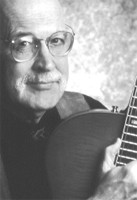
Uno: Hall excels at playing as part of a duo.

By Gabe Meline

In 1961, while his telephone was shut off for nonpayment, the out-of-work jazz guitarist Jim Hall received a note in his Greenwich Village mailbox. “Dear Jim,” it read, “I’d like to talk to you about music.” It was signed Sonny Rollins.

Rollins was already a major figure on the jazz scene, yet he hadn’t worked since 1959, the year he famously announced a temporary retirement. The saxophonist had spent two years in private contemplation–he’d sometimes rehearse alone at night on the Williamsburg Bridge, concentrating on his playing out of the public arena–but now those years were up, and they had led him to Hall. Hall quickly wrote a note back, his haste understandable.

Last week, in his Greenwich Village apartment just down the block from the note-trading of yesteryear, a 76-year-old Hall recalled the Rollins job with humble understatement.

“I think we did pretty well together,” Hall quips over the phone, his speaking voice thoughtful and sincere. “That job was a real challenge for me. I had to accompany Sonny–which was great fun, and my jaw would drop listening to him. But then I had to follow him!”

To watch old footage from this era, such as a stellar performance of the group on Ralph Gleason’s Jazz Casual right after recording Rollins’ landmark album The Bridge, no one would suspect Hall of being nervous; he plays just as fluidly and calmly as ever under a shower of Rollins’ constant curveballs. What he was actually doing most of the time, he now says, was listening. “When I worked with Sonny, I got the message pretty fast that he didn’t like to be led around,” Hall says. “So I would lay back for a second, and see where he was going.”

The term “lyricism” in jazz suffers from a glut of definitions; it can imply sensitive technique, it can mean melodic invention or it can signal tasteful restraint. Hall possesses all three. But what sets him far above many other jazz guitarists is his ability, honed with Rollins, to listen and respond musically to his collaborators. His lyricism is enhanced by a conversational approach to playing, which is why he has so repeatedly flourished in a duet setting. He appears with Dave Holland at the Raven Theater on June 9.

Hall’s attraction to duet recording began in 1959, when he first recorded with the peerlessly introspective pianist Bill Evans. Their resulting album, Undercurrent, and its 1966 sequel, Intermodulation, are timeless masterpieces of sensitive musical dialogue between two empathetic talents. “When we played the duets,” Hall reminisces, “it was as if Bill were inside my brain.”

The small touches, such as Evans soloing only with his right hand while Hall plays rhythm, show how Evans was “so tuned in to the texture and balance,” Hall says. “And obviously, Bill was just an amazing, beautiful player, and a great guy, too. People think of him as this tragic figure, hunched over the piano, but he really had a great sense of humor.”

Despite commercial acclaim for large-ensemble releases such as 1975’s Concierto, Hall has returned time and again to duets. “In larger groups, I find myself just standing there and smiling a lot,” he explains, “whereas in a duet, obviously you’re half of the ensemble, so everything you contribute plays a big role in what goes on.”

A bass player himself in his youth, Hall is especially pleased to be playing with bass virtuoso and Miles Davis alumnus Holland. “Dave plays really strong time feeling, and still he’s open to going in any direction,” he notes. “It can be straight blues, or it can be complete abstract music, just listening to each other and reacting in free-form.”

In accepting the NEA Jazz Masters Fellowship award in 2004, Hall delivered a speech emphasizing the peacemaking ability of music. “Something,” he declared, “that governments might emulate.” He maintains this is due to music’s universal reach, “a language that goes right past spoken languages,” he says. “But I feel that music has to do with humanity. It cuts through politics and governments, and it includes everybody who’s open. I feel very privileged to be a part of that.”

Jim Hall and Dave Holland perform on Saturday, June 9, at the Raven Theater as part of the June 1-10 Healdsburg Jazz Fest. 115 North St., Healdsburg. Pianist Taylor Eigsti and guitarist extraordinaire Julian Lage open the show. 7:30pm. $35-$50. 707.433.4644. www.healdsburgjazzfestival.org




FIND A MUSIC REVIEW

Morsels

After four years of selling the top artisan cheeses in California and around the world, Ditty Vella is closing the doors June 30 on the Cheesemaker’s Daughter shop in Sonoma, just off the town’s main plaza. “I want to spend more time in my garden, and I want to be able to cook for friends,” says the daughter of renowned cheese maker Ig Vella. Ditty adds that meeting incredible people has been the upside of four years of hard work, but she’s ready to move on to other personal projects. “There are people I will miss, but the day-to-dayness of the shop, I won’t miss that.” Lovers of cheese and other fine foods will miss the friendly, hometown atmosphere and diverse sophistication of the stock at the Cheesemaker’s Daughter. 127 E. Napa St., Sonoma. 707.996.4060.


SEARCH AVAILABLE RESERVATIONS & BOOK A TABLE

View All


Quick dining snapshots by Bohemian staffers.


Winery news and reviews.


Food-related comings and goings, openings and closings, and other essays for those who love the kitchen and what it produces.


Recipes for food that you can actually make.

Tooned On

0

May 30-June 5, 2007

Eight-foot-tall carnivorous bunny rabbits. Grape Nuts robots. The Magical Oven of the Forest. You won’t have viewed these sublimely surreal creations on the Charlotte’s Web DVD released this spring. Not that there’s anything wrong with a live-action remake of Charlotte, you understand; just that lately, wannabe kid classics like Dakota Fanning’s Charlotte and the already old Eragon just aren’t cutting it anymore. Wilbur can now do CGI back flips and Eragon‘s dragon looks darn cute, but does anyone ever get the feeling that, hellraising South Park-ians and aging Simpsons aside, animated entertainment just isn’t for adults anymore?

It’s a pity, really. Snarky pop-culture writers (not that I know any) often remind us that animation was originally a form of entertainment for adults. Even today, Pixar and its Disney-spawned ilk still offer a few layers of subtext for parents who accompany their children to Cars or Meet the Robinsons. But stoner VW buses voiced by George Carlin and middle-aged superheroes (even ones as cool as The Incredibles) are rather safe, predictable fare. What happened to the really wacky stuff? Isn’t there an alternative to the same old kiddie toons or South Park‘s wearying bodily-function jokes?

As usual, the Internet offers salvation.

Typically, one discovers Flash animation as a freshman in college. The term refers to Macromedia Flash, the software used by animation pioneers to create such memorable toons as The Ren & Stimpy Show, The Critic and the intro to The Rosie O’Donnell Show. However, in recent years, an ever-expanding Flash animation subculture has popped up on the Internet, discovered by bored college types and passed on to the world at large. You’ve probably been seeing glimpses of this subculture in the mainstream media for a while now without even realizing it.

By now, most people have received a taste of JibJab.com, an animation site run by brothers Gregg and Evan Spiridellis that specializes in satires of current politics. During the 2004 Bush/Kerry election, their musical satire “This Land” besieged e-mail inboxes, NBC Nightly News and The Tonight Show with its parody of the Woody Guthrie tune “This Land Is Your Land.” You remember this one: crude magazine cutouts of W. and Kerry singing the re-imagined song, each vowing that “this land will surely vote for me!” (Favorite lyric, Kerry to Bush: “You can’t say ‘nuclear’–that really scares me.”)

This little gem made the JibJab name famous. Thousands flocked there to see more animated political hijinks, including a cooking show in which a stoned Bill Clinton teaches viewers how to bake brownies.

At the end of 2006, JibJab did it again with “Nuckin’ Futs,” a musical recap of the year’s major events from Brangelina to Hezbollah. Sung to the tune of “Jingle Bells,” it stars a chorus of young children commenting on the year’s more notable disasters: “Abramhoff! Tom Delay! Freezers full of cash! My congressman IM’d me for a picture of my ass!”

The cartoon debuted on The Tonight Show and spread to a number of major news and entertainment channels, proving JibJab had come a long way since its days as a mere labor of love. The site now offers merchandise, including DVDs of all its episodes and is described on that paragon of wisdom Wikipedia.com as “a Daily Show for the over 40s.”

JibJab, however, is just the tip of the proverbial iceberg. The world of web animation is vast and offers animated comic relief for every taste, from the politically savvy to the merely hilarious. In the best traditions of animation, the Flash cult is often subversive and thought-provoking, holding up a wonderfully skewed mirror to pop culture.

On the political front, TheMeatrix.com is far and away the animation to beat, not merely funny and intelligent, but actually life-changing as well. A clever parody of The Matrix, “The Meatrix” follows heroes Leo, Moopheus and Chickity (a pig, cow and chicken, respectively) who take on the evil of corporate factory farms. I would never look at the PETA pamphlets in college when concerned vegans tried to educate me on the horrors of how we raise and process livestock. I feared the heartbreaking stories and bloody photographs.

“The Meatrix,” while still getting the facts across (cows raised in pens so small they can never turn around; chickens de-beaked; waste from factories flowing into our water supply), does so in a humorous, engaging way (“Ewww!” Leo says, taking the red pill and confronting the reality of how he’s been raised on his not-so-idyllic farm. “What’s that smell?”). The cartoon blood still makes a point, but without earning the automatic hatred of a defensive audience.

“The Meatrix” has won a good half-dozen awards from various animation festivals and environmental organizations, and rightfully so. I stopped drinking milk within a week, switched to soy and now avoid anything non-organic. And if I feel any base instinct to eat fast food, I just hit the play button and watch Leo wail on the Man’s ass for a while. This is web animation that might just solve the moral and social problems of our fast-food nation.


For those who like their humor blunt and biting, Johnathan Ian Mathers’ Neurotically Yours website (www.illwillpress.com), launched in 2002, offers no end of scathing social commentary and plenty of angry folksongs performed by a pissed-off squirrel named Foamy. Think South Park‘s Cartman is hardcore? Foamy’s hundred-plus cartoons, lovingly collected on the main site and at www.friendsoffoamy.com, have spawned cults and tackled every issue from the pretentiousness of Starbucks coffee cups to outsourced Indian tech support at Dell.

Possessing perpetually raised middle fingers and glaring eyes, Foamy, ironically animated without a mouth despite his verbose nature, seems intent on outdoing South Park both in the intentionally crude style of his animation and his more cogently stated tirades against society. The three “Tech Support” cartoons are some of the funniest animation ever concocted, bashing not only the sloppy practices of computer outsourcing (the techie’s lame computer solutions–“Disable the monitor so as not to see the problem!”–are eerily reminiscent of my last call to Dell), but expressing deepest sympathy for Indian workers earning a pittance to suffer customer abuse from “you American bastards!”

The Indian techie, we discover, is the sole member of the Smell Computer Company support team, working 24/7, 365 days a year and rudely shocked by a cattle-prod-wielding monkey if he doesn’t work to standard. “What is this ‘break?'” he asks Foamy when the squirrel wants to know when he sleeps. The laughter may kill anyone who has ever spent six hours trying to communicate with someone in customer support.

Monkeys with cattle prods sound weird? That ain’t nuthin’. Try entering animator Amy Winfrey’s bizarre little world. Winfrey, one of the most prolific and widely followed web animators (not only has she contributed animation to South Park, her animated short “The Bad Plant” won a silver medal from the Academy of Motion Picture Arts and Sciences Student Academy Awards), is the creator of the series Muffin Films, Big Bunny and Making Fiends, a triple threat for any serious follower of web animation. Her world is a strange combination of art-school chic and Edward Gorey, featuring clueless children in peril and a droll contempt for the overly cheerful that would make Lemony Snicket rejoice.

Muffinfilms.com hosts a series of shorts exploring our strange relationship with what the website calls “the baked god of baked goods: the muffin!” (Why do I get the feeling that Winfrey is a Frank Zappa fan?) In 12 shorts, the Muffin Films muffins rise from the dead, eat those who would eat them, make an ill-fated attempt to conquer earth and unleash a tide of grief upon a “muffinless” population. It’s strange, to say the least. But you won’t get this sort of thing anywhere but the web.

The weird fun continues in a more mainstream vein with Big-bunny.com, a truly twisted romp involving three young children who come upon a giant pink (and suspiciously pointy-toothed) bunny in the woods. “Hello, crunchy children!” the creature exclaims–and a nerd catchphrase is born. In between trying to get his new friends to sit on a “couch” made of French bread and dodging the suspicions of Suzy (the only one of the trio to question his frequent use of the word “delicious”), Big Bunny spins tales of the truly bizarre exploits of imaginary characters like the Turnip King and His Bastard Son and the Red, Red Squirrel (the only cartoon animal I know directly influenced by Vlad the Impaler). Any parent who has ever suffered through an episode of The Care Bears is long overdue for a shot of Winfrey’s twisted take on childhood fables. Her Gorey-esque animation style delightfully subverts everything we have come to expect from a cast of cute forest animals.

Of course, Making Fiends (www.makingfiends.com) is Winfrey’s biggest success. Soon to appear as a half-hour show on Nickelodeon, Fiends is a satire of childhood that can also be appreciated by thoughtful children of any age. Full of dark imagination, its animation resembling Gorey crossed with a washed-out version of South Park, Fiends follows the exploits of two little girls, evil genius Vendetta and good girl Charlotte.

Vendetta, the theme song tells us, “is always making fiends,” a series of unholy apparitions she usually sics on the oblivious Charlotte, who is incapable of being anything but cheerful. Winfrey should be commended simply for doing Charlotte’s voice–a high-pitched whine peppered with “Yippees!” and “Hoorays!” that is sure to drive anyone with an ounce of pathos completely insane.

Vendetta, constantly frustrated in her attempts to kill “that stupid girl,” reigns over her first-grade classroom with an iron fist, not to mention a giant hamster (“What a nice bear you have!” Charlotte exclaims), and is a truly inspired creation, winning our affection with her strange idiosyncrasies (she will only eat beef jerky, clams and fruit punch) and her defiant cackle. Vendetta’s voice, done by Aglaia Mortcheva, is something to cherish, her comic timing the center around which all of Fiends turns.

“Oh, Vendetta!” Charlotte exalts at one point, delighted at another of her friend’s strange gifts (a seemingly empty but suspiciously growling cage). “You have an imaginary friend, too!”

“I do not have an imaginary friend!” a frustrated Vendetta insists. “It’s an invisible fiend!”

If you like dark, subversive humor (and giant fleas “with knives!”), Making Fiends is something to make your own.

The list of Flash Animation sites on Wikipedia alone is enough to keep one exploring the subculture for a good long time. Other popular animations include Weebl and Bob, featuring egg-shaped characters similar to South Park‘s Terrance and Phillip (if the Canadian duo were British, unintelligible and obsessed with pie) and a host of edgy titles from the now defunct Bullseye Art site (find their original titles on Wikipedia under “Bullseye Art,” and proceed with caution when approaching their new site www.magicbutter.com, as they’ve gotten a bit sick in their old age), including the exploits of Rat Chicken, who wears a grotesque rodent mask in order to avoid getting axed by Farmer Joe, and the gangsta exploits on Ms. Muffy and the Muff Mob, an unholy combination of Eminem and Strawberry Shortcake, featuring expletive-dropping little girls wearing giant muffin hats. Want to see a magical oven snort the shortcake equivalent of crack? This one’s for you.

However, the crown jewel of current web animation, and a phenomenon sure to live on forever in the history of pop, is Strong Bad Email (www.homestarrunner.com). Strong Bad, a wannabe evil mastermind, eternally clad in his red Mexican wrestler’s mask and boxing gloves, was originally intended to play sidekick to creators Mark Chapman and Craig Zobel’s first Flash character, the dopey but athletic Home Star Runner. However, once “the Brothers Chaps” started a segment on their website featuring the gruff-voiced Strong Bad answering real-life e-mails from fans, nothing was ever the same again.

While half the pleasure of Strong Bad comes from watching him make fun of his correspondent’s grammar, the real name of the game on Strong Bad Email is pop culture. Favorite fan episodes include our intrepid e-mail answerer suffering as his hopelessly primitive computer succumbs to 4 million computer viruses at once (even his Edgar the Virus Hunter program can’t help him); pondering, in a downright profound send up of the genre, what his anime alter ego would look like; writing a children’s book called No Two Children Are Not on Fire; and, of course, drawing a dragon he christens Trogdor the Burninator, who soon gets his own death metal theme song and a music video replete with burning thatch-roofed cottages. These, of course, are only the episodes that can be explained with human language.

The humor on Strong Bad is similar to Napoleon Dynamite if it was crossed with “The Far Side” and made a bunch more references to ’80s hair bands. A huge cast of supporting characters populate the Strong Bad universe, many with their own cartoon shows available at the click of a mouse. The animation is unique. Only Strong Bad himself bears any resemblance to a human being. His brother Strong Sad sports elephant feet and a head reminiscent of the Pillsbury Doughboy. His pet, the Cheat, looks like a Swiss cheese with flippers. One would think, given the surrealistic nature of the animation, that the show would be replete with drug references, but this is a world of silliness not smut, its innocent-but-warped humor making it a breath of fresh air next to popular, foul-mouthed animation like Family Guy.

It is also far more imaginative. The Brothers Chaps don’t stop with cartoons but have expanded to make online video games. Peasant’s Quest (featuring Trogdor) is a fully functional takeoff on the primitive, pixilated games of the ’80s, where players type in commands in order to make their character move. Live-action rock videos featuring the Brothers in drag as members of the hair band Limozeen sneak into Strong Bad e-mails and have even resulted in an online coloring book (in the recent episode “Coloring.”). I’m not ashamed to say I wasted an entire evening exploring this feature, coloring in strung-out-looking rock gods and their groupies with virtual crayons sporting names like “leather black” and “tight shiny purple.”

Perhaps this childlike creativity is why so many other geek artists have been drawn to the show. Early on, the band They Might Be Giants contributed music to a video about the depressive Strong Sad called “Experimental Film.” Buffy the Vampire Slayer creator Joss Whedon has been spotted wearing his Strong Bad T-shirt (the Brothers, who refuse to run any sort of advertising on the website, pay for their business by selling tons of original merchandise) and has included references to Trogdor and Strong Bad on both Buffy and Angel.

In the geek world, putting a Strong Bad bumper sticker on your car may get you into trouble as other fans recognize you and begin to honk. Blockbuster clerks hop up and down at the sight of any clothing sporting the be-masked mastermind, and the entire male population of my first writing group once broke into a spontaneous and completely accurate recital of the “Techno” episode when I innocently asked, “Hey, do you guys know about Strong Bad?”

The bottom line is, some things have to be seen to be believed. Not everyone is going to go gaga over Strong Bad, have an epiphany over Foamy or decide to move to the forest with Big Bunny. But thanks to the slow prevailing of underground art in our creatively starved world, now they at least have the option. There’s a revolution goin’ on, people! As Strong Bad would say, “Everybody to the limit!”


Museums and gallery notes.

Reviews of new book releases.

Reviews and previews of new plays, operas and symphony performances.

Reviews and previews of new dance performances and events.

Sex, Lies and Red Tape

0

May 30-June 5, 2007

Back in 1994, Internet entrepreneur Gary Kremen had what seemed like a good idea: register the domain name “Sex.com.” That was before the name was stolen by a man named Stephen Cohen; before Kremen had spent 12 years in and out of courts; before Cohen hired thugs to destroy his own home so that Kremen couldn’t have it; before Kremen became a speed freak from the stress of the affair; before Cohen skipped the country and dumped his millions into Mexican shrimp farms and strip clubs. Yeah, 1994, before all that, when purchasing a domain name, even one with such widespread appeal, was a cost-free affair.

For over a decade, the dispute over Sex.com has been the most bizarre, salacious case in Internet law. Indeed, the case actually changed U.S. law by establishing domain names as personal property, and thus protecting them from illegal conversions. After years of judgments and appeals on both sides and over $5 million in legal fees, the case finally came to a close on May 9 as the Ninth Circuit dismissed Cohen’s latest appeal–his fourth–and insisted that the case come to an end. Another appeal from Cohen, the court warned, and he may be deemed a “vexacious litigant,” against whom sanctions could be levied.

In an overseas telephone interview from Geneva, Kieren McCarthy, who spent five years researching a book about the case, Sex.com: One Domain, Two Men, Twelve Years and the Brutal Battle for the Jewel in the Internet’s Crown, says that the story “is about what men will do when everything that they want is in one possession: power and fame and money and sex.” (Unfortunately, the book is only available in the United Kingdom.)

“No one gets Stephen Cohen,” McCarthy says. “Even Gary Kremen, who spent [over a decade] following his every move, doesn’t get him. He’s one of the most complex characters I think I’ve ever come across. He’s a very, very clever bloke.”Even the story of how Cohen stole the domain from Kremen is shrouded in mystery. At the time, Kremen was an Internet pioneer who had purchased Match.com for $2,500 and had various other investments. Freshly released from federal prison after serving four years for impersonating a bankruptcy lawyer, Cohen apparently forged a fax to convince domain registrar Network Solutions to transfer Sex.com to him. But McCarthy says that was just a cover-up.

First, Cohen filled out an online form deleting Kremen as the contact and transferring the registration to himself. Network Solutions sent an e-mail to Kremen and Cohen for confirmation. But Kremen didn’t get the e-mail because legendary hacker Kevin Mitnick had broken into his account and shut it down.

“Then, because he’s incredibly persuasive, Cohen called up and persuaded whoever was on the other end of the line that the change was legit,” McCarthy recounts. “So they put the change through. Then, afterwards, he wrote this fax as an elaborate smokescreen. For years afterward, people thought it was the fax that had done it. In actual fact, he had found a very clever way to get a hold of the domain and created the fax as a smokescreen after the fact. And it took years to figure out.”

Once he had possession of Sex.com, Cohen turned it into a money-making machine that required very little work, reportedly earning as much as $750,000 a month in pay-per-click viewings and just as quickly transferring the money out of the country. One of Kremen’s lawyers, Richard Idell, explains: “There was basically one page that had four large ads and some different smaller ad spaces. If you clicked on one of these ads, you then got sent to one of these sites, from which you could not escape.” Trying to leave the sites resulted in more and more porn windows popping up until your entire computer ground to a halt with flashing graphics of naked women, oversized penises and worse.

“Those advertisers were paying a great deal of money for those ads,” Idell said. Meanwhile, Kremen spent some $5 million in legal fees trying to get the domain back, at one point even considering bankruptcy.

In 2000, Kremen went to court. The judge ruled that the domain should be returned to him and that he should receive $65 million. But a judgment isn’t worth a thing if you can’t collect on it. Cohen ignored a court order freezing his assets and audaciously wired all of his liquid assets overseas before fleeing the United States himself .

Kremen did get his hands on a spectacular mansion Cohen built in Rancho Santa Fe near San Diego, but Cohen hired people to wreck the place first. “Cohen sent ’round like 20 Mexicans and three of his henchmen, and they tore the place apart,” McCarthy says. “They tore out the plumbing, they tore out the carpet, they pulled out the wooden panels from the study walls. I mean, it was total devastation. It was just two fingers up to Kremen. He was just furious Kremen had beaten him.”

After Cohen ignored court orders compelling him to appear and explain why he shouldn’t be held in contempt, the judge declared him a fugitive from justice and signed an arrest warrant. (Cohen was nowhere to be seen, but Kremen posted a $50,000 bounty on Sex.com for anyone who could bring him in.) Cohen’s lawyers countered that he wasn’t a fugitive because he was under house arrest in Mexico.

Completely stymied in his attempts to collect from Cohen, Kremen took on Network Solutions for giving away his domain. In a seminal 2003 opinion, Justice Alex Kozinski wrote for the Ninth Circuit that property need not be tangible in order to have a value and that Network Solutions could be held at fault for giving away Sex.com. In light of this decision, Network Solutions’ parent company VeriSign settled with Kremen for an amount somewhere between $10 million and $20 million.

Meanwhile, Cohen was still on the lamb, variously claiming to be in Monaco, Macao or Mexico. According to one of his five ex-wives, Cohen has a compulsion to break the law. “He could have easily have been a CEO, he could easily have been a politician,” McCarthy says. “He’s got the brains and the gift of gab. He’s got it, but he also has this perverse need to screw people. He’s an extraordinary character, sometimes utterly charming, sometimes utterly ruthless. A sociopath, I suppose.”

Wherever he was, Cohen was certainly working on one scam or another. “He was into casinos and hotels, or so he claimed,” McCarthy reports. Among his scams: a claim that he was bidding to buy Caesars Palace in Las Vegas, which McCarthy says was actually a stock scam to drive down the share price of the legitimate bidder, buy up the company’s stock and then sell for a profit when Cohen’s bid was revealed to be bogus.

The trick seemed to have failed, but McCarthy reminds that there’s really no way of knowing. “He’s so good at hiding stuff, and he sort of jumps and runs and hides. It’s extremely difficult to know where he’s been and not been. I’m sure there’s hundreds of scams he’s pulled off that we don’t know about.”

When Cohen was finally arrested in 2005 in the Tijuana area, Kremen may have thought he was going to see some of those millions the court awarded him. But when Cohen was hauled back into court, he denied having any money and the judge had him jailed for civil contempt for 14 months. He was released last year because further jail time wasn’t loosening his lips. “Cohen spent what must have been 14 miserable months in jail and he stuck it out just so he didn’t have to give Kremen any money,” McCarthy said.

Kremen has already been handsomely rewarded for his persistence in regaining the domain. He made millions operating Sex.com as an adult “search engine” (as his attorney Idell puts it), and he eventually sold the domain for $12 million. So what drives Kremen to keep pursuing Cohen for an amount that is now, with interest, well over $80 million?

“He could have walked away with millions and just got on with his life,” McCarthy speculates. “But he wouldn’t let it go. He just wouldn’t. Gary Kremen’s won. He’s won back the domain, he’s beaten him in court, he’s beaten him to everything, except for the money. And Kremen just wants Cohen to give him a chunk of money, because he knows that for Cohen to hand over any money whatsoever is an admittance that Kremen beat him. I think Kremen would take even a tiny figure, because it would kill Cohen to pay even $1,000. It would kill Stephen Cohen to do it, because it would mean that Kremen had beaten him. I don’t think Kremen expects to get it all.

“Now that it’s over, he just wants Cohen to realize he was beaten.”


The Byrne Report

May 30-June 5, 2007

It is Friday night, May 11, and I am riding the streets of Petaluma in a car full of teenagers looking for cops. Karin Adams, 21, a healthcare worker, is driving. Back at the Petaluma CopWatch base station, someone is monitoring police radio frequencies with a second-hand police scanner. Alerted by cell phone call at 10:30pm, we roll up on a Westside 7-Eleven.

The cop watchers–three women, one man–jump out and begin observing two policemen who are citing a young man of color. One videotapes the encounter. Another assures the officers they are here only to watch, not to interfere with police duties. The man is being ticketed for buying liquor for minors. It is a sting operation. An undercover officer sits with two underage operatives in an unmarked car nearby. He speeds off as the CopWatch kids approach.

After the citation is issued, one of the watchers approaches the officers and asks for their badge numbers, which they produce with forced smiles. Another watcher talks to the perp, informing him of his legal rights while being questioned by police, and giving him a wallet-size brochure with CopWatch information and contacts.

Afterward, the citing officers stare incredulously at their police vehicle, which is leaning crazily to one side. Unseen by us or the cops, someone has slashed two tires. It will have to be towed.

One or two nights a week, roving CopWatch teams monitor police activities in Petaluma. Mostly high school or junior college students, the volunteers number about two dozen. The organization is less than a year old. Adams expects the group to grow as the community responds to an epidemic of homicides by Sonoma County law enforcers.

CopWatch was born in Berkeley in 1990; today, there are about a hundred chapters nationwide. In fact, the first ever CopWatch conference will be held in Berkeley July 13-15. The materials state: “Our intent is to strengthen the national network of nonviolent CopWatches, not create a national or centralized organization.”

That precisely sums up the grassroots beauty of CopWatch: it is politically organic; it is indigenous to each community; it is all-volunteer, decentralized and not (yet) fronting for a political party. It has but one goal, Adams says: “To reduce police violence by directly observing the police on the street, documenting incidents and keeping police accountable. We encourage people to solve their problems without police intervention. Most importantly, we encourage people to exercise their right to observe the police and to advocate for one another.”

After the embarrassing flat-tire scene at the 7-Eleven, we observe police handing out traffic tickets to people, most of whom are Latino. Most officers divulge their badge numbers to CopWatch. One obviously irritated cop refuses to comply and speeds off in his cruiser. Until recently, Petaluma police, according to Adams, generally declined to reveal their badge numbers. Then an ACLU attorney wrote to Petaluma Police Chief Steven Hood pointing out that “the First Amendment protects a significant amount of verbal criticism and challenge directed at police officers.” Hood replied, “[We are] committed to the identifiably and accessibility of [our] uniformed police officers.” Indeed, Hood recently visited a class at Casa Grande High School specifically to answer questions raised by CopWatch members.

While mature and experienced community activists are proposing to create a commission to investigate alleged police misconduct, the relatively inexperienced but creative youth of Sonoma County are leading us in the opposite direction. CopWatch practices a well-proven method of protecting the populace against police excesses: witnessing. Human rights-type commissions tend to be passive, stumbling, conflict-of-interest-laden bureaucracies designed to fail at investigating the aftermath of such police shootings as those of Jeremiah Chass and Richard DeSantis.

Next, we hit the Lakeville Apartments. Three cop cars show up for a domestic problem. Officers question two young Latino men on the doorstep. One goes inside. CopWatch members fan out on the sidewalk, cameras and notepads in hand. The officers start loudly patronizing the young men, advising them to get educations so they won’t have to do construction work. The cops start to leave–but not before an orange-haired watcher asks for, and gets, their badge numbers for her incident report. In this instance, as in all the others I witnessed that night, the subjects of police attention expressed relief and gratitude that CopWatch was on the prowl.

With enough watchers, lives may be saved. For CopWatch, call 707.696.1694.

or


JE T’AIME CINEMA

0

May 30-June 5, 2007

While most Americans will be snoozing though major-studio-sequel hell this summer, art-house fans will be transported away on cinematic journeys to one of the world’s most romantic cities. With so many promising upcoming indie films set in the city on the Seine, Paris should sizzle once again this summer. Some of these features have already hit local theaters, such as Daniele Thompson’s excellent Avenue Montaigne, which is still playing on some screens in the Bay Area. The Valet, a farce by the team who tickled Francophile funny bones in The Dinner Guest and The Closet, stars Daniel Auteuil as a wealthy businessman caught in a compromising photo with his mistress who takes extraordinary measures to save his marriage and is already playing in Mill Valley.

Also already screening, and among the most ambitious of these projects, is Paris, Je T’aime, a series of 18 small stories set in various neighborhoods around Paris by a diverse and unlikely group of directors, ranging from the Coen Brothers to Wes Craven to Gus Van Sant to Alexander Payne and others.

La Mome, a three-hanky bio-pic about Edith Piaf, arrives in the States on June 15 under the title La Vie en Rose. The film, which features Gerard Depardieu, should make lead Marion Cotillard a star in this country. Those who prefer to leave their tissue box at home may prefer Molière (July 27), a lighthearted biography of the famous playwright, which appears to be sort of a French version of Shakespeare in Love.

Writer-director Luc Besson (La Femme Nikita) has said that he rediscovered Paris while making Angel-A (June 22), his new great-looking, black-and-white comedy about a man who hooks up with an über-babe during his Seine-ic suicide attempt (Wings of Desire meets It’s a Wonderful Life?). Julie Delpy, who starred with Ethan Hawke in Before Sunset, places her own derrière petite into a writer-director’s seat for 2 Days in Paris (no date set).

Beautifully filmed Parisian stories can generate interest in the city itself. Amélie transformed the sleepy little neighborhood on Rue Lepic almost overnight, and within a year of it’s opening, property values in Montmartre skyrocketed as busloads of camera-laden Japanese tourists on Amélie tours cruised the area. (Last year’s Da Vinci Code created a similar phenomenon.)

With offerings like these coming to local theaters, the environmentally friendly thing to do this summer may be to forget that fuelish Fresno vacation you’ve long been planning and transport yourself instead, with Bordeaux and popcorn in hand, to a much cooler destination. It’s the next best thing to actually being there.

SRJC instructor Monte Freidig leads the 2008 Study Abroad Program in Paris.


New and upcoming film releases.

Browse all movie reviews.

Letters to the Editor

May 30-June 5, 2007

What do you expect of the crooks?

First, let me apologize for writing you two months after (The Byrne Report, “Feinstein Resigns,” March 21) was published. I read the article just two days ago, but my letter on the subject will be brief. I am a registered Republican. However, I do not consider myself a conservative; I would vote Democrat in the coming presidential election, if I could find another Truman. Now that this despicable person, Dianne Feinstein, has been exposed, will the voters in California do an “Oh, my, tsk-tsk,” send her hate mail or demand her recall? I’m sure there are men and women in Iraq and Afghanistan who have relatives in California, who are deeply concerned for their relatives and friends, who should find themselves in the same situation the service personnel in military hospitals find themselves in. Or will the voters in your state sit back and say, “Well, what do you expect from these crooks, anyway?” I dread knowing the answer.

Rosemonde E. Fase, Honolulu

Myth of the Universal Library

Thank you, thank you, Annalee Newitz (Open Mic, “All Human Knowledge,” May 23, print edition). There is so much BS about this (even Dvorak has participated in the BS, and he is one of the best) that it frightens me.

The digitization of information, and the way the existence of digitized information encourages the discarding of other forms, is creating the biggest memory hole since the invention of writing eliminated the transmission of history through the telling of stories, aka “myths.”

Now if only we can make Ms. Newitz turn them into a meme, maybe there will be hope for the preservation of a greater part of out history, culture and still useful even if outdated technologies.

Jim Pivonka, La Crosse, Kan.

Of museums and money

George Rose is not a bad photographer; he is also no Cartier-Bresson (Critic’s Choice, “Making Sense of the Place,” May 23, print edition). Here in the North Bay, we know what vineyards look like, we are surrounded by them, and they are very beautiful as they go through their seasonal changes. However, it seems that to mount a show at the Sonoma County Museum, all you need is money. What happened to the heady days when the museum actually showed some art, as with Hassel Smith, James Tyrell and the fascinating “Botany 12” show, which featured artists from New York, San Francisco and seven from Sonoma County–none of whom, to my knowledge, has ever had a solo show at the museum. Yet again, big business holds the reins, and this, to my mind, is somewhat of a tragedy for the hard-working and talented artists living here. I would like to see some art, please; I don’t want to see anymore vineyards, no matter how fat the checkbook.

John Clifton, Sebastopol

Taste of his own medicine?

Yes, Alberto Gonzales has been, shall we say, less than forthcoming in his responses to questions put to him in the course of investigation into his alleged misdeeds. Luckily, Gonzales himself, having been notoriously sanguine regarding torture (as long as we don’t call it that) has provided us with a solution to his reticence. Various “interrogation techniques” such as waterboarding, sleep deprivation, mock execution and forcing people to stand in agonizing positions for hours could surely loosen his tongue, and since he has essentially championed such enlightened methods, neither he nor his supporters could conceivably object to their use on him. There is nothing wrong with Alberto’s memory that can’t be remedied by judicious electrical stimulation of his genitals (if they can be found).

And, as he’s the head of the Department of “Justice,” we can expect that he’ll have a keen appreciation of the justice of this solution.

Dixon Wragg, Santa Rosa


Wine Tasting

0


To tell you the truth, I had a bit of an agenda. I was curious whether a minor squall in the Alexander Valley had cleared up. Some months ago, the San Francisco Chronicle found Geyser Peak’s wine good, the tasting room not. Staff were uninformed, rude and “made fun of me for asking about Tannat, an unusual varietal,” the spurned reviewer wrote. In subsequent letters, readers nodded with the Chron‘s chastisement, and GP’s public relations solemnly swore that they would strive for higher standards and review their pricing strategy. How’re they doin’? I figured my findings would be either (a) they’d shaped up the ship or (b) will the dolts ever learn?

Among the pioneering wineries of Alexander Valley, Geyser Peak is as old as some of the dirt there. It’s gone bankrupt twice in a century and been bought and sold so many times, who can keep track? In the 1990s, the facility was in thrall to Australian overlords Penfolds, who brought in winemakers Daryl Groom and Mick Shroeter. When their Shiraz won top awards at the Sonoma County Harvest Fair, it was seen as a peak moment in an Aussie invasion. So I looked forward to sampling what was new.

This was the only disappointing aspect about my Geyser Peak experience. I wanted to do the tasting that most folks would opt for, but the only available Shiraz is in the Reserve Room. For five varietal or limited selection wines, $5 is charged. But when I had difficulty deciding among the Zins, it was not a problem to add them in (they’re offered as a flight of three). The tasting fee is not plowed back into a wine purchase as is typical; that’s one of those pricing strategies they might wish to review.

The bar suffers more from bad feng shui than anything else. It’s attractive enough, simple, but on an uncrowded afternoon, I don’t know, maybe it was the hum of the refrigerators chilling the bubbly. My tasting host was friendly, but real and knowledgeable, not a know-it-all.

I should have had the award-winning 2006 California Sauvignon Blanc ($13). Instead I went for the 2005 Alexander Valley Chardonnay ($14), which is everything about Chardonnay that winemakers are running away from and claiming they never met; cloyingly sweet and buttery, all that it lacks is overpowering oak. Bottoms up to the inky 2003 Alexander Valley Petit Verdot ($20), redolent of cigar box, with the brambly flavor of Zinfandel and the structure of a serious Merlot.

When the couple to my right asked about the 2004 Alexander Valley Tannat ($25), they received no smirks or jeers, rather a concise story of its French origins and its success as Uruguay’s top red. The aroma is of violets and leather, flavor of olallieberry and tar, and super dry with potential; if the tannins eventually become more lengthy and silken, this is the kind of wine you’d imagine sipping some evening in rapt contemplation, while seated in a comfortable leather-furnished study, reading ancient poetry aloud.

Lastly, the three Zins are sourced from vineyards 10, 50 and 100 years old, respectively. New associate winemaker Ondine Chattan is passionate about Zinfandel and persuaded the GP to release this unique series called XYZin.

Geyser Peak Winery, 22281 Chianti Road, Geyserville. Open daily, 10am to 5pm. $5 tasting, $10 reserve tasting. 800.255.9463.


View All

Cheesemaker’s Daughter to close

Magic Act

0

the arts | stage |

By David Templeton

‘Sometimes, one has to step back a bit.”

This ambiguous tidbit of advice appears twice–each time with a different meaning–in Matthew Barber’s literate and poetic adaptation of Elizabeth von Arnim’s classic romantic novel Enchanted April, currently brightening moods and banishing pessimism at Petaluma’s tiny but mighty Cinnabar Theater. In director Elizabeth Craven’s graceful, sure-footed production, the “step back a bit” line is first delivered literally, as advice on how to best appreciate modern art.

When it’s stated again, the line–and everything else in this delightful surprise party of a show–has changed, and the advice applies not to art but, metaphorically, to life: sometimes, one has to step back a bit, take a break, take a vacation from everything you know and have grown weary of in order to appreciate the people we love and to rediscover the people we once were and have forgotten that we are.

“My mind is like a hummingbird. You seldom see it land,” Lotty Wilton admits brightly, in the opening moments of the play. It’s an apt enough description. Like a hummingbird in a cage, Lotty (a luminous Molly Noble) feels trapped, unappreciated and desperate for a change. It is 1922, shortly after WW I has ended, and England is a country full of widows and divided priorities.

Lotty is married to Melersh (a pitch-perfect Dodds Delzell), a distracted, stiffly proper lawyer who possibly once loved her, but now acts as if his wife were nothing more than an accessory to be used in expanding his business prospects. Early on, when she timidly objects to accompanying him to a social engagement, Melersh curtly informs her, “It’s not so important that you enjoy yourself, but simply that you are there.” Throughout the first act, a window stands center stage, battered by a constant torrent of very real rain. It stands as a potent symbol of Lotty’s existential crisis, as she dreams aloud of escaping to a place full of “wisteria and sunshine.”

When she happens upon a newspaper advertisement describing a castle in Italy, available for rent during the month of April, Lotty, with her hummingbird mind, cannot let go of the notion of a month in Italy without Melersh. By chance, she meets Rose Arnott (a dependably excellent Danielle Cain), an emotionally brittle young woman who has retreated into scripture and prayer after a mysterious tragedy. Her imaginative husband, Frederick (Nick Sholley, also excellent), has recently achieved success, under an anonymous name, as the author of scandalous romances, and his attempts to rekindle their cooling marriage are as uncomfortable to Rose as are his novels. “One should not write books God would not want to read,” she scolds him.

With charming enthusiasm and some slightly nutty talk of “seeing” the two of them together in the castle, “without husbands,” Lotty eventually persuades Rose to join her for a month-long sojourn in the sun. To share expenses, they run their own ad and take on two roommates, also women with powerful hankerings to escape from London, rain and men. Lady Caroline Bramble (Laura Lowry) is a sexy society princess eager for some time away from the predatory males with whom she regularly mingles; Mrs. Graves (Carol Mayo-Jenkins) is a severe, elderly curmudgeon who thinks little of everyone but herself and Tennyson, and who clearly disapproves of just about everything. That this odd quartet will all experience profound personal transformation in Italy is obvious; watching it happen is the play’s chief delight.

Adding to the castle’s power are its colorfully arch housekeeper Costanza (Elly Lichenstein in a superbly funny performance) and the castle’s fetchingly offbeat owner, Antony Wilding, played by Tim Kniffin with a blend of aching sweetness mixed with dashing confidence. Believing the women to be war widows, Wilding is clearly smitten with Rose, a circumstance that becomes complicated with the unexpected arrival of the abandoned husbands.

While threatening to turn into some sort of elaborate bedroom farce, Enchanted April maintains its high spirits without resorting to the usual low-browed hijinks (with the happy exception of a towel-clad Delzell staging a hilarious nearly nude meltdown after an unfortunate bathtub malfunction). In the end, Enchanted April more than lives up to its name; this tremendously satisfying production, with its beautifully written script, magnificent cast and first-rate direction, is nothing short of enchanting.

‘Enchanted April’ runs through June 16. June 1–2, 8–9 and 14–15 at 8pm; June 3 and 10 at 2pm. Cinnabar Theater, 3333 Petaluma Blvd. N., Petaluma. $20–$22. 707.763.8920.


View All


Museums and gallery notes.


Reviews of new book releases.


Reviews and previews of new plays, operas and symphony performances.


Reviews and previews of new dance performances and events.

Strong Time Feeling

music & nightlife | Uno: Hall excels at playing...

Morsels

Tooned On

May 30-June 5, 2007Eight-foot-tall carnivorous bunny rabbits. Grape Nuts robots. The Magical Oven of the Forest. You won't have viewed these sublimely surreal creations on the Charlotte's Web DVD released this spring. Not that there's anything wrong with a live-action remake of Charlotte, you understand; just that lately, wannabe kid classics like Dakota Fanning's Charlotte and the already old...

Sex, Lies and Red Tape

May 30-June 5, 2007 Back in 1994, Internet entrepreneur Gary Kremen had what seemed like a good idea: register the domain name "Sex.com." That was before the name was stolen by a man named Stephen Cohen; before Kremen had spent 12 years in and out of courts; before Cohen hired thugs to destroy his own home so that Kremen couldn't...

The Byrne Report

May 30-June 5, 2007It is Friday night, May 11, and I am riding the streets of Petaluma in a car full of teenagers looking for cops. Karin Adams, 21, a healthcare worker, is driving. Back at the Petaluma CopWatch base station, someone is monitoring police radio frequencies with a second-hand police scanner. Alerted by cell phone call at 10:30pm,...

JE T’AIME CINEMA

May 30-June 5, 2007 While most Americans will be snoozing though major-studio-sequel hell this summer, art-house fans will be transported away on cinematic journeys to one of the world's most romantic cities. With so many promising upcoming indie films set in the city on the Seine, Paris should sizzle once again this summer. Some of these features have already hit...

Letters to the Editor

May 30-June 5, 2007What do you expect of the crooks?First, let me apologize for writing you two months after (The Byrne Report, "Feinstein Resigns," March 21) was published. I read the article just two days ago, but my letter on the subject will be brief. I am a registered Republican. However, I do not consider myself a conservative;...

Wine Tasting

Magic Act

the arts | stage | By David Templeton ...
11,084FansLike
4,446FollowersFollow
6,928FollowersFollow

