The Disappointing Boob

0

June 6-12, 2007

Comedian Elvira Kurt’s schtick features an inventive bit in which she pretends to be an adult-kid hybrid. Skipping childishly across the stage, the lanky comic complains to an audience who’s assembled to see her Comedy Central TV special, “You never see someone coming home from work, with their briefcase, swinging it, [saying], ‘I had a good day. La la la. I made a leveraged buyout. La la la.'”

Refreshingly, instead of snarky or anti-PC humor, the core of Kurt’s act is joy, plain and simple. This optimism is likely a reaction to her mother’s doom and gloom. In the show, Kurt paints her mom, who immigrated to Canada from Hungary, as a killjoy who could dampen the sun if she wanted to. Instead of rebelling into cynicism, Kurt got to rebel right out of it.

Among Kurt’s big-time gigs are performing with Second City, writing for Ellen DeGeneres and starring in the Vagina Monologues. But she headlines as herself, too, having recently hosted, written and produced for Comedy Network the short-lived Popcultured with Elvira Kurt, a late-night talk show parody in the vein.

When so many comedians are trying to be the big kid on the Los Angeles comedy block, Kurt refreshingly doesn’t seem to mind being the little kid in the sandbox. In fact, after 9-11, she moved back to Toronto from Los Angeles. Now, she has a brand new baby with her partner, Chloe. “I am the disappointing boob,” Kurt has said, which we presume is why she calls herself a “new lesbian dad.”

In 2001, she performed for Sonoma County Pride Comedy night. Kurt returns this year with Eddie Sarfaty, currently on Comedy Central’s Premium Blend.

Comics Elvira Kurt and Eddie Sarfaty perform for the 13th Annual Pride Comedy Night: A Lesbian, Gay, Bisexual and Transgender Celebration, on Saturday, June 9, at the Wells Fargo Center. 50 Mark West Springs Road, Santa Rosa. 8pm. $25—$35. Includes Pride Dance after the show presented by Sapphire Lounge. No kids under five. 707.546.3600.


Museums and gallery notes.

Reviews of new book releases.

Reviews and previews of new plays, operas and symphony performances.

Reviews and previews of new dance performances and events.

What Happened to Those Guys?

1

June 6-12, 2007

All Music Guide:


There are millions of old records out there in the world—believe me, I dig through thousands of them each week. But records made in my hometown are rare, and every time I come across a record made in Sonoma County by someone I’ve never heard of, I add it to a pile out in my garage. Occasionally, I’ll pull the records out and paw through them, playing a song here and there, puzzling over the names and addresses, wondering what happened to the band.

There’s an oft-recycled opinion in Sonoma County that the ’70s and ’80s were the glory days of local music, coinciding conveniently with the teenage and twenty-something years of an older generation that now owns the area’s clubs, radio stations, record stores and newspapers. As with any era, there’re some great stories from this time, but unfortunately, aside from old flyers and the spotty memories of those involved, there’s no existing chronicle of it. Old records, like the ones in my garage, hold the clues.

Recently coming across the pile again, I determined to finally start tracking down some of the people who long ago committed their hopes and dreams to vinyl.

Take, for example, the band called D. Grandiose and their strange four-song LP, Delusional, recorded in 1987. The album’s cover shows the band lounging next to an old barn with instruments, fishing poles and scuba gear, while costumed extras ride ponies, perform karate moves and pose with inflatable animals in the background. A nearby RV is draped with an appropriate sign: “Loonie Tunes Wagon.”

There’s a hodgepodge of styles on Delusional, mostly keeping with the era. The first cut, “You Will Learn,” opens with a riff lifted directly from Journey’s “Separate Ways,” while the up-tempo closer “Lorraine” channels the Blasters in their prime. I was able to find drummer Kerry Garloff, the one in the bathtub on the album cover, who insists that the Journey comparison is sheer coincidence. Garloff played only two shows with D. Grandiose—a house party and a record-release show at a club on Sonoma’s Plaza—but was able to explain that the cover photo was “a visual representation of the band’s name, Delusional Grandiose.” In recent years, Garloff performed with a pianist/magician called Ashkenazi the Pretty Good, and these days he lives in San Diego producing music and working in the travel industry.

D. Grandiose’s album is pretty unusual, but stranger still is Heterodyne State Hospital by $27 Snap On Face. Pressed on blue vinyl, Heterodyne features songs like “Let’s Have an Affair” and “Sleeping in a Technical Bed,” and ends with moaning applause from residents of Sonoma State Hospital (now the Sonoma Developmental Center). The album cover shows the band in wheelchairs, walkers and crutches, wearing pajamas and playing croquet. If that’s not weird enough, there’s also a surreal illustration on the inside gatefold panel, a lyric sheet with freeform prose, a large fold-out poster of the band’s guitarist and vocalist and, of course, a Santa Rosa address.

A simple Google search led me to Frank Walburg, who played in the band right up until the album was released and who told me that Steve Nelson, the bassist, once delivered Santa Rosa’s mail for the postal service. Armed with this clue, I asked my neighborhood mailman if he’d ever heard of Steve Nelson. The next day my phone rang and–voilà!—I was talking to the bassist for $27 Snap On Face.

“We were undisciplined, we were very loud and, in a lot of ways, unprofessional,” Nelson says over the phone from his Sebastopol home, not far from the small shed where the band originally practiced. “But at the same time, we had a following. It was wacky.”

Onstage, the band lived up to their self-created persona as mentally disturbed individuals by dousing themselves in ketchup, lighting stage props on fire and, at one show christened “Jacques Cousteau’s 25th Annual Toga Party,” performing in a homemade bathysphere on a stage littered with helium-balloon fish. Nelson says that singer David Petri and guitarist Bob O’Connor had to spring these antics on the rest of the band, “because they knew that we were more conservative.” Even today he shudders when recalling an onstage teddy-bear stabbing.

$27 Snap On Face opened for Cheech and Chong at the Santa Rosa Veterans Memorial Building, played a few Jerry Lewis telethons, won a city-sponsored Battle of the Bands and earned the chance to travel to the Philippines to represent the United States in a karate tournament (the trip was foiled by Jimmy Carter’s foreign policy). Playing the Cheech and Chong date required the band to join the Musicians Union, which resulted in the unglamorous Sonoma State Hospital concerts. “We couldn’t get any good gigs out of the union,” O’Connor remembers 30 years later. “I think every gig we got from the union was playing out at the nuthouse.”

O’Connor handled the manufacture and distribution of the LP, affixing stickers to the front cover which read either “Direct from Sebastopol” or “Direct from Sonoma County,” a move he calls more political- than marketing-minded. “Sonoma County had some really good musicians,” he explains, “and yet we sort of played second tier to Marin County and San Francisco. So it was just to help put Sonoma County on the map, to some degree.” Still, he cites the area’s embrace of disco as a factor in the band’s breakup, when “a lot of clubs were shutting down because all they needed were chandeliers and spinning lights.”

O’Connor would have loved to have made more albums, but eventually the band fizzled. Nelson quit first, saying that rehearsals were simply too loud. Additionally, band members were getting used to being paid a couple hundred dollars each per show and the opportunities for high-paying jobs had started to thin. “When you first get into music, you just love playing,” O’Connor says. “The more airplay you get and the closer you get to becoming mainstream, it kinda screws with your head and you get some unrealistic expectations. And that’s basically what sank us in the long run.”

O’Connor now lives in Hawaii, and last anyone heard, David Petri worked as a real estate agent in Cobb. Drummer Ron Ingalshe’s whereabouts are unknown. The last time all the band members saw each other was in 1993, at guitarist Jim Doherty’s funeral in Occidental. The Heterodyne State Hospital LP routinely sells on eBay for $50 to $70.

David Petri popped up a few years later doing a serviceable Merle Haggard impersonation calling out area bars like the Buckhorn, the Wagon Wheel and the 8-Ball as part of Sonoma Soundtrack, a compilation album put out by the revered former local radio station KVRE-FM. Featuring the classic tune “Woman with a Chainsaw” (along with such localized titles as “Santa Rosa Railroad Bum,” “Down Sebastopol Way” and “Sonoma County”), the LP started a short trend in comps: a couple years later, another local compilation called Sonoma Gold cropped up from Santa Rosa. It featured the exciting new wave sounds of bands like the Subz, Tony Lonely, the Harvest Band and local songsmith Danny Sorentino’s early band, the Chills.

Hairstylist and All

No early ’80s Santa Rosa new wave discussion would be complete, however, without mention of the Electric Toys, whose “Feed the Fire” and “Electric Energy” 45 has dazzled my ears and puzzled my brain for years. It sounds like it’s reaching for a future that doesn’t exist, full of synthesizer solos and pitch-perfect harmonies. Five young pretty boys are depicted on the cover inside a television set; on the back is a Santa Rosa phone number.

Unsurprisingly, the phone number is no longer good, but I was able to find bassist David Payne working as a guitar repairman up in Bellingham, Wash. “The band had a good chance,” he says, “but there was always something. A wrench would somehow get thrown into the spokes.”

In 1982, the Electric Toys had a manager, a producer and even a hairstylist and, to hear Payne tell it, they seemed to be on top of the world for a few years. The record was played on the radio and the band opened for Huey Lewis, Night Ranger and Greg Kihn, as well as headlining the convention room of the El Rancho Tropicana Hotel (“We used to pack that place,” he boasts). Record labels like Atlantic and Beserkley were interested, he says, but the only remaining public document of the band is the 45, a record he despised.

“I didn’t like the cover,” he says, “and I also wasn’t fond of the production. Before that, I was producing our demos, and they had a bit more edge and a little more rawness to them, not trying to polish it up and make it sound all bubblegummy, which is what they did, because they were really trying to commercialize.”

But who is “they”? I looked in the phone book and found producer and engineer Allen Sudduth. He recalls the commercial desire coming from the band. “I remember going to rehearsals and arranging songs, and they were great guys to work with,” he says. “But as I recall, it was a movie I’d seen a lot of times. There were organic bands and then there were bands that had some sort of a Svengali behind them, a manager or whatever, who’d really try to guide them into whatever the market was at the time.”

Eventually, interpersonal relationships in the band took their toll, especially between Payne and lead singer-songwriter Phil Holden. “We were best friends since I was 14, writing music together,” says Payne, still sounding bitter, “and I never got any credit really for my contributions to a lot of the songs.

“Last time I talked to Phil, he’s got a lot of issues,” Payne claims. “He has for a long time. He’s kind of mad at the world. Everybody that I’ve been talking to lately says that they’ve written him off, and nobody really wants to talk with him because he’s so pissed off all the time and doesn’t have anything nice to say.”

After a long search, I tracked down Phil Holden, surprised to find that he’s actually one of the calmest, nicest people imaginable. I told him about Payne’s comments, and he seemed largely unfazed. “I like him and we had a close relationship,” Holden maintains. “But I don’t know, it’s like he’s got some pent-up anger towards me.”

Holden played in local cover bands for a while after the band broke up and eventually spent 15 years in Los Angeles. “I guess I considered myself sort of avant-garde, trying to be futuristic or modern,” he explains, “and I felt like a lot of the people in Santa Rosa were small-town-minded, normal American people.”

Now living in Sonoma, Holden casually plays music with friends every week, while guitarist Gordy Barnes works as a loan officer in Santa Rosa, performing at his church twice a month. The Electric Toys’ drummer, Jerry Fox, moved to Nashville, and keyboardist Keith Bender, son of former Santa Rosa mayor Jane Bender, passed away in 2004.

Barns & Possums

Let’s see, what else is in the pile here? How about the Wild Brides? The 1986 LP Endless Honeymoon comes from the band who once opened for Exposé, Chris Isaak and the Plasmatics in the same week. The LP confused area DJs by playing at 45 RPM, and though the band later recorded a CD, there was a certain charm to hearing local radio stations play the record at the wrong speed. “The ability for radio stations to be supportive of local music,” recalls guitarist Robin Pfefer, “they don’t really have that luxury anymore.”

Recording the LP proved challenging, too, when Cotati’s Prairie Sun studios became overrun with baby possums during the sessions. “I was screaming at [owner Mooka Rennick], ‘I’m not gonna pay for this down time!'” Pfefer remembers. “‘If they eat our tape, I’m gonna kill you!'” The record’s kookiest song is a strange ode to sexual loyalty, “Monogamy,” written by the only male member of the six-member band. (“He was probably one of the least monogamous guys I’ve ever met, so I don’t know what that was about—maybe to appease his wife or something,” Pfefer says.)

The Wild Brides released another album on CD before breaking up in 1991, and Pfefer now owns Gravenstones in Cotati and the Black Cat in Penngrove, which is also managed by the Wild Brides’ drummer, Wendy Behrbaum. Behrbaum and Pfefer play in a band together called Cheap Date 13, and the Wild Brides’ singer Sheila Groves is the primary booking agent for the Mystic Theatre in Petaluma.

Other musicians who are still active in the community include Frank Hayhurst, whose band the Bronze Hog recorded Hey! Bronze Hog Live in 1978 at the Inn of the Beginning. Through legendary 1960s shows with Janis Joplin, the Doors, the Seeds and Canned Heat, the band acquired a rabid fan base, eager for vinyl. But the band was broke, playing mostly benefits; Hayhurst resourcefully started taking preorders for an album that didn’t exist and eventually covered all the costs.

Hayhurst has no doubt that if the record had come out earlier, the band would have been much more successful. “But we were doing it because we loved doing it,” he insists, “not because there was some idea of stardom or a big paycheck or that we would be rock stars or any of that. That was like another world, another dimension.”

After starting Zone Music in Cotati in 1982, Hayhurst watched many of his fellow musicians fall by the wayside in search of fame. “A lot of people gave up,” he says, “because they were trying to be a star and they were trying to make it and trying to have a hit. And when that didn’t happen, they got despondent and discouraged.”

Not everyone turned sour, however. None could be more happy-go-lucky about his brief recording career than Steve Shirrell, whose peppy 45 “The U.N. Shuffle” celebrated the 40th anniversary of the United Nations in 1985. After pressing a record at the behest of his boss, Shirrell promptly sent a copy to Dr. Demento, who played the unusual tune on his syndicated radio show.

“I actually got some people in the Midwest, distributors in Iowa, who bought 25 copies!” Shirrell beams. “I still have that receipt here somewhere!” He’s also eager to relate the time radio station KSRO played the record, specifically assuring their listeners that it was not on the regular playlist. “Isn’t that funny?” Shirrell asks.

Shirrell’s act at the time involved a physics theme, employing a blackboard with Venn diagrams; the single’s flip side, “The Next Time,” was inspired by Shirrell’s declared ability to program out-of-body experiences. Shirrell has a long history in Santa Rosa; his parents were extras in the 1955 movie Storm Center, filmed at the Santa Rosa library and starring Bette Davis, and he has worked at Stanroy’s Music Center since 1983. “The U.N. Shuffle” was the only record he released.

Around the same time, a band called California recorded a self-titled LP, six songs of polished country-rock. Though the band started in 1979, they didn’t record until 1986. Tragically, it was their last recording session.

I found vocalist Lisa Iskin the old-fashioned way—in the phone book—and she remembers the band playing fairs, rodeos, parties and clubs, especially Marty’s Top of the Hill in Sebastopol, the county’s premier country venue at the time. “It was very rich, talent-wise,” she says of the Sonoma County scene in the 1980s, “and the clubs, they were great places to play.” California were also one of the opening bands at Jerry Lee Lewis’ infamous Santa Rosa Fairgrounds concert, where the rock and roll legend showed up two hours late and played until the wee hours of the morning.

Iskin became engaged to Bruce Crosby, the group’s tender-faced leader and singer. “There’s nothing like being with your lover,” she gushes, “and being in the most fantastic band, writing the music together. It was just like heaven, being with Bruce.” But the wedding never happened. In 1987, stricken with leukemia, Crosby passed away in Iskin’s arms.

Iskin cleaned houses for a year afterwards, but soon got back into music, specializing in music designed for spiritual healing, which she still plays to this day. Her days in the band still cause her heart to stir. “It was just a really wonderful experience that I’ll never forget for my entire life,” she says, “and to have bought my home and say that music has been my life and that there are so many other musicians that can say that from that period–you can’t say that now.”

Bummer Bitch

A 45 by a band called Freestone is easily the most amazing record in the pile, my research uncovering much more than I bargained for. There’s no address on the record, but the name caught my eye, sharing as it does the name of the small West County town. Putting the needle on the record, I was treated to a moronic, obscene blast of immature fury called “Bummer Bitch”: “Bummer bitch! You make me sick! / Bummer bitch! Suck my dick!”

Was this band really from Freestone? I initially found some punk message boards online that placed the band in San Francisco, but I kept digging and got in touch with Freestone’s guitarist Andrew Berlin. Now living in L.A., Berlin confirmed that the band were in fact originally from and named after the town of Freestone.

“We started off playing on the Russian River for tips just so we could eat,” he says, “because all we had was our music. Just livin’ on the land, writing our songs.” The band’s guitarist, Malcolm Teacher, was a caretaker on an abandoned chicken ranch in Freestone, and Berlin, fresh from a stint as Little Richard’s sideman, came out from Florida to live in Freestone and start the band.

Former KVRE DJ and co-owner Ed LaFrance remembers Freestone as a “hippie band—whirling dervish&–type stuff,” and indeed, the band’s early sound was a product of Sonoma County in the 1970s. “Everybody was trying to do their own thing,” Berlin affirms, “and come up with an idea that was different.” Before too long, they started traveling down to San Francisco.

Taking cues from punk bands like the Nuns and the Avengers, Berlin recalls, “I realized that you can say whatever the fuck you want.” He brought to the band a song that he says he wrote while fighting with his girlfriend. “I’ll come back and argue with you later,” he told her, “and I went and wrote the song in about five minutes.”

“Bummer Bitch” was originally intended as a joke, a spoof of the new, angry sound that was starting to explode. But it had been a big hit during the band’s shows in San Francisco, and when Freestone went to record a single, “Bummer Bitch” was an obvious choice. Berlin called his old boss Little Richard up for advice, who in turn put them in touch with industry mogul Bumps Blackwell. A few weeks later, 1,500 copies of the 45 came back from the factory.

All of a sudden, Freestone were huge in the punk scene, and the band played into it with elaborate stage shows aided by late San Francisco promoter Dirk Dirksen. Bill Singletary, Freestone’s bassist, remembers having long hair and a beard that made him look like Jesus. While performing “Church” (the record’s forgotten A-side), “I’d take my clothes off and put on this loincloth and get up on a cross behind a curtain,” Singletary remembers, “and then at a certain part of the song, this big light would go off and the curtain would come down.”

Even at the Mabuhay Gardens, where the band once shared an Easter Sunday bill with the Dead Kennedys, the mock-crucifixion angered some patrons. “It’s a heavy symbol to mess with,” Singletary admits. “Even in the early ’70s, when you thought everybody had already gotten their minds blown.”

Singletary thinks that “Bummer Bitch” was actually written about drummer and onetime vocalist Billy DeMoya’s wife, who, he says, “started all kinds of problems. She was crazy.” He also concedes that the band were experimenting “with lots of different things, not just music. So we were trippin’ on lots of stuff. We had a great time.” DeMoya himself, now living in Florida, paints a similar picture.

“Freestone,” he declares, “was fueled and financed by cocaine and LSD. We went to [legendary FM station] KSAN with blow and got them to play it,” he recalls. “Just about every major radio station played it when we arrived with the ‘magic substance.'” In a close brush with a record deal, Seymour Stein from Sire Records came to the band’s new house in San Francisco. “He said he liked it,” shrugs DeMoya, “but that powder will have you saying anything.”

Freestone eventually morphed into a power-pop band called the Fans and released a record of new material, but crowds knew what was up: they still chanted for “Bummer Bitch.” Eventually the group disbanded. DeMoya now plays in a Florida cover band sponsored by Jägermeister, Singletary plays with Bay Area bluesman Jackie Payne and Berlin is a well-known vintage guitar dealer and studio owner in Los Angeles.

Original copies of the Freestone 45 sell for a staggering $600&–$700 on eBay these days, thanks in part to its inclusion on a popular punk compilation called Killed by Death. Berlin says he’s pleased with the record’s underground cult status. “But probably the coolest thing that happened,” he relates, “was when I was at Hurrah’s in New York, a dance club from the ’80s that held thousands of people.

“David Bowie was DJ-ing, and at midnight, he spun ‘Bummer Bitch,'” Berlin beams, “and the whole crowd of people in New York knew the lyrics. It blew my mind—a little funky band from Sonoma County.”

For now, it’s time to put these stories back in the garage. But every year, the pile of records keeps growing, made by the funky little bands from Sonoma County who once had a chance.


Concrete Complaints

0

June 6-12, 2007


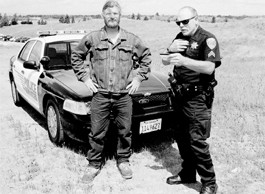
Envisioned as a magnet for a grateful public to celebrate the art of music, Sonoma State University’s burgeoning Green Music Center (GMC) is being constructed under decidedly disharmonious conditions. Not only is SSU president Ruben Armiñana sitting under a vote of no confidence passed by fully half of his faculty–a fact that is not unrelated to the GMC–but matters at the construction site apparently aren’t very rosy, either.

Problems with construction were first made public at the beginning of April, when two local carpenters were laid off, ostensibly because their contracts had expired. Dave Kennedy and Kevin Hoyt, carpenters contracted by construction manager Rudolph and Sletten (R&S), have been in the construction business since the mid-1970s. They were both happy to find work at the GMC, but after a while decided that they didn’t like the quality of the work being done or, as Kennedy explains, “the use of unskilled labor to do jobs that require higher levels of skill.

“[There were] no professionals, and they expect [subcontractors] to do all the work,” he charges. “I’ve never been on a site where so many mistakes occur.”

A perceived problem in a concrete pour in the main wall of the structure led Kennedy and Hoyt to engage in a standoff with the site manager. The men took a photo of a concrete pour on the bottom 10 feet of a wall that will eventually be 57 feet tall that they felt was particularly unsafe. Rather than fix the bad pour before they poured the next layer of concrete, the men charge that R&S went ahead and poured more concrete, intending to later fix the problem. (Hoyt and Kennedy also believe that R&S routinely “wastes” vast amounts of taxpayers’ money by having to go back and X-ray their own work and redo bad pours as well as wasting vast amounts of rebar and other material.)

At the end of April, Kennedy and Hoyt arrived at the job site wearing homemade chartreuse T-shirts emblazoned with pictures of the offending portion of the wall, replete with an R&S logo. They were immediately let go.

The two also charge that the GMC is being constructed on a decidedly wet area of the campus, and that R&S is not sufficiently prepared to pour so much concrete into what has turned out to be so much mud.

“They are just disgruntled employees,” says site manager Frank Baroni who has worked for R&S for 18 years. “We were cutting back a couple of guys, and [Hoyt] was asked to do some other stuff as their job was winding down.”

According to Baroni, Hoyt and Kennedy “had an attitude.” Baroni told Hoyt he could get his check the following Monday. Kennedy says that he was told to leave, too.

Both men were escorted off the property. When they returned a few days later to take pictures of the wall from the berm that surrounds the construction site, SSU campus police were notified and Kennedy and Hoyt were issued a restraining order banning them from the campus for seven days. The problem with the concrete was “no big deal,” according to Baroni, who says that R&S pours thousands of yards of concrete in “vertical pours” and occasionally there will be a “slump,” an air pocket that leaves holes in the concrete.

The concrete is poured from the top, and then the forms are vibrated in order to get the concrete to fill the form. “Very often there will be air pockets, but 99 percent of the time you will get an excellent wall,” Baroni assures.

Kennedy has filed a grievance over his layoff with Carpenters Local Union #751; R&S has postponed the hearing until June 13. A union representative has refused to comment, calling it “internal union business.”

The GMC is expected to be completed in September 2008. The cost and scope of the project has expanded from the initial vision of a humble $22 million, privately financed concert hall that the university would share with the Santa Rosa Symphony. Its current version is a $100 million, 105,435-square-foot entertainment complex and hospitality center replete with indoor and outdoor dining.

Funding for much of the construction is coming from California State University revenue bonds. The most recent piece of the financial puzzle is in the form of a $12.9 million bond approved in February, which has infuriated many members of the SSU faculty.

In order to create revenue streams to pay for the bonds, both Sonoma State Enterprises–the entity that includes SSU Dining Services–and the School of Extended Education have been placed under the charge of the University’s Administration and Finance. This means that the revenue from those programs can be utilized to pay off debt accrued by the GMC.

The current costs of the project include $87.7 million for construction and financing, although an additional $12 million is still required for such finishing touches as bathroom fixtures, a lobby floor and enclosures for the mechanical systems necessary before the concert hall can open.

Costs aside, construction is moving forward as quickly as the concrete can be poured. Kennedy says that he is frustrated with R&S and no longer works for them, but is just waiting for his grievance to be heard.

“I’m back to work,” he says. “I think that proves I’m not a ‘disgruntled employee.'”


The Wedding Songs

0

June 6-12, 2007

All Music Guide:

Summer is here, and with it, wedding season in all of its white-tulle-and-Jordan-almond splendor. Stately churches, secluded wineries, coastal getaways and pastoral backyards across the North Bay are alight with the exchanging of vows and the music that accompanies it.

Music plays a major role in weddings. It is worth noting that there are few other private events that the average American hires live musicians for. And even in the most simple of ceremonies, it is the music that announces, first and most resoundingly, “This is who we are.” The selection of songs is not something that most couples take lightly.

Harpist Sally Fletcher, who lives in San Rafael and has been playing at weddings throughout the Bay Area for 15 years, cites Pachelbel’s Canon in D as her most-requested song for ceremonies. “As well as ‘Here Comes the Bride’–‘The Bridal Chorus,'” she adds. “Especially for the bridal party and the bride, [couples] are more and more sticking with the traditional.”

There’s a reason those songs are classics; you hear them so often at weddings that their power to provoke emotions and recall memories is, for many, poignant and instantaneous. Even so, the scope of songs played during wedding ceremonies has never been so rich, diverse or playful as it is today. Couples wanting more personalized or unique ceremonies are not hesitating to strike off the beaten path, er, aisle.

Amanda Winneshiek, who got married last year at Cotati’s Church of the Oaks, connected family and heritage in the music at her ceremony. “Just before we all walked down the aisle,” she says, “my uncle played the guitar and sang a beautiful Filipino song in Tagalog called ‘Dahil Sa Yo’, ‘Because of You.’ I could just hear him as I was waiting with my dad behind my bridesmaids. It couldn’t have been more romantic. We really felt free to be ourselves, and it really felt like our wedding.”

It is also worth noting that Amanda’s brother-in-law saw fit at his wedding to sing the Smiths’ “Death of a Disco Dancer” to his bride. The message boards of wedding websites like the TheKnot.com and IndieBride.com teem with such examples of ballsy convention-bucking, making the entire history of music a possible wedding songbook. Unlike brides and grooms of a century ago, who grew up without the advantages of MTV and concert T-shirts, we now think of our favorite songs and performers not simply as dear to our hearts, but part of our very identity, articulating our desires and experiences and fears much more succinctly than plainspoken words ever could. This is how instrumental versions of Prince favorites, plaintive Nick Cave ballads and Godspeed You Black Emperor! dirges began making their way into the eternal unions of two souls.

Those are far-flung examples, however; other songs are undeniably timeless contemporary wedding favorites, such as Noel Paul Stookey’s “The Wedding Song (There Is Love),” which the staff of Santa Rosa’s Last Record Store report multiple customer requests for. (Stookey, the Paul of Peter, Paul and Mary, wrote the song as a wedding gift for bandmate Pete Yarrow.) Do such songs spread from wedding to wedding–like the recent prevalence of “Linus and Lucy,” the “Peanuts” theme, as a recessional–or is there something else, a feeling that taps directly into the same sentimental squishy areas for millions of independent romantics as they listen to a Norah Jones CD or swoon to hundredth viewing of Somewhere in Time? I’ve never been to a wedding where John Denver’s “Annie’s Song,” a nuptial chestnut if there ever was one, was performed, but the song itself never fails to send tingles up my spine.

One guest’s heart-flutter of “Annie’s Song” may translate to another guest’s eye-rolling, but brides and grooms are more resilient than ever at the prospect of being judged by friends and family. “I guess everybody is more independent now, freer to be themselves and do what they want to do,” Fletcher says.

Most comforting is the undeniable truth that music does not make or break a partnership. A wedding is just a few hours, but, hopefully, a marriage is every single day that follows.


News Briefs

June 6-12, 2007

And they’re off

The news that Sonoma County supervisors Mike Reilly and Tim Smith are both stepping down when their terms end next year already has potential successors jockeying for position for the June 2008 election. Reilly is nearing the end of 12 years representing the Fifth District, from the Sonoma Coast to west Santa Rosa, and from Valley Ford to Mendocino County; Smith will be leaving after 20 years serving the Third District, the most populated portion of central Sonoma County. The rumor mill is already churning with mentions of more than a dozen possible contenders for each seat, and the Sonoma County Registrar’s office is fielding questions about how to become an official candidate. Nomination petitions are available Dec. 28; the official filing period is Feb. 11 to March 12.

Just practicing

Nursing students at College of Marin’s Indian Valley campus can now try their fledging skills on non-complaining patients: high-tech simulation dummies. With Sonoma State University providing 12 robotic mannequins worth about $300,000, and Kaiser Permanente San Rafael, Marin General Hospital and Novato Community Hospital donating a total $60,000, COM now boasts the Marin Stimulation Center, where healthcare workers can develop new skills or practice for rare emergencies. “The dummies they use are very lifelike, very sophisticated,” says college spokeswoman Terri Hardesty. At the dedication ceremony, students worked a mannequin that breathes, bleeds and urinates; has a blood pressure, heart sounds and lung sounds; can be programmed to repeat phrases on command; and can be configured to be anatomically correct for either gender. Eventually the center will have a birthing mannequin that screams.

A dirty cleaning

A hydraulic hose failed on the city of St. Helena’s new $48,000 sidewalk scrubber/sweeper on May 18, leaving a bad stain along the west side of Main Street between Spring and Adams streets. A new hose got the scrubber/sweeper back in action, but the stains were harder to fix. City workers tried two different concrete cleaners, without success. The scrubber/sweeper’s manufacturer, Tennant, provided a special degreaser product and the use of a smaller machine (at no extra charge) to tackle the problem. “At this point I think we have the cleanest sidewalk section in the state of California,” says Public Works Director Jonathon Goldman. They’re still negotiating how the city will be compensated for its labor costs and what sort of permanent machine modification will guarantee this problem won’t reoccur.


Real Blues Guy

0

June 6-12, 2007

All Music Guide:

Fifty years ago, Buddy Guy left his hometown of Baton Rouge, La., to go play the guitar in Chicago. Now, at 70 years old, Guy is without a doubt a blues legend–he was a protégé of Muddy Waters, and later a god to such heroes as Jimi Hendrix and Eric Clapton. In 2005, he was inducted into the Rock and Roll Hall of Fame, and he’s got his own blues club in Chicago, logically enough called Buddy Guy’s Legends. He appears June 17 at the Russian River Blues Festival.

Speaking by phone from his Baton Rouge home, Guy calls blues musicians “an endangered species” and points to factors like the lack of variety on the radio to the blues’ impending demise, but mostly just seems disappointed that the blues got the shaft.

“I don’t know what we did to be treated like this so far as the blues music goes,” Guy says, “because blues music plays a part in all music we hear and play today, including hip-hop.”

Far from being a curmudgeon or blues purist, though, Guy listens to and plays all kinds of music. Asked how he relates to hip-hop, it turns out that his relationship with the genre goes deeper than one might expect.

“You know who Ludacris is, right?” he asks. Um, yes. “You know they got a girl, her name’s Shawnna, been working with him, right?” Mmm-hmm. “That’s my daughter.”

In fact, Shawnna’s CD Block Music features Buddy on it.

“Actually she made me play on it,” says Guy, clearly amused. “I said, ‘Girl, I don’t know how to play hip-hop!'” As it turns out, she just wanted to sample his blues riffs after she found out she had to pay to sample other people’s music. “She said, ‘If I use yours, Dad, then I don’t have to pay nobody.'”

Unlike other moments on Block Music, Shawnna keeps it relatively clean on “Can’t Break Me” and “Chicago,” the tracks to which her father contributed. While he has no plans to put out any hip-hop of his own, Guy is fair&–minded about hip-hop’s cultural dominance.

“They do so well selling that stuff, the young generation of people,” Guy says. “That’s what time it is right now, and I look at it as, you know, when Muddy Waters amplified the harmonica and guitar, that’s what time it was then. I don’t have anything against [hip-hop]. That’s what people want, that’s what you give ’em.”

This fall, he’s got some studio time to go in and produce his own album–something he didn’t get a chance to do back in the ’60s.

“I had to play Fats Domino, Chuck Berry, Muddy Waters,” he says. “And when I come to play for you now, I’m not gonna stand and say, ‘Where you at with Buddy Guy?’ I’m gonna play some Muddy, some of Hendrix, some of Clapton, whatever the people want, that’s what I’m gonna give ya. I’m from Louisiana, man. I like gumbo, and they put everything in it.”

Chances are he’ll have some of that gumbo feel on his new album, but even if he’s pulling music and artists from all over the world, the ideas will all be his.

“I just wanna go into the studio and just cut loose and be Buddy Guy, whether it be good or bad,” says Guy. “I never had that opportunity to be free, and a lot of the British guys who are superstars now, when they went in the studio, they said, ‘I done picked up something from Buddy Guy, just let me play it.’ They got away with it, but I never had a chance to do that. So I’m gonna try it.”

Buddy Guy headlines the second day of the Russian River Blues Festival on Sunday, June 17. Also that day, Kenny Wayne Shepherd, Roy Rogers and Bettye Lavette. The festival opens on Saturday, June 16, with Little Richard headlining a day supported by Koko Taylor, the Lowrider Band and Elvin Bishop. Johnson’s Beach, Guerneville. Gates open at 10am. $50&–$185. 707.869.1595.


Music, Mayhem and Meat

0

June 6-12, 2007

All Music Guide:


How many Stiff Dead Cats does it take to stuff a sausage? I’m about to find out. I’ve been asked to tag along with the porch-punk band on what promises to be a hot day of skeet shooting and sausage making, on the eve of their new CD release, Molotov Barbeque. Frontman Wylie Woods explains that the album’s title explores the band’s “need to blow shit up and grind meat and burn it. People can take a peek into our sinister world of music, mayhem and meat, how we spread peace and harmony to the world, while at the same time stuffing Bush in some medium hog casings to be cast into the mesquite pits of Weber hell.” Sounds about right to me.

Stiff Dead Cat hone their hunting skills through skeet shooting. That’s how we’ve come to pile into the 1977 Jeep Cherokee that doubles as tour vehicle and hunting wagon, alternately hauling banjos and buckets of pig guts. Onboard: Wylie Woods on vocals, banjo, mandolin and Browning shotgun; Dave Lux on Rezo guitar, yelps and ammo box; Jesse Rudolph, drummer and party host, at the wheel; Paul Szczepanek, back-up bass; Tim Brown, road manager; my guy, Doug Larsen; and me. Their usual bull fiddle player, George “Curly” Cremaschi, can’t make it, and good thing–we would’ve had to strap him to the roof.

Stiff Dead Cat’s shooting range, Hog Acres, stands in an isolated clearing where the late Forestville icon Mondo Dagnello raised a drove of over a hundred pigs. This will be the only time I’ve handled any gun since a long-ago misadventure with a Daisy airgun. Before we don protective headsets, Wylie tells me everything I need to know to avoid pulling a Cheney: keep the safety on and the muzzle down, clear each shot and be as aware as you can be three beers down before noon.

“Hold it tight against your shoulder, or you’ll take the kick,” he instructs. “Look straight down the muzzle. Don’t hold your breath. Keep the gun moving.” Helpful advice, I’m sure, but holding the gun, I’m trembling like the hunted. Something about the potential lethality of it all is thrilling but daunting. As for those clay pigeons known as skeet, they’re neither clay nor avian, even in shape. Jesse hand-launches the neon discs, the tattoo on his biceps stretching, and I take aim, missing. Swing the gun, miss. I am seriously outclassed by the deadeyes around me who fire off shot after shot, shattering pigeons bang-bang-bang! Although they sweetly coax me on and call me Annie Oakley, I hit precious few, but the ones I do hit–those babies are all mine.

Stiff Dead Cat’s music takes bluegrass, blues, jug-stomp and funk, and tosses them into the grinder to produce a ragged and gamy blend all their own. Their world is populated by deadly viruses, flapjack kings, a freaky Chihuahua named Tatuituitcan and a blue-lipped, snakebit wife–all of them brought forth in twangy, bluesy, old-timey music rising out of the backwoods, through the swamp and up from the grave to rock, shake and haunt you.

“It’s like we’re playing 1930s rave music, only the X wasn’t as good then,” Dave jokes. “We’re connected wormhole-wise to the Prohibition era. That’s why we’re always thirsty.”

“If they’d only outlaw booze again,”

Wylie shoots back, “we’d have some real jobs.” They all do have “real” jobs, in construction, carpentry, blacksmithing and chicken ranching, which lends cred when they sing such lyrics as, “You live in a mansion, I live in a shack / Eat that fat ol’ turkey and I’ll take the scraps / The man’s comin’ down on you / Show the man a Molotov barbecue.”

And so we do. After shooting those skeet deader than dead, we head back to see what else we can grind up (and it isn’t scraps this time): venison and wild boar from earlier hunts; pig fat from Jesse’s own hogs for juiciness; a leek and apple mixture; an apple cider reduction; rosemary; parsley; and salt and pepper. When it comes to barbecuing, these guys don’t mess around. Jesse and Wylie wash like surgeons, donning white coats. The grinder itself gleams brighter than Wylie’s gold tooth. True, Tim parades around in an apron with a humungous penis attached, but what’s a barbecue without some off-color apron humor? And what’s a Molotov barbecue without talk of George W as a “punkass weenie bitch” deserving his own waterboarding?

“It’s good to know where your food comes from,” Jesse says, repeating one of SDC’s mottos. Dave raises chickens up on Old Cazadero Road with his wife, Eve. They all hunt and fish and abalone dive. Both Jesse and Wylie have raised their own hogs. “I’ve eaten everything,” Wylie boasts. “Everything: possum, raccoon, coyote, squirrel, snake.” It’s easy to believe. In addition to these sausage-fests, they host regular pig slaughters and an annual bullfrog feast, where they round up hundreds of those croakers to grill.

As omnivorous in musical tastes, with influences as varied as Bill Monroe, Aretha Franklin, Black Sabbath, Frank Zappa, Hot Tofu and Charles Mingus, it’s no surprise that their music is such an inimitable amalgamation. Their roots are as much a product of their upbringings as a result of their present environment.

Born in the far northern California town of Burney, Wylie learned to play by marking chords on the neck of his guitar with colored duct tape. Jesse hails from Belchertown, Mass., where he followed in his musical dad’s footsteps. He remembers drumming into a pillow to keep the noise down. Dave grew up in Tennessee on the Farm, the largest experimental community in the United States. Music was all the entertainment to be had, and Dave went from playing on broomsticks to all manner of other instruments. George, the one urbanite, grew up in New York City studying and playing jazz, composition, improv, noise and punk.

Odd hitches and switches, burned houses and broken hearts brought them to Sonoma County, where Wylie and Dave met when playing with the Celtic band Spiral Bound. They form SDC’s songwriting core, with the others collaborating on their own parts. They tried Jesse out at a gig and hired him on the spot, because, Wylie explains, “he could hold his likker.” George’s avant-garde aesthetic shone after the band tried out nine different bass players, the last one known simply as No. 9.

Time to wash out the pig intestines. The lengths of casing inflate like long, milky water balloons. When they’re perfectly clean, we bring them outside where we attach them to the nozzle of the stuffer, retracting the skin entirely up the shaft; references to all things phallic are unavoidable. These are sausages, after all. They are of the body, for the body and reminiscent of all things bodily. There’s little point in being squeamish. My kids, on hand for this phase of the afternoon’s activities, are grossed out only until they get to help. Then they approach the task with the seriousness of the stiff dead connoisseurs.

For the stuffing, Jesse turns the crank while Wylie (and me, as a guest stuffer), gently palm the nozzle end, cupping the meat as it’s expelled, allowing the casing to slowly unfurl. You want the diameter to be uniform, the sausages free of air pockets. It’s a strangely satisfying procedure, feeling those slick lengths of sausage emerge, coiling on the table. Once tied off, there are enough sausages to feed a whole litter of stiff dead kitties.

Legend has it that Wylie and his wife, Stacy, were tooling along Highway 116 when they spotted a feline roadkill, its four itty paws sticking straight up in the air, and coined the band’s name on the spot. Since then, they’ve taken flak from animal-rights groups that believe SDC advocates cat carnage, but nothing could be further from the truth. They may be passionately carnivorous, but Stiff Dead Cat really are just a bunch of pussycats with tender hearts and fine culinary skills. Grilled to perfection, their Molotov barbecue links taste of western Sonoma County, of animals both feral and domestic, and of the handiwork of these guys who live close to the source of things savory, sweet and sometimes sick.

Molotov Barbeque was mastered at Gregory Haldan’s “In the Pocket” studio on the vintage analogue board used for The Benny Hill Show, providing yet another wormhole to a bygone era these guys won’t let die. These cats cook, and you can be sure I’ll be back come bullfrogging time.

Stiff Dead Cat celebrate the release of their new album, ‘Molotov Barbeque,’ on Saturday, June 16, at the Mystic Theatre. The Lemon Lime Lights open, thus achieving perfect synergy. 23 Petaluma Blvd. N., Petaluma. 9pm. $10. 707.765.2121.


Pop, rock, roll

0

music & nightlife |

By Gabe Meline

With repetitious chord changes, vaguely hip-hop-inspired rhythms and a vocal delivery combining the softer edges of both grunge and soul, the Pat Jordan Band have done well by assimilating the staples found in radio-friendly hits of the past 10 years. On a recent night in Sebastopol, the newly reopened Jasper O’Farrell’s was filled to the brim with an easy 5-to-1, women-to-men ratio of low-rise jeans, perfect hair and low-cut babydoll blouses bouncing amid a collage of clashing perfumes.

Despite the public’s embrace, however, the band may be facing an existential crisis. “There’s a lotta music around here,” said bassist Justin Bordessa during a set break, “but it’s hard. We don’t really fit in.” Citing the prominence of both modern indie rock and punk rock in the area, Bordessa cautiously places his band in a challenging limbo: “I guess we’re pop-rock,” he surmised, as if the genre were a swear word.

Whatever the Pat Jordan Band’s style, there’s no denying their quest for taste. Frontman Jordan has the ability to command his band with only the slightest touch; he plays acoustic guitar with no effects pedals, which makes the control of vast dynamics a near-heroic feat. On the bass, Bordessa has a craftsman’s touch, while drummer Steve Toomey hesitates until each song’s absolute climax before unfurling his flashiest fills. All of this comes through on the band’s recent eight-song CD, April’s Fools, but for the whole arms-waving, booty-shaking, Delia’s-catalogue experience, it’s best to see the Pat Jordan Band live.

Before they head south for a proud booking at the Viper Room in Hollywood, catch the Pat Jordan Band with Matt Vrba on Wednesday, June 13, at the Sweetwater Saloon. 153 Throckmorton Ave., Mill Valley. 9pm. $7. 415.388.2820.


FIND A MUSIC REVIEW

First Bite

Lost in the sorrows and romantic dreams of my youth, I locked my bicycle outside and drifted alone into the door of the Iron Springs Pub and Brewery in Fairfax on a recent Saturday. It was my birthday. I was 28 and I was bummed. The bar was lined with beer-heavy men watching TV, and I asked for the Barstow-Lundy barleywine ($3.75 per pint for all beers). They were out, so I took the Maclean’s Scotch ale instead. This very interesting 7 percent alcohol brew tasted like smoke and spicy Cajun catfish. I took my beer to a seat by the window, next to a bookshelf stacked with board games. The waiter briefed me on the daily specials. The sautéed Atlantic salmon salad ($12.99) took the man several decadent stanzas to describe and screamed to be eaten. I asked that he add avocado ($1.50), and it was a deal.

The open kitchen allowed me a view of the fine chefs at work. I admired them, artfully shaking the grease from the fries and sinking frozen onion rings into the hot oil.

“These,” I thought to myself, “are clearly men who know and love food. They unmistakably revere fineness while adhering to the masters’ philosophy of ‘ingredient-driven cuisine.’ I wonder which acclaimed institute they were recruited from?” Upon arrival, the salad looked awfully insubstantial, and there was no blue cheese as promised. But at least there were three or four slices of avocado, and the Atlantic salmon was as tasty as any wild varietal. They must have thrown some grade-A fodder into its pen. On the fish was a splendid squirt of mayonnaise.

Twelve beers were available, and I ordered a “paddle” of six three-ounce samplers ($6). My beers arrived on a wooden oar in adorable mini beer steins. The Honey Blonde ale had the foamiest head of the lineup and gave a long aftertaste of wheat. Next, I burned my mouth on the super-hopped IPA. The Imperial IPA was less bitter, with deeper flavors, and a bigger portion of alcohol. Comments elude me for the Epiphany ale, a sweet golden beer. The coffee porter delivered a dramatic absence of flavor after its initial kick of espresso. And the Sless stout was still and dark like the tannic backwaters of a Mississippi bayou.

For the road, I got the grilled tofu burger on dark rye ($7.99). I took the sandwich up Mt. Tamalpais on my bicycle. Twenty miles and 2,000 feet straight up will make anything on earth taste good, except for an Iron Springs tofu burger. The greasy patty had been frozen and preheated and tasted like camping food, and the chefs had deemed the dish too excellent for ketchup or mustard. Just pickles.

I ate it anyway, perched on a grassy knoll high above the ocean. Twenty-eight years, I wondered. So many regrets, so many mistakes. Was Iron Springs yet another? I’ll wait to taste their barleywine to know.

Iron Springs Brewery, 765-A Center Blvd., Fairfax. Open 4pm to closing, Monday–Thursday; noon to close, Friday–Sunday. 415.485.1005.

Editor’s note: Since Alastair’s storied 28th, the tofu burger has been removed from the menu. Iron Springs agrees with his assessment and is looking for a better-quality veggie option to replace.


View All

Quick-and-dirty dashes through North Bay restaurants. These aren’t your standard “bring five friends and order everything on the menu” dining reviews.

Ask Sydney

June 6-12, 2007

Dear Sydney, how do you meet someone in public? I saw her at the Sebastopol farmers market, dancing in the “love choir.” She had a black knapsack with a peace sign on it, and she was so free and happy that I was completely smitten. I’m still smitten. It feels like one of those times when you say, “That was the only thing I missed in my life, a free spirit like me.” She left before I could say anything. The feeling was so strong that it convinced me I’d rather be alone and wait for the person I really want to be with.–Missed Chances

Dear Missed Chances: Sounds like a great experience. Sometimes, when we have an energetic connection with someone, it’s not necessarily the person, but rather something they are reflecting, something that you desire. In this case, it seems to be her spontaneity and the feeling of joy that came over you in this moment of watching a beautiful lady dance. What a gift! One dancer at the farmers market and you are motivated to search for true love, and at the same time, you are reminded how you want to live. What you are experiencing is not necessarily the discovery of your soul mate; rather, it’s an epiphany or the glimpsing of a muse, if you prefer. Enjoy it.

If you have that much of a connection with the dancer, you will probably see her again, at which point introduce yourself, tell her that you would love to take her to the movies some time, and give her a card with your name and number on it. This way you are making your intentions clear from the very beginning, and she can say, “Thanks, I’m married and have five children all under the age of eight” or she can say, “Thanks, I’ll think about it,” and the power is in her pocket, and she doesn’t have to feel obligated or uncomfortable.

Dear Sydney, of my three children, two of them are severely depressed. They are successful in their lives, but this doesn’t seem to lessen their depression. I have always felt that depression is caused by environmental factors, that there is something missing in our society that leads to this feeling of sadness and emptiness. But recently, I was watching The Sopranos, and in the show, Tony’s son has become depressed and begun to have anxiety attacks, and so they trace the depression back through the blood line all the way to Sicily. If I listen to The Sopranos, perhaps this is a genetic issue. I feel so responsible for my adult children’s moods, and yet at the same time, powerless. How do you know if depression is hereditary or environmental, and does it make a difference?–Helpless Mom

Dear Mom: It is my understanding that depression can be caused by environmental factors, brain chemistry or genetics. Often, they are intertwined, and one can lead to the other. For instance, a soldier returning from Iraq who is suffering from post-traumatic stress syndrome is experiencing an imbalance in the brain caused by environmental factors, and which may or may not be exacerbated by a genetic predisposition. Some possibilities to look into are a brain scan, herbal supplements, pharmaceuticals, therapy and creating a life change.

The issue of depression is complex, and like anything involving the human brain, full of hypothesis and little fact. But that doesn’t mean it isn’t worth trying to find solutions. As a loving mother, it would be nearly impossible for you not to feel somehow responsible for, and deeply affected by, your children’s suffering. Try talking to your children about what’s going on, and see if there’s any sort of support you can lend them. Try talking to someone in the supplement section at your local health food store to see if they have any suggestions, and ask around for a reputable therapist in the area.

Just remember, you can help by providing the tools and phone numbers necessary for them to begin creating change, but ultimately they will have to take the steps necessary to ensure their own happiness. All you can do is offer support, and try not to forget to take care of your own well-being. Two depressed people accomplish nothing, and being the cheerleader sucks. By taking care of yourself, you will be a far better support system. It’s like when you are on the airplane; if the air bags fall down, secure yours first and then your child’s, because if you can’t breathe, you are far more likely to make a mistake.

Dear Sydney, what does a fifty-eight-year-old single woman in Sebastopol have to do to meet someone if she doesn’t want to go to the bars? It seems like celibacy is the only available option at this point, and that’s a pretty sad option. Any suggestions for hooking up around here that don’t involve obscene levels of intoxication?–Hard Up

Dear Hard Up: Try not to let time jade you against the possibility that you might find a great relationship. Though age is undeniably an obstacle, if only because the dating pool begins to shrink with each decade, it is by no means an insurmountable one. I’ve done a little research on your behalf and come away with the following suggestions. Ace-in-the-Hole Pub, at the corner of Graton Road, comes highly recommended. Of course, as the name suggests, there is alcohol served there, but there is also food, music and a laid-back atmosphere, and most importantly, it is kid-friendly.

There are also some great public dances around. Check out the Teen Center, the Community Center and Wischemann Hall, all located in Sebastopol. Among the three, you should be able to contra dance, square dance, improv dance, sweat your prayers and do any number of things in between. There is nothing quite like improv dancing to get you interacting with other people, so you might want to start there. With so much incredible stuff going on in this community, including a wide spectrum of much-needed volunteer work, meeting someone without a drink in hand should not be a problem. After all, you are fortunate enough to live in West County, where the locals seem to believe that celibacy should only exist as a personal choice, not an ultimatum.

‘Ask Sydney’ is penned by a Sonoma County resident. There is no question too big, too small or too off-the-wall. Inquire at www.asksydney.com or write as*******@*on.net.

No question too big, too small or too off-the-wall.


The Disappointing Boob

June 6-12, 2007Comedian Elvira Kurt's schtick features an inventive bit in which she pretends to be an adult-kid hybrid. Skipping childishly across the stage, the lanky comic complains to an audience who's assembled to see her Comedy Central TV special, "You never see someone coming home from work, with their briefcase, swinging it, , 'I had a good day....

What Happened to Those Guys?

June 6-12, 2007All Music Guide: There are millions of old records out there in the world—believe me, I dig through thousands of them each week. But records made in my hometown are rare, and every time I come across a record made in Sonoma County by someone I've never heard of, I add it to a pile out...

Concrete Complaints

June 6-12, 2007Envisioned as a magnet for a grateful public to celebrate the art of music, Sonoma State University's burgeoning Green Music Center (GMC) is being constructed under decidedly disharmonious conditions. Not only is SSU president Ruben Armiñana sitting under a vote of no confidence passed by fully half of his faculty--a fact that is not unrelated to the...

The Wedding Songs

June 6-12, 2007All Music Guide: Summer is here, and with it, wedding season in all of its white-tulle-and-Jordan-almond splendor. Stately churches, secluded wineries, coastal getaways and pastoral backyards across the North Bay are alight with the exchanging of vows and the music that accompanies it.Music plays a major role in weddings. It is worth noting that there are...

News Briefs

June 6-12, 2007 And they're off The news that Sonoma County supervisors Mike Reilly and Tim Smith are both stepping down when their terms end next year already has potential successors jockeying for position for the June 2008 election. Reilly is nearing the end of 12 years representing the Fifth District, from the Sonoma Coast to west Santa Rosa, and...

Real Blues Guy

June 6-12, 2007All Music Guide: Fifty years ago, Buddy Guy left his hometown of Baton Rouge, La., to go play the guitar in Chicago. Now, at 70 years old, Guy is without a doubt a blues legend--he was a protégé of Muddy Waters, and later a god to such heroes as Jimi Hendrix and Eric Clapton. In 2005,...

Music, Mayhem and Meat

June 6-12, 2007All Music Guide: How many Stiff Dead Cats does it take to stuff a sausage? I'm about to find out. I've been asked to tag along with the porch-punk band on what promises to be a hot day of skeet shooting and sausage making, on the eve of their new CD release, Molotov Barbeque. Frontman Wylie...

Pop, rock, roll

music & nightlife | By Gabe Meline ...

First Bite

Ask Sydney

June 6-12, 2007 Dear Sydney, how do you meet someone in public? I saw her at the Sebastopol farmers market, dancing in the "love choir." She had a black knapsack with a peace sign on it, and she was so free and happy that I was completely smitten. I'm still smitten. It feels like one of those times when you...
11,084FansLike
4,446FollowersFollow
6,928FollowersFollow