Change Artist

0

music & nightlife |

One and Only: Friends think McEvoy should can his lead singer.

By Sara Bir

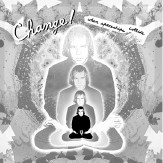
There are a lot of ways one could describe Change!, but the most accurate and least opinionated would be to call the band polarizing. I would bet cash money that you will not hear one album remotely like Change!’s When Spaceships Collide this year, and I am not a gambling woman.

Change! is the musical world of Aaron McEvoy. In this world, a giant, 134-stringed wood-hammered dulcimer–chiming, melodic and evocative of whimsical folklore–is the focal instrument of rock songs. Juxtapose this with McEvoy’s un-dulcimer-like vocals and lyrics with a heavily fantastical slant, and you get a band who defy recognizable genres. But after the initial shock of geeky dulcimer weirdness wears off, the offbeat beauty of Change! reveals itself; the patient and unbiased listener will discover rewarding and keenly crafted pop songs.

When Spaceships Collide was written over a five- to six-year period, during which McEvoy lived in New York, Texas and California. Now settled in Napa, McEvoy, like many musicians, wears multiple hats; he runs the record label Mental Monkey and has a young daughter (our interview was conducted as she napped).

McEvoy settled on the name Change! while traveling through Italy in 1999, when he spied a sign on a currency exchange booth. “I have found it versatile enough to umbrella over all the various incarnations of the band,” he says. Though Change!’s recordings feature other musicians (including Mental Monkey label mates Mixel Pixel and Midstates), McEvoy currently performs solo shows with the dulcimer, an iPod and a theremin. For an audience member not knowing what to expect, the sight of the gigantic dulcimer, combined with McEvoy’s animated onstage persona and atypical lyrical approach, can be disarming–though this combination can result in riveting, if tense, performances.

“I find that my performances really push people’s buttons in different ways,” McEvoy says. “I’ve had performances where I’ve worried about my personal safety. There have been folks who have thrown firecrackers at me and wrestled for my microphone. I recently ended a show in Oakland midsong because two drunk idiots collided with my instruments during a wrestling match.”

McEvoy, who has been performing in front of crowds in various musical contexts since he was in first grade, is well aware of the distinctiveness of his singing style, which he says is inspired by the likes of Robyn Hitchcock, Syd Barrett and David Bowie. “I have a very flexible voice, and could easily sound like John Denver or Aladdin if I wanted,” he says. “I have a flamboyant tendency deep inside, which I like expressing lyrically and vocally. Some people love [my voice] and some hate it. I’ve had friends hear my recordings and tell me that I need to can the lead singer.”

But that affected voice, which is at turns childish and sing-songy, both suits and obscures the surreal, psychedelic poeticism of McEvoy’s lyrics. “Le Sad Cassetto,” a jagged and darkly funny ditty about horrific headphone paranoia, rests on the goofy end of the spectrum, while the dance beat of “My Sadness Is a Special Thing” belies the ache and longing at the root of so many rock songs.

“I am willing to write about any topic, as I find that all things are generally equal in this universe,” says McEvoy. (It is worth noting that he once wrote a song about an indecisive man who rolled a Dungeons and Dragons decahedron–a 10-sided die–to determine if he should marry a woman or not.) “I guess in the end, I just have my own process of mixing my life experiences and my imagination to produce songs.”

After living in Indiana, Delaware, New York City, Austin and various Bay Area locations, McEvoy finds the people of Napa “very interested and supportive. I like playing in small towns, as I feel that they often have more to fight for, in terms of freedoms of thought and sound. I have enjoyed the food, culture and musicians that I have met in Oakland and Berkeley, but feel that places like San Mateo and Napa have taught me more about what it means to be Californian.”

Catch up with Change! at www.myspace.com/changemusic or mentalmonkeyrecords.com.



FIND A MUSIC REVIEW

Letters to the Editor

August 15-21, 2007

Entitlement spending

Peter Byrne provided a public service in noting the extent to which Congress and the Bush administration have increased the deficit and the debt (, “Fiscal Terrorism,” June 26). He quotes the head of the Government Accountability Office on the size of the “structural deficit”–spending that exceeds revenues on a regular basis. The fact that we have been experiencing such deficits for more than three decades (with the exception, noted by Byrne, of four years during the Clinton Administration) is a cause for concern.

That said, besides using a sensationalist and misleading title, Mr. Byrne made some errors that are relevant to putting the budget back in the black.

There is first his assertion that “Bill Clinton not only balanced the budget, he used hundreds of billions in surplus monies to start paying down the national debt.” Presidents neither balance nor unbalance the federal budget. They propose spending, indicate their preferences for taxes, and suggest changes in spending. But in the end, Congress determines spending and taxing. Clinton didn’t “balance the budget” for those four years; a Congress controlled by Republicans did.

As for the “use” of those surpluses to reduce the debt, what Clinton did or did not do is of little consequence. Federal law requires that a surplus must be used to reduce the federal debt.

Mr. Byrne refers to the “long-term structural deficit,” which, he notes, rose from $20 trillion to $50 trillion during the first six years of Bush’s administration.” Two thirds of this gap is the result of commitments to Medicare, and the largest single piece is made up of payments to providers. This and other entitlements are the core of our fiscal problem. Call it what it is, but why call it “fiscal terrorism”? We have promised more to ourselves than we have committed to pay. We face this same problem in funding Social Security, though we have more time to fix it. This is less a weapon of mass destruction than an exercise in mass delusion.

Dr. Richard B. Doyle, associate professor of public budgeting, Naval Postgraduate School, Monterey

Hope for the future

Congratulations to Peter Byrne on making the list for the top 25 censored stories on Project Censored’s list (, “DiFi Backlash,” Aug. 8).

My hat is off to Mr. Byrne for once again clearly pointing out what a mess we have gotten ourselves into during this millennial century, with the mainstream media in cahoots with corporate profiteers and our (somewhat) elected so-called representatives.

Maybe the next millennium will be better.

Paula M. Arico, Sebastopol

Too little, too late

I can’t believe I just read in that the Ask Sydney column is “officially retired”–not even giving us faithful readers a chance to protest (or flood your office with letters seeking advice).

The column offered consistently helpful, logical and empathetic advice. Please give it another chance and do consider a better placement of the column, too. The last page didn’t do it justice.

P.S.: Congrats to Peter Byrne for the Feinstein reportage and award from SSU’s Project Censored, plus a thank you to (Aug. 8). He called it right on–what happened?!

Marlene Alves, Santa Rosa

Sick of it

So, Michael Moore goes to Cuba but fails to mention that the best care is reserved for rich foreign tourists and Communist Party bosses while regular folk go to run-down facilities, may receive out-of-date drugs and often have to bring their own food, sheets and soap to the hospital ( June 27). Cuban doctors who have been sent to Venezuela don’t want to go back to Cuba where they make about $15 a month. Instead, they want to go to America but must escape from Venezuela to Columbia in order to do so. Meanwhile, Fidel Castro flew in a specialist from Spain for his care. Moore recently railed against the Martin Luther King Harbor Hospital in a news conference but failed to mention it is a government-run county facility.

I just ask if people have really seen a sense of urgency and high efficiency in very many government-run operations. Happy with post office lines, the current passport fiasco, the immigration failures, your California highways? Do you think the best doctors/nurses are going to want to work for the government?

Ron Brackney, Santa Clara


Bad War

August 15-21, 2007

Maybe it’s not fair, but I blame Steven Spielberg for all of this. His 1998 Saving Private Ryan turned WW II into a video game with corn syrup sweeter than any ever rationed to wartime audiences. From that movie on, you could feel the change in the air. When WW II was spoken of, it was no longer in terms of “Never again.” It was more like, “Granddad had his Good War. Where’s mine?”

Those who led us into Iraq pimped that parallel with the Good War. Those who advised holding off and waiting for more details were made into modern-day Neville Chamberlains, seen to appease the Hitler of the Euphrates. Trying to repeat tragedy as spectacle, the Bush administration set the stage for years of unending horror. And now the movie-made mess is examined in a movie, No End in Sight, a documentary of great concision and intelligence.

Director Charles Ferguson didn’t get to talk to the architects of the war. Since Bush, Cheney, Rumsfeld, Rice and Wolfowitz declined to be interviewed, he is left with the unanswered question: How could they be so utterly lacking in foresight? How could they refuse to recognize the catastrophe, and then try to laugh it all off like sportsmen who had lost a bet? How can you make as much money and have as much prestige as Donald Rumsfeld made and had, and still brush off anyone bringing you bad news as a Chicken Little? We see Rumsfeld’s act reprised in No End in Sight at the infamous April 11, 2003, press conference. Using that gruff yet chuckling mannerism that the press ate up with a spoon, Rumsfeld simply tells the world that “[shit] happens.”

Since we’re not yet able to crack the mind set of these five, “shit happens” may be the only way to explain this epic bungle. We’ll have to wait for their self-justifying memoirs, I guess. Having to do the detective work himself, Ferguson pinpoints the moment in which the war was well and truly lost. Clearly that moment was May 2003, the date when Paul Bremer of the Coalition Provisional Authority implemented the administration’s de-Baath-ification plans. These made hundreds of thousands of Iraqis jobless. It also meant the dismissal of soldiers who could have brought order to Iraq when there was still order to be got.

The U.S. Army’s Col. Paul Hughes, interviewed here, has tragic stories of Iraqi officers begging to be allowed to stop the looting of Baghdad. The Army advised against the drastic purge, but they didn’t get a vote. Understaffed and undersupplied, American soldiers tried to keep order as the situation deteriorated. Meanwhile, Sadaam opened the prisons before he ran for it, leaving 100,000 criminals–the apolitical and violent kind–running free.

Unguarded weapons depots were ransacked by the mob. The Coalition Provisional Authority crouched behind seven miles of blast walls. Bremer, the wizard of this Oz, addressed the world through a press spokesman who didn’t know how to speak Arabic. The offices inside were staffed with an ever-rotating staff of recently graduated Republican donors’ kids.

Rumsfeld clowned. Our intellectually lazy president strutted through his photo opportunities, repeating the prediction that dead-enders were in their last throes of resistance. Yet he had reports that proved otherwise. As we see here during a Sept. 21, 2004, press conference–and it’s evidence that’s as damning as Bush’s moment of cataleptic stillness in Fahrenheit 9/11–he hadn’t bothered to read even the bullet points on the one-page summary of the reports brought to him.

More than any documentary yet, No End in Sight is The Dummy’s Guide to the Iraq War. It’s a lean, rigorously researched film. Ferguson interviews reporters like George Packer (The Assassin’s Gate) as well as former officials like Richard Armitage and two members of the National Intelligence Council, which coordinates the information our leaders would rather not read. Campbell Scott’s sober narration and Peter Nashel’s ominous music advance the action.

Since this documentary is a few months old, it doesn’t record the more current bad news: 4,000 soldiers of the Mother of all Coalitions are dead, of which some 3,600 are ours. Ferguson estimates the long-term bill to be in the end about $1.8 trillion. That doesn’t include the possibility of failure, of some cleric becoming the new Saladin, and holding the west over an oil barrel.

What can we do? As Ricks writes, reusing a World War I allusion, we have an army of lions led by donkeys. The Greeks had a specific goddess of folly, called Ate (ah-tee), to blame it all on, a daughter of Zeus who alighted on men to derange them and lead them into self destruction.

‘No End in Sight’ screens at the Rialto Lakeside Cinemas, 551 Summerfield Road, Santa Rosa. 707.525.4840.


New and upcoming film releases.

Browse all movie reviews.

Stay Off the Grass

August 15-21, 2007

‘Look!” my brother says. In his hand he proffers a small, brilliantly orange, cherry tomato. “I got this off of a volunteer tomato plant in your garden box.”

“Thanks,” I say, taking the petite tomato. “Actually, that’s not a volunteer. That’s what a tomato plant looks like if you wait to plant your starts until they are almost dead, and then only water them for about three seconds twice a week. Want to split it?”

I include this anecdote as a means for clarification so that you, gentle reader, will understand that when I tell you what you probably already know: Water prices are getting higher and higher. What you may not already know is that in addition to the city of Santa Rosa’s “Cash for Grass” initiative, the North Marin Water District is going so far as to offer up to $400 in residential rebates for those willing to rip out their aqua-hogging lawns. I hardly feel personally affected.

In the last week, I’ve paid $300 not in water bills, but in vet bills, to remove dried foxtails from the delicate nostrils of my four-month-old puppy, all snuffled up from my very own yard. Overwatering, obviously, is not an issue at my house. But what about the rest of you, with your verdant yards, your lush lawns, your opulent flower beds, your tomatoes hanging plump on the vine? What if you don’t want your yard to look like a dried-up region of the Mojave Desert, where a single cherry tomato is a miracle of unprecedented proportions?

In order to find a glimmer of hope for those of you with a green thumb in time of drought, I called Cathy Summa-Wolfe, news contact for the grand opening of the Water Management and Technology Education Center at the College of Marin’s Indian Valley campus. With water in short supply and lawns consuming 30 percent to 50 percent of our dwindling water supply, we need a new breed of gardener, one who understands how to plant and irrigate with the sustainability of our planet in mind. Workshops have already begun at College of Marin, available both for the layperson and the professional landscaper alike, in order to educate a new breed: the Qualified Water Efficient Landscapers.

Those who successfully complete one of the water-efficiency intensives will be given a certificate of completion, and licensed landscape contractors will be added to the Marin Municipal Water District’s list of recommended contractors. For those visionaries wishing to become certified green landscapers, College of Marin is developing and launching this fall a new program based entirely around sustainable landscaping practices.

Whatever your goal–to learn some water-saving techniques in order to cut back on your water bill; to develop a professional landscaping practice with the survival of our planet in mind; or simply to hire someone who knows how to create the landscaping you want without sucking the last dregs of water from the communal well–College of Marin is doing us all a favor. With knowledge comes change, and while I might be perfectly content to live in the Mojave, many people are not, and for those, developing conscious water practices is the only viable option.

Summa-Wolfe assures that, if College of Marin has anything to do with it, we will be seeing a new kind of landscaper, the kind who understands that we do not live in the tropics, that this is California and that it’s time we all came to terms with this undeniable fact of our water scarcity.

What, I thought, would my father, the late Italian count, have said if I had told him that he had to take out his lawn or no one would have anything left to drink? The answer is obvious. Survivor of Mussolini’s army, survivor of starvation in a Nazi concentration camp, he would have said: “If we have to take out the lawn, we take out the lawn! At last, an opportunity to put in a real bocce court! Of course, we could always just drink wine.”

And so I called Diana Pellegrini, executive administrator of the Marin Bocce Federation just to make sure that bocce is not played on grass. Pellegrini assured me that this immensely entertaining Italian game is not played on lawn, but rather on courts that are traditionally constructed of ground oyster shells or decomposed granite. What fun! In life, we must be adaptable. Here’s your chance.

For more information on getting cash for your lawn, go to www.marinwater.org. To learn more about green landscaping classes at College of Marin, go to www.marincommunityed.org. For information on the Marin Bocce Federation, call 415.485.5583.


First Bite

0

I can’t believe I had to move all the way from Arizona to find some of the best Sonoran-style Mexican food I’ve enjoyed in a long time. And this in a Raley’s strip mall in Rohnert Park, of all places. But it’s true. Tonayan is putting out such wonderful burritos, enchiladas, tacos and such, that I’m happier eating here than at most restaurants in the Southwestern state that birthed the stuff.

It doesn’t hurt that the combination plate I’ve ordered is the most beautiful thing I’ve ever seen outside of a restaurant in Puerto Peñasco, Sonora, a terrific spot that catered to sunburned tourists until it exploded right before happy hour one day, the result of a faulty propane tank. A specialty was a combo that packed a half dozen of the restaurant’s best dishes on a single enormous platter for less than $10.

It was my home away from home for decades, and I’ve deeply mourned its loss until minutes ago, when my waitress set down the “El Jefe” platter in front of me. It’s brimming with a shredded beef burrito, a ground beef enchilada, a chicken taco, a chile relleno, a slab of grilled steak, rice, beans and corn tortillas. I’ve chosen my meat stuffings and my beans (silky refrieds, though the whole black or pintos tempted, too). The cost: a jaw-droppingly cheap $11.95, including a basket of fresh chips and thin, spicy salsa.

The burrito is simple greatness, just a thin tortilla rolled around an exceptionally savory tangle of beef with juices so rich I use my spoon. I need my spoon for the masterful enchilada sauce, too, and the taco is packed so full of chile-seasoned chicken and vinegary coleslaw that I have to take it on with a fork. Steak is traditional carne asada as I’ve enjoyed so many times at sleepy Peñasco beachfront cafes, the meat pounded thin, deeply marinated and grilled to tender-chewy.

The star of the whole sensational thing, though, is the chile relleno. It’s almost a donut, with its airy batter cocoon gorged with gooey queso inside a still crunchy, fiery-but-not-fatal Anaheim.

Tonayan has been open about a year, explains my waitress, and comes from the former owner of Velasco’s in Petaluma. Its clean, coffee-shop-style space doesn’t hint of the authentic Sonoran specialties within. On other visits, I’ve sampled in near disbelief the excellent whole deep-fried fish ($8.95); a tostada piled with buttery chunks of avocado, choice of meat and cheese ($3.25); rich chile verde in green tomatillo sauce ($9.75); and jumbo prawns stuffed with Jack cheese, wrapped in bacon and smothered in mild salsa ($11.95).

Today, I’m nursing the last dribbles of a properly not-too-sweet margarita ($3.50) while watching the colorful antics of two gentlemen at the bar, arguing over who the best player is on a televised soccer match that they appear to have bet on.

I’ll be leaving with a sack of leftovers that will feed me for days, a full wallet and a huge grin.

Welcome home.

Tonayan, 500 Raleys Towne Center, Rohnert Park. Open daily for lunch and dinner. 707.588.0893.


View All

Quick-and-dirty dashes through North Bay restaurants. These aren’t your standard “bring five friends and order everything on the menu” dining reviews.

The Byrne Report

August 15-21, 2007

In mid-July, I had the honor of attending a three-day conference in Oxford, England, about multiple universes. Called “Everett at Fifty,” it was sponsored by the Foundational Questions Institute and hosted by the philosophy faculty of the University of Oxford. It was quite magical.

The late Hugh Everett was a doctoral student in physics at Princeton when he formulated the controversial “many worlds interpretation” of quantum mechanics which envisages a huge number of separate universes. Everett died in 1982, a few years before his theory gained scientific credence.

The Oxford conference celebrated the 50th anniversary of the publication of Everett’s now-famous interpretation. It was attended by 30-some physicists and philosophers debating the question of whether or not trillions of copies of every individual exist trapped inside “multiverses” that range from slightly different to greatly different. A half-century ago, such a debate would have landed these folks in an insane asylum, but today many scientists and philosophers believe that a nearly uncountable number of universes exist, some with copies of people in them, most without.

I went to Oxford because Scientific American had assigned me to write a profile of Everett. I made a biographical presentation on Everett at the conference, but mostly I listened to the heated debate between the “Everettians,” who believe that everything that is physically possible occurs over a huge number of largely noncommunicating universes, and the “Bohmians,” who surmise the existence of but a single universe. Both camps eschew the orthodox theory, known as the “Copenhagen interpretation,” which implies that reality exists only when it is observed.

So, you may be wondering: What does quantum mechanics have to do with Harry Potter?

The University of Oxford is the cultural template for Hogwarts. The traditional dining hall scenes in the Potter films were shot at an Oxford college, and the hoary institution’s dark tunnels and serpentine staircases reeking of ancient smells have been a playground for generations of students coddled with mental and economic privileges. The thickened stone fortifications surrounding each college seem designed to protect the means of knowledge for aristocrats and to keep out ignorant rabble. By the 19th century, the university was beholden to the fortune of Cecil Rhodes, the mining magnate who seized Africa’s minerals while legitimizing the enslavement of millions of Africans to foreign economies. Oxford is regularly endowed by such corporations as Ford, Standard Oil, Glaxo, IBM, Nissan, Monsanto and Rupert Murdoch’s News International as they finance the education of successive generations of intellectuals serving the Anglo-American empire.

I absolutely loved keeping company with the deep thinkers at Oxford, but my social conscience intruded unpleasantly. One night, I went to see the new Harry Potter film. Halfway through, I walked out, bored with the antics of overprivileged white people working 24-7-365 to keep the underprivileged Muggles from learning a bit of magic.

And what, pray tell, will the Muggles do when and if they are allowed to learn wizardry? End the starvation of billions? Cure AIDS? Harness the quantum for something other than bombs? I hope so, because the wizard society has no higher collective goal than perpetuating its middle-class lifestyle in the face of terrorist attacks by a neoconservative bureaucrat equipped with spells of mass destruction.

Reflecting our universe, the self-absorbed wizards see nothing wrong with allowing the “natural” ignorance of the Muggles to perpetuate while the poor things are systematically denied the right of education by their intellectual and economic superiors. The secret of the success of the Potter books is that J. K. Rowling’s world is a reification of capitalist consumerism and a moral void.

The Potter ethical universe contains no socially redeeming value beyond fighting a psychopathic wizard. Personifying Voldemort as an inchoate “evil” conveniently allows Rowling’s middle-class readers to sidestep their duty to specify the true source of human oppression and end it. Once the wizard-humans snuff Voldemort they will get back to business monopolizing the fruits of magic and living off the labor of the Muggle-humans. Consumerism for the few is saved.

Back home in Northern California, I went camping in the redwoods only to find many of my outdoor companions lost to nature in the new Potter volume. Meanwhile, our high-tech magic continues to murder hundred of thousands of Muggles in Iraq and Afghanistan and Africa, and we, as complacent Death Eaters, avert our faces from the carnage we cause by falsely claiming that we are powerless to stop it. Certainly this is not the best of all possible worlds. But if we are to make it work for Muggle and wizard alike, we’d best stop pretending that it is Voldemort that is the problem.

or


Again and Again

August 8-14, 2007

Sure, we all know that it’s good to recycle. Over the years, the act of recycling has been made so easy, has become so part of my normal routine, that when I’m faced with a situation where recycling is unavailable, it feels almost criminal. Just dropping a plastic water bottle into the trash gives me a twinge, as if I had just stolen from the convenience store called Earth.

But what about that “It all gets thrown in the garbage anyway” myth? Well, according to Andrew Sloan of the North Bay Corporation, it’s just that: a myth. You are not wasting your time by recycling; on the contrary, you are participating in a vital pastime. North Bay Corporation, which serves most of Sonoma County and areas in northern Marin County, offers what is termed “single stream” recycling. This means that everything gets dumped in one bin and then shipped to a facility where our recyclables travel down a conveyor belt and are, yes, actually sorted through by people and machines, to be purchased later by brokers who then use the recycled materials to make something else. This is what recycling is meant to be, and it could not be made any easier.

In its persistent attempt to make recycling as easy as possible, North Bay Corp. has begun a new program to help businesses organize their recycling programs to be more effective. North Bay will come to a business free of charge and provide recycling guides, identifying stickers to make disposal more convenient, and carts and bins for outside recycling, and it will also give presentations and train employees.

This all sounded great to me, but I had a burning question, something that could end an ongoing argument once and for all between me and the co-workers at one of my many places of employ: Do the containers need to be cleaned before they get tossed in the recycle bin or not?

I say they do, and my co-workers now hate me. Sloan assures that while North Bay Corp. prefers the containers clean, and it could be considered the respectful thing to do considering that there are real live people sorting through what is essentially our trash, it is not necessary. In other words, if you can stand to clean, please do, but if cleaning that container is what will be the deciding factor for where you throw it–in the garbage bin or in the recycle bin–then just throw it in the recycle bin dirty. They cannot accept containers with actual liquid in them, so dump that out, but you don’t have to scrub it if, after a long and sweaty shift at work or in your kitchen at home, this simple act is what will push you over the proverbial edge.

According to Sloan, one of the most common recycling faux pas that people make is with plastic bags. Plastic bags need to be collected and then dropped off at a supermarket that deals with brokers who deal with plastic bags. If you throw them in your recycle bin, you are throwing them into the landfill, albeit through a circuitous route. But don’t worry, you don’t have to remember all of this. You can go to North Bay Corp.’s website anytime you have questions about anything to do with recycling, including how to deal with household toxics like batteries and computer parts.

It has an addition to its already informative site called the Go Green Campaign, where you can learn more about their four r’s: “reduce, reuse, recycle and rot.” The “rot” part is new, and Sloan and I had a lovely debate over its placement. I think “rot” should go first, but this is really just a technicality. The point is you can now throw your compost in your green yard-waste bin, and someone else will benefit from the resulting mulch. In addition, North Bay is offering Smith & Hawkin composting bio-stacks for your yard. Personally, I just throw my compost in the corner of my yard, but I’m sure my neighbors would greatly appreciate it if I would upgrade, and now that I have heard about this incredible deal, I have every intention of investigating the offer further. You can too, at www.unicyler.com.


Not a Prayer

0

August 8-14, 2007

You’d think that somebody would have thought of this before. But no one from SNL has ever done it, and neither has anyone from MADtv, SCTV or The Kids in the Hall (although their 1996 feature Brain Candy came the closest). Finally, David Wain and Ken Marino–two of the main minds behind the early ’90s MTV sketch comedy show The State–have called upon their past employment and crafted a feature film with the distinctive format and feel of a sketch comedy show.

Taking their inspiration from the highest source imaginable, the duo’s screenplay (directed by Wain) tells 10 short stories, each based on one of the Ten Commandments. Recruiting all 11 State alumni, as well as an all-star cast (Paul Rudd, Winona Ryder and Oliver Platt, just to name a few), Wain and Marino’s film is irreverent and quirky, with a wholly original style of humor. Each story’s premise takes just about as indirect a way as possible to get to the commandment in question. Half the fun of this extremely enjoyable film is trying to figure out where they’re going with this.

For “Honor thy mother and father,” for example, the story line follows a set of grownup, clearly African-American twins birthed to a white mother and father. Upon their father’s passing, they finally decide to ask Mom who their real Pop is. It turns out Mom was a celebrity reporter back in the day, and she swears that their real daddy is none other than Arnold Schwarzenegger.

Since she can’t haul in the real deal, as he is busy playing Governator, she hires an entirely unconvincing Ahnohld impersonator (Platt) to take over as their father. It doesn’t take her long to realize that who she actually meant to say was Arsenio Hall, but the closest the impersonator can come to that is a bad, half-hearted Eddie Murphy voice. But by then the twins have decided to do what the Bible says and honor their new father, even if he is a piss-poor celebrity impersonator doing a bad impersonation of a man who isn’t even their real father.

The rest of the stories are too entertaining to spoil, not to mention too intricate to actually describe. This is the type of humor where you either get it or you don’t, better compared to the awkward randomness of Strangers with Candy or South Park than to the more conventional Will Ferrell and Ben Stiller vehicles.

Besides being chock-full of over-the-top non-sequiturs, the stories are also equally clever in subtle ways (for example, Ryder is the star of the “Thou shall not steal” piece). The interconnectivity between the stories is likewise understated and provides another layer of humor to the already hilarious film. Characters float throughout the stories, popping up for brief cameos in one commandment before taking center stage for their own.

The Ten is notable for a risky choice on the part of everyone involved; everything and everyone plays it as straight as possible. No matter how strange the goings-on get (and things get very strange), the entire cast play their parts as if this is all just another ordinary day. Some scenarios work better than others, but the constantly changing story lines keep the film from getting bogged down by any of its own shortcomings. At a brisk 95 minutes, the last Commandment feels as fresh as the first.

With the wacky premises and decidedly adult content, there is plenty for religious types hoping for spiritual affirmation to be offended by. Stories of murder, prison rape, puppet sex . . . On second thought, there’s plenty for most everyone to be offended by. And how does one end a sketch-oriented film, one without any real dramatic thrust or rising action? Why, with a musical number titled “It’s Not Crude to Be Nude on the Sabbath” of course.

‘The Ten’ plays at select North Bay theaters.


New and upcoming film releases.

Browse all movie reviews.

Age Rage

August 8-14, 2007

They are young, they are angry, they speak in iambic pentameter and they have just begun a revolution. Wielding metal pipes, baseball bats and knives, they hack and smack one another with the kind of intensity and enthusiasm that older people assume young folks only have for text-messaging. And they do it to really great music.

They are the cast of William Shakespeare’s Julius Caesar, recently opened in Santa Rosa by the Narrow Way Stage Company (named for the Pink Floyd song and acting coach Sanford Meisner’s famous assertion that the theater should be a dangerous, narrow way, like walking a tightrope without a net).

Envisioned by director Rush Cosgrove as a “remix” of Shakespeare’s futility-of-war epic, the show features a cast of young North Bay actors, and blasts a rocking soundtrack with the likes of Marilyn Manson and Rage Against the Machine doing covers of famous songs like “Sweet Dreams” and “Imagine.” The armies carry spray-paint cans to mark their territories in Shakespearean graffiti, and when Caesar’s ghost appears to torment his murderer Brutus, he does so as a booming, distorted projection cast Big Brother—like onto a nearby wall.

The show is notable in that it is designed to appeal to an audience under the age of 35, a demographic that the Narrow Way crew—and a lot of other young theater fans—believe is virtually ignored by most of the 50 or so theater companies operating this side of the bridge.

Whether those younger audiences will show up for the three-weekend run of Caesar—or David Rabe’s edgy comedy The Dog Problem, which Narrow Way is staging in repertory with the Shakespeare show—is beside the point. According to Chris Ginesi, the company’s co-founder and artistic director, this show is an example of a nearly invisible subculture of the North Bay theater scene, as marginalized young actors and directors attempt to carve out a place in a theater community that for years has been aimed primarily at subscription-holding older folks (who, by the way, are eventually going to die, leaving a whole lot of empty seats in local theaters).

“If anyone besides us wants theater in this county to survive,” Ginesi says, “and for young people to be the audiences of the future, then they have to support the young companies. We can rock it really hard on stage, but if no one comes, it’s kind of a waste of time.”

Narrow Way, with its rowdy refusal to behave as if they were indeed marginalized, is the most aggressive of the local youth-run theater groups, but they are not alone. A group called the Actor’s Basement, which performs occasionally at the Phoenix Theater in Petaluma, had some success with last year’s rock ‘n’ roll transformation of A Midsummer Night’s Dream, and plans this fall to produce Darrow Come Home, an original play by Dan Farley about American soldiers returned from Iraq.

Actor-writer Lito Briano last year formed Jade Dragon Theatre Company in order to produce The Heart Bleeds Blue, his raw original drama about rape and AIDS, which drew an audience at the SRJC based mainly on its actors’ astonishingly committed performances. Local writer Merlyn Sell has been developing original material, such as her popular, experimental comedy-drama Circus Acts, which has been staged at SSU, SRJC and by the Actor’s Basement.

Though little more than a blip on the local scene, such companies have arisen precisely because, short of taking a trip to San Francisco, many young theater fans believe there is nowhere to go where they are truly wanted.

“When I go to the theater,” says Nick Christianson, co-founder of Narrow Way and Brutus in Caesar, “it’s so disheartening to see so few young people in the audience. They’ve been burned too many times by being dragged to see Damn Yankees or something. So now they just assume that whatever is being presented on stage around here is not going to appeal to them.”

Daniel Thompson, co-founder of the Actor’s Basement, agrees.

“Look, theater is a marginal art,” he says. “In this county, it’s an art that has become totally based on fear. Everyone is so afraid to do something new and courageous. The established theater companies are so afraid of ticking off their subscriber base that they might schedule one edgy or experimental piece in a season and fill the rest of the schedule with stuff everyone has seen a hundred times. If you start doing things that younger people want to see, you will get them into the theater, but it may take a while, because at the moment, they don’t trust you.”

‘Julius Caesar’ and ‘The Dog Problem’ run through Sunday, Aug. 18, at the Glaser Center, 547 Mendocino Avenue, Santa Rosa. $10-$15. For information visit www.myspace.com/narrowwaystage.


Museums and gallery notes.

Reviews of new book releases.

Reviews and previews of new plays, operas and symphony performances.

Reviews and previews of new dance performances and events.

Fast Times

0

music & nightlife |

Photograph by Karl Byrn
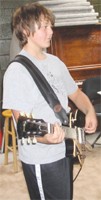
Axe Man: Jason Lawler learns the basics of dynamics.

By Karl Byrn

Jason Lawler was becoming quite a guitarist after four years of lessons, but he hadn’t yet played with other musicians, so he signed up for the Atlas Studios School of Rock in July. “Before that, I thought that in big recording studios there was only one mic hanging down, and they all just jammed,” the 13-year-old Rincon Valley Middle School student says with a grin. “I had no idea that it was all of this.”

“All of this” is a two-week long session of summer band camp, held at Atlas Studios, a modest downtown Santa Rosa recording facility located behind a video store. Owner Jesse Wickman, who also teaches drums at Stanroy Music Center, says his school “teaches kids how to be in a rock band,” with a focus not on music or the music business, but on rehearsal, recording and performance.

The group dynamic Lawler sought is also Wickman’s goal. In contrast to working with students one-on-one, he says, “the group is instantly rewarding. They come in the first day and choose songs. We rehearse until the songs are tightened up, we record and then they play a concert. How awesome is that?” 

The School of Rock graduation concert takes place this Saturday at the Santa Rosa Skate Park, as the graduates open for experienced local hardcore acts. It’s a perfect debut gig, as the show is one of a recent series of all-ages shows sponsored by Skate Works in Santa Rosa.

Wickman won’t be jumping across the stage like teacher Jack Black in the kids’ beloved School of Rock movie. “Jesse’s not the Jack Black of Santa Rosa”, says 17-year-old drummer Nick Lenchner. “I am!” But Wickman is still a kid himself. When he asked Lawler, “What was the one thing I said to you guys a million times?” the guitarist replied, “You mean besides ‘Sweet!’?”

The real answer is an admonition about getting in tune, which shows that the School of Rock is serious. Ed Lino, whose 13-year-old son Kyle attended both sessions after only six months of guitar lessons, knew this would be a terrific summer activity. “You always want your kids to fall in love with something,” he says. “We’ve tried different sports, which he can do well and sort of likes, but you had to ride him to practice.” With the School of Rock, Lino observes, “No one is saying ‘Kyle, you have to practice that guitar.'”

Kyle contributed an original song to the sessions and says all the kids were “nervous at first, until we heard each other’s skills.” Also attending the two sessions were 13-year-old guitarist Blake Deal, 17-year-old drummer Erica Duck and nine-year-old guitarist Thomas Silva, who learned bass during the recordings with tutelage from musician/actor Paul Hoffman.

“The kids are all really talented, really friendly and they worked hard,” says Ellen Lenchner, whose son Nick has studied drums with Wickman for two years. “It was amazing to watch them learn problem-solving skills and click as a group. Jesse kept them focused, and balanced it in a fun way.”

There’s still some post-graduate work to be done. The students’ disc, a collection of covers ranging from Led Zeppelin and Guns ‘N Roses to My Chemical Romance, is still being completed. Jason is working on a cover image of a sledgehammer smashing a disc in a vise, which Nick jokes should be entitled Demolition Demo. The finished tracks are largely instrumental, though Nick has recorded passionate vocals for the group’s most difficult song, System of a Down’s “Toxicity.”

The kids seem ready to make their band dreams real. Lenchner, who has had experience in local bands, says he’s ready to hire them all. With just the right amount of fatherly advice, Ed Lino tells the kids, “All you guys need is a van.”

School of Rock (the graduates’ chosen band name) open for Snag, Violation and S.K.U.M. on Saturday, Aug. 11, at the Santa Rosa Skate Park, on Piner Road north of Guerneville Road. 4pm to 6pm. Admission is free. Atlas Studios will host its next session in December. For details, contact Jesse Wickman at 707.486.9139.


FIND A MUSIC REVIEW

Change Artist

music & nightlife | One and Only: Friends think...

Letters to the Editor

August 15-21, 2007Entitlement spendingPeter Byrne provided a public service in noting the extent to which Congress and the Bush administration have increased the deficit and the debt (, "Fiscal Terrorism," June 26). He quotes the head of the Government Accountability Office on the size of the "structural deficit"--spending that exceeds revenues on a regular basis. The fact that we...

Bad War

August 15-21, 2007Maybe it's not fair, but I blame Steven Spielberg for all of this. His 1998 Saving Private Ryan turned WW II into a video game with corn syrup sweeter than any ever rationed to wartime audiences. From that movie on, you could feel the change in the air. When WW II was spoken of, it was no...

Stay Off the Grass

August 15-21, 2007 'Look!" my brother says. In his hand he proffers a small, brilliantly orange, cherry tomato. "I got this off of a volunteer tomato plant in your garden box." "Thanks," I say, taking the petite tomato. "Actually, that's not a volunteer. That's what a tomato plant looks like if you wait to plant your starts until they are...

First Bite

The Byrne Report

August 15-21, 2007In mid-July, I had the honor of attending a three-day conference in Oxford, England, about multiple universes. Called "Everett at Fifty," it was sponsored by the Foundational Questions Institute and hosted by the philosophy faculty of the University of Oxford. It was quite magical.The late Hugh Everett was a doctoral student in physics at Princeton when he...

Again and Again

August 8-14, 2007 Sure, we all know that it's good to recycle. Over the years, the act of recycling has been made so easy, has become so part of my normal routine, that when I'm faced with a situation where recycling is unavailable, it feels almost criminal. Just dropping a plastic water bottle into the trash gives me a twinge,...

Not a Prayer

August 8-14, 2007You'd think that somebody would have thought of this before. But no one from SNL has ever done it, and neither has anyone from MADtv, SCTV or The Kids in the Hall (although their 1996 feature Brain Candy came the closest). Finally, David Wain and Ken Marino--two of the main minds behind the early '90s MTV sketch...

Age Rage

August 8-14, 2007They are young, they are angry, they speak in iambic pentameter and they have just begun a revolution. Wielding metal pipes, baseball bats and knives, they hack and smack one another with the kind of intensity and enthusiasm that older people assume young folks only have for text-messaging. And they do it to really great music.They are...

Fast Times

music & nightlife | Photograph...
11,084FansLike
4,446FollowersFollow
6,928FollowersFollow