Mystery of Colgan Creek

02.06.08

Something’s fishy with Colgan Creek. Or rather, something’s not fishy, and that’s got city of Santa Rosa Public Works’ officials concerned. As part of their task to check the health of area waterways, Public Works staffers monitor the toxicity levels of the city’s creeks—each of which has some larger destination like the Russian River, the ocean or the Laguna de Santa Rosa—twice yearly. Generally, toxicity levels are acceptable at all the creeks except Colgan. And no one knows why.

“We generally test two storms a year. The ‘first flush’ from the season’s first big storm and then storm water runoff at another time,” says senior environmental specialist Sheri Emerson. “All the other creeks perform very well most of the time. It’s not in any particular pattern that we’ve been able to figure out.”

Testing is done by putting rainbow trout into the creeks, rainbows evidently being the canary of the ichthyological world. While steelhead trout are native to North Bay creeks, rainbows are “seen as an indicator,” Emerson says. And they consistently go belly-up in Colgan’s muddy waters.

Tracing an urban creek is perhaps different than the mapping that Lewis and Clark might have performed. Colgan Creek comes down to Santa Rosa’s southeast side from Taylor Mountain “behind the Costco,” Emerson says, goes under Highway 101 and resurfaces near Bellevue Avenue. “It’s a bit of a mystery,” she says. “We’ve done a more intensive study and haven’t been able to pinpoint a source. It would be great if the public would help out with the eyes and ears along the creek, because city staff can’t be there all the time. Is there some place where storm-water pollution is entering the creek or is paint getting in there or is the pollution possibly coming from industry? Something is adversely affecting the water quality.”

As for the other creeks, would Emerson be willing to dip a baby in their waters? “Dip a baby?” she asks, startled into laughter. “I don’t know about that. You should always wash your hands after you’ve been in the creeks. I wouldn’t swim in any of them—they’re not deep enough anyway.”

To deliver tips on the mystery of Colgan Creek, contact the city of Santa Rosa Public Works Department at 707.543.3800.


Aquarian Morning

02.06.08

F or a century, the United States has led the world in growth, industrialization, finance, development, tall cities and expansive suburbs. Now the world imitates us. For better or worse, China, India, Russia and others have adopted our free enterprise model. But along with prosperity, we have also created a hungry monster. Growth and debt are the cure for everything, but they cannot expand endlessly. We are reaching the limits now.

Here is where a new progressive movement could make a contribution to calm America down, help us go to the next level. We can lead again, but this time we need to spread the good life beyond the narrow confines of what mass culture deems “successful” and replace greed with generosity as the dominant value in order to go to the next level of democracy.

We can’t get there by violating people’s rights, so a revolution of values (a frequent refrain of Martin Luther King Jr.) is called for. Words without action are nearly useless, but an action that demonstrates all of the progressive values is found in the intentional communities movement.

The Aquarian Dawn of the 1960s introduced a pantheon of ideas, but the culture of overindulgence sidetracked its beginnings. This time around, let’s get it right by adding to the choices that the young imagine by creating viable, friendly, enterprising communities of a great variety, where millions of people can live and work and create without each becoming personally wealthy. Then we can reduce government bureaucracy. Then we can reduce the power of the health-insurance industry, which is wrecking our medical system. Then we can contemplate the end of ceaselessly expanding the cities. Then we can stop building more prisons. Then we can face the fact that there is not now, and won’t be later, a high-paying full-time job for every potential worker.

To have an influence on the culture takes a very dramatic effort. If the drama is nonviolent, then the people part of the equation has to be large and impressive. Small groups living together, sharing property and responsibilities, providing basics for many, makes a brilliant initial statement, accomplishing a reaffirmation of faith in the goodness of humanity, a reduction in the investment needed for further military preparation of every kind and finding more people living closer to the land rather than paving it over.

Anger won’t achieve it, blaming some group won’t bring it. Cooperation, dedication, vision, joy, investment in the group—this will do it. Who will do it? Most of us create personal little worlds that include only the immediate family. But some of us work for extended family values. Join the Federation of Intentional Communities; subscribe to Communities magazine. Find some friends and like-minded folk, and make a success of this movement.

Attend local community events like the Occidental Arts and Ecology Center, Ocean Song, Green Valley Village, the Harmony Festival. Create the most friendly, productive, inviting, shire-like, eco-village farm. Think grand, because the problems are immense.

Be the one to take on the most difficult human challenge of fostering cooperation, substitute consideration for people over ever greater profit, show the cynics that greed is not the end all of human evolution. Enhance love of the pristine natural world, and leave some resources for the future.

The organization Plenty, based at the fabled Farm in Tennessee, joined with some churches in New Orleans to bring aid. Even with such disparate backgrounds, they found common ground. All of us can do that if we remain positive about America’s role in the world, embrace free enterprise and believe in self-reliance. Here is a new movement that finds unity, preaches peaceful action and prepares for difficult times. This is the Aquarian Morning, or whatever you want to call it. It is not more of the same: get mine and get buried in debt. Here is romance, service, health, companionship and freedom. What will it take for this movement to grow, to balloon and become the exciting, the transformative force so lacking today?

Art Kopecky is the author of ‘New Buffalo: Journals from a Taos Commune’ and ‘Leaving New Buffalo,’ UNM Press. He lives in Sebastopol with his family and works as a contractor and finish carpenter.


Finding Focus

02.06.08

E ndorsed by the U.S. Senate and Congress, with over 1,500 participating universities, colleges, high schools and other academic groups across the country, Focus the Nation is an educational initiative organized around the belief that we must move beyond fatalism and toward determination in order to overcome the challenges presented by global warming. Started two years ago at Lewis & Clark University, the hard work that has gone into Focus the Nation culminated on a national level on Jan. 30 with educational symposia.

The four components of the symposia promoted by Focus the Nation were a national teach-in with speakers from colleges and the community; a “green democracy” event inviting senators and other representatives in person or via webcast to participate; a “choosing our future” gathering, where attendees voted on the top five solutions to global warming; and a viewing of The 2% Solution, a national interactive webcast featuring Stanford climate scientist Stephen H. Schneider, sustainability expert Hunter Lovins and green job pioneer Van Jones. (

The 2% Solution can also be viewed online at www.earthdaytv.net.) Group viewings by high school and middle school students are still encouraged, and curriculum material is available for downloading on the Focus the Nation website (www.focusthenation.org).

I spoke with Timothy Dondero, Green Campus president at Sonoma State University and Focus the Nation event coordinator, about the 2% Solution webcast as well as the campus’ teach-in slated for Feb. 7.

Dondero, who is working toward a degree in energy management, has apparently learned how to live with little sleep. He is working concurrently on the SSU Focus the Nation events, obtaining his degree, helping to build the Student Sustainability Coalition, promoting climate action on campus and mentoring students at Rancho Cotate High School who also participated in the Focus the Nation initiative.

Dondero believes that there are solutions to the current climate crisis and that people need to be educated and empowered to make change. The fatalistic attitude that many of us share regarding the future of the planet is not helping anything, as far as Dondero and those involved with Focus the Nation can see. The time has come to offer our young people, as well as our communities, meaningful forums for sharing information and creating change.

On Feb. 7, Sonoma State hosts an all-day teach-in, a free event organized by the student-led Focus the Nation planning committee. The event offers concurrent sessions of keynote speakers, seminars and panel discussions, replete with a sustainability fair featuring student clubs, local businesses, nonprofits and community organizations. The day culminates with a round-table discussion hosted by the SSU faculty senate engaging elected officials, community members, students, faculty and administration in a dialogue about climate change solutions.

Dondero stresses that this event is about finding solutions that we can directly apply in our lives. Our universities should be leading the way, he argues, and the teach-in, which is open to the public, is a way of getting the community onto the campus in order to share ideas and create positive action. In order to facilitate and encourage conversation between the campus and the community, Dondero and others have formed the Sonoma State Student Sustainability Coalition, a group of five student clubs that are sponsoring the Focus the Nation events. The coalition intends to build a fruitful, long-term relationship between inspired students and community members.

Dondero points out that with 6 billion potential activists in the world, the answers are out there. With enough focus and hard work, he hopes to see a network of climate-action clubs on every high school campus in Sonoma and Marin counties, and Dondero and his fellow coalition members are willing to mentor and provide the support necessary to make this vision a reality.

Dondero’s work is energized by the emerging sense that now that we are finally admitting on a global level that climate change is a real and pressing danger, we have a duty both to ourselves and younger generations to find and implement viable solutions for handling the problem. Groups such as Focus the Nation and the Sustainability Coalition understand the pressing nature of the issue, and they also understand that our only hope is through action, education and communication.

I am reminded of the Step It Up campaign, which also began on a college campus and spread from there into communities across the country and which seeks to push Congress into adopting stringent emission reduction plans. Not everyone, however, is fortunate enough to be able to attend college. With this disparity in mind, it is all the more vital that a push be made to bring programs such as Focus the Nation into middle school and high school arenas. In this way, the next generation of high school graduates will have a chance of entering the environmental movement ready, willing and prepared to meet the challenge.

SSU’s Sustainability Conference and Fair is slated for Thursday, Feb. 7, at the recreation center. Symposia run 9am to 4pm; the fair begins at noon in the Mt. Everest Gym. SSU, 1801 E. Cotati Ave., Rohnert Park. Free. For further details, go to www.ssufocusthenation.com. To contact Timothy Dondero regarding the upcoming SSU events or to request information for your school, call 209.712.1787 or e-mail fo************@***oo.com.


Rosé Rising

0

Does It Get More Prosaic Than This?: Whatever. (Dry is the new sweet.)

When millions of people esteem a wine as being little better than white Zinfandel, its career is over.

Or is it? Rosés are coming back, recovering from their plight of a long and lingering association with that candy-sweet Zin juice that has turned so many away from all things pink. The resurgence of rosé comes as a healthy symptom of America’s eagerness to drink new beverages and explore new flavors, especially drier ones. It also derives from an understanding among mature appreciators that it’s the wines you enjoy, not those that marketers tell you are good, that are worth drinking.

Still, many wine drinkers will not buy just any pink wine. Bill Arbios, owner and winemaker at Santa Rosa’s Arbios Cellars, notes that consumers are taking a fresh interest in dry—not sweet—rosés, which may serve as standalone table wines and can go well with many foods.

“Rather than the soda pop white Zinfandel style, people are looking for a wine with greater character, drier—a French-style rosé,” he explains. “The evolving palate is looking for something drier than the traditional rosé, and a lot of sweet table wines are suffering.”

Other winemakers agree: The trend toward dry rosé popularity follows the natural tendency in the evolution of the human palate to start with the simple and the sweet and advance from there as our intellects seek something greater.

“However,” notes Clos du Bois winemaker Erik Olsen, “the flip side is that as wine consumers mature, they become more comfortable with what they really like, and it’s OK to like sweeter wines like Rieslings. For newcomers to wine, a dry rosé may be difficult to appreciate.”

Georgetta Dane, winemaker at Big House Winery in Soledad, believes that white Zinfandel has gotten a bad rap. It’s white Zin, after all, that has been and still is a great boon to the wine industry.

“Many people begin with white Zinfandel, since it’s an entry-level wine,” Dane says. “Then, once the palate is established and has matured to where it prefers red wine, some people turn back and try rosés again, because they’re not all light and simplified. Our Big House Pink uses between 10 and 15 grape varietals, and it’s a very complex wine.”

White Zinfandel’s lasting popularity attests to its enduring importance as a gateway wine. Ironically, that same pink juice could be the greatest future adversary of dry rosés in America, says Olsen, who feels that dry rosés share a market encouraging enough to keep the pink wine coming yet slow enough that reds and whites may always dominate our tables.

“I think it will take a long time before dry rosé consumption in America matches that in Europe, simply because white Zinfandel has a stigma and is viewed as less sophisticated,” he says.

But the knowledgeable drinker does not consider all sweet wines to be inferior. Dessert wines like port styles and other after-dinner drinks have always held repute in the wine trade. While dessert winemaker Andrew Quady of Quady Winery in Madera has observed port-style wine sales trend downward over the years, he believes it’s only due to diners steering clear of strong after-dinner drinks before driving home. In other words, famously sweet wines like vintage ports, Madeiras and Australian “stickies” are delicacies, and for winemakers, they’re a serious art form. It’s the medium-sweet wines like the white Zins that lack character and depth, Quady says.

Marco Cappelli, a consulting winemaker based in the Sierra foothills who specializes in dessert wines, agrees; ice wines, port styles, muscats and the like fall into a category of sweetness all their own—no white Zinfandel allowed.

“The white Zin styles that were common in the ’80s and ’90s were like soda pop: fruity, low alcohol, slightly spritzy and sweet,” Cappelli recounts.” They introduced wine to many, many new drinkers. The problem is that they remained too sweet, and as palates continued to develop, [wine drinkers] moved on to drier styles.”

But, he adds, even sophisticated dry wines often contain a furtive addition of sugar. Cappelli says that many winemakers (it’s really no secret among those in the business) supplement their dry wines with unfermented grape juice as a subtle, virtually undetectable sweetener. Though the sugar addition in such wines does not add sweetness that is recognizable, it does bring out flavor and body much the same way that salt enhances a bowl of oatmeal.

“Often the sweetness is below the sensory threshold, in the 0.2 to 0.5 percent range, so the wines don’t actually taste sweet,” Cappelli says, “but the sugar makes them rounder and softer than they would have been if they were left dry, like adding a teaspoon of sugar to the spaghetti sauce. These wines fool even the best of palates.”

Cappelli adds that some wineries thrive by selling a perception of cleanliness, expert craftsmanship and purity. “If people were to find out that a high-end winery in Napa was adding sugar to their wine, it would lessen their image.”

In the realm of dry wines, sugar is bad and sweet is cheap, and particularly with rosés, an association with such elements can be fatal to the success of the label. Clos du Bois’ Olsen points out that supermarkets and wine shops often include a “dry” rosé section to accommodate blush wines far away from the white Zinfandel shelf. In fact, white Zin sales are on the decline for the first time, according to the annual wine market report from the Nielsen Company, while dry rosés are succeeding. Sales of the latter costing more than $6.50 increased by 23 percent from 2005 to 2006, and in the first half of 2007, rosé sales rocketed up 39 percent.

Still, reds and whites make up over 99 percent of the $28 billion American wine industry, and many winemakers are wary of the temptation to follow the current trend, slight as it actually is, toward rosé consumption. Rod Berglund, owner and winemaker at Forestville’s Joseph Swan Vineyards, for one, produces a pink wine by the name of Naked Lady. But 2007’s version, he says, is even better than he wanted it to be; the season’s fruit, he explains, was splendid, and there’s just no sense in dedicating excellent grapes to a pink wine.

“When grape prices are high, you really don’t want to make something that you could otherwise be selling for red-wine prices,” Berglund explains. After all, many drinkers are still reluctant to pay much more than 15 bucks for a rosé. Studies in recent years have demonstrated that, on average, experimental drinkers looking for a good rosé search in the $10 to $12 range, and anything too close to $20 is more than they’re willing to dish out on a wine that bears such a visual resemblance to a Sex on the Beach cocktail—even on Valentine’s Day

(On a personal note, I can imagine almost nothing more fearsome than a tsunami of pink wine barreling down my street, but in a figurative sense, that’s just what’s happening in the American market as winemakers step up production to meet the demand.)

For years, Joseph Swan produced a rosé from, well, Zinfandel, and then turned off production for 10 years before Berglund and his wife, Lynn, introduced the Syrah-based Naked Lady in 2006. Numerous other wineries have recently welcomed rosés to their repertoires as well. After a production lapse of several years, Arbios has released a crisp dry rosé under the name Praxis, due on shelves in about a month.

Sonoma’s Clos du Bois Winery has also begun production of rosé in answer to the consumer demand. The wine, first made in 2006, is bright, fresh, dry and fruity—what winemaker Erik Olsen considers to be distinctly French in style. Pietra Santa’s 2006 Rosato, from the Cienega Valley, is an Italian rosé of 100 percent Sangiovese. First made in 2003, the Rosato is a far and echoing cry from your classic white Zin. It features light fruit flavors and a delicious crispy limestone character that winemaker Alessio Carli attributes to unique mineral deposits underfoot at the estate.

It’s very good. I tried it. It’s better than any white Zin, though I’m still not sure that it beats sex on a beach.


SEARCH AVAILABLE RESERVATIONS & BOOK A TABLE

View All


Quick dining snapshots by Bohemian staffers.


Winery news and reviews.


Food-related comings and goings, openings and closings, and other essays for those who love the kitchen and what it produces.


Recipes for food that you can actually make.

Conquers All

0

02.06.08

S o, how old is she?” was the first or second question many of my friends asked when I began dating last summer after an amicable divorce.

The question surprised me—it was usually asked before “What interests do you share?” or even “What does she do?” which of course means, “What does she do to earn a living?”

And it was asked before the one question I consider to be essential: Does she have a sense of humor? (Of course, when a guy tells you his wife or girlfriend has a great sense of humor, he really means, “She laughs at my jokes.”) I wondered: As a man in my mid-40s going through the process of divorce, did people expect me to troll for much younger women? Age hadn’t really occurred to me— I wasn’t even looking for a new relationship when I met a woman six years younger than I at a writing seminar last August.

I had no answers, so I contacted Dr. Michelle Gannon, a Bay Area couples therapist who co-leads workshops called Marriage Prep 101.

“In my personal and professional experience, age is really not all that important for relationship success. There is such a wide range of maturation and life experiences with each individual. I think what does matter is how the age difference affects compatibility,” Gannon says. “For example, do individuals of different ages still share enough compatibility in terms of interests, lifestyle choices, values and energy level to ensure a successful relationship?”

Though a large age disparity can cause a gap when it comes to cultural references, Gannon believes an age difference can be an advantage if the man is substantially older.

“Often, older men have proven themselves professionally and are more ready to focus on relationships and family. This capacity can dovetail nicely with the younger woman’s readiness to be in a serious relationship and start a family,” she says. “I know many, many successful couples with the woman being more than 15 years younger than her husband.”

When people see an older man with a younger woman, they often don’t see the real reasons they’re together, Gannon says. “I think the mistake is the assumption that the older man is with the younger woman for her looks, and that the younger woman is with the older man for security and money. Perhaps they have a great friendship, love, romance and shared values and interests, and because he is older and more mature, he’s more ready for the relationship and willing to work on it.”

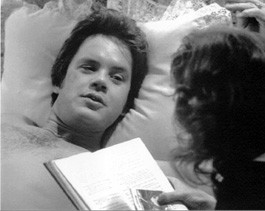
Of course, not all relationships with age disparity involve older men. Perhaps the most famous couple where the woman is significantly older is Susan Sarandon, who’s 61, and Tim Robbins, still a bit of a pup at age 49. They met on the set of Bull Durham (1988) and have two sons. They’ve shared 20 years together, an eternity among Hollywood A-listers.

“I am not all that surprised when I see an older woman and younger man,” Gannon says. “I’m impressed if they just do not care what others think. One advantage of this dynamic could be the woman is more accepting of her sexuality.”

Is age disparity no big deal, or are there issues couples should watch out for? One of the biggest is children, Gannon says. Does one partner want kids but the other doesn’t? This can be a major stumbling block, because there’s no middle ground. Are there kids from a previous marriage, and what’s the relationship to them? If there are, Gannon says, the partner who is not the parent should consider whether he or she is willing to take on the role of step-parent.

And then there’s the issue that’s prevalent in every relationship, regardless of age: money. Is one partner much more financially secure than the other? If so, how does this affect the balance of power in the relationship? Gannon advises couples to discuss the sharing of finances early and often, so no issues are left unclear when a couple is ready to commit.

Other concerns: Will family and friends of each spouse accept a partner from a “different generation”? Gannon asks. And can the older partner match the younger one’s energy? Finally, there are the cultural issues, as partners will probably prefer different bands and movies (Talking Heads vs. Nirvana; Shaft vs. Pulp Fiction) .

“But really,” Gannon asks, “How important are those differences in the scheme of things?”

To learn more about Dr. Michelle Gannon’s common-sensical approach to preparing for matrimony, go to www.marriageprep101.com.


YES WE CAN!

0

HASH(0x1c4c8a8)

Vampire Weekend Live at Amoeba

1

I walked into Amoeba a full hour before Vampire Weekend’s scheduled set on Friday night, only to see the first two aisles in front of the stage already filled with diehards waiting for their chance to watch, up close and personal, one of the suavest new bands of 2008.
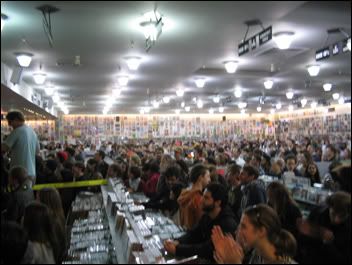
The indie rock cognoscenti have been burbling about Vampire Weekend for months now, with descriptors like “Ivy-League Death Pop Woven With African Filament”—I mean, how can you resist?—and yet for Friday night’s hugely high-school-aged audience (ponytails, braces, and zits in abundance), it was all about the here and now. The band’s debut album, Vampire Weekend, just released, the 18+ show the night before at Popscene an unattainable dream, and twittering throng waiting anxiously between Amoeba’s Gospel and Rockabilly sections.
The rest of the store filled fast, with unknowing customers humorously caught off-guard by the commotion, and then, the big moment: in casual Harvard fashion, the band ambled out onto the stage and started their set with the first song from their album, a catchy two-minute blast called “Mansard Roof,” nailing all the high vocals, syncopated rhythms, and jaunty melodies.
After the second song, “Campus,” singer / guitarist Ezra Koenig acknowledged San Francisco—“It’s one of our very favorite cities, and we don’t just say that everywhere,” he commented, adding wryly, “Sometimes it’s very obvious that it’s not our favorite city.”

Vampire Weekend’s songs are what people call deceptively simple—both “Mansard Roof” and “Campus,” for example, rely on just a basic major scale for a riff—but the band kneads enough bizarre influences into the dough that listening to them is like deciphering a Rosetta Stone of music, from Sting to Sister Carol to Schubert to a healthy dose of Paul Simon’s Graceland. Live, the band rocks harder sans the string quartet on record, and, dispensing with collegiate reticence, Koenig passionately emphasized lines like “do you want to fuck?” from the South African-flavored “Cape Cod Kwassa Kwassa.” In the aisles, the kids ate it up.
After “I Stand Corrected,” “A-Punk,” and “Oxford Comma,” it was all over, truncating their already-short album (it’s a refreshing 34 minutes long) into just a six-song set. For a tiny short while, the innocence of pop music and the excitement of a great new band with oodles of potential lay bare in front of a crowd of fervent admirers, and on a cold, drizzling night in San Francisco, well, it’s hard to ask for more.

The January Awards

0

Best Lyrics: Magnetic Fields – Distortion

The album title, Distortion, refers to the Psychocandy-esque fuzz that permeates every song on this album—making it sound drearier and more hungover than anything you’d expect from Magnetic Fields. But holy bejeezus, the lyrics are a goddamn hoot. Some reviews of the album have actually complained about the lyrics in particular, citing Stephen Merritt’s ongoing “downtrodden, sad-sack schtick,” causing me to wonder if Noel Coward could very well be out of work if he was born in the 21st Century. Making mirth out of the morose is a tight market these days, apparently.
From “The Nun’s Litany”:
I want to be a topless waitress
I want my mother to shed one tear
I’d throw away this old, sedate dress
Slip into something a tad more sheer

I want to be an artist’s model
An odalisque au naturel
I should be good at spin the bottle
While I’ve still got something left to sell

From “Too Drunk To Dream”:
Sober, life is a prison
Shitfaced, it is a blessing
Sober, nobody wants you
Shitfaced, they’re all undressing

No one should listen to any Magnetic Fields album before they listen to 69 Love Songs, but for the already initiated, the sharply pained ribaldry of Distortion’s lyrics will remind you of at least one of a hundred reasons why you fell in love with the band in the first place. They’re playing two nights at the Herbst Theater in San Francisco on Feb. 28-29, and man, is it ever sold out.
Best Sonic Quality: Black Mountain – In The Future

I saw Black Mountain late last December and it was undoubtedly one of the year’s highlights. I drove down to the show in San Francisco on a complete whim and had no idea what to expect, brandishing only an ardent fascination with their self-titled debut, released three years ago.
The lights went down. The guitar amplifier billowed smoke. The drums illumined with each bass kick. The voices of Amber Webber and Stephen McBean cavorted together, intertwined, above a thundering morass. I was stupefied.
In The Future doesn’t quite capture all of Black Mountain’s hazy bombast, and its songs aren’t as classic as those on the band’s first record, but it’s a mind-transporting headphone album nonetheless that just sounds great. They’re playing at the Independent in San Francisco on Monday, Feb. 4.
Strange New Band: MGMT – Oracular Spectacular

They’re too hippie-sounding for the fixed gear crowd but they’re, like, too concerned with their own image for the stoner crowd. I still can’t figure out if I like ‘em or not. Their video, though, is an absolute work of art. So, yeah: strange new band.

Anywhere She Lays Her Head

1

Between possibly getting engaged, starring in movies that aren’t as good as Ghost World, getting hot and steamy with Justin Timberlake, and acting as a modern-day Betty Grable visiting the troops in Kuwait, it’d seem that Scarlett Johansson’s dance card is totally full.
But in news that pretty much has the entire world’s panties in a bunch, Johansson’s been busy putting the finishing touches on a solo album. No big deal, you say? Then smoke on your pipe and put this in: it’s a solo album of ALL TOM WAITS SONGS.
To the casual observer, this in itself is pretty nuts. But to longtime Tom Waits fans, it’s even more insane, like Jesus coming back and ordaining Waits as the official MC for the resurrection. To further spark those indie-nerd juices, Johansson hit the Louisiana studio with the Yeah Yeah Yeah’s Nick Zinner on guitar and TV On The Radio’s Dave Sitek on production.
The track listing’s not been made available yet, but speculating about the hundreds of song choices available is half the fun (“Pasties and a G-String”? “Christmas Card From A Hooker in Minneapolis”? “Better Off Without A Wife”?).
Mark your calendars: the album, called Anywhere I Lay My Head, is due out on May 20 via Atco Records.

The Procedure

01.30.08

M ost Americans would think of Romania as a strange country, which is why the wave of first-rate films coming out of there has an added shock of recognition. Cristian Mungiu’s 4 Months 3 Weeks and 2 Days, the best film we’ve gotten from that corner of the world, is also a tremendously accessible film. It’s set in Romania in 1987, in the “Golden Age,” as Mungiu sarcastically calls it. The Ceausescus, megalomaniac husband-and-wife dictators, are just about to be toppled and executed.

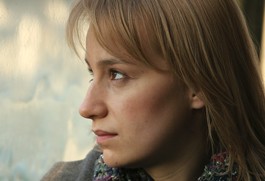
Otilia (Anamaria Marinca) and Gabita (Laura Vasiliu) are students sharing a tiny college dorm room in a part of Romania that’s neither the capital nor the bereft, starved-out countryside. Otilia is the stronger of the two, a college student on the way up, with a boyfriend from a family of doctors. She’s very pretty, with that Champagne-colored hair that’s neither quite blonde nor quite brown. She has drive. Her roommate defers to her. Gabita seems younger, smaller, sadder. The two are about to leave on a mysterious overnight trip.

Otilia is efficient at gaming the system and knows the black market, bargaining for the cigarettes she needs as petty bribes to take care of things. And it’s Otilia who arranges the meeting with her friend’s illegal abortionist.

He (Vlad Ivanov) is a balding, furtive man in his late 30s; he calls himself Mr. Bebe. “Trust is vital,” Mr. Bebe insists, but the demands he makes aren’t met. It’s the wrong hotel so Mr. Bebe has to leave his ID card at the front desk. Gabita doesn’t make the connection in person like she was supposed to. Worst of all, Gabita has fudged the dates on her pregnancy. She’s actually four months gone. This takes what was already an illegal activity and puts it into a new category of offense, a murder with a five- to 10-year penalty.

Sitting at its customary middle distance, the wide camera takes in the three participants in their final stage of negotiation. Having his routine disturbed has inconvenienced Mr. Bebe, so he decides to add a special surcharge to his end of the deal. Both ladies will be required to pay in advance.

This film makes the worst of the Iron Curtain tangible in a way it probably never could have been back when the commissars ruled. It’s a dictatorship that only seems a few degrees different than our world; it’s like a mirror held at a narrow angle that reflects everything around us, only slightly skewed and with blurred margins we never noticed.

The greatness of 4 Months is in the natural, melodrama-free acting. We know that Otilia’s old life is over when we see her sitting in the white stillness of an empty tram car, on her way to a party she can’t stand to be at. At the party, she’s praised and teased by the boyfriend’s relatives, who are raucous and jolly and heavy-handed about the girl’s piss-poor rural background. The boyfriend would like some attention too, of course, being a young man in love.

Meanwhile, Gabita is in who knows what kind of state, bleeding, perhaps feverish, alone in a second-class hotel. And Otilia’s odyssey is not over yet, since it includes a nighttime trip to a dark high-rise that’s rather worse than any image in an Eli Roth film.

The film’s notes describe how abortion became illegal in Romania in 1966. It’s estimated that half a million women died from botched abortions during the Communists’ reign. Some 1 million abortions were performed the first year after the procedure became legal in 1980, “a number far greater than any country in Europe.”

One would surmise that poor women in a poor country short of contraceptives often find themselves faced by drastic measures. This isn’t the place to mark the 35th anniversary of Roe v. Wade or to note again that people who take their rights for granted soon lose them. For this reason, Juno’s portrayal of an abortion clinic as a last resort for skeevy, itchy people, or Knocked Up’s shying away from any mention of the word itself, seemed rather less than a joke to me.

An even worse joke is played by moralists who believe people can be forced into good behavior by the law. If there’s a practical, rational ground for people of either side of the abortion debate, this movie shows the way to it.

‘4 Months 3 Weeks and 2 Days’ opens Friday, Feb. 1, at the Smith Rafael Film Center (1118 Fourth St., San Rafael; 415.454.1222) and the Rialto Cinemas Lakeside (551 Summerfield Road, Santa Rosa; 707.525.4840).


New and upcoming film releases.

Browse all movie reviews.

Mystery of Colgan Creek

02.06.08Something's fishy with Colgan Creek. Or rather, something's not fishy, and that's got city of Santa Rosa Public Works' officials concerned. As part of their task to check the health of area waterways, Public Works staffers monitor the toxicity levels of the city's creeks—each of which has some larger destination like the Russian River, the ocean or the Laguna...

Aquarian Morning

02.06.08F or a century, the United States has led the world in growth, industrialization, finance, development, tall cities and expansive suburbs. Now the world imitates us. For better or worse, China, India, Russia and others have adopted our free enterprise model. But along with prosperity, we have also created a hungry monster. Growth and debt are the cure for...

Finding Focus

02.06.08 E ndorsed by the U.S. Senate and Congress, with over 1,500 participating universities, colleges, high schools and other academic groups across the country, Focus the Nation is an educational initiative organized around the belief that we must move beyond fatalism and toward determination in order to overcome the challenges presented by global warming. Started two years ago at Lewis...

Rosé Rising

Does It Get More Prosaic Than This?: Whatever. (Dry is the new sweet.) ...

Conquers All

02.06.08S o, how old is she?" was the first or second question many of my friends asked when I began dating last summer after an amicable divorce.The question surprised me—it was usually asked before "What interests do you share?" or even "What does she do?" which of course means, "What does she do to earn a living?" And it...

YES WE CAN!

HASH(0x1c4c8a8)

Vampire Weekend Live at Amoeba

I walked into Amoeba a full hour before Vampire Weekend’s scheduled set on Friday night, only to see the first two aisles in front of the stage already filled with diehards waiting for their chance to watch, up close and personal, one of the suavest new bands of 2008. The indie rock cognoscenti have been burbling about Vampire Weekend for...

The January Awards

Best Lyrics: Magnetic Fields - Distortion The album title, Distortion, refers to the Psychocandy-esque fuzz that permeates every song on this album—making it sound drearier and more hungover than anything you’d expect from Magnetic Fields. But holy bejeezus, the lyrics are a goddamn hoot. Some reviews of the album have actually complained about the lyrics in particular, citing Stephen...

Anywhere She Lays Her Head

Between possibly getting engaged, starring in movies that aren't as good as Ghost World, getting hot and steamy with Justin Timberlake, and acting as a modern-day Betty Grable visiting the troops in Kuwait, it'd seem that Scarlett Johansson's dance card is totally full. But in news that pretty much has the entire world's panties in a bunch, Johansson's been busy...

The Procedure

01.30.08M ost Americans would think of Romania as a strange country, which is why the wave of first-rate films coming out of there has an added shock of recognition. Cristian Mungiu's 4 Months 3 Weeks and 2 Days, the best film we've gotten from that corner of the world, is also a tremendously accessible film. It's set in Romania...
11,084FansLike
4,446FollowersFollow
6,928FollowersFollow