Interview: Greg Saunier of Deerhoof

More than any other band right now, Deerhoof represents the refined embodiment of music’s endless possibilities. They’re playing at the Phoenix Theater in Petaluma this Saturday, and I swear you won’t ever see another band like them. At all.
For my Bohemian article, I spoke with Deerhoof drummer Greg Saunier about John Cage, the creative process, Harry Smith, childrens’ music, touring with Radiohead, and shutting down haters. There was no way to fit it all into just 700 words—he’s not one to speak in prefabricated soundbites, that’s for sure. City Sound Inertia to the rescue: read the extended 3,000-word interview here, and don’t say I didn’t warn you. Our conversation starts after the jump.

Happy Tour of California Day

0

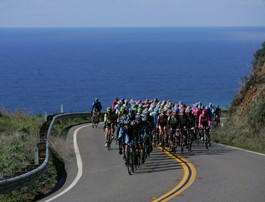
I suppose today is actually some sort of real holiday or something, but for the past three years it’s meant one thing in Santa Rosa: The Tour of California!

The race hits downtown Santa Rosa between “2:23pm-2:58pm,” according to estimates. I’d get there at 2:00. Really, go. It’s the most thrilling thing to happen to downtown since the Fixx played there in 1998. (Okay, I jest. But the Fixx really did play there in 1998.)

Last year’s finish is going to be hard to top: dozens of cyclists going down in a huge pile-up, Levi Leipheimer’s buttcheeks hanging out of his ripped-up Spandex, and the controversial decision by race commissaries to award him retention of the yellow jersey made for mind-blowing, in-person drama.

Also, as pointed out in my Bohemian article this week, it’s unlikely that the Tour of California will make a return to Santa Rosa next year, due to a combination of race organizers’ demands and Santa Rosa’s budget woes.

So get on down, be part of the exciting crowd, buy a hot dog from Ralph’s, and watch the action. Plus, if you’re on your bike, you can’t beat the royal feeling of riding around town afterwards: it’s the one day out of the year when every car in the city seems to be aware of your presence. ¡Vive la Peloton!

Xbxrx at the Boogie Room

I intentionally parked about a half-mile away from the Boogie Room last night so I could walk the long narrow road in rural Santa Rosa under the moonlight, surrounded by farmland, alone. It’s something I used to do plenty often, before I had a driver’s license—and before most of Santa Rosa’s empty fields were turned into tract homes. It was serene, and I think, since the Boogie Room is located pretty much in the blissful middle of nowhere, that I’ll make a tradition of it.
I don’t want to say too much about the Boogie Room, because in the guerilla tradition of the last couple years, it’s an under-the-radar venue and probably prefers to stay that way. Think of it as a Studio E for the younger set; a homey place to see friends, play fetch with the house dog, sit by the campfire, and watch terrific bands in a cozy barn in the middle of a field. House concerts, as it were, with an edge.
I was given a tour of the sprawling grounds by Bryce, who’s something of a navigator for this amazing, multi-tiered ship. He enthusiastically showed me around the large greenhouse and huge garden; the collection of barns full of old cars and owls; and the many, many improvements that he and other residents have made since they moved in about a year ago. Sliding open the door to one leaning barn, he blankly explained that it was where the previous tenant, who had been running a chop-shop for stolen cars and a methamphetamine lab, had hung himself.
In the music room, the junkyard classicism of the Highlands—a cellist, a violinist, a possessed guitarist and two drummers—was filling the place up. After a truncated set by Battlehooch, who manhandled a Theremin, a Sony Watchman and multiple vocal effects before submitting to technical difficulties, it was time for the Iditarod, who were as epic and majestic as their name implies. Medieval synthesizer solos, heralding trumpets, three-part-harmony battle cries, absolutely strange guitar playing and hyperactive drum beats. Shit, as they say, was goin’ off.
I’d never seen Xbxrx before, but I could tell that the guys standing by the side of the stage had to be the band members. They looked bored and annoyed, like they couldn’t wait to play and get the whole thing over with, and sure enough, as soon as the Iditarod were finished, it took exactly 40 seconds for them to start hurriedly setting up their equipment on the stage. So I wasn’t expecting much; after all, they’ve been a band for ten years, they’ve toured with Sonic Youth and Deerhoof, their last few shows were in Berlin, London, and Amsterdam—why would they possibly care about Santa Rosa?
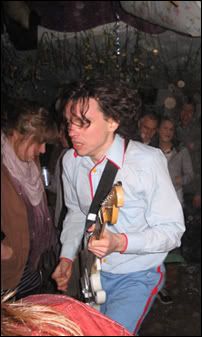
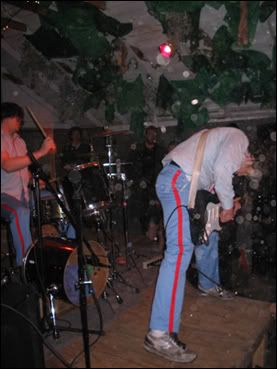
But a total transformation occurred when they plugged in and started playing; it was like they’d become lightning rods for all the Earth’s energy for miles around. They leapt, flailed, ran, fell down, writhed, spun, and shook wildly. . . and that’s just in the first two minutes. I’ve seen a lot of goddamn hardcore mayhem, but this was up there. Way up there.
In matching baby-blue outfits, the guys in Xbxrx didn’t perform so much as they blurred their way around the entire barn, as far as their guitar cables would allow, unpredictably crashing around while playing blast after blast of insane noise. They climbed the walls, they banged their heads on the ground, they shoved their bodies behind the couch and they did haphazard flips into the crowd. Antagonizing, sure, but even though I stood just a couple feet from the guitarist’s amplifier and mic stand the whole time, I amazingly never once got hit.
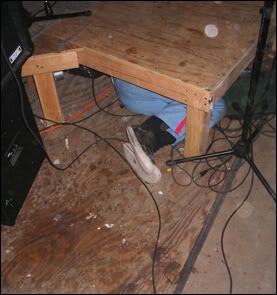
At the end of the set, one of the guitarists crawled underneath the stage with his guitar and just laid there in a fetal position. He didn’t move. It made sense, in a way. So I left before Batman vs. Predator with my ears ringing, and walked the half-mile back to my car in the quiet foggy midnight air.

Hip Hop… an’ Ya Don’t Stop

3

No one who lives locally and goes to hip hop shows—that is to say, thousands of people in Sonoma County—could have escaped the shocking headline in last week’s local newspaper. “Phoenix Theater Bans Rap Concerts,” it declared, in a mystifying statement that was as bold as it was hard to believe.
That’s because it wasn’t true. The Phoenix Theater has not banned rap concerts.
Here’s what happened: in a letter sent out early last week, the Phoenix Board addressed the lingering issue of a 17 year-old from Concord who was found during a police dispatch after a Super Hyphy show starring Keak da Sneak and Mistah F.A.B.; while the kid was being tackled by police across the street, he allegedly tossed a loaded 9mm pistol through the doors of Pazzo, a nearby nightclub. In the letter, the Phoenix stressed that it would continue to do everything in its power to ensure the safety of its patrons, and noted that it had postponed three upcoming hip hop shows while its security measures were reviewed.
Nowhere in the letter did the word “ban” appear. If anything, the Phoenix’s dedication to future safety and promise of heightened security pointed directly to a continuation of, and a commitment to, presenting live hip hop.
When I first saw the headline I was mortified. Then, as I read the article, I realized that the people at the Phoenix probably just felt like they needed to address the complicated workload of the Petaluma Police Department, the concerns of parents, and the irate comments posted online by blatant racists. So they said they’d lay low for a while, reassess a few things, and wait until the whole thing cooled off.
I talked with a member of the Phoenix board that night, and a letter to the editor showed up two days later from the Board president clarifying things; it turned out that my hunch was more or less right, and the Phoenix already has some hip hop shows booked again. But why, then, the completely incorrect headline?
As a writer, I should understand how media works. I don’t, exactly, but I do know of the propensity for criticizing what you don’t understand and wanting it to go away. Wanting so much for it to go away, in fact, that you might tell everyone that it actually had gone away in the hopes that it will follow suit and leave you alone.
Naturally, accusations of racism have been raised about the general attitude towards hip hop in Sonoma County, and while there’s no doubt that that’s an active element, I don’t think it’s entirely accurate per se, or, at least, that simple. What I think is at the core of racism, however, is the same thing that’s at the core of most denunciation of hip hop: making an uninformed choice to hate something based purely on surface elements.
You can say, and you’d be right, that a lot of balled-out, gun-toting, hoe-slapping rap stars bring condemnation upon themselves (you could also make a case for the obviously over-the-top, unserious extravagance of such poses, but that’s a different story). But to be honest, I believe that most hostility towards hip hop comes from recoiling in disgust at the actual sound of the music itself. 30 years after its inception, an opinion still prevails among older people—and especially the large population of older, rich, white people in Sonoma County—that hip hop isn’t “real music.” It instantly annoys.
And what’s so funny to me about the Rap Is Crap brigade is the same thing that’s so funny about the Kill Your Television crew—e.g., they never actually listen to the stuff.
If they did give rap music a try, they might discover some that they actually liked. Like evaluating a bottle of wine, subtle nuances either make or break a rap song, and finding the good artists only means ascertaining these idiosyncrasies. To your grandma, say, Talib Kweli sounds just like 50 Cent, but if she actually trained her palate and listened—listened!—she might say, “know what, mu’fucka, this Kweli cat is on some other shit!” (Or, you know, the grandmotherly equivalent thereof.) But is she ever going to do that? Hell no, because people get old and closed-minded and see numbskulls like Kanye West blathering away on television and make up their minds that rap music is a scourge on humanity and that’s that.
Growing up in the 1980s, listening to rap music for me was revelatory. Albums like Raising Hell, Paid in Full and Paul’s Boutique made me feel, at 12 years old, like everything in the world was within my grasp. I assume that kids these days feel the same way too.
In fact, I know for a fact that they feel the same way. I’ve gone to lots of hip hop shows at the Phoenix. And I haven’t seen as much empowerment, positivity and unity in one room in the last five years as I have at some of those Super Hyphy shows, crazy to say. Whatever your take on the style performed, there’s no denying that those shows provide a face-to-face opportunity for teenagers to relate to each other in a positive way with music that is distinctly theirs. If you strip kids of that opportunity, you’re not only erasing from their lives some of the most important memories they’ll have of coming of age, but also saying that you don’t trust them to feel like individuals or to form their own opinions. What kinda shit is that?
Ultimately, anyone trying to ban or acquiescing to media pressure to ban hip hop—clubs that change their DJs, radio stations that change their format—they’re all just gonna look like total fools in the end. Hip hop is the most alive and popular form of music in the world. It has been for years and years. You could say, harking back to the same damn thing that happened 50 years ago, that it’s here to stay.
—————————————-
A few final things: I actually feel for the writer of the newspaper article; not a lot of people are aware that staff writers don’t come up with the headlines for their own articles. Blame the editor. And also, the first show that the Phoenix postponed was an Andre Nickatina appearance scheduled for the incredibly inconvenient hour of 3:00 in the afternoon, put on by Nickatina himself, which for some stupid reason cost an astronomical $35. No big loss.

A Very Tiny Protest

0

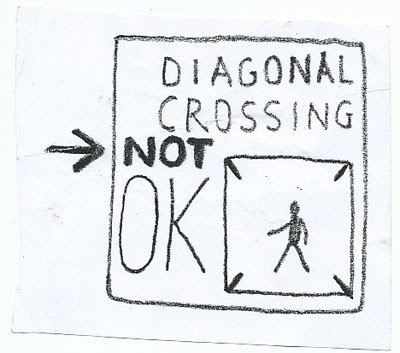
Found on the phone booth at Fourth and D in Santa Rosa:

Wackadoos, Unite!

0

Word on the street is that 212 Memorial Hospital workers will be pimped out snaking through traffic as buck-a-shot jiffy windshield cleaners amidst that parking lot we call Hwy. 101 in downtown Santa Rosa.

These hospital workers are already fully immersed in career transition classes. They’ll be taught to act like non-English speaking campesinos newly squeezed Norte as a billion tons of subsidized Iowa corn bankrupt their farms in Mexico. But never mind, as we settle into the stability oligarchy affords, we no longer need compare skilled to unskilled, blue to white collar, or service sector to financial industry grunts. We’re all underpaid debtors, high on Soma and flatulent national platitudes.

In fact, contrary to accepted wish-dom, many of our oligarchs turn out to be foreign nationals. Meanwhile, look for those randy Blue Dogs & DLC types to be licking Repugnican business butts all the way to Dubai and Abu Dhabbi. They’ve made theirs. Time to move to somewhere with decent medical care and year-round indoor snow skiing—some heavenly place where panhandlers get their limbs removed and holy gospels are printed in dollars and cents. Or Euros and Yen.

I’ve had the opportunity to peruse the Memorial Hospital retraining syllabus. It’s a good one. A consortium of health insurers and drug firms have joined together in providing one spiffy, all-gloss manual to help these 212 schlubs through their anxieties and anguish. After all, that’s what health care deniers (oops—I mean providers!) and drug firms do. Help others.P. Joseph Potocki

Rehab Resort

0

02.13.08

R aymond Blatt says that converting Sausalito’s Alta Mira hotel property and five adjacent houses into residential rehab facilities is the most rewarding thing he’s ever done. If Blatt’s Alta Mira Treatment Program had existed 18 months ago, when he helped a loved one go through substance-abuse treatment in Arizona, he says that he wouldn’t have had to look for help outside the North Bay.

“That’s what’s driving this—the sense that I can help somebody else who needs help,” Blatt, who co-owns the facility with his father, Michael Blatt, explains. “I want to have the best place to recover anywhere, so the people who need help get help.”

Not everyone sees it that way.

A 30-day stay in the Alta Mira Treatment Program costs between $42,000 and $48,000 (the Betty Ford Clinic is around $23,000), and in addition to helping clients dry out and detox, includes such services as yoga, massage, acupuncture and Toltec wisdom circles.

Nowadays, most health insurance only covers inpatient substance-abuse treatment for the few days of detox and nothing more, making this type of facility available only to those who can pay for it privately.

And as previously reported in these pages (“Detox Deluxe,” Dec. 5, 2007), the city of Sausalito is suing, claiming that last fall’s conversion of the Alta Mira Hotel into a multispace 48-bed rehab center took advantage of a loophole in state law which lets facilities with six beds or fewer get a state license without going through any sort of local review or approval. It’s a practice that’s been used elsewhere, mostly notably in such Southern California jewels as Malibu and Newport Beach.

Blatt says officials at the California Department of Alcohol and Drug Programs advised him to file his license applications that way; each building is a separate treatment center, with counseling done on the premises, although meals and group meetings are all held in the hotel building.

Sausalito mayor Amy Belser charges that Blatt is taking advantage of the six-bed loophole to “cluster” his rehab facilities. “All we’re asking is that this, like all the other buildings in town, go through our local ordinances. It’s not singled out; it’s simply the process,” Belser says of the Alta Mira’s conversion.

All of which beg the questions: What should be included in a residential drug treatment program, how much should it cost and who should decide where it goes? And furthermore, is a stay in a comprehensive residential rehab becoming available only to those with the money to afford it?

Candace Bruce, the Alta Mira Treatment Program’s executive director, says that when she started working in the substance-abuse treatment industry 18 years ago, most insurance covered inpatient services for as long as 90 days at about the same rate that the Alta Mira is charging today.

“It’s a little bit more for inflation and everything, but it’s pretty close to the rate that insurance used to cover,” Bruce asserts. She adds, “The change in healthcare has whittled down the level of care we’re able to offer a good number of people. It’s forced our industry to go to a cash-pay basis.”

And while the Alta Mira offers a B&B-like atmosphere with stupendous views of San Francisco Bay, it also provides a comprehensive rehab program, with lots of one-on-one therapy. Extra services like massage or yoga classes help release stress and tension, and ease the difficult transition into recovery, Bruce says. The Alta Mira Treatment Program is not a spa with rehab added; it’s the way treatment should be done, Bruce says, with plenty of options to help people embrace healthier lifestyles.

“The therapy we do here is intense, it’s meaningful, it’s deep,” Bruce says. “Our therapists are licensed clinicians and they’re serious about healing people.”

Research shows that the longer people are in a treatment program, the better their chances of staying in recovery. So if massage, yoga or other options help folks stay in rehab longer, that’s all to the good, says Deni Carise, professor of psychiatry at University of Pennsylvania School of Medicine and director of treatment systems research at the nonprofit Treatment Research Institute.

“Twenty years ago, people could get a 21-, 28- or 30-day stay covered [by insurance] in a residential treatment facility,” Carise explains. “Today, 90 percent of all treatment is outpatient, and what is being done inpatient is detox only and usually for a stay of three to five days.”

The change has been driven by companies’ need to cut costs rather than what’s best for patients struggling with substance-abuse issues, Carise says.

“They’ve really misquoted the research that has been done on the two [inpatient and outpatient] being equally effective. Studies that show outpatient being as good as inpatient started with people who could be treated in an outpatient setting.”

Even outpatient funding has been trimmed way down, so that most counseling work is done in a group format instead of one-on-one.

“That’s why you’ve ended up with a lot of these high-end programs that are all self-pay,” Carise says. “It’s the only way they can stay in business.”

It’s likely, she adds, that 20 years ago the costs of going through the Alta Mira’s rehab program would have been covered by most health-insurance policies.

State Assemblyman Jared Huffman disagrees.

“This is a resort experience that they’re promoting,” Huffman charges. “The notion that insurance used to cover that is specious.”

He adds, “If we were talking about a legitimate six-person facility that was blending into the neighborhood as the law intended, I might agree. But that’s not what we’re talking about with the Alta Mira or with Bayside Marin [in San Rafael] or with any other rehab resorts. You get the sense that treatment is almost a sideline to what folks are paying.”

Huffman plans to introduce legislation that would prohibit using the six-bed-or-less rule to “cluster” rehabs in residential areas.

“Nobody is saying that large rehab facilities shouldn’t happen. Nobody’s trying to ban them,” Huffman underscores. “All we’re saying is that these facilities shouldn’t be allowed to exploit a law that was intended for six beds or less. These large facilities need to secure the approvals and permits that apply to large facilities. And if they can do that, more power to them.”

Huffman charges that the true focus of these types of places is on “making lots and lots of money.” Not surprisingly, Raymond Blatt sees the situation in a different light.

“[The Alta Mira Treatment Program] is a company that will make money and help people save their lives. It’s what every company should be like. We’re a for-profit business, but we are in the profit of helping people save their lives. I think it’s the best of both worlds.”

One of the problems, Blatt charges, is that there’s still considerable social stigma attached to any type of substance-abuse treatment.

“There’s a lot of prejudice around addiction and people who are addicted,” Blatt says. “I’m a juvenile diabetic, and it’s very similar to addiction in that it’s a chronic disease. If people discriminated against me for being a diabetic the way they do against people with addiction, I think people would never get into recovery.”


Get Yer Wheels On

0

02.13.08


They’re coming.

A distant pace car appears. In the lead, racing down the narrow road, a headway-making horde of police vehicles speeds past. A breathless pause, and then, electrified with the singular pursuit of the finish line, comes the spectacularly manic blur of hundreds of speeding cyclists.

Welcome to the Amgen Tour of California, which thunders Stages I&–II, Sausalito to Sacramento, Feb. 18&–19, and has succeeded in not only delivering world-class cycling to our North Bay backroads for the last two years, but in fostering a strong spirit of community camaraderie and pride.

Of course, much of that pride comes from defending champion Levi Leipheimer, the Santa Rosa hero who has given North Bay cycling fans plenty to boast about in the past year. In addition to maintaining a start-to-finish lead in last year’s Tour of California, Leipheimer earned his highest showing yet in the 2007 Tour de France, winning the final Stage 19 time trial and placing third overall, just 31 seconds behind Discovery Channel teammate and Tour de France champion Alberto Contador. Now part of the newly anointed Astana Cycling Team (sponsored by a conglomerate of companies based in Astana, the capital of Kazakhstan), the 34-year-old Leipheimer will again be a strong contender for the Tour of California, which he’s called “the highest quality race the U.S. has ever seen.”

With the Tour of California attracting so many top cyclists, even Leipheimer admits that competition for the yellow jersey is fierce. “More and more of the world’s best want to come,” Leipheimer says. “I think next year we’ll see an even better field.”

Yet, this may very well be the Tour of California’s last year in Santa Rosa.

Faced with rising costs of hosting the Tour, and struggling to drastically reduce the 2008&–’09 budget, Santa Rosa barely has a scale on which to weigh its options for next year’s race. Though attendance has been consistently high—the community support of Leipheimer combined with a spectacular downtown finish have been crown jewels of the Tour itinerary—it simply costs too much for a city that’s currently working to cut $5 million from its budget to host the Tour of California.

In fact, Santa Rosa’s costs have nearly doubled from last year’s $64,000 to $121,000; of that, only $45,000 has been allocated from the city’s general fund, meaning that the remaining $76,000 must come from private sponsors. At press time, only $35,000 has been raised. Unless anyone has an extra $41,000 laying around, or unless the Tour organizers miraculously ask for far fewer services next year, then the Tour of California will likely have to visit a different city in 2009.

Important to keep in mind is that this is the way the Tour of California was initially designed, points out Raissa De La Rosa of Santa Rosa’s Department of Economic Development, “to mimic the Tour de France, or any of the great tours of Europe, where the sites change.”

In France, host cities also put up all of the funding for the honor of the world’s most prestigious bicycle race coming to their city. Initially, Tour of California organizers planned to phase in that same model here, “but the reality is that this isn’t France,” De La Rosa sighs, hinting that even Tour organizers are starting to realize the difference in enthusiasm on American shores. “We have great American cycling teams, but it’s just not the moneymaker here as it is in France.”

Key players this year include Paolo Bettini of Italy, two-time defending world champion of the UCI Road World Championship and 2004 Olympic gold medalist. Nicknamed “the Cricket,” the spry, 5-foot-6-inch Bettini tends to attack with a determined sprint and made headlines by winning the 2006 Giro di Lombardia classic in tears after his brother died in a car accident. In last year’s Tour of California, he played the back of the peloton in Marin, helping push contestants up the hills of Mt. Tamalpais, confident he would regain the time. He’s announced that 2008 will be his last year in professional cycling.

Another cyclist to keep an eye out for is 27-year-old Tom Boonen, a strong points leader in last year’s Tour de France. With dashing good looks, a lively personality and an impressive record (including a 2005 World Road Race title), Boonen is something of a George Clooney&–style celebrity in his native Belgium; he made news last year when he crashed his brand-new yellow Lamborghini to avoid hitting a cat. As a high-profile ambassador for cycling and a thoughtful competitor, Boonen’s presence in the Tour of California raises both the stature and the competitive stakes of the race, making him definitely one to watch.

Santa Rosa city manager Jeff Kolin has spoken with other cities in Sonoma County, hoping to keep the race local, but as usual, if private sector money doesn’t come through, the tour’s days in Santa Rosa will be over. “We really, seriously are looking for more people to step up to the plate just to even make it,” De La Rosa pleads. “We can’t even consider bidding on it next year if we can’t make the budget this year. The budget’s going to be tighter, and the general fund draw is going to be less.”


Round They Go

0

02.13.08


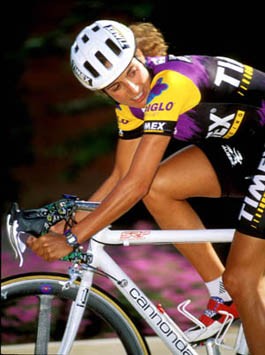
N ow in its third year, the Tour of California has become the biggest stage race in the United States, and it’s right on our doorstep. Starting with a 2.2 mile “prologue” on Feb. 17 at Stanford University and racing 600 miles to Pasadena over eight days, this world-class cycling race features elite professional teams competing for the highest prize purse of any cycling race in North America. But until this year, the Tour of California has not included women.

New this year is that the first stage of the race will be held in conjunction with a women’s criterium in Santa Rosa. A criterium, a closed-course loop, is one of the best bike races to watch. Instead of waiting for hours to see the peloton whiz by in 30 seconds, as is generally the case for stationary spectators during a road race, riders pass by the crowds every few minutes. As the first race weekend in the National Race Calendar (NRC), this women’s race will be the place for many domestic racers to fan their feathers, check out the competition and get a feel for the season to come.

With a strong concentration of top U.S. women cyclists living and training in the Bay Area, race director Laura Charameda, a former professional cyclist, says, “We’re hoping for a full field.” (In her day, Charameda won more races than any other American woman.) “Some people are going to walk away with big money from this race and be the leader of the NRC,” she adds. The prize purse for this criterium is $10,000, so spectators can expect to see some serious in-race tactics.

In fact, it’s all about strategy. During a criterium, or “crit,” teams use their strengths to position their sprinter in the best possible place—that is, if the team has a sprinter. If the team doesn’t have a sprinter (someone who is generally larger in size and good at going really, really fast over short distances), the team will be more aggressive during the race, staging “attacks” to try to establish a breakaway.

“These attacks are often timed right after a prime,” Charameda explains. (A “prime” is a sprint lap where the first rider over the finish wins a prize.) “After sprinters go for a prime, they’re tired, so often other teams will use the tired riders in front, sneak around them and make a break before anyone else has time to notice.”

A good place to watch these tactics taking place, says Charameda, is on the back side of the course, on Third Street opposite from the finishing stretch and near the “booster” tent. The “pits,” where team mechanics fix broken bikes on the fly, are also on the back side of the course; this year, they’re on Fourth Street near the Big O Tires outlet.

After the hour of top-notch professional women’s racing, the men will finish their first stage in downtown Santa Rosa. “Next year, I’d love to see up to three of the stages including women,” says Charameda.

Favorite to Take the Win 2007 NRC Overall Individual Winner Laura Van Guilder from the Cheerwine Women’s Professional Cycling Team will be defending her title at 2008’s first NRC race.

Watch Out For Shelly Olds, a young rider being developed by Marin’s Proman Women’s Cycling. Katheryn Curi (Webcor Women’s Team), who was the 2005 U.S. National Road Champion, will also be a contender for the win. Curi says, “For the past two years I have watched the men from the sidelines and now look forward to joining other strong Northern California women to compete in the Santa Rosa criterium.”


Virtual Vittles

0

02.13.08

C hristopher Coccaro, a 19-year-old college student, is throwing together some pork and vegetable soup. First, he rapidly chops and slices a green onion, carrot and a radish. He tosses the veggies into a sizzling pan and stirs them regularly to ensure they don’t burn. Then he adds them to some liquid in a pot, drops in the pork and adjusts the temperature. The whole process takes around four minutes, but when he’s done, there’s no steaming bowl of soup to enjoy. Coccaro isn’t making dinner; he’s demonstrating Cooking Mama, a game for the handheld Nintendo DS. Instead of using a knife or a wooden spoon, he performed his cutting and mixing with a skinny stylus.

Coccaro can easily make fried gyoza and hand-rolled sushi to Cooking Mama’s satisfaction. (The temperamental animated woman’s eyes shoot flames when you fail at a task.) But he isn’t so savvy in an actual kitchen. “I can make grilled cheese sandwiches, that’s about it,” Coccaro confesses. He’s proof that you don’t need to know a saucier from a skillet to enjoy the startling number of “virtual cooking” options that exist in computer and console games and on the Internet.

Why would anyone want to “cook” if they don’t end up with a delicious morsel? The millions of people participating in virtual cooking may each have their own motivations, but it seems clear that a game focused on food has a potential mass appeal that games about, say, fly fishing or knitting lack. Maybe it’s because almost everybody likes to think about food—for instance, to watch other people stir and sample on the Food Network—even if they can’t find the time or energy to make it themselves. Plus, game-based cooking always has a tangible outcome: a meal that can be sold for money, a concoction that restores health or an item that can be shown off to other players. For that reason, even those who aren’t foodies in RL (real life in gamer-ese) may opt to stir things up in a game.

Cooking Mama falls under the umbrella of what the industry calls “casual games”—addictive, easy-to-learn diversions that can be enjoyed by hardcore gamers and nongamers alike. It’s one of many food-related titles in the casual game sphere, such as Diner Dash and Cake Mania, that test organizational skills and speed by requiring players to perform tasks in a logical sequence within a set time. Most of these games, though, don’t actually have anything in common with following a recipe. Cooking Mama is unique in making the player simulate the motions and steps of RL food preparation. Participants are scored on the ability to chop quickly, fill measuring cups to just the right point and keep pots from boiling over.

If there’s anything more addictive than a casual game, it may well be something called an MMORPG (massive multiplayer online role-playing game), such as Lord of the Rings Online or World of Warcraft (WoW). These games encompass entire virtual worlds where strangers meet online—WoW boasted more than 9 million subscribers as of last July—and team up to explore, fight, pillage . . . and cook.

Why spend your time over a bubbling cauldron when you could be killing ogres or tracking down treasure? University of Vermont assistant professor of English Richard Parent, a gamer and expert on all things digital, cites three reasons. First of all, in WoW, eating food you’ve prepared is one way to heal your character after battle. “You can either sit down and slowly regenerate your health, heal yourself using magic or you can eat one of the hamburgers you’ve cooked up for yourself,” he explains. Plus, certain dishes can add useful bonuses to a character’s strength or magic.

Second, cooking is considered a “profession” in WoW , just like alchemy, herbalism and lock picking. A gamer who wants to score as many points as possible, i.e., “max out” her cooking, must scour the world for recipes and learn to make dishes such as “soothing turtle bisque” and “dragonbreath chili.” Beginners visit a “cooking trainer” who can sell them an easy recipe to get them up and running. “I think they start you off with a loaf of bread,” Parent says. “Something that’s challenging to make in the real world is the easiest thing here.”

Parent pinpoints a third reason people like to cook at the keyboard: they like to try on identities. “A lot of the role-playing people go really far with [their food choices] and use that as part of their role playing,” he explains. “They may refuse to eat meat and only eat fish. You might have a character who was vegetarian or vegan. It’s a way of using food choices in the game to respect and demonstrate your character’s personality.”

If you want to use food to show off your own personality to the masses, Second Life is probably the best place to do it. The gigantic world is a web-based virtual reality, not a game. It’s inhabited by millions of “avatars”—stand-ins for real people—and is completely customizable. If you’re tech-savvy, you can add an apron and chef’s hat to your avatar, carry around a heaping plate of spaghetti and meatballs or build a realistic-looking refrigerator and fill it with goodies. And if you don’t know how to make something yourself, you can buy it with “lindens,” Second Life’s unit of currency, which can be bought and sold for U.S. dollars.

Strolling through SL for just a couple of hours, I visited a free, all-you-can-eat buffet that offered shrimp-adorned martini glasses and platters of farm-fresh vegetables. I shopped at a gigantic store that sold plates of enchiladas and cups of coffee, as well as fancy-looking serving trays and punch bowls. I saw signs of a distinct foodie presence, like a perfect model of a KitchenAid stand mixer at a tiny bistro. (If you’re on the ball, you can also find the occasional cooking demo or class.) And I window-shopped at a bakery whose proprietor served up political commentary along with her fancy, custom-made cakes. Click on her “Victory cake,” and text reading “It’s a lie” pops up.

If you’re not a gamer or a web-head, it’s still easy to be bemused by all this virtual cooking. After all, eventually everybody needs to unplug and have a real meal—and when that happens, computer-based culinary skills won’t get you very far.

College student Michael Lahens sees it differently. A passionate cook in RL, he simply wants to extend his skills into the virtual world—and indulge his gastronomical fancies. “In games which have cooking elements, I always strive to perform the best in that discipline,” Lahens says. “For example, all my characters in the Sims are distinguished chefs.”

Lahens also enjoys Lord of the Rings Online. “While my friends were ‘power leveling’ their characters,” he says, “I was traveling the land looking for recipes.” There he discovered “Shire rations,” which he imagines consists of “what an average Hobbit would have for lunch: a hunk of sharp cheese, a piece of roasted chicken and a whole spiced-apple pie.” Simple, perhaps, but a definite improvement over the typical college-student rations of cafeteria food or ramen noodles. “In summation,” says Lahens, “I want to live in the Shire.” Sometimes imagination tastes better than reality.

Quick dining snapshots by Bohemian staffers.

Winery news and reviews.

Food-related comings and goings, openings and closings, and other essays for those who love the kitchen and what it produces.

Recipes for food that you can actually make.

Interview: Greg Saunier of Deerhoof

More than any other band right now, Deerhoof represents the refined embodiment of music's endless possibilities. They're playing at the Phoenix Theater in Petaluma this Saturday, and I swear you won't ever see another band like them. At all. For my Bohemian article, I spoke with Deerhoof drummer Greg Saunier about John Cage, the creative process, Harry Smith, childrens' music,...

Happy Tour of California Day

I suppose today is actually some sort of real holiday or something, but for the past three years it's meant one thing in Santa Rosa: The Tour of California!The race hits downtown Santa Rosa between "2:23pm-2:58pm," according to estimates. I'd get there at 2:00. Really, go. It's the most thrilling thing to happen to downtown since the Fixx played...
Xbxrx at the Boogie Room

I intentionally parked about a half-mile away from the Boogie Room last night so I could walk the long narrow road in rural Santa Rosa under the moonlight, surrounded by farmland, alone. It’s something I used to do plenty often, before I had a driver’s license—and before most of Santa Rosa’s empty fields were turned into tract homes. It...

Hip Hop… an’ Ya Don’t Stop

No one who lives locally and goes to hip hop shows—that is to say, thousands of people in Sonoma County—could have escaped the shocking headline in last week's local newspaper. "Phoenix Theater Bans Rap Concerts," it declared, in a mystifying statement that was as bold as it was hard to believe. That's because it wasn't true. The Phoenix Theater has...

A Very Tiny Protest

Found on the phone booth at Fourth and D in Santa Rosa:

Wackadoos, Unite!

Word on the street is that 212 Memorial Hospital workers will be pimped out snaking through traffic as buck-a-shot jiffy windshield cleaners amidst that parking lot we call Hwy. 101 in downtown Santa Rosa.These hospital workers are already fully immersed in career transition classes. They'll be taught to act like non-English speaking campesinos newly squeezed Norte as a...

Rehab Resort

02.13.08R aymond Blatt says that converting Sausalito's Alta Mira hotel property and five adjacent houses into residential rehab facilities is the most rewarding thing he's ever done. If Blatt's Alta Mira Treatment Program had existed 18 months ago, when he helped a loved one go through substance-abuse treatment in Arizona, he says that he wouldn't have had to look...

Get Yer Wheels On

02.13.08They're coming. A distant pace car appears. In the lead, racing down the narrow road, a headway-making horde of police vehicles speeds past. A breathless pause, and then, electrified with the singular pursuit of the finish line, comes the spectacularly manic blur of hundreds of speeding cyclists.Welcome to the Amgen Tour of California, which thunders Stages I&–II, Sausalito to...

Round They Go

02.13.08N ow in its third year, the Tour of California has become the biggest stage race in the United States, and it's right on our doorstep. Starting with a 2.2 mile "prologue" on Feb. 17 at Stanford University and racing 600 miles to Pasadena over eight days, this world-class cycling race features elite professional teams competing for the highest...

Virtual Vittles

02.13.08C hristopher Coccaro, a 19-year-old college student, is throwing together some pork and vegetable soup. First, he rapidly chops and slices a green onion, carrot and a radish. He tosses the veggies into a sizzling pan and stirs them regularly to ensure they don't burn. Then he adds them to some liquid in a pot, drops in the pork...
11,084FansLike
4,446FollowersFollow
6,928FollowersFollow