Letters to the Editor

04.23.08

I’m staring in disbelief at the many misleading statements, unsupported rhetoric and factual errors in the story on Marine Life Protection Act’s Blue Ribbon Task Force meeting (“Upcoming MLPA Meeting,” Blast, April 16). I thought that the North Bay Bohemian was a pretty unbiased paper, but not so for this article. A statement like “Proposal 4 . . . would close almost all recreational bottom fishing at Duxbury Reef” is incorrect and misleading.

The proponents of Proposal 4 spent over 120 hours working with the small Bolinas fishing fleet to address their concerns, and left over half of Duxbury Reef open to all fishing, closing the northern portion of the reef where only juvenile rockfish are caught. That’s the definition of unsustainable fishery!

The author’s bias against protecting the marine resources that belong to all Californians, not just the 14,000 members of Coastside Fishing Club, is clear in that no members of the conservation community were quoted.

For readers to get a well-rounded view of this process, go to www.caloceans.org to see what the conservation community has to say, and then go to www.keepamericafishing.org/california.asp to see what the fishermen are saying and judge for themselves.

The Bohemian has done a great disservice to its readers by publishing an article with a complete bias toward recreational fishing groups that omits the other viewpoint of the majority of Californians who strongly support marine conservation to ensure our waters aren’t overfished—like Duxbury Reef.

Don McEnhill

Russian Riverkeeper

Alastair Bland responds: While researching that short article, a DFG spokesperson assured me that Proposal 4 would tightly restrict bottom fishing on Duxbury Reef; the fact that a large group of fishermen are opposed to it is a telling fact. The DFG also points out that the details of the Duxbury closure are not yet etched in stone, so we can argue about percentages and regional boundaries defined by the three proposals, but the lawmakers are still adjusting them. Lastly, one of the main points of my piece was to illustrate the ironic divide that separates many fishermen from environmentalists, when they are ultimately fighting for most of the same goals. Here’s to the great ocean!

Excuse me? A moose in Great Britain, observed by the queen? (“Local Lit,” April 9.) There are no moose left there—in fact, there was a story in the Times of London this month about the importing of moose from North America to re-create that population.

It was a stag, folks. A royal stag of the Highlands.

Pat Fusco

San Anselmo

Heed the drunken prodigy trickling up!

Reading Eliot Fintushel’s “Cross Purpose” (Open Mic, April 9), all I could picture was Jeff Bridges’ astoundingly realistic one-on-one with a Pinocchio doll in The Fisher King. Disillusioned and drunk on electric Lucifer, I am a dancing fool until the blood, sweat and tears of the innocent cry up from the soil, “Life’s no picnic.” If Mother Earth would only write a biography, I’m sure she’d do it over a stiff gallon of cheap whiskey while spouting obscenities into the firmament. Then I’d ask her, as a kind favor, to swallow debutantes into her scorching mantle because life’s no debutante ball, either. On God’s ethereal switchboard, the last are first and the lower rung will grow the closest. So this planet will be the world’s largest theremin playing a haunting air for the dregs and all the Blake Bitners of the world.

Enjoy your latte!

Trevor Moore

Santa rosa

I did just as letter writer Michael Zebulon suggested (Letters, April 9). I went to the library and studied the history of the Israel-Palestine conflict. Naturally, one finds critics of Israel who give evidence that there was a mass expulsion of Arabs by Israel in 1948. The interesting thing is that today this view has come increasingly to be accepted by mainstream Israeli historians.

Benny Morris’ exhaustive study Righteous Victims: A History of the Zionist-Arab Conflict, 1881&–2001 thoroughly documents the very violent expulsion, not as told by Arab refugees, who might be expected to harbor anti-Israel sentiments, but with the eyewitness accounts and official documents of Israeli participants. Uri Milstein, the authoritative Israeli military historian of the 1948 war, maintained that “every skirmish ended in a massacre of Arabs.”

As Moshe Dayan said, “We came to this country which was already populated by Arabs, and we are establishing a Hebrew, that is a Jewish, state here. . . . Jewish villages were built in the place of Arab villages. . . . There is not a single community in the country that did not have a former Arab population.”

Robert Nuese

Healdsburg


&–&–>

I Lost Me To Meth Because I’m Gay

0

I’ve seen this commercial four or five times now, and it still bothers me. Since when did meth become a “gay drug”? Since when did it become okay for PSAs to single out one group and align it and it alone with a drug that has, for years, been widely abused by everyone from all walks of life?

I first saw it on Bravo, which has been airing the totally awesome gay Levi’s commercials. But then I saw it over and over again on NBC, and unlike the Levi’s commercials, there’s no straight counterpart. It’s just for those self-destructive gays, apparently, who all go out and snort mountains of speed and lose their boyfriends and get HIV.

I know there’s good intentions here, but imagine it in the context of ads for Bud Lite and Forgetting Sarah Marshall, and it just plain sucks.

[display_podcast]

Waitresses Talk

0

WHICH eponymous restaurant can’t keep the “Help Wanted” sign out of the window because its owner pays the heroin dealer more often than the employees?WHAT Sonoma-area restaurant owner was spotted over Film Festival weekend pocketing his waitresses’ tips?WHO spends his mornings “greeting customers”—a.k.a. blatantly checking out the asses of girls walking by on the sidewalk?WHICH restaurant and pub’s clientele provided this overheard gem?: “When it comes to fuck music, it doesn’t get any better than Touch, by John Klemmer.”WHY is there a different girl every week working the counter at a certain Santa Rosa taqueria?WHERE does the waitstaff at a new, large downtown Santa Rosa eatery disappear to for 15 minutes after they seat their customers?WHEN will a certain vegetarian restaurant change their menu, open on weekends, or pay their workers over the table?HOW many times can a certain Windsor restaurant owner recycle the steamed rice before he finally tosses it out?WHAT body fluid was discreetly added to the order of a well-known real estate investor who’s never left anything but pocket change for a tip?

Bikini Kill in Santa Rosa, 1993

2

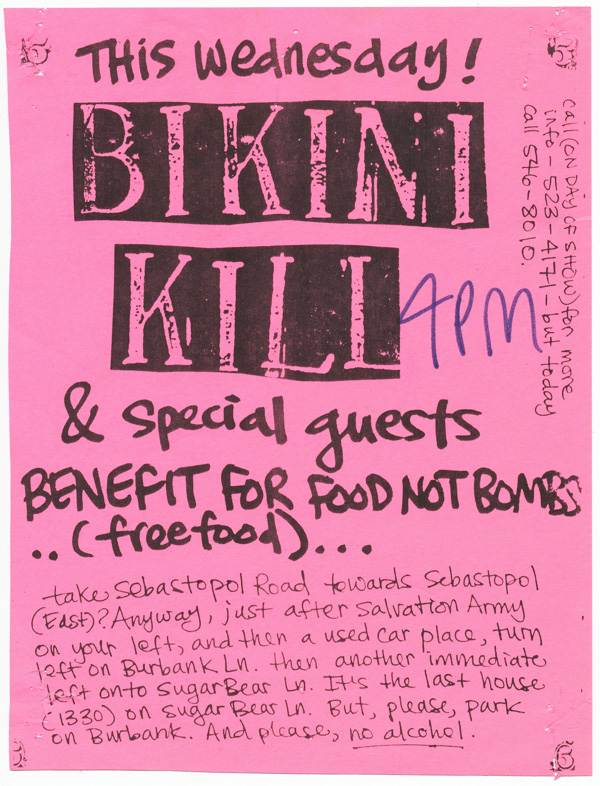
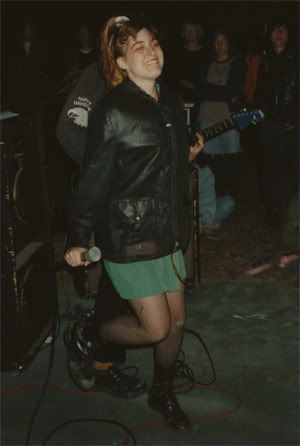
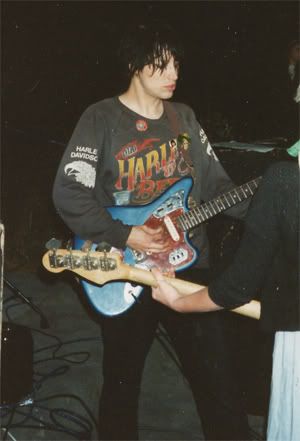
Without a doubt, one of my all-time favorite shows in Santa Rosa was the night in 1993 when Bikini Kill, illuminated by a semicircle of car headlights, played in someone’s backyard in Roseland.
I’ve stopped trying to tell the story, partly because the eventual ascension of Bikini Kill to indie icons in the general consciousness taints any kind of retelling with the risk of a coattail-riding smarminess—especially, y’know, coming from a dude—but mostly because I really just can’t do it any sort of justice.
Luckily for us all, Leilani Clark hits the thing out of the park in this post about the show, with all the wide-eyed awe that just about everyone in the backyard experienced that night. Read it here.
In the year or so before the show happened—advertised only by hastily photocopied handbills a couple days ahead of time—me and all my friends had all played the hell out of Bikini Kill’s first EP, marveling at its economy of purpose. They used simple statements and actions to convey what a lot of Bay Area bands had been trying to say in words, words, and more words. I know it sounds like a cliché, but they changed my ideas about what a band could be—even when, in 1993, I was of the age where I’d prided myself (falsely, it would turn out) on seeing it all.
The Bikini Kill show in the backyard was inspiring, thrilling, and confusing, all at the same time, and it took me a few years to figure out just what the hell had happened. (The only thing that I can add to Leilani’s account is that my friend Andy went up to one of the band members afterwards, and said, “Hey, you guys were really good,” to which she shot back, “We’re not guys.”)
Last night I dug through some boxes and found some pictures that I took at the show:


I found the flyer too:

…and the setlist.


Heart to Heart

0

04.16.08

With sales of iPods reaching a plateau and a growing dissatisfaction with inorganic means of acquiring music finally plaguing a technologically hungover populace, independent record stores the country over are mobilizing under the banner of Record Store Day, celebrating this Saturday, April 19. Nationwide, the events are piling up: Metallica, Steve Earle and Jello Biafra are doing in-stores; bands like Vampire Weekend, R.E.M. and Built to Spill are offering exclusive releases; and hundreds of musicians are lending their praise to the idea. Designed to remind that independent record stores provide the type of communal experience, customer service and one-on-one help that no “personalized” Amazon.com recommendation list could ever duplicate, Record Store Day is also a chance to take advantage of free live music, killer sales and free giveaways at the North Bay’s best record stores.

The Last Record Store in Santa Rosa hosts the live music of Triclops (featuring former members of Victims Family) starting at 2pm, and will offer $1 off everything in the store all day long (“Except dollar records!” clarifies co-owner Hoyt Wilhelm). The Last Record Store also has special Record Store Day sampler LPs to give away, as well as exclusive Record Store Day CD and DVD samplers. The party continues on Sunday, April 20, with Weinland and Low-Five performing at 2pm. . . .

Over in Sebastopol, Incredible Records has the live music of Shat, featuring former members of the Coma Lilies at 5pm, and who knows, the Haxaw Ditch Dwellers just might stomp out some spontaneous jug-band tunes on the sidewalk, as is their thing. . . . Though technically owned by a national chain, Backdoor Disc and Tape in Cotati gets in on the indie action with live performances all day by Something Terrible, Soggy Biscuit, Linda Ferro, East Coast Kids, Haley Hill, Deep C, Violated Existence, John Emery and former American Idol hopeful Tami Gosnell. Used titles are “buy one, get one free,” and select new titles will be priced at $10. The Sonoma County Roller Derby team even makes an appearance. . . .

Mill Valley Music, owned by Gary Scheuenstuhl, who worked at Village Music for 25 years, will offer 30 percent off all used product and 20 percent off all new product. . . . Bedrock Music and Red Devil Records in San Rafael have nothing planned at press time, but that’s no reason not to swing by. . . .

A complete schedule of nationwide Record Store Day festivities, as well as uplifting quotes from Bruce Springsteen, Tom Waits, Paul McCartney and many, many others about the need for the independent record store can be found online at www.recordstoreday.com.


Letters to the Editor

04.09.08

Success? Winning? Victory? Who are George Bush, Dick Cheney, David Petraeus and John McCain talking to? What are they selling?

The only success, the only “winning,” the only victory comes when all combatants lay down their arms and declare an end to this war. Only when this comes to pass, will there truly be a success, a “winning,” a victory. And it will be for all: Sunni, Shiite, Kurd, Muslim, Christian, Arab, Iraqi, Iranian, Saudi, Israeli, American, Syrian, Turk, Afghani, etc.

This is not a game. Not a contest. Yet our leaders frame the conflict as if they’re addressing a group of adolescents. It’s an insult to the intelligence of Americans, to the intelligence of Iraqis and to the intelligence of the world community.

It is clear to me that our current leaders do not understand the meaning of success. And they certainly have no strategy for achieving a durable peace.

Many Americans have resigned themselves to simply await the results of the upcoming election, hoping that “regime change at home” will bring an end to the “national nightmare” that is Iraq and Afghanistan.

With almost 300 days until the inauguration of a new President, 300 more guaranteed days of war, we can anticipate another 3,000 to 15,000 people shall violently lose their lives in Iraq alone. We Americans grieve at the loss of over 4,000 of our own over the past five years.

We don’t even have the decency to talk about Iraqi losses. They remain nameless, faceless statistics, not even worthy of the energy it might require to count them. We don’t even know within an order of magnitude how great are their losses. By any reckoning, they have taken far more casualties than America took in the Vietnam War. The truth is, most Americans simply don’t care. We’re too distracted by the game.

In the political campaigns here at home, we have the audacity to debate whether racism exists in America. While we argue about what some preacher said from his pulpit, we wage a blatantly racist war in the Middle East.

Any American who fails to oppose this war, who remains silent in the face of our own racist campaign abroad, shares far more guilt than the Rev. Wright.

Tim Campion

Santa Rosa

When I moved to Sonoma County from the New York metro area eight years ago, I thought my connections to the literary scene had ended. It turns out this area swarms with writers on every imaginable and unimaginable topic, and there are even more writers’ groups than coffeehouses.

Your “Spring Lit” issue is a treasure trove (April 9). Where else could I learn that my fingerprints were formed five months before my birth (Richard Unger), or that I should consider the “genius” of a site before planting anything in my garden (Wendy Johnson)? This is much more fun than reading the Book Review section in the Sunday New York Times.

Arlene L. Mandell

Santa Rosa

Thank you so much for the article on the fabulous Donna Seager Gallery in San Rafael (“World of the Work,” April 9). Perhaps your readers who love making or altering books would like to know about the Sonoma County Book and Paper Arts Guild that meets on the last Saturday of every month (except April) at the Sebastopol Center for the Arts.

Dena Bliss

Sebastopol

Gabe Meline’s article “Rise of the Demise” (March 5) missed the elephant in the room of the whole vinyl LPs vs. CDs issue.  If LPs are a 10, CDs are surely a close 9. Downloads, however, are way down the food chain at somewhere between 4 and 7 in terms of sound quality.

Stuff the compressed files they sell (at full, uncompressed prices) on iTunes, Amazon or anywhere else into an iPod with the little ear buds and, sure, they sound about as good as anything is going to. But actually burn that data to a true audio CD or even hook up the mp3 player to a good stereo, and it will sound noticeably worse than the CD version.

So as groovy as the free download card with the vinyl purchase might sound, buyers should know they aren’t actually getting both the vinyl version and the equivalent of the CD version. They’re getting the vinyl along with the little squished-down crap compromise between file size and quality that is the download business.

It saddens me that today so many of the kids are settling for the little squishes of crap.

Arthur G. Padlock

Santa Cruz


&–&–>

Wheels on Fire

0

04.16.08


At a Sonoma County Roller Derby meeting in March a few days prior to a bout with Fresno’s Smog City Rollers, the team is talking strategy.

League president D. Enforcer (Mari Almeida, age 32), an unlikely defense player at a slim 5 feet 4 inches, and team trainer the Teacher (Erica Saya, age 26), a petite and pretty blond, preside over the group assembled at Rohnert Park’s Cal Skate rink. They assign positions, answer questions and relay the opposing team’s strengths and weaknesses, which they’ve learned from studying videos and attending live games.

One player reminds that Smog City is famous for fighting and playing dirty. D. Enforcer responds, “We are not fighting.” Another player asks uneasily, “What are we in for?” D. Enforcer coolly explains that she knows the referees and has talked to the opposing head coach, who seems aware of the rules. She says she hopes the team has outgrown its unruly behavior. (Turnover is high in roller derby, so this is not an unlikely scenario.) “If they start a fight, our medical bills will be paid,” D. Enforcer stresses. “If I lose this tooth I just paid $2,000 to fix, I’m going to be mad.”

Despite this reassurance, some of the players still seem unsettled. As the team disperses to lap the roller rink a few times before heading home—some to young children—at 10:30pm on a Thursday night, D. Enforcer calls after them, “And check out this store called Blooms at the Coddingtown Mall. They have awesome garter belts!”

So goes a typical meeting at the SCRD—busted teeth and garter belts, all in a day’s work.

Four-Wheelin’ It

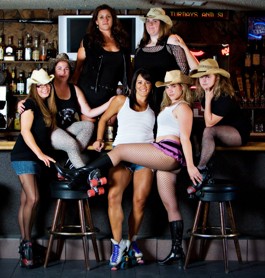
Sonoma County is in the middle of a significant hotbed of female roller derby, with surrounding leagues in San Francisco, Oakland and Sacramento. Roller derby is historically a form of professional sports entertainment most popular in the 1950s and ’60s; by the ’70s, as it waned, derby gained notoriety for its WWF-type staged fights. The current incarnation of roller derby is all-female, amateur and self-organized by newer enthusiasts with an indie/punk/hardcore/goth aesthetic and an eye toward providing regular charitable donations.

Most current roller derby leagues follow the rules of the Women’s Flat Track Derby Association (WFTDA), formed in 2004. Two teams send five players each onto a flat circuit track. Sonoma County Roller Derby divides itself into the Wine Country Homewreckers and the North Bay Bruisers. The players wear quad skates and helmets, as well as knee, elbow and wrist pads and almost whatever else they feel like; torn fishnets, garter belts, hot pants and miniskirts prevail.


Gone are the banked tracks and precarious railings Raquel Welch jackknifed over in the Kansas City Bomber. This kind of roller derby, though still a full-contact sport (the women say “It’s not a matter of if you get hurt, but when“), seems much more about camaraderie, sportsmanship and empowerment than anything else.

The WFTDA currently comprises 53 teams. Hundreds of registered flat-track teams are not part of the association but play by its rules, including teams in Canada, the U.K., Germany and Australia. Sonoma County Roller Derby is home to two teams, the North Bay Bruisers and the Wine Country Homewreckers and is working to become a member of the WFTDA, which requires a lot of paperwork and hoop-jumping.

The March 29 Smog City bout in Fresno turned out to be a dirty match, indeed. The Fresno team seemed to want to rile the crowd up by treating SCRD disrespectfully: making obscene gestures at the visiting players, spitting at them, hitting illegally, screaming at players and refs alike.

Swinging of the elbows in a forward and backward motion is not a legal blocking move. D. Enforcer, whose job as a blocker is to look out behind her to keep the other team’s jammer from getting through, saw this illegal move twice during the game, while the ref never did. The second time, that elbow hit Pepe, one of SCRD’s best jammers, and cracked her sternum; she’ll be out for a few weeks.

A particularly hard, but entirely legal, block by game MVP Grateful Red put Smog’s jammer in the hospital with a concussion and a CT scan. “I plowed into their jammer with speed and determination, apparently a painful combination,” Red explains. “I still feel so guilty. Don’t get me wrong, I meant to smack into her and I meant for her to fall down, but I never meant for her to go to the hospital.”

Final score, according to Smog’s scorekeeper: SCRD, 97; Smog City, 66. Final score, according to SCRD: 124&–66.

One week later, the gals played Chico’s NorCal Roller Girls, and although SCRD won again, D. Enforcer says, “There was so much love between the two teams when we were done, because it was a good, clean bout, really competitive, beautiful to watch. We were hugging each other afterwards!”

April 26 marks the league’s one-year anniversary and is the date of the first home bout of their first season. With a professional approach, organization, commitment and a hardcore training regimen, plus a 4&–1 record, this team is shaping up to be a serious contender.

The women of SCRD are a tight-knit group of organized, dedicated women ranging in age from 21 to 53. They are single, married, gay, straight. They are mothers, teachers, businesswomen, EMTs, college students, real estate agents, hairdressers. And most of them didn’t know how to skate or hadn’t done so in ages when they joined the league.

“We can teach you how to skate, but the desire must be within,” is an SCRD motto, and with three practices a week, organized drills, a seasoned trainer and a lot of support from encouraging teammates, it’s only a matter of perseverance and time before players skate like pros. The Teacher has been skating since she was four years old. Her parents met at a roller rink and her mother skated with her in utero, making her a natural as the head of training and lead jammer. She has taught most of the girls in her league the skating basics, including league president D. Enforcer, with whom she started SCRD only a year ago.

D. Enforcer, a single mother, says, “I did a lot of research before we started the league to learn why other leagues failed: disorganization and money. So when we started the SCRD, it was really important to get organized. Now we have 13 committees [including community outreach, fundraising, recruitment and publicity], with a leader for each one, and we meet every month. We pay dues, we are constantly doing fundraisers. We have to pay for everything—gear, rink rental, hotel rooms for away bouts, the ref’s insurance.” Not surprisingly, her father coined her derby name when she was just a kid because, she says, “I always liked to take charge.”

Why do these girls do it? What makes them want to subject themselves to harm? “It’s great exercise. I get to be someone that I’m not in my regular life—it’s an alter ego of sorts that is super sexy and really tough at the same time,” says Grrrl Haggard (Jen Jenkins, age 32) of Eureka’s Humboldt Roller Derby Redwood Rollers. “The most surprising aspect that I love about roller derby is the physical contact. I’ve never been a team sports player and never been all that aggressive, but once we learned how to hit and fall properly, I loved it!”

Heather Harris, 35, has two children, eight and 10 years old. At an open practice on recruitment night, she stood at the wall watching the skaters zoom past, and explained that a chapter had just closed in her life and she was ready to start over. “I have a lot of pent-up frustrations, and I think roller derby would make a good outlet. I like that you can be somebody else for a while, that I could kick off that mom persona. But my friends and family think I’ve freaked out.” Was she scared to get out on the rink and get hit? “We’ve been through childbirth, what else can you throw at us?” she answers with a smile.

About a quarter of the SCRD players have children; the Eureka team has even more. “We have a lot of young mothers on our league,” Grrrl Haggard says, “and they were like, ‘Hey! I used to be cool and do stuff just for me.’ They’ve found a home in roller derby.”

Solidarity abounds. “It’s like a sorority without the sorority—no drama,” says SCRD vice president Big Nick. “We don’t allow dissing of players; we confront it. And we don’t kick people off the team. Our team is not about creating problems in people’s lives; it’s about enhancing lives.”

Grrrl Haggard concurs. “At first I was skeptical about participating in a sport with all women, thinking there would be lots of drama, but that’s not the case. The sport seems to be dominated by strong and opinionated women who also are very cool.”

Most of the players cite fun, exercise and camaraderie as their reasons for joining and staying in the league. But one player, Bushido (Sarah Norgar, age 30), lays it out straight. “You know, you don’t get to knock annoying girls over in the mall, because you get arrested,” she says. “I play derby so I can hit other girls.”

After attending six tryouts, new players in SCRD have a three-month probation period before they can bout. They must do a battery of drills and scrimmaging to learn how to fall and how to take a hit.

Susie Roundwheels (Susan Asbell, age 53), the oldest player on the team, has just completed her probation period. She feels ready for the rink. “If you stay low, follow what they teach you and wear your equipment, you’ll usually be all right,” she says. “You’ve just got to give it better than you get it!”

Asbell rode skates for transportation around San Francisco in the 1970s. When she saw the roller derby booth at Santa Rosa’s Health and Harmony Fair, she started to think about all her years as a soccer mom. “Now I hope my kids will come watch me!” she says at practice one night, to which she drives an hour and a half, twice a week, to attend.

Many of the spectators at last December’s preseason home opener claimed they had attended because they had a friend skating or they thought it would be fun. But one man simply said, “I’m here to watch chicks beat the shit out of each other.”

On the surface, the sport is appealing because the women are dressed provocatively and it offers a trainwreck-catfight allure that’s hard to look away from. But look a little deeper, and it becomes clear that roller derby requires strategy, passion and commitment. It’s layered—players get to put on a show and take on an alter-ego, work out their aggressions, while also striving individually and as a team to be strong and win.

“Derby makes you find yourself. Define yourself. Express yourself,” D. Enforcer says. “It pushes you to extremes. I fall so hard for this team, and I get right back up. You find qualities in yourself you never knew you had—I shock myself.”

Sonoma County Roller Derby season home opener is an intra-league bout between the Wine Country Homewreckers and the North Bay Bruisers titled ‘The Battle for the County’ on Saturday, April 26, at Cal Skate. 6100 Commerce Blvd., Rohnert Park. 9pm. $10&–$12; a portion of the proceeds go to United Against Sexual Assault of Sonoma County. 707.585.0494. To become a derby girl, open practices are held 8:30pm to 10:30pm every Tuesday at Cal Skate. For more info, go to [ http://www.sonomacountyrollerderby.org/ ]www.sonomacountyrollerderby.org.

(Courtesy of WFTDA)

Legal

• Hitting the arm from shoulder to elbow, the chest and front and side of torso, the hips, the upper thigh.

• Initiating contact with the following body parts: arm from shoulder to elbow, torso, hips and booty.

• Incidental forearm contact between skaters if arms are pulled into the body to absorb the force of a block.

• Hard hits, which are not illegal hits. (Penalties are meted out according to the legality of the hit, not the force or speed of the hit or the outcome of the hit.)

Illegal

• Hitting anywhere above the shoulders, the back of the torso or booty, on or below the knee

• Contact initiating from: elbows, which may not be swung with a forward/backward motion (contact may not be made with point of the elbow (i.e., jabbing), and elbows may not be used to hook an opposing player); forearms and hands (no grabbing, holding or pushing); the head.

• Blocking from behind (i.e., no hitting another skater in the back).

• Tripping or intentionally falling in front of another skater.

• Improper uniform, jewelry or skates

Major Penalties (Resulting in Expulsion)

• Deliberate and excessive insubordination to a referee; fighting; hitting or punching to the face or neck; pulling of the head, neck or helmet; choking by helmet straps; kicking another skater; biting; dog-piling.

—M.T.J.

(Adapted from TXRD Lonestar Roller Girls, Grrrl Haggard of Humboldt Roller Derby’s Redwood Rollers and the Women’s Flat Track Derby Association)

blocker Defense player who works to keep the pack in a tight formation to prevent jammers from skating past.

blood and thunder A favorite drill in which all skaters take the track and proceed to knock the hell out of each other until only one skater remains standing.

bout A game, lasting 60 minutes divided into 20- or 30-minute segments, including a series of two-minute jams. Each team has one pivot, one jammer and three blockers on the track.

cannonball Deliberate (and illegal) fall to trip several skaters on the opposing team at once.

clawing A jammer pulling her way through a tough pack.

contact zones Areas of the body that may be used to give or receive a hit.

dog pile Jumping onto or into a pile of fighting skaters.

fishnet burn A semi-permanent fish-scale pattern, resulting from falling while wearing fishnet stockings.

give a whip An assist move in which a skater extends her arm and whips her jammer around the track, propelling her with momentum and quite possibly taking out unsuspecting blockers in her path.

grand slam When one jammer completely laps the opposing jammer, scoring an additional point.

jam Two-minute period during which the jammer fights her way through the pack. After making it through once, she scores one point for each opposing team member she passes.

jammer Positioned at the back of the pack wearing a starred helmet, a jammer is the point-scorer.

lead jammer The first jammer through the pack.

pivot The skater at the front of the pack wearing a striped helmet. She sets the pace and call the plays and is the last line of defense to prevent a jammer from scoring.

Purple Heart Award (aka Hall of Pain Award) Given to the most heinous injury of the year, usually taken home by recipient of a broken bone.

red rover Effective but illegal block by two skaters with linked arms.

rink rash Stinging, red streak across buttocks and/or legs resulting from exposed skin (from too-short skirts/pants/shorts) hitting the track.

take-downs Stopping a player by any means necessary.

t-stop Dragging the back skate perpendicular to the front skate.

—M.T.J.


Carbon Credit

0

04.16.08

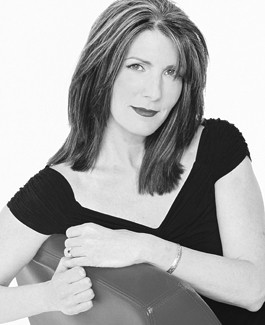
For most Californians, coal is an abstraction. The nearest coal mines are a time zone away, and California’s power comes mostly from natural gas systems and hydro plants. But it’s a different story in South Charleston, W.V., where Kathy Mattea was born and raised.

Coal mining was a central part of Mattea’s family history, not to mention the lifeblood of her hometown and the surrounding area. So even as she built a solid career as a successful country singer and recording artist (her chart-topping singles include “Goin’ Gone,” “Eighteen Wheels and a Dozen Roses” and “Burnin’ Old Memories”), she had, in the back of her mind, a notion to devote an album to that heritage.

“I had a short list of coal songs,” she says by phone from the back of a tour bus in Cambridge, Mass., where she is in the middle of an East Coast and Southern states tour. “And every once in a while I’d think about making this record.” But when 12 miners perished following an underground explosion in the mine at Sago, W.V., in January 2006, Mattea says, “I thought, ‘You know, I’ve got so much emotion about this, it would probably be the right time to go make this record and plow this emotion into the music.'”

The result is Coal, a spare, unflinching set of songs that Mattea says embody her intention “to tell the story of a sense of place and the people from where I’m from.” Yet it wasn’t an easy project.

“I thought it would be kind of an interesting record, and historical, and it would be fun to do something kind of stripped-down,” she says, “but what I found was I stitched together pieces of my own story and my family’s story. I reclaimed stories about coal in my own generation that I had lost, and a sense of connection with place and people. Hearing some of the old stories retold and hearing some new ones, it became so much more than just a record.”

Building on her original short list, Kathy went through hundreds of songs before choosing the 11 that comprise Coal, mixing stark traditional material from Jean Ritchie, Merle Travis and Hazel Dickens with equally powerful tunes from contemporary writers Darrell Scott and Billy Edd Wheeler.

“My goal was to find something that had some musical diversity,” she explains. “I wanted the record to have a musical narrative to it, and I wanted to cover a lot of different points of view about coal.” Thus there are songs about death and illness in the mines (“Lawrence Jones,” “Black Lung”) alongside songs about miners’ pride in their work (“Coal Tattoo”) and love of the land (“Green Rolling Hills”).

In addition to their interlocking subjects, the songs are unified by the understated, mostly acoustic settings crafted by producer Marty Stuart and a core trio of sympathetic players. “He is steeped in hillbilly music,” Mattea says of Stuart. “He’s a historian and appreciates all aspects of it, and also has a commercial career like I do, walking that line between commercial and traditional.

“More importantly,” she continues, “I knew that I could trust him. When I started, I thought, ‘I don’t know if I can do this.’ I’ve been singing a certain kind of music for 20, 30 years, and this stuff, in order to sing it right, you really have to strip away a lot of layers.” It was Stuart’s honesty, she says, that guided Coal’s strong, understated performances and allowed the lyrics’ anger, fear, despair and longing to shine through.

Buried in the disc, deep as a vein of anthracite, are Mattea’s personal environmental concerns. The singer was one of the first trained by former vice president Al Gore on his climate-change, call-to-arms slide show, which she readily delivers when asked. However, Mattea generally keeps her activism and music separate.

“I think the music stands on its own,” she says. “There are so many points of view to this music; there’re the social justice issues, the sense of place, the sense of my family, the sense of history. I’ll sometimes talk about how we’re all connected to coal by virtue of the fact that most of the electricity in this country comes from coal, so we’re all inextricably linked to it. But beyond that, I feel like the music tells the story for itself.”


Go Ahead, Sell!

0

04.16.08

Let’s say that John and Mary Smith own a home in San Rafael. Last year, they considered selling it in order to buy a more expensive home in a different Marin neighborhood. They wanted more space, a bigger yard and a faster commute to the city. However, when the mortgage meltdown occurred, they scrapped this plan. Today, they’re still waiting “until the market improves” before attempting to sell their home again.

Why?

The Smiths believe that their home lost value during the current buyers’ market and that they won’t be able to net as much money if they sell their home “low” in this market.

Are they doing the right thing? Is it better to wait for another sellers’ market before purchasing a more expensive home in Marin?

Not necessarily. The Smiths should strongly consider selling now even though their home may sell for less than it may have two years ago.

Here’s why: Let’s assume that the Smith’s home was worth around $825,000 two years ago, but today it would likely sell for around $750,000 to $775,000 (6 to 9 percent less). And let’s assume that a bigger home in a more expensive neighborhood is listed today for $950,000.

If the Smiths wait for the market to return to where it was two years ago, they are essentially waiting for their home to appreciate $50,000 to $75,000 (that same 6 to 9 percent). Of course, appreciation will probably affect the more expensive home as well. So assuming the two homes appreciate at the same rate, if the home they’re considering costs $950,000 today, it may cost $1,007,000 to $1,035,000 by the time the Smith’s current home appreciates.

The advantages of purchasing the $950,000 home today rather than waiting for a better market to sell are:

The property taxes will be lowerThe property taxes on a $950,000 home are around $11,400 (based on a rate of 1.2 percent). The property taxes on a $1,035,000 home are around $12,420. The Smiths will save over $1,000 a year.

Smaller down payment The down payment on $950,000 vs. $1,035,000 will be $8,500 less (at 10 percent down.)

Smaller mortgage Nuff said.

More choices and negotiating strength In a buyers’ market, there are far more homes available and the Smiths will likely have negotiating power, something they would probably lack in a sellers’ market. Even though the home they like is priced at $950,000 today, it may be possible to get it for $925,000-or less (depending on the motivation of the seller).

Fewer overbids In a future sellers’ market, there’s a greater chance the Smiths may need to overbid to get an accepted offer on their purchase, thereby raising its actual price.

Could pay a price for waiting Cities in Marin County do not necessarily appreciate at the same rate. According to the Multiple Listings Service (MLS), between 2004 and 2006, the median price for sales of single-family homes within San Rafael appreciated 12.6 percent. However, in Greenbrae, single-family homes appreciated 20 percent within the same time period. It’s possible that during the time the Smiths wait for their current home to appreciate, the neighborhood they are considering in another city could rise at almost twice the rate.

Rates may rise Interest rates are unpredictable. What may appear to be a good rate today may seem impossibly low and unattainable by the time the Smith’s current home rises in value. Therefore, the home they wish to buy today may cost significantly more per month in the future, even if its price remains the same as it is today.

Buy low and sell high? The Smiths strongly believe in the “buy low, sell high” theory, but they’ve been overlooking the bigger picture. Even if their current home is worth less today than it was two years ago, it’s still much more valuable than it was when they originally bought it. And if they buy a more expensive home today in a buyers’ market, they’ll once again reap the rewards of appreciation on their new home when it’s time to sell that one. That is, assuming Marin has appreciated by that point. But it’s a pretty good bet, especially if they’re planning on owning their new home for at least five to 10 years. 

Based on 40 years of past sales statistics, Marin’s market has never dipped for longer than a few years at a time, and it’s always managed to bounce back leaps and bounds beyond whatever amount it fell.

Quality of life By moving today rather than waiting years, the Smiths will immediately enjoy the quality-of-life benefits of their new home: less time in the car, more living space and playtime for the kids in a bigger yard.

Of course, this entire argument is based on a premise that the Smiths have some reasonable equity in their current home. But some may be wondering, if all of the above is true, what is the best reason for the Smiths to keep waiting to sell? Clearly, if they intended to sell their home and not reinvest their money in real estate ever again, they should keep waiting. Otherwise, there may be no time like the present.


Jason Lewis is a real estate agent with Frank Howard Allen Realtors and hosts the Marin history website www.marinnostalgia.org.Open Mic is now a weekly feature in the Bohemian. We welcome your contribution. To have your topical essay of 700 words considered for publication, write [ mailto:op*****@******an.com” data-original-string=”OIWeCd0nEPtIulkEWw06FA==06a2Jc5LDE6tgfCj16SiQYOFwyYdll5wWn7n91sBffol9L6YzU0xIet3QHeobfVJiDLZb2fvM4eQS81VDhTTbWLRdLuEOB/UWZnHUOkQP217nw=” title=”This contact has been encoded by Anti-Spam by CleanTalk. Click to decode. To finish the decoding make sure that JavaScript is enabled in your browser. ]op*****@******an.com.


Mystery Man

0

music & nightlife |

Blast of the Past: Redbone marries a 1930s musical aesthetic to 1970s hipsterism.

By Robert Feuer

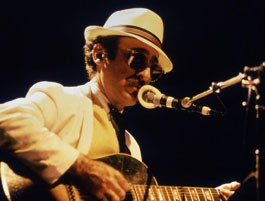
Leon Redbone was born—that much is known. He probably had parents, though it’s not yet been verified, and researchers have discovered that his given name may be Dickran Gobalian, born possibly somewhere in Canada, date unknown. His onstage wardrobe consists of a white jacket and fedora, dark glasses and a thick moustache reminiscent of Groucho Marx. Rumors that he is Frank Zappa’s fraternal twin were long ago put to rest.

What is known about Redbone is his musical ability. Traveling well-worn paths blazed by people like Hank Williams, Jelly Roll Morton, Jimmie Rodgers and Blind Blake, Redbone ranges from melancholy to jolly; he can wipe the smile off your face and just as quickly put it back. With simple arrangements, he croons his way to dreamland in a rich baritone, coming on as either a guitar-strumming cowboy hero or barrelhouse blues player with more than a hint of vaudeville or old Hollywood.

Speaking by phone while on tour in Minnesota, he says that for his upcoming appearance at the Mystic Theatre on April 20, he’s bringing only himself, his acoustic guitar and “an independent accompanist,” Paul Asaro, on piano. Between the two of them, he says, “we make a lot of noise.”

Redbone, who further solidified his 1970s mystique by being mistaken as an alter ego of Andy Kaufman, hasn’t done studio work since the late ’90s. He refers to the last album he released, 2005’s Live—December 26, 1992, as “an accidental recording” of a show at the Olympia Theater in Paris. “I found it one day and put it out,” he says, simply. “Mostly I travel around and play live shows. I don’t live anywhere. I don’t like to fly. I just drive around.”

Redbone is aware of his media image as something of a fictitious character but maintains that his clothing style onstage is “the same as what I wear offstage, maybe embellished—only during shows, I’m holding a guitar.” He prefers to think of himself as a “presenter of tunes” rather than a musician. “I hope for a moment in every song,” he says, “possibly only one or two notes, that means something.

“The rest is a setup for those notes,” he continues. “You get to that moment by a succession of notes and inflections. It’s pure happenstance. I’m still in the same direction I’ve always been in, trying to do a beautiful song that is presented in a way that allows you to hear that moment.”

Redbone’s career began around 1970 in the thriving Toronto folk scene. Appearances at that city’s Mariposa Folk Festival the following two years brought him the excited admiration of people like Bonnie Raitt, John Prine and Bob Dylan. In fact, Dylan, in a failed attempt in the mid-’70s to start his own record label, had selected Redbone as his first choice of artists to sign.

Redbone eventually signed with Warner Brothers and released his first album, On the Track, in 1975. A mixture of songs by Irving Berlin, Johnny Mercer and Fats Waller, it bucked almost every trend in rock music at the time. After a sluggish beginning, television appearances on a new show called NBC’s Saturday Night (later well-known as Saturday Night Live) jump-started his recording career.

Over the years, Redbone’s silver hair has met with the silver screen, as well. He appeared alongside Tom Waits, Dr. John and Joe Strummer in 1988’s Candy Mountain, and provided the voice of the animated snowman in the hit movie Elf in 2003. “If I’m going to be onscreen,” he says, “I might as well be a cartoon,” a depiction favored by Gary Larson, who made Redbone a recurring character in his comic strip, The Far Side.

Asked to name the greatest era of his musical career, Redbone turns deadpan. “The 1760s were very good,” he says. Looking toward the future, Redbone says he’s “working toward world domination. I’m dedicated to doing things the way I want to.”

Leon Redbone appears on Sunday, April 20, at the Mystic Theatre, 21 Petaluma Blvd. N., Petaluma. 8pm. $23. 707.765.2121.


FIND A MUSIC REVIEW

View All


Concert notes and news.

Letters to the Editor

04.23.08I'm staring in disbelief at the many misleading statements, unsupported rhetoric and factual errors in the story on Marine Life Protection Act's Blue Ribbon Task Force meeting ("Upcoming MLPA Meeting," Blast, April 16). I thought that the North Bay Bohemian was a pretty unbiased paper, but not so for this article. A statement like "Proposal 4 . . ....

I Lost Me To Meth Because I’m Gay

I've seen this commercial four or five times now, and it still bothers me. Since when did meth become a "gay drug"? Since when did it become okay for PSAs to single out one group and align it and it alone with a drug that has, for years, been widely abused by everyone from all walks of life?I first...

Waitresses Talk

WHICH eponymous restaurant can't keep the "Help Wanted" sign out of the window because its owner pays the heroin dealer more often than the employees?WHAT Sonoma-area restaurant owner was spotted over Film Festival weekend pocketing his waitresses' tips?WHO spends his mornings "greeting customers"—a.k.a. blatantly checking out the asses of girls walking by on the sidewalk?WHICH restaurant and pub's clientele...

Bikini Kill in Santa Rosa, 1993

Without a doubt, one of my all-time favorite shows in Santa Rosa was the night in 1993 when Bikini Kill, illuminated by a semicircle of car headlights, played in someone's backyard in Roseland. I've stopped trying to tell the story, partly because the eventual ascension of Bikini Kill to indie icons in the general consciousness taints any kind of retelling...

Heart to Heart

04.16.08With sales of iPods reaching a plateau and a growing dissatisfaction with inorganic means of acquiring music finally plaguing a technologically hungover populace, independent record stores the country over are mobilizing under the banner of Record Store Day, celebrating this Saturday, April 19. Nationwide, the events are piling up: Metallica, Steve Earle and Jello Biafra are doing in-stores; bands...

Letters to the Editor

04.09.08Success? Winning? Victory? Who are George Bush, Dick Cheney, David Petraeus and John McCain talking to? What are they selling?The only success, the only "winning," the only victory comes when all combatants lay down their arms and declare an end to this war. Only when this comes to pass, will there truly be a success, a "winning," a victory....

Wheels on Fire

04.16.08At a Sonoma County Roller Derby meeting in March a few days prior to a bout with Fresno's Smog City Rollers, the team is talking strategy. League president D. Enforcer (Mari Almeida, age 32), an unlikely defense player at a slim 5 feet 4 inches, and team trainer the Teacher (Erica Saya, age 26), a petite and pretty blond,...

Carbon Credit

04.16.08For most Californians, coal is an abstraction. The nearest coal mines are a time zone away, and California's power comes mostly from natural gas systems and hydro plants. But it's a different story in South Charleston, W.V., where Kathy Mattea was born and raised.Coal mining was a central part of Mattea's family history, not to mention the lifeblood of...

Go Ahead, Sell!

04.16.08Let's say that John and Mary Smith own a home in San Rafael. Last year, they considered selling it in order to buy a more expensive home in a different Marin neighborhood. They wanted more space, a bigger yard and a faster commute to the city. However, when the mortgage meltdown occurred, they scrapped this plan. Today, they're still...

Mystery Man

music & nightlife | Blast of the Past: Redbone...
11,084FansLike
4,446FollowersFollow
6,928FollowersFollow