The Malbec Diaries

0

05.07.08


wine country

I could have been zipping through California wine country on a brisk autumn morning if it hadn’t been for a few minor details. It was late March, for one. The familiar scenes to my right—vineyards, a Wal-Mart, a rushing river, dry hills—were backdropped by snowcapped peaks, as if the Sierra Nevada towered directly over the Napa Valley. I turned my rented Volkswagen onto Cobos Road, somewhere along which I had a 10am winery appointment. Here was a picturesque adobe winery, but it was in ruins. Some miles farther on, a uniformed guard let me past a gate, and I drove between acres of neatly trellised vines toward a distant . . . Mayan pyramid?

I was lost in “upside-down wine country,” hard on the trail of Argentina’s best wines. Although Argentina is the world’s fifth largest wine producer, until recently it has been rare indeed to encounter that wine on North American shelves. In the past decade or so, Argentina’s modernizing industry has vinted itself from obscurity and is poised to become the next Australia. The chief wine region, Mendoza, is being likened to Napa of 30 years ago. The world is taking notice. But will this anticipated renaissance forever be a day or two away? I traveled to this far-flung land to boldly ford wild rivers of wine and find out.

As in California, Spanish missionaries with a thirst for sacrament brought the grape. The price of wine in Buenos Aires, carried by oxcart from Mendoza, was regulated as far back as 1620. In 1885, the railroad usurped the oxcart, and it’s been boom and bust ever since. By some accident, an obscure French cultivar became the second most planted red grape. Malbec plays a minor role in Bordeaux, and it’s a principal in Cahors, but many believe that it only really shines in the New World as a success reminiscent of Zinfandel. As Argentina reinvents itself as a debutante in the premium export market, Malbec has emerged as its signature varietal.

My first Malbec was a $2.99 La Boca from Trader Joe’s. Named for a famously colorful neighborhood in Buenos Aires, it was an uncomplicated, juicy dollop of purple fruit. Since Malbec is promising on the bottom shelf, does it attain heights of finesse on its home turf? Is it, indeed, akin to Zinfandel—the few exports of which don’t begin to address the rich variety of powerful wines that we enjoy in California? To answer that question, I began my investigation in Buenos Aires.

A once wealthy nation, Argentina fell into a half-century slump. Then in 2001, the peso, which had been pegged to the value of the dollar, crashed, and in the ensuing crises, the country went through presidents like talk shows go through callers. The Néstor Kirchner administration achieved some stability; in 2007, he was succeeded by his wife, Cristina Fernández (as Argentina’s first elected female president, she’s more Hillary than Evita). The nation recently observed the 30-year anniversary of the military coup that lead to a brutal repression called the Dirty War; “disappeared persons” stared out from political posters throughout the country.

Six years after the meltdown, word is still getting out about affordable Buenos Aires. Often called the most “European” Latin American city, it’s a bustling, exhaust-choked, cosmopolitan metropolis where stray dogs defecate on deteriorating sidewalks in front of preciously hip new restaurants. In wine shops, I could only find domestic wines, even in ritzy Recoleta. Of course, that’s just what I was looking for: Argentina’s best, floor to ceiling. Many top-shelf wines are priced not more than $10; everyday vino can be less than $2. The peso’s mischance has been a boon for export wines, and more and more are showing up on U.S. shelves.

Buenos Aires is rife with wine bars—at least in the guide-books. To do some serious winetasting, I had to go 600 miles inland, where the desert meets the mountains and whitewater rivers churn down arid canyons: Mendoza province. To get there, I chose from dozens of bus companies (Argentina’s excellent rail system was dismantled in favor of free-market chaos). But contrary to a common American misconception that Argentineans would find mortifying, bus travel does not involve sharing a seat with caged chickens.

The city of San Juan’s tree-shaded, tiled sidewalks are bordered by two-foot deep canals that would be a source of endless personal injury lawsuits in the States, but which are this city’s life source. A bus ride to the dusty outskirts reveals that the real environment is desert. I visited Cavas de Zonda, a sparkling-wine facility gouged out of a solid rock mountain like the secret lair of a James Bond villain, and the organic microwinery Anahata, where the vineyard is tilled by mule and plough.

While wandering a few kilometers lost in the gentle countryside, I stopped at a gas station to ask for directions. Here, cheap wine was for sale in the pump island, right next to the oil, in big demijohns like those that Jack London wrote about in his epic drinking stories of a century ago. It’s domestic consumption on this scale that is responsible for Argentina’s fifth-largest-producer status.

But what about that 10am appointment? It was 100 miles south of San Juan, where the Rio Mendoza cuts a gravelly swath eastward. Then Highway 7, the main route to Chile, winds toward the mountains for several miles past the austere, modern wineries Séptima and Ruca Malen, until the vineyards end abruptly in desert scrub at the foot of the Andes.

No wonder I couldn’t find Viña Cobos (and found the Catena Zapata pyramid instead). There was no sign, no address, and it’s out in the middle of an orchard with a few grazing horses. A tall, freckled woman wearing a Paul Hobbs baseball cap met me at the unfinished winery. Mariana, public-relations manager for Cobos, told me they had just started their first crush. My 40-minute detour wasn’t a problem, as presently a taxi carrying a family from Sebastopol arrived for the tour. We watched as a battery of workers scrutinized each grape that bounced down a conveyer belt. I heard a familiar voice when one worker replied in English to a question, and stared for a minute in disbelief—she was a friend of mine from Occidental. “Small country, isn’t it?” I ventured.

It wasn’t exactly a one-in-a-million coincidence. Sebastopol’s Paul Hobbs has been making the Sonoma-Mendoza circuit since he consulted for Nicolás Catena in 1988. He shares the Cobos venture with winemakers Luis Barraud and Andrea Marchiori. Their $150 signature wine is stunningly dear for Argentina; they also produce an entry-level line called Nativo. The playful, mythical-animal label of El Felino Malbec was created by a leading Santa Rosa graphic designer. While the tasting room was not up and running, the wines can be found in California.

North of Cobos is Lujan de Cuyo. With its green central square, Lujan de Cuyo is a mirror image of a wine country town like Sonoma. However, instead of teeming with tourists, it’s a sleepy town where the best I could do for lunch was pizza and a Coke. Here, the fancy action is not in the country; the provincial capital Mendoza is the place for fine dining, shopping and jumping-off points for adventure tourism. As in San Juan, burbling canals bring snowmelt throughout the streets, an irrigation network begun a thousand years ago by the Huarpe Indians.

While hiking across town, I accidentally stumbled upon Mendoza’s greatest resource for the wino abroad. The Vines of Mendoza offers winetasting flights in its lounge, and in an adjacent office, English-speaking staff help visitors set up tours and appointments. Several Americans founded the Vines in 2004, cannily anticipating that growing numbers of wine tourists would confront a daunting task if they thought they could get by on their high school Spanish. The Vines’ Acequia wine club ships direct from Napa, and its ambitious plans include “fantasy winemaking” packages in which customers vint up a barrel while staying at a planned resort and spa, and even purchase a personal parcel of vineyards in development in the Uco Valley.

At the modish tasting bar, lit from underneath with frosty white light, I eagerly checked out the introductory flight of Classic Malbecs. I quickly found that their enthusiastic tasting notes diverged somewhat from mine. “Seductive flavors of boysenberry and raspberry” became “light and plummy.” These were fine, structured clarets, but not the Malbec I was expecting. I thought that Mendoza’s finest would be similar to that rough, fruity La Boca, but more nuanced and complex. Was this bright-cherry incarnation the real thing, are winemakers trying too hard to tame a brazen grape or had I bombed my palate out with Quilmes beer?

Finally, I agreed that the 2003 Enrique Foster Riserva was rich with notes of chocolate and plum. Of course, I could have ponied up 100 pesos ($30) for the reserve tasting, but by that time in a trip rich with $3 lunches and $1 wine, I was happy to peg my budget to the peso.

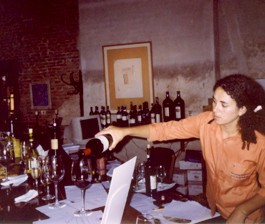
Wine tourism elsewhere in Mendoza is not the predictable, belly-up-to-the-bar model as in California. Experiences can run the gamut, from a tour of the “wine museum” and labyrinthine cellars of Bodega La Rural and a grudging pour of the house red to a personal tank-tasting at family winery Hacienda del Plata, followed by a home-cooked lunch of empanadas, grilled steak, chorizo and even more steak. Silver-haired Carmelo Patti is so enthusiastic about sharing his wine with visitors that he doesn’t bother selling it on the premises.

In the flat plain east of Mendoza, the vineyards of Familia Zuccardi are trained to the traditional South American arbor called the “parral. ” The vines form a roof, and grapes hang down in dappled sunlight. I was drawn to Zuccardi because of its organic wine I’d found at Whole Foods, and because they are experimenting with Zinfandel (too bad it was not bottled yet), among offering other unusual varietals. Zuccardi puts out several premium brands, but after the obligatory tour of tank farms, all that was poured was the uninspiring Santa Julia brand, both red and white. After several excellent tasting-only experiences, here was wine for sale but not for tasting. Did I mention that this was upside-down wine country?

Time to revisit that pyramid of Perdriel, Bodega Catena Zapata. Wishing to create a unique monument to the new wave of Argentine wine, Nicolás Catena decided on a Mayan pyramid styled on historic examples in Mexico. Constructed of locally quarried stone, it is solemn and impressive. A bouquet of aging wine wafts up from a center pit that’s reminiscent of some temple from an Indiana Jones movie.

Catena took his place in a generations-old family wine business, but he was inspired by Robert Mondavi during a visiting professorship in California. When Catena returned, he turned his bulk-wine-oriented business upside down, and became known as the “Mondavi of Argentina.” Opus One&–like mystique has certainly not been lost on him, but the winery impressed me for its immaculate equipment and tricked-out tanks. After marveling at the stainless steel wonders and taking in views from the balcony, the tour group was ushered into a parlor grandly detailed with native woods.

After one taste of the entry-level Alamos, Catena charges up to 24 pesos ($8) a pour. That’s big pesos by local standards—and not exactly the Napa of 30 years ago. The 2005 Alamos Malbec was bright, with light tannins, and characteristic cherry notes. The 2002 Angelica Zapata “Alta” Malbec was smoother, more structured, and . . . there it was again. That unmistakable burnt cherry, candied rubber tire taste. Like it or not, from Perdriel to Paso Robles, this seems to be Malbec’s distinctive characteristic. Finding the ultimate in Malbec, if this was not it, would take more than a week of diligent research. (Or it might profit from blending, after all.) Perhaps the real secret is to drink it with heaps of grass-fed, grilled beef.

One afternoon, I took a joyride to Villavicencio, the namesake of a popular spring water. The road shot through a flat stretch of desert, then cut into jagged purple mountains. The little VW chugged above the clouds on a narrow road etched into the mountain and alarmingly strewn with boulders. A herd of long-necked guanacos grazed in the mist; signposts randomly predicted a scenic viewpoint yet another few twisting kilometers further. Finally, the promised mirador, amid a desolate landscape. Alas, Aconcagua, the highest peak in the Americas, was totally obscured in clouds. In a howling silence, I stared into the mist.

Did I glimpse the cumbre, the apex of premium Argentine Malbec? It proves plentiful yet elusive, even with centuries of tradition and gleaming new facilities pumping out wine for export. A wide-ranging survey effort was stymied by the antique local model of wine tourism, while progress made through selecting from enticingly stocked wine shops was slowed, despite the long nights, by the limits of decorum. It would be grandiloquent to say that Argentina is still waking from its nightmares—of vast quantities of plonk. The boom has just begun, and Malbec is ready for a breakout. If not today, maybe tomorrow.

Locally Available Malbec

Catena Zapata 2004 Alamos Malbec ($7.49) Full bodied, dry like the wind from high desert mountains, notes of rubber chicken on a grill.

Catena Zapata 2005 Malbec ($20) More intense than what I tasted in Mendoza; viscous, ruby-violet with aroma of lingonberry syrup and new wine. Chalky tannin, piquant acidity.

La Boca 2007 Malbec ($2.99) Vintages vary in quality, not bad for the price. 2007 is a great improvement, medium-bodied, with a Petite Sirah&–like artist’s paint bouquet and sticky but not rough tannins. Structurally, a contender with some of the better-priced.

Melipal 2004 Malbec Mendoza ($15) Round, tannic, cherry cordials dipped in tar.

Tapiz 2004 Malbec, Mendoza ($15) Deep ruby, rhubarb pie, licorice, black currant, tire tread.

Viña Cobos 2006 El Felino Malbec ($20) A departure from the sour cherry and plum of 2005; this inky purple, full bodied and velvety wine is also reminiscent of Petite Sirah.

Quick dining snapshots by Bohemian staffers.

Winery news and reviews.

Food-related comings and goings, openings and closings, and other essays for those who love the kitchen and what it produces.

Recipes for food that you can actually make.

Quiet Riot

0

05.07.08


The light blinks on with the flick of a switch. A subtle hum, almost a purr, is barely distinguishable above the sound of distant traffic.

“Is it on?” asks rocket scientist Neal Saiki. “Oh, yeah, the light is on. You’re ready to go.”

The off-road motorcycle, made especially for the loud, dirty sport of motocross, jets silently across the pavement of a business park, leaving not even a wisp of smoke in its wake—which makes sense, considering this motorcycle isn’t burning anything. It runs completely on electricity and is one of the first motorbikes of its kind to be mass-marketed by an industry professional.

Using the newest in lithium-ion-battery technology and the same aluminum alloy used in Boeing airplanes, it’s lighter and quicker than many of its competitors. It’s fast, too, capable of accelerating from zero to 60 in four seconds. All that’s missing is the stench, smoke and irritating noise of a two-stroke motor.

As if a clean, fast and lightweight off-road motorcycle weren’t cool enough, Saiki, who designed mountain bikes for Trek, Santa Cruz Bicycles and a slew of individual mountain biking pros before founding Zero Motorcycles in 2006, is convinced his new Zero-X bike will save the dying sport of motocross in California.

It may sound melodramatic, but motocross is facing a real threat in this state. As housing developments sprout up next to formerly rural motocross tracks in growing cities, dirt bikes risk being fingered as a nuisance. Eventually, the cost of police citations can become so burdensome to track owners that they shut down, leaving enthusiasts to travel long distances to find a track where neighbors won’t complain.

“On the Central Coast of California alone, six tracks have been shut down in the last two years,” says Saiki. “It’s because of the noise. Every county in California has a noise ordinance covering off-road motorcycles. So really, people have no choice but to go to silent motorcycles.”

Saiki, a self-described “outdoorsman” who received an aerospace degree from Cal Poly before going to work for NASA early in his career, gazes thoughtfully into the distance as he recalls a particularly gruesome story that convinced him it was time to release the Zero-X.

“Just last year, someone in Los Gatos hated the sound of the off-road vehicles going by their property so much they strung up a rope across the road. A rider came by and it almost ripped his head off! The guy had to get like a hundred stitches across his neck,” says Saiki. “So these riders really need this technology right now.”

The environmental benefits of an electric motorbike are obvious, but the point Saiki is fixated on is that these vehicles are just as fun as any smog-spewing, gas-powered Kawasaki. Not to mention that it costs less than the equivalent of a penny a gallon to fill up, or around $300 a year to power.

“We’re fighting against this notion that electric vehicles are slow and boring,” says Saiki. “We want to show that this thing is absolutely incredible. The lack of noise also adds a different element to the racing itself, because you can actually hear what’s going on around you and the people creeping up behind. You can hear the trash talking, so it’s a lot more fun.”

Saiki is hoping the California Department of Parks and Recreation will share his excitement. He sold three units to the department for evaluation on use for rangers—tests are starting up in the Hollister hills—and he hopes it will want more. Montana’s Department of Fish and Game also has one out for evaluation, and Zero Motorcycle’s marketing drive is just warming up. Within the next few years, Saiki expects to sell thousands of units.

Daphne Green, deputy director of the parks department’s off-highway vehicle division, hasn’t had a chance to take the Zero-X out for a spin, but says she’s excited about innovations in the off-roading industry. Along with the Zero X, her division is also testing out environmentally friendly ATVs, another electric motorcycle and some dune buggy&–like creations known as “side-by-sides.”

“We’re looking within the department to reduce our carbon footprint,” she says. “The ultimate goal, as a division, is to look at how we can work with the governor’s directive to reduce our greenhouse gas emissions. The fact that this is a local company really helps accomplish that objective as well.”

Back in the parking lot, Saiki demonstrates the tricks he’s learned on the bike so far. As he pops a wheelie and lets out a yelp of pleasure, it’s obvious he’s realized a life dream. Saiki brings the bike to a stop, a grin brightening his face.

“I’ve always wanted to do a motorcycle, but I’ve also been very involved in the electric-car movement and the broader environmental movement,” he says, adding that NASA studies he conducted convinced him electric was the answer. “It was obvious that electric vehicles are the only things that are ecologically sound and will lessen our dependence on foreign oil. The current way motocross is set up, with gas-powered pickup trucks ferrying around gas-powered motorbikes, is ecologically crazy. The Zero-X is a great way to share the environment and have fun.”


Pressure Drop

0

05.07.08

The blank stares usually materialized in the middle of the sentence, before I could explain myself. “There’s this totally great ska album that just came out,” I’d say, and—boom! —the clanging metal gate of further interest in the matter fell over people’s faces like midnight storefronts on Market Street. Friends, co-workers, total strangers—no matter whom I tried to hype up for the Slackers’ amazing 2006 album, Peculiar, the reaction was the same: Who gives a fuck about ska anymore?

Believe me, it surprised no one more than myself—I hadn’t liked a ska album since 1993. But there was something about the record that seemed certifiably honest, a refreshing departure from the third-wave goofiness of bands like Reel Big Fish and Less Than Jake. Despite the music’s harking back to ancient Trojan rock-steady singles, the lyrics reveal a very modern world. Songs like “Propaganda,” “International War Criminals” and “Crazy” perfectly express through bouncy, lighthearted music the anger and frustration of living in America in 2006, during an illegal and immoral war, in a way that no hardcore band ever has, and a hopeful, solemn version of Bob Dylan’s “I Shall Be Released” closes out the album in perfect postscript.

The Slackers, led by the Bronx-alleyway drawl of vocalist Vic Ruggiero, released their seventh studio album last week called Self-Medication, and hopefully the title is not a reference to the escapist spiral down which keen awareness of political reality too often descends. On the album’s bleak black-and-white cover, a rail-thin girl looks to be passed out on heroin, and the title track chronicles getting by on a daily diet of whiskey and weed. The music, as well, inhabits druggy zones. Ruggiero’s vocals ride on a strange echo effect throughout the record, and the songs “Estranged” and “Stars” even break into Brazilian-hued psychedelia at times.

I have never seen the Slackers live, but the one girl I’ve found who shares my love of the band—she works at a downtown coffee shop—swears up and down that they’re the most amazing thing ever. She, like myself, has had to deal endlessly with friends recoiling from the word “ska” as if it were an obscenity, but she knows and I know that the Slackers are a golden needle in the haystack. See them or forever hold your peace on Saturday, May 10, at the Mystic Theatre, 23 Petaluma Blvd. N., Petaluma. 9pm. $15. 707.765.2121.


Clearing the Air

0

05.07.08

Having been repeatedly thwarted by compromised elections, three activist community members were seated on the board of directors for KBBF 89.1-FM last week as the result of a court order.

Evelina Molina, David Janda and Josué Lopez—the latter a one-time manager of the noncommercial Spanish-language station—were named by Sonoma County Superior Court Judge Mark Tansil to fill the three vacant seats.

They were part of a slate of seven board candidates, known collectively as “Voces” (“voices”), who sued the station and current GM Jesus Lozano following a series of three disputed or botched elections dating back to 2006. After reviewing the details of their complaint, Tansil found the incumbent board’s actions “clearly unlawful” and called for a new election to be held “as soon as reasonably possible this year.” It will be closely monitored by the court.

Tansil also demanded that Lozano be “totally and completely uninvolved” in the new election, writing that he “appears to have become an overly sensitive troublemaker.” While the judge stopped short of ousting Lozano altogether, as requested by Voces plaintiffs, he urged the interim manager to “voluntarily choose to move on.”

All this has a familiar ring to longtime supporters of KBBF, the oldest bilingual public radio station in the nation. Lopez, Molino and Lozano were all part of a reform-minded group of board candidates who swept into office in September 2005 following an earlier lawsuit against the station’s parent organization, Bilingual Broadcasting Foundation Inc. That suit also charged that fair elections had not been held for several years. But the new slate gradually splintered after Lozano, who was initially the board president, assumed the station manager role and proved to be an unexpectedly divisive leader.

Lozano’s critics charge he packed the 14-member board with cronies and drove out those who questioned his policies or methods. There have been allegations of intimidation, thinly veiled threats and three reported instances of tire-slashings inflicted against board members who have challenged Lozano, although all these incidents remain officially unexplained. These “ugly and unacceptable” events contributed to Judge Tansil’s decision to retain close supervisory control of the renewed election process.

Meanwhile, the federal Corporation for Public Broadcasting, a primary source of KBBF’s funding, has conducted its own investigation of the station’s finances, including interviews with several dissident former board members who allege fiscal improprieties by Lozano and others.


Bad Cooks, Etc.

0

05.07.08

Put yo’ hands in th’ sky if ya can’t bake a pie!

Though my all-time worst kitchen disaster involves a solid wall of flame from the stovetop to the ceiling (don’t ask), last week’s baking debacle runs a close second. Owing to a leaky pan, I managed to ooze chocolate cake batter all over the countertop, the rug, the linoleum, my clothes and, worst of all, the oven’s floor. Thick smoke, beeping fire alarms and a frazzled feline spread throughout the house. I hung my head, a defeated man.

If only I’d had the foresight to videotape my elaborate failure, I’d have a shot at winning the lovably sanguine America’s Worst Cook contest. Now in its second year, the contest scours the destroyed pans and burnt potholders of America for the nation’s worst cook and offers, as first prize, a trip for two to take cooking classes in New York City. Entering is easy: just go to the website and in 200 words or less, along with a video or photograph, explain why you, or someone you know, is an exceptionally lousy cook. If the site’s video clip is any indication, you’ll be up against people who put Frosted Flakes in their omelets. See www.americasworstcook.com for details.

Quality cooking abounds this weekend at Cirque du Gourmet , a benefit auction dinner held by Harmony Ark, the nonprofit organization dedicated to enhancing the educational experience of students in the Harmony Union School District of Occidental and Salmon Creek. A dinner prepared from local ingredients by area chefs Snap Gonella and Pierre Bernier highlights an evening of slow foods, local wines and eco-awareness, while a jazz band, fire dancers, stilt walkers and other spectacles entertain the senses.

With promised funding for schools both this year and next taken away by Gov. Schwarzenegger, Cirque du Gourmet’s auction—with sports tickets, motorcycle lessons and a week’s vacation in the limerick-friendly hamlet of Nantucket—should assist the kids in getting the education they deserve. It all goes down on Saturday, May 10, at Occidental CYO, 2136 Bohemian Hwy., Occidental. 5:30pm&–10:30pm. $55. [ http://www.harmonyark.org/ ]www.harmonyark.org.

Quick dining snapshots by Bohemian staffers.

Winery news and reviews.

Food-related comings and goings, openings and closings, and other essays for those who love the kitchen and what it produces.

Recipes for food that you can actually make.
First Bite

0

05.07.08

Editor’s note: First Bite is a new concept in restaurant writing. This is not a go-three-times, try-everything-on-the-menu report; rather, this is a quick snapshot of a single experience. We invite you to come along with our writers as they—informed, intelligent eaters like yourselves—have a simple meal at an area restaurant, just like you do.

The old Michele’s Restaurant in Railroad Square was a long-standing Santa Rosa institution, a pseudo-snazzy destination to affordably mark a special occasion—prom night, say, or perhaps a great uncle’s birthday. The first time I went there, it was to meet my future in-laws, and it’s fitting that they never actually became family. These things fall through. Sometimes young lovers never get married, sometimes old restaurants close.

Young love would have a better chance at Stark’s Steakhouse, should young love ever be able to afford it. Stark’s is a complete transformation from the building and budget we once knew, and though it attempts an “old roadhouse” feel, with all of its dark woods, recessed ceilings, fake fireplaces and stained hardwood floors, it’s more of a penthouse interpretation of an old roadhouse, with price tag to match.

We took the swankiness in stride and quelled it with a shared Cucumber Cocktail ($9), made with gin, a slice of cucumber and fresh squeezed lemon. We were then presented a piping loaf of fresh bread, served in a cast-iron dish and celestially slathered in butter, garlic and dill. I was sold. “God,” I said to my date, “is real, and he brought us this.”

A shared appetizer of potato and fennel gratin ($5) made us wish for seconds on the bread, the potatoes being on the hard side, but the arrival of the entrées sparked our anticipation. We were at Stark’s to celebrate a career change, and this was our grand reward. For my date, the beet and goat cheese ravioli ($20) was a well-curated concession to vegetarians. Hazelnut commingled with the goat cheese’s flavor, rounded out nicely with a truffle brown butter.

My steak arrived, a filet mignon ($36) with béarnaise. I cut into it, and I don’t quite remember what happened after I put it in my mouth, but according to my date, I nearly cried. After gazing in disbelief at the perfectly seared edges, I took another bite, just for proof. Yes, it was true: this was the best steak I’d ever had.

Our dessert of chocolate madeleines with a malt milkshake ($8) ended the night nicely. The madeleines were extremely rich, and the icy milkshake was just the right size.

Right before Michele’s closed, I went there one last time. The food wasn’t half as good as Stark’s, but I also didn’t have to hold my breath when I opened the bill, and I sat among regular working people. The steak at Stark’s is unbelievable, but be warned that the restaurant feels like a laminated tourism brochure instead of a place made for people like you and me. Keep it on the “extremely special occasion” list.

Stark’s Steakhouse, 521 Adams St., Santa Rosa. Open daily for dinner; weekdays for lunch. 707.546.5100.


Quick-and-dirty dashes through North Bay restaurants. These aren’t your standard “bring five friends and order everything on the menu” dining reviews.

Heidi Who?

0

05.07.08

I want my own fashion line. If someone like Heidi Montag gets her own fashion line, then c’mon. Me too.

I know what you’re thinking. Who’s Heidi Montag?

You can be forgiven for thinking this, because Heidi Montag isn’t actually famous. Oh, she’s known in some circles, certainly, but not for anything like talent, skill, smarts, accomplishments or gifts. She’s known, to borrow the phrase, for being known, and in Orange County, where Montag is based, being known is a Very Big Deal.

How big of a deal? Big enough that her fellow Orange County socialite Lauren Conrad has her own fashion line, too. Who’s Lauren Conrad, you ask? Ah. And so it starts all over again.

For the uninitiated, Montag and Conrad are both reality-show “stars,” having lived together in the same apartment on The Hills, an MTV reality spin-off of Laguna Beach: The Real Orange County, which itself was an MTV reality series riding the coattails of The O.C. That both girls, on such flimsy credentials, have struck clothing deals is evidence of the celebrity clothing line ballooning into a completely wheezing heap of narcissistic saturation.

Of course, no one expects that these fake famous people do any of the actual designing of clothes; most just nod approval and lend their name value. But the names are getting weaker, and if trends continue, the “anyone can have a clothing line” idea will force the post&–Project Runway fashion industry, like the music industry of the last 10 years, to rethink its model. Whereas the dominant consciousness in the music industry now favors the underdog, fashion is still elitist, because fashion is, by its nature, for the elite.

That’s all changing.

Remember how completely absurd it seemed when, in the cultural innocence of 1997, Puff Daddy announced his own clothing line? Now the idea of Sean John seems perfectly normal—stylish, actually (disregarding for the moment Sean John’s current hit: a printed T-shirt bearing the phrase “No Bitchassness” for $30). Same thing for millionaire No Doubt frontwoman Gwen Stefani, who iconized the bare midriff while preaching girl power for those size 4 and under, and who launched her line, L.A.M.B., in 2004. The latest from L.A.M.B. features pseudo-uniform items priced up to $425; a separate line, Harajuku Lovers, named after Stefani’s subservient entourage of doting Japanese preteen girls, offers slightly less expensive attire.

There’re the hip-hop enterprises. The Wu-Tang Clan started a line, though Wu-Tang’s Method Man later condemned the decision (“I never rocked that shit,” he said of the group’s Wu-Wear in 2003). Jay-Z followed suit with Rocawear, 50 Cent with G-Unit and Eminem with Shady Designs, most of them your basic baggy hood gear. Of rappers-turned-designers, only OutKast’s Andre 3000 seems to have the vision for a truly unique brand; his line arrives in the fall.

M by Madonna debuted at H&M stores last year as a surprisingly wearable collection, with items ranging from $20 to $350. And although Third World sweatshops are fashionably vilified, homogeny blossoms: Sheryl Crow and Victoria Beckham use the same Canadian clothing manufacturer, Western Glove Works, for their separate lines. Crow’s Bootheel Trading Co., launched last month, offers rugged-looking jeans, halters and vests. Beckham’s virtually unwearable DVB jeans, which run from size 0 to 8, with smaller thighs than any other brand, retail at an average of $250 per pair.

Mary Kate and Ashley Olsen recently augmented their namesake line of tween clothing sold at Wal-Mart with an upscale line, the Row, wishfully named after London’s Saville Row, with pieces ranging from $200 to $850. Jennifer Lopez has cracked the tween market with JustSweet, the sequel to her popular and extinct J.Lo line, and Daisy Fuentes continues to sell big at Kohl’s stores, despite a sweatshop flare-up last year. Paris Hilton’s got a shoe line. “I have shoes from, like, every top designer,” she said, unveiling her collection earlier this year at Macy’s, “but I love that my shoes are not, like, $800, like most of my [own] shoes.”

Justin Timberlake, he of the Midas touch, owns a red-hot jeans line with best friend Trace Ayala called William Rast, an anagram of their respective grandfather’s names. Lance Armstrong has his 10//2 collection with Nike—named after the day in 1996 when he was diagnosed with cancer—and Queer Eye for the Straight Guy alumnus Carson Kressley sells his line, Perfect, on the QVC shopping channel.

Sarah Jessica Parker, bless her soul, has the right idea. Her Bitten line is both inexpensive and accessible, with sizes from 2 to 22 and no item priced over $20.

Sometimes all it takes is a speculative mention of a clothing launch to attract attention. Ludacris’ line, announced as C.P. Time, never came to light, and Kanye West’s announced line hasn’t either. Other celebrities who’ve made announcements but haven’t delivered: singer Amy Winehouse, Lost star Michelle Rodriguez, rapper Juelz Santana, R&B singer Usher and sex-tape fake celebrity Kim Kardashian.

Which brings us back to Orange County, to reality shows and to Lauren Conrad. Looking at Conrad’s eponymous fashion line for uniqueness is like looking at a wet pile of flour for interest. Manufactured largely with Modal, a textile used by Old Navy, the line is interesting only in its comprehensive blandness, slipping at times into unforgiving chintz.

The “Lindsay Dress” is advertised, in all seriousness, as “a muumuu with a V-neck front and thin spaghetti straps,” and Conrad’s most expensive outfit, the “Julie Jumper,” is a grotesque bunched top that sags downward and inward to unite with a pair of skimpy shorts. If the Michelin Man wearing Daisy Dukes is the girlish look you’ve been pining for, you’re only $180 poorer toward your goal. And if you’ve still got some Franklins to blow, why not go for the “Cheryl Tank,” a generic, 100 percent cotton tank top priced at $100?

Heidi Montag, Conrad’s ex-best friend and ex-co-“star” on The Hills, has publicly slammed Conrad’s line, calling it “overpriced” and “not necessarily something I would wear.” Her comments are part of a long, prosperous feud that has kept the two girls squarely in the tabloid limelight. (At press time, Montag’s Wikipedia entry had been altered so that her occupation read “whore.”) “When we were in school,” the 21-year-old said of her former fashion school classmate, “I was the designer, and she was in, like, product development.”

Launched last month at a Hollywood mall, Montag’s line is called Heidiwood and is characterized by those skanky design elements that befit someone 21 years old with a boob job. Someone like, say, Heidi Montag. Ever the entrepreneur, she’s also released a song on iTunes with exorbitantly processed vocals, and recently entered the political arena with an endorsement true to her Orange County roots. She’s planning on voting for John McCain as soon as she gets around to registering to vote.


Wine Tasting Room of the Week

0


A foodie bazaar in a gourmet ghetto, Plaza Farms lives up to its agricultural intimation in at least this respect: tenancy is highly seasonal and subject to change. On the south side of Healdsburg Plaza, the open space is a deconstructed boutique mall, the several storefronts delineated by posts and beams. Bellwether Farms once offered sheep cheese samples here, but has since roamed on to other pastures. At the tasting bar, a crop of wineries has come and gone. Shelf space currently devoted to Bradford Mountain and Starry Night Winery will only last through the month, as Plaza Farms recently announced its intention to close. Time, she is short.

Bradford Mountain”s Grist Vineyard turns out a characteristic Dry Creek Zinfandel that, like its location some 1,000 feet above the Valley, may be just a notch above. A dusty layer of white pepper coats the 2005 Grist Vineyard Zinfandel”s ($34) sweet bramble berry fruit, which in turn envelopes the prickly tannin—a unified, warm wine. The 2005 Grist Vineyard Syrah ($34) is another sweet mouthful with a dry finish. Susceptible types, perhaps prompted by Bradford Mountain”s wild boar logo, may wander to the back of Plaza Farms for a pork cheek sandwich at Bovolo (where “slow food” is served fast).

The light of day seldom sees a Starry Night winetasting, so it”s nice to catch up before they wink out. No tasting is scheduled at the stealth winery located in a Novato industrial zone. The former Frosty Acres frozen foods warehouse is even more anonymous with its old 1976 patriotic mural now painted over, and its Frosty Lane street sign is regularly absconded with around Christmas time. The mini-mural on the Starry Night label is a vineyard-y take on Van Gogh”s high-recognition classic.

Starry Night is a specialist in hearty Zin from the old school. The 2005 Tom Feeney Ranch Zinfandel ($28) is a toothsome brew of overripe black fruit, a juicy, raisiny, redwoody classic. Hugely appealing at a recession-friendly price point, the 2006 Napa Valley Sauvignon Blanc ($14) has got a truckload of ripe honeydew melon and assorted tropical fruits in each glass. A little on the sweet side, but unlike hot and austere Sauv Blancs, the tasty fruit just keeps rolling in. Enjoyed recently on a frosty night, it might pair even better with a warm afternoon when sunflowers are in season.

Plaza Farms, 106 Matheson St., Healdsburg. Open 10am to 6pm daily; no fee for wine tasting. For more information, visit [ http://www.plazafarms.com/ ]www.plazafarms.com.


View All

Revolution Sound

0

05.07.08

If there’s one thing Sonicbloom want you to know, it’s that they are a hip-hop group. It might have been hard to tell by the lineup in Sebastopol last Friday night, when Sonicbloom, the most promising hip-hop group to emerge from Sonoma County in a long time, found themselves ridiculously billed as “grassroots freestyle.” Asked if they thought the club was uneasy about advertising hip-hop, the members all nodded in immediate agreement, and Spends (Spencer Williams, one of the group’s MCs) summed it up. “Here’s the gist of it,” he said. “They don’t want to get their bathrooms tagged.”

But Sonicbloom aren’t what most people think of when they think of hip-hop. Centered with a worldly consciousness, Paradigm Lift, the group’s second full-length album, which hits stores next week, contains six full pages of printed lyrics, a rarity in hip-hop. Rarer still is that the subject matter spans politics, spirituality and culture without sounding anything but dope.

Sonicbloom member Penman (Hunter Blackwell) understands the incorrect association. “When I first started making hip-hop, I felt a little bit of guilt with the connotations in the mass culture that hip-hop carries with it,” he says. “We represent the smallest fraction of hip-hop artists, really, and also the most potent and real element of the culture. What hip-hop started from, we represent.”

Earlier in the night, Sonicbloom had represented with a vengeance. So completely clear on the mic that at times it seemed the group was lip-synching (they weren’t), they powered through songs like the economic indictment of “Under the Table” and the early ’80s funk groove of “Revolution Sound.” To lyrics like “What do you do when every senator has got a serious scotoma? / Percepticide got society in a coma,” the group performed the song with balled fists in the air, dancing and dropping insight at the same time.

It’s a balance that J. Kin (Jason Kendall) says is imperative. “A lotta people now have ADD, and you gotta catch ’em fast. But we figure if you catch ’em with the beat and then give ’em the content afterwards, they be like, ‘Oh, you can have a slappin’ beat and still have content?’

“A lotta the good beats go in the industry,” he continues, “and you be like, ‘That’s a tight beat, but there’s nothin’ said over it.’ It’s like, ‘Damn, that was a waste of a good beat.'”

Sonicbloom hooked up in 2003, when Blackwell quit his job, left his girlfriend and dropped out of college in Eugene, Ore., to live in a tent in Williams’ kitchen. Along with longtime producer Mr. Tay (Matt McGlasson), the three started writing like mad, releasing a debut album in 2005. Eventually Kendall and Adomant (Adam Steiner) came on board, and the group recently recruited Deezy (Noah Deitz) as their live DJ.

Over meticulous and guttural beats, Sonicbloom’s vocals range from subterranean bellow to high falsetto, often meeting in perfect harmony on a chorus. Steiner raps in a fast, robotic staccato style, like his words keep getting chopped off before he starts another, and Williams has a direct flow similar to Slug, from the Minneapolis group Atmosphere, although with less desperation. Blackwell is the hardest to place. Completely born for the mic, his voice carries the noirish cadence of Wolfman Jack with the animation of Bob Barker in a syncopated, experimental delivery.

All these elements create a force that, as demonstrated earlier in the night, cannot be stopped by cutting off the sound system to finish their set. The group criticizes each other, laughs at each other and contradicts each other, yet an overriding love unites them. “I definitely think that all of us consider ourselves spiritual people,” Steiner says. “That’s what brought us together, was just connecting on every level. It’s good to have folks like this. We’re family, really, more than friends.”

Chalk one up for grassroots freestyle.

Sonicbloom’s album ‘Paradigm Lift’ hits stores this Tuesday. For more, see [ http://www.myspace.com/sonicbloom ]www.myspace.com/sonicbloom.


Jeremiah’s divine purpose

05.07.08

I am a close family friend to the Chass family ( ). Jeremiah grew up with my children and was as close to our family as our own son. Gretchen Giles’ editorial reveals the pain and sorrow of a mother struggling to put the pieces together after her beloved son was killed at the hands of the county sheriff’s department. Thank you for such a heartfelt understanding behind this graphic autopsy. Jeremiah was a young man who wanted to change the world. He didn’t worry about what other high school kids thought about him; he was more concerned about what he could do to bring peace and harmony to the community, as well as to the world. 

Everyone who knew Jeremiah from the time he was a young boy believed he had a divine purpose to his life. Now in his death, he still speaks to the hearts and souls of the community he cared so much about. Blessings.

Sheridith Maresh

Sebastopol

Ms. Giles is a talented writer with a poet’s heart. No one reading her recounting of the autopsy detailing the loss of Jeremiah Chase could help but be moved to tears.

A year after the mental-health community was bought off by Mayor Blanchard, little has changed in our community. Five more souls have been lost to police violence. The county jail is being referred to by the sheriff/coroner as the de facto “mental health facility” for Sonoma County. Increased training of officers in response to the Chase killing has done little more than give police officers another excuse to bill for overtime pay.

When will the citizens and voters of Sonoma County stand up to those they elected and tell them that enough is enough?

Stephen Gale

Santa Rosa

Sheriffs with guns reversed what [Jeremiah Chass’] parents created, not the autopsy. The autopsy allowed the truth of what happened to his body be recorded in the hopes of justice. Our outrage should be directed towards a corrupt DA and the sheriffs who shot him, not the doctor and hard-working people who cleaned up and recorded the truth. Turn your focus to the real perpetrators of violence and not the compassionate and hardworking people of the coroner’s office.

Amy May Beckman

Penngrove

With tear-filled eyes, I must comment on this soul-touching article. I am a mother of older children and granny to 11. One of my grandchildren is almost identical in weight and age as was Jeremiah Chass. We nicknamed him “noodles” because he is so thin. But that grandchild is so loved, as I know Jeremiah’s mother loved him. No cop needed to murder this young one. The writer of this article said it all, and put love and dignity to the most horrible autopsy report I could ever read. I will probably read the article over and over again in hopes of gaining each time more strength to fight against killers of our children and others. When you call 911 for help, keep in the back of your mind that even though law enforcement officers are to serve and protect us, they are also capable of tiring and will riddle us with bullets. Sad. Sad. Sad.

Cora Lee Simmons,Round Valley Indians for Justice

Covelo

Regarding “We Are Family?,” the feature story by P. Joseph Potocki (April 30) on the Costco dual-system hiring/pay practices, I was shocked to find out that even Costco has joined the ranks of the big corporations that have devoted considerable “overtime” to finding new ways to bolster the bottom line profit margins at the expense of loyal workers. It seems quite clear that WDS and CDS demo workers essentially work only for Costco and thus have been forced into the ever growing percentage of the American workforce that finds itself at or below the poverty line in spite of their attempts to be honorable workers rather than dishonorable welfare recipients.

When will deep-pocket corporate management begin to realize the difference between the two groups and take steps to restore some semblance of honor to those Americans whose work ethics are loftier than their own?

There is something deeply disturbing about a corporate policy that figures out ways and means to basically cheat some workers who perform just as admirably as other workers, while publicly proclaiming to be the shining star in the warehouse-retail industry. I might have expected as much from Wal-Mart’s Sam’s Club, but was shocked to learn the real culprit, in this case, to be Costco.

It is frightening to me to envision a sizable percentage of a not-too-distant future American workforce that can only afford what full-time workers in Third World countries can afford. Have CEOs begun to unravel, wittingly or unwittingly, the strands that used to anchor the American dream? Sure looks like it.

James Sudalnik

Laguna Niguel


&–&–>

The Malbec Diaries

05.07.08 wine countryI could have been zipping through California wine country on a brisk autumn morning if it hadn't been for a few minor details. It was late March, for one. The familiar scenes to my right—vineyards, a Wal-Mart, a rushing river, dry hills—were backdropped by snowcapped peaks, as if the Sierra Nevada towered directly over the Napa Valley. I turned...

Quiet Riot

05.07.08The light blinks on with the flick of a switch. A subtle hum, almost a purr, is barely distinguishable above the sound of distant traffic. "Is it on?" asks rocket scientist Neal Saiki. "Oh, yeah, the light is on. You're ready to go." The off-road motorcycle, made especially for the loud, dirty sport of motocross, jets silently across the...

Pressure Drop

05.07.08The blank stares usually materialized in the middle of the sentence, before I could explain myself. "There's this totally great ska album that just came out," I'd say, and—boom! —the clanging metal gate of further interest in the matter fell over people's faces like midnight storefronts on Market Street. Friends, co-workers, total strangers—no matter whom I tried to hype...

Clearing the Air

05.07.08Having been repeatedly thwarted by compromised elections, three activist community members were seated on the board of directors for KBBF 89.1-FM last week as the result of a court order.Evelina Molina, David Janda and Josué Lopez—the latter a one-time manager of the noncommercial Spanish-language station—were named by Sonoma County Superior Court Judge Mark Tansil to fill the three vacant...

Bad Cooks, Etc.

05.07.08 Put yo' hands in th' sky if ya can't bake a pie!Though my all-time worst kitchen disaster involves a solid wall of flame from the stovetop to the ceiling (don't ask), last week's baking debacle runs a close second. Owing to a leaky pan, I managed to ooze chocolate cake batter all over the countertop, the rug, the...

First Bite

05.07.08Editor's note: First Bite is a new concept in restaurant writing. This is not a go-three-times, try-everything-on-the-menu report; rather, this is a quick snapshot of a single experience. We invite you to come along with our writers as they—informed, intelligent eaters like yourselves—have a simple meal at an area restaurant, just like you do. The old Michele's Restaurant in...

Heidi Who?

05.07.08I want my own fashion line. If someone like Heidi Montag gets her own fashion line, then c'mon. Me too. I know what you're thinking. Who's Heidi Montag?You can be forgiven for thinking this, because Heidi Montag isn't actually famous. Oh, she's known in some circles, certainly, but not for anything like talent, skill, smarts, accomplishments or gifts. She's known,...

Revolution Sound

05.07.08 If there's one thing Sonicbloom want you to know, it's that they are a hip-hop group. It might have been hard to tell by the lineup in Sebastopol last Friday night, when Sonicbloom, the most promising hip-hop group to emerge from Sonoma County in a long time, found themselves ridiculously billed as "grassroots freestyle." Asked if they thought the...

Jeremiah’s divine purpose

05.07.08I am a close family friend to the Chass family ( ). Jeremiah grew up with my children and was as close to our family as our own son. Gretchen Giles' editorial reveals the pain and sorrow of a mother struggling to put the pieces together after her beloved son was killed at the hands of the county sheriff's...
11,084FansLike
4,446FollowersFollow
6,928FollowersFollow