News Blast

0

06.11.08

Making Marry

“It was a surprise to us. We didn’t have a clue that it was happening,” says Charles Metz, organizer of the commitment ceremony slated for the June 15 Sonoma County Pride gathering. Metz’s surprise was the May 15 California Supreme Court ruling that a ban on gay marriage was unconstitutional and that gays and lesbians have a “fundamental right to marry” that deserves “respect and dignity.”

Not being one to tarry, Metz immediately contacted Sonoma County Clerk Janice Atkinson and invited her and her staff to come up to the Pride event to hand out marriage licenses and literature and, most importantly, to take wedding appointments. “I told her that it would be a lot easier to answer questions by 300 people coming up to a booth than getting 300 phone calls,” Metz chuckles. “Sometimes the wheels of government move slowly, but [Atkinson] has been very supportive and excited, as are we.”

Not only is Atkinson taking her own personal time on Sunday to provide literature and information, she and her staff are planning to work late every day in June, keeping the Clerk’s office open until 8pm beginning on June 16; at 5:01pm on that day, gays and lesbians can legally marry in California. “This certainly is a historic decision, and we’re about to enter into new waters here,” Atkinson says. The office is also opening all day on Saturday, June 21, to accommodate lovebirds. “There are a lot of people who have been waiting a long time,” she says, warning that while her office will try to accommodate walk-ins, an appointment is hugely recommended.

An initiative to amend the state constitution to forever ban gay marriages in California qualified for the November ballot in early June. “That doesn’t stop people from loving each other,” Metz says. “Whatever people think, whatever society says, it doesn’t stop what two people feel, and makes events like this even more important and special, not only to our community but to the community at large.”

Noting that this year’s theme is “Loving Self, Loving Others,” he sighs. “As LGBT people, we’ve had to learn to love ourselves sometimes to the disappointment of those we care about. When we are able to love ourselves, it gives us a wonderful capacity to love those around us. That’s the direction our country and our people need to go.”

The culmination of a weeklong celebration, the Sonoma County Pride event is slated for Sunday, June 15, at the Wells Fargo Center. 50 Mark West Springs Road. Noon to 5pm; commitment ceremony, 3pm. Free. [ http://www.sonomacountypride.org ]www.sonomacountypride.org.


Class Struggle

0

06.11.08


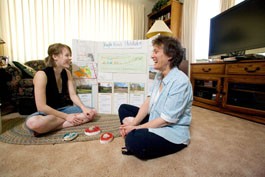
While Helen sits on the shore with her six-year-old son in her lap reading about pollywogs, her nine-year-old daughter is wading out into the shallows to collect a bucket of river water. Later, the three of them will test the water’s pH and inspect for macro-invertebrates. For today, this shore is Helen’s children’s schoolroom; everyday, Helen is their teacher. In the eyes of those unsympathetic to home-schooling, Helen’s a renegade. Without a teaching credential, Helen could actually be a lawbreaker.

This February, Justice H. Walter Croskey of the Second District Court of Appeal in Los Angeles ruled that parents had to be credentialed teachers in order to home-school their own children, or risk prosecution. In his ruling, he called upon a statute of the California Education Code that states, “[A]ll children between the ages of 6 and 18 must attend a public full-time day school unless otherwise exempted.”

“I think it’s pretty ridiculous,” says mother Jelehla Ziemba. She home-schooled her son and daughter until high school; they now attend UC Davis and the University of Puget Sound. “First of all, our children do not belong to the state, so it has no right to dictate how they should be educated,” Ziemba says. “The state recognizes this truth, which is why it doesn’t try to tell private schools that their teachers must be credentialed. Additionally, the excellent experience of thousands of home-schooled and unschooled children tells us that a credential is not necessary for teaching out of the classroom.”

One thing’s clear. Judge Croskey stepped into touchy territory as he tried to define the role of education in our society, writing in his judgment, “A primary purpose of the educational system is to train schoolchildren in good citizenship, patriotism and loyalty to the state and the nation as a means of protecting the public welfare.”

Who’s to say what the primary purposes of education are? How much freedom should families have in determining what their children learn and how? And finally, if private schools may employ teachers without credentials, why can’t parents teach their own children without one?

From the Latin for ‘Trust’

In California, there are an estimated 166,000 children learning in a vast variety of home-school settings, and the number is increasing 7 to 12 percent a year nationally. With such a trend, it’s no wonder that Judge Croskey’s ruling has launched a debate concerning not only the accountability but also the value of home-schooling in general. Not surprisingly, Sonoma, Napa and Marin counties lead the state in numbers of home-schooled children.

“It is my opinion that noncredentialed teachers are, in many cases, better able to teach than credentialed teachers,” says Dawn Martin, coordinator of Christian Home Educators of Rohnert Park. She has home-schooled her four children—now in grades one, four, seven and eight—for the past nine years. “As statistics in California prove, the credentialed teachers in this state have done less than a poor job. I think parents are wonderfully suited to teach their own children, in part because they know them so well. They can choose the teaching style best adapted to their child and move on when the student is ready, and not be held back by 29 others.”

The case at the heart of this ruling involves Phillip and Mary Long, who came before the Los Angeles County Department of Children and Family Services on charges of having physically abused two of their eight children. Enrolled in Sunland Christian School, a private religious academy in Sylmar, Los Angeles County, the children were taught at home by their mother, who has no teaching credential. This, the courts ruled, put the family in violation of the law.

As evinced in the Long case, there are laws on the books to protect children from physical or emotional harm, but how can we ensure that they are receiving an adequate education in the absence of some sort of accountability? How can private and public interests be balanced?

“A credential isn’t an absolute assurance of caliber, but it’s so far the only way of checking the qualifications of a teacher. When a parent is teaching, there’s no way of verifying what he or she is teaching or how well,” says Grace Larsen, a retired academic dean at College of Holy Names, who served six years on the Western Association of Schools and Colleges accreditation committee.

“Home-schoolers need some sort of oversight, a board of representatives, including parents, educators and others. Just as with the U.S. democracy—which, in my opinion, right now isn’t working as well as it might—it’s still the best we have: a public majority that helps temper individual interests and allows for transparency.”

For some, it’s exactly the public majority who’s to be feared. They feel that matters within the home should be free from public judgment. There’s very little that raises the ire of a parent more than a governmental edict concerning childrearing. Witness the recent maelstrom caused by California’s proposed ban on spanking.

“I trust home-school parents more than the state to decide what is important for their kids’ education,” says Susie Miller, chairperson of Sonoma County Homeschoolers Association. Miller unschools her three children under the auspices of the private institution she established in her home, Three Boys Farm School. “The state is only interested in numbers, and it’s failing miserably at reaching its own goals,” Miller charges. “It’s basically a freedom of speech issue. Democracy. My issues with the state of education are some of the main reasons I home-school my kids—to get out from under the oversight of the state. I am the best judge for my own family.”

One Size Fits the Average

Judge Croskey’s recent ruling calls more than just home-schoolers’ accountability into question; it’s opened a discussion about the value of, and reasons for, home-schooling itself. These reasons seem motivated equally by the particular virtues of home-based, personalized education and the growing perception that mainstream public schools are failing our children.

“I wish to spend more time with [my daughter]; childhood is so fleeting!” says Penny Winett, whose daughter divides her time between home and classes at Harmony Blend School, which combines classroom instruction with home-schooling. “I am able to give her my full attention, work with her at her own level, offer her space to ‘think out of the box,’ nurture her individuality and shelter her a bit from negative influences which are so prevalent in our school systems today.”

Tamara, a mother who runs a private school for her two children, ages 11 and four, in her home and prefers her last name not be used, keeps a running list of reasons why the sacrifice is worth it: “Learning at the pace needed to master a subject before moving on; exploring in-depth areas of interest; regular field trips to see subjects firsthand; a smorgasbord of never-ending extracurricular opportunities; not having the pressure of competing with other students clouding their focus; not having to deal daily with the politics of cliques, what who is wearing, who likes whom.”

Other parents talk about home-schooling as the best way to meet their children’s particular needs. They have withdrawn their children from mainstream programs to celebrate the very differences that in a public school setting would be considered problematic.

“I had two miserable years of experience with public school with my first child,” says Madeline Schnapp. “My son was an extremely bright child put in classes with 32 to 34 kids. He was rambunctious and couldn’t sit still. The solution that was offered to us was ‘drug him.’ Home-school allowed us to create an environment in which we could combine academics with lots of movement. My son is now attending a top four-year college and doing well.” Schnapp teaches history and economics to her 14-year old daughter, who is enrolled at Orchard View, an independent home-study program, and who takes additional courses through the Santa Rosa Junior College, at a local theater and with private tutors.

A similar desire motivated Hilary Avalon, whose child now is also enrolled at Orchard View. “Our son is a ‘square peg’ and had trouble fitting in at school,” she explains. “He is very advanced in some areas and lags behind his grade in others—typical ‘uneven’ development you will probably find in lots of home-schooled kids. The home school situation fits his needs much better.”

No Child Left Standing

With its increased focus on testing and stringent curricular emphasis on mathematics and English to the near exclusion of all other subjects, the Bush administration’s No Child Left Behind Act of 2001 (NCLB) has driven many parents out of the schools. Teacher Lisë Lopez says that among her colleagues in the Oakland public schools, it’s familiarly called “No Child Left Standing.” Lopez might have included teachers in that saying, as these new curricula are, in her words, “completely soul-sucking” for teachers. Lopez says that her former principal wanted his teachers to follow the set lesson plans so strictly that he could walk out of one fourth-grade class midsentence and have the sentence finished in the fourth-grade class next door.

“The federal government is too large and bureaucratic to effectively set rules for all 50 states and more than 100 million students,” charges Madeline Schnapp. “Education should be the purview of each individual state. If an individual state fails to provide decent education for kids, the market will solve the problem and parents will seek educational opportunities elsewhere. The one-size-fits-all approach means that teachers now teach to a standard test and mediocrity rules.”

Another way parents believe that schools are failing is that they are being increasingly run as corporations, with private interests dictating what is taught and how.

“I truly believe [this policy] is bankrupting the state of education financially, intellectually and morally,” says the Sonoma County Homeschoolers Association’s Miller. “It’s a tragedy that lobbyists, politicians and large publishing companies control what our kids have to learn in school.”

Contrast this with the concept at the foundation of unschooling, or student-led education, where there is no set curriculum. A child pursues her own interests, facilitated by parents and other teachers who recognize and encourage her, opening and relating each subject to others, following a more organic model.

“When we unschooled, we spent every waking moment learning.” Jelehla Ziemba says, a sentiment repeated by other home-school parents. “My children learned to cook, sew, do laundry, make change, draw, paint, sculpt, sing, play music, skate, do gymnastics and dance. Oh, and along the way, they learned to read and write and do math, [as well as learn] about history, vampires, agriculture, iron-working, government, health, etcetera.”

Felicia Malone, 14, agrees. “You can go at your own pace, instead of being hustled along with the majority. For example, math was one of my weaker subjects, and in school I was falling behind at a very fast rate. Once I started home-schooling, I was able to focus on where I needed help and on my interests. I love creative writing, and I have the opportunity to write much more. My passion is musical theater, which involves voice, dance and acting. I take classes in each of these subjects, which I would never have time to do if I were in high school.”

What Tests Test

Parents are also dismayed by the exaggerated importance given to standardized testing. Used for calculating each school’s Academic Performance Index and for determining whether elementary and middle schools are making Adequate Yearly Progress, they are directly linked to monetary and incentive awards. People object not only to the time it takes to administer these tests, but to the notion of “teaching to the test,” which has less concern for context or the applicability of concepts than it does student test performance.

“Standardized testing shows more of what a child doesn’t know than what he does know,” Miller says. “Many children have expertise and ability in many subject areas that they cannot demonstrate on a test because of language barriers, reading ability, fine motor control or other factors. In addition, the way people are now teaching to the test and the rewards they are given when their kids do well or better is immoral and further invalidates the results.”

Carol Rogers co-directs the home-study program at Orchard View in Sebastopol. Because the school is a public charter school accredited and funded by the state of California, it must be NCLB-compliant. “Administrators and teachers spend an enormous amount of time administering STAR tests, yet there is value in seeing students’ strengths and weaknesses,” Rogers says. “I think that the tests are more an indicator of the school’s success than the students’. Unfortunately, we all have to take tests in life, so it is a chance for students to have exposure to this process. But I would like to see tests either be made shorter or administered less often.”

But what about home-schooled students who are not enrolled in such an umbrella group? Without a school’s testing or structured methods of evaluating either a teacher’s effectiveness or a student’s progress, is another form of oversight necessary to ensure a home-schooled student gets a solid education?

“The only supervision/oversight that is important to me is God’s,” says Dawn Martin. “I feel that if I am following what God dictates for us—which is to submit to the laws of the country and respect its leaders—and if the kids are learning and growing as members of society, we are doing well.”

Home-school students score higher on standardized tests overall than the state average. The most recent U.S. Department of Education study reports that “the average SAT score for home-schoolers in 2000 was 1100, compared with 1019 for the general population.” And for many, home-schooling spells success. Danville home-schooler Evan O’Dorney was the 2007 champion of the Scripps National Spelling Bee. This year’s third runner-up and 12 percent of all contestants are home-schooled. It may be a chicken-and-egg situation, though: it’s unclear whether home-schooling helps students excel or whether higher achievers are opting to home-school, causing a kind of brain drain along with the drain of funds from public schools. But that’s another story.

Fruits of the Debate

In response to the outcry from parents and educators, the California Court of Appeals granted a motion to rehear the case either this month or in July, which has temporarily rendered the ruling nonbinding. Attorney General Jerry Brown and Gov. Schwarzenegger have filed amicus curiae briefs in support of the appeal. They’ve been joined by several other groups, including the ACLU, American Center for Law and Justice, the Western Center for Law and Policy, the California Homeschool Network, the Christian Home Educators Association of California and the HomeSchool Association of California. The decision should be delivered by the end of the summer, just as many are returning to school. Of course, for the 166,000-plus California home-schoolers, school never lets out.

“My opinion is a parent has the absolute right to be the one to raise their children, period,” says Tamara, the mother who created her own school for her two kids. “There may be some circumstances that parents’ rights need to be infringed upon if they are being abusive to their children but beyond those truly rare exceptions, parents need to be able to examine their goals for their family and look at what is best for their children in alignment with their values and what they want their children to experience.

“The right to educate one’s child in the way they see best should be a core right of any parent.”

Pathway Charter School, 607 Bobelaine Drive, Santa Rosa.

707.573.6117. [ http://www.pathways.schoolengine.com ]www.pathways.schoolengine.com.

Orchard View School, 700 Water Trough Road, Sebastopol.

707.823.4709.

www.orchardviewschool.org.

California Homeschool Network,

www.californiahomeschool.net/default.htm.

Sonoma County Homeschool Association,

http://schaweb.home.comcast.net/~schaweb.

Marin Homeschool Families,

www.marinhomeschoolers.com.

MindExplorers in Napa,

http://groups.yahoo.com/group/mindexplorers.

Christian Home Educators of Rohnert Park, 707.591.0421.

bu***********@*****st.net.

Napa Valley Home Educators, Sandy Bailey. 707.252.0272.

—A.Y.


Joshua Redman and Charlie Haden at the Healdsburg Jazz Festival

0


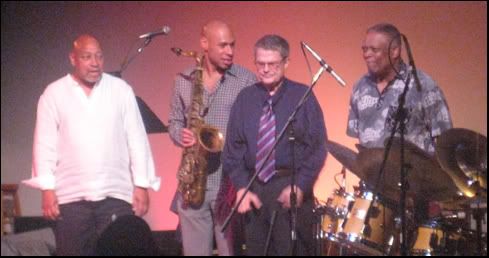
“It must be Healdsburg,” explained a tranquil Kenny Barron to the crowd. “It makes you so relaxed.”
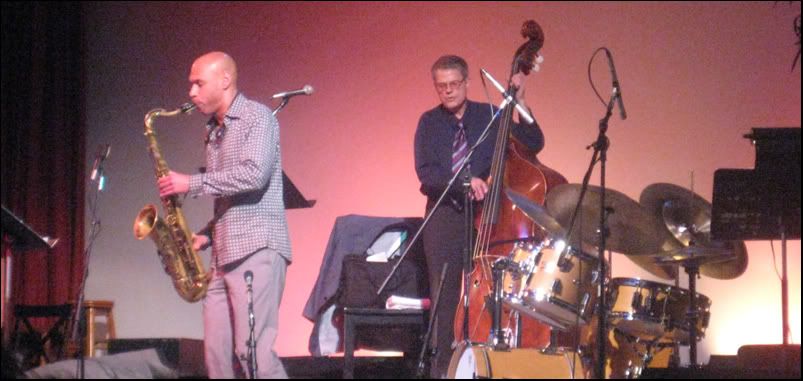
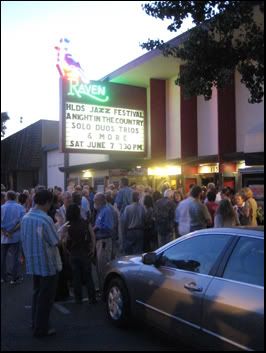
Billed as “A Night in the Country,” last night’s flagship concert for the Healdsburg Jazz Festival could have easily been called “A Night in Wine Country,” with all of that term’s implied reassurance of the sweet life. In a decidedly mellow program of mostly standards and ballads, some of jazz’s finest players serenaded a well-dressed and middle-aged crowd at the Raven Theater with solos smooth and subtle as a vintage chardonnay and arrangements as quiet and nonintrusive as the engine of a Lexus.
It was the damnedest thing: Joshua Redman, Charlie Haden, Kenny Barron, and Billy Hart are all intensely creative players whom in the past I’ve seen deliver searing performances. Yet each member of the quartet last night appeared weirdly subdued, as if they either made a collective pact beforehand or were otherwise instructed to keep the show within the lines of accessibility for an unadventurous Healdsburg crowd. This is neither a compliment, nor is it particularly a complaint—although when one hears “Body and Soul” twice in one night, it’s hard not to feel one’s taste is underestimated.
So ballads it was, and if you’re gonna have ballads on order, Joshua Redman is the man to call. Redman’s velvety tone, with its Hawkins/Webster-lite hue, toyed with but never revealed the edges of the tenor sax last night; it was instantly apparent why he’s a star. Coupled with his melodic conception, Redman was perfect for songs like “What’ll I Do,” during which his captivating, lyrical solo—filled with sleek arpeggios and unfathomable bends—was the entire evening’s highlight. And that’s no small feat, since his lengthy intro to “My Old Flame” just minutes before, played alone in the center of the stage to awed silence, ran a close second; it was as if a loving monologue of anxiety and sorrow had been pulled out of thin air.
These heights, however, would have had a much stronger impact in a less plodding context. Paced incrementally, the set opened with Barron playing a stride-tinged solo version of “I’m Getting Sentimental Over You,” and one by one, each player joined in after every couple song—but since Hart on drums came last, most of the set was without a prevalent pulse. The theater was hot. My mind wandered. The band kept playing slow, meandering tunes.
It wasn’t until the very end that things reached full swing, with an appropriate choice: an uptempo rendering of “Strike Up The Band,” with Hart rattling out some attention-grabbing drum roll-offs and prodding his cohorts to finally let loose. Everyone on the stand suddenly came to life, playing the way I was used to them playing, and after a program drenched in molasses, it felt like a majestic coming up for fresh air.
A standing ovation arrived from the sold-out crowd, but the encore, syrupy enough, was an easy-breezy-beautiful rendition of “Body and Soul.” Our tickets were $50 each, and you’d think we’d want to get all of our money’s worth, but it was just too straining. We exchanged glances and bailed.

James Newton and Bennie Maupin: The Eric Dolphy Tribute at the Healdsburg Jazz Festival

1


The jazz story of the year isn’t the discovery of some tapes by Charlie Parker and Dizzy Gillespie. It’s not some long-lost recordings of John Coltrane and Thelonious Monk at Carnegie Hall. No, the jazz story of the year—and I’m serving this up to you on a platter, Downbeat—is James Newton’s recent acquisition of unheard-of handwritten sheet music by Eric Dolphy, and his incredible, incredible group with Bennie Maupin that debuted tonight at the Healdsburg Jazz Festival.
There are certain works of art which we assume are too unique to ever be re-created. A stage play of Nights of Cabiria, say, or maybe a life-size sculpture of the Leaning Tower of Pisa—no one would attempt these things, because the originals are so distinctly their own. Eric Dolphy’s music is in this same echelon. By honing through incessant practice his immediately identifiable tone and stylistic approach, Dolphy ensured that when he died at age 36, no one would dare follow in his wake. People talk about jazz players having their own style. Eric Dolphy had his own language.
The flutist James Newton came into possession of Dolphy’s handwritten manuscripts through his teacher Hale Smith, a close friend of Dolphy’s with whom the great saxophonist/bass clarinetist/flutist deposited his trove of original sheet music days before he left for Europe with Charles Mingus in 1964, never to return. Now in fading health, Smith recently phoned Newton to entrust him with the collection. His instructions to Newton were simple: “You gotta take care of this.”
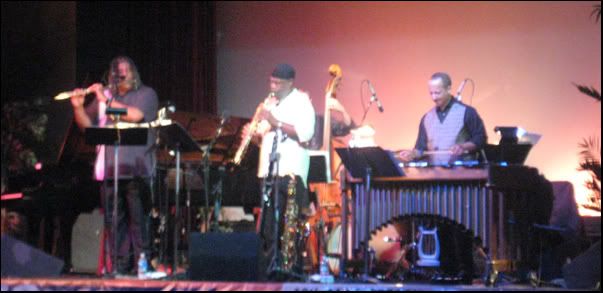
Tonight at the Raven Theater, James Newton and his quintet faced a huge challenge: how to present this music as Dolphy might have played it, when Dolphy himself would have presented it differently each time? Rising to the challenge of immersing themselves in another language, Newton’s group didn’t just re-create the music of Eric Dolphy. In twists and turns, they brought to life the fiery spirit, the adventurousness, the emotional resonance and the boundless optimism so prevalent in Dolphy’s muse, and they did so with both skillful prescience and loving warmth. One could close their eyes and easily imagine that Dolphy himself was in the house.
The concert opened with an Eric Dolphy composition, unrecorded and unheard in public before tonight, titled “Boycott.” In a low moan on his bass clarinet, Bennie Maupin introduced a slow solo figure. Soon, he conversed in tight harmony with bassist Darek Oleszkiewicz. Drummer Billy Hart crawled around the notes in a noteless manifestation of Dolphy’s eeriness, and Maupin, at the end of his solo, began beating out quiet rhythms by attacking the keys on his instrument. With otherworldly overtones and harmonic growls, Newton burst into the song on flute, the instrumental equivalent of a human cry, and eventually brought everyone back around to the slow, haunting theme.
If the afterlife exists, then Dolphy was watching over this premiere, caressing his beard and smiling widely.
The quintet played largely from Dolphy’s seminal Blue Note recording Out to Lunch, with each and every player perfectly filling their predecessor’s shoes. Hart absolutely nailed Tony Williams’ free horse-clop rhythms of the album’s title track, and the “new” head to “Straight Up and Down,” with the famous theme expanded and chopped, was an inspired addition to Dolphy’s exciting voicing for two instruments. During “Something Sweet, Something Tender,” Newton bent a note on his flute to the heavens while vibist Jay Hoggard ended a sensitive solo with a serendipitous cymbal crash from Hart. Magic was in the air.
The apex of the evening, however, was Out to Lunch‘s “Gazzelloni” (which, Newton told me afterwards, incredibly exists arranged for strings in the piles of Dolphy’s sheet music). Fully inhabiting the music, Hoggard gave a purely lyrical and possessed solo on the vibes, full of unstoppable ideas. Not to be outdone, Maupin followed with a ferocious unleashing of long, circular lines and inspired conception on soprano sax. The applause at the end was impulsive, grateful, and long.
After Maupin’s original composition “Equal Justice” on the piano and the blues “245” from Outward Bound, the group left the stage and the house lights came up. Lights be damned, the audience’s applause refused to die, and the quintet came out for one final number: “The Madrig Speaks, the Panther Walks,” appropriately chosen from Last Date, and appropriately earning a standing ovation.
The importance of this group’s project cannot be underestimated—in the lobby afterwards, people were overheard asking to touch Dolphy’s original charts—and their authority in Dolphy’s realm will soon be known to the world through an album on ECM, with Herbie Hancock signed on as a participant. Newton says there’s “a whole lotta stuff” in the collection of Dolphy’s sheet music he has yet to adapt, and tonight’s concert was just the first of many thrilling performances to come.
Sound the clarion call. The Scripture According to Dolphy awaits. “This is the first time we’ve played anywhere in the Universe,” said Newton, “and we thank you.”

Everyone Loves Resse’s Pieces

0

(Found at G&G, amidst their remodeling. Where’s Beer Frame when you need it?)

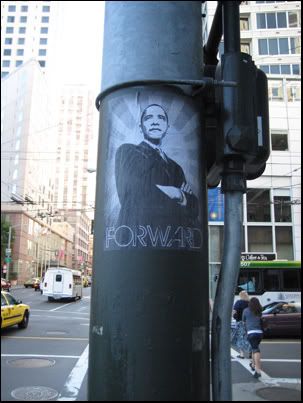
Forward

0

Third and Mission, San Francisco:

¡Manos Arriva!

0

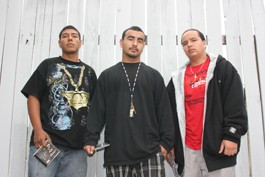
El Poeta, Smokey and D-Boy don’t go out after 10pm anymore. If they did, they say, they’d only get stopped by the cops and sent home. But D-Boy, who wants to be a police officer, says he understands where the cops are coming from. “They’re actually making it safer. Without cops, this place would be a mess,” he says. “There’d be people dyin’ everyday.”

Over the years, the three friends living in Santa Rosa’s Roseland district found different ways to stay out of gang life. First it was shooting hoops until sunset; for a while, it was playing soccer. And then they discovered hip-hop.

They started writing verses and swapping beats, and everything changed for them in Roseland, the predominantly Latino neighborhood whose younger residents are plagued by prejudices of gang affiliation.

“People say it’s bad,” says Poeta, 18. “But it’s not really that bad, or I would’ve been dead by now.” Poeta was just nine when he witnessed his first stabbing while living on Sunset Avenue, a notoriously bad part of the unincorporated Roseland area. Unknowingly tagging along with a group of older gang members for some basketball, he watched as a knife flashed on the court and felled one of the players. “It traumatized me,” he says. “Living in this life, you don’t have your days promised.”

Poeta’s longtime collaborator Smokey, 16, was approached on the street recently by two guys and asked where to get drugs. He shook his head, and the guys moved on, only to turn on him and fire shots from a .22. Smokey dropped to the ground and scrambled away; six shots later, he had escaped. Barely.

“I saw them two weeks ago,” Smokey says now. “We were playing soccer outside and they passed by, but we didn’t do nothing. We don’t wanna get in no trouble.”

D-Boy, 18, who often joins Poeta and Smokey, also strives to keep a low profile. “People ask me what my favorite color is, and I say ‘red,’ they say, ‘Oh, you’re a Norteño?’ You have to be careful about how you dress around here. We shouldn’t even be worried about that. I know people say it all the time, but it’s just stupid.”

Last month, Poeta, Smokey and D-Boy were offered a chance not only to be out past 10pm but to rock the stage at Roseland’s annual Cinco de Mayo celebration, rapping about their lives, their neighborhood and their culture in front of thousands. Poeta’s eyes light up when he recalls draping a Mexican flag over his shoulders and clutching the mic on that night. “I can still picture the moment when I looked over my right shoulder,” he beams, “and I saw all these people raising up their hands and shit, like a big-ass ocean, like a wave, going all the way down.”

“It’s a feeling,” D-Boy adds with a smile, “you can’t even describe.”

Welcome to Latino hip-hop in Santa Rosa, a story of struggle, music and redemption.

Hip-hop as an art form has almost always been informed by the black experience in America. But in Santa Rosa, where Latinos make up 20 percent of the population and where the area’s main Latino neighborhood, Roseland, is still not recognized as part of the Santa Rosa city limits and where more racism is directed at Latinos than any other demographic, it’s easy to feel like an outsider. One way to start crawling out is to grab a mic.

On a recent sunny afternoon, Poeta can’t be seen through the metal grating of his front door. “Come around to the garage,” he says. That’s where his recording studio is. Built from cheap particle board and lined with mattress parts that he found in the trash, the booth houses a microphone connected to a mixer and computer, all of which he bought while working three jobs. His first mix-tape CD, Living Like a Poet, came out last year, and through lyrics in both English and Spanish, much of it touches on self-actualization, immigration and the Latino experience at large.

During last month’s May 1 march, Poeta encountered a group of Anglo protesters in front of Santa Rosa’s City Hall. “I never in my life had seen somebody go against Latinos like that,” he says. “I just stayed there, watching them. It impacted me.”

Poeta, who comes from an undocumented family, gives his mother money from each paycheck for things like food and laundry detergent, and he lives under constant fear of ICE raids tearing his family apart. So when he took the stage four days after the march, it was with passion that he delivered the lines on “Latinos”: “I’m proud of who I am and I’m proud of being here / Pride in my blood, I’m not afraid to show it / I express it through my lyrics, that’s why they call me Poet.”

“They’re taking it as in, like, we broke into their house or something,” says Poeta of anti-immigration protesters. “But it’s not really their house, you know? Everybody who lives here and who doesn’t do bad things should be allowed to be here. I’ve never done anything bad, I’ve never gone out shooting people and shit.”

This week, Poeta will wear a cap and gown as a graduate of the founding class from Roseland University Prep, with a one-year grant to attend Sonoma State University so he can start paying back his family for the opportunities they gave him by coming to America. He wants to celebrate with a big rap show starring him and his friends as soon as he can raise the money. He can’t understand why there are so many empty storefronts right down the street which can’t be opened up to throw a community concert.

“Everybody talks about rap being a bad influence,” Poeta says, “but we’re trying to prove—even though it’s just maybe a couple of us that do it—that rap is not just about gangs and violence. It’s about whatever we are. What makes us.”

Roseland is full of legends. Grandma Bertram is one of them, an old woman who lived just down the street, on West Avenue, and who took care of all the kids in the neighborhood. “She was just a dear lady,” says DJ Ignite, sitting at his kitchen table in Rohnert Park. “She would do anything for anybody.”

In the mid-’80s, Ignite was a nomad. Having left Mexico after his mother committed suicide when he was five, Ignite then left Los Angeles to live in a crowded motel room on Santa Rosa Avenue with three stepbrothers and a severely alcoholic father, before leaving the motel to—well, it’s simple, really: to leave the motel. What he wanted more than anything was to be like Joe Cooley, the DJ he’d hear on the Mack Attack Mixmaster Show on Los Angeles radio station KDAY, which miraculously came in at the motel at 11pm and provided a brief respite from the taunts he’d get at school about cockroaches falling out of his clothes.

When Grandma Bertram caught wind of this, she pulled out her credit card and bought Ignite his first turntables. “She’d say, ‘Don’t worry, I’m gonna die anyway and my credit can go to hell,'” Ignite recalls. Soon he started DJ-ing parties and hanging out with other breakdancers and rappers. “But in the middle of all that, I was Mexican,” he says, “and society wasn’t ready for that in hip-hop.”

Though there were some early pioneers of Latino hip-hop for Ignite to look up to like Kid Frost, Mellow Man Ace and A Lighter Shade of Brown, Ignite wanted to paint a less gimmicky portrait of La Raza and aim it universally at all people; he became an MC. Before too long, he formed a group called the FunxSoulJaz, and immediately, in 1990, he knew what he was up against.

“I went to go see Leila Steinberg, who managed Tupac,” Ignite says. “I was excited, you know, I’m like, ‘I want you to hear our new song, it’s the FunxSoulJaz. It’s Phlex, who’s Nicaraguan and white, and Byron, who’s black, and me, Mexican. She heard it and she was just like, ‘They’re not ready for this. This is not where it’s at.’ It was a real pro-black thing at the time.”

The FunxSoulJaz persevered, watching friends like Ray Luv and E-40 get major label deals while making three albums on their own label. Then the group’s DJ, Covan (aka DJ Co-V-Co), was shot in the head and killed, along with his cousin, outside a party in Rohnert Park. “That made me say, ‘I can do this,'” Ignite says. “‘I don’t give a fuck if I’m Mexican, I can do this shit.'”

Now one-half of the hip-hop group the Blaxicans with his black childhood friend Capital B, Ignite is 38 and about to become a grandparent. He’s also gotten involved with an organization called One Dream, based out of San Rafael’s Canal District, which provides support for undocumented children who were brought to America from Mexico with no choice. As hip-hop grows larger and more inclusive than ever, Ignite sees lots of opportunities for young Latino rappers that he didn’t have. His son, Tone-E, has started rapping, and Ignite is constantly reminding him to inject life and poetry into his songs, something he watched blossom in, flow from and eventually make a legend of Tupac Shakur.

“No Latino on TV today has done what Tupac has done to me,” Ignite says. “When somebody does that, that’s when I’ll hang up my microphone. Because I’ll be content, I’ll be like, ‘Finally.’ That’s what I’m working for. To see one of us get to that level.”

The house where Big-D and Rikoo live is surrounded by goats and roosters. Deep in Southwest Santa Rosa, the area’s so rural that there are no sidewalks. It’s a change of neighborhood that the brothers, who used to live in the heart of Roseland, clearly appreciate. “We lived on Sunset for years, and it was all crazy and shit,” says Rikoo. “Out here, it’s peaceful, you can record better. We like it.”

Big-D and Rikoo are Latin Hyper, one of the West Coast’s premier reggaeton groups. A contagious blend of hip-hop and reggae dancehall, reggaeton hails from Panama and Puerto Rico and infuses merengue and bachata beats, heavy on the rhythmic triplet. Reggaeton is a more family-friendly style than rap; the music can be furious and thegritos aggressive, but songs about girls outnumber songs about guns.

“I mean, gangs, all that stuff—they don’t really mess with reggaeton,” says the 24-year-old Rikoo. “It’s a totally different thing than rap or hip-hop. So that’s one of the reasons I started getting into reggaeton. It’s a Latin thing. And when you say ‘Latin,’ it means my people—everybody.”

Rikoo’s 21-year-old brother Big-D was a rapper for years before Rikoo got him into reggaeton. Now he speaks of rap like an ex-girlfriend best forgotten, both because it didn’t fit him personally and because it meant closed opportunities. “If you go to a school,” he says, “and you say, ‘I’m gonna do a song,’ they’ll ask you, ‘What kind of song?’ And if you tell ’em it’s rap, they’ll kinda think about it twice, like, ‘Uh, it’s related to gangs or drugs.’ You know?”

Latin Hyper’s producer Omar, who used to sell hip-hop beats to Big-D back in Roseland and who’s lately picked up reggaeton production with a second-nature expertise, likens the switch to reggaeton as something larger than merely style of music. “You can be rapping for the streets, for the gangs. And after that,” he says, “it’s like a change in your life.”

In a small bedroom taken up almost entirely by three beds, the brothers crank up some new beats from their upcoming album, El Presidente, spontaneously breaking into rapid-fire vocals together. The bedroom light switch is triple-taped in the “on” position with a “DO NOT TURN OFF” sign—it powers the computer and mixer setup. Soon, they’ll take turns recording tracks in the closet, where clothes have been displaced for a microphone. Rikoo says he has a new song in the works that he’s especially into.

“It’s talking about life,” he says. “It’s talking about hunger in Africa, about the war in Iraq, about communism in Cuba, Venezuela and Korea. It’s talking about those different things about the world, how it’s fucked up. Why are we suffering? Why are we going through things we shouldn’t be going through?”

As one of the few reggaeton groups in the Bay Area with a seemingly endless supply of serious beats and ruling hooks, Latin Hyper has a solid chance at bringing what Miami and New York already know to the West Coast. And even though their entire life is put into their music, they’re aware that opportunities for recognition don’t come easy. “You gotta fight for it,” Rikoo says. “It’s tough for everybody, not just us. It’s tough.”

Spiritual Stains

06.04.08

D uring the recent visit to the United States by Pope Benedict, I heard the~biggest lie since January 1998 when then-president Bill Clinton looked the American public in the eye and said, “I did not have sexual relations with that woman.” Bill was semantically correct. You remember what Monica said under oath that she had done to him? Since she had the black dress with the “stains” to prove it, Bill had to get back on TV and admit that he did in fact have improper relations, but oh boy did he really have to get back to the work of being our president.

That was the same type of lie I heard during the pope’s recent visit. It came out of the mouth of one of his cardinals. When asked by a New York Times reporter about U.S. bishops’ misconduct in cases of child abuse by priests, the former Bishop of San Francisco, Cardinal William Levada, responded, “I personally do not accept that there is a broad base of bishops who are guilty of aiding~and abetting pedophiles, and if I thought there were, or knew of them, I would certainly talk to the pope about what could be done about it.”

Well, I can think of two. In addition to Santa Rosa Diocese’s current Bishop Daniel F. Walsh, who delayed reporting abuse by one of his priests as now required by law long enough to allow the Rev. Xavier Ochoa time to flee to Mexico, there is Santa Rosa’s former Bishop Patrick Zieman, who was allowed to resign after gross personal sexual and financial violations.

No matter how carefully Levada chose his words for his Clinton-like excuse, I personally know that priest and bishop misconduct is ongoing and has a history. (For current and background information, check out the website for Survivors Network of those Abused by Priests.)

I met Father John Rogers in 1976 when I lived in Eureka. He was there as a priest, but was also a friend to my family and me. Initially assigned as an associate priest at Sacred Heart in Eureka, he was transferred to the Newman Center on the Humboldt State University campus. From there he became the parish priest for Arcata.

The first time I met Father Rogers was when I called the Sacred Heart Rectory in Eureka, asking them to send a priest to St. Joseph’s Hospital one night. My wife and I had taken our infant daughter to the emergency room. She had been diagnosed with meningitis and the doctor had just told us to prepare ourselves in case she did not live through the night. He sat with us, and while I am sure he silently prayed, he visibly did no more than hand my wife Kleenex. Our daughter is now a married sixth-grade teacher in Santa Rosa.

Father Rogers was with us when my great-grandmother passed away at home after a long illness. He was back at the hospital with us, and later at our home on Nov. 8, 1980, when my wife and I and our three children recovered after our VW Bug was knocked off a collapsing freeway overpass by an earthquake just south of Eureka. He officiated at my mother’s wake and funeral. I never knew he had another life.

When credible accusations came from an adult that Father Rogers had molested him as a child, church officials whisked him to a seminary in Brussels, Belgium. When it became apparent that extradition was about to bring Rogers back to answer the accusations, he walked into the Belgian woods and shot himself in the head.

In my opinion, church officials did not supervise the conduct of their priests around children carefully enough to prevent what had happened to Father Rogers’ accuser and thousands of other children. Neither did they seem to provide the type of support for offending priests that would have helped them face the criminal and moral consequences of what they had done.

In his current capacity of supervising the conduct of bishops and priests, Cardinal Levada may say he personally does not accept any of this. Regardless of what he says, and the careful words he chooses, like Bill Clinton, he cannot deny the “stains.”

Tom J. Mariani is a retired local banker and corporate risk manager who is now working full-time as a poet and a freelance writer.

Open Mic is now a weekly feature in the Bohemian. We welcome your contribution. To have your topical essay of 700 words considered for publication, write [ mailto:op*****@******an.com” data-original-string=”PBbDNaH1ym/nuargjLKCxg==06aSlw4dzaXydfthOu8w8XVBRkyk7OrYrmPpH9WkBKAMS0kyRbpyzdflqi0T1alCkCnmz9AuAiMqkTEF2pGf3coWrsxObJFcOXjUy3CPnFmhKc=” title=”This contact has been encoded by Anti-Spam by CleanTalk. Click to decode. To finish the decoding make sure that JavaScript is enabled in your browser. ]op*****@******an.com.


Inventing Locally

0

06.04.08


After 11 years in the Army reserves and the California Army National Guard, Cazadero resident Joe Meisch takes the Army engineers’ motto seriously: Adapt. Improvise. Overcome.

That’s been his approach to turning his personal solution to a raging headache into a useful plastic gizmo that is apparently the only one of its type on the market. In the process, Meisch hasn’t strayed far from his roots.

And he hasn’t forgotten his friends still serving in the military. Last fall, Meisch sent 40 of his unique temple massagers to his old unit, the 579th Engineer Battalion in Iraq. Another 40 went to Walter Reed Army Hospital, for use by amputees and post traumatic stress disorder victims. The response was incredibly positive; a Red Cross liaison has asked Meisch for 2,000 more for use at the Walter Reed and Fairfax Virginia Military medical facilities in Bethesda, Md.

Meisch estimates it will cost about $8,000 to create that many, money he doesn’t have. An injured finger has sidelined him as a carpenter—his “day” job—so he’s contacting veteran and other organizations, hoping for assistance.

“I’m going to donate as many to them as I can,” Meisch vows. “For me, it’s a priority.”

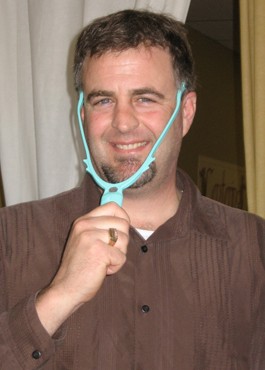
His efforts are centered around a 15-inch-long Y-shaped piece of flexible plastic that comes in sea foam green, violet, black, dark blue or sky blue. It’s used to gently massage a person’s temples, the location of the largest cranial nerve. The massage can be used along the jaw line, down from the temples and back again.

“It’s kind of silly using it in public, because it makes your mouth hang open and your jaw hang down,” Meisch laughs.

Despite advice to manufacture his patented product in China, he’s kept it a local operation. The manufacturing is done in the North Bay, he buys his supplies here and he even uses his mom’s old 1963 Singer sewing machine to stitch up the storage bags that come with the massagers.

Kirsten Iuppelatz is co-owner of Sebastopol’s Pilates Collective, one of the local businesses selling the Meisch Temple Massager.

“People try them out and really love them,” Iuppelatz says. She adds, “We all tried it. It felt great to me in my jaw, which is where I hold my tension.”

The idea for his temple massager grew out of a road trip Meisch took with some friends prior to leaving the National Guard in 1998. Struggling to balance the demands of his National Guard duties, his push to finish college and the need to earn a living, Meisch was tense, irritable and had a headache. Holding his sunglasses by the bridge, he idly used the tips to massage his temples.

The effect was immediate. There was a calming sensation in his jaw line and a warm feeling in his temple area. His head felt better and his focus returned. “My headache disappeared,” he says. “That’s when the proverbial light bulb went off, so to speak.”

After he got home, Meisch tried to buy a temple massager and found there were none on the market. He spent the next few years trying to create one—burning plastic in his oven, mangling clothes hangers, playing with chemicals and breaking wooden models. Eventually, he decided needed proper materials and a professional mold.

It’s been an educational experience.

“I had to learn an enormous amount about manufacturing, marketing, financing,” Meisch says. “I had to teach myself plastics. I had to teach myself mold-making.”

The first company he approached urged him to have the mold and the units manufactured in China. Determined that he everything should be made in the United States, Meisch ended up working with Designit Prototype and R&D Products Inc., both in Rohnert Park, for creating the mold and manufacturing the units. The plastic used is 100 percent recyclable, and Meisch buys the fabric for the storage bags from Carolyn’s Canvas in Valley Ford. He sells through local stores and on the Internet.

“In a small way, I’m stimulating my own local economy,” he laughs.

There’ve been a few stumbling blocks. The massager includes an aromatherapy pad that lets soothing scents surround a user. But the first thousand or so models were made with a different type of plastic. The oil ate through them and they had to be tossed.

Undeterred, Meisch continues on, determined to get his product to a wider audience. He’s especially determined to come up with enough to donate to the military hospitals.

But he shakes his head in wonder at how far he’s already come.

“I’m still to this day blown away that I thought of this and that nobody else has one out there.”

To donate, go to www.templemassager.com.


First Bite

Editor’s note: First Bite is a new concept in restaurant writing. This is not a go-three-times, try-everything-on-the-menu report; rather, this is a quick snapshot of a single experience. We invite you to come along with our writers as they—informed, intelligent eaters like yourselves—have a simple meal at an area restaurant, just like you do.

True to its name, Cottage Eatery is in a tiny space. Its tables are tiny. Its menu is tiny. Its prices, while not entirely tiny, are certainly reasonable, especially for its posh location tucked away along the Ark Row in Tiburon.

One thing’s for certain: Cottage’s ingredients are big. Opened in February under Edward Carew and Jennifer Rebman (formerly of New York’s Gramercy Tavern), Cottage is all about fresh, focusing on everyday fruits and vegetables crafted into sexy stuff. (House-made kumquat mostarda and caramelized onion tart, or a recent amuse of cucumber, yogurt, almond and sea salt in a shot glass roll off the mind’s tongue in a sensuous lilt.)

There’s dreamy-sounding pasta like pappardelle with favas, Boccalone pancetta, onions, pepperoncini and parsley ($17), and spring-kissed seafood such as marinated Monterey sardines with fresh mint, bufala mozzarella and red pepper ($12). I found it impossible not to crave a mouthwatering plate of Anderson Farms organic spring lamb fricassee with fregola sarda and Meyer lemon ($25) just by the sound of its components.

There’s little butter, little fat. If such natural flavors are tiny, the kitchen kicks in more salt, sometimes with such exuberance that it left crystals crunching in our teeth.

Peas were the star of a recent evening, perfect specimens blanched to bright green pop-snap. The chef, casually sipping from a big glass of red wine as we caught sight of him in the partially open kitchen, transformed them into an extraordinarily silky pale green panna cotta ($12) littered with fava beans and more whole peas, fresh mint leaf and the rousing bite of sea salt.

Peas and favas populated a pleasant plate of roasted chicken thighs ($22), the petite legs from a young bird golden, crisp and splayed over roasted tomato, artichoke, cipollini onions, a whole clove of garlic and chickpeas fashioned into polenta-style fries.

Peas weren’t advertised in a Pacific fried oyster appetizer ($10), but there they were, peeking out of a nest of shredded iceberg. This was the best dish of the night, mounding four enormously good mollusks with bacon, jalapeños and a slather of smoked paprika aioli.

Yet roasted beet ravioli ($11) needed something—pancetta, ricotta, perhaps even peas to enliven the pale pink pockets set in a barely discernable poppy-seed-butter-grana padano sauce. Cottage’s signature dish is crispy suckling pig ($25) with tiny green Umbrian lentils and pickled red cabbage, but sadly, the pork was sold out by 7pm. A special of bland spaghetti and meatballs ($16) made a poor substitute: underseasoned, undersauced, featuring more ricotta than meat, it was merely a belly filler.

Desserts could make Cottage an industry. These flavors sang. There was a dense buttermilk panna cotta, barely sweetened with the tart chewiness of poached rhubarb ($7), and pound cake ($7), spiked with lots of lemon and lavender under drifts of whipped cream and strawberries.

For such a small treasure, it’s no wonder that reservations are a must. Cottage is a cozy little discovery.

Cottage Eatery, 114 Main St., Tiburon. Open for dinner, Tuesday through Saturday. 415.789.5636.


View All

Quick-and-dirty dashes through North Bay restaurants. These aren’t your standard “bring five friends and order everything on the menu” dining reviews.

News Blast

06.11.08 Making Marry "It was a surprise to us. We didn't have a clue that it was happening," says Charles Metz, organizer of the commitment ceremony slated for the June 15 Sonoma County Pride gathering. Metz's surprise was the May 15 California Supreme Court ruling that a ban on gay marriage was unconstitutional and that gays and lesbians have a...

Class Struggle

06.11.08While Helen sits on the shore with her six-year-old son in her lap reading about pollywogs, her nine-year-old daughter is wading out into the shallows to collect a bucket of river water. Later, the three of them will test the water's pH and inspect for macro-invertebrates. For today, this shore is Helen's children's schoolroom; everyday, Helen is their teacher....

Joshua Redman and Charlie Haden at the Healdsburg Jazz Festival

"It must be Healdsburg," explained a tranquil Kenny Barron to the crowd. "It makes you so relaxed." Billed as "A Night in the Country," last night's flagship concert for the Healdsburg Jazz Festival could have easily been called "A Night in Wine Country," with all of that term's implied reassurance of the sweet life. In a decidedly mellow program of...

James Newton and Bennie Maupin: The Eric Dolphy Tribute at the Healdsburg Jazz Festival

The jazz story of the year isn't the discovery of some tapes by Charlie Parker and Dizzy Gillespie. It's not some long-lost recordings of John Coltrane and Thelonious Monk at Carnegie Hall. No, the jazz story of the year—and I'm serving this up to you on a platter, Downbeat—is James Newton's recent acquisition of unheard-of handwritten sheet music...

Everyone Loves Resse’s Pieces

(Found at G&G, amidst their remodeling. Where's Beer Frame when you need it?)

Forward

Third and Mission, San Francisco:

¡Manos Arriva!

A look at Latino hip-hop in Santa Rosa — a story of struggle, music and redemption.

Spiritual Stains

06.04.08D uring the recent visit to the United States by Pope Benedict, I heard the~biggest lie since January 1998 when then-president Bill Clinton looked the American public in the eye and said, "I did not have sexual relations with that woman." Bill was semantically correct. You remember what Monica said under oath that she had done to him? Since...

Inventing Locally

06.04.08After 11 years in the Army reserves and the California Army National Guard, Cazadero resident Joe Meisch takes the Army engineers' motto seriously: Adapt. Improvise. Overcome. That's been his approach to turning his personal solution to a raging headache into a useful plastic gizmo that is apparently the only one of its type on the market. In the process,...

First Bite

11,084FansLike
4,446FollowersFollow
6,928FollowersFollow