09.03.08
By Gabriel Francisco
My generation grew up with the Internet. We are the downloaders, the DIVX watchers, the defraggers, the rippers, the burners, the ultimate gamers. They call our mixed-up generation “Y,” and we have been the target of every major campaign and commercial ad since the knobs on the television were transformed to a remote control. And we like to play.
As a member of the twenty-something cyber-generation, I have been an elite player of many off- and online games. I have also been the inevitable loser of close friends and loved ones who cannot shake the mind rot and addiction of their electronic second selves. Classes I was late for, jobs I lost, girlfriends who left, the minutes and hours, the whole days that, if compiled, could easily add up to entire years of nothing more than unproductive, unresponsive clicking.
As an old school console gamer and retired gosu (Korean slang for highly skilled online computer player), I know the true connection between a user and the next-generation games. I have felt that euphoric urge we gamers get waiting for our favorite console to warm up or our computer game to load and log in. I have felt the magnetic pull to play for days upon days, to reschedule meetings, cancel dates and blow people off for just another play. I have been that slack-jawed, glassy-eyed gamer for a long time. I have also been at the receiving end of getting blown off. Before I hit my own bottom, a great friend of mine got too close to the game we all wish didn’t exist, World of Warcraft.
He and I used to be the ultimate dancing duo. We would hit the best clubs in the city and just freestyle, expressing ourselves on the floor until walking to the car was a chore. We would chill and talk about things that didn’t matter. We had a great friendship until, ever so slowly, he created and became overly immersed in an online second self, an avatar. I asked him why he played so much while he could be doing so many other things. He said, not even taking his eyes away from the computer screen, “Man, it’s like I have finally found something I am good at.” He didn’t know I had left his apartment until hours later. That was the last time I saw him. I didn’t know then that I would become just like him.
In ancient cultures, adolescent boys were required to undergo a transformation into manhood. Young boys embarked on a quest, were left isolated in the wild or buried alive. Returning victorious or dug up still sane, they were considered reborn, leaving their childish ways behind, becoming a warrior. Every society needs warriors: warriors to stand up for their beliefs, warriors to defend and provide for everyone smaller, weaker, older; warriors to build and rebuild; and warriors to stand up for the truth.
Some time between elementary school and college, dial-up and DSL, Transformers the cartoon and Transformers the movie, we got lost. Millions of good-hearted, adventurous and imaginative little boys were duped into sitting in front of a TV screen deftly moving thumbs and fingertips.
In our current high-tech super-society, there is no distinction between child and adult. With this regression comes the disappearance of manhood. Boys no longer know when to grow up, when to be men, not only in body but in spirit and character as well. Every time they log-in, they are giving up on their life, exchanging their identities for online avatars. My generation of men is in grave danger, slowly succumbing to mind rot, floating face down in a pool of pixels.
For me, it began in the late ’80s. I remember the exact day. I was eight when Uncle Rick gave us his family’s Atari 2600 with three controller sticks and a slew of games. Excited beyond belief at this brand-new contraption, I plugged it in and sat down with my older sisters to try out Pac-Man and Defender. Although our Atari provided hours of fun, the experience was only intermittently entertaining. Limited graphics and an overall basic objective made the games something to do only when one had little else planned. My imagination was still more advanced than this early model gaming system.
A few years later, the release of the original Nintendo changed everything. I remember the day my parents bought that gaming console for me. It was a whole new world of adventure. Each game I played, while still relatively simple, had a story behind it, enhanced graphics, a sound palette and a controller that boasted A and B buttons. When I played a game, I assumed the role of the main character. I was invested in solving the puzzle, achieving a high score or simply keeping my character (and myself) alive.
Fresh home from school, I would throw down my backpack and press the power button, playing until called in for dinner, leaving school work undone. In those first games, I couldn’t save my progress, so winning was an all-or-nothing feat. On the weekends, I would delve into my newest game the moment my parents left the house for the night, playing until I saw car headlights. I paused the game while I slept, only to wake up early the next morning and continue where I had left off.
While my parents were mildly concerned when I spent more than a few hours at a time sitting and playing, they knew that I was safe, quiet and having fun, and sometimes with a friend, combining our efforts in two-player mode.
The best and worst aspect of these traditional console games was that they were an episodic adventure with a classic ending. I would play out the adventure of the main character, win the game and then save my allowance for a new one. If the game’s storyline did not truly end, like the Legend of Zelda or Mario Bros., there were sequels expected in the future.
Everything changed again with the Internet. When I was 16, I played my first online computer game, Starcraft. This was a real-life version of what I had drawn and dreamt of as my friends and I ran around with our cap guns and wooden swords, issuing orders to our imagined advancing armies.
With the online option, Starcraft let me play, in real time, with or against other gamers from all over the world. Screaming for backup or offensive coordination, I came to rely upon my newfound “friends” just as much if not more than anyone in the real world. I met and gamed with “friends” from places as far away as Poland, Sweden and Spain, and had more bitter enemies from winning (and talking trash) than any one gamer should. For me, Starcraft was the perfect game. I was in total control.
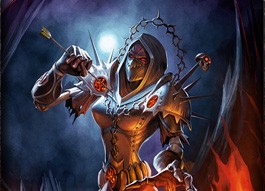
Tolkien to the Nth Degree: World of Warcraft currently boasts some 5 million players, each paying roughly $15 a month to play.
At 16, I had my first job. I was a host at the International House of Pancakes. Do I even need to compare greeting and seating the geriatrics of my community to completing insane missions on alien worlds with my group of highly trained and upgraded Marines and siege tanks? At 17, I discovered dance, hip-hop at first. Whether I was deciphering the polyrhythmic make-up of the music or simply commuting to San Francisco where I could tap into a higher level of training, dance got me out of the house and into my own body.
From Santa Rosa’s Montgomery High School, I transferred to the Santa Rosa Junior College. Enrolled in all the necessary GE classes, I also signed myself up for the school’s first-ever hip-hop dance class. Halfway through the semester, I began to assist, then teach, some of the class myself. Gaming was still a part of my life, but it took a back seat for a time.
It wasn’t until I moved out of the house to live on campus at Sonoma State that the online games resurfaced. Living on campus at a college is like being at a playground, surrounded by a city of your peers. Away from the good influence and guidance of my mother, who never really trusted the games, I began to play away large portions of my college life. I was a hard-working dance major, but college life was still too easy and free time was something I had in abundance. I played more than ever in my college years. No one was there to tell me to ease up and, tired from dance classes during the day or clubbing at night, I could not think of a better way to “relax” than to play my games.
The desire to play went beyond a simple hobby. Some of my friends began failing classes, losing their scholarships or just gaining weight. I saw other online game devotees ruining their adult careers, plaguing their loving relationships and tearing their families asunder. I also noticed a change in my own behavior.
It happened when I was out-of-game and confronted with a mundane activity, such as a conversation. I found myself more easily annoyed with people. So intense and fast-paced was my gaming world that I began to anticipate the words right out of people’s mouths and felt that I would rather be elsewhere, like behind a console or keyboard. Reality became dull and the transfer of information unbearably slow.
Next-generation games train the mind, teaching it to absorb tons of information every second. The faster a gamer processes this visual data and acts on it, the faster the reaction time will be. I learned to recall and replay games in my mind. I would let my attention shift, reenacting past or imagining future games to escape my present situation. Like reliving a favorite part of a movie, I played games inside my mind while in college classes, at work and even while being told something that took a little too long. It sounds like a strange combination of attention deficit disorder and multitasking, but this type of high definition cerebral activity is the norm for experienced game players. Except when I was dancing, being offline became the most boring time in my life.
At 22, I was a senior at California State Long Beach. I was in ballet class. While the teacher explained yet another petite allegro exercise, I found myself staring at the clock begging the second hand to increase its pace. It was at this moment that I knew I was done with school. The world was calling to me, and I had opportunities lined up and waiting. Having been dancing, performing and teaching at a high level during all this time, I moved to London, accepting an artistic directorship.
While in London, I had no Internet. I checked email every other day out of habit, but my time was devoted toward truly living—meeting new people and exploring new places. I flourished in the real world even more than I had in the world of games. Being able to merge the styles of hip-hop, modern and ballet, my style of movement and teaching was unique and is still today in high demand.
After a half year, I took myself to the next level by moving to Zurich to head the dance division of a multimillion dollar studio and gym. My love for movement and the culture of hip-hop in particular became the driving force in my life. Each week, I made choreography up on my apartment’s rooftop overlooking a lake and the Swiss Alps. I saluted the setting sun with my dance. I didn’t miss the gaming world at all.
On a day in late November, I was visiting my family in Santa Rosa for Thanksgiving and found myself in Best Buy. After gathering some blank discs and a new camera, I stood in the gaming aisle beholding my old love, Starcraft. What is there to do during a Swiss winter beyond enduring the freezing temperature? I bought the game.
With eight feet of snow outside my Swiss apartment, I was as comfortable as ever online. My skills advanced, I met new people and played thousands of games, wining most of them easily. Playing was not all I did in Zurich, but once I made that unfortunate purchase, I was locked into a very familiar, disgustingly comfortable downward spiral.
I was 27 when I moved home to complete the theater arts degree I had suspended in Long Beach. When I moved out of Zurich, I also left Starcraft behind. One late evening, I just opened my window and threw it as hard as I could, Frisbee-style, into the dark night. I was frustrated with myself. My time in Europe had been a success, but I knew I needed discipline. I needed to move home to be with my family, refuel on the energies of Northern California and finish school.
I wish I could say that my involvement in games ended there, that I fought my own way back to a video-game-free life. Sadly, this was not the case. On a Starcraft chat forum, a peer mentioned a free online game called Gunz. A whole new approach to the gaming market, these online-only games can be downloaded and played for free. While not as intricate as what I was used to, this game provided just as much fun through its simplicity.
I assumed a character, chose my weapons, entered a game and started blasting any and everyone. It didn’t eat up quite as much time as Starcraft had, but two to four hours here and there adds up quickly. Before I knew it, I was once more losing my way. I say “losing” and not “lost” because I would, after a few days, realize my folly and uninstall the game.
Over two years, I recycled then reinstalled the same game no less than 10 times. Each time I reinstalled, a piece of me felt like it was dying. Playing when I obviously shouldn’t have, I felt that I failed myself and those around me to whom I had promised I had control. Back on after a long break, I binged, playing close to nonstop for the next few days before I had another coherent moment, realizing my mistake.
One spring day, I sat behind my laptop at home dodging pixilated sword swipes and gunfire. Knowing how much my mother dislikes my gaming, the door to my room was shut. Unexpectedly, it opened. My mother had simply opened the door rather than knocking first. This is a moment I will never forget. I snapped. Close to 20 years of gameplay, all of those lost moments, flooded my reasoning and overwhelmed my being. I flushed with disgrace, self-directed rage, embarrassment and shame.
I could have screamed or pulled out my hair or jumped out of a window, I was so disgusted with myself. Instead I pushed my chair back, stood purposefully up and concentrated all of my emotions upon my mother. I rushed at her. I didn’t touch her, I didn’t shout at her; my very presence looming over her in a rage was assault enough. I didn’t even realize that she no longer stood in front of me until I heard her quiet weeping as the front door shut behind her and the sound of her car driving off jolted me out from my nightmare.
I stood stock-still until my fragmented self began to settle. Then I too drove off, hoping to spontaneously rendezvous with her as she walked around Spring Lake. I parked my car, walked up the small hill that led to the main path, picked a bench and waited.
We spoke of many things, but gaming and respect were at the forefront. Speaking from her own experience of watching me grow up with these games, she said, “When someone spends a great deal of time with online gaming, they inadvertently take part in a practice of separating the heart from the head. When every single moment of play, countless hours, are devoted to strategizing, to conquering, to leaving another beaten; when the brain moves the eyes and fingers just to win, to trick, to outplay, to demoralize; all of this is not only out of the realm of the heart, but is in a world without feeling.”
I haven’t played since that day. I don’t dare. The desire, the addiction, still remains. Just the other day, I stood in the same aisle at Best Buy as I had three years ago. Emotions passed through me, stirring up one memory after another. I left empty-handed, and I won’t be back again. I have too much to give and too much to lose in this life.
Fresh from teaching and performing in a 10-day workshop in Graz, Austria, I am finishing this story on a train from Germany to Amsterdam. I am booked to teach workshops and master classes throughout Europe for the next two months. My life is my own once again. My imagination, emotions and time are no longer held hostage to or sacrificed for nothingness. I am living my life’s dream, and I refuse to be sidetracked, enchanted or otherwise suckered by the modern-day epidemic, the parasite, the mind rot that we call video games.
The Perfect Game
Starcraft is the perfect game. It resembles an interactive, time-based game of chess with a choice of three distinct races, two of which are incredibly detailed and very alien. Pieces range from pawns to kings and are far from simple. The three most basic units include (1) small doglike aliens that race on all fours through the terrain, only to be confronted by (2) ancient, energy-based humanoids, which can summon wolverine-like “energy-blades” from their wrists and who are faced with (3) a machine-gun-wielding, futuristic Marine. And these are just the pawns!
When traversing the tech-tree, upgraded buildings give upgraded attack units. A rook could be compared to an alien animal that burrows underground only to send a spine ripping through the earth, a regal four-legged walker that generates then discharges a destructive ball of energy to a mobile and incredibly powerful siege tank.
As I became a more advanced player, I was able to summon wizards to create storms of lightning or build an armada of starships. All of these units spoke to me, obeying commands and taking damage incrementally per each hit. When a unit received enough or too much damage, it would explode in a shower of sparks, dissolve or scream while reduced to a puddle of blood and guts. That’s a good game.
—G.F.
WoW-E
World of Warcraft is the most renowned, massively multiplayer online role playing game (MMORPG) in the world. At last count, World of Warcraft had approximately 5 million registered users. It’s also important to note that playing WoW is not free. Each of these 5 million players has to pay, depending on country, at least $15 per month.
World of Warcraft is like Tolkien’s library pixilated, modified and then personalized. Online, a gamer begins by selecting a character from a host of fantasy-contrived magical races. As cash from gamer’s wallets is pumped into the game, levels are advanced, skills are learned; as enemies are defeated, weapons, armor and currency are earned. Having a completely malleable online world gives gamers total control over their character. Having certain buildings and realms off-limits to new characters lends incentive to devote more time and money to level up.
WoW, like many other games, lets the players create an online persona from scratch. Initially, this character is weak and technically unarmed. As one devotes hundreds of hours and thousands of dollars to this character, however, it becomes personalized as the gamer chooses what role the character plays, what weapons it uses and what clothes or armor it wears.
Created years after Starcraft, WoW’s programmers constantly update the game’s depth of story and overall length. Due to software updates and expansion releases, there is no end to the myriad of activities or quests that a gamer can play. There is always something else to do. Rather than purchase, enjoy, win the game and move on, to progress in WoW, gamers must bind together in “guilds” or “clans” and go on “raids.”
Raids are elaborate real-time online gatherings where upwards of 40 people will log on simultaneously to achieve a certain goal, like killing a certain large and powerful enemy. Though purely an online experience, these guilds can create real-life friendships. Even if raiding gamers never meet offline, they do, however, speak real-time using microphone headsets. The added psychological draw to WoW is that it is much more cooperative than any previous online game.
—G.F.
Owned!
The highly competitive world of online gaming has laid waste to the generic politeness we were all taught as kids, such as “Good game,” “Nice try” or “Better luck next time.” To either congratulate or demean other players online, one can use the chat option by typing or even talking in real time to other gamers, often telling them how insignificant, lame or “noob” they are. Psychological battles are played throughout the game to demoralize opponents, players often going so far as to tell a stranger from half-way around the world that they have no friends, are fat or deserve the ever-popular clichéd mother insult.
When playing Starcraft, I remember the first time someone beat me so badly that he told me he “owned” me. Shocked and appalled, I thought to myself, owned—as in less than nothing or as a reference to slavery. I was angry at myself for losing and even angrier at them for saying such a thing. Why would someone verbally abuse someone else over such a thing as petty as an online computer game?
Science-fiction- and fantasy-based online games typically draw players from their early teen to mid-20s, mostly male. In the online world, anything goes, and the devoted schoolyard geek will own the school jock nine times out of 10 when it comes to a war between animated avatars. Still, it was years later that it dawned on me that my generic opponents were much younger than I. While age has nothing to do with skill set, in-game manners do.
This frustration at being owned ensued until I improved my finger speed, learned “hot keys” to create shortcuts within keyboard-given commands and thought out new tactical surprises, which in turn allowed me to “own” others. I “owned” players left, right and center. I got so good and talked so much trash that I was banned from certain chat rooms and servers. I was talked about on gaming forums and hunted by other elite gamers.
Owning, and winning, became so important to me that the game stopped being fun. Online gaming became a tool to demoralize other players. For just an irrelevant instant after a win, I could claim a spot in my mind and theirs as being more skilled at a game that benefits absolutely no one and nothing in the universe.
—G.F.