Down the 9-11 Rabbit Hole

08.27.08

Pet Goat: President Bush listens to Andrew Card inform him of the 9-11 attacks.

It would be so nice if something made sense for a change.

–Alice, from Alice’s Adventures in Wonderland 

We’re hurtling down the rabbit hole. Gravity’s refuted. Black is white, and white turns bitter, transfigured by a mawkish Mad Hatter blithely chewing up our Constitution, juggling missile-shaped teacups, splashing sweet, light crude and cold blood everywhere. To anyone who’s passed through the last eight years believing whatever George W. Bush and his minions have blown their way, well, best of luck to you, because most of it hasn’t been true.

Does that mean, then, that W. and his cronies were behind the 9-11 attacks? Of course not. Some say, however, if it looks, waddles and quacks like a duck and lays duck eggs, then perhaps it’s time we re-examine it under oath, because it just might be a friggin’ duck. (Fact: Nixon White House audiotapes reveal Tricky Dick literally quacking like a duck. Nixon was a lot of things, but ducky wasn’t one of them.)

 We’re all mad here.

–the Cheshire Cat

 Ken Jenkins, a Marin-based videographer, electrical engineer and activist with the 9-11 Truth group, tells of one who responded to certain provocative conjecture with “I wouldn’t believe it–even if it were true.” It, of course, is the widely held and yet wildly contentious belief that elements within our own government bear responsibility for the attacks of Sept. 11, 2001; and that the 596 pages of the official 9-11 Commission Report comprise lies, half-truths and intentional omissions. Like the rift between those who detected a foul stench behind the Warren Commission’s report on JFK’s assassination and those who believe that Lee Harvey Oswald acted alone, deeply held 9-11 beliefs place Americans at increasing loggerheads with one another.

Mainstream media and not a few on both sides of the political divide condemn, belittle and ridicule conspiracy theorists, who, in turn, have graced their own movement with the weighty word “Truth.” And, just like backers of the official account, the “Truthers” boast vast legions of supporters from across the doctrinaire landscape.

Each side contains its sober thinkers, its celebrities, rational researchers, experts, well-meaning patriots, rabid supporters and total nutballs. Bizarre and contradictory political alliances abound. Reams of paper, books, reports, magazine articles; ceilinged stacks of film and video documentaries; and tens of thousands of blogs and websites–one source contends there are more than 600,000–vie for our attention, proving this issue will not soon disappear.

In one corner there are the “official report” backers, including not only Bush & Co. sycophants, but an armada of Bush-bashers, including such well-regarded lefties as professor Noam Chomsky, journalist Greg Palast, satirist Bill Maher, columnist Alexander Cockburn and the comedy team Penn and Teller. They think the 9-11 Truthers are cranks.

The other side of the ledger boasts its own raft of notables calling for a new independent investigation into the attacks. These include former U.S. senators Lincoln Chafee and Mike Gravel, fellow politicos Ron Paul, Jesse Ventura and Dennis Kucinich, historian Howard Zinn, doc maker Michael Moore, actors Martin and Charlie Sheen, Ed Asner and Rosie O’Donnell, former U.N. Chief Weapons Inspector Scott Ritter and retired CIA chairman of the National Intelligence Estimates, Ray McGovern.

 ‘No, no!’ said the Queen. ‘Sentence first–verdict afterwards.’  

Richard Gage is a Bay Area-based architect and the founding member of Architects and Engineers for 9-11 Truth. He presently has over 400 fellow architects and engineers who’ve signed on with him, demanding a new investigation. Gage contends that the WTC Twin Towers came down as the result of controlled demolitions. Citing the 10,000-page National Institute of Standards and Technology (NIST) 2005 report on the tower collapses, Gage notes that the report stops before the collapses actually occur. Why? “Because,” Gage charges, “if they had gone any further in their analysis they would have had to account for the massive quantity of evidence for the demolition of these two towers.”

Well, further they have gone. The NIST last week released a new report centering solely on WTC Tower 7, the focus of much speculation for its hours-later tumble, and now pronounced to be the first steel skyscraper to ever succumb to mere fire.

Even that bastion of the handy-guy, Popular Mechanics, has stepped into the fray, releasing a special report entitled “Debunking the 9-11 Myths.” Popular Mechanics says, “Plane debris sliced through the utility shafts at the North Tower’s core, creating a conduit for burning jet fuel–and fiery destruction throughout the building.”

Jet fuel burns at about 1,500 degrees Fahrenheit, while steel doesn’t begin to melt until about 2,700 degrees. Even if the steel lost structural strength at somewhat lower temps, and building materials and furnishings stoked the blaze, a 1,200-degree meltdown differential does raise certain questions.

Curiouser and curiouser!

–Alice 

Lots of people think conspiracies never happen, that life at or near the top, where we’d expect conspiracies to originate, is far too intricate and subtle for such shenanigans. Nicholas Lemann, writing on conspiracies last year for the New Yorker, claims conspiracy theories amount to “a view of how the world works that mistakenly empowers particular, and evil, forces with the ability to determine the course of events, and it misses the messiness and contingency with which life actually unfolds.”

If we buy into Lemann’s argument, then how about the Gulf of Tonkin affair and the explosion on the Battleship Maine? What about Watergate and Iran-Contra, the Tuskegee Study or innumerable covert adventures in foreign coups, economic hits and political assassinations? And what about the 1999 trial when Dr. Marin Luther King Jr.’s family won a wrongful death civil suit against “unknown co-conspirators”? Six white and six black jurors found that “governmental agencies were parties” to Dr. King’s assassination plot.

Then there are lesser known but equally real conspiracies. Some were actually foisted upon us or else were disrupted or energetically disappeared from official records. Take, for example, the CIA’s nefarious mind-altering Cold War-era drug testing known as MK-ULTRA. Its scientists and hirelings dosed thousands of unwitting U.S. citizens with mind-altering drugs over the course of two decades.

Operation Mockingbird was another long-running top-secret CIA operation, which co-opted prominent print and electronic media journalists to spy and propagandize the American public. Mockingbird is largely the reason why it is illegal–wink, wink, nudge, nudge–to do so today.

Perhaps the most revealing and least known conspiracy in U.S. history was the stillborn 1933 “Business Plot,” intended to overthrow newly elected president Franklin Delano Roosevelt and put in place a fascist regime designed to be fronted by retired Marine Corps major general Smedley Butler. Fortunately for us, the patriotic Butler spilled the beans.  He even remembered what the recruiters said. “You know the American people will swallow that. We have got the newspapers. . . . And the dumb American people will fall for it in a second,” Butler told the McCormack-Dickstein Committee, the first body convened by the House Committee on Un-American Activities, on Nov. 20, 1934.

FDR had been in office for but a few months. The economy was wrecked, and those who wrecked it didn’t like Roosevelt’s plans for something called the New Deal. A group of businessmen, industrialists and bankers including J. P. Morgan, Irénée du Pont and an up-and-comer named Prescott Bush were fingered by Butler as plot intimates. Afterward, sworn testimony and evidence placed before McCormack-Dickstein disappeared from the official record altogether.

“Like most committees,” Butler said after the report of the attempted coup was released, “it has slaughtered the little and allowed the big to escape. The big shots weren’t even called to testify. They were all mentioned in my testimony. Why was all mention of these names suppressed from the testimony?”

  What is the use of repeating all that stuff, if you don’t explain it as you go on? It’s by far the most confusing thing I ever heard!

–the Mock Turtle

 So could the official 9-11 Commission Report itself be defined as a conspiracy theory? Put another way, does this report stand up to rational and-or forensic scrutiny?

“The Jersey Girls” think not. Against the considerable will of the Bush administration, these four widows waged a 441-day campaign to force the 9-11 Commission into existence. By comparison, similar investigations into the space shuttle disaster, Pearl Harbor and the JFK assassination were launched within a few days of the events occurring. And, say the Jersey Girls, few of their questions got answered by the commission’s report.

But what about plain, old-fashioned forensics? “It’s hard for the mind to reject rational forensic evidence which agrees with logic that’s science-based,” says architect Gage. Later he adds, “I, along with many others, are treated as conspiracy theorists, basically, because people aren’t ready to look at this stuff seriously. But once you get the evidence in front of them, it’s a whole different thing.”

OK, then, why the resistance to a second investigation into what was surely the crime of the last half-century? Ken Jenkins thinks he understands why. “People just don’t want to know it. They don’t want to know how bad things are, and accepting that 9-11 was an inside job is just way too horrendous for a lot of people to seriously consider. They don’t approach it rationally. They approach it emotionally, that in terms of the implications of what you’re presenting is too scary.”

Well, maybe. But then again, who’s to say the initial investigation’s case isn’t actually airtight? One way to answer that is to follow the money. Crimes of this magnitude require enormous sums of money in order to be both properly executed and investigated. Another way of determining the extent to which 9-11 was investigated is to ask precisely who led the investigation?

President Bill Clinton was impeached following an investigation in which he lied under oath about a sexual peccadillo. That investigation, conducted by independent counsel Kenneth Starr, cost taxpayers a cool $39.2 million.

While it cost us nearly $40 million to hear Clinton parse the meaning of blowjob, a mere $3 million got earmarked for the 9-11 investigation. And when it finally came time to actually investigate, who was chosen to lead the team? Philip D. Zelikow, a close personal friend of, former colleague of and book co-author with Condoleezza Rice.

Zelikow also happened to be a White House mole. In fact, unbeknownst to other members of the committee, as executive director of the commission, Zelikow briefed the White House on a near daily basis. Judging from this, one might conclude that the independent investigation into events surrounding 9-11 was about as independent as Fox News is fair and balanced.

And when the White House finally relented and allowed an investigation to take place, no independent counsel was deemed necessary in order to get to the bottom of the disaster. Neither George W. Bush nor Dick Cheney would agree to have their testimony recorded, transcribed or even to have notes taken. They refused to testify separately, in public, or under oath.

According to Pulitzer Prize-winning journalist Ron Suskind’s new book, The Way of the World, George W. Bush had direct and personal knowledge that Saddam had no WMD. Bush lied about it, and then covered up his lie by having the CIA forge a document. But Bush also lied about holding administration officials accountable for leaking the identity of Valerie Plame. He has lied about Brownie and Katrina, about torture, wiretapping, habeas corpus, tax relief to the middle class and the health of our economy.


He’s lied about global warming, his military record, his cocaine use, about his relationships with slime buckets like Ken Lay and Jack Abramoff and about the scientific data’s he’s had altered or deleted from public documents. Bush has been a virtual one-man lying industry, and yet clear thinkers among us would have us believe that, when it comes to this single overarching issue of 9-11, he speaks nothing but the truth.

Alice, spinning through Wonderland, had certain insight into that particular notion: “If I had a world of my own, everything would be nonsense. Nothing would be what it is, because everything would be what it isn’t. And contrary wise, what is, it wouldn’t be. And what it wouldn’t be, it would. You see?”


First Bite

08.27.08

Editor’s note: First Bite is a new concept in restaurant writing. This is not a go-three-times, try-everything-on-the-menu report; rather, this is a quick snapshot of a single experience. We invite you to come along with our writers as they–informed, intelligent eaters like yourselves–have a simple meal at an area restaurant, just like you do.

Anchoring the northern reach of Petaluma’s chicken town moderne Theater District, Graffiti looks like it could be a pricey, trendy and fancy-pants kind of place with an outsized menu and preciously arranged platings. Yet on both first and second bites both indoors and out, Graffiti showed well.

Graffiti boasts a comfortably dim dining room that’s partitioned from the bar with bamboo-motif glass screens. At the bar, lingering after-workers knocked back scotch and contemplated a flat-screen TV. Service is no more or less than cordial and efficient, and I like that. The selection of tapas makes Graffiti a likely rendezvous spot for light bites and drinks. With seared porcini tofu ($7) and risotto-stuffed baby pumpkin ($8), for example, it’s generous to vegetarians.

I sampled a flight of three soups ($7): vibrant red, cool gazpacho; meaty and none-too-milky clam chowder; and creamy, spicy roasted artichoke. The caesar salad ($7) was a deconstructionist paean: a crostini idled on the side, a parmigiano-reggiano crisp leaned against a big romaine wedge, draped with a filleted anchovy like a trophy deer over the hood of a Buick. Sure, it’s a conversation piece, but perfectly edible.

A small plate of black pepper ravioli ($9) with artichoke heart stuffing, mushroom duxelle and mascarpone cheese over buerre blanc proved to be rich and delicious. Though liquid smoke infused the stacked planks of crispy polenta ($8) with marinara and wild mushrooms, this high-end happy hour snack was addictive. The otherwise excellent cheese course ($14) could stand to lose the baby mozzarella. Crab cakes ($11) arrived on a visually appealing platter diagonally bifurcated by hues of sauce, and were heavy on crab, not filler. I tucked-in con gusto.

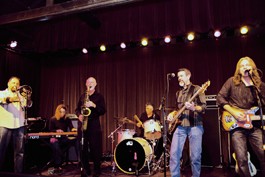
On Sunday, we found a more casual crowd on the riverside terrace under jiblike sunshades, enjoying a live jazz band.

Graffiti’s wine list is better by the bottle than by the glass. My friend’s ultradry Sangiovese was not technically flawed, just singularly inappropriate for sipping, and our server swapped it out with no fuss whatsoever.


Both soup and salad may be added to any entrée ($6), pan-seared halibut ($10) and sundry other sea creatures to any salad. We enjoyed tri-pepper seared salmon ($19) served atop a pile of impossibly long zucchini “ribbons” with forbidden rice, shoyu and shiso. The warmth of the evening was holding, so I wasn’t feeling like a heavy filet mignon ($27) or, geez, stuffed pheasant ($26). I figured that pizzetta with grilled ribeye ($14) presented some risk of being overlooked, tough and dry–making for a good test. The small cubes of steak-on-a-‘za were medium and tender, the smoky grilled flavor melding well with red and yellow peppers, onion, wild mushroom and Jarlsberg cheese. I don’t care what they say about it on Yelp.com, Graffiti did all right by me.

Graffiti, 101 Second St., Petaluma. Open for lunch and dinner daily. 707.765.4567.


Quick-and-dirty dashes through North Bay restaurants. These aren’t your standard “bring five friends and order everything on the menu” dining reviews.

Bordertown

08.27.08

It is always a smart plan to give the public movies about snow in the summer and beaches in the winter–why try to sell them what they already have? And indeed, Frozen River’s ominous snowscapes are part of the film’s appeal. The rest of that appeal is Melissa Leo’s convincingly hard-boiled performance as Ray, a woman without many chances left.

In a poor part of upstate New York, Ray’s husband has vanished on a gambling binge, leaving his car parked at the Indian casino on the Mohawk rez. Christmas is approaching like a storm front, and Ray can barely keep herself and her two sons fed and sheltered on what she makes part-time at the Yankee Dollar store. Her eldest, T.J. (Charlie McDermott), is considering some part-time work in one of his friend’s criminal enterprises. Ray has to use all the pressure she can spare to keep her son on the right side of the law.

A balloon payment is due soon on the double-wide Ray was hoping to purchase for her family for the holiday, and the repo men are circling, coming to get their television set. In the middle of all of this trouble, Ray’s husband’s car is scavenged by Lila (Misty Upham), a Mohawk single mom whose daughter was forcibly taken away. Lila is picking up a few dollars in a dangerous trade, and she recruits Ray into it.

“Snakeheads”–human smugglers–use the porous part of the border to bring in illegal immigrants to the United States; the frozen St. Lawrence River is their highway. Lila insists that it is Mohawk land on both sides, though the ICE and other federal acronyms beg to differ, and they keep a New York state trooper watching on the edge of the reservation.

The film is bolstered by the authenticity of Leo’s performance. Her craggy Ray is starred and stamped with bluing tattoos, and she is fierce without being too smart. She doesn’t know what “Pakistan” is, for instance, but she carries a snub-nosed pistol that she knows how to use.

The first hour, with the two women on their lonely rounds hauling immigrants, is gripping stuff, but after that hour mark, Frozen River hatches a film-noir Christmas miracle when it could have better matched Leo’s authenticity by taking an irrevocable turn into the darkness. While we get some interesting procedural material on how the Mohawks deal with lawbreakers, the actors on the tribal council are obvious nonprofessionals. They look right but tend not to bring any shadowing into their lines, and one gets the sense that they are being prompted.

The cop (Michael O’Keefe) who figures out what’s going on is deliberately, almost comically square; he says things like “Have an enjoyable holiday” when he makes a cautionary call at Ray’s trailer. A really great movie would have helped us see his plight as well as his threat to Ray.

The film wants us to see Ray’s inner ice thawing, but the turnaround comes across as contrived. Frozen River is apparently the expansion of a short that director Courtney Hunt played around the film-festival circuit, and sometimes shorts get expanded to feature length through the making of compromises. Elements of forced sweetening show past the serious landscapes, as well as Leo’s immaculately tough acting.

‘Frozen River’ opens Friday, Aug. 29, at Rialto Cinemas Lakeside, 551 Summerfield Road, Santa Rosa. 707.525.4840.


New and upcoming film releases.

Browse all movie reviews.

Wi-Fi  Brouhaha

0

08.27.08

Agree to Disagree: From left: Jeff Mich, Max Scheder, Peter Lafollette and Sandi Maurer.

Most people, at least of those of a certain age, agree that the most precious commodity a human being has in this lifetime is health. So when Sebastopol resident Sandi Maurer found her health inexplicably declining, she did what anyone would do: she looked for a cure.

After consulting practitioners of both alternative and Western medicine, she still had no answers. Willing to try any method that might help her feel better, she had her house tested for electromagnetic radiation fields (also known as EMR or EMF). Electromagnetic radiation is emitted by cell phones, computers, wireless routers used by Wi-Fi networks, radios, TVs, microwaves, power lines, the sun and even by other humans. It is omnipresent but occurs at different levels; the higher the level, the greater the danger.

Maurer’s test results showed elevated EMR levels, so she took steps to reduce it by fixing faulty wiring, disposing of her microwave, unplugging appliances and turning the power off at the breaker box whenever she wasn’t using them. “I was getting healthier and healthier,” Maurer says, seated in her home on a peaceful cul de sac. “I didn’t take much stock in EMR levels. But as my health improved, I wanted to talk to people about this. It’s out of the norm. Regular doctors don’t know much about this. I wanted to be absolutely sure what I was talking about, so I decided to research this for one year before speaking out.”

Maurer found multiple studies supporting the belief that EMR poses a health risk, including the 610-page Bioinitiative Report, the anti-Wi-Fi encyclopedia compiled by an international group of scientists and researchers that advises prudent avoidance of EMF.

Exactly one year later, Sebastopol’s city council accepted an offer from Sonic.net for free Wi-Fi for a half-mile radius around downtown. After hearing opposition from residents, including Maurer and many alternative-health professionals, as well as supporting views from Sonic’s CEO Dane Jasper and electrophysiologist and former university physics professor Robert Porter, the council rescinded its decision. Simply put, the council’s actions reflected the belief that the possible risks of Wi-Fi outweighed the benefits.

After reading about the decision in the local news, Jeff Mich, an honor student at Sebastopol’s Analy High School, was outraged. “I felt that people were narrow-minded, and that the city council didn’t seek a fair balance between the two sides,” Mich says vehemently. He decided to do his own research, and after looking at studies, including reports by the World Health Organization, he came to the widely held conclusion that Wi-Fi signals are no more harmful to people than using a cell phone. In fact, Mich found that Wi-Fi is already widely used by many Sebastopol businesses.

“By accepting Sonic’s offer,” Mich says, “business owners could save money and potentially cut down the amount of Wi-Fi signals citywide. It would be better for the environment and could draw tourists to the area.”

Mich circulated petitions, collecting over 1,500 signatures. He and other student campaigners also met Dane Jasper, Robert Porter and Sandi Maurer in the process. “A lot of people cussed us out,” says Peter Lafollette, a fellow student campaigner. “But Sandi was very polite, and is handling the situation in a logical manner.” Mich’s group presented the petitions to the city council, who agreed to reopen the issue in September.

Councilmembers once again must weigh the risks vs. the benefits. Many things used on a daily basis, such as X-rays, are known to be harmful and can cause cancer even when used diagnostically. But the benefit of their use is deemed to outweigh the risk; many lives are saved by what X-rays reveal.

The risks of EMR are unclear, but to folks like Maurer, they are very real. When health is at stake, life is as well. The benefits of Wi-Fi are also undecided. Sonic would serve a small segment of the population in a small town. It could enhance emergency response services during disasters like earthquakes and floods. And if all businesses conceded to use Sonic, potentially creating a small-server monopoly, the amount of EMR might decrease slightly.

What isn’t likely to decrease is the heat surrounding the issue. “The bottom line is that the safety standards are inadequate to protect the public’s health, and we need new ones,” Maurer says. “It’s a problem of miseducation,” she continues. “My goal is that the city would become a vehicle for education.”

Mich says education will be enhanced in the community and in schools by Wi-Fi use. But perhaps this is more than just an issue of Mich vs. Maurer or industry vs. illness, but that of a town divided by disbelief. 


No Static at All: Steely Dan at Wells Fargo Center Aug. 26

0

Photo by Steve Jennings”We’re here to play some tunes for you from our fabulous career,” Donald Fagen joked during one of his rare utterances last night at the Wells Fargo Center, where Steely Dan’s 13-piece band held sway for the last two nights of their “Think Fast!” 2008 summer tour. But that was no joke, as the night’s 19-song set only began to graze the depth of Steely Dan’s indeed, way-fabulous career.

Dan fans know that seeing the guys perform live will not give them any greater insight into Fagen’s cynical noggin or Becker’s laid-back mystique; in fact, seeing the guys perform live is to experience album-quality renditions of favorite songs, note for note. Given their jazz underpinnings, it might be strange that Steely Dan eschew live variation or improvisation, instead favoring exact replications of their recorded arrangements. Or, it might just be a Steely Dan concert.

We talk some shit here at the Boho, but seeing Steely Dan at the Wells Fargo Center last night was a sonic reminder that, at heart, this is a band that knows all about the pleasures of funk, back-beat, strong female voices and rock ‘n’ roll. There wasn’t a metaphoric male perm in the place as the band drew long and loud from Fagen’s bebop background to mix rock with pop with funk with jazz, all set against the intelligent snark of his simmering brain. At this point in his career, Fagen is like the Phillip Roth of rock: aging, raging, whip-smart and horny. You may not want to look at him, but you’ll damn sure listen to what he has to say.

Evening stand-outs included sizzling renditions of “Bodhisattva” and “Aja,” the latter bringing the crowd up for a sweet standing ovation. After a reduced band swung the night out with “The Fez,” Fagen and Becker strode out for a seamless transition into “The Royal Scam.” Fagen’s voice was nasal and rough at first but blossomed as the night continued. (The less said about Becker’s vocal attempt at “Gaucho” the better. After the first notes, I fruitfully spent the rest of that song in the ladies room, which doors offered a merciful muffle.)

Playing most of Aja as well as tracks from Fagen’s solo disc The Nightfly and a few more obscure numbers from deep back in the catalogue—and yes, I mean “Parker’s Band”—Steely Dan played all hits and no misses. Standing room tickets should still be available tonight and standing is a good bet for a short gig that is all about moving the body while tickling the soul.Set List

The Fez (instrumental)

The Royal Scam

I Got the News

Showbiz Kids

Bodhisattva

Two Against Nature

Hey 19

Godwhacker

FM

New Frontier

Gaucho

Black Friday

Parker’s Band

Josie

Aja

?? – I couldn’t figure this one out; can anyone help?

Big Black Cow

Peg

Kid Charlemagne (encore)

Mother of Invention

0

08.27.08

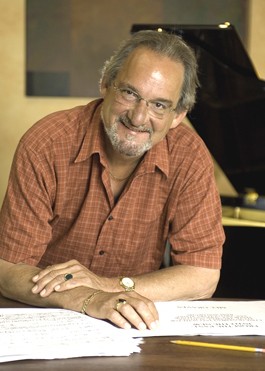
In Touch: Keyboardist George Duke grew up in Marin.

I‘m a child of the ’60s,” says keyboardist George Duke. “Artists have a responsibility to bring positive messages. I’m an idealist. Artists should shape ideals, without which there are no goals.”

Duke, who comes Sept. 7 to the Russian River Jazz Festival, believes his latest album, Dukey Treats, harks back to the forward-thinking social commentary of that era. But the album is also a return to his roots in funk and rhythm and blues. “There’s a resurgence of that,” he says in a phone interview from his home in Los Angeles. “Others are doing it, but not so well. I wanted to represent it as it was then.”

Duke grew up in government housing in Marin City, his father working the shipyards, his mother teaching. A fascination with the piano began at age four when his mother took him to see Duke Ellington at the Presidio. “He kept raising his hands. I didn’t know what he was doing. I found out later he was playing the piano,” Duke says.

The young Duke also attended Baptist church in Marin City where, he says, “I learned how to play, and the relationship of music to spirituality, communication without words. They played gospel, but it’s all related–it all stemmed from there.”

He joined several jazz groups while attending Mill Valley’s Tam High, and while studying music in college, joined Al Jarreau in the house band at San Francisco’s Half Note Club. Soon he found himself playing alongside such jazz greats as Sonny Rollins and Dexter Gordon at the Both/And club on Divisadero Street.

One night in 1969, at Thee Experience, an L.A. rock venue, his George Duke Trio performed for an audience including Frank Zappa and Cannonball Adderly. Upon returning home from church shortly afterward, Duke’s mother gave him a message from Zappa: “George, I want you to join the Mothers of Invention.”

Duke refers to the ’60s and ’70s as “an exploratory time, combining other forms with jazz,” and Zappa was in the forefront of a movement that saw rock groups using free-form improvisational techniques common to jazz. Jazz artists discovered electrified instruments, and the tempos of soul, funk and R&B. Jazz fusion was born, according to Duke, with “the strength of rock ‘n’ roll and the elegance of jazz.”

One connection led to another. After a year with Zappa, including acting in the zany film opera 200 Motels (“I had just joined the band and was thinking, ‘These guys are out of their minds!'”), Cannonball Adderly invited him to join his band. “I was a jazzer at heart,” Duke confesses, “and I couldn’t resist Adderly’s call.”

Two years later, Duke once again hooked up with Zappa, this time for three years and a total output of eight records. Why the reunion? “Frank got jazzier,” Duke explains. “I toured with Frank while continuing to record with Adderly.”

Through it all, Duke kept changing with the times. “Once I’ve achieved one thing,” he says, “I see what’s around the corner. It’s been a journey through the music catalogue, everything from jazz to R&B to Latin to funk–and what holds it together is me.” At a show with Adderly in Finland he met and began a long collaboration with Stanley Clarke. Meetings with Flora Purim and Airto Moriera set the foundation for later experimentations with Brazilian styles.

In the late ’70s, Duke began focusing on solo work and producing records for others, including his cousin Diane Reeves, a connection that netted two Grammys. He produced four Smokey Robinson songs and refers to him as “a true hero from the past. Working with him, you’re dealing with history.”

For his just-released disc Dukey Treats, Duke wanted to transcend the current recording trend in which musicians often communicate more with computers than each other. “We become enraptured with the sound of something and forget about the lyrics,” he says. “The nucleus of this album, especially the rhythm section, has people playing together.”

Musical styles have changed rapidly in Duke’s 62 years, and he’s partaken of many of them in the course of over 30 albums. Asked if he considered himself a pioneer in electric piano, Duke leaves the question, like his music, wide open. “That’s for others to decide,” he says. “I was there at the beginning. There were a few of us.”

 George Duke performs Sunday, Sept. 7, at the Russian River Jazz Festival, Johnson’s Beach, Guerneville. Festival runs Saturday-Sunday, Sept. 6-7. $45; $80 two-day pass. 707.860.9000.


Live Review: Outside Lands Festival – Day Two

4


I run into a friend of mine who is working, in some capacity or another, at the Crowdfire tent. Most of the photos I see on the screens around the park seem taken by the official Crowdfire photographers and not, as the concept goes, by fans who feel like wasting their time in front of a computer screen by uploading photos inside a big tent. I ask him what the Crowdfire tent is all about.
“It’s really hot in there,” he says simply, “and it smells like weed.”


Boots Riley, from the Coup, doesn’t seem to have any more of a handle on the Crowdfire idea either.
“I guess there’s this thing where you film a song on your. . . your phone, or something?” he says to the crowd. “And then you go and. . . upload it in that tent?” The genius of it is that he’s not phrasing his sentences in question form because he’s unclear on how the process works. It’s because he’s clearly asking why anyone would want to do such a stupid thing in the first place.
I interviewed Boots Riley in 2006, shortly after the Coup’s tour bus crashed one week into a nationwide tour. While the bus was sideways on the side of the freeway, everyone scrambled out just in time to watch the bus—and everything on it—become engulfed in flames. Riley was still audibly shaken by the experience, but his personal resolve was strong as ever.
“Different members of the band are like, ‘Well, you know, we survived for a reason.’ This and that. But I have always felt a reason for my life,” he told me, determinedly, “and I’ve searched to make a reason for my life when I didn’t know what it was.”
That’s exactly how Riley is on stage. He’s here for a reason, and he knows it, and he’s not about to let the audience forget that. Moving around the stage using every part of his body but his feet, in a green military shirt with “Revolution Rock” on the back, he even needs to ask for a longer mic cord at one point.
Riley and Silk-E command the live band through a solid set of mostly new songs. “Ride the Fence” goes into a barreling breakdown, and “The Shipment” has the musicians in full-on Band of Gypsys mode. “Ijuswannalayaroundalldayinbedwithyou” makes for a nice breather, and Silk-E delivers a solo song, “Do You Give Her What I Got,” showcasing her Aretha-like vocals.
It around this point that I notice that the foam covering on the speaker, two feet in front of my face, is flapping off of the cabinet with each heavy bass note. My ears are already shot from years of this, but a rare burst of responsibility sets in. Might be a good idea to move.


The last time I saw the Liars was at the Greek Theater in 2006. It was horrible. Just horrible. One of the most grating things I’ve ever sat through.
I have friends who swear by them, though, and I’m willing to give them another shot. They’re on the Panhandle Stage—the smallest stage at Outside Lands—and they’ve got a huge crowd. They seem less on heroin than they did two years ago, which is good.
The most unlikely trend in indie rock: the Second Drummer Playing Not Exactly In Rhythm.
“That song was called Alcatraz and There’s No Place Like Home!” says a smiling Angus Andrew. I’m not sure if it’s a continuation of the song title, but he also says something about it being a beautiful night, which, at three in the afternoon, is sort of strange.
I think about a Gang Gang Dance album that I used to have, and make my way to the Lupe Fiasco stage, which has already amassed a huge throng.


By rights, no one in a goddamned Dodgers cap should be allowed to stand in front of a San Francisco crowd and succeed in getting them hyped. But Lupe Fiasco’s guitarist does just that. Over and over. For ten minutes or so.
You know it’s a hip-hop show when nothing is happening on stage for way too long, there’s some guy telling you to make some noise even though you just did a few minutes ago, and the star doesn’t come out to the stage even remotely on time. Of all the hip-hop acts at Outside Lands, Lupe Fiasco is the only one who does this. I stand there, staring into space, wondering why I still put up with this kind of stuff.
I didn’t really understand the fascination with Lupe Fiasco when he put out Food & Liquor. Maybe it’s because back here in the Bay Area, we already had the Pack, who are of a much more sensible age group to be wearing neon and rapping about skateboards. The production is alright and all, and “Kick Push” is great, but really—“hip hop’s whiz kid”?
It was earlier this year when I was interviewing DJ Ignite for an article on Santa Rosa’s Latino hip hop scene that I changed my tune on Lupe Fiasco. “That song, ‘Hip Hop Saved My Life,’ that’s my favorite song right now,” he told me. I had no idea what he was talking about, but I sought it out and lo and behold, he’s right. It’s a great song.
Lupe Fiasco comes out late but makes quick amends by playing “Kick Push” and “Hip Hop Saved My Life” right off the bat. Dude is smooth as butter. Opening tours for Kanye West will do that to you, I guess. The crowd is in the palm of his hand, and I haven’t seen so many arms windshield-wipering in unison since the 1900s.
When he finishes his set, the P.A. speakers go back to playing the Grateful Dead.


“With all of the money and influence in Washington,” muses Nellie McKay on the Panhandle stage, “it’s a miracle we even have a pseudo-democracy left.”
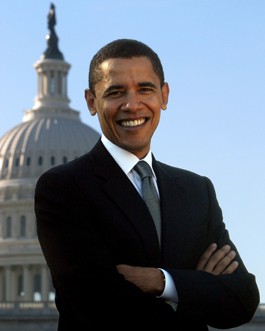
Last night, we’d gotten the text message from Barack Obama announcing that Joe Biden would be his running mate. And this morning, we’d watched the speech in Springfield, cringing at each blunder by both Obama and Biden. Obama called Biden “the next President. . . the next Vice President of the United States of America!” while Biden kept blowing it, calling Obama “Barack America” and using the word “literally” way too many times.
I’ve been pretty headstrong during this election season. I don’t care how close the media wants to paint this election. There is no way that McCain can possibly win. Even disregarding his asinine policies, he’s still a wooden, blobby multimillionaire who abandoned his wife after she got in a car accident to have an affair and marry a pill-popping, thieving beer heiress. Fuck that guy. He’s a loser.
But watching the speech in Springfield, my faith started to lapse. Especially when I noticed the campaign sign: “Obama Biden.” From a psychological standpoint, it doesn’t look good if your brain factors in an “S,” an “N,” and an “La.” When Biden called this campaign “literally incredible,” I fell apart inside.
The Democratic Party’s biggest obstacle, in my opinion, is its own self-doubt. For some reason, Democrats can’t just come right out and declare themselves the inevitable winners, even though according to all logic, the results of the November election are a totally foregone conclusion. Instead, they have to look at polls and wring their hands and worry about what Hilary supporters are thinking and what black America is thinking and what people in church are thinking.
For all of his blunders, Biden seems to have that extra needed boost of confidence. He also seems like he might make a bad cop to Obama’s good cop when it comes to attacking McCain, which is such a sensible and easy thing to do. In fact, if we care at all about the future of the world, we should all be attacking McCain as often and as gleefully as we can.
I already reviewed Nellie McKay’s show in Petaluma just five days earlier, and you can read it here. But standing in the crowd, watching people fall in love with McKay for the first time, is like seeing it through their eyes. All the zingers that never fail bring a new set of smiles to my face, and her cover of “Vote for Mr. Rhythm” leads into the brightest spot of political hope of the day.
“A lot of people say McCain is too old,” she reports to the crowd. “But it’s not that McCain is too old. It’s that his policies are FUCKED UP.”


Next up is the Walkmen, who I’ve never seen before but who I’ve loved since their impeccable 2004 album, Bows + Arrows. This week, they’re at the top of the Pitchfork ‘Best New Music’ list, for what that’s worth—after all, every single record store has a used, discarded copy of Pitchfork’s #1 album of 2006, The Knife’s Silent Shout, which is a totally faceless pile of boredom that almost single-handedly destroyed Pitchfork’s reputation overnight.
The Walkmen’s new album is called You & Me, and after listening to it a few times, I’m not that into it. It’s wimpy, and too ruminative, and not in the good way that “No Christmas While I’m Talking” is ruminative. I made a tape of it for the car, and skipping over a few songs to conserve space on the 45-minute cassette wasn’t exactly a nail-biting decision to make.
But the Walkmen take the stage and right off the bat, the wimpiness works on me. I’m transfixed. They open with a slow song, just guitar and singing, and it’s an irresistible invitation into their world. When the next song comes in and the band fills out the sound, it’s like heaven. They’re the very definition of a unique aesthetic, playing the same vintage instruments as the Monkees—Vox bass, Gretsch drums—but sounding unlike any other band on Earth.
They play almost all songs from You & Me, and those same songs I’d previously dismissed are immeasurably better live. Hamilton Leithauser plays the perfect frontman, high-rise jeans and all, clutching a beer and crowing at the skies while each song gets stretched and bullied along. Also, in an amazing triumph of stage direction, each member of the band appears to be thinking about algebra, or Raise High the Roof Beam, Carpenters, or the Spanish Civil War instead of about the fact that they’re playing music. Really—check the additional photos below.
At the end of the set, I’m thoroughly indulged. A screaming version of Bows + Arrows’ “Thinking of a Dream I Had” has me soaring on cloud nine, and I chalk it up as the top experience of the day.


Strolling along Speedway Meadow, I see a fistfight break out right next to me. Seriously, dudes are wailing on each other, trying to punch each others’ lights out. I’ve got this impulse, left over from high school, to break up fights, and it isn’t until I’ve helped push the one guy away from the other that I notice a Four Square court on the ground. They were fighting over a Four Square game. For reals.
When we walk across to Lindley Meadow, we notice that the organizers have thoughtfully widened the corral that was unmanageably bottlenecked the day before. It’s so uncrowded, in fact, that a trio of frat guys marches drunkenly down the path, arms around each other’s shoulders, singing “I Will Survive.” It must be weird to be known for a deadpan cover of a disco song.
Cake is playing, but they’re on the Sutro stage—a.k.a. The Inaccessible Stage—and we can’t see them at all behind the sound tent. They play “Frank Sinatra” and “Sheep Go to Heaven.” John McCrea’s monotone voice, which is so charming on record, is downright condescending in a live context and I can’t explain why.
“We’re Cake and we’re here to serve you!” he says. “This next song is from our very first album, which we’re re-releasing. We got it out of the steely claws of the record company and it’s ours again. Are claws steely? Some of them, I guess.”
They play “Rock ‘n Roll Lifestyle,” we get hungry, and the 100-page Outside Lands Festival booklet lets us know that they’re going “above and beyond the standard festival food.” This has resulted in food booths selling weird items like Three-Cheese and Figgy Jam sandwiches, but we see a hamburger stand and jump on it.


Tom Petty closes out the night. I like Tom Petty a lot, so this is a great thing, tainted only by the long and not very interesting story of our running around backstage trying to figure out why Tom Petty’s management will happily grant a photo pass to some no-name event website but not to an actual weekly newspaper with a large circulation throughout three counties in the Bay Area. Because of this, Tom Petty, you are represented in this review by this totally shitty photo. Hope you’re happy.
The show starts and it’s a steady steam train of Greatest Hits, which is just fine by me. “We got a lot of songs we’re gonna cram in before the curfew tonight!” Petty says. “We’ll play as many as we can!” And sure enough, they keep coming, one hit after another: “Listen to Her Heart,” “I Won’t Back Down,” “Even the Losers,” “Free Fallin’,” “Last Dance with Mary Jane.”
People are flaming up joints. People are singing “Oh my, my, Oh hell yes.” People are twirling and dancing and doing what people do at Tom Petty concerts, and then people are hearing Tom Petty tell them that they have to take a five-minute break so the sound guys can replace a generator or something.
But it isn’t all for naught: “While we were back there, ” Petty says upon returning, “we ran into one of our favorite musicians in the world. Steve Winwood! So we asked him to come help us out on a couple songs. ”
So Steve straps on a guitar and sings “Can’t Find My Way Home” with the Heartbreakers, and then really tears the nonexistent roof off with “Gimme Some Lovin’.” It’s a song I’ve heard a million times, but I think, today, that I have heard the best version of “Gimme Some Lovin’” ever performed—Tom Petty and the band know that song like the backs of their Rickenbackers, and Winwood is on fire all the more because of it.
But when “Saving Grace” goes on and on into a long jam, I feel like maybe Petty was just kidding around by saying they’d try to cram as many songs as they could into their set. “Refugee” lasts forever, with the predictable last-song-before-the-encore guitar jam in full effect.
At this point, after a very long day, all I really want to hear is “Here Comes My Girl.” Instead, to my great shock, Tom Petty plays “Gloria.” As in, the song that every bar band in the world plays on any given night in any given city in the world. I’ve heard of Petty playing some great covers—Count Five’s “Psychotic Reaction” comes to mind—but “Gloria”?!
We bail. Tom Petty is still okay in my book. I’m glad I saw him. Ending the set with “American Girl” is probably the best thing he could have done, and we sing along as we wind our way back out onto 19th Avenue.


Photos by Elizabeth Seward – Lots More Photos After the Jump.

Live Review: Outside Lands Festival – Day One

3

Even before entering the park, the publicity begins: “Hey, are you guys here to see Radiohead?” asks a too-cheerful girl in jeans and suede boots on the dirt path behind Lloyd Lake. “Do you want a free download card? Do you want to be photographed for their fan gallery?”
Then there’s the Crowdfire tent, brought to you by Windows, where festivalgoers are asked to upload their photos from the day to be projected onto digital screens around the festival grounds (“and while you’re at the pavilion,” says the 100-page festival program, to anyone who’s been asleep for the last ten years, “stop by the Windows Experience, to see how Windows brings your digital life together, from your PC to your phone to your living room!”). The whole idea feels overwhelmingly like a ruse for ticket-buyers to also do work and provide free web content, but it’s not nearly as insulting as the tent nearby, called the “Social” tent, “brought to you by Heineken.”
There’s a Visa Signature tent, a Dell Dome, a PG&E booth. Even at 5:30, the lines for the bathrooms are long and the lines for the ID Check are longer. Official-looking people are running all around. Black Mountain plays the Twin Peaks stage while hundreds of people wait in the Will Call lines. In one 30-second span, four golf carts pass by me. It’s not getting off to a very promising start.
Then Manu Chao plays, and I remember why we’re all here: because music is fucking awesome.
I’ve been stoked on Manu Chao since Clandestino, and although I knew he fronted the raucous world-punk band Mano Negra years ago, I’d always figured his performances these days would lean towards the blissful, kicked-back groove of tunes like “Welcome to Tijuana” or “Je Ne T’Aime Plus.” I prep Liz by telling her that his music is the unwatered-down version of all that Putumayo stuff that Starbucks plays.
When the show starts, I realize that I couldn’t be more wrong. Chao hits the stage with a fury, leaping all over the place in an “Africa Unite” T-shirt and throwing his fist in the air in time to the band. Did he hire these guys from the Dropkick Murphys?
It’s easy to see why Chao is a star the world over, and it’s thrilling to see a crowd of Americans, who’ve been jockeying for position for Radiohead, held as a captive audience and won over by his energy. He’s been at it for so many years that his blend of reggae, punk and world music is as natural as breathing, and his disregard for borders (anyone have one of his “No Work Visas” tour shirts from the Greek Theater?) and understandable disgust for George W. Bush make him a right-on dude in my book.
Chao is killing it, pogoing in unison with his band and firing up the crowd, when I hear the noise of something falling on the ground at my feet. I look, and it’s a 22 oz. can of Budweiser. Seconds later, another one comes flying over the fence and lands on the grass. Then four hands clutch the top of the fence, and while it buckles under the weight, the struggling faces of two hopefuls come into view. One guy makes it over by sliding head-first into the grass, and the other guy throws himself over in a sideways roll. By this point, a small group of onlookers has gathered, and they all applaud while the guys grab their cold ones and run off into the crowd.
Damn, I think. Those guys just saved themselves $170—and they got a standing ovation for it.


Lyrics Born has just made an album I don’t like all that much, but that’s fine—he’s a great performer that I’ve seen time and again, and he never disappoints. I was sold on Lyrics Born long ago, in 1999, during a Latyrx show at the Justice League on Divisadero. Lateef and Lyrics Born utterly devastated the room, and it helped that they had a guy from Arizona named Z-Trip as a guest DJ.
Not long afterwards, Quannum Spectrum came out, “I Changed My Mind” was a sleeper hit, and everything changed for Lyrics Born. He’s a soul singer now, albeit in a certain Bay Area fashion that’s inimitably his. And he’s still a great performer.
Backup singer Joyo Velarde worked the stage in a pink-striped jumpsuit and heels, throwing her hands back and forth while Lyrics Born elevated his live band to various climaxes. (Funny thing: last time I saw Joyo Velarde was at Max’s Opera Café on Van Ness, where she was working as a singing waitress.) They played all new stuff, but it was good to check in on the old dog again and see that he’s still teaching new tricks.


What’s there to say about Beck other than he’s fallen off a log into a stinky-ass pile of Scientology-ridden algae?
I guess there’s also this to say: he forces every photographer to sign special waivers allowing his management final say over photos to be used for publication. Actually, we don’t really have any idea what the waiver says. It could be an enlistment form into a deranged science-fiction cult, for all we know. But the upshot of it all is that we bring you this photo, from one of the digital screens, instead of a true-to-life, up-close photo.
Not that anyone can get anywhere near the stage. First of all, the corral between the Polo Fields and Lindley Meadow is jam-packed and moving at a snail’s pace. To make matters worse, a guy stands guard over the cluster of people, sitting on top of pallets full of bottled water.
Second of all, the stage sinks down into the landscape, meaning that if you’re not in the front 15 rows or so, you’re stuck behind the sound booth tent with no visibility. The sound itself isn’t much to write home about either, and Beck is playing drab new songs. I recall reading an interview with him, post-Odelay, where he articulately explained how he was compelled to write happy, uplifting music because he’d had such a brutal home life as a child. It made a big impression on me then, as did his music. When I saw him on the Sea Change tour in 2001, I was struck at how he flipped the equation; he was completely at home with depressing songs like “Paper Tiger,” and awkwardly going through the motions for “Where It’s At.”
But now, it seems the knee-jerk is working in a diagonal direction—the question isn’t ‘happy’ or ‘sad’ anymore. It’s as if he’s reacting to his charmed life in the spotlight by imposing bland music on his fans. We trek back through the narrow corral, moving at about ten feet per minute while others break through the fence and trample the foliage, cringing at each new song Beck starts. Oh well. Hope he snaps out of it someday.


Before Radiohead plays, the jumbotron comes alive with a shot of a girl straddling someone’s shoulders in the crowd. As soon as she realizes she’s onscreen for all to see, she immediately throws up the devil horns with both hands and sticks her tongue way out, down to her chin, in the universal sign of “I am a brain-dead idiot with no creative thought in my head whatsoever.”
I like Radiohead and all, but I’m confounded at the suggestion that they’re the world’s most popular band. It simply can’t be true. Their music is way too weird for the average person, like the devil-horn girl, to honestly enjoy. The crowd estimate tonight is 60,000, and of that, I’d wager to say that 20,000 truly love Radiohead. The rest are here because they feel, for some reason, like they should be. Maybe they’re afraid to be apathetic about Radiohead lest they appear unintelligent, or unsupportive of “art.”
I’m also aghast at the comparison that Radiohead is the next U2. My friend Kim puts it best: “They managed to get really big by not doing anything except for playing bigger places.” Which means: No giant lemons. No vacuous dance-club albums. No pompous charading. Just sticking to the guns, making the music that seemed most interesting at the time, and against all odds watching the world go crazy falling all over itself for it.
Before Radiohead comes on, I overhear two guys talking. One of them says to his friend, “I like Beck, but live, he’s not that good. But this, this is going to be great. It’s like my highlight of the year. And I love the weed smell. San Francisco’s so cool.”
During the first couple songs, a very drunk guy topples over the front barricade and into the photo pit. He’s out cold, just completely unconscious, crumpled on the ground. A public-relations girl working the festival runs over and motions security to join her, and they build a wall around the poor guy, making sure that no photographers can snap a photo of him.
There are glistening moments in Radiohead’s set where, for a brief passage or chorus, they still seem like that scrappy little band who sat down and made an mind-shattering album called OK Computer. The sense of discovery is still there; the feeling of urgency hasn’t been lost. It’s like watching David Murray, or Nadja Salerno-Sonnenberg, or Rakim.
Then, I look out across the field and wonder what in the hell is happening, and just how on Earth so many people can possibly be passionate about what is obviously a very weird orchestration of sound. I suppose this is a familiar sensation for people who’ve listened to Radiohead in their bedrooms alone for years and then go to see them for the first time, but outdoors in Golden Gate Park, it’s especially bizarre.
In fact, the defining moment of the band’s set is when I come out of an air-conditioned bathroom trailer, walk down the steps, and look up at the back of the concrete Polo Fields bleachers. There’s a beautiful old architectural arc pattern, reminiscent of a church cloister hallway, and Thom Yorke is wailing out the final stanzas of “Karma Police”—“For a minute there, I lost myself, I lost myself. . .” Horse stables are to the left, and a big blue glow fills the sky to the right. It’s surreal, and I can’t explain why. But it fits in nicely with the fact that the last Polo game actually played on the Polo Fields here wasn’t by actual Polo players on horseback, but by a bunch of guys on Segways.
During “Airbag,” the sound goes out. It’s back on after 40 seconds or so, and it’s not really that much of a big deal, even though it’s all anyone is going to be talking about the next day. It goes out again a few songs later. I like it. It lends an air of unpredictability to the experience. Plus it forces Thom Yorke, looking like a decomposed rubber walrus, to actually address the crowd. “I don’t know what the fuck’s going on,” he says. A wasted guy next to me screams, “Me too! Me and Thom Yorke have so much in common!”
We walk around after a while, noticing the hordes of people who’ve scaled the Port-a-Potties to get a better view. For my money, Radiohead’s best album is The Bends, and luckily, they play two songs from it. During “Fake Plastic Trees,” I’m sitting, staring at the trees surrounding the Polo Fields. They’re lit up by huge, colored lights, and they look synthetic. It’s beautiful.
Set List:
15 Step
Reckoner
Airbag
There There
All I Need
Nude
Talk Show Host
National Anthem
The Gloaming
Videotape
Weird Fishes/Arpeggi
Idioteque
Karma Police
Jigsaw Falling Into Place
Just
Exit Music (For a Film)
Bodysnatchers

Pyramid Song
You And Whose Army
Paranoid Android
Fake Plastic Trees
Everything In Its Right Place


Photos by Elizabeth Seward – Lots More Photos After the Jump.

Live Review: Outside Lands Festival – Talking Trash About Festivals Before Reviewing The Festival

1

First of all, I gotta get something off my chest.
Music festivals, by nature, suck.
Aside from expensive food and no free water and long hours and huge crowds, there’s a very important reason to be bummed out on the rampant proliferation of festivals: the music suffers. When you go to a festival, you don’t get to see a show. Instead, you see a showcase.
Bands play festivals so they can play in front of a whole bunch of people who would never check them out otherwise. This is great for the band’s exposure, and it’s the reason why more and more managers send their bands on “festival tours”—that is, driving around from city to city and playing for a bunch of people who aren’t their fans. But it’s terrible if you are, in fact, a fan.
Once upon a time, festivals were easy to avoid, dominated by horrendous crapola like Phish, String Cheese Incident and Blues Traveler. But there are now more festivals than ever, all across the world. It’s gotten to the point where if you want to see a great band, you’ll most likely have to suffer through festival hell to do it.
Festivals are like the superstores of music, except without the attraction of cheap prices, and without cheap prices, why would anyone go to superstores? The selection, I guess. Isn’t that what festivals provide? A huge selection?
But that, in itself, is another problem. Too many bands. It means that either you have to cough up $85 to help pay for Widespread Panic’s guarantee when who you really came to see is Wilco, or else you’re running around like a chicken with its head cut off trying to cram in Sharon Jones and K’Naan and Bon Iver, all playing at the same time, missing most of each set but knowing you’d die if you didn’t try and Little Brother is on the same time as Broken Social Scene and it sucks because you love them all and god, I’m getting thirsty, why isn’t there a drinking fountain around somewhere?
I’m getting all of this out of the way from the get-go, because that’s exactly what I have to do in order to enjoy going to something like the Outside Lands Festival. I admit that I am powerless over the immense suckiness of the festival, and I believe that only the chance to see amazing music can restore me to sanity.

With all that said, I declare the inaugural Outside Lands Festival a success. Those who only went to Friday night’s Radiohead show won’t agree, but as the weekend progressed, the organizers made key changes, like adding staffers to the ID Check booths and widening the corral between the Polo Fields and Lindley Meadow. As for the sound briefly going out during Radiohead (twice) and Tom Petty (three times), that’s notable and all but was it really so bad? Not really. As for it being crowded, what did anyone expect?
By the end of Sunday, I was exhausted but in the best possible way: knowing that I had beaten the festival beast and come away with some irreplaceable experiences.
Top Five Best Bands at Outside Lands:
1. K’Naan
2. The Walkmen
3. Broken Social Scene
4. Radiohead
5. Manu Chao
With honorable mentions going to Lupe Fiasco, Sharon Jones, the Coup, Lyrics Born, and. . . see? When you can’t decide, you know it’s been a good weekend.
Jump to Outside Lands Festival – Day One.

Rapping Muppets, Cont’d

2

When Jim Henson and Frank Oz decided to write a Bert & Ernie skit with drums, or with a disco ball, or with horns, or dancing, how could they have possibly predicted that technology would someday allow for advances like this?

[display_podcast]

Down the 9-11 Rabbit Hole

08.27.08 Pet Goat: President Bush listens to Andrew Card inform him of the 9-11 attacks. It would be so nice if something made sense for a change.--Alice, from Alice's Adventures in Wonderland We're hurtling down the rabbit hole. Gravity's refuted. Black is white, and white turns bitter, transfigured by a mawkish Mad Hatter blithely chewing up our Constitution, juggling missile-shaped teacups, splashing...

First Bite

08.27.08Editor's note: First Bite is a new concept in restaurant writing. This is not a go-three-times, try-everything-on-the-menu report; rather, this is a quick snapshot of a single experience. We invite you to come along with our writers as they--informed, intelligent eaters like yourselves--have a simple meal at an area restaurant, just like you do. Anchoring the northern reach of...

Bordertown

08.27.08It is always a smart plan to give the public movies about snow in the summer and beaches in the winter--why try to sell them what they already have? And indeed, Frozen River's ominous snowscapes are part of the film's appeal. The rest of that appeal is Melissa Leo's convincingly hard-boiled performance as Ray, a woman without many chances...

Wi-Fi  Brouhaha

08.27.08 Agree to Disagree: From left: Jeff Mich, Max Scheder, Peter Lafollette and Sandi Maurer. Most people, at least of those of a certain age, agree that the most precious commodity a human being has in this lifetime is health. So when Sebastopol resident Sandi Maurer found her health inexplicably declining, she did what anyone would do: she looked for a...

No Static at All: Steely Dan at Wells Fargo Center Aug. 26

Photo by Steve Jennings"We're here to play some tunes for you from our fabulous career," Donald Fagen joked during one of his rare utterances last night at the Wells Fargo Center, where Steely Dan’s 13-piece band held sway for the last two nights of their "Think Fast!" 2008 summer tour. But that was no joke, as the night’s 19-song...

Mother of Invention

08.27.08 In Touch: Keyboardist George Duke grew up in Marin. I'm a child of the '60s," says keyboardist George Duke. "Artists have a responsibility to bring positive messages. I'm an idealist. Artists should shape ideals, without which there are no goals."Duke, who comes Sept. 7 to the Russian River Jazz Festival, believes his latest album, Dukey Treats, harks back to the...

Live Review: Outside Lands Festival – Day Two

I run into a friend of mine who is working, in some capacity or another, at the Crowdfire tent. Most of the photos I see on the screens around the park seem taken by the official Crowdfire photographers and not, as the concept goes, by fans who feel like wasting their time in front of a computer screen by...

Live Review: Outside Lands Festival – Day One

Even before entering the park, the publicity begins: “Hey, are you guys here to see Radiohead?” asks a too-cheerful girl in jeans and suede boots on the dirt path behind Lloyd Lake. “Do you want a free download card? Do you want to be photographed for their fan gallery?” Then there’s the Crowdfire tent, brought to you by Windows,...

Live Review: Outside Lands Festival – Talking Trash About Festivals Before Reviewing The Festival

First of all, I gotta get something off my chest. Music festivals, by nature, suck. Aside from expensive food and no free water and long hours and huge crowds, there’s a very important reason to be bummed out on the rampant proliferation of festivals: the music suffers. When you go to a festival, you don’t get to see a show. Instead,...

Rapping Muppets, Cont’d

When Jim Henson and Frank Oz decided to write a Bert & Ernie skit with drums, or with a disco ball, or with horns, or dancing, how could they have possibly predicted that technology would someday allow for advances like this?
11,084FansLike
4,446FollowersFollow
6,928FollowersFollow