While presidential candidates call for alternative forms of energy and “sustainable” is the word of the year, the idea of ocean-wave buoys along the Sonoma and Marin coast continues to attract attention as a potentially viable form of energy.
Though no firm proposal is in place, the wheels have been turning toward what some are already calling a “West Coast wave energy gold rush.” The county of Sonoma, in fact, has already submitted an application to the Federal Energy Regulatory Commission to lease an area of the ocean off the Sonoma Coast to oversee wave-energy development.
Dan Howard, superintendent of the Cordell Bank National Marine Sanctuary, agrees that ocean waves, like the wind and the sun, are a natural energy source which until recently has gone widely untapped. Still, the rush may be a long way off. “I would call it an experimental technology,” he says. “It’s safe to say, I think, it’s years away from any kind of implementation.”
Earlier this year, the Cordell Bank Sanctuary held a panel discussion with representatives from the buoy energy industry, the marine fisheries and environmental groups. “You start running into issues related to migrations—the grey whales, of course, are the first that come to mind,” Howard says. “The fishing industry, certainly, you’d have to work something out with the local commerce if it affected vessel traffic in any way. There are lots of conversations that need to occur.”
The concept of the wave-energy buoy has been implemented most successfully in Portugal, where the Aguçadora Wave Park, with its snakelike buoys, built in 2005 near Póvoa de Varzim, has been widely hailed a commercial success. Last year in Oregon, a different prototype of buoy was tested off the coast, measuring 72 feet tall and weighing 35 tons. Using a fixed coil with a floating magnetic field, the device would generate voltage with the rising and falling of the waves as the coil moves up and down inside the magnetic field.
The idea has been gaining currency. On Sept. 23, the West Coast Governors’ Agreement—a collaborative group between the governors of California, Oregon and Washington united to preserve ocean health—will host a meeting in Portland, Ore., to discuss with the public the development of wave and tidal energy activities on the West Coast. PG&E has already eyed the Mendocino Coast as a location to study hydrokinetic projects.
With all eyes on renewable energy, and with engineers working on different types of buoys, could we be on the crest of new source of energy? “I think the vast majority of people in the United States would support development of alternative-energy sources, certainly,” Howard says. “How we go about doing that, and doing it in the most environmentally sensitive and safe way, is the trick.”
I kept seeing things that needed changing.” That short line is so casually uttered in the opening moments of Rebecca Gilman’s beguiling new comedy-drama The Sweetest Swing in Baseball—which opened last weekend at the Sixth Street Playhouse Studio Theatre—that those seven tiny words could easily be missed as the achingly revealing confession they are. From this line, spoken in a glassy monotone by renowned artist Dana Fielding (Liz Jahren, above left, in a rich, detailed performance), feebly explaining why all the paintings in her brand-new gallery show are still wet with fresh paint, the audience is being told two things about Dana: that she is a grade A perfectionist with a strong hard-to-please streak; and that she is dangerously shaken by artistic and emotional self-doubt. From a few added details in the scene—she guzzles one Chardonnay after another, stares blankly into space as acquaintances try to reassure her, and forces a break-up with her increasingly concerned boyfriend—it becomes clear that this is a fragile but brilliant woman who has become profoundly, dangerously unhappy.
After a failed suicide attempt, Dana is committed for observation at a mental hospital. There she strikes up an uneasy friendship with two other patients: the delusional and heavily medicated attempted-murderer Gary (Anthony Abate), incarcerated for plotting to kill a famous newscaster for sending out “evil” messages, and the gay alcoholic Michael (Keith Baker), making another stab at sobriety after the latest in a series of post-rehab relapses. Strangely comforted by the daily structure of hospital life and her regular sessions with Dr. Gilbert (Ann Woodhead, above right), Dana is unsettled to learn her insurance will only cover her hospitalization for 10 days.
Unready to face the real-world demons that drove her to slash her wrists, she decides to fake a more serious diagnosis than mere depression. With the coaching of Gary and Michael, she chooses multiple-personality disorder, and, inspired by a self-help book authored by Darryl Strawberry, she tries to convince the staff that she believes she is the troubled major leaguer. This turns out to be harder than she initially suspects. For one thing, she knows nothing about baseball or Darryl Strawberry, and what she does learn, she doesn’t like.
For a play dealing with such serious matters, The Sweetest Swing in Baseball is remarkably funny, with wry and knowing dialogue that reveals truths about the characters as it entertains and darkly delights.
‘The Sweetest Swing in Baseball’ runs Friday&–Sunday through Sept. 21. Friday&–Saturday at 8pm; Sunday at 2pm. Sixth Street Playhouse Studio Theater, 52 W. Sixth St., Santa Rosa. $15-$20 general. 707.523.4185.
Museums and gallery notes.
Reviews of new book releases.
Reviews and previews of new plays, operas and symphony performances.
Reviews and previews of new dance performances and events.
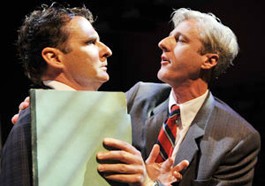
Santa Rosan Tim Kniffin, a fifth-generation Sonoma County resident, is that rare thing in these parts: a professional actor who actually gets to perform—not infrequently—outside the county, a shimmering dream for nearly every actor growing up in this area. Most recently, he appeared in Sixth Street Playhouse’s production of David Mamet’s Oleana, and will next be seen in the same company’s October production of Arthur Miller’s Death of a Salesman. Last weekend, Kniffin (above right) opened a big new show at the Aurora Theatre Company in Berkeley. In The Best Man, by Gore Vidal, Kniffin plays Sen. Cantwell, battling it out with another candidate as he vies for his party’s presidential nomination. The play, written in 1962, is a comedy-drama with plenty of political punch, and the role—a man with secrets trying to decide how much mud to sling on his way to the top—is the kind of role Kniffin does well.
“Doing this play has been great,” Kniffen says. “A lot of great actors want to perform at the Aurora, so I always feel fortunate when I get the opportunity to do a show there.” The play itself, often cited as Vidal’s best, is a challenging piece of work, bearing the author’s conspicuously labyrinthine dialogue and rapid-fire wordplay.
“This show is definitely not easy. It does have wonderful challenges for its actors,” Kniffin agrees. “Gore Vidal, what a great writer! There’s such dense language—and the humor is so subtle. During the previews, we learned exactly how funny a play this is. When I first read it, and all throughout rehearsals, I never really thought of it as having much ‘big laugh’ humor in it, but during the previews and on opening night, there were a lot of times we had to hold for laughs. Sometimes you just don’t know till opening night, but it turns out that this is actually a very funny play.”
The Best Man runs through Sept. 28 at Berkeley’s Aurora Theatre Company. 510.843.4822.
Museums and gallery notes.
Reviews of new book releases.
Reviews and previews of new plays, operas and symphony performances.
Reviews and previews of new dance performances and events.
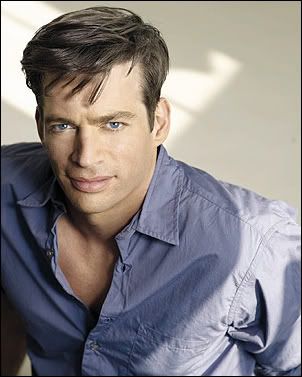
Today, on the third anniversary of Hurricane Katrina, I feel compelled to share an interview with one of New Orleans’ native sons.
In April of last year, Harry Connick, Jr. called my house to talk, I imagine, about his upcoming appearance in Sonoma. All we could manage to talk about instead was the disaster in New Orleans. Throughout our conversation, he came off as incredibly authentic, speaking about the catastrophic situation with a compelling combination of depression and hope.
Below, you’ll find Connick, who regularly performs at Republican functions, casting shame on President Bush for not visiting New Orleans sooner. You’ll also read about how he was down there the next day, and how he wasted no time helping out to raise money to rebuild his city. And of course, I couldn’t help asking just one music-related question at the end.
Interview with Harry Connick, Jr. – April 14, 2007
Q: Where were you when Hurricane Katrina hit?
A: I was in Cape Cod, visiting some friends, and I immediately went back home to New York to try and figure out a way to get down there.
Q: Was it easy to get on a plane?
A: No, it was impossible, ‘cause no flights were going down there. So I had to – my friend Bob Wright, who at the time was the president of NBC, was kind enough to let me use the NBC plane to get down there.
Q: And you flew into the regular airport?
A: We flew into Baton Rouge.
Q; In those first hours, after the news started coming in about how bad it was, about the levees and everything, what sort of thoughts were going through your head?
A: Well, I was just helpless, you know. When they said 80% of the city was flooded, it’s just hard to imagine. So I was in shock, man, I was just really concerned about my family and seeing what I could do to help them out.
Q: You had family and friends all over the city.
A: Yeah.
Q: So, it was what, a couple days before you were able to get down there?
A: No, I was down there the day after the flood. So I got down there on Tuesday – it flooded on Monday, I got down there on Tuesday.
Q: In the liner notes to your new record, you describe meeting someone on the street – Darryl is his name, this guy who showed you around. Was he really just a stranger that you met on the street when you were walking around?
Q: Well yeah, he was on the corner, and he recognized me and asked me if I had been to the convention center, and I told him I hadn’t. And he brought me over there and showed me, there were probably 15,000 people just waiting around to be helped. And they had been there for three or four days.
Q: One of the first things you saw when you got the convention center was two dead bodies covered in sheets. How does an experience like that – how did that change you?
A: I don’t know how it changed me, to be honest with you. It just… it’s like if somebody hit you in the head with a baseball bat and you happen to survive it, you know. You, you… I mean, I don’t know how that changes you, it’s just a painful experience that you go through and eventually get over. It was rough to see.
Q: In your song, “All These People,” you kinda make reference to this guy Darryl, how ordinarily he might just be a crazy person and you might be scared, but because of the circumstances you were brought together in, like you said, “he wasn’t crazy and I wasn’t scared” – did you see a lot of that common, human brotherhood going on?
A: Oh yeah, definitely, man. I mean, I’m always… I feel like I’m like that all the time anyway, and most people are – especially down there, there’s such a great sense of community down there – but it was a heightened sense of fraternity down there, everybody just tryin’ to make it, man, tryin’ to figure out what to do. I mean it was profound, it felt like the end of the world. I mean it really did. It was a similar feeling to after 9/11, how people just kinda came together and tried to help each other out.
Q: Also, in your official press release from Columbia, it states that you have a focus on solutions rather than casting blame. But don’t you think that just a little bit of blame could be cast?
A: Oh, I cast plenty of blame, I just don’t do it in public. I don’t think there’s any reason to. ‘Cause it doesn’t change anything. There’s no reason to do that. Plus, I’m ignorant to most of the information that transpires between people that do that for a living – I’m not privy to all that stuff. So it would be easy for me to say “oh, this person didn’t do this, this person didn’t do that,” but nobody – I mean, I’m not in those meetings, I don’t know the reasons for that stuff, know what I mean? So it’s just pointless to cast blame, it’s not my business.
Q: Do you think… I mean, it really did take a long time for people to get down there. If you were able to get down there on an NBC plane, then Bush probably could have gotten down there a little quicker than he did.
A: Yeah. I think he should have been down there. I don’t know why he wasn’t. He’s our president, I think it’s nice to give him the benefit of the doubt, but I think he absolutely should have been down there and had his sleeves rolled up. If you look back 40 years ago, there was another president from Texas [Lyndon B. Johnson] after a hurricane in New Orleans who was trudging through the sludge tryin’ to help people. And I think President Bush probably should have been down there. But he wasn’t, and it’s over, and that’s what it is.
Q: What one displaced musician’s story affected you the most, where you really just said, “This enormously gifted person has no home now, and that is a shame?”
A: Oh, I’ll leave him nameless, but one of my good friends, a great trumpet player. I was actually trying to help sponsor him for a house out of town, with his three children and his wife, and the person, when they found out he was black, they said “we don’t want those people here.” I mean, it’s 2007. You just don’t… I don’t understand that, it doesn’t make any sense. It just makes no sense at all.
Q: At what point did you know that you had to do something major to help?
A: Immediately. Immediately. I called my dad, asked him, “What do I do?” I said, “Can we form some kind of committee to help rebuild New Orleans?” He said, “Well, it doesn’t work like that, you can’t just rebuild a city.” Then my manager suggested that we help the musicians, and so that’s how the idea of the Musician’s Village was born. It’s going great now. It’s been a big success.
Q: How many houses have been built in the village so far?
A: I think 40 or 50, probably.
Q: And you’ve got room for about 300 or so?
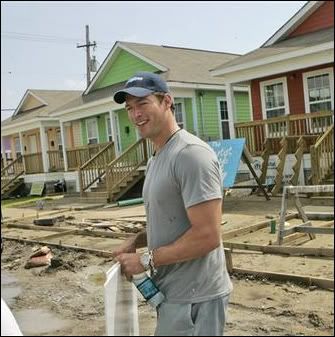
A: I don’t know how it works – it’s gonna be 70 houses and 10 duplex apartments. I’m not sure how many people that works out to be. Q: I hear that during the jazz festival you were there, helping paint houses.
A: Yeah, I mean I can’t take any credit for any manual labor down there, but I do certainly go down to keep the awareness level up about it. I think I have a moral and ethical responsibility to stay on that, because those types of situations have a tendency to get on the back burner and fall apart over the years, and we’re just not gonna let that happen.
Q: Speaking of programs falling apart and everything, I know there’s a lot of charity donations for Katrina relief that get tied up in bureaucracies, there’s the Road Home program and the money for that is still in waiting – how does it feel to directly, in person, rebuild houses in a hands-on fashion?
Q: It’s great. It’s not rocket science, man, you just need to get a bunch of people. Well, that’s not fair, because Habitat For Humanity has been around for a long time and they’ve developed the system of doing this and they’ve got it down to a science. So I walked in at the tail end of that and in a sense we made it look easy – so in fact, it is kind of more like rocket science. But I think there doesn’t have to be a bunch of red tape. You just raise the money, put your mind to it, and get the work done, and that’s pretty much what we did. It just goes to show you that it’s possible.
Q: You took the Neville Brothers’ place and closed out the jazz festival this year. How was that?
A: Oh, it was great. I like playing JazzFest in any capacity. It’s sad that the Neville Brothers couldn’t do it, but I was happy to do it and I had a great time. The crowd was great and people were real cool, so we had fun.
Q: I know that… the vibrant mood of the jazz festival might not be the best barometer, but can you describe the mood of New Orleans, the city, right now – what would you say is its spirit right now?
A: Depressed. I’d say depressed, in a word.
Q: Still?
A: Yeah, man, they can’t live in their houses, most of the people. The majority of the population can’t come home. No, it’s bad. It’s really bad.
Q: There’s probably a lot of people around America that… the state of the city is sort of out of sight, out of mind at this point – it doesn’t get told on the news that much anymore. And at the same time I hear about official tour buses that you can sign up for when you go to New Orleans that’ll take you around the 9th ward to see the houses, and the buses are packed. People want to see this for some reason.
Q: Well, everybody has a job, and my job it to keep people aware of it. So I try to tell ‘em during the show, and I don’t want to make it a forum for politics or social issues, but most of the time I get up and just say a few words about New Orleans, and people are very responsive. Shoot, we’ve had 25-30 thousand volunteers come from all over the world come and help, and those tour buses, the last stop on their tour is the Musician’s Village. So, you know, we’re doin’ all right. It’s just gonna take a long time. If you look back in history at catastrophes, natural disasters in other places – I mean, we ain’t even reached two years yet. Those things take sometimes decades to repair themselves, so I think we’re on track. It’s just frustrating for the inhabitants now because they’re in the middle of it.
Q: One of the songs you recorded on your album, it’s a great song, “Yes We Can Can” by Allen Toussaint.
A: I love that song.
Q: You said that if you could choose the official song for the City of New Orleans, you would make it that song.
A: Yeah, I mean especially right now. It’s so simple in its sentiment. It basically says, “I know we can do this.” As cliché as it sounds, that’s kind of what we need to be saying.
Q: “Make this land a better land.”
A: Exactly, I mean it couldn’t be more prophetic.
Q: I just have one more question for you, Harry, and then I’ll let you go. James Carroll Booker III: Was he or was he not the baddest motherfucker you ever played with?
A: The baddest, bro. The baddest. There was nobody who could come close to him. I’ve played with some serious people, you know… nobody could come close to him. He was the baddest.
Q: Alright, hey, thank you so much for giving me a call and taking the time to do this.
A: Yeah, bro, after the show, man, come say hey. I appreciate the work you did for this interview, man, you know what you’re talking about.
A full 20 years after Straight Outta Compton, actor, director and gangsta-rap sage Ice Cube can still make your body and mind rock. While it wasn’t a sold-out show, the Tuesday night crowd at the Fillmore thoroughly enjoyed the hour-long set surprisingly filled with just a few hits from Cube’s rich catalog.
An hour after his DJ got the crowd warmed up with songs like N.W.A.’s “Boyz N the Hood” and local favorite “Back to the Hotel” by N 2 Deep, Cube took the stage and launched into “I Got My Locs On” off his excellent new album Raw Footage, a great example of a “hard” rapper growing old gracefully that sees him still conquering big issues plaguing the African-American community and the nation in general. While his delivery is much more subdued than his early-1990s hey day, the rougher “Natural Born Killaz” followed & got the crowd hyped with its backing horror-movie squeal.
Such went the perfectly paced show, with new and old songs alike receiving ample enthusiasm. After expressing condolences to former N.W.A. member/nemesis/then-collaborator-again Dr. Dre for his deceased son, Cube expressed defiance to those suggesting Cube, current star of children’s movies, quit the rap game. “Giving up the mic is like giving up my life,” he said before launching into “Check Yo Self,” the first of many line-for-line crowd sing-alongs of the evening.
With WC playing hype man the entire night (making a tight, focused onstage trio), the mediocre Westside Connection songs were inevitable but also well-received by children of the 90s in attendance, especially “Bow Down”, which sent a sea of westside hand signals in the air.
The tribute to his previous group was undoubtedly the highlight of the night, with Dr. Dre’s opening line from N.W.A.’s debut kicking the show into overdrive: “You are now about to witness the strength of street knowledge.” Cube then ripped into his classic verse of “Straight Outta Compton” with as much ferocity as he did when the track introduced him to the world two decades ago. “Gangsta Gangsta” followed, and there’s truly nothing more strangely enjoyable than hearing a multi-racial, all-ages, co-ed crowd shouting “Life ain’t nothin’ but bitches and money” in unison.
The new song “Gangsta Rap Made Me Do It” followed as a perfect disclaimer and post-Bill O’Reilly reminder that Ice Cube’s “gangsta rap” is merely an observant art form – not an endorsement of violence. Back in the 90s when under fire for misogynistic and violent lyrics, Cube’s big-picture consciousness (comparable to Public Enemy) was unfortunately lost behind his black-clad bulldog persona. But people still haven’t learned: “If I call you a nappy headed ho, ain’t nothin’ to it, gangsta rap made me do it,” he told the audience, “If I shoot up your college, ain’t nothin’ to it, gangsta rap made me do it.”
After a few solo songs from WC (another surprisingly tolerated section of the show), Cube returned for back-to-back club hits “You Can Do It” and “We Be Clubbin”, a disappointment for me considering his landmark solo debut Amerikkka’s Most Wanted went completely ignored.
But we did get a wonderfully faithful rendition of “It Was a Good Day,” perhaps the most understated and effective “life in the hood” portrayal ever recorded. Toward the end of the show, Cube took a moment to celebrate the beauty of nonviolent congregation for a genre sporadically plagued by violence. “We come in peace,” he told the crowd, “Give yourselves a round of applause.”
Photos and review by David Sason
*
Setlist:
What Is a Pyroclastic Flow? / I Got My Locs On
Natural Born Killaz
?
Hello
Why We Thugs
Smoke Some Weed
Check Yo Self (Remix)
Bow Down (with WC)
The Gangsta, the Killer and the Dope Dealer (with WC)
Here we go: Day Three. If I can survive three-week camping trips, I can survive a three-day festival. I’m getting a little tired, and today is going to be full of the most frenzied running around of all three days, but it’s also going to be the most interesting. It’s full of lesser-knowns that for the most part I’ve never seen before, although obviously, I’d much prefer to see them in a dark club instead of a dry field.
This is the day that the festival conception of ‘showcase’ rather than ‘show’ is at its most maddening. I see a lot of bands I want to see, but I have to race my ass off to do so. First up is the Mighty Underdogs, the latest Quannum supergroup with Gift of Gab from Blackalicious and Lateef from Latyrx. When the Latyrx album came out around the same time as the Black Star album, I remember participating in long discussions with friends about who was the greater MC of each collaboration. Mos Def or Talib Kweli? Lyrics Born or Lateef?
At the time, I voted vehemently for Kweli and Lateef. I liked their lyrics, but I’d be kidding if I didn’t say I also adored their sense of urgency—both rapped as if something really bad was going to happen, and soon, if we all didn’t do something quick. It was the late 1990s.
Lateef has kept his attraction basically intact after all these years. He’s still got that same urgent demeanor, if not more so. He’s purely at home on stage, to the extent that seeing him walk down the street would be unsettling, almost worrisome, and you’d want to prop a monitor on the sidewalk and hand him a mic just to put him in his natural element. His finest hour, still, is Latyrx, although his overlooked album Ambush isn’t much to shake a stick at, either. I’m always rooting for the guy.
Gift of Gab made the defining Quannum album, Nia, and for that alone he will always deserve respect—the lyrics, the conception, the fantasy, the arrangements are all pure brilliance on that record. Live, he’s often inclined to rev his vocal chords and scream his way to crescendo, a characteristic tendency which gets tiresome after the second or third go-round. These two things generally balance out to a level medium.
We catch the Mighty Underdogs’ last couple songs as they’re finishing their set, but from what I can gather, it’s basically a semi-interesting reworking of Blackalicious, for whom Lateef was a touring member for years. They’re still doing the “speak to me” thing (stale), and the songs are good enough to check out when the album drops but not enough to totally hop on the Miyata and jam down to the store to buy the day it comes out.
These one-time idols, how I wish they’d bounce back and hit the world with bullets again.
On our way over to the Lands End stage, we pass a girl in a bikini and shades, holding a homemade sign: “Got Fungi?”
On my left arm, if you look closely enough, you will be able to make out a scar, created by a relentless safety pin, spelling out the words “Pressure Drop.” This is etched into my arm for a very simple reason. To wit: I was obsessed with that song when I was 18. When you’re obsessed with a song at the age of 18, it’s only natural to pick up something sharp and carve the song into your arm for posterity.
It’s also natural, at the age of 18, to think that “Pressure Drop” is a song by the Clash.
I’ve heard numerous reports of Toots and the Maytals being a phenomenal live act, with Toots Hibbert in particular as an effortlessly gymnastic frontman. That’s heartening, considering how old Toots must be these days. All that matters to me is hearing “Pressure Drop.”
Toots hits the stage, jumps right in to the opening lines of “Pressure Drop,” and everything is great. The crowd goes nuts. Then, in a re-creation of Lupe Fiasco’s one-two the day before, he sets it up for his next biggest hit: “Reggay Got Soul.”
He’s not moving around with any kind of nimble abandon, but he’s happy and healthy-looking, and I’m glad that the guy who inspired me to drive a sharp object into my skin all those years ago in tribute is still doing okay. I’m doing okay, too, old friend.
K’naan is a Somalian-born poet and rapper who fled the “lake of blood” district of Mogadishu during the Somalian Civil War. He’s also delivered the most gripping hip-hop album this year, The Dusty Foot Philosopher, an autobiographical document of growing up in a warzone and clinging to Nas and Rakim CDs for escape. The record is hip-hop’s Graceland: djembe drums, group chants and slit gongs provide the addictively unique texture, while the beat to Dusty Foot‘s opening track, “Wash it Down,” is comprised entirely of feet stomping and sloshing through water. With the metaphor as water for life, the track concludes with the clever poke: “People need water like Kanye need Jesus.”
I’ve had The Dusty Foot Philosopher on a cassette, with Grip Grand’s Brokelore on Side B, in the car for the last three months. Grip Grand deserves an entirely separate review on how just completely fucking brilliant his album is; in short, Brokelore makes me feel totally fantastic and full of joy every single time I listen to it, which so far has been about 15 or 20 times and counting.
K’naan’s album is no less brilliant, but in a different fashion. I’m not always in the mood to listen to it, but when I am, it’s the greatest album in the world. You don’t know about weird looks from strangers until you’ve walked down the street singing about being stabbed by Satan on the day that you were born. Addictive.
Moreover, K’naan’s approach to songs is intensely poetic, a gripping sequence of metaphor and connectivity that enhances instead of diminishes the reality of his subject matter. With his vivid descriptions of life in Somalia; of being shot at by police; of seeing military tanks drive down the beach; of clinging to hope against all odds, he’s able to find the most effective, if not always the most direct, way of explaining his life thus far.
K’naan comes out on stage with a smile and a double thumbs-up for the dedicated fans who’ve staked out their front row positions, and goes into “Hoobaale,” a soft, undulating chant about waiting for disaster before implementing change. Next is an extended spoken-word poem, seemingly improvised, about coming to America from a tormented country and finding the famed open arms of lady liberty just as crippled. It’s the sort of powerful thing that dissipates into thin air as soon as it’s over, and I wish that I could have written it all down before it left.
“In the Beginning”—if you’re only gonna download one K’naan song, this is it—is amazing, inciting the crowd to put up their fists on the extended bridge and chant along. A newer song, about getting older and feeling stronger, comes next, with the audience providing the chorus. Then K’naan apologizes for his set needing to be cut so short, performs “Soobax,” and that’s it. Five songs.
Except that’s not it. There’s no hope of an encore, but there’s a buzz in the air that people can’t simply walk away from. A gathering of about 20 or 30 people cluster to the side of the stage, and after five minutes or so, K’naan comes out and personally talks to every one of them. Still flabbergasted by his performance, I have no choice but to pull out my notebook and ask for his autograph.
He writes two words. “Justice. K’naan.”
Last year, Justin Vernon went into a shed in rural Wisconsin, cleared his head, chopped some wood and recorded nine quiet songs under the name Bon Iver that have since turned just about every indie critic into a drooling, superlative-oozing pile of gush.
I still don’t get it.
Sharon Jones—who could have ever predicted that she would be playing a huge stage in front of thousands of people? I’ve been a fan for a long time, and I’ve still got some of her early 45s on Daptone. Dap-Dippin’ was an alright album, but it was 2005’s Naturally that really did the trick for me. Whereas Dap-Dippin’ is a lot of James Brown-inspired textbook funk, the songwriting on Naturally takes it over the top into greatness. For a time, it seemed as if the pinnacle of the underground funk revival, which started with Brainfreeze, had finally been achieved. Then Amy Winehouse came along, heisted Jones’ backup band, called her album Back to Black, for cryin’ out loud, and ran away with the prize.
While Winehouse rots in the tabloids and the UK tries to cough up more blue-eyed soul sensations while their iron is hot, Jones has been getting more attention, and that’s a great thing. While I think the songs on her latest album 100 Days, 100 Nights fall short of Naturally’s instant magnetism, it’s still an important example that newer is not always better, and that fancier recording technology doesn’t always mean a better-sounding record. Plus, Jones can sing the hell out of any song in the world.
The Dap-Kings come out and run through a couple instrumental numbers, including “Tighten Up.” Everyone’s waiting for Jones to hit the stage, and when she does it’s like an earthquake. She shimmies, struts, glides and hollers her way through “How Do I Let a Good Man Down.” She complains about her legs being shorter than Tina Turner’s. She calls out to people in the crowd like they’re all distant cousins. It’s amazing.
Jones then finds someone in the wings who says his name is Tuesday and starts schooling him in the art of getting down. Singing directly to him, she places his hands on her hips, gyrating in rhythm and instructing him to do the same. It’s fantastic theatre, and the band keeps a steady beat throughout it all.
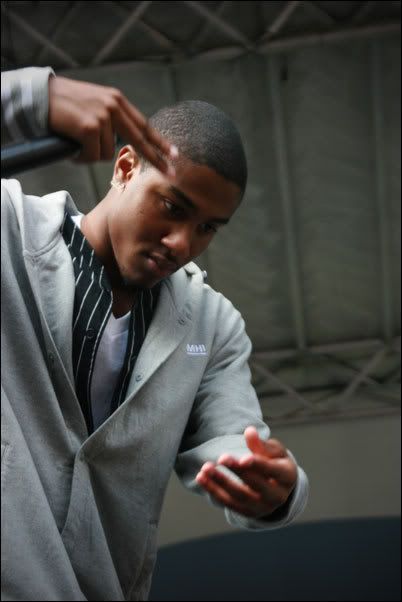
The Cool Kids are a full-on guilty pleasure minus the guilt, a complete throwback to the earliest hip-hop records that I was into when I was twelve years old. I wrote about them back in January, when all they had were two great songs on their MySpace page, likening them to hip-hop’s midlife-crisis Porsche and predicting that they’d burn hot for a short while before fading away.
Time will tell what the future holds for the Cool Kids, but it’s not like they’re concerned about it at all. Fun is the name of their game, and they take turns making fun of each other, or themselves, by saying things like “My beatboxin’ ain’t very good, I gotta be honest.” But their beatboxing is good, and they’re on top of their shit, and they rule the Panhandle Stage.
The two songs I catch are “88” and “Black Mags.” They sound as great as they did eight months ago—better, in fact. I rescind my prognosis about their short shelf life, and hope that their one foot in the past will equal a brighter future for hip-hop in general.
Broken Social Scene, right from the get-go, is totally likable and awesome. There’s nine people on stage and I have no idea which is which until some guy in wrinkled clothes and a trilby hat starts talking about how San Francisco is his favorite city in California. Must be Kevin Drew, I think to myself, who is the sort of ersatz leader of this huge collective.
I haven’t seen Broken Social Scene before, but I love, love, love their records. I can’t remember the first song they play, because the second one, “KC Accidental,” renders all of my memory obliterated, and I scream “fuck yes” and close my eyes and I feel like I’m diving down into a sea of bliss. There’s so much activity on stage, and I try to drink it all in while I can.
“7/4 (Shorelines)” brings out Amy Millan from Stars on guest vocals. Emily Haines plays guitar on a lot of songs, and sings much better than Millan. There’s a guy who looks like Bigfoot, dressed all in white, on bass, and a guy who looks like Paul Bunyan on guitar. “Anthem for a Seventeen Year Old Girl” and a couple of new solo songs are all good. But it’s Kevin Drew, treating the enormous crowd like a regular old group of friends, who steals the show.
“Remember to vote!” he tells the crowd at one point. “Vote for Canada! Vote for every country!”
Near the end of the set, it almost seems like Drew is joking when he makes a special announcement. “Hey, Spiral Stairs is here, everybody! Spiral Stairs!” he says, but sure enough, Spiral Stairs from Pavement walks on stage and straps on a black guitar. I’m hoping for “Lover’s Spit”—longshot, I know—but even when the drumsticks click off the tempo, I realize what’s happening: the first song from Broken Social Scene, “Ibi Dreams of Pavement (A Better Day).” It’s a bonkers title, but man if it isn’t a goddamn great song.
So we get the gigantic, epic send-off for the band, and during the breakdown, Drew slips into full-on Springsteen mode. “For all the hurt in your life; for all the hurt you’ve caused in others’ lives; for all the love you feel and for all the love others feel for you. . . scream so your whole entire city can hear you, San Francisco!”
Incredible.
Wilco, who Kevin Drew refers to as “the greatest band in America,” comes on next. I’ve seen Wilco four times, and each time I’ve liked them less. Jeff Tweedy has seemed grouchier as time has gone on, which I could probably deal with if their new musical approach wasn’t so hackneyed.
The last time at the Fillmore, I figured it out. Whereas on Yankee Hotel Foxtrot, the band combined beauty and chaos fluidly and simultaneously, their newer material sequesters the two into awkwardly arranged factions. They’ll get a not-very-good breezy sunshiny pop song going for a while, and then they’ll let Nels Cline freak out in the middle, and then they go back to the not-very-good breezy sunshiny pop song.
Needless to say, I’m one of many who believe that Being There is their best record.
But Jeff Tweedy actually seems like he’s in good spirits, jogging around the stage a little bit during “Hummingbird” and joking with Nels Cline about how his maroon pants are held up by a safety pin. When someone yells “I love you!” he responds with the deadpan zinger, “We love you too, random guy in a massive crowd of people!”
“I am Trying to Break Your Heart” benefits from drastic new textures, and I take a walk through the crowd during “Jesus, Etc.”—just about everyone sings along to themselves, quietly. “California Stars,” unfortunately, comes a little too early before the nighttime, but lots of people look up at the California sky nonetheless.
Wilco once meant a lot to me, and I have to admit to feeling terrible about our falling out in recent years. I’m glad that they’re good tonight. It’s been a memorable weekend, and making amends with an old confidante is a nice way to wrap things up.
Photos by Gabe Meline – Lots More Photos After the Jump.
Outta Nowhere: Jill Alter has been vilified and sued for her alleged powers of mind control.
Jill Alter sits at a table in a Windsor cafe, looking over a pile of papers filled with hateful stories about her. She’s laughing at what they charge: that she’s a murderous black witch, that she’s involved with the Ku Klux Klan, that she has the ability to possess and destroy other people with her mind. But it’s a page containing a libelous rant about her father that finally cracks her dismissive veneer.
“My dad?” she gasps, lifting up a finger to wipe a tear forming in her left eye as she reads a screed accusing her father of being a sexual predator. “Oh, now that’s different. Now that pisses me off.'”
Alter, a mother and cafe owner, has for most of this year been the subject of a personal attack that she largely cannot control. The gibberish about her father is just the latest in a slew of muck that finds her the object of a civil suit.
The press releases started arriving back in late May: “Beware of Black Witch Jill Alter at Harmony Festival. She is planning to take it over with her witchcraft. . . . Unite to stop the murderous Jill Alter. Look and you will see, this is a real warning.” Then flyers popped up all over western Sonoma County. Online boards became littered with long diatribes that were at best, jealous, and at worst, allegations of double murder. Alter has been the subject of incomprehensible accusations, one of which reads, “You are misusing my sacred tools . . . not to mention those planet evolvers who just got abused by your excessive black magic, rather than dying from your psychic scripts, based on information stolen from mining my mind.” After months of this, Alter agreed to speak with the Bohemian at our request about what it’s like to be vilified.
“At first, I asked why,” Alter says. “I got hung up on that. Why me? I’m the kind of person who gets bothered if someone I don’t even know would be thinking such terrible things about me and spreading it around the county. But I came to the realization that she has a mental illness, and I don’t think there really is an answer as to why.”
The “she” Alter refers to is “Cammie” (we have changed her name). Alter says that Cammie is essentially a customer gone bad, a former regular at Kaya Organic Espresso in Guerneville, which Alter operates with her husband, Brian. Cammie had some ideas about a co-op housing project and struck up communication with Brian regarding the Russian River-based tourism project called EcoRing. But Cammie’s text messages to the couple quickly got longer and more frequent, and Cammie began recording other customers’ conversations at the cafe without permission.
One night, Cammie showed up at the Alter’s home demanding to speak to their eight-year-old son to warn him about his mother’s life-threatening powers of mind control. “That’s when I decided, ‘You know what? I’m getting a restraining order,'” Alter says. “‘I’m not going to take this as a joke anymore.'”
But the attacks just got worse. Cammie began charging that Alter is part of the Mafia, that she has a drug ring, that she performs “wackdoctorie” and has robbed Brian’s very soul with her sexual energy. Cammie also consistently links Alter’s alleged mind control to the real-life deaths of two Guerneville residents–claiming Alter psychically caused their demise–and to a Santa Rosa man who was fatally run over in a recent traffic accident.
Alter turns somber at the mention of it, sorry for the friends of the deceased. “Not that anybody believed it,” she sighs, “but it brought that back up for everybody and reopened that wound.”
Luckily, area residents have been good to Alter. “We are very blessed with Guerneville’s community,” she says, “they’ve been really supportive. I don’t know how many people have told me, ‘Oh, I was in Occidental and saw posters all over town about you, and I took six down,’ or someone else will say, ‘I was at Hardcore Espresso and saw a poster about you and took it down.'”
Representing herself in pro per, Cammie is demanding $40,000 from Alter in a lawsuit whose charges include “demand for payment due to damages caused by defendant’s attempts to replace plaintiff in a jealous rage to keep her American dream and become a healer with shaman Brian Alter (after murdering other healers, all part of the maturity learning curve, of course).”
Alter’s ability to laugh has helped her, but one thing continues to bother her.”Maybe 100 people read it, and 90 people know it’s bullshit. But there are those 10 random people who might not know me,” she says. “Who knows if the little things she puts up everywhere affect the one or two new people passing through town?”
Sinister Skies: Are jet contrails more than they seem?
Beck, Scientology’s strangest poster boy, has a new song about chemical trails in the sky that may add to the number of fans writing him off as a religious wacko-conspiracy theorist. But the idea isn’t too out there for many other individuals who seriously wonder if the fluffy white streaks, long believed to be the harmless emissions of jet engines, are more than just water vapor and ice crystals. Len Greenwood and Rosalind Peterson are among those who believe jets are releasing harmful chemicals into the atmosphere for weather modification or other purposes.
“You start seeing cloud formations that just aren’t natural,” says Greenwood, a photography teacher at Santa Rosa’s Montgomery High School. “Or you start seeing clouds when the meteorologist is saying it’s going to be a clear day.”
But how does one know for sure just what is or isn’t natural? After all, the jets are way up there and we’re stuck on the ground. Normal trails, also called “contrails” (short for “condensation trails”), form when the hot, humid air from jet-engine exhaust combines with the cold low-pressure air in the environment. They can dissipate quickly or spread out into an extensive thin cirrus layer depending on wind velocity and humidity. Those that pass through extremely humid skies and take much longer to dissipate are called “persistent” contrails.
But for Peterson and Greenwood, some contrails last too long for comfort. “Normal contrails will most of the time dissipate within 30 seconds to a couple of minutes,” Greenwood says. “They’re gone. It’s ice crystals; it’s water vapor. It’s evaporating in the atmosphere.”
Peterson worked as an agricultural technologist for Mendocino County’s Department of Agriculture before hiring on with the USDA. There, she embarked on an study of contrails after a co-worker pointed out curious-looking jet plumes in the sky.
“I knew it wasn’t normal. I hadn’t seen anything like it,” she says. “That was when I first decided to see what was going on. It carried me into finding out what was coming down from those jets.”
During her research, Peterson found records showing spikes of a dozen or so chemicals–among them barium, aluminum, manganese, magnesium, lead, iron and titanium–in the water supplies of several California counties. “Water systems in the various counties were showing similar types of spiking. And in most systems they spike at the same time. The only way you would have this type of spiking is if it were airborne,” she says.
Peterson, who has a degree from Sonoma State University in environmental studies and planning, believes the chemicals are falling down from the contrails, which are the products of weather-modification experiments. These experiments, she says, are going on unmonitored by the government, even though the chemicals’ harmful effects are fully known.
Weather-modification attempts to control rainfall, decrease hail damage or clear fog, among other goals, are indeed going on in nearly every country in the world. Notably, China took action to suppress rain over the 2008 Beijing Olympics. The extent to which these efforts are effective, however, is largely questioned.
“It is nearly impossible to prove whether they work or not, since one usually can’t predict what would have happened if the ‘modification’ had not been performed,” says Charles Knight, a senior scientist at the National Center for Atmospheric Research.
Peterson believes these practices have implications that are more serious than anyone could ever imagine. “They want to do these atmospheric experiments; they want to modify the weather, and if they can do that it furthers their careers,” she charges.
Dan Breed, a project scientist at the National Center for Atmospheric Research, says, “I know of no scientific basis for weather modification-experimentation that might result from contrails showing the release of chemicals by jets. ” Breed says there are virtually no harmful effects from the chemicals used in cloud seeding. “The types of aerosol particles that are used for cloud seeding are submicron-sized–thinner than the hair on your head,” he says. “They have negligible fall velocities and the quantities typically used are imperceptible and unmeasurable on the ground. If released from high altitude, dispersion would further dilute any possible effect on the ground.”
But Peterson believes information is being withheld. “If we were to know what they were doing, we’d tell them to stop. As long as they can do it under the radar screen essentially, people think that nothing is going on, that everything they see is normal,” she says. “Once you realize and get to the bottom of it, you see that it may not be normal and it may not be good for us.”
Missing Details : Seems like an airport hoping to attract visitors from the Pacific Northwest and Las Vegas might be interested in having a domain name that works.
Type “Sonoma County Airport” into Google, and two very similar results appear: at the top, one for the “Charles M. Schulz Sonoma County Airport,” announcing it as “the official website of Sonoma County Airport”; just below it, there’s “Sonoma County Airport.com–Visit Sonoma County,” which declares itself “Home of Santa Rosa Horizon Air and Wine Country information.”
Which one to click?
Hoping to eliminate the question entirely, the county of Sonoma filed a lawsuit last year against Nancy Hayssen, the owner of www.sonomacountyairport.com, charging her with trademark infringement and violation of anti-cyber-piracy consumer-protection laws. But in what might have possibly been an easily won copyright-infringement case, the county has instead ended up paying a substantial and confidential settlement to Hayssen for the rights to the domain name, which it will acquire and begin operating in March of 2009. A closer look begs one to wonder why the county’s lawsuit was even filed in the first place.
The story begins in June of 2001, when Hayssen bought the domain www.sonomacountyairport.com “as a Father’s Day gift for my dad,” she told me in April, back when the case was still pending. Hayssen’s father gives flight lessons at the airport, but when he decided to register a domain name reflecting the name of his flight school instead, Hayssen held on to the airport domain name. It wasn’t long, Hayssen says, before then-airport manager David Andrews asked her for the rights to the URL, which she refused to give.
“He said, ‘Oh, no big deal, we’re just gonna buy the dot-org site,'” Hayssen recalls. The two came to an agreement: Hayssen would keep the site, but would put a disclaimer at the bottom of the page that hers was not the official site of the Sonoma County Airport. The county then bought SonomaCountyAirport.org on July 24, 2001, barely a month after Hayssen bought the dotcom name.
The county disputes this conversation. Even so, at this early stage, it might have been possible for the county to acquire Hayssen’s site under the 1999 Anticybersquatting Protection Act, also known as the Truth in Domain Names Act, a landmark law that expanded federal trademark protection to specifically include domain names. But there’s a four-year statute of limitations on trademark law, and when the suit was finally filed at a much later date, in 2007, that limitation had expired.
Also, the Anticybersquatting Protection Act states that in order to successfully bring a claim against a cybersquatter, trademark holders must establish that the domain name is either confusingly similar or defamatorily dilutive to the trademark, and that the domain owner has acted in bad faith to profit from the trademark. Problem number one: the county has never federally registered the trademark. “Sonoma County Airport” is merely a common-law trademark, which, as a state matter, isn’t cognizable in a federal court.
Problem number two: Hayssen’s meeting with former airport manager Andrews. If her account is true and the county allowed Hayssen to build her business for six years, then the county essentially–and, presumably, unknowingly–handed Hayssen a key laches defense on a silver platter. Both Jon Stout, the current airport manager, and David McFadden, deputy county counsel for Sonoma, declined to comment for this story.
In its original 35-page lawsuit, the county demanded to be awarded three times the amount of the advertising profits generated by Hayssen’s dotcom site since its inception in 2001. The fact that the county paid a settlement instead of reaping the amount demanded cannot be viewed as anything but a loss, and might prove an expensive lesson should the county, in the future, attempt consistency in trying to also acquire SonomaCounty.net or SonomaCounty.org, both of which are privately held commercial enterprises.
Are such settlements worth the cost? The county claims that Hayssen’s site is “creating consumer confusion,” and yet it’s hard to see how the two airport sites could cause actual befuddlement for anyone remotely acquainted with the Internet. The county’s site is clearly designated as the “official website,” and its main page displays the official airport logo at the top of its main page, alongside a photo of the airport tower.
Hayssen’s site, on the other hand, features ads for Crave Energy Drink, a multilevel marketing company, and LavaLife.com, an online dating site. Multiple pull-down menus promise information for Sonoma County, Portland, Las Vegas, Los Angeles and Seattle, but only the local tab has concrete information; all others run a generic ad feed from Google. And such content is anything but rich. Under “Shopping,” the only listing is for the Santa Rosa Plaza; under “Things to Do,” the only listing is the River Rock Casino.
Features like these point rather apparently to a commercial endeavor, of which Hayssen has plenty of experience. She owns numerous other domain names, including LookSexyNow.com, 7SlimSecrets.com and 101SexySecrets.com. (Hayssen, a plus-sized model, was once featured on Fox News and The Insider for a semi-nude photo shoot she organized to promote positive body perceptions.) As an Internet marketer, Hayssen runs a number of blogs; in one of them, regarding a web-based contest, she writes, “I am determined to become the next Internet millionaire.”
Hayssen says that in the last year, her airport site experienced a large increase in the amount of web traffic, and her newsletter list had reached 3,000 subscribers. She also maintains that she could have fought to keep the domain name if she’d only had more legal muscle (through most of the proceedings, she represented herself in pro per). Furthermore, she points out that other dotcom airport sites such as LosAngelesAirport.com and SanFranciscoAirport.com–both commercial sites that provide far less useful information than Hayssen’s–have not been threatened with legal action by their respective airport owners.
At press time, a confidential settlement had been approved by the County Board of Supervisors. As per the agreement, in March of 2009, Hayssen will transfer the ownership of the domain to the county, and transfer her current content to a new travel site at www.winecountrytravels.com. After that, she plans to build up the site and eventually sell it, she says, “to someone who has the vision for it.”
As for whether she thinks the county, in the interest of fairness, should try to also acquire SonomaCounty.net and SonomaCounty.org, Hayssen takes the high road. “I don’t think it was a fair situation to begin with anyway,” she says, “so I don’t think it would be fair for the county to go after them as well.”
F ifteen years in Sonoma County, and I have yet to swim in the Russian River. Call me paranoid, but when I first moved here, I was told by numerous people that the Russian River, at least by the time it reaches the Guerneville, is hardly swimmable. Between the agricultural runoff and Santa Rosa’s treated wastewater, I’ve just never felt too keen on hopping in. So when I heard that the Goldman Fund had just given a grant of over $900,000 as part of an initiative to support Waterkeeper alliances across Northern California, and that a portion of the funds will be allocated to the Russian Riverkeeper, I decided to finally get my feet wet. My intention was to find out, once and for all, if this river is going to make me sick if I take a dunk.
The Goldman Fund–which I continue to write about because it has given away over half a billion dollars, much of it to grassroots environmental movements–is committed to supporting local groups in its fight to save the planet. Russian Riverkeeper, a nonprofit based in Healdsburg, benefits from their philosophy. I spoke to Don McEnhill, official Riverkeeper and executive director, about the role the Riverkeeper plays in protecting the Russian River and how it plans to utilize its portion of the Goldman grant.
McEnhill proves to be so knowledgeable that an hour passes before I remember to ask about swimming in the river, and by then, I know more about the effects of storm-water runoff than I would have thought possible. Currently, 90 percent of our storm water goes to inlet, and then directly to our creeks, rivers and streams. The outfall from city streets carries trash into the river. Our parking lots and roofs are designed to drain storm water directly to the lowest spots, picking up oil, refuse and pesticides as it rolls along. In the process, we are de-watering our urban landscapes and pushing an overflow of runoff into our creeks. The creeks are scoured by the flooding, the banks destabilized and mayhem wrought on the natural vegetation.
Riverkeeper will be expanding its current collaboration with the city of Healdsburg, working with developers to redesign their storm water technology, or lack thereof. Healdsburg is responsive and cooperative with the efforts of Riverkeeper, McEnhill assures, and together they have been able to sit with developers and share water-quality data, showing developers how they can retrofit existing developments, as well as comply with low-impact development standards.
In addition, Riverkeeper has set up at businesses across town storm-water filters that capture and filter the runoff from the storm-drains, ridding it of trash and pollutants–motor oil, cigarette butts, pop cans, stir sticks. All kinds of junk collects in these things, McEnhill tells me. People are always amazed when they look inside the grated storm-drain “drop-in” and discover it loaded with trash.
Because we don’t swim when it rains, McEnhill says, California is way behind the curve on this type of technology. In the winter, when the Russian River is overflowing with garbage, treated wastewater and the runoff from people’s overfertilized and Roundup-polluted yards, we’re not in it, and by the time we are, the river is safe enough to swim in again.
To help keep the river swimmable, volunteer Creek Keepers patrol the river looking for problems, from Cloverdale all the way to the river’s mouth in Jenner. The Creek Keepers, who have been patrolling since 2005, have to go through an intensive global stewardship program. They are the eyes and ears for Russian Riverkeeper, performing water-quality monitoring, and watching for the all too common illegal dumping.
McEnhill, perhaps sensing my reluctance to believe, assures me that if there were dangerous bacteria in the Russian River, Riverkeepers would know about it and would be doing something to solve the problem. For further reassurance, McEnhill tells me that his 87-year-old aunt swims in the river every day.
Last year, for the 20th annual Russian River Clean-up, over 3,000 people turned up to comb the beaches on foot and by canoe. In 2005, Russian Riverkeeper was given the five-acre strip of beach in Guerneville once named “liquor store beach.” Now, every Wednesday morning, Russian Riverkeeper is on hand with native plants, gloves, tools and trainers, ready to teach volunteers how to identify and remove invasive plants and replace them with the good ones.
OK, I’ll dip a toe in.
For those who wish to ensure that the Russian River continues to be a safe place for people of all ages to frolic, consider attending the 16th annual, Russian River Festival, held Sept. 21 at Burke’s Canoe Trips in Guerneville, featuring sustainable eats, barbecue, live music and wine. For more information about the Russian River Keepers, volunteer opportunities and their upcoming event, go to www.russianriverkeeper.org.
09.03.08 While presidential candidates call for alternative forms of energy and "sustainable" is the word of the year, the idea of ocean-wave buoys along the Sonoma and Marin coast continues to attract attention as a potentially viable form of energy.Though no firm proposal is in place, the wheels have been turning toward what some are already calling a "West Coast...
09.03.08I kept seeing things that needed changing." That short line is so casually uttered in the opening moments of Rebecca Gilman's beguiling new comedy-drama The Sweetest Swing in Baseball—which opened last weekend at the Sixth Street Playhouse Studio Theatre—that those seven tiny words could easily be missed as the achingly revealing confession they are. From this line, spoken in a...
09.03.08Santa Rosan Tim Kniffin, a fifth-generation Sonoma County resident, is that rare thing in these parts: a professional actor who actually gets to perform—not infrequently—outside the county, a shimmering dream for nearly every actor growing up in this area. Most recently, he appeared in Sixth Street Playhouse's production of David Mamet's Oleana, and will next be seen in the...
Today, on the third anniversary of Hurricane Katrina, I feel compelled to share an interview with one of New Orleans' native sons.
In April of last year, Harry Connick, Jr. called my house to talk, I imagine, about his upcoming appearance in Sonoma. All we could manage to talk about instead was the disaster in New Orleans. Throughout our conversation,...
A full 20 years after Straight Outta Compton, actor, director and gangsta-rap sage Ice Cube can still make your body and mind rock. While it wasn’t a sold-out show, the Tuesday night crowd at the Fillmore thoroughly enjoyed the hour-long set surprisingly filled with just a few hits from Cube’s rich catalog.An hour after his DJ got the crowd...
Here we go: Day Three. If I can survive three-week camping trips, I can survive a three-day festival. I’m getting a little tired, and today is going to be full of the most frenzied running around of all three days, but it’s also going to be the most interesting. It’s full of lesser-knowns that for the most part I’ve...
08.27.08 Outta Nowhere: Jill Alter has been vilified and sued for her alleged powers of mind control. Jill Alter sits at a table in a Windsor cafe, looking over a pile of papers filled with hateful stories about her. She's laughing at what they charge: that she's a murderous black witch, that she's involved with the Ku Klux Klan, that she...
08.27.08 Sinister Skies: Are jet contrails more than they seem? Beck, Scientology's strangest poster boy, has a new song about chemical trails in the sky that may add to the number of fans writing him off as a religious wacko-conspiracy theorist. But the idea isn't too out there for many other individuals who seriously wonder if the fluffy white streaks, long...
08.27.08 Missing Details : Seems like an airport hoping to attract visitors from the Pacific Northwest and Las Vegas might be interested in having a domain name that works. Type "Sonoma County Airport" into Google, and two very similar results appear: at the top, one for the "Charles M. Schulz Sonoma County Airport," announcing it as "the official website of...
08.27.08F ifteen years in Sonoma County, and I have yet to swim in the Russian River. Call me paranoid, but when I first moved here, I was told by numerous people that the Russian River, at least by the time it reaches the Guerneville, is hardly swimmable. Between the agricultural runoff and Santa Rosa's treated wastewater, I've just never...


 Today, on the third anniversary of Hurricane Katrina, I feel compelled to share an interview with one of New Orleans’ native sons.
 Q: I hear that during the jazz festival you were there, helping paint houses.

 First up is the Mighty Underdogs, the latest Quannum supergroup with Gift of Gab from Blackalicious and Lateef from Latyrx. When the Latyrx album came out around the same time as the Black Star album, I remember participating in long discussions with friends about who was the greater MC of each collaboration. Mos Def or Talib Kweli? Lyrics Born or Lateef?
 On our way over to the Lands End stage, we pass a girl in a bikini and shades, holding a homemade sign: “Got Fungi?”
 K’naan is a Somalian-born poet and rapper who fled the “lake of blood” district of Mogadishu during the Somalian Civil War. He’s also delivered the most gripping hip-hop album this year, The Dusty Foot Philosopher, an autobiographical document of growing up in a warzone and clinging to Nas and Rakim CDs for escape. The record is hip-hop’s Graceland: djembe drums, group chants and slit gongs provide the addictively unique texture, while the beat to Dusty Foot‘s opening track, “Wash it Down,” is comprised entirely of feet stomping and sloshing through water. With the metaphor as water for life, the track concludes with the clever poke: “People need water like Kanye need Jesus.”
 Last year, Justin Vernon went into a shed in rural Wisconsin, cleared his head, chopped some wood and recorded nine quiet songs under the name Bon Iver that have since turned just about every indie critic into a drooling, superlative-oozing pile of gush.
 Sharon Jones—who could have ever predicted that she would be playing a huge stage in front of thousands of people? I’ve been a fan for a long time, and I’ve still got some of her early 45s on Daptone. Dap-Dippin’ was an alright album, but it was 2005’s Naturally that really did the trick for me. Whereas Dap-Dippin’ is a lot of James Brown-inspired textbook funk, the songwriting on Naturally takes it over the top into greatness. For a time, it seemed as if the pinnacle of the underground funk revival, which started with Brainfreeze, had finally been achieved. Then Amy Winehouse came along, heisted Jones’ backup band, called her album Back to Black, for cryin’ out loud, and ran away with the prize.
 The Cool Kids are a full-on guilty pleasure minus the guilt, a complete throwback to the earliest hip-hop records that I was into when I was twelve years old. I
  Broken Social Scene, right from the get-go, is totally likable and awesome. There’s nine people on stage and I have no idea which is which until some guy in wrinkled clothes and a trilby hat starts talking about how San Francisco is his favorite city in California. Must be Kevin Drew, I think to myself, who is the sort of ersatz leader of this huge collective.
 Wilco, who Kevin Drew refers to as “the greatest band in America,” comes on next. I’ve seen Wilco four times, and each time I’ve liked them less. Jeff Tweedy has seemed grouchier as time has gone on, which I could probably deal with if their new musical approach wasn’t so hackneyed.



