What a Gem

0

09.03.08

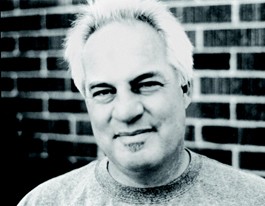
If this year’s movie-going “To Do” list contains only one documentary on an unusually named self-taught African-America topiary artist of retirement age from a small-town in South Carolina, it should be A Man Named Pearl. No contest.

And not just because there is only one such documentary. More to the point, A Man Named Pearl has no competition because it is not, by nature, competitive. This isn’t a film that was made to be sold. It was made simply to be seen.

In that regard, as compared with so much highly packaged nonfiction moviemaking on display in theaters today, Scott Galloway and Brent Pierson’s film is commendably unsophisticated—an antidote, almost, to the increasingly ubiquitous sort of “important” documentary whose only narrative energy comes from empty-calorie production values meant to mask tedious talking-head statements of the obvious.

Very little about Pearl Fryar is obvious. But don’t think that makes him coy or otherwise disagreeable. A sharecropper’s son in a town where mechanized farming wiped out nearly the whole labor force in one fell swoop, Fryar is the kind of man who will work 12-hour days in a can factory, then come home and get right to his gardening—trimming and sculpting trees and shrubs into curvaceous, vaguely Seussian abstractions well into the wee hours while his family and friends quietly worry that he’s lost his marbles.

That is, until they realize that he’s found his calling. As A Man Named Pearl nonchalantly but very effectively makes clear, Fryar has a unique aptitude for topiary invention. “You shouldn’t be able to do that,” more officially experienced plant handlers used to tell him. “I didn’t know that,” he now says. “One time in my life, ignorance paid off!” Literally, in fact: Fryar has become a one-man magnet for his town’s much-needed tourist dollars.

When Fryar first tried to buy a house in an all-white neighborhood down there in Bishopville, the reflexively racist neighbors worried that he wouldn’t bother to keep up his yard. So he moved to another part of town, and eventually became the first black man to win the community’s coveted Yard of the Month award. What’s so endearing about A Man Named Pearl is its way of not ever actually coming out and saying that he really showed those assholes.

And, yes, the man himself is plenty endearing, too. These days, the prevailing attitude toward Pearl Fryar is one of adoration. Friends appreciate his firm, working-man’s handshake. Students at the nearby community college art department find his DIY discipline inspiring. The manager at the local Waffle House lets him have breakfast there for free (Fryar’s landscaping efforts did much to enliven the parking lot).

Tourists see what they want to—Japanese garden motifs, totemic African sculptures—in the shapely, leafy forms he renders, and Red Hat Society ladies enjoy stealing glances at his own shapely, labor-toned form. (For the record, he is happily married; as his supportive wife recalls, “We might as well go get the blood test” was Fryar’s wedding proposal.)

Even the trees seem glad to know him: something in the caressing cut from Fryar’s hand tends to bring out the true and various nature of nature. His modestly straightforward but forceful artistic ambition always has been to create outdoor spaces in which, as he puts it, “When you walked through, you felt differently than when you started.” And his success cannot be denied.

A Man Named Pearl has a little trouble prioritizing its narrative nuts and bolts, but its thematic concerns—for a singular sort of ecological sensitivity, an exercise of casual portraiture—are elegantly expressed.


Galloway and Pierson wax just philosophical enough to let in a soft breeze of poignant irony: that the literal fertility of Fryar’s medium works directly against the possibility of artistic permanence. Unless he keeps after them with his saws and shears, each of his works will grow apart from him. And once he’s gone, without exception, so, too, will they be. That’s something worth documenting.

‘A Man Named Pearl’ plays at Rialto Cinemas Lakeside, 551 Summerfield Road, Santa Rosa. 707.525.4840.


New and upcoming film releases.

Browse all movie reviews.

Denver Daze

09.03.08

My journey to the Democratic National Convention began on a sweltering day in Santa Rosa more than four months ago, when a caucus of Obama supporters elected me as a delegate. Now the convention in Denver is history. And for anyone who was there, it’s also a kaleidoscope of memories. Here are a few of mine.

On opening night, the convention hall came alive with genuine emotion when Ted Kennedy walked slowly and shakily onto the stage. “It is so wonderful to be here,” he said. Battling the aftermath of a brain tumor, Kennedy was an irrefutable presence as he spoke about healthcare, calling it “a human right, not a privilege.”

Kennedy provided the high point of the evening. The lowest came with the keynote address by a former Virginia governor, Mark Warner. His density of clichés was bad enough—it probably doesn’t surprise you that “America has never been afraid of the future and it shouldn’t start now”—but the speech’s biggest problem was thematic.

Warner swiftly hammered on his central theme: celebrating his own rapid accumulation of personal wealth as an intrepid young entrepreneur in the telecommunications industry. The gist of his message was, “I got rich! Is this a great country or what?”

The first night’s closing speech from Michelle Obama, like much of the rest of the evening, seemed to be aimed at convincing viewers that an African-American family is fully part of the United States of America.

The next morning, the front page of The Hill newspaper reported: “Racial prejudice is being cited among senior union leaders to explain Sen. Barack Obama’s difficulty in winning over support from white rank-and-file members.”

I scribbled a note to myself: Like it or not, the Obama campaign is a campaign against racism.

Outside the media frame, members of Military Families Speak Out were distributing a leaflet in front of the Sheraton Denver hotel (where California delegates stayed). One man quietly talked to anyone who’d listen about his son’s post-traumatic stress disorder. “As military families,” the leaflet said, “we know all too well that every day that this war continues more lives are forever shattered.”

The convention’s formal proceedings were filled with mixed messages: pro-war and antiwar, militaristic and antimilitaristic, pledging to push back against war-crazed policies of recent years and yet at pains to laud warriors and war itself as the finest flowering of individuals and country.

Scattered through the crowd, some delegates held up pink placards in the shape of a hand giving a peace sign, with a big-type declaration: “I am a delegate for PEACE.” In the California delegation, I was very glad to see that one of the delegates holding up the sign was none other than Congresswoman Lynn Woolsey. For the progressive majority in North Bay, she truly represents us.

One of my other favorite moments came three-quarters of the way through the convention, late Wednesday night when the song “We Are Family” filled the amphitheater while Barack Obama stood onstage with generations of Bidens. The moment made me feel that we may be starting to redefine family as all of humanity.

While 80,000 people filled a stadium during the last night of the convention, Obama’s acceptance speech alluded to vital possibilities: “What the nay-sayers don’t understand is that this election has never been about me; it’s about you.”

I have many criticisms of Obama’s positions, particularly the failure of his foreign-policy formulations to reject what Martin Luther King Jr. called “the madness of militarism.” But the grassroots energies behind the Obama campaign have given us a chance to evict right-wing ideologues from the White House. Making good on that opportunity can make other opportunities possible.

Days after the end of the convention, a “grand opening” was crowded at the Sonoma County Democratic Party’s new headquarters in downtown Santa Rosa. There, I spoke with two progressive candidates for the Sonoma County Board of Supervisors—Rue Furch and Shirlee Zane—who are challenging entrenched corporate interests.

Around the country, from campaigns for local offices to the presidential race, people are working to create vital momentum at the grassroots. It’s time for progressive change—the sooner the better.

Norman Solomon, founder and coordinator of North Bay Healthcare Not Warfare, is the author of many books including ‘War Made Easy: How Presidents and Pundits Keep Spinning Us to Death.’Open Mic is now a weekly feature in the Bohemian. We welcome your contribution. To have your topical essay of 700 words considered for publication, write [email protected].


Left Coast Chamber

0

09.03.08


Gary McLaughlin was thinking about that famous Saul Steinberg map, from the cover of The New Yorker, with Manhattan depicted as the center of the world and everything west of the Hudson River as Siberia. Something about it bothered him, especially since McLaughlin, raised in the Watts neighborhood of Los Angeles, has been working for years with the Russian River Chamber Music Society as a performer, teacher and artistic director—work that has put him in contact with a wealth of California composers and performers. Why, he thought to himself, should the East Coast get all the credit?

McLaughlin’s subsequent experiment—looking up the Chamber Music America database of working chamber music quartets by state—provided some unscientific yet satisfying results. “In California, I came up with 15 quartets,” he says, sitting in the window of a Healdsburg cafe, looking out onto the downtown Plaza, “but only 14 in New York. And I asked myself the question: ‘Is it really all happening in New York? Or does it just appear that way?'”

The RRCMS’ legendary free concert seasons, helmed by McLaughlin, a chamber music instructor at the SRJC and a member of the Glendeven String Quartet, have over the past 16 years adhered to no set theme other than world-class excellence. But in his upcoming season, McLaughlin’s goal is far more audacious: to put California back on the map. “Made in California,” the theme for his 2008&–2009 season, will present composers and performers from his home state in every program; some will even feature instruments crafted in California.

Ultimately, McLaughlin is committed to reversing the reputation of California, in juxtaposition to the East Coast, as an area of frivolous cultural activity.

McLaughlin, a violinist himself, notes that classical composition in California at one time, in the late 1960s, might have been construed to be in an avant-garde, experimental box of its own design. “Academia was very into Schoenberg,” he says, “and it was very intellectual, to hell with the audience. It reigned for a while.” But now, he adds, there’s more diversity than ever. “It’s an incredible time for composition in music. Composers don’t feel any barriers, they aren’t toeing any kind of stylistic line. The best ones are just doing what they do.”

Of special note to McLaughlin, who in his Los Angeles days once played under the direction of Spellbound composer Miklós Rósza, are the numerous film composers from California, many of whom moved from Eastern Europe and found what work they could with the studios. Part of the Made in California kickoff program with the Los Angeles&–based Rossetti Quartet, on Sept. 5, will feature a chamber work by Bernard Herrmann, well-known as Alfred Hitchcock’s right-hand man in Hollywood.

Herrmann won’t make it to the performance—he died in 1975. But other living composers, such as Jonathan Berger, will be attending certain RRCMS performances throughout the season. McLaughlin’s still trying to figure out a way to convince Terry Riley, the famed minimalist composer currently living in the Bay Area, to appear at the season finale of the Alexander Quartet’s performance of Riley’s “Mythic Birds Waltz.”

The Made in California season is already making waves in concept alone. But perhaps the biggest victory for McLaughlin, outside of the music itself, is the opportunity to continue presenting renowned ensembles in what seems like an absolutely impossible way—for free. Last season, he was especially proud to present Grammy-winning, new-music sextet Eighth Blackbird the day after they’d performed in San Francisco for $40. The RRCMS show in Healdsburg, of course, was free.

“It counters that old elitist image of chamber music,” McLaughlin says of the free admission policy. “It makes it so it’s not just for wealthy people or snooty people. With the economy going the way it is, it becomes even more attractive. We have wine and food receptions after every concert, and the artists come, and people can actually talk to the artists—and that’s all free, too! So, it’s a cheap date. No tickets, free wine. What’s not to like?”

The Rossetti String Quartet perform pieces by Beethoven, Mozart, Piazzolla and Herrmann on Friday, Sept. 5, at the Healdsburg Community Church, 1100 University Ave., Healdsburg. 7pm. Free. Reception follows. 707.524.8700.


Slow What

08.27.08

Slow Food Nation’s much-anticipated celebration in San Francisco has come and gone, and last sunny weekend at Fort Mason thousands of bona fide foodies ate well and drank splendidly.

But did Slow Food’s message—that fresh, thoughtful, healthy food is far worthier than cheap, fast, convenient food—really reach the people who need to hear it the most, the low-income consumer likely to be uneducated on the fineness of fresh? Unlikely. Alice Waters needs to pull her head out of her organic lettuce patch and smell the flowers, because she and her Slow Food cohorts are preaching to the choir. At $45 to $65, the price range of tickets to the Taste events on Saturday and Sunday surely precluded almost all but the most devoted foodies from attending. These privileged intellectuals already know that gardens are great, that cheese comes in many colors and that the good life’s finest pleasures include opening up Michael Pollan’s latest 400-pager on the back patio.

Slow Food touts organic produce, often prohibitively expensive, as the starting baseline for a better lifestyle. In doing so, the movement passively alienates half the world with an elitist approach while drastically failing to demonstrate how cheap and affordable eating well can actually be. That token single mother in the trailer park on welfare whose sympathizers claim she is too busy and broke diapering her kids to feed them proper food needs to be shown how cheap and easy it is to put a pot of brown rice, lentils or beans to simmer on the stove as the base of a quality meal. Anything beyond, maybe a salad or simple sauté of affordable vegetables, would be an added bonus and something the kids could even throw together. After all, slow food is a joy of life accessible to all, but when the movement’s advocates set their sights strictly on organic produce, artisanal charcuterie, multicourse banquets, Lodi Zinfandel and other luxuries of gourmet living, their message goes sailing over the head of that poor single mother.

She likely doesn’t have time to manage her own garden or shop at the yuppie supermarkets that sponsored Slow Food Nation. She probably can’t afford the produce, anyway, and she certainly wasn’t at Fort Mason this weekend marveling at the virtues of award-winning cheddar, wild Arctic char and cask-conditioned beer.

Someone needs to tell her about simple whole grains and easy salads. That may not be up to par for Chez Panisse, but it’s a feasible gateway—and it’s still pretty Slow.

Quick dining snapshots by Bohemian staffers.

Winery news and reviews.

Food-related comings and goings, openings and closings, and other essays for those who love the kitchen and what it produces.

Recipes for food that you can actually make.

Smoke ‘Em While You Got ‘Em

0

09.03.08

It’s Over, Clover: Clove cigarettes, often seen as a ‘gateway’ smoke to Marlboro Country, are on tap to be banned.

Clove-smoking hipsters may have to find another way to look sexily uninterested without the crutch of their Djarum Blacks. New tobacco legislation that gives the FDA the power to regulate the tobacco industry overwhelmingly passed on July 30 in the House of Representatives.

The Family Smoking Prevention and Tobacco Control Act allows for sweeping regulation of tobacco products: flavored and clove cigarettes would be banned; cigarette manufacturers could no longer label products as “lights” or “ultralights” and must disclose the amount of all additives; any new type of cigarette would have to be given premarket approval before being sold; and all tobacco advertisements on outdoor posters would have to be in black-and-white.

And lest anyone has any lingering confusion about the painful and premature death that befalls many smokers, current warning labels could be replaced with graphic images of tumors and mouth sores. Similar legislation has broad support in the Senate, though it’s unclear if it has enough to override a threatened veto from the White House.

California congresswoman Anna Eshoo, D-San Lorenzo Valley, who co-sponsored the legislation, lays it down. “Smoking is a killer, and we know that. It’s just as simple as that. It’s just as profound as that.”

Profundity aside, the government intervention is selective and inconsistent. Cherry vanilla cigarettes are out, but menthols are allowed. Natural clove additives are banned, but ammonia? That’s A-OK with Uncle Sam. In this, as in all things, politics has a role to play.

Curbing tobacco’s appeal to minors is paramount to the logic behind much of the legislation’s stipulations, especially the part that bans flavor additives in cigarettes. Proponents of the legislation reason that clove, spice and fruit-flavored smokes are “gateway cigarettes” that mask the harsh taste of tobacco, making for a deceptively delicious smoke that gets kids hooked.

“My hope is that it will be most effective with minors,” says Eshoo. “We know from all of the research that’s been done that once young people start smoking, it becomes a habit and then an addiction. My hope is that young people will not become addicted.”

But most young tobacco smokers don’t regularly smoke the sugary cigarettes. A 2005 Centers for Disease Control study of the smoking habits of high schoolers found that while 23 percent smoke regular cigarettes and 14 percent smoked cigars, only about 5 percent smoke flavored or clove cigarettes.

The minty cigarette is the sole flavor still allowed under the new legislation. After significant debate, especially within the Congressional Black Caucus, menthol cigarettes were exempted from the flavor ban. Multiple surveys report that about 70 percent of African-American smokers smoke menthols, compared to about 30 percent of white smokers.

Eshoo supports the banning of menthols as well and blames the minty-not-so-fresh exemption on tobacco-company-influenced politics. “I think by banning all flavors, if that helps keep people away from something that they really like, then so be it,” she says. “From the politics of it, the flavored cigarettes are more popular with adults than they are with minors. If something doesn’t taste good, and it keeps people away from it, then so be it.”

Perhaps surprisingly, Philip Morris USA, the largest manufacturer of cigarettes, has put its support behind the legislation.

The majority of clove cigarettes, also called kreteks, are manufactured by Djarum, an Indonesian company. However, even regular cigarettes often have some type of flavor additive, so other tobacco companies may have to change the specific formulas for different cigarette varieties.

But while banana flavor may be banned, common cigarette additives like polyethylene, acetic acid and polyvinyl acetate—and, yes, ammonia—would still be allowed. These additives and their respective amounts would be required to be disclosed on cigarette boxes.

Tobacconist Ron Venturi says that many of his customers choose to purchase additive-free cigarettes, such as American Spirits. A natural-cigarette smoker himself, he supports the provision that requires additives to be disclosed. He also believes other companies will move toward additive-free cigarettes.

Tobacco companies seem to have anticipated stricter regulation of their products and have adopted different packaging accordingly. Instead of only labeling cigarette varieties as “lights” or “ultralights,” a distinction not allowed under the new act, tobacco manufacturers have been color-coding varieties and labeling them with blend names: Marlboro Blend No. 27, Camel Turkish Blend, etc.

Tobacco studies have not shown that light cigarettes are any less harmful than regular cigarettes, and potential consumer misperception that lights are safer led to the banning of the light and ultralight distinctions.

Other tobacco companies oppose the legislation and find the distinction between regular, light and ultralight blends necessary. A statement issued by RJ Reynolds, which opposes the new tobacco bill, calls for “informed choice by adult consumers” that allows smokers to “switch to a lower risk product.” Presumably, that’s a reference to light cigarettes, or possibly smokeless tobacco, but the company does not specify.

Venturi believes that the government could try to ban cigarettes outright within the next 20 years. He compares cigarettes to other potentially harmful but legal choices—”alcohol, barbecues, joining the military”—all choices that he thinks informed adults have the right to make for themselves. “Where does it end with government controls?” he asks. 


First Bite

09.03.08

Saigon Bistro

Editor’s note: First Bite is a new concept in restaurant writing. This is not a go-three-times, try-everything-on-the-menu report; rather, this is a quick snapshot of a single experience. We invite you to come along with our writers as they—informed, intelligent eaters like yourselves—have a simple meal at an area restaurant, just like you do.

Housed in a spacious, high-ceilinged room on Mendocino Avenue, Saigon Bistro features an extensive menu of more than a hundred items, ranging from 10 types of pho to lotus root salad to “authentic” Vietnamese dishes such as clay pot prawns and hot-and-sour seafood soup. There’s a kids’ menu (barbecue pork with jasmine rice and a soda for $4.25) and 23 vegetarian selections.

On a recent weekday evening, a friend and I were greeted at the door by the Vietnamese owner, Kim. Fresh cut flowers and a little bowl of salted peanuts awaited us at the table; jazz played in the background. Our waitress was attentive, almost too attentive, asking us if we were ready to order just seconds after we got menus.

We started with a selection of four spring rolls—prawn, pork, lemongrass chicken and the vegetarian “Buddha” roll ($6.25). All were delightfully flavorful, especially the smoky lemongrass chicken, with rice noodles and crunchy lettuce. The rolls were plump, and the peanut sauce was tasty without being heavy, the ideal complement.

Next came the lotus root salad ($6.50), a perfect hot weather dish that cooled the palate with crisp shredded lotus root, cilantro, mint, daikon and thin strips of chicken, topped with roasted peanuts.

For the entrées we ordered shaking beef ($8.50), the cubes of filet mignon seared with garlic and onion. It was a mammoth plate of food, hearty and satisfying and more than enough for two people. The stir-fry noodles ($7.25) didn’t quite live up to the other dishes. And the entrées came before we’d even finished our appetizers. I like prompt service but this was a bit too fast.

On another visit, I ordered the pho with steak and well-done brisket ($6.75), served with the traditional plate of basil, lime, hot pepper slices and bean sprouts. The aromatic broth hit the right notes, though it’s not quite the equal of Pho Vietnam’s. The beef was thinly sliced and tender, finishing its cooking in the soup. The regular size I ordered was more than enough for dinner; I can’t imagine trying to finish the large (just 50 cents more).

In these days, when many restaurants are curtailing portions as food prices go up, it was refreshing to go to a restaurant where everything is abundant. Two appetizers and two entrées came to about $30 before tip, and there was plenty left over for dinner the following night.


With its superb location, welcoming atmosphere and down-to-earth food at reasonable prices, Saigon Bistro is a fine addition to Santa Rosa’s downtown. I’ll be back again soon.

Saigon Bistro, 420 Mendocino Ave., Santa Rosa. Open Monday&–Saturday from 11am to 9pm. 707.528.3866.


Quick-and-dirty dashes through North Bay restaurants. These aren’t your standard “bring five friends and order everything on the menu” dining reviews.

Permi-Fuss

0

On Saturday, August 30, officers of the Minneapolis Police, Minnesota State Troopers, Ramsey County Sheriffs, Saint Paul Police and University of Minnesota Police pulled over the Earth Activist Training Permaculture Demonstration Bus, also called the Permibus. Without providing proper justification, the police told the people to exit the bus and explained that they would be detained. The only reason the police gave was that they were conducting a routine traffic stop. The police then told Stan Wilson, the driver and registered owner of the Permibus, that they were going to impound the bus in case they wanted to execute a search warrant later on.

After more than an hour of being questioned by Stan and Delyla Wilson regarding the legalities of their detainment and their bus’ impoundment, the police informed them that the bus, which is legally registered as a passenger vehicle in the state of Montana, was being impounded for a commercial vehicle inspection. Despite these claims, the Permibus crew was not allowed to remove anything from the bus, including computers, toiletries and 17-year-old Megan Wilson’s shoes. The family-members could only remove their dogs and chickens from the bus and were left standing on the highway as their home was towed away.

The group was driving to a friend’s house in Saint Paul after teaching Urban Permaculture at the Bedlam Theatre in Minneapolis. The family had been traveling throughout the United States on their Skills for a New Millennium Tour teaching homesteading, citizenship and life skills. A donation supported project, the Skills tour is dedicated to providing tools for sustainable living, including Permaculture, to anyone who is interested.”We believe that any solution that is not accessible to the poor and urban areas is not a real solution for the future,” Delyla Wilson says. Permaculture is a design system with ethics and principles that can be applied to food production, home design and community building. The goal is to increase sustainability in food production, energy production and social systems.

In the past month, the Wilson’s would park the Permibus at several local businesses, respectfully contacting the appropriate precincts and receiving permission to park in their lots. In these interactions, as well as other casual discussions with Minneapolis and Saint Paul police officers, the Permibus crew found the local police to be supportive. This view changed, however, when the Permibus was seized.”If the combined law enforcement of Minneapolis, Saint Paul, Ramsey County, and the State of Minnesota can pull over and impound a vehicle and home used to teach organic gardening and sustainability, one has to wonder what it is our government really fears,” Stan Wilson says. “After all, we seek to teach people that the real meaning of homeland security is local food, fuel and energy production. For that we have had our lives stolen by government men with guns.”

As of now, the family has been unable to ascertain the current status of the Permibus despite their repeated efforts. Mr. Wilson was told that Officer Palmerranky was the inspector in charge of the case and would provide the family with more information regarding the search and seizure. Neither Officer Palmerranky nor his supervisor has yet to return Mr. Wilson’s calls.

The loss of home and possessions has been particularly difficult for seventeen-year-old Megan Wilson, who has dedicated herself to making positive changes in the world. She was the youth keynote speaker at the Local to Global conference in Phoenix AZ, has taught conflict resolution at youth shelters and is the outreach coordinator for the Skills for a New Millennium Tour, the family’s traveling educational project.”While I understand that the world we live in is not as it should be, I strive to live and teach in a way that shows the world how life could be,” she says. “What I don’t understand is why I can’t get dressed for an evening out with friends in my own home without armed men stealing my life out from under me.”

Megan’s family, along with their dogs and chickens, are currently being housed in the Twin Cities. For more information on the seizure of the Permibus, the Skills for the New Millennium Tour or Permaculture, the Wilson’s can be reached at 406.721.8427. See pictures and read stories at www.permibus.livejournal.com.To help, contact the following numbers and demand the immediate release of the Permibus:Precinct one in Minneapolis, MN: 612.673.5701

Mayor Rybak: 612.673.2100

Ramsey County Sheriff, Bob Fletcher: 651.266.9300

(Dial 311 or 612.673.3000 if calling from outside Minneapolis.)Help with the tow fee, impound fees and legal fees by sending a donation. Contact the Wilson’s for a local address or donate online at www.earthactivisttraining.org/donate.htm.

Mind Rot

09.03.08

By Gabriel Francisco

My generation grew up with the Internet. We are the downloaders, the DIVX watchers, the defraggers, the rippers, the burners, the ultimate gamers. They call our mixed-up generation “Y,” and we have been the target of every major campaign and commercial ad since the knobs on the television were transformed to a remote control. And we like to play.

As a member of the twenty-something cyber-generation, I have been an elite player of many off- and online games. I have also been the inevitable loser of close friends and loved ones who cannot shake the mind rot and addiction of their electronic second selves. Classes I was late for, jobs I lost, girlfriends who left, the minutes and hours, the whole days that, if compiled, could easily add up to entire years of nothing more than unproductive, unresponsive clicking.

As an old school console gamer and retired gosu (Korean slang for highly skilled online computer player), I know the true connection between a user and the next-generation games. I have felt that euphoric urge we gamers get waiting for our favorite console to warm up or our computer game to load and log in. I have felt the magnetic pull to play for days upon days, to reschedule meetings, cancel dates and blow people off for just another play. I have been that slack-jawed, glassy-eyed gamer for a long time. I have also been at the receiving end of getting blown off. Before I hit my own bottom, a great friend of mine got too close to the game we all wish didn’t exist, World of Warcraft.

He and I used to be the ultimate dancing duo. We would hit the best clubs in the city and just freestyle, expressing ourselves on the floor until walking to the car was a chore. We would chill and talk about things that didn’t matter. We had a great friendship until, ever so slowly, he created and became overly immersed in an online second self, an avatar. I asked him why he played so much while he could be doing so many other things. He said, not even taking his eyes away from the computer screen, “Man, it’s like I have finally found something I am good at.” He didn’t know I had left his apartment until hours later. That was the last time I saw him. I didn’t know then that I would become just like him.

In ancient cultures, adolescent boys were required to undergo a transformation into manhood. Young boys embarked on a quest, were left isolated in the wild or buried alive. Returning victorious or dug up still sane, they were considered reborn, leaving their childish ways behind, becoming a warrior. Every society needs warriors: warriors to stand up for their beliefs, warriors to defend and provide for everyone smaller, weaker, older; warriors to build and rebuild; and warriors to stand up for the truth.

Some time between elementary school and college, dial-up and DSL, Transformers the cartoon and Transformers the movie, we got lost. Millions of good-hearted, adventurous and imaginative little boys were duped into sitting in front of a TV screen deftly moving thumbs and fingertips.

In our current high-tech super-society, there is no distinction between child and adult. With this regression comes the disappearance of manhood. Boys no longer know when to grow up, when to be men, not only in body but in spirit and character as well. Every time they log-in, they are giving up on their life, exchanging their identities for online avatars. My generation of men is in grave danger, slowly succumbing to mind rot, floating face down in a pool of pixels.

For me, it began in the late ’80s. I remember the exact day. I was eight when Uncle Rick gave us his family’s Atari 2600 with three controller sticks and a slew of games. Excited beyond belief at this brand-new contraption, I plugged it in and sat down with my older sisters to try out Pac-Man and Defender. Although our Atari provided hours of fun, the experience was only intermittently entertaining. Limited graphics and an overall basic objective made the games something to do only when one had little else planned. My imagination was still more advanced than this early model gaming system.

A few years later, the release of the original Nintendo changed everything. I remember the day my parents bought that gaming console for me. It was a whole new world of adventure. Each game I played, while still relatively simple, had a story behind it, enhanced graphics, a sound palette and a controller that boasted A and B buttons. When I played a game, I assumed the role of the main character. I was invested in solving the puzzle, achieving a high score or simply keeping my character (and myself) alive.

Fresh home from school, I would throw down my backpack and press the power button, playing until called in for dinner, leaving school work undone. In those first games, I couldn’t save my progress, so winning was an all-or-nothing feat. On the weekends, I would delve into my newest game the moment my parents left the house for the night, playing until I saw car headlights. I paused the game while I slept, only to wake up early the next morning and continue where I had left off.

While my parents were mildly concerned when I spent more than a few hours at a time sitting and playing, they knew that I was safe, quiet and having fun, and sometimes with a friend, combining our efforts in two-player mode.

The best and worst aspect of these traditional console games was that they were an episodic adventure with a classic ending. I would play out the adventure of the main character, win the game and then save my allowance for a new one. If the game’s storyline did not truly end, like the Legend of Zelda or Mario Bros., there were sequels expected in the future.

Everything changed again with the Internet. When I was 16, I played my first online computer game, Starcraft. This was a real-life version of what I had drawn and dreamt of as my friends and I ran around with our cap guns and wooden swords, issuing orders to our imagined advancing armies.

With the online option, Starcraft let me play, in real time, with or against other gamers from all over the world. Screaming for backup or offensive coordination, I came to rely upon my newfound “friends” just as much if not more than anyone in the real world. I met and gamed with “friends” from places as far away as Poland, Sweden and Spain, and had more bitter enemies from winning (and talking trash) than any one gamer should. For me, Starcraft was the perfect game. I was in total control.

Tolkien to the Nth Degree: World of Warcraft currently boasts some 5 million players, each paying roughly $15 a month to play.


At 16, I had my first job. I was a host at the International House of Pancakes. Do I even need to compare greeting and seating the geriatrics of my community to completing insane missions on alien worlds with my group of highly trained and upgraded Marines and siege tanks? At 17, I discovered dance, hip-hop at first. Whether I was deciphering the polyrhythmic make-up of the music or simply commuting to San Francisco where I could tap into a higher level of training, dance got me out of the house and into my own body.

From Santa Rosa’s Montgomery High School, I transferred to the Santa Rosa Junior College. Enrolled in all the necessary GE classes, I also signed myself up for the school’s first-ever hip-hop dance class. Halfway through the semester, I began to assist, then teach, some of the class myself. Gaming was still a part of my life, but it took a back seat for a time.

It wasn’t until I moved out of the house to live on campus at Sonoma State that the online games resurfaced. Living on campus at a college is like being at a playground, surrounded by a city of your peers. Away from the good influence and guidance of my mother, who never really trusted the games, I began to play away large portions of my college life. I was a hard-working dance major, but college life was still too easy and free time was something I had in abundance. I played more than ever in my college years. No one was there to tell me to ease up and, tired from dance classes during the day or clubbing at night, I could not think of a better way to “relax” than to play my games.

The desire to play went beyond a simple hobby. Some of my friends began failing classes, losing their scholarships or just gaining weight. I saw other online game devotees ruining their adult careers, plaguing their loving relationships and tearing their families asunder. I also noticed a change in my own behavior.

It happened when I was out-of-game and confronted with a mundane activity, such as a conversation. I found myself more easily annoyed with people. So intense and fast-paced was my gaming world that I began to anticipate the words right out of people’s mouths and felt that I would rather be elsewhere, like behind a console or keyboard. Reality became dull and the transfer of information unbearably slow.

Next-generation games train the mind, teaching it to absorb tons of information every second. The faster a gamer processes this visual data and acts on it, the faster the reaction time will be. I learned to recall and replay games in my mind. I would let my attention shift, reenacting past or imagining future games to escape my present situation. Like reliving a favorite part of a movie, I played games inside my mind while in college classes, at work and even while being told something that took a little too long. It sounds like a strange combination of attention deficit disorder and multitasking, but this type of high definition cerebral activity is the norm for experienced game players. Except when I was dancing, being offline became the most boring time in my life.

At 22, I was a senior at California State Long Beach. I was in ballet class. While the teacher explained yet another petite allegro exercise, I found myself staring at the clock begging the second hand to increase its pace. It was at this moment that I knew I was done with school. The world was calling to me, and I had opportunities lined up and waiting. Having been dancing, performing and teaching at a high level during all this time, I moved to London, accepting an artistic directorship.

While in London, I had no Internet. I checked email every other day out of habit, but my time was devoted toward truly living—meeting new people and exploring new places. I flourished in the real world even more than I had in the world of games. Being able to merge the styles of hip-hop, modern and ballet, my style of movement and teaching was unique and is still today in high demand.

After a half year, I took myself to the next level by moving to Zurich to head the dance division of a multimillion dollar studio and gym. My love for movement and the culture of hip-hop in particular became the driving force in my life. Each week, I made choreography up on my apartment’s rooftop overlooking a lake and the Swiss Alps. I saluted the setting sun with my dance. I didn’t miss the gaming world at all.

On a day in late November, I was visiting my family in Santa Rosa for Thanksgiving and found myself in Best Buy. After gathering some blank discs and a new camera, I stood in the gaming aisle beholding my old love, Starcraft. What is there to do during a Swiss winter beyond enduring the freezing temperature? I bought the game.

With eight feet of snow outside my Swiss apartment, I was as comfortable as ever online. My skills advanced, I met new people and played thousands of games, wining most of them easily. Playing was not all I did in Zurich, but once I made that unfortunate purchase, I was locked into a very familiar, disgustingly comfortable downward spiral.

I was 27 when I moved home to complete the theater arts degree I had suspended in Long Beach. When I moved out of Zurich, I also left Starcraft behind. One late evening, I just opened my window and threw it as hard as I could, Frisbee-style, into the dark night. I was frustrated with myself. My time in Europe had been a success, but I knew I needed discipline. I needed to move home to be with my family, refuel on the energies of Northern California and finish school.

I wish I could say that my involvement in games ended there, that I fought my own way back to a video-game-free life. Sadly, this was not the case. On a Starcraft chat forum, a peer mentioned a free online game called Gunz. A whole new approach to the gaming market, these online-only games can be downloaded and played for free. While not as intricate as what I was used to, this game provided just as much fun through its simplicity.

I assumed a character, chose my weapons, entered a game and started blasting any and everyone. It didn’t eat up quite as much time as Starcraft had, but two to four hours here and there adds up quickly. Before I knew it, I was once more losing my way. I say “losing” and not “lost” because I would, after a few days, realize my folly and uninstall the game.

Over two years, I recycled then reinstalled the same game no less than 10 times. Each time I reinstalled, a piece of me felt like it was dying. Playing when I obviously shouldn’t have, I felt that I failed myself and those around me to whom I had promised I had control. Back on after a long break, I binged, playing close to nonstop for the next few days before I had another coherent moment, realizing my mistake.

One spring day, I sat behind my laptop at home dodging pixilated sword swipes and gunfire. Knowing how much my mother dislikes my gaming, the door to my room was shut. Unexpectedly, it opened. My mother had simply opened the door rather than knocking first. This is a moment I will never forget. I snapped. Close to 20 years of gameplay, all of those lost moments, flooded my reasoning and overwhelmed my being. I flushed with disgrace, self-directed rage, embarrassment and shame.

 I could have screamed or pulled out my hair or jumped out of a window, I was so disgusted with myself. Instead I pushed my chair back, stood purposefully up and concentrated all of my emotions upon my mother. I rushed at her. I didn’t touch her, I didn’t shout at her; my very presence looming over her in a rage was assault enough. I didn’t even realize that she no longer stood in front of me until I heard her quiet weeping as the front door shut behind her and the sound of her car driving off jolted me out from my nightmare.

I stood stock-still until my fragmented self began to settle. Then I too drove off, hoping to spontaneously rendezvous with her as she walked around Spring Lake. I parked my car, walked up the small hill that led to the main path, picked a bench and waited.

We spoke of many things, but gaming and respect were at the forefront. Speaking from her own experience of watching me grow up with these games, she said, “When someone spends a great deal of time with online gaming, they inadvertently take part in a practice of separating the heart from the head. When every single moment of play, countless hours, are devoted to strategizing, to conquering, to leaving another beaten; when the brain moves the eyes and fingers just to win, to trick, to outplay, to demoralize; all of this is not only out of the realm of the heart, but is in a world without feeling.”

 I haven’t played since that day. I don’t dare. The desire, the addiction, still remains. Just the other day, I stood in the same aisle at Best Buy as I had three years ago. Emotions passed through me, stirring up one memory after another. I left empty-handed, and I won’t be back again. I have too much to give and too much to lose in this life.


Fresh from teaching and performing in a 10-day workshop in Graz, Austria, I am finishing this story on a train from Germany to Amsterdam. I am booked to teach workshops and master classes throughout Europe for the next two months. My life is my own once again. My imagination, emotions and time are no longer held hostage to or sacrificed for nothingness. I am living my life’s dream, and I refuse to be sidetracked, enchanted or otherwise suckered by the modern-day epidemic, the parasite, the mind rot that we call video games. 

The Perfect Game

Starcraft is the perfect game. It resembles an interactive, time-based game of chess with a choice of three distinct races, two of which are incredibly detailed and very alien. Pieces range from pawns to kings and are far from simple. The three most basic units include (1) small doglike aliens that race on all fours through the terrain, only to be confronted by (2) ancient, energy-based humanoids, which can summon wolverine-like “energy-blades” from their wrists and who are faced with (3) a machine-gun-wielding, futuristic Marine. And these are just the pawns!

When traversing the tech-tree, upgraded buildings give upgraded attack units. A rook could be compared to an alien animal that burrows underground only to send a spine ripping through the earth, a regal four-legged walker that generates then discharges a destructive ball of energy to a mobile and incredibly powerful siege tank.

As I became a more advanced player, I was able to summon wizards to create storms of lightning or build an armada of starships. All of these units spoke to me, obeying commands and taking damage incrementally per each hit. When a unit received enough or too much damage, it would explode in a shower of sparks, dissolve or scream while reduced to a puddle of blood and guts. That’s a good game.

—G.F.

WoW-E

World of Warcraft is the most renowned, massively multiplayer online role playing game (MMORPG) in the world. At last count, World of Warcraft had approximately 5 million registered users. It’s also important to note that playing WoW is not free. Each of these 5 million players has to pay, depending on country, at least $15 per month.

World of Warcraft is like Tolkien’s library pixilated, modified and then personalized. Online, a gamer begins by selecting a character from a host of fantasy-contrived magical races. As cash from gamer’s wallets is pumped into the game, levels are advanced, skills are learned; as enemies are defeated, weapons, armor and currency are earned. Having a completely malleable online world gives gamers total control over their character. Having certain buildings and realms off-limits to new characters lends incentive to devote more time and money to level up.

WoW, like many other games, lets the players create an online persona from scratch. Initially, this character is weak and technically unarmed. As one devotes hundreds of hours and thousands of dollars to this character, however, it becomes personalized as the gamer chooses what role the character plays, what weapons it uses and what clothes or armor it wears.

Created years after Starcraft, WoW’s programmers constantly update the game’s depth of story and overall length. Due to software updates and expansion releases, there is no end to the myriad of activities or quests that a gamer can play. There is always something else to do. Rather than purchase, enjoy, win the game and move on, to progress in WoW, gamers must bind together in “guilds” or “clans” and go on “raids.”

Raids are elaborate real-time online gatherings where upwards of 40 people will log on simultaneously to achieve a certain goal, like killing a certain large and powerful enemy. Though purely an online experience, these guilds can create real-life friendships. Even if raiding gamers never meet offline, they do, however, speak real-time using microphone headsets. The added psychological draw to WoW is that it is much more cooperative than any previous online game.

—G.F.

Owned!

The highly competitive world of online gaming has laid waste to the generic politeness we were all taught as kids, such as “Good game,” “Nice try” or “Better luck next time.” To either congratulate or demean other players online, one can use the chat option by typing or even talking in real time to other gamers, often telling them how insignificant, lame or “noob” they are. Psychological battles are played throughout the game to demoralize opponents, players often going so far as to tell a stranger from half-way around the world that they have no friends, are fat or deserve the ever-popular clichéd mother insult.

When playing Starcraft, I remember the first time someone beat me so badly that he told me he “owned” me. Shocked and appalled, I thought to myself, owned—as in less than nothing or as a reference to slavery. I was angry at myself for losing and even angrier at them for saying such a thing. Why would someone verbally abuse someone else over such a thing as petty as an online computer game?

Science-fiction- and fantasy-based online games typically draw players from their early teen to mid-20s, mostly male. In the online world, anything goes, and the devoted schoolyard geek will own the school jock nine times out of 10 when it comes to a war between animated avatars. Still, it was years later that it dawned on me that my generic opponents were much younger than I. While age has nothing to do with skill set, in-game manners do.

This frustration at being owned ensued until I improved my finger speed, learned “hot keys” to create shortcuts within keyboard-given commands and thought out new tactical surprises, which in turn allowed me to “own” others. I “owned” players left, right and center. I got so good and talked so much trash that I was banned from certain chat rooms and servers. I was talked about on gaming forums and hunted by other elite gamers.

Owning, and winning, became so important to me that the game stopped being fun. Online gaming became a tool to demoralize other players. For just an irrelevant instant after a win, I could claim a spot in my mind and theirs as being more skilled at a game that benefits absolutely no one and nothing in the universe.

—G.F.


Summer ‘Blizzard’

0

09.03.08

Minnesota’s Republican National Convention attracts a raft of pregnant women hoping to give birth in open-air tents on the convention grounds. Anti-choice activists overwhelm the Twin Cities, borne through town on city buses branded with slogans promising that the “Miracle Is Coming.” Amid all the ruckus of the McCain nomination, a murder plot is unveiled, a feisty Ani DiFranco&–like singer escapes a near assassination and a priceless violin carted casually around by a beautiful blonde with multiple personality disorder is recovered from Nazi sympathizers. Must be time for private eye Augie Boyer to light up a fat one and relax over a few lines of poetry.

Released this summer with a narrative culminating at this week’s RNC, Bart Schneider’s fourth novel, The Man in the Blizzard, couldn’t be more current if he had blogged the thing instead of taking three careful years to craft it. Satirizing the RNC is a delicious task for Schneider, but most of the action takes place earlier this summer, as Augie—an overweight, past-his-prime flat foot with a constant smear of testosterone cream on his belly and a passion for pot, poetry, collard greens and chicken wings—tracks a violinist and her neo-Nazi husband to a cache of instruments stolen during WW II.

Augie’s wife, a therapist who’s made her name penning a series of books on the efficacy of anger, has left him. His girlfriend is simply too young and beautiful for a guy in his shape. His daughter is a protest singer who publicly casts him as something of a sad sack. All Augie can really count on is a steady supply of Pontchartrain pootie and his two reliable colleagues, the sartorial St. Paul police detective Bobby Sabbatini, a man who always has a volume of poetry tucked into his silk jacket, and Blossom, the former junkie-with-a-heart-of-gold who does Augie’s grunt-work and whom Sabbatini woos with regular doses of both breakfast and verse.

And since Schneider has just moved from the Twin Cities to the town of Sonoma, Augie, Sabbatini and Blossom are all coming here, too. Only the author appears Sept. 5 at Readers’ Books.

Co-founder in 1986 of the widely revered quarterly literary magazine The Hungry Mind Review, Schneider also launched the literary culture mag Speakeasyand helped to direct the Loft, a lit arts center that paved the way for such as Dave Eggers’ 826 Valencia project. Raised in San Francisco, where he received his MFA with a poetry concentration from SF State, Schneider has spent most of his adult life in Minnesota, land of Garrison Keillor’s daily radio poem, a place that Schneider feels is more open to the art of the written word than even the Bay Area.

Raised by musicians and with a background as a playwright, he is also acutely aware of language as an instrument. “What you do as a novelist is ventriloquism, putting the utterances of a certain kind of personality in the right place,” Schneider explains by phone from Minneapolis, having returned to the Midwest to kick off his book tour. “You give them a series of tics. There’s so much dialogue in my books that they tend to be a lot about the sound of the language.”

Schneider “sneaked” 15 poems into Blizzard, including ones by Cazadero poet Mike Tuggle and Monte Rio’s Pat Nolan, and gives Sabbatini a speech in which he compares most Americans’ irrational fear of poetry to our fear of al-Qaida. “It’s in character, it’s not me speaking exactly. I was having a bit of fun, but I also think that it’s absolutely true,” Schneider says. “I think that we have this idea of not getting it, as if [poetry] were a thing that yougot, that you just understood, like it was a puzzle that you solved and that was that. You don’t look at a bunch of Rauschenberg paintings and say, ‘I get that. Exactly!’ But people sort of apply that principle to poetry.”

With a possible TV deal pending on Blizzard, Schneider has already embarked on a new novel in which Sabbatini and Blossom have moved to Sonoma County. Augie naturally enough follows. “There will be some kind of Slow Food convention that gets radical,” Schneider says when asked about the new book’s plot. “I’m just talking off the top of my head. I have a lot of respect for things I don’t know, and I don’t know a lot about Sonoma County.

“To really find out what feels right here, to find what really resonates locally, will be a challenge.”

 Bart Schneider reads from and discusses ‘The Man in the Blizzard’ on Friday, Sept. 5, at Reader’s Books. 130 E. Napa St., Sonoma. 7pm. Free. 707.939.1779.


Museums and gallery notes.

Reviews of new book releases.

Reviews and previews of new plays, operas and symphony performances.

Reviews and previews of new dance performances and events.

Stay Up Late

0

09.03.08

As the summer light lingers in the sky, the evening’s activities, including dinner, are pushed back later into the night. Maybe the movie or concert ran longer than expected, or in the company of buddies enjoying this year’s harvest, the time slipped away. Hunger pangs set in, but the options for a decent meal out quickly dwindle after 9pm. Taco McWendy’s just won’t do, and another pack of ramen won’t either. Oh dinner, where art thou? This isn’t New York or even Spain, where eateries start serving dinner at 10pm and stay open until the Sunday comes up. In an agricultural community the motto is “early to bed and early to rise,” and most bucolic hamlets are asleep by nine, oblivious to late night revelers’ growling bellies.

Even restaurants that advertise as being open until 10pm or later reserve the right to close whenever business is too slow. Charles Low, co-owner of Fork in San Anselmo laughed heartily when asked how late his restaurant stays open. “It was a real shock when I moved here from the city,” Low chuckles. “I don’t know if it’s the water or the bay trees, but everybody gets really, really sleepy by nine. They say it’s having kids, too.”

Restaurants that cater to hungry late-night diners in their home towns are few and far between, leaving many with the impression that they have to visit San Francisco in order to find a decent meal after hours. But look no further. Following is a list of local restaurants open later than 10pm that can provide something to eat for all budgets, from coffee shops to fine-dining establishments. Many stay open later on Fridays and Saturdays, but only offer an abbreviated menu. Due to space constraints, we didn’t include Denny’s, Chevy’s, Lyon’s, Carrow’s,  IHOP and other chains. You already know where those are.

If it’s almost closing time, always call ahead (using our handy-dandy clip and go guide) to let the restaurant know you are on your way, so they don’t lock up before your arrival. Bon appétit!

 box 

SONOMA COUNTY

Adel’s Restaurant Coffee shop. $. Breakfast served all day. Open daily until midnight. 456 College Ave., Santa Rosa. 707.578.1003.

Barndiva California. $$&–$$$. Slow Food. Open Sun., Wed.&–Thurs. until 11pm; Fri.&–Sat., 11:30pm. 231 Center St., Healdsburg. 707.431.0100.

Black Bear Diner $. Full menu, two locations. Open Sun.&–Thurs. until 10pm; Fri.&–Sat., midnight. 6255 Commerce Blvd., Rohnert Park. 707.584.8552. Same hours except Fri.&–Sat., 11pm. 201 W. Napa St., Sonoma. 707.935.6800.

CoCo’s American. $. Coffee shop. Open Sun.&–Thurs. until 11pm; Fri.&–Sat., midnight. 1501 Farmer’s Lane, Santa Rosa. 707.5452626.

Flavor California. $&–$$. Fresh and organic. Open Mon.&–Thurs. until 10pm; Fri.&–Sat., 11pm. 96 Old Courthouse Square, Santa Rosa. 707.573.9695.

Hikuni Sushi Bar & HibachiJapanese. $$$. Chefs grill at table. Daily until 10:30pm. 4100 Montgomery Dr., Santa Rosa. 707.539.9188.

Hopmonk Tavern Pub. $$. Upscale pub. Dinner daily until 9:30pm; bar menu, Thurs.&–Sat., midnight. 230 Petaluma Ave., Sebastopol. 707.829.7300.

Humble Pie California. $$. Made from scratch at the Black Cat Bar. Open Wed.&–Sun. until midnight; Fri.&–Sat., 2am. 10045 Main St., Penngrove, 707.664.8779.

La HaciendaMexican. $$. Family-style Michoacán. Open until 10pm daily. 134 N. Cloverdale Blvd., Cloverdale. 707.894.9365.

Mary’s Pizza Shack Italian. $&–$$. Local pizza chain. All locations open Sun.&–Thurs. until 10:30pm; Fri.&–Sat., 11pm. Those with full bars open until midnight. www.maryspizza.com.

McNear’s Sports bar. $&–$$. Big appetizers, burgers. Open daily; bar menu to midnight. 21 Petaluma Blvd. N., Petaluma. 707.765.2121.

Odyssey RestaurantCalifornia/Mediterranean. $$$&–$$$$. Fine dining. Open Tues.&–Thurs. until 10pm; Fri.&–Sat., 11pm. 426 Emily Rose Circle, Windsor. 707.836.7600.

Risibisi Italian. $$&–$$$. Upscale and urbane. Open Sun.-Thurs. until 9:30pm; Fri.&–Sat., 10:30pm. 154 Petaluma Blvd. N., Petaluma. 707.766.7600.

Russian River Brewing Co. Brewpub. $$. Pizza and brews. Open Mon.&–Thurs. until 11:15pm; Fri.&–Sat., 12:15am. 725 Fourth St., Santa Rosa. 707.545.2337.

Semolina Italian. $$&–$$$. Old favorites. Open Sun.&–Thurs. until 10pm; Fri.&–Sat., 11pm. 600 E. Washington St., Petaluma. 707.766.6975.

Star Restaurant Diner. $. Huge menu.Open daily until midnight. 8501 Gravenstein Hwy., Cotati. 707.795.8836.

Starlight Wine Bar Nawlins. $$. New Orleans flair. Open Tues.&–Thurs. until 10pm; Fri.&–Sat., 11pm. 6761 Sebastopol Ave., Sebastopol. 707.823.1943.

The Girl & the FigBistro. $$$. Country French. Open for dinner daily until 10pm; short menu Fri.&–Sat., 11pm. 110 W. Spain St., Sonoma. 707.938.3634.

Underwood Bar & Bistro Bistro. $$. Classy bistro menu. Open Sun.&–Thurs. until 10pm; bar menu, Fri.&–Sat., 11pm. 9113 Graton Road, Graton. 707.823.7023.


MARIN COUNTY

Benissimo Ristorante & Bar Italian. $$. Neighborhood-style Italian restaurant. Open Sun.&–Thurs. until 10pm; Fri.&–Sat., 11pm. 18 Tamalpais Dr., Corte Madera. 415.927.2316.

Buckeye Roadhouse American. $$&–$$$. Stellar. Sun. until 10pm; Mon.&–Thurs., 10:30pm; Fri.&–Sat., 11pm. 15 Shoreline Hwy., Mill Valley. 415.331.2600.

Left Bank French. $$&–$$$. Authentic French cuisine. Open Sun.&–Mon. until 10pm; Tues.&–Sat., 11pm. 507 Magnolia Ave., Larkspur. 415.927.3331.

Marin Brewing Co. Pub. $&–$$. Excellent pub grub. Open daily until 11:45pm. 1809 Larkspur Landing Circle, Larkspur. 415.461.4677.

Piatti Italian. $$&–$$$. Seasonal Italian. Open Sun.&–Thurs. until 10pm; Fri.&–Sat., 11pm. 625 Redwood Hwy., Mill Valley. 415.380.2525.

Poggio Italian. $$&–$$$. Authentic Italian. Open Sun.&–Thurs. until 10pm; Fri.&–Sat., 11pm. 777 Bridgeway, Sausalito. 415.332.7771.

Sushi Ran Japanese. $$$$. Fresh catches. Open Sun. until 10:30pm; Mon.&–Sat., 11pm. 107 Caledonia St., Sausalito. 415.332.3620.

Yet Wah Chinese. $$. Yum. Open Mon. until 10pm; Tues.&–Sun., midnight. 1238 Fourth St., San Rafael. 415.460.9883.


NAPA COUNTY

Bistro Jeanty French. $$$. Rich, homey cuisine. Open daily until 10:30pm. 6510 Washington St., Yountville. 707.944.0103.

BouchonFrench. $$$. French classics. Open daily until 10:30pm; short menu to 12:30am. 6540 Washington St., Yountville. 707.944.8037.

Brannan’s GrillCalifornia. $$&–$$$. Creative cuisine. Open Sun.&–Thurs. until 10pm; Fri.&–Sat., 10:30pm. 1347 Lincoln Ave., Calistoga. 707.942.2233.

C.C. BlueJapanese. $$&–$$$. Sushi. Open Tues.&–Sun. until 10pm; Thurs.&–Sat., 11pm&–2am. 1148 Main St., St. Helena. 707.967.9100.


Hydro Bar & Grill Grill. $$. Live music on weekends. Sun.&–Thurs. until 10pm; Fri.&–Sat., 11pm. 1403 Lincoln Ave., Calistoga. 707.942.9777.

Zuzu Tapas. $$. Food of the Americas. Open Mon.&–Thurs. until 10pm; Fri.&–Sat., 11pm. 829 Main St., Napa. 707.224.8555.

Quick dining snapshots by Bohemian staffers.

Winery news and reviews.

Food-related comings and goings, openings and closings, and other essays for those who love the kitchen and what it produces.

Recipes for food that you can actually make.

What a Gem

09.03.08If this year's movie-going "To Do" list contains only one documentary on an unusually named self-taught African-America topiary artist of retirement age from a small-town in South Carolina, it should be A Man Named Pearl. No contest.And not just because there is only one such documentary. More to the point, A Man Named Pearl has no competition because it...

Denver Daze

09.03.08My journey to the Democratic National Convention began on a sweltering day in Santa Rosa more than four months ago, when a caucus of Obama supporters elected me as a delegate. Now the convention in Denver is history. And for anyone who was there, it's also a kaleidoscope of memories. Here are a few of mine.On opening night, the...

Left Coast Chamber

09.03.08Gary McLaughlin was thinking about that famous Saul Steinberg map, from the cover of The New Yorker, with Manhattan depicted as the center of the world and everything west of the Hudson River as Siberia. Something about it bothered him, especially since McLaughlin, raised in the Watts neighborhood of Los Angeles, has been working for years with the Russian...

Slow What

08.27.08Slow Food Nation's much-anticipated celebration in San Francisco has come and gone, and last sunny weekend at Fort Mason thousands of bona fide foodies ate well and drank splendidly. But did Slow Food's message—that fresh, thoughtful, healthy food is far worthier than cheap, fast, convenient food—really reach the people who need to hear it the most, the low-income consumer...

Smoke ‘Em While You Got ‘Em

09.03.08 It's Over, Clover: Clove cigarettes, often seen as a 'gateway' smoke to Marlboro Country, are on tap to be banned. Clove-smoking hipsters may have to find another way to look sexily uninterested without the crutch of their Djarum Blacks. New tobacco legislation that gives the FDA the power to regulate the tobacco industry overwhelmingly passed on July 30 in...

First Bite

09.03.08Saigon BistroEditor's note: First Bite is a new concept in restaurant writing. This is not a go-three-times, try-everything-on-the-menu report; rather, this is a quick snapshot of a single experience. We invite you to come along with our writers as they—informed, intelligent eaters like yourselves—have a simple meal at an area restaurant, just like you do. Housed in a spacious,...

Permi-Fuss

On Saturday, August 30, officers of the Minneapolis Police, Minnesota State Troopers, Ramsey County Sheriffs, Saint Paul Police and University of Minnesota Police pulled over the Earth Activist Training Permaculture Demonstration Bus, also called the Permibus. Without providing proper justification, the police told the people to exit the bus and explained that they would be detained. The only...

Mind Rot

09.03.08By Gabriel FranciscoMy generation grew up with the Internet. We are the downloaders, the DIVX watchers, the defraggers, the rippers, the burners, the ultimate gamers. They call our mixed-up generation "Y," and we have been the target of every major campaign and commercial ad since the knobs on the television were transformed to a remote control. And we like...

Summer ‘Blizzard’

09.03.08Minnesota's Republican National Convention attracts a raft of pregnant women hoping to give birth in open-air tents on the convention grounds. Anti-choice activists overwhelm the Twin Cities, borne through town on city buses branded with slogans promising that the "Miracle Is Coming." Amid all the ruckus of the McCain nomination, a murder plot is unveiled, a feisty Ani DiFranco&–like...

Stay Up Late

09.03.08 As the summer light lingers in the sky, the evening's activities, including dinner, are pushed back later into the night. Maybe the movie or concert ran longer than expected, or in the company of buddies enjoying this year's harvest, the time slipped away. Hunger pangs set in, but the options for a decent meal out...
11,084FansLike
4,446FollowersFollow
6,928FollowersFollow