Word for Word

10.22.08

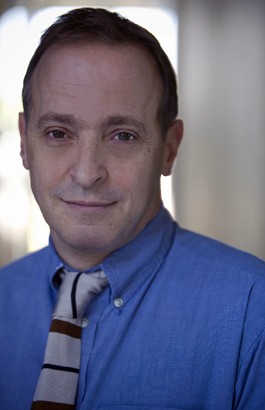
In his latest bestseller, When You Are Engulfed in Flames, David Sedaris once again proves that he is a deliciously shrewd observer of the modern world, a man capable of making the most out of complicated air travel, addiction, hitchhiking and any number of emotional hiccups in his long-term relationship with Hugh Hamrick. Beyond the stories on the page, the NPR titan and bestselling author of Naked, Me Talk Pretty One Day and Dress Your Family in Corduroy and Denim is just as you’d imagine him to be: downright funny. But in the following Q&A, Sedaris managed to share a few stories that have never reached the printed page—yet. He appears at the Wells Fargo Center for the Performing Arts on Oct. 28.

Bohemian: How is your book tour going?

David Sedaris: Oh, goodness. If public speaking were your worst nightmare, it would feel like the worst thing that ever happened to you. Last night, for instance, in Kansas, it wasn’t that big of a store, so they set speakers outside in the parking lot. They had people outside. It was the first time I’ve ever done something like this before. I was inside the store and everybody else was outside of the store. And I looked at them, and I saw what a puppy would see. I spoke to them through the glass and they came in and I signed books for eight hours.

You write a great deal about your own family. I was wondering what were some of things about your parents’ marriage that really influenced you?

Well, that’s an interesting question. My parents remained married. They never got a divorce. Divorce wasn’t as common then as it is now. My parents weren’t very physical people. You didn’t see them hug and kiss a lot. You didn’t hear them saying, “Oh, I love you.” And they didn’t do that much together. That didn’t seem abnormal to me. I mean, I am not one of those people who got a boyfriend and then thought you were supposed to do everything together, or thought that we were supposed to have our hands all over each other all the time. I don’t mean sex. And people often say, “Oh it must be so hard to be away from Hugh for a whole month.” And well, it’s great. And it’s good for him, too.

People need breathing room.

They do. Then again, the idea that I got from my parents was that you don’t need all that stuff. You know, all that stuff that I saw on television; I never really bought it. I always thought that television always got families really wrong.

So there’s a lot of realness in your family?

Well, yeah. I mean, it all seems real to me. It’s really interesting when people say, “Well, I love reading about that dysfunctional family of yours.” I think, well, it functions better than any family I can think of. We’re all friends and we all truly enjoy each other’s company. What’s un-functioning about that?

You and Hugh have been together 17 years. What is one of the best things about your relationship?

One of the best things is that I don’t have to do anything. He does everything.

Can you clone him?

He drives, he cooks, he fixes things. Like, I don’t open what I call icky mail—any kind of bill or statement, anything that isn’t personally addressed or is a free sample. I don’t have anything to do with it. I’ll put it into a pile, and he’ll come right home and open it right up as if it’s a birthday card. He does all the cooking. I mean, I am happy to go shopping—more than happy to buy toilet paper or light bulbs. I’ll go to two stores every day with pleasure.

He’s clean. We’ve never gone to bed with a dirty dish—ever! A coffee cup in the sink? Never. We don’t have to argue about that. And it’s good, too, because when you get older—I am 51—so if something happened to Hugh . . . I mean, I think it would be different if you were a heterosexual man. Like, heterosexual men can easily find a woman at age 50, but if you’re gay and you’re 50, it’s a lot harder to find somebody, unless you want to buy somebody to be there—like the 25-year-old boyfriend. I can’t see myself doing that. So if Hugh and I broke up, I would just be alone for the rest of my life. I am so incredibly grateful. And I think my gratitude shows. And I think that brings a lot to a relationship.

You live in Paris, but do you follow gay rights here in the states?

Yeah. I mean, I don’t get any newsletters or anything. But I never understood people’s objection to gay marriage. I never understood why people felt like it threatened their marriage, that somehow two lesbians exchanging poetry on a mountaintop—I mean, I want to say, “Not everything is about you!” If two lesbians exchange vows on a mountaintop, that’s not saying anything about you and your marriage to your husband. And why would you think that it does? I have a media escort. I get a big kick out of them. I had one recently who was Republican, and she was saying, “The next thing they are going to want is to marry dogs and cats!” I thought, “Thank you so much for linking me to an animal that licks his own asshole!”

Amazing. Well, you are revered in the LGBT community and—

I don’t think I am.

You don’t?

No, I am not gay enough. Like, last night, I signed books for eight hours. I bet there were eight gay men. I get more lesbians than gay men. I am not gay enough.

What do you mean, you’re not gay enough?

I am not hip enough. I don’t know. I don’t get any more gay people in my audience than there are in the population. You know, I mean—a percentage? I guess there’s something about that that is, in a way, kind of progressive. I think it’s kind of neat that a 14-year-old straight high school student will show up to hear a 50-year-old talk about his boyfriend lance a boil on his ass. [Laughs] But I think the way I write about my relationship is all about trying to make a life with someone. I don’t think I write about in a way that’s . . . I mean, the focus isn’t necessarily two men. We happen to be two men, but our problems are the same as everybody else’s.


We’re more than our sexuality—we’re human beings first, right?

When I was growing up, there were no books in the library on homosexuals, or any homosexuals on TV. I mean, there were, but you didn’t know that they were gay. It was easy to believe that you were the only gay man on earth. Twenty years ago, my books would be in the gay and lesbian section of the bookstore because I was writing about my boyfriend. The manager of the bookstore would see the word “boyfriend” in the book and say, “Oh, we have to put that over there.” At this point, when I think of lesbian and gay section of the bookstore, I think I’d find books about the joy of lesbian sex or how to make your own cock-ring crafts, but I would like to think gay-themed books, in general, have been moved into the more general section of the bookstore.

David Sedaris appears at the Wells Fargo Center on Tuesday, Oct. 28. 50 Mark West Springs Road, Santa Rosa. 8pm. $45&–$65; $10, SRO. 707.546.3600.


Museums and gallery notes.

Reviews of new book releases.

Reviews and previews of new plays, operas and symphony performances.

Reviews and previews of new dance performances and events.

Ballot Boxes

0

10.22.08

MON DIEU! Contrary to popular belief, Barack Obama was not born in a manger.

By Bohemian staff

Proposition 1A

The Bohemian recommends: Yes

It’s time to stop talking about climate change and start doing something about it. The $9.95 billion bond on the November ballot will help build the first leg of the long-awaited California High Speed Rail, aiming to one day take some 117 million riders a year from San Francisco to Los Angeles in mere hours. We know it’s not going to be the panacea of global warming and high gas prices, and we’ve heard the opponents argue it’s a boondoggle that will break the state’s bank. Arguing for the proposition, the Los Angeles Times notes that the rail promises an eventual billion-dollar profit from ticket sales alone. As with Measure Q, the SMART train initiative, it’s time to prepare for the future by taking the initial fiscal hit that paves the way for tomorrow’s transport.

Proposition 2 The California Prevention of Farm Animal Cruelty Act

The Bohemian recommends: No

There is absolutely no question about it: Our modern industrial farm system is an outrage and needs to be fixed. Proponents of Proposition 2 would have us believe that this act would allow us to have happy animals and eat them, too. Unfortunately, that’s not the reality. Fortunate as we are to be based in the state’s egg basket, we will instead see area producers forced out of business. Prop. 2 is the right idea but the wrong bill.

Here’s another vote we can all make, every day, with our checkbooks. Begin buying only cage-free, humanely raised organic poultry and pork, and do not buy any veal—ever—not even in your favorite restaurants, unless you know for a fact that it’s been humanely raised. (The Sonoma County Meat Buying Club is an excellent outlet for humanely-raised meat.) That’s the kind of daily vote that really makes a change. Unfortunately, Prop. 2 will result in a decimation of our area producers, many of whom distribute their locally raised products in less than a 100-mile radius, and will flood California’s markets with eggs, pork and veal from inhumanely raised animals in Texas and even Mexico. We’re eager to see the industry change, but this proposition is not the one to do it. Let’s try this one again.

Proposition 3 Children’s Hospital Bond Act

The Bohemian recommends: Yes

It’s pathetic that the state of California must resort to this in order to provide care for dying children. The fact that we must take on this debt, with the state already deep in the red, is a genuine shame, and almost too much to bear. But it’s the right thing to do. Proposition 3 would authorize the issuance of roughly $1 billion in bonds for hospitals that treat children with life-threatening illnesses. Money from Prop. 3 bonds would pay for buildings, equipment and similar capital expenses at five UC hospitals and eight nonprofit hospitals. All of the money is earmarked to improve and expand access to child healthcare.

The vote comes only four years after passage of a similar $750 million bond. Since that time, as you may have heard, the costs of doing any kind of business in this industry have skyrocketed. Supporters say these institutions can barely cover their operating expenses, much less pay for necessary capital improvements. California is already $120 billion in the hole from outstanding general-obligation bonds alone. We’ve sold bonds to pay for infrastructure like highways and water-treatment systems, and even to pay off older debt.

This is no way to run a state. This is no way to finance things like children’s hospitals. Let this serve as more evidence that the state and the nation need comprehensive healthcare reform. But don’t let sick kids pay for our leaders’ failures.

Proposition 4 Waiting Period and Parental Notification Before Termination of Minor’s Pregnancy

The Bohemian recommends: No

Don’t be surprised if you’re hit by a wave of déjà vu in the voting booth—the parental notification proposition is baaack. If passed, this would amend the state constitution to require notification of a minor girl’s parents or legal guardian that she is planning to have an abortion, and a 48-hour waiting period following notification. The fresh coat of paint over this twice-rejected proposal recasts it as “Sarah’s Law,” “Sarah” being a 15-year-old Texan who died in 1994 following a botched abortion. (It’s been widely reported that “Sarah” was actually in a common-law marriage, would not have been considered a minor and therefore would not have been helped by Prop. 4. No matter.)

Proponents say this year’s model has more options, including the possibility that a judge waive notification if the girl demonstrates enough maturity or the abortion is in her best interest. To blow your own mind, try imagining an underage girl going through the trauma of an unwanted pregnancy, who can’t turn to the adults in her life, but who will stand up in a courtroom of strangers to fight to have an abortion.

The spin on Sarah’s story is that older men prey on underage girls and then cart them off to an abortion clinic to cover up their sexual crimes. It’s all very Law & Order, but the simple truth is that this is just a cynical ploy working to erode Roe v. Wade in yet another nasty grab at women’s bodies. Bury Prop. 4 alongside its similarly disingenuous predecessors.

Proposition 5 The Nonviolent Offender Rehabilitation Act

The Bohemian recommends: Yes

Proposition 5 would provide much-needed reforms to the state’s criminal justice and drug-rehabilitation systems. An expansion of Proposition 36, the 2000 initiative that established a drug-treatment diversion program for nonviolent drug offenders, Prop. 5 would funnel more money into that program. It would also refine sentencing and parole guidelines.

Instead of wasting taxpayers’ money on incarceration and excessive parole sentencing, Prop. 5 establishes a three-track system that takes into account offenders’ criminal, substance-abuse and treatment histories. The initiative also drops possession of less than 1 ounce of marijuana from a misdemeanor to an infraction (like a speeding ticket) and directs the $100 fine from the infraction to fund drug-treatment programs for juvenile substance abusers.

Additional reforms include expanded treatment for juvenile drug offenders and oversight committees to track the effectiveness of the programs. Due to savings from decreased incarceration and parole costs, plus the money saved from decreasing the need to build more prisons, the net cost of the $460 million-per-year-program would be neutral.

The cycles of substance abuse and criminal recidivism can only be broken through realistic, comprehensive drug-treatment programs that emphasize rehabilitation and make incarceration the very last resort. Prop. 5 is a vital piece of the vast reform needed in our state’s broken criminal justice system.

Proposition 6 Police and Law Enforcement Funding

The Bohemian recommends: No

State Proposition 6—fundamentally a lock-’em-up initiative originated by married SoCal state representatives George and Sharon Runner—has won the endorsements of numerous police and sheriffs’ organizations. Given spreading statewide gang problems, which it’s designed to address, we can see why.  

But the proposed law, informally known as “the Safe Neighborhoods Act,” has a serious economic—not to mention moral—downside. Prop. 6 will add up to 10 years to the prison sentences of previously convicted felons who are caught carrying weapons, as well as gang offenders picked up for violent crimes. It also adds five years’ annual registration for gang members following prison discharge and increased sentences for meth makers and dealers and witness tamperers. Perhaps proving that its sponsors are hardcore law ‘n’ order zealots, Prop. 6’s draconian language applies to repeat graffiti violators.

In addition to being old-fashioned in its approach to crime-prevention, the proposal is a budget buster. The state budget analyst’s office calculates its immediate costs at $365 million per year ($465 million per year in 2013), and points out that it will require, over time, prison construction and upgrade costs of an additional $500 million.

Deeper questions exist about the very root of the program; namely, the practice of authorities’ assigning “gang enhancements” to youth offences, thus increasing sentences. Mistakes have frequently been made, and once law enforcement personnel have labeled someone a gang member, it’s virtually impossible for that person to get off the list. For these reasons, we join several state labor unions and taxpayers groups, and even firefighters groups, in opposing Prop. 6.

Proposition 7 Renewable Energy Generation

The Bohemian recommends: No

Proposition 7 tries to accomplish the noble and essential goal of securing more renewable energy for California, but its approach and unclear wording could ultimately undermine growth of clean energy sources. Currently, the state obtains about 11 percent of its electricity from renewable energy sources, including solar, wind, geothermal and biomass, with the goal of increasing that to 20 percent by 2017. Prop. 7 would accelerate the schedule and raise the bar by requiring all utilities to generate 20 percent of power from renewable by 2010, and 50 percent by 2025.

Despite this apparently pro-green mission, Prop. 7 is opposed by most major environmental groups, including the Sierra Club and the League of Conservation Voters, for three key reasons. First, the measure seeks to fast-track the government approval process of new clean energy plants, which could lessen oversight and weaken environmental protections. Second, increases on consumers’ bills from renewable energy would be capped at 3 percent annually, while the bill fails to require a similar price cap for energy obtained from fossil fuels. Finally, small-scale renewable utility companies that produce less than 30 megawatts could have more difficulty operating if this bill passes. That would lessen or eliminate community control over energy policies.

While the measure may be well-intentioned, its potential unintended consequences outweigh its possible benefits. Although renewable energy policies need to be enacted on state and local levels, a flawed ballot measure is not the way to accomplish those goals. But cheer up: California is already committed to reducing greenhouse gas emissions back to 1990 levels by 2020. You can vote no on Prop. 7 and still drive your Prius with pride.

Proposition 8 Eliminates Right of Same-Sex Couples to Marry

The Bohemian recommends: No

On March 11, 2004, San Francisco’s City Hall rang with laughter and tears in the surge of emotion uncorked when Mayor Gavin Newsom made same-sex marriage a legal reality. Later that day, the state Supreme Court ordered the city to cease and desist its display of tolerance and love. But two months later, on May 15, that same Supreme Court overturned the state’s ban on gay marriage, and California became one of two states in the nation to reject the bigotry that has denied gay couples this fundamental human right. (The other is Massachusetts.)

On paper, Prop. 8 is an issue of semantics. When it was first submitted, it came titled as the “California Marriage Protection Act,” implying that the very institution of marriage would be hurt should same-sex couples be allowed to wed. Prop. 8’s title was sensibly changed by Attorney General Jerry Brown to “Limit on Marriage,” and then, after the state Supreme Court legalized same-sex marriage in May of this year, changed again, to “Eliminates Right of Same-Sex Couples to Marry.”

Prop. 8’s conservative supporters, including the Mormon Church, which has called on its members to funnel millions into the campaign from around the globe, are at issue with the very simple language in the new title. These supporters try to argue that same-sex couples already have the same domestic partnership rights of married couples in California. Hence, the only thing they’re concerned about, they say, is whether same-sex couples get to say they’re “married.”

It’s important to remember that definitions of words change constantly. Remember when “gay” meant happy? For “marriage,” those societal changes have already taken effect, and it’s time to allow the definition to change accordingly. By seeking to amend the California Constitution to eliminate the right of same-sex couples to marry in California, proponents of Prop. 8 are not “protecting” marriage; they aren’t “defending” marriage. There is nothing to be lost in the institution of marriage by expanding its definition to include same-sex couples.

Proposition 9 Criminal Justice System; Victims’ Rights; Parole

The Bohemian recommends: No

Proposition 9 does not define which victims’ rights it professes to protect, except perhaps proponents’ right to see convicts locked up forever. In fact Prop. 9 has nothing whatsoever to do with victims’ rights. It deals only with convicts’ rights—by decimating them. The main purpose of this at best misguided scheme is to deny convicts the right to petition for parole every five years; parole hearings would come only after 15 years. This is allegedly being done to save victims the cost of attending a slew of parole hearings.

This draconian measure is being driven by a cadre of supporters, including the powerful prison guards union, who have been working for years to make California law the most punitive on earth. Because of their past successes, our prisons are already overcrowded to crisis proportions, mostly with nonviolent offenders. California runs the third-largest prison system in the world. The United States, home to 5 percent of the world’s population, is home to 25 percent of the world’s prison population. Besides being immoral, this is impractical. We have plenty of evidence to prove that incarceration, a crude anti-crime tool, does not work.

The international organization Human Rights Watch has been deeply critical of U.S. prison policies, stating that “the extraordinary rate of incarceration in the United States wreaks havoc on individuals, families and communities, and saps the strength of the nation as a whole.” In addition to being an assault on fairness and due process, this measure would cost the state hundreds of millions of dollars.

Proposition 10 Alternative Fuel Vehicles and Renewable Energy Bonds

The Bohemian Recommends: No

These depressionary days of personal debt, job loss, home foreclosures, education cuts and unaffordable healthcare may be blowing taps for the middle class as we know it. But hey—corporate execs suffer, too! They suffer bailouts, massages, manicures and parachutes downgraded from gold to silver. So we’ve got to chuckle when one oily Texas billionaire puts a smidgen of his firm’s dough where his mushmouth is, expecting Californians to vote him a windfall. T. Boone Pickens, the infamous corporate raider and lifelong carbon-mogul, has gifted Californians with a comedic gut buster otherwise known as Proposition 10, his “Alternative Fuels Initiative.”

Prop. 10 would cost state taxpayers $9.8 billion over a 30-year stretch. The initiative doesn’t have dedicated revenue sources, so it comes at the expense of education and healthcare. Pickens wants California taxpayers to pony up as much as $50,000 per vehicle for firms and individuals to buy or lease carbon-emitting, natural-gas-burning vehicles (hybrids need not apply!), thus enormously expanding the market for guess who’s natural gas company. Buyers are then free to relocate their vehicles out-of-state, while California’s cuckolded taxpayers pick up the tab. With tens of thousands of newly built vehicles thus requiring his natural gas, Pickens can plump his pillow with every pump payment. In a curious nod to the truly green, Pickens also includes cash payments in his plan for hydrogen and electric cars—trouble is, they don’t exist.

California needs a dynamic, comprehensive and fully funded clean green renewable energy and fuels program aimed at eliminating carbon emissions. Pickens sunk close to $4 million into Prop. 10 through his own Clean Energy Fuels Corporation, which is not, as you can imagine, an altruistic nonprofit. But Pickens isn’t the only one behind Prop 10. No sirree. He has at least two, or is it three, additional backers, most notable for their utter obscurity.

And who opposes Prop. 10? Why, that would be every state newspaper editorial board weighing in thus far, the Consumer Federation of California, the California Tax Reform Association, the Utility Reform Network, the California Federation of Teachers, the California Nurses Association, Consumer Watchdog, the Sierra Club, the California State Association of Counties, the Howard Jarvis Taxpayers Association, the California League of Conservation Voters, the League of Women Voters and even the California Chamber of Commerce.

A corporate raider’s slick trick to pick California’s green clean? You betcha. Our comeback to T. Boone Pickens’ fuel-initiative joke should, and assuredly will be, a resounding “No!”

Proposition 11 Redistricting

The Bohemian recommends: Yes

When Gov. Arnold Schwarzenegger championed redistricting reform back in 2003, it was easy to see it is a cynical ploy to wrest control of the state Legislature from the Democratic Party. Back then, Schwarzenegger was a polarizing, partisan figure. He’s changed a bit since then, and yet he is still dead set on seeing this done.

The governor put up nearly $2.5 million of his own money to get this measure on the ballot, arguing, as he always has, that it is a root cause of the very real polarization that often paralyzes Sacramento. This time, we believe him.

So does former state treasurer Steve Westly, who ran against Schwarzenegger in 2006 and co-chairs the “Yes on 11” effort. Former governor Gray Davis, former assembly speaker Robert Hertzberg, former Santa Cruz assemblyman Fred Keeley and Berkeley mayor Tom Bates (all Democrats) have endorsed the measure, along with AARP, the League of Women Voters and California Common Cause. In the short term, it may in fact hurt Democratic lawmakers. In the long term, it’s good for California.

Proposition 12 Veterans Bond Act

The Bohemian recommends: Yes

Since 1922, in 26 elections, California voters have approved $8.4 billion in bonds for low-cost loans to veterans through the Cal-Vet fund. All of that money has been repaid. Here’s how it works: The state authorizes the sale of bonds to raise the money—in this case, $900 million. That money is made available for veterans to apply for low-interest home loans. As they pay off their houses, the debt is retired. This bond will allow 3,600 California veterans to buy houses.

Attorney Gary Wesley, the only opponent of Prop. 12 to sign the voter-election guide, is all hopping mad that service men and women who don’t suffer combat might get some help buying a home after their tour is done. Waiting out the Afghanistan and Iraq wars in some comfy German base shouldn’t be a mortgage ticket, Wesley grumps, surely envisioning extended Oktoberfest celebrations he’s not been invited to. He’s a jerk. Our service men and women put their own lives on hold to serve the country and are currently about the only Americans doing anything that smacks of self-directed sacrifice. They should be able to relax in a room or two they can call their own once that service is done. 

BOXES

Sonoma County: Measure Q

The Bohemian recommends: Yes

In 2006, Proposition R received 65.3 percent of the vote. Missing a “supermajority” necessary by a mere 1.4 percent, Prop. R would have started the North Bay on to the alternative transportation track that is necessary for our future.

A lot has changed in two years. Pieces of ice the size of Rhode Island no longer merit the front page when they break off the polar cap and begin their swift melt. Wal-Mart sells organic. The environmental movement doesn’t seem like a quaint ’70s relic, but rather an intensely necessary political force. Transportation issues have never been hotter.

Enter Measure Q, the Sonoma-Marin Area Rail Transit District (SMART) measure. A new incarnation of Prop. R, Measure Q would impose a quarter-cent sales tax on Sonoma and Marin counties to pay for the establishment of rail service stretching the 70-mile track from Cloverdale to Larkspur. Currently estimated to be complete by 2014 and to serve 5,300 commuters a day with up to an additional 10,000 pedestrians and bicyclists using its ancillary pathway, SMART would make a dent, albeit an initially small one, in the North Bay’s daily commute.

Opponents argue that SMART costs too much and serves too few. They warn that it will open up gravel mining in the Eel River and prompt noisy freight train traffic (all of which is much politer discourse than Prop. R prompted, angry Marinites then warning of unwashed Sonomans pouring onto their golden streets by the thousands). Proponents say that the time is way overdue to establish new arms of mass transit, and that the expense is a pill worth swallowing now for the benefits it will offer us later. That’s where we sit. As with Prop. 1A, the high-speed rail bond measure we recommend below, Measure Q is the right thing to do and now is the right time to do it.

 h3>Napa County: Measure P

The Bohemian recommends: Yes

In 1990, Napa voters passed Measure J, the Agricultural Lands Preservation Act in order to preserve Napa County’s open space and agricultural heritage. Measure P, Measure J’s “child,” seeks to extend the rights established 18 years ago for another 50 years. (Open-ended preservation legislation is thought to be imprudent, open-ended as it is to lawsuit opportunities.) Carefully worded, Measure P offers an out should Napa County be legally compelled to free up some agricultural holdings for affordable housing. This is a no-brainer. Help Napa County retain its largely rural lands, support family farming and keep thousands of acres available to the public.


Marin County: Measure B

The Bohemian recommends: Yes

Measure B seeks to consolidate two separate financial offices into one, folding the auditor-controller post and the treasurer-tax collector office into one streamlined county government position. Prompted by the retirement of auditor-controller Richard Arrow, the measure was quickly hustled on to the ballot to save an initial $100,000 in budgetary outlay and take two elected positions and reform them as one appointed seat. Those who oppose Measure B worry that voters are losing their say in who helms the county’s coffers. Those who support the measure, like the League of Women Voters, argue that voters are rarely well informed on the candidates for these offices, incumbents are virtually guaranteed reelection and that unless there is some scandal, their duties are little discussed. Taxes come in, bills get paid, the government runs. If the fiscal offices are consolidated and a professional appointed, Marin saves money now and, ostensibly, into the future. That’s hard to say no to.


The Money Candidate

0

10.22.08

I think all of you here would today acknowledge that we’ve lost a sense of our shared responsibility. We’ve failed to guard against policies that all too often rewarded financial manipulation, instead of productivity and innovation, policies that favored Wall Street over Main Street—and hurt both. Our free market was never meant to be a free license to take whatever you can get however you can get it.”

When Barack Obama uttered these words, at a much-heralded speech in which he announced his plan to rescue the American economy, he received a huge ovation. That was itself remarkable, given that he delivered the speech on March 27, when many of us—including the man who is now his opponent for the presidency—were paying much less attention to the economy than we are now. The ovation was more remarkable because he delivered the speech on Wall Street, to a throng of financiers.

The 30-minute talk began on a historical note, with a look back at the foundations of the American economic system that offered a glimpse at the candidate’s fundamental economic philosophy. He described the tension between letting the so-called free market operate on its own, and forcing regulations on the market—and how the debate on that topic was waged by Thomas Jefferson and Alexander Hamilton.

“Our free market has been the engine of American progress,” Obama said. “But the American experiment has worked in large part because we’ve guided the market’s invisible hand with a higher principle—that each American does better when all Americans do better.”

Somehow, the nation has fallen sway to an ideology that sees government oversight as un-American. Talk of basic fairness can get someone called a commie. But the fact is, Wall Street wants someone to be in charge.

Last month, The Economist magazine conducted a poll of leading economists that delivered startling results. “A majority—at times by overwhelming margins—believe Mr. Obama has the superior economic plan, a firmer grasp of economics and will appoint better economic advisers.”

The respondents said they saw the election as crucial. And 80 percent said Obama has a better grasp of the situation. Among Republicans, 46 percent of professional economists said they trusted Obama and 23 percent favored McCain.

And, of course, Obama has been endorsed by the richest man in the world. A highlight of the second presidential debate came when Tom Brokaw asked the candidates to say who they’d appoint to take over the Fed if they were elected. McCain’s first answer was Warren Buffett, “the Oracle of Omaha,” who, according to polls, may be the most trusted man in America when it comes to money matters. (McCain revised his answer to mention eBay’s Meg Whitman.)

When it was his turn to respond, Obama conceded that he too likes Buffett. And he couldn’t help but add, “I am pleased to have his support.” (Buffett has said of Obama, “I would let him run my company.” In the world of business, there is no higher praise.)

Marc Andreessen, founder of Netscape, is a fan of Obama’s chief economic adviser, University of Chicago professor Austin Goolsbee.

Writing in The Guardian, Daniel Koffler says Obama’s “language of personal choice and incentive” derives mostly from Goolsbee, who calls himself a “behavioral economist.”

“Goolsbee agrees with the liberal consensus on the need to address concerns such as income inequality, disparate educational opportunities and, of course, disparate access to healthcare,” Koffler writes, “but breaks sharply from liberal orthodoxy on both the causes of these social ills and the optimal strategy for ameliorating them.

“Instead of recommending traditional welfare-state liberalism, Goolsbee promotes programs to essentially democratize the market, protecting and where possible expanding freedom of choice, while simultaneously creating rational, self-interested incentives for individuals to participate in solving collective problems.”

Still Goolsbee sees the fundamental problem at the heart of the American economy as the gulf between the super-rich and the middle class. Over the last six years, Goolsbee has said, “the typical worker had seen income grow hardly at all, while the cost of education, healthcare and energy have all gone up.”

That is not merely a moral problem for Goolsbee and his follow-thinkers, but also a practical one, because an economy cannot flourish in a society thus constructed. And his solution, the one that will drive the economic plan of the next president of the United States, God willing, is to bridge that gulf.

“Despite Obama’s reputation for grandiose rhetoric and utopian hope-mongering,” says The New Republic‘s Noam Scheiber, “the Obamanauts aren’t radicals, far from it. They’re pragmatists.”

The first stage of Obama’s pragmatic plan has been announced. Once the patient is out of intensive care, Obama will be able to put in motion the heart of his economic plan: the creation of a new economic engine driven by millions of new “green-collar” jobs.

Key to this plan is the restoration of trust—in the credit markets on Wall Street and in the homes of Main Street; the return of fairness seems secondary. But it’s built into the program. In Obama’s view, that’s the way Hamilton, Jefferson and their associates designed the American system. Without it, the economy can’t function. His plan will bring it back.

 Open Mic is now a weekly feature in the Bohemian. We welcome your contribution. To have your topical essay of 700 words considered for publication, write op*****@******an.com.


Letters to the Editor

10.22.08

World of Warcraft no life

Gabriel Francisco wrote a great story (“Mind Rot,” Sept. 3). I appreciate this myself, since I can easily relate. I have been a gamer for half my life but realized I did not do much else at times and really missed opportunities that were presented to me. I have not been a gamer for about a year and rarely have picked up the controller or looked at the latest ad on the latest hardware.

I believe the future of gaming will be quite incredible due to new technologies such as sound manipulation, holographic tech and the ability of one’s mind to give commands. Look out, we might all become zombies, if we have not already gotten there.

Samuel Bass

Napa

Valerie Brown for first district

I am a life-long Sonoma Valley resident, and have personally known many of the previous First District supervisors.

When Valerie Brown was first elected as our supervisor, she made a difference that benefited Sonoma Valley area residents in a very positive way. In the last six years, over $54 million has been applied to the First District for purchases of Open Space. Valerie has also helped the Sonoma Valley get our fair share of dollars for promoting tourism, an important part of our economy.

I really appreciate that Valerie stands up for the preservation of agriculture, environmental interests and business concerns of all. From personal experience, I have found that Valerie listens to all constituents and has always demonstrated an open-door policy to discuss the topics of concern.

While not all decisions or choices a supervisor makes may be popular ones, with Valerie, I know that she has done so because they are ones that she believes are the best for our district and community. That is a mark of a true leader.

We need a strong and experienced voice that represents our district well. We do not want to start all over with the First District. We need to build on what we have and make it better for all. 

My vote is with Valerie Brown.

Jeff Kunde

Kenwood

Man of mystery?

Some people think that Fifth District Supervisor candidate Efren Carrillo is being unfairly judged by the company he keeps. But how can voters evaluate a candidate who has never held an elective or appointive office and thus has never registered a public vote on any critical public issue?

Mr. Carrillo is a promising young man, but he is starting a political career by running for the highest office in the county. Since Sonoma County Supervisors control all the land use in the county, including the Open Space District and County Water Agency operations, our whole quality of life is in their hands.

Given the impact of the office he seeks, Mr. Carrillo’s positions are sadly vacuous. On forest protection, he says that he will “bring in the experts.” He will help people plant 5,000 redwood trees. (But Preservation Ranch will cut thousands!) His position on continued Russian River gravel mining remains a mystery. And Mr. Carrillo is the only Supervisor candidate who has not answered the Sonoma County Water Coalition’s questionnaire.

Since Mr. Carrillo apparently knows little about Sonoma County resource issues, it’s only natural to assume that he would turn to his supporters for advice. Unfortunately, his principal advisors include a gravel industry lobbyist and a former county supervisor who works for Preservation Ranch. Voters should be concerned about their influence and the advice they would provide.

Jane E. Nielson

Sebastopol

Dept. of Arrrgh

The photo accompanying last week’s review of the Raven Player’s production of The Foreigner (“Plenty of Tongue,’ Oct. 15) actually depicts the three young actors from Youth in Revolt, the Nick Twisp tale currently onstage at the Glaser Center.

In further tales of the brain-challenged, we tempted fate by producing our Best of the North Bay Readers Poll Handbook on Oct. 8, giving rich opportunity to make the same mistakes we made in March all over again! For example, chiropractor Jacob Quihuis spells his name thusly and the Best Lingerie Shop, honorable mention, is Ma Cherie et Moi Lingerie (formerly Chanelle et Moi Lingerie in Windsor). It can be found at 2332 Magowan Drive, in the Montgomery Village, Santa Rosa. 707.573.1103. We can be found sitting under our desk.

The Ed.

The Sly Stone of Fakt-czeching


&–&–>

Wine Tasting Room of the Week

0

  T he rise of fruit-driven, high-alcohol wines has been blamed on everything from the tip of wine critic Robert Parker’s tongue to climate change. Global warming has been blamed on anything from the vagaries of the weather to Al Gore’s Nobel Prize. Now, just when the words “scientific consensus” have begun to take root and grow in the poor, well-drained soil of public discourse, we may be in for a detour on the road to warmer days.

“Pacific decadal oscillation” (PDO) is the sexed-up scientific term. Climate scientists tentatively declared that we’ve entered a cool phase of the PDO last fall. The cyclical massing of colder surface waters in the eastern Pacific could hang out here for two or three decades, and it generally biases our climate toward cooler springs and more frost episodes (as seen this year), and maybe even those cloudy Augusts where every day is like Sunday. Since California’s premium wine boom has taken place largely during the outgoing 30-year warm cycle, the suggestion is that, possibly, increasingly ripe vintages have had something to do with the weather, after all.

To get a preview of what to expect from cool climate wines, I trucked on down to Carneros. Bouchaine Vineyards was among the first to grow Burgundian cultivars on the wind-scraped hills north of San Pablo Bay. Originally founded by an Italian immigrant in 1927 who was unimpressed by Prohibition, the winery was bought by Burgundy enthusiasts in 1981 and got a handsome facelift in the 1990s with redwood lumber recycled from the old fermentation tanks.

Bouchaine’s 2006 Gewürztraminer ($19) is sourced from Anderson Valley, another cool region that’s getting hotter. It’s dry and only mildly spicy, with a viscous thyme-infused-lemon character that could make for that rare artichoke pairing. A mellow mouthful of butterscotch under a thin haze of wood smoke, the 2006 Bouchaine Estate Napa-Carneros Chardonnay ($30) is enlivened with pine sap and grapefruit, and not even the 2006 Bouche de Beurre Chardonnay ($45) is an overbearing “mouth of butter.”

The 2007 Pinot Gris, Carneros ($25) is but an ethereal wisp of fog on the tongue. My host said that their 2006 Pinot Meunier Estate, Napa Carneros ($35) has its on and off days; this day, the brilliant ruby wine nearly bounded out of the glass, perfumed with raspberry, finishing with astringent pomegranate. The classic 2006 Estate Napa-Carneros Pinot Noir ($45) is upstaged by neighboring 2006 Gee Vineyard Pinot Noir ($50); with a wild briary scent and cherry skin crispness that nearly crunches in the mouth. The 2005 Rockin’ H Sonoma Coast Pinot Noir ($35) seems to have more in common with the 2006 Rockin’ H Syrah ($30)—a brooding, plum- and cherry-scented wine with firm tannin—than its varietal brethren over the hill.

On a recent fair-weather day at Bouchaine with no PDO in sight, a number of winetasting parties enjoyed sunshine on the patio, and the busy staff kept an unfailingly great sense of humor throughout. With a hearth in the corner and rustic beams overhead, the country French interior would undoubtedly be a cozy redoubt on chillier afternoons—and like it or not, those chilly afternoons are coming, due to a phenomenon of low pressure oscillation that climatologists call “winter.”

Bouchaine Vineyards, 1075 Buchli Station Road, Napa. Open daily, 10:30am–4pm; tasting fee $5. 707.252.9065.


View All

Tried and True

0

10.22.08

John Trudell is a warm, relaxed man who punctuates every other sentence with a carefree chuckle. Surprisingly, the former chairman of the American Indian Movement appears the antithesis of the image of the stoic, stone-faced protester. “I don’t let little things piss me off like they used to,” says the poet, who performs Oct. 26 in Mill Valley. “The rage is not there anymore . . . or it’s resting.”

Trudell’s serenity is hard to believe after hearing his latest release Madness & the Moremes, in which he explores the state of our decaying union and his own dark internal complexities he dubs “moremes.” With his understated yet formidable voice buoyed by his rootsy band, Bad Dog, and the Native American chanting of vocalist Quiltman, Trudell’s music is a potent blend that echoes acts as diverse as Los Lobos and Lou Reed. Eerily prophetic is “God Help and Breed You All,” written in the ’80s with late guitarist Jesse Ed Davis. “Profits pissing lives into the Wall Street urinal,” Trudell expounds, “which I don’t want to read, but someday I’m going to read.”

While this sprawling double album is riveting, Trudell’s road to sagely, rocking wordsmith was extremely trying. Born to a Santee Sioux father and Mexican mother, he grew up near the Santee reservation in Omaha, Neb., an impoverished place with little potential. “I was headed to jail and I knew it,” the 62-year-old recalls with a laugh. “There was no work, no nothing, so I left to escape that.”

In 1963, he joined the Navy, soon serving in Vietnam. When hearing “How Does Tomorrow Dream,” with its heartbreaking refrain “They’re killing the children in [a catalogue of regions from Afghanistan to the Congo],” one may think Trudell regrets his service. He doesn’t. “In the military, your job is to be aggressive and do what you’re told, but so does a CEO in one of these corrupt corporate institutions,” he says. “The real issue isn’t with the military itself, but with the people who set the military in motion.”

In 1969, Trudell joined the Native American occupation of Alcatraz Island, a landmark moment for awareness and support for the movement. Throughout the ’70s, he earned the ire of the FBI, who reportedly had a file on him that exceeded 17,000 pages. Then the unspeakable happened.

Shortly after midnight on Feb. 11, 1979, mere hours after Trudell burned an American flag in front of FBI headquarters in Washington, an arson attack engulfed his home on Nevada’s Duck Valley Reservation. His mother-in-law, his three young children and his wife, pregnant with their fourth child, all died in the fire. Reportedly without investigating the fire, the U.S. government ruled it a result of an electrical short on the back porch, something Trudell maintains is an impossibility.

After driving hundreds of thousands of miles, drifting aimlessly for five years, Trudell was struck by a message. “It was during this time that these lines came to me,” he remembers. “Something told me to write them down. I think the whole purpose of having received them is a way of letting things out.” His friend Jackson Browne took him in and exposed him to the recording studio. It all felt right to Trudell. “I consider Jackson an ally and a brother,” he says. “He was very instrumental in my survival.” Soon he released AKA Grafitti Man with Davis, which Bob Dylan called the best album of 1986. “I never had any idea that I’d be doing what I do today,” he says, still amazed at his journey from activist to artist.

While still raising consciousness through his art, Trudell now advocates for a much bigger group of people: all of us. “I came to understand that part of the problem is that we don’t identify—individually, collectively or generationally—as human beings anymore,” he laments. “Beneath race, class, gender, all the divisive stuff, once you cut through all of that, we’re all human beings.”While on the subject of camaraderie, I ask Trudell about companionship since the time he lost his family. But some words are for him alone.

“Yeah—the moremes!” he replies with a laugh. “They’ve been with me through everything.”

John Trudell performs Sunday, Oct. 26, at the Masonic Events Center, 19 Corte Madera Ave., Mill Valley. 8pm. $20&–$30. 415.389.5072.


Runnin’ Away

0

10.22.08

The insane circumstances surrounding Sly Stone’s bizarre appearance in Santa Rosa last Friday, Oct. 18, were told to me by several people involved with the show. Crazy doesn’t begin to describe it. Here’s how it went down.

The morning of the show, Sly Stone is in Los Angeles. He fires his business manager. Sly tells the promoter that he’s his own boss now, that he’s the one who’s going to get paid at the show and that he needs $3,000 wired to the bank account of an Iranian BMW saleswoman before he’ll even get on the plane to San Francisco.

And about that plane: it was supposed to arrive from Los Angeles at 11:30am. No Sly. The limo waits at the airport. Sly’s next flight becomes 1:30pm, then 2:30pm, 3:30pm and 5:30pm. No one can get a hold of him at all. The promoter drives to the airport in the slim hope that Sly might walk through one of the gates.

Finally, at 7:30pm, with his young Japanese girlfriend in tow, the 65-year-old Sly shows up at the airport. He’s an hour and a half away from the show—which starts in a half hour—and he demands to go to the hotel. The young girlfriend finally talks him out of it, and he agrees to go to the show, but he’s still talking about getting paid.

He sleeps all the way to Santa Rosa.

Sly doesn’t hit the stage at the Wells Fargo Center until 10:30pm, during the fifth song of the set. He walks off the stage 25 minutes later, in the middle of “I Wanna Take You Higher,” telling the crowd, “I gotta go take a piss. I’ll be right back.”

But Sly never comes back. The band continues on without him, killing time for 30 minutes. During the last song, a man appears on the stage, whispering into band members’ ears.

Meanwhile, backstage, Sly is demanding to be paid. The show is still going on, and the promoters are telling his handlers to get him back out to perform more. But his handlers know the drill. It’s been this way for years. What can they do?

Before the show is over, Sly is out in the parking lot, still in his white suit, trying to get into the promoter’s car. All the doors are plainly locked, but he keeps trying. Finally, a woman drives by, picks him and his Japanese girlfriend up, and they whiz away. Word of his departure gets inside.

It’s not too hard to figure out what the man on the stage was whispering to the band. How about: Sly’s making a getaway? How about: Sly’s driving off right now? How about: You’d better chase after him if you want to get paid?

And after quickly finishing the song and exiting the stage, that’s exactly what they do.

The band members pile in their cars and find Sly precisely where they thought he’d be: the Fountaingrove Hilton. Except he’s not in his room. All the rooms are reserved under the business manager’s name, whom Sly fired that morning. So Sly’s there, fuming about not being able to get into his room, when the rest of his band suddenly pull up.

“Get me out of here,” he’s heard telling his driver, and they peel out.

It is not an uncommon sight to see cars racing down Mendocino Avenue on a Friday night. But it’s a different story altogether when the lead car giving chase contains an absolute funk music legend, pursued by five more cars driven by band members, some of whom have played with him for 40 years and are actual, literal family members. Six cars race down the street, weaving in and out of lanes.

Finally, past midnight, Sly’s car is cornered at a gas station. A long stand-off ensues between him and the band while the young Japanese girl cries hysterically in the car. A gas station on Mendocino Avenue in Santa Rosa. That’s where it all falls apart.

At press time, no one can get a hold of Sly Stone—not his management, not his band mates, not his family. The last anyone sees of him, he’s headed south on Highway 101. Everyone’s got a pretty good idea how he’s spending the money, but no one knows where he is. And no one ever wants to play with him again.

 To read a review of the Sly Stone show, see [ http://www.bohemian.com/citysound ]www.bohemian.com/citysound.


School Swap

0

10.22.08

TRADING PLACES: Ben Bacon of Sonoma Country Day and Jessica Hughes of Roseland Elementary on the SCD campus.

Among the curriculum for teachers enrolled in the administrative program at Sonoma State University is the requirement to visit another school besides their own in the surrounding area. The goal is simple: by auditing classrooms, interviewing administration and seeing how other schools operate, potential administrators experience a school that may be slightly different than their own.

Or, in the case of Ben Bacon and Jessica Hughes, extremely different.

Bacon is a fifth-grade teacher at Sonoma Country Day School in Santa Rosa, a private school with a top annual tuition of $19,650. Hughes is a third-grade teacher at Roseland Elementary, a public school whose students represent those among the lowest income enrollment in the city. Hughes and Bacon chose to swap schools for a day to experience the full spectrum of classroom experience in Santa Rosa and to get a sense of the obvious differences, but also to note the essential similarities in their teaching environments. The Bohemian was invited along for the teachers’ visits, which occurred on consecutive Wednesdays.

The first visit began at Roseland Elementary, where Bacon came to Hughes’ classroom before class to check in; Hughes was at her desk, preparing referrals. “But they’re not referrals like ‘This kid kicked someone in the balls,'” she noted. On the top page, for example, she’d written that a student’s teeth were in bad shape: “They are rotten and causing her a lot of pain.”

Leaving the classroom to go to Pledge, a daily event out on the school’s asphalt playground, Hughes was greeted by three students, each of whom hugged her around her thighs. The principal addressed the 753 children of Roseland Elementary over the PA: “How are you doing? You look extra smart today!” The microphone was then given to two girls who led the school Pledge in unison, then to another girl who led it in Spanish and another who recited it in Portuguese.

Back in Hughes’ classroom, Bacon crouched down to talk to a young girl in braids, named Paula, about the Zip lock folder of tickets on her desk; Paula explained that the students in Hughes’ class get a ticket for good work or for being nice. “What happens if you don’t get the ticket?” Bacon asked. “Do you still feel proud that you got something done?” Paula smiled and nodded.

Checking in at the school office, Bacon signed the visitor’s log, which sits next to a box for donations to the family of a woman who had been stabbed to death down the street earlier that week. Bacon was invited down the hall to interview Dana Pedersen, the principal who had told the children earlier that morning that they all looked extra smart.

Pedersen came to Roseland Elementary three years ago after teaching in the district for 12 years, she explained, and wanted to bring to the school a “bottom-up” model in which teachers and parents have a say in administrative decisions. “A lot of problems schools are having is if you don’t come at it as an educator,” she said.

As a former teacher, Pedersen knows the importance of balancing social services with education. “Part of me wants to say, ‘Hey, we have enough on our plate!'” she said. “But another part of me sees these kids falling through the cracks, and I don’t want to let that happen. You can’t even imagine what these kids’ needs are. We’re still not meeting every need. And that’s something that I struggle with, as a principal, every day. Every day.”

When Pedersen came on as an administrator at Roseland, test scores were down and half the staff were first-year teachers. Pedersen explained that she works 15 hours a day and five hours on weekends to help the school succeed against the standards imposed by No Child Left Behind. Test scores have been up significantly every year since.

Bacon is no stranger to poor schools. He taught third grade for three years at a school in New York City’s Lower East Side. It was not uncommon for his students to live with 10-member families in two-bedroom apartments, he said. Many of them could not speak a word of English.

At Roseland Elementary, 82 percent of the students are ELL, or English-language learners, and 80 percent are low-income. White children are noticeably scarce. Getting parents involved in the school is a challenge. “We have a lot of undocumented families, parents who are wary of authority figures,” Hughes said. “They’re very friendly once they get to know you. But it takes a long time to work up to that.”

Bacon got up; it was time to visit classrooms. He noticed that in every room, laminated signs titled “STAR 2009 AYP TARGETS” were posted, with goals for test scores. Also in many rooms, laminated signs were posted with inspirational quotes like “Everything I Do Deserves My Best Effort” or “I Believe in Myself.”

In a fifth-grade class, Bacon walked into a room full of students, working while their teacher was gone making copies, who looked up at him in quiet surprise; in the next class, Bacon walked in and was greeted with a round of applause from the entire class. “We clap when visitors come in,” explained a young girl, “just to show our appreciation.”

“Well, thank you,” Bacon replied. “That’s very respectful.”

Another nearby classroom had dozens of mobiles hung from the ceiling, made from plastic clothes hangers and photos cut out from magazines. They described what students wanted to be when they grew up, and why. On one was an essay titled “Jose the Actor”: “I want to be a actor because I could be rich. I could buy my own house. I could be in magazines. I could be rich. Give some money to the poor.”

The next week, it was Hughes’ turn to visit Sonoma Country Day School. Hughes walked through the quiet hallway into the main office, where she was offered coffee by the receptionist. The office was furnished with chairs, a couch, a coffee table, a flat-screen TV and an aquarium. Out in the hallway, a second-grade teacher walked down the hall and was greeted by one of the school’s 265 students.

“Hi, Mrs. Eichelberg! I drew this for you! I did it in 10 minutes!” The student handed Mrs. Eichelberg a drawing. “You are such a talented guy!” she said, as a wave of more students, in uniform dress code and clutching sculptures, paintings and drawings, came bursting through the doors and filed into the classroom.

Cindy Rodenbaugh, Sonoma Country Day School’s dean of faculty and admissions, welcomed Hughes and mentioned the school’s emphasis on art. “That’s something that’s really big here,” she said. “One of our luxuries here is that we really get to have art and music. Every student graduates from our school playing a musical instrument. And it’s really unfortunate that in public schools, with the cutbacks, that’s the first thing to go.”

Bacon approached, and the two teachers talked about the school’s philosophies, set forth in laminated signs in the hallways: “Our search is for those moments and situations when we are most alive,” one read. Other hallway signs quoted James Joyce or Alexander Woollcott. “We have a saying here: nerds are cool,” said Bacon. “A lot of kids come here and they may have been ostracized for being good readers or writers or into theatre, and they really find a home here.”

Bacon led Hughes to his classroom, where a poster proclaiming “Meet the Candidates” compared John McCain and Barack Obama. Bacon’s students were recently assigned to write a persuasive essay about the election, and Hughes asked if there were more Obama supporters in his class. “It seems like it,” Bacon said.

Throughout the school, high-tech education was prevalent. Around Bacon’s classroom, 21 Macintosh computers lined the windows and walls. Each student, Bacon explained, has his or her own hard drive. In other rooms, there are banks of cubby holes for laptops or high-tech digital chalkboards called Activboards which save lessons and interact with students’ devices. In a Spanish classroom, the kids played Battleship on the Activboard by conjugating verbs to sink their classmate’s boats.

In an art classroom, where the children were studying Alexander Calder, the teacher explained to Hughes that the students’ mobiles hang outside the classroom on a PVC pipe beneath the eave, so as not to activate the motion security alarm inside the classroom at night.

Strolling through the school’s garden—which includes tomatoes, roses, sunflowers and lavender—Hughes and Bacon talked about school size, tenure, contracts and salary. It is generally true that private school teachers’ salaries are lower than public school teachers’, said Bacon, “but the amount of staff development money you get here makes up for other things.” The talk turned to the socioeconomic differences between the two schools, and the noticeable majority of white children at Sonoma Country Day.

“Are you trying to be more diverse?” asked Hughes.

“Absolutely,” Bacon answered. “It’s always sort of a subject that people are talking about. ‘When are we going to be more diverse?'”

“We’re technically diverse,” said Hughes, “but we just don’t have white kids. A lot of the time ‘diverse’ just means Mexican and black.”

At the end of the visit, Hughes met with Philip Nix, the headmaster and founder of the school. When Sonoma Country Day was started, it had no founding money at all; it was just an idea, with tuition, and Nix is very proud of this. He quickly laid out his three-point process to successfully start a school: “One, be unable to work for other people. Two, have very opinionated ideas about education. And three, have someone give you $4.5 million worth of land.”

Nix is an assured, confident man who speaks in metaphors and stories to emphasize points. In speaking of his upcoming retirement at the end of this year, he quotes French philosopher Maurice Merleau-Ponty; among the many books on his shelves sit a wooden abacus and a Buddha statue. He said he has always remembered what Joan Baez, with whom he worked for Biafra relief in the 1960s, once said to him. “Money does things,” she told him, “that no money doesn’t.”

Hughes asked him what he thought of the public school system—Nix immediately corrected the term to “state schools”—and if he thought his school was at all similar to a public elementary school. Nix paused for a very long time.

“For the K-6 element, the public schools I’ve visited are essentially joyous, because the kids bring their untrammeled spirit,” he said. “But I think in the junior high level, especially with the sexualization of society, it’s dissimilar. There are social issues a public school has to deal with that we don’t have to deal with. We don’t have kids that come to school beat up. We don’t have kids whose parents have disappeared over the weekend.”

It was time to leave, and Hughes walked out to her car. Tears streaked down from behind her sunglasses as she exited the school and turned left.

“It’s like a castle,” she said. “This big, beautiful castle that my kids can never go to. We just do the best with what we have. I mean, they’re great, that school is great. But how do we make that work for everybody?”


Nutters, Unite!

10.22.08

I f it’s October, it must be time for the Good Food Hour Recipe Contest, now in its 22nd year on KSRO 1350-AM, with Steve Garner and chef John Ash. This year, they’re throwing home cooks a slight hook. The main stipulated ingredient? Peanuts.

Urging contestants to think beyond those ubiquitous cookies marked on top with fork tines, Ash suggests considering traditional African recipes that utiltize this life-saving legume, Asian twists (you can do better than Pad Thai) and Latin American takes on the peanut. Cocktail recipes are naturally welcomed.

Original recipes are due soon—next Wednesday, Oct. 29—and can be faxed to 707.571.1097; emailed to st***@**ro.com; or posted to KSRO Recipe Contest, PO Box 2158, Santa Rosa, CA 95405. Four finalists will be chosen and subjected, this is the tricky part, to a live “taste-off” on Nov. 1 before Garner, Ash and a panel of judges.


Quick dining snapshots by Bohemian staffers.

Winery news and reviews.

Food-related comings and goings, openings and closings, and other essays for those who love the kitchen and what it produces.

Recipes for food that you can actually make.

Ian Ball at C. Donatiello Oct. 19

0

So this is what it’s like to live in Wine Country, I thought, looking around the C. Donatiello Winery last Sunday afternoon. I’ve lived here for some 15 years but have evidently been wasting my time going to the grocery store and the beach and the dentist’s office and my own office when I assuredly should have been drinking cult Pinot outside in the glorious October sun enjoying a nearly private show by Gomez vocalist, guitarist and harmonic man Ian Ball. It was Ball’s 33rd birthday. His mum and dad were there from England. So were his 16-month-old son and his wife, ready with a fresh diaper and a smile. For reasons that I can’t begin to conjure, Ball elected to spend his birthday at the C. Donatiello. Couldn’t conjure, that is, until I arrived and realized that I would like to spend my 33rd birthday there, too. Too bad the winery didn’t exist way back then.
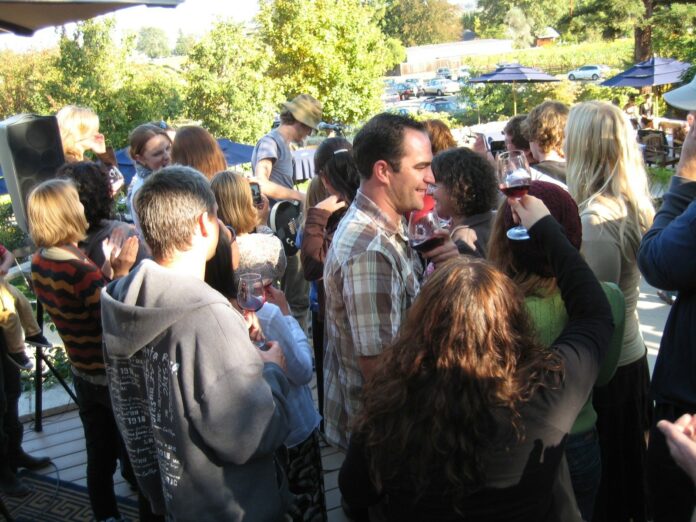
About 100 people came out to see Ball play a set from his new album Who Goes There, an informal afternoon show after a grander night the evening before at the Red Devil Lounge. Self-described “wimpycore” musician Buddy opened with a sweet set infused with tales of girls gone wrong and longing. All of this musicianship occured on a small deck extending out from the guest cottage on the winery’s property. Artists often spend the weekend there when performing; on other days, it acts as the Green Room. On this day, it offered extra space for the crowd to gather in when Ball invited—OK, demanded, it was his birthday after all—that we all join him on the deck. Balancing over the drummer and his kit, I held myself unsteadily upright as we all sang the refrain of his last song’s chorus and then ripped “Happy Birthday” to happy atonal shreds.

This was the last of the Live from the Middle Reach series that C. Donatiello launched this year. The “middle reach” is not, as I have erroneously assumed for the entire summer, some Tolkien reference. Rather, it’s the section of the Russian River Valley appellation where the winery is located. Most of these Sunday afternoon shows are free; a few, ticketed. This? Superb.

Word for Word

10.22.08In his latest bestseller, When You Are Engulfed in Flames, David Sedaris once again proves that he is a deliciously shrewd observer of the modern world, a man capable of making the most out of complicated air travel, addiction, hitchhiking and any number of emotional hiccups in his long-term relationship with Hugh Hamrick. Beyond the stories on the page,...

Ballot Boxes

10.22.08 MON DIEU! Contrary to popular belief, Barack Obama was not born in a manger. By Bohemian staffProposition 1A The Bohemian recommends: YesIt's time to stop talking about climate change and start doing something about it. The $9.95 billion bond on the November ballot will help build the first leg of the long-awaited California High Speed Rail, aiming to one...

The Money Candidate

10.22.08I think all of you here would today acknowledge that we've lost a sense of our shared responsibility. We've failed to guard against policies that all too often rewarded financial manipulation, instead of productivity and innovation, policies that favored Wall Street over Main Street—and hurt both. Our free market was never meant to be a free license to take whatever...

Letters to the Editor

10.22.08World of Warcraft no lifeGabriel Francisco wrote a great story ("Mind Rot," Sept. 3). I appreciate this myself, since I can easily relate. I have been a gamer for half my life but realized I did not do much else at times and really missed opportunities that were presented to me. I have not been a gamer for about...

Tried and True

10.22.08John Trudell is a warm, relaxed man who punctuates every other sentence with a carefree chuckle. Surprisingly, the former chairman of the American Indian Movement appears the antithesis of the image of the stoic, stone-faced protester. "I don't let little things piss me off like they used to," says the poet, who performs Oct. 26 in Mill Valley. "The...

Runnin’ Away

10.22.08The insane circumstances surrounding Sly Stone's bizarre appearance in Santa Rosa last Friday, Oct. 18, were told to me by several people involved with the show. Crazy doesn't begin to describe it. Here's how it went down.The morning of the show, Sly Stone is in Los Angeles. He fires his business manager. Sly tells the promoter that he's his...

School Swap

10.22.08 TRADING PLACES: Ben Bacon of Sonoma Country Day and Jessica Hughes of Roseland Elementary on the SCD campus. Among the curriculum for teachers enrolled in the administrative program at Sonoma State University is the requirement to visit another school besides their own in the surrounding area. The goal is simple: by auditing classrooms, interviewing administration and seeing how other schools...

Nutters, Unite!

10.22.08I f it's October, it must be time for the Good Food Hour Recipe Contest, now in its 22nd year on KSRO 1350-AM, with Steve Garner and chef John Ash. This year, they're throwing home cooks a slight hook. The main stipulated ingredient? Peanuts. Urging contestants to think beyond those ubiquitous cookies marked on top with fork tines,...

Ian Ball at C. Donatiello Oct. 19

So this is what it's like to live in Wine Country, I thought, looking around the C. Donatiello Winery last Sunday afternoon. I've lived here for some 15 years but have evidently been wasting my time going to the grocery store and the beach and the dentist's office and my own office when I assuredly should have been drinking...

11,084FansLike
4,446FollowersFollow
6,928FollowersFollow