
E ditor’s note: First Bite is a new concept in restaurant writing. This is not a go-three-times, try-everything-on-the-menu report; rather, this is a quick snapshot of a single experience. We invite you to come along with our writers as they—informed, intelligent eaters like yourselves—have a simple meal at an area restaurant, just like you do.
Restaurant Eloise, Sebastopol’s newest addition to high-end dining, is named after the adventurous and somewhat naughty little girl in Kay Thompson’s children’s books. Eloise travels from New York to Paris, and diners here will vicariously follow in her footsteps. Chefs and owners Eric Korsh and Ginevra Iverson, previously of New York, have established themselves in the comfortable and simple space on busy Gravenstein Highway that previously housed Chez Peyo and Bistro V. With a bright white interior and sparse decorations, the main dining room and its staff welcome diners with a relaxed yet professional air.
Perusing the menu, two things immediately stand out: the eclectic offerings and the extremely high prices. Offered as starters are sweetbreads ($14), headcheese and veal tongue on a charcuterie plate ($20) and bone marrow ($14). I was tempted to try the tall, roasted marrow bones, but the other diners at my table were not enticed into sharing this rich dish. Instead, we started with the amuse-bouche, three small, crisp toasts smeared with a delicious three liver pâté (rabbit, duck and guinea hen).
We followed with a highly recommended—and, I’m afraid, highly overrated—spotted shrimp appetizer ($14). Three hot, whole prawns, one as big as my hand, were wrested out of their shells to yield, well, three very small portions of meat. Perhaps if we were as truly adventurous as Eloise, we would have eaten more than the usual shrimp meat, but instead we washed our hands of it in the fingerbowl provided. By this time, I had finished my first glass of wine, notable only because I am known for nursing one glass of an average pour through an entire meal.
My husband and I each ordered a second glass from the 32 available on the wine list, and moved on to the main courses. The vegetarian at the table hungrily dove into one of two vegetarian offerings (the other being a yummy-sounding French red lentil soup with feta for $9), the ricotta and chard gnocchi ($19). Served in a deep bowl, these tender little pillows had a consistency more reminiscent of ravioli, rather than the usual density of potato gnocchi. Heavily dressed with a brown butter and sage sauce, the flavors popped once salt was added.
Conversely, the small pot of cassoulet ($33), France’s signature dish, was overly salty. A rich blend of fall-off-the-bone confit duck leg, large coins of spicy beef and garlic sausage, a small slab of pork belly, tarbais beans imported from France (perhaps explaining the hefty over-pricing for country fare) and spices, the cassoulet was a satisfying dish for a cold fall evening.
The three of us split dessert, Baba Rum ($9), a pound cake&–like brioche served with a spoonful of sweet Chantilly cream and a small pitcher of warmed rum to pour over it. The meal was enjoyable and the service excellent, but the final tab, $160 (before tip) for two adults and a child, put Eloise in the “special occasion” category rather than the “favorite local eatery” one. Perhaps the lunch special, three courses for $25, including a daily appetizer, dessert and a glass of wine or nonalcoholic beverage, would be a more wallet-friendly way to enjoy Restaurant Eloise in these tough economic times.
Restaurant Eloise, 2295 Gravenstein Hwy. S., Sebastopol. Open for lunch, Tuesday&–Saturday; dinner, Monday&–Saturday. 707.823.6300.
Quick-and-dirty dashes through North Bay restaurants. These aren’t your standard “bring five friends and order everything on the menu” dining reviews.
Letters to the Editor
Alive to Its Beauty
I was so excited to see Suzanne Daly’s photo essay on local cemeteries! (“Death Becomes Them,” Oct. 29.) As a resident of Bloomfield, I loved seeing the beautiful photos of our local haunt. It’s a peaceful spot perched on a hill (which on a windy day can make it reminiscent of Wuthering Heights). It faces west toward Bodega, and it’s the perfect place to watch the sunset and the moon rise. I walk through the Bloomfield cemetery every day, and am so appreciative of the people who take care of it. Our local “Forrest Gumps” are Ed Hansen and Dale Miller. They both grew up in Bloomfield, and Ed still lives here. They maintain our history out of love, since the job doesn’t pay well ($0). There was a time when it was completely overgrown, so thanks Ed and Dale—and all the other men and women out there who are taking care of these special places.
Nancy Etheredge
Bloomfield
Art of Anger
Gretchen Giles neglecting to mention Christian Batteau’s Man Supporting a Cloud—one of the most prominent and important pieces in the Richard Carter Studio show—was a shameful exclusion from her review! (“Form Over Function,” Nov. 5). This work was one of the most difficult pieces in the show to fabricate, being cast bronze and minted nickel, and took over two years to create. It is also one of the most poetic works of the group. Having visited the gallery for the opening reception, I feel this oversight demonstrates a lack of experience reviewing art, particularly group shows. The work was one of only six major pieces in the main gallery—leaving it out of the review was an unfortunate mistake.
Yolande
Brooklyn, N.Y.
Millions, Billions, Trillions
Has anyone ever had the courage to total up all the money spent on elections in the United States? Presidential, congressional, state houses, governorships, mayors, judicial, city and county councils and even school boards. How many millions, billions, trillions of dollars does this add up to? What does it buy? Radio and television advertising; a variety of PR consultants; the manufacture of signs, buttons, bumper stickers; air and land transportation; rental of venues for rallies. Obviously, there are a lot of folks getting temporary, highly paid employment from campaign expenses.
But suppose all campaigns for any and all offices throughout the United States were limited to six weeks. Suppose that all candidates were given free access to TV, radio, meeting halls, etc. And suppose that the federal, state or municipal governing bodies provide the entire cost of these campaigns.
Suppose further that the corporations, industries, organizations and individuals who provide the millions, the billions, the trillions that U.S. elections cost were to put that money into the federal, state or local coffers. With that kind of money, our infrastructure could be repaired; our education system improved from preschool to college; our environment cared for. Full-time jobs would result.
Everybody wins. The campaigns would, thankfully, be short and less stressful on everyone. The economy would bounce back. Life would improve. Maybe the American dream can become manifest for everyone.
More importantly, instead of helping our man or our woman win, all that money will go for the common good—for all the people, for all the country.
Marylou Shira Hadditt
Sebastopol
&–&–>
What a Week

T hose who noticed that the summertime activity at Petaluma’s Mystic Theatre was a little on the slim side may want to simply camp out in front of the place for the next few days. Thursday, Nov. 13, brings a sold-out show by John Hiatt , who’s always brilliant, funny and charged with the redemptive power of love. Guitar miracle Sonny Landreth isn’t in his band this time around, and Hiatt hasn’t made a grand slam of an album in a while, but he’s still worth lurking on the sidewalk and trying to pick up an extra scalped ticket.
The next night, Nov. 14, Ozomatli returns reunited with the MC who started it all: Jurassic 5’s Chali 2na. Responsible for energizing the band’s vibrant self-titled 1998 debut, 2na brings with him the ability to elevate any recording or performance with his distinctive deep baritone and asymmetric rhyming scheme.
Saturday, Nov. 15, is given over to the all-female cover band, AC/DShe . Forget AC/DC’s long-overdue new album, Black Ice —everyone knows it was all about Bon Scott. That’s the era AC/DShe focuses on, and with a comprehensive set list, they prove the only difference between the Australian originals and their close facsimile is lipstick.
The next night, catch a fire with Groundation , whose long sets and irie vibes are spearheaded by singer Harrison Stafford’s long vocal improvisations. They’ve been around the world, they return to the Mystic on Sunday, Nov. 16.
Take five on Monday night, but return Nov. 18 for Medeski, Martin & Wood , the extremely versatile soul-jazz trio currently on tour honing material for their upcoming album. Though most of their recorded output consists of tight grooves, MM&W get exploratory in concert; jazz fans shouldn’t miss them.
And finally, the next night, Nov. 19, still reeling from his short-lived stint in the re-re-revamped Guns ‘N Roses, it’s the KFC-donning wackjob and shredding guitar wankmeister Buckethead .
For full schedule and details, see [ http://www.mystictheatre.com/ ]www.mystictheatre.com.
Nature’s Magical Discovery Hut
11.12.08
Entering Spring Lake’s Environmental Discovery Center is like stumbling upon a quirky little forest cottage inhabited by someone who loves sharing his knowledge of nature’s ways, even cheerfully answering your pesky questions. Yup, it’s a dream come true for this “Why is the sky blue?” kid.
Located down a wandering oak woodlands trail, the center seems unlike standard park fare, with its squat cement base supporting a wood lattice pyramid two stories tall. Inside is an unassuming light-filled room, richly cluttered with natural objects. I find myself staring at a casually reclining mountain lion, frozen in time. How often can one examine such an animal’s details?
Looking around, I see a stuffed quail, fox, coyote, otter, skunk, wild turkey and bufflehead duck. A tousled owl peers down. Today’s naturalist, Indio Coffelt, comments that these are all Sonoma County natives, and that mountain lions and coyotes still travel through Santa Rosa’s Spring Lake.
At the “habitat table,” he shows me a tiny bird’s nest, a hornet’s nest and a basalt rock piece. The latter, probably “only” 5 million years old, has holes in which animals make their homes. To inspire children’s connection with these items, he asks such questions as “Can you imagine building your house with your mouth?” The nearby wall holds “Web of Life” posters and a game board where children place animals in their correct habitat.
Next, at the “touch table,” Indio points to a large molten chunk of obsidian, which local tribes mined and traded. He encourages me to try the large, worn stone mortar and pestle, used by natives to make acorn mush. He muses, “How many hundreds, even thousands, of people did this feed?”
Beneath these seemingly casual displays and conversations is an intentional approach called experiential education (EE), which was Indio’s focus area for his Sonoma State environmental studies degree. With EE, he says, people are invited to “do and touch and see and smell,” versus what he calls “chalk and talk,” or worse, “chalk-dust torture.” (I’m amused that even the welcoming of my questions has a technical name: “inquiry-based” or “student-led” learning.)
Feeling my own curiosity stirred, I can see why families, grandparents and scout troops visit here. But one doesn’t need a child to come. Anyone could surely occupy hours exploring this information-lush place. Other treasures include a tide pool touch tank, turtle habitat, frog game board, freestanding tree fort, puppet theater, eco-crafts table, silkworms, informational posters and interactive computer games. I even pick up a self-guided nature-walk brochure, with descriptions of native plants.
However, the experience brings more than entertainment. Indio remarks, “I’m helping students of all ages strengthen their relationship to the natural world. We’re learning and teaching through nature, the way that humans have done forever but have moved away from. We’re all innately deeply rooted in the natural world. It provides anything that you could ever want.” I nod, thinking of how nature profoundly nurtures me physically and emotionally, which is my core reason for wanting to honor and protect it.
The center also hosts morning sessions for elementary school classes, leading approximately a thousand children a month through such activities as storytelling, projects, hikes and a lifecycle theater. Indio says, “We have a great time.” Additionally, the center’s naturalists bring their hands-on science out to classrooms.
My eye is drawn to the new painted lady butterfly habitat. Inside, a moth-sized, monarch-orange butterfly, freshly emerged from her cocoon, dries and stretches her crumpled wings under the “sun” heat lamp. A butterfly lifecycle poster echoes small models on the table. “Butterflies and dragonflies live short, magical lives,” Indio observes. “They fly and spread their magic and good luck around, lay eggs, then pass on. And their offspring will continue to do the same—the big cycle.”
When I smile, he adds, “There’s tons of magic in the natural world.” He tells me of a conversation he once had at Nashville State. Physics professor Art Ward was explaining the technical science of the shimmering aurora borealis when Indio cried out, “Wait, you’re killing it!” Ward calmly replied, “Just because you can explain it scientifically, doesn’t mean it isn’t still magic.”
The Environmental Discovery Center is located inside Spring Lake Park adjacent to the main parking lot, 391 Violetti Drive, Santa Rosa. Hours are Wednesday–Sunday, noon–5pm. Entry is free; parking is $5–$6. The current exhibit, ‘Habitat and Home,’ continues through Jan. 4. More info is at www.sonoma-county.org-parks-edc.htm or call 707.539.2865.
Live Review: Bill Cosby at the Lincoln Theatre
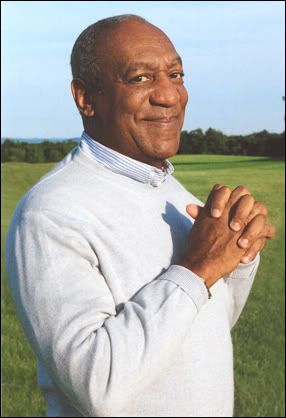 At the Lincoln Theatre in Yountville on Saturday, Bill Cosby made his first public appearance since America elected Barack Obama as its next president. One would hope that Cosby might have come up with some special material, in the three days since the historic election, to mark the occasion.
And yet Cosby never once spoke of Obama from the stage.
On Election Night, none other than Karl Rove had credited Bill Cosby with indirectly steering the American consciousness toward the historic act of electing a black president. Cosby set such a positive family example with The Cosby Show, Rove implied, that it paved the way for Obama’s victory.
And still, Cosby never once spoke of Obama from the stage.
If this stunning oversight felt weird to the sold-out Saturday afternoon audience in Napa Valley, they didn’t let on. Instead, members of the mostly senior-citizen crowd shouted out requests for jokes about ice cream. And, essentially, that’s what Cosby gave them: nearly two hours of tame material about the wackiness of children, the ruthlessness of wives and the mystery of doctors.
You know. The usual Cosby stuff.
“What we need to do is give people more of a confidence that they can. They must realize that the revolution is in their apartment now. The revolution is in their house, their neighborhood, and then they can fight strongly, clearly, the systemic and the institutional racism.” — Bill Cosby on Meet the Press, 2006.
Away from the comedy stage, Bill Cosby is a different man. For the last four years, Cosby has been fighting a fierce cultural war, calling out the black community for poor parenting, for putting up with gangsta rap and for ignoring inner-city drug use. He’s suggested blacks move away from afrocentrism, and that black families need to stop giving their children “names like Shaniqua, Taliqua and Mohammed and all of that crap.”
On stage, Cosby talked about turkey stuffing.
Cosby has had his troubles with women in recent years; 14 of them have charged that they were drugged and then molested by him. Repeatedly throughout the show, Cosby spat out the word “women” as if it was one of the obscenities he’d promised not to use at the beginning of the show. Nearly all of his riffs, including a long and brilliant retelling of the Garden of Eden story which recalled his famous “Noah,” were either peppered with or served to highlight the theory that women were put on Earth to annoy men.
He then talked about Kleenex.
“We’ve had an African-American first family for many years in different forms. When The Cosby Show was on, that was America’s family. It wasn’t a black family. It was America’s family.” – Karl Rove, Election Night, 2008.
Undoubtedly, Rove is right. By presenting an image of a functional, well-educated, loving black American family on The Cosby Show, Cosby completely changed the national conversation on race. His approach to race relations has always been the polar opposite of Al Sharpton’s or Spike Lee’s; instead of illuminating the differences between whites and blacks, Cosby focuses on what the two have in common. With patience and diligence, he has successfully slipped into the mind of white America a pure vision of equality—the idea that deep down, black people are just like white people.
But on stage, Cosby told stories about Thanksgiving.
“If you’re black and you say to me, because you see me studying, ‘You’re acting white,’ what is it you’re saying about black people? You see, these are things that have to be discussed with, and people aren’t coming up enough to challenge these statements, to do character corrections on these things.” — Bill Cosby on Meet The Press, 2006.
Cosby’s condemnations about the black community come from a place of genuine love for that community. A struggling black artist in the 1970s in need of funding could count on Cosby to flow some financing his way—see Melvin Van Peebles’ Sweet Sweetback’s Badasssss Song. A forgotten black artist in the 1980s in need of recognition could count on Cosby to highlight their talent on the Cosby Show—see Lena Horne, Joe Williams, Ellis Wilson. This falls in line with his latest book telling black people to stop being victims and start being victors, which is a pretty easy thing for someone as wealthy as Cosby to say.
On Saturday afternoon, he joked about exercise.
“Parents need to know all about what their children are doing—they should look under beds, monitor Internet usage, know who their friends are.” — Bill Cosby on The Oprah Winfrey Show, 2007.
Instead of being about Barack Obama, Saturday’s show was all about an 88-year-old veteran in a wheelchair named Clyde. Cosby crawled on his hands and knees to the edge of the stage to chat, but after about 15 minutes of Clyde’s constant commentary during which Cosby went from enamored to exasperated, he finally broke. “Now if you don’t mind, I’m going to do the show. You are not to yell out any more or you will be sedated,” he said, crawling back to his chair. “I’m telling you something. Let’s just leave it at that. I don’t need you remarking on what I’m telling you.”
He told the crowd about recipes, and bacon, and hotel beds.
It’s easy to agree with Cosby when he talks about personal responsibility. It’s practically impossible to agree with him, however, when he rails against hip-hop music and the names parents give their children. But all in all, there’s no doubt that Bill Cosby has made the world a better place, and that he had a positive impact on a lot of people when it comes to race relations—especially kids who grew up watching The Cosby Show. I know, because I was one of them.
Still, I wanted him to mention Barack Obama. Just once. In such an incredible week, and such a notable time in history, couldn’t he break his no-controversy rule a little and give Obama a quick mention? When his son was murdered on a Los Angeles freeway, he spoke about it on stage. When the financial crisis hit earlier this year, he spoke about it on stage.
Cosby ended the set with the routine about going to the dentist. It killed.
Live Review: Mel Graves Tribute at SSU
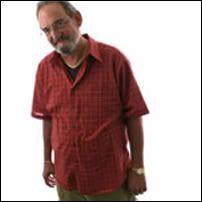 When I arrived at Warren Auditorium tonight, there were already more than 20 people standing in the hallway outside the theater, craning their necks to see through the doors. There were additional seats, full of people, placed behind the stage. There were speakers going out into the lobby, where even more people stood.
You shoulda seen it, Mel. You shoulda seen it.
It is unfortunate that one of the greatest listening experiences to be had in Sonoma County all year had to come with a tinge of sadness. Mel Graves, the great bassist and composer, died on Saturday of terminal cancer, just one day before the big farewell concert that he’d organized and looked forward to. The music heard tonight—presented by Mel’s alumni, close friends and colleagues—was so incredible, so blossoming and full of life. It was an utterly fitting tribute for a passionate, funny, smart, brilliant man.
I was lucky to be able to hang out with Mel a couple times in the last year. He was a no-nonsense soul who was at equal ease discussing the difference in the 1964 and 1965 versions of Charles Mingus’ “Meditations” as he was accepting life’s ultimate key change. The last time I stopped by his Petaluma home, his girlfriend Pam was taking care of him with what was obviously a great deal of love. He was surrounded by notes, preparing for this farewell concert, suggested by his friend Jessica Felix and which he himself titled, in pure Mel fashion, “Movin’ On.” He was at peace.
My only wish is that he could have seen the gales of love that were showered on him tonight. Hopefully he felt it.
Among the highlights: Denny Zeitlin, recalling the phone call he received in 1968 from a young Graves who said “I’ve just come out from the Midwest, and I love your stuff on Columbia, and I want to play with you.” (Graves and Zeitlin would go on to play together for 40 years.) Zeitlin sat down, chalked up his hands, and played a commanding, emotionally charged improvisation which led into “What Is This Thing Called Love” before it ended, hanging in air, unresolved.
Mel Martin, recalling the inconvenience of working so often with someone who shared his name. Both Mels eventually discovered that Martin’s Melvyn was spelled with a Y; Graves’ Melvin with an I. “He’d call me up, and say ‘Hey there, Y,’ and I’d say, Hey, I.’ I will miss that.” The band then kicked into “Flamenco Sketches,” and Martin played a razor-sharp cascading solo.
One of Graves’ specific requests for the night’s program was for Zeitlin and guest pianist Art Lande to sit together and play a four-hand piano duet, and he would have been bowled over at the results. Assuming the “missionary position” with crossed arms, the two oscillated from battling each other to cooperating on the keys in what was the night’s most freewheeling and humorous moment.
But most of all, every player on stage seemed to exhibit a certain extra empathy. There was a lot of listening going on between the players, and perhaps this was why they were so wonderful to listen to. During the final number, a solitary chorus of Gordon Jenkins’ beautiful ballad “Goodbye,” each member of the bandstand was united in the cause to properly bid farewell to their friend. The standing ovation from the full theater was overwhelming.
Aw, you shoulda seen it, Mel. You shoulda seen it.
We Did It.
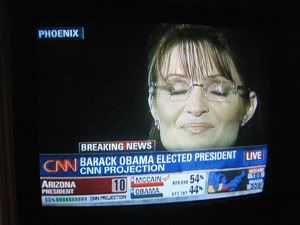 We went to the polls and filled in the small rectangle with the weird purple pen they gave us. Stared at it for an extra second, and then an extra five seconds, just to let the sight sink in and burn in our memory.
We tried to go to work like it was just another ordinary day. Threw the idea out halfway through. Needed to share in the experience. Stopped by the bike shop, the deli, the record store, the coffee stand, anywhere there were other people to see. The buzz. In the air.
We glued ourselves to the news, and we waited. The TV, the Internet, the BlackBerry, the iPhone. Each little drop hitting like an IV drip. It had been years. Years. Years. Years. Years. Years.
We made brownies, cake, pizza. Baked pies. And we watched it come: Pennsylvania first. Then, Ohio. Sweet Lord. Yes we can.
We screamed. We threw our arms in the air. We danced in the streets. We kissed complete strangers. We cried on our couches. We howled at the night. We called our loved ones. We shook with excitement. We lit off fireworks.
We did it. We stood up and said no to the criminal abomination of the Bush presidency. To the war that never, ever made sense. To the damnable offense of torture. To the contemptuous campaign of McCain. To the farce of the Palin pick. To the wrongheaded policies. To the outright lies.
We had a long, amazing night. And then we woke up, lagging a little. Did it really happen? Glugged down some coffee, threw on the new People Under the Stairs record. Opened the blinds. Slowly realized it wasn’t a dream. The world is new. Goddamn.
We did it.
Control, Delete, Escape
11.05.08
COPY THAT: Presidential historian Douglas Brinkley says that the Bush administration has no ‘sense of historical integrity.’
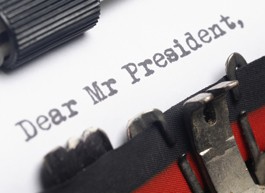
In the coming decades, as the records of the Bush administration are slowly opened to the public, journalists and historians are sure to descend ravenously on the George W. Bush presidential library in Dallas, seeking to pull back the curtain on an enigmatic presidency. But as they comb through the archives, they may be disappointed, for the White House, by way of both deliberate obstruction and startling negligence, has virtually ensured that a full accounting of its deeds and decisions will remain forever absent from the historical record.
In their own way, such archival lacunae will speak volumes about a White House that never tolerated being second-guessed and, as one Bush aide famously explained, felt it could create its “own reality.” At times, the Bush White House seemed to revel in secrecy for secrecy’s sake, such as when, in 2003, the vice president’s office abruptly stopped reporting information about its use of classification to the National Archives Information Security Oversight Office, claiming that it was not part of the executive branch.
In blunt terms, says presidential historian Douglas Brinkley, the Bush administration has at times operated “like a propaganda outfit,” taking the view that making records public only leads to “media I-gotcha” stories, not a deeper understanding of American history. “I have some great worries about what the record of this administration is going to harvest, because they have done everything they can to slow down and obstruct the Freedom of Information Act,” he says. “I’m afraid of the sanitization process that will occur, because they don’t have a sense of historical integrity.”
Bush set the tone early in his first term when he handed down a controversial executive order, drafted by then–White House counsel Alberto Gonzales, that gave current and former presidents and vice presidents, along with their heirs, unprecedented authority to block the disclosure of White House records. “What this amounts to is that past presidents’ grandchildren can, in effect, be given executive privilege,” says Anna K. Nelson, the distinguished historian in residence at American University. Nelson, along with many other historians, saw the move as a transparent effort to protect the records of the president’s father, George H. W. Bush; some Reagan- and Bush Sr.–era material has indeed been delayed or withheld since the executive order.
To George Mason University historian Martin Sherwin, the order was nothing short of a “frontal assault” on open government. “After their tenure has expired, it is the public’s right to know, in a timely manner, the details of how they went about fulfilling their responsibilities,” he says. “Their actions are not a privileged secret that they and their families have the right to control. That is how dictatorships operate.”
Historian Brinkley worries, too, that administration alumni might try to tamper with the records in other ways, namely, by pilfering potentially embarrassing documents. It’s not such a far-fetched scenario, he says, considering that Clinton administration national security adviser Sandy Berger was caught purloining from the National Archives classified memos that he considered damaging. “I’m worried that we’re going to get nothing but hagiography and sanitized records at the Bush library,” he says. “We really need to have a lot of oversight when the trucks move everything out of the White House.”
Already there is reason to believe that a considerable number of White House records in the form of emails have been lost to history. When congressional investigators pored over documents related to the Jack Abramoff lobbying scandal in 2006, they noticed that some officials were conducting White House business via email addresses at the Republican National Committee, an apparent violation of the Presidential Records Act, which requires White House staffers to preserve their records, including emails. (A similar law applies to federal agencies.) And a former administration IT official, who spoke to me on condition of anonymity, confirms that, at least in some cases, that was no accident: to prevent their messages from cropping up in the Bush presidential library one day, “some people, recognizing that email was being archived, just went completely around” the White House system.
No fewer than 88 White House staffers, an investigation by the House oversight committee revealed, used RNC addresses, among them Andrew Card, Dan Bartlett, Karen Hughes and Karl Rove. (According to records obtained by the committee, when Abramoff mistakenly emailed his former assistant and then–Rove aide Susan Ralston at her White House address once, he was reminded by a colleague that the White House email system “might actually limit what they can do to help us, especially since there could be lawsuits, etc.”)
The Bush administration would hardly be the first to come under fire for its shoddy email retention practices. Back in the ’80s, when the Reagan White House used an archaic system known as PROFS (Professional Office System), Oliver North and John Poindexter attempted to erase exchanges connected to the Iran-Contra deal. The Clinton White House was accused of destroying thousands of messages related to congressional inquiries, including the Monica Lewinsky scandal. The emails were eventually restored at a cost of about $12 million; part of the problem was attributed to a technical glitch in the White House email system, which failed to archive incoming messages for users whose names began with the letter D.
But the historical stakes of preserving email records are higher now than ever before, which makes the Bush administration’s failure to comply with basic IT best practices all the more critical. According to one estimate, the Bush White House may have lost at least 5 million emails, not including those sent using RNC addresses.
Shortly after taking office, the administration switched to a new email system, the same one Bush-Cheney staffers had used on the campaign trail. As it turned out, this platform was incompatible with the Clinton-era archiving system—which, the former White House IT official told me, was flawed to begin with. (Among other things, it couldn’t capture attachments.) According to another former White House IT staffer, Steven McDevitt, “There was a great deal of concern about proceeding . . . without having an adequate email-records-management solution.”
The project moved forward anyway, with a temporary archiving process that was “manual,” “primitive” and lacked any safeguards to ensure that saved emails had not been modified or tampered with, McDevitt wrote in a letter to the House oversight committee in February. All told, he said, “the risk that data would be lost was high.” The White House is not the only offender in this regard. In June, the Government Accountability Office reported that the Department of Homeland Security and the Environmental Protection Agency, among others, were relying on nothing better than “print and file” email archiving.
The National Archives, too, cautioned the White House as early as January 2004 that it was “operating at risk.” Nearly two years later, a White House “discussion document” dated October 2005 warned that “lost or misplaced email archives may result in an inability to meet statutory requirements,” a scenario that created “legal and political risk” for the Bush administration. Yet the administration made no apparent effort to recover the missing messages. Instead, it reacted by stonewalling National Archives officials. McDevitt says he was specifically instructed not to discuss “potential email retention issues” with Archives staffers.
An analysis by the White House technical staff conducted in late 2005 found hundreds of days between March 2003 and August 2005 when various White House divisions either had no archived messages or displayed suspiciously low traffic, including nearly a week’s worth of missing mail from the vice president’s office that happened to coincide with the launch of a criminal probe into the leak of Valerie Plame’s covert status. The former IT official, who departed the White House before the analysis was conducted, says he is unsure exactly what that means. “There could be a number of explanations, including the fact that these folks knew all emails were archived and decided not to send email for a while. What I don’t know is whether they were all explored and whether there is definitive technical evidence” that emails are missing. He added ruefully, “Now we’ve created this whirlwind that won’t go away. Anything that has to do with the Bush administration, people just want to believe the worst.”
To David Gewirtz, who publishes web magazines devoted to the minutiae of email technology, the Bush administration’s approach to archiving signals either shocking incompetence or “something slightly more nefarious.” When I met him in June at a hotel in suburban Virginia, where he’d just addressed a conference of computer consultants on the topic of the White House emails, he told me the administration has relied on “the industry’s worst practices in the way they are archiving emails.” When he described the process to the audience of techies, he said, the room erupted with laughter.
“The White House has done everything the hardest and dumbest way possible for this type of project,” Gewirtz, who has also written a book on the White House email controversy, added. “From a historical point of view, you’re probably not talking about a real crime, but it is a real shame. This is our heritage that’s being lost.”
Prodded by a congressional inquiry, pleas from the National Archives and lawsuits filed by two watchdog groups, the White House has ever so slowly taken steps to address its email problem. Declaring the 2005 audit flawed, it began by launching another analysis in the spring of 2007 that it promised would be completed by that summer; the study is still in progress, though the White House says it has been able to recover some emails along the way. The sluggish pace leaves some observers wondering whether the administration is intentionally drawing out the process until January 2009, when the whole thing becomes someone else’s problem. “Everybody’s concern is that any audit should have started a long time ago,” the oversight staffer says. “There’s clearly a time issue here.”
Indeed, even now, six years after dismantling the Clinton-era archiving system, the Bush administration has yet to implement a permanent replacement, even though it had one ready to go years ago. In the fall of 2006, the White House’s new chief information officer, Theresa Payton, decided to shelve the staff’s proposed system because, as she explained to representatives from the National Archives, it offered no way to distinguish between personal and official email records. The former Bush IT official told me he found this decision “quite surprising” and that, as far as he knew the archiving system was “fully vetted and tested.”
“From a technology perspective, I don’t understand why it wasn’t implemented,” he said. “But it’s not just technology alone that drives these decisions.”
In the end, even if the administration is successful in recovering any lost emails, presidential historians may not unearth any messages signed “gwb”—and not because the president isn’t a fan of email. In January 2001, three days before he took the oath of office, the soon-to-be president sent a mass email to close friends and family to announce that they wouldn’t be hearing from him for a while—at least not electronically. “Since I do not want my private conversations looked at by those out to embarrass, the only course of action is not to correspond in cyberspace,” he wrote in his final missive, which, ironically, was obtained by the press. “This saddens me.” And with that, G9**@*ol.com officially signed off.
The New Rules
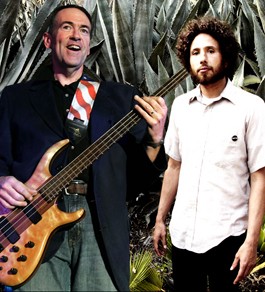
Now that the election’s over, I’ve got a foolproof way to save the recording industry, boost national morale and increase the overall quality of American music all in one fell swoop.
This idea is simple: If you’re a musician who endorsed, donated to or rallied for McCain, you lose. You are no longer allowed to make music. Your label doesn’t have to waste money on you anymore. No records, no concerts, and don’t even try to start a sneaky YouTube channel under an assumed name. You’re out, buster.
If you’re one of the many musicians who backed Obama, congratulations! You get prime placement in record stores, on iTunes and on the radio waves. Ticket prices for your concerts are slashed in half to accommodate more fans, and everyone gets free beer! You’re on TV, like, all the time, and you get federal money to drive across America and hang out with people coast to coast.
Think about it: Bruce Springsteen would play free shows in every state. No Age and the Roots would get booked on Hannity & Colmes. The Arcade Fire would headline at Saddleback Church. No one would have to listen to Toby Keith ever again!
Oh sure, it’ll be a blow to country radio. Stations’ playlists will shrink to a scant few Obama-endorsing country musicians like Tim McGraw, Faith Hill, Kris Kristofferson and Ralph Stanley. No more John Rich, one half of the duo Big & Rich, who stumped for McCain with his dumb song “Country First” and actually claimed that Johnny Cash would have supported McCain. His partner, Big Kenny, who swung toward Obama, gets to fire up ProTools and edit Rich’s verses out. It’s that easy!
Aaron Tippin now gets to sing “Drill Here, Drill Now” in the shower. Not on Huckabee. Know who Mike Huckabee gets to play bass for on his Fox News show? Rage Against the Machine, that’s who.
How about Hank Williams Jr.’s “Family Tradition,” which the singer famously mangled into a rant about Obama’s “radical friends” and an endorsement of the “good-lookin’ dish” of a vice presidential candidate? Lord, let the suffering end. The song gets pulled from every jukebox in the nation and replaced with Usher’s “Follow Me.”
Let’s do another thing. Let’s make it so McCain supporters play a key role in this plan. Make Hewlett-Packard mass-manufacture Bob Dylan’s entire back catalogue for free, and then have it sent via FedEx, no charge, to every Gretchen Wilson fan in America. Included in the deal: free Domino’s Pizza, personally delivered by Arnold Schwarzenegger. Don’t worry, folks—you don’t have to tip him.
My Morning Jacket, Bright Eyes and the Decemberists all play on the White House lawn. Charlie Daniels, whose “The Devil Went Down to Georgia” will be retired forever from sports events, is forced to play fiddle for headliner Alicia Keys. Make him play on her entire tour. Then make him wear drag and be a backup dancer for Kanye West.
What of the Puerto Rican reggaeton star Daddy Yankee, who endorsed McCain at a Phoenix, Ariz., high school to a bunch of squealing teenagers? Sorry, bro. I know whatever money you were flowed to chump for the immigration vote must have been nice, but “Gasolina” is off the air. Oh, and your MySpace page—taken down forever. You now ask if people need help out at the supermarket.
Get those big-money backers in on the act, too. Have Forbes sponsor a tour with Santogold, Marnie Stern and Joanna Newsom. Make Levi Johnston work as their equipment roadie and Ashley Todd as their merch girl. All proceeds benefit the Humane Society and Planned Parenthood.
Jewel goes back to Alaska to sing “Who Will Save Your Soul” to a herd of moose. Five for Fighting frontman John Ondrasik drives a tour van for the National and Les Savy Fav. “Superman (It’s Not Easy)” is never heard in any bank or doctor’s office ever again, replaced by Common’s “The Light.”
Van Halen, the Foo Fighters, Jackson Browne and Heart all get extended recording contracts for demanding that McCain stop using their songs in his campaign. Dave Grohl sings “My Hero” at the inauguration. Heck, Kurt Cobain comes back from the dead to jam with Dave Grohl and Krist Novoselic at the inauguration. Jerry Garcia comes back to rejoin the Grateful Dead for the Goin’ Down the Road Feelin’ Totally Awesome Tour 2009.
A world where John Coltrane wins over ABBA. A world where Stevie Wonder wins over Lee Greenwood. A world where Kind of Blue gets played in the Oval Office. This is our new world. And by God, it rules.
All That Rises

I‘ve had about all the bad economic news I can take. I keep waiting for some authority figure (not you, President Bush) to say things are finally under control and the situation is going to get better, but that seems a long way off. So rather than follow Wall Street’s latest meltdown, I’m trying to find the upside to the current financial malaise.
While it may be hard to find a silver lining when you’re out of a job, losing your house or trying to salvage what’s left of your 401k account, I think there are some upsides to the current crisis. I don’t know about you, but as the wheels have come off the U.S. economy, it’s become all too clear to me how important it is to get rid of high-interest debt and to have ample savings for rainy days, because it’s really starting to pour out there. Americans have one of the lowest saving rates in the world, and perhaps now our credit-card culture of spend-now-pay-later is finally about to end. I wish I could say I was debt-free, but I’m more motivated than ever to reach that goal. All the financial uncertainty has also made me examine what I buy.
As part of my new austerity plan, I’ve taken a closer look at what I spend on food each month, since that’s a big source of my discretionary spending. I was stunned at my grocery bill. It’s nearly double what I thought it was. Now it’s hard for me to make the case that Pinot Noir, $6 pints of gelato and Humboldt Fog cheese qualify as staples anymore.
I’ve gone over my receipts line by line to see where I can save, and as someone who loves to cook, I’ve decided to make as much food as I can. My first step was to start making my own bread. A loaf of bread costs me about $3.50. But I can spend $5 on a pound of flour and make about five loaves of bread. You do the math. What’s cool is the bread I bake is better than the store-bought stuff.
A friend was kind enough to give me some of his 14-year-old sourdough starter a few months ago, and I’ve been an avid baker ever since. I’m still perfecting my technique, but I make a couple of loaves a week. Because of the slowly fermenting wild yeast in the starter, it takes about 24 hours to make a loaf, but I’ve come to love watching the flour and water slurry transform into a crusty sourdough loaf. Instead of expecting bread from a plastic bag, my four-year-old son now knows what fresh bread looks and tastes like, and he recognizes the smell of a fresh loaf in the oven.
Now that I make my own bread, I’ve become inspired to make other things that I used to pay others to make for me: beer, sauerkraut, salsa, salad dressing, soup—the list goes on. I’m also planning on turning my front lawn into a vegetable garden. I’d much rather water lettuce and tomatoes than a patch of grass I can’t eat.
Growing and making my own food not only tastes better, but I take pleasure in knowing my self-reliance eases the impact that food production and transportation have on the environment. You can’t get more local than your own backyard and kitchen.
Quick dining snapshots by Bohemian staffers.
Winery news and reviews.
Food-related comings and goings, openings and closings, and other essays for those who love the kitchen and what it produces.
Recipes for food that you can actually make.
First Bite
Letters to the Editor
What a Week
Nature’s Magical Discovery Hut
Live Review: Bill Cosby at the Lincoln Theatre
Live Review: Mel Graves Tribute at SSU
We Did It.
Control, Delete, Escape
The New Rules
All That Rises



FOLLOW US
Copyright © Weeklys All rights reserved.
Our Publications
