
Comic from Hell?
Can you all please just put “Life in Hell” out of its misery? I will trumpet Matt Groening’s larger genius with anyone, but for about five years now the panel has been repetitive, unimaginative and very much phoned-in. There are many more worthy uses of your limited comics dollars, e.g., Keith Knight’s “K Chronicles.”
Scott Miller
Graton
Lighter Side of Bankruptcy
I really liked P. Joseph Potocki’s article (“Jubilee! It’s Bankruptcy,” Nov. 19). It was funny, well-written and importantly underscores a serious issue right now: the sad poverty experienced by some many talented Americans who have few, if any, options to clamber onto to in getting their heads above water.
And happening all the while with our worst nightmare coming true as a nation: having to borrow big time from China, and with us on our knees.
Way to go for putting yourself out there and telling your story! Stigma associated with bankruptcy can be terrible. But the years do pass quickly.
Chelsea Hoffman
Seattle
Word from our Pals at Peta
Are endangered animals dying for our fish dinners? Yes, according to a new study, which found that commercial fishing trawlers kill thousands of sea bird, including endangered albatross, every year in one fishery alone (in the Benguela current, off South Africa). This is just the tip of the iceberg.
Commercial fishing is decimating our ocean ecosystems. Ninety percent of large fish populations have been exterminated in the past 50 years, and scientists estimate that by the year 2048, our oceans will have been completely overfished. Many fish, as well as sea birds and marine animals, are caught by “mistake,” tangled in nets or hooked by long-lines. A previous study found that nearly a thousand marine mammals—dolphins, whales, and porpoises—die every single day after being caught in fishing nets.
And don’t forget that whether they are targeted or not, all fish feel pain and suffer horribly when they are impaled on hooks or sliced open by the thin mesh of a net.
Leaving fish (and other animals) off our plates is the most humane choice, and the best way to help replenish the world’s fragile oceans. Find out more at [ http://www.fishinghurts.com/ ]www.fishinghurts.com.
Paula Moore
People for the Ethical Treatment of Animals (PETA)
Dept. of Corrections
It’s cheering to note that when Zenfest contact Liz Finn phoned to let us know that we had, for the third year in a row, made a mistake in our Nov. 12 Holiday Arts listing for her event, she was darn near Zen about the whole thing. “These things happen,” she sighed sweetly—as she did last year and the year before that.
We can only surmise that we were horribly tortured by Buddhists over the course of several past lives and therefore have some unconscious and highly misguided compulsion to sabotage a sweet annual fundraising crafts bazaar in heinous, inky revenge. Bwah-ha-ha and all that.
For this year’s record, Zenfest is slated for Sunday, Dec. 7 (we had it bumpin’ on a Thursday), from 10am to 4pm at the Masonic Center, 373 N. Main St., Sebastopol. As free as the deep inner calm of your mind, but far less cluttered than our own. 707.887.1514.
The Ed.
Lost On a Backroads detour from the Middle Way
&–&–>
Talking Turkeys
A few decades ago, “turkey” was a bird of good omen to thespians. The slang meant “a holiday entertainment of guaranteed success” despite what the actor might personally think of its dry or greasy qualities when privately drinking and muttering to himself. Is it too late to retrieve the original meaning of “turkey”? Perhaps not, when we survey the holiday schedule, with rich, overstuffed, butter-dripping fare in all directions.
Take ‘Australia’ (Nov. 26) for instance. Director Baz Luhrmann has recreated not only the sweep of Gone with the Wind but the nigh insane prevarication that surrounded that epic’s making. Just as GWTW oversaw the coupling of the all-business North (Mr. Butler) with the all-romance South (Miz Scarlett), Luhrmann mates an Oz mustang, played by Hugh “Wolverine” Jackman, with a titled English filly (Nicole Kidman) to foal a mighty island nation.
Considering that the Aussie director’s previous work (Moulin Rouge) was as gaudy as a forest of Christmas trees, it might be overshadowed at the box office by a sleeper hit, and ‘Marley and Me’ (Dec. 25) could be it. The adaptation of John Grogan’s sweet-sour memoir stars Owen Wilson as a Miami journalist who adopts a troubled bowser. Actress Jennifer Aniston, a chronic overreacher, is completely in her comfort zone as Wilson’s Blondie, facilitating her husband’s progress from happy young guy to Dagwood Bumstead. This movie has good snark in addition to a wonderful dog who will make you cry and cry until your eyes come out on stalks like you’re a Dungeness crab. The other big dog story this fall is ‘Bolt’ a 3-D Disney/Pixar cartoon about a would-be super canine who never realized he was mortal. Travolta and Miley Cyrus are in the vocal cast.
I’ve grown old listening to announcements that someone was going to make a film of ‘The Curious Case of Benjamin Button’ (Dec. 25), F. Scott Fitzgerald’s 1922 short story concerning a life lived in reverse. Now it is done, with the Fitzgerald-handsome Brad Pitt starring and director David Fincher bringing out the macabre accents of the tale. Nothing else this season looks quite as distinguished or as moving.
One vaunted film, Sam Mendes’ DiCaprio/ Winslet vehicle ‘Revolutionary Road’ (Dec. 26), taken from Richard Yates’ sizzling 1961 novel, channels a Mad Men vibe without the pungency. Certainly Ron Howard’s small-camera ‘Frost/Nixon’ (Dec. 5) isn’t devastating; Frank Langella is too beautiful to play our most warped president as grilled by our most obsequious chat-show host. (As long as they don’t make a movie called Leno/McCain, I’m good.) ‘Doubt’ (Dec. 12) looks very savory, with Philip Seymour Hoffman as a priest who may be fondling his altar boys. Meryl Streep co-stars as a nun on the warpath.
There’s something about the season of giving that brings out the Nazis. I, too, choked when I saw Tom Cruise in an eye-patch and a Wehrmacht uniform. But the previews for ‘Valkyrie’ (Dec. 26), about the plot to kill der Führer, has a smart, reliable director in Bryan Singer (Apt Pupil) and tantalizing previews. Kate Winslet in ‘The Reader’ (Dec. 10) maintains that SS guards need love, too. ‘Defiance’ (Jan. 16) has Daniel Craig as a Jewish guerrilla fighting the Germans in the Polish forests. And the currently running do-gooder ‘The Boy in the Striped Pajamas’ is a weepy lesson for the kids that once upon a time there was a Holocaust.
Seeking more contemporary explosions, the demolitions fancier is directed to the remake of ‘The Day the Earth Stood Still’ (Dec. 12) with Keanu Reeves as the alienated visitor. For abject dumb there is nothing so dumb this season as ‘The Spirit’ (Dec. 25), with Frank Miller digitally leaching all the suave playfulness out of Will Eisner. Set in San Francisco, the comedy ‘Four Christmases’ (Nov. 26) has a terrific premise: a couple get stuck Christmasing at their divorced parents’ four residences. Vince Vaughn and Reese Witherspoon co-star, suffering through this insufferable time of year.
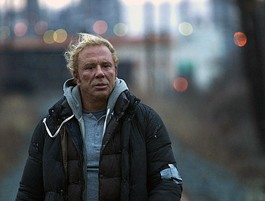
‘Milk’ (Nov. 26) is Gus Van Sant’s biopic of the pioneering gay politician Harvey Milk (Sean Penn); Josh Brolin courts best-supporting Oscardom as the Twinkie-troubled copper Dan White. ‘The Wrestler’ (Dec. 17) is a much-trumpeted comeback for Mickey Rourke. We’ll see, because director Darren Aronofsky’s taste for vaingloriousness (see Requiem for a Dream) could make audiences stick with the WWF. Finally, ‘Cadillac Records’ (Dec. 5) looks like the season’s only serious musical. It’s the Chess Records story with Beyonce as Etta James and Jeffrey Wright as Muddy Waters, and that last is a name great enough to end any article.
New and upcoming film releases.
Browse all movie reviews.
Not Dead Yet
Projection: Excellent
T he projection booth of a movie theater is always a cluttered area, but in the case of the one-screen Cameo Cinema in St. Helena, “cluttered” only begins to explain it.
Along with the projectors, the upstairs also serves as the business office, booking office, storage room and break area. Files for special events cover the walls above desks covered with order forms. Boxes are piled in corners, and file cabinets tower over what little walk space is left leading to the narrow staircase. It’s a bit like being inside a secret control chamber or a hidden outpost where important decisions are put into motion.
But downstairs, the part the general public sees, the Cameo is a veritable jewel of the Napa Valley. With candelabras on either side of a large curtained screen and just 140 cushioned wooden seats, the atmosphere is at once classic and intimate. Built in 1915, the Cameo boasts an art nouveau façade with a vertical sign and V-shaped marquee. It is the oldest continuously operating independent single-screen movie theater this side of the Mississippi.
One year ago, all of this teetered on the brink of disappearance when the Cameo was put up for sale. Since saved by new owners Shawn LaRue and Cathy Buck, the theater has risen from its imminent closure to now boast a program calendar almost as beautifully cluttered as this upstairs office, but filled with art films, family films, horror films, speaking engagements, 3D movies, live bands and, most recently, opera broadcasts.
“When we came on, we were committed to more than just film,” LaRue says, sitting in a nook of the Cameo’s upstairs office. “We were committed to fleshing out the art of storytelling. That, in our view, is a much more fundamental concern to people. People love to hear stories, and we realized that there are so many ways that people tell stories. Music. Opera. Dance. City arts and lectures. Film, of course—different kinds of film. So committing ourselves to that meant that we had to really expand. It was pushing a new paradigm.”
“We’re making this more of a town hall,” Buck adds. “We wanted to bring back that old sense of a gathering spot for people.”
And yet the Cameo doesn’t have a sterile, community-center feel. The walls in the lobby are painted a bright purple and gold; brass balustrades line the hall; the bathroom doors are labeled “Guys” and “Dolls”; and a faded poster found in the attic for a forgotten film called The Secret Nest adorns the lobby. In the back of the theater, serving as reminders of so many first kisses inside the Cameo over the last 93 years, are loveseats for two.
Touches like this ensure that loyal patrons will still enjoy going out for entertainment, even when the Cameo sometimes doesn’t have the multiplex muscle to open a movie until a week or two after its national release. While home entertainment is more available than ever, the perseverance of small one-screen movie theaters is undoubtedly one of the great American narratives. The story of the Cameo’s recent resurrection involves another American tradition: the exchange of information at the barbershop. LaRue was getting his hair cut when he heard the news.
“My head was in the sink, and—you know how the person who cuts your hair is on the pulse of everything?—it was just one of those, ‘Gosh, it’s really too bad about the Cameo,'” he recalls. “That was the news. I said, ‘What do you mean? What’s happening to the Cameo?'”
LaRue, who had never even worked at a movie theater before, let alone owned one, called up Buck, whom he’d met at a winetasting; the two shared common interests and a love for the movie Fiddler on the Roof. “And I said, ‘Let’s try it!'” Buck remembers. “Four months later, we were proprietors and stewards of this little sleepy theater.”
“One of the things that we really wanted to impress upon the community was that we were stewards of this space,” LaRue emphasizes.
That’s due in part to the fact that when the two purchased the Cameo, the theater had already been a beloved cornerstone of Napa Valley culture for decades. Once known as the G&G Theater, then the Liberty and the Roxy, the Cameo is an officially registered landmark building. Many valley residents remember their first movie or their first date at the theater. For Buck and LaRue to charge in and make drastic changes would have been disastrous.
But the new owners quickly decided that they needed to change two things: update the projection and sound system, and figure out a way to enhance programming. Those goals, it turned out, went hand in hand.
Buck shows off the theater’s new Barco digital projector, a large, black boxy thing that looks like a NASA module. Connected to it is a rack of different options for playback, with everything from BetaMax to BluRay. Next to the rack sits the future of movie-projection mediums: a hard-drive player, which more and more theaters have been switching to in recent years.
But LaRue and Buck honor filmmaking’s traditions with the theater’s Century Super Lume-X projector, a 35mm silver beauty that looks like it was made the same year that The Sound of Music came out. It’s still in routine use—not all films ship to theaters digitally yet—ensuring that the slowly dying art of film projection stays alive. In fact, to accommodate the platters that hold the large reels of film, they installed the large Barco on a special three-foot movable track so that it can roll out of the way when spools of film rush by.
The overhaul seems to have worked. In a county where residents are often starved for culture, reaction to the “new” Cameo has been overwhelmingly supportive. Earlier in the day, in fact, three people stopped by to say how much they loved the Cameo’s presentation the night before of the Royal Opera’s Carmen.
It’s through a grant underwritten by the nonprofit center Nimbus Arts that the Cameo is able to showcase much of its programming at low prices. Art films are only $5, and opera presentations, usually in the $20 range at other theaters, are just $10 thanks to Nimbus Arts’ involvement. “Their primary concern, in everything they do for us, is keeping the cost to the consumer down,” LaRue says. “They’ll do whatever it takes to support us to the point where we’re able to offer these things at a low price.”
Especially laudable are the Cameo’s live music presentations, a rare treat in an area hugely underserved by live music. A recent series paired live bands with a digital 3D viewing of U23D. And then there’s the Coppola connection. The Cameo has been the Coppolas’ hometown movie theater for years, and both Francis Ford and Sofia Coppola have opened films here. The Cameo recently did a Coppola series with prints from the director’s personal vault, and Eleanor Coppola appeared recently to talk about her latest book.
But change can be hard on some.
“St. Helena is still, I believe, in some way, used to the little Cameo being the sleepy little Cameo,” LaRue says. But appreciation is growing. LaRue laughs, “Honestly, there’s not a day that goes by that we don’t hear gratitude from the community. Initially, it was just ‘Thank you for keeping it open.’ But then we threw 20 balls up in the air when we first got our footing, creative ideas that we thought about and put out there. Some of them dropped, and some of them took flight and have prospered.”
He smiles. “It’s that programming model that people are talking about now.”
‘Carmen’ makes a special encore screening at the Cameo on Saturday, Nov. 22, at 11am. 1340 Main St., St. Helena. $10. 707.963.3946.
New and upcoming film releases.
Browse all movie reviews.
North Bay Donors
11.26.08
For political junkies with too much time on their hands, there’sno better moment than now to get immersed in political campaigndonations. Transparency has come home to roost, when, for example,one can easily scroll through thousands of names online and findthat one Charles Stoddard of Santa Rosa contributed a jaw-dropping$19,500 to support the passage of Proposition 8.
It’s small surprise that Stoddard is a mission president for theMormon church; he’s joined by other familiar local Mormonnames—Bingham, Huber, Willits, Hershey, Wheelwright—ona roll call that includes Katharine Chera ($5,000) and DavidWheeler ($500). It surprisingly doesn’t include Martin McOmber, whoserves in the Santa Rosa stake presidency of the Mormon church andwho felt the need to call upon the Santa Rosa City Council on Oct.21 to support Prop. 8, referring to same-sex marriage as a “currenttrend” and claiming that “passing Prop. 8 doesn’t take awayexisting rights.”
In presidential race contributions, it’s free entertainment tocount the wives, like Jean Schulz, who, despite her late husbandCharles Schulz’s $1,000 support of John McCain in 1999, gave $1,100this year to Hillary Clinton. Connie Codding, wife of developerHugh Codding, gave $500 to Clinton in the primaries, eventuallyswaying to a $250 support of Barack Obama, while Barbara Banke,wife of Kendall-Jackson founder Jess Jackson, gave $2,300 toMcCain.
Those in the arts gave solidly to Obama. Former Santa RosaSymphony conductor Jeffrey Kahane gave $1,800: former Section Meditor Michael Houghton gave $500; and Last Record Store owner DougJayne gave $250 to Obama. Grateful Dead member Bob Weir gave $2,620to Obama, while fellow Marin celebrity Sean Penn lived up to hiscontrarian reputation by giving instead to John Edwards ($4,600)and Dennis Kucinich ($2,300).
Developers and construction firms were strangely absent fromthis year’s contributions. While the Christophersons and Ghilottisgave $4,000 each to Bush’s re-election campaign in 2004, both wereconspicuously closed-fisted from financially supporting theMcCain-Palin ticket. Civic leader and philanthropist Henry Trione,a $2,000 Bush supporter in 2004, also evidently couldn’t bringhimself to donate to McCain-Palin, and instead gave $1,250 to RudyGiuliani.
After a few hours of scanning these lists, the names all startto blend together, and most of the locally recognizablenames—Sawyer, Rabinowitsch, Bosco—are for Obama. Butwait—who’s this? Ah, yes, Max G. Arnold, who gave $250 toObama. You know him, too, I’m sure: he’s the injury lawyeradvertised on the back of the Yellow Pages.
to theeditor about this story.
Shiny & Round
Ceja Vineyards
Only a decade ago, it seemed as though General Mariano Vallejo was the last Mexican-American to own a winery around here. That’s changed. In 2001, Ceja Vineyards joined the growing number of operations founded by one-time field workers and their families who have parlayed their experience into vineyard-management businesses, bought land and ultimately built their own wine brands. In 2008, Ceja opened a sleek new wine salon in Napa’s once-sleepy downtown. To top off the week and spice up the Napa night, third-generation scion (and general manager) Ariel Ceja has come up with “Salsa Saturdays.”
Each week Ceja leads a group salsa lesson followed by an open dance party. It already appears to be a favored recommendation from local hotels—the room soon filled with a vanload of well-dressed tourists and business trippers. Gentlemen, take note: free salsa dance lesson. That’s all you need to say.
First, we fortified ourselves with a flight of Ceja wine. The 2006 Vino de Casa White ($20) suggested a new spoke on the wine wheel—candle shop?—a pleasant, waxy mélange of almond, vanilla and honeydew melon. The citrusy, grapefruit-and-lemon grass 2007 Sonoma Coast Sauvignon Blanc ($26) was clean and bracing—for ceviche, for sure. Dry and substantial, the 2007 Bella Rosa ($22) is a full-bodied rosé with passion, while the reds veered toward the sauvage. Candied cherry and rhubarb balanced the 2005 Sonoma Carneros Pinot Noir’s ($40) sweet green beans, and the fleshy and rich 2005 Sonoma Carneros Merlot ($34) was a hit. The gamey 2005 Sonoma Coast Syrah ($34) seemed to be a little bottled up; it needed some air.
“Look at her shoes,” said a woman at another table, scoping my date’s Fluevogs. “Let’s watch her. I’ll bet she knows what she’s doing.” Alas, while Roller Girl is a sprite on the rink, we’re well-paired on the dance floor. But first, the lanky, bespectacled Ariel Ceja commanded the group into opposing ranks of men and women, ranging in age from their 20s to 50s. Efficiently and with levity, Ceja moved through the steps at a fast clip. En masse, we got the basic two-step down—or was it six steps?—then mastered a three-point turn. Sort of. Halfway around the partner-swapping circle, we were bravely muddling through the reputedly fiery Latin dance. For me, anyway, dance steps are like algebra, except harder. Even if I only have to count to six.
When I got back to Roller Girl, we did a few turns to the music before sweatily retreating to our table to watch Ariel show the room how it’s really done. Meanwhile, the Syrah had gotten some air, too. Now, the dark, supple wine was ready to dance with the tongue. Bailamos!
Ceja Vineyards, 1248 First St., Napa. Sunday–Friday noon–6pm, Saturday noon–10pm; free salsa class starts at 7:30pm. Tasting fees vary. 707.226.6445.
Learning the Hard Way
11.26.08
Many Sonoma State University students and faculty areupset. State budget cuts and the national financial debaclethreaten them. Tuition and expenses continue to rise throughout theCalifornia State University system, as student options for classesdiminish. Admissions to SSU next year will be reduced by at least500 students. Some lecturers now scheduled to teach next semesterwill have their courses and possibly their jobs cut in the middleof the academic year.
I began teaching at SSU part-time last year. SSU offers numerouseducational, cultural and political resources and events, many opento the public. The cuts will reduce SSU’s contributions to studentsand workers, as well as to the community as a whole. Words like”Step Up and Take Your Campus Back” headline articles in SSU’sstudent newspaper, The Star, which bemoan that students arenot being considered and consulted about their collegeeducations.
Some students and faculty are actively challenging the cuts.Last week, three SSU teachers and a few students traveled to LongBeach to join a demonstration of around 500 organized by theCalifornia Faculty Association (CFA) at a meeting of the CSUboard.
Psychology lecturer Skip Robinson, Ph.D., documented in LongBeach that “Cuts Have Consequences.” Those on the frontlines, suchas Robinson, who teach large—and growing-larger—classeshear from students that they feel disappointed, worried,frustrated, scared, lost, hopeless, angered and heartbroken.
Robinson carried to Long Beach pages of comments from students,such as “Pushes us all further into debt”; “Added stress”; “I can’thandle the fighting for classes, the overcrowded majors”; “Higherdropout rates”; “Fewer teachers, fewer classes, fewer sections,fewer resources”; “Please keep our work, hopes and dreamsalive.”
SSU students and faculty reported back to the SSU campus at aNov. 19 rally. The impact of the budget cuts, according to a flyerby the CFA, “would be loss of educational opportunities for ourstudents and loss of jobs for our faculty.” As cuts were unfolding,the CSU Board approved raises for many of its top administrators.The protests in Long Beach were important enough to be reported inthe New York Times, the Los Angeles Times, by theAssociated Press and in hundreds of newspapers around thecountry.
Faculty, administrators and students combined recently to host aTown Hall gathering on the alarming cuts, with more likely tofollow, as well as increased tuition costs for next year. The newswas not good. After listening quietly for most of the meeting, astudent spoke about a specific concern that indicates the largerproblem. Last year, she appreciated taking the Foundations inLeadership course designed to educate students for leadership oncampus, which then prepared them for further service to our county,state, country and even beyond. A couple of hundred students enrollin the various sections of the popular class each year.
As students enter the final weeks of classes this semester andselect courses for the spring, rumors have spread that the popularcourse would be cut. Though a final decision may still be inprocess, it’s likely that what was developing into a more academiccourse will become a shorter training for which students receive nocredit. The short-term benefit of such a cut frees up funds; thestudent at the Town Hall meeting lamented the long-term losses ofbetter-educated leaders.
The underlying source of the problems at SSU is the worseningnational economy, which is exacerbated by an increasing amount ofmoney spent on war-making rather than education. Meanwhile,California’s governor and legislature refuse to raise the money topay for such human services as the education of our youth.
War and Peace is among four courses that I teach. The popularcourse, taught for over two dozen years, tends to reach its cap inthe first of four registrations. Last year, we had four sections;this year, we quickly filled five. After reaching the cap, Ireceived emails from nearly twice as many students wanting toenroll in my section, all of whom I had to turn down. So we want tooffer six sections next year. Instead of the course expanding tomeet students’ needs during this time of war-making and demands forpeace, it may be downsized. Concerns about this course and theleadership course are small examples of a larger picture of SSU’sworsening financial and educational situation.
Improving higher education through the CSUs and JCs should bepart of the solution to our state’s growing problems. Instead,cutbacks go in the opposite direction, compounding our worseningproblems.
Dr. Shepherd Bliss teaches part-time at SSU and farmsin the Sebastopol countryside. [ mailto:sb****@****ii.edu” data-original-string=”+HuX5OVexvGhTcorTD/1GA==06aFk1IeFiVj5i4zqBgpqQQHAOtusIA4IwgJceddiYPmetC21NO9S+TYjVx2kKSmCnhRyvXZWuJiDnevZl7G9iEpJy9RctmucayNEoR01KitNBl9h1dvJTPyhsy9VQf5nfYebQ/CdgMmGxV6QfwcOTXVeX+PRYNdLyvdPrc2bex+lrR+m2P92ErIpSuwCkjkIgDYhkNd4YPzUKsfMv21ewBGYOEv+AhndyUrF/21y4lF5AtsS25UVLZQe6ll97qmj1vSsROc67sl91dxwaFtzfSlYoNrzwGwpkTNYRvv95IU+PI8V+eF6acDROQgFhyWJ3rU4A2BhgDYcvHVYxtIbaBHnnTVR/sMpTEGeyoD+fGlV86z9Va3JAklpuYpl56+K+kwdNW+yZrN9/SRHx+LoYIo/Idgv6NJUrt7KAtrJtAMuY=” title=”This contact has been encoded by Anti-Spam by CleanTalk. Click to decode. To finish the decoding make sure that JavaScript is enabled in your browser.]sb****@****ii.edu
Open Mic is now a weekly feature in the Bohemian. We welcomeyour contribution. To have your topical essay of 700 wordsconsidered for publication, write [ mailto:op*****@******an.com” data-original-string=”0mtXZtHVLOnoimBzyngqig==06aTzJ6W5UBNAVGZ0NS8B28EwqtHApmX+e8/uoj7oEx1SEjaQe1YtUOxSy53buVADSgi52uVeYk50xMSPwWCM612/Kac4sI2xghYFfvdnLbD8zXjumcyfmXer4ogLgEJYkWzF5bjxkz/uOObGYSou4UAQ==” title=”This contact has been encoded by Anti-Spam by CleanTalk. Click to decode. To finish the decoding make sure that JavaScript is enabled in your browser.]op*****@******an.com.
to theeditor about this story.
Dining for Dollars

T hursdays have a magical foodie tinge this year, with Nov. 27 of course being the national day of tryptophan and Thursday, Dec. 4, offering thanks of another kind: for health. Now in its seventh year, Dining Out for Life raises funds to help those afflicted by AIDS and other HIV-related illness. Celebrated in some 53 cities nationwide, Dining Out for Life in Sonoma County benefits Food for Thought, the Sonoma County AIDS Food Bank based in Forestville, last year raising almost $90,000 for the nonprofit.
The concept is so simple that it’s actually delicious: Go out to breakfast, lunch or dinner on Dec. 4, and participating restaurants will donate either 25 or 50 percent of the meal’s proceeds to Food for Thought. Healdsburg’s Bistro Ralph and Guerneville’s Russian River Resort have both pledged to donate 50 percent; among those generously donating 25 percent are all of the Stark properties: Stark’s Steakhouse, Monti’s Rotisserie, Willi’s Seafood & Raw Bar and Willi’s Wine Bar. Other favorite participating houses include Cafe Saint Rose, Cafe Gratitude, Cucina Paradiso, K&L Bistro, Mosaic, Odyssey, Restaurant Eloise, Rocker Oysterfellers, Sea Thai Bistro, Sushi Hana. And so on. Great restos, all, and for a great cause. See a complete list at www.diningoutforlife.com/sonomacounty/participating and mention Dining Out for Life when making your reservation.
Quick dining snapshots by Bohemian staffers.
Winery news and reviews.
Food-related comings and goings, openings and closings, and other essays for those who love the kitchen and what it produces.
Recipes for food that you can actually make.
Eco-Clothing Direct
11.26.08
For savvy local eco-shoppers, one of this season’sspecial delights is Indigenous Designs’ holiday warehouse sale.During just a few days each year, the public can get significantdiscounts on Indigenous’ beautiful, handcrafted, fair trade,organic and natural-fiber clothing, items usually available onlythrough health food stores, high-end boutiques and mail order.
I’ve long admired Indigenous’ committed idealism, so I waspleased to sit down with the company’s cofounder and CEO, ScottLeonard. It turns out that his eco-actions started early. In sixthgrade, he saw heavy-duty aluminum lunch trays being thrown in thetrash, prompting him to start a school recycling program and spend”lunch after lunch diving into dumpsters” with other students. Heremarks, “You just do it, you stand up for what you believe in andyou keep moving forward with it, and before you know it, you’vetaken 10 steps on a 1,000 step journey. Next time you turn around,you might find that you’re 999 steps towards where you wanted tobe.”
In adulthood, he continued his support of environmental causes,such as the creation of the Monterey Bay National Marine Sanctuaryand the donation of mountain bikes to help indigenous Braziliansprotect their forests. These topics echo his own vital connectionwith nature through surfing, skiing and mountain-biking.
The 1994 birth of Indigenous Designs was sparked when Leonard’sfriend Joe Flood mentioned a recent gift of a handmade Ecuadoriansweater and the craft people’s low wages. With a backgroundproducing clothes, Leonard appreciated the sweater’s handmadecharacter but thought they could improve on its rough, bulkyfibers, misshapen design and “gorilla arms.” The two realized that,with Flood’s Ecuadorian connections, they could work directly withartisans to create better products and increase worker wages. Withtrips to Ecuador and the business taking shape, Leonard reconnectedwith old friend and environmentalist Matt Reynolds, who joined thecompany as president.
Indigenous now collaborates with over 300 cooperatives,combining their traditional artisan skills with new materials andtechniques to create unique pieces that appeal to modern customers.The workers are organized around community rather than factoryassembly lines, preserving their agrarian cultural traditions whileearning notably more than they otherwise would. “This is notcharity,” Leonard explains, “but paying a fair wage for theirmasterful work.”
Leonard and Reynolds steer their organization toward a”quadruple bottom line” that benefits people, planet, profit andcommunity. They use only natural and organic fibers plus naturalcolors and low-impact dyes, thus avoiding the toxics and syntheticsin most mainstream clothing. Their alpaca wool is even harvestedfrom free-ranging animals raised without chemicals. They also offerinnovative financing to the artisan groups, provide employeeincentives for using alternative transportation, buy solar power,support local nonprofits and encourage greening of the outdoorindustry. “We’re clearly going well beyond the normalfair-trade-organic type of business,” Leonard says.
Interest in Indigenous has increased with green’s recentpopularity, making it easier for them to highlight theireco-features while continuing to offer high-quality fashion that’sboth timeless and “on trend.” Leonard says, “We’re proving you cando the right thing and still be successful.”
Certainly, they’ve faced challenges on their journey, includingfinding investors to nurture their vision even during difficulttimes, having to refuse products and revenue not aligned with theirmission, and incorporating their values into the company’sstructure as it has grown. “I mean,” Leonard asks rhetorically,”why would we ever start a company and make such strides increating this model only to have it break down if someone buys usthat doesn’t have the same value match?”
When others praise the company’s accomplishments, he shrugs,saying, “To me, it’s just a drop in the bucket. What we’re proud ofis that we’ve set a course, been steadfast in our values, been acatalyst and a beacon to other people interested in sustainability,and continued to effectuate change in every community that we’rein, so that our impacts are much larger than the company weare.”
As we say goodbye, I appreciate even more the bottom line that Isee—eco-gorgeous clothing that encourages meaningfulinnovation for a better world.
Indigenous Designs’ Holiday Warehouse Sale isWednesday–Saturday, Dec. 3–6.Wednesday–Friday,11am–6pm; Saturday, 10am–5pm. 2250 Apollo Way, Ste.400, Santa Rosa. 707.571.7811.
to theeditor about this story.
Letters to the Editor
Talking Turkeys
Projection: Excellent
North Bay Donors
Learning the Hard Way
Dining for Dollars
Eco-Clothing Direct



FOLLOW US
Copyright © Weeklys All rights reserved.
Our Publications
