For more than 25 years, we have supported active, health-conscious lives in Marin County, and more recently in Sonoma County as well. Yet even among people who eat well, exercise and stay engaged, we see resignation—a belief that declining health is simply the price we pay for aging.
Too often, it is met with a sigh and a shrug, as if nothing more can be done.
Aging doesn’t mean surrender.
We cannot afford the luxury of giving up on our vitality. Our families, communities and world need us to show up as our best selves. This begins with recognizing something subtle: The way we describe our health concerns is often shaped more by belief than by objective reality.
Many of us hear familiar inner statements: “My joints ache because I’m getting old.” “I don’t feel well because of my age.” “I don’t think as clearly as I used to.” This kind of thinking can undermine wellness and happiness. We encourage our patients to adopt a more objective approach—one that removes age as a verdict and replaces it with clarity and possibility. Our thinking profoundly affects body function.
Positive Aging
This shift matters not only for personal health, but for contribution. When our minds are clouded by the assumption that decline is inevitable, we limit our ability to offer wisdom, energy, creativity and care. When we cultivate a positive internal state, we feel better and become a source of strength for others.
Research supports this. Yale School of Public Health professor Dr. Becca Levy has shown that beliefs about aging affect physical health, cognition and longevity. In her book, Breaking the Age Code, she found that people with negative beliefs about aging experience higher stress and disease. She concluded that negative self-perceptions of aging are associated with a higher prevalence of the eight most expensive health conditions.
When “old” becomes synonymous with decline, the body often follows the mind’s lead. Yet, aging does not automatically mean loss of vitality, relevance or purpose.
Objective View
An objective approach replaces judgment with clarity. Instead of labeling symptoms as “because of age,” we describe what is actually happening: “I’m experiencing joint pain.” “My energy is low today.” “My thinking feels less clear than I’d like.” These statements frame health concerns as challenges to be addressed, not fates to be accepted.
People of every age experience pain, fatigue, brain fog, digestive issues, low mood and sleep problems. When we remove age-based stigma, we open ourselves to solutions—both conventional and integrative—that can restore balance and vitality.
Beneficial Effects
Maintaining a positive attitude is a profound act of service. When we care for our bodies and minds by rejecting the illusion of being old, we preserve our ability to find the right health professional, the proper method and the most effective treatment for any concern or disorder, and to remain active, engaged participants in our communities.
Each of us has a responsibility to maintain our vitality so that we can make positive contributions to the world. A positive mind leads to a healthy body, and a healthy body allows us to be the parents, grandparents, mentors, neighbors, citizens and leaders the world is calling us to be—adding life to our years and ensuring that our best is always available to others, the world and those who need us most.
Dr. Devatara Holman and Dr. Evan Shepherd Reiff practice integrative Chinese medicine at Marin Oriental & Integrative Medicine in Sausalito, and Valley Acupuncture & Integrative Medicine in Sonoma.
Finding a ride to Marin Hospital for a routine cancer screening should have been simple. It was not.
Marin County has many meditation cushions, kombucha on tap and a mantra of mindfulness. What it does not appear to have is a reliable way to get someone home after anesthesia.
I moved here four years ago from San Francisco. I know a few people. I volunteer at a Buddhist retreat center. I donate to the community. I walk dogs for free. I’m single, reasonably pleasant and entering my sixth decade, which one would think qualifies me for at least one uncomplicated favor from humanity.
I asked a well-connected friend in Fairfax. Busy. Her friends? Also busy. A neighbor? Busy again. I offered an underemployed guy $250 to drive my car and wait for three hours. A hard no. A woman I was dating promised she would help anytime. That anytime magically disappeared.
Rideshare was forbidden. Liability. The hospital wanted someone reliable and not summoned via an app. It seems Uber drivers can handle a drunken customer’s barf but not be trusted to deliver a post-anesthesia rider home.
So, I went back to my Hawaiian roots. An old friend flying to Oakland from Honolulu shifted his dates, rented a car, drove to West Marin, took me to the hospital, waited two and a half hours, and drove me home. While he wouldn’t take money, I’ve since made it up to him with dinners in Hawaii and an open invitation to come and stay anytime. I’ll never forget that simple favor.
Years ago, after shattering a bone and relearning how to walk, I made a vow. If anyone truly needs a ride to the doctor and I can do it, I will. My own suffering became the doorway to understanding how to help someone else.
Here’s the punchline. Community is not built with apps, intentions or mindfulness.
ARIES (March 21-April 19): Japanese Zen master Hakuin (1686-1769) painted with astonishing vigor well into his 80s. When asked his secret, he said he treated each brushstroke as if it were his first. He approached the ink and paper with a beginner’s inspired innocence. I propose that you adopt a version of Hakuin’s practice. Dive into your familiar routines with virgin eyes. Allow your expertise to be influenced by surprise. As for the mastery you have earned, may I suggest you use it as a launching pad for enthusiastic amateurism? Being skilled is wonderful. Being skilled and willing to experiment like a newcomer? That’s the high art of perpetual combustion, an Aries specialty.
TAURUS (April 20-May 20): In 1971, NASA’s Apollo 15 mission delivered a new asset to the moon: the Lunar Roving Vehicle. This battery-powered “moon buggy” enabled astronauts to explore farther from their landing site than ever before. They gathered a record haul of rock and soil samples and a deeper understanding of the lunar surface. I think you Bulls would be wise to get your own equivalent of that moon buggy. The apt metaphor here is enhancing your ability to extend your reach and explore beyond the familiar. In the coming weeks, I hope you will seek access to tools, allies and freedoms that expand your range. Use them to push into new territory, and scout around for intriguing valuables.
GEMINI (May 21-June 20): Are you ready to unveil the half-hidden, half-beautiful truths you have been keeping tucked away? I think you are. You might shake, sweat and second-guess yourself right up until the pivotal moment arrives. But then, I predict, you will zone in on how best to carry out your sublime assignment. The perilous blessings or radiant burdens you’ve been hoarding like secret treasures will finally spill out of you in just the right ways.
CANCER (June 21-July 22): A hermit crab finds a new shell not because the old one was bad, but because the creature grew. A similar urge stirs in you now: an instinct to relocate your sensitivity and tenderness into roomier housing. You don’t have to abandon your favorite people or situations. Just ripen and update your containers so your emotional intelligence can flourish even more. Maybe revise your work rhythms. Dream up new bedtime stories. Be braver in declaring your needs. Your ongoing transformations could be a bit bumpy, but mostly healing and cherished. Give them the spaciousness they require.
LEO (July 23-Aug. 22): Poet Jack Gilbert wrote, “We must risk delight. We can do without pleasure but not delight.” Here’s what I think he meant: Pleasure is easy to access, available in many transactions. But delight requires courage. We must be undefended enough to be astonished and elated. Here’s the potential glitch for you Leos: You sometimes feel inclined to perform your joy; you make your happiness into entertainment for others to be inspired by. But true delight is riskier and more real. It comes when you forget to curate yourself because you’re too enchanted to remember you’re being watched. Your next assignment: Conjure up three moments of private delight that no one but you will see.
VIRGO (Aug. 23-Sept. 22): Many of you are renowned for your precision, but that’s just half the story. The more complete truth is that when you are most robust, you’re a connoisseur of refinement. Your careful edits can transmute muddles into medicines. Your subtle fixes may catalyze major corrections. Here’s my bold declaration: You are now at the height of your Virgo powers. I hope you wield them with utter flair and finesse. Make everything you touch better than it was before you touched it.
LIBRA (Sept. 23-Oct. 22): Some astrologers work without ever glancing at the night sky. Their bond with the planets lives mostly through abstract ideas. To balance that approach, Daniel Giamario developed a more hands-on approach to astrology. In his retreats, students trek into wild country, far from city lights, and spend the dark hours watching the dance of the heavenly bodies. He teaches that cosmic energies can be sensed through our beautiful bodies as much as they can be understood by our fine minds. In the weeks ahead, I invite you to infuse all your explorations with that spirit. Learn through direct encounters, not just through concepts and recycled reports.
SCORPIO (Oct. 23-Nov. 21): English is my first language. I love how its wild, hybrid, restless qualities enable me to express myself. I never grow weary of exploring its limits and discovering new ways to use it with flair and care. But I am also very grateful that my horoscopes are translated into Italian, French, Japanese and Spanish. I am supremely blessed to have editors who turn my idiosyncratic prose into language that non-English speakers can enjoy. It’s one of the great gifts that life has given me. In the coming months, Scorpio, I will be wishing and expecting a similar bonus for you: help and support in expanding your ability to reach further in your self-expression.
SAGITTARIUS (Nov. 22-Dec. 21): Your intrepid spirit is most likely to find exciting adventures if it’s exquisitely prepared. While I love your daring spontaneity and experimental expansiveness, I hope that in the coming weeks, you will work hard to support them with good planning and rigorous foresight. Be imaginative and disciplined, wild and calculating, irrepressible and solidly responsible. If you heed my advice, you could break your previous records for making marvelous discoveries in the frontiers. P.S.: Treat wonder like a muscle. Flex it daily—with gratitude.
CAPRICORN (Dec. 22-Jan. 19): Sandcastles are good reminders of how temporary everything is. We build them on the damp edge of the shore after the tide recedes, and then they crumble when the sea rolls back a few hours later. Let’s make the sandcastle your power symbol for the months ahead. In doing so, I don’t mean to imply that your certainties will be demolished. Rather, it’s my way of urging you to enjoy and capitalize on the ever-changing nature of all things. In fact, I believe that knack should be one of your specialties in the coming months. As the Buddhist monk Thich Nhat Hanh told us, we should be grateful for impermanence, because it keeps every possibility alive.
AQUARIUS (Jan. 20-Feb. 18): During World War II, the United States faced a natural rubber shortage and funded research into synthetic substitutes. The effort was partly successful, but there were also failed experiments. Among these was a substance that later became a popular toy named Silly Putty. It sold millions of units and made its marketer wealthy. I suspect a metaphorically similar breakthrough is looming for you, Aquarius: an unplanned discovery that holds unforeseen value. You may soon have your own “Silly Putty moment”—an invention, idea or situation that is technically a detour from your original goal but still delivers a gift. So keep your curiosity loose and your judgment soft. Don’t dismiss the byproducts of your efforts. Some diversions may reveal themselves to be the magic you didn’t realize you needed.
PISCES (Feb. 19-March 20): I suggest you try an “as-if” exercise, Pisces. Here’s what I propose: Enjoy a five-day period visualizing what your life would be like if you stopped saving yourself for a mythical future—including both the positive and negative aspects. Instead, envision yourself spending the coming months doing exactly what you yearn to do most, gleefully and intensely pursuing your sweetest dreams and prime mission. During this sabbatical, you will refrain from invoking excuses about why you can’t follow your bliss. You will assume that you are attuned with the heart of creation. You will act as if you are a joy specialist who adores your life.
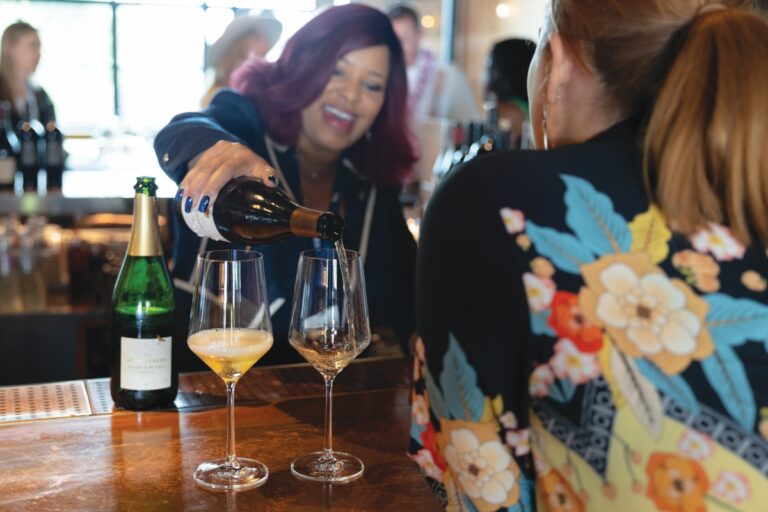
It has been more than 10 years since Petra Higby and her sister, Saskia, launched a wholesale caviar company in their San Francisco apartment, slinging the luxury product to local restaurants and chefs out of one commercial refrigerator.
The business was born out of a goal to demystify the delicacy and make it more approachable and attainable, promoting transparency and sustainability, as well as bringing attention to some of the special domestic caviars available here in the states. Today, The Caviar Co. continues to operate their retail location in the city, a thriving wholesale business and the more recent opening of a caviar and Champagne tasting lounge in downtown Tiburon.
Amber Turpin: How did you get into this work?
Petra Higby: Right out of college, I attended the LA Food + Wine Festival, which was a turning point for me. Being immersed in that environment opened my eyes to the world of hospitality—how food, wine and thoughtful experiences come together to create something memorable. It sparked my appreciation for house-special dishes, curated pairings and the storytelling behind great food and beverage, and ultimately helped shape the path I’m on today.
Did you ever have an ‘aha’ moment with a certain beverage? If so, tell us about it.
Krug was a real ‘aha’ moment for me. The first time I experienced it, I was struck by the toasty brioche notes in the Champagne; those rich, layered characteristics immediately stood out and captured everything I love in a great bottle. When I paired it with our Kaluga Hybrid Caviar, it completely changed how I thought about food and beverage pairings. It helped me truly understand how complementary and contrasting elements can work together, and how intentional pairings elevate both components.
What is your favorite thing to drink at home?
I love drinking Champagne at home. For special occasions, I’ll reach for Ruinart Rosé, but on a more regular basis, Schramsberg is my go-to. It’s also what they pour for me right away at our restaurant and lounge. It’s perfect for both everyday moments and something a little more special.
Where do you like to go out for a drink?
I love going to Servino’s Bar, but honestly, I’m just as happy having people over for drinks at home. We have a very open-door policy; friends drop by, bottles get opened, and we’ll hang out in the backyard or sit in the front yard at sunset, sharing whatever we’re drinking at the moment. It’s casual, communal and my favorite way to enjoy a good drink.
If you were stuck on a desert island, what would you want to be drinking (besides fresh water)?
Champagne, without question. I’m pretty committed; I even have a shirt that says, “Soup of the day is Champagne.”
The Caviar Co., 46A Main St., Tiburon. 415.889.5168. thecaviarco.com.
I would like to formally apologize to the tourists, for living in Petaluma before they discovered it.
I realize now this was presumptuous of me. Had I known my hometown would become a recreational backdrop for other people’s Instagrammable weekends, I would have cleared out decades ago. These days, Petaluma feels less like my town and more like I accidentally wandered into a brand activation.
I recently overheard a visitor ask if Petaluma is “authentic.” I wanted to tell them yes—it was, right up until they asked that question.
Parking, once a minor inconvenience, has become Sisyphean. I now budget 20 extra minutes just to circle the block and go home. It’s the Netflix menu of small town living.
To be clear, I understand tourism is good for the economy. I enjoy commerce. I even enjoy a good oat-milk latte. What I don’t enjoy is feeling like a non-player character in my own life while someone else documents “discovering” my once favorite cafe.
So by all means, visit Petaluma. Eat, drink, stroll, photograph, hashtag. Just remember: authentic people live here too, and you’re not one of us until you’re tired of being one of them.
Cassady Caution Petaluma
Ignoble Prize
I’m sorry to hear Maria Corina Machado’s Nobel Prize can’t be transferred to Donald Trump, because I was kinda hoping I could get Martin Scorsese’s Oscar and some of Jeff Bezos’ money transferred to my bank account.
This is the first of a three-part series on the effect of the U.S. Immigration and Customs Enforcement presence in our community. —Editor
Part One: Initiation Into the Fear
My “handler” was a friend of a friend of a friend. That delicate linkage was a conduit of trust.
Trust enough to meet me anyhow; ICE informants had made his work more dangerous. I would need to be tested and mettled before he would introduce me to the undocumented workers who trusted him. They were the story. I wanted to talk to them in the rippling shock of recent ICE deportation raids. The televised raids in the sanctuary city of Los Angeles, in the sanctuary state of California, staged a spectacle, staged for terror, staged to humiliate democratic leaders in their strongholds. As seen on my phone, videos of their protester-beating Gestapo theater had left me in a cold sweat.
I wanted to talk to the undocumented. I wanted to hear their account of things. It had been a near miss in San Francisco, with ICE convoys turned back from The City just days before their expected arrival. The City would have been their base for raids throughout the Bay region—that had been the pattern of Chicago.
My handler, “Esteban,” chose the location for our initial meeting. I thought he had chosen it for his comfort. But stepping into the busy diner, I wondered whether it was intended for my comfort.
It was an independently owned diner off the interstate—the kind one could find anywhere in America. And it served, for the most part, working class whites. The walls of the place were lined with ’40s and ’50s memorabilia and fading family photos. It served nostalgia with its pancakes—nostalgia for an America where, fresh from our great moral victory over the Nazis, we found ourselves the leader of the free world. It was, perhaps, America’s great moment.
The first thing “Esteban” did was turn off my recorder—the reporter’s indispensable tool. Over a short stack, he told me his story. He was an advocate, descended from farmers. He told me with pride that his father had marched alongside Cesar Chavez. And he told me with some bitterness that he had spent his long life fighting for some of the same concessions Chavez and his father had fought for—and failed to win.
In turn, I told “Esteban” of my intentions—to print the words of the undocumented in the public record, to document their hope and fear, to present the appeal of their common humanity. And to rally the undecided to fight—for them.
He paused; he seemed satisfied by my earnestness. As a reply, “Esteban” told me his conditions. There would be no names in the article. Even though he was a publicity-courting public figure, I would not use his real name. I would not even learn the real names of the people I would interview. I would publish no identifying details. I would not even identify the county in which my interviews took place.
He cleaned his plate. “We don’t want Trump to think this is a hotbed,” he said. (Even allowing for some guesswork about the location, it isn’t a hotbed by any reasonable measure. In California, about 7% of the population lacks legal citizenship or a visa—do the math for your own town. Nationally, the figure is closer to 3%, or roughly 11 million people without papers.)
As he relaxed somewhat, “Esteban” alluded to clandestine meetings of immigrant’s rights groups held in The Central Valley, and secret meetings with powerful state officials.
His precautions and activities reminded me of what I had read about the
French underground. I believed that was a funny thought at first … preposterous. I began to feel excited and then overexcited by “Esteban’s” vigilance, his paranoia—and as he spoke, I began to feel the fear. It chilled me.
“Esteban” wanted me to feel the danger—to know what was at risk—his co-workers, his friends and neighbors suddenly disappeared into unmarked cars in lightning raids on The Home Depot or after school pick-ups—their children looking helplessly on.
Here I will put in a fact—related to me by Corazon Healdsburg, an immigrant resource operating in Wine Country. Because most immigrant families are of “mixed legal status,” with “legal” children or grandchildren and undocumented parents or grandparents (60% of undocumented people have been in the United States more than 20 years), detainment and deportation commonly results in the breakup of families. What to do with the small children left behind has become a complex problem.
I stopped eating. As much as “Esteban” wanted to test me, he wanted to steel me. This first meeting was my initiation—my initiation to the fear. …Welcome to the underground.
Serving America
We set our date for the interviews at an undisclosed location. Settling his bill “Esteban” stopped, and leaned toward me over the table. In a hard and confidential voice he said, “I don’t come here for the coffee, I come here for the workers,” indicating the back of the house with a look over my shoulder. “I happen to know that they are all working without papers.”
With those words he left me, and I sat in our booth for a quiet while — digesting this. Across the United States, undocumented workers are key to our restaurant industry and the marginal profitability of those businesses that survive that industry’s fierce competition. They are keystone because undocumented workers work harder—for less pay, for longer hours, with fewer days off, and fewer benefits. They do the hardest work, the least desirable work, and the most dangerous work—with fewer safety precautions. Immigrants don’t work hard because they are hard workers. No one likes to work hard. They work hard because they have to—because their precarious legal status lends itself to economic exploitation. They can’t complain because they fear reprisals. Any boss or landlord can report them to ICE. They work hard out of fear.
Across the United States undocumented, immigrant labor is key to the restaurant industry and the hotel industry, the janitorial industry, the tourism industry, the construction industry, the homebuilding industry, the transportation industry, the cattle industry, the egg industry, the dairy industry, the produce industry, the wine industry, and manufactures.
They—we—are dependent on them. They are the lynchpins of our business models, and their forcible removal en mass would bankrupt and fold hundreds of thousands of small and medium businesses across the US overnight (not to mention billion-dollar companies ). At bottom, we need immigrants. America needs them—just as much as immigrants need us. Losing them would be a blow to the economy as bad as Trump’s tariff trade wars with our allies or the bursting of the AI stock bubble.
It was off-putting to think about the working conditions of immigrants. I tried to comfort myself the way generations of Americans have comforted themselves as they gazed at sweat shops and tenements. This was the way of America—nation of immigrants, and secret engine of its prosperity. Each generation, new people would arrive, washed up from some distant war-torn shore. They would be begrudgingly tolerated , and for a generation they would work—hard in our worst jobs—but their children would prosper. Their children would become citizens, and live out the American dream. It was like that for my people, Irish fleeing from a genocidal famine.
It happened each generation—or it had. The grand bargain was breaking down. The American dream was dissipating like thin smoke. We were sliding backwards now. I for one would never own a house.
Sitting in my booth, looking across the predominantly white working class patrons, to the predominantly brown and undocumented waitstaff, line cooks, and dishwashers, I began to wonder whether the immigrant underclass had disguised how much the working class has fallen across thirty years of falling wages and a ripping safety net. We are now in the age of the billionaire—and now, the trillionaire (Trump’s ally Elon Musk).
Whether or not he had intended it, the 50’s dinner that “Esteban” had taken me to, serving Americana — serving America, was a working model of America today.
Terror
“How often do you think about ICE?” I asked “Juan,” the gruff old ranch hand. He paused, reckoning, and replied, “Maybe 50 times a day.” That shocked me—was he that frightened? He had been stoical, like a rock, even when he had told me that he had not seen his wife or his children living in Mexico for 23 years. There were grandchildren now—grandchildren he had never held. His eyes were distant. Perhaps, looking inward, he was trying to see them now.
“Why don’t you go back to see them?” I asked, deeply moved. “I cannot re-cross the border,” he said. There is no work back home. My family, they need me here—working.”
We sat at a picnic table under a tree beside a field, where undocumented farmworkers volunteered after their work shifts, farming organic vegetables for the local food bank. Despite paying local and federal taxes, and despite their poverty, undocumented immigrants are ineligible for Calfresh foodstamps—as well as Medicaid medical insurance, disability insurance (though they work some of the most dangerous jobs) and Social Security retirement checks. They might be keeping those safety net programs solvent for us.
The winter crops were in. The workers were tending two types of onions, garlic, two kinds of cabbage, Brussels sprouts, jicama—and strawberries for the small children to pick. “Why do you work here, after working so hard in the vineyards all day?” I asked “Ernesto.” “Because I know hunger,” he said. “I know what it is like…”
“Esteban,” my handler, brought undocumented immigrants over in pairs for their comfort. “Marisol,” a local Latina politician, translated for me. To ease their evident anxiety, I told them that my recording of their voices would be destroyed after I had written my “historia.” I thanked them for their bravery.
“Sophia,” a vineyard worker, is married to “Rodrigo,” a construction worker who commutes into The Valley. “Sophia” told me of the late night argument when she and her husband decided they would stop going out all together—no more parties, no more weddings, or holidays, or even church. To reduce the danger of being taken by ICE, they were effectively choosing to avoid all concentrations of brown-skinned people. It was a choice to cut themselves off from their community, like some desperate surgical amputation.
That same decision has been undertaken by tens of thousands of families in California, and it has had the general effect of breaking up Latino communities, and driving them out of public.
“Was this the intended design of Trump’s mass deportation campaign?” I wondered to myself.
“Maria” and her family have become desperately isolated in their house. Despite the new door cameras, and new locks, and the front made up to look like no one was home, she still didn’t feel safe. …Is it even home if one doesn’t feel safe?
She tries to appear calm or brave for her four young children, but the fear was eating away at her. She was over-thinking the raids. She was obsessing. It was giving her stress headaches. She could barely sleep—even after days of hard farm labor. And when she slept, she often woke from nightmares of faceless men with guns pointed, her heart racing.
“What about when you absolutely need to leave the house, for groceries, or work, or to go to the hospital?” I asked. “Sophia” told me she hated to leave her house now, and when she left, she hated to leave her van—but she had to feed her babies.
So now she goes to Safeway this way: First she drives right by the market to have a first scan. Then she circles within the lot looking for the generic cars with unusual or unmarked license plates favored by ICE. Then she parks and waits, and waits, and watches—searching hard. “Is it safe? Is it safe?” she asks herself, gripping the wheel.
This is terror.
“Lupe” talked about a pain she had in her pelvis last summer. For months, the pain grew and grew intolerable, and still she told no one—she knew that her friends would try to make her go to the emergency room—but the hospital wasn’t safe from ICE. What was this pain stabbing up like knives from her pelvis to her navel—“Was it a cancer?” she wondered.
Finally, she admitted it—there was no hiding it; she would pause in her farm work as she breathed through the unbearable pain, swooning. Her friends and family were begging her to go, begging her to go, but she wouldn’t go—she would be taken by ICE. What would happen to her children then? Finally, she was taken in a faint for emergency surgery, by friends with H-2A papers.
This is terror.
It is well to remember that, as yet, our region is one of the least affected in the nation. And still the levels of fear are this high. According to Gina Garibo,approximately 90% of call-in ICE sightings she receives to her tip line in “Lupe’s” area are false-alarms driven by a general panic.
ECONOMY America’s estimated 11 million undocumented immigrants are the lynchpin of our economy. Immigrants work harder for longer for less in the worst jobs. Their labor is key to the profitability of the farm, cattle, wine, restaurant, hotel, tourist, construction, homebuilding and manufacturing industries. Deporting them all cannot be the endgame for Donald Trump, as it would bankrupt tens of thousands of small, medium and billion dollar businesses. Copyright (c) 2025 Lawrey/Shutterstock.
Garibo is an immigrant defense organizer at North Bay Organizing Project, one of the 22 “Rapid Response” networks in California that tracks ICE and sends legal observers to monitor raids or public celebrations where the chance of raids are high. They publish only the verified sightings. But still, panic is spread over chats and social media channels—which is especially bad for their social media-obsessed children.
“Sophia” fears for her teenage daughter, “Ana,” who was already already given to panic-attacks. Like many Latino youth with undocumented friends and relatives, her social media algorithm is filled with shaky cam POV shots of raids and arrests at homes and school drop-offs, or ICE contingents parading in full battle regalia down residential streets, guns pointed, or smuggled videos of immigrants deported to war zones (like South Sudan) or hell-on-earth prisons (like El Salvador’s CECOT prison).
As they’re often missing dates and locations, children frequently react to these videos as if they were happening here and now. “Ana” doesn’t want to lose her mother, and so she watches these traumatizing videos in her teenage bedroom obsessively, looking for tips to evade ICE.
Again and again, throughout my interviews, the first concern and greatest fear of these people was not what will happen to themselves, but what will happen to their children if they are suddenly abducted at work or on errands. Every time a family member fails to reply to a text, these fears choke them.
The older children would be better able to take care of themselves, my interviewees agree. But the younger ones, possibly less affected by the panic, are more helpless. “Who will care for my son?” when she is taken, asks “Maria.” “It’s hard for him to understand; he’s only six years old.” Sensing his mother’s distress, the boy came up to where we were sitting in the winter shade and pressed his cheek against her cheek, smiling at us all. As he left, he slipped her phone out of her pocket.
STUDY Per a 2024 National Institute of Justice report, undocumented immigrants have a lower rate of violent crime convictions than native-born Americans. That study recently disappeared from the Department of Justice website. Copyright (c) 2020 Eduard Goricev/Shutterstock.
Bad Men
“Please—please tell the president—have compassion for us,” she said—imploring me, crying now. Indicating her son, she added, “He is an immigrant too. We are not here to hurt anyone. We just want to work—to give our children a better life…”
“Maria’s” plea cuts across the Trumpist narrative that most immigrants crossing the border illegally are “rapists,” “murderers” and “terrorists”—not the salt, but “the scum of the earth.”
And the hard data rips that narrative to tatters. Per a 2024 National Institute of Justice report, undocumented immigrants have a lower rate of violent crime convictions than native-born Americans. That study recently disappeared from the Department of Justice website.
It can therefore be argued that the entry of undocumented immigrants makes America safer—as well as richer. Their deportation makes America less safe. And their deportation by rights-violating, terror tactics makes Americans less safe.
Per The New York Times, the push to make more arrests faster has “necessitated” a major mission shift in the Department of Homeland Security, in which upwards of 15,000 agents have been shifted from their regular duties (NYT, Nov. 16, “Homeland’s Core Missions Disrupted by Deportations”; the story was based on interviews with 60 past and present agents).
This shift to deportation work has caused slow-downs, stoppages and/or the unraveling of cases against “high level” child sexual predators, sex traffickers, smugglers, scammers, international criminals, embargo evaders and international terrorists. As the deportation arrests surge, the true bad guys are getting away.
The Department of Homeland Security was established in response to 9/11 terror. But under Trump, the antiterrorism department has itself become the department of terror.
Now, the Trump administration has accused some of the detained immigrants of new, low level crimes in some of these same categories, but the “expedited removal” of its new deportation courts puts these cases into doubt.
Per the National Immigration Law Center and Harvard Civil Liberties Law Review, “expedited removal” seems to require Miranda rights violations, denial of legal counsel and the very right to defend themselves against heinous charges—if there is indeed any actual evidence of wrongdoing. Guilt is assumed.
The injustice of these proceedings has drawn official censure from Volker Turk, the UN high commissioner on [unalienable] human rights. Turk stands on ethical grounds. On religious grounds, the entire deportation campaign has been criticized by Leo XIV, “the American Pope,” moral leader of the world’s 1.4 billion Catholic Christians.
America was once a moral leader too, and that moral standing was of key importance to our power and strategic standing. The deportation surge is making America weaker and less safe in the world. And everywhere, dictators are on the march.
Now that Ralphie got his BB gun, Scrooge became a better person and George Bailey decided he really did have a wonderful life, it’s time for North Bay theater companies to get their 2026 shows on the road.
Petaluma’s Mercury Theater is first out of the gate with Woody Guthrie’s American Song. It’s a musical tribute to the American folk singer and poet that uses adaptations of Guthrie’s prose, poetry and 30 of his songs to narrate his life and the historical and social forces that shaped him and the nation. The show, with direction by Elizabeth Craven, musical direction by Tom Martin and vocal direction by Justin Pyne, opens Jan. 9. mercurytheater.org
Then things go quiet for a couple of weeks until four productions open in Sonoma County.
Healdsburg’s Raven Players will be presenting John and Gabriel Fraire’s Who Will Dance with Pancho Villa? It’s a work originally written in 2008, but updated as part of the Raven Players’ ScripTease new works program. It will feature performances by the Ballet Folklórico Legado de Mi Alegría de Cloverdale as dancing spirits who are intertwined throughout the play. The show’s seven performances begin Jan. 22 at the Raven Performing Arts Theater. raventheater.org
A little further north, the Cloverdale Performing Arts Center will be presenting The Outgoing Tide. The family drama about a strong-willed father, his wife and their son grappling with aging and quality of life issues opens on Jan. 23. cloverdaleperformingarts.com
For audiences whose tastes lean to classic Broadway musicals, Cinnabar Theater will be presenting Lerner & Loewe’s My Fair Lady. The iconic musical, based on George Bernard Shaw’s Pygmalion, will be directed by Christian Arteaga. Eliza Doolittle will be screeching in the Warren Theatre at Sonoma State University beginning Jan. 23. cinnabartheater.org
If Shakespeare’s your thing, how about Romeo & Juliet? 6th Street Playhouse’s Monroe Stage becomes the fair Verona where two households, both alike in dignity, from ancient grudge break to new mutiny. The ubiquitous Drew Bolander directs the tragedy that also opens Jan. 23. 6thstreetplayhouse.com
Over in Napa, Lucky Penny Productions kicks off 2026 with Peter and Alice. The 2013 play by John Logan dramatizes a fictional meeting between Alice Liddell Hargreaves (the inspiration for Alice in Wonderland) and Peter Llewelyn Davies (the inspiration for Peter Pan). The show opens Jan. 30. luckypennynapa.com
The North Bay is fortunate to have the number and variety of live theater companies that it does. Please continue to support them by attending a show.
Some albums announce themselves with urgency. Others arrive the way wisdom does—slowly, after enough living has occurred to make the listening worthwhile. All Is Song, the new record by Northern California duo Misner & Smith, firmly belongs to the latter category.
The album has been six years in the making, conceived in 2017 and shaped in fits, starts, pauses and reckonings. That extended incubation paid off—the songs sound lived with, considered and assured. As the duo (married couple Sam Misner and Megan Smith) puts it, the unexpected stillness of the pandemic gave them “time to pause, breathe and reflect,” allowing the music to become “the most acutely powerful and transformative” work of their career.
That sense of earned clarity came through vividly during their recent in-studio visit, where harmonies landed with the confidence of people who trust the work—and each other. Misner & Smith have been collaborating for more than two decades, a partnership that began not in a rehearsal room but backstage at regional theater productions. They met as actors, performing A Midsummer Night’s Dream and The Seagull, and later found musical alignment while working on Woody Guthrie’s American Song.
“We both played music all our lives,” Megan Smith said, recalling the moment things clicked musically. “I started singing harmony to some of Sam’s recordings and kind of fell in love with his ability to write these amazing songs with stories and beautiful melodies.”
Sam Misner describes his songwriting process less as construction than excavation. “Very rarely do I sit down and go, ‘I want to write a song about X, Y and Z,’” he said. “I feel like my job is kind of like a sculptor … scraping away what isn’t necessary to get to the heart of it.”
That philosophy is especially apparent on “Anthem,” one of the album’s standout tracks. The song circles the idea of needing “an anthem all your own,” not for a nation or a team, but simply as a psychic soundtrack to goad oneself onward. “It’s just to kind of keep yourself going,” Misner said. “Especially as artists and creative people.”
“Each of Sam’s songs is like a planet in itself,” Smith added. “When we’re arranging things, it’s about asking what the song needs and how we serve it best.”
That same ethos carries into their live performances, including their upcoming full-band show at HopMonk Sebastopol Friday, Jan. 16. Joining them are co-producer/multi-instrumentalist Bruce Kaphan on mandolin and pedal steel guitar and Dillon Vado on drums and percussion.
“Everything is very specifically chosen,” Misner said. “If it doesn’t serve the story of the song, it’s getting in the way.”
In an era increasingly crowded with synthetic sounds and AI slop, Misner & Smith offer something sacred: songs built by hand, shaped by time, honed, lived with, battle-tested and meant to be experienced—body and soul. Misner & Smith paid the dues forward and don’t seem to mind. As they sing in “Little Light,” their album’s final track:
I don’t mind the dark
The dark’s what made a light of me
Misner & Smith bring their full band to HopMonk Sebastopol on Friday, Jan. 16. ‘All Is Song’ is available now. Visit misnerandsmith.com.
It is the dark time of year, and it was just the time of the high holidays. Here I evoke “pagan” Solstice, Christian Christmas and secular New Year’s Day.
Whether observed as a high ritual or as a habit of long standing, each of this close-packed run of dates derives meaning from this time of year, and the turning of the great solar cycle. Variously, each date marks the same meaning—the (re)birth of light and life in the world.
By custom, it is time to ask ourselves, “What does this new year—this new life—bring?”
To answer that, some will “look inside ourselves” and take inventory. Others may consult the great mathematical models of experts to plot trends. Others, still, will consult the tarot spreads. And, to my knowledge, at least one divine will is literally looking inside herself for guidance; Anistara Ma Ka, reader of vulvas, is “the yoni oracle.”
Now reader, before you titter, please consider the words we use for our year-end rites—“birth,” “rebirth” and ritual “passage”—each evoke the birthing canal, and with it archetypes of “the mother.” And that it is everywhere our tradition to regard the fertile earth as a “she” and a “her.” So, among the many and great prognostic and oracular systems, it seems fitting to bow down to this one—as the year and the wintering earth are born new.
Cincinnatus Hibbard: Anistara, tell me about your school and lineage.
Anistara Ma Ka: I learned to be a pussy oracle through the Portal Priestess Mystery School established by Sierra Sullivan.
I understand you are principally in service to women…
I believe that when women are in their full power, they can do great things for this world. Our linear, hierarchical, male-dominating society is breaking down. If divine feminine energy can then arise, then we can come into a more accepting, understanding, compassionate, loving and peaceful age.
I understand your Sacred Portal Puja aims to reconnect women to the power and wisdom of their yonis—in part by shedding shame of their ‘private parts.’
When we don’t embrace and love ourselves completely—including our shamed shadow side—we don’t feel whole and complete, and we have to look outside of ourselves to validate ourselves or feel accepted. When women are disconnected to their yonis, they often fall into abusive relationships with men, or have unsafe sex with a lot of people, or get pregnant too young … I would love to see this work come to young women too, when they are just starting to moon [menstruate]. They could enter womanhood with so much self-worth and power…
To briskly describe the process that results in that reconnection, your Sacred Portal Puja weekend includes lots of trust-building, venting, patriarchal deprogramming, journaling, self-examination with mirrors, a yoni naming ceremony, a collective honoring and praising of each participant’s yonis, as well as the oracular reading of the vulva. And it all takes place within the safe container of sacred sisterhood. The next puja at your private retreat center isMarch 21-22.But tell us about your next event, Jan. 11—which will be online.
It’s called,“New Year, New You.” Between Jan. 1 and Jan. 11, our identity is more pliable. This workshop is about creating your vision for the new year from your new personality rather than your old identity—which will have you falling right back into old patterns. 2025 is the year of the snake. It’s time to shed your old skin.
Learn more: A quick glance menu of Anistara Ma Ka’s many offerings can be seen atlinktr.ee/anistara1111.
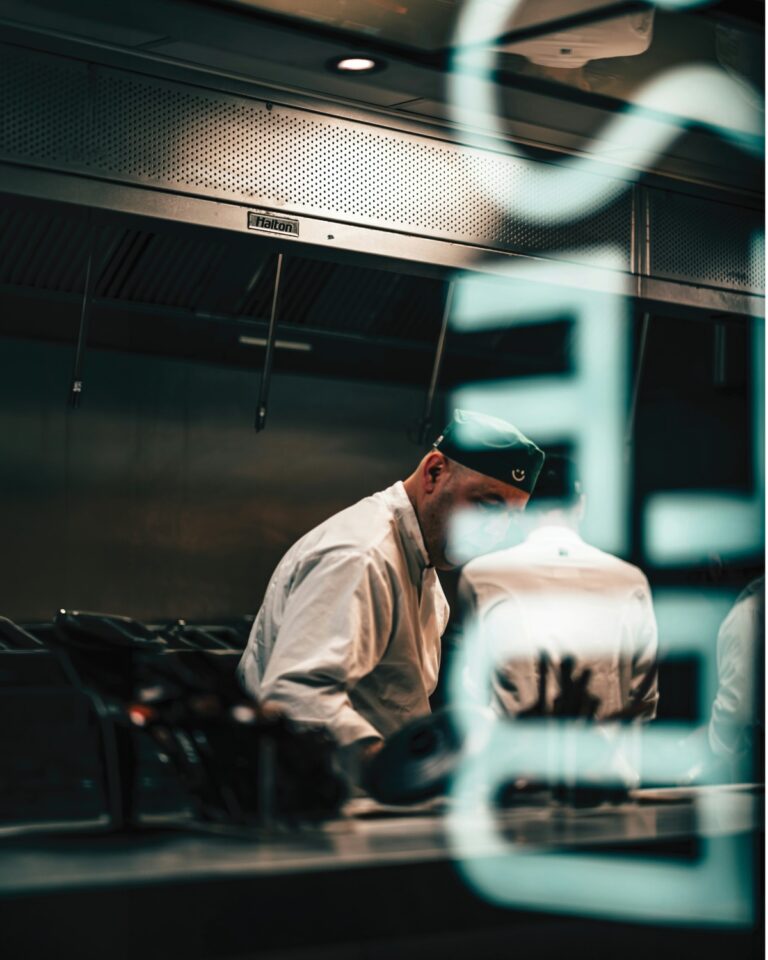
At The Lodge at Dawn Ranch, co-executive chef Juliana Thorpe channels her global culinary expertise into a menu that celebrates authenticity and regional abundance.
Her culinary philosophy centers on simplicity and natural ingredients—an approach shaped by her formative years in Matutu, Brazil, where she grew up immersed in the rhythms of nature and agriculture. Surrounded by the South American countryside, Thorpe developed an intimate understanding of food through her family’s vegetarian traditions and garden-to-table lifestyle, forging a connection to ingredients that continues to define her cooking today.
Thorpe’s professional journey spans some of the world’s most distinguished kitchens. She trained under Roberta Sudbrack in Brazil and worked alongside Rafa Costa e Silva at Lasai before expanding her repertoire at Spain’s acclaimed Mugaritz. Her path eventually led here to Northern California, where she refined her craft at the three-Michelin-starred Restaurant at Meadowood in Napa Valley. This experience crystallized her culinary vision: cooking that honors the natural wealth of a region.
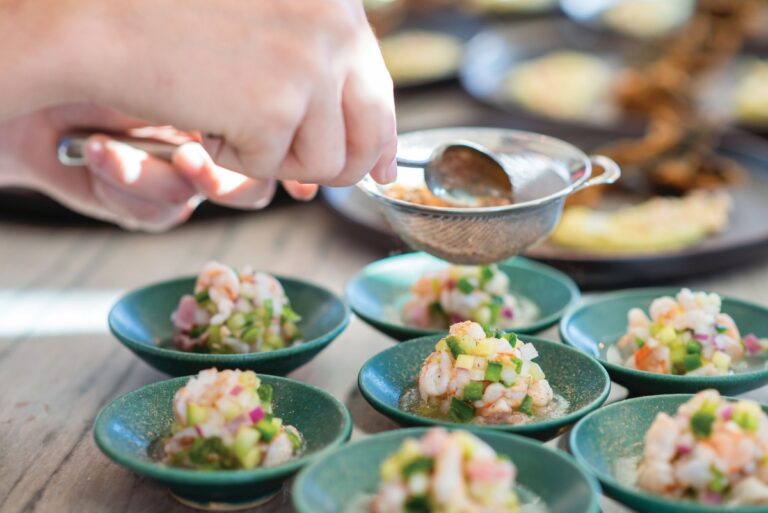
Since joining The Lodge in 2023, along with husband and co-chef Ignacio Zuzulich during its relaunch, Thorpe has woven together her Brazilian heritage with the seasonal offerings of Sonoma County. Now entering a new chapter, the refreshed dining experience at The Lodge showcases two distinctive tasting menus, a shorter seven creation format or a more extensive 12-course journey, alongside a seasonal a la carte selection. Depending on the season, guests might encounter oysters with watermelon agua fresca, dadinho de tapioca, gnudi with green pesto and chili oil, spot prawns pasta or Brazilian coconut cake.
Amber Turpin: How did you get into this work?
Juliana Thorpe: I was living in France doing voluntary work that included cooking, and it was what made me the most happy.
Did you ever have an ‘aha’ moment with a certain beverage? If so, tell us about it.
I just love to try new and different stuff.
What is your favorite thing to drink at home?
Good wine or really cold beer. I am from Brazil; I can’t help it.
Where do you like to go out for a drink?
Maison, Healdsburg. They definitely know what they are doing, and you always learn something new while having amazing wine.
If you were stuck on a desert island, what would you want to be drinking (besides fresh water)?
Sparkling apple juice.
The Lodge at Dawn Ranch, 16467 CA-116, Guerneville, 707.869.0656. dawnranch.com/dine.
For more than 25 years, we have supported active, health-conscious lives in Marin County, and more recently in Sonoma County as well. Yet even among people who eat well, exercise and stay engaged, we see resignation—a belief that declining health is simply the price we pay for aging.
Too often, it is met with a sigh and a shrug, as...
Finding a ride to Marin Hospital for a routine cancer screening should have been simple. It was not.
Marin County has many meditation cushions, kombucha on tap and a mantra of mindfulness. What it does not appear to have is a reliable way to get someone home after anesthesia.
I moved here four years ago from San Francisco. I know a...
ARIES (March 21-April 19): Japanese Zen master Hakuin (1686-1769) painted with astonishing vigor well into his 80s. When asked his secret, he said he treated each brushstroke as if it were his first. He approached the ink and paper with a beginner’s inspired innocence. I propose that you adopt a version of Hakuin’s practice. Dive into your familiar routines...
It has been more than 10 years since Petra Higby and her sister, Saskia, launched a wholesale caviar company in their San Francisco apartment, slinging the luxury product to local restaurants and chefs out of one commercial refrigerator.
The business was born out of a goal to demystify the delicacy and make it more approachable and attainable, promoting transparency and...
Tourist Town
I would like to formally apologize to the tourists, for living in Petaluma before they discovered it.
I realize now this was presumptuous of me. Had I known my hometown would become a recreational backdrop for other people’s Instagrammable weekends, I would have cleared out decades ago. These days, Petaluma feels less like my town and more like I...
This is the first of a three-part series on the effect of the U.S. Immigration and Customs Enforcement presence in our community. —Editor
Part One: Initiation Into the Fear
My “handler” was a friend of a friend of a friend. That delicate linkage was a conduit of trust.
Trust enough to meet me anyhow; ICE informants had made his work more dangerous....
Now that Ralphie got his BB gun, Scrooge became a better person and George Bailey decided he really did have a wonderful life, it’s time for North Bay theater companies to get their 2026 shows on the road.
Petaluma’s Mercury Theater is first out of the gate with Woody Guthrie’s American Song. It’s a musical tribute to the American folk...
Some albums announce themselves with urgency. Others arrive the way wisdom does—slowly, after enough living has occurred to make the listening worthwhile. All Is Song, the new record by Northern California duo Misner & Smith, firmly belongs to the latter category.
The album has been six years in the making, conceived in 2017 and shaped in fits, starts, pauses and...
It is the dark time of year, and it was just the time of the high holidays. Here I evoke “pagan” Solstice, Christian Christmas and secular New Year’s Day.
Whether observed as a high ritual or as a habit of long standing, each of this close-packed run of dates derives meaning from this time of year, and the turning of...
At The Lodge at Dawn Ranch, co-executive chef Juliana Thorpe channels her global culinary expertise into a menu that celebrates authenticity and regional abundance.
Her culinary philosophy centers on simplicity and natural ingredients—an approach shaped by her formative years in Matutu, Brazil, where she grew up immersed in the rhythms of nature and agriculture. Surrounded by the South American countryside,...