It’s 1981, and Bud Tribble, a Cupertino computer engineer, is in the midst of a project that would revolutionize not only the world of computing but the world in general. Everything about this project—whether inspired or stolen—was revolutionary.
It also seemed impossible. Deadlines loomed, and seemingly insurmountable hurdles piled up. Fortunately for Tribble and his team, the person helming the project had a superpower. He wasn’t a genius engineer, nor particularly nice. In fact, by all accounts, he could be a real asshole. But he could also ensorcell his minions with a powerful, magnetic charm that left them not only defenseless but inspired to achieve the impossible.
This superpower reminded Tribble of something he had seen before—in an episode of Star Trek. Not the iconic “The Trouble with Tribbles,” which would be too cosmically cool for school, but a lesser-known season-one, two-part episode titled “The Menagerie.”
In it, the crew encounters humanoid aliens capable of conjuring their own reality through sheer mental force—what Tribble came to call a Reality Distortion Field. It’s what he attributed to Steve Jobs’ uncanny ability to make others believe, through sheer charisma, that against all odds they could, in fact, create the Apple Macintosh.
And that, kids, is why 1984 wasn’t like 1984.
When manifesting something from nothing—as creative people are wont to do—it helps to have one’s own Reality Distortion Field. First, we must convince ourselves we can do it. Then we must convince others that we are doing it. Then we need those same others to reconvince us we can actually do it when our self-belief inevitably crumbles and we drop to our knees, bellowing to the stars, What the hell am I doing?
To wit: All creative acts are a kind of insanity—a courageous, disruptive blow against the dual faces of inertia and entropy that mask the greater workings of the universe. It’s both hubristic and humbling. But belief—even self-belief—is its own contagion, and the best way to inoculate ourselves against naysayers, critics and skeptics is to lean into our own idiosyncratic madness: to believe that our specific worldview is not only valid but essential.
If we didn’t believe our own hype, who would?
Or, as another Apple copywriter famously put it: “The people who are crazy enough to think they can change the world are the ones who do.”
The trick, of course, is knowing when to turn one’s Reality Distortion Field on—and off. It’s a tactic, not a strategy—a force bubble one occasionally pops so as not to find one’s self 5150’d over what felt, at the time, like just another manic Monday. Use it to make the impossible plausible, then step back into the real world.
Because with great delusion comes great responsibility.
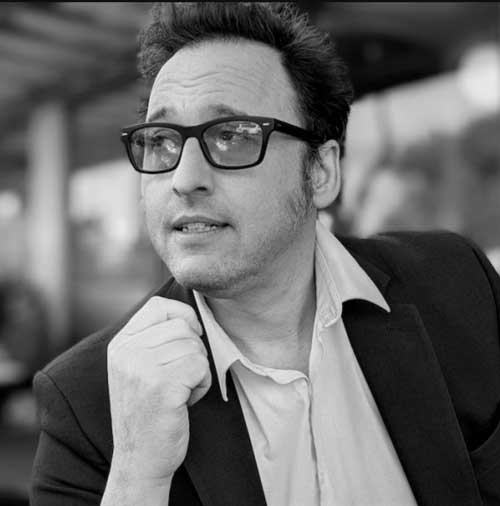
Daedalus Howell is editor of this paper, the writer-director of the feature film ‘Werewolf Serenade,’ author of the novel ‘Quantum Deadline,’ host of ‘The Drive,’ weekdays on 95.5 FM, and founder of the story company FMRL.