Bread Winner

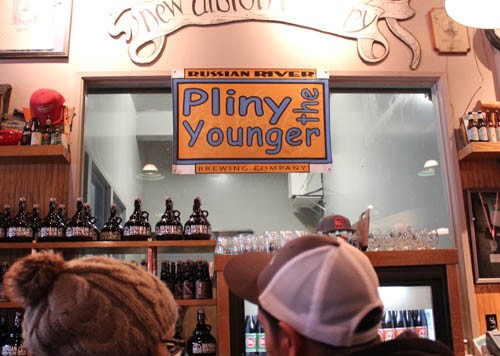
It’s 7:30 on a Friday morning, and Mike Zakowski has been up all night, baking. Soon he’ll head to the Sonoma farmers market, where he’ll sell the bread, hot pretzels and flatbreads that came out of the oven three or four hours before. “I only want to serve the freshest bread,” says Zakowski, known as the Bejkr, whose spelling comes not from Eastern Europe but from the International Phonetics Alphabet.

This past March, Zakowski competed at the Coupe du Monde de la Boulangerie (the World Cup of Baking) in Paris as part of the Bread Bakers Guild Team USA. Thanks to his extensive training—including a 60-day stretch in which he baked 50 baguettes a day—the Bejkr’s genius translated, landing him the silver medal in the Baguette and Specialty Breads category.

Zakowski, who lives in Sonoma, is the subject of local filmmaker Colin Blackshear’s latest documentary, Breaking Bread, Kneading Culture. To help complete the project, a “FunRaising” dinner will be held this week. Attendees will dine on a pig raised by Nick Rupiper and prepared by former Chez Panisse chef Charlene Nicholson, flatbreads from the Bejkr and produce from Oak Hill Farm and Paul’s Produce. Guests will also be treated to music by Arann Harris and the Farm Band and a special pre-screening of the film. It’s all on Sunday, Nov. 11, at the Sonoma Community Center. 276 E. Napa St., Sonoma. 5–10pm. $150. For more, see www.thebejkr.com.

Enviro Theater

Sonoma State University is doing something truly remarkable this school year. In a brilliantly conceived move combining numerous disciplines into one year-long package, SSU’s department of theater arts and dance has launched its “Water Works” series, using the theatrical arts—with the help of the school’s science and sociology departments—to explore various issues related to water.

Education through entertainment—what a concept.

Now running is Adam Chanzit’s timely political drama The Great Divide. Directed by Doyle Ott, the play is loosely based on Henrik Ibsen’s Enemy of the People, updating the drama from a Norwegian coastal town in 1889 to a tiny rural burg in 2006 Colorado.

Dr. Katherine Stockman (Laura Millar) has returned to her hometown, with her family in tow, after years abroad fighting illness and injustice in Third World countries. Things are not the same at home as when she left. The economic downturn that had left much of the town unemployed and desperate has been reversed, due to the presence of a massive new natural-gas plant that employs a large number of townsfolk. Suddenly, people have money, including her brother Peter (Connor Pratt), who’s now the mayor. Not everyone is thrilled with the new bosses in town, though, and some townsfolk resent the way the energy utility bullies folks around, drilling wherever they please.

And by drilling, we mean “fracking,” the controversial method that cracks open the rock bed deep in the earth, releasing the natural gas through the injection of high-pressured water, sand and chemicals. It’s highly effective, and the use of the process has created a new energy boom—but at what cost?

As Stockman settles back in, worried townsfolk begin seeking medical attention, complaining about an array of problems that may or may not be caused by something in the local drinking water. Gradually, Katherine finds herself leading the fight against the energy company—and much of the suddenly prosperous town—as she is convinced that the town’s groundwater is being poisoned.

Impressively visual, with a massive drilling rig hovering over the tiny houses of the town, the play is performed with passion and a sense of urgency by a large student cast. A thoughtfully designed handout, provided to audience members, is packed with information about fracking, economics and Henrik Ibsen.

The goal of much art is to inspire discussion and refection. Sonoma State’s “Water Works” series is a brilliant example of how art and education can be a perfect fit.

Machine Wash

0

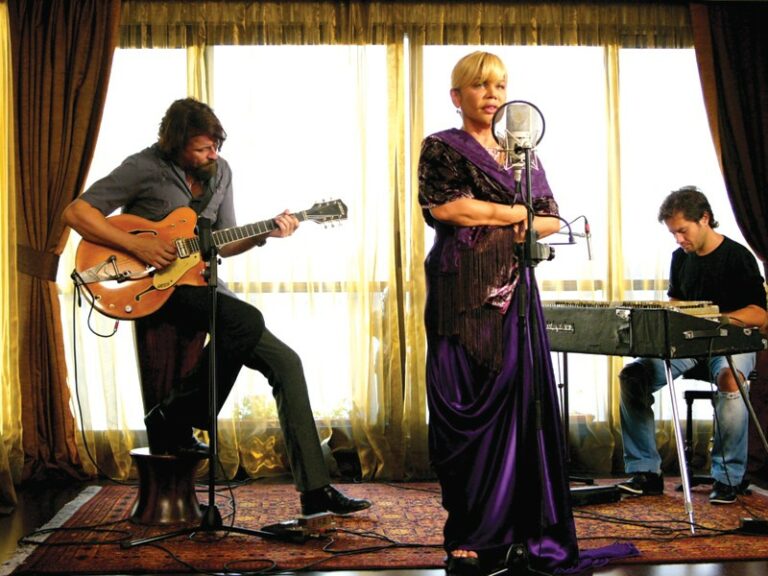
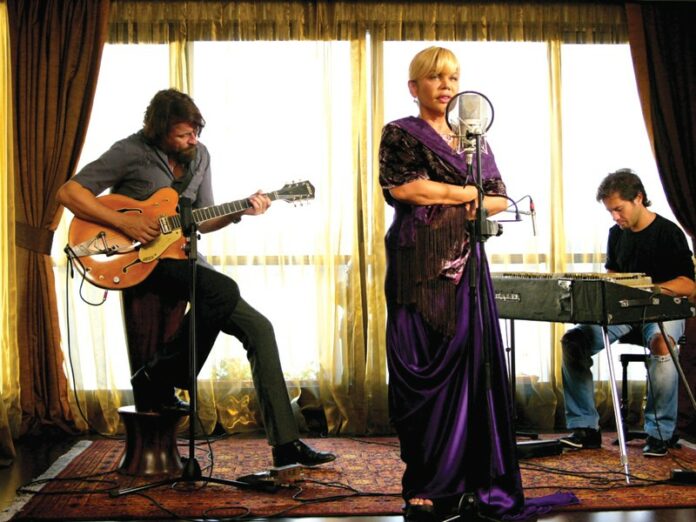
Hanging out with Girls in Suede at a local taqueria is, like the band’s music, quite an adventure.

Over the course of an hour, our discussion hits on UFO sightings, Korn, hot tubs, midwives, Anthony Kiedis as Lord of the “Chups,” smooth jazz, Nigerian charter schools, YouTube wormholes, Ariel Pink, shopping for earrings at Claire’s and picking avocados with Tom Petty’s daughter. It’s a mirror of the devil-may-care attitude that pours through the band’s music, evident in the sly, rhythmic pop on their new self-titled album, Girls in Suede.

“A lot of our music is born out of being goofy and zany,” says guitarist and singer Nikos Flaherty-Laub. Though a little wild, Girls in Suede have spent the last couple of years working to develop three-part harmony skills and building on already sturdy songwriting abilities. It’s a step forward musically for a band that started playing while still juniors at Montgomery and Santa Rosa high schools, then took a five-year hiatus, only to reunite at the urging of drummer Eden Mazzola.

“It had a ‘going back home’ feeling,” says Flaherty-Laub. “When we got back together again, it just started up pretty naturally.” At the time, Flaherty-Laub was living in Los Angeles, but the band held epic, weekend-long practices until he returned to Northern California.

Still, Girls in Suede faced an obstacle beyond distance when second guitarist Dominic Agius passed away on Valentine’s Day 2011. Shocked and in mourning, the band had to make a decision whether to keep going. Eventually, the three remaining members decided to stay together. They bought a Roland PK-5, nicknamed “the Pickle,” an electronic contraption that holds down the low end while bassist Alexis Faulkner lets loose on the saxophone, an instrument not often seen in Sonoma County indie rock bands.

The new album was recorded at the home of Mazzola’s mom’s boyfriend, and without time limits, they were able to experiment. “It was a brilliant experience to remove the clock,” says Mazzola. “We got to add so many different things.”

Regarding influences, Mazzola and Flaherty-Laub agree that guitarist John Frusciante is an inspiration. Today, Flaherty-Laub is carrying around a copy of David Byrne’s book How Music Works in his backpack. Like Byrne’s band Talking Heads, Girls in Suede eschew genre while still maintaining a sense of melody. It’s a sound that’s changed since the days of being a high school garage band, when a tune might be crammed with multiple parts and few obvious melodic connections, and a turn toward “groove and beauty,” says Mazzola.

“They’re not so much Frankenstein songs anymore,” he adds. “We were more klezmer back in the day.”

Letters to the Editor:November 6, 2012

Advice: Get an ID

Can someone please enlighten me as to why having an ID shouldn’t be required by law (“Sneak Attack,” Oct. 31)? In the majority of countries around the world, a valid ID is required to participate in all government programs, to vote and to receive government welfare. I’ll give the 93-year-old adopted lady who lost her purse a break, but why are so many young people, whatever their ethnicity, race and economic background, without a valid ID? I’ll tell you the biggest reason: because they don’t make it down to the DMV. Yes, it was a sneak attack by the right for this election, and, yes, it screwed a lot of people out of voting, but go get an ID already. You should have done it when they told us about the law six months ago.

Santa Rosa

Dividing Lines

Stop spreading the hate and division (“How We Represent,” Oct. 31). “If minorities are already well-represented in Santa Rosa, then why can’t parents in the city’s most predominantly Latino neighborhood get a simple crosswalk painted on the road in front of their children’s school?” Replace the word “minority” with “white,” and you’ll see the stupidity of your ideas. Is there some reason the parents can’t lay two boards down and spray white paint between them to make a solid white line, then pick the boards up and move them five feet and repeat it again? That’s what we did at our school in a white neighborhood.

As a native of San Francisco, now here, I have seen district elections make San Francisco a laughingstock and a place where not only is there no consensus but you have the most corrosive parochialism at work. “This is a black district,” “This is a white district,” and this district is “reserved for a Latino.”

Via online

Copter Nights

I live in Roseland, and the new elementary school, Roseland Creek, has a nice bike path all the way through the west side—so it’s perplexing that the other school can’t get a crosswalk painted (“How We Represent,” Oct. 31). One thing I’ve noticed since moving here from Marin County is that helicopters fly over our side of the city almost nonstop. Lots of times they fly low, with searchlights, and really disturb the peace. What is up with them polluting our airspace with noise, and cops constantly up and down the streets? They should allow us a district representative, because they sure see Roseland as an area in their jurisdiction. When it comes to cracking down, they’re all over Roseland. Sure, we have our share of crime, but after four years here, what I see is hardworking families like ourselves, just trying to make a good life for our kids in Santa Rosa.

Santa Rosa

Blood Quarrel

The family Mr. Sarris claims to be his has, according to the matriarch of the family Velia Navarro, no Native American blood at all (“Chairman Sarris,” Oct. 31). He is not an Indian. The stories Mr. Sarris has told about Ms. Navarro’s family, including her beloved great grandmother and grandmother, are patently untrue and deeply offensive to the family.

The casino project is an environmental catastrophe, which no amount of money will be able to put right. It has destroyed sensitive vernal wetlands habitat and the genetically unique Sonoma County tiger salamanders unfortunate enough to live on the casino footprint site. No other developer would have been able to build on this land, which was set aside as critical habitat for the salamander before casino construction began.

No payments to the county will be made until 2014, if at all, as the tribe does not have to pay if it does not make enough profit. The tribe does not have to allow independent audits, including those by state officials, to determine if it has made enough profit. These are all facts, and all verifiable.

Stop the 101 Casino Coalition

Time for Sharing

I love Yerdle and I love giving and getting something and sharing (“Share Alike,” Oct. 31). The Sharing Economy is a tsunami that is rising under our feet. Generation X-ers are not buying cars; they are sharing cars. This is the way to transform our consumptive culture to a collaborative culture. As Van Jones said, “The emerging shareable economy has the potential to create a new American model—one in which everyday Americans have access to additional sources of revenue, savings and new career opportunities.”

Santa Rosa

Write to us at le*****@******an.com.

Soup Without Tears

0

French onion soup is the last meal Julia Child ate before she died. Though she once stated that she wished to go out after a gluttonous feast of caviar, oysters and foie gras, ending as she did was fitting for the champion of French cuisine. You can’t get more bucolic than onion soup.

Onions are in season right now, but few cooks are squealing for them like they do for divas like tomatoes and corn. Onions are typically supporting cast members, rarely the stars of the show, and few dishes are built around them. Nonetheless, onions are among the most essential supporting ingredients of all, right up there with oil, salt and pepper.

Add white wine to that short list of essentials, and you have the ingredients for French onion soup, one of the only dishes I know that showcases the lowly onion.

Legend has it that King Louis XV invented the soup after arriving at a hunting cabin and finding only onions, wine and butter in the cupboard. Truth be told, the average peasant’s larder would have been stocked with such ingredients as well. The creation of French onion soup was inevitable, and it was probably invented more than once.

To this day, French onion soup is the rare recipe that usually won’t require a trip to the store, because most of us have the ingredients at home. The rich, concentrated flavor and warmth of onion soup is especially appealing as chilly weather settles in. And autumn is a sad time, when it feels OK to cry.

But excessive crying over French onion soup isn’t necessary, according to Alain Ducasse, who lists among his many restaurants the Louis XV in Monte Carlo. Ducasse says keeping one’s knife sharp will reduce the number of tears shed when making French onion soup, as less of the onion’s volatile and tear-jerking cellular fluids are released with the clean, smooth cut of a sharp blade.

The impact of a sharp knife would be duly felt if following Ducasse’s recipe, which involves thin-slicing the onions—and not so much if you follow the method put forward by Nigel Slater, an Englishman no less, in his recipe, “Onion Soup Without Tears,” which appeared in his 2005 book The Kitchen Diaries. Slater’s onions are simply cut in half, once, and slowly caramelized in the oven.

Slater advises to bake the onions cut-side-down in a pan with two tablespoons of butter and a little salt and pepper. I bake the onions at 400 degrees for about 20 minutes, and then reduce the oven temperature to 200 degrees. Stir gently, on occasion, until the onions are, as Slater describes, “tender and soft, and toasted dark brown here and there.” Deglaze with shots of white wine or water whenever the pan gets dry.

Cut the onion halves into thirds, along the tip-to-root axis. To this, add a cup of white wine and bring to boil. Once there, lower the heat to a simmer and let the wine reduce into a thickening sauce. Before it starts to burn, add six cups of stock from the bones of a red-meat animal; use mushroom stock if you’re a vegetarian.

Finally, bring the soup to a boil and simmer for about 20 minutes.

Though generally served under a floating cap of melted cheesy bread, here I leave Slater and return to Julia, who liked to serve French onion soup old-school style, with a poached egg on top.

There are so many variations on the simple combination of wine, onions and butter, you could spend the rest of your life improvising. Which method you choose on any given day depends on how you’re feeling, how sharp your knife is and how attached you are to your tears.

Garagiste Healdsburg

0

So many portraits of this kind begin with a straight up retelling of the winery’s founding mythology that it’s a great temptation to skip it. They’ve just told it for the two thousandth time, and, besides, the website does a bang-up job.

But this one’s so geographically quaint, with the added advantage of having nothing to do with Tuscany, it warrants a recap: Alan Baker, sitting alone in a kayak in Minocqua Lake, steadying a randomly purchased bottle of Alsatian Riesling between his knees. Then and there in Wisconsin’s North Woods, with the call of the loon overhead, perhaps, the water below teeming with pike, he has his “a-ha!” moment: Hey . . . wine!

Baker gave up a career as an audio engineer for Minnesota Public Radio, specializing in classical music—yes, he dropped by Lake Wobegon, now and then—for an uncertain rendezvous with the grape. Such is its siren song. “I was 40, didn’t have the fortune, didn’t have the UC Davis degree. I had to invent a new way in,” Baker says. So he developed a wine-themed podcast that was picked up by NPR. Through interviewing winemakers and other erstwhile efforts—volunteering labor at wineries, then buying grapes from them at market price—he gained insights, and ran out of money.

While working a gig at Crushpad in San Francisco, he consulted future partner Serena Lourie on her first batch of wine. The two opened Garagiste in 2011, sharing the tasting room with winemaker Christian Stark. The space is a former auto body shop, outfitted with a small production winery behind the bar, and thus aptly named. There’s plenty of room to mill about, and, in good weather, the garage bays open to the street. Visitors may purchase wine by the glass and take in a view of Fitch Mountain or enjoy live music on Friday evenings.

The wines on the current menu are spot-on. Stark’s 2011 Saarloos Vineyard, Santa Ynez Valley Grenache Blanc ($28) is a fine, dry quaff, with aromas of white flowers and crisp, lychee and pear fruit. Perfumed with wild spices and apricot, Cartograph’s 2011 Floodgate Vineyard, Russian River Valley Gewürztraminer ($22) is decidedly bone-dry. Their 2010 Floodgate Pinot Noir ($40) is soft and velvety, piquant with cherry candy and cranberry, and has a dry, but quenching palate, something like Red Zinger herbal tea. Stark’s 2011 Sierra Foothills Primitivo ($36) is a plush dollop of plum and cherry fruit, accented with chicory and vanilla. But what of Baker’s cherished Riesling? They’re still searching far and wide for that “a-ha!” moment.

Garagiste Healdsburg, 439 Healdsburg Ave., Healdsburg. Open Wednesday–Monday, noon to 7pm. Tasting fee, $10. 707.431.8023.

Empire News

0

The Press Democrat has been sold by Florida-based Halifax Media Group to a group of local investors, including lobbyist and developer Darius Anderson and former congressman Doug Bosco.

The sale marks a return to local ownership for the 115-year-old newspaper. Halifax purchased the Press Democrat last year along with 15 other regional newspapers from the New York Times Company, which owned the daily since 1985.

The announced sale, expected to close in the coming weeks, includes the Press Democrat, the Argus-Courier, the North Bay Business Journal and their websites. (Anderson’s group, Sonoma Media Investments LLC, also bought the Sonoma Index-Tribune earlier this year.) No sale price has been disclosed.

The group also includes Stephen Falk, a former publisher of the San Francisco Chronicle, and Bill Hooper, president of Kenwood Investments.

The four men share intertwining histories. Anderson and Bosco have worked together since the 1980s, when Anderson interned in Bosco’s congressional office. Anderson serves on the board of the San Francisco Chamber of Commerce, where Falk is chief executive. Kenwood Investments, led by Hooper, is Anderson’s development firm.

But it’s the group’s business interests, lobbying and political connections that have raised concern about the influence the ownership group could wield over the newsroom.

The client list of Anderson’s lobbying firm, Platinum Advisors, includes Clear Channel, Pfizer and Microsoft. Other clients include CVS, currently involved in a controversial development proposal in Sebastopol; PG&E, which has battled public power, an option that is currently being explored by Sonoma County; and Sutter Health, whose nurses recently striked in Santa Rosa.

Anderson’s lobbying firm also represents Station Casinos, partners with the Federated Indians of Graton Rancheria in building an Indian gaming casino in Rohnert Park. Anderson also has plans to build a $30 million hotel near the Sonoma plaza.

In 2010, the Press Democrat‘s Ted Appel reported on a $500,000 settlement by Anderson’s Gold Bridge Capital in a corruption probe that involved private equity firms managing public pension fund investments. Before that, Anderson sued a Kenwood neighbor for “emotional distress and loss of social reputation” after she called the police on a loud party at Anderson’s estate, as reported by the Press Democrat‘s Paul Payne.

Neither story was mentioned in the newspaper’s reporting of its own sale or profiles of its new owners last week.

Doug Bosco’s involvement in the acquisition will likely face scrutiny from a worried environmentalist community. Longtime county environmental advocate Bill Kortum notes that Bosco was voted out of office largely for claiming he was against offshore oil drilling, but acting otherwise, at a time when urban growth boundaries and open space districts were being set to preserve the county’s natural beauty. With Bosco as a co-owner of the newspaper, “he’d be in a position to break that will of the people,” Kortum says.

Bosco is also well-known as a behind-the-scenes heavyweight in Sonoma County politics, with interests connected to gravel mining and lumber. His close friend, Eric Koenigshofer, is the attorney for the Preservation Ranch project in Sonoma County, which would clear-cut 1,769 acres of second-growth redwood trees to develop 1,100 acres of vineyards.

Bosco and Koenigshofer also help fund political candidates, including Fifth District Supervisor Efren Carrillo, who provided key votes to approve two contentious Bosco-supported projects: the Russian River gravel mine near Geyserville and the Dutra asphalt plant in Petaluma. Carrillo also helped approve the Fort Ross tasting room, a project opposed by neighbors but supported by Bosco.

In the 1980s, Bosco, a self-described “conservative Democrat,” was involved in both the Savings and Loan and congressional check-bouncing scandals. Now, with his wife, retired county judge and logging scion Gayle Guynup, Bosco often hosts political get-togethers in his McDonald Avenue home with donors and elected officials.

To the San Francisco Chronicle last week, Falk expressed the new ownership’s commitment to objective journalism at the Press Democrat. “Clearly, the ownership of this paper is not going to meddle in the journalism of this newspaper,” he said. “Credibility is all any newspaper has, and we’re not going to lose that.”

Reporters and editors at the Press Democrat contacted for this story were unwilling to go on the record but said that the independence of the newsroom is the goal of all parties involved.

Newspapers owned by lobbyists remain rare, although that is shifting, says Kelly McBride, senior faculty in ethics at the Poynter Institute.

“With papers being so cheap, we are seeing a lot of partisan owners scooping them up,” she says of the Press Democrat‘s sale. “The San Diego Union-Tribune is another California paper that’s experienced this phenomenon. Everyone wants to know if the owners will keep their hands off the editorial product and let it independently serve the audience. Only time will tell on that question.”

UPDATE: The ownership group also includes Sandy Weill, Norma Person, Jean Schulz and others; read more here.

Activist Awards

0

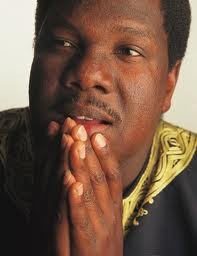
With the rousing title “The 99% Awakens,” the Peace and Justice Center of Sonoma County celebrates a year of activism and Occupy at the Annual Peacemaker Awards Celebration. This year’s honorees include the Healdsburg Peace Project, which will receive the Peacemaker Award. The Russ and Mary Jorgensen Courage of Commitment Award will be given to Jesús Guzmán (pictured), an organizer for the DREAM Alliance of Sonoma County and chair of the North Bay Organizing Project’s (NBOP) Immigration Taskforce. The NBOP itself will be a recipient of the Community Organization Award. Last but not least, Dave Foote, who works tirelessly on the Peace Press, will be crowned with an Unsung Hero Award. All proceeds benefit the Peace and Justice Center. Get there before the awards ceremony for hors d’ oeuvres, silent auction, beer and wine, and stay later for music and dancing. It all happens on Sunday, Nov. 11, at the Sebastopol Community Center. 390 Morris St., Sebastopol. 5–9:30pm. $40–$45. 707.575.8902.

War and Peace

Armistice Day was created to remember the 10 million members of the armed forces killed in World War I. It’s become better known as Veterans Day, but the Marin Peace and Justice Coalition would like to see the original reason for Nov. 11 to come back into use, as a day to celebrate the end of war, “not to celebrate militarism.” This Armistice Day, the MPJC hosts a conversation on the elimination of war with cofounder of CodePink and anti-drone activist Medea Benjamin and David Swanson, an anti-war activist and cofounder of After Downing Street. See Benjamin and Swanson talk war and peace on Sunday, Nov. 11, at Olney Hall, College of Marin. 835 College Ave., Kentfield. 7pm. $10 (no one turned away). 415.499.0985.

Expanding Services for the Hungry

The Redwood Empire Food Bank (REFB) recently received a letter from Bob and Joan Schmidt, volunteer chefs at the Living Room, a daytime drop-in shelter for women and children without homes. They thanked the REFB for playing a significant role in helping the Living Room provide 25,000 annual meals for the women and children they serve.

Bob and Joan wrote, “Last Friday, we put out a lunch for approximately 70 ladies and children. The lunch consisted of a caesar salad, bread rolls, sliced baked beef tri-tips, roasted red potatoes with basil pesto glaze, corn on the cob, baked creamed onions and a large cake. The cost was under $8 for the entire meal. That comes out to around 11 cents a meal. Wow! We love the Redwood Empire Food Bank.”

The living Room is just one of the 166 nonprofit and faith-based organizations that the Redwood Empire Food Bank partners with. At the Living Room, we met Christina and her two young children. Christina told us that her unemployment insurance had run out, and that her children ate hot meals because of the Food Bank’s work with the Living Room. Through the determined efforts of our partners, and our own programs, Christina and her children are just three of the 78,000 people we feed every month.

Hunger has never been more present among so many in our community, and the REFB serves 45 percent more people than we did five years ago. With the generous support of our community, we’ve raised the funds necessary to purchase a new home at 3990 Brickway Blvd., in Santa Rosa, which enables the REFB to better serve hunger relief efforts for decades to come.

The public is invited to learn more by visiting www.refb.org or calling 707.523.7900.

Miriam Hodgman is the communications director for the redwood Empire Food Bank.Open Mic is a weekly op/ed feature in the Bohemian. We welcome your contribution. To have your topical essay of 350 words considered for publication, write op*****@******an.com.

Havana Affair

0

You could walk into a toy store and wind up about eight different music boxes all at once, and you might get something resembling Chucho Valdés’ “Son No. 1.” Like Art Tatum’s high-speed solo recordings or, more laterally, a barrage of flying bats, Valdés’ unfathomable flurry of notes is impossible to duck. Best to hop along for the ride.

Whether Valdés plays “Son No. 1” at the Green Music Center this week is almost immaterial, since there’s more from the creative well from which it sprang. “I study all this music very hard,” he recently said in an interview, citing Herbie Hancock, Joe Zawinul and Cecil Taylor as American signposts in his Cuban jazz pianism.

The son of Cuban legend Bebo Valdés and founding member of the groundbreaking group Irakere, Valdés is a true jazz treasure. See him play with his well-oiled quintet on Sunday, Nov. 11, at the Green Music Center. 1801 E. Cotati Ave., Rohnert Park. 7pm. $20-$70. 866.955.6040.

Bread Winner

It's 7:30 on a Friday morning, and Mike Zakowski has been up all night, baking. Soon he'll head to the Sonoma farmers market, where he'll sell the bread, hot pretzels and flatbreads that came out of the oven three or four hours before. "I only want to serve the freshest bread," says Zakowski, known as the Bejkr, whose spelling...

Enviro Theater

SSU's 'Water Works' educates, inspires

Machine Wash

Girls in Suede re-up for 2012

Letters to the Editor:November 6, 2012

Letters to the Editor:November 6, 2012

Soup Without Tears

French onion soup is the last meal Julia Child ate before she died. Though she once stated that she wished to go out after a gluttonous feast of caviar, oysters and foie gras, ending as she did was fitting for the champion of French cuisine. You can't get more bucolic than onion soup. Onions are in season right now, but...

Garagiste Healdsburg

Cartograph draws its own map

Empire News

Press Democrat sold to local group, including lobbyist Darius Anderson and political powerbroker Doug Bosco

Activist Awards

With the rousing title "The 99% Awakens," the Peace and Justice Center of Sonoma County celebrates a year of activism and Occupy at the Annual Peacemaker Awards Celebration. This year's honorees include the Healdsburg Peace Project, which will receive the Peacemaker Award. The Russ and Mary Jorgensen Courage of Commitment Award will be given to Jesús Guzmán (pictured), an...

Expanding Services for the Hungry

Redwood Empire Food Bank gets new location, partners with women's shelter

Havana Affair

Chucho Valdés makes fast work of the keys at SSU
11,084FansLike
4,446FollowersFollow
6,928FollowersFollow