Heart Trails

0

Now a 29-year-old tradition, this year’s see-and-be-seen Art from the Heart auction at SSU takes place on Jan. 19.

Previous auctions have featured goodies donated from local inns and wineries, but this year, attendees will bid strictly on the artworks themselves, generously donated from over a hundred notable sculptors, painters and conceptual creators.

Among those is San Francisco’s Ray Beldner, whose 101 Portraits are blurry, low-res amalgamations of exactly that many celebrity Google searches. The misty, nearly faceless results comment on fame-worship in the digital age by silently staring back at viewers with the vapid blankness of someone who’s just looked through 101 pictures of, well, anything.

Closer to home, SRJC faculty member Kristine Branscomb will also be featured. Her paintings likewise examine the intersection of media and reality, creating impressionistic, faceless scenes that play on the notion of that two-dimensional, airbrushed reality so often used to sell.

If you don’t feel like donning a tie, brushing your hair or whatever dressing up for a fancy gala means to you, a free preview exhibit is held Jan. 16–18, starting at 11am. Art from the Heart is on Saturday, Jan. 19, at University Art Gallery. 1801 E. Cotati Ave., Rohnert Park. 6pm. $25 donation. 707.664.2295.

Road to Wellville

0

When was the last time you went to the hospital for yoga?

Though the hospital setting tends to go hand in hand more with illness, surgery and trauma care, recent developments in the healthcare industry signal a dramatic shift in the way that hospitals and healthcare clinics approach the treatment of chronic disease. Namely, moving increasingly toward prevention and wellness—including programs for acupuncture, dance classes, tai chi and, yes, yoga.

Such a shift couldn’t come at a better time for the United States. According to new report by the National Research Council and the Institute of Medicine, Americans live shorter lives and experience more injuries and illnesses than those in comparable high-income nations. In terms of life expectancy, the United States ranks at or near the bottom of a list of 17 countries.

“If we’re able to educate people and the public, we’re going to have a healthier community, and that’s best for everyone,” explains Dr. Marko Bodor, medical director at the Synergy Medical-Fitness Center in Napa. Located on the campus of the Queen of the Valley Medical Center, Synergy opened its doors in 2006. Utilized by both patients and fee-paying members of the public, the facility emphasizes the five aspects of wellness: exercise, nutrition, sleep, psycho-social and spiritual well-being and, of course, prevention, says Bodor.

With its pool, dance classes, nutritionists, cardio and strength-training equipment, Synergy may look like a gym, but it goes beyond your standard 24 Hour Fitness, offering a breast and mammography center, a cardiac rehab facility, public talks on health and nutrition and an integrative health center.

“Medicine for centuries was pretty much acute or terminal care. When you absolutely needed to see a doctor, you saw one,” says Bodor. “We’re definitely seeing a transformation in the way we treat things.” Because of healthcare reform, organizations will be more accountable for their outcomes, and prevention will become much more essential, he adds.

By 2015, Santa Rosa may get its own medical-fitness center. A zoning amendment approved on Dec. 4 by the Santa Rosa City Council has opened the doors for the construction of a facility to be integrated with Santa Rosa Memorial Hospital. It’s part of an overarching goal of promoting wellness, preventative care and physical activity, says Katy Hillenmeyer, a spokesperson for the St. Joseph Health System.

“Healthcare reform has provisions in it to minimize readmissions to the hospital for people with chronic illness,” she adds. “Anything we can do for the health of our neighbors outside of the hospital helps in combating chronic disease, and helps keep people healthy so that they don’t necessarily end up in an acute care hospital.”

The shift toward a preventative model can be traced to two sources. The first is a change in public health needs. Infectious diseases, a cause for concern a hundred years ago, have been replaced with chronic disease from poor lifestyle choices. The second is the passing of the Affordable Care Act in 2010, which allows for the creation of a prevention and public health fund, along with the issuance of community transformation grants to help promote healthy lifestyle choices in every community.

[page]

A switch in focus to outcome-based reimbursement, something that’s already in place at for-profit Kaiser Permanente—a company that, according to Bodor, stays profitable by keeping people out of the intensive care unit—is another Affordable Care Act goal. According to a report by Trust in America’s Health, for every dollar spent on prevention, approximately $6 are saved in healthcare costs.

“The reality is that every time we keep someone out of the emergency room, it saves the public a lot of money,” says Michael DiRosario, clinic manager at the Forestville Wellness Center, which was opened in 2011 by West County Health Centers.

Geared specifically toward the uninsured and low-income populations that don’t normally have access to alternative medical services and preventative health education, the wellness center offers acupuncture, nutrition for diabetes and smoking cessation group meetings, cooking demos, and Zumba and yoga classes.

“What lots of places are starting to focus on is how we can get people to think about wellness and lifestyle changes,” says doctor of osteopathy Connie Earl, who’s practiced integrative medicine at the Forestville Wellness Center since November 2011. Though most people dread entering clinical settings, creating community by focusing on healthy lifestyles has made a marked difference.

“People love coming here,” says Earl. “They say they love the feel of the place. It shifts the feel since they’re actually getting treatment for chronic medical conditions, and feel more empowered in their own healthcare.”

The Petaluma Health Center is a federally qualified health center that serves approximately 18,000 patients. After moving to a 6,000-square-foot building in November 2011, the facility was able to expand the services in its Center of Good Health. Now, the primary care clinic—which serves low-income individuals along with those with private insurance—is taking prevention to a level not often seen in healthcare settings. The center sees on average 200 wellness group visits a month, for sessions on smoking cessation, child obesity (an issue of serious concern in the United States) and chronic pain. The facility offers medical acupuncture (getting an average of 100 visits a month), yoga, Zumba, tai chi, meditation and hour-long integrative medicine consultations with Dr. Fasih Hameed, a doctor who recently spearheaded a conference in Santa Rosa focusing on “Integrative Medicine for the Underserved.”

The crux is getting out of chronic-disease cycle, says Luke Entrop, wellness program manager.

“Tobacco use, poor diet and lack of exercise lead to heart disease, type 2 diabetes, lung disease and cancer, which account for 50 percent of U.S. deaths per year,” he adds. “If we can get on the prevention end of things, we’re getting to the heart of these chronic conditions of our time.”

Entrop sees the Center of Good Health and the preventative approach as a way to promote healthy living for people of all backgrounds.

“With more affordable healthcare coverage, we’re able to reduce the cost of acute emergent health conditions by working on some basic behavior change and nutrition education,” he says. “These are some of the driving factors of more expensive healthcare costs. By investing in prevention, we’re able to reduce costs in the long run.”

Drone Speak

0

Last November, the Bohemian reported on Sebastopol resident Barbara Briggs-Letson’s participation in a delegation to Pakistan, where over 176 children and hundreds of other innocent civilians have been killed by U.S.-led drone strikes. This month, Briggs-Letson, along with Toby Blome, an organizer of anti-drone vigils at Beale Air Force Base, and Dianne Budd, a physician who volunteers with Doctors Without Borders, report on their experiences and shed light on the problem with drones on Wednesday, Jan. 23, at the Peace and Justice Center. 467 Sebastopol Ave., Santa Rosa. 7pm. 707.865.8902.

GUNS AWAY

California already has among the strictest gun control laws in the United States, and North Bay communities are taking extra steps to ensure that guns don’t fall into the wrong hands. On Jan. 21, the Marin County District Attorney sponsors a gun buyback program honoring the nonviolent ethos of Dr. Martin Luther King Jr. to reduce the total number of weapons in neighborhoods and on the streets. Those who turn in guns receive $200 for each operable semi-automatic handgun and/or long gun. Any other category of firearm will receive $100. The person surrendering the weapon must provide documentation of residency in the county of Marin, San Francisco, Contra Costa or Sonoma. No questions will be asked, and no police investigative reports will be generated. The buyback date is Monday, Jan. 21, at the San Rafael Police Department. 1400 Fifth Ave., San Rafael. 11am–8pm. A second buyback location receives firearms at the Mill Valley Police Department. 1 Hamilton Drive, Mill Valley. 11am-8pm. 415.747.2241.

Letters to the Editor: January 16, 2013

Visualize Whirled Peas

Thank you, Brian Gallagher, for your delicious counterpoint to the positive thinking (really nonthinking) crowd (“Visualize This,” Jan. 9). I might add that, in my experience, these blissed-out folks decline to engage in the frightening and important political, social and environmental issues of our times because they are too “negative” to think about. Like their religious and “spiritual” compadres, they cling to the notion that God (or Goddess) will handle the unpleasant business for us if we just smile, drop our quarters in the collection plate, visualize whirled peas or speak in pleasant platitudes. In abdicating the responsibilities of good citizens to participate in a meaningful way, they let the religious right, the gun-toters, big business, polluters, parasite, and bloated government hijack the public debate and have their way with the majority. They are not simply benign self-delusionals. They are a big smiley player in the demise of democracy in America.

Sebastopol

In a culture in which negativity reaches epic heights, the Bohemian and Brian Thomas Gallagher pile it on in “Visualize This.” Being negative is not realistic. Cynicism is not realism either, though a lot of people falsely think that they are wise to be cynics. Pragmatism, though, and even skepticism can be useful. Unfortunately, Gallagher did not appear to be skeptical enough in his review of a book that is sloppy, unfocused and inadequately researched. It seems he swallowed Oliver Berkeman’s negativity whole, and persuaded Bohemian editors to feature it on the cover.

Much of our TV encourages viewers to be fearful, judgmental smart alecs. News media are mostly negative, too, following the motto “If it bleeds, it leads.” One can be in denial at either end of the optimism-pessimism continuum. Realism occupies the middle. My opinion of the Bohemian staff suffers after this issue. You folks can do better than this, and have in the past. Moving back to the middle could very well make readers, including this one, happier.

Petaluma

You, too, can bestow with kisses and/or throw tomatoes at ‘Antidote’ author Oliver Burkeman when he appears at Book Passage in Corte Madera on Wednesday, Jan. 23, at 7pm.—The Ed.

Don’t ‘Mis’ It

Last weekend, having exhausted the local holiday film fare, I was dragged, still protesting, to Tom Hooper’s Les Misérables. I had read Richard von Busack’s review of the film (“Nip It in the Bud,” Dec. 26) and was anticipating two-plus hours of tedious, overblown hooey. In the first minutes of the film, however, I was relieved by a spectacle that was obviously well-produced, and soon I found myself absorbed in the lives of Fantine, Jean Valjean, Cosette and Javert, pleased to be once again immersed in the dramatic and inspiring world of Victor Hugo’s great novel. (I confess, Les Misérables, required eighth grade reading, was my first favorite long read.)

I found the casting surprising excellent, the acting consistently convincing (despite singing parts, verse and close-ups, which von Busack derided), and the director, Tom Hooper, to be congratulated, hopefully awarded, for bringing Hugo’s behemoth, via the stage production, successfully to the screen. The music, verse and, yes, even the close-ups heightened effects, telescoping complexity and condensing into codas Hugo’s major themes—which remained, despite the complications of the tale, in the forefront. There were not many people in the theater that evening, but those few, as the credits rolled, applauded. Hopefully, they found the film, as I did, fresh and full of heart. Sorry you missed it, von Busack!

Santa Cruz

Dept. of Napa

Last week’s news story (“Where’s the Money?,” Jan. 9) contained an erroneous reference to the “city of Napa” and its checking accounts. As consistent with the rest of the story, it is the county of Napa that uses Wells Fargo and Bank of America for checking accounts.

Write to us at le*****@******an.com.

Heavy Lifting

I‘m looking for the white lights to know I’m still alive. My trainer whispers into the stat keeper’s ear, “One hundred kilograms.” As the attempt is announced to the crowd, the loaders put more round weights on each end of the barbell.

I don’t think, “Oh, shit, this is 220 pounds,” even though it’s more than I’ve ever tried to lift before. I don’t think anything at all, really. I am focused on nothing but the white lights, the signal that will show if my lift was successful. I slam the wooden heels of my lifting shoes into each other, right on left—clack!—then left on right—clack! Now the crowd noise has died, and the silence mirrors my own intensity. I shrug my shoulders. Deep breath. Bend over, hook-grip the bar. Roll it out, roll it back into my barbell-scarred shins. Squat into position, staring straight ahead. Muscles tense up, the lift begins . . .

CLEANING UP MISCONCEPTIONS

Olympic lifting is my sport, but it’s not apparent by my looks. I’m not one of those tall dudes with bulging neck veins and biceps the size of semi trucks, grunting and yelling with my eyes popping out of my head while maxing-out weights at the gym. I’m a big guy, but not like a football player. I run a 10-minute mile on a good day. With a tight shirt, I look three months pregnant.

Despite all this, I’m more representative of your average weightlifter than the locker-room meathead stereotype.

Take Santa Rosan Beth Steinmann, 29, whose main source of fitness was yoga before discovering Olympic weightlifting. Steinmann still looks like a yoga enthusiast, nimble and flexible. The snatch and clean and jerk were “strange and alien” lifts when she started about two years ago, but she became stronger than ever through training. “It is empowering for me to get behind the barbell as a tiny person and lift a lot of weight,” she says.

Maya Uemura might agree with that. Now 12, she won the USA weightlifting national competition for her age group and weight class last year. “It’s fun to compete at weightlifting meets, and it’s fun to tell people at school that I’m a weightlifter, because it’s unique and they’re surprised,” says the Santa Rosa resident. “I also want to keep weightlifting so that I don’t end up being an old lady with a cane whose back hurts, and I can compete in weightlifting longer than I’ll be able to compete in gymnastics.”

Flexibility is key in this sport, says Sonoma State University student Juliana Flynn, 18. In high school, her sports were track, cross country and soccer, but she’ll compete next month in the Olympic weightlifting Junior Nationals, the top echelon of competition at her age in this country. After trying Olympic lifting a year and a half ago at the urging of her sister Sara (a former gymnast who has several Olympic weightlifting awards in her six years in the sport), Flynn became hooked. “I can be having a really crappy day and just go and lift heavy weights,” she says. “It lifts my spirits.” And there’s the feeling of setting a new personal record, which Flynn calls “the best feeling ever.”

Freddie Myles, owner of Myles Ahead Fitness in Petaluma, specializes in Olympic weightlifting. “It’s more like gymnastics,” he says of the movements. The attitude is also different. “It’s positive, mellow, not the stereotypical yelling and stuff. It’s not who is lifting the biggest weight; it’s about cheering each other on.”

At age 70, Penngrove resident Paul Marini isn’t trying to set records anymore. He started lifting while in college, and has been at it off and on for the past 35 years, still training four times a week with Myles. Though he looks good for his age, “weightlifter” is not the first term that comes to mind to describe him. “There are not many lifters my age,” he says, pointing out that only 4 percent of the 8,000 records in the sport are held by lifters over age 60. His hobby, in addition to lifting, is analyzing data in the sport. He still lifts because it keeps him healthy and flexible, but even after lifting most of his life, “It’s a huge challenge to do it correctly,” he says.

[page]

TECHNIQUE WITH STRENGTH

This sport only uses two lifts: the snatch, and the clean and jerk. Both involve a loaded barbell lifted from the ground over one’s head. The snatch uses one movement to accomplish this and the clean and jerk, as its name implies, uses two. This also means more weight can be lifted in this lift, but champions are determined by the total of the best of both lifts out of three attempts for each.

The world record is held by Hossein Rezazadeh, an Iranian whose body looks more like a walrus than an Olympic athelete. His 263 kilogram (580 pound) clean and jerk at the 2004 Olympics remains unbeaten, as does his 472 kilogram (1,041 pound) total at the 2000 Olympics. The snatch record is also held by a gigantic Iranian, Behdad Salimi, at 214 kilograms (472 pounds).

Raising 580 pounds above one’s head might seem a job for Hercules alone. But Olympic lifting is less about being the strongest or the most fit, and more about speed and mental toughness. The technique for both lifts begins with a deadlift, and the transfer of energy into the hips bumps the bar just high enough to allow a lifter to push himself under the bar for the split second that it defies gravity, catching it in a squat so low his butt nearly touches the ground. Then it’s a simple matter of standing up from this hyperextended position—with, you know, 500 extra pounds.

Weights for the snatch are significantly lower than for the clean and jerk because the catch must be overhead, with elbows locked out, before standing. The clean only requires a catch at chest level before standing, and the lift is completed with the jerk, tossing the weight up from chest position and pushing onself under, locking out the elbows in a low lunge position before standing up and bringing both feet together. These lifts are among the most explosive movements in the Olympics.

“Every athlete that comes in, that’s what they’re looking for,” says John Cortese, 26, owner of Olympic-lifting-focused Cortese Training Systems in Napa. He specializes in using the Olympic lifts to improve performance in other sports. “If you really break it down, agility is basically ability to absorb force.”

In that case, throwing hundreds of pounds from the ground over one’s head is probably a good way to build agility.

INNER COMPETITION

“My friends have watched me lift,” says Kaylie Clark, 17, of Santa Rosa. “They’re surprised. They think it’s like bodybuilding. But it’s not; it’s about technique with strength.” Wearing a hoodie with the word “Love” printed across the front, Clark completes a 50 kilogram snatch lift with no problem, despite never having lifted that much before.

She was in gymnastics before being concinved to try Olympic lifting a few months ago. “As of now, I’d like to go far in the sport,” she says. Already on her way, she’ll be competing in the Junior Nationals with Flynn, who trains in the same studio. “We’re not competing against each other—more against ourselves,” Clark says with a smile. Her movitation isn’t in being better than her peers, she says, but in the feeling of accomplishment after a successful lift.

The same goes for John-Logan Coots, wearing a shirt that reads “Till I Collapse.” He was analyzing his lifts with coach Freddie Myles last week using a laptop camera and barbell tracking system. The big screen on the wall showed a slight flaw at the top of his lift, causing a bit of instability. Coots, who trains four times a week with Myles, owns Powerfit Personal Training in Rohnert Park and trains Olympic lifters (including myself). He trains in the same class as those he might face in competition as well as other trainers, including Cortese. As Marini points out, “Freddie is well regarded as a trainer of trainers.”

Joanna Sapir, 38, wears a “Find Your Inner Badass” shirt while stretching after working on the clean and jerk at Myles Ahead. She owns CrossFit Santa Rosa, and started training over four years ago to learn the lifts she would be teaching before opening Santa Rosa’s first CrossFit location (there are now three). “It’s a clear metaphor for life,” she says of Olympic lifting. “You can’t predict it, but if you put the work in, it will pay off. It’s a long journey.”

She started working out, she says, because she was looking to lose weight after having two kids. The former soccer star found Olympic lifting to her liking. “When I don’t do it, I dream of doing it,” she says. The sense of personal accomplishment is what keeps her coming back. “It’s one on one, just you and the bar.”

[page]

GAINING MOMENTUM

CrossFit has exploded in popularity in the past couple years, due in large part to the CrossFit Games. The international fitness competition will likely have over 100,000 participants this year, up from 70,000 last year. After picking up sponsorship from Reebok the games were televised nationally on ESPN last year, and top CrossFit Games athletes will appear on the upcoming season of The Biggest Loser.

Cortese says CrossFit has really brought the “secret” of Olympic lifting out of the gym and into the limelight. “A huge part of CrossFit is the Olympic lifts. Before that, you’d never see bumper plates in commerical gyms.” In the past four years, USA Weightlifting, the governing body of the sport in this country, has seen an increase in members, some estimates putting the boost as high as 30 percent (a spokesperson at the organization did not have exact figures).

CrossFit is one of the few franchise gyms that focuses on the sport as part of overall fitness, and Sapir has doubled the number of Olympic lifting classes she offers. Competitors in the CrossFit Games focus on Olympic lifting, she says, since “that’s the weak link in their performance, because it’s the hardest thing they do.”

MENTAL MUSCLE

So it’s not necessarily about strength, and it’s not entirely about flexibility. But it’s more than just technique. It’s about mental toughness. “The more you think, it kind of backfires on you a bit,” says Cortese. “The best lifters are the ones who just go up to the bar and do it.”

Flynn agrees. “This is really a mental sport,” she says. “You push yourself to keep going. You tell yourself you can do it.”

Woodacre resident Tamara Holland, 51, has been lifting for a year. Olympic lifting is “very humbling,” she says. But the strength and confidence she gains from the sport is worth it. Like most lifters, she doesn’t look like someone to be afraid of in a dark alley, but make no mistake: she’s sizing up everyone around her.

“It’s really fun looking around, knowing I can deadlift people,” she says.

WHITE LIGHT, WHITE HEAT

With every muscle pulled tight, I deadlift nearly my own weight and bump the bar against my thighs, propelling it straight up with enough force to give myself time to get underneath and catch it on my collarbone. Balancing for a second, I stand to complete the front squat and a successful clean of 100 kilograms. Air is a precious commodity now, and I should wait to catch my breath. But adrenaline is fading fast. I gasp and toss the weight above my head with all remaining strength. Simultaneously throwing my legs into a lunge while pushing myself under the bar to lock out my arms, my feet land with the loud thwack of my wood-heeled shoes on the platform. My arms lock enough to ensure the weight doesn’t fall, and I stand up, feet together, to see white lights staring me in the face.

Two hundred and twenty pounds. Just like that, I am still alive in this competition.

A People’s Spirit

0

Even in one’s peripheral vision, the frame is distracting. Something about it is wrong: the top and bottom third are missing. Surely, this is a mistake—right?

Looking closer, the artist’s gambit reveals itself. On the right of the painting, a group of spectacularly garbed street performers, laughing, are shown to be pushing against the left portion. On the left, a group of dour-faced government officials sit helpless, shoved out of the metaphorical picture and the literal frame.

During the other nine months of the year, this homage to the people’s power to overthrow their oppressors hangs in the San Francisco office of Darius Anderson. But through April 14, it welcomes visitors to “Revolutionary Island: Tales of Cuban History and Culture,” an impressive and expansive exhibit at the Sonoma Valley Museum of Art of the Sarah and Darius Anderson Collection, opening Jan. 19.

In keeping with the history of Cuba, repeated themes of oppression unite this variegated collection, and Anderson, a lobbyist, developer and newspaper owner, is clearly taken with Cubans’ conveyance of this through artistic means. Cumulatively, the exhibit elevates the spirit of the country’s people while indicting both the restrictive rule of Castro and the ongoing U.S. embargo against the island.

Anderson, who has traveled to Cuba over 50 times since 1986 and met with Fidel Castro repeatedly, says he doesn’t get involved in politics while in Cuba. “But what you find,” he says, “is an economic policy, really on both sides, that has failed. And I think the average Cuban is caught in the middle. There are a lot of people who have been hurt in the process. My wish is that eventually people will see the ills of their ways, and we will lift the embargo. And that as we lift the embargo, the Cubans will go ahead and do what they can to lift the restrictions on their citizens.”

One large piece, Underwater Kingdom, impresses this bluntly. In it, people of all ages carry bags and boxes of meager possessions. Stepping back reveals the group to be underwater. The piece, with four attendant portraits, is made of the visages of those who died trying to immigrate to Miami.

Another, a sculpture, fingers Castro with humor. A figure of Pinocchio stands atop a pile of hardbound transcripts of Castro’s four-hour “History Will Absolve Me” manifesto from 1953. Pinocchio’s nose melts into white rope, which wraps around the Disney character like a tangled straitjacket. The message is clear: Castro is a liar.

Castro himself is a prevailing presence in “Revolutionary Island.” In 2001, after a dinner with Castro that went until 3am, Anderson was gifted a wine glass by the president; it completes a display of cigar boxes, humidors and artifacts from El Floridita, a favorite nightclub of Ernest Hemingway, among other historical objects. Elsewhere, Castro’s signed photo and original posters from the revolution hang in a room housing a huge tank modeled after the one driven by Castro and Che Guevara through Havana, created by Petaluma art-car guru David Best.

To Kate Eilertsen, executive director at the museum, one large installation is destined to be “the showstopper.” Bundles of newspapers are arranged like a mattress, beneath typewriters hanging on the wall. A plaster-of-Paris figure lays flat on the papers, with no shirt or pants and closed eyes. “He is dreaming, dreaming of what it would be like to have freedom of expression, to be able to speak,” says Eilertsen. “I think the message in this is wonderful: the only place he can really think of what he wants to say is in his dream life.”

Along with a chilling portrait of a toddler’s head being crushed by a military boot, artist Franklin Álvarez Fortún is represented by a painting of an African-Cuban drinking out of a cup that reads “Made in China.”

“And that really symbolizes what’s happening with Cuba right now,” explains Anderson, “as they, in essence, are partnered with China, and China is trying to dominate the oil reserves there; they’re trying to buy all the best cigars, they’re trying to buy all the best rum, and they have an insatiable appetite and ability to consume. And it’s a real struggle right now for the Cubans to not go ahead and say yes.”

Not all work in the show is of a political nature. Caballo con Niña is a 2008 work by Duvier del Dago of a life-size horse made from hanging knotted string; and Rubén Alpízar, inspired by the surrealists, places rotisserie knobs on his frames and employs tight detail in small portraits of John Lennon, the Dalai Lama, Charlie Chaplin, Martin Luther King Jr., Walt Disney, van Gogh, Frida Kahlo and others. At the front of the exhibit, large six-foot steel clothespins by Nelson Dominguez stand in the entry beneath a hanging circle of baseball jerseys, including that of Adiel Palma, the pitcher who helped bring home the silver medal for Cuba in the 2006 World Baseball Classic.

As Anderson says: “Sugar, rum, tobacco and baseball—all my favorite vices.”

Over time, it has gotten easier for U.S. residents to visit Cuba, and Anderson currently receives a license to travel from the Treasury Department through his nonprofit Californians Building Bridges. Though restrictions are placed on the amount of money per day visitors may spend, arts and educational materials are exempt from the spending limit. Still, it is not easy to get large works of Cuban art to America, and much of the show has been shipped with the assistance of galleries in Canada, Spain and Panama.

Though he “absolutely” wants “Revolutionary Island” to be about the Cuban people and not himself, it is hard to separate the high profile of Anderson from this show. A controversial figure in the city of Sonoma, where he plans to build a luxury hotel off the downtown plaza, Anderson last year led a group of investors to purchase the Press Democrat, adding to his newspaper ownership of the Sonoma Index-Tribune. With his firm Platinum Advisors, Anderson is also among the state’s most powerful lobbyists.

Anderson’s impressive collection of art represents civic engagement, the voice of the people who have no voice, and one can’t help but feel that he is attracted to the direct purity of the Cuban artists’ methods to express that which he is paid handsomely to amplify in America.

“What I hope,” Anderson emphasizes, “is that one day Cuba will be free to express themselves and have direct representation in government the way we do.”

The ‘Til Two

When it comes to addictions, you could do a lot worse than waking up each morning and scrolling through Craigslist—especially if, like Roger Tschann, you’re opening a new restaurant and building it all from the ground up. A few months ago, having decided to open the tapas-style bistro Speakeasy in downtown Petaluma, Tschann and his girlfriend, Amber Driscoll, were in need of things like shelves and sconces and, um, a chef. All of which they found on Craigslist.

“Roger’s good at waiting patiently for what he wants,” Driscoll tells me on a recent Sunday evening. In fact, Tschann, longtime owner of local recording emporium Grizzly Studios, spent years waiting for the right restaurant space to open up, and when the site of the former Thai Ginger Bistro became available, “we dared each other to go for it,” he says.

Since the kitchen is too small to hold a walk-in freezer, the food is guaranteed to be “amazingly fresh,” as Driscoll puts it. The menu is also amazingly diverse, ranging from the classic French sandwich croque madame ($11) to vegetarian tacos with barbecued jackfruit and sweet and sour tempeh ($10). “It’s silly to put labels on our cuisine,” they tell me, “since tapas give us the flexibility to serve many different kinds of food.”

At the gastronomic helm is Dindo Borja, the final—and best—interviewee out of over a hundred who answered their chef-wanted Craigslist ad. A native of Guam and an alum of St. Helena restaurants Tra Vigne and Brix, “chef Dindo elevated our expectations,” gushes Tschann. “His food is art.”

Open from 5pm until 2am every day of the week, Speakeasy is a gift to hungry bar hoppers and others tired of the same old greasy diner grub late at night. The cozy indoor eating area might only seat 20, but an outdoor patio spills into the Putnam Plaza courtyard, perfect for live music on summer evenings.

Though both long harbored dreams of opening a restaurant, Tschann and Driscoll met only a year and a half ago. “I’m actually shocked at how well we get along,” Driscoll laughs, “given how much time we spend together.” Despite having very different personalities, each plays to their strengths: he built the bar with redwood from an old barn, she built the website. Tschann (and his steely-eyed great-grandparents, whose framed photos grace the walls) is behind the turn-of-the-century décor, including a lovely piece of antique stained glass mounted into the wall.

In addition to the name, Driscoll is responsible for Speakeasy’s wealth of vegetarian options, which include edamame hummus ($6) and a house-made vegan veggie burger ($9) good enough to satisfy her meat-eating partner. Despite her vegetarianism (she once worked as a corporate liaison for PETA), Driscoll insists on tasting every menu item, from the sweet and spicy pork belly ($12) to the lobster mac and cheese ($13), so as to be “genuine and sincere when talking to customers.”

Absolute commitment, it turns out, is an area in which both excel. Tschann hasn’t taken a night off since Speakeasy opened three months ago. “I go to bed at 3 and wake up at 6,” he laughs, “ready to go into the restaurant and tinker around with the new junk I found on Craigslist.”

Speakeasy, 139 Petaluma Blvd. N., Petaluma. Open 5pm–2am daily. 707.776.4631.

Major Scale

Some of the most famous and influential people in America were in high school band. Film director Woody Allen played clarinet, as did Steven Spielberg. Actress Halle Berry, basketball great Vince Carter and even politico Alan Greenspan were all in band. Former president Bill Clinton once said, “I might not have been president if it hadn’t been for school music.”

Sadly, funding for the arts has been cut, and California schools are scrambling to supplement their meager budgets. To keep kids from having to pay for after-school classes, schools like Petaluma High are coming up with resourceful ways to keep the arts alive. Cliff Eveland, PHS band leader and director of the Petaluma Music Festival, credits the efforts of the community and the Mystic Theatre for helping to save music for the next generation of students.

Now in its eighth year, the Petaluma Music Festival benefit concert hosts Santa Cruz’s entertaining seven-piece Brazilian band, SambaDá . “Getting to do a fundraiser for music in the schools is awesome,” says SambaDá saxophonist Anne Stafford. “This is how music continues.”

A Sonoma County band kid herself, Stafford is now an ethnomusicologist. “I was really lucky they had such a great jazz program at Slater Junior High. Frederick Colman—the late, great band director—was amazing, and I credit everything I’ve done in music to his inspiring and teaching me. I would have never gotten into music if it hadn’t been for public school music programs.”

The SambaDá family recently welcomed new members, as several of the original male players are taking what Stafford calls “paternity leave.” Among them, Senegalese percussion master Ibou Ngom is taking SambaDá to a new level, and with capoeira “mestre” and SambaDá founder Papiba Godinho, the band is now recording their fourth studio album. “It’s a gift, this new journey that SambaDá is going through,” says lead singer Dandha da Hora. A Brazilian native, da Hora is a nationally renowned Afro-Brazilian dance instructor and lead dancer with Ilê Aiyê, one of Carnival’s largest performance groups.

“I can’t picture myself in this world without music,” says da Hora. “The fundraiser for schools is to provide a world where kids and teenagers can understand what music will do for their lives, how it will change their lives. With so much violence in this world, we can see each other through music as equals, because music is universal and we should all have access. SambaDá is definitely proud to deliver that—to show up for these kids and give them hope. That’s why SambaDá does what we do.”

Happy Birthday, Delicious

0

They grow up so fast. It seems like just yesterday Napa’s Oxbow Public Market was barely able to stand on its own, and look at it now, celebrating five years and looking more precious each day.

There are several cute things this market does so well. Like the restaurants with everything from $8 duck tacos to freshly shucked oysters, and even fancy, sit-down places. So cute! Oh, and there’s the little Ritual coffee bar with perfect cappuccinos served in those dainty cups with the handle that’s too small for a guy to fit his finger through. Adorable!

Oh my God, and have you seen that meat market? There’s the one with the raw beef inside—so much marbling—but the one around the corner from the main space, the Fatted Calf . . . The salumi there is so good, even slicing it is an art that requires a special, hand-cranked machine.

The market celebrates its birthday with five days of fun, Jan. 21–25, including entertainment from high school music ensembles each day at 6pm. Friday, Jan. 25, seems to be the Kodak moment, with a book signing by Janet Fletcher (Eating Local: The Cookbook Inspired by America’s Farmers) and free birthday cake from Model Bakery and ice cream from Three Twins from 5pm to 8pm. 610 First St., Napa. Free. 707.226.6529.

A Roast!

0

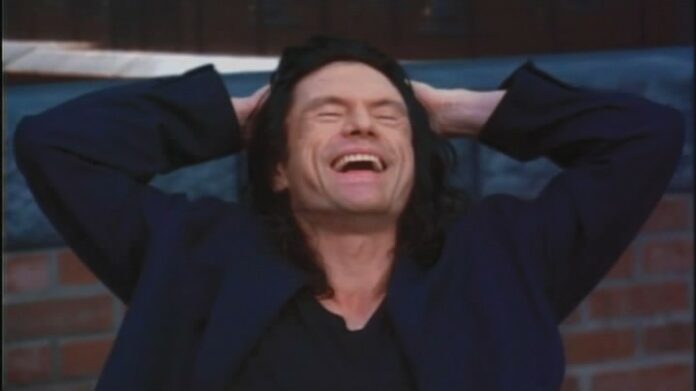
Steve Jaxon has been telling me for the last two weeks that he can take the heat of a roast. After 40 years as a public figure, he’s got thick skin.

But Jaxon called me up last night. “I’m starting to tell people that they can be just a little bit nice to me,” he said, clearly desperate. Ah. Wussing out, I see.

He’s the one who called for a roast, and he’s getting a roast, dammit. Jaxon, host of The Drive, who celebrates 60 years on Earth and 40 years on the radio waves this week, is the victim of the Steve Jaxon 40/60 Roast—and boy, is he in for it. On board for the ruthless insults are comedians Will Durst, Johnny Steele and Dave Pokorny; the PD‘s Chris Smith; councilmember Gary Wysocky; council hopeful Hans Dippel; Bohemian contributor Daedalus Howell; and longtime friend and partner in crime Blair Hardman.

Guy Fieri? He’ll be there, too, probably trying to avoid some leveled barbs of his own. The Steve Pile Band provide the tunes, and yours truly, who drops by Jaxon’s show The Drive on KSRO every Wednesday, has been tapped as roastmaster.

An FCC-friendly live broadcast airs 3–6pm on KSRO 1350-AM, and then the F-bombs fly for the real deal at 7pm on Friday, Jan. 18, at D’Argenzio Winery. 1301 Cleveland Ave., Santa Rosa. 7pm. $20–$25. 707.546.2466.

Heart Trails

Art from the Heart a massive benefit auction with over 100 artists

Road to Wellville

Hospitals and clinics move toward a preventative model of wellness

Drone Speak

Last November, the Bohemian reported on Sebastopol resident Barbara Briggs-Letson's participation in a delegation to Pakistan, where over 176 children and hundreds of other innocent civilians have been killed by U.S.-led drone strikes. This month, Briggs-Letson, along with Toby Blome, an organizer of anti-drone vigils at Beale Air Force Base, and Dianne Budd, a physician who volunteers with Doctors...

Letters to the Editor: January 16, 2013

Letters to the Editor: January 16, 2013

Heavy Lifting

Olympic weightlifting: not just for muscled-up meatheads anymore

A People’s Spirit

New exhibit in Sonoma encompasses the struggles and determination of the Cuban people

The ‘Til Two

Speakeasy in Petaluma more than a night owl's paradise

Major Scale

SambaDá helps keep music in the schools

Happy Birthday, Delicious

They grow up so fast. It seems like just yesterday Napa's Oxbow Public Market was barely able to stand on its own, and look at it now, celebrating five years and looking more precious each day. There are several cute things this market does so well. Like the restaurants with everything from $8 duck tacos to freshly shucked oysters, and...

A Roast!

Lousy bastard Steve Jaxon turns 60
11,084FansLike
4,606FollowersFollow
6,928FollowersFollow