Co-Op Country

0

On Jan. 26, the Share Exchange presents a workshop on co-ops, focusing on worker ownership. Co-op developer and author of Holy Cooperation! Andrew McLeod will lead the presentation, which includes introductions to various cooperative forms and startups and envisions how Sonoma County could benefit from the unique business model. McLeod examines a cross-section of faith and cooperative economics, taking a hard second look at social practices that have fallen out of favor in mainstream business and religious circles. Sponsors include Summit State Bank, Alvarado Street Bakery, Community First Credit Union and others. Attendees are asked to bring their own bag lunch. The daylong workshop is on Saturday, Jan. 26, at the Share Exchange. 531 Fifth St., Santa Rosa. 9am–4pm. $40–$50. 707.583.7667.—Rachel Dovey

Co-Op Country

Cotati City Councilmember Pat Gilardi has accepted a job as district director for county supervisor Susan Gorin. Gilardi had served on the Cotati City Council for 13 years and won reelection last November, but the lure of working for Gorin—a $73,000 annual salary helps—proved too strong to resist. This leaves the city with another vacancy, the fourth in the past four years. Each of the other spots has been filled by appointment rather than special election, which could cost the city upwards of $20,000. This is by far the most positive of the four vacancies, however; other open seats being caused by campaign finance scandal, special recall election and a sudden, unexpected death. But it leaves the city with another new face to get used to, with a first-time mayor on the dais.—Nicolas Grizzle

Power to Persuade

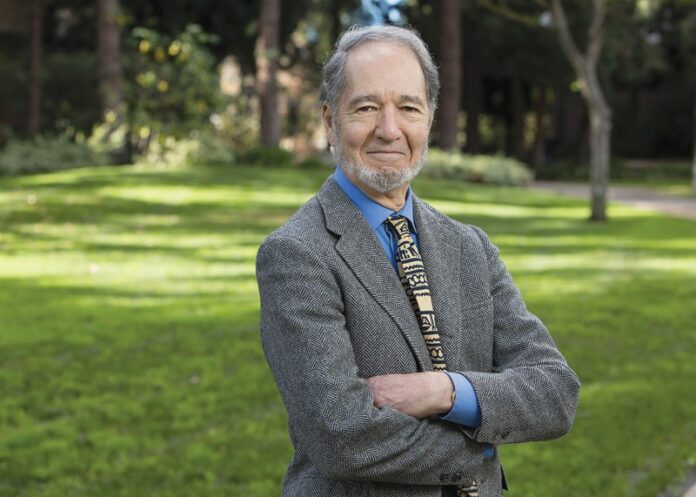
Preserving wildness takes certain skills. Many conservationists are lawyers, persuasive writers and speakers. But we can’t leave earth-saving to the professionals. “All hands on deck!” is the urgent cry. The internet gives us power to reach out, but to be effective in moving others, we need to take some tips from the radically altered world of . . . sales.

Daniel Pink, author of To Sell Is Human: The Surprising Truth About Moving Others, claims that all of us are now in sales—a pursuit so changed from what it once was that it is hardly recognizable.

If we loathe the very idea of sales (as the author did before he researched his book), it’s time to toss out obsolete stereotypes. Pink posits that the era of the sleazy used-car salesman is over—as irrelevant as the social structures that once gave him power to exploit naïve buyers. The internet gives (almost) everyone the power of information, so whether it’s retail purchases or medical treatments, we are virtually immune to victimization by sleazes—who, by the way, no longer thrive in today’s marketplace.

Most of us buy and sell online, but those of us who are not selling products or services for a living are nevertheless doing what Pink calls “nonselling sales”: moving others. We do it with every email we send, every pitch we make to friends or employers to entice them to see things or do things differently.

Moving others demands skills entirely unlike the ones used in scripted, predatory sales. Nonsales selling requires cooperation rather than competition, and compassion rather than coercion. Even more surprising, the new practice of moving others is rooted not in money-grubbing but in service to others and to making the world a better place. Pink is not pushing an imaginary idealism here, but rather demonstrating the results of scientific research. Studies show that we do better work (including traditional product sales) when we are serving more than our own self-interest, and we perform at higher levels when we know we are serving a higher cause.

To perform well in our work—as teachers, restaurant servers, doctors, shopkeepers, lawyers, health professionals, contractors and, yes, nature advocates—we must develop skills of attuned and empathic listening, seeing things from others’ perspectives, responding positively to the suggestions of others and measuring the success of our endeavors not upon whether we have sold an item or an idea but whether we have made things easier for another human being, and thus made the world a little better.

“In wildness,” Thoreau wrote, “is the preservation of the world.” In moving others is the preservation of wildness.

Dignified Senility

Rather startlingly, Quartet is the first movie to be directed by Dustin Hoffman. You’d never guess in a thousand years he was behind the camera; there’s little trace of the actor whose against-the-grain, immersive performances changed movie acting in the 1970s.

The film is a cattle call for every British thespian over the age of 60. When not repeating the maxim about old age not being for sissies, the retirees at a home for aging musicians instruct visiting music students. The place is in fiscal trouble, and the hopes are that a charity gala might save the manor with the reunion of four singers whose performance in La Traviata is still cherished decades later.

Billy Connolly plays Wilfred Bond, recovering from a stroke which has left him an erotomaniac. (“It’s the stroke talking,” he says after delivering himself of some dirty reminiscences.) His good female friend and co-star Cissy (Pauline Collins) is drawn deeper into senility. And the most reluctant hold-out is the new arrival at the home, Jean Horton (Maggie Smith), once a heartbreaker, now so unnerved that even a passing cart full of laundry makes her jump.

She makes a twofold refusal to perform music live: she can’t give a substandard performance because “I can’t insult the memory of who I was.” But the other half of her reluctance is guilt: the fourth member of the proposed reunion is her ex-husband and former partner, already a resident when Jean arrived.

Tom Courtenay, playing ex-husband Reginald, asks the question “Did she know that I live here?” with two different emphases; it’s a taste of his range. When this movie gets overfond of its cast, Courtenay cools it down. He shows the cold blue light of old age, the irreconcilable hurt. He thought he could count on “dignified senility” in his last years, until the ex-wife who crushed his heart turns up to rekindle the pain. In a movie this essentially mushy, he stands tall.

Quartet is ultimately a gathering of actors lining up for a curtain call; however deserved that applause is, they have so much more to give.

‘Quartet’ opens Friday, Jan. 25, at the Rafael Film Center, 1118 Fourth St., San Rafael. 415.454.1222.

Butchery by the Bay

0

Here’s a fun survey to take in a room full of beef industry executives: How many of y’all went through that phase in high school when you went vegetarian, you know, for ethical reasons? Any hands?

Count Anya Fernald, for one. Having read that it takes 12 pounds of grain to make one pound of beef, the earnest student swore off meat. After college, she worked with cheesemakers in Sicily, coordinated Slow Food Foundation programs in Europe and directed San Francisco’s Slow Food Nation event. Now, as CEO of Belcampo Meat Co., she says, “I love meat, I love talking about it, love thinking about it!” Clearly, she’s comfortable with the ethics of this new venture.

Belcampo is an ambitious “ranch to table” operation. Unlike smaller grass-fed operations that can only offer shares of animals in frozen parcels, Belcampo has scaled up a vertically integrated production, processing and retail system that’s set to go statewide. The first in a chain of butcher shop and restaurant outlets opened in Larkspur in November 2012.

Fernald was initially brought in as a consultant when investor Todd Robinson purchased land in Siskiyou County, she says, speaking a mile-a-minute from her Oakland office. Little wonder. She’s also developing a 20,000-acre sugar plantation in Belize with a “farm to bottle” rum distillery powered by biomass, plus coffee and chocolate, and a 12-room agritourism lodge.

“It’s bigger and more engaging in some ways than the California operation,” Fernald says. “There’s lots of chemical agriculture in Belize, and it’s a very, very delicate ecosystem in an amazing delta of rivers.”

As if that wasn’t enough, Fernald also consults for Belcampo’s cattle ranch in Uruguay. That’s a commodity operation, and the beef will never be shipped to the California market, Fernald insists. “I don’t care about the math, it just doesn’t feel right.”

Unlike Uruguay, however, lack of viable grass during summer months is a big issue in California’s grass-fed beef business. “I’ve seen enough of the shady side of grass farming,” Fernald avers. At Belcampo’s CCOF certified organic ranch, a crew of veteran ranchers and bright-eyed ecology graduates are able to keep the cattle on pasture for all but a one-and-a-half-month “bridge” during the year.

The secret to their system is, it’s not just cows. It’s a mob. Cattle, sheep, goats, heritage pigs, ducks and chickens are rotated through the pasture inside electrically fenced enclosures. “Keeping all those animals is kind of a party trick,” Fernald says. “The animals look almost crowded.” Because the differing species graze at different levels, Belcampo’s farm managers can extract more productivity from this relatively poor range land. Following just three days of grazing, a particular area is rotated into one full year of rest.

The contemporary farm buildings include a kitchen, where future events will be held—for instance, they’re talking with local author and Butcher’s Guild cofounder Marissa Guggiana about holding butchery classes there.

[page]

“The whole production of food has been totally deskilled,” Fernald laments. “To get people to appreciate the quality, we need to re-professionalize the people who sell meat.” Belcampo opened its own slaughterhouse in Yreka, 20 minutes north of the farm. Animal Welfare Association–certified and designed according to the prescriptions of compassion-in-butchery advocate Temple Grandin, the abattoir is a key link in a transparent, easily traceable system, all the way to the consumer.

Echoing the farm’s Mount Shasta view, Belcampo’s Larkspur outlet is located at the Marin Country Mart, in the evening shadow of Mt. Tam, across from the Golden Gate ferry terminal. The big, red “B” painted on the building is hard to miss. Designed like an old-fashioned butcher shop, with white tile walls and marble counters, it’s a fairly straightforward space, with nothing stagey about it.

The cold case is neatly stocked with popular cuts, eclectic cuts and discovery meat: dry-aged picanha and bavette steak, ground beef and ground steak, lamb sirloin, pork belly, lamb hearts and lardo butter by the pound; quail, squab, duck and goose, too. So far, the lamb hearts are mainly popular with Marin County dog owners, says head butcher Chris Arentz.

Guardians of less gourmet dogs may be happy with the “dog grind” from the freezer case, comprised of lamb lungs and, well, other stuff. Leaving little opportunity to waste the animals that they’ve so thoughtfully raised is integral to Belcampo’s retail model.

If an item seems over-ordered, they can turn it around in the restaurant. The casual eatery adjacent the shop offers a short menu that changes daily. Order at the counter, take a number and sit; the wait isn’t long, and meanwhile, you can watch your Belcampo cheeseburger ($11) sizzling on the grill in the open kitchen—if the kitchen fans drown out the already unobtrusive music, that’s part and parcel. The burger is the real deal—fresh, moist ground beef on a toasted sesame bun, with butter lettuce, aioli and chutney. It’s simple, original and focused on the meat. A savory side of petite, fried Brussels sprouts ($6) is grilled blackly, caramelized and doused in citrus juice.

Menus change daily, and recently included a goat sandwich with Red Hawk cheese ($15), ham steak with honey and mustard ($11), beef tallow fries ($5) and several attractive-looking salads.

It’s not surprising to find Anya Fernald at a business meeting in the restaurant, although she’s slowed her pace just a bit, with infant daughter Viola in her arms. She’s taken a liking to chewing on lamb bones and goose thighs already, says her proud mother.

Belcampo plans a slow launch of shops in San Francisco and Los Angeles this year, topping out at 10 in California. They’re limited by what the farm can supply, and Fernald wants to make sure they’ll never be another sustainable-meat operation that ends up in the red.

“I want to be the one who figures it out and is here in 20 years,” she says. “And is thriving in 20 years.”

Belcampo, 2405 Larkspur Landing Circle, Building 4, Larkspur. 415.448.5810.

Blood Lines

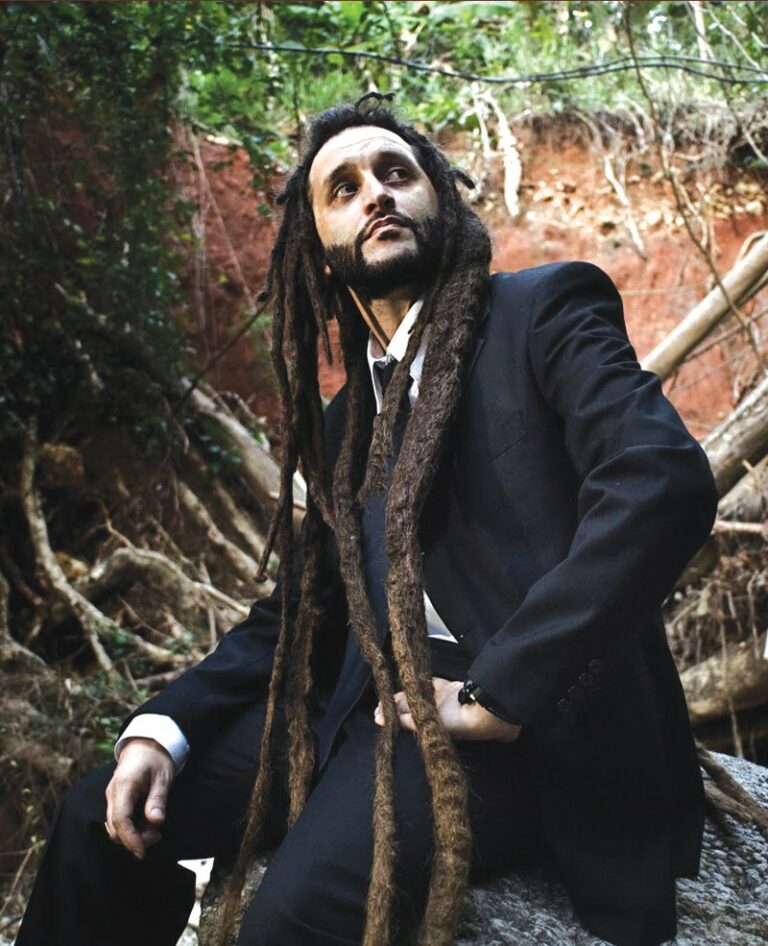
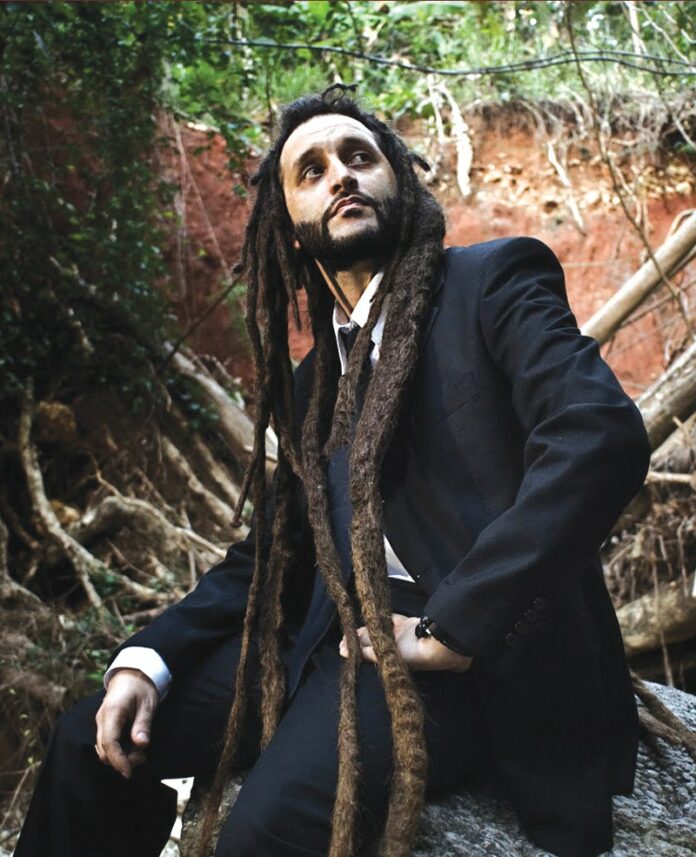
North Bay rappers Distant Relatives consistently deliver as an emerging force in Bay Area underground hip-hop. Raised in Rohnert Park and Santa Rosa, lyricists Vocab Slick (Brian Gibson) and Maynee (Joseph Carter), along with Ireland native DJ Ricky Switch, are 10 years deep into representing the “Boondox” of Sonoma County. After releasing their second mixtape and fourth full-length album Re-Soul, Distant Relatives join Bay Area hip-hop legends Blackalicious on Jan. 26 at the Phoenix Theater.

The group’s lyrics are relevant, weighted with content and intentionally distanced from the materialistic assault of the commercial rap game. On the title track, Vocab rhymes: “Makes no difference what your skin color is / or where your residence / town house or tenements / Long as your sentiments / are well thought like sentences / We all have dreams that outweigh our measurements.”

“We speak a positive message,” says DJ Ricky Switch. “One song at a time, one person at a time makes a difference.”

For the Re-Soul mix tape, the group took it back an era. “We were doing a lot of dubstep and getting burnt out on it,” says Vocab. “Maynee and I started rapping to these soul inspired hip-hop beats, to sharpen our songwriting and get into the next Distant Relatives album. We recorded a few songs, and it took off from there. It’s a nod to the old school.”

Re-Soul is a beat-driven followup to Distant Relatives’ 2011 album This Changes Everything, an impressive live-instrument project produced by local audio wunderkind Rick Vargas, sound engineer for TRI Studios in San Rafael and producer for Carlos Santana, Furthur and Lauryn Hill. “I linked up with Rick at Laughing Tiger Studio [in San Rafael],” says Vocab. “After sessions ended for the day, we had the use of every instrument in the place, and he can play 90 percent of them. We have Hammond B3 organs on there, Wurlitzer keyboards, live drums, all kinds of shakers and guitars, trumpets. He was the brains behind what the sound was going to be, and pretty much scripted a movie score for us to rap to.” (The record features guests the Grouch & Eligh and Zion-I.)

Even with several side projects and another album in the works, Distant Relatives are far from satisfied. While preferring to proceed without a formal label, the group continues to rise. “We are independent,” clarifies Vocab. “Strictly DIY, do-it-yourself. What you see is because we worked hard to do it.”

Forks & Corks

Just because the last of the Christmas trees have been plucked from the sidewalks and the Santa plates packed away for another year doesn’t mean we need to stop eating, drinking and making merry. Case in point: Forks and Corks, a four-part dinner series at Healdsburg’s Spoonbar that kicks off this Saturday, Jan. 26. Seven chefs a-cooking. Three sommeliers a-pairing. Even a mixologist with a rare recipe.

Hosted by Spoonbar’s own executive chef, Louis Maldonado, each of the four themed dinners are co-created by top Bay Area chefs and wine experts. For the debut meal, Maldonado teams with Michelin-starred chef James Syhabout (pictured) to celebrate global influences and local Sonoma ingredients with dishes that include sea urchin and crab in a coconut bath, Guinea hen with green curry aromatics, and Parsnip milk tapioca with mandarins.

“Where Land Meets Sea” is the theme for the dinner on Feb. 23, which will feature Outerlands’ chef Brett Cooper alongside Sommelier Kevin Wardell of Bergamot Alley. The series wraps up with an as-yet-to-be-decided themed meal prepared by chef Lauren Kiino and sommelier David Lynch on April 20. With the exception of March’s Swine and Wine Dinner, which is part of the Annual Pigs and Pinot Celebration package, all meals include six courses for $110.

For more information and to reserve a seat, call 707.433.7222.

Forchini Winery

0

It’s been a long time since I’ve driven like an asshole down Dry Creek Road. There were times. There was that one time when, temporarily impaired by embarrassment over a trivial episode, I blew through the stop sign at Lambert Bridge Road. The usual crew perched in front of the Dry Creek General Store passed in a blur, but I could almost hear them tsk-tsking behind me.

It was the end of harvest, and, chasing a shaky lead on some second-crop Zinfandel, hoping to make homemade hooch on the cheap. Up and down a little driveway I cruised in my beat-up Nova, knocking on doors, leaving notes, looking for my “contact.” It felt like some kind of shady drug deal. When I learned that I was in the wrong place, I decided that it was really, really important to go back and retrieve my note (I was just a nervous young shaver of, oh, twenty-something). That’s when one of the ranchers chased me down the road his truck. I can’t say that he said anything cross to me, but clearly, with one dismissive look, he wasn’t particularly impressed with my story.

And that’s the whole sorry reason I never returned to Forchini Winery until just now. I have to say, I’m impressed with what they’ve done with the place. There’s a handsome Italianate tasting room, built since my last sortie. Proudly stocked with gold medal-bearing bottles and tributes to winery dogs past and present, it’s a cozy little space where conversation strikes up easily among visitors.

Jim Forchini looks the part of grizzled grape rancher with some justification, having been at it for four decades. Like many of his neighbors, however, he earned his dirt in another field, as an aerospace engineer in Southern California, and later Santa Rosa. “I just kept moving north until I ran out of gas,” Forchini explains to a couple of wine club members.

The Italian theme plays through the 2009 Papa Nonno Tuscan-Style Red ($22), which is actually Zin, in the main. Rich in brambleberry and cocoa flavor, the 2009 Old Vine Zinfandel ($28) is classic Dry Creek Valley. The 2010 Russian River Valley Chardonnay ($20) is oddly floral a bit, but the vanilla and caramel finish is flavorful, cat-tongue dry and squeeze-of-lime tart; the 2008 Cabernet Sauvignon ($32), the kind of soft and round, chocolate-covered black cherry of a Cab that will be ready to drink at the end of the drive home—the responsible drive home.

Forchini Winery and Vineyards, 5141 Dry Creek Road, Healdsburg. Friday–Sunday, 11am–4:30pm. Tasting fee, $10. 707.431.8886.

A School Divided

0

A proposal to consolidate two schools raises issues of racial segregation and equity with deep roots in southern Marin.

The Sausalito Marin City School District currently oversees three campuses. Two—Bayside Elementary and the Martin Luther King Jr. Academy middle school—are traditional public schools, while the K–8 Willow Creek Academy is a charter school. The district’s proposal would move Bayside students from their current Sausalito campus, which they share with Willow Creek, to the Marin City MLK campus, creating two schools district-wide—a traditional K–8 in Marin City and a K–8 charter in Sausalito. Reasons for the move include dollars currently lost on doubled-up administrative fees—up to $250,000 a year—and educational opportunities that could come with a larger student body, among others.

But the landscape of the move concerned community members at a meeting on Jan. 15. As anyone familiar with the history of southern Marin knows, Sausalito and Marin City share a zip code and little else. While Sausalito touts a median household income of $110,000, Marin City’s median is just over $46,000. And while the hillside city overlooking the Bay is roughly 93 percent white—ACS data through 2011 reports that there is one black person living in all of Sausalito—the unincorporated county pocket tucked away behind it houses the largest concentration of African Americans in Marin County, at roughly 45 percent. To consolidate the two traditional public campuses, both with a black student majority, in Marin City while keeping the charter with a black minority on its current hillside campus in Sausalito would be a move that, some say, looks an awful lot like segregation.

Sausalito resident Marie Simmons invoked a Jim Crow comparison, saying the move would create an educational system that was “separate but equal.”

“How do you prepare [the kids] for an increasingly diverse society if you segregate them?” she asked the district board. “Studies have shown that children do better if you integrate them.”

Another community member expressed her fears in starker terms.

“From what I’ve seen, it looks like all the board wants to do is bring the kids down to Marin City and dump them,” she said.

[page]

Board president William Ziegler acknowledged that the community has historically seen the charter and traditional schools in the district as competitors, but added that he believes this to be “a perception, not a reality.”

The charter utilizes an interdisciplinary, project-based approach along with its textbook curriculum, and has scored the highest of the three schools on the last five California Academic Performance indexes. It’s expected to expand onto the campus vacated by Bayside.

However, although Willow Creek is located in Sausalito, it doesn’t draw students solely from the wealthy city. Several Willow Creek parents pointed out that the charter is open to anyone in the district and draws more than a hundred students from Marin City. Its student body is far more racially diverse than the city in which it sits, with 30 percent Latino students, 20 percent African American students and 10 percent Asian students.

“We are all 94965,” one parent said, referring to the zip code. “Anyone can go to Willow Creek.”

But through back-and-forth between parents and administrators at the meeting, that statement, though theoretically accurate, was revealed to paint an imperfect picture of the charter system.

For example, although technically any child in the district can attend the high-performing school, it’s not possible for all children in the district to do so. Under school finance law, the district could not disband its traditional schools and still receive basic aid funding.

And superintendent Valerie Pitts made another point. Like many charters, Willow Creek requires a minimum of 50 hours of parental volunteer time.

“Our parents are working,” she said, speaking for the traditional public schools. “They can’t necessarily come and volunteer.”

Other community members stood up in support of the traditional schools.

Julius Holtzclaw, an administrative assistant to the district and a graduate of Bayside and MLK, addressed what one community member labeled as an unfair attitude of shame toward the noncharter schools.

“I feel like I’m always having to defend Bayside,” he said. The school’s API rose an impressive 56 points from 2011 to 2012, and now stands at 808, not far below Willow Creek’s 859. MLK’s score still lags below the two at 698, though it’s risen 60 points over the past five years.

Pam Dake was one of several people who requested more time before the impending move.

“We would have an opportunity to create collaborative dialogue between Sausalito and Marin City, which we don’t have now,” she said.

Unspoiled Land

0

Instead of cows and native shrubs and grasses, imagine the scenic Marin Headlands or Point Reyes covered in little boxes made of ticky-tacky. The 1963 Pete Seeger hit “Little Boxes” (and the Malvina Reynolds version, from Weeds) is famously inspired by Daly City’s multitude of one-story architectural clones; if it weren’t for a few brave souls, that’s how most of the land north of the Golden Gate would look, too.

“Everyone says they didn’t know this story,” says filmmaker Nancy Kelly of the proposed coastal development. “They thought it was always like this.” With her husband Kenji Yamamoto, she made a documentary to honor those who dedicated themselves to preserving the land in a post–World War II era, a time when development was king and owning a home meant believing in America. “The idea of having open-space parks near where people live was unheard of at the time,” she says. “Conservationalists,” as they were referred to, was a term on par with “communists.”

Thanks to a few young, idealistic lawyers, the director of a nature conservatory and “two little old ladies,” as Kelly says, the only reminder of the Gulf Oil company looking to develop the land into a planned community named Marincello is the ironically named Marincello bicycle trail in the Marin Headlands. And now, an award-winning documentary. Rebels with a Cause screens Thursday, Jan. 24, at Rialto Cinemas. Q&A with filmmakers afterward. 6868 McKinley Ave., Sebastopol. 7pm. $15. 707.525.4840.

Living in Limbo

0

Bella Ortega didn’t spend her 18th birthday with family or friends. Instead, she was locked up in a Sonoma County Juvenile Hall cell on a violation charge, thinking hard about how she’d ended up in such a low place on such an important occasion.

Soft-spoken, dark hair pulled back into a low ponytail and dressed in a gray Oxford shirt and jeans, Ortega says the experience triggered a stark understanding of her life choices. “It made me open my eyes to do bigger and better things,” she explains.

A student from Ridgway High School, Ortega graduated last December and immediately began a job hunt. She plans to attend Santa Rosa Junior College this fall, but it’s been a challenge to fill out the online financial aid application for various reasons, like access to computers and to her mom’s information. A job application to Kmart resulted in a call back for a group interview, where she was the youngest applicant. She didn’t get hired.

“I thought it would be a little easier to find a job, but it’s not,” she says. Ortega admits that her arrest record—she’s on probation until Feb. 27—might pose an extra obstacle.

But Ortega’s situation can’t be completely attributed to her past legal troubles. The reality is that the youth unemployment rate in the United States is at its highest since World War II. A new report by the Annie E. Casey Foundation finds that 6.5 million teens and young adults between the ages of 16 and 24 are neither in school nor in the workforce. These are the “disconnected youth”—and the rates are highest among black and Latino populations.

The numbers are no better in Sonoma County, where 12.5 percent, or one out of eight youth between the ages of 16 and 19, are classified as “disconnected,” according to data from the American Community Survey listed at kidsdata.org. For teens in that age bracket who aren’t in school or working a job, Sonoma County ranks a dismal 22 out of 24 for California counties with populations over 250,000.

Like Ortega, these young adults experience fierce competition from older workers for entry-level jobs. They lack the skill set needed for any higher level jobs that are available. Add poverty, lack of role models, low-performing schools and absent parents to the mix, and you get a recipe for disaster.

Increased illegal behaviors and dependence on public aid are two common byproducts of a young adulthood spent “disconnected,” says Kellie Noe from the Sonoma County Department of Health Services. Noe is a coordinator of Cradle to Career, a new countywide partnership that connects all segments of the educational continuum—from prenatal, to early childhood, to K–12 and into college and technical training.

[page]

“Any young person has the potential to become disconnected if they are not given the appropriate support and access to quality educational programs,” Noe says. “We also know that place matters, and that foster youth who age out of the system at 18 are at higher risk; we can’t let these facts dictate who is successful and who is not. Our community has a responsibility to all young people.”

Fortunately, Sonoma County has a good number of nonprofit groups squarely aimed at building possibilities for younger residents. VOICES Sonoma, located in a gray Victorian house near the corner of Mendocino and College avenues in Santa Rosa, is a youth-centered nonprofit that provides transitional services, from food to employment to educational guidance, for foster, homeless and at-risk youth.

“It’s a space to deconstruct and reconstruct,” says Jimmy Toro, a youth founder since the center opened in 2009. The bright-faced, 23-year-old operations assistant in a yellow-sleeved sweatshirt has a clear passion for his work, evident during a tour of the warm, welcoming space.

Throughout the afternoon, the house buzzes with teens and young adults using desktop computers, sitting underneath colorful bulletin boards rife with employment and education resources; they eat healthy, donated food in the upstairs kitchen; they hang out chatting in the foyer and on couches in the cozy common room. Up to 24 youth may come through the door in a given hour, looking for community, safety or just a bite to eat. Once inside, they discover tutoring and workshops on job readiness and development and financial aid assistance.

Humans are physically and emotionally hard-wired for connection, writes Brené Brown, a research professor at the University of Houston’s Graduate College of Social Work. A 2011 study funded by the National Institute of Mental Health shows that the shame and pain of social rejection and disconnection is as real as physical pain—with potentially devastating effects.

Amber Twitchell, program director at VOICES, feels that it’s the responsibility of adults, employers and nonprofit agencies to foster a sense of connectedness between young adults and their greater community. If we don’t, she adds, then we really have lost our disconnected youth.

“When we think of Sonoma County,” says Twitchell, “we think of affluent communities, but there really is this undervalue of young people that either came out of the foster system or the probation system or just didn’t have good families or didn’t complete high school who are now just kind of hanging out there.”

Part of the challenge lies in the fact that some youth don’t understand how to navigate work and educational systems, says Michelle Revecho, program manager at the Social Advocates for Youth (SAY) employment center.

“Ask people when they got their first job, and a lot of times they say my parents knew somebody, or a coach or their parents helped with a résumé,” she says. “A lot of these youth don’t have those networks or those connections that they can tap into.”

[page]

Jeramy Lowther ran away from home when he was 16 after his family was evicted from their home. He ended up in foster care, and then homeless, before going to live at the Hanna Boys Center in Sonoma. Now 18, Lowther is two days into his first semester at Santa Rosa Junior College and lives at the Tamayo Village, a transitional housing unit provided by SAY, where he pays $245 a month in rent to share a room. He gets little financial support from his parents; Lowther is learning to navigate the system on his own. This month he applied for jobs at Jack in the Box and Juice Shack, sans results. But he’s not giving up.

“Without SAY or VOICES, I would have never graduated high school,” says Lowther. “I would have gotten myself into a much worse position. I don’t know where I would be now. I don’t know if I’d have a place to live.”

The importance of community resources and connections is finally being embraced by the Sonoma County Board of Supervisors. On Jan. 8, the board listened to two hours of presentations on efforts to ramp up educational and workforce opportunities for youth.

The board voted to give $375,000 to education and workforce development programs, including $100,000 to Scholarship Sonoma County, which provides scholarships to college-bound students in need. It also adopted the community pledge for Cradle to Career.

“We can continue to invest later in additional social services, or we invest now in our future workforce,” Supervisor Mike McGuire told the audience. “We must be focused on educational achievement, particularly as we see this county changing in demographics.”

Those demographics have much to do with age. A county study recently found that 43 percent of high school graduates continue with post-secondary education and less than 25 percent of low-income youth graduate with degrees. At the same time, the retirement age population in the county (ages 60 to 69) increased 76 percent between 2000 and 2010.

Meanwhile, Ortega continues to look for work and sort out her future. She hasn’t received much, if any, help from the family. Freshly sober, her mom struggled with addiction and abuse for years; her father is unemployed and comes around to visit only once in a while. For now, Ortega jumps among the houses of family and friends, never staying in one place for long.

“I get stressed out, which is bad for me because my health isn’t too good,” she says. But walking helps, as does writing and drawing. She wants to get through this time intact, hopefully in school and with a job at the end of it. She’s leaning on SAY for now, and guidance from a 25-year-old mentor.

“For me, being out of high school, being 18 and not having a job or too much support, is pretty hectic,” Ortega says. “I want so much in life that I can’t really get right now.”

Co-Op Country

On Jan. 26, the Share Exchange presents a workshop on co-ops, focusing on worker ownership. Co-op developer and author of Holy Cooperation! Andrew McLeod will lead the presentation, which includes introductions to various cooperative forms and startups and envisions how Sonoma County could benefit from the unique business model. McLeod examines a cross-section of faith and cooperative economics, taking...

Power to Persuade

It takes salesmanship to preserve nature

Dignified Senility

'Quartet' an adagio on age and music

Butchery by the Bay

Belcampo Meat Co. poised for expansion, longevity in the sustainable-meat business

Blood Lines

Distant Relatives on 'Re-Soul'

Forks & Corks

Just because the last of the Christmas trees have been plucked from the sidewalks and the Santa plates packed away for another year doesn't mean we need to stop eating, drinking and making merry. Case in point: Forks and Corks, a four-part dinner series at Healdsburg's Spoonbar that kicks off this Saturday, Jan. 26. Seven chefs a-cooking. Three sommeliers...

Forchini Winery

On aerospace, Italy, and running out of gas

A School Divided

School desks California
The self-segregation of a Marin County school district

Unspoiled Land

Thanking the 'rebels' who saved Pt. Reyes

Living in Limbo

Sonoma County ranks high for 'disconnected youth'—those out of school and unable to find a job—and reversing the trend isn't easy
11,084FansLike
4,446FollowersFollow
6,928FollowersFollow