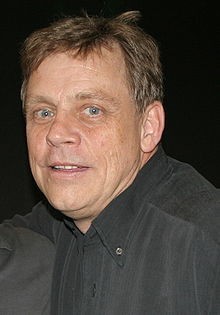
March 3: Aaron Lewis at the Uptown Theatre

0

aaron.jpg

He truly is a little bit country and a little bit rock ‘n roll: Aaron Lewis, lead singer of the hard-rock group Staind, is following in the footsteps of Lionel Richie, Bon Jovi, and Darius Rucker (of Hootie and the Blowfish) and crossing over into Nashville. To Lewis, a transition to country “is full circle because, this is the first music I was ever exposed to as a child.” Lewis dropped his first full-length solo country album, The Road, last November; he has hit the road and is touring all over the U.S. Drive him crazy by loudly requesting Staind songs on Sunday, March 3, at the Uptown Theatre. 1350 Third St., Napa. 8pm. $40. 707.259.0123.

Joseph Phelps Freestone Vineyards

0

Hacks that we are, wine writers may be counted on, come November, to promote a Pinot pairing for T-day, nod to the best bubbly for NYE blowouts and to swoon with enthusiasm for lip-smacking summer sippers come May, employing all the awkward alliteration that the genre allows. It’s all pretty standard stuff, until you get to International Polar Bear Day.

That’s observed on Wednesday, Feb. 27, at least according to a freebie Ocean Conservancy calendar that I received from my folks—thanks, folks. On this day, the organization Polar Bears International only asks that we take the “Thermostat Challenge,” turning it down a few degrees as a gesture of action on climate change, which threatens to erase the habitat of that most charismatic of megafauna.

Celebrate with ice wine, naturally. This is not in jest. As noted in studies from Germany’s wine-centered Geisenheim Institute, the ice wine category faces a similar threat if temperatures continue to rise. Ice wine is made from white grapes that freeze toward the end of the season. The result is a sweet wine that’s a bit unlike other “late harvest” wines, since ideally, the grapes have frozen before raisining or being overtaken by botrytis mold. Traditionally made in select years in Germany, it’s been popularized in Canada, where, indeed, Ontario’s Ice House Winery features polar bear statues as mascots. But if the grapes don’t freeze on time, ice wine is off the menu.

Meanwhile, in St. Helena, Joseph Phelps Vineyards got the notion to produce an ice wine from estate-grown Scheurebe grapes in the 1990s. The 2011 Eisrébe ($50 split) has an aroma that’s more banana liqueur than white raisin, and a mead-like, clean, sweet palate. Although it feels heavy, with more than 20 percent residual sugar, the alcohol is only 8 percent. It’s available at the tasting room in Freestone, which, by the way, has been renamed to emphasize that it’s the westernmost outpost of Joseph Phelps. Fans of vibrant Chardonnay, or Pinot of the forest duff and fresh plum variety, might want to stop by at some point. Look for the little red barn.

But where does Phelps come up with an Ontario-level freeze? Alas, the Scheurebe is trucked to a commercial freezing facility in Sacramento. So it’s got a little carbon footprint. Just turn down that thermostat and bundle up. No doubt that Eisrébe paired with apple cobbler will add an extra layer of fat to see you through the winter.

Joseph Phelps Vineyards, 12747 El Camino Bodega, Freestone. Daily, 11am–5pm. Tasting fee, $15. 707.874.1010.

Shake It Up

Finally, a good excuse to drink! Thanks to Literacyworks, on March 8 attendees will be able to get their drink on guilt-free at Straight Up!, a vodka cocktail competition and tasting. The money raised goes to literacy programs and organizations here in the North Bay, so that warm feeling inside you get won’t just be from the booze, but from the satisfaction of giving to a good cause.

At the annual event, mixologists from restaurants all over the North Bay battle it out for bragging rights and the coveted title of “Best Charbay Flavored Vodka Cocktail in the North Bay.” Competing restaurants include Cyrus, Farmstead, Graffiti, Hilltop 1892, John Ash, JoLe, Rocker Oysterfellers, Sonoma Meritage, the Sheraton and Tres Hombres. Judging the competition is the Bohemian‘s own James Knight, the Pacific Sun‘s Dani Burlison, the Press Democrat‘s Heather Irwin and the KRSH’s Brian Griffith. We warn you: media people know how to drink.

To spice things up, the speakeasy-themed event features 1920s-era casino games, period dress and jazz-age music by the Rivereens. So while slurring your speech and pretending to be Nucky Thompson from Boardwalk Empire, you’ll also be helping a child learn his ABC’s on Thursday, March 8, at the Petaluma Sheraton. 745 Baywood Drive, Petaluma. 6–9pm. $35 includes two drink tickets. 707.364.4567.

Treasure Found

In Margaret, cruising through life on a pair of really good thighs and a complicated smile, Lisa Cohen (the astounding Anna Paquin) is a self-described “privileged, Upper West Side Jew.” Lisa is faced with a moral awakening, and it’s like the description of enlightenment in Zen: it’s a red hot ball she can neither swallow nor spit out.

One day Lisa flirts with an MTA bus driver (Mark Ruffalo) long enough so that he accidentally crushes a pedestrian. As all problems come down, utterly, to herself, Lisa involves herself in a search for justice, though this doesn’t interrupt her coming of age, losing her virginity, crashing her report card and getting into fights with her shallow actress mother (J. Smith-Cameron).

Director Kevin Lonergan (You Can Count on Me) captures an adolescent state of mind usually celebrated in movies as the height of whip-smartness—flattering the hell out of a really lucrative ticket-buying demographic. Paquin’s acting should have got every award there was to get in 2011, as seen when she moves through a hallway to a boy she likes to tease or lashing out at the genuinely bereaved in a self-righteous fury.

The supporting work is immaculate. Matthew Broderick was brave to take the part of an inept English teacher, whose quote of a Gerard Manley Hopkins poem provides the title. Matt Damon excels as a Midwestern good-guy of a geometry teacher who doesn’t know enough to keep away from Lisa. Other fine performances abound: Jeannie Berlin as the one woman who really has Lisa’s number; a Latin stage-door Johnny (Jean Reno, at his best), an essentially merry liability lawyer (Jonathan Hadary) and a patient-as-a-pachyderm cop (Stephen Adly Guirgis).

So why haven’t you seen this movie? Because due to behind-the-scenes Hollywood fighting, some ugly lawsuits and three different edits of the film (one by Martin Scorsese, believing so much in the film that he worked for free), Margaret opened in exactly two movie theaters: one in L.A., one in New York. It is, essentially, a buried masterpiece.

Margaret recalls Woody Allen in his prime, only without the schtick. Similar to that ’90s masterpiece The Sweet Hereafter, it’s about how litigation has come to replace self-analysis. As for its length, Margaret is in the company of long movies (Secrets and Lies, Tokyo Story, Short Cuts among them) that could have been even longer. The editing process sabotaged its release; the movie was utterly unpromoted. Hopefully its luck will change as word gets out.

‘Margaret’ screens Friday, March 1, at 7pm and Sunday, March 3, at 4pm. Sonoma Film Institute, Warren Auditorium, 1801 E. Cotati Ave., Rohnert Park. $7. 707.664.2606.

Street Script

0

Fifty-six years ago, when he was eight, Audie Foote’s life changed. It would be decades, though, before he fully realized it.

“I was with my mom,” he recalls. “We were walking in New York City, and I saw a homeless man, this derelict, and I made some kind of joke. I made fun of him.”

His mother stopped in her tracks, right there in the street, and told her son a story, a true story, something that had happened to her shortly after World War II. From that moment on, Foote was never unkind to street people again, and that story has stayed with him ever since. Now that story is being told again, this time as a stage play, The Angel of Chatham Square, opening this weekend by the Raven Players.

“I wrote it as a one-act for a short play festival the Raven was having a couple of years ago,” he says of his first stab at playwriting. “People were just incredibly moved by the story, so I decided to turn it into a full-blown two-act play.”

Directed by John DeGaetano, the play takes place in 1948, when Foote’s mother, a waitress, was required to wait each night after midnight at a bus stop near Chatham Square in New York’s notoriously rough Bowery district.

“The first night,” says Foote, “she was waiting for the bus, and this guy approached her, a scary guy, clearly with evil intentions. Suddenly, this homeless guy appeared, and he protected her until her bus came. The next night, when she got off the bus at Chatham Square again, this guy who’d saved her was there waiting, to watch over her again until her connecting bus arrived.”

Gradually, the one fellow became a small crew of guardians, and as she got to know them, learning their stories as she waited for her bus, she decided to return the favor.

“She started bringing them doggy bags from her restaurant,” Foote says. “She brought them my father’s old clothes. She brought them cigarettes. They started calling her the Angel of Chatham Square.”

Foote, who’s appeared in close to 20 plays over the last seven years, plays one of his mother’s beloved street guardians. The experience of watching his mother’s life-changing tale blossom into reality has been, he says, surreal—and incredibly rewarding.

Foote is fairly certain that Angel will not be his last play.

“I know a couple of other stories,” he laughs.

Otherwise Occupied

Friends, if you have seen a recent screening of the film Five Broken Cameras (recently at the Rialto and currently on Netflix) you are excused from reading further. You already share the outrage of the Palestinian people—a people who are prisoners in their own home, a people without a nation and without citizenship, who have no power over their own lives.

Since 1967, the Palestinians have been living under military occupation. Israeli forces regularly confiscate private land, imprison individuals (including children) without process, demolish their homes, bulldoze orchards and crops, destroy shops and businesses, and shoot maim and kill civilians. Over four thousand Palestinians are currently imprisoned by Israel; 27,000 homes have been demolished since 1967; 6,638 Palestinians have been killed since Sept. 29, 2000. Included in this figure are 1,516 Palestinian children—killed simply going to school, playing, shopping or just being in their homes.

Israel currently has 170 settlements and 99 “outposts” in the occupied territories, home to half a million Israeli citizens and off-limits to Palestinians. This separation due to ethnicity is akin to the apartheid regime of South Africa.

In the face of all this, you may feel that this is not our problem. Why should we in Sonoma County care about this ancient rivalry going back thousands of years? We need to care because this international outrage is being carried out with our tax dollars. Thanks to intense special interest lobbying, we give Israel $3 billion each year—or over $8 million per day.

What can we do? We may not be able to affect the Israeli lobby directly, but we can withhold our consent to these policies by the power of our pocketbooks. One example: perhaps you saw the SodaStream commercial during the Super Bowl. The SodaStream factory is an Israeli company operating on illegal land in the West Bank to make home-carbonation appliances. Refuse to buy products from Israeli settlements. Talk to merchants who help support the occupation by selling SodaStream, such as Macy’s, JCPenney, Costco, Target, Staples, Crate & Barrel, Bed Bath & Beyond—and, yes, even Sebastopol Hardware.

Pieter S. Myers is an artist and printmaker living in Occidental.

Open Mic is a weekly op/ed feature in the Bohemian. We welcome your contribution. To have your topical essay of 350 words considered for publication, write op*****@******an.com.

Early Adopters

0

It’s 2:30pm, a time Beth Hall calls her golden hour.

The reason is simple: her four-and-a-half-year-old Tyler is at preschool, and everyone else is down for a nap. That includes three-year-old Piper, 18-month-old Quinn and, as of this year, her newly adopted children from the Democratic Republic of Congo—three-year-old Grayson and two-year-old Charlotte.

From a bedroom down the hallway, we hear movement and a few cries. Hall pauses to listen.

“I gauge who’s crying to see how much work it’s going to be,” she says.

Four weeks ago, the Santa Rosa mom and her husband, Mike, came back from the DRC with the two new additions to their family. With five children under age five, two of whom only speak French, the experience has been compounded by the poverty and societal trauma that, until a month ago, was their adopted children’s present. And while this adoption no doubt marks a turning point for the two, it’s a transition that hasn’t exactly been easy.

Hall began considering adoption when she was told she might never have children, an assessment that obviously turned out to be wrong. But even with biological children, the couple knew it was something they wanted to pursue. When they began learning of the massively underreported conditions in Africa’s second-largest country, they turned their attention there.

Since 1998, the DRC has been the site of massacre and sexual violence so overwhelming that the few writers covering it tend toward comparison rather than digits. Incited by the same militant refugee group responsible for the Rwandan genocide, the First Congo War—sometimes called the African World War—involved nine countries, 20 armed factions and has claimed the lives of roughly 5.4 million people. A 2006 report commissioned by the UN relief effort UNICEF puts it like this: “[E]very six months, the burden of death from conflict in the DRC is similar to the toll exacted by the 2004 Indian Ocean tsunami.”

Though the exact number of rape victims in this bloody travesty is unknown, the report estimates them to be in the hundreds of thousands. “Sexual violence is consciously deployed as a weapon of war,” it states. Abortions are punishable by imprisonment, and yet women and girls who are raped and become pregnant often become social pariahs, rejected by even their families, according to the document.

Considering all this, a scene witnessed by Hall makes tragic sense. She was in the DRC, in an area far from military occupation but still suffering from poverty that afflicts roughly 70 percent of the country’s population, according to Children’s Rights Portal.

“A mom walks by with four or five kids, and she’s holding a little three-month-old,” she recalls. “She comes up to us, to a man who was with us, and asks him to take her baby. She was serious. He very kindly said no, and so she asked again, pushing her baby toward us. She just looked like a mom. She just looked like a regular lady.”

Parents routinely abandon children they can’t care for in public places, Hall says, hoping desperately that something better than the life they themselves can give will come along. According to Children’s Rights Portal, the country is home to roughly 70,000 children living on the streets.

The new mom asks not to discuss what she knows about her children’s past, for the sake of their privacy. But she adds that she doesn’t know much.

“A lot of people will never know their kids’ stories due to the nature of the abandonment,” she says. “We hope to just give them a rich knowledge of their history, and to know that while they were not unloved, the hope is to give them a better life, or a life at all.”

Seated on her living room floor, Hall details the highs and lows of the family’s first tumultous month together, which she likens to a roller coaster.

“Adoption, especially international adoption, can be romanticized,” she says, “and while I really did not do that, it’s tough. They’re traumatized by their loss, and mourning as well as a two-and-half-year-old can.”

That morning, for example, Charlotte watched Hall put her shoes on and immediately started crying.

“I just took my shoes off, and I was like: ‘Mommy’s not leaving,'” she says.

But the high points are there, too.

“One moment can be so difficult, they act out all of their trauma on top of the trauma of just being three, and then the next moment they’re so sweet and you think they can’t get any more darling,” Hall says.

The Halls adopted through a faith-based organization called Compassion for Congo, and Beth recommends that parents trying to adopt internationally learn as much as they can about the organization they’re going through, to avoid bizarre situations enabled by language and cultural barriers and for-profit adoption agencies. In 2009, for example, This American Life did a story on a Samoan agency that took children from their families in what the biological parents thought was a boarding program, and the American parents thought was a done-deal adoption.

“Ask a lot of questions, not just of your home-study agency, but of where you’re getting the kids, because it’s easy for them to be very vague,” she says.

She also recommends that adoptive parents get as clear a picture of the foster home or orphanage as they can, and try not to be led by blind idealism. Reactive attachment disorder, which can occur when a baby or young child is passed between primary caregivers, is a psychological affliction that can come with abusive or neglectful homes, she says.

“It feels really good to look at such a huge problem like the Congo or abandoned children, and then to look in my kids’ eyes and say, ‘I cannot help all of them, but I can help you two,'” she says.

The Best Food Money Can’t Buy

At the Santa Rosa Health Center in Roseland, 50 percent of Dr. Patricia Kulawiak’s adolescent patients are obese. “There is an epidemic of diabetes in this area,” Kulawiak tells me over the phone, “and since good, healthy food is expensive, poverty severely limits your options.”

Thanks to the Work Horse Organic Agriculture (WHOA) Farm, dozens of these families receive bags of fresh, organic produce every week—for free.

Started two years ago by Eddie and Wendy Gelsman, WHOA Farm’s motto is “The best food money can’t buy,” a tidy summation of their mission to provide fresh, organically grown food to those who can’t afford it. “It’s not a crime to be poor,” says Eddie. “Everyone has the right to eat well.”

Located on 16 acres on Petaluma Hill Road, WHOA Farm began with six months’ worth of nonprofit application paperwork and a few raised beds, which the Gelsmans cultivated themselves. In January of 2012, they hired young farmers Balyn and Elli Rose to live on the property and run the farm, which, as the name indicates, is one of the few in the area that harnesses the power of draft horses to plow the fields. “Horses,” says Wendy, “are the ultimate piece of the sustainability puzzle.”

Even though they were just a few weeks from having their first child, and even though they had never before worked with draft horses, the offer to work on the farm “was an opportunity we just couldn’t pass up,” says Elli, who met Balyn in an agro-ecology class at UC Santa Cruz, where they both graduated in environmental studies.

“They are two highly educated and highly skilled agriculturalists,” Eddie says of the couple, who prior to WHOA ran a farm and CSA program called Wild Rose Ranch for four years.

Together with Dan Evans, the only other full-time WHOA Farm employee, the Roses grew and donated 15,000 pounds of organic produce, 876 baskets of strawberries and 556 dozen eggs to health clinics and food banks across Sonoma County last year. (According to Cathryn Couch of the Ceres Community Project, WHOA provided $14,000 worth of food to their organization alone.)

While plenty of farms and supermarkets donate their leftover produce once it is no longer marketable, WHOA is unique in its practice of growing food specifically to give away. Produce is harvested in the morning and delivered that same afternoon in order to “give people food with the highest nutritional value,” says Eddie.

Anyone who’s ever inherited a surplus of fennel or radicchio understands that fresh produce is a wonderful thing—as long as you know what to do with it. Which is why education is at the heart of WHOA’s mission. “We are committed to giving away food responsibly,” explains Wendy, “which means that we want people to be comfortable with the produce and understand the nutritional value of what they’re eating.”

[page]

To that end, health centers in Santa Rosa and West County offer nutrition classes (some taught by Ceres) in which patients learn how to turn things like kale and rutabaga into healthy, delicious meals. All who attend—many of them at-risk, uninsured and low-income—are given a bag filled with WHOA produce to take home.

Ever ambitious, the Gelsmans want to do even more. “Our goal is to be able to give away teams of draft horses to young farmers,” says Eddie, whose plans for WHOA also include hosting educational workshops and internships. Of course, nothing is possible without funding. In addition to private donations, grants, fundraisers, monthly volunteer days, and an outreach booth at the Santa Rosa farmers market—where customers receive a jar of Elli’s sauerkraut or fruit preserves for a ten-dollar donation—WHOA is also cultivating creative financial solutions.

The Gelsmans are leasing the Crane family’s 11-acre vineyard (conveniently situated smack-dab in the middle of WHOA’s property), and with the generous help of winemakers Guy and Judy Davis, will soon make WHOA Pinot Noir. Beginning in the fall of 2014, they hope to sell 600 to 800 cases annually, which could provide over 50 percent of WHOA’s operating budget.

On a recent Friday afternoon, I walk around the farm with Elli and 11-month-old Olivia, who mimicked the sound of the hens clucking outside their mobile chicken coop; every couple of days they move it to fresh, new grass. Using expert Doc Hammill’s “gentle horsemanship” approach, Balyn, who calls this his “ideal job,” harnesses Chip and Mark, whose shiny blonde manes and tails belie their dude-like monikers.

The Gelsmans’ vision is evident in the green fields of oat hay shimmering in the winter sunlight. After conditioning the soil for spring planting, the hay will be harvested and fed to the horses, who will then plow the fields where onions, lettuce and parsley sprouts will soon take root. And come September, a patient at the Santa Rosa Health Center will discover the spicy kick of mustard greens or the surprising sweetness of a just-picked carrot.

“By honoring the people who are used to getting the leftovers,” Dr. Kulawiak says, “WHOA is working to dismantle health disparities. They are helping people make changes that will last for generations.”

I’m Just a Po’Boy

0

In a gruff, slightly drawled voice, New Orleans transplant Rob Lippincott describes the food at his Healdsburg restaurant, the Parish Cafe. “These dishes haven’t changed in over a hundred years, and I don’t want them to,” he says on a sunny afternoon on the veranda of the converted 1860s home. “You can put your Californication on everything, but don’t do it to my food.”

What started as a bustling beignet business at the Santa Rosa and Windsor farmers markets four years ago blossomed into a full-blown Naw’lins po’boy shop late last year. While delicious, the place is decidedly NSFD (not safe for diets). “Look, it’s fried,” says Lippincott of the sandwiches so close to his heart. “But ain’t nothing wrong with that. It’s a beautiful way to cook.”

Before the po’boys start flowing at 11:30am, breakfast at Parish Cafe is positively decadent. If it doesn’t stick to your ribs, it’s not coming out of the kitchen. Pain perdu ($9), French toast with toasted bananas and pecans in a bourbon sauce, constitutes a wonderfully sneaky way to have dessert for breakfast. The crawfish and andouille omelette ($11) boasts color and texture so perfect it looks Photoshopped.

The po’boys are the main squeeze, though. Served on Healdsburg’s own Costeaux bread, these monsters come in eight- and 12-inch sizes, the larger often split for two people. Rookies can start with the ham and cheese or turkey ($8–$11), but serious eaters should try the fried seafood sandwiches with shrimp, oyster or catfish.

The best is the half and half, with oyster and shrimp ($12–$16). A fresh ocean taste permeates the fried goodness and mayonnaise, satisfying those naughty inner cravings while staying unbelievably light and crunchy. One hand holds the sandwich, the other holds the uncapped Honkey Donkey, a hot sauce to be liberally applied before each bite.

As if the regular menu isn’t tempting enough, Lippincott gives a peek into the restaurant’s secret menu. Deep fried pickles, mushrooms or green tomatoes? Just ask. The aforementioned half-and-half po’boy covered with debris gravy (trimmings from roast beef simmered for hours into gravy) can be had by whispering “the Peacemaker.” And Lippincott’s favorite off-menu item is the Frankenstein: fried catfish, oyster and shrimp covered in debris gravy. It comes with two burly guys to carry you out to your car after the food coma sets in (unnecessary disclaimer: it actually doesn’t).

Lippincott, a former charter boat captain, started his culinary career at a po’boy shop/dive bar in New Orleans. “In New Orleans, po’boys are everywhere,” says Lippincott. “It’s what New Orleaneans eat once or twice a week. All the recipes here, they come from my mom, they come from my grandma.”

Future plans include outdoor entertainment on a gaslamp-lit patio, and in May, a return to Santa Rosa and Windsor farmers markets selling those famous beignets (which are also available in the restaurant).

“Healdsburg, as hot as a food spot as it is, it’s all geared toward the tourists, nobody’s thinking about the locals,” says Lippincott. “I want somethin’ else. I want a po’boy.”

Parish Cafe, 60-A Mill St., Healdsburg. Wednesday–Sunday, 9am–3pm. 707.431.8474.

And the Winner Is . . .

0

Halfway through last year’s Stage One Theater Arts awards, held annually in downtown Santa Rosa, a curious passerby stopped to take in the scene at the Glaser Center, where a merrily multicolored crowd, youthfully dressed to the nines, was milling around the lobby during the show’s intermission. Once informed he had stumbled upon the Stage One Theater Arts awards, the inquisitive gentleman pondered that information for a moment.

“Stage One. Stage One,” he repeated, eventually adding, “That’s good. There’s still time to find a cure.”

Created five years ago by actor-writer-director and SSU graduate Lito Briano, the SOTA awards honor excellence in Sonoma County theater. But they were initially designed as an on-campus celebration of Sonoma State University’s theater arts program.

“I just wanted to create an extra bit of excitement and energy,” Briano says. “From the beginning, I envisioned it as something that might someday reach beyond SSU to the entire theater community of Sonoma County.”

The following year, Briano took the SOTAs off campus, and began the long, slow process of turning them into something the entire community could embrace.

“It’s a work-in-progress,” says Briano, who admits that some of the youth-quake shenanigans of the first few years—co-hosts in boxer shorts; musical numbers in questionable taste—might have been less elegant than they were (undeniably) crowd-pleasing. This year’s choice of host, Sixth Street Playhouse artistic director Craig Miller, should lend some extra class and credibility.

As for the awards themselves, with nominations and voting patterned after the Academy Awards, Briano has made a huge effort this year to increase the voting membership by reaching out to every theater company in the area. From the original 20 theater students who acted as members of the Stage One Theater Arts Awards Academy, the total SOTA membership now numbers 92 people and counting.

Still, there are some major players in the Sonoma County theater community who prefer to sit the SOTAs out, concerned that the awards don’t accurately represent what’s going on in the area. Winners, for example, tend to be those shows presented by the area’s younger and newer theater companies.

“There are awards, and then there are awards,” says Elly Lichenstein, executive artistic director of Cinnabar Theater. Lichenstein declined the invitation to become a voting member, though Cinnabar’s shows—and Lichenstein herself, who gave one of the year’s best performances in So Nice to Come Home To—are still eligible for a number of awards. “My feeling about SOTA-type awards, including Best Of awards and all of those things, is that they tend to be a bit too self-congratulatory. ‘Vote for me! Vote for us! Tell all your friends to vote for my performance!’ That doesn’t have any real value for me.

“I can’t in good conscience call my theater company ‘the award-winning Cinnabar Theater,’ if winning that award really just meant I was the one with the most Facebook friends.”

In fairness to the SOTAs, the Facebook scenario Lichenstein describes better fits the Broadway World Awards, in which anyone at all can log on and submit a vote. Though membership to the SOTA Academy is fairly easy to obtain for those in the theater scene, it isn’t the kind of operation where friends and family can affect the outcome of the vote.

“I do think that theater awards can have value,” remarks Beth Craven, artistic director of Main Stage West theater in Sebastopol, and a former associate professor of Theater at SSU. “Awards ceremonies can rally the troops and get your patrons excited, and I do think it can be a good thing.”

According to Craven, what the SOTAs need to do next is establish stricter criteria for voting members, requiring each voter to see a minimum number of shows at a variety of theater companies. The Bay Area Theater Critics Circle, in comparison, requires members to see a minimum of 40 shows per year, and no one is allowed to vote for a show they did not see. Unfortunately, the Critics Circle awards rarely ever honors shows north of Petaluma.

“There are ninety-something shows happening every year in this area,” Craven says. “I try to get out and see as much theater as I can, but last year I never made it to SSU to see anything they were doing, and I doubt many of them made it to Main Stage West, so I don’t feel it would have been fair for me to be deciding what was the best in Sonoma County.”

Ultimately, though, according to Briano, the SOTAs were designed to be less about winning and losing than about celebrating Sonoma County theater and theater artists, new and experienced, young and old.

“The SOTAs are a great big party,” he says. “It’s how theater artists get together to support all of our efforts. Basically, it’s just a way to have a good time together.”

March 3: Aaron Lewis at the Uptown Theatre

He truly is a little bit country and a little bit rock ‘n roll: Aaron Lewis, lead singer of the hard-rock group Staind, is following in the footsteps of Lionel Richie, Bon Jovi, and Darius Rucker (of Hootie and the Blowfish) and crossing over into Nashville. To Lewis, a transition to country “is full circle because, this is the...

Joseph Phelps Freestone Vineyards

Cold comfort for the polar bear

Shake It Up

An 80-proof fundraiser

Treasure Found

'Margaret' a buried masterpiece

Street Script

'Angel' a touching true story of homelessness

Otherwise Occupied

On Palestine and homemade-soda machines

Early Adopters

When a local couple traveled to the Congo to adopt a child, they returned with two

The Best Food Money Can’t Buy

While most poor families get the world's leftovers, WHOA Farm grows organic food specifically to be given away

I’m Just a Po’Boy

Parish Cafe brings traditional New Orleans sandwiches and breakfasts to Healdsburg

And the Winner Is . . .

How do Sonoma County's own Tony-style awards work?
11,084FansLike
4,446FollowersFollow
6,928FollowersFollow