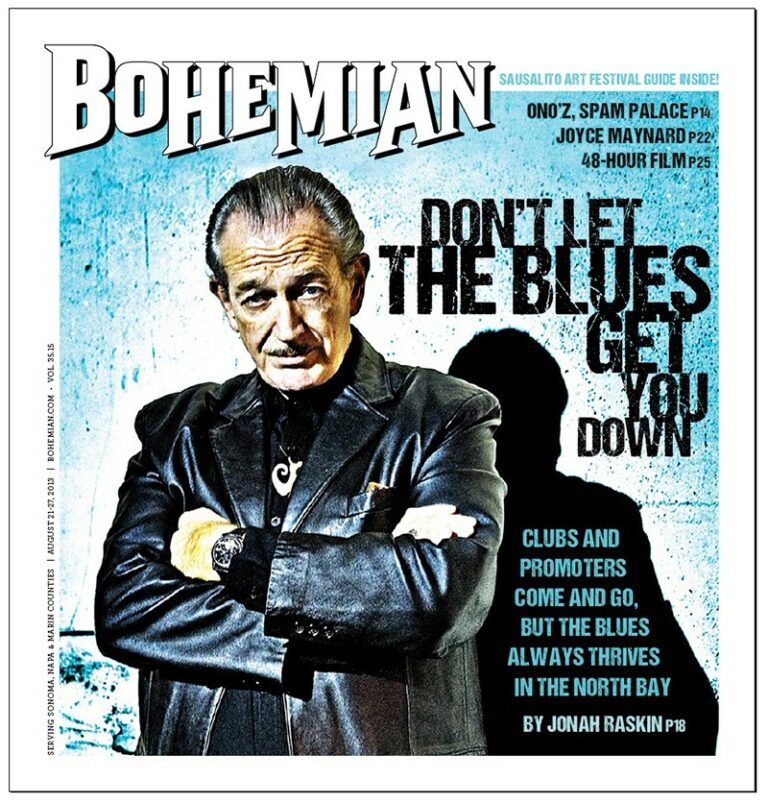
Rebirthing the Blues

0

Every Sunday evening, whether the sky’s blue or cloudy, Bill Bowker, 69, blasts the blues from Studio “H” at the KRSH (95.9 FM), the station that has long played the moody, soulful music that began in Mississippi and traveled north and west to Memphis, Chicago, Detroit and California, morphing all the way.

“On the KRSH, Blues with Bowker,” he says, his mouth practically kissing the microphone as he selects yet another tune by Bobby “Blue” Bland, who died this summer at his home outside Memphis at the age of 83. Van Morrison, the Band and the Grateful Dead popularized Bland’s biggest hits, such as “It’s My Life, Baby” and “Farther Up the Road.” And ain’t that the way it’s always been with the blues; somebody’s always covering the originals and making a mint.

For two hours tonight, Bowker’s in blues heaven. So are listeners who’ve learned to hear the difference, thanks in large measure to his regular Sunday-night shows, between a really good English translation of the blues and the authentic Mississippi sound.

Like blues aficionados almost everywhere these days, Bowker gets hot and bothered about the state of the music that he loves and promotes. At times, he even sounds down about the local blues scene. After all, the Last Day Saloon, a venerable venue for the blues, just closed its doors. But one club closes and another opens. At the newly risen Fenix on Fourth Street in San Rafael, there are blues jams with local talent, and special guests such as Lynn Asher once a week on Wednesday nights all year long, plus a bar and gourmet food. Sounds like blues heaven.

Merl Saunders Jr., son of Merl Saunders, the preeminent piano player and king of the keyboards, books the shows at the Fenix. His father’s love of music rubbed off on him a long time ago, as did a lot of music history. Born in San Mateo, Saunders Sr. collaborated with the likes of Jerry Garcia, Mickey Hart and Bonnie Raitt. He died in 2008, but his soul lives on at the Fenix. Saunders Jr. tells me, “Name any kind of music. Go ahead. We have it all: jazz, bluegrass, soul, classical and, of course, the blues.”

In fact, the Fenix House Band—drums, guitar, keyboard, sax and bass—wails the blues every week. Saunders is committed to new talent and to veteran all-stars. “Six months after opening,” he tells me, “we’ve already showed up on the radar as a destination for touring bands.”

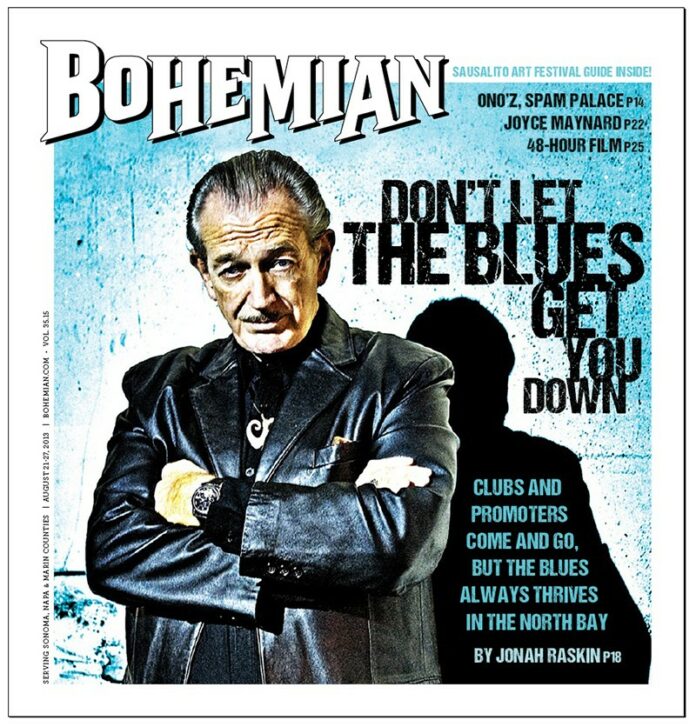
There are heaps of young talent out there, from Marin to Mendocino, and tucked away in the hills are the old masters: singer, songwriter and guitarist Nick Gravenites, and Charlie Musselwhite, who plays a mean harmonica and who hosts and boasts his own show on the KRSH.

With all that talent, Bowker never gets down about the blues for long, if only because his own show has a steady stream of loyal listeners. He also sees hopeful signs close to home. Just the other day, he drove up to “Beverly Healdsburg,” as he calls it, to attend a free concert in the plaza by the North Mississippi Allstars. “The place was packed with the older wine crowd,” he tells me. “You know, the guys with the sweaters and the women fashionably attired. The blues isn’t their thing, but they were getting into it, starting to move their bodies. The blues are infectious and damned hard to resist. I went home feeling mighty pleased.”

[page]

Bowker’s good friend and fellow aficionado of the blues Sarah Baker shares his upbeat outlook, though she, too, mourns the closing of the Last Day Saloon where she performed for years. “I think the blues are taking a downturn right now,” she tells me. “But they’ve taken downturns in the past and they’ve bounced back. The fact is that there are always blues lovers, just as there are always people who have the blues. The music will always speak to them and for them. It’ll always have an audience.”

Baker and her band, Blues Kitchen, perform from Sonoma to Alameda, Contra Costa to Clear Lake, and she doesn’t intend to stop now. “Some blues performers, like Tommy Castro and Roy Rogers, are doing very well, and of course so is B. B. King, who never goes out of style,” she says. “It’s often a matter of luck who succeeds and who doesn’t. You have to persevere.”

This Labor Day, Bowker Family Productions brings the rollicking Sonoma County Blues Festival back again by popular demand to Lagunitas Brewery in Petaluma. If Bowker’s regular Sunday show serves up a steady diet of biscuits and gravy, the Sept. 2 show—the “Coahoma to Sonoma County” festival—offers scrumptious, finger-licking barbecued ribs. Once again, after 22 years of helming the festival, he’s the genial host.

Headliners include the hellacious harmonica player Charlie Musselwhite and his band, plus singer, songwriter and guitarist Johnny Rawls, who grew up in Mississippi and learned to play guitar from his blind grandfather. Also playing is Markus James, who combines down-home American blues with the music of Mali, and performs with drummer Kinney Kimbrough, son of legendary Mississippi bluesman Junior Kimbrough. The Hound Kings, an acoustic blues trio from San Francisco that includes Alabama-born Michael Benjamin, Scot Brenton and Anthony Paule, launch the fest at 2pm. Their show is free; James and Kimbrough are also free. What’s not to like?

Back in the 1970s when Bowker first arrived in Santa Rosa fresh out of L.A., where he had his own show, he thought he’d be in and out of town fast. “In this business, where rapid turnover is the name of the game, I never planned on a long stint here,” he says, his hands moving rhythmically across the control panel, the instrument he plays like a pro. (Rapid turnover indeed: just last week, KRSH-FM morning DJ Brian Griffith was let go from the station; Bowker, for the first time in years, takes over the morning slot this week.)

Born in prosaic Passaic, N.J., where the only blues that he could hear was broadcast on WNBJ, Bowker is all about the roots of the music. He loves the Delta sound and the echoes of Delta music he hears in local groups such as Blues Kitchen, the all-woman band, with Nancy Wenstrom, Sarah Baker and Jan Martinelli.

Blues Kitchen carries on the tradition of Ma Rainey, known as the “Mother of the Blues,” and the many blues sisters who have followed in her wake. Wenstrom, the band’s sultry lead singer and guitarist, hails from Texas and has performed for 40 years. She first heard the blues played by Eric Clapton and Jimi Hendrix, later from Otis Rush, famous for bending his notes brilliantly, and Magic Sam, who learned to play by listening to records of Muddy Waters. Little by little, she fell in love with the music that came out of Mississippi.

“The blues is an elusive woman,” Wenstrom tells me at Sarah Baker’s tiny studio during a break in an afternoon rehearsal. Strumming her guitar, she adds, “The blues hurt you like a woman, and they also make you feel real good like a woman.”

[page]

Baker, who plays keyboards and provides vocals, heard B. B. King and Rufus King growing up in both rural and urban Tennessee, her home state. “You would have to be blind, deaf and dumb not to see and hear the blues in Memphis,” she tells me. She adds, “The blues are not downer music. Rather, they provide a way out of feeling bad.”

Baker, Wenstrom and Jan Martinelli, who plays standup bass, perform every variety of the blues, from Sippie Wallace and Bessie Smith to Miles Davis and Horace Silver. They also offer their own originals: Baker’s “Use it or Lose It” and Wenstrom’s “Brickyard Blues.”

Martinelli began to perform in junior high. She had her own band that interpreted songs by Janis Joplin, Jimi Hendrix and Cream. “Blues Kitchen fans are mostly 40-plus,” she tells me. “We always have a great audience when we play at Armando’s in Martinez, but we’ve also had good listeners at the Redwood Cafe in Cotati.”

For Bowker, the blues are an untamed force. “I like the blues raw,” he tells me in a tone of voice that’s raspy and smooth all at the same time. He adds, “I first heard the blues as a kid, and they really scared me. Howlin’ Wolf gave me goose bumps. He still does. The blues still scare me.”

No mention of local blues is complete without the long-running Russian River Blues Festival, which for over three decades has brought the music of the dark juke joint to the sunny shores of the river in Guerneville. This year’s lineup includes Boz Scaggs, Robert Cray, Los Lobos and the California Honeydrops.

Once-a-year festivals are one thing; once-a-week jam sessions are another. John Ranis plays rhythm ‘n’ blues on the guitar when he’s not selling insurance at Allstar West in Petaluma. The Sonoma County Blues Society, a nonprofit that he’s often carried on his own back, aims to keep the blues alive. “It’s an indigenous American art form,” Ranis tells me proudly. No one is more enthusiastic about the blues than he, and no one is more supportive of new talent.

Every Wednesday night from 7 to 11, Ranis hosts a blues jam at Society: Culture House in Santa Rosa. To attend, one need not be from Mississippi, play like B. B. King or sing like Janiva Magness, the woman who lived the blues as an orphan in foster homes before she learned to sing them. Ranis welcomes one and all, even if one’s musical skill is just finger snapping and hand clapping. This September, performers include Norman Greenbaum and the Mike Marino Band. Right now, Ranis is especially excited about the two young musicians who make up the Honey Dippers. “Corey Herve and Gonz Ochoa play because they love to play, not because they’re making big money,” he tells me. “For new blood in the blues scene, they’re phenomenal.”

Dozens of locals—Bill Noteman, Sonny Lowe, Jody Counter, Levi Lloyd, the Scallywags and the Wilson-Hukill Blues Revue—express their love for the blues almost every night of the week, from the Willowbrook in Petaluma and the Tradewinds in Cotati to Aubergine in Sebastopol and the Blue Heron in Duncans Mills. Wineries showcase blues bands, too, and on KRCB, Mary Carroll hosts her heavenly program Lady Spins the Blues, with live musicians like Sarah Baker.

Whenever the local scene finds itself in the doldrums, Mississippi bluesmen come to the rescue. For his own blues fix, Bowker travels to Mississippi twice a year. He always comes home rejuvenated, and he always brings the blues back to the North Bay. “This year’s festival at Lagunitas will take listeners on a journey across the South, up Highway 61 to the Bay Area and the whole world,” he tells me. “People who come will be treated to a decidedly Mississippi feeling they won’t soon forget.”

[page]

THE THRILL AIN’T GONE: Upcoming blues festivals

Coahoma to
Sonoma County Blues Festival

Starring Charlie Musselwhite, Johnny Rawls, Markus James with Kinney Kimbrough and the Hound Kings. Monday, Sept. 2, at Lagunitas Brewing Company. 1280 N. McDowell Blvd., Petaluma. First two performances in the taproom, free. Tickets for Rawls and Musselwhite in the amphitheater, $10. Tickets available at the KRSH (3565 Standish Ave.,
Santa Rosa; Monday–Friday, 9–5), Lagunitas and online
at www.lagunitas.com.

Russian River Blues Festival

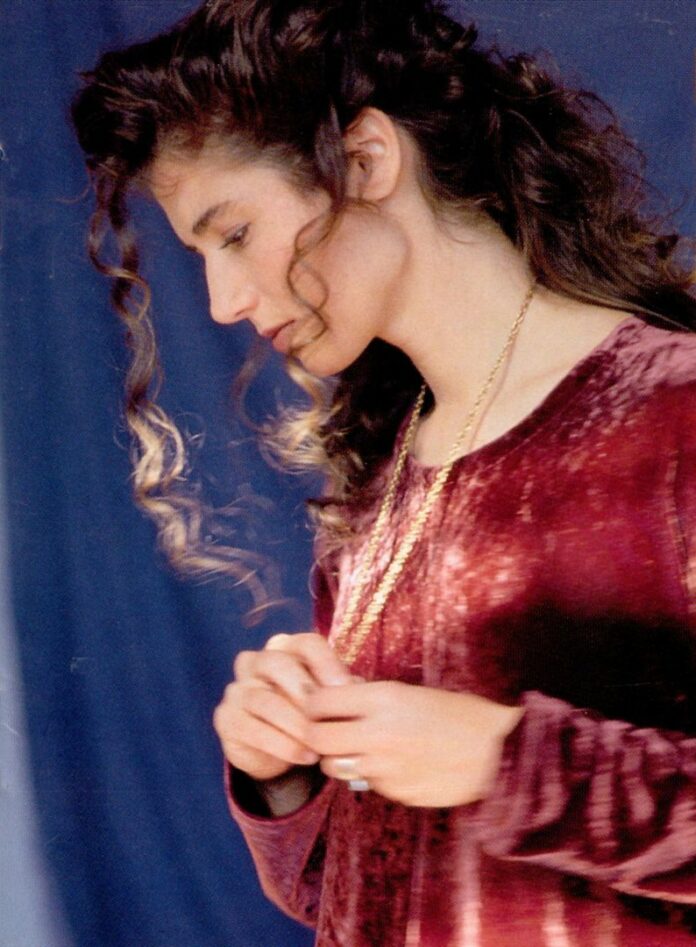
Starring Boz Scaggs, Robert Cray (above), Los Lobos and the
California Honeydrops. Sunday, Sept. 22, at Johnson’s
Beach, Guerneville. Gates at 10am. $50. 707.869.1595.
www.russianriverfestivalscom.

Sticking to It

Since the narrow defeat last November of California’s Proposition 37, which would have mandated labeling of genetically modified foods, the sentiment behind the proposition has spread to similarly conceived bills in 26 other states. Proponents of such laws mostly argue that we have a right to know what’s in our food. However, it’s probably fair to say that for many supporters, labeling would be a consolation prize in place of an outright ban on GMOs.

But GMOs are so well established in the United States, and they don’t appear to be going anywhere. And based on the momentum of GMO labeling initiatives on the state level, as well as voluntary labeling programs by retailers like Whole Foods and Trader Joe’s, it’s looking increasingly like a matter of when, and not if, some kind of nationwide labeling system is created. So instead of fighting about whether or not we need them, it makes sense for both sides to sit down and talk about how labels should look.

In an April blog post for Discover magazine online, Ramez Naam argued for GMO food supporters to stop opposing labels: “I support GMOs. And we should label them. We should label them because that is the very best thing we can do for public acceptance of agricultural biotech. And we should label them because there’s absolutely nothing to hide.”

According to most polls, the percentage of Americans that support labeling is in the low to mid 90s. To dismiss such popular sentiment would be to ignore the will of the vast majority. Naam further argues it could have counterintuitive side effects.

“At best, it’s condescending to consumers, sending a signal that ‘we know better than you what you should eat.'” By fighting GMO labeling, he argues, “we’re persuading those who might otherwise have no opinion on GMOs that there must be something to hide.”

One recent ABC poll showed that 57 percent of shoppers would be less likely to buy products that are labeled GMO, suggesting that a significant chunk of those who support labels aren’t afraid to eat GMO foods. Other common reasons for the support of labeling, according to polls, include opposition to GMOs for environmental reasons, the “right to know” and angst over corporate control of the food system. Polls may not ask it, but for many, genetic modification is more symbol than issue, just one part of the industrialized monoculture-based food system from which they wish to disengage.

Clearly, those 57 percent of GMO-fearing shoppers would represent a significant cut to the revenue of biotech corporations, and of corporate farmers who use GMO seeds, and it isn’t clear to what extent they will be able to make up the difference by squeezing processors, retailers and consumers.

Such financial concerns are part of why Big Biotech shouldn’t be a part of the labeling discussion: it has too much at stake, and wields undue influence—outspending the grassroots support of Proposition 37, for example, by five to one. Corporate recusal is something the pro-GMO contingent should get behind, too. Arguably, much of the grief felt by GMO supporters is inspired less by the technology itself than by the way it’s been rolled out.

Big Biotech’s history of unpopular moves, including lawsuits against farmers and a one-time opposition to voluntary GMO labels, has long posed a problem to GMO supporters, who often include a little Monsanto-bashing in their pro-GMO arguments as a means of communicating that Monsanto does not equal GMO. Perhaps these pundits would agree that it makes sense to exclude corporations from organizing and funding discussions about how labels should look.

Concerns about corporate behavior and motivation can overshadow the examples of GM crops that exist not to sell more pesticides or otherwise generate corporate revenue. The ringspot-resistant rainbow papaya, created at the University of Hawaii and Cornell University, was a public-sector effort that likely saved the state’s papaya industry from being wiped out by the virus. Efforts like these are easier to support, and wholesale anti-GMO ideologues should be clear about what, specifically, they oppose. An honest discussion about labeling could help tease apart distinct issues often lumped together.

Critics of labeling frequently argue that a general label, along the lines of “Contains GMOs,” communicates very little, because there are so many different kinds of GMOs. Perhaps the pro-GMO side could help create a system that tells us something meaningful.

Ramez Naam told me via email that he thinks GMO labels should be on products’ back labels, not on the front, as might happen if GMO-food supporters don’t come to the table. He also suggested how such labels might read—”Contains ingredients engineered to reduce pesticide use” or “Contains ingredients engineered to increase farm sustainability.”

Given the apparent inevitability of labeling, a meaningful system should be the goal for advocates on both sides of the issue.
Then, GMO skeptics could have their labels, GMO cheerleaders will have their nuance, and the
will of the large majority of Americans will prevail. Doesn’t that sound like how democracy should work?

Letters to the Editor: August 21, 2013

Gabe’s So-Called “Music”

Apparently, Gabe Meline personally does not mind watching his young child running around the aisles of Community Market, screaming about the motherfucking bitches that ain’t shit—what a cute little kid! (“Parental Advisory,” Aug. 14.) If Gabe could remove his hip-hop hat from his smug skull and see past his tattoos, he might begin to comprehend that one doesn’t have to be a conservative or a Christian to be dismayed by the precipitous collapse of any ethical sense at all in popular “culture,” enchanted as it is by worship of prison life and the “obnoxious bragging, anonymous sex, murderous gunplay, or rhyming with the F-word” he and his child enjoy so much. But that’s the so-called music he digs, and it will help create the future that he and his kid will live in. Good luck with that, Gabe. Why not try some Duke Ellington out on your little bundle of joy. That might open both your minds a bit.

“The ‘c’ in ‘rap’ is silent.”—Johnny Otis.

Santa Rosa

Omega-3 Scandal

Letter-writer Lauren Ayers (“Efren Needs Better Nutrition,” Aug. 7) hypothesizes that Efren Carrillo’s “demented” behavior results from the “invisible malady” of mental illness. And, further, that it is a physiological cause at the root of such improbable behavior from a promising well-respected political savant. Whether or not this is true, can we not accept the warped dis-harmony between our bodies and minds as among the main culprits?

Whoever you are, Lauren Ayers, my two twenty-something sons and so many of their ilk would be applauding you. Only the other day I was soundly lectured on the mayhem caused by the unsolicited introduction of fluoride in our water, not to mention the daily warnings to panic if it’s not organic.

“Dad, do you have any idea what processed foods are doing to the essential makeup of our bodies?”

Miss Ayers seems to know, recommending we substitute our steady diet of cheap addictive unnatural food products with more omegas, minerals and vitamins in natural foods. It might not have an effect on the political warts in the limelight these days, but then again, you never know.

Santa Rosa

The Kids, Fully Grown

Dani Burlison says in her article about teenagers (“Mom! I Need a Ride!” Aug. 14) that “you’ll pour yourself a glass of wine, sit back and . . . enjoy the last few years together.” There’s another stage, beyond the one she’s talking about, when your children come back as their own adult selves, merging the lessons you tried to teach them with the lessons they’ve learned on their own. I get great fatherly joy from seeing what interesting, creative, rooted men my sons have become, and from learning from them—and, heck, they occasionally even still ask us for advice. It kind of pays back for those challenging teenage (and other) years.

Sebastopol

No-Cost Fun

Thanks for the insightful parenting issue—I particularly enjoyed the short and hilarious “Which One Should I Buy?” I was reading it and laughing out loud as my two-year-old son was playing in the front yard on his combo “swing” and “pull up bar,” which is something his dad set up in our apple tree. It’s a long stick, hung from a piece of rope and tied in the middle—our little guy grabs it with a hand on either side and swings all over. It provides hours of no-cost entertainment. Right next to it is a homemade “tetherball,” a hacky sack tied with another rope hung from same tree, and when hit with a stick, we call it “piñata practice.” Here’s to good old-fashioned and cheap fun!

Santa Rosa

Write to us at le*****@******an.com.

Four Play

0

With over 50 restaurants participating, it’s not possible to list all that the Taste of Petaluma has to offer. But for a sneak preview, here are some appe-teasers.

Speakeasy, a newcomer to the event, offers a cold melon soup shooter topped with crispy prosciutto and microgreens. Once the salty meat takes hold, the sweet, cool melon soup calms the aggressive flavor, making for an interesting twist on the classic combination. At fellow newcomer Social Club, chunks of applewood-smoked pork shoulder are crisped up and garnished with heirloom tomato salad, busting with flavor at the peak of the season.

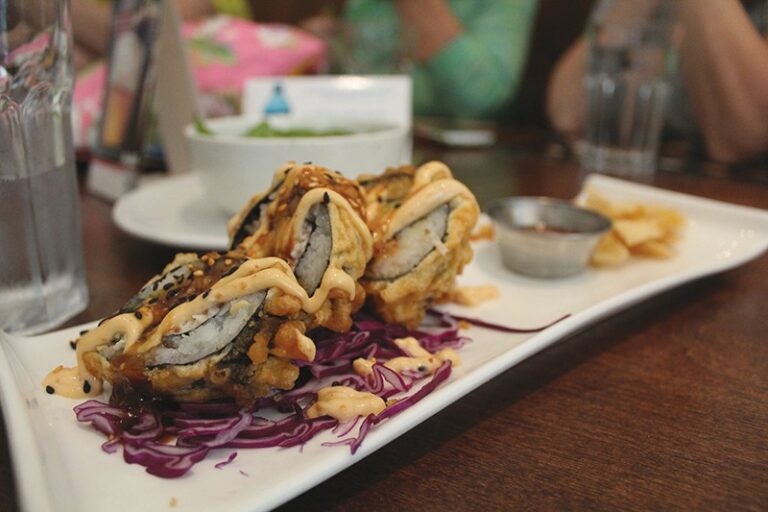
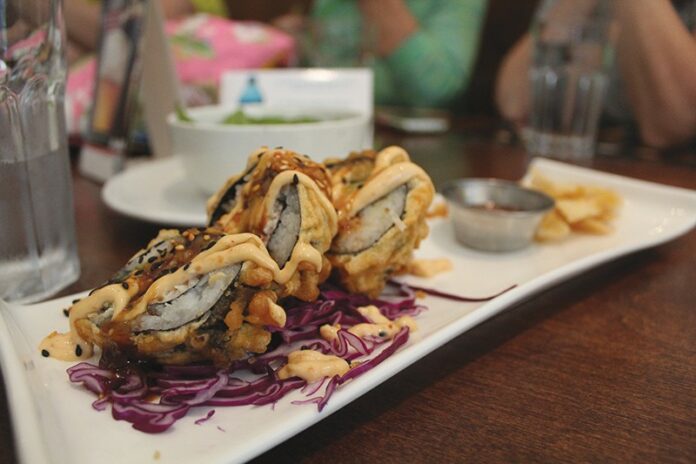
Corkscrew has a Europe-meets-Sonoma vibe, with a gorgeous bar fashioned to look like a flayed-out wine barrel. The pulled-pork sliders are fine, but the chocolate truffles are divine—especially when paired with a deep, dark red wine. Andy’s Kitchen & Sushi Bar is more than just a sushi bar, though the satisfying deep-fried unagi, crab and avocado roll topped with unagi sauce (pictured) might indicate no need to expand the menu beyond its namesake. Andy’s is also serving an interesting take on fries: mini corn sticks with sweet Thai chili sauce. They look like lumpy french fries, but they’re actually corn kernels stuffed into wonton wrappers. Sweet, salty and fried just right.

Taste of Petaluma takes place Saturday, Aug. 24, at restaurants throughout downtown Petaluma. Check-in at Putnam Plaza. 129 Petaluma Blvd. N., Petaluma. 11:30am. $40. 707.763.8920.

Review: ‘The Tempest’ at Ives Park

0

Tempest.jpg

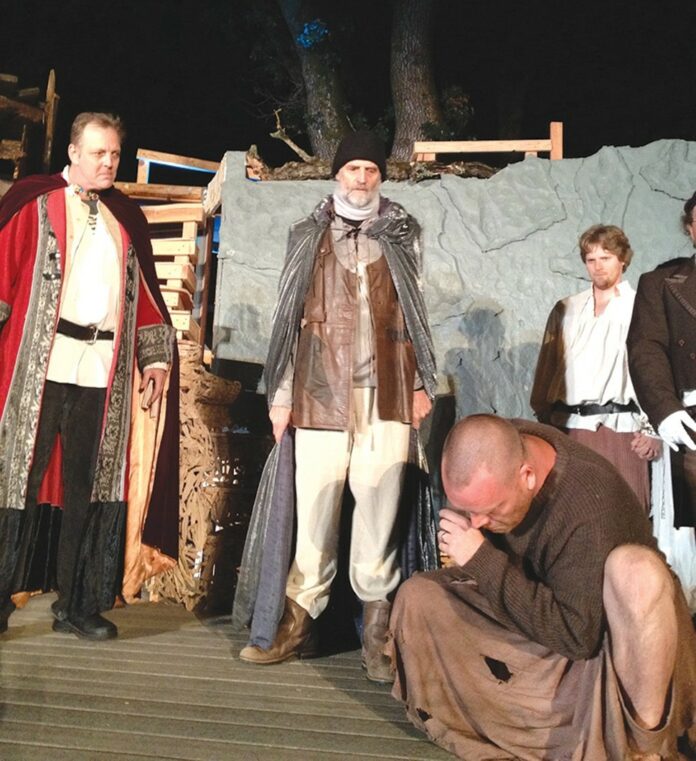
Before the show even begins, audience members know something big is about to blow onto the stage at Ives Park, in Sebastopol. In the Sebastopol Shakespeare Festival’s massively entertaining production of William Shakespeare’s The Tempest, director Sheri Lee Miller lays on the mood with some magically eerie pre-show music, layered beneath the unmistakable sounds of a steadily building thunderstorm. By the time the play actually starts, we’re already into it, as the tempest of the title unleashes on a foundering ship at sea, and the shape-shifting spirit Ariel pulls all the strings of the wind and weather.

It’s a clever, confident beginning to a show that just keeps getting stronger from there. Miller, tackling Shakespeare for her first time as a director, shows a knack for getting to point of each scene, and she’s edited the text to keep the action and character development flowing at a nice, emotionally involving pace.
The Tempest, Shakespeare’s final play, can be a little tricky, which is why scholars consider it one of the Bard’s problem plays. But with a first-rate cast and an able, inventive technical team, Miller and company have solved all the problems, getting straight to the heart of a play that is, after all, a fairly straightforward story: a mistreated father, stranded, on a mysterious island, struggles to create the best possible future for his daughter, and to use what powers he has to right the wrongs that have been done to him.

Actor John Craven plays the good-hearted sorcerer Prospero with a palpably wounded dignity, and a sense of deep conflict, his best intentions warring against his worst when chance brings the very people who once abandoned him within a short distance of his island. With the help of his spirit servant Ariel, played with gracefully fluid intensity by Danielle Cain, Propsero summons a storm to overturn the passing craft, shipwrecking its crew, including his power-hungry brother Antonio, played with amiable menace by Peter Downey.

Also washed ashore are King Alonso of Naples, his dangerous brother Sebastian, Alonso’s son Frederick, and an assortment of nobles and sassy servants, who all end up in different parts of the island, each with their own part to play as Prospero and Ariel alternately enchant and confound the unknowing castaways.
Adding some additional drama is the monster Caliban, The Tempest’s most fascinating character. Played brilliantly by Keith Baker with a fused sense of scariness and heartbreak, Caliban—who lived on the island before Prospero—hopes to use the newcomers in his plan to overthrow Prospero.
Prospero’s own revenge plot turns softer when his daughter Miranda, played with wide-eyed innocence by Rachel Quintana, ends up falling in love, at first sight, with King Alonso’s son Frederick, played with a kind of swashbuckling innocence of his own by Jimmy Gagarin.

The supporting cast is strong, with great comic turns by Eric Thompson and James Pelican as a pair of drunken servants who form an unlikely alliance with Caliban.

The set by David Lear is a stunner, and the sound design by Doug Faxon brings an additional element of magic and mystery to the tale.

In the interest of full disclosure, my son Andy Templeton appears in the show as well, as the young, wonderstruck nobleman Adrian, and of course, Sheri Lee Miller is a frequent and favorite collaborator. She will, in fact, be directing my next play.

Taking that as it may, this Tempest is without question a powerful, eye-popping, relentlessly entertaining show, a deeply satisfying journey to a magical world that, for all its spirits and sprites and monsters, is fully and open-heartedly human.

‘The Tempest’ runs Thursday-Sunday July 12-28 at Ives Park. 154 Jewell Ave., Sebastopol. Thurs.-Sat. at 7pm. $7-$20. 707.823.0177.

Santa Rosa Councilwoman Shares Passion for Happiness Initiative

The-Economics-of-Happiness-1.jpg

After Julie Combs successfully campaigned for Santa Rosa City Council last year, she discovered that several issues central to her campaign were important to more than just Santa Rosa residents. In fact, several tied in directly with the nine elements that make up the Happiness Index. “Elements of it meshed so well with things that I ran on,” she says, despite learning of the GHI after she took office. It’s so important to her now that she has made it one of her priority issues.

It’s not that she is pushing for citywide implementation of the Happiness Initiative, which is a real thing, by the way. But so many of parts of the initiative can and should be implemented in revolving Santa Rosa’s issues. Take, for instance, the annexation of Roseland. “Looking at happiness,” she says, “[the initiative] makes some sense here.” Particularly the idea of participation in government and inclusion in culture. Roseland residents do not vote in citywide elections and do not have the benefit of city services, even though they live in a non-annexed island of county land that’s far more central to Santa Rosa than, say, Oakmont or Wikiup.

[jump]

In a June interview on KRCB, Combs says she’s doing her part to implement the happiness initiative by listening to citizen concerns. “I want folks to come in and say what it is that they need to their government,” she says. “People say things like, ‘Well they’re just going to do what they’re going to do and my input doesn’t matter.’ That’s really sad, and I would like to turn that around so that we have a happier city.”

The Happiness Initiative can be implemented in day-to-day life, as well. Just by thanking people, volunteering time or money and even taking a few minutes of quiet time to oneself every once in a while can increase personal happiness. It might even help increase America’s ranking as 105th on the Happy Planet Index.

Combs will participate in a discussion at the Arlene Francis Center following the screening of “The Economics of Happiness,” a documentary about the Gross National Happiness Index used in Bhutan. A dinner of Bhutanese food precludes the screening on Wednesday, Aug. 28 at 6pm. 99 Sixth St., Santa Rosa.

Brian Griffith Let Go From KRSH-FM; Bill Bowker to Take Over Morning Show


When listeners tune in to 95.9-FM tomorrow morning, they won’t hear Brian Griffith’s voice over the airwaves.
That’s because Griffith, who for six years has served as the morning host of the KRSH, was let go from the station today by general manager Debbie Morton in an early afternoon phone call.
“She said, ‘We’re making changes, and they don’t include you, and good luck, and we have a check for you, and we need your keys,'” Griffith said when I called him this afternoon.
This came as a surprise to the listeners who called me today, but did Griffith see it coming? “Sort of,” he told me. “The guy who owns the station, he doesn’t even live in the area. And the first time I met him, the first thing he said to me was, ‘I don’t get the KRSH.'”
According to Griffith, program changes were imposed that he didn’t agree with. “Over the last three months, they’ve just been yanking all my personality out of the show,” says Griffith, adding that he had “no input at all” in the music played on the show. He also lamented that the station playlist was recently cut down to just 800 songs by program director Andre DeChannes.
“The way that the playlist has been these last couple weeks,” he said, “I mean, I love Eric Clapton, but do we really need to hear ‘Lay Down Sally’ again? Do we really need to hear the Wallflowers again? Or the Counting Crows?”
Live segments and local bands were cut from mornings, too, he said. “And I complained,” the 20-year radio veteran told me. “I’ve been at it a long time, and I was vocal with my opinion.”
I sent Morton an email asking for an explanation about Griffith’s dismissal. She replied simply: “Management at Wine Country Radio felt that changes to The Krush morning show were long overdue.”
Morton also added that Bill Bowker would start as the host of the morning show early next week.
I called Bowker, who confirmed the upcoming move. “I haven’t done mornings for years,” he said. “Maybe it’s time for a little change here.”
Bowker will drop his afternoon time slot, which he’s held for as long as anyone can remember. As for morning show concepts, Bowker says he has some ideas percolating, “but this all just happened today,” he said, “so it’s too soon to say.”
No word on an afternoon replacement yet.

UPDATE — It’s 9:23 the next morning, and here’s what the KRSH is playing:

Parental Advisory

0

If you must know, my four-year-old’s favorite song is “Beez in the Trap” by Nicki Minaj, which is full of the sexes and the swears and the filthy rapping. I personally do not mind. So, naturally, I love to mock the hell out of Chart Watch, a pop music guidebook for parents published in 1998 by extremist Christian group Focus on the Family, found at a thrift store long ago and pulled out for a good several tipsy guffaws while hosting friends and remembering the Tipper Gore era.

Chart Watch is a 350-page paperback guide to over 400 popular albums from the 1990s, examined through an ultraconservative lens and rated entirely on how strictly the music’s content aligns with Focus on the Family’s anti-abortion, anti–premarital sex, creationist, alcohol-free, homophobic beliefs. Meant to assist Christian parents in monitoring their teens’ musical choices, it is an absolute motherlode of unintentional hilarity, especially when you imagine the religious authors listening to songs like King Missile’s “Detachable Penis” and ingesting lyric after lyric of, as copiously quoted in the book, “F—,” “S—” and “B—–s.”

It’s no surprise the book takes the most umbrage at rap albums. On Snoop Dogg’s Doggystyle: “This Dogg has fleas, but no one seems to care . . . avoid this trash at all costs.” On Silkk the Shocker’s Charge It 2 Da Game: “Obscenity-strewn trash from start to finish. Drugs. Misogyny. Murder. Sexual perversion.” On Mase’s Harlem World: “There’s nothing artistic about obnoxious bragging, anonymous sex, murderous gunplay, or being able to rhyme things with the f-word.”

But it’s not just rappers; Chart Watch even takes aim at conservative bastions of white America like Garth Brooks (“lyrically inconsistent . . . skip the disc”), Celine Dion (“references to sex outside of marriage”) and Shania Twain (“sexual ethics lack clarity”). Incredibly, the book’s authors express disappointment even in Christian artists Amy Grant (“longing for intimacy”) and Jars of Clay (“teens expecting edifying answers . . . will need to seek elsewhere”).

You might think reason would be found turning to the entry for Kenny G. Alas, you underestimate the absurdity of Focus on the Family. “‘Two lovers . . . will be together in the morning,’ without explaining whether or not they’re married,” it condemns.

Seriously. Kenny G.

Chart Watch is out of print, but with a ’90s revival in full swing, it’s a perfect gag gift. Beck, Sublime, Aqua, Spice Girls, Aaliyah, Butthole Surfers—they’re all in here. You can find copies online for about three bucks, and the best part is that it’s a remaindered title, so no money goes to Focus on the Family. Because F— those B—–s.

Get in Where You Fit In

0

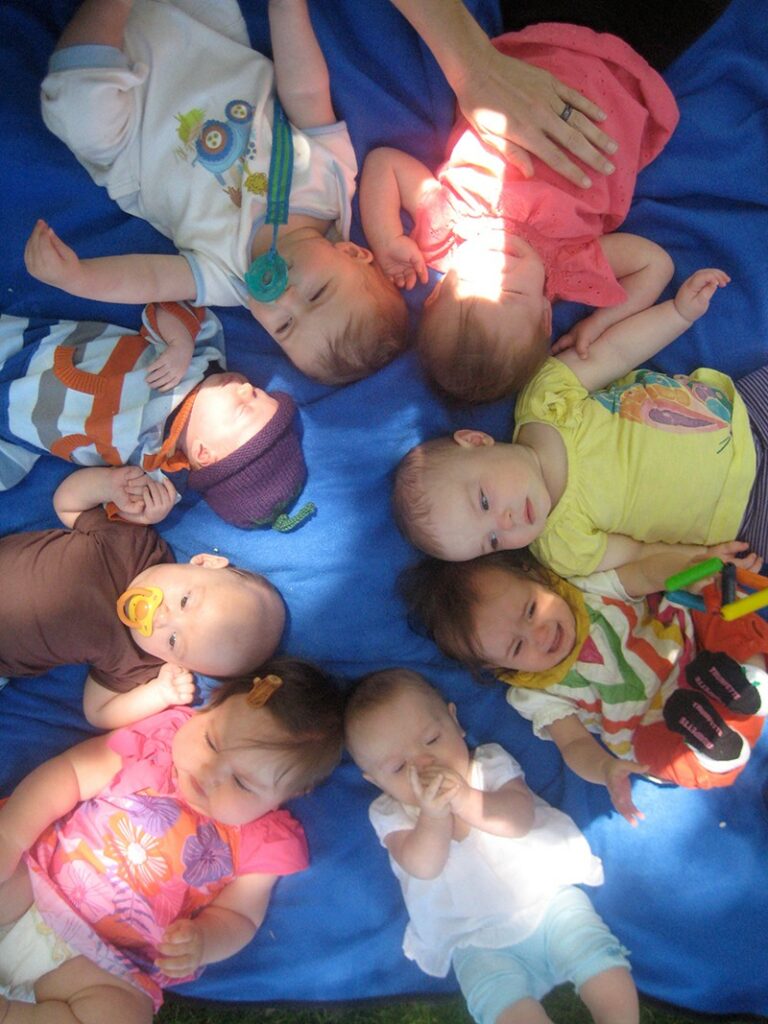
Unless they’ve been prescribed a heavy dose of Zoloft, most parents can attest to the “fetal-position” moment of new parenthood. It might happen after the first poop-up-the-back diaper blowout, or the first glance at the heinous masses of grime and laundry in the house, or after the baby wakes screaming for the seventh time in one night, baring her gums and demanding food like the little milk vampire that she is. Mark my words, it will happen; you will find yourself in the shower, or on the hallway floor, curled up and begging in desperation for one more hour of sleep, or even just a minute of freedom to cut your scraggly toenails.

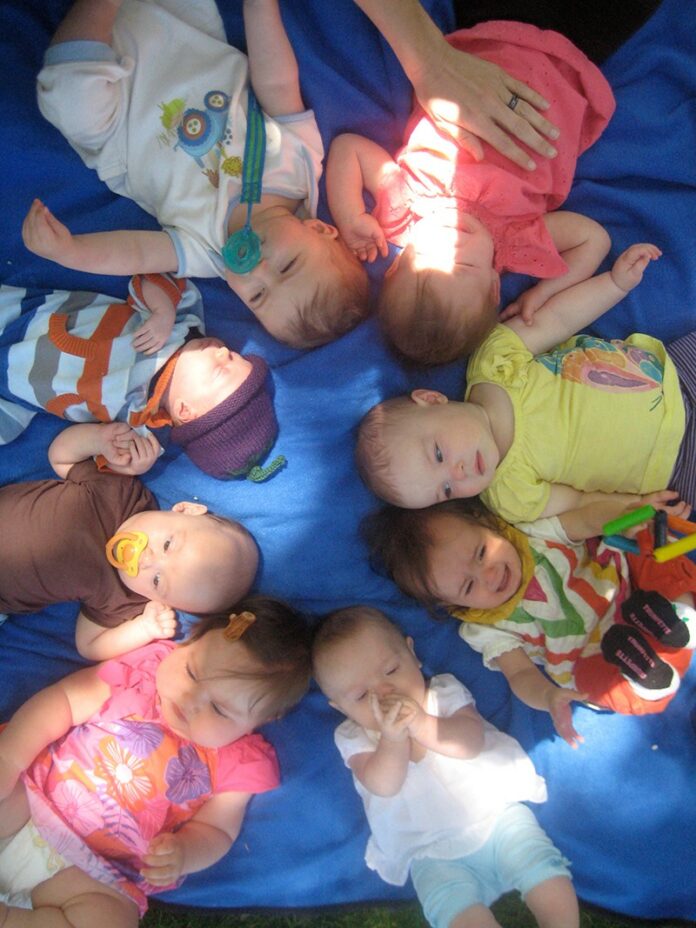
This is where “mommy groups” groups enter the picture, because what helps us through the most challenging moments more than community? On the surface, mom groups—or parent groups—look like the perfect antidote to the confusion and exhaustion that comes with having an infant. But in reality, finding the right group can be complicated.

Sarah Hamner, a 35-year-old teacher and mother of two young children, experienced this when she tried to break the ice with a group at an outdoor cafe in Petaluma. Hamner came across the moms as she stopped for her morning coffee, chatting as their kids ran around a play area. After recognizing the mother of one of her daughter’s schoolmates, Hamner, who had a five-month-old and a child entering kindergarten at the time, decided to introduce herself and maybe meet some new friends.

“When I greeted them and tried to make conversation, they just looked at me and gave me a weak smile and went back to their own conversation,” recalls Hamner. After several attempts, when at one point someone turned away from her without responding, she gave up.

“I was, like, I’m out of here, this is the worst,” she recalls. “I just had the experience of being snubbed by other mothers of young children.” She called a friend to tell her had happened and to “affirm that I wasn’t a total loser.”

I have other friends—intelligent, mature people—describe similar encounters with organized “mommy” groups—how they were reduced to feeling like the reject in the junior high lunchroom; how they felt judged, out of place and generally unwelcome. So what is it about these groups that can bring out the worst pack mentality in parents? Or is it just about trying and trying again until you find the right community?

After the birth of her first child seven years ago, Romney Garbo, who lives in Windsor and works in global procurement at Agilent Technologies, found a warm welcome at Kaiser Santa Rosa’s Mommy and Me group. At first, the weekly gathering, which is facilitated by an RN and offers a chance for new moms to ask questions about sleep, food and behavior in a “crowdsourcing” kind of setting, was an opportunity to get out of the house, says Garbo. Eventually, it became a safe space.

“It was a very welcoming place,” she says. “I’ve never felt judgment or fear around topics that I want to discuss. That is so important, because there’s so much self-doubt and fear involved in taking care of a new baby.” She’s maintained friendships from the original group and hasn’t found the need to search out any other parenting groups, other than open play dates and kindergym programs.

Still, the thought of joining a pre-established group can be daunting—especially if you’ve always felt like an outsider on the block or have social anxiety. At the last mommy group I attended, I was more drawn to the two moms talking about where to find the best Moonlight Brewing Company beer than the rest of the discussions, which centered on Giants-themed birthday cakes, solid foods and children’s toys. But when it came down to it, like Sarah Hamner, I regressed to my nerdy middle-school self, skulking in the background and feeling like a weirdo, since nobody was making the effort to talk to me.

But the power of community cannot be underestimated, so it’s important to try and try again to find that tribe, says Jessica Mills, author of My Mother Wears Combat Boots: A Parenting Guide for the Rest of Us. “Taking care of a kid’s physical and emotional needs requires a lot more energy than what one or two people can possibly give,” she adds.

In one chapter of her hybrid memoir/handbook, Mills, former saxophonist in Less Than Jake, Citizen Fish and former Maximum RocknRoll columnist, writes about moving when her daughter was a baby from a well-established community in Gainesville, Fla., to isolation in Miami. She searched high and low for like-minded souls.

“I would go to playgrounds and try to meet people and give them my number and expect them to call me,” says Mills, whose children are now 13 and seven, with a laugh. “I’d wonder why they wouldn’t call, but nobody knew this crazy lady!” Mills started attending La Leche League meetings, where she found a community that could at least help her on her breastfeeding journey. Even that had its limits.

“If you are breastfeeding and go to a La Leche League meeting, you can’t expect to have more in common with these folks except breastfeeding,” she says. “Sometimes that’s not enough commonality to build community.”

Mills recommends starting your own group with people who share common values and ideology. “I think you have a better chance of having some long-term community there, rather than sticking with a group that’s already established but doesn’t feel like a perfect fit,” she explains. And Hamner agrees. She says she’s talked with friends about the whole mommy-group thing: what makes one experience successful and another awful?

“The hand-selected mommy groups, where you have a couple of friends with young children, and then they know someone and you all get together—they already have something to go on,” Hamner says. “That seems like the recipe for success for these groups, while just showing for a park meet-up tends to be more uncomfortable.”

Which One Should I Buy?

0

Despite the appeal of home-mashed beet porridge and stitched-by-hand hemp diapers, baby DIY can seem like an impossible dream if you lack two things: time and money. Perhaps if you have a partner working in tech and the ability to stay home and are still not, somehow, passed out in a pool of locally sourced ice cream by the end of your toddler-chasing day, you can be the kind of parent who carves alphabet blocks from reclaimed redwood. But if you’re like many of us, you too often find yourself at the neighborhood Big Box, thinking resentful thoughts about the elitism of homespun yarn and feeling sad and guilty underneath.

But what if doing it yourself for baby not only saved money, but was possible without massive amounts of time? What if we could break down, mathematically, how going Prairie Parent would give you an easier, thriftier life? Mamas and papas of the eco-hipster-poor, we present you with a price comparison chart to guide you through a different—and more egalitarian—kind of DIY.

One can of Gerber pears: $1.74 vs. One pear, split with you: 30 cents

One two-piece Carter’s outfit: $9 vs. One canvas grocery bag with holes cut out for limbs: 99 cents

One bag of ABC blocks: $18.79 vs. Three large rocks: free

One Evenflo entertainment center: $119.99 vs. One drawer full of mixing bowls you already own: free

One Sophie the Giraffe teething ring: $15.99 vs. One stick: free

One trip to the San Francisco Zoo (including parking and gas): $30 vs. One bike ride to Santa Rosa Creek to visit the skunks: free

One small time-out chair, for when she hits the cat: $12.99 vs. Letting her continue to hit the cat and learning a valuable lesson: four band-aids, 10 cents each.

One package of Pampers: $10.99 vs. Hanging out outside: free

Totals: $219.49 vs. $1.69

Rebirthing the Blues

Every Sunday evening, whether the sky's blue or cloudy, Bill Bowker, 69, blasts the blues from Studio "H" at the KRSH (95.9 FM), the station that has long played the moody, soulful music that began in Mississippi and traveled north and west to Memphis, Chicago, Detroit and California, morphing all the way. "On the KRSH, Blues with Bowker," he says,...

Sticking to It

Since the narrow defeat last November of California's Proposition 37, which would have mandated labeling of genetically modified foods, the sentiment behind the proposition has spread to similarly conceived bills in 26 other states. Proponents of such laws mostly argue that we have a right to know what's in our food. However, it's probably fair to say that for...

Letters to the Editor: August 21, 2013

Letters to the Editor, Aug. 21, 2013

Four Play

With over 50 restaurants participating, it's not possible to list all that the Taste of Petaluma has to offer. But for a sneak preview, here are some appe-teasers. Speakeasy, a newcomer to the event, offers a cold melon soup shooter topped with crispy prosciutto and microgreens. Once the salty meat takes hold, the sweet, cool melon soup calms the aggressive...

Review: ‘The Tempest’ at Ives Park

Before the show even begins, audience members know something big is about to blow onto the stage at Ives Park, in Sebastopol. In the Sebastopol Shakespeare Festival’s massively entertaining production of William Shakespeare’s The Tempest, director Sheri Lee Miller lays on the mood with some magically eerie pre-show music, layered beneath the unmistakable sounds of a steadily building thunderstorm....

Santa Rosa Councilwoman Shares Passion for Happiness Initiative

After winning a seat on the city council last year, Julie Combs found many of her priorities matched those of the Happiness Initiative

Brian Griffith Let Go From KRSH-FM; Bill Bowker to Take Over Morning Show

When listeners tune in to 95.9-FM tomorrow morning, they won't hear Brian Griffith's voice over the airwaves. That's because Griffith, who for six years has served as the morning host of the KRSH, was let go from the station today by general manager Debbie Morton in an early afternoon phone call. "She said, 'We're making changes, and they don't include you,...

Parental Advisory

If you must know, my four-year-old's favorite song is "Beez in the Trap" by Nicki Minaj, which is full of the sexes and the swears and the filthy rapping. I personally do not mind. So, naturally, I love to mock the hell out of Chart Watch, a pop music guidebook for parents published in 1998 by extremist Christian group...

Get in Where You Fit In

Unless they've been prescribed a heavy dose of Zoloft, most parents can attest to the "fetal-position" moment of new parenthood. It might happen after the first poop-up-the-back diaper blowout, or the first glance at the heinous masses of grime and laundry in the house, or after the baby wakes screaming for the seventh time in one night, baring her...

Which One Should I Buy?

Despite the appeal of home-mashed beet porridge and stitched-by-hand hemp diapers, baby DIY can seem like an impossible dream if you lack two things: time and money. Perhaps if you have a partner working in tech and the ability to stay home and are still not, somehow, passed out in a pool of locally sourced ice cream by the...
12,117FansLike
4,907FollowersFollow
6,928FollowersFollow