June 22: Pete Escovedo at Silo’s

0

The Partridge Family, the Jackson 5 and, heck, even the Brady Bunch. These bands, whether real or fake, proved that forming a family band was the way to go—and still is, according to legendary Latin jazz percussionist Pete Escovedo and his family-member-comprised orchestra. California natives, Pete’s older and younger brothers have performed with the orchestra at different times. The group reached stardom with Carlos Santana in the late ’60s, and now, Pete works with his sons and daughter, longtime Prince collaborator Sheila E., to keep the family tradition alive. The gang’s all there on Saturday, June 22, at Silo’s. 530 Main St., Napa. $30—$40. 7pm and 9:30pm. 707.251.5833.

June 22: Pete Escovedo at Silo’s

0

The Partridge Family, the Jackson 5 and, heck, even the Brady Bunch. These bands, whether real or fake, proved that forming a family band was the way to go—and still is, according to legendary Latin jazz percussionist Pete Escovedo and his family-member-comprised orchestra. California natives, Pete’s older and younger brothers have performed with the orchestra at different times. The group reached stardom with Carlos Santana in the late ’60s, and now, Pete works with his sons and daughter, longtime Prince collaborator Sheila E., to keep the family tradition alive. The gang’s all there on Saturday, June 22, at Silo’s. 530 Main St., Napa. $30—$40. 7pm and 9:30pm. 707.251.5833.

June 22: Loverboy at the Sonoma-Marin Fair

0

Loverboy_get_lucky.jpg

Man, I thought all these dudes and dudettes were listening to Loverboy’s Get Lucky, and that they’d finally caught on to what an awesome album it is. I mean, dudes, c’mon. Then the other day someone asked me “Have you heard ‘Get Lucky’?” and I was all, “Yeah, it’s flippin’ awesome! Loverboy rules!” But they said, “No, I mean the new Daft Punk song.” Daft Punk?! Yeah, I know. I couldn’t believe it either, dudes. Whatever, at least I know who the better band is, and that’s Loverboy, who play on Saturday, June 22, at the Sonoma-Marin Fair. 100 Fairgrounds Drive, Petaluma. $10—$15. 8pm. 707.283.3247.

June 21: Everyone Orchestra at the Mystic Theatre

0

Everyone-Orchestra.jpg

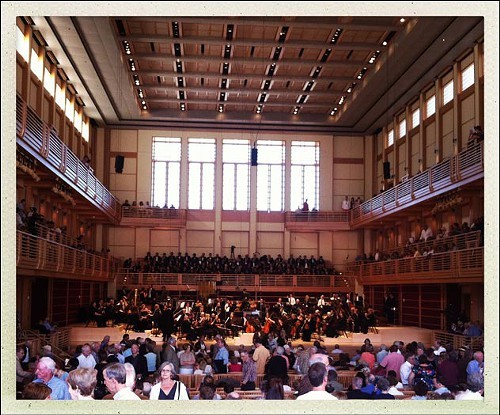
In the Everyone Orchestra, conductor and founder Matt Butler shepherds willing participants both on- and off-stage to perform in an improvisational style. The rotating ensemble has accumulated members of the Grateful Dead, String Cheese Incident, the Flecktones and Maria Muldaur, as well as Tuvan throat singers, hula hoopers, fire spinners and jugglers. Together, these acts follow the lead of the conductor’s hand signs, whiteboard and various mime suggestions. Enjoy the randomness when the Everyone Orchestra performs on Friday, June 21, at the Mystic Theatre. 23 Petaluma Blvd. N., Petaluma. $23—$25. 9pm. 707.765.2121.

June 20: A History of Hip-Hop at the Arlene Francis Center

0

TT.jpg

I said uh hip hop, uh hip hip hop, something else hippity hop hop, annnddd I am not the person to be writing this. This week, the Arlene Francis Center presents “What’s Good? A History of Hip-Hop,” a storytelling of hip-hop history through turntable sets by DJs Noah D, Brycon, Fossil, Mr. Element, Shifty Shey, Max Wordlow and DJ Big John Stud. The night begins with the DJ-led history of hip-hop, then moves to a celebration of the Summer Solstice—and ends with a scratch showcase by DJ Lazyboy, Brycon with an original beat set, live vocals by hosts Pure Powers and Spends Quality and guest MCs and DJs. Up jump the boogie on Thursday, June 20, at the Arlene Francis Center. 99 Sixth St., Santa Rosa. $5. 6pm. 707.528.3009.

Protecting Children From Themselves

0

facebook_vegas.jpg

An interesting article in the Press Democrat discusses the impact your online social profile impacts you in the offline world.

This is not a new concept, but the issues are getting more and more relevant as more and more interaction exists online. “What Happens in Vegas Stays in Vegas” can be adapted to say “What Happens on the Internet Stays on the Internet. Forever.”

In the article, reporter Mary Callahan talks about a new industry of online reputation management. She writes:

There’s something at stake for virtually everyone — whether it’s job prospects, college admissions, a competitive market edge, the promise of romance or a professional reputation.

This has never been more true than today. And privacy, whatever is left of it, is something people should hold close.

The California Senate believes this to be true, particularly for youth. The Senate passed a bill unanimously trying to protect children from themselves. But how can we when we all know that part of being a kid is outdoing your peers and not really thinking of the consequences?

Guy Kovner of the Press Democrat wrote:

Privacy advocates hailed the bill, which includes a requirement that social media sites provide a so-called “eraser button” allowing minors under 18 to remove their own ill-advised postings.

“Too often a teenager will post an inappropriate picture or statement that in the moment seems frivolous or fun, but that they later regret,” said Senate President Pro Tem Darrell Steinberg, the bill’s author, in a written statement.

In Callahan’s article, Kerry Rego, a social media maven and technology consultant reminds us that once something is out there, it can’t be gotten back.

But how can you teach a teenager that anything they put out there could potentially follow them for the rest of their life? That a seemingly innocent photo of themselves could prevent them from getting into college? I guess the legislature is trying, but I am not sure it will help. As Dane Jasper, CEO of Sonic.net said in Kovner’s article, you can delete a posting, but if someone downloaded it before you got to it, it is out there forever. “You are closing the barn door after the horse is out.”

Both Sides Now

0

She captures nature and makes it appear abstract. He makes abstracts that appear to come from nature. She laughs. “It’s kind of how we are in real life, too. We balance each other surprisingly well.”

She is photographer Nicole Katano; he is artist Marc Katano. She did commercial work for years in Los Angeles, shooting for such studios as DreamWorks and American Girl, before turning full-time to her own photography. He is represented by the Stephen Wirtz Gallery in San Francisco, and has work hanging in major institutions east from the LACMA to the MoMA.

Married for some 30 years, the two see their creative lives combined in a new exhibition opening June 28 at the Sonoma Valley Museum of Art (SVMA). Titled “Akin: The Art of Marc and Nicole Katano,” the show juxtaposes his emotive abstract forms with her montages depicting an intensely soft-focused world.

Having begun their careers in San Francisco, the Katanos lived in Los Angeles for more than two decades. When they were finally ready to return to the Bay Area, they had the good fortune to retain a real estate agent who also sat on SVMA’s board. Executive director for SVMA Kate Eilertsen naturally sees it as a fait accompli that her institution would cinch the deal; Nicole assents that “we thought, ‘Well, this is a really nice little museum.'” The couple moved to Sonoma in 2010.

And Eilertsen’s life immediately got easier. The SVMA hosts “a minimum of one show a year dedicated to local artists,” she says.

Marc is an American born in Tokyo. “Japanese calligraphy is his inspiration,” Eilertsen explains. “The idea of making a mark is what he does. He uses expressive brush working; he does a lot of his work on the floor so that he can move with it. It’s about gesture as much as anything else.”

In a short homemade video that the Katanos have posted online, Marc is seen at work. Sheets of paper are on the floor of his studio. Working quickly, he uses his hands to lay the ink down, making deft, intuitive touches with his fingers that immediately soak into the handmade Nepalese or Japanese paper he favors. He then paints an overcoat that mostly obscures the first layer, so that the forms become darkly oblique. Finally, he makes swift calligraphic strokes with white ink using a bamboo stick.

This is all done kneeling or bending down to the floor, like a tidy Pollock. The resulting images are handsome and evocative, knowable and hidden. In his artist statement, Marc deflects the urge to imply, writing: “Each line represents nothing more than its own creation.”

Nicole’s photos are largely botanical. “I look for a point of view that maybe I haven’t seen before and certainly my viewer might not have seen before,” she says.

“I just shoot what looks right to me, and it so happens that what looks right to me is very soft and has motion to it.”

Soft and in motion. Some might suggest this could be another definition of marriage.

Mountain Hop

0

Steve Bajor was 17 when he stepped out into the hazy sea of stoned people crowded in the Mountain Theatre. Members of the Hell’s Angels had already escorted Jefferson Airplane to the stage atop Mount Tamalpais in Mill Valley, and the band proceeded to play its signature psychedelic rock songs. “Bring your own drugs and bring your own picnic lunch” was the message given to the crowd.

A rock concert to begin all rock concerts, the 1967 Fantasy Fair and Magic Mountain Festival came one week before Monterey Pop and two full years before Woodstock. It was those two days in 1967 that also paved the way for this weekend’s Mount Tam Jam, presented by the Tamalpais Conservation Club. The concert’s lineup includes New Orleans funk outfit Galactic, blues legend Taj Mahal, wry Sacramento hit makers Cake, Marin-based Danny Click and the Hell Yeahs as well as Mike Farris and the Roseland Rhythm Revue.

Though no brawls ever erupted at the original ’67 concert, take it from Bajor, now an event manager for Pacific Expositions, that it was indeed a “three-ring circus.” That’s what you get with around 30,000 people gathered in the Sidney B. Cushing Memorial Amphitheatre (aka the Mountain Theatre) for 33 bands, mostly of the hippie type. The lineup included the Doors, Jefferson Airplane, the Byrds, the Steve Miller Band, Tim Buckley, the Seeds and many more. (It’s probably the only time Captain Beefheart and Dionne Warwick shared a bill.)

Tickets were a whopping $2, but the proceeds went toward a San Francisco charity. When the drugs of choice were pot and LSD, and the venue was much less restrictive than today’s standards, the Fantasy Fair represented a different time when, as Bajor remembers, “everyone just wanted to play.”

This year’s Tam Jam is the first music festival on the mountain since the Fantasy Fair Festival. And with the Mountain Play celebrating its 100th year, and Mt. Tam its 85th as a state park, what better time to bring it back? Tickets, naturally, are pricier than they were decades ago, but the proceeds support another good cause: greatly needed revenue for the park. In fact, it’s the park’s hope that the revenue will help produce more jams in the future years.

It’s a return that has plenty of the original attendees talking. Since he considers himself a “Mill Valley boy,” will Bajor attend this year’s concert?

“I have a gig then,” he says, “but I’ll try to put in an appearance.”

Long Overdue

Dr. Carmen Finley, a retired research scientist and genealogist, still remembers the “Juvenile Hall” of the Santa Rosa public library. During the 1930s, her mother worked at a shop near the library, dropping her off every day before work.

“I have such fond memories,” Finley says, recalling that the children’s librarian “taught me how to write my name before I entered school so that I could get a library card.”

Even though the United States was in the midst of the Great Depression, Finley recalls, Santa Rosa kept its libraries open on Mondays—and it did so for 80 more years.

But since Aug. 1, 2011, Sonoma County’s 200,000 library cardholders have been deprived of the use of 11 local libraries on Mondays and evenings. A 25 percent cutback in hours, first instituted to save just $310,000, has left long lines at libraries—where programs, computer use and circulation has steadily risen in Sonoma County for the past decade. Children, parents, seniors and those too poor to afford computers have been hit hardest by this failure to keep the doors open on Mondays for the first time in the public library’s 108-year history.

And the end of the county’s library funding crisis is nowhere in sight. Last week, the Sonoma County Board of Supervisors voted to approve a robust $1.3 billion budget in record time. The county’s probation department, with a budget four times as large as the library’s, received a $2.7 million boost. Despite a continual drop in violent crime, the sheriff’s department’s increase was $9 million, including a last-minute addition from the county’s contingency fund of $240,000 to retain a federal marijuana-eradication officer.

Estimates of how much it would cost to restore library hours range wildly, from about $500,000 to reopen with extra staff to an unspecified number in excess of $2 million—a figure the library’s director Sandra Cooper insists it would take to “adequately” fund those days and restore staffing levels during other hours.

Yet appeals to county supervisors to direct emergency funding for restoring library hours have fallen upon deaf ears. As a result, for at least one more year, and possibly far longer, Sonoma County libraries will remain closed on Mondays and evenings.

The story of how Sonoma County, the 12th wealthiest of California’s 58 counties, cannot remedy an unprecedented cutback in library hours offers a timely lesson about much of what is wrong with modern government.

A FUNDING SHORTFALL

As per a 1975 joint powers agreement (JPA) between the county and its major cities, Sonoma County libraries are funded by a dedicated fraction of a percent of property taxes. The JPA agreement establishes an independent county library agency; seven unpaid library commissioners have the power to manage the budget, draw from reserves accumulated during flush years and, at least on paper, oversee the library director.

The existing JPA also assures that the library will provide the same baseline of services, including hours, as existed in 1975, when the main libraries consolidated into the agreement stayed open at least 52 hours a week. The JPA provides the county with the authority to “annually levy” taxes to sustain the libraries, the ability to augment library budgets, and nominal oversight to make sure funds do not disappear.

In 1975, nobody foresaw Proposition 13 limiting property tax increases, or the multibillion-dollar drop in assessments that hit Sonoma County between 2007 and 2010. In April 2010, after receiving notice that its annual budget would fall from about $16.5 million to $15.9 million, the library revealed its plan to decrease hours to make up the shortfall.

Public reaction was immediate. Within weeks, Sebastopol mayor Guy Wilson wrote to library director Sandra Cooper, urging the commission to not cut hours, but that if it did, to allow the local Friends of the Library group to raise dedicated funds for keeping the local branch open. Meanwhile, Dena Bliss and a small group of supporters formed Save Our Libraries Sonoma County (SOCOSOL) and began circulating a petition urging the commission to retain library hours.

Thousands signed it. They were ignored. The commission decided not to tap any of the $2 million in the “rainy day” fund or delay the hundreds of thousands being spent on new self-serve checkout terminals, and instead cut hours. The closures, which began Aug. 1, 2011, resulted in a savings of $310,000 per year in part-time salaries, as well as about $100,000 a year from reduced janitorial and energy usage.

“Being forced to reduce hours is a symptom of a much bigger problem,” explains Cooper.

That problem, Cooper argues, becomes evident when Sonoma County’s library operating income per capita of $28.91 (for fiscal year 2010–2011) is compared with operating income per capita for Alameda, Marin, Napa, San Mateo, Santa Clara, Solano and San Mateo counties. They average well over $50 in spending per capita, with a minimum of $42. Their staffing levels are at least 50 percent higher. In Marin and Napa counties, libraries enjoy more than double the staffing rate per resident as Sonoma County.

[page]

MONTY PYTHON’S LIBRARY COMMISSION CIRCUS

The meeting at which the commission voted to cut library hours was attended by many members of the public, who suggested ideas for raising money and avoiding the closings. “None of this was ever talked about by the commissioners,” SOCOSOL’s Bliss recalls. “And since that time, they have been unwilling to engage in a process to bring back the hours.”

Of particular concern to the commission’s critics was a decision made at the same June 20 meeting to spend a whopping $500,000 on a temporary relocation of the city of Sonoma’s library so that it could be upgraded with state redevelopment funds. The commission selected the social hall of the First Congregational Church—where Sonoma’s library commissioner Mary Evelyn Arnold was an officer—as the best site for the temporary library. It paid the church the equivalent of $14,100 per month for eight months’ rent, as well as about $400,000 for improvements, many of them permanent, to upgrade the church space.

In contrast, later that year, when Sebastopol’s larger library needed a temporary home for its four-month-long renovation, the commission was able to move services to Sebastopol’s Community Center—at a cost of just $10,000.

“It should not cost $500,000 for a temporary library in Sonoma and just $10,000 in Sebastopol,” observes Bliss. “This is when I went crazy.”

Arnold, in response to questions about the cost of the move, noted that she recused herself from the vote to approve the funding for the move to her church. (To this day, Cooper defends the expense, noting that “we probably spent less than we would have on other available spaces.”)

Arnold also recently announced that restoring hours was not even on her “top 10” list of spending priorities. “The library has many pressing needs,” including increased staffing, technology, pension liabilities and materials, she explains to the Bohemian. “I believe most communities, including Sonoma Valley, have made their peace with Monday closures. It is not a top priority of mine.”

Tim May, the current chair of the library commission, explains in an email that he was “seriously ill” during the time of the June 20 hearing. He says that although it would have been legal to use the rainy-day funds to retain hours countywide instead of spending them on Sonoma’s temporary library, it would have been a bad idea; capital costs are one-time, he argues, while operating savings from hours recur annually.

Dena Bliss disagrees, echoing commission criticism from county supervisors and, one year ago, a Sonoma County grand jury. The grand jury report found Cooper an “unresponsive” leader, noting that she made arbitrary decisions and even edited the minutes of public testimony at commission meetings to tone down criticism. Cooper defended her actions in a point-by-point rebuttal months later, and survived calls for her resignation from a position that pays $150,000 annually, plus $40,000 in benefits.

The library commission’s recent budget discussion revealed just how dysfunctional and inactive a government agency can be. One baffled commissioner asked the group, “What has to happen before we can schedule a strategic plan?” Sometime in the upcoming year, replied another, the commission will start its “information gathering” to “begin the process of planning the strategic planning process.”

In other words: Making a plan to make a plan to make a plan.

SUPERVISORS PASS THE BUCK

As Sonoma County supervisors heard complaints about the libraries’ reduced hours, they went into action—at a snail’s pace. More than 14 months later, Supervisor Mike McGuire called the first meeting of the newly appointed Library Joint Powers Agreement Advisory Review Committee. Since that time, McGuire and his representatives from each of the county’s nine largest cities have been meeting to develop an improved JPA. When the committee’s recommendations are finalized (McGuire suggests by October), public hearings will be held, and cities will review the proposed revisions. Eventually, they, and the county, will vote for the revisions, and an improved JPA, with some mechanism for increased funding, will result.

The process will take years.

[page]

Meanwhile, not one of the county’s five supervisors, elected to manage our county’s $1.3 billion in spending, believes temporary funds to restore hours should come from the discretionary $381 million general fund budget.

Since the library commission is an independent agency, county supervisors point out, correctly, that they have no legal obligation to augment library funding until a new JPA arrangement can be implemented. But do they have an ethical and professional obligation? This is the question they’ve been running away from.

Supervisors are the ones who legally appoint five out of seven of the library commissioners. They are the government body named by the “tax levy” clause of the 1975 JPA to “annually levy” sufficient taxes for “the purpose of purchasing property for, establishing and maintaining the county library.”

And it’s not as if the supervisors are unable to step in and provide money from the general fund to county departments or agencies that technically rely on earmarked funding. For example, they took an extra $8 million from the general fund to add to the tens of millions in revenue that the county already receives in gas taxes for roads and bridges.

As a concerned parent of young children who use the library, I first suggested this to my supervisor, Efren Carrillo, over a month ago. Like three other supervisors, he argued that the county had far more important things to do than temporarily restore library hours.

Last week, Carrillo provided extensive written answers to questions for this story. On the subject of funding an emergency fix for library hours, he replied: “The library is not a county department and the reduction in hours is not related to any reductions in county funding. The county is one member of the library joint powers authority. Any additional government funding to restore hours should be a shared responsibility. Additionally, the library faces major long-term challenges with expenses. Restoring hours for one year would not address those problems. It is more appropriate to think strategically about addressing the long-term challenges than funding a one-year temporary fix.”

Carmen Finley disagrees. She cites the “tax levy” clause of the JPA and observes, “It sounds like the board of supervisors does have a direct responsibility to see that the library is adequately funded.”

THE SAGA CONTINUES

According to county budget experts, although property tax revenues for the library are expected to rise in the coming year, they will be offset by a reduction of state library dollars that have entirely dried up. The news will get worse when new accounting rules make it necessary to add huge sums to library expenses to account for future pension and healthcare costs. Cooper also believes the staff is being overburdened by increased usage during reduced hours. Adding staff would be her top priority for additional funding.

When asked what would happen were the supervisors simply to direct $400,000 to rehire part-time substitute workers to work on Mondays and evenings, Cooper explains that’s not enough. “It would cost $1.7 million just to open again on Mondays, not including adding evening hours,” she says. “And I would want to see the package. Would they guarantee the funding for five years, or open the libraries on Mondays for one year then close them again?”

Cooper dismisses such “band-aid” solutions, and hopes the JPA revision process endorses a new countywide parcel tax, dedicated to libraries. Only such increased structural funding, she believes, can restore the system’s financial foundation, staffing and hours.

Another change in the JPA seems likely. Individual cities and supporters, like Sebastopol’s Guy Wilson, have proposed donating funds to restore their own local branches’ hours, but that’s not possible: any donations go into the countywide system to benefit all branches, as per the JPA.

Efren Carrillo predicts that the JPA committee “will recommend removing the restriction in the current JPA that prohibits localized funding for expanding hours for a particular branch.” But Cooper disagrees that wealthier cities should be allowed to provide longer library hours than poorer ones, like Cloverdale.

Sebastopol city council member Sarah Gurney, a mediator and member of the JPA review committee, is not holding her breath for short-term emergency funding. “To protect our regional public library system, the nine cities and the county need to collaborate,” she says. “That means one of us can’t just foist the financial responsibility—such as for guaranteeing baseline services and restoring Monday hours—on the other.”

As befitting a professional mediator, Gurney feels assured that a common-ground solution will be found. “I have confidence in this committee’s work, appreciate the sustained efforts of SOCOSOL, and hear our recent petitioners,” she says.

Meanwhile, SOCOSOL wants a new JPA that has library commissioners elected by the public—with the power to fire the director.

“I will stand on the street corner with a tin cup and raise money for the library when I know that the money will be used to restore hours,” Dena Bliss says. “But to hand Sandy Cooper more money would be insane. The library needs more money, a transparent budget and a management that can use the money responsibly.

“Right now, it doesn’t have any of those things.”

Letters to the Editor: June 19, 2013

Tip Away!

I absolutely believe that tipping your wine host or hostess is appropriate (“Tipsy Turvy,” June 12). Having worked in the industry, I know that the hardworking folks with smiles, knowledge and a bottle in their hand are doing everything to get you as excited about the wines as they are—for $12 an hour. One would be foolish to not recognize that an average Denny’s employee is likely bringing in more income (not to denigrate Denny’s employees, by any means). If a wine steward gets you feeling the rush of history, fruit and the passion going into a wine that demands you have some for yourself, reciprocation is in order. No question.

Via online

Standing with Snowden

I stand with Edward Snowden. And I stand with Bradley Manning, WikiLeaks, Daniel Ellsberg, John Kiriakou, Thomas Drake, Chris Pyle and all those whose moral conscience will not rest until they expose the illegalities and immoralities they have witnessed. Thank you, Bohemian, for so promptly publishing Norman Solomon and Tom Tomorrow’s important commentaries on this latest outrage.

Wake up, America! Everyone’s calls and letters are of utmost importance now. Protest loudly and encourage each other to reject this latest revelation of the U.S. government’s atrocious scandal. If we do not stand with Edward Snowden now (and the others), then we are agreeing to the new rules of the game, where We the People freely give away our (constitutional) rights for the sake of . . . what? Security from terror? Lucrative profits for the weapons/surveillance/prison complex?

Recent Gallup, CBS and FOX polls show 40 percent of Americans are comfortable with this revelation of extensive surveillance on law-abiding citizens. When their friends and acquaintances are arrested, indicted and imprisoned for assumed terrorist ideas based on accumulated data from their lives, maybe they will wake up.

Remember that prescient saying attributed to German pastor and theologian Martin Niemöller (1892–1984): “When the Nazis came for the communists, I remained silent; I was not a communist. When they locked up the social democrats, I remained silent; I was not a social democrat. When they came for the trade unionists, I did not speak out; I was not a trade unionist. When they came for the Jews, I remained silent; I wasn’t a Jew. When they came for me, there was no one left to speak out.”

Santa Rosa

Eartags Anonymous

I was excited—and oh so hopeful—as I read the caption to the “Cows-A-Blanca” photo (Table of Contents, May 15) and actually thought it was heading toward something like this: “Maybe not today, maybe not tomorrow, but soon, and for the rest of your life: we’ll never have cows wearing eartags that reduce them to a number, replacing their sentience, to numb our awareness of murdering living, breathing beings for a plate of food . . .” but—oops—I misread. Silly me.

Santa Rosa

No Apologies

As celebrities like Tom Cruise and Hugh Jackman celebrated Walmart at its annual meeting, workers and activists converged to demand sweeping changes at the company’s U.S. stores and global factories. Around a hundred striking workers with the group OUR Walmart arrived in a caravan from across the country to protest what they allege to be retaliation against those seeking to change company practices on wages, safety and unions.

Walmart is one of only a few major retailers that has refused to sign on to the new safety standards after the latest Dhaka tragedy. The Tazreen Fashion fire in 2012 killed 117 workers and left hundreds injured, and the recent building collapse in Rana Plaza killed 1,127 and left more than 600 or 700 injured. And at that shareholder meeting, no one gave any condolence to those families.

Palo Alto

Write to us at le*****@******an.com.

June 22: Pete Escovedo at Silo’s

The Partridge Family, the Jackson 5 and, heck, even the Brady Bunch. These bands, whether real or fake, proved that forming a family band was the way to go—and still is, according to legendary Latin jazz percussionist Pete Escovedo and his family-member-comprised orchestra. California natives, Pete’s older and younger brothers have performed with the orchestra at different times. The...

June 22: Pete Escovedo at Silo’s

The Partridge Family, the Jackson 5 and, heck, even the Brady Bunch. These bands, whether real or fake, proved that forming a family band was the way to go—and still is, according to legendary Latin jazz percussionist Pete Escovedo and his family-member-comprised orchestra. California natives, Pete’s older and younger brothers have performed with the orchestra at different times. The...

June 22: Loverboy at the Sonoma-Marin Fair

Man, I thought all these dudes and dudettes were listening to Loverboy’s Get Lucky, and that they’d finally caught on to what an awesome album it is. I mean, dudes, c’mon. Then the other day someone asked me “Have you heard ‘Get Lucky’?” and I was all, “Yeah, it’s flippin’ awesome! Loverboy rules!” But they said, “No, I mean...

June 21: Everyone Orchestra at the Mystic Theatre

In the Everyone Orchestra, conductor and founder Matt Butler shepherds willing participants both on- and off-stage to perform in an improvisational style. The rotating ensemble has accumulated members of the Grateful Dead, String Cheese Incident, the Flecktones and Maria Muldaur, as well as Tuvan throat singers, hula hoopers, fire spinners and jugglers. Together, these acts follow the lead of...

June 20: A History of Hip-Hop at the Arlene Francis Center

I said uh hip hop, uh hip hip hop, something else hippity hop hop, annnddd I am not the person to be writing this. This week, the Arlene Francis Center presents “What’s Good? A History of Hip-Hop,” a storytelling of hip-hop history through turntable sets by DJs Noah D, Brycon, Fossil, Mr. Element, Shifty Shey, Max Wordlow and DJ...

Protecting Children From Themselves

Online reputations are not meaningless

Both Sides Now

Marc and Nicole Katano's 'Akin' exhibit strikes a rare, natural balance

Mountain Hop

After four decades, a return to Mt. Tam

Long Overdue

Sonoma County's libraries will remain closed on Mondays and evenings for the third year in a row. Why hasn't anybody stepped up to restore hours?

Letters to the Editor: June 19, 2013

Letters to the Editor: June 19, 2013
11,084FansLike
4,606FollowersFollow
6,928FollowersFollow