After the Deluge

0

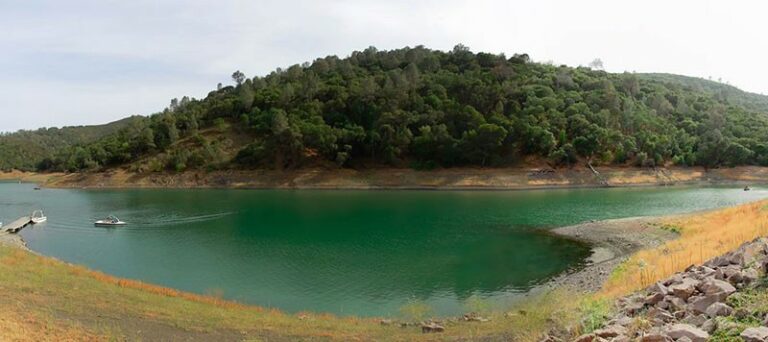
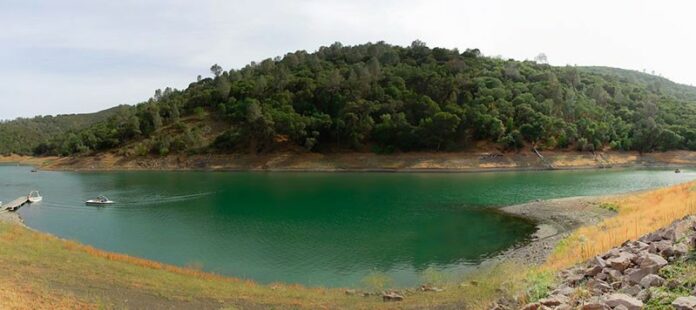
Last weekend, rain fell in drenching, gushing sheets across Northern California. Stream levels bounced up, fish again had room to swim and farmers saw puddles form over their dusty properties. The Russian River, flowing at a trickle of 24 cubic feet per second last week in Mendocino County, had become a torrent of more than 4,000 by Sunday. But the relief did not undo the work of the driest year on state record.

“This did not put this drought to bed in the slightest,” says Sean White, general manager of the Russian River Flood Control District. Just over five inches fell in Ukiah, and Lake Mendocino’s volume jumped by about
20 percent. But it’s still half of its normal February capacity, White says, and there remains the real chance that the reservoir could be empty by September.

THE HEAT

Just before last weekend’s deluge, Rhonda Smith, wine grape specialist with the University of California’s cooperative extension program, said that even another foot of rain this winter would not end the drought. She expects that the season will likely be a financial disaster for some farmers.

“It’s going to be bad,” Smith says. “These are the worst water conditions we’ve ever seen.”

Warm weather has sped up vine development, and Smith says an early bud break can be expected. Once the young leaves begin unfolding into the spring sun, farmers will need water at the ready to douse their vines should nighttime temperatures crash—a common means of guarding fruit trees against frost damage. Damaged vines may produce less fruit in the fall, if any at all.

But the water may not be there to protect them. Many growers draw their frost-protection water directly from the Russian River, where flows could drop again if more rain does not maintain the tributaries. For much of this winter already, the mouth of the river has been blocked entirely by a sandbar, which the torrents of most winters usually knock out. Salmon and steelhead have been largely unable to access the river to spawn.

The extreme conditions have raised the stakes both for grape growers, who will need summer irrigation water as well as their frost-protection spray, and conservationists trying to coax coho salmon numbers back to sustainable levels. Relations between the parties are likely to grow hot.
[page]

FISH ARE SUFFERING

Eric Larson, a biologist with the state’s Department of Fish and Wildlife, says that when the Russian River Valley experiences subfreezing temperatures, hundreds of vineyard managers may begin pumping river water at the same time to mist over their vines, causing the river’s level to drop rapidly. Salmon in the system may become stranded, and their nests of fertilized eggs may be exposed to dry air and destroyed. “When the temperatures drop, the grape growers have their eyes on the river, and we have our eyes on them,” Larson says. “We’re all watching the same temperature forecast.”

The Russian is not the only river in which salmon and steelhead populations are struggling.

“Overall, the Central Coast coho are already looking at extremely reduced numbers, and this drought does not help,” says Stafford Lehr, chief of fisheries with the Department of Fish and Wildlife. South of the Golden Gate in particular, coho streams are liable to remain dry all winter, he says, eliminating an entire year class of fish. North of San Francisco, watersheds are subject to more rainfall and may be better off. The Eel River, for example, received a tremendous dumping of rainfall this weekend, opening up spawning habitat that has been inaccessible for months.

But in the Russian River, salmon and steelhead that hatched in the system last year have reportedly mostly vanished, either killed by high temperatures in shallow standing pools of water or eaten by predators. Even the weekend’s rains did not help fish born last year. To the south, coho salmon have been struggling to enter Lagunitas Creek for weeks. The stream, which runs off the northern slopes of Mount Tamalpais and enters Tomales Bay, once hosted thousands of spawning coho each year, but now sees annual returns of just several dozen fish. Larson says that last year’s return was poor due to low flows, and 2014’s spawn, he says, could be a failure.

On the Russian River, about 400 coho salmon spawned last year. “But we want several thousand,” Larson says.

He says that almost two hundred adult coho, ready and willing to spawn, are in the system, along with Chinook salmon and steelhead. Most of the tributaries where they historically lay and fertilize their eggs, however, have been too low for fish to enter. Last Thursday, the five-member Fish and Game Commission voted to close coastal rivers to sport fishing. Winter is usually prime time for steelhead fishing, but the fish are already under extreme stress, and the decision was made to give the steelhead the best chance possible at spawning.

“The fish have been stacked near Duncans Mills, and the bait fishermen and the sea lions were just hammering them,” says Dave Wiens, a fly fisherman from Novato who supports the emergency closure. “They just didn’t need that extra pressure of being caught.”

DRINK UP

Protecting every last cubic foot of the Russian River’s water for fish could produce a sufficient return of spawners this winter, but the action could cost grape growers and winemakers a great deal of their year’s income. Most years, the average Pinot Noir vine produces enough fruit to make about three bottles of wine. But yields will likely be down this year, and some vines could be worth just a few glasses.

Loss of early growth to frost kills the most productive shoots of a vine. “That first budding is the most fruitful,” explains winemaker Scot Covington of Trione Vineyards in the Alexander Valley. “You can get growth afterward, but it won’t produce as much fruit.”

Some growers, it seems, are expecting disastrous crops. Karissa Kruse, president of the Sonoma County Winegrape Commission, says crop insurance is selling rapidly this winter. Meanwhile, other growers anticipating insufficient water for frost protection are planning to use wind machines, which can help mix warmer air above a vineyard with the freezing air at vine level, offsetting any threat to the plants. “I’ve been hearing that rentals for wind machines have quadrupled and sales have doubled,” Kruse says.

[page]

Even if growers make it through the frost season in good shape, they may face a long, hot summer without irrigation options. Water officials announced at a meeting last week in Cloverdale that even if California received a foot of rain in the next three months—an amount that forecasters say is unlikely—the state’s water supply would still only equal what it was in 1977, the second year of the worst drought in California’s history. Lake Mendocino could even dry up at the current rate.

Indeed, with more people now using the state’s water resources, the likelihood of unprecedented damage to the environment and the state’s wine industry is substantial. Randle Johnson, winemaker with the Hess Collection, says his Mount Veeder vineyards rarely experience frost and will survive without water this spring. This summer, though, his vines could suffer. “Our reservoir is at maybe 20 percent, and by July it might be empty,” Johnson says, adding that his hillside vineyards have no wells or groundwater supply.

THE STORM WASN’T ENOUGH

Peter Baye, a resident of Annapolis and a member of the Friends of the Gualala River, says the weekend’s storm, though “a real gully-washer,” might not have been enough to quench the area’s thirst. “You can’t get much more than that in one weekend,” he says, “but this won’t much change the current hydrology.”

Many vertical feet of earth beneath the surface have slowly dried over the past several years of below-average rainfall, he says. Additionally, the Gualala watershed is under increasingly intensive use by the wine industry. (A new vineyard with a 90-acre-foot reservoir is going in now near Ohlson Ridge.) Tributaries that once contained water all year have reportedly been drying up in the summer, something that didn’t happen in the past.

“We’ve had old-timers saying this wasn’t an issue before,” Baye says. “This isn’t happening because of the drought. It’s the growing pressure on the groundwater that feeds into the streams.”

Baye says that once grape growers cease watering their vineyards, stream levels rise again. The correlation, he is certain, is no coincidence. “Magically, at the end of the irrigation season, even when it hasn’t rained yet, the rivers bounce back up,” he says.

The ridge of high atmospheric pressure over the Pacific Ocean that has been deflecting rain-making weather systems for 14 months has finally weakened, according to recent satellite images. This Sierra-size barrier of dense air, which pushed storm after storm north of California, was blamed as the cause of the state’s extended drought. Now meteorologists are speculating whether it may be gone for the season and whether winter as usual will proceed. But farmers and naturalists remain cautious.

“If these conditions continue through 2014, then people might really start asking, ‘Is this climate change?'” says Johnson.

Baye warns that the region is still thirsty even after the drenching Northern California received last weekend. “This was the third January in a row without rain,” he says. “Groundwater is down, wells have gone dry. Eight inches of rain won’t recharge the system.”

Kitaro: Symphonic Electronic Lover

0

‘This is my dream,” Kitaro says simply.

He’s speaking of the transformation of some of his most famous electronica melodies into fully orchestrated tone poems. It’s not a new idea, just one that has taken a long time to realize for the Japanese composer, whose elegantly melodic instrumentals helped define the emerging “New Age” genre beginning in the late 1970s. Although he was encouraged to explore the tonal potential of early synthesizers by Tangerine Dream’s Klaus Schulze, and did so with great success, he longed for more.

“The synthesizer can create strange sounds, but [an] orchestra has its own beauty,” he says. “[From] the beginning of my career, always I’m focused on the actual acoustic sounds.”

When director Oliver Stone tapped Kitaro to write the score for his 1993 film Heaven and Earth, a large studio orchestra recorded the soundtrack. It was, the composer says, “soooo good. So, little by little, the last 20 years, my music is moving toward the real orchestra.”

And now, he adds, “the opportunity of working with the Santa Rosa Symphony, this is my dream.”

For the orchestra, however, it was a surprise.

“It just dropped in our lap,” says Alan Silow, the Santa Rosa Symphony‘s executive director. An out-of-the-blue call from Sonoma State University music professor Brian Wilson in November introduced the possibility, and when Kitaro’s desired Feb. 14 date turned out to be narrowly available (subscription concerts had long been scheduled for the rest of the weekend), planning accelerated, and the unusual joint performance was announced just a few weeks later.

“They didn’t hire us as ‘the band,'” Silow states, “We’re partners in the whole production.”

This concert will include music from Kitaro’s best-known recordings, such as Silk Road, Thinking of You and Kojiki. After this week’s premiere with a scaled-down version of the Santa Rosa Symphony—roughly 40 strong—the program continues with half a dozen other performances, and with other orchestras, in Russia, Eastern Europe and possibly some later dates in Southeast Asia. The show could also tour the United States late this year.

Other projects also await Kitaro: a new collaboration with percussionist Mickey Hart and the completion of his ambitious Ku-Kai Project, a series of 88 compositions that incorporate the sounds of the temple bells from the 88 temples that ring Japan’s Shikoku island. He’s written and recorded 39 so far, and expects the remainder to occupy him for four to five years.

But now his priority is to
finalize the set list, complete the orchestrations (with his long-time band leader Stephen Small, who will also conduct) and prepare for the single three-and-a-half-hour rehearsal with the symphony musicians. But even with strings, brass, woodwinds and percussion—and, of course, Kitaro’s own six-piece electronic band—there’s still one element missing.

“I think, still, the voice is the best sounding instrument,” he explains, “so I will do some surprise for the audience this time.

“One song I will sing myself.”

Bottled Poetry

Bread, milk and chocolate can be obtained from the supermarket, but what happens when it’s not the pantry that needs refilling but the heart? That requires a trip to the Poetry Store.

“The number one thing people don’t know how to talk about is love,” says Silvi Alcivar (pictured), aka the Poetry Store, who will be writing poems at two Valentine’s Day events in the North Bay this weekend. The San Francisco poet has made a name for herself by popping up with her red Royal typewriter and portable desk at events in the Bay Area to write poems on demand. After a brief interview, she writes, in less than three minutes, a set of words so unexpectedly charged and emotionally penetrating they could even bring tears to Vladimir Putin’s steely eyes.

“The most satisfying thing is when people cry because they have joy,” says Alcivar. Her poems are visual, honest and revealing, not to mention beautiful, and their incredibly short gestation period—from conception to birth in about five minutes—makes them all the more spectacular. She and other artists share their talents Friday, Feb. 14, at the Grand Hand Gallery. 1136 Main St., Napa.
5– 7pm. 707.253.2551. The Poetry Store will also be at St. Supery Estate Winery Friday, Feb. 14 (1–4pm), and Saturday, Feb. 15 (11am–3pm). 8440 St. Helena Hwy., Rutherford. Free. 800.231.9116.

Push for Sonoma to Santa Rosa Bike Path

0

If a proposed trail linking Santa Rosa with Sonoma is completed, bicyclists and pedestrians will be able to travel through the scenic Valley of the Moon at a safe distance from automobile traffic on Highway 12. But don’t clip in those shoes too readily—it’s a long and winding road from plan to reality. And as yet, there’s no plan.

Between Santa Rosa and Glen Ellen, Sonoma Highway is the only available route for cars, bicycles and the occasional dogged pedestrian alike. Constant, fast-moving traffic and long stretches with little or no shoulder presents cyclists with a teeth-gritting experience at best until the fork at Arnold Drive. “Right now, you’ve only got two options,” says Gary Helfrich, executive director of the Sonoma County Bicycle Coalition. “Arnold is safer—but which is safer, cave diving or bungee jumping?”

Last September, Sonoma County Regional Parks was awarded a $190,575 grant from Caltrans to conduct a study whose conclusions, bicycle advocates hope, will result in the construction of a 13-mile paved path linking Agua Caliente to Santa Rosa. A study of the segment linking the existing
1.5-mile Sonoma Bike Path to Agua Caliente Road was completed in 2001.

It’s tempting to already envision the path as it starts at Melita Road east of Santa Rosa, breezes past Oakmont and the contentious Annadel State Park access, and wends through wine country. The trip would take about an hour at a moderate pace.

Unlike the Joe Rodota Trail connecting Santa Rosa to Sebastopol, however, the Sonoma Valley bike path is not expected to be a straight shot on an old railroad right-of-way, despite tantalizing vestiges of the abandoned Southern Pacific line. Instead, it’s expected to be mostly built above an aqueduct, on an easement that is held by the Sonoma County Water Agency.

That doesn’t mean that the project is shovel-ready, according to Ken Tam, a park planner with Sonoma County Regional Parks. “First things first,” he says, “we’ve got to see if this thing is feasible.” Landowners may have built structures on the easement or planted an extra row of grapevines. “Let’s say there’s not enough right-of-way out there, or the property owners are not interested in selling,” Tam hypothesizes. “We wouldn’t be able to do it.”

Having only recently left a meeting in which he’d been updated on the plan, Cordel Stillman, deputy chief engineer at the Sonoma County Water Agency, says that while he personally thinks the area could benefit from a cycling route, he is also cautious about the details. “There is an aqueduct that basically parallels Highway 12 for quite a ways,” he offers, “and then takes off and goes cross-country.”

The easement only gives the water agency the right to maintain pipes that are in the ground. “It says absolutely nothing about bike paths or access. The fact that we have an easement does not make it any easier to get a bike path in there,” Stillman says.

Meanwhile, we’re not likely to hear much more from planners about the proposed route, partly because when it becomes known that a municipality is prepared to pay for a transportation project right-of-way, speculators may bid up affected parcels.

Representatives from several wineries along the route declined to comment until more is known. But tourism via bicycle is already part of the scene at St. Francis Winery, according to the winery’s director of consumer sales and marketing Aura Bland—the winery even offers cycling jerseys emblazoned with its logo. One aspect that may help the Sonoma Valley plan, as compared to similar plans, is that many of the potentially affected landowners are wineries and others businesses that are more likely to view increased access by recreational cyclists as beneficial.

Although the study, which will include community meetings and public workshops, won’t be completed until the end of 2015, Helfrich says getting the grant in the first place was probably the hardest part. Funding for construction should be comparatively easy.

Still, for cyclists eager to zip freely through the vineyards without worrying about car traffic, it may seem like a frustratingly long time to have to wait. But Helfrich is confident that it’ll be worth it. “It’s going to be one of the best trails in the Bay Area when it’s done,” he says. “It’s going to be great.”

A People’s Primer for Homemade Pasta

0

When Leon and I went on our first trip to Italy last year, we accompanied a group of other PBS-loving strangers on a two-week whirl through Venice, Florence and Rome.

I’m glad we did, and not just because our tour allowed us to float past crowds into the Vatican, stream through lines into the Duomo and brush past queues at St. Mark’s—though I totally loved that bit.

Of course, I’m glad we did for a million reasons not pertaining to long lines, but particularly because one afternoon in Florence, we and our fellow PBS lovers donned clear plastic aprons, washed our hands vigorously and took a cooking lesson from a bright-eyed Italian wag who taught us how to make fresh pasta from scratch.

I have to admit that while standing in that Florentine kitchen, my middle-aged posture was one of a disaffected teen—all studied ennui. My tour companions looked so dumb and old! I hope, I thought, I die-die-die before that happens to me.

Then I caught sight of myself in a polished steel refrigerator door. Oh, right. I don’t hope I die, I don’t hope I die! Turns out, I’m no longer 17. I’m just like them, thrilled to be on a PBS lovers’ tour of Italy about to make pasta. Which happens to be one of the easiest bloody things to do in the world.

The trick with pasta, our Italian wag instructed, is to take out the liquid you put in. “Scarsa” is the word he introduced. “Scant.” Put a little in, take most of it out. He poured two cups of yellow semolina flour into a pyramid on the steel table in front of each group. He added one small cup of tepid tap water to each table. “Don’t use it all,” he warned in his excellent English. Scarsa.

We each took turns tipping a sacred amount of water into the semolina to gently incorporate. The flour, which is rough like sand, slowly drank it in. “Now you knead,” he said, using his palm to push the water from what was quickly becoming a pliable dough.

“Now you rest,” he said with a smile, wrapping the dough in plastic, placing it in that damned mirror-like fridge and instructing us that it was time for wine. There wasn’t a PBS lover among us who didn’t like hearing that command.

Arriving home from Italy, Leon and I soon went to the local fancy culinary store. A Wellness 150 hand-cranked pasta machine awaited, red and chic. We brought it home, clamped it onto a table, dusted it with semolina to “clean” it and began our Great Pasta Experiment.

Truth be told, it’s not much of an experiment. I haven’t yet tried ravioli or anything folded and tucked or stuffed. But fettuccine? Yes, ma’am. Best of all: homemade pasta is forgiving. Mine always looks like hell when it’s hanging from my fancy store rack and looks like heaven when streamed into a colander after cooking.

Plus, no one understands how easy this congregation of flour and water really is. Maybe you have to be middle-aged to enjoy it. Perhaps public television helps. I doubt it. It’s really about scant.

Rinse, Don’t Repeat

0

I’m staying in a place in the remote coastal hinterlands of Bolinas, legendary for its semi-reclusive countercultural values and a village for whom thinking globally while acting locally isn’t just a feel-good bumper sticker you see on a Volvo—it’s a rite of passage for any would-be resident.

My new landlords gave one admonishment when I moved in: Do not waste water. There is a drought, and the water is getting more expensive by the minute.

They are monitoring residents’ water use down to the gallon, and all of us who live in the compound have to scale back our usage next month by about five gallons.

To that end, I’ve mastered the art of the one-minute shower.

There’s not much to master: turn on the shower; get in the shower; soap yourself up; rinse yourself off; get out of the shower.

Do not rinse and repeat. Do not linger.

I’ve always been a guy whose daily shower stood as a kind of Zen retreat in microcosm. I would zone out with my head under the precious hot stream of water while singing that favorite shower song and attempting to get grounded for the day ahead. I have rinsed and repeated, repeatedly.

But despite the momentary mindfulness it provides, a luxuriously long, hot shower is utterly indefensible in these drought-afflicted times.

Every moment of shower-stall meditation wastes gallons of water that could and should be put to much better use by people whose livelihoods depend on water: the farmers who suffer and worry and take steps to maximize whatever scant flow is coming their way.

There’s a saying I’ve always loved that says the key to a happy life lies in our ability to “dance between the raindrops”—but the drought has turned the raindrops proverb on its head.

The rain that arrived last week and over the weekend gave a critically needed reprieve to a bone-dry region—so go out and dance in the raindrops with your bottle of Dr. Bronner’s if you really need to extend that shower with an extra rinse-and-repeat.

A more natural and responsible Zen bliss will ensue.

Tom Gogola is a writer living in Bolinas and a contributing editor to the ‘Bohemian.’

Open Mic is a weekly feature in the ‘Bohemian.’ We welcome your contribution. To have your topical essay of 350 words considered for publication, write op*****@******an.com.

Of Trout and Drought

0

The rain blew through the North Bay over the weekend, just days after the California Fish and Game Commission (CFGG) issued emergency rules to shut down the salmon and steelhead trout fishery in parts of the Russian and American rivers. The recent rain won’t undo the drought-prompted closure, but may factor into the commission’s decision on whether it will continue past April 30.

On Monday, CFGC deputy executive director Adrianna Shea told the Bohemian the regulations would be in effect “in a few days,” pending an administrative law review.

The drought lowered water levels in the rivers to the point where “there are many places where spawning salmon and steelhead can’t migrate to their spawning grounds,” says Jordan Traverso, spokesperson for the California Department of Fish and Wildlife (CDFW), which is charged with enforcing the commission’s rulings.

“Recent rain, while good, isn’t enough,” she adds, citing research that “we would need it to rain heavily every other day through the end of May to reach average precipitation.” Still, the recent deluge may (emphasis on may) mitigate against extending the emergency closure beyond April.

“As of last week, before the rain, there was concern about having to extend the closure,” Shea says. “We anticipate revisiting the regulations.” Traverso says CDFW director Charlton Bonham will give a recommendation to the commission when it next meets on April 16.

In the meantime, Fish and Wildlife will “continue evaluating the streams, flows and migration of the fish,” Traverso says, “but in order to reverse the decision the commission made, we would have to go through a process that wouldn’t likely open the streams much earlier than the April 30 end date already put into place.”—Tom Gogola

Trending Trebuchet

0

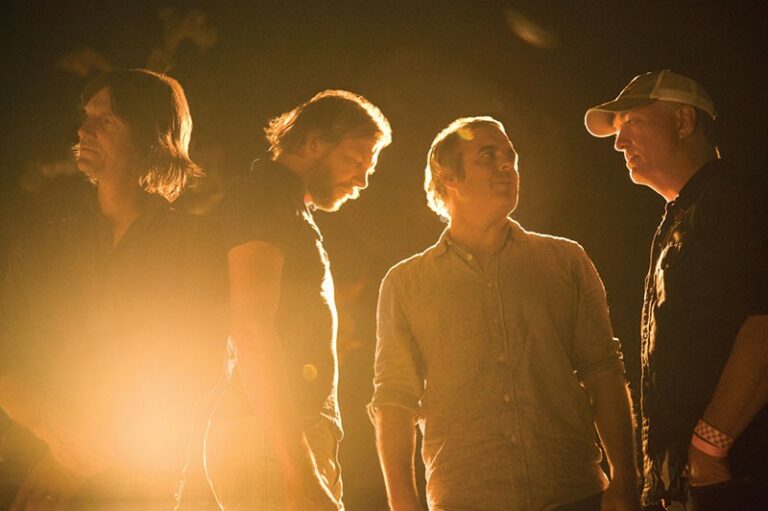
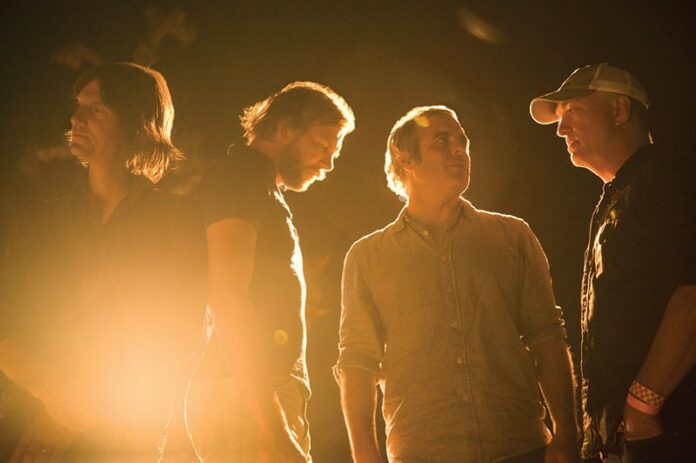
On a recent Saturday morning, the only denizens in this Petaluma office park are gathered in a conference room with doughnuts and apple juice. The whiteboard in the small room shows song titles and chord changes, and the room is cluttered with guitar amps, drums, keyboards, microphones and speakers. Trebuchet are about to get down to business.

The four band members are veterans of the Sonoma County music scene. But Trebuchet, arguably the most popular group any of them has been in thus far, sounds nothing like their previous endeavors. So what do they sound like? “We get that a lot,” says Lauren Haile, who plays keyboards. “I don’t know how to answer that.”

Guitarist Navid Manoochehri chimes in. Since each member sings on nearly every song of their latest release, Carry On, he suggests maybe a Crosby, Stills, Nash & Young connection, but shakes his head after a second thought. It’s Eliott Whitehurst, another guitarist, who makes the analogy they all agree on. “You wanna know what we sound like?” he asks. “Just search YouTube for ‘Scott Stapp singing the national anthem at NASCAR.'”

Laughter erupts in the conference room at the comparison to Creed’s lead singer, whose bravado and frat-boy attitude couldn’t be further from Trebuchet’s sound and demeanor. But the question remains unanswered, so the band answers in a song. Rehearsal starts with the a cappella “How Can I Keep from Singing” before launching into “Lay It Out,” a three-minute powerhouse driven by pounding drums and a catchy guitar riff. Haile’s rich alto takes the lead, with the boys’ voices, including that of her husband, Paul Haile, supporting her above and below her vocal range.

These are the first two tracks on Carry On. It’s their second album, and, as one might expect, it’s more mature though less definable, as far as genres are concerned. It might end up in the catch-all “indie” section at a record store, next to bands like Grizzly Bear, the Decemberists and Mumford & Sons, or be given a label like “post-folk” or “harmonious indie” by trendsetting webzines like Pitchfork.

It’s a total change from the group most of them had previously been in. The long, experimental instrumental songs of Not to Reason Why, a band that included all members of Trebuchet except Whitehurst, are conspicuously absent. “We thought, ‘Let’s do the complete opposite of that,'” says Manoochehri. The voices of all four are central parts of Trebuchet’s unique sound, with the band trading off lead vocal duties song by song.

The four studied music at Sonoma State University, singing together in choirs for many years. “We’re music nerds,” says Lauren Haile. That might explain the wide variety of instruments on Carry On. Drums, acoustic and electric guitars, ukulele, mandolin, banjo, piano, organ, bass and, of course, voice. “Eliott changes instruments on, like, every song,” says Haile.

Carry On is rich and dense with texture. Like Brahms or Sufjan Stevens, Trebuchet’s music is thick and layered. This makes parts like the vulnerable ukulele and voice that open the track “Stay Close” stand out even more. And for the 30 seconds when it explodes with big drums, guitars, sweeping mandolin and vocals that sound like they were recorded in a concert hall, the song can evoke tears.

This is a theme on Carry On. Many songs that start out calmly or delicately turn into all-out sing-alongs by the last minute or so. “The End” is one of those sing-alongs. With a powerful, wordless vocal melody sung in unison, it grabs the audience when played live, and it doesn’t let go. The ending refrain, “And in the end you’re all alone,” is surprisingly cathartic to sing. We can’t predict for the future, it says, but we can at least plan for the worst.

And with that, the worst that can happen is we end up being pleasantly surprised.

Pliny the Younger Release Draws Crowd Despite Rain

pliny_1.JPG

The annual release of Pliny the Younger by Santa Rosa’s Russian River Brewing Company was not dampened by rain today, with hundreds lining up around the block to taste the triple IPA style beer many refer to as “the best beer in the world.”

[jump]

IMG_3068.JPG

The line stretched around the block, with the first die-hard beer fans plopping down their chairs at 10pm, when the brewpub was still open the night before. A strict one in-one out policy was enforced, with patrons waiting for to be saddled with the blue wristband that grants access to the legendary brew. One group waiting to enter at noon said they had lined up at 7am. Many others around the block may not even get a chance to sample the beer on its first day of availability because the brewpub has a set limit on how much it will serve per day to ensure there will be enough for the entire two-week run.

IMG_3078.JPG

Russian River was ready for this annual melee with popup canopies in front of the pub and extra security on hand. A line at the back door was a dozen deep, and that was just for folks looking to fill a growler and leave—no Younger allowed. Inside, the scene was jovial, with 10-ounce glasses of the 10.25% ABV brew (at $4.25 a pop) clinking and emptying down into the gullets of smiling patrons. The beer has caused quite a stir each year for the past four, with lines getting longer with each passing year.

IMG_3084.JPG

IMG_3073.JPG

Live Photos: Bob Weir & Ratdog at Sweetwater Music Hall

1

Bob Weir and RatDog performed a “warm up show” at Sweetwater Music Hall in Mill Valley Wednesday night. The band, which included guitar virtuoso Steve Kimock, performed for around three hours. The intimate, sold out show included favorites like “Estimated Prophet,” “Cassidy” and a unique cover of Miles Davis’ “Milestones.” Photos by Jamie Soja.

After the Deluge

Last weekend, rain fell in drenching, gushing sheets across Northern California. Stream levels bounced up, fish again had room to swim and farmers saw puddles form over their dusty properties. The Russian River, flowing at a trickle of 24 cubic feet per second last week in Mendocino County, had become a torrent of more than 4,000 by Sunday. But...

Kitaro: Symphonic Electronic Lover

'This is my dream," Kitaro says simply. He's speaking of the transformation of some of his most famous electronica melodies into fully orchestrated tone poems. It's not a new idea, just one that has taken a long time to realize for the Japanese composer, whose elegantly melodic instrumentals helped define the emerging "New Age" genre beginning in the late 1970s....

Bottled Poetry

Bread, milk and chocolate can be obtained from the supermarket, but what happens when it's not the pantry that needs refilling but the heart? That requires a trip to the Poetry Store. "The number one thing people don't know how to talk about is love," says Silvi Alcivar (pictured), aka the Poetry Store, who will be writing poems at two...

Push for Sonoma to Santa Rosa Bike Path

If a proposed trail linking Santa Rosa with Sonoma is completed, bicyclists and pedestrians will be able to travel through the scenic Valley of the Moon at a safe distance from automobile traffic on Highway 12. But don't clip in those shoes too readily—it's a long and winding road from plan to reality. And as yet, there's no...

A People’s Primer for Homemade Pasta

When Leon and I went on our first trip to Italy last year, we accompanied a group of other PBS-loving strangers on a two-week whirl through Venice, Florence and Rome. I'm glad we did, and not just because our tour allowed us to float past crowds into the Vatican, stream through lines into the Duomo and brush past queues at...

Rinse, Don’t Repeat

I'm staying in a place in the remote coastal hinterlands of Bolinas, legendary for its semi-reclusive countercultural values and a village for whom thinking globally while acting locally isn't just a feel-good bumper sticker you see on a Volvo—it's a rite of passage for any would-be resident. My new landlords gave one admonishment when I moved in: Do not waste...

Of Trout and Drought

The rain blew through the North Bay over the weekend, just days after the California Fish and Game Commission (CFGG) issued emergency rules to shut down the salmon and steelhead trout fishery in parts of the Russian and American rivers. The recent rain won't undo the drought-prompted closure, but may factor into the commission's decision on whether it will...

Trending Trebuchet

On a recent Saturday morning, the only denizens in this Petaluma office park are gathered in a conference room with doughnuts and apple juice. The whiteboard in the small room shows song titles and chord changes, and the room is cluttered with guitar amps, drums, keyboards, microphones and speakers. Trebuchet are about to get down to business. The four band...

Pliny the Younger Release Draws Crowd Despite Rain

The line gets even longer this year for the Triple IPA.

Live Photos: Bob Weir & Ratdog at Sweetwater Music Hall

Bob Weir and RatDog performed a "warm up show" at Sweetwater Music Hall in Mill Valley Wednesday night. The band, which included guitar virtuoso Steve Kimock, performed for around three hours. The intimate, sold out show included favorites like "Estimated Prophet," "Cassidy" and a unique cover of Miles Davis' "Milestones." Photos by Jamie Soja.
11,084FansLike
4,446FollowersFollow
6,928FollowersFollow