Feb. 27 & 28: Creative Times in Pt Reyes Station and Bolinas

0

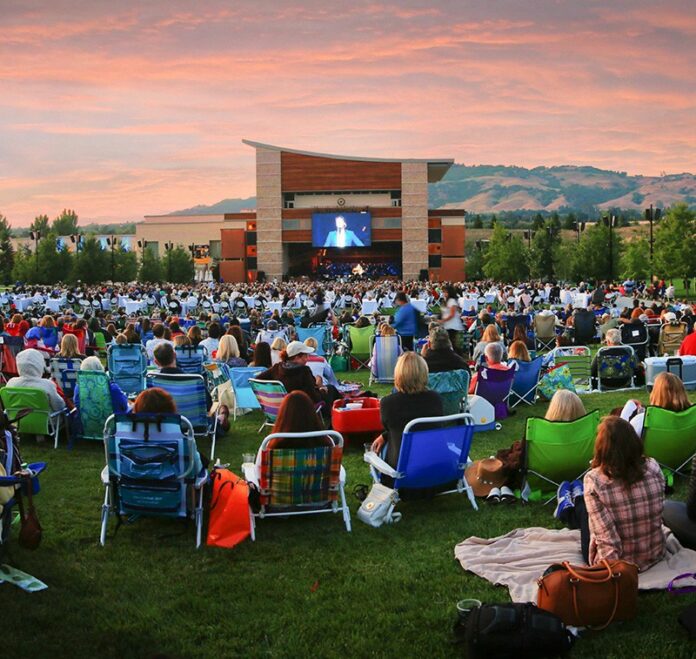
Author Christian McEwen knows that in hectic times it’s hard to sustain a creative output, whether it’s writing, art or music. She offers insights on opening those doors of creativity in her book, World Enough & Time: On Creativity and Slowing Down. McEwen’s strategy in the midst of distracting surroundings is a valuable and meditative way to focus on your art, and this week she comes to west Marin to share these insights. First, McEwen appears for a reading and conversation on Friday, Feb. 27, at Pt. Reyes Presbyterian Church (11445 Shoreline Hwy., Pt. Reyes Station. 7pm. $10), then she leads a day-long retreat to put these lessons into practice on Saturday, Feb. 28, at Commonweal (451 Mesa Road, Bolinas. 10am. $75. 415.663.1542).

Feb. 28: Legendary Art in Novato

0

Bay Area art icon Lawrence Ferlinghetti reportedly got into painting a bit by accident while working on a doctorate in Paris. By the 1950s, however, the acclaimed poet, painter and cofounder of San Francisco’s beloved City Lights bookstore was creating surreal large-scale canvases, as well as writing his politically charged poetry. His work has been shown around the world, and at 95 years old, his list of distinguished achievements is a mile long. This week, his paintings and poetry come together in the new “Legends of the Bay Area” exhibit running until April 5, and opening with a reception on Saturday, Feb. 28, at the Marin Museum of Contemporary Art, 500 Palm Drive, Novato. 5pm. 415.506.0137. 

Mar. 1: Plant Life in Jenner

0

Sonoma County’s rich bounty of agricultural wonders is well-known, but there is a wealth of native plants in the area that largely goes unnoticed. Herbalist and educator Tellur Fenner hopes to change that. This week, the owner of Blue Wind Botanical Medicine Clinic in Oakland curates a lecture titled “Edible and Medicinal Plants of Sonoma County” and leads a walk in the stunning surroundings of Fort Ross. Fenner identifies and explains a plethora of local flora, and offers info on historical and modern uses of these botanical wonders. “Edible and Medicinal Plants of Sonoma County” comes alive on Sunday, March 1, at Fort Ross Conservancy, 19005 Hwy. 1, Jenner. 10am. $45. 707.847.3437.

Ghost Stories

0

Petaluma’s Phoenix Theater has been a favorite evenue to thousands of wayward kids and concert-goers for decades. Apparently ghosts don’t mind all that noise.

After Tom Gaffey became general manager in 1983, he says he sensed a spirit lurking among its four walls. And while not every touring band or Rocky Horror Picture Show entourage has had a ghost sighting, the stories keep mounting.

“When I was a kid, there were stories about people seeing blue lights, and some had seen a little kid walking the building,” says Gaffey. Something used to walk across the stage, and the sounds of footsteps have been heard near and around the stage for quite some time, he says.

The stories have been investigated by psychics, paranormal investigators and various ghostbusters.

“There was a really clear one caught by some ghost hunters from Penngrove, and they got multiple responses up in the projection booth caught on audio tape,” says Gaffey.

He adds that “when Amy Bruni from [the Syfy Channel’s] Ghost Hunters and her crew came, they got some responses down in the basement. They experienced a lot of EVP [electronic voice phenomenon] and received various sound hits from different places throughout the building.

“We’ve probably had five or six psychics in the building that all claimed they heard and felt some really strong energy,” Gaffey says. “As far back as 1986, a psychic came here, and then wanted to come back again decades later to help cleanse the building of ghosts. Oddly enough, the emails I sent back in response to him were all stuck in the draft folder when I know they sent. That was weird.”

The Phoenix seems to be home to several different spirits. A little boy has been seen in random places. There is supposedly a larger character, dubbed Big Chris, who is believed to be a cousin of one of Gaffey’s friends, as well as an older man who apparently roams the attic. There have also been reports of a woman who haunted a bathroom, but she’s been quiet as of late.

Chomphard guitarist Lance Brown relates a story of his band practicing at the theater one night and noticing that “the light down in the boiler room kept flickering on and off. We could see it because there was a hole between the stage and boiler room, which is below downstairs. We went down and turned the light off, and then when we got back upstairs it was on.”

On another occasion, Brown and his band were practicing late at night and saw someone watching from the projection booth. He thought it was a friend of his. “We took a break and went up to say hello,” Brown says. “There was no one there.”

Former Conspiracy drummer Dimitri Katzoff has a ghost story too.

“I remember at one of our rehearsals there was a blue figure glowing behind our bass player. Also, I remember when I went upstairs to use the restroom while I was the only one in there, one of the stall doors slammed shut—I ran the hell out of there so fast!”

Of course, it’s possible that some of these shenanigans can be attributed to folks who’ve wandered into the building. However, the constant moving of pieces of furniture can’t be accounted for, says Gaffey.

“It’s when you are in quiet moments when you notice things are moved out of place,” he says. “The basement is the place where so many things have been shuffled around that now we have a lock on the door, and stuff is still out of place when we open it.”

Things even got physical once, he says.

“We had [local ska band the Conspiracy] practicing late at the venue one night. One of their members used the bathroom and got visible scratches on himself. That was rather freaky,” Gaffey says.

“He went into the little WC that used to be on stage right and came out with a giant unexplained abrasion on one whole size of his ribcage,” confirms band mate Josh Staples. “None of us went in there after that.”

Makes sense.

Like the music fans who pass through the Phoenix Theater’s doors, ghosts are treated just the same, says Gaffey.

“It’s kind of a check-in and check-out spot. The ghosts simply go there to hang out until they figure out their next move.”

He takes a hands-off approach to the apparitions.

“If there are really ghosts, it’s not my job to tell them they can
or can’t stay. As long as they
don’t hurt anyone, they are free to roam.”

Dirt Farmers

0

Dave Vella’s job sounds simple enough. He’s the vineyard manager at Calistoga’s 133-year-old Chateau Montelena Winery. The winery stunned the winemaking world at the famous “Judgment of Paris” in 1976 when it and a handful of upstart California wineries bested their French counterparts in a blind tasting. Vella’s job is to make sure the vineyards keep producing the great grapes that make such great wines.

Of course maintaining that quality is not so simple.

Farming grapes or any other crop is an act of creation—and destruction. Seeds are sown to create new life, but before any crops bear fruit, the land must be bent to the farmer’s will. Forests, grasslands, wetlands and other wild areas are leveled, drained and denuded. Fully functioning ecosystems above and below the ground are uprooted, displaced and destroyed in the wake of the plow and tiller.

Once crops are in the ground, chemical fertilizers, pesticides and herbicides are pumped into the land in an effort to counter the extraction of soil nutrients and imbalances that come from replacing a wild polyculture with a manmade monoculture. Organic and biodynamic forms of agriculture are more benign than chemical-based farming, but they are still unnatural imitations of a closed-loop, wild ecosystem. Too often, the soil suffers.

For such a vital resource, soil often gets treated like dirt. But soil is right up there with oxygen. Without it, we die. Soil feeds us, but the soil needs to eat too. What do we feed it? Typically, it’s a diet of chemical fertilizers, which yield ever-diminishing returns. Soil isn’t just dirt. It’s alive with nematodes, bacteria, protozoa and fungi that contribute to soil health, which in turn contributes to plant health and human health.

“You have to look at soil like a big checking account,” says Vella. “You make a deposit and you get a return, but you can’t keep withdrawing from the soil.”

But Vella has found a way to maintain a healthy account balance.

‘Compost has been my deposit for the past 15 years,” he says.

Working with San Francisco’s Recology and soil scientist Bob Shaffer, Vella has maintained healthy vines resulting from regular application of compost and the planting of diverse cover crops. Compost and cover crops are nothing new. But the use of them in tandem is novel, and advocates say the technique points the way forward in a world plagued by declining soil fertility, drought and soil loss.

Today, Chateau Montelena’s estate vineyard, located in a small, keyhole-shaped valley of stunning beauty, is on the cutting edge of a type of soil management which has applications far beyond the exclusive world of premium-wine production.

“This is a global story,” says Shaffer. “This is a partial solution to a lot problems. We just wish everyone on the planet knew about it.”

Earlier this month, Vella, Shaffer and Robert Reed, public relations manager for Recology, held a tour to show off what they had accomplished in hopes of getting other growers to follow their example.

Reed is passionate about compost, but he sees a roadblock: there isn’t enough of it to meet demand. Recology collects food waste in San Francisco and more than a hundred cities on the West Coast and Nevada. Thanks to San Francisco’s mandatory recycling program, the company collects an average of 700 tons of food scraps and garden debris every day. The material is composted at the company’s state-of-the-art Vacaville facility.

According to a 2011 report from the U.N.’s Food and Agriculture Organization, “roughly one-third of the edible parts of food produced for human consumption gets lost or wasted globally, which is about 1.3 billion tons per year.” That’s a lot of waste, but also a lot of potential compost. Reed says the problem is that the landfill industry has a lucrative grip on the waste stream and doesn’t want to give it up. Nationally, there are 3,000 landfills and only 300 compost facilities.

“There are all these food scraps in the world, and there’s a fight over who is going to get them,” he says.

[page]

A 2012 report from the Environmental Protection Agency finds that, on average, Americans create 4.4 pounds of waste per day. That adds up to 251 million tons of garbage a year, of
which about 87 million tons, or 34.5 percent, is recycled and composted. In 2011, Americans recovered more than 65 million tons of municipal waste through recycling and more than 21 million tons through composting,
reports the EPA. Still, more than 40 percent of all food that’s grown and bought in this country goes to waste, according to the folks at Lexicon of Sustainability.

That 4.4 pound national average is also the California average per-capita garbage creation. But Sonoma County residents are already creating a pound less of garbage per day than the national average, according to county statistics. Much of this recent, sharp reduction in the local waste stream is attributed to the adoption of single-source recycling bins, but the county also has an aggressive composting program that’s been in place for decades.

Sonoma Compost Co. has been in business since 1985 and has a contract with the county to divert green waste and other renewable garbage sources.

The company reports that since 1993 it has diverted 1.6 million tons of green waste from the local landfill.

Sonoma County generates 800 tons a week in food scraps—which is about
35 percent of all residential waste created in the county. County documents note that this is “a resource that could be used instead of landfilled.”

At the municipal level, the city of Santa Rosa utilizes the Laguna Composting Facility, where, the city reports, about 12,000 cubic yards of compost are generated a year. Most of that is sold to landscapers and vineyards.

Napa County reports that in 2012 it recycled or composted 113,000 tons of trash at the Napa Recycling and Composting Facility. The county reports that it diverts about
55 percent of the waste that would otherwise wind up at the Keller Canyon Landfill into compost or recyclables.

Napa County recently completed a successful pilot program to divert food scraps from the waste stream and into the compost economy; that service is now available at restaurants and other food service businesses throughout the county.

In Marin County, the biggest composting player is Waste Management, the corporate garbage behemoth that runs a recycling facility and landfill. Through its WM Earthcare program, the corporation produces and sells several grades of compost at the Redwood Landfill facility in Novato. The company reports that food waste accounts for about one-quarter of Marin’s residential waste stream.

According to its website, Waste Management is expanding the composting facility in Novato to accommodate residential and commercial food waste. The company offers its compost for sale through the North Bay and says its product is the “compost of choice for discriminating vineyards.”

Vella might take issue with that assertion.

What he does is straightforward. Between the rows of Cabernet Sauvignon and Zinfandel, he lays down rich compost from Recology the color of ground coffee and then seeds that with various cover crops and insect-attracting plants such as mustard, barley, Queen Anne’s lace, strawberry clover and brome. Many winegrowers make sure nothing grows between their vines, a waste of valuable real estate that might otherwise help feed the grapes.

Compost by itself is good. The humus in the compost holds water and draws grape-feeding carbon into the soil. It also feeds the rich biological life in the soil: earthworms, fly larvae and other beneficial insects that further nourish the soil and plants. But compost plus cover crops is better, says Shaffer, who consults with farmers around the world, most of whom complain of the same thing: hard, infertile soil.

“Compost is great, but it doesn’t have roots,” he says.

The addition of cover crops helps fix nitrogen in the soil, literally pulling it out of the atmosphere (where we don’t want it) and putting it in the ground (where we do want it), reducing or eliminating harmful fertilizers. Blossoms attract helpful insects that eat pests, cutting down on the need for pesticides.

“This is called synergism,” Shaffer says. “The whole idea is to imitate nature.”

Fifteen years and counting, the result is soil that’s teeming with life, vineyards that continue to produce premium grapes and—nearly 40 years after the Paris tasting— vintage after vintage of great wine.

“If you work with mother nature instead of trying to fool mother nature, it always works out,” says Paul Giusti, community and government affairs manager for Recology.

Tom Gogola contributed additional reporting to this story.

FEED Me

0

I’m a fan of food magazines and websites because I’m always looking for new sources of culinary inspiration to help get me out of my latest food rut. Lately, I’ve been enjoying the weekly newsletter from Sebastopol’s FEED Sonoma. FEED stands for “Farmers Exchange of Earthly Delights.” And earthly delights are what the newsletter/produce list is filled with.

FEED Sonoma is a produce wholesaler and distributor that draws from small West County farms, many of which are too small to get picked up by other distributors. The company supplies a who’s who of restaurants from Sonoma County to San Francisco. The newsletter is written for produce buyers in restaurants and markets, and reads like an intelligence report on what’s popping up in local fields and what’s soon to turn up on your plate.

This week’s newsletter carries proof of our early spring in the form of edible flowers from farmer Paul Wirtz—fava bean flowers and calendula blossoms. Also on this week’s list are fresh bay leaves (the clove-scented “Saratoga” cultivar to be exact), garlic chives and thyme.

This being the start of a new growing season, the newsletter announces the birth of a new crop of baby vegetables—baby fennel, baby radish and baby daikon. But winter vegetables are still in the mix. FEED is offering winter squash from Shone Farm with varieties like New England pie, Long Island cheese and sweet kabocha.

Each newsletters begin with a few words of inspiration written by co-owner Tim Page about what’s in season and how we go about building a thriving local food system that can be passed on to future generations.

“We are going to grow our food right next to the source,” he writes. “We are going to bring the water in, and we will let the water join the river once again, as it makes its way to the ocean. . . . The cycle is nurtured and honored. . . . People are fed.”

Here’s to spring and hopefully more rain.

Visit Feedsonoma.com for more information.

Debriefer: February 25, 2015

0

MARDIS BLAH

And now, a rant. Debriefer came here from New Orleans a little over a year ago, and needs to make an observation about the lameness of not-in-Nola Mardi Gras celebrations. We’ll hold out the possibility that there was a Carnival celebration somewhere up here that was worthy of the spirit of the holiday, but we’re doubtful.

Why? A Fat Tuesday sight of five skrunky Petalumans huddled downtown in purple-gold cliché costumes does not cut it, even at the most rudimentary, culture-humping, white-bread level. Debriefer also heard how an earlier Mardi Gras night at the [REDACTED] had been a total dud, despite some top-notch NOLA talent in the house. You can’t just throw some beads at suckers and call it Mardi Gras. And so a theme has emerged: North Bay Mardi Gras celebrations are lame.

But there’s such potential!

Here’s an idea: The North Bay should either (a) get a huge and wild, three-day parade going with cows and goats and tricked-out ag-wagons and yurts repurposed as floats, bring in the Gypsy marching bands and the high school marching bands, you’ve already got the tractors, everywhere, and lots of colorful people who like to organize and build beauty into their lives, or (b) stop it with these weak little gestures of joy and don’t do anything.

PULLING THE PLUG ON COS

You’ve heard by now, perhaps, that the scheduled June 6 appearance of Bill Cosby at the Wells Fargo Center for the Arts in Santa Rosa has been “postponed indefinitely,” which is a polite way of saying that the show’s been canceled.

As of two weeks ago, the show was on, despite persistent allegations about Cosby’s alleged habit of drugging starlets and then doing who knows what to them. At last count, more than 30 women had come forward with various tales of creepy toe-sucking activities by Cosby.

Yet according to the publicist for the Wells Fargo Center for the Arts, the venue didn’t push promoter John Low to cancel the show.

“That’s really the case,” insists spokesperson Anne Abrams.

The center issued a press release on Feb. 20 to announce the cancellation, and to give the 500-odd ticketholders information on how to get their money back. Cosby has been met with protests wherever the show has gone on.

“Mr. Low is presenting this show, and Mr. Low said he was postponing it,” says Abrams. “We’re not part of the decision.”

Maybe not directly . . .

Abrams says the center fielded positive and negative comments from “the community,” and forwarded the comments to Low. That was as far as any contact with the promoter went, she says. The Wells Fargo Center for the Arts didn’t pressure Low to cancel the show.

Weird. Just a few weeks ago the center said it wouldn’t undermine a contract with Low by canceling the show out from under him. Instead, it sent complaints it had been receiving, along with correspondence supportive of Cosby’s appearance, to Mr. Low, and left it up to him and Cosby to make the call.

“We don’t know what went into the conversation or the discussion,” says Abrams. “I’m sure Mr. Low received everything we sent him, and I’m sure some of those things went into that decision.”

The .001 Percent

0

If you know all about the Cole Ranch AVA, count yourself among the elite few. The smallest viticultural area in the United States is also the only one owned by one family.

Stephen Sterling, co-owner of Esterlina Vineyards, says that he meets sommeliers around the world who know about Cole Ranch. But not so many have heard of his winery. It’s only the largest African-American-owned family winery in the nation.

Out of some 8,000 American wineries, says Sterling, less than a couple dozen are owned by African-American families—about .001 percent. Sterling is a former president of the Association of African American Vintners, whose events at Napa’s Copia and elsewhere generated a lot of interest in the first decade of this century.

Sterling says he was inspired to help raise awareness of African-American winemakers when he found that among thousands of people at big winetastings, they were a notably whispered-about anomaly: “See, I told you there were black people in the wine industry!” Sterling wanted to see that change.

“I think what most consumers are surprised to find out is that their backgrounds are really similar to a lot of the old Italian and French families who have been making wine for a few generations.” He and his brothers, for example, first sampled wine made by their grandfather, who was from Baton Rouge, La., a former territory of France—where his grandfather was from.

High gas prices made the Sterling’s Anderson Valley tasting room unsustainable, so they merged Esterlina with their Dry Creek Valley property, Everett Ridge. Here, the Sterlings host their inaugural Black History Month celebration on Saturday, Feb. 28.

The event features displays on loan from the Museum of African Diaspora (MoAD) in San Francisco, and the Charles H. Wright Museum of African American History and College of Creative Studies in Detroit, with live music by a 1980s-style R&B “Norcal Motown” band. A portion of proceeds from the event will benefit the United Negro College Fund, MoAD and Redwood Empire Food Bank.

One Esterlina wine that I always look forward to is the bone-dry Cole Ranch Dry Riesling ($24). They also make an off-dry style, and both have been served at White House events during the Bush administration.

Everett Ridge Winery, 435 West Dry Creek Road, Healdsburg. Black History Month celebration Saturday, Feb. 28, noon–4pm. Tickets, $50. Phone 707.433.1637 or visit www.esterlinavineyards.com. Daily winetasting, 10am–5pm.

Banjos & Brushes

0

Occidental artist Amanda Mae Blackmore rustles up spirited illustrations and paintings that evoke an Old West sensibility and incorporate both the natural world and imaginative surrealism.

This weekend, the young painter debuts a crop of her whimsical work when she and other local artists join a bevy of folk bands for the one-night-only “Busted Banjo” art show, Feb. 27 at the Arlene Francis Center in Santa Rosa.

Using wood as the canvas for her latest series of portraits, Blackmore imagines ghostly-looking characters from the Wild West, as well as eerily realistic illustrations of two-headed animals floating among the wooden rings of wood. Other local artists joining Blackmore on the gallery walls include watercolor painter Merisha Sequoia Lemmer, whose work often recalls her Native American heritage and her intimate relationship with nature, and Jessica Rasmussen, whose day job as an arts specialist in Santa Rosa informs her detailed drawings.

On the music side of the night is a stellar lineup of North Bay folk stars. The Bad Apple String Band headline and reportedly are planning a boot-stomping night of boy-band cover songs done in their old-time style.

The Busted Banjo art show breaks out on Friday, Feb 27, at Arlene Francis Center,
99 Sixth St., Santa Rosa. 6pm. $8. 707.528.3009.

Final Curtains

0

Death is not negotiable. Sooner or later, we all face it. In a pair of just-opened plays, the specter of death hangs over the action like an axe dangling above a doorway.

In Conor McPherson’s evocative drama Shining City (Main Stage West), an anxious insomniac named John (John Craven) seeks help from a troubled Dublin therapist, Ian (Nick Sholley). John keeps seeing the ghost of his recently deceased wife. Unable to sleep, afraid to enter his own home, John believes he’s being haunted for unspoken sins.

Ian, certain his client is simply struggling with feelings of guilt, gently coaxes the old man toward facing his fear, all the while carrying his own soul-crushing battle with guilt and despair. With carefully crafted delicacy, Ian’s increasingly powerful sessions with John alternate with a pair of close encounters he has with Neasa (Ilana Niernberger), the fierce but frail mother of his child, and Laurence (John Browning), a sensitive street hustler.

Elegantly staged by director Elizabeth Craven and beautifully acted by the entire ensemble, this rich tale is more than just a chilling ghost story. A lush and lyrical look at the choices we all make to feel alive in a world haunted by the ghosts of our past decisions, Shining City glows with intelligence, humor and humanity.

Rating (out of five): ★★★★

It’s widely known that the notorious Depression-era outlaws Bonnie Parker and Clyde Barrow died violently in a hail of gunfire. In composer Frank Wildhorn’s musical reworking of the bank robbers’ lives, Bonnie & Clyde, the tale begins at the end, with the famous fugitives’ bloody demise in their car. Ivan Menchell’s clever script then jumps back in time to Bonnie and Clyde’s childhoods, gradually working its way to where the story began.

As the title characters, Taylor Bartolucci and James Bock have killer chemistry, matched in poise and presence by Scottie Woodard and Heather Buck as Clyde’s brother Buck and sister-in-law Blanche. Barry Martin, as a local preacher, brings impressive Southern gospel charm.

The somewhat uneven musical score has a few strong moments, emphasizing the tragic love story at the heart of the play. On Jesse Dreikosen’s first-rate set of jagged wooden slats, director Craig Miller keeps the tension building nicely.

And that’s no small feat, since, hey, everyone knows the ending.

Rating (out of five): ★★★½

Feb. 27 & 28: Creative Times in Pt Reyes Station and Bolinas

Author Christian McEwen knows that in hectic times it’s hard to sustain a creative output, whether it’s writing, art or music. She offers insights on opening those doors of creativity in her book, World Enough & Time: On Creativity and Slowing Down. McEwen’s strategy in the midst of distracting surroundings is a valuable and meditative way to focus on...

Feb. 28: Legendary Art in Novato

Bay Area art icon Lawrence Ferlinghetti reportedly got into painting a bit by accident while working on a doctorate in Paris. By the 1950s, however, the acclaimed poet, painter and cofounder of San Francisco’s beloved City Lights bookstore was creating surreal large-scale canvases, as well as writing his politically charged poetry. His work has been shown around the world,...

Mar. 1: Plant Life in Jenner

Sonoma County’s rich bounty of agricultural wonders is well-known, but there is a wealth of native plants in the area that largely goes unnoticed. Herbalist and educator Tellur Fenner hopes to change that. This week, the owner of Blue Wind Botanical Medicine Clinic in Oakland curates a lecture titled “Edible and Medicinal Plants of Sonoma County” and leads a...

Ghost Stories

Petaluma's Phoenix Theater has been a favorite evenue to thousands of wayward kids and concert-goers for decades. Apparently ghosts don't mind all that noise. After Tom Gaffey became general manager in 1983, he says he sensed a spirit lurking among its four walls. And while not every touring band or Rocky Horror Picture Show entourage has had a ghost sighting,...

Dirt Farmers

Dave Vella's job sounds simple enough. He's the vineyard manager at Calistoga's 133-year-old Chateau Montelena Winery. The winery stunned the winemaking world at the famous "Judgment of Paris" in 1976 when it and a handful of upstart California wineries bested their French counterparts in a blind tasting. Vella's job is to make sure the vineyards keep producing the great...

FEED Me

I'm a fan of food magazines and websites because I'm always looking for new sources of culinary inspiration to help get me out of my latest food rut. Lately, I've been enjoying the weekly newsletter from Sebastopol's FEED Sonoma. FEED stands for "Farmers Exchange of Earthly Delights." And earthly delights are what the newsletter/produce list is filled with. FEED Sonoma...

Debriefer: February 25, 2015

MARDIS BLAH And now, a rant. Debriefer came here from New Orleans a little over a year ago, and needs to make an observation about the lameness of not-in-Nola Mardi Gras celebrations. We'll hold out the possibility that there was a Carnival celebration somewhere up here that was worthy of the spirit of the holiday, but we're doubtful. Why? A Fat...

The .001 Percent

If you know all about the Cole Ranch AVA, count yourself among the elite few. The smallest viticultural area in the United States is also the only one owned by one family. Stephen Sterling, co-owner of Esterlina Vineyards, says that he meets sommeliers around the world who know about Cole Ranch. But not so many have heard of his winery....

Banjos & Brushes

Occidental artist Amanda Mae Blackmore rustles up spirited illustrations and paintings that evoke an Old West sensibility and incorporate both the natural world and imaginative surrealism. This weekend, the young painter debuts a crop of her whimsical work when she and other local artists join a bevy of folk bands for the one-night-only "Busted Banjo" art show, Feb. 27 at...

Final Curtains

Death is not negotiable. Sooner or later, we all face it. In a pair of just-opened plays, the specter of death hangs over the action like an axe dangling above a doorway. In Conor McPherson's evocative drama Shining City (Main Stage West), an anxious insomniac named John (John Craven) seeks help from a troubled Dublin therapist, Ian (Nick Sholley). John...
11,084FansLike
4,606FollowersFollow
6,928FollowersFollow