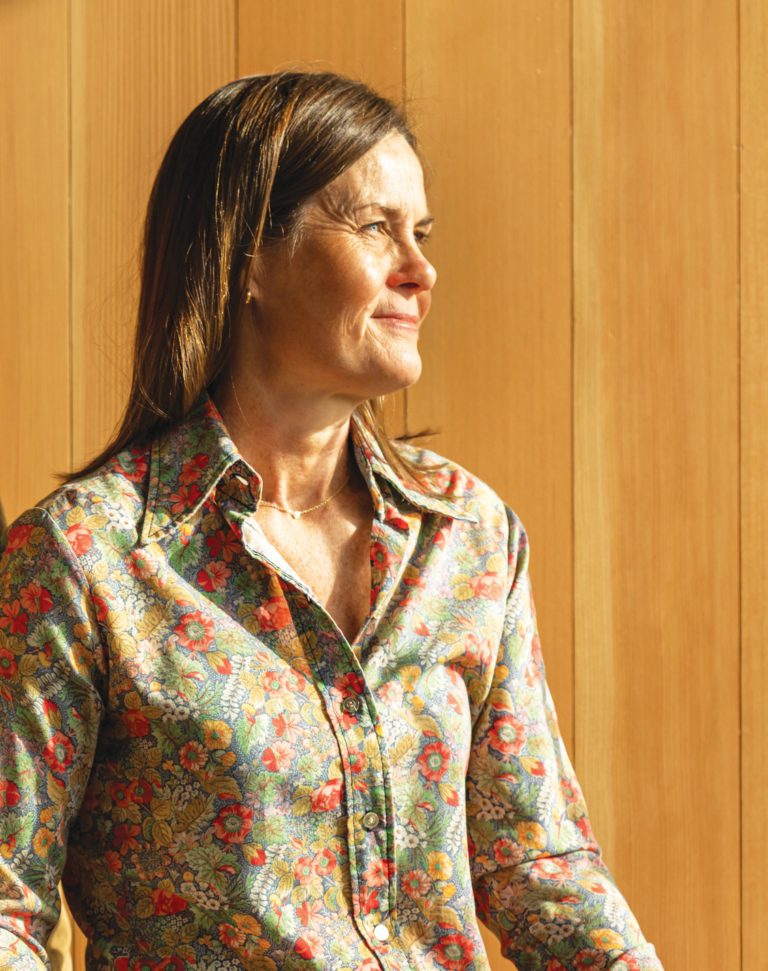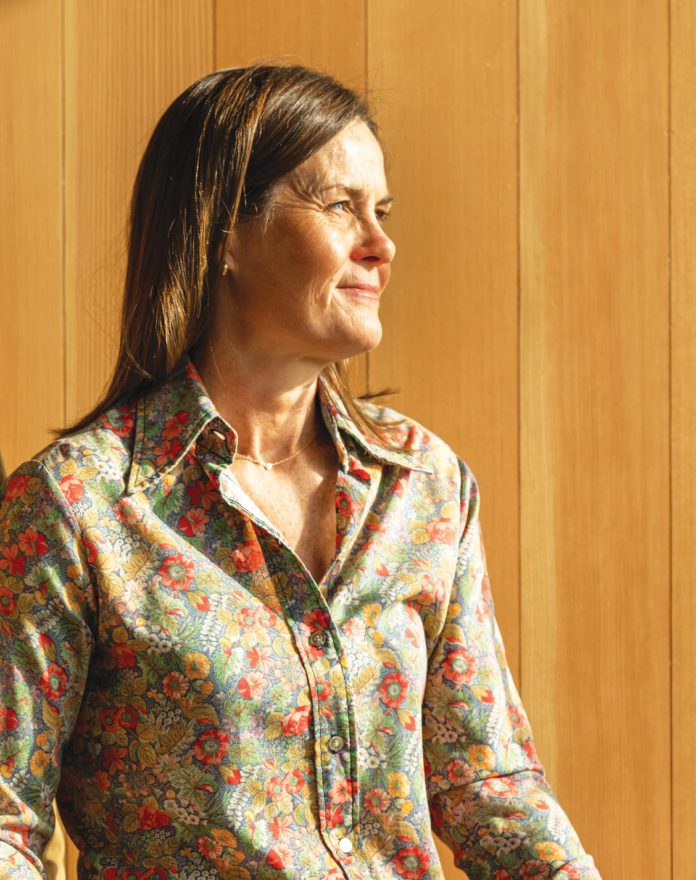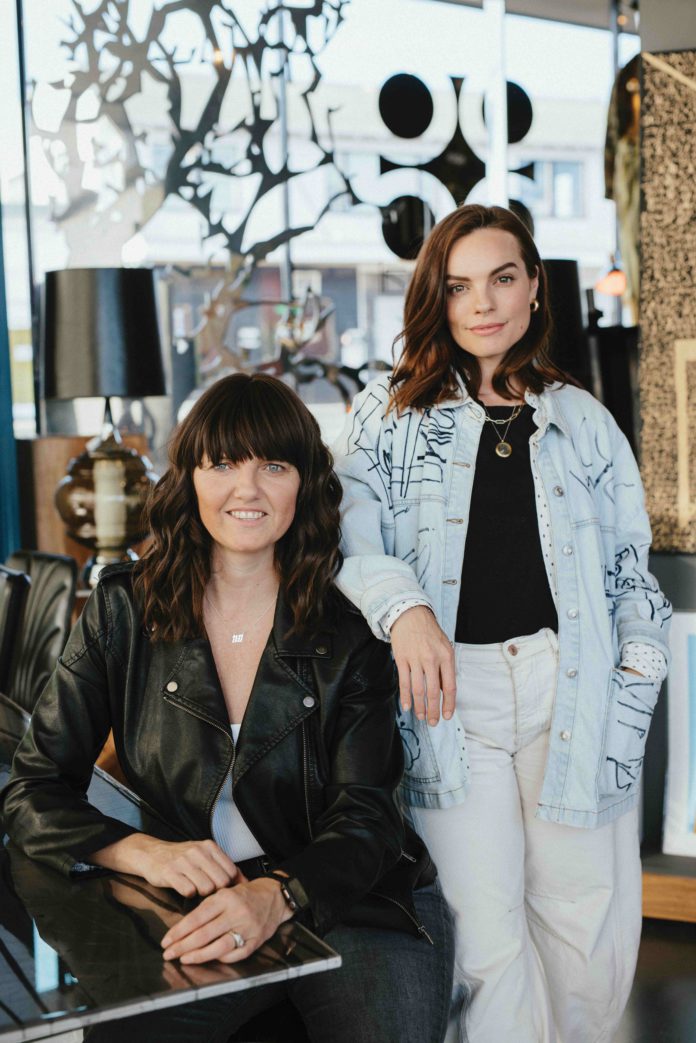
There has long been an axis of transmission between the North Bay and Hawaii. That back-and-forth talk and trade has defined the life of Megan Brady, who divides her time between West County, Sonoma, and Hilo, Hawaii as the founder of elixir venture UpRoot Origin.
Partly to bridge and partly to bind these two places, Brady has formulated a healthy drink that blends the produce of each land. Organic ginger, turmeric and lotus roots from Hawaii mixed with organic, raw and unfiltered apple cider vinegar from North Bay heirloom apple varietals are dusted with organic cinnamon and lotus pollen and kissed with raw organic honey.
The result, “Concentrated Turmeric Elixir,” glows gold like Cal-Hawaiian sunshine. It is produced in Petaluma at the manufactory of Biotic Ferments, our local Kvass producer.
CH: Megan, besides the biographical piece, why did you bring these elements together in this juice blend?
MB: I came up with this blend because I had been taking these fruits, roots, herbs and spices separately as supplements to support my own health. As I shared it with my friends, people were saying it was helping them with a multitude of different health issues. In fact, this business wasn’t intended. It grew organically out of the growing need to supply my community. It’s gotten out of hand (laughs).
CH: In the best way. What can you say about the taste?
MB: Well, our slogan is “ignite the fire within” (laughs). I also say that it has a spicy, invigorating kick. It is a very concentrated product—a bottle will last you a long time. But I encourage people to mix it if it is too strong for them.
CH: It makes a fine mocktail. That is in addition to an eye-opening health shot. I see there are eight recipes for golden elixirs on your website, including a lemonade, a spritzer, a toddy and a vinaigrette.
MB: You can get very creative with it!
CH: I see that you have a close personal relationship with your ginger and turmeric and apple farmers, who work small holds in Hawaii and Sonoma.
MB: Oh, my relationship with my farmers is phenomenal! I wanted to have a company where I knew where I was sourcing the ingredients. And one of my passions is promoting the use of non-commercial products to support our local economies. My farmers, I can happily say, are my friends.
Learn more. Go to linktr.ee/uprootoriginLINKS for local retailers or direct shipping or to reach UpRoot Megan Brady through socials—Aloha!
After the attempted assassination of Donald Trump in July, the merchandise started showing up on Facebook.
Trump, fist in the air, face bloodied from a bullet, appeared on everything. Coffee mugs. Hawaiian shirts. Trading cards. Commemorative coins. Heart ornaments. Ads for these products used images captured at the scene by Doug Mills for the New York Times and Evan Vucci for the Associated Press, showing Trump yelling “fight” after the shooting. The Trump campaign itself even offered some gear commemorating his survival.
As the Secret Service drew scrutiny and law enforcement searched for a motive, online advertisers saw a business opportunity in the moment, pumping out Facebook ads to supporters hungry for merch.
CalMatters and The Markup ran a simple search of Meta’s Ad Library and found ads for merchandise related to Trump’s assassination attempt.
In the 10 weeks after the shooting, advertisers paid Meta between $593,000 and $813,000 for political ads that explicitly mentioned the assassination attempt, according to The Markup’s analysis. (Meta provides only estimates of spending and reach for ads in its database.)
Even Facebook itself has acknowledged that polarizing content and misinformation on its platform has incited real-life violence. An analysis by CalMatters and The Markup found that the reverse is also true: real-world violence can sometimes open new revenue opportunities for Meta.
While the spending on assassination ads represents a sliver of Meta’s $100 billion-plus ad revenue, the company also builds its bottom line when tragedies like war and mass shootings occur, in the United States and beyond. After the October 7th attack on Israel last year and the country’s response in Gaza, Meta saw a major increase in dollars spent related to the conflict, according to our review.
Tech advocacy groups and others question whether Facebook should even profit from violence and whether its ability to do so violates the company’s own principles of not calling for violence. The company said advertisers often respond to current events and that ads that run on its platform are reviewed and must meet the company’s standards.
If you count all of the political ads mentioning Israel since the attack through the last week of September, organizations and individuals paid Meta between $14.8 and $22.1 million dollars for ads seen between 1.5 billion and 1.7 billion times on Meta’s platforms. Meta made much less for ads mentioning Israel during the same period the year before: between $2.4 and $4 million dollars for ads that were seen between 373 million and 445 million times. At the high end of Meta’s estimates, this was a 450 percent increase in Israel-related ad dollars for the company. (In our analysis, we converted foreign currency purchases to current U.S. dollars.)
The American Israel Public Affairs Committee, a lobbying group that promotes Israel, was the major spender on ads mentioning Israel. In the six months after October 7th, its spending increased more than 300 percent over the previous six months, to between $1.8 and $2.7 million dollars, as the organization peppered Facebook and Instagram with ads defending Israel’s actions in Gaza and pressuring politicians to support the country.
As the war has roiled the region, AIPAC paid Meta about as much for ads in the 15 weeks following October 7th as the entire year before.
“Our effort is directed to encouraging pro-Israel Americans to stand with our democratic ally as it battles Iranian proxies in the aftermath of the barbaric Hamas attack of October 7th,” Marshall Wittmann, a spokesperson for AIPAC, said in an emailed statement.
Other ad campaigns mentioning Israel supported different sides of the conflict. Doctors Without Borders, for example, used advertising to highlight the humanitarian crisis in Gaza. Other ads defended and promoted Israel. The Christian Broadcasting Network tied the October 7th attack to a claim in an ad that Iran’s “final, deadly goal” was “to establish a modern caliphate—an Islamic-founded, tyrannical government—across the world.”
Meta, the parent company of Facebook and Instagram, takes in the vast majority of its revenue from targeted advertising. The company tracks users online to profile their habits and, when a business or organization wants to reach them, lets those businesses pay to send ads to people who might be interested. Those ads might be tied to something perfectly wholesome, like gardening. But the company’s algorithms don’t distinguish between simple hobbies and something darker.
Meta spokesperson Tracy Clayton said in an emailed statement that Meta did not ultimately profit from political violence, as advertisers broadly back away from advertising during times of strife for fear their ads will be promoted alongside news of the violence.
Clayton noted Meta’s chief financial officer recently said on an earnings call that it is “hard for us to attribute demand softness directly to any specific geopolitical event” but had seen lower ad spending “correlating with the start of the conflict” in the Middle East, and had seen similar at the start of the war in Ukraine.
“Advertisers responding to current events are nothing new, and it’s seen across the media landscape, including on television, radio, and online news outlets,” Clayton said. “All ads that run on our platform must go through a review process and adhere to our advertising and community standards, and Meta offers an extra layer of transparency by making them publicly available in our Ad Library.”
CalMatters and The Markup used Meta’s own tools to calculate how much Meta makes from spikes in advertising when instances of political violence happen, reviewing thousands of ads through both manual review and with the assistance of an AI model offered by Meta itself. (We also made improvements to Meta Research’s scripts for accessing the Ad Library API, and we’re sharing our changes.)
To examine the assassination attempt merchandise, we ran a simple search of Meta’s Ad Library for ads that mentioned “assassination,” including any in our analysis that also mentioned “Trump” and hundreds of others that didn’t mention the former president by name but were clearly related to the shooting.
“First they jail him, now they try to end him,” one ad read. A conspiratorial ad for a commemorative two-dollar bill claimed “the assassination attempt was their Plan B,” while “Plan A was to make Biden abandon the presidential campaign.” Some ads used clips from the film JFK to suggest an unseen, malevolent force was at work in the shooting.
Gun advocates paid for ads, using the assassination attempt as a foreboding call to action. One ad promoting a firearms safety course noted that “November is fast approaching.” A clothing business said in an ad that, since “the government can’t save you” from foreign enemies, Americans “need to be self-reliant, self-made, and self-sufficient.”
“Because when those bullets zip by, you are clearly on your own,” the ad read.
CalMatters and The Markup found that gun advocates used the presidential assassination attempt to promote products and services on Facebook, including this advertisement for a firearms safety course.
Most of those ads did not appear to violate Meta’s policies, although some may have broken its ban against showing weapons while alleging “election-related corruption.” But even the ones that didn’t clearly violate Meta’s rules still place the company in an uncomfortable position, as the business takes in advertising dollars from posts tied to grim news cycles.
CEO Mark Zuckerberg himself commented on the first Trump assassination attempt, saying in an interview that it was “one of the most badass things I’ve ever seen in my life.” Trump has now survived a second apparent assassination attempt, and Zuckerburg’s company has made millions of dollars through political advertising tied to these and other violent acts.
Katie Paul, director of the Tech Transparency Project, a nonprofit advocacy organization, said “it’s not a surprise” that ads around political violence would pop up after incidents “if Meta is not making any effort even on a good day to effectively enforce their policies.”
“There’s huge problems with their advertising broadly,” she said. “They’re profiting off of a lot of harmful things, really without any sort of repercussions.”
A Trump-fueled business and cash from war
Many businesses paying for the assassination ads sold pro-Trump gear before the shooting — and some might have spent a similar amount on ads if the shooting never happened.
But for some, the assassination attempt effectively became an entire business strategy, according to the review of Meta advertising data.
A clothing company called Red First, which offers everything from customized shirts for pet owners to flags saying “Hillary belongs in prison,” offered assassination-related merchandise through a network of pages with names like 50 Stars Nation and Red White and Blue Zone.
The company, which operates in California and Vietnam, according to Meta’s required disclosures, has spent more than $1.8 million since February 2023 to promote ads through its various pages. But in the wake of the shooting, the company pivoted to merchandise around the event.
Red First’s ads were relatively innocuous compared to some that sprang up after the shooting – they promoted Trump, not the shooting, and not the idea of retaliation for it. One shirt showed an illustration of Trump, middle fingers in the air, and the words “you missed bigly.” The company has also offered Kamala Harris merchandise, recently launching a page dedicated to it as well.
But the ads related to the shooting simultaneously sold products, promoted Trump, and let Meta reap advertising cash from the incident.
Many of the thousands of ads posted by the company didn’t explicitly use the word “assassination,” but clearly referenced the event in other ways, using slogans like “he will overcome,” “fight fight fight,” “legends never die,” and “shooting makes me stronger.”
To suss out which ads were related to the shooting, we reviewed more than 4,200 ads from the company’s different pages with the assistance of a large language model named Llama, a Meta AI model.
We programmed the model to evaluate the text of each ad to determine whether it was related to the assassination attempt, then manually reviewed hundreds of its classifications to ensure it was working as expected.
After our review, we determined that more than 2,600 of those more than 4,200 ads were related to the assassination attempt. The total Red First paid to Meta in the 10 weeks after the shooting for those ads: between $473,000 and $798,000.
Red First lists a phone number and street address in Southern California, but didn’t respond to phone or email, and the listed address is for a mail-opening service.
The NRA and violent ads around the globe
The advocacy organization the Tech Transparency Project has charted how the National Rifle Association has paid to promote pro-gun views on Meta and Google’s ad platforms after mass shootings. Despite calls from tech company executives for gun control, those companies profit from NRA spending that spikes after shootings, the group has pointed out.
After the mass school shooting in Parkland, Fla., the NRA increased its spending on Google and Facebook ads, the Tech Transparency Project noted in one report. In 2018, the year of the shooting, Meta received “more than $2 million in advertising fees from the NRA starting in May of that year,” the report found, which also found that “NRA ad spending reached its highest levels on Google and soared on Facebook” following a week of mass shootings the following year that left dozens of people dead.
Just days before the January 6th insurrection, the Tech Transparency Project found that Meta hosted ads offering gun holsters and rifle accessories in far-right Facebook groups.
Internationally, Meta has often lapsed in its pledge to keep violent content off its platforms.
Meta’s ad policies forbid calling for violence. But when faced with crucial tests of its content moderation practices, the company has repeatedly failed to detect and remove inflammatory ads. A 2018 report, commissioned by Facebook itself, found that its platform had been used to incite violence in Myanmar, and that the company hadn’t done enough to prevent it.
Alia Al Ghussain, a researcher on technology issues at Amnesty International, said that as troubling as some ads might be in English, ads in other languages may be even more likely to pass Meta’s content moderation. “In most of the non-English-speaking world, Facebook doesn’t have the resources that it needs to moderate the content on the platform effectively and safely,” she said.
Despite later admitting responsibility for violence in Myanmar, the company continues to be faulted for gaps in its international moderation work. Another advocacy organization found in a test that the company approved calls for the murder of ethnic groups in Ethiopia. More recently, a similar test by an advocacy organization found that ads explicitly calling for violence against Palestinians—a flagrant violation of Meta’s rules—were still approved to run by the company.
“If ads which are presenting a risk of stoking tension or spreading misinformation are being approved in the US, in English, it really makes me fearful for what is happening in other countries in non-English-speaking languages,” Al Ghussain said.
I consider myself a Bay Area aficionado…never having lived here. Wearing a Bear Republic baseball hat and known to work California hours, I speak with a different accent.
In the afternoons and evenings, I read about Napa and Sonoma wineries and the best places in Marin to eat oysters. Yet, my mornings are often spent walking on boardwalks along the Atlantic Ocean. And I can think of nothing I love more than sharing a bucket of steamers.
Over the past decade, I have visited Napa, Sonoma and Marin counties a couple of times, feeling like a typical tourist. However, a recent trip to the area was a different experience altogether—this time, I felt as if I were living out an episode of The Twilight Zone.
I remember this feeling was at its most eerie on our second night when we went out to dinner with friends. As we got out of the car, I stopped to read a political campaign sign, casually noting how interesting it was that the particular candidate was running again. Then, as we passed a theater, I remarked how exciting it was that the film fest would soon be held there. Our friends looked at me, puzzled. It was then that I knew that they couldn’t possibly understand.
A few days later, I had breakfast with my favorite North Bay author-auteur, whom I had never met but who I somehow knew so well. Afterward, I asked him for directions to a place I was very familiar with but had never actually been. Seeing signs for a few restaurants, I realized I knew the names of their owners. Passing others on the street, I wondered if they also read the publications I read every word of.
In the subsequent days, I tried a raw oyster for the first time and had my fair share of wine, developing a newfound taste for pinot noir. I hiked among the redwoods and biked along the Russian River, smiling all the while as I continued to be engulfed by a strong sense of familiarity. I pointed out the name of the highest mountain and where to get the best cheese. But what stopped me in my tracks time after time was seeing so many hummingbirds and butterflies. This phenomenon blew me away, as it was the one thing I hadn’t read about or anticipated.
As soon as I can, I plan to return to take in all those hummingbirds, butterflies, and more again. But in the meantime, I’ll continue to read up on all the local happenings from where I sit while working on perfecting my California accent.
A voracious reader, Suzanne Michel is the copy editor of the North Bay Bohemian and Pacific Sun.
In 1918, at the age of 11, Sanora Babb wrote an essay titled “How to Handle Men” for an English class at a grade school in what was Oklahoma Territory.
Until she died in 2005 in the Hollywood Hills, Babb had trouble handling the men in her life, beginning with her abusive, alcoholic father and with her Chinese American lover and later her husband, James Wong Howe, an Academy award-winning cinematographer. Interracial marriages were illegal in the Golden State until 1948, when the California Supreme Court ruled that the ban was unconstitutional.
For most of her life, Babb had troubles galore with her lovers and male literary friends, including Ralph Ellison, the author of Invisible Man, and William Saroyan and Ray Bradbury, who both championed her work.
Of course, men also had trouble handling Babb. Her friend, Genevieve Taggard, said, “You are not an easy wife for any man.” Babb confessed, “I cannot be contained in a relationship of two.” Monogamy wasn’t her cup of tea. In the late 1930s, she had heartbreaking troubles with John Steinbeck, the author of the Pulitzer Prize-winning novel The Grapes of Wrath, and with Steinbeck’s Random House editor, Bennet Cerf.
After promising to publish Whose Names Are Unknown, Babb’s novel, Cerf changed his mind and withdrew his offer. The Grapes of Wrath became an instant bestseller. Cerf insisted that two books about the Dust Bowl, the Okies and the Depression of the 1930s were too many. Babb’s and Steinbeck’s novels are indeed similar and yet also very different.
A woman wronged by a literary husband (think D. H. Lawrence and Charmian Kittredge London) or by a friend or a lover—that’s an all-too-familiar story. However, Iris Jamahl Dunkle gives it a new twist in Riding Like the Wind, her biography of an underappreciated American author who followed a familiar political path that took her from anonymity on the prairies into turbulent 1930s Hollywood. (University of California Press, 2024; $26.55)
Cerf’s rejection of Babb’s novel devastated the author for years. Like her fictional characters, she too would be largely unknown. Rejection contributed to attempted suicide. Yet for decades, she wrote and published brilliant short stories, as well as an autobiography titled An Owl on Every Post, and taught writing at UCLA. Her Okie novel wasn’t published until 2004, a year before her death.
Dunkle is perhaps the perfect biographer to tell Babb’s story. A former Sonoma County poet laureate, a faculty member at UC Davis and the poetry director of the Napa Valley Writers’ Conference, she focuses, in her essays and biographies, on neglected women writers who often lived in the shadow of famous men.
Her first biography explores the life and work of Charmian London, subtitled “Trailblazer, Author, Adventurer.” Jack London’s second wife and an author in her own right, Charmian London never wrote anything as popular as The Call of the Wild, though she assisted her husband as researcher, secretary and muse.
Besides her writing of biographies such as the one on Chamain London, Dunkle edits and publishes a reader-supported literary site titled “Finding Lost Voices”—all those voices belong to women. In September 2024, Jamal touted the career of Esther McCoy, a fiction writer and an architectural critic who, Dunkle says, “put Los Angeles on the map.”
What about Raymond Chandler, the author of The Big Sleep and The Long Goodbye, who set his novels in and around Los Angeles and made the City of Angels synonymous with noir? Chandler apparently doesn’t count in Jamal’s worldview. Wrong gender. And besides, his was never a lost voice.
In her riveting, meticulously researched new biography, Dunkle traces the ups and downs of Babb’s life from Oklahoma to California, her political adventures in and out of the American Communist Party, along with a trip to the Soviet Union, plus her tangled relationships with her father, mother, sister and lover/ husband James Wong Howe. Babb’s friend, Meridel Le Sueur, another largely lost, left-wing American voice, urged her to write “shamelessly and nakedly.” Easier said than done.
Living shamelessly and nakedly apparently came more easily to Babb than writing in that vein, though she tossed off brilliant short stories. For years, long fiction eluded her, and she eluded it. Late in life, she published a memoir and the autobiographical novel The Lost Traveler, the title of which suggests her own wandering life. Ken Burns honored Babb in his documentary, The Dust Bowl.
Dunkle argues that Babb’s portrait of the Okies is superior to Steinbeck’s portrait. She insists when we read Babb’s work, “We get to see the West in her eyes, and we are richer.” Babb told a reporter that she was a “better writer” than Steinbeck and that “his book is not as realistic as mine.” Readers can decide for themselves which book is better, though to suggest that Whose Names Are Unknown is superior to The Grapes of Wrath sounds, well, like sour grapes.
It also seems unlikely that Steinbeck “ripped off” Babb. True, she handed him her notes on the Okies and later called that decision “naïve.” Scholars insist that Steinbeck did his own research and wasn’t indebted to Babb and her work. When one reads Dunkle’s captivating, emotionally-wrenching biography, they might remember that, as T. S. Eliot and Oscar Wilde both insisted, “Talent borrows, genius steals.” And remember, too, that the “lost voices” of men and women are around every corner.
It occurs to me, as the election closes in upon us, that Donald Trump’s outrageous claims, increasing in variety almost daily, are akin to this common advertising adage: “Let’s just throw it at the wall and see if it sticks!”
I think this recent Trump Spaghetti, while likely not very tasty, simply shows how desperate he is for just one more vote on Nov. 5th. Not being a huge spaghetti fan, of course I’m voting Harris/Walz in 2024.
Keith Rhinehart
Santa Rosa
Aye, There’s the Rubbish
J.D. Moore’s letter (“Faux Show,” 9/25/2024) is delusional in claiming that the attempted assassination of Donald Trump was staged, fake. Two people were killed in the incident. The Pacific Sun/Bohemian disappoints by printing such hallucinatory rubbish. What’s happened to common sense?
Christopher Emley
San Rafael
Editor’s Note: Mr. Emley — Your note succinctly accomplished our intention. Case closed.
Catch the world premiere of documentary feature Fools’ Paradise (Lost?), from Sebastopol filmmaker Alexandra Lexton, at 5pm, Oct. 12 at Sequoia Cinema, 25 Throckmorton Ave., Mill Valley. Part of the 47th Mill Valley Film Festival, this powerful film—billed as “a love letter to our wild”—explores the healing potential of reconnecting with nature in the face of climate change and environmental degradation.The film delves into scientific inquiry, sustainable business practices and nature therapies, illustrating how personal reconnection to the natural world can lead to both individual and planetary healing. Featuring stories from a nature photographer, a science writer, an Indigenous scholar and Marin’s own “Planetwalker,” Dr. John Francis, Fools’ Paradise (Lost?) offers a message of hope and possibility. Following the screening, Lexton will be present for a Q&A to discuss the film’s journey and its deep exploration of sustainable living and personal action. Tickets are $16 for MVFF members and $18.50 for the general public. For more info and to purchase tickets, visit mvff.com/program/fools-paradise-lost.
Santa Rosa
Beagle Scouts
Snoopy and his loyal Beagle Scouts will be celebrating 50 years at the Charles M. Schulz Museum’s latest exhibition, Here Come the Beagle Scouts!, running now through March 12, 2025. This nostalgic tribute to the Beagle Scouts’ adventures features original Peanuts comic strip art, vintage collectibles, animation clips and plenty of surprises—no compass needed. The exhibition highlights the Beagle Scouts’ June 9, 1974 debut, with over 160 appearances in Peanuts, and showcases their lasting influence, including inspiration for the new AppleTV+ show Camp Snoopy. Visitors can explore rare memorabilia, including figurines, Colorforms and a collection of Scout-themed embroidered patches. Archival photos of Schulz, from his military service and outdoor trips, provide insight into his personal inspirations. Interactive features include a “Beagle Scout Certification” station and a campfire photo op with Snoopy. It’s possible to take a photo, get a memento stamped and immerse oneself in the spirit of these iconic characters. Charles M. Schulz Museum is located at 2301 Hardies La., Santa Rosa. Admission is $12 adults, $8 seniors, $5 children (ages 4-18), free for children under 4 and museum members. schulzmuseum.org.
Fairfax
Hernan Diaz Live
On Wednesday, Oct. 16, at 7pm, Pulitzer Prize-winning author Hernan Diaz will celebrate the release of a special hardcover edition of his novel, In the Distance, at the Fairfax Pavilion, 142 Bolinas Rd. A perennial bestseller and finalist for the Pulitzer Prize, In the Distance is a tale of a young Swedish boy, separated from his brother, who becomes a legendary outlaw as he journeys across America. Set against the backdrop of 19th-century America, the novel follows the boy as he travels eastward, encountering criminals, naturalists and lawmen while defying the conventional boundaries of historical fiction. Diaz’s storytelling challenges stereotypes and examines the extremes of the human condition. Tickets are $5, and registration is required for this event, held in collaboration with Point Reyes Books and Fairfax Recreation. ptreyesbooks.com.
Healdsburg
Ghosted
What’s more intriguing than a ghost? Four of them. Ghost Quartet, Dave Malloy’s haunting and imaginative ghost-story-musical, comes to THE 222 in H’Burg, live (well, in a spiritual sense), with an opening night on Friday, Oct. 25. Programmed by Aldo Billingslea, this life-affirming piece is a “song cycle about love, death and whiskey,” weaving an intricate tale spanning seven centuries. The story includes a murderous sister, a treehouse astronomer, a bear, a subway and the ghost of Thelonious Monk. Featuring a wide variety of musical genres—from gospel to folk ballads and jazz—the show incorporates an eclectic mix of instruments, including the cello, dulcimer, Celtic harp and more. Grammy-nominated violist/cellist Keith Lawrence and Rinde Eckert bring this haunting performance to life. Ghost Quartet performances are 7pm, Friday, Oct. 25 and 26; and 2pm, Sunday, Oct. 27, at THE 222, 222 Healdsburg Ave., Healdsburg. For ticket information, visit the222.org.
ARIES (March 21-April 19): In the coming weeks, you may be tempted to spar and argue more than usual. You could get sucked into the fantasy that it would make sense to wrangle, feud and bicker. But I hope you sublimate those tendencies. The same hot energy that might lead to excessive skirmishing could just as well become a driving force to create robust harmony and resilient unity. If you simply dig further into your psyche’s resourceful depths, you will discover the inspiration to bargain, mediate and negotiate with élan. Here’s a bold prediction: Healing compromises hammered out now could last a long time.
TAURUS (April 20-May 20): Question #1: “What subjects do you talk about to enchant and uplift a person who’s important to you?” Answer #1: “You talk about the feelings and yearnings of the person you hope to enchant and uplift.” Question #2: “How do you express your love with maximum intelligence?” Answer #2: “Before you ask your allies to alter themselves to enhance your relationship, you ask yourself how you might alter yourself to enhance your relationship.” Question #3: “What skill are you destined to master, even though it’s challenging for you to learn?” Answer #3: “Understanding the difference between supple passion and manic obsession.”
GEMINI (May 21-June 20): In 1819, Gemini entrepreneur Francois-Louis Cailler became the first chocolatier to manufacture chocolate bars. His innovation didn’t save any lives, cure any diseas or fix any injustice. But it was a wonderful addition to humanity’s supply of delights. It enhanced our collective joy and pleasure. In the coming months, dear Gemini, I invite you to seek a comparable addition to your own personal world. What novel blessing might you generate or discover? What splendid resource can you add to your repertoire?
CANCER (June 21-July 22): Ayurnamat is a word used by the Inuit people. It refers to when you long for the relaxed tranquility that comes from not worrying about what can’t be changed. You wish you could accept or even welcome the truth about provocative situations with equanimity. Now here’s some very good news, Cancerian. In the coming weeks, you will not just yearn for this state of calm, but will also have a heightened ability to achieve it. Congratulations! It’s a liberating, saint-like accomplishment.
LEO (July 23-Aug. 22): Healing will be more available to you than usual. You’re extra likely to attract the help and insight you need to revive and restore your mind, soul and body. To get started, identify two wounds or discomforts you would love to alleviate. Then consider the following actions: 1. Ruminate about what helpers and professionals might be best able to assist you. Make appointments with them. 2. Perform a ritual in which you seek blessings from your liveliest spirit guides and sympathetic ancestors. 3. Make a list of three actions you will take to make yourself feel better. 4. Treat this process not as a somber struggle, but as a celebration of your mounting vitality.
VIRGO (Aug. 23-Sept. 22): The Beatles were the best-selling band of all time and among the most influential, too. Their fame and fortune were well-earned. Many of the 186 songs they composed and recorded were beautiful, interesting and entertaining. Yet none of the four members of the band could read music. Their brilliance was intuitive and instinctual. Is there a comparable situation in your life, Virgo? A task or skill that you do well despite not being formally trained? If so, the coming months will be a good time to get better grounded. I invite you to fill in the gaps in your education.
LIBRA (Sept. 23-Oct. 22): In 2010, Edurne Pasaban became the first woman to climb the world’s tallest 14 mountains, reaching the top of Shishapangma in China. In 2018, Taylor Demonbreun arrived in Toronto, Canada, completing a quest in which she visited every sovereign nation on the planet in 18 months. In 1924, explorer Alexandra David-Néel pulled off the seemingly impossible feat of visiting Lhasa, Tibet, when that place was still forbidden to foreigners. Be inspired by these heroes as you ruminate about what frontier adventures you will dare to enjoy during the next six months. Design a plan to get all the educational and experimental fun you need.
SCORPIO (Oct. 23-Nov. 21): Alnwick Garden is an unusual network of formal gardens in northeast England. Among its many entertaining features is the Poison Garden, which hosts 100 species of toxic and harmful plants like hemlock, strychnine and deadly nightshade. It’s the most popular feature by far. Visitors enjoy finding out and investigating what’s not good for them. In accordance with astrological omens, Scorpio, I invite you to use this as an inspirational metaphor as you take inventory of influences that are not good for you. Every now and then, it’s healthy to acknowledge what you don’t need and shouldn’t engage with.
SAGITTARIUS (Nov. 22-Dec. 21): Sagittarian Tom Rath is an inspirational author who at age 49 has managed to stay alive even though he has wrangled with a rare disease since he was 16. He writes, “This is what I believe we should all aim for: to make contributions to others’ lives that will grow infinitely in our absence. A great commonality we all share is that we only have today to invest in what could outlive us.” That’s always good advice for everyone, but it’s especially rich counsel for you Sagittarians in the coming months. I believe you will have a special capacity to dispense your best gifts to those who need and want them.
CAPRICORN (Dec. 22-Jan. 19): Capricorn writer Susan Sontag was a public intellectual. She was an academic with a scholarly focus and an entertaining commentator on the gritty hubbub of popular culture. One of my favorite quotes by her is this one: “I like to feel dumb. That’s how I know there’s more in the world than me.” In other words, she made sure her curiosity and open-mindedness flourished by always assuming she had much more to learn. I especially recommend this perspective to you in the coming weeks.
AQUARIUS (Jan. 20-Feb. 18): The Salem Witch Trials took place in Massachusetts from 1692 to 1693. They were ignorant, superstitious prosecutions of people accused of practicing witchcraft. The modern holiday known as Freethought Day happens every October 12, the anniversary of the last witch trial. The purpose of this jubilee is to encourage us to treasure objective facts, to love using logic and reason, and to honor the value of critical thinking. It’s only observed in America now, but I propose we make it a global festival. You Aquarians are my choice to host this year’s revelries in celebration of Freethought Day. You are at the peak of your ability to generate clear, astute, liberating thoughts. Show us what it looks like to be a lucid, unbiased observer of reality.
PISCES (Feb. 19-March 20): A YouTube presenter named Andy George decided to make a chicken sandwich. But he didn’t buy the ingredients in a store. He wanted to make the sandwich from scratch. Over the next six months, he grew wheat, ground it into flour and used it to bake bread. He milked a cow to make cheese and butter. He got sea salt from ocean water and grew a garden of lettuce, cucumber, tomato and dill for toppings. Finally, he went to a farm, bought a chicken, and did all that was necessary to turn the live bird into meat for the sandwich. In describing his process, I’m not suggesting you do something similar. Rather, I’m encouraging you to be thorough as you solidify your foundations in the coming months. Gather resources you will need for long-term projects. Be a connoisseur of the raw materials that will assure future success in whatever way you define success.
Homework: What have you denied yourself even though it would be good for you? Write a note giving yourself permission. Newsletter.FreeWillAstrology.com
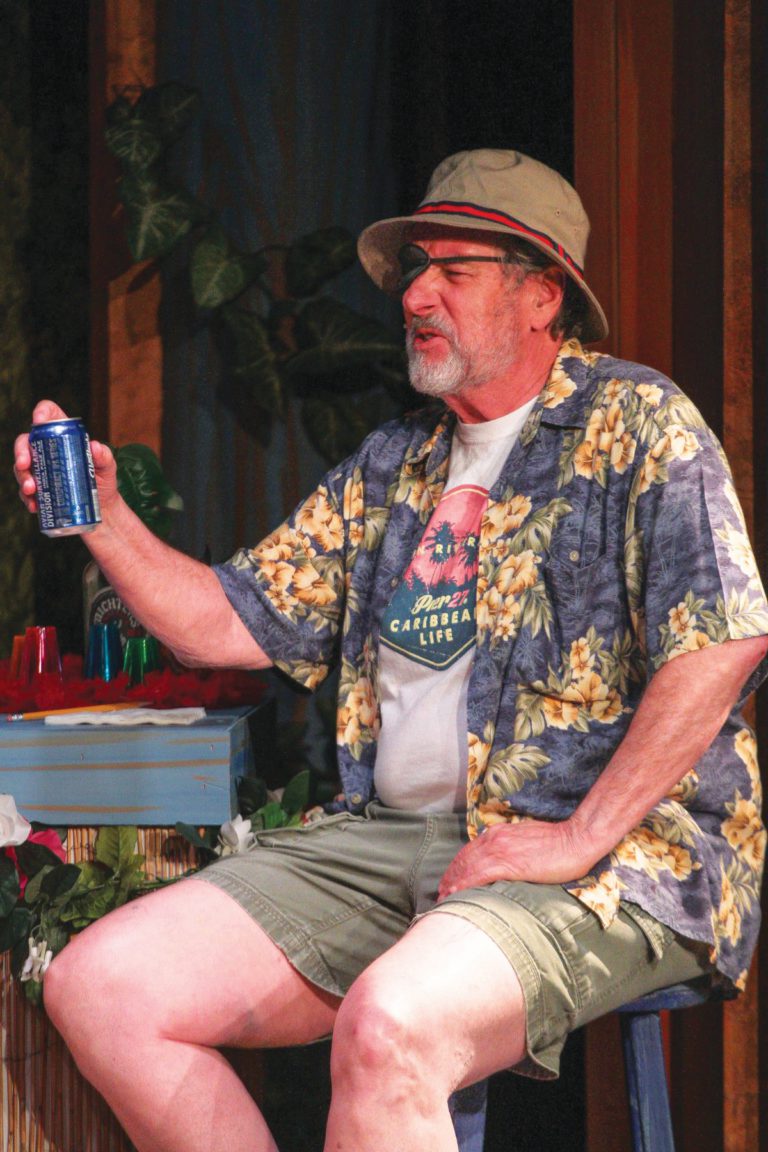
As a graduate of a University Theatre Arts program, I well remember how important it was to have an audience fill the seats at our performances. Having an audience, a real audience (not just one composed of friends and family and students looking for some easy extra credit for their English class) made all the difference in the world to a bunch of young and not-so-young humans like me, insane enough to actually pursue a degree in Theatre.
All of the post-secondary education institutions of higher learning in the North Bay have vibrant theatre programs. Napa Valley College, College of Marin, Santa Rosa Junior College, and Sonoma State University (for now) all mount productions that welcome the public’s attendance and support. The state-of-the-art facilities at all four campuses are some of the best venues in the area to enjoy a live performance.
Santa Rosa Junior College’s Burbank Auditorium has two theatres: the 400-seat Main Theatre and the 200-seat Frank Chong Studio Theatre. The studio theatre has fast become one of my favorite North Bay venues. It’s modern yet comfortable and has all the bells and whistles one expects when it comes to lighting and sound.
Those bells and whistles are put to good use by a bunch of current and former student designers in the SRJC’s production of All in the Timing: An Evening of David Ives Comedies. The show runs on the Santa Rosa campus through October 13.
The show is a collection of six one-act comedies that gives the student cast the opportunity to play a variety of roles, from a couple of folks chatting at a coffee shop to monkeys sitting at typewriters to Russian revolutionary Leon Trotsky to two mayflies looking to make the most of their 24 hours on Earth.
Sure Thing plays like an improv comedy sketch as two people (Maya Tuchband and AJ Correa) meet in a coffee shop and engage in a conversation. The conversation literally turns on a bell.
Words, Words, Words is Ives’ take on the infinite monkey theorem. That theorem states that a monkey hitting keys at random on a typewriter keyboard for an infinite amount of time will almost surely type the complete works of William Shakespeare. Ives puts three monkeys (Cameron Sundberg, Ethan Fuller, Emerson Reynolds) to work on Hamlet.
The Universal Language introduces the audience to Unamunda, a nonsensical language being hawked by a shady huckster named Don (Orion Pudoff) to an unsuspecting woman named Dawn (Nataly Garduno) who’s trying to overcome a speech impediment.
The Philadelphia features two gentlemen (Will Mosier, Kasey Vannoy) and a waitress (Mariah Burgos) living in a world where you can never get what you ask for.
Variations on the Death of Trotsky is just what its title indicates. The Russian revolutionary lived 24 hours after a mountain climber’s axe was smashed into his skull, so Ives gives us Trotsky (Gavin Sellors), his wife (Samantha Rokes), and his gardener/assassin Ramon (Juan Torres Ibanez) in a number of Monty Python-esque bits, all with the axe protruding from Trotsky’s head.
Time Flies features two mayflies (Maya Tuchband, James Maverick Cheney) trying to get it on under the watchful eyes of Sir David Attenborough (Orion Pudoff).
Director Leslie McCauley’s young cast handles Ives’ often intricately amusing wordplay extremely well. For folks who like their comedy a bit more on the physical side, the casts of Words, Words, Words and Time Flies deliver the goods, with Sundberg’s work as monkey ‘Milton’ particularly funny.
The utilitarian set by Nathaniel George Gillespie allows for quick scene changes and crisp projections (also by Gillespie) announce each play. The cast is well-supported by the lighting and sound designs by Alex Clark and Grace Reid. If you’ve ever wondered what mayflies on the make look like, costume designer Reynalda Cruz gives them a Las Vegas lounge singer look (with antennae).
With a running time of less than two hours and ticket prices of only $15 – $25, this well-produced, well-performed, and often very amusing show is an absolute bargain. It would be time (and money) well spent.
‘All in the Timing’ runs Thurs–Sun through October 13 in the Santa Rosa Junior College Burbank Auditorium Frank Chong Studio Theatre, 1501 Mendocino Ave., Santa Rosa. Thurs–Sat, 7:30 pm; Sat & Sun, 2 pm. $15–$25. 707.527.4307. theatrearts.santarosa.edu
It is a scary world out there. And the level of anxiety that most of us carry is such that we hold a scream in our chest.
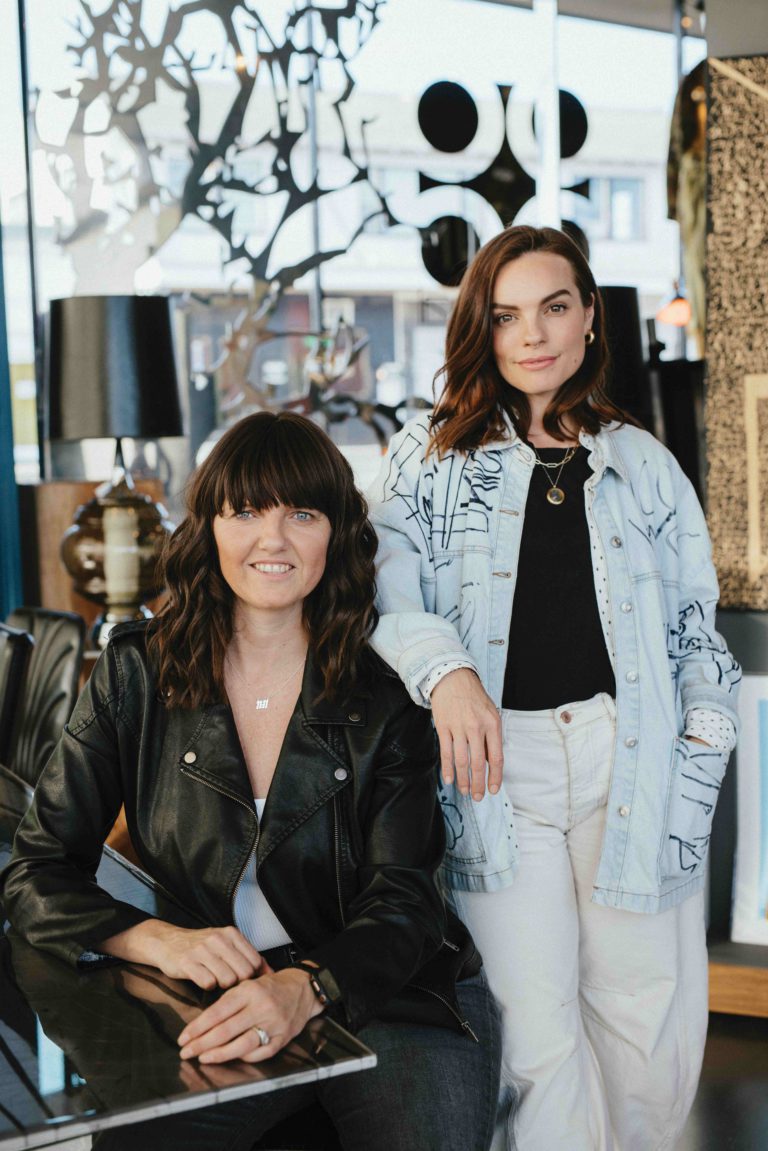
We spend a lot of energy trying to hold that scream in. But if one lets it out—in safety—it is the quickest way to relief. One might find oneself laughing and feel a bit of peace. For this, let me recommend the master of horror, Drew Dominguez, who together with his business partner, Judy Groverman Walker, operates Blind Scream haunted house.
It’s in Santa Rosa, on the cursed ground of the old Sears Tire Center. And one can trust Dominguez, as he’s a safety rep. for Kaiser Permanente construction—this will be therapeutic.
CH: Drew, even though you are seasonal (with Blind Scream), I see you have held the building lease more than 10 spooky years.
DD: That allows us the ability to build all year, so it has a whole different feel than most haunted houses that are around. It used to be that each year we would have to find a building for a short-term lease, set it up for a month, run it for a month and tear it down for a month.
CH: There is a deep depth of detail. I could spend an hour in the first room—a gruesome carnival concession stand—pouring over the details. That is, if I weren’t running in terror.
DD: We want to submerge you in the story and suspend your disbelief. Most haunts are kind of flat in comparison.
CH: And you change 25% of the haunt each year! Drew, I saw a cast list with 35 different parts. There were some classics like chain-saw maniac and séance ghost, but there seem to be a lot of original characters too.
DD: The haunt tells the continuing story of a family called the Hunters, led by patriarch Doc Hunter and his wife, Mama Santé.
CH: They’re pretty twisted. I see their story coheres the themed rooms as a whole—but then you also liken visitor experience to a roller coaster ride?
DD: There are highs and lows—desensitization, rooms that feel calmer, misdirection—like in a magic show or film-making. I will guide people to look at something—a squeaking creature in a cage—so I can get them from behind!
There’s so much more. I wasn’t able to mention the in-house special effects studio, the terrifying animatronic monsters, the original music and field-recorded sound effects. One will just have to go and see! linktr.ee/blindscreamLINKS.
America’s poorest seniors could soon find it much harder to get the necessary medicines.
That’s because Medicare’s Low-Income Subsidy program—which provides millions of seniors with prescription drug coverage with no monthly premium—is eroding. Recent changes made in the Inflation Reduction Act are partly to blame.
The number of “benchmark” LIS plans—which offer coverage without a monthly premium—plummeted 34% last year alone. As a result of some plans being discontinued or increasing their monthly premium, over 1.3 million seniors were reassigned to a different plan by Centers for Medicare & Medicaid Services (CMS).
Many other seniors had no choice but to opt for more expensive alternative plans that require monthly premiums, jeopardizing their access to life-saving medicines—or reducing what they can spend on necessities like groceries and rent.
The Low-Income Subsidy program is a lifeline for roughly 13 million Americans. Low-income seniors are disproportionately burdened by chronic health conditions like diabetes and heart disease, so whether they can afford prescriptions can be a matter of life and death. Only seniors whose annual earnings are less than 150% of the federal poverty line—about $22,500 for a single person or $30,500 for a couple—qualify for the program.
By the numbers, communities of color are primarily reliant on these subsidies. Combined, Black and Hispanic beneficiaries make up just 20% of Medicare drug plan enrollees. However, within the subsidy program, Black and Hispanic beneficiaries total 37% of enrollees.
Low-income subsidy enrollees are increasingly having to turn to higher-premium plans. Since last year, the number of people who now have to pay premiums has increased by more than one million.
Just as concerning is the fact that premiums across all Medicare prescription drug plans are rising. Average monthly premiums are projected to increase by at least 21% by the end of this year.
It’s a concerning situation. Without swift action from the CMS and Congress, America’s poorest seniors risk losing access to the medicines they need to live healthy lives.
Dr. Yanira Cruz is the president and CEO of the National Hispanic Council on Aging.
There has long been an axis of transmission between the North Bay and Hawaii. That back-and-forth talk and trade has defined the life of Megan Brady, who divides her time between West County, Sonoma, and Hilo, Hawaii as the founder of elixir venture UpRoot Origin.
Partly to bridge and partly to bind these two places, Brady has formulated a healthy...
After the attempted assassination of Donald Trump in July, the merchandise started showing up on Facebook.
Trump, fist in the air, face bloodied from a bullet, appeared on everything. Coffee mugs. Hawaiian shirts. Trading cards. Commemorative coins. Heart ornaments. Ads for these products used images captured at the scene by Doug Mills for the New York Times and Evan Vucci for the Associated Press,...
From words to reality
I consider myself a Bay Area aficionado…never having lived here. Wearing a Bear Republic baseball hat and known to work California hours, I speak with a different accent.
In the afternoons and evenings, I read about Napa and Sonoma wineries and the best places in Marin to eat oysters. Yet, my mornings are often spent walking on...
In 1918, at the age of 11, Sanora Babb wrote an essay titled “How to Handle Men” for an English class at a grade school in what was Oklahoma Territory.
Until she died in 2005 in the Hollywood Hills, Babb had trouble handling the men in her life, beginning with her abusive, alcoholic father and with her Chinese American lover...
Noodle Notion
It occurs to me, as the election closes in upon us, that Donald Trump’s outrageous claims, increasing in variety almost daily, are akin to this common advertising adage: “Let’s just throw it at the wall and see if it sticks!”
I think this recent Trump Spaghetti, while likely not very tasty, simply shows how desperate he is for just...
Mill Valley
Wild Love
Catch the world premiere of documentary feature Fools’ Paradise (Lost?), from Sebastopol filmmaker Alexandra Lexton, at 5pm, Oct. 12 at Sequoia Cinema, 25 Throckmorton Ave., Mill Valley. Part of the 47th Mill Valley Film Festival, this powerful film—billed as “a love letter to our wild”—explores the healing potential of reconnecting with nature in the face of climate...
ARIES (March 21-April 19): In the coming weeks, you may be tempted to spar and argue more than usual. You could get sucked into the fantasy that it would make sense to wrangle, feud and bicker. But I hope you sublimate those tendencies. The same hot energy that might lead to excessive skirmishing could just as well become a...
As a graduate of a University Theatre Arts program, I well remember how important it was to have an audience fill the seats at our performances. Having an audience, a real audience (not just one composed of friends and family and students looking for some easy extra credit for their English class) made all the difference in the world...
It is a scary world out there. And the level of anxiety that most of us carry is such that we hold a scream in our chest.
We spend a lot of energy trying to hold that scream in. But if one lets it out—in safety—it is the quickest way to relief. One might find oneself laughing and feel a...
America’s poorest seniors could soon find it much harder to get the necessary medicines.
That’s because Medicare’s Low-Income Subsidy program—which provides millions of seniors with prescription drug coverage with no monthly premium—is eroding. Recent changes made in the Inflation Reduction Act are partly to blame.
The number of “benchmark” LIS plans—which offer coverage without a monthly premium—plummeted 34% last year alone....