A task force helmed by Attorney General Pam Bondi and focused on “eradicating” anti-Christian bias in the government held its first meeting recently.
While Donald Trump’s government is retreating from any effort by the federal government to pursue racial justice, it is leaning hard into ending what it sees as anti-Christian bias.
So, anti-Jew, anti-Hindi, anti-Muslim, etc. What were these groups thinking if any of them voted for this charlatan?
There’s a pattern—most every town and county in the North Bay has an “arts council”—a non-profit art agency-advocate.
These plucky non-profits are typically represented by a downtown office and arts-space displaying local art. Typically, they are woefully underfunded for their mission—in the pattern of nonprofits. When, 10-plus years ago, Sonoma’s struggling all-county arts council finally heaved up and broke apart, local arts activists took the problem before their board of supervisors.
This put in train a creative solution: Make their county’s “art council” part of the government. Thus began Creative Sonoma. The new all-county arts council would have closer relations with the granters of government largesse and a guaranteed budget of $1 million annually. The downside could be a governmental remove from the community as the “council” was swallowed up by the bureaucracy.
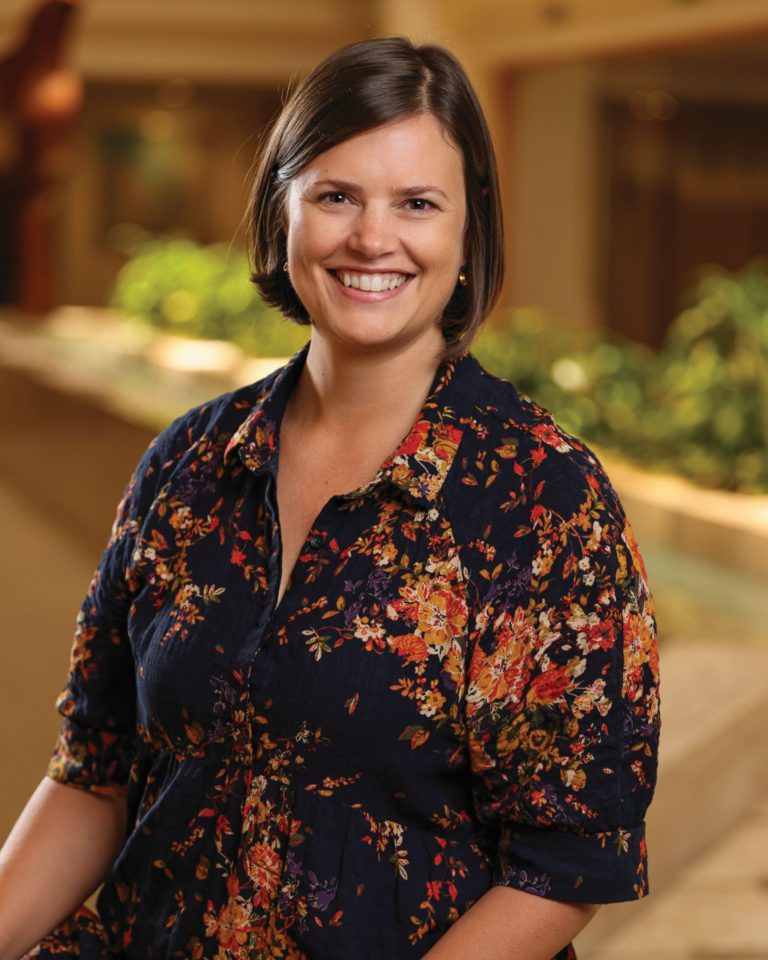
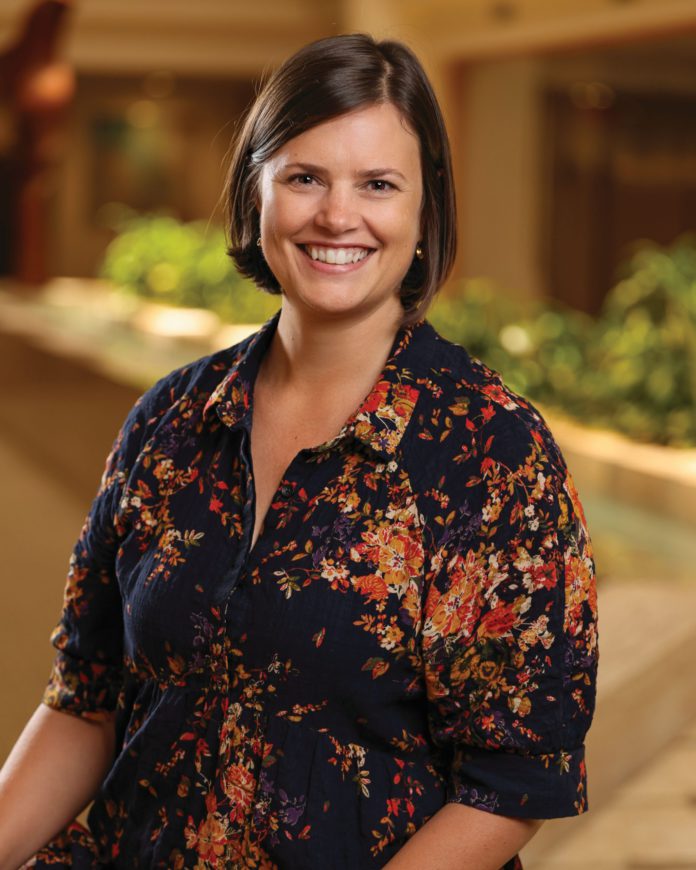
We are now 10 years into this experiment. To learn more about Creative Sonoma, I solicited an interview with artist Tara Thomson, who is settling into her second year as the director of its staff of three government employees. In our conversation, I found her highly competent, transparent and circumspect.
Cincinnatus Hibbard: Tara, on your Creative Sonoma website, your general strategy is laid out as [more] public art, [more] early arts education, [more] professional development for artists and [more] money for public artists and arts organizations in the form of grants. Key to all this is your definition of “good” public art—as that would be the art that wins your grants.
Tara Thomson: I would not say that public art is “good” or “bad” but more or less meaningful to a community. The key word in public art is public. It is meant for the community to experience and enjoy. In my opinion, the community should be involved in the generation of the idea, its type, its location and the section of the artist.
I think what a lot of people think of when they think of government public art is that the government is deciding what art goes where and just puts it there. Community involvement creates ownership of public art. It creates identification, mutual understanding and social cohesion. And I think that’s what’s needed here. And not necessarily a sculpture or a mural. What the community might need is a pop-up event or a series of musical performances in their public spaces.
For examples of this definition, I see in your pipeline that the supervisors have tasked you with a Tubbs Fire Memorial. Also that Supervisor (Lynda) Hopkins has allocated for your direction public art grants for public art in unincorporated West Sonoma County this summer. Tara, I don’t know that Creative Sonoma is a household name yet—even in the arts community. But probably you are best known for your money grants to local artists.
Yes. We have just announced the recipients of our 2025 arts impact grants. This is 4K for art or general operating expenses for each of 45 artists and art—or cultural organizations.
Tara, you told me that in your short tenure you have worked to better realize the potential of being a part of government and its resources. What are you currently working on in this vein?
I am working on a new public art plan to put art in all local government buildings.
Another effort to approach other county agencies—such as parks or HR— to involve
local artists in their efforts to fulfill their own missions. Artists have a way of synthesizing information and communicating with people that typical government outreach lacks.
Think resisting authoritarianism is too big of a lift? Think again. This spring, while the U.S. resistance movement may not be in full bloom, it is blossoming.
The “3.5% rule”—identified by political scientist Erica Chenoweth—should be on the lips of every American anxious about the Trump administration’s headlong drive to replace our democracy with authoritarianism. After studying more than 300 nonviolent resistance campaigns, Chenoweth and colleagues’ research revealed a startling truth: When just 3.5% of a population engages in sustained, strategic civil resistance, authoritarian regimes fall.
Think about it. Not 50%. Not 30%. Just 3.5%. The message is clear: When enough people turn out—repeatedly and nonviolently—democracy wins.
When people commit to showing up—demonstrating creatively and persistently—history is on our side. Nonviolence trainer, activist and writer Rivera Sun, whose YA novels address peace-building, highlights the “imagination” side of movements—that we must not only resist but also build the world we want to live in.
The implications for the nation are profound. We’re a country of 330 million, so 3.5% equals 11.5 million people. That’s the number we need to side with democracy over authoritarianism. That’s not fantasy. It’s strategy. In many, many communities—well beyond western Massachusetts—it’s growing. Person by person, town by town.
What’s needed now is not despair, but determination. Not hand-wringing, but hand-raising. Where I live, it’s one in every 28 standing up consistently and courageously as agents of change, transforming darkness into light. What is it where you live?
In the fall of 2020, during the reign of deep Covid, I worked in-person as a frontline behavioral healthcare counselor at a residential facility for adults with serious mental illness.
It was a strange time to be a commuter. And as I drove from my apartment in Rohnert Park to the facility in Santa Rosa on the deserted 101, it was hard not to imagine that the world had ended right under my nose.
I fell into a sort of paranoid solipsism on these drives, lost in an anxious dream that people would never leave their houses again, that we had been placed in a continuous stasis from which there was no escape. That is, until I started noticing the strange evidence of other people along the highway, proof that I was not alone in the world.
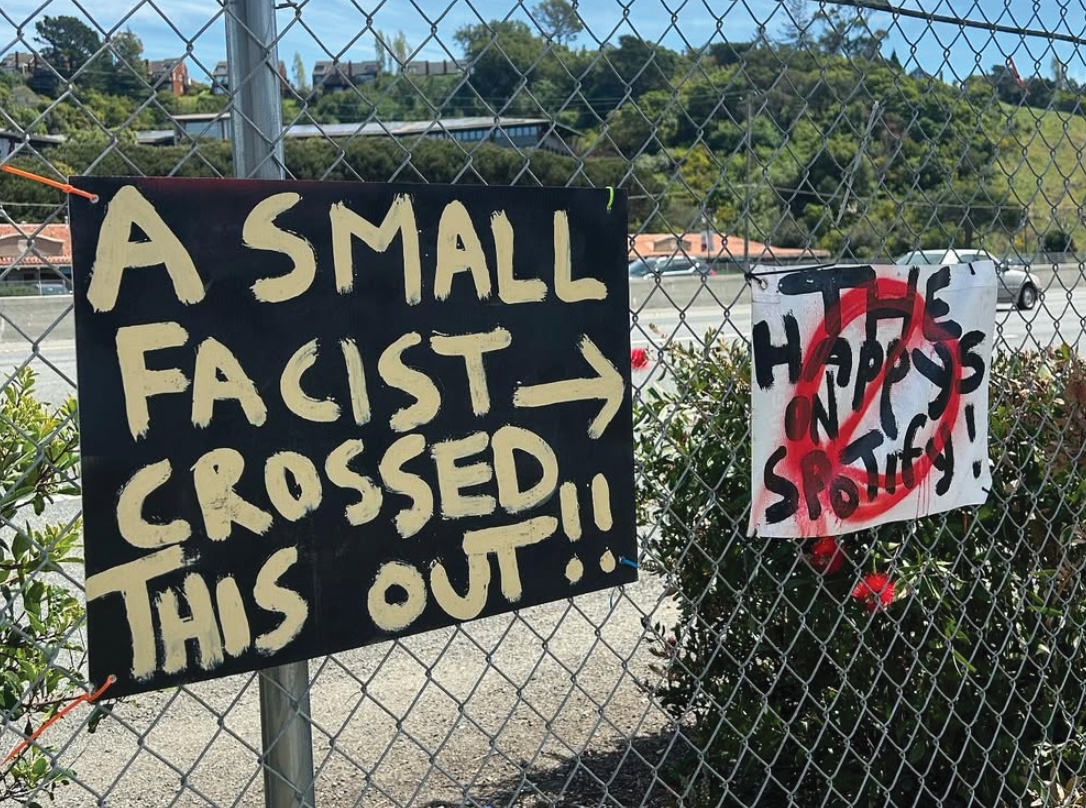
Bedsheets and torn cardboard canvases, affixed with twine to chain-link fences, began appearing at freeway onramps and along frontage roads. All of them bearing the same hastily scrawled or spray-painted message: “Listen To The Happys.”
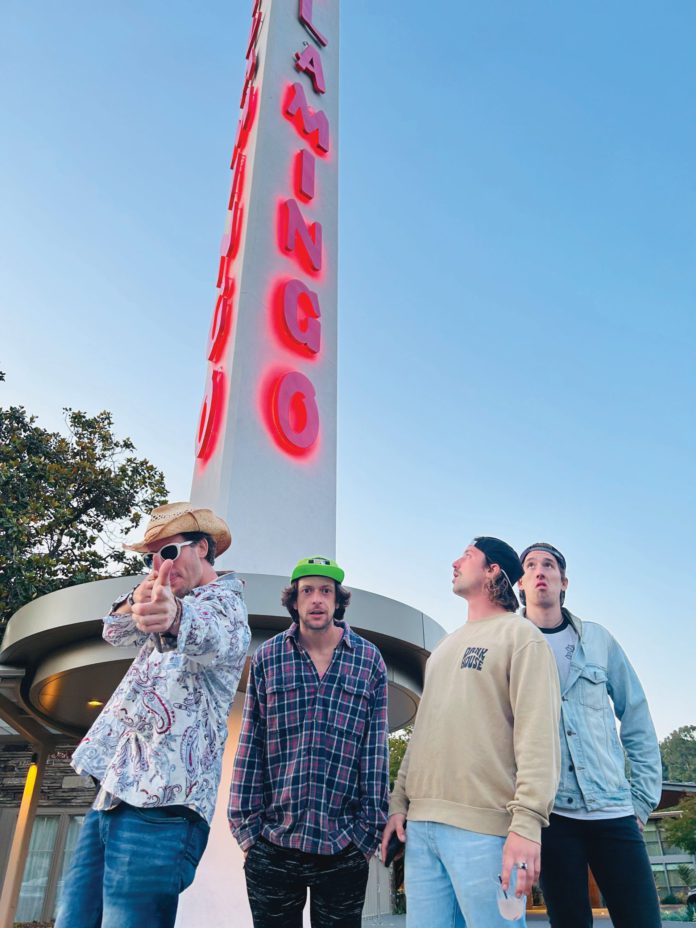
Nick Petty came up with the idea to start a band in 2012 while living in a halfway house in San Francisco. He had recently been released from jail and was doing his best to envision life free of the OxyContin and heroin habit that had been following him for years. While discussing potential names with a friend, he landed on The Happys as a tongue-in-cheek description of the music he wanted to make and the conditions he currently found himself in.
Now, in 2025, sitting in the attic of a barn on the property of the San Rafael Elks Club, The Happys’ current rehearsal space, Petty tells me, “Writing is what kept, and keeps, me sane.” As he tells it, he has been clean from opiates since that stint.
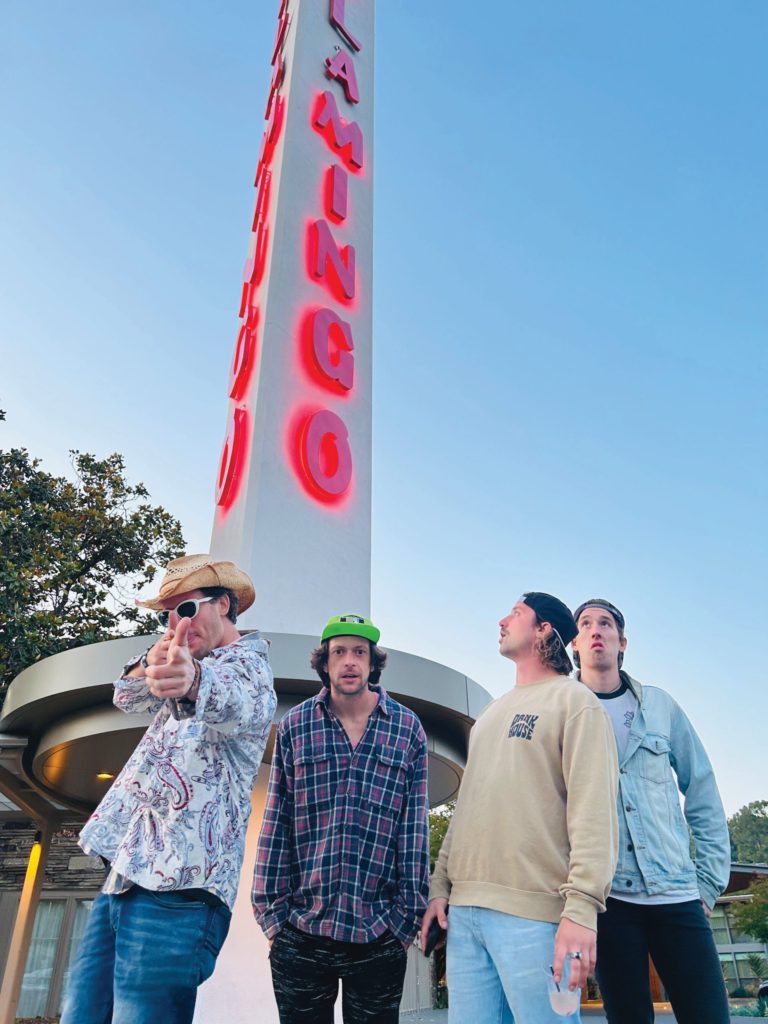
The current lineup of The Happys comprises Brett Brazil (bass/vocals), Alejandro Sanchez (lead guitar/vocals), Elijah Smetzer (drums) and Petty (songwriter/lead vocals). The band prides itself on having a wide range of influences and a somewhat chameleonic sound.
During the interview, they cite Kurt Cobain, Eliot Smith and Sublime as influences, and their most popular songs on Spotify tilt from surf-rock to post-punk to arena-rock anthems. It is hard to pin down their specific genre within the vague boundaries of “rock.” This amorphousness works, though, as it is undergirded by excessive energy and dedication from every member of the band. “All of us are all in on this,” Sanchez tells me. “We are in it for the long run.”
In 2019, Petty’s father passed away, and he was pushed into a bit of an existential crisis. “I just started thinking about the time I have left and what I wanted to do with it,” Petty notes. He decided to channel this angst into The Happys, a project that had already ferried him through one crisis years earlier. Starting around this time, The Happys crew started putting up makeshift signs around the North Bay, encouraging anyone and everyone to listen to them.
“The signs were inspired by graffiti,” Petty says. “And garage sale signs,” Brazil adds. The idea was guerrilla and anti-algorithm. In an age where musicians are encouraged to have an online presence and market themselves to specific demographics, The Happys decided to aggressively market themselves to literally whomever happened to be driving down the freeway that day.
After an especially long overnight shift back in 2020, I drove by another sign that read, “Listen to The Happys,” and finally caved. I loaded up their music on the spot and started listening. Several months later, as the world began coming back into focus, I saw a flyer advertising a live performance by The Happys in front of George’s Nightclub in San Rafael as a part of the Dine Under the Lights event series. Dear reader, I went and saw The Happys live. I bought a bumper sticker that says, “Listen to The Happys,” and it is still on my car. If anyone has ever wondered if this sort of marketing works, it at the very least did on me.
Sanchez claims that over the past five years, any time there is a Happys show in or around the Bay Area, they are approached by people who claim they came because of all the signs. “People come up to us and are like, ‘I’ve been waiting to meet you guys,’” he says with a nervous chuckle. He is also quick to qualify that he doesn’t think the signs are solely, or mainly, responsible for the growing success they’ve been experiencing over the past half-decade. “What helps us is that we are down to play a show anywhere and everywhere,” he states.
“I don’t think people understand how hard we work at this,” Petty adds. Outside of traditional venues, The Happys have played shows at Petaluma High School, non-profit organizations and substance use facilities. When Jack White played a pop-up show at the Phoenix in Petaluma in October 2024, The Happys played a pop-up show outside it for people waiting to get into the show.
At this point in the interview, I ask Petty if he feels like he might have some obsessive tendencies about the band. He responds by nodding and offering me a fist-bump.
It didn’t feel right to just interview the band about the signs. Obviously, they were going to have a positive pitch. I wanted to hear a counter opinion, a voice from the community on how they feel about the presence of so much DIY marketing. So I turned to the only reliable source of information gathering I could think of: Reddit. Creating a burner account, I posted on the Sonoma and Marin County subreddits asking what people thought of the signs.
CRITIQUE Not all North Bay residents are fans of The Happys’ marketing efforts. Screengrab from instagram.com/thehappys.
As it stands at the time of writing this, the threads have a combined total of more than 200 comments. Some commenters hate the signs and think they are just litter; others respect the hustle but aren’t a fan of the music. Others still love the signs and encourage everyone to see The Happys live, promising an excellent show. One commenter in particular observed that a real journalist wouldn’t lazily poll Reddit for opinions. Ouch.
Judgments aside, one thing is irrefutable: People know who The Happys are and feel passionate one way or the other about their presence in the North Bay.
Petty is quick to address the litter question when I ask about it. “We take trash that is already there and make signs out of it. I’ve also hauled a bunch of litter off the highway to try and clean it up,” he states. The signs, then, are part of a green mindset: Reduce, Reuse, Recycle. As far as the people who hate the signs and call them a nuisance, he says quite matter-of-factly, “Some people hate to see other people following their dreams.”
Speaking of following dreams, in the past five years, The Happys have released a full-length album, sold out Sweetwater Music Hall in Mill Valley and have performed as openers for The Mad Caddies, Hobo Johnson and Sublime with Rome. They are currently preparing for an East Coast tour, which will be the first part of a nationwide tour, and will be releasing a new album in the coming months, titled Listen to The Happys.
When I ask the members about their long-term plans for the band, Sanchez and Brazil tell me they value the possibility of longevity. Smetzer says he wants to reach as wide an audience as he can. When I ask Petty the same question, he smiles for a second and then says, “Biggest band in the world.”
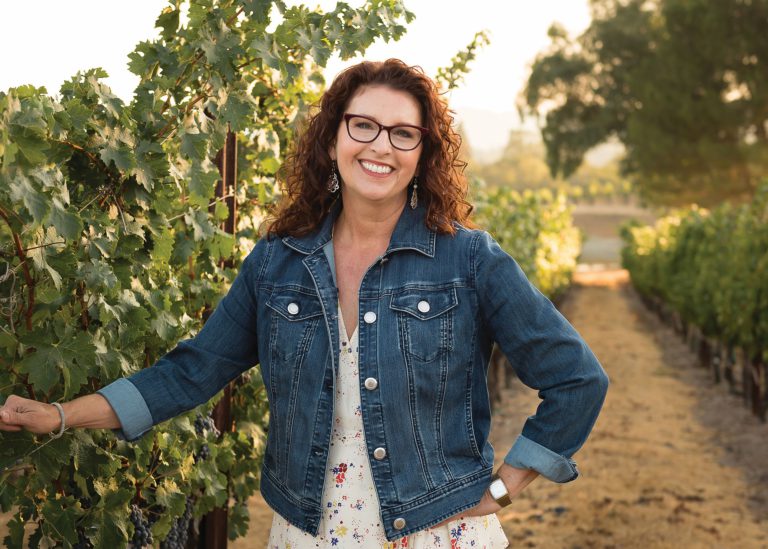
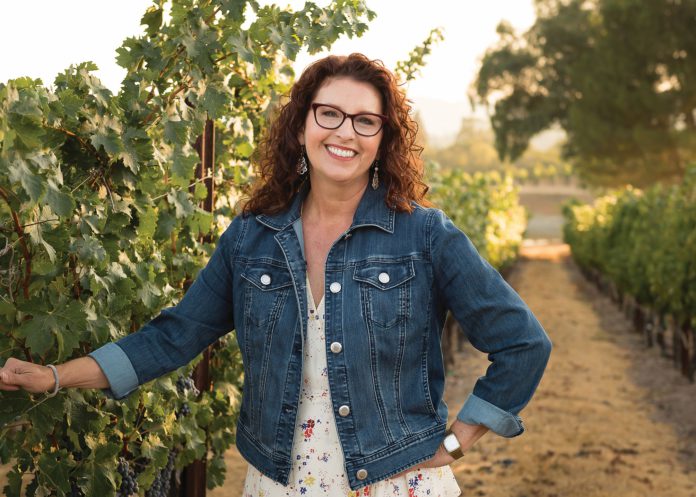
Kim Stare Wallace was born into the wine business, but when in college, first pursued fashion.
Her design expertise led to creating Dry Creek Vineyard’s iconic nautical labels when she joined as marketing director. Now president and second-generation owner, she serves on multiple Sonoma County boards, including Sonoma County Vintners and Santa Rosa Junior College Shone Farm Foundation.
Amber Turpin: How did you get into this work?
Kim Stare Wallace: I was literally raised among the vines in the Dry Creek Valley. My childhood was filled with watching my dad, David Stare, pioneer Dry Creek Vineyard as the first new winery to be built in the region following Prohibition. I worked when I was a teenager in the office, the cellar and on the bottling line …
Did you ever have an “aha” moment with a certain beverage? If so, tell us about it.
Growing up in the wine industry, I was lucky to be exposed to some amazing wines at a young age. But one of the most memorable was a 1937 Saviennières from Domaine Baumard that I tasted in the Loire Valley with Jean Baumard, who was a dear friend of my father.
We were visiting their home, tasting a bunch of wines at the dining room table, while Jean told stories of how his father hid their wines from the Nazis during WWII.
Hearing this story, while tasting a white wine (chenin blanc, no less) that had aged so beautifully made me fall in love with not only that varietal, but the power that wine has to capture moments in time, preserve history and communicate stories. That is one of the reasons I decided to join the family business.
What is your favorite thing to drink at home?
This is very hard to answer, but the wines I tend to drink the most of are either our Fumé Blanc or Dry Creek Valley Sauvignon Blanc, or our Heritage Vines Zinfandel. When I’m not drinking wine, I’m usually sipping tea.
Where do you like to go out for a drink?
For a glass of wine or a cold beer, the Bar at the Dry Creek General Store can’t be beat. I love that I still run into people that I rode the school bus with, growers, old friends, etc. And, if I’m really feeling festive, Barn Diva has a Champagne cocktail called “Bitches of the Seizième” that reminds me of Paris, one of my favorite cities.
If you were stuck on a desert island, what would you want to be drinking (besides fresh water)?
Absolutely no question: a really good, expressive sauvignon blanc.Dry Creek Vineyard, 3770 Lambert Bridge Rd., Healdsburg, 707.433.1000. drycreekvineyard.com.
ARIES (March 21–April 19): Just for now, you might benefit from moderating your intensity. I am pleased to see how much good stuff you have generated lately, but it may be time to scale back a bit. At least consider the possibility of pursuing modest, sustainable production rather than daring to indulge in spectacular bursts of energy. In conclusion, dear Aries, the coming days will be a favorable time for finding the sweet spot between driving ambition and practical self-care. Your natural radiance won’t have to burn at maximum brightness to be effective.
TAURUS (April 20-May 20): Classical ballet dancers often seek to convey the illusion of weightlessness through highly stylized movements. Innovative Taurus choreographer Martha Graham had a different aim, emphasizing groundedness. Emotional depth and rooted physicality were crucial to her art of movement. “The body never lies” is a motto attributed to her, along with “Don’t be nice, be real.” I recommend you make those themes your guides for now, Taurus. Ask your body to reveal truths unavailable to your rational mind. Value raw honesty and unembellished authenticity over mere decorum.
GEMINI (May 21-June 20): Gemini photographer Margaret Bourke-White (1904-1971) was a trailblazer. She was the first American woman war photojournalist, the first professional photographer permitted into the former Soviet Union and among the first to photograph a Nazi concentration camp. She was consistently at the right place at the right time to record key historical moments. She’s your role model in the coming months. You, too, will have a knack for being in the right place and time to experience weighty turning points. Be vigilant for such opportunities. Be alert and ready to gracefully pounce.
CANCER (June 21-July 22): “Each negative word in a news headline increases click-through rates,” writes Joan Westenberg. “Negative political posts on social media get twice the engagement. The system rewards pessimism.” She wants to be clear: “Doomsayers aren’t necessarily wrong. Many concerns are valid. But they’ve built an attention economy that profits from perpetual panic. It’s a challenge to distinguish between actionable information and algorithmic amplification, genuine concern and manufactured outrage.” Westenberg’s excellent points are true for all of us. But it’s especially important that you Cancerians take measures to protect yourself now. For the sake of your mental and physical health, you need extra high doses of optimism, hope and compassion. Seek out tales of triumph, liberation, pleasure and ingenuity far more than tales of affliction, mayhem and corruption.
LEO (July 23-Aug. 22): Bees are smart. The robust and lightweight honeycombs they create for their homes are designed with high efficiency, maximizing storage space while using the least amount of resources. Let’s make the bees’ genius your inspirational role model for the coming weeks, Leo. It will be a favorable time to optimize your own routines and systems. Where can you reduce unnecessary effort and create more efficiency? Whether it’s refining your schedule, streamlining a project or organizing your workspace, small adjustments will yield pleasing rewards.
VIRGO (Aug. 23-Sept. 22): In 1971, Virgo poet Kay Ryan began teaching English at a small community college. Though she wrote steadily, working hard to improve her craft and publish books, she never promoted herself. For years, she was virtually unknown. Finally, in 2008, she flamed into prominence. In quick succession, she served as the U.S. poet laureate, won a Pulitzer Prize and received a $500,000 “genius grant” as a MacArthur fellow. Why am I telling you about her long toil before getting her rightful honors? Because I believe that if you are ever going to receive the acclaim, recognition, appreciation and full respect you deserve, it will happen in the coming months.
LIBRA (Sept. 23-Oct. 22): Libran author Diane Ackerman combines an elegant poetic sensibility and a deft skill at scientific observation. She is lyrical and precise, imaginative and logical, inventive and factual. I would love for you to be inspired by her example in the coming weeks. Your greatest success and pleasure will arise as you blend creativity with pragmatism. You will make good decisions as you focus on both the big picture and the intimate details. P.S.: If you immerse yourself in the natural world and seek out sensory-rich experiences, I bet you will inspire a smart solution to an achy dilemma.
SCORPIO (Oct. 23-Nov. 21): Scorpio-born Sabina Spielrein (1885-1942) was one of the earliest woman psychoanalysts. In the 21st century, she is increasingly recognized as a great thinker who got marginalized because of her feminist approach to psychology. Several of her big contributions were Scorpionic to the core: She observed how breakdown can lead to breakthrough, how most transformations require the death of an old form and how dissolution often serves creation. These will be useful themes for you to ruminate about in the coming weeks. For best results, be your deep, true, Scorpio self.
SAGITTARIUS (Nov. 22-Dec. 21): In the middle of his art career, Sagittarian painter Paul Klee (1879-1940) was drafted into the German army as a soldier in World War I. Rather than fighting on the front lines, he managed to get a job painting camouflage on military airplanes. This enabled him to conduct artistic explorations and experiments. The metal hulls became his canvases. I am predicting a comparable opportunity disguised as an obstacle for you, Sagittarius. Just as the apparent constraint on Klee actually advanced his artistic development, you will discover luck in unexpected places.
CAPRICORN (Dec. 22-Jan. 19): “To live is so startling it leaves little time for anything else,” wrote poet Emily Dickinson. I often feel that truth. As much as I would love to devote 70+ hours a week to creative writing and making music, I am continually diverted by the endless surprises of the daily rhythm. One of these weeks, maybe I’ll be brave enough to simply give myself unconditionally to ordinary life’s startling flow and forget about trying to accomplish anything great. If you have ever felt a similar pull, Capricorn, the coming days will be prime time to indulge. There will be no karmic cost incurred.
AQUARIUS (Jan. 20-Feb. 18): David Bowie was a brilliant musical composer and performer. His artistry extended to how he crafted his persona. He was constantly revising and reshaping his identity, his appearance and his style. The Ziggy Stardust character he portrayed on stage, for example, had little in common with his later phase as the Thin White Duke. “I’ve always collected personalities,” he quipped. If you have ever felt an inclination to experiment with your image and identity, Aquarius, the coming weeks will be an excellent time. Shape-shifting could be fun and productive. Transforming your outer style may generate interesting inner growth. What would be interesting ways to play with your self-expression?
PISCES (Feb. 19-March 20): The Voynich manuscript is a famous text written in an unfamiliar script filled with bizarre illustrations. Carbon-dated to the early 15th century, it has resisted all attempts at deciphering its content. Even Artificial Intelligence has not penetrated its meaning. I propose we make this enigmatic document an iconic metaphor for your life in the coming weeks. It will symbolize the power you can generate by celebrating and honoring mystery. It will affirm the fact that you don’t necessarily require logical explanations, but can instead appreciate the beauty of the unknown. Your natural comfort with ambiguity will be a potent asset, enabling you to work effectively with situations others find too uncertain.
Perhaps it’s glib to say that Pascal Faivre’s artistic destiny was written in stone, but it’s true.
By trade, Faivre is the last of eight generations of stonemasons in his French-Armenian family’s history. And since 2001, he has created architectural finishes and old world French masonry installations throughout California.
For the past seven years, however, Faivre has also been directing his craftsmanship into a new series of art works in limestone, concrete and mixed media that twists timelines, mashes up cultural iconographies and ultimately makes one smile and think.
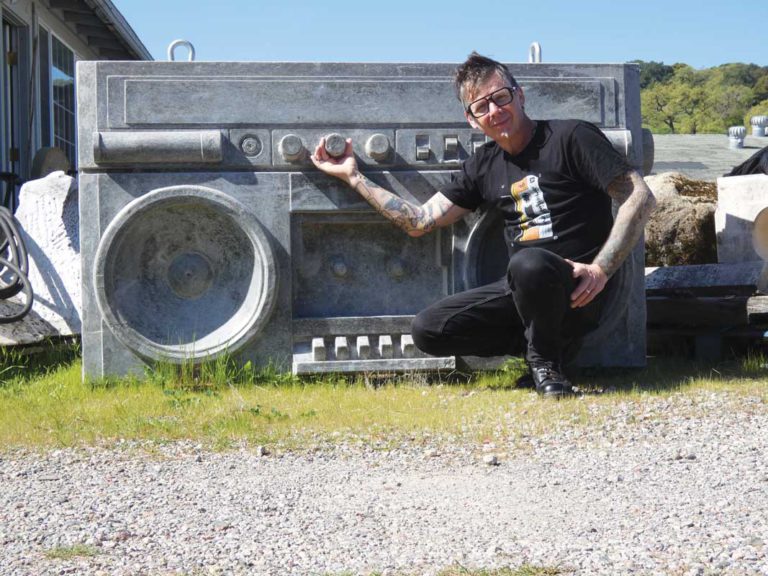
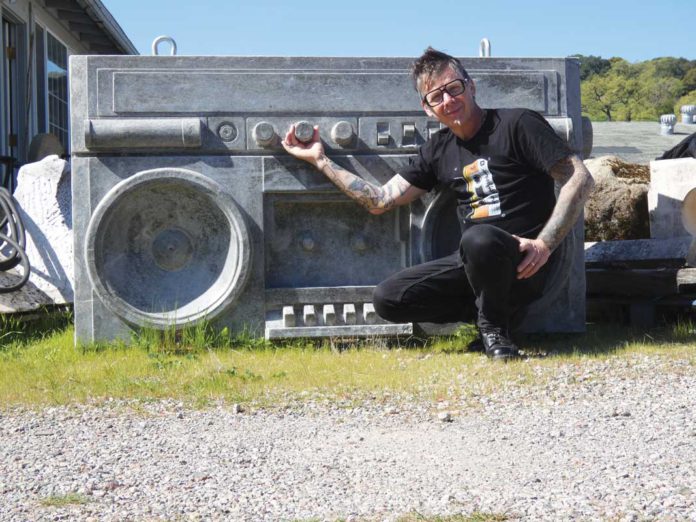
Under the moniker Cube8, Faivre’s aesthetic is aptly captured in works like a vast concrete boom box that requires a forklift to move. Its scale is in direct proportion to its whimsy, and inherent to it all is a droll cultural commentary. For example, as music streaming services and smart phones have sounded the death knell for the once ubiquitous ’80s-era tape player, Faivre flips the technological ephemerality and casts it as a concrete monument to a host of cultural signifiers. Exploring this space is one of the themes of Faivre’s solo exhibition, Permanence, at Sonoma’s Alley Gallery.
“I’m inspired by the possibility of creating a sensation that perhaps these could be artifacts salvaged from another era,” says Faivre of the pieces in the exhibit, which utilize stone, plaster and concrete “to explore and create connective threads between ancient and modern cultural aesthetics and expressions,” as his website explains.
Another work first appears to be a hieroglyphic depiction of the Egyptian god Anubis as if lifted from the wall of an ancient ruin. But upon closer examination, one sees that the jackal-headed deity is actually manipulating a turntable as a DJ.
As Faivre explains, he’s a “prankster” at heart and yet, he’s driven by another impulse.
“My real drive is authenticity. I love authenticity, even when I do music or with friends. You know, I like to be authentic. I like authentic people. Authenticity to me is more important than originality. Authenticity is automatically original. But originality is not automatically authentic,” he observes.
“I like to push boundaries to a place where I push for mistakes, and hopefully I get a good mistake—I get an artistic mistake,” Faivre explains. “I use my knowledge, my craft, my traditional work, and I push it. And then I know exactly how it has to be.”
He adds, “I want it to be beautiful to the eye. That’s the first thing. Look at it. And like, it’s voluptuous. It’s got great proportions, great texture, great color. And then the story begins to emerge.”
When that story emerges, Faivre is in his happy place.
“The work will go on for a year or two—I’m not making croissants, right?” he says with a laugh. “I could do one thing for the next five years, as long as I’m having fun.”
That fun includes using his work as an occasion to foment community.
“For me, it’s not ‘Hey, look at my beautiful thing,’” he says. “I invite my friends, and we can have a glass of wine, have a little party like a wedding. You make postcards, invite everybody. And then it’s an opportunity to put all your friends together.”
‘Permanence’ runs May 3 -10 at Alley Gallery, 148 E. Napa St., Sonoma. An opening reception runs 4-8pm, Saturday, May 3. For more information, visit cube8.art and alley.gallery.
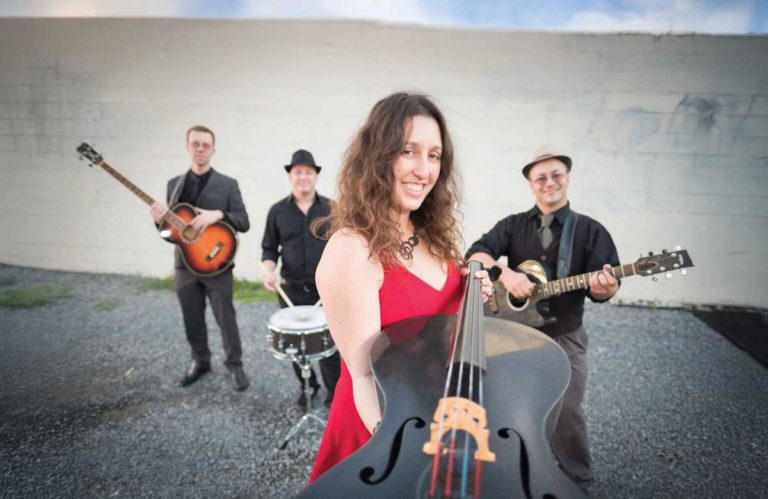
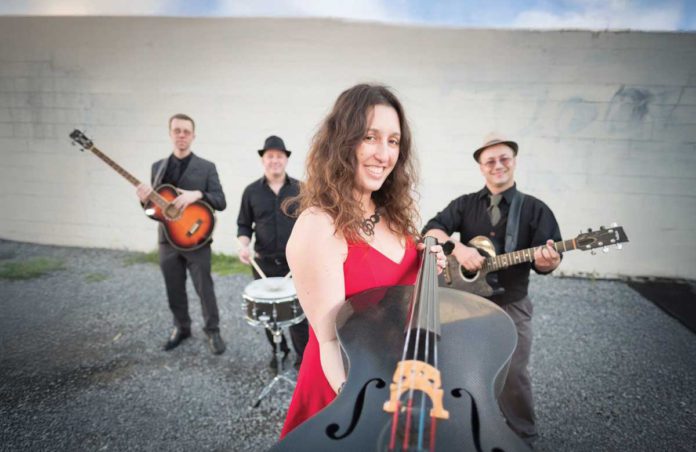
Marin’s own Rancho Nicasio is hosting the iconic local band, Dirty Cello, for a night designed to have the type of good-natured revelry even Bacchus would be proud to attend. So, those who love to listen and tap a foot along to the band’s unique spin on blues, rock and Americana music may want to take note. This invite is all about attending an evening in a most happening venue, meant to be surrounded by good vibes, good food, good people (presumably) and most of all good tunes. The band is led by Rebecca Roudman, a crossover cellist with a lively spirit to match her ensemble. Dirty Cello will play at Rancho Nicasio on Saturday, May 10. Dinner reservations last from 6 to 8pm, and music begins at 7:30pm. Purchase tickets at dirtyranchocello.com.
Petaluma
Jack Black Ain’t Got Nothing
Step aside, Jack Black—The River Montessori Foundation is hosting their Rock 4 River Music Festival (and fundraiser), intended to be so awesome that it’ll put the School of Rock movie to shame. This music festival is all about spending an afternoon supporting musically talented youths in true community spirit, tapping along and maybe even tipping if one is in the spirit of generosity. Either way, it’s clear that support for the arts is alive and well here in the North Bay. And the Rock 4 River Music Festival is a perfect example of how and why creativity continues to thrive along the central California coastline. The Rock 4 River Music Festival fundraiser will take place on May 17 from 2 to 5pm at the historic Phoenix Theater in Petaluma. Visit Eventbrite for tickets.
San Rafael
Take a Bike … Literally
In a very true-to-the-Marin-spirit event style, a Movement Festival for Mental Health is coming to San Rafael (for its fourth year, no less). Bike and Hike for Buckelew is a celebratory day for everybody and every body, with activities centered around getting festive and active with the local community. Those who attend will bike, hike and downward dog their way through the day, taking in the company and music along the way. Plus, rumor has it a bike raffle could win some lucky soul an Orbea eBike worth $4k. Registration, breakfast and coffee start at 8am; staggered rides and hikes start from 9 to 10am; morning yoga class begins at 11am; and lunch, live music and a raffle last from noon to 2pm. Bikes for Buckelew will take place on May 10 at Miwok Meadows in China Camp State Park. To learn more, visit buckelew.org.
Santa Rosa
May I Come to the Potluck?
May is Asian American and Pacific Islander Heritage Month, or AAPI Heritage Month for short. And the North Bay is offering up an array of ways to gather together as a community to celebrate—the AAPI Potluck in the Park, for instance, is an excellent avenue to get festive with family, friends and, of course, food for all who attend. The potluck promises not just community festivity and food, but games, crafts and activities galore in store for those who come out to the park to celebrate Asian American and Pacific Islander heritage, culture and tradition (old and new). AAPI Potluck in the Park will take place on Saturday, May 10 from noon to 4pm at the Rincon Valley Community Park, located at 5108 Badger Rd. in Santa Rosa. Visit aapicnorthbay.org to learn more.
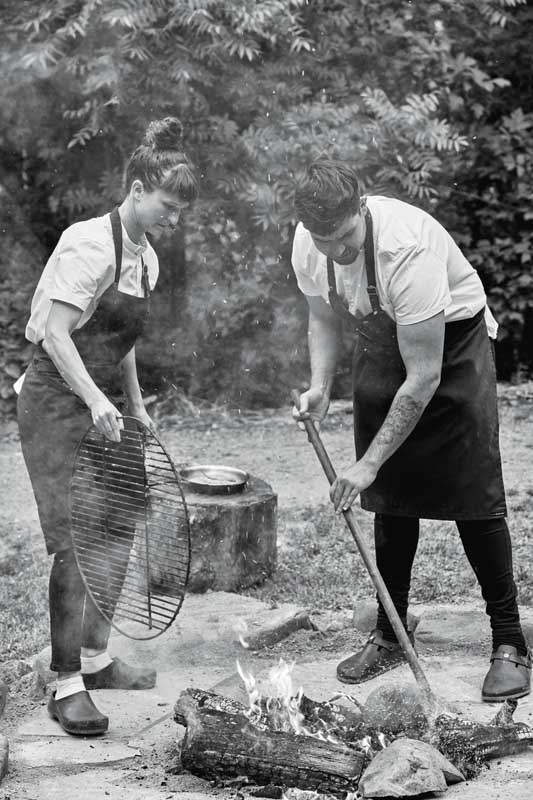
Ignacio “Nacho” Zuzulich is the co-executive chef at The Lodge at Dawn Ranch in Guerneville.
Born in Argentina, he has a culinary passion that stems from his family’s restaurant background. His impressive career spans prestigious kitchens including Lasai in Rio de Janeiro, Michel Bras in France, Mugaritz in Spain (where he advanced to head chef) and the three-Michelin starred Restaurant at Meadowood. This was the job that brought him to our area and exposed him to the special ingredients inherent to Northern California cuisine.
Having lived all over the world, Zuzulich has a cooking style that blends Argentine roots with global influences. At Dawn Ranch since its 2023 relaunch, he partners with co-executive chef Juliana Thorpe, who hails from Brazil and has followed a similar global cooking path as Zuzulich. The two emphasize creativity and innovation with local produce.
Amber Turpin: What’s your job?
Ignacio Zuzulich: I serve as a co-executive chef, although I prefer to simply call myself a cook. In my view, that’s the most genuine way to describe our daily craft and all the responsibilities it involves.
How did you get into that work?
Cooking runs in my family—from my grandmother and father to my uncles, and now me. We’ve owned restaurants in Córdoba, Argentina, for more than 30 years, so I grew up in that environment. After school, I’d jump in to help, washing lettuce, making flan or prepping milanesa. I practically lived in our restaurants, and there came a point when I realized I wanted to commit myself fully to what I love most—cooking.
Did you ever have an “aha” moment with a certain beverage? If so, tell us about it.
I believe these moments happen whenever you taste something completely unexpected or discover a new flavor that surprises you. As time goes by, they become even more meaningful when you share them with friends, a partner or anyone you’ve built a genuine connection with—often over a good glass of wine.
What is your favorite thing to drink at home?
I keep plenty of Argentine wines on hand. And if I had to choose just one, it would be the kind that instantly brings me back home, at least for a little while.
Where do you like to go out for a drink?
I absolutely love Maison in Healdsburg. They make you feel welcome from the moment you walk in, treat you like an old friend. And there’s always something new to learn about wine whenever I visit.
If you were stuck on a desert island, what would you want to be drinking (besides fresh water)?
If it happened to be a deserted island in Argentina, I’d go for a classic: fernet branca and coke, with plenty of ice.
Dawn Ranch, 16467 Ca-116, Guerneville, 707.869.0656. dawnranch.com.
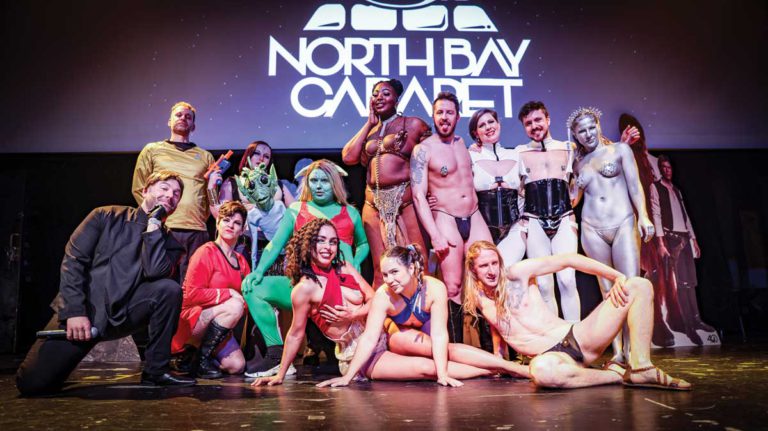
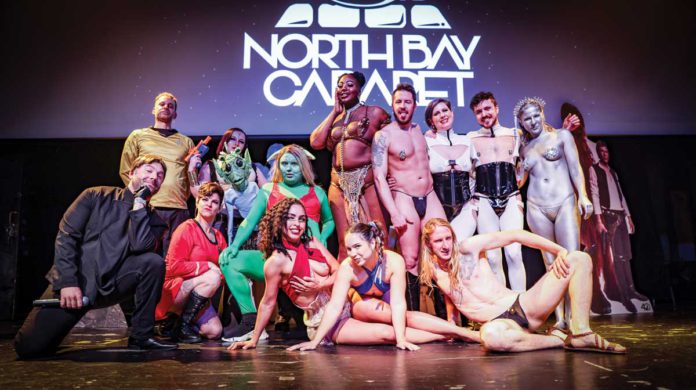
Taking place in a galaxy not so far away on Sunday, May 4, Jake Ward via his North Bay Cabaret will be bringing his entertaining and sexy burlesque show, “May the Fourth Be With You: A Star Wars Burlesque & Variety Show,” to Petaluma’s Mystic Theater.
The cleverly titled day of celebration has not only become a day where people across the world celebrate Star Wars; it’s also the only known celebratory day featuring a lisp. (Think it through.)
Ward has been presenting all sorts of fun and edgy shows throughout the North Bay since as far back as 2016, when he first debuted a Star Wars-themed burlesque show at the now defunct Annie O’s in Santa Rosa.
From there, the show moved over to Santa Rosa’s Whiskey Tip and then the School of Rock (also RIP to both) before hitting the stage at Petaluma’s Phoenix Theater in 2019. Covid forced a pause in 2020-2022. But since then, the show’s been delighting people at Petaluma’s Mystic Theater.
Each year, the Mystic concocts some cosmic-themed cocktails, and fans are encouraged to dress in costume; the more outrageous the better might just help one win the costume contest. After the main show, there’s an “intergalactic DJ Dance Party” as well as an interactive laser/lightsaber game that will see one do battle until festivities wrap up.
We spoke to Ward about what one might expect from what would appear to be a clash of cultures.
Bohemian: Are you the originator of the Star Wars-themed burlesque show? I know there’s a bunch of them all over, but just curious if you are the brainchild or if you were inspired by someone else.
Jake Ward: We definitely didn’t invent the idea of Star Wars burlesque, but we’ve made it our own. One thing that sets our show apart is how many performance disciplines we bring under one roof. It’s not just burlesque; it’s a full-on variety spectacle featuring circus artists, contortionists, jugglers, pole dancers, sketch comedy, spoken word poetry, live parody music and more. It’s got all the sparkle and sass of classic burlesque, but with a wild, unpredictable, high-energy twist.
We first hosted “May The Fourth” at a time when we were experimenting with all sorts of pop culture-themed variety shows, like “Sin Peaks” (our tribute to David Lynch) and “The Life Erotic” (inspired by Wes Anderson). But the reaction to “May the Fourth” was so overwhelmingly positive, it was clear this one needed to become an annual tradition, especially on the official Star Wars holiday.
I’ll try to ask this in a non-judgy way but, aside from Princess Leia in “Return of the Jedi,” the Star Wars franchise isn’t terribly sexy. I mean, if large, angry, patricidal men are your thing, who am I to judge?
In short, I personally have a difficult time thinking of the Star Wars universe in terms of sexiness or burlesque type terms. However, I’m also not well versed in the burlesque-verse. What is it about Star Wars that lends itself to this type of performance? Or, is it a case of it’s such a strange combo it has to be seen to be understood?
Totally fair question, and honestly, part of the magic is that unexpected mix. There’s something inherently fun (and funny) about blending a beloved sci-fi epic with the playful, cheeky world of burlesque. But Star Wars actually lends itself surprisingly well to this kind of reinterpretation. The franchise is full of iconic characters, costumes and dramatic moments, which gives our performers so much to work with creatively, whether it’s building elaborate cosplay-inspired looks or reimagining a character’s arc through dance or satire.
It’s one of those things where the concept might sound strange on paper, but once you’re in the audience, it just clicks. People laugh, they cheer, they sometimes tear up—it’s a whole ride.
Fair enough. Can you name some of the more popular performers returning this year and also name some new folks you’re excited to have on the bill?
Absolutely. We’ve got some beloved returning performers, including Jamie DeWolf, who delivers an emotionally powerful spoken word tribute to Carrie Fisher that’s always a showstopper; Qu’in de la Noche, who returns with a mesmerizing Jedi-themed burlesque routine, lightsaber and all; and Guy Vigor, a male burlesque performer who brings a show-stopping act as Darth Vader, accompanied by Stormtrooper backup dancers.
Those names definitely ring a bell from previous shows you’ve done. Have you brought any new acts, or “Padawan Learners,” into the mix this year?
Yes. We’re also excited to welcome some new talent this year who have never performed at a North Bay Cabaret show before. Julia Sweeney, a local Sonoma County-based contortionist, will be performing a mind-bending act as R2-D2. Velvet Thorn, another Sonoma County artist, will perform a transformative burlesque act morphing from Finn to Kylo Ren. Leah Marie, from the Bay Area, will be heating things up with a golden C3PO pole dance performance.
It’s really a beautiful mix of returning stars and fresh faces.
I love that this is an early show since May the Fourth is not yet celebrated as a federal holiday, and this year it’s on a Sunday. Doors are at 6pm, show is at 6:45pm and wraps up at 9pm. If people are sensing a disturbance in their force, making them now sure they want to go, what can you say to sway them over to the dark side?
Whether you’re a die-hard Star Wars fan or you’ve never seen a single movie, this show has something for everyone who loves bold, live and boundary-pushing entertainment. North Bay Cabaret has always been about creating a space for underground artists and offbeat creativity here in Sonoma County. So if you’re looking to support local art and try something totally different, this is your chance. Skip the streaming service for a night, and come experience something that’s truly one-of-a-kind, in person, right in your own backyard.
Tickets for ‘May the Fourth Be With You: A Star Wars Burlesque & Variety Show’ are available now at the Mystic Theater website, or one may save a ‘convenience’ fee by grabbing them in-person at the venue. There are several tiers of tickets, with a Gold Circle seated near the front of the stage, reserved seating on the floor and balcony seating for those who’d like to enjoy from afar. There’s also VIP table seating available starting at $200. So one may come on down, enjoy a wild night and maybe find the droid they’ve been looking for.
Bias Bait
A task force helmed by Attorney General Pam Bondi and focused on “eradicating” anti-Christian bias in the government held its first meeting recently.
While Donald Trump’s government is retreating from any effort by the federal government to pursue racial justice, it is leaning hard into ending what it sees as anti-Christian bias.
So, anti-Jew, anti-Hindi, anti-Muslim, etc. What were these...
There’s a pattern—most every town and county in the North Bay has an “arts council”—a non-profit art agency-advocate.
These plucky non-profits are typically represented by a downtown office and arts-space displaying local art. Typically, they are woefully underfunded for their mission—in the pattern of nonprofits. When, 10-plus years ago, Sonoma’s struggling all-county arts council finally heaved up and broke apart,...
Think resisting authoritarianism is too big of a lift? Think again. This spring, while the U.S. resistance movement may not be in full bloom, it is blossoming.
The “3.5% rule”—identified by political scientist Erica Chenoweth—should be on the lips of every American anxious about the Trump administration’s headlong drive to replace our democracy with authoritarianism. After studying more than 300...
In the fall of 2020, during the reign of deep Covid, I worked in-person as a frontline behavioral healthcare counselor at a residential facility for adults with serious mental illness.
It was a strange time to be a commuter. And as I drove from my apartment in Rohnert Park to the facility in Santa Rosa on the deserted 101, it...
Kim Stare Wallace was born into the wine business, but when in college, first pursued fashion.
Her design expertise led to creating Dry Creek Vineyard’s iconic nautical labels when she joined as marketing director. Now president and second-generation owner, she serves on multiple Sonoma County boards, including Sonoma County Vintners and Santa Rosa Junior College Shone Farm Foundation.
Amber Turpin: How...
ARIES (March 21-April 19): Just for now, you might benefit from moderating your intensity. I am pleased to see how much good stuff you have generated lately, but it may be time to scale back a bit. At least consider the possibility of pursuing modest, sustainable production rather than daring to indulge in spectacular bursts of energy. In conclusion,...
Perhaps it’s glib to say that Pascal Faivre’s artistic destiny was written in stone, but it’s true.
By trade, Faivre is the last of eight generations of stonemasons in his French-Armenian family’s history. And since 2001, he has created architectural finishes and old world French masonry installations throughout California.
For the past seven years, however, Faivre has also been directing his...
Nicasio
You Had Me at ‘Dirty Cello’
Marin’s own Rancho Nicasio is hosting the iconic local band, Dirty Cello, for a night designed to have the type of good-natured revelry even Bacchus would be proud to attend. So, those who love to listen and tap a foot along to the band’s unique spin on blues, rock and Americana music may want...
Ignacio “Nacho” Zuzulich is the co-executive chef at The Lodge at Dawn Ranch in Guerneville.
Born in Argentina, he has a culinary passion that stems from his family’s restaurant background. His impressive career spans prestigious kitchens including Lasai in Rio de Janeiro, Michel Bras in France, Mugaritz in Spain (where he advanced to head chef) and the three-Michelin starred Restaurant...
Taking place in a galaxy not so far away on Sunday, May 4, Jake Ward via his North Bay Cabaret will be bringing his entertaining and sexy burlesque show, “May the Fourth Be With You: A Star Wars Burlesque & Variety Show,” to Petaluma’s Mystic Theater.
The cleverly titled day of celebration has not only become a day where people...