Bottle Shock: Sonoma County’s Wine Industry Enters Fifth Year of Decline

For news readers, there has been a steady drip of wine industry reportage as sour as last week’s wine. 

It’s been five years of vineyard sales, declining real estate values, consolidations, the retirement of leading figures, layoffs, bankruptcies, closures and unsold grapes, rotting on the vine.

The 45 years that followed 1976’s “Judgment of Paris,” which declared Napa wine superior to French, had been a triumphal progression of growth, expansion and inebriated confidence for Sonoma County vintners. And Sonoma’s landscape changed out of all recognition. But it seems, at last, the party is over. 

Sonoma’s wine industry, coming off a pandemic-era sales bump, is entering its fifth year of steady decline. The Wine Country hangover has begun.

For those tempted to grin at an over-proud industry’s humbling, this news affects everyone and everything here. With besotted civic leaders acting as cheerleaders, Sonoma County went all-in on its wine bet.

Commonly reckoned to be large, the wine industry is in fact gigantic. At its 2018 peak, 435 wineries with a combined 60,000 acres under cultivation accounted for roughly $8 billion of Sonoma County’s $30 billion GDP—the sum value of all our work and wages. Add an additional $1.2 billion for wine tourism and associated jobs, and the extended industry approached, as of 2018, a one-third share of our economy and one quarter (54,000) of our full-time jobs (according to Sonoma County Vintners, sonomawine.com). 

Sonoma County is as close to a one-industry monoculture as one is likely to find outside of an economics textbook. Consider how closely local construction, real estate, restaurants, landscaping, event planning, nonprofits and, ahem, local media are allied to local wine, and it is clear how integrated the one third is to the other two. We are all second- and third-order employees of the wine industry.

Decline & Fall

Now that we know decreased wine sales mean unbooked musicians, empty salons, unpaid invoices and cancelled nonprofit sponsorships from Sonoma Valley to the coast, here are the numbers in wine.

The Grapes. 2018 was the year Sonoma County’s wine industry peaked (USDA National Agricultural Statistics Service). That year, 275,977 tons of grapes were crushed. Then the slide began. In 2025, the crush had slumped to 185,500 tons (USDA/NASS Preliminary Grape Crush Report, 2026), a decline of nearly a third from the peak.

The value of the harvest fell with it: from $777 million in 2018 (Sonoma County Crop Report, 2018) to an estimated $523 million in 2025, a decline of roughly a third in dollar terms as well.

And still we are in a state of oversupply. Karissa Kruse, president of Sonoma County Winegrowers, estimated roughly 30% of local grapes went unsold in 2025 (Press Democrat, November 2025).

The Acreage. Growers have responded by pulling out vines: Approximately 2,700 acres, or roughly 5% of the county’s planted vineyard, came out between October 2024 and August 2025 (California Association of Winegrape Growers/Land IQ, 2025 Standing Winegrape Acreage Report), a deliberate reduction in supply intended to help stabilize price per ton.

These are the only field-verified acreage figures that exist for Sonoma County; the growers association had never before commissioned mapping precise enough to measure county-level change. It is one of several gaps in the data on the county’s largest industry.

The Real Estate. Vineyard land values vary widely across the county’s 19 appellations, but it is now plainly a buyer’s market, “like catching a falling knife,” as one appraiser told the Press Democrat in May.

The Employment. The most significant statistical gap in this story is employment. No reliable current figures exist. Employment is difficult to assess because contraction rarely produces a layoff. Existing employees simply see their hours cut; seasonal workers are simply not rehired the following season.

A straight-line computation from a harvest reduced in volume and value by roughly a third would suggest a comparable reduction in hours and wages across the 2025 season. And the true number could be higher, since unharvested fruit eliminates labor entirely rather than merely reducing it.

In my own interviews with undocumented farmworkers (see “ICE and American Democracy” at bohemian.com), one contact told me that farmworkers are more frightened by sustained unemployment than by the threat of ICE seizure.

The Institutions. The downturn is visible in the industry’s own trade infrastructure. Michael Haney resigned as president of Sonoma County Vintners in July 2025, after nearly 11 years.

In November, the organization depended on voluntary contributions from the 250 wineries it represents and laid off four senior staff.

What followed was announced as a merger made from a position of strength: Sonoma County Vintners’ absorption by Sonoma County Winegrowers into a single new organization, Sonoma County Wine, will become effective January 2027. The plainer reading is lost revenue and lost function.

It promises to speak with “one unmistakable voice” for Sonoma County wine. A strong, unified voice and strong collective action will genuinely be required if the industry is to navigate this crisis. Absent that, what remains is a free-for-all: individual wineries trying things, fending for themselves, with no one speaking, or acting, for the whole. To date, the new organization has done little beyond try to put a brave face on the situation.

Causes

The person who opened my eyes to the magnitude of this industry and the severity of its losses is Dr. Damien Wilson, one of the county’s leading institutional minds on wine.

An Australian and a numbers-driven researcher with more than a hundred publications to his name, Wilson brings three very different wine markets to bear on the question: Australia, Burgundy and now California. He arrived at Sonoma State in 2015 from the Burgundy School of Business in Dijon, watched our industry peak in 2018 and has watched it decline ever since.

His position is funded in part by the industry itself and is at once semi-independent and prescriptive: to advise, statistically and experimentally, on how best to grow and now on how best to survive a violent contraction.

He is, by his own admission, an unpopular Cassandra at industry parties, the price of insisting that wine attend to numbers rather than tradition and that the industry change.

I found him dapper, affable, unmistakably academic at his leafy offices in the Wine Spectator building, and asked what lies behind the decline.

He began, characteristically, with a number: 80% of American wine is consumed domestically, so both the problem and its likely solutions are domestic, not international.

From there, a generational shift on two axes at once: how much alcohol Americans consume, and which kind. Younger generations drink less, and when they drink, they drink less wine.

Put more bluntly, in Wilson’s own arithmetic: Baby boomers who drink wine are dying. Gen Xers still drink wine, by and large. Millennials drink less, and have shifted in favor of craft beer and craft cocktail trends that developed with that generation. Gen Z is the demographic cliff.

A further factor affects each generation in rough proportion to its digital exposure. Compared with the endless, dressed-up variety of craft cocktails, or the dynamic, ever-changing brightly colored labels of craft beer, wine, he argued, is simply less photogenic. Its appearance on social media barely changes between a $10 bottle and a $100 one.

There is a second, related effect. Digital devices condition consumers to decide fast, on little information, and wine, Wilson argues, has done the opposite of adapting to that: It has overcomplicated itself, wrapping the product in a connoisseurship most young drinkers have neither the time nor the patience to learn.

A final generational factor, I will add with some bitterness, is simply wealth. Each successive generation has favored less expensive forms of alcohol because each successive American generation has been poorer than the one before it.

Desperate Times

When I asked Wilson how the industry could reach younger consumers, his answer came down to two words: affordable and simple. Basically the opposite direction wine has been moving in for 40 years.

“Affordable,” he was careful to specify, not through discounting, but through efficiencies. His clearest example is modeled on practices in other international wine regions: Within an appellation, producers would sell excess fruit through a regional cooperative that blends it into a single wine reflective of the region as a whole. Economies of scale would make it inexpensive, widely available and consistently less per bottle as well as an entry point into our region.

Second, for an individual winery: Partly or wholly dismantle the vintage system which currently forces complex inventory, shifting product and variable pricing for what could be a single blended offering, stable across years.

Third, in the tasting room itself: Acquiring the habit of wine takes repeated exposure and positive reinforcement, which means retraining how staff actually talk to people. As Wilson suggests, “Learn the language the consumer is using, be responsive to what brought them in and don’t lead the conversation.” Ask questions first. Find out why they walked in. Pedantry is the fastest way to make a newcomer feel excluded, or simply stupid.

These are radical changes, but Wilson believes there is finally an appetite for them: “People are literally walking away from their [unsalable] wineries,” he pointed out. He is dubious, notably, of government intervention as a fix, and equally dubious of repositioning Sonoma’s wine toward international export.

One of the more genuinely surprising things Wilson told me: The entire world market for wine has been in decline since the 1980s, fluctuating downward to roughly the level it was at in 1960. Sonoma and Napa’s 30-year boom, in other words, played out entirely inside a general decline in world wine consumption, even as new producing regions like Chile, Australia, Germany and others followed California’s lead after the Judgment of Paris and emerged as global export brands in their own right, entering the competition for an already shrinking market.

Wilson is a participant, not a spectator, in his own prescriptions: With his own money, he is producing a wine travelogue with himself as host, which he hopes to sell to a streamer. Its message to a younger audience: “Keep the magic. Lose the mystification.”
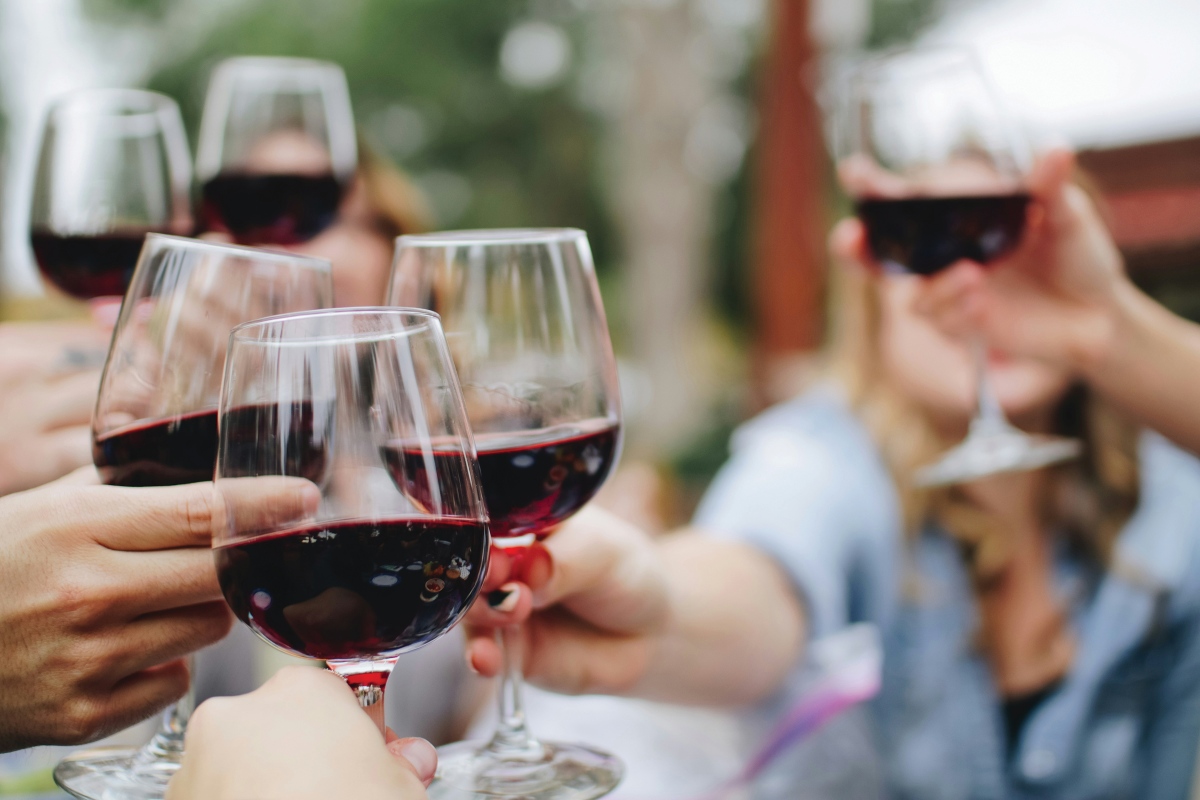
Hands holding stemmed glasses of red wine in a toast
CHEERS The fact of the matter is that older wine consumers are dying off, and newer ones never arrived. Photo by Kelsey Knight.

Where’s the Bottom?

The most optimistic prediction holds that the decline will end in 2028. This is per an influential report from Rob McMillan, founder of Silicon Valley Bank’s wine division, now part of First Citizens Bank (State of the U.S. Wine Industry Report, 2026).

That is two more years of decline for the engine of Sonoma’s economy but an end to the slide, and perhaps one arriving without the radical changes Wilson argues a complacent industry needs. If the prediction is correct, Sonoma wine emerges significantly smaller in a new, permanent normal rather than a low point on the way back up.

To put figures to it: Sonoma County could emerge in 2028 with roughly 50,000 acres under vine, down from a peak above 60,000 producing a crop worth somewhere near $410 million against $777 million in 2018. The wider wine economy, retail and tourism together, would shrink by something like $2.3 billion, or nearly 8% of everything the county produces. Twelve thousand jobs’ worth of work would be gone not as firings, but as billings never sent.

These figures are my own back-of-the-envelope calculations, extrapolated from existing downward trends. No agency, university or trade group has published any projection of what Sonoma County’s defining industry will look like on the other side of its worst decade since Prohibition.

In raw numbers, the industry would sit roughly where it stood in 2005. This is not a return to the past in any meaningful sense. The 2005 industry was growing, capitalized and confident, with land values rising and buyers competing. The 2028 industry would be contracting, debt-burdened and consolidating, on land worth less than the loans against it. Same acreage, opposite trajectory, and the wine towns, the tourism infrastructure and the cost of living built during the boom don’t unwind on the same schedule.

Unfortunately, there is reason to doubt this “optimistic” prediction itself. The bottom could arrive sooner. It could also extend considerably longer and with more dire consequences. Consider this New York Times headline, which ran last week: “Sales Are So Low, California Wineries Are Burning Their Vineyards.”

The case for trusting First Citizens is that its analysts are genuine experts, and as a lender, the bank sees financial information on local wineries that no outsider does. That is also the case for doubting it: As a lender and a publicly traded company, First Citizens has a short-term incentive not to declare that the debt it holds is bad.

Every forecast, including my own, rests on assumptions. The first assumption is reasonable: that prices will stabilize as continued reductions in acreage bring supply back in line with demand, the simple law of supply and demand.

The second is more questionable: that millennials, and the generations that follow them, will acquire a taste for wine as they age, replacing the demand of a dying boomer generation. That assumption treats wine drinking as a product of aging itself, rather than of a generational culture shaped by confusion over the health effects of alcohol, and by the rise of cannabis, hard seltzer and craft cocktails alongside new, harder-edged sobriety norms. That second, shakier assumption is the one holding up the entire “optimistic” prediction.

Turning Back the Clock?

There is some indication that Sonoma County’s wine besotted political leadership is beginning to sober up. One action stands out. This past June, the Board of Supervisors approved an Agricultural Action Plan, directing county departments and partner agencies to coordinate support for growers. The plan is phased over three years, pairing short-term actions with longer-term policy changes tied to a General Plan update.

The short-term measure’s permitting reforms, an agricultural incubator and food security programs move through ordinances that don’t require the General Plan. The deeper changes, including a review of by-right agricultural uses and zoning designations, await a General Plan revision planned, not promised, for January 2029.

Together they would let grape growers experiment with diversifying revenue, minimize some costs and significantly open a door out of wine entirely, into other crops: a re-diversification of Sonoma County’s agriculture, away from near-monoculture, back toward food farming (in a county that currently imports much of its vegetables, fruit and nuts) and forward toward new housing.

At the start of this piece, I mentioned readers who might be inclined to smile at the wine industry’s misfortune, those for whom the industry meant high rents, an unbuyable home, labor exploitation, displacement, gentrification, wine politicians and a “gracious Wine Country living” identity they wanted no part of.

For those readers, wine’s contraction will indeed open space for alternative visions of Sonoma County. But getting there will likely be a painful process. I suggest opening a local wine to ease the pain.
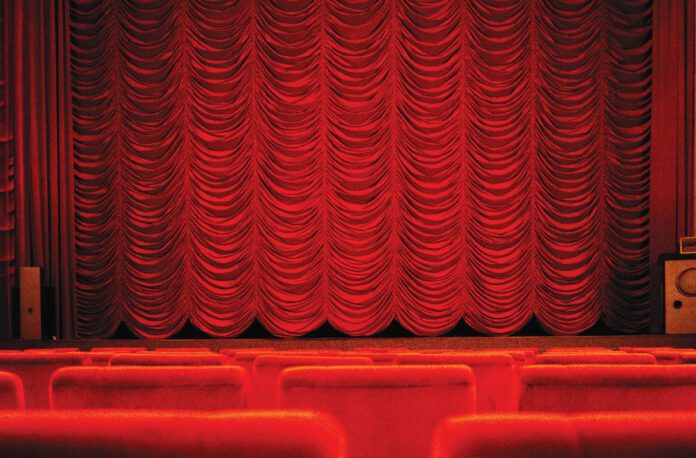
Curtain Rises: North Bay Theater Companies Unveil 2026/27 Season Openers

With summer drawing to close, North Bay theater companies are prepping their houses for a robust 2026/27 season. Live theater productions in Sonoma and Napa counties will include the usual mixture of the tried and true along with a sprinkling of North Bay premieres to keep things interesting for the frequent theater-goer.

Santa Rosa’s 6th Street Playhouse kicks things off with their production of Rodgers and Hammerstein’s South Pacific. The musical tale of South Seas love and prejudice is a stark reminder that not much has changed since it premiered in 1949. It opens on Aug. 21. (6thstreetplayhouse.com)

Mercury Theater opens its second full season with Intimate Apparel. Leontyne Mbele-Mbong directs Lynn Nottage’s play about the search for love by a Black woman in early 20th-century America and all the difficulties that entails. The drama opens in Petaluma on Aug. 28. (mercurytheater.org)

Spreckels Theatre Company kicks things off with Equivocation. Bill Cain’s historical drama mixes art, politics and the corruption of both. Oh, and it involves a guy named “Shagspeare.” The “alternate history” also opens on Aug. 28 in Rohnert Park. (spreckelsonline.com)

Speaking of Shakespeare, Healdsburg’s Raven Players open their season with macbitches. The dark comedy brings a Mean Girls vibe to the Bard as high school rivalries around the casting of Lady Macbeth turn treacherous. Something wicked this way comes to the Raven Performing Arts Theater on Sept. 4. (raventheater.org)

Five, count’em, five productions open in the North Bay on Sept. 11.

Out on the Russian River, Curtain Call Theatre of Monte Rio is presenting Quartet. Ronald Harwood’s play about a group of opera singers living in a retirement home trying to put up a concert is an amusing bit of senior-centered theater. (russianriverhall.com)

Somewhat similarly, the folks at Sonoma Arts Live are presenting Follies. This time it’s aging showgirls gathered in a crumbling theater to hash out past regrets and complicated relationships. It’s an early Stephen Sondheim musical, best known for the defiant “I’m Still Here” number. (sonomaartstlive.com)

Healdsburg’s The 222 opens their season with Red. John Logan’s Tony-winning play about the tumultuous relationship between two artists plays, appropriately, at the Paul Mahder Gallery. (the222.org)

In Napa, the Napa Valley College Performing Arts Center will be presenting Barrio Hollywood. Produced by Teatro Alebrijes del Valle in partnership with Shakespeare Napa Valley, it’s a vibrant celebration of Latino culture and community. (performingartsnapavalley.org)

The Lucky Penny Community Arts Center will be hosting Freaky Friday, the Musical. If you know the book or the three Disney adaptations, you’ll know the show. Just add songs. (luckypennynapa.com)

September closes out with the Cinnabar Theater production of the ol’ Bye Bye Birdie. Cinnabar continues to produce their “adult” shows at Warren Theater on the campus of Sonoma State University in Rohnert Park, where it will open on Sep. 18. (cinnabartheater.org)

And leave it to Santa Rosa’s Left Edge Theatre to stir things up a bit with their production of Jeremy O. Harris’ controversial Slave Play. Racial trauma, power dynamics, violence and issues of intimacy between three interracial couples take center stage at The California starting Sept. 25. (leftedgetheatre.com

From old chestnuts to modern musicals to in-your-face contemporary dramas, there seems to be something for everyone opening up the 2026/27 North Bay theater season.

Your Reality Distortion Field

It’s 1981, and Bud Tribble, a Cupertino computer engineer, is in the midst of a project that would revolutionize not only the world of computing but the world in general. Everything about this project—whether inspired or stolen—was revolutionary.

It also seemed impossible. Deadlines loomed, and seemingly insurmountable hurdles piled up. Fortunately for Tribble and his team, the person helming the project had a superpower. He wasn’t a genius engineer, nor particularly nice. In fact, by all accounts, he could be a real asshole. But he could also ensorcell his minions with a powerful, magnetic charm that left them not only defenseless but inspired to achieve the impossible.

This superpower reminded Tribble of something he had seen before—in an episode of Star Trek. Not the iconic “The Trouble with Tribbles,” which would be too cosmically cool for school, but a lesser-known season-one, two-part episode titled “The Menagerie.”

In it, the crew encounters humanoid aliens capable of conjuring their own reality through sheer mental force—what Tribble came to call a Reality Distortion Field. It’s what he attributed to Steve Jobs’ uncanny ability to make others believe, through sheer charisma, that against all odds they could, in fact, create the Apple Macintosh. 

And that, kids, is why 1984 wasn’t like 1984.

When manifesting something from nothing—as creative people are wont to do—it helps to have one’s own Reality Distortion Field. First, we must convince ourselves we can do it. Then we must convince others that we are doing it. Then we need those same others to reconvince us we can actually do it when our self-belief inevitably crumbles and we drop to our knees, bellowing to the stars, What the hell am I doing?

To wit: All creative acts are a kind of insanity—a courageous, disruptive blow against the dual faces of inertia and entropy that mask the greater workings of the universe. It’s both hubristic and humbling. But belief—even self-belief—is its own contagion, and the best way to inoculate ourselves against naysayers, critics and skeptics is to lean into our own idiosyncratic madness: to believe that our specific worldview is not only valid but essential.

If we didn’t believe our own hype, who would?

Or, as another Apple copywriter famously put it: “The people who are crazy enough to think they can change the world are the ones who do.”

The trick, of course, is knowing when to turn one’s Reality Distortion Field on—and off. It’s a tactic, not a strategy—a force bubble one occasionally pops so as not to find one’s self 5150’d over what felt, at the time, like just another manic Monday. Use it to make the impossible plausible, then step back into the real world. 

Because with great delusion comes great responsibility.

Daedalus Howell is editor of this paper, the writer-director of the feature film ‘Werewolf Serenade,’ author of the novel ‘Quantum Deadline,’ host of ‘The Drive,’ weekdays on 95.5 FM, and founder of the story company FMRL.

Human Hues: Bud Snow’s New Mural Brings Art to Local Architecture

Bud Snow’s new mural brings art to local architecture

Some people look at a building and see a wall. Those like artist Bud Snow see a canvas.

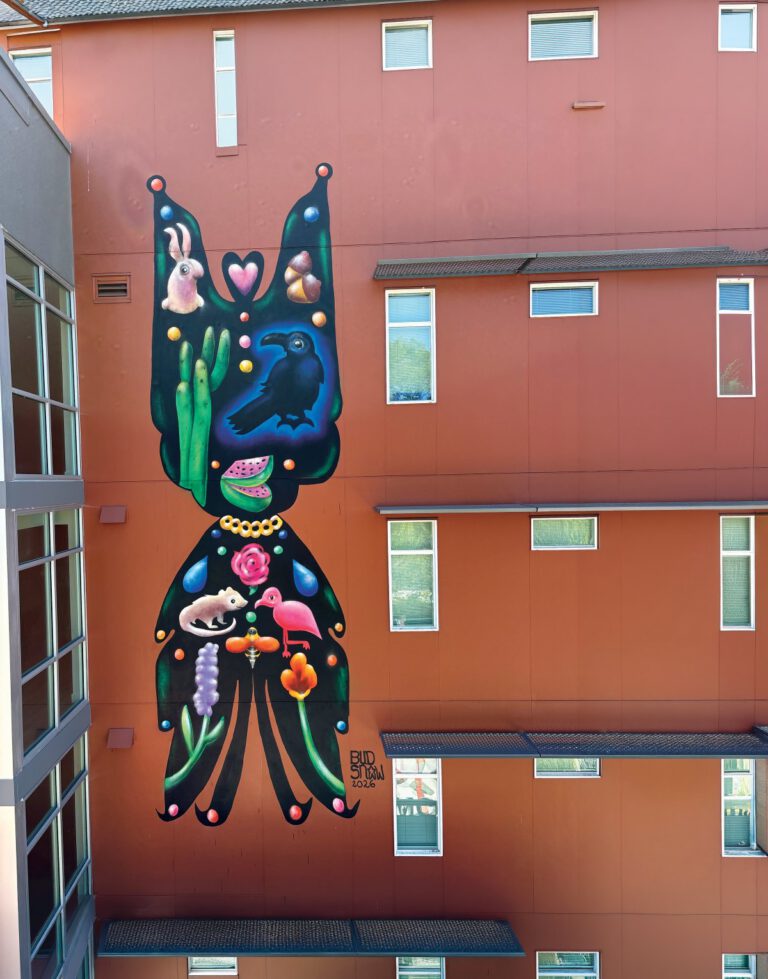
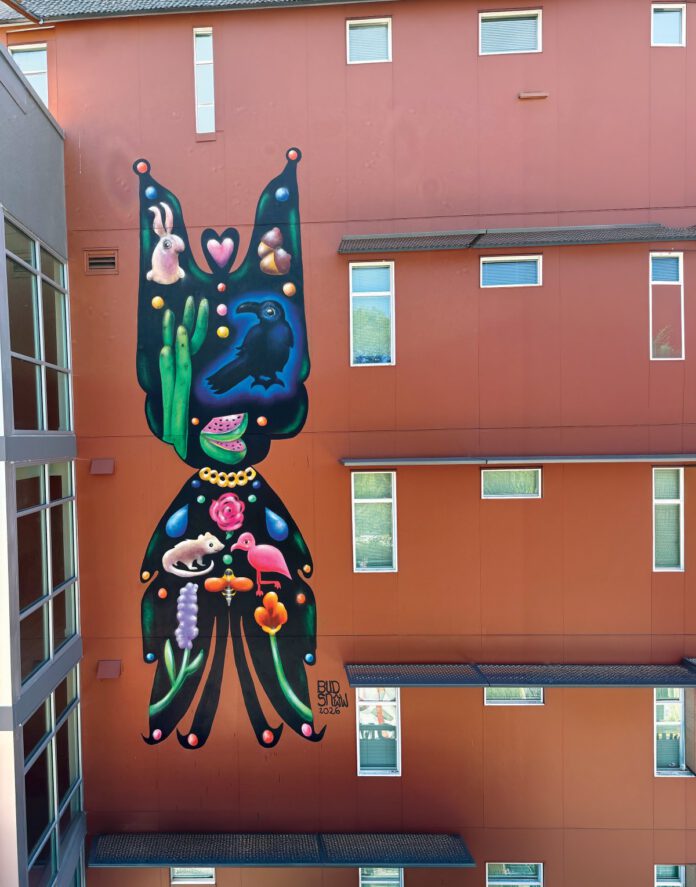
Such was the case with Snow’s latest mural, a 45-foot work overlooking Highway 12 at South Park Commons, an affordable-housing development at 702 Bennett Valley Rd. in Santa Rosa that includes supportive housing for individuals and families who have experienced homelessness.

Completed earlier this year, the mural has been doing what public art does best: becoming part of the landscape while quietly beautifying it.

This work transforms what Snow describes as a relatively standard building into a prominent visual landmark. More importantly, it emerged from eight months of conversations with residents, neighbors, community advocates and project partners. The resulting imagery incorporates symbols inspired by the surrounding neighborhood and ideas gathered during that process.

The stylized composition resolves into several images at once: two birds gathered at a fountain, the broad wings of a butterfly and the head of a dolphin. It is a suitably shape-shifting image for a place associated with transition and change.

“Art changes how we see a space. This mural is about identity and ownership,” said Snow in a statement shared with the Bohemian.

That notion carries particular weight at a supportive-housing site. Buildings intended to provide stability are often designed primarily around utility, which is understandable but can leave them visually anonymous. Snow’s mural makes the opposite argument: that a place of transition need not look temporary, institutional or unseen. It can announce the presence and humanity of the people who live there.

The mural also marks Snow’s first large-scale public artwork in Santa Rosa since 2018 and continues a relationship with the city that stretches back more than a decade.

Her first major Santa Rosa mural, completed in 2013, remains visible above Highway 12. The artist’s regional portfolio also includes a mural behind the Roxy Stadium 14 theater near City Hall, work associated with Perch and Plow and the 888 Fourth Street apartments, and previous collaborations with the Museum of Sonoma County.

Snow’s connections to the area extend beyond walls and paint. She has organized music events at the Arlene Francis Center and worked with artists and cultural organizations throughout Sonoma County.

“This region played a huge role in my career as an artist,” Snow pointed out. “Coming back years later to create a piece centered around dignity, transformation and community care feels incredibly meaningful.”

Like many ambitious public-art projects, this one required more than artistic vision and perhaps a tall ladder. Support came from the Santa Rosa Urban Arts Partnership, Montana Shop Los Angeles, the Flamingo Resort & Spa, Xies Sushi Rolls and Studio B Creative, the Santa Rosa design firm led by Belinda “B” Fernandez.

“We found ourselves with a bit of a funding gap,” noted Snow. “Studio B Creative stepped up to fill it.”

Fernandez framed the contribution as an investment in the city’s cultural and emotional life.

“We need more thought-provoking art here in Santa Rosa. Art has value,” said Fernandez. “It’s life affirming, and our community needs that right now.”

Editor’s Note: An earlier version of this article misgendered Bud Snow. We regret the error.

Oh My Darlin’, Yountville’s Clementine is Local Favorite 

Positioned as it is on a large wooden porch, it’s tempting to describe Clementine as a quaint little cottage. 

But that makes it sound like chef Rebecca Weitzman’s menu isn’t chock full of bold ideas. The genuinely charming orange and green color scheme connotes an idealized 1950s American kitchen.

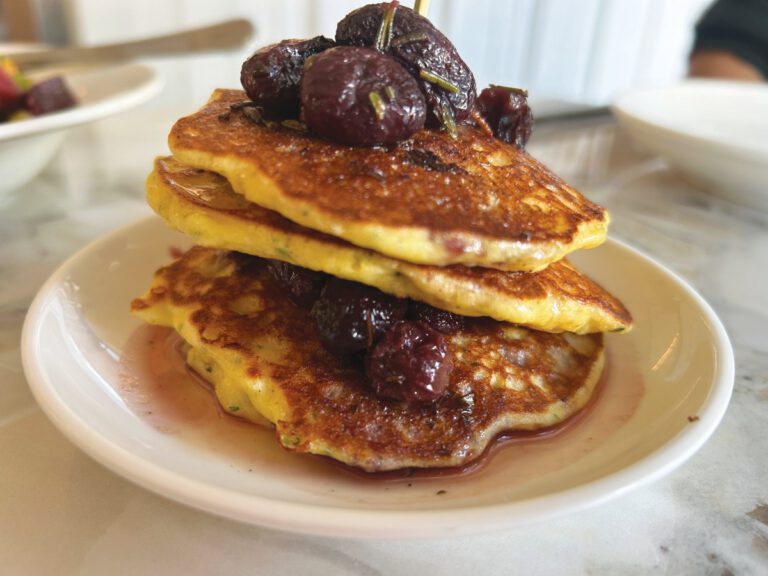
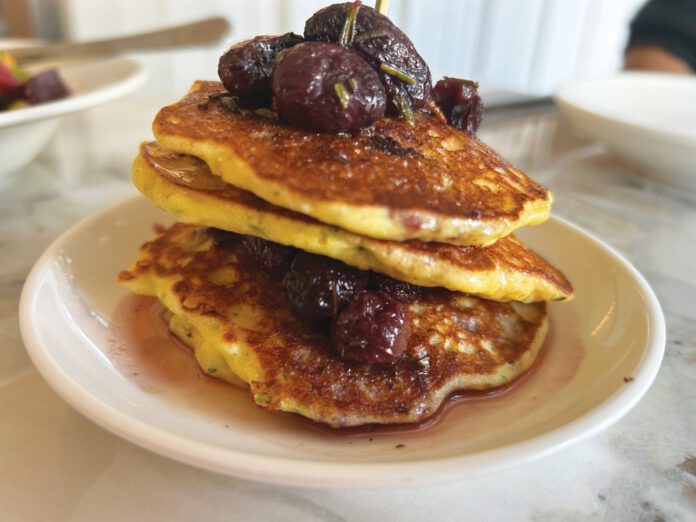
Instead of the rather ubiquitous blueberries, Weitzman’s pancakes are charged with roasted grapes, pears and parsnips, or lemon and fennel. When I spoke with Weitzman, she told me the menu is hyper-seasonal. “It’s really based on what is available and coming into season here,” she said. “We’re trying to get as much as we can from the area, so that is dictating our menu changes.”

Before Weitzman arrived in Yountville, she’d been working on a farm in Mexico. But when the opportunity came up for her to open a restaurant in California, she noted, “It was a perfect combination of an amazing job as well as just a stunning location.” She also felt that Clementine would add something new to the town’s culinary scene. “There’s a lot of very fancy, white tablecloths,” she continued. “We wanted to bring something that was more casual and laid back.” 

Having said that, the chef added that the kitchen techniques and approaches are still refined. “People just come in and have an aperol spritz and a flatbread, maybe some grilled oysters or just some brunch,” Weitzman said. But the option to have a full four-course meal with a nice bottle of wine is still on the table. “We encourage people to do both,” she pointed out. “I think we’ve become, to this neighborhood, very quickly to our locals, a place for both kinds of dining experiences.”   

Weitzman designed the brunch and dinner menus as shared meals with wine pairings in mind. “None of the food is polarizing,” the chef explained. “Our beverage director is really taking note of the Mediterranean and California influences on our menu, and he’s done a very good job with it.” She added that each dish is seasoned well, but none are heavily spiced or over-seasoned to the point that they would clash with wine.

“Our locals who have become regulars are definitely looking for a bit more,” Weitzman said. They’re willing to take more risks because they trust the kitchen. “They may order duck confit, or something we’ve just put on our menu, as opposed to a chicken dish.” 

Tourists tend to choose more familiar dishes. That’s right in line with my first visit. I ordered that delicious stack of savory corn pancakes and lost myself in a large comforting pour of maple syrup.    

Clementine, open Wed. to Mon., 10am–9pm, 6525 Washington St., Yountville. clementineyountville.com.

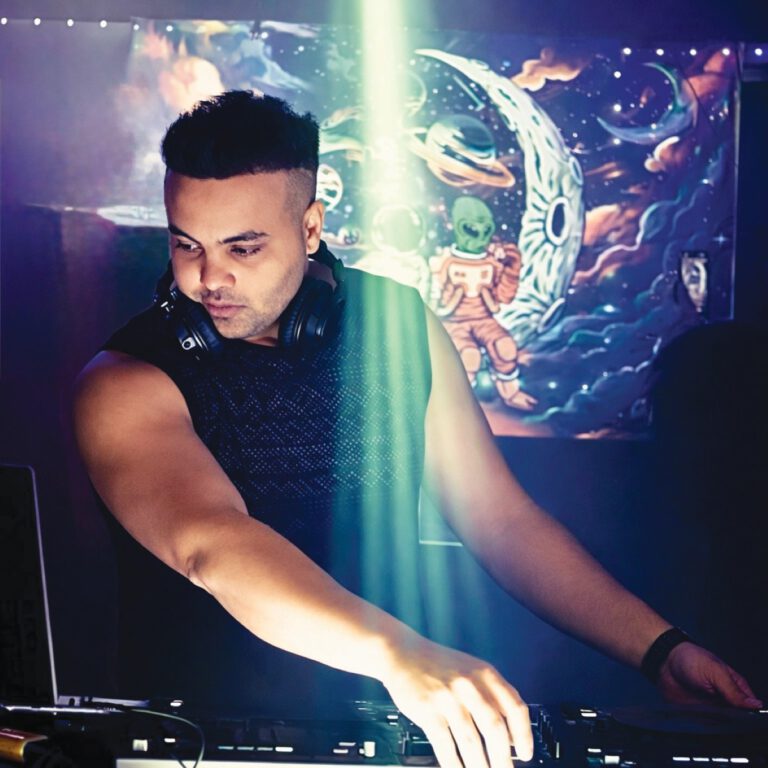
Mo Babiker, aka DJ Fayad Moss, Producer at Trance Goats

Without knowing what trance music is, this article can be read—but it cannot be comprehended. 

So let us begin with an attempted definition, drawn from a classic track: Adagio for Strings by EDM producer Tiësto. One should spin it. The track begins abruptly, with high and low end attacks of rolling precision drums. Wherever they are, physically or emotionally, suddenly one is up and running (in an earthquake). 

The BPMs for trance music, which sync one’s heartbeat, are up around 150—a high-intensity workout. As the track builds to an almost unbearable intensity of pleasure-pain, the drums suddenly drop away, and one is launched into the swelling ambience of Adagio for Strings (by composer Samuel Barker). The chip-based reproduction soars with all the original orchestration’s gothic majesty and melodrama. It’s ecstatic.

Now, imagine dancing hard to that track in a dark and laser-lit hall with beautiful strangers briefly unified in the grip of that hypnotic sound. One can now understand something of trance and why it took over the world in the year 2000. And why it’s having a Y2K revival. And why Mo Babiker, Evan Schram and Kooi have consistently sold out shows since launching Trace Goats in February. 

However, their success would not be possible without the trance collective’s consistent professionalism or ability to cultivate a new trance community rapidly coming into existence locally.

Cincinnatus Hibbard: Mo, I produce locally, and your production quality—from marketing on—is several cuts above the rest.

Mo Babiker: Well, I am a quality engineer (laughing). Evan and Kooi are also electrical engineers. Personally, I am a radio frequency engineer, and I work in quality assurance for medical equipment.

Engineer connotes technical precision. Like most DJs, you are exacting audiophiles—what sound equipment do you use?

We always use the highest fidelity sound systems available. We collaborate with the biggest names in sound like Funktion and Void. Those systems are built mainly for big music festivals and cost a quarter million dollars to buy—we rent them (laughs).

Elaborate on your production quality—light and smoke, etc.

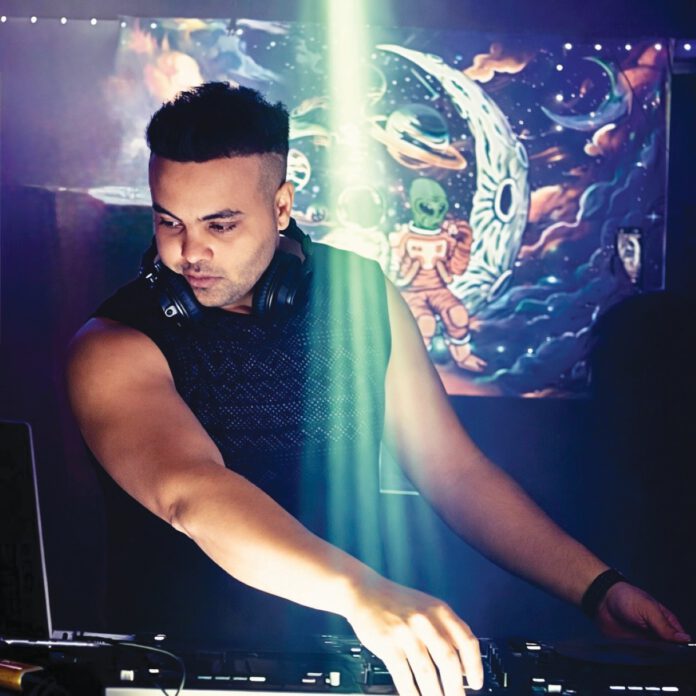
Our lights and lasers are to the highest standard too. We give our music lists to Kooi, who is our visual show engineer, so he can render projection visuals from scratch for each event. Each event has a different theme—one month we did an ‘underworld’ theme to capture that gothic feeling of ’90s underground warehouse raves; the next we did an ‘alien invasion’ rave theme. 

We have our own dance company, Lucid Dancers, led by Elizabeth Beaty and Brittany Radke, who also models for our promo materials. After shows, we always get messages from artists [dancers and flow artists] that want to perform. We tell them, feel free to come up on the stage at some point in the night and dance. And at each event, we always have a DJ up from the crowd that never had a chance to DJ before, and have them perform. We always pay them too.

Your answer segues into the cultivation of your following into a community. Mo, with consistent sell-outs, there is some call to graduate your scale and ambition.

In fall of 2027, we want to produce a two-day festival at one of the fairgrounds. We are calling it ‘The Big One.’

Learn more: Follow their instagram @trancegoats. Trance Goats have dance events each 3rd Saturday at rotating venues. Aug. 22, they will be bringing Bay Area trance legend MARS to Vintage Space in Santa Rosa. Ten percent of ticket sales always go to a local charity.

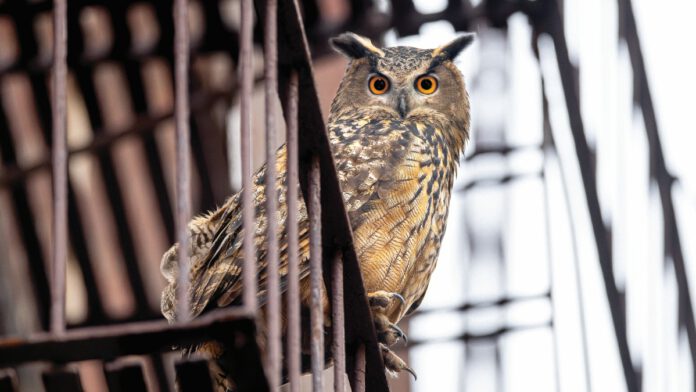
The Owl and the City: ‘Wild Inside’ Lands Flaco at Rialto

The culprit was never found. The owl, however, was suddenly everywhere.

In February 2023, somebody entered the Central Park Zoo with bolt cutters, opened the enclosure of a Eurasian eagle-owl named Flaco and inadvertently—or perhaps inevitably—created a New York legend.

Penny Lane’s new documentary, Wild Inside, follows Flaco from his bewildering first appearance on a Fifth Avenue sidewalk through an improbable second life above Manhattan. 

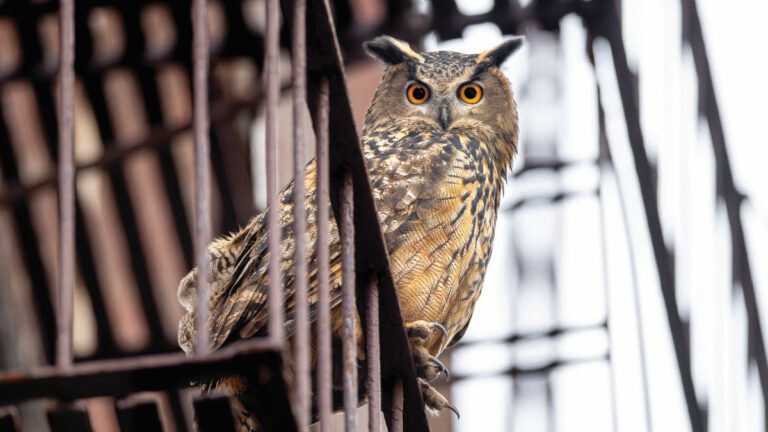
Born in captivity and housed at the zoo for 13 years, he entered the city with the résumé of an apex predator but almost none of the applicable experience. He could barely fly. He had never hunted. He belonged to another continent.  Yet Flaco learned. He hunted rats, strengthened his wings, explored neighborhoods and eventually claimed the city’s water towers, fire escapes and rooftop machinery as his own unlikely kingdom.

This cinematic chronicle is part wildlife documentary, part urban fairy tale and part philosophical inquiry into captivity, freedom and ultimately an unlikely symbol of transcendence that captured the hearts and minds of a city.

Lane, whose previous films include Hail Satan?, Listening to Kenny G and Confessions of a Good Samaritan, recognized Flaco’s arrival—literally out of thin air, outside Bergdorf Goodman—meant that he would be her next cinematic subject. 

“I was watching a zoo animal transform into a wild animal,” Lane said of the bird with pumpkin-orange eyes and a six-foot wingspan. “This has never been seen before.”

Wild Inside is assembled from Lane’s own filmmaking and a vast trove of material gathered by birders, residents, tourists and amateur Flaco correspondents. The owl may be the most documented member of his species in history, and the movie turns that abundance into something intimate and comprehensive. New York itself becomes a production partner: its bodegas, museums, barbershops, preschools, tattoo parlors and apartment windows all become pitstops in Flaco’s story—particularly the window.

During one phase of his roaming, Flaco began perching on air conditioners and fire escapes, peering into apartments at the people inside. After years of being watched in a cage, he seemed to reverse the arrangement.

“It was as if he was looking at us,” Lane recalled.

That reversal gives the film much of its emotional voltage. Flaco is both a wild animal and former zoo resident, a creature habituated to people but answering instincts he’d never used. The New Yorkers who encounter him respond with awe, protectiveness and projection. Some see liberation. Others see an animal placed in mortal danger by a reckless human act. Many see both.

Lane does not flatten those contradictions. Wild Inside understands that freedom can be magnificent without being safe, and that human stewardship often slips into human dominion. The question is not simply whether Flaco should have been free, but what obligations follow once freedom has been forced upon him.

Still, Flaco is almost comically easy to love. He becomes a celebrity, a civic mascot and an airborne symbol of liberation and liability.

“This is my eighth feature documentary, but I’ve never had an easier time getting an audience to root for my main character,” Lane said.

Wild Inside is funny, transporting and, ultimately, devastating. Expect heartstrings tugged by talons.

Starts Friday, Aug. 7, at Rialto Cinemas, 6868 McKinley St., Sebastopol. rialtocinemas.com.

Shakespeare’s ‘Caesar’ Tours Sonoma County

The players of the Jacobethan Theatre Workshop remained flexible and adaptive last week as the Woodside Fire forced the usually-outdoor troupe indoors. Scheduled to perform in the meadow adjacent to the parking lot at 6th Street Playhouse, they had to relocate first to 6th Street’s Monroe Stage and then to its GK Hardt Theater due to the low air quality.

Despite the change of space, the cast was high energy and very much into the stab-happy tale of Julius Caesar, William Shakespesare’s violent take on the downfall of the famed ruler. The tragedy moves from Santa Rosa to Sonoma and then Petaluma over the next two weekends through Aug. 16. 

The story of Julius Caesar (solid David Noll) is well known and contains some of the more iconic monologues and one-liners (“Friends, Romans, Countrymen…”) that have diffused into modern English parlay just as smoothly as any of Shakespeare’s turns of phrase, and the ensemble handles them pretty well. Notable work is by Katherine Mazer as Portia and Lydia Revelos, making some strong choices with hysteria as the oft underplayed Calpurnia. Both Mazer and Revelos give energy and commitment to their small scenes. 

Lukas Raphael (Mark Antony) attacks his “Let loose the dogs of war” speech with righteous anger and intensity, while Amanda Vitiello, playing a female Cassius, imbues her “Colossus” monologue with a heartfelt conviction that belies the subtle but powerful relationship between her and loyal, steady Brutus (Jesse Jensen, with a clear command of Shakespeare’s language and meaning). 

The relationship between Cassius and Brutus reveals itself to be the heart of the story as Vitiello and Jensen play it, and this grounds the tale in a nice shade of gray humanity. We’re left to decide whether their actions are justified and if the repercussions of said actions were worth it in the end.

A lot of the humbly produced, bare-bones (this may be the only free theater that Sonoma County has to offer regularly) but proudly presented production worked for this reviewer, though there was a sad lack of gore that I usually relish from Shakespeare’s darker works. The violence is so prevalent in Caesar that it seems like a missed opportunity to not really revel in it. Stylistic choices were made instead, which will undoubtedly work for many audience members. 

It’s a pleasure to recommend this production to those who want to support hard-working actors and their craft.

Jacobethan Theatre Workshop presents ‘Caesar’ on Aug. 8 and 9 at the Sonoma Community Center, 276 E. Napa St., Sonoma, and on Aug. 14–16 at Life on Art, 133 Copeland St., Petaluma. Fri. and Sat., 7:30pm; Sun., 3pm. Free. Reservations encouraged. jacobethan.org.

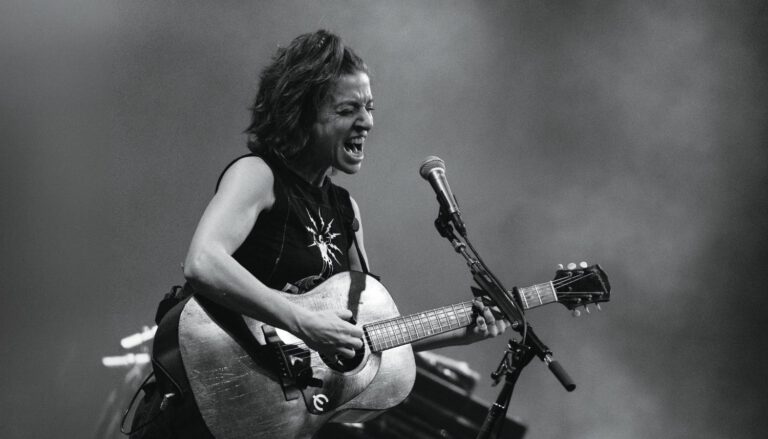
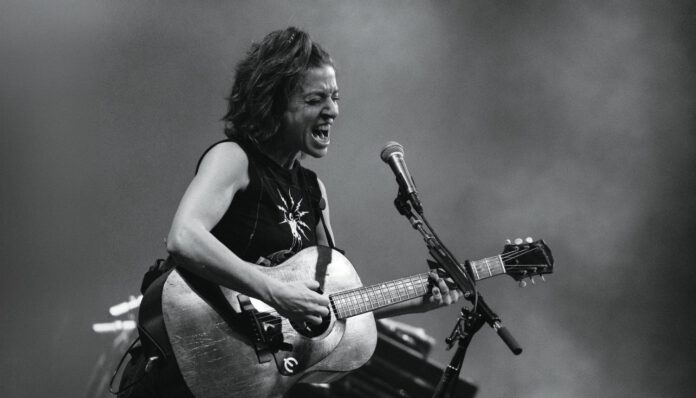
Folk, Yeah—Ani DiFranco Brings the Fun to GunBun

0

As Ani DiFranco sings on her latest album: “I defy being defined.”

She adds, “I’m not black or white or gray / I’m not he or she or they / I’m not gay or bi or straight / I’m just me, and maybe that’s just another thing to say.”

And that’s just the tip of the iceberg for a Grammy-winning artist who performs Aug. 16 at the Gundlach Bundschu Amphitheater in Sonoma.

In and out of the public spotlight since she began performing as a solo artist 20-plus albums ago, the Buffalo, New York native has been described in the press and elsewhere as a protest singer, folk revivalist, feminist icon, riot grrrl pioneer, spoken-word artist, DIY label owner and more.

And now, as DiFranco crosses the country on her current tour, she can add Broadway actor, children’s book author and full-on bandleader to the list. In these shows, she’ll be playing fan favorites alongside songs from her latest album, Unprecedented Sh!t, which boast a distinctly different sound than the more stripped-down approach she’s taken on past albums.

“I’m notorious for producing my own records, and most of them are recorded live in the studio,” said DiFranco, who has also produced albums for a number of artists on her Righteous Babe record label. “I had a co-producer maybe once along the way, but I just wanted to change it up and bring in more of a 21st century sensibility.”

To that end, DiFranco handed the production reins over to BJ Burton, a producer, engineer and mixer with a diverse clientele that includes Bon Iver, James Blake, Low, Lizzo and Charli XCX. 

“BJ brought a whole new sonic element to this record, and that’s what I wanted,” noted DiFranco, who now lives in New Orleans. “There’s a whole new world of technology and possibility when it comes to making records, and I wanted to work with somebody who lived in that world and understood it.”

The production on the album’s title track is a prime example, one that initially took time to get used to. “It’s always shocking when someone takes something you made and then changes it,” explained DiFranco, who recorded the song at home alone with vocals, guitar and “little whistles and things.” “Then I sent it to BJ, and he filtered and contorted it, as he does. He cranked it up, shoved it through a bunch of gear and, you know, there it was.”

With its unlikely mix of acoustic folk and borderline industrial elements, “Unprecedented Sh!t” has since been hailed by critics as one of the artist’s best and most eclectic since 2003’s “Evolved.” 

Production notwithstanding, Unprecedented Sh!t remains true to DiFranco’s artistic and political roots as both a musician and lyricist. “I think we should have a new bible that just says: mother earth,” she sings on the new album, “and I think men should stand down when women give birth.”

DiFranco speaks reverently about artists like Woody Guthrie, Odetta and the many others who’ve followed in their wake. 

“I’ve always called myself a folk singer proudly,” said DiFranco, who recorded two albums with the legendary Utah Phillips. “I would so much rather be hanging out with the old lefties—you know, the radical anarchists, the Wobblies and socialists and rabble rousers—than in so many other places I’ve found myself in life and in music. I think it’s cool how the template that Woody and so many others helped establish continues to spread the stories that are not told in the official history books, the ones that you’re not necessarily taught at school.”

DiFranco made her own contribution to childhood education in 2024 with Show Up and Vote, a picture book aimed toward future voters between the ages of three and six. 

“Yeah, it’s playing the long game, for sure,” DiFranco said. “One of my reasons for writing it was to give parents an occasion to talk to their kids about voting and its role in being a citizen and being part of society. That’s always been one of the main issues burning in me, to try to inspire and encourage people to participate and vote.”

In other extracurricular activities, DiFranco spent six months in New York in 2024 playing the role of Persephone in Anais Mitchell’s Broadway musical, Hadestown. Her connection to the play goes back more than a decade.

“Anais gave me a cassette tape of a live recording of the proto Hadestown show being performed in Vermont by herself and a group of her compadres up there,” DiFranco recalled of the show’s origins. “As she said, ‘Here’s this concept album that I want to make. Can you help me produce it?’ So I was sort of there at Hadestown’s conception. And God bless her. I couldn’t believe how long she stuck with that project and how much she put into it.”

While other artists on Righteous Babe may not reach her level of success, DiFranco is proud of her label and its mission. 

“We want to help our young artists have sustainable careers in music, to quit the day job and dedicate themselves to art,” DiFranco noted. “We’re certainly not the star-making machinery here. But I think there are plenty of examples in the folk-roots underground where you don’t have to make a killing, but you could make a living.”

Ani DiFranco plays from 6:30 to 9:30pm, Aug. 16, at the Gundlach Bundschu Amphitheater, 2000 Denmark St., Sonoma. Tickets and more information at gunbun.com/event/ani-difranco-concert.

Free Will Astrology, Aug. 5-11

0

ARIES (March 21-April 19): In the early days of aviation, navigation instruments were rudimentary, and the skies were often a blur of clouds, darkness or featureless horizons. Pilots sometimes relied on a technique called “dead reckoning”: good instinct bolstered by simple instruments like compasses and stopwatches. I suspect you will benefit from practicing a metaphorical version of dead reckoning in the coming weeks. You may not have all the data you would like, and the path ahead might be less than clear. But you already possess enough hints and inklings to make thoughtful approximations. If you’re alert and flexible, listening to subtle signals within you and around you, your evolving estimates will guide you uncannily close to the right destination.

TAURUS (April 20-May 20): Nineteenth-century poet Emily Dickinson rarely left her comfortable home in Amherst, Massachusetts. Her favorite activity was to sit in her bedroom and compose her odd, unique, brilliant poems. Eventually, she wrote 1,800 of them, though few were published during her lifetime. Today she is renowned as one of America’s great literary geniuses. Her story reminds us that magnificent growth may emerge from simple and humble circumstances. I suspect you will thrive if you borrow her strategy during the coming weeks. You don’t need a hubbub of flashy events to evoke your beauty. A period of creative stillness could amplify your imagination and inspire your dazzle.

GEMINI (May 21-June 20): In Renaissance workshops, apprentice painters learned their craft by assisting masters with small tasks. They mixed pigments, prepared canvases and cleaned up. There was a valuable trade-off for this humble work. Being in proximity to mature brilliance often spurred the fledgling artists to harness their own creative powers. I suspect this dynamic is relevant for you, Gemini. Now is a favorable time to be alert for unexpected teachers and lessons. Be ready to apprentice yourself to captivating experiences where you might learn what you didn’t even realize you needed to know. Your willingness to be a curious, gracious student is your superpower.

CANCER (June 21-July 22): If you knew you were going to live to 95 in reasonably good health, what additional careers or adventures might you pursue? Visualize your lifespan stretching out before you like a wide winding road, where you will have plenty of time not just to survive, but to experiment, wander and reinvent yourself. Would you train for a new craft or profession? Would you move to another country for a while and apprentice yourself to a language, landscape or tradition that has always piqued your curiosity? I invite you to take a concrete step that moves you in the direction of interesting future fun.

LEO (July 23-Aug. 22): Within most galaxies are dense clouds of gas and dust that astronomers call “star factories.” Here and there, the magic of gravity gradually gathers together diffuse material into concentrated clusters until nuclear fusion ignites, creating brilliant new suns. I suspect you will be operating a metaphorical star factory in the coming weeks and months, Leo. Small ideas, fragments of plans or tentative experiments could coalesce in productive ways. Through your patient attention and care, luminous concentrations of useful beauty will emerge.

VIRGO (Aug. 23-Sept. 22): Virgo biologist Stephen Jay Gould argued that evolution isn’t a ladder of progress but a branching bush of experimentation. Most species that ever existed are extinct, but they weren’t failures. For a very long time, they were successful experiments in being alive, well adapted to their environment. When conditions changed, they ended. That’s how evolution works. Let’s apply this lesson to your life, Virgo. If a part of your world is concluding, celebrate and thank it, then bid it a fond farewell. Feel grateful that it succeeded completely at what it was meant to do and gave you all it had to give.

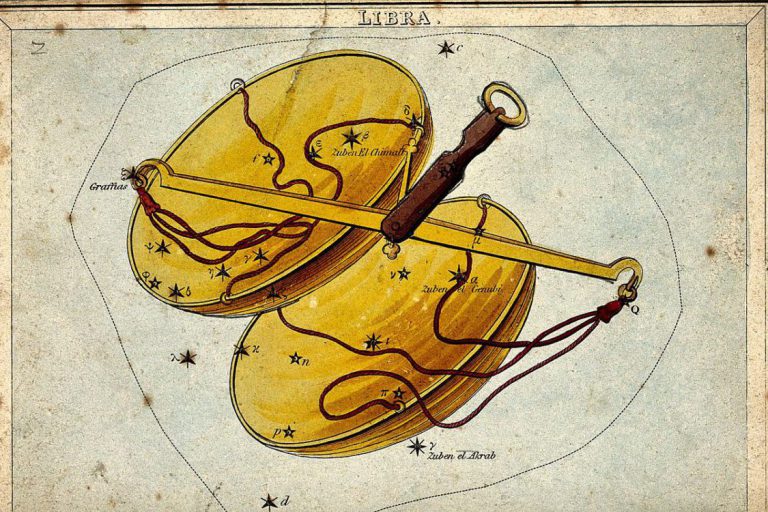
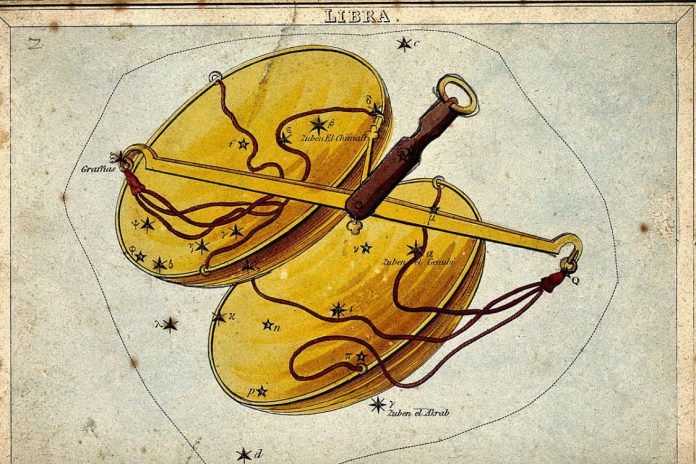
LIBRA (Sept. 23-Oct. 22): Your sense of purpose is intensifying. Your people need you more than ever, and your gifts are ripening just as they are most valuable to your community. But I must add that the road ahead will not be frictionless. You will have to outmaneuver diversionary tactics and dispel pockets of confusion. To serve as a shimmering catalyst of beauty and truth for your allies—and a shrewd strategist in the presence of deflections—lean into the paradoxical counsel attributed to Jesus: Be gentle and pure like a dove, yet keenly perceptive and discerning like a serpent.

SCORPIO (Oct. 23-Nov. 21): Concrete continues to cure beyond the time when it’s first poured. After seven days, it has 70% of its ultimate strength, and after 14 days, 90%. It usually keeps getting sturdier for a few months, even years. I propose that we use this as a metaphor for what you’re working on, Scorpio. The foundations you established a while back are still solidifying. Projects that are working pretty well are still developing potency. This is a good thing. Everything is slowly improving through processes you’re not actively managing.

SAGITTARIUS (Nov. 22-Dec. 21): Here’s your assignment: Find yourself a pair of enchanted pants that will bring you good luck and stir up fun. How will you know that they’re authentically charmed? Because when you put them on, you will instinctively wander toward adventures that expand your understanding about life. They may also lead you to explore places and situations that aren’t truly forbidden or taboo, but which you have oddly avoided as if they were forbidden or taboo. Finally, your enchanted pants are likely to inspire you to dream up a few crazy good ideas that will turn out not to be mostly good and not at all crazy.

CAPRICORN (Dec. 22-Jan. 19): In classical music, a “fermata” is a symbol on the sheet music that instructs the instrumentalist to hold a note longer than its written duration. How long? It’s unpredictable. The musician decides. I think your life would benefit from a metaphorical fermata or two, Capricorn—maybe even more. You won’t come to a protracted pause, but you will engage in strategic prolonging, extending certain notes beyond their expected duration. Examples? Lingering longer in a conversation from which you’re inclined to exit early, staying with an ambiguous emotion rather than rushing to resolution, allowing a project to develop more leisurely than you might if you were simply pushing for sheer efficiency. Opt for what’s soulful instead of what’s crisp and neat.

AQUARIUS (Jan. 20-Feb. 18): Fate is subtly but insistently pressuring you to stop squandering energy on half-hearted, hand-me-down desires. Why? So your real, holy obsessions can move to the center of your attention. The tepid wishes and lukewarm yearnings are being exposed for what they are: distractions that nibble away at your time and passion without fully feeding your soul. As these mediocre drives fade in importance, you’ll be exultant to see how much more fire, clarity and juice you have available for the few burning, churning yearnings that truly belong to you.

PISCES (Feb. 19-March 20): The Mariana Trench in the Pacific Ocean is so deep that if Mount Everest were located at the bottom, its peak would be more than a mile underwater. The deepest point in the ocean could swallow the highest point on land with room to spare. The world holds more below than above. Please meditate on this fun fact, Pisces. I hope it inspires you to understand that your most interesting power often lies in the depths, not the peaks. While others are summiting, you’re descending into the mysterious, fathomless interiors. Your explorations may not photograph well because they happen in darkness. But they are the source of your strength.

Homework: True or false: “In the same way that you judge others, you will be judged.” https://tinyurl.com/u9u9u9u

Bottle Shock: Sonoma County’s Wine Industry Enters Fifth Year of Decline

Dr. Damien Wilson wearing a dark sportscoat and blue shirt
For news readers, there has been a steady drip of wine industry reportage as sour as last week’s wine.  It’s been five years of vineyard sales, declining real estate values, consolidations, the retirement of leading figures, layoffs, bankruptcies, closures and unsold grapes, rotting on the vine. The 45 years that followed 1976’s “Judgment of Paris,” which declared Napa wine superior to...

Curtain Rises: North Bay Theater Companies Unveil 2026/27 Season Openers

A closed red theater curtain
With summer drawing to close, North Bay theater companies are prepping their houses for a robust 2026/27 season. Live theater productions in Sonoma and Napa counties will include the usual mixture of the tried and true along with a sprinkling of North Bay premieres to keep things interesting for the frequent theater-goer. Santa Rosa’s 6th Street Playhouse kicks things off...

Your Reality Distortion Field

Distorted photo of a woman holding her hand across her face
It’s 1981, and Bud Tribble, a Cupertino computer engineer, is in the midst of a project that would revolutionize not only the world of computing but the world in general. Everything about this project—whether inspired or stolen—was revolutionary. It also seemed impossible. Deadlines loomed, and seemingly insurmountable hurdles piled up. Fortunately for Tribble and his team, the person helming the...

Human Hues: Bud Snow’s New Mural Brings Art to Local Architecture

A colorful mural by artist Bud Snow covers the side of South Park Commons in Santa Rosa.
Bud Snow’s new mural brings art to local architecture Some people look at a building and see a wall. Those like artist Bud Snow see a canvas. Such was the case with Snow’s latest mural, a 45-foot work overlooking Highway 12 at South Park Commons, an affordable-housing development at 702 Bennett Valley Rd. in Santa Rosa that includes supportive housing for individuals...

Oh My Darlin’, Yountville’s Clementine is Local Favorite 

A stack of pancakes topped with roasted grapes and served on a plate.
Positioned as it is on a large wooden porch, it’s tempting to describe Clementine as a quaint little cottage.  But that makes it sound like chef Rebecca Weitzman’s menu isn’t chock full of bold ideas. The genuinely charming orange and green color scheme connotes an idealized 1950s American kitchen. Instead of the rather ubiquitous blueberries, Weitzman’s pancakes are charged with roasted...

Mo Babiker, aka DJ Fayad Moss, Producer at Trance Goats

DJ and producer Mo Babiker standing with audio equipment at a Trance Goats event.
Without knowing what trance music is, this article can be read—but it cannot be comprehended.  So let us begin with an attempted definition, drawn from a classic track: Adagio for Strings by EDM producer Tiësto. One should spin it. The track begins abruptly, with high and low end attacks of rolling precision drums. Wherever they are, physically or emotionally, suddenly one...

The Owl and the City: ‘Wild Inside’ Lands Flaco at Rialto

Flaco, a Eurasian eagle-owl with bright orange eyes, perched on a railing in New York City.
The culprit was never found. The owl, however, was suddenly everywhere. In February 2023, somebody entered the Central Park Zoo with bolt cutters, opened the enclosure of a Eurasian eagle-owl named Flaco and inadvertently—or perhaps inevitably—created a New York legend. Penny Lane’s new documentary, Wild Inside, follows Flaco from his bewildering first appearance on a Fifth Avenue sidewalk through an improbable...

Shakespeare’s ‘Caesar’ Tours Sonoma County

Two actors in costume perform as Cassius and Brutus onstage in a Shakespeare production.
The players of the Jacobethan Theatre Workshop remained flexible and adaptive last week as the Woodside Fire forced the usually-outdoor troupe indoors. Scheduled to perform in the meadow adjacent to the parking lot at 6th Street Playhouse, they had to relocate first to 6th Street’s Monroe Stage and then to its GK Hardt Theater due to the low air...

Folk, Yeah—Ani DiFranco Brings the Fun to GunBun

Musician Ani DiFranco performing onstage with a guitar.
As Ani DiFranco sings on her latest album: “I defy being defined.” She adds, “I’m not black or white or gray / I’m not he or she or they / I’m not gay or bi or straight / I’m just me, and maybe that’s just another thing to say.” And that’s just the tip of the iceberg for a Grammy-winning artist...

Free Will Astrology, Aug. 5-11

Free Will Astrology
ARIES (March 21-April 19): In the early days of aviation, navigation instruments were rudimentary, and the skies were often a blur of clouds, darkness or featureless horizons. Pilots sometimes relied on a technique called “dead reckoning”: good instinct bolstered by simple instruments like compasses and stopwatches. I suspect you will benefit from practicing a metaphorical version of dead reckoning...
12,117FansLike
4,907FollowersFollow
6,928FollowersFollow