Rainmaker

A much-belated El Niño is coming—the first in 18 years—and it may be the strongest since 1950, when oceanographic monitoring began. “It’s right on schedule,” says Nate Mantua, a climate scientist for the National Oceanic and Atmospheric Administration’s (NOAA) Southwest Fisheries Science Center.

By November, “temperatures in Southern California [were] about 5 degrees Celsius warmer than normal, or almost 10 degrees Fahrenheit warmer than normal,” says Mantua. “Local waters are 5.5 degrees Fahrenheit above average, or in the low- to mid-60s, depending what the wind is doing.”

There were hopes for drought-beating rain last winter, but instead we got the opposite: barely three inches of rain fell in Santa Rosa between January and March of this year. Petaluma got about four inches of rain over that same period.

It was the Great El Niño Fizzle, sparked by the promise of increased ocean temperatures but extinguished by the trade winds which, in an El Niño event, need to slacken so all that warm water will slosh back to our side of the Pacific.

While there are no sure things, this year looks different. Surfers are psyched for a wave-generating El Niño. Organizers of Half Moon Bay’s Titans of Mavericks big-wave surf contest have already been printing T-shirts that say “El Niño Is Coming,” and coastal residents are rightly excited for larger than average swells in the coming months.

The oceans are warming, the trade winds have already died down, and the usually bone-dry Atacama Desert in northern Chile and southern Peru is blooming—a telltale sign that El Niño is upon us. There’s just one thing: if El Niño was, in fact, a boy child gathering strength inside the womb of the Pacific, his sonogram would be atypical, to say the least. Admittedly, there’s that unmistakable band of warm water bulging along the equator—El Niño’s hallmark—but there are also large masses of warm water, creatively dubbed “the warm blob,” extending, as we have never seen before, from the coastal United States and Mexico to as far north as Alaska.

“We’ve got this incredible warming of the higher latitudes of the Pacific Ocean,” says Mantua, “and ocean temperatures have been record-high for the last two years. That makes this year unlike anything in our historical record.”

El Niño was on everyone’s mind on Dec. 3 when State Sen. Mike McGuire and Assemblyman Jim Wood held a hearing at the Steele Lane Community Center in Santa Rosa to talk about the ongoing shutdown of the California Dungeness and rock crab fisheries. Both species are victims of the blob, which spurred an algae bloom this year of unprecedented proportion that toxified the crab with high levels of domoic acid.

The backdrop at the big crab meeting was what scientists and elected officials are calling the emergent “new normal” in the Pacific Ocean. Though nothing is certain in these weird new waters, “if El Nino shows up in force as predicted, the blob will dissipate,” said Catherine Kuhlman, executive director for ocean and coastal policy at the California Ocean Protection Council.

Kuhlman cited a litany of unpleasant blob-related trends at the crab conference that included many marine mammal deaths—sea lions are taking a hit—and unusual species’ washing up on the beaches. “The ecosystem is shifting in response to the climate,” Kuhlman told the committee and packed room of commercial crabbers who had journeyed from around the state for the event.

Kuhlman warned that, despite whatever benefit a wicked winter El Niño might have on breaking up the blob, “it’s highly likely that we will have more of the algae blooms” in coming years.

“We don’t know if it’s climate change, the blob or El Niño, but the oceans are changing, and they are changing fast,” said Eric Sklar, who sits on the California Fish and Game Commission.

The anomalous blob is raising many questions about climate change and our future—including what this year’s El Niño winter will be like. Warmer oceans mean stronger storms and increased odds of above-average winter precipitation. But just how much rain is the boy-child planning to bring us? It is enough to replenish our parched land? Will it unfold slow and steady like applause or come in fits and torrential downpours, unleashing landslides, floods and hurricane-force winds, like the ones that tormented California’s not-so-distant past?

“We know that no two El Niño events in the past have been the same,” Mantua says, “even though a lot of attention is being put on what happened in [the] 1997–98 and 1982–83 [El Niños], because of similarities in the strength of this event to what those two events had. But there is no guarantee that we’ll see a repeat of all of the things that might stand out in people’s memories. Odds are there will be some surprises.”

Even with advanced technology—which includes some 70 buoys moored in the depths between Japan and the California coast—climate prediction is a field riddled with unknowns, probabilities and conservative estimates. The saying goes, climate is what you predict and weather is what you get. But one thing is certain: it’s going to rain this winter. Possibly a lot. And maybe in a way Northern California hasn’t seen in decades.

Stormy Past

In early January 1982, a giant storm sat over the Bay Area and much of the California coastline. The rain began to fall during the last quarter of the NFL championship game between the San Francisco 49ers and the New York Giants, pouring through the night and into the next day. It was one of the most notorious California weather events of the 20th century, reports the Western Regional Climate Center (WRCC), a repository of historical climate information which uses data from the National Weather Service. The center reports that the ’82 storms brought “high wind, heavy rain and heavy snowfall across all of California. This led to direct wind damage, higher tides, immediate flooding to coastal and valley locations, mudslides in coastal mountain areas, record snowfall in the Sierra mountains, and resulting spring snowmelt river flooding.”

The ’82–83 El Nino left lots of wreckage, along with record rains and snowstorms: “Thirty-six dead, 481 injured, $1.2 billion economic losses, including 6,661 homes and 1,330 businesses damaged or destroyed,” reports the WRCC.

They still talk about the weather events down in hard-hit Santa Cruz, especially scientists in the South Bay who beheld its wrath. “All you saw were trees sticking out and cars and pieces of houses, and it was right after Christmas, so there were Christmas decorations, and there were 10 people buried under it all,” says Gary Griggs, professor of earth and planetary sciences at UC Santa Cruz, where he’s taught since 1968. He was the first geologist on the scene the morning after the storm. “One woman survived,” recalls Griggs. “She grabbed onto a tree as it went through her house at one in the morning.”

More recently, in the winter of ’97–98, massive flooding claimed 17 lives in California. East Palo Alto was one of the hardest hit cities in the Bay Area, as the San Francisquito Creek overflowed and damaged a reported 1,700 homes. Many were trapped inside, as all that surrounded the exteriors were lakes of muddy water after a steady month of rain. Those were El Niño years, which is a level this winter doesn’t need to create dire consequences. “You don’t have to have an El Niño year to have a really devastating winter,” says Griggs.

According to a study published in the Journal of Coastal Research, about 76 percent of the storms between 1910 and 1995 that caused significant erosion and structural damage along the California coast occurred during El Niño years. We still don’t really know why it happens, but when the trade winds—which normally blow toward the equator from the northeast and southeast—die down, it allows the warm water in the western Pacific to flow back toward the coast of South America and then up the coast.

“The first thing it does is change the climate on opposite sides of the Pacific,” says Griggs. That means drought in places like the Philippines, New Guinea and parts of Australia, as well as heavy rainfall in the eastern half of the tropical Pacific. Some of these shifts are already happening, according to Mantua.

“Right now, the Atacama Desert in southern Peru and northern Chile is blooming,” Mantua says. “They’ve had lots of rainfall the last couple of months, and that’s a part of the world that has some of the driest deserts on earth in the absence of these El Niño periods. It can go years without any appreciable rain at all.” Mantua notes that the same is true for the Galápagos Islands.

During El Niño winters, which typically peak in December and continue through January and February, periods of active storm development at the same latitude as Central and Southern California have sent storms barreling into the West Coast, says Mantua. This happened in the ’82–83 and ’97–98 El Niño years, but we have also had lots
of storms like this in some
non–El Niño years, he points out.

One concern is that the ominous warm blob could potentially add fuel to storms as they develop in their breeding ground between Hawaii and the Aleutians. “When we have big storms that do develop and move across that water,” Mantua says, “they’re going to have strong winds and they’re going to evaporate a lot of water off that surface. They’re going to cool that warm blob, but in the process, they’re going to fuel themselves up. So I do think that our storms are going to be warmer and stronger than they otherwise would be without that vast area of warm water.”

Coupled with elevated sea levels typical of a warmer ocean, the more direct westerly wave approach of El Niño winters delivers an extra blow, and potentially vast flooding.

Thirst for Rain

El Niño isn’t synonymous with rain, though four out of the last six strong El Niños brought wet winters to California, Mantua says. But NOAA’s Climate Prediction Center is calling for “increased odds” of a wet winter in Northern California; there’s a one-in-three chance, and a less than one-in-three chance for a dry winter. And while the odds for a wet winter increase in Southern California, the Gulf Coast and Florida, there’s just a 5 to 10 percent shift in the odds for a wet winter for the central and northern coast, Mantua says. “It’s pretty subtle,” he says, “but that is the nature of climate forecasting.”

Would a wet winter end the drought?

“While the precipitation outlook suggests good news for California, one season of above-average rain and snow is unlikely to erase four years of drought,” says Mike Halpert of NOAA’s Climate Prediction Center. “The drought outlook shows that some improvement is likely in Central and Southern California by the end of January, but not drought removal. Additional statewide relief is possible during February and March.”

The ’82–83 and ’97–98 El Niño months did bring lots of rain to the area, so there is hope that this year’s El Niño might be the drought-buster. The headline-grabber from ’98 was in parts of Marin County, which got up to 90 inches of rain that year. Many cities and towns up and down the coast, and inland, experienced a doubling, or more, of their annual rainfall averages in ’97–98, according to data from the National Weather Service.

“There was good snowpack in the Sierra, and if we had a repeat of those kind of winters, it would definitely put a dent in the drought,” says Mantua. “It wouldn’t wipe out all of our water-supply deficit, it wouldn’t recharge all of the ground water that’s been pumped out in the last four years and the last dozens of years, but at least it would help refill reservoirs and recharge our soils and get a snowpack established again in the mountains.”

El Niño was identified by fishermen in Peru and Ecuador as far back as the 1600s, not so much for its weather patterns as for its negative impacts on fishing. The warm waters shut down nutrient-rich upwelling, halting the plankton bloom and subsequently breaking the entire food chain. But El Niño’s warm water can also mean weak upwelling in local waters too, which could mean poor reproduction this year for Dungeness crab, which are also being plagued by the blob’s algae bloom of toxic domoic acid.

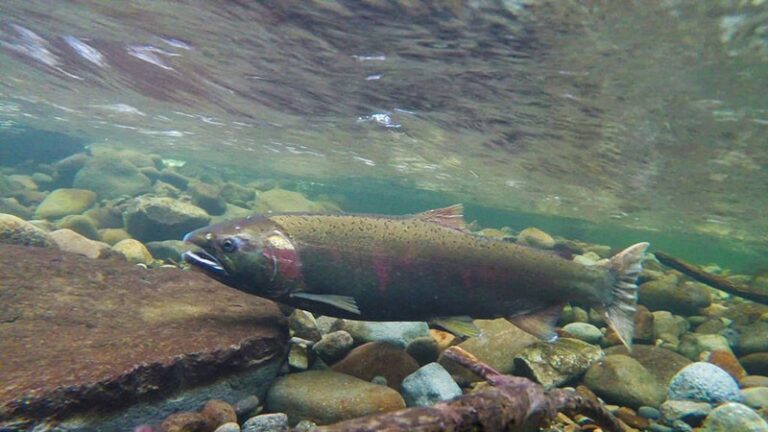
The warm water isn’t great for Pacific salmon either, Mantua says, which thrive in cold, upwelled water high in nutrients and a productive plankton community that includes lipid-rich copepods and other crustaceans like krill.

“During these warm periods we know that it can be stressful for top predators, including salmon, seabirds, sea lions and seals,” says Mantua. Salmon released from hatcheries, which produce most of the salmon caught off the coast of California, are usually fished after they’ve been in the ocean for two or three years, Mantua says, “so it doesn’t have such a big impact on the season that you’re in, but two or three years down the road.”

Similar to past El Niño years, bluefin tuna, opah or moonfish, and bonito—marine life typical off the coast of Southern California—are all currently swarming area waters.

Since the last El Niño, the Bay Area has experienced almost two decades of relatively mild winters, and Griggs points out that only a small portion of today’s residents were even here to experience the full wrath of an intense storm season.

“It’s like all earthquakes aren’t the same—all floods aren’t the same, and all El Niños are not the same. I’m not sure if people fully understand that,” says Griggs. “I think, in terms of flooding, what people are doing is trying to clean out storm drains and get sandbags ready and make sure your roof gutters are clean, which helps the water get out faster.” Even so, “You can’t stop sea levels from rising and you can’t stop the waves from coming.”

East of Amigos

0

Midway into a tour of Merriam Vineyards, I’m shown the spacious tasting room, which is appointed like an upscale country boutique.

I learn that the estate vineyard was bound for organic certification from the very start in 2003. And proprietor Peter Merriam tells me how he came to love the great wines of France, because that’s what they put on the shelves on the East Coast, where he’s in business. But I’m looking around, wondering: where’s the paint-by-numbers, Tuscan-style villa?

This winery is actually “New England–styled,” and it turns out that Merriam never actually moved to wine country, although he’s been visiting Healdsburg since 1982, when his school buddy Tom Simoneau (for years, “the Wine Guy” on KSRO) trekked out here. After harvest, however, Merriam heads back to New England, like a snowbird in reverse. “I’m an East Coast kind of guy,” Merriam says with a shrug. A self-described outdoors enthusiast, the native Mainer sticks to where there’s a reliable snowpack.

That East Coast business? That’s actually the winery itself, which Merriam runs from the Boston area, visiting Sonoma County nearly once a month. Formerly, he ran a “package store,” which is what they call off-sale wine and liquor shops back there, while his wife, Diana, was on the board of a large, family-run New England supermarket chain.

Enough of the story, how is the wine? Well, a sign that boasts “94+ points Robert Parker” for the 2010 Rockpile Cabernet hangs on a wall in the cellar, so that’s something. I’ll advocate at least as many points for the 2013 Bacigalupi Chardonnay ($50), an excellent rendition from this treasured vineyard that splits the cream from the apple, with not too much butter in between.

While the 2013 Estate Pinot Noir ($40) is warm and jammy, look for the cool 2015 rosé next year, with chalky acidity and light, strawberry and rose aromas. Instead of straight-up, toasty oak, the 2014 Fumé Blanc ($28) smells like toasted almonds and none of the grassiness of the fruity 2014 Sauvignon Blanc ($20).

Slightly charred, but not too much, the 2011 Estate Merlot ($30) displays all the graphite and dark, red berry fruit that you might want in a Merlot. With less than I expect from a Cab Franc—in the sense of less is more—the accessible 2010 Dry Creek Valley Cabernet Franc ($45) wows with perfumed red berry fruit and notes of sweet blonde tobacco.

Merriam Vineyards, 11654 Los Amigos Road, Healdsburg. Daily, 10am–5pm. Tasting fee, $10. Dog-friendly. 707.433.4032.

Emerald Standard

0

The first year that the Emerald Cup was held at the Sonoma County Fairgrounds in Santa Rosa, people were anxious to attend. Now in its 12th year, the Emerald Cup has become the world’s largest and most respected outdoor organic cannabis competition.

This year’s Cup, happening Dec. 12–13, will be the biggest yet with great music, top-tier speakers and panels, hands-on workshops, on-site physician recommendations and more than 200 vendors.

The list of guest speakers includes politicians Fiona Ma, state Board of Equalization member, and Assemblyman Ken Cooley, as well as entrepreneurs, cannabis cultivators and a host of scientists and lawyers. There will also be plenty of entertainment, as Santa Barbara roots-reggae rockers Rebelution and Oakland’s worldly electronica outfit Beats Antique headline the Healing Harvest Music Hall with a host of other exciting acts. There’s even some “cannabis comedy” slated for the event, and the whole weekend wraps up with the awards ceremony.

The Emerald Cup takes place on Saturday–Sunday, Dec. 12–13, at the Sonoma County Fairgrounds, 1350 Bennett Valley Road, Santa Rosa. Saturday, 11am to 10:30pm; Sunday, 11am to 7:30pm. $55–$100; 18 and over. theemeraldcup.com

Debriefer: December 9, 2015

0

SHUTDOWN

A critical component to fund a Larkspur SMART train extension moved forward in the U.S. Congress as lawmakers agreed in early December to authorize the Small Starts program at $11 billion over six years. There’s $20 million pledged by President Obama in the transportation authorization bill earmarked for the Sonoma-Marin Area Transit system that would extend rail tracks by two miles, from San Rafael to Larkspur.

But the entire spending package might go out the window, and the SMART dollars with them. A government shutdown looms as Democratic lawmakers grapple with multiple radical right-wing riders dropped into an omnibus appropriations bill to fund the government. The transportation authorization bill that passed earlier this month included SMART dollars, but now that it’s time to appropriate the money, Republicans have threatened a shutdown.

“They’ve thrown the kitchen sink at the Democrats,” says Rep. Jared Huffman, D-San Rafael. After months of negotiations, Huffman says, the party “threw it out the window and offered a deal to Democrats that was basically every radically ideological agenda [item] that they could dream up.” The GOP riders would ban Syrian refugees; amend the Dodd-Frank Act; pollute the Clean Air Act; wreck Obamacare; defund, demonize and otherwise delegitimize Planned Parenthood; whittle away at the Endangered Species Act . . .

House Democrats sent the bill back to the GOP to scrub the extremism. “It’s been flatly rejected by us, so now—having had the goal posts moved—we are really not quite sure where this goes in the next few days,” said Huffman late last week. He was cautiously optimistic. “It’s wait-and-see time, but we don’t have to wait too terribly long. We’re at the 11th hour.”

BAN DRAGS ON

Crabbers headed to the Steele Lane Community Center in Santa Rosa on Dec. 3 to find out when the state would lift the closure on the Dungeness and rock crab fisheries because of high levels of the potentially fatal domoic acid.

The news was unsatisfying. “I don’t know when we will reopen,” said California Department of Fish and Wildlife director Charlton Bonham. He assured the crabbers that there would be constant testing going on through the month, and that Fish and Wildlife was “seeing good trends, but very highly elevated hot spots.”

In order to open the fisheries, state officials need to see average levels of domoic acid in crab viscera drop to below 30 parts per million for two weeks running. The levels are generally abating, but one Dungeness in the Channel Islands area had just been sampled at 1,000 ppm.

News of the very “hot” crab elicited a round of agitated murmurs from the room full of crabbers, which included Don Marshall, a member of the Pacific Coast Federation of Fishermen’s Associations.

“I agree, and the fleet agrees as a whole, that public safety is the main concern,” Marshall told the legislative panel comprised of Healdsburg lawmakers State
Sen. Mike McGuire and Assemblyman Jim Wood.

Marshall advocated for a uniform opening of the Dungeness season when it was safe to do so, and strongly rejected any consideration to open state waters based on local test results. “The crabs don’t abide district lines,” Marshall said as he urged lawmakers and officials to “approach this matter with extreme caution. We are in uncharted waters.”

Marshall is selling Christmas trees to get through the holidays.

Ramen for Here

0

Ramen Gaijin is staying in Sebastopol. The popular Sebastopol ramen shop was eyeing a move to a space in Santa Rosa’s Railroad Square, but owners Matthew Williams and Moishe Hahn-Schuman secured a favorable lease with building owner Stephen Singer and now have ambitious plans in the works.

The other big news is that, as of Dec. 10, beer, sake and wine will flow again after a four-month dry spell. After moving into Forcetta-Bastoni earlier this year, Williams and Hahn-Schuman applied to transfer the faltering restaurant’s liquor license to their business, but the process was mired in red tape and the state blocked liquor sales until outstanding issues were resolved. Forcetta-Bastoni has since closed, and Ramen Gaijin is the sole occupant of the downtown Sebastopol space. Beer, wine and sake will be available at the bar and lounge, but not ramen. No spirits for now.

Meanwhile, the ramen restaurant will close for as long as a month over the holidays for remodeling aimed at streamlining the kitchen, retooling the bar and taking care of building-maintenance issues.

Once the renovations are complete, the bar will offer an izakaya menu, Japanese-style bar snacks like yakitori and small plate dishes made to go with drinks. There are also plans to hire a beverage director who will create an ambitious cocktail program (think Japanese whiskey-based cocktails and more sake).

Longer term, Williams says he and Hahn-Schuman are looking to bring in a sushi chef to open a 10-seat omakase-style sushi bar at the counter space in the middle of the restaurant. They also have plans to make their excellent noodles available for wholesale.

In the meantime, toast Ramen Gaijin’s commitment to stay with a beer and bowl of shoyu ramen. 6948 Sebastopol Ave., Sebastopol. 707.827.3609.

Ocean Fresh

0

It’s hard to imagine a place atmospherically further from the sea than the parking lot of the new Santa Rosa Seafood Raw Bar and Grill.

And yet there it is, off a busy central avenue, across the street from a tire shop. The restaurant, unimpressive on the outside yet surprisingly chic and cozy on the inside, is a daughter business of the nearby Santa Rosa Seafood store, a local institution of sorts that specializes in fresh, locally sourced fish and seafood, and ships across the country.

The location, perfect for picking up fish for dinner but less appealing for a night out, has one clear advantage, though: the sign promising a restaurant “Coming Soon” was highly visible long before opening. It worked. Since opening in September, the restaurant has been buzzing, despite having “zero online presence,” as the waiter proudly noted. Indeed, the restaurant’s website still urges visitors, “Please stay tuned for our grand opening!” Santa Rosa Seafood relies on its food alone.

The kitchen fulfills the promise successfully, if not seamlessly. The ambition is visibly there, as the menu is long, varied and elaborate, listing such classics as fish and chips and fried calamari, along with raw offerings, hearty entrées and cocktails. Daily lunch and dinner specials are available too. From the specials menu, the Tokyo shrimp ($7), battered jumbos served on wakame salad and fiery red “volcano” sauce, was a classy and fun appetizer. The shrimp was delicious, if not very Japanese, and the crunchy wakame was so good that we immediately ordered more.

We shouldn’t have. The ahi tuna poke ($14) came with that very same salad. This was the appetizer that stole the show, transporting us away from a cold winter day among mid-city concrete to a sunny beach hut far away. The simple, clean-tasting cubes of tuna were very fresh and came accompanied with wakame, white rice and two dipping sauces: the “volcano” sauce and a black sesame soy sauce. This was a combination I could have nibbled on forever, playing with proportions of rice, tuna and sauces.

After such a glamorous opening, we were excited about the entrées. The calamari steak ($16) sounded intriguing but turned out to be a flat patty of wan flavor, battered in egg and resting on rice, zucchini and fingerling potatoes.

The grilled swordfish ($20), with black bean purée and mango salsa, was better. The swordfish was juicy and properly flaky, and the mango kick complemented it nicely, but the purée threatened to overwhelm the flavor of the fish.

It’s clear that the kitchen staff is precise and knowledgeable. Every individual ingredient we tried, from a simple potato to the heavenly tuna, was prepared and cut exactly right. When it comes to execution, however, it isn’t always smooth sailing. Santa Rosa deserves a destination seafood place. Give Santa Rosa Seafood Raw Bar and Grill a couple of months to focus and narrow the menu down to absolute winners, and it could become that place.

Made Local Marketplace Cuts the Ribbon on New Location

Made Local Marketplace, the locally-minded store that boasts items and goods from hundreds of North Bay makers and manufacturers, recently expanded from their longtime location on 5th St in downtown Santa Rosa to a new storefront one block over, at 529 4th St, the former location of Cokas Dikus, between Mendocino Ave and the Santa Rosa Mall.

The larger space allows the marketplace, which is celebrating five years in Santa Rosa this month, to offer even more goods and gifts just in time for the holiday shopping season. The store will also soon house a reuse center run by the Foundry Creative group that will be a valued resource for teachers, artists and creative shoppers. There are also plans for art classes and a small coffee post run by the popular Criminal Bakery.

The Made Local Marketplace celebrates their new space and their five-year anniversary today, Dec 8, with a ribbon-cutting ceremony that’s open to the public and features food, wine and a hands-on Makers Lab. 529 4th St, Santa Rosa. 5pm. The marketplace’s regular hours are Mon-Fri, 10-6; Sat, 10-5 and Sun 11 to 5. 707.583.7667.

Watch the Velvet Teen’s Recent Homecoming Show in Full

0

[youtube]https://www.youtube.com/watch?v=Yglpe-8SbNc[/youtube]
Onstage with Jim and Tom has long been one of my favorite podcasts and video series, focusing on local music and the historic Phoenix Theater in Petaluma, run by hosts Tom Gaffey and Jim Agius. The series incorporates interviews with local bands and live concert films, and this week the project unveiled their most ambitious concert feature yet.
Last summer, recent Norbay Music Award-winners the Velvet Teen released their long-awaited and exceptional indie rock album, All is Illusory, and toured the US; capping the trek with a massive show at the Phoenix Theater on August 22. To top it off, the Onstage film crew was there to capture the whole darn thing.
Edited by Agius and mixed by Greenhouse Recording Studio co-owner and engineer Paul Haile, this is a clean, clear and professional production that goes beyond simple recording and stands as a full-on film. And the band has never sounded better, captured here in their element, playing for the hometown crowd.
If you saw this show last summer, relive the good times. If you missed the show, now’s your chance. It’s well worth a watch.

Scott Weiland Has Died

0

weiland
Reports have come in that Scott Weiland, former lead singer of the Stone Temple Pilots and current frontman of Scott Weiland & the Wildabouts, was found dead last night on his tour bus in Minnesota. His official instagram account posted the following statement:

Scott Weiland passed away in his sleep while on a tour stop in Bloomington, Minnesota, with his band The Wildabouts. At this time we ask that the privacy of Scott’s family be respected.

It’s still unclear what the cause of death is. Weiland and the Wildabouts performed last year at BottleRock Napa Valley and was scheduled to return to Napa this month with a show on Dec 19. Weiland was born in San Jose  and lived in Southern California. He was 48 years old.

Ezra Furman Plays Santa Rosa Last Minute

EzraFurman
Garage rock and glam pop songwriter Ezra Furman is a fierce and fearless indie music maker who’s been gathering steam for his irresistible tunes and infectious personality. His most recent release, “Perpetual Motion People” is as groovy as it is restless, as personal as it is catchy. And, Furman has also been making headlines lately for identifying as gender fluid. We last wrote about Furman’s awesome cover of the Replacements song, “Androgynous,” and we’re happy to have another excuse to highlight some amazing music once again.
That’s because, this week Furman is playing a last minute concert on Saturday, December 5, at the Arlene Francis Center in Santa Rosa, as part of a west coast tour. With Furman’s star shining brightly and musical momentum perpetually gaining speed, this might be the last time anyone will get to see the songwriter in such an intimate setting as this, and the rest of the lineup is fully stacked with local wonders. Music from the Corner Store Kids, Don Kennemer and Plastic Ghost joins a masked performance art piece by Quenby, comedic antics from Be The Clown, a gallery of works from local artists and Lagunitas beer on tap.
This is one not to miss. The show happens on Dec 5 at Arlene Francis Center, 99 Sixth St, Santa Rosa, 8pm, $12 suggested donation.
[youtube]https://www.youtube.com/watch?v=rkEkjxX_YrM[/youtube]

Rainmaker

A much-belated El Niño is coming—the first in 18 years—and it may be the strongest since 1950, when oceanographic monitoring began. "It's right on schedule," says Nate Mantua, a climate scientist for the National Oceanic and Atmospheric Administration's (NOAA) Southwest Fisheries Science Center. By November, "temperatures in Southern California about 5 degrees Celsius warmer than normal, or almost 10...

East of Amigos

Midway into a tour of Merriam Vineyards, I'm shown the spacious tasting room, which is appointed like an upscale country boutique. I learn that the estate vineyard was bound for organic certification from the very start in 2003. And proprietor Peter Merriam tells me how he came to love the great wines of France, because that's what they put on...

Emerald Standard

The first year that the Emerald Cup was held at the Sonoma County Fairgrounds in Santa Rosa, people were anxious to attend. Now in its 12th year, the Emerald Cup has become the world's largest and most respected outdoor organic cannabis competition. This year's Cup, happening Dec. 12–13, will be the biggest yet with great music, top-tier speakers and panels,...

Debriefer: December 9, 2015

SHUTDOWN A critical component to fund a Larkspur SMART train extension moved forward in the U.S. Congress as lawmakers agreed in early December to authorize the Small Starts program at $11 billion over six years. There's $20 million pledged by President Obama in the transportation authorization bill earmarked for the Sonoma-Marin Area Transit system that would extend rail tracks by...

Ramen for Here

Ramen Gaijin is staying in Sebastopol. The popular Sebastopol ramen shop was eyeing a move to a space in Santa Rosa's Railroad Square, but owners Matthew Williams and Moishe Hahn-Schuman secured a favorable lease with building owner Stephen Singer and now have ambitious plans in the works. The other big news is that, as of Dec. 10, beer, sake and...

Ocean Fresh

It's hard to imagine a place atmospherically further from the sea than the parking lot of the new Santa Rosa Seafood Raw Bar and Grill. And yet there it is, off a busy central avenue, across the street from a tire shop. The restaurant, unimpressive on the outside yet surprisingly chic and cozy on the inside, is a daughter business...

Made Local Marketplace Cuts the Ribbon on New Location

The locally-sourced shop expands their space, celebrates their 5 year anniversary.

Watch the Velvet Teen’s Recent Homecoming Show in Full

https://www.youtube.com/watch?v=Yglpe-8SbNc Onstage with Jim and Tom has long been one of my favorite podcasts and video series, focusing on local music and the historic Phoenix Theater in Petaluma, run by hosts Tom Gaffey and Jim Agius. The series incorporates interviews with local bands and live concert films, and this week the project unveiled their most ambitious concert feature yet. Last summer,...

Scott Weiland Has Died

Reports have come in that Scott Weiland, former lead singer of the Stone Temple Pilots and current frontman of Scott Weiland & the Wildabouts, was found dead last night on his tour bus in Minnesota. His official instagram account posted the following statement: Scott Weiland passed away in his sleep while on a tour stop in Bloomington, Minnesota, with his...

Ezra Furman Plays Santa Rosa Last Minute

Garage rock and glam pop songwriter Ezra Furman is a fierce and fearless indie music maker who's been gathering steam for his irresistible tunes and infectious personality. His most recent release, "Perpetual Motion People" is as groovy as it is restless, as personal as it is catchy. And, Furman has also been making headlines lately for identifying as gender...
11,084FansLike
4,606FollowersFollow
6,928FollowersFollow