Beet Surrender

0

When it comes to dining out, it can suck to be a vegetarian. While most restaurants offer a few token meatless dishes, they tend to hold the creativity as well as the meat. You know the stuff—pasta primavera, cheese pizza, salad.

Then there are those restaurants that serve highly processed, textured vegetable protein and tofu dishes that masquerade as meat—mock chicken, sawdust-flavored veggie burgers, insipid tofu dogs and other desperate attempts to make meatless dishes taste like meat. In many cases, these meatless products are just as processed and factory-farmed as the meat they seek to replace. Vegetables should be enjoyed on their own terms rather than as sad analogues to meat.

Given that just about every restaurant these days touts its seasonal, farm-to-table cuisine, one would think there would be more places that highlight vegetables as something other than a side dish or salad. And while it’s true that vegetarians are a minority—about 3 percent of the U.S. population—you need not be a vegetarian to appreciate well-prepared vegetables.

The truth is, it’s harder to cook creatively with vegetables and serve them at the center of the plate. Anyone can grill up a steak or burger, but it takes real skill and technique to elevate the veggie to the starring role.

In France, chef Alain Passard has built his reputation on his vegetable-based cooking. His restaurant, L’Arpège, is a destination that appeals to food lovers of all types, not just vegetarians.

Closer to home, chef Perry Hoffman at Healdsburg’s Shed does a great job of putting vegetables in the spotlight, and Santa Rosa’s new Seed to Leaf creates some delicious plant-based menu items with vegetables, seeds and nuts. But still, vegetables and the people who love them don’t get the respect they deserve.

“The worst is the ‘chef’s vegetarian plate of the day,'” laughs Carneros Bistro executive chef Andrew Wilson. The restaurant is located in the Lodge at Sonoma Renaissance Resort & Spa. Pity the poor vegetarian who is forced to eat a plate of lettuce with carrot sticks, potato salad and maybe some cheese. Fortunately, there are chefs like Wilson who relish the challenge of featuring vegetables in a starring role.

Wilson admits Carneros Bistro is not a vegetarian restaurant by any means, but he says he strives to offer non–meat eaters solid choices. He recently had a truffled quinoa dish on the menu that featured wood-roasted baby beets and carrots, confit shallots, foraged mushrooms and twin sauces.

Wilson says he works to put interesting vegetarian dishes on the menu, but they require a concerted effort.

“It can be very challenging,” he says. He looks for dishes that can serve as “meat replacements” and hold their own as an entrée. “There’s a lot of thought that goes into it.”

Vegetarians are a minority,
but they aren’t shy about letting the kitchen know what they think, he says. “Here in Northern California, they are very vocal minority.”

Hazel restaurant in Occidental has an advantage that many restaurants do not: a wood-fired oven. Chef and co-owner Jim Wimborough makes some great pizzas that go well beyond pesto and cheese. Last summer, they served a great pie with corn, cherry tomatoes, jalapeños and Pugs Leap chèvre.

Wimborough says making the most of what local farms have to offer is the best way to showcase vegetables. “It’s simple when you start with good ingredients,” he says. “You want to fill people up and make them feel like they’ve had a meal without having to feed them a piece of chicken or meat.”

On the menu now is a late winter dish featuring red quinoa, butternut squash, maitake mushrooms, arugula and a dollop of crème fraîche. He’s looking forward to the wave of spring produce that will soon start to arrive. “That’s more exciting to me than a rib-eye,” he says.

Look for a bucatini with spring pea pesto during Sonoma County Restaurant Week, March 7–13.

Bill Govan has worked in the restaurant industry since 1978, at places ranging from the Madrona Manor in Healdsburg to the Sonoma Mission Inn. He’s currently the director of food and beverage at the Duck Club in Bodega Bay. One of his most popular items on the menu is a meatless dish that appeals to carnivores as well.

[page]

“One of our signature dishes,” Govan says, “is the whole milk ricotta gnocchi” from Bellwether Farms. “People gravitate to the gnocchi because it’s fabulous, and not just because they are vegetarians, though some of them of course are. You try to just blow them away no matter who they are.”

Vegetarians can be hard to pigeonhole. Govan says it depends on how you determine what people mean when they say they’re vegetarian. A piscatarian, someone who eats fish, is not a vegetarian.

“We get vegetarians all the time who eat chicken. We don’t care about any of that. Give us some constraints, and let us delight you,” Govan says.

But he doesn’t hesitate when asked which meat dish he’d keep if the menu was flipped to a vegetarian-dominated array of entrées with only one meat option: he’d keep the duck, of course.

Casey Van Voorhis, the new co-chef at Spoonbar in Healdsburg, is effusive about a current dish that’s finished off tableside. And no, it’s not steak tartare, but stuffed cabbage.

For the dish, savoy cabbage leaves are lightly blanched with purple cabbage, leeks, pickled mustard seeds, black trumpet mushrooms, marjoram, parsley and red runner beans from Rancho Gordo. The meaty beans add density to the dish, says Van Voorhis.

“We take the cabbage ball and wrap it tight, lightly roast it in the oven to dry if off and make it look really pretty,” says Van Voorhis. “The cool part is that it comes out tableside, and we make a vegetarian demi-glace with fennel, onions, some cabbage trim, carrots and turnips—nothing too overbearing on its own. It has a demi-glace consistency, but it’s 100 percent vegetarian. People will say, ‘That’s hoisin!’ No, it’s not.”

The demi-glace goes over the red cabbage and adds a bright visual that looks great when presented tableside. “Being where we are, and being spoiled with so many veggies,” says Van Voorhis, “we have lots of vegetarian and some vegan options without having to do special accommodations.”

Over at the Dry Creek Kitchen, all the talk these days is of the Healdsburg restaurant’s annual upcoming Pigs & Pinot event March 18–19, says Christa Weaving, director of public relations and marketing with the Charlie Palmer Group. But vegetarians aren’t an afterthought at Dry Creek Kitchen—far from it.

“I get the idea that there is always the token vegetarian dish on the menu,” says Weaving, “but Sonoma County and wine country in general are very different than that.”

The restaurant offers a variety of vegetarian dishes, including a roasted beet Napoleon, a shiitake mushroom velouté and risotto with Parmesan, Weaving says. How could they not?

“Not everyone can say that the farm truck pulls right up to the back door of their restaurant everyday with fresh picked produce,” says Dry Creek Kitchen chef Warren Bullock. “I’m pretty lucky and sometimes it’s easy to forget that a large part of this country doesn’t have the daily access to fresh produce and veggies that we do.” Adds Weaving, “We’re also very friendly toward pork and other meats, but anyone can walk in and have a plentiful and abundant meal.”

Tasty

0

It’s still two weeks away, but the popular Flavor! Napa Valley festival is so packed with wine and food events, it’s going to take some time to schedule everything you’ll want to taste
and try.

Taking place March 16–20, this annual celebration of the farm-to-table fare and wine that only Napa Valley can deliver ranges from celebrity chef demonstrations to wine workshops and tours, all benefiting the Culinary Institute of America’s Greystone campus in St. Helena. Still, with dozens of restaurants participating and 40 separate events, where’s a foodie to start?

Well, your first taste happens March 16 with a downtown StrEats Market at the new Culinary Institute location in the former Copia building in downtown Napa. Flavor-masters like Ca’Momi and Eiko’s showcase unique dishes, while wineries pour their pairings and live music from Royal Jelly Jive sets the groovy mood.

On Thursday, March 17, you can toast the 40th anniversary of the legendary 1976 Judgment of Paris that introduced California wines to the world with an all-star celebration at Silverado Resort.

Local rising-star chefs have their night on March 18 with the “Young Guns Pop-Up Dinner” at Inglenook Winery in Rutherford, and March 19 offers the Grand Tasting at the Culinary Institute at Greystone, featuring
an adventurous showcase of Napa Valley’s most celebrated and innovative tastemakers. For more info, visit flavornapavalley.com.

Satisfaction

0

I had a doctor friend years ago who hyped me to the secret portent of the expression “Everything in moderation.”

Most people, he would say, focus on the moderation part, as a warning about the dangers of excessive consumption—but almost nobody tunes into the positive, permissive message that’s also embedded in the maxim: If you can swing the moderation part of the deal, then you can have everything.

I mentioned this to my doctor recently, and he thought it would make a great bumper sticker. Our discussion centered on a glass of wine now and again, but the notion extends to everything and includes such things as the occasional bag of nasty corporate potato chips. Well, maybe not everything, since you don’t hear much talk about moderate heroin users. Just a taste for me, thanks. I don’t think so.

But when it comes to the simple pleasures of a roadside hamburger shack, exemplified by Sequoia Burgers on the outskirts of Sebastopol, it’s totally apt, and Sequoia gives you ample opportunity to explore your inner moderate. I’m not saying you should vote for Hillary Clinton—only that a moderate hike in rich people’s taxes will deliver everything that Bernie Sanders promises, with fries. Sequoia is to Bernie Sanders what the French Laundry is to Hillary. Both have their place; the difference is whether you’re going to spend a few bucks or a few hundred bucks for dinner.

This old burger shack has been here for decades, and is what you’d expect of it, nothing more, nothing less. It is scrappy perfection: a menu heavy on the hamburger, the fries, the onion rings and top-notch milkshakes concocted from real ice cream. For décor, a couple of tables out front under an umbrella, a bunch of semi-outdoor seating options in the back. A bench on which to wait for your order. Flames on the grill and a superhero mascot dressed in red and white with a hamburger head. It’s awesome.

The Sequoia burger ($6.99) gives an opportunity to roll with the moderation—or to be a disgusting pig at the trough of your own disordered devise. Diners at the step-up-and-order window have a choice: single, double or triple hamburger patty. The single appears to be a bit scant and could get lost amid a veritable pasture of shredded lettuce planted on the big, ensconcing bun. The triple, that’s totally immoderate and might be linked to the word “bypass” if you have too many of them. And so the double patty it is. The double’s perfect portion of beef syncs nicely with the slathery fixings—the mayo, mustard, ketchup, pickles, onions and tomatoes.

Here’s a thought: Sit outside with your plastic platter on a warm evening and watch the traffic zoom by on Highway 116. Feral Cheryl and her boyfriend might be at the adjoining picnic table, stoned off their butts and contemplating a corn dog with a wide-eyed wonder usually reserved for the northern lights. Very entertaining. Look, there goes a Korbel Champagne pickup truck on 116, hinting at the totes luxury that lies beyond and around this most simple of burger joints, with all its prosaic pleasures.

Order a small portion of the onion rings ($3.99) and leave a few on your plate. Them things will kill you. Consider taking a pass on the Ranch dressing offered with rings; I found it to be weirdly tangy—I think it’s supposed to be garlicky.

As for the fries ($4.25), I’ve seen the pictures and I’ve read the Yelp reviews. At Sequoia Burger, to order the large fries is to order the invasion of Iran: an impossible and foolhardy task fraught with peril—of overextension, of the immoderate temptation to belly-bomb yourself into oblivion in defense of Western gluttony. There are also garlic fries.

The true test of a burger-and-shake experience is, how do you feel in the morning? Or, 20 minutes after you get back in the car and hit the road? Do you hate yourself? At Sequoia, while the threat of a burger-and-shake belly-bomb is always at hand, if you order wisely, order moderately, you’ll have no regrets. I felt clean and energized after wolfing back the burger and a chocolate milkshake ($4.75), no greasy-spoon hangover, no slobbering meat coma halfway out of Petaluma.

For those of a truly moderate, if not vegetarian persuasion, there’s a quartet of lighter-fare menu options that include a turkey burger ($6.50), a fishwich ($6.50), a garden burger ($6.50) and a bunless deal presented as the low-carb burger ($6.99). Or try the Sequoia chicken sandwich ($7.50) and say hello to some avocado and bacon as you say goodbye to all that talk about moderation and commune with your inner fatso.

Sequoia Burger, 1382 Gravenstein Hwy. S., Sebastopol. 707.829.7543

Debriefer: March 2, 2016

0

THE SPRAWL

There’s a big meeting this week in Santa Rosa to kick-start a review of the county’s urban-growth boundaries, a set of eight no-growth zones designed, among other things, to ensure that Santa Rosa and its surrounding towns don’t become one gigantic, sprawling, overpopulated mess.

These slivers and stretches of land are part of an urban greenbelt system in place since 1989 in Sonoma County. The national Greenbelt Alliance has helped spearhead a push to protect and expand on the community separator greenbelts, even as developers and builders have howled about a housing crunch in the county.

At the meeting, community planners will present details on the public process for renewing and adding to community separators. They say they want to hear from the public about other county lands that ought to wind up in a community separator and off-limits to development.

The upcoming meeting reminded Debriefer of that great old Sonic Youth song from Daydream Nation, titled “The Sprawl,” and sung by Kim Gordon (a native Californian): “Steel and rusty now I guess / Outback was the river / And that big sign down the road / That’s where it all started.”

Indeed. That big sign down the road is signaling the arrival later this year of the Sonoma-Marin Area Rail Transit, which has prompted discussion about the eventual location of a second Petaluma SMART train station near the edge of the Petaluma-Rohnert Park community separator.

There’s another big sign down the road, and it says: San Francisco is too darned expensive, and Petaluma is looking awful nice to Johnny Tech-Wiz and his goat-farm retirement fantasies. The reality of population growth and a severe housing crunch has put the community separators in the spotlight. They are up for renewal (or removal) at the end of the year.

The March 2 meeting is the first chance for public input into a process that the Greenbelt Alliance hopes will protect and enhance the separators, developers be darned.

“I wanted to know the exact dimension of hell,” shrieks Gordon on “The Sprawl.” If that’s your angle, go to the meeting to speak up about the hellish prospect of a Rohnert Park-Sebastopol-Petaluma-Santa Rosa-Windsor megalopolis. It’s on March 2 from 4pm to 6pm at 2550 Ventura Ave. in Santa Rosa.

COP WATCH

Policing has been in the spotlight locally and nationally over the past year—exemplified locally by the 2013 shooting death of Andy Lopez—and to that end, the city of Santa Rosa in late February hired an independent police auditor. The city council website posted the news on Feb. 22 that they’d hired veteran police auditor and attorney Bob Aaronson, “drawing on the recommendation of the Santa Rosa City Council and Sonoma County’s Community and Local Law Enforcement Task Force as a blueprint for a model of oversight that best serves the needs of the city.”

Aaronson has a big to-do list, according to the city website. Among other responsibilities, he’ll conduct audits and evaluations of personnel; assist with complaints about the police department; work with the city and police to recommend changes to systems, procedures or policies; and accept and forward citizens’ complaints to the department for investigation.

Cannabis, Inc.

For years, David Hua encountered problems when he ordered medical marijuana deliveries. Online menus were often outdated. Ordering over the phone took forever. Sending requests by email risked compromising private data. And delivery dudes were notoriously unreliable.

“Sometimes it took an hour, sometimes longer, sometimes shorter, but you never really know,” he says. “The larger windows made it difficult to schedule your day. But since you’re ordering medicine, you’d wait just like you’d wait for the Comcast guy.”

Hua, who has used cannabis for the past five years to relieve chronic neck and shoulder pain, knew there must be a way to improve service, especially in the Bay Area, where one can order everything from takeout to manicures on demand.

So in 2014 Hua launched Meadow, a one-hour delivery service for more than 30 Bay Area pot clubs. Customers order by smartphones and get estimated delivery times with real-time tracking updates. Online menus update inventory. Patient information is stored on servers compliant with the Health Insurance Portability and Accountability Act. Meadow also offers video chats with doctors who can prescribe cannabis, and software to assist collectives.

Known as the “Uber for medical marijuana,” Meadow became the first pot-related startup to land funding from the Mountain View–based seed accelerator Y Combinator. Meadow has joined a burgeoning medical marijuana industry, which has been dubbed the “green rush” but might as well be the modern-day gold rush, given its growth and profitability.

“Just as the gold rush once needed tools such as pick axes, shovels and jeans, now the tools are online ordering, compliance, streamlining their operations and making sure best practices are followed,” Hua says.

Legal cannabis sales topped $5 billion in 2015, according to industry research firm ArcView Group, and the cannabis sector is expected to reach $6.7 billion
this year. By 2020, the legal cannabis market could reach nearly $22 billion in sales.

“In Silicon Valley, entrepreneurs and investors are always looking for the next thing that technology can disrupt, the next marketplace where there’s an incredible growth curve that they can participate in,” ArcView CEO Troy Dayton says. “In that way, the cannabis industry is seen by many as the next great American industry.”

But unlike other industries, Dayton notes, cannabis will be driven less by technological innovation or customer taste than by changes in public policy. In 1996, California became the first state in the country to legalize medical marijuana.

Since then, 24 states, as
well as Washington, D.C., have decriminalized the drug to varying extents. California has yet to legalize general adult use—a ballot initiative is in the works after a 2010 effort fell 7 percent short. Meanwhile, 21-and-over adult use is now legal in Washington, Colorado, Alaska, Oregon and the District of Columbia.

The nation’s shift toward legalization—58 percent of Americans now support it, according to Gallup—has opened the doors to a growing cannabis industry in California. Gov. Jerry Brown signed off on a slew of new regulations surrounding medical marijuana last fall, giving businesses and buyers more clarity on how to operate above board.

[page]

“Because of this shift,” Dayton says, “the best minds of our generation are just finally starting to put their attention on this space.”

Hua agrees. “If we had tried to do this five years ago, I don’t think the market would have been there, because people’s risk appetite and exposure weren’t there.”

Cannabis-related startups now include a variety of consumer devices, delivery services, social media, software products and agricultural innovations. Loto Labs, based in Redwood City, developed Evoke, an induction-powered vaporizer that allows users to customize heat and dosage settings on a built-in control panel or smartphone app.

“You’re able to see how much you’re puffing, just like your Fitbit tells you how many steps you’ve climbed,” says Loto Labs president Neeraj Bhardwaj. “If you have cancer and you’re trying to dose correctly, or if you’re trying to quit smoking, you can track your progress.”

San Francisco–based HelloMD offers telehealth services that connect patients to cannabis-friendly doctors. “Going to a regular healthcare provider for cannabis is problematic for most people,” says company founder Mark Hadfield. “Your traditional doctor is going to say, ‘I don’t feel comfortable, I haven’t seen enough studies, or I don’t know how to provide a recommendation.'”

HelloMD also allows patients to order medical marijuana and have it delivered. “This experience means that patients who have never participated in cannabis are more willing to,” Hadfield says. “We’re seeing the demographic shifting from young people, who are recreationally oriented, to an older demographic with more women, who are using cannabis for health and wellness. These people are coming into the market for the first time because of the ease and convenience of the service and lack of stigma. The technology means that they can now participate.”

Even PayPal co-founder Peter Thiel has put his stamp on cannabis startups.

But not everyone is seeing green. David Welch, founding partner of DR Welch Attorneys at Law, which specializes in the business aspects of the medical marijuana industry, expresses skepticism toward the so-called modern-day gold rush. “There’s a lot of fool’s gold out there,” he says. “You’ll become a millionaire a lot faster on Wall Street than buying and selling marijuana.”

Silicon Valley has started to flex its power beyond investments, though; it’s also throwing weight behind policy reforms. In January, Sean Parker, of Napster and Facebook fame, announced that he was donating $250,000 to support a legalization initiative. The Adult Use of Marijuana Act is slated to appear on California ballots this fall.

While the proposal has received support from groups such as the Drug Policy Alliance, the Marijuana Policy Project of California and the NAACP, groups such as the California Growers Association and ReformCA.org feel extensive regulations will hurt small growers.

“It’s disappointing to see Sean Parker attempting to restrict it to where, logistically, only people who have a great deal of money and influence can participate in the industry going forward,” says Mickey Martin, director of ReformCA.org. “It creates a lot of red tape and additional cost that keep the price of cannabis high and make it difficult for the normal mom-and-pop business to operate under that regime.”

Welch agrees, adding that the transformation of the marijuana industry has created tensions between new businesses and longtime players. “You see a lot of fear on behalf of the old guard, that they’re going to lose their livelihood to people who have less experience but a lot more money,” he says.

But ArcView’s Dayton argues this isn’t the case. “The best teams,” he says, “are always a mixture of longtime cannabis talent with longtime business talent.”

By the Glass

0

The worst horrors of restaurant wine by the glass may be largely behind us—at least in Sonoma and Napa wine country—but here and there you can still order up bathwater-warm wine that smells like salad dressing, poured from a bottle that’s been stashed next to the refrigerator into a stubby little glass filled to the brim. You can’t swirl it, but you may well want to spit.

Even where wine by the glass is not an insult, it may seem like an afterthought. Typically, a wine list fills a page to two, if not a tome, while by-the-glass options number a slim half-dozen. I don’t pretend to understand restaurant economics, but I do wonder why the most expensive items on the menu, and the least likely to be purchased (if also least perishable) on any given day, are offered in such variety when patrons could be much more easily tempted to order a glass or two on impulse.

Restaurants are improving their by-the-glass lists in two ways: wine keg systems, which take the risk of ordering oxidized wine from poorly stored, half-empty bottles off the table; and expanded menus that encourage customers to explore a range of wines, instead of punishing them for not shelling out for a bottle.

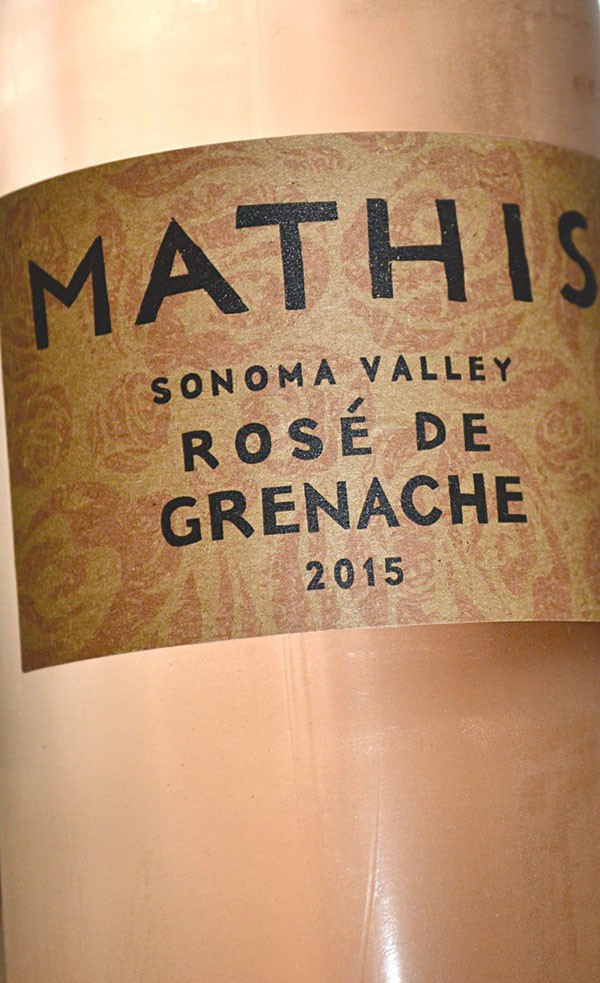
The wines flow freely at Spinster Sisters, thanks to Free Flow Wines. The Napa-based kegmeisters fill and distribute kegs of wine to restaurants so they can dispense a fresh glass every time. Spinster Sisters currently offers 10 wines on tap as part of its eclectic list of wines by the glass, with more offerings by the bottle that include Greek Moschofilero as well as locally produced Chardonnay.

At Bird & the Bottle, owners Terri and Mark Stark are sticking with the bottle but have relieved diners of the feeling that they’re missing out if they order by the glass: all sparkling wines are offered both by the pour and by the bottle. There’s a tariff for the single pour, of course; the 2012 Ramey Claret, for example, is yours to share for $33 by the bottle, or yours alone for $8 by the glass, $1.40 extra given a five-ounce pour.

While many restaurants get smarter and more adventurous with their wine list, offering wines for about twice the retail bottle cost, watch out for old-school zingers like this: big spenders at the Olive Garden chain pay $7.50 for a glass of Chateau Ste. Michelle Riesling—a wine with a street value of $9 per bottle.

Red, Red Wine

0

Napa Valley and Cabernet Sauvignon go together like Seattle and coffee, like Kentucky and bourbon.

With that in mind, the team behind the Napa Valley Performing Arts Center at Lincoln Theater in Yountville is hosting its third annual CabFest Napa Valley to celebrate the rich flavor of Cabernet Sauvignon and the community that creates it. Live music, educational seminars, chef demonstrations and more than a hundred wines and winemakers from Napa Valley will be on hand for the three-day event, kicking off Friday, March 4, with a concert by Nashville songwriter Mat Kearney.

For the past decade, Kearney has been a constant fixture on Billboard Pop charts with critically acclaimed albums and gold-selling singles, like 2009’s “Closer to Love” and 2011’s “Ships in the Night,” heard on the radio and in television shows like Grey’s Anatomy and Parenthood.

In 2012, Kearney stepped into winemaking when he partnered with Napa-based JW Thomas Wine Group to create his own label, Verse & Chorus, available online and at Whole Foods.

Known for his magnetic personality and lively stage show, Kearney is the perfect fit to set the scene for CabFest. VIP and Platinum tickets will get you into the show and then into the exclusive Cigars & Guitars afterparty, where San Francisco band EagleWolfSnake, a popular act from last year’s BottleRock music festival, will perform an acoustic set while premium cigars and wines mix together late into the night.

Saturday starts with winemaker Tom Klassen, known for his
work producing Bordeaux-style wines at Conn Creek Winery in St. Helena, leading a hands-on wine symposium where you’ll learn all about the distinct regions and practices within Napa Valley winemaking before trying your hand at blending several varietals.

Throughout the weekend, winetastings and food pairings will open you up to some of the stunning Cabs offered by award-winning wineries like Robert Mondavi and Antica Napa Valley. There are also boutique tastings with micro-wineries pouring limited-release wines.

Saturday’s main event is an afternoon with author and aficionado Karen MacNeil, who literally wrote the book on wine, The Wine Bible.

Sunday opens with another VIP symposium, this time led by master sommelier Sur Lucero and Mariano Navarro, who runs the vineyards at La Jota and Mt. Brave wineries. This session focuses on the difference between a Cabernet produced with mountain-grown fruit, versus grapes grown on the valley floor.

Also on Sunday, Sequoia Grove Winery demystifies the rules behind wine and food pairing with a demonstration that illustrates which ingredients produce the maximum impact.

One Soul

0

I never will, by any word or act, bow to the shrine of intolerance or admit a right of inquiry into the religious opinions of others

—Thomas Jefferson

We live in difficult times. Bigotry and discrimination have become part of our everyday language. Civil discourse would seem practically impossible. People are looking for someone they can blame for just about anything.

In recent months, we have all seen an upsurge in public hostility toward the Muslim community in America. Presidential candidates have gone as far as calling for the deportation of Muslim citizens from this free country, and too many Americans have cheered at those words.

As a Jew, I know that we have centuries of awareness of what it is like to be a vulnerable minority, whose safety and freedom have often been at risk, and often been violated.

For five years, Congregation Shomrei Torah’s Social Action Committee was part of a Muslim-Jewish dialogue group. We learned that people, regardless of ethnicity, national origin or religion, basically want the same things out of life: a loving family, a chance to raise their children in a decent neighborhood, a good job, a home and to live in peace.

Muslims and Jews have a very long history of friendship, creative collaboration and mutual respect. In our pain over the political situation in Israel and Palestine, we sometimes forget this fact. Now is the time for us to remember.

It has been disturbing and frightening to read how the Muslim community is being scapegoated. On Sunday, March 13, from 3pm to 5pm, at Congregation Ner Shalom in Cotati, the Interfaith Council of Sonoma County will provide the citizens of Sonoma County—those of all faiths, or no faith at all—an opportunity to gather in friendship and support of our Muslim neighbors. There will be education, music and food offered. People will have an opportunity to lend their distinctive voice to the harmony to what it is to be “Of One Soul.” We hope you can join us.

Larry Carlin serves on Congregation Shomrei Torah’s Social Action Committee, and is a member of the Interfaith Council of Sonoma County.

Open Mic is a weekly feature in the ‘Bohemian.’ We welcome your contribution. To have your topical essay of 350 words considered for publication, write op*****@******an.com.

Close Up

Son of Saul is one of the top 10 films of last year, and one of the finest films ever made about the Holocaust. First-time director László Nemes won the 2015 Grand Prize at Cannes for the film.

Son of Saul is impressive in many ways, but the film’s successful blend of close focus and a leafy, transcendental finish is perhaps its most startling accomplishment. Géza Röhrig plays Saul, a Sonderkommando in Auschwitz—a prisoner forced, on threat of death, to dispose of the dead. During the routine of scrubbing bodily fluids off the floor of the gas chamber, Saul discovers something doubly remarkable: a boy who is not only still alive, but who appears to be his own son.

Though the boy dies, something in this shut-down man comes alive. Using favors and pleading, he claims the body in hopes of burying it with the traditional Jewish prayer, the kaddish, to be performed by a rabbi, though there’s some doubt among Saul’s fellow inmates about the identity of the boy. And there’s also a counterpoint: the war is already lost, and the Nazis are accelerating the process of killing, intensifying the violence and fury of the camp.

Son of Saul‘s model might be the Dardennes brothers’ 2002 film The Son, which followed a subject from a distance of about three feet, as he carries out a mysterious, perhaps lethal errand. The superb Röhrig may have the thousand-yard stare of a traumatized man, but what he sees is in very close focus—we’re in his own personal bubble, and the carnage around him is all out of focus. He’s beyond shock. He’s slumped, trying not to look or listen—people not minding their own business get shot faster.

Seeing the Holocaust through his experience makes you feel you’ve seen more of the camp than you’d imagined possible. Saul’s seizure of his own humanity through this insistence of a proper burial is a grand act of defiance.

‘Son of Saul’ is playing at Rialto Cinemas (6868 McKinley St., Sebastopol; 707.525.4840) and Summerfield Cinemas (551 Summerfield Road, Santa Rosa; 707.525.8909).

Girls and Boys

0

Eve Ensler and William Shakespeare might not seem to have a lot in common as playwrights, but according to Leslie McCauley, chair of the theater department at Santa Rosa Junior College, the author of The Vagina Monologues and the creator of numerous cross-dressing Elizabethans are just two sides this year of a gender mirror that forces us all to question what we believe about the lives of men and women, boys and girls.

“It’s so perfect, the way it’s worked out with our spring season,” McCauley says. Beginning this weekend, a cast of seven young women will perform Emotional Creature, Ensler’s powerful exploration of the lives of teenage girls around the world. The play, which resembles the structure of The Vagina Monologues, with the addition of singing, dancing and poetry, is based on actual interviews Ensler conducted with young women. Their stories, some funny and some devastating, run the spectrum from American girls struggling with bullying and “mean girl” clique warfare, to girls from Africa and Bulgaria caught up in actual warfare, kidnapping and sexual slavery.

The cast—Rachael Anderson, Shawna Jackson, Gloria Lo, Abby Volz, Skylaer Palacios, Brooke Maytorena and Siobhan O’Reilly—are called upon to play at least two different women apiece, adopting the accents and mannerisms of their characters. Under the direction of Wendy Wisely, the production—which is not recommended for children under 14—is the first time the show is presented in the North Bay, following its world premiere in Berkeley in 2012.

In April, McCauley herself will direct an all-male cast in Shakespeare’s Twelfth Night, the story of a castaway woman who disguises herself as a boy to remain safe in a strange country, and winds up in the middle of an uproarious love triangle between a rich man and a rich woman.

“In Shakespeare’s day,” McCauley says, “all of the roles were played by men. That was the law. So we’re presenting it as Shakespeare would have.” As 2016 marks the 400th anniversary of Shakespeare’s death, it’s a fine time to put a new spin on the playwright, by spinning Twelfth Night back to its roots.

“I think it’s safe to say this is going to be a very interesting and educational season,” McCauley says.

Beet Surrender

When it comes to dining out, it can suck to be a vegetarian. While most restaurants offer a few token meatless dishes, they tend to hold the creativity as well as the meat. You know the stuff—pasta primavera, cheese pizza, salad. Then there are those restaurants that serve highly processed, textured vegetable protein and tofu dishes that masquerade as meat—mock...

Tasty

It's still two weeks away, but the popular Flavor! Napa Valley festival is so packed with wine and food events, it's going to take some time to schedule everything you'll want to taste and try. Taking place March 16–20, this annual celebration of the farm-to-table fare and wine that only Napa Valley can deliver ranges from celebrity chef demonstrations to...

Satisfaction

I had a doctor friend years ago who hyped me to the secret portent of the expression "Everything in moderation." Most people, he would say, focus on the moderation part, as a warning about the dangers of excessive consumption—but almost nobody tunes into the positive, permissive message that's also embedded in the maxim: If you can swing the moderation part...

Debriefer: March 2, 2016

THE SPRAWL There's a big meeting this week in Santa Rosa to kick-start a review of the county's urban-growth boundaries, a set of eight no-growth zones designed, among other things, to ensure that Santa Rosa and its surrounding towns don't become one gigantic, sprawling, overpopulated mess. These slivers and stretches of land are part of an urban greenbelt system in place...

Cannabis, Inc.

For years, David Hua encountered problems when he ordered medical marijuana deliveries. Online menus were often outdated. Ordering over the phone took forever. Sending requests by email risked compromising private data. And delivery dudes were notoriously unreliable. "Sometimes it took an hour, sometimes longer, sometimes shorter, but you never really know," he says. "The larger windows made it difficult to...

By the Glass

The worst horrors of restaurant wine by the glass may be largely behind us—at least in Sonoma and Napa wine country—but here and there you can still order up bathwater-warm wine that smells like salad dressing, poured from a bottle that's been stashed next to the refrigerator into a stubby little glass filled to the brim. You can't swirl...

Red, Red Wine

Napa Valley and Cabernet Sauvignon go together like Seattle and coffee, like Kentucky and bourbon. With that in mind, the team behind the Napa Valley Performing Arts Center at Lincoln Theater in Yountville is hosting its third annual CabFest Napa Valley to celebrate the rich flavor of Cabernet Sauvignon and the community that creates it. Live music, educational seminars, chef...

One Soul

I never will, by any word or act, bow to the shrine of intolerance or admit a right of inquiry into the religious opinions of others —Thomas Jefferson We live in difficult times. Bigotry and discrimination have become part of our everyday language. Civil discourse would seem practically impossible. People are looking for someone they can blame for just about anything. In...

Close Up

Son of Saul is one of the top 10 films of last year, and one of the finest films ever made about the Holocaust. First-time director László Nemes won the 2015 Grand Prize at Cannes for the film. Son of Saul is impressive in many ways, but the film's successful blend of close focus and a leafy, transcendental finish is...

Girls and Boys

Eve Ensler and William Shakespeare might not seem to have a lot in common as playwrights, but according to Leslie McCauley, chair of the theater department at Santa Rosa Junior College, the author of The Vagina Monologues and the creator of numerous cross-dressing Elizabethans are just two sides this year of a gender mirror that forces us all to...
11,084FansLike
4,606FollowersFollow
6,928FollowersFollow