VHS Plays in Santa Rosa

12742719_1099784283374910_8466982917550092661_n
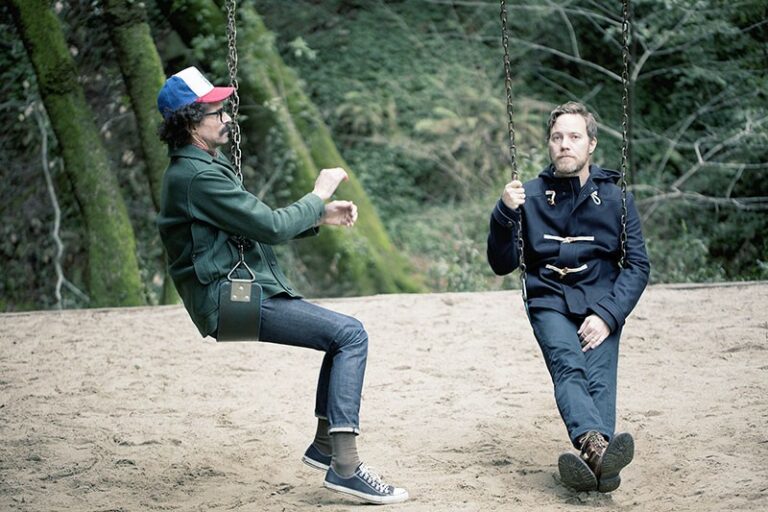
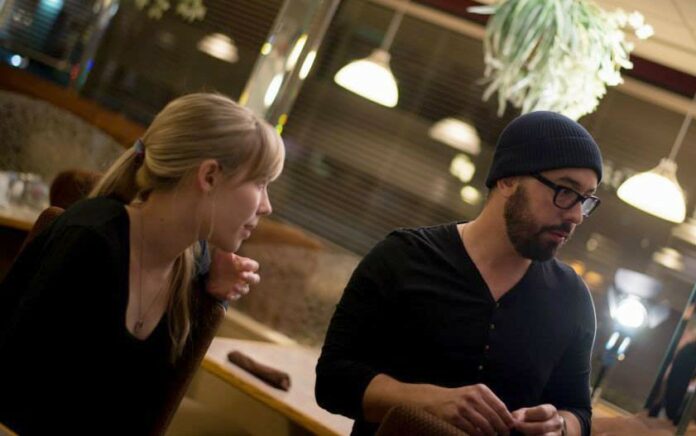
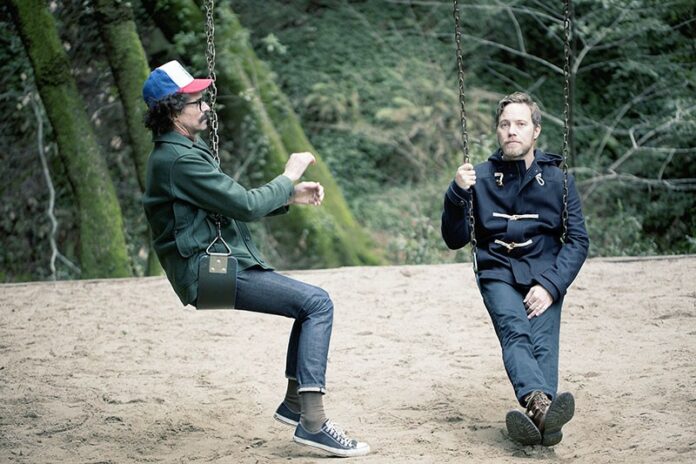
Seattle punk band  Violent Human System is ok with you just calling them VHS. It helps that the acronym harkens back to a vintage, primitive design, much like way the gritty four-piece makes their music. After a handful of self-released 7″ records and EPs, VHS signed to Seattle-indie label Suicide Squeeze last year and are releasing their debut full-length, Gift of Life, later this year.
This week, VHS is taking their dark, rowdy and infectious punk rock on the road for a West Coast tour that lands them in Santa Rosa this Saturday, Feb 20, for a show at Atlas Coffee Company. Joining them on the bill is excellent experimental Oakland post-rock band Teal and Santa Rosa’s own doom-synth scamps Service. This one’s going to be a blast, so get down to Atlas Coffee early, doors are at 6:30pm. $6. 300 South A St.
Below, listen to VHS’s new single, “Wheelchair,” off the upcoming Gift of Life. You can pre-order the album here.

Into the Woods

It may not be doing Robert Eggers’ The Witch a favor to describe it as a terrifying movie. It’s a superior, elegantly moody horror film, more substantial than frightful, about a family in colonial Massachusetts turning against itself. The possibility of reasonable explanations fades as the supernatural becomes natural.

Set in 1630, the film begins with a family of six being exiled from the Plimoth Plantation for religious nonconformity. A horse-drawn wagon carts them out of town and drops them into new pastures. The refuge lasts only a short while. After the crops fail, the family is driven into the forbidding woods to hunt.

Minding her baby sister one day, thirteenish Thomasin (Anya Taylor-Joy) plays peekaboo. Though her eyes are covered for only a second, the baby vanishes. Eggers cuts to a crone’s sagging arm, clutching a knife over the naked baby.

Dark omens abound. After meeting a mysterious red-cloaked woman in the woods, Thomasin’s elder brother, Caleb (Harvey Scrimshaw), returns to the farm. Upon seeing him, Calebs’ father describes him as “pale as death, naked as sin and witched.”

The pale colors add to the film’s sense of doom. Against this muted palette, fresh blood pops out of the screen. One warning: It’s said that an English speaker of today, traveling back in time, could only understand conversations if they went back as far back as the Shakespearean era. Shakespeare hadn’t been long dead in 1630 and the script is full of dialogue you strain to understand. Still, it’s startling to see a movie with such an appreciation and aesthetic understanding of this too-infrequently filmed era.

‘The Witch’ is playing at Century Northgate, 7000 Northgate Drive,
San Rafael. 415.491.1314.

Arabian Nights

0

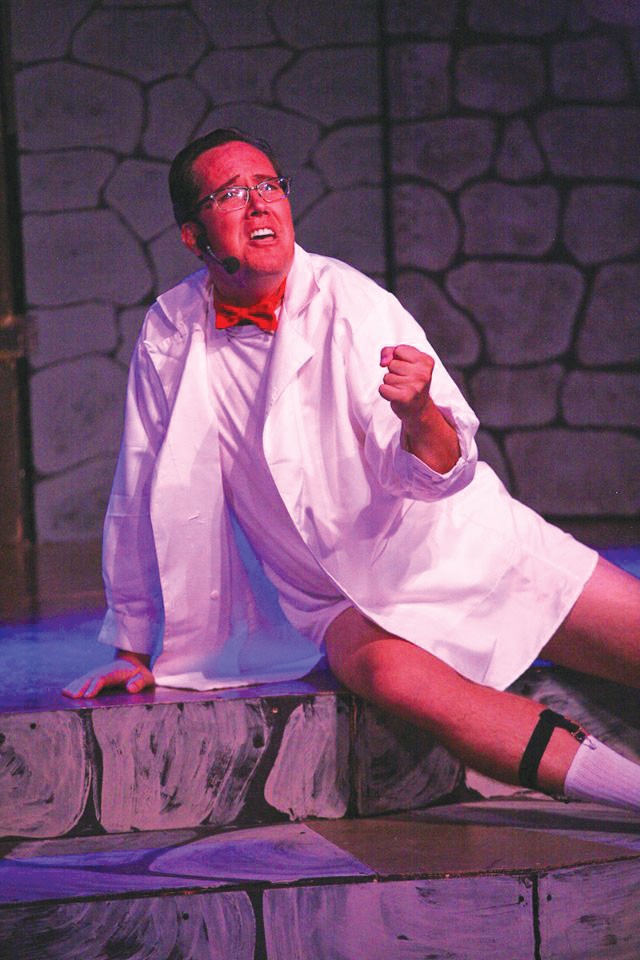
“Princes come, princes go,” sings Omar Kayam at the start of the long-lost musical Kismet, now playing at Spreckels Performing Arts Center. The same sentiment can be said of Broadway shows like this one. A huge hit in 1953, the Arabian-themed romance is largely unknown today.

In Spreckels Theater Company’s vibrant, nostalgia-driven new production—crammed full of vibrant costumes, outstanding singing, and lush orchestral music—it becomes simultaneously clear why the show is of such limited interest today, and why that’s also a bit of a shame.
Set in ancient Bagdad during the time of poet Omar Kayam (Jeremy Berrick), the musical blends original songs by Robert Wright and George Forest with reworked pieces by the 19th century Russian composer Alexander Borodin, whose 1890 opera Prince Igor was largely rewritten for Kismet, adding a new story and wholly original lyrics to Borodin’s sweeping melodies.

Kismet’s story, based on a non-musical stage play from 1911, follows a poor poet (Tim Setzer, charmingly spot-on), who arrives in Bagdad with his daughter Marsinah (an electrifyingly good Carmen Mitchell) just as the prince (a somewhat stiff but gorgeously voiced Jacob Bronson) is reluctantly shopping for a princess, with candidates from surrounding kingdoms arriving by the score. Soon arrested for a petty crime, the poet attempts to save himself from the harsh punishments of the law-enforcing Wazir (Harry Duke, in a hilarious and richly entertaining performance), by passing himself off as a powerful sorcerer, simultaneously pursuing a reckless affair with the Wazir’s primary wife LaLume (Brenda Reed, sexy and scary all at once).

Meanwhile, Marsinah accidentally meets the prince, who, for various slightly unbelievable reasons, assumes she’s a visiting princess, just as she assumes that he’s a gardener. They fall in love to the show’s most recognizable tune, ‘Stranger in Paradise’, setting up a series of events that become frequently tangled, and a bit silly, right up until the stories slightly shocking climax.

In the end, Kismet turns out to be not much of a play, with a dated premise, thin characters and a preposterous plot. Still, the cast is marvelous, and as directed by Gene Abravaya with a sweet simplicity and an emphasis on the lovely but hardly memorable music, there is a bit of welcome sorcery on display here, bringing a lost artifact of from the Broadway heydays back to life with plenty of warmth, color, contagious enthusiasm and genuine love.

★★★½

Shacked Up

0

There’s a sturdy and well-appointed beach shack along the California coast. The precise details of its location, should they be publicized, would likely mean the end of the shack at the hands of the Man, so let’s just say that it is somewhere between Santa Cruz and Jenner—or, even better, somewhere between San Diego and the Oregon border. It’s out there—way the freak out there. Don’t try to find it, and if you do . . . shhh. It’s our little secret.

It takes a bit of work to get to this small, driftwood shack, built above the high-tide line and nestled in a wee cove. Since its construction commenced last January, it has survived the El Niño and king tides, crashing driftwood jumbles, high winds, tumbling boulders, scouring sun and the erosion, always the erosion. You’ve heard of a blowdown stack—this is a blowdown shack, a well-built domicile for a human in search of a place to blow off steam or crash for the night, a special place. But I can’t stress this enough: shhh, don’t tell the Coastal Commission about it—the builder didn’t have the proper permits!

The shack’s contents speak to a simple life lived on the square. There are Dick Francis and Carl Hiaasen novels on a shelf, dog-eared and a little sodden. There are a couple of first-aid kits, fully tricked out with ointments and cold packs for any low-level cut or scrape or twisted ankle that might befall a visitor. A journal, soaked from the rain, is stashed in a cooler and filled with wonder and gratitude and loopy penmanship. It tells of people who came a long distance and enjoyed the place, and left something behind or did something to improve the lot of humankind. One characteristic entry reads: All good manfolk and womanfolk are welcome here to share the bounty of the sea with the various native seabirds, pelicans, osprey, terns and seagulls fishing from these waters. Watch for seals also fishing in the kelp beds, and faraway sailboats going where the winds take them . . .

The shack’s builder also constructed a perch on the roof that provides a million-dollar view of the ocean. But let’s not put a dollar sign on everything.

I’ve come to this shack several times to chill out and stare at the Pacific Ocean awhile. Others come for overnight good times on the driftwood bunk. I love me a good beach shack, and have built a few in my time. Visitors to the shack occupy a key place in the freedom-trail culture of the nook, experts in sussing and creating these hidden slipstreams of refuge for wild-living fun-seekers, outlaw hikers and marginal artist-campers on the scruff wind, trying to stay on the coast at all costs—with an emphasis on the cost. I am a proud, unreconstructed beach bum, and these are my people.

The shack is a cultural signifier and a furtive line in the sand that denotes, however anonymously, the raging “class” issue of beach access in California, now under fire as the powerful state Coastal Commission moved to axe its popular executive director, Charles Lester, last week. That move has raised, as they say, serious questions about the future of the 1972 Coastal Act that set a course for free public access to the California coastline (and which created the commission to ensure that access).

Lester supporters, who came out in droves to support him last week, saw the ouster as part of a concerted effort to denude the Coastal Act of its radical push for free access to all of California’s beaches, despite one’s income, race or smelly feet. They viewed it as a putsch engineered by Gov. Jerry Brown, in the service of developers itching to take advantage of the state’s suddenly robust economy, or at least that’s what the luxe-humping California bureau of the New York Times suggested. It was a coup!

[page]

As the Coastal Commission worried over the Lester firing and insisted that, no, this was a personnel issue centered on Lester’s management style, his organizational shortfalls, that sort of thing, not a “coup”—I bounced out to the shack on a breezy, clear day. The tide was on the ebb—you can’t get here on the flood without risking peril—and I spent some time reading through the journal from the cooler that also contained a couple of cans of tuna fish, a lantern, instructions on how to catch a crab and a few other useful odds and edible ends.

A prior visitor had arranged rain-beating tarps inside the shack and on the roof, which now bulged with gathered water in a couple of places. I emptied the tarps and sloshed water all over myself doing so. Classic. Ate an orange, took a bracing 30-second plunge in the surf, and, after a while, I sealed the journal in a plastic bag and sat and watched and listened. The only sound that you could hear was the crashing ocean, which is the only sound that I wanted to hear.

And so as humanity teeters on the presumptive edge of a self-made oblivion, the poignancy of the must-have coastal life is, more and more, experienced in the sharp relief of Mother Nature taking her vengeance, even if she’s just doing her thang. We are all eroding together—all of us, rich and poor—and so who will have the front-row, end-times seat atop a bluff or along the shore when the Big Erosion really sets in? Well, rich people, that’s who. And so I declare: beach-bum Bolsheviks of the world, unite!

I made my way back home from the shack and, later that night, wondered if anyone had written about it before. I had heard that there had been an encampment of several such shacks near this spot in the good ol’ days, but that once word got out, the Man came and tore them down.

At this shack, people are packing it in, and they are packing it out. It truly is a communal space, a temporary autonomous zone for drifters and wayfarers, and which is doing zero harm to the environment. Why does the Man care so much about what marginal, peaceful people are doing with their time?

Because it’s an outlaw beachside hotel, and everyone else pays their share to enjoy the California coast? Not according to the Coastal Act’s mandate. Is it a Bernie Sanders free-stuff shack for lazy commies as we stand at the cusp of a national
Dr. Zhivago moment? Seize the property and redistribute to the beach proletariat! Perhaps. But for now, it takes work and a high tolerance for a life lived rugged to fully appreciate this shack, to find it. It is a populist pop-up redoubt, a Trump Tower for the rest of us. Leave us alone.

The shack speaks to exactly what went down in this recent Coastal Commission set-to about the coast: who owns the view, who governs access to a sacred solitude that often arrives as entitlement on wings of dollars?

I wanted to know if anyone had written about the shack, so I typed a few words into the Google machine and was directed to a “pirate shack” on a vacation home-sharing platform. Wow, I thought—somebody is renting this place out?!

Of course not. The Google offering was a quiet, remote, top-of-the-bluff shack down some goat trail in Magical Marin, and it was listed for—wait for it—$285 a night. There are those who will pay that fee, claim the world-class view for themselves and resent the hell out of anybody who tries to abscond with it without paying their “fair” share for that selfsame view.

Too bad for those terrorists of the view; we have our shack. It will never make the pages of Architectural Digest. It’s rough-hewn and extremely beachy. It is, by definition, ramshackle.

We’re all out here on the edge, but just because your name is the Edge—well, that doesn’t give you special privileges. Or maybe it does. Last year, the Coastal Commission gave a very high-profile green light to the U2 guitarist who, after a 10-year battle with his adopted California and its beach bureaucrats, got approval for a five-building manse-spread on what had been a pristine Malibu bluff. In the course of fighting for the building permits, the Edge donated $1 million to a local conservancy in exchange for them not weighing in on his proposal—which is to say that he paid them hush money—but shhh, don’t tell anyone, the Edge is a good liberal. He don’t mean no harm.

[page]

Meanwhile, our humble little shack stands proud, in the name of a different kind of love: the love for unfettered and free access to the beach without payoffs and ultra-luxe vulgarities. The Coastal Commission would likely plotz at the idea of a free hang-space for free-minded souls to hang their freak flag, smoke some Mother Nature and get naked in the sand. But this is exactly the constituency that drove the emergence of the Coastal Act in the first place, and the beach-bum constituency ought to be front and center in any discussion about the future of access to California’s beaches.

Here’s a little perspective on the vast California coastline. I’ve done a lot of outlaw hiking and camping over the years, most of it on the East Coast. To that end, I used to spend a lot of time traipsing around the variously accessible beaches of Long Island.

One time, about 20 years ago, I hiked the entire South Shore of the island, mostly along the barrier beaches that would later get pummeled during Hurricane Sandy. One thing I learned is that when you carry a fishing pole, you’re not camping (illegal), you’re fishing (legal), and that’s cool. Most nights along that hike, I found a spot in the dunes that was removed from the prying headlights of roving beach-buggies occupied by the Man. They do not take kindly to bums on the beaches of Long Island.

One night it was around twilight, and I was in the deep, deep Hamptons, which, for our purposes, can be considered the Malibu of the Long Island coastline. Very rich, very exclusive and very, very entitled. I was a little concerned at the lack of available furtive campsites, as the houses along this stretch are right up on the beach.

The general rule of beach access here and in New York is that even if a beach is indeed “private,” all are “public” below the high-tide mark. But you can’t realistically sleep in the frothing surf line. Even if you could, you’d first have to get on the beach, and the high-toned Hitlers of the Hamptons figured out long ago that the best way to deal with the private-not-private beach issue is by putting severe restrictions on who can park where, and when. You can’t, not there, never. Otherwise, enjoy the beach.

It’s a different story in California, where cars are allowed to park along Highway 1, and whose drivers can then find their way to the nearest accessible beach, provided some entitled terrorist of the view hasn’t put up an illegal “No Trespassing” sign.

Yes, I’ve got a real problem with people who believe that when they buy that beachside house, they also buy the view that comes along with it. To that end, last year the state took some measures in defense of the Coastal Act’s mandate and gave its OK to the Coastal Commission to start throwing fines at people who illegally block access to public beaches with sneaky signage and the like.

Anyway, it was twilight deep in the superluxe Hamptons and I couldn’t find a place on the beach to camp out, so I trudged a little farther to a point where the houses thinned out and there was a lot of what looked like open space in the dunes.

It looked promising, and it was. I found the perfect outlaw place to camp, hidden from view: in a sandy dip in the dunes, out of eyeshot. Not safe enough to pitch the tent, but by now I was used to roughing it under the stars.

Yeah, well. I woke up on a sultry late-August morning to a golden Labrador bounding and barking around the outlaw campsite. I popped up out of the sleeping bag and looked around and saw a Latino man pushing a lawnmower nearby. He looked at me, startled, and then quickly looked the other way.

I then realized that I was camped out in a sand trap on a golf course at the Maidstone Club, whose ocean-fronting golf course, like Pebble Beach in Monterey, is one of the most exclusive in the world.

They’ll shoot me if they find me here, is what I thought. I scooped my gear into the pack and headed for the beach and kept on with the journey after some cowboy coffee and oranges on a rock jetty. That night, I reached Montauk, known affectionately-ironically by its locals as the End.

[page]

My adopted hometown of Bolinas has an interesting corollary in Montauk. Both towns are surrounded by public land, and the development has been limited to a kind of core central area. But the story of Montauk, and who trespassed there and drove out the town’s longstanding middle-class citizenry, is really a cautionary tale as the California economy lusts after a blufftop housing construction boom.

I lived in Montauk off and on for a bunch of years, fishing and living the good life, and I was out there one early spring trying to, you know, scrape out a month or two of odd jobs before the fishing season commenced.

I had rented an off-season oceanfront hotel room that was pretty cheap, but the cash was running out fast and my deckhand job wouldn’t kick in for a month or so, so one day I decided to head out to a remote former fish-camp for an adventure. I packed a simple kit: a gallon of water, some herb, a bag of peanuts. That was about it. I had this vague notion of camping out between the boulders or up in the woods, which out there are called Hither Hills. It’s all very California-like, of the less rugged and more low-slung variety; the bluffs are less tall, the water is warmer.

I spent the day building a shack out of washed-up lobster traps pushed ashore in the winter, and filled it in with other beach-a-brac: bits of fiberglass bulkhead, driftwood, whatever was available. I called the shack the Harry Crews shack because I had a copy of the novelist’s A Feast of Snakes in my backpack.

After a while, the sun went down and I realized that this shack was not going to keep me warm. Fires are a big no-no out here, but the hell with that. I burned lots and lots of dry wood trying to stay warm through the night, woke up and headed right back to the hotel.

It had to be at least a year later when I was working on a head boat for the summer and back in my usual summer rental. A friend came to visit, and I said, hey, let’s go see what’s happening with the Harry Crews shack.

We got there and it was lost to the tides and storms, but the book I had left—I found a weathered section of it back in the dune grass. It was the only reminder that a shack had been there. And up the bluff behind where the shack had been, the concrete foundation of a long-ago abandoned fisherman’s shack hung off the edge.

Old fisherman shacks, that’s my kind of living. Montauk and Bolinas are both fishing-and-surfing wilderness towns—but one very big difference is that in Montauk, nearly every available inch of developable land now has a house on it. Montauk used to be the kind of place where even the developed areas had all sorts of natural interzones; you could hike through the woods from the beach to the bar, until the woods were bulldozed by developers to make way for the Hamptons money.

In Bolinas, there’s a road called Ocean Parkway that has slipped into the ocean in various sections due to the erosion, so the road is chopped like a Don’t Tread on Me snake as it wends around the Big Mesa. There’s a house that I found to be fascinating, alluring, and if I had any money in the bank, I would have bought it. And, yes, it’s an old fisherman’s shack at the end of a section of the Ocean Parkway that is slipping back into the Pacific, but before I could save my pennies (about 10 million of them), the house was sold to some young bearded sort of fellow.

I have to account for my raging class resentment here, but the person who bought the house almost immediately cleared out all the underbrush, stuck a trampoline on the property and, right at the corner of it that was falling into the ocean, built a little viewing-hangout platform with a canvas roof.

Pretty cool, except the new owner also hung a couple “Private Property: No Trespassing” signs along the fence and on the viewing platform. From my perspective, that’s a hate crime. The signs were torn down and thrown over the cliff. I recounted the story to one of the High Holy Hippies of Bolinas, who made a sign for me that read, “No ‘No Trespassing’ Signs (Goes Without Saying),” and which the Coastal Commission should enshrine as its new motto.

Bolinas being a small town with a super-militant attitude about obnoxious signage, the owner has stopped replacing or repairing those “No Trespassing” signs—and I’ve yet to see a person ascend that platform. Except me. That’s a killer view, dude!

High Hopes

0

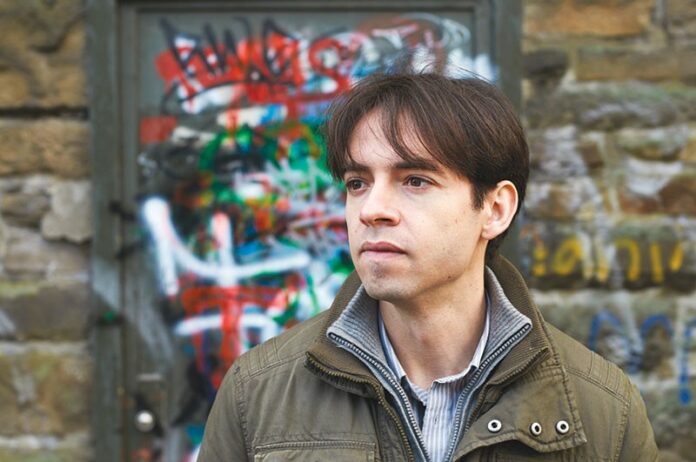
The Kyle Martin Band’s new album, High and Dry, lives up to its name with a dusty, dirty and hotter-than-blazes country-rock sound. And while the nine-track trek largely sticks to the straightforward rock and roll path, the record connects to listeners with memorable hooks and resonating lyrics about longing hearts and nostalgic memories.

Kyle Martin, a Santa Rosa native, grew up in a musical family. His mother, Nancy Pettitt-Martin, plays drums to this day and his dad, Craig Martin, played in San Francisco rock revue band Butch Whacks & the Glass Packs until his passing in 2007.

That was the same year Kyle Martin became a founding member and driving force of beloved southwest Santa Rosa venue the Boogie Room and its campfire-like sing-alongs.

Now the Boogie Room is history, and at 28 years old and living in downtown Santa Rosa, Martin says he is trying to return to his roots.

“This new record really speaks to that,” he says. “I’m pulling from all the different experiences I’ve had. This record is heavier than my first solo record. It’s a nod to my early days in punk-rock bands, little sprinkles of that kind of rock.”

His first solo record, released in 2012, had a more traditional classic rock sound. “It was like I was trying to please an older generation,” Martin says. “I was living in West County trying to make music for parents.”

“This new record is like when it’s past 10 o’clock, and the all-ages venues are closed,” he says. “This one’s a little more like a bar banter, a little rough, a little edgier.”

Martin achieves this rousing atmosphere on High and Dry by using all live takes and original vocals, recorded late last year at Jackalope Studios in Santa Rosa in two sweat-soaked days. Martin’s band consists of drummer Taylor Cuffie, keyboardist Nate Dittle and bassist Kevin Cole, all of whom Martin calls great players.

Martin’s other passion is farming, and, lyrically, High and Dry speaks not only to California’s drought but also to what is soon-to-be its largest cash crop, marijuana. The opening track, “Bone Ranch Village,” is about an actual ranch in San Bernardino and the people who cultivate weed on the parched land. “Real Estate on Mars” imagines a desolate and lonely environment as the setting for self-discovery. Other tracks, like “Creeks and Hills” and “I Picked a Flower,” offer a more hopeful look at the beauty of our natural surroundings.

“That’s what I like,” says Martin. “That’s what I want to honor.”

The Kyle Martin Band plays a record-release show for ‘High and Dry’ on Saturday, Feb. 20, at the Last Record Store, 1899-A Mendocino Ave., Santa Rosa. 2pm. Free. 707.525.1963.

Reel Empowerment

0

Overlooking Bennett Valley in eastern Santa Rosa since 1974, the progressive Congregation Shomrei Torah is now the largest Jewish congregation in Sonoma County, propelled by a dedication to learning programs and social-action committees open to people of all spiritual and social interests.

This weekend, the congregation’s Social Action Goes to the Movies film series opens its 2016 season with the theme “Mental Illness . . . It Takes a Community,” with a screening of the powerful documentary A Reason to Live. Produced in 2008, the short doc examines the sensitive subject of teen depression and suicide with thoughtful and personal stories told by young people and families of all walks of life.

Following the screening, a panel discussion and Q&A will feature representatives from the National Alliance on Mental Illness and the Sonoma County Crisis Assessment, Prevention and Education Team.

In the following months, the film series will also present films ranging from adolescent misunderstandings of masculinity to the crisis of U.S. soldiers suffering from PTSD. The series wraps in May with a community forum on depression that includes several Sonoma County mental-health experts.

A Reason to Live screens on Saturday,
Feb. 20, at Congregation Shomrei Torah, 2600 Bennett Valley Road, Santa Rosa. 7:30pm. Donations accepted. 707.578.5519.

Little Wonder

0

The first thing I noticed when a box of La Pitchoune wines showed up was that I’d never heard of ’em. But I’d sure heard of the vineyards that they’re working with, with names like Pratt and Van der Kamp. Ever wondered how relative unknowns can make a splash with such vineyard designates of renown?

It is partly to do with the money to buy the grapes, of course—owners Tracy and Peter Joachim Nielsen have backgrounds in marketing and business—but it comes down to wine country connections. Tracy wanted to get into the wine business, but everyone from barrel makers to cork companies turned her away for lack of experience in the industry, until she met up with winemaker Andrew Berge at a wine party. “He wanted to get out of what he was doing at the time, and I wanted to get in,” Nielson says. Taking on Berge as a partner, they started the bonded winery with five tons of Pinot Noir. Now they’re up to 20, made at Vinify Wine Services in Santa Rosa. With a laugh, Nielsen says she’s been promoted to assistant winemaker.

When I see Chenoweth Vineyards, I think of the Sonoma winery Patz & Hall, which makes a vineyard-designate Pinot Noir of that name. It’s hard to believe the 2013 Chenoweth Vineyards Sonoma Coast Chardonnay ($48) was fermented in all-neutral oak. The cool but toasty aroma first brings to mind a shortbread cookie by the hearth on a winter’s evening, but the season soon turns in the glass, and our cookie is instead roasting on the beach, slathered in coconut lotion. Pineapple flavor picks up the tropical theme, while crisp, just-ripe pear freshens up the butterscotch candy finish.

The 1.25-acre Holder Vineyard would have been hard to find if it weren’t for the Chenoweth connection. Savory notes of marjoram and sandalwood hardly hint at the exuberant, sweet palate of cherry-raspberry-cranberry sauce that makes the 2013 Holder Vineyard Russian River Valley Pinot Noir ($68) such a pleasure.

English Hill is certainly an obscure vineyard designate. It just happens that Bohème’s Kurt Beitler, who farms this eight-acre vineyard in a windy area south of Sebastopol, is a friend of Berge. Folks who know that wading past a weedy, slightly reductive initial aroma can lead to the best kinds of Pinot complexity will want to follow the 2013 English Hill Vineyard Sonoma Coast Pinot Noir ($58) to its comparatively more tannic conclusion. Along the way, flowering mustard, clove oil and suede aromas weave in and out, while deep flavors of plum and pomegranate lacquer the palate.

The 2013 Sonoma Coast Pinot Noir ($48) seems like a less intense selection of the English Hill, but the baking-spice notes and cranberry, plum and strawberry flavors invite another sip.

Tasting and cheese pairing by appointment only; $30. Call 415.272.5135 or email tn******@***************ry.com.

The Munchies Kill

0

I had a friend named Fred. I say had because he’s gone. Fred was a medical pot smoker. He didn’t like edibles, because of the length of the high, whereas smoking was a nice up and a soft landing down.

What Fred didn’t know, and what so many do not know, is that there is a nerve at the bottom of the stomach called the vagus nerve. This nerve, when stimulated by cannabis, cries out for sweets. In Fred’s case, he would have three or four Reese’s Peanut Butter Cups, and junk-food snacks like potato chips. There is nothing wrong with smoking or eating herb, but the uncontrollable munchies can cause health problems unrelated to the actual ingestion or use of the herbal substance.

Fred went to his doctor for his yearly checkup and blood tests. The doctor told him that he showed the beginning signs of type 2 diabetes. His doctor also mentioned that with diabetes one can lose one’s eyesight and could be looking at an amputated limb if his condition worsened and he didn’t get it under control. Fred paid no attention and continued smoking and eating candy; he added sweeteners to his coffee and he drank soda.

When I saw him after a year had gone by, Fred told me he was dealing with diabetes, and that he was depressed. After another half-a-year went by, his eyesight was seriously affected and he was still depressed. To make a short story shorter, Fred bought a rifle. He sat in his favorite TV chair, put the gun barrel in his mouth and pulled the trigger. Medical pot didn’t cause his demise; but the munchies did. I wonder how many people are burdened by the curse of the munchies? Probably way too many.

Michael Bobier is a Santa Rosa resident.

Open Mic is a weekly feature in the ‘Bohemian.’ We welcome your contribution. To have your topical essay of 350 words considered for publication, write op*****@******an.com.

Letters to the Editor: February 17, 2016

A Resilient World

I really appreciated the excellent article “Sacred Ground” (Feb. 10). In this time of self-centered politics, the leadership that Greg Sarris and the Graton Rancheria folks are exhibiting is truly amazing. By stepping into the controversial casino world, earning the big money and then redirecting it to help with social services and environmental protections, they demonstrate one pathway toward a more resilient world.

Sebastopol

No GMO

I applaud Shepherd Bliss’ article (Open Mic, Feb. 10) about the health dangers of Monsanto’s Roundup and the California EPA for labeling glyphosate, a Roundup ingredient, as carcinogenic. Let’s now ban GMO crop cultivation in Sonoma County, as 38 countries and five counties in California (Marin, Santa Cruz, Mendocino, Trinity, Humboldt) and two in Oregon have already done. This alone will reduce the amount of glyphosate being sprayed in our county, and it will also protect non-GMO farms, pastures and cover crops from cross-contamination. It will reduce the amount of health problems linked to GMOs by animal studies, according to the American Academy of Environmental Medicine.

Sign the petition to get the Sonoma County Transgenic Contamination Prevention Ordinance on the November 2016 ballot, which would prohibit the propagation, cultivation, raising and growing of genetically engineered organisms. Read the initiative and volunteer, donate or endorse at gmofreesonomacounty.com.

We can improve our farms’ and families’ health.

Santa Rosa

Forest for the Trees

Like to say thank you to Terry Dirks and L. Lewis who agreed with me regarding the trees in downtown Santa Rosa (Rhapsodies & Rants, Feb. 10). It is still hard for me to believe they are going to cut down these beautiful long-living trees. I feel they are the anchor of our downtown. City leaders seem to look at a quick fix instead of looking at different options. Yes, I know the plan to revitalize downtown Santa Rosa has been on the table for years, but I cannot help think this was another quick fix to get it off the table.

It reminds me of when, years ago, we almost lost the building that now houses Barnes & Noble because city leaders felt it could not be saved because of an asbestos problem. I even spoke to the owner, and he agreed with the city leaders. The plan was to tear it down and put in another parking lot. But at the very last minute a builder from San Francisco disagreed with them. He bought the building and made it what it is today.

I cannot see myself visiting the downtown area because of the noise and pollution that this will bring to our city. I have stopped honoring the merchants whom I used to shop at for years. Sad, very, very sad that city leaders and merchants put their wealth ahead of our city’s history. These tress have been there as long as I can remember.

Santa Rosa

Write to us at le*****@******an.com.

On the Run

0

For more than 14,000 years, humans have had a close relationship with wild salmon.

Along the Pacific Coast, natives harvested thousands of adult salmon each fall from their spawning grounds in local rivers and streams, a catch that fed their families throughout the year.

While many cultures in the Pacific Northwest and Alaska are still deeply wedded to the salmon resource, California’s grasp has grown increasingly slippery, with only a small percentage of its historical natural breeding population remaining.

Salmon’s legacy for Californians goes far beyond its estimated $1.4 billion fishery or its classification as one of the most nutritious foods in the world: the fish also provide a vital transfer of nutrients and energy from the ocean back to the freshwater ecosystems where they were born.

“People have done studies to show that you can identify ocean-derived nutrients from salmon in many dozens of different species, like kingfishers or water ouzels, fish-eating ducks, foxes, raccoons, coyotes—all the way up to the big predators that used to live here but are gone, like grizzly bears,” says Nate Mantua, a research scientist for the National Oceanic and Atmospheric Administration’s (NOAA) Southwest Fisheries Science Center in Santa Cruz.

Accumulating 95 percent of their biomass at sea, adult Pacific salmon die after they spawn, and their nutrient-rich carcasses, gametes (mature eggs and sperm) and metabolical waste return to the land. “It’s fascinating that, over the eons, a lot of fertilizer was provided by these dead salmon, so a lot of the wine grapes and a lot of the agriculture inland by the rivers was fertilized by salmon for a long time,” says Randy Repass of the Golden Gate Salmon Association (GGSA), a coalition of salmon advocates based in Petaluma.

Salmon’s yearly return props up an entire food web, replenishing bacteria and algae, bugs and small fish, and fueling plant growth with deposits of nitrogen and phosphorus. The Chinook (aka king), the largest salmon species (adults often exceed 40 pounds and are capable of growing to 120 pounds), is the pride and joy of California’s salmon fishery. Not so long ago, the Central Valley watershed was one of the biggest producers of naturally breeding Chinook salmon in the world, second only to the Columbia River, with the Klamath River another big California contributor. Driven by the Sacramento and San Joaquin river systems, the Central Valley nursed a ballpark average of a few million salmon per year, emerging each spring out of the Sacramento-San Joaquin Delta, says Mantua.

“Today, natural production—maybe in a good year—is in the hundred thousand or hundreds of thousands,” Mantua says. “So, yeah, it’s a few percent of the historical population.”

In addition to cold ocean water and an ample food supply at sea, salmon require cold river water that drains all the way to the sea, and, during their early life, a delta habitat. Salmon eggs do not survive in water warmer than 56 degrees, which is why adult fish ready to spawn instinctively head toward the cold, upper headwaters and tributaries coming out of the snow-packed mountains.

Development in the 1940s through ’60s, and especially the constructions of dams like the Shasta Dam, built in 1943 on the Sacramento River, played a key role in the near annihilation of the long-standing fish stock. “When they built the big dams in California, they basically blocked off access to 80 or 90 percent of the habitat salmon historically used to reproduce in California,” says John McManus, executive director of the GGSA.

California’s four salmon runs—fall, late-fall, winter and spring—are named for the time of year the fish return from the open ocean as adults, after about two to five years spent feasting on smaller fish and krill at sea, and back under the Golden Gate Bridge to the Sacramento-San Joaquin Delta. As of 1989, the winter run had joined the ranks of 130 other endangered and threatened marine species when it was listed as an endangered species under the Federal Endangered Species Act. Ten years later, the spring run was listed as threatened.

[page]

“When we have a really good fishing year out in the ocean, it’s because of two things,” McManus says. “We have a good contribution from natural spawning salmon coming out of the Central Valley, and we have a good contribution from the hatcheries.”

Following a period of abundance in the late ’80s, and then again in the late ’90s and early 2000s, California’s salmon season was closed in 2008 and 2009, resulting from a population crash that NOAA scientists found was due to a lack of upwelling and the subsequent low production of krill, one of salmon’s dietary staples.

“The population has undergone a modest rebound since then, but it still has not reached the abundance that we observed in the late ’90s and early 2000s,” says Michael O’Farrell, a research fish biologist at the NOAA.

While there has been an increase in small sardines, a potential good sign for salmon, Greg Ambiel, who has been fishing salmon locally for 30 years, is not hedging any bets for this coming season.

“The fish are being killed in the Central Valley before they get a chance to get to the ocean,” Ambiel says. “If you follow the money, that’s who gets the water. It’s simple: just go look at the almond trees in the Central Valley.”

Indeed, over the last few years, a fairly drastic shift has occurred, with high-profit almond crops replacing raisin grapes and other less profitable crops in the Central Valley. The problem for salmon is that it takes a gallon of water to produce one almond—which is three times more water than it takes to produce a grape—according to a study published in 2011 at the University of Twente in the Netherlands. Water demands for agriculture are a known contributor to an estimated 95 percent loss of salmon’s critical rearing ground in the Sacramento-San Joaquin Delta.

Last month, O’Farrell began the process of calculating 2016 abundance forecasts for both the Sacramento and Klamath rivers and tributaries, based on data that includes the return of fish the previous fall. Each March, he reports the number to the Pacific Fishery Management Council, who then sets the season in April.

“Where we’re at right now, we’ve come out of the very low abundance periods of 2008 and 2009, but we don’t know exactly what the returns are for this past year,” O’Farrell says. “There are some issues that we are monitoring with regard to the effects of drought and ocean conditions. It’s hard to say which way the population’s going to go at this point, but we’ll have more information on that in a couple of months.”

The Central Valley Improvement Act, passed in 1992, ambitiously hoped to double the number of salmon and steelhead trout in the Sacramento River basin over the past 22 years, but it has fallen short. While their goal was to see 86,000 spring-run Chinook salmon spawning in the Central Valley by 2012, the number was only 30,522. Federal officials cited obstacles such as drought, competing demands for water and lack of funding.

But Steve Lindley, leader of the Fisheries Ecology Division at the NOAA, points to wetland-restoration success stories in the Central Valley, in places like Clear Creek and Butte Creek.

“These shallow areas that are nurseries for salmon—those populations have done very well, even during the poor ocean and drought periods,” he says, “so it’s not a lost cause. But we do really need to address some of these habitat issues, and find a way to operate salmon hatcheries in a way that supports our fisheries without imperiling their long-term liability. We’re really keen on working with GGSA and the fishing community and the broader fish and water communities to try to find those kind of solutions.”

VHS Plays in Santa Rosa

Seattle punk band  Violent Human System is ok with you just calling them VHS. It helps that the acronym harkens back to a vintage, primitive design, much like way the gritty four-piece makes their music. After a handful of self-released 7" records and EPs, VHS signed to Seattle-indie label Suicide Squeeze last year and are releasing their debut full-length, Gift of...

Into the Woods

It may not be doing Robert Eggers' The Witch a favor to describe it as a terrifying movie. It's a superior, elegantly moody horror film, more substantial than frightful, about a family in colonial Massachusetts turning against itself. The possibility of reasonable explanations fades as the supernatural becomes natural. Set in 1630, the film begins with a family of six...

Arabian Nights

“Princes come, princes go,” sings Omar Kayam at the start of the long-lost musical Kismet, now playing at Spreckels Performing Arts Center. The same sentiment can be said of Broadway shows like this one. A huge hit in 1953, the Arabian-themed romance is largely unknown today. In Spreckels Theater Company’s vibrant, nostalgia-driven new production—crammed full of vibrant costumes, outstanding singing,...

Shacked Up

There's a sturdy and well-appointed beach shack along the California coast. The precise details of its location, should they be publicized, would likely mean the end of the shack at the hands of the Man, so let's just say that it is somewhere between Santa Cruz and Jenner—or, even better, somewhere between San Diego and the Oregon border. It's...

High Hopes

The Kyle Martin Band's new album, High and Dry, lives up to its name with a dusty, dirty and hotter-than-blazes country-rock sound. And while the nine-track trek largely sticks to the straightforward rock and roll path, the record connects to listeners with memorable hooks and resonating lyrics about longing hearts and nostalgic memories. Kyle Martin, a Santa Rosa native, grew...

Reel Empowerment

Overlooking Bennett Valley in eastern Santa Rosa since 1974, the progressive Congregation Shomrei Torah is now the largest Jewish congregation in Sonoma County, propelled by a dedication to learning programs and social-action committees open to people of all spiritual and social interests. This weekend, the congregation's Social Action Goes to the Movies film series opens its 2016 season with the...

Little Wonder

The first thing I noticed when a box of La Pitchoune wines showed up was that I'd never heard of 'em. But I'd sure heard of the vineyards that they're working with, with names like Pratt and Van der Kamp. Ever wondered how relative unknowns can make a splash with such vineyard designates of renown? It is partly to do...

The Munchies Kill

I had a friend named Fred. I say had because he's gone. Fred was a medical pot smoker. He didn't like edibles, because of the length of the high, whereas smoking was a nice up and a soft landing down. What Fred didn't know, and what so many do not know, is that there is a nerve at the bottom...

Letters to the Editor: February 17, 2016

A Resilient World I really appreciated the excellent article "Sacred Ground" (Feb. 10). In this time of self-centered politics, the leadership that Greg Sarris and the Graton Rancheria folks are exhibiting is truly amazing. By stepping into the controversial casino world, earning the big money and then redirecting it to help with social services and environmental protections, they demonstrate one...

On the Run

For more than 14,000 years, humans have had a close relationship with wild salmon. Along the Pacific Coast, natives harvested thousands of adult salmon each fall from their spawning grounds in local rivers and streams, a catch that fed their families throughout the year. While many cultures in the Pacific Northwest and Alaska are still deeply wedded to the salmon resource,...
11,084FansLike
4,446FollowersFollow
6,928FollowersFollow