Your Letters, 12/4

Safety First 

The Dungeness crab opener is a highly anticipated event for many, but it comes with its share of risks. Despite the warnings, some passionate crabbers choose to venture out in unsafe conditions. It’s with a heavy heart that I reflect on the tragic losses experienced by families and our community this season. The reported deaths of those who launched from the west side marina, Bodega Bay, and didn’t return have profoundly affected us all.

As an avid fisherperson, hearing about the four capsized boats in less than a month raises serious concerns about safety and how we can prevent further tragedies. As a local veteran familiar with our powerful ocean, I find myself asking what measures we can take as a family and community to keep everyone safe.

While many local fisherpeople, including myself, value our freedom to go out to sea without interference from government regulations, we also recognize the need for clearer warnings to help those who may be tempted to head out on unsafe days. The last thing we want is for more lives to be lost. As a community, what are your thoughts on what we can do to prevent further loss? 

Cheryl A. Sanfilippo

Sonoma County

Trumpkins

When Donald Trump makes reference to the millions of immigrants streaming across our borders every hour and a half as rapists, drug dealers, whores, murderers and worse, I just wish he would stop describing my family in such accurate terms.

Craig J. “Button” Corsini

San Rafael

Over: American Experiment

To form a more imperfect union

The American experiment with democracy is over. By a slim margin, we have encouraged the dismantling of our imperfect but mostly functional government by and for the people. 

We can never undo this loss. We are no longer the world leaders in democracy or freedom. We can no longer claim to be the land of opportunity or the beacon of freedom to the world. It turns out we are no better than any other fascistic country run by corruption and indifference to the benefits of law.

I grew up in a country where fairness and equality were virtues, something to aspire to. A country where truth, honesty and the notion that “all men are created equally” mattered. A country where compassion and loving one’s neighbor were viewed as the heights of being a good Christian.

In its place, we have a selfish baby-man intent on gaining notoriety, even if it means the destruction of the very freedoms our forefathers carved out of the subjugation and exploitation of our ancestors.

This hypocritical liar has utilized the well-studied and documented fascist playbook to convince people that their hard life is the result of immigrants coming to this country. 

Unfortunately, my Democratic brethren still think their good, rational arguments should outdo such an obvious emotional, intellectual shrimp.

There’s no consensual reality with a delusional liar. They live in a different world than you and I, so there’s no common ground to disagree. They simply lie and deny their way out of anything resembling consequences or the inconvenience of facts.

What most people don’t recognize is that the fabrication of a war between Democrats and MAGA Republicans makes it look like it’s us against them.

When the Billionaire Boys Club defines and shapes the concern about a “deep state,” it becomes nearly impossible to see whom or where the real deep state is. Making us see each other as the enemy ensures we don’t pause long enough to understand how this gives them permission to continue exploiting the human and natural world.

Empires come and go, and we are witnessing the decline of the American Empire. 

Kevin Russel lives in Santa Rosa.

Santa Rosa Metro Chamber Names New CEO

The search is over. The board of directors of regional business advocacy group Santa Rosa Metro Chamber (SRMC) has unanimously voted to hire Ananda Sweet as the organization’s new CEO.

Sweet, who has been with SRMC since November 2016 and previously served as the organization’s vice president of public policy and workforce development, stepped into the position of interim CEO after the departure of the previous CEO, Peter Rumble. Sweet will be SRMC’s 22nd principal executive and the first woman to lead the organization in its 118-year history.

You’re the first woman to be CEO in the Chamber’s long history—how does that shape your approach to leadership, and what does it mean for the organization’s evolution? And, frankly, what took so long?

Being the first woman CEO is a privilege, a responsibility and a celebration of progress. It’s both humbling and motivating. It reminds me of the responsibility to lead with intention, inclusiveness and innovation. My approach is rooted in collaboration and creating a culture where our team and our members feel heard and valued. As for what took so long, that speaks to larger societal dynamics. But I’m proud that our Chamber is embracing progress and aligning leadership with the evolving needs of our organization and the community we serve. 

Your 30-, 60- and 90-day plans emphasize growth and retention. Where do you see the most untapped potential for the Chamber’s impact?

The greatest untapped potential lies in deepening our role as a convener and connector. By fostering stronger partnerships across industries and sectors, we can address shared challenges like workforce development and economic resilience. Additionally, there’s significant opportunity in engaging emerging industries, amplifying small businesses and supporting our diverse business community, which remains a key driver of innovation and economic growth.

Santa Rosa businesses face myriad challenges and opportunities—what are they, in your observation?

Challenges like workforce shortages, affordable housing, childcare access and adapting to a shifting economy are front and center. At the same time, there’s tremendous opportunity in fostering innovation and leveraging Sonoma County’s unique assets—its people, culture and environment. Our mission is to support, promote and advocate for our members and create a vibrant sustainable economy for all in our region. Key to this is our ability to provide tools and partnerships that help businesses thrive amidst change and embrace our opportunities.

Membership engagement is a cornerstone of your strategy. What’s your playbook for strengthening connections with current members while drawing in new industries? 

For current members, it’s about delivering real value through advocacy, resources and programmatic work tailored to their needs. Open dialogue and consistent outreach are key to strengthening relationships. To draw in new industries, we’ll focus on highlighting the Chamber’s relevance to their unique goals. Building trust and demonstrating impact will help position the Chamber as a vital partner for business and community success.

How does the creative economy fit into your vision?

The creative economy is integral to Sonoma County’s identity and future. By elevating this sector, we’re not only supporting economic diversity but also supporting a sector critical to our region’s vibrancy and culture. My vision includes a commitment to intentionally include creative businesses in our work and advocating for local policies that ensure artists and entrepreneurs have access to resources and opportunities to thrive.

Every leadership role comes with challenges. What keeps you up at night, and how do you plan to face it?

Ensuring that we’re not only meeting but anticipating the needs of our members is always top of mind. Balancing short-term demands with long-term vision can be challenging. To address this, I’m focused on building a strong organization and team, fostering adaptability and staying closely connected to our members’ realities. The key is listening, learning and acting with intention. 

Our Chamber has a rich history of addressing community challenges and acting as a catalyst for new opportunities. Together, with our members, partners and talented team, I am committed to building on this foundation to drive meaningful progress and create lasting impact for our members and the community.

Looking forward: If you could fast-forward a year, what headline would you like to see about the Chamber under your leadership?

“Santa Rosa Metro Chamber: Leading Boldly, Empowering Businesses and Working Collaboratively to Transform Our Community.” This headline would reflect a year of tangible impact, including stronger member engagement, innovative programming and visible progress both on business success and on critical supports for a thriving and strong workforce. It would highlight the Chamber as a driving force for meaningful change and collaboration to support a thriving community for all. 

For more information, visit santarosametrochamber.com.

Think Rink: Zero-Energy Skating in Downtown Santa Rosa

This holiday season, downtown Santa Rosa has a sustainable touch of festive magic, as the Santa Rosa Metro Chamber recently brought back its synthetic ice rink for the annual Winter Lights celebration. The eco-friendly rink is now open in Old Courthouse Square, designed for family fun and a bit of seasonal sparkle, through Dec. 31.

The festivities officially began on Friday, Nov. 29, with the Winter Lights Tree Lighting Celebration. This free community event saw locals and visitors alike gathering for an evening of holiday cheer, featuring performances on the synthetic ice, live entertainment, activities for kids and even photo ops with Santa. “Turning Downtown into a festive destination benefits Santa Rosa residents as well as our local shop and restaurant owners. This is a perfect way to provide festive entertainment and help make our downtown vibrant,” said Janelle Meyers, VP of marketing & communications for the Chamber and Visit Santa Rosa.

The rink itself is an eco-marvel. Manufactured by Swiss company Glice, it uses heat-pressed polymers instead of ice, eliminating the need for water and electricity. The materials are fully recyclable, making this a guilt-free way to glide into holiday joy. Tickets are $11 per 45-minute session, which includes skate rentals (sizes range from children’s to men’s 9). Skaters with their own sharp blades are welcome to bring them along.

Visitors may make a day of their outing by exploring the 50+ restaurants, bars, shops and seasonal markets nearby. Whether one is in the mood for hot cocoa or holiday shopping, downtown Santa Rosa is packed with options to complement a skating session.

The rink and Winter Lights festivities are made possible by the Santa Rosa Metro Chamber in collaboration with the local business community. Redwood Credit Union has once again stepped up as the presenting sponsor, alongside a host of other contributors, including Kaiser Permanente, Keysight and Exchange Bank. 

Tickets for the rink are available now at downtownsantarosa.org/winterlights, where one can also find operating hours and more details on Winter Lights events.

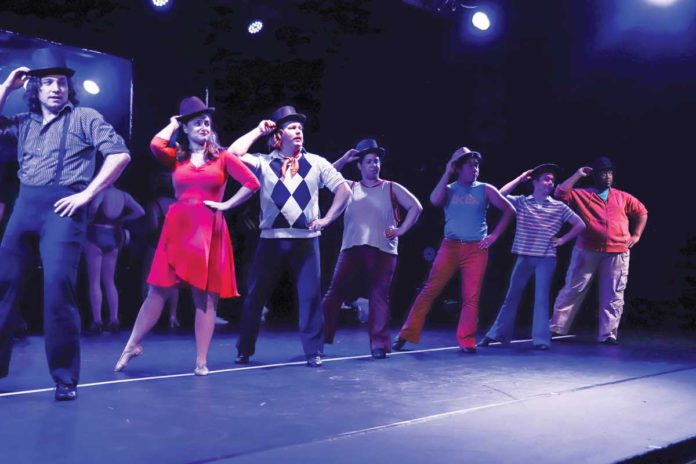
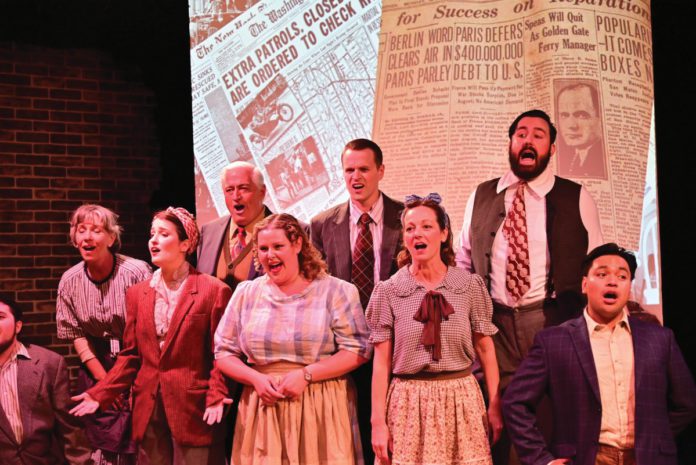
‘White Christmas’ at 6th Street Playhouse, a Jukebox Musical

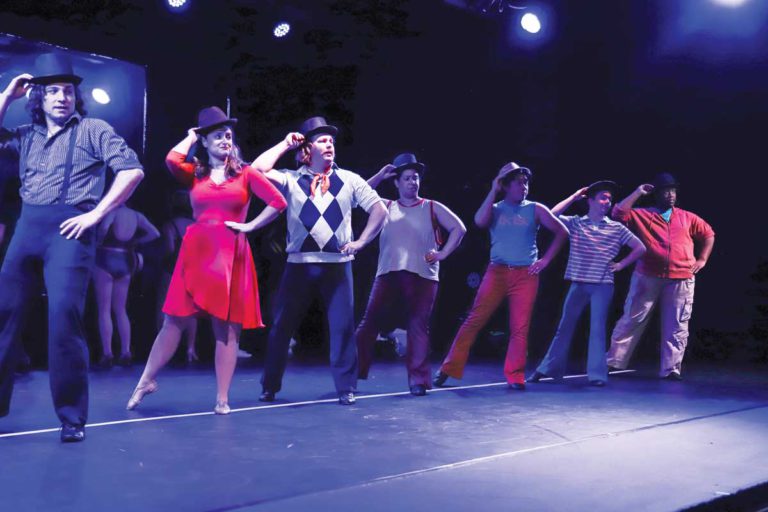
Old-fashioned holiday musicals don’t get more old-fashioned than Irving Berlin’s White Christmas. The David Ives and Paul Blake adaptation of the 1954 film that starred Bing Crosby, Danny Kaye, Rosemary Clooney and Vera-Ellen runs at Santa Rosa’s 6th Street Playhouse through Dec. 22.  

Fans of the film won’t be disappointed as it’s a faithful rendition of the screenplay with a few cuts and some additional songs.

GIs Bob Wallace (Trevor Hoffman) and Phil Davis (David Bradbury) go from entertaining the troops of the 151st division at the close of WWII to Broadway superstardom 10 years later. Headed to Florida to work out their next musical extravaganza, they’re side-tracked by the sister act of Betty and Judy Haynes (Ella Park, Caroline Flett). They end up at a snowless ski resort in Vermont owned by their former commander, General Waverly (Dwayne Stincelli). There’s nothing but room at the inn, so Bob and Phil decide to help their old leader out by mounting a show there.

Romantic complications ensue between playboy Phil and firecracker Judy and the less-than-romantically-inclined Bob and Betty. Fear not; all complications will be resolved in time for the big finale.

The show is, in essence, a jukebox musical. The show-within-a-show premise allows for a lot of great non-holiday tunes to make it into a “holiday” musical. “Blue Skies,” “Love, You Didn’t Do Right by Me” and “How Deep is the Ocean” are all here, along with “Happy Holiday” and the title tune.

Co-directors Megan Bartlett and Joseph Favalora have an obvious affection for the material, as does their cast. Hoffman and Bradbury are solid if a bit bland as the male leads. Park and Flett give the more dynamic performances, particularly with their rendition of “Sisters.” Ginger Beavers steals every scene she’s in as the cantankerous inn manager, and Sylvia Whitbrook (alternating with Elliot Harrison) gives the kids in the audience someone to relate to.

There are a couple of terrific tap dance numbers courtesy of choreographer Favalora, and the talented ensemble executes them well.  

Costumes by Pamela Johnson honor the film’s original look, and music director Janis Dunson Wilson’s seven-piece orchestra delivers the Berlin goods.

Despite the show’s title, there isn’t a whole lot of Christmas in White Christmas. Affection for the film may be traced more to the memories of family gathered around the TV watching it than anything about the film itself.

I mean, it’s no Die Hard

‘Irving Berlin’s White Christmas’ runs through Dec. 22 in the GK Hardt Theatre at 6th Street Playhouse, 52 W. 6th Street, Santa Rosa. Thur.-Sat., 7:30pm; Sat & Sun, 2pm. $29–$56. 707.523.4185. 6thstreetplayhouse.com.

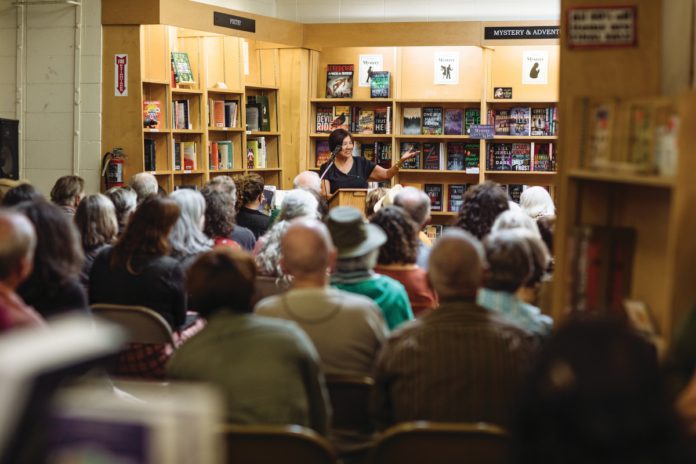
Barbara Baer’s New Novel Explores Bigotry

Forestville author Barbara Baer spent her early years traveling the world, and then writing about the people and places she encountered. 

All her main characters were based on people she actually knew. Now, in her latest novel, she has written about people who only exist in her imagination.

The book, Masha and Alejandro: Crossing Borders, is a story about a married couple—Masha from Ukraine and Alejandro from El Salvador—who move from Santa Rosa to the backwoods of Trinity County in search of a home they can afford. There, they encounter bigotry against immigrants, especially people of color like Alejandro and their son Tomas. It is also a love story about how two people with different temperaments and from very different backgrounds navigate the hills and valleys of marriage and family.

The idea came to Baer during conversations with a fellow tennis player who emigrated from Latin America and attempted to move to Josephine County in Oregon. His experience there, among the ultra-right-wing inhabitants, became the basis for Masha and Alejandro’s sojourn among similar people in rural California’s Trinity County. Baer’s tennis friend eventually moved to Bend, Oregon.  It would be a spoiler to say what happens to Masha and Alejandro.

Although Baer was entering new territory writing about immigrants and the MAGA stalwarts of far northern California, she said she felt it was important to chronicle how immigrants are treated and how it is so difficult to afford to live here.

And she was on more familiar ground describing the Sonoma County locales, like the Jewish Free Clinic, where she volunteered for a year, and the Ludwig Avenue area in south Santa Rosa. 

Her first novel, Grisha the Scrivener, is an entirely different story—literally. It is based on a man she met while living in Tashkent, Uzbekistan in 1968. The man, Gregory Gregorovich Samidze, made a huge impression on young Baer, and became a lifelong friend. He was an immigrant from Georgia and eventually lost his life in the civil war there.  

A scrivener is a person who reads and writes letters and legal documents in places where many people are illiterate or incapable of writing well. The real Grisha was a poet who survived the former Soviet Union’s gulag by reading his poetry to the other inmates. Baer described him as “a little man, like Joel Grey’s character in Cabaret.”

“He was full of life, intense, alive. He danced around, lived every minute. He didn’t believe in anything, except maybe love, maybe sex,” she said. “I wrote it over a long period of time, but I had to get it out there.”

Baer ended up in Tashkent by marrying a French diplomat who was going there to teach at the university. Once they arrived, she also got a job there teaching English. It was difficult, she said, because there were no books, and she was not allowed to mimeograph the books she had brought with her. The Soviet regulations were designed to prevent anyone from creating literature against the government. So she hand-copied passages from Samuel Beckett and Ernest Hemingway, using them as examples of the English language.

Before Tashkent, Baer had spent three years in India, teaching in a women’s college, studying Indian dance and taking care of an elderly Communist woman.  She even ended up teaching Judaism classes to the students, who were primarily Christian and Hindu and eager to learn about other religions.

She said one of the things that drew her to India, a place where many young people were traveling during the 1960s, was the hope that she would be able to learn how to deal with her anger.

“I thought my anger would be resolved there, but it wasn’t,” she said with the wistfulness of long ago memory.

But what she did find there, to her delight, were Jewish communities. And each community was different. The Jews of Calcutta were very British, tall and fair, with British habits, like drinking lots of tea. The Cochin Jews, on the other hand, were more like the local Indian people. When she visited their homes, they graciously offered her food. They also had an interesting custom of jumping continuously when the Torah was presented and read in the synagogue.

“I was never happier to be Jewish,” she exclaimed.

While she was there, she started writing poetry, “because it was the only way to write about those awesome things.”

But it wasn’t until many years later that she wrote a novel about India, The Last Devadasi, referring to the women who performed the traditional dances of India. 

After leaving Tashkent, and shedding the Frenchman who was her second husband, she traveled around Europe. For a time, she landed in London and joined a mime troupe headed by David Bowie. They performed his review, Ziggy Stardust and the Spiders from Mars, all over town. Baer had only good things to say about working with Bowie.

“He was a kind man,” she said. “And they paid us 100 pounds a night.” 

While living in London, she also wrote about dance, which provided her with the opportunity to watch rehearsals at Covent Garden by Rudolph Nureyev and Natalia Makarova.  When she followed them to Paris to see them perform Swan Lake, she witnessed the moment during the love duet when Nureyev failed to catch Makarova and she fell. That fall, which Baer says was Nureyev’s fault, became the core of another novel, The Ballet Lover.

In 1972, she returned to her birthplace, California, just in time for the Grape Boycott. Sleeping in the fields with the farm workers, she and her childhood friend, Glenna Matthews, wrote about the women on the picket line, winning a first prize for their series, “Women of the Boycott.”

She continued working as a freelancer for such publications as The Nation and The Progressive, until she founded the Forestville-based Floreant Press, published a couple of anthologies of local women’s short stories, and finally began writing and publishing her own books. But first she edited and published Dr. Gregory Levin’s Pomegranate Roads: A Soviet Botanist’s Exile from Eden, about his quest to collect and preserve the wild pomegranate trees that grew all over the eastern Soviet republics.

Another novel of hers is The Ice Palace Waltz, based on two generations of her own German Jewish family. For this book she collected a suitcase full of notes, journals, pictures and letters, to learn more about the generations that preceded her.

Baer is married to her longtime companion, Michael Morey, and has a son, Michael Leviton, who is the head of the journalism department at Diablo Valley College. 

Barbara Baer’s ‘Masha and Alejandro: Crossing Borders’ is available at Books and Letters in Guerneville and Copperfield’s in Sebastopol.

Psyche & Song: Marcus King brings ‘Mood Swings’ to Napa 


At a time when “wellness” has become a more talked-about topic in the public sphere, Marcus King has made his own musical statement via the release of Mood Swings, his third solo outing. 

The Rick Rubin-produced effort is full of songs drawing from a particularly dark time in King’s life when he faced certain mental health challenges stoked by anxiety and suicidal thoughts. Originally started back in 2019, this 11-song outing was interrupted by the pandemic and a particularly toxic relationship King was emerging from before meeting his current wife, Briley Hussey. When the world started to open up again, King came out of the other end of it with 2022’s Young Blood.

Despite the success he enjoyed with that particular effort, the South Carolina native was in no shape to continue the deep emotional dive the still-unrealized Mood Swings would require of him.

“This album really started before Young Blood, and when everything opened back up, it felt like there was some pressure to get back out and get to work,” King recalled in an interview earlier this year. “Mood Swings was definitely not anywhere close to being done. The album is a journey and an experience for me, and I hadn’t completed it.

“During that whole process of doing Young Blood, I was really coming through a lot of substance abuse [issues]. I wasn’t entirely present when I was doing that record. When I look at that record retrospectively, I feel really detached from it. Mood Swings is very much the truest representation of me being as honest as possible [as an artist],” he continued.

Songs like the title cut, “Bipolar Love,” and “Save Me” find King delving deep into his psyche and past mental health wounds. Rubin played a key role in helping King navigate and complete the album. The storied producer, who has been meditating since he was 14 and is heavily into metaphysics, provided the environment to achieve this in the summer of 2023 while working with King at his Malibu-based Shangri-La studio and his spread in Tuscany, Italy. The 28-year-old guitarist/singer-songwriter was grateful to go through the experience.

“A big part of the record was trying to sample ourselves in a way,” King said. “Once we had all the basic tracks done, me and Rick could sit down with them. We went through everything and tried to strip it down to its truest, most vulnerable and most honest depictions of the songs. 

“With this subject matter, [Rick is] the only guy I could imagine handling it. He really pushed me to go deeper and deeper and to access places, traumas and memories that I didn’t even know were troublesome to me. Sometimes you have to heal before you can really talk about something, and I feel like we did that with this record. The journey within was a really fascinating one because he’s all about putting yourself first and the audience second, and I didn’t really understand that concept until now,” he noted.

With all the recording under his belt, King started the tour cycle with a run of shows  with his eight-piece band. He’s currently doing a different sort of tour, playing acoustic with guitarist Drew Smithers in intimate club settings. Along the way, there was also a performance at Nashville’s Grand Ole Opry. That show tied back to the Mood Swings project in that Rubin first reached out to King about it back in 2019 after seeing a clip of the latter performing on that hallowed stage.

“The Grand Ole Opry is like going to see your grandparents, pretty much,” King said with a laugh. “I try to go by there as much as possible, and they’re always really sweet and really as welcoming as possible. You don’t go there and smoke reefer in the dressing room. You’re on your best behavior and go out and play your best songs. It’s always cool to go back there. That stage just carries a lot of weight for me. You go there, and you’re surrounded by people like Vince Gill and the Marty Stuarts of the world. 

“Vince Gill, to me, is the closest thing I can get to George Jones, who is my hero and his hero. He sang at George’s funeral that was held at the Grand Ole Opry. They’ve got the circle there, and in it they have an original piece of the stage from when it was still over at the Ryman Auditorium. You get up there, stand in the circle and perform. It was a blessing. We had my dad come and play with us. There is always something new and special to take away when you go and play the Opry,” said King.

JaM Cellars presents ‘Marcus King: An Intimate Acoustic Evening Featuring Drew Smithers’ at 8pm, Monday, Dec. 9, at the Uptown Theatre Napa, 1350 3rd St., Napa. Tickets are available at bit.ly/marcus-king-napa. 

Staying in Tune with Stanroy Music Center’s Steve Shirrell

As I waited for our “brief encounter” to begin, I sat at Steve Shirrell’s workbench amid the bent keys, broken heads and dented horns of some 50-odd unmusical instruments waiting to be repaired. Tellingly, his bench has been worn over many years into a saddle. 

Shirrell has been with Stanroy Music Center 41 years—30 as an employee of former owners, eight as a co-owner with Dustin Heald before stepping down to an employee position, and finally, two years and counting as a six-day-a-week volunteer. 

The last transition came about when he came to Healds with an idea: “We could save a lot of money if you stopped paying me.”

Despite his white hair, Shirrell is one of the youngest people in the music scene. And I mean young in the spiritual sense. He is uncorrupt, optimistic and the very soul of generosity.

When he was ready, we stepped into a small music teaching room. In addition to being one of the largest repair shops in California, Stanroy Music Center also hosts 12 music teachers with a complete set of competencies—if one wants to learn “Freebird” on a guitarrón, synth or French horn.

CH: Describe Stanroy.

SS: It is Sonoma County’s oldest full-line music store. We carry the full line of the viol family, brass, woodwinds, strings, amplifiers and accessories. We also repair, rent and teach.

CH: Tell us about your repair department—I understand most of our school bands are your clients.

SS: Well, have one of the greatest techs for viol, and woodwinds—but really he can fix anything— Gary Meierhenry, an intuitive farm boy genius. We have a saying around here—if it’s made of atoms, Gary can fix it. He has been with us for 36 years. Bruce Blaikie handles brass—has been with us for 21 years—and I do strings and electronics.

CH: I find a mark of a wholesome business is looong employee retention. Steve, you have an interesting notion of business competition…

SS: If people come in to buy something we don’t have, I’ll say, “Let me call Banana’s at Large or Tall Toad and see if they have it.” And they’ll say, “You call your competition?” And I’ll say, “We don’t have competition. Every store in Sonoma County serves the same music community.” I have to serve the people who come in my door, and that means getting them what they need.

Learn more. Visitors may go to Stanroy in Santa Rosa this Christmas season with musical dreams in mind. They are at one’s service. stanroy.com.

Terry Gross ignited by improvised jams

0

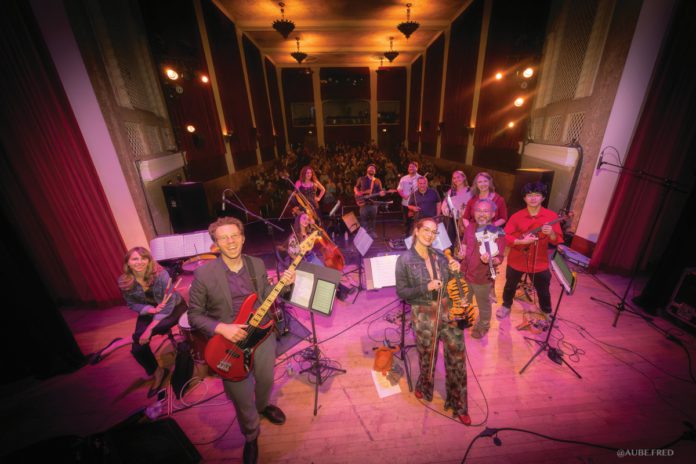
Terry Gross just released Huge Improvement, an album of tunes based around their improvised jams. The band is a trio—bass player Donny Newenhouse, guitarist Phil Manley and drummer Phil Becker—of longtime veterans of the Bay Area music scene. They own and operate San Francisco’s El Studio, where they produce albums and record dozens of local bands, including their own.

“I got interested in recording in high school, after having an experience recording at someone’s home studio,” Newenhouse said. “The results were less than ideal. I thought, ‘Hey, I could do better than this.’ Plus, I was always fascinated with gear—the knobs, mics, tape machines; all of it.”

Manley said, “I’ve played in bands since junior high school. Production was just a natural byproduct of making music.” He hooked up with Newenhouse and started El Studio.

As Becker’s career progressed, he began recording the bands he was in. His interest in production snowballed from there. He joined El Studio in 2014, and the trio started jamming to test out their equipment. The band happened spontaneously.

“Our songwriting process is to jam, then arrange,” Newenhouse said. “The only jam on Huge Improvement, in its original form, is ‘Full Disclosure.’ The rest are compositions born from improvisations, ‘produced’ in the editing process, then added to, reworked and re-recorded. We leave room for the lyrics/melodies as the song evolves, but thematically, that has usually come later.”

The tunes on Huge Improvement pack a lot of musical expression. “Sheepskin City” protests the ongoing gentrification of San Francisco. It’s propelled by Manley’s shimmering guitar, crashing chords and a relentless pulse, driven by the rhythm section of Newenhouse and Becker. The lyrics are full of historical, political and sci-fi references. Manley and Newenhouse add a taste of country to their close harmonies. “I grew up listening to the Carter Family,” Manley said. “Those harmonies come naturally.”

“Full Disclosure” is an unedited slow jam, a showcase for Manley’s guitar, with melodies drifting in and out of phase-shifted chords, buzzing overtones and a hook played by Newenhouse’s bass, accented by Becker’s sizzling cymbals.

The lyrics of “Effective Control” describe life on Earth, from its beginnings to its current struggle with technology and possible extinction. A stuttering guitar pulse and measured beat offset verses that sound like a dystopian hit from the ’80s. Manley’s guitar is full of hissing echoes that slowly shift to short staccato chords, then come to a crashing end.

Before they formed Terry Gross, the partners played in other bands. Becker grew up in Rib Lake, Wisconsin. “There was always music playing in our house,” he said. “It was often a sister practicing piano. I had a drum kit made of pillows for a long time.

“When I was 12 or so, the high school band director let me take a snare drum home, but almost everything came from playing along to my favorite albums,” he added. “It was a slow, gradual, enjoyable grind. In Terry Gross, I play aggressive rock with experimental and noise influences, presented as a soundtrack to your evening commute.”

Manley grew up in Washington, DC. “My mom had a classical guitar hanging on the wall at home,” he said. “I picked it up and started figuring out Rolling Stones and CCR songs. I played in cover bands in high school. Eventually, it became more inspiring to write my own music.” After coming to San Francisco, he began learning production. “I consider guitar my main instrument, but I also play bass and keys,” he said.

Newenhouse grew up in Santa Cruz. “I played drums on my bed, with magic markers or pencils. I was adopted from birth. My parents weren’t musical, but I met my biological family in my early 20s; they all are musicians or artists,” he said.

“Going to see punk/thrash bands at Santa Cruz Vets Hall was formative,” he continued. “I kept playing in bands after moving to San Francisco and eventually started El Studio with Phil [Manley]. Phil Becker and I played in a band that was winding down. Since we were all buddies, we thought, ‘Well hey, maybe we should jam a bit?’ That was pretty much it.”

When Terry Gross plays live, they leave a lot of space to explore what’s happening in the moment. “Songs like ‘Full Disclosure’ are pretty open-ended,” Manley said. “Even the more composed songs have spaces which are open improvisation.”

Terry Gross will play their last show of 2024 on Saturday, Dec. 7, at 7pm at the Ivy Room, 860 San Pablo Ave., Berkeley. 510.526.5888.

Terry Gross ignited by improvised jams

0

Terry Gross just released Huge Improvement, an album of tunes based around their improvised jams. The band is a trio—bass player Donny Newenhouse, guitarist Phil Manley and drummer Phil Becker—of longtime veterans of the Bay Area music scene. They own and operate San Francisco’s El Studio, where they produce albums and record dozens of local bands, including their own.

“I got interested in recording in high school, after having an experience recording at someone’s home studio,” Newenhouse said. “The results were less than ideal. I thought, ‘Hey, I could do better than this.’ Plus, I was always fascinated with gear—the knobs, mics, tape machines; all of it.”

Manley said, “I’ve played in bands since junior high school. Production was just a natural byproduct of making music.” He hooked up with Newenhouse and started El Studio.

As Becker’s career progressed, he began recording the bands he was in. His interest in production snowballed from there. He joined El Studio in 2014, and the trio started jamming to test out their equipment. The band happened spontaneously.

“Our songwriting process is to jam, then arrange,” Newenhouse said. “The only jam on Huge Improvement, in its original form, is ‘Full Disclosure.’ The rest are compositions born from improvisations, ‘produced’ in the editing process, then added to, reworked and re-recorded. We leave room for the lyrics/melodies as the song evolves, but thematically, that has usually come later.”

The tunes on Huge Improvement pack a lot of musical expression. “Sheepskin City” protests the ongoing gentrification of San Francisco. It’s propelled by Manley’s shimmering guitar, crashing chords and a relentless pulse, driven by the rhythm section of Newenhouse and Becker. The lyrics are full of historical, political and sci-fi references. Manley and Newenhouse add a taste of country to their close harmonies. “I grew up listening to the Carter Family,” Manley said. “Those harmonies come naturally.”

“Full Disclosure” is an unedited slow jam, a showcase for Manley’s guitar, with melodies drifting in and out of phase-shifted chords, buzzing overtones and a hook played by Newenhouse’s bass, accented by Becker’s sizzling cymbals.

The lyrics of “Effective Control” describe life on Earth, from its beginnings to its current struggle with technology and possible extinction. A stuttering guitar pulse and measured beat offset verses that sound like a dystopian hit from the ’80s. Manley’s guitar is full of hissing echoes that slowly shift to short staccato chords, then come to a crashing end.

Before they formed Terry Gross, the partners played in other bands. Becker grew up in Rib Lake, Wisconsin. “There was always music playing in our house,” he said. “It was often a sister practicing piano. I had a drum kit made of pillows for a long time.

“When I was 12 or so, the high school band director let me take a snare drum home, but almost everything came from playing along to my favorite albums,” he added. “It was a slow, gradual, enjoyable grind. In Terry Gross, I play aggressive rock with experimental and noise influences, presented as a soundtrack to your evening commute.”

Manley grew up in Washington, DC. “My mom had a classical guitar hanging on the wall at home,” he said. “I picked it up and started figuring out Rolling Stones and CCR songs. I played in cover bands in high school. Eventually, it became more inspiring to write my own music.” After coming to San Francisco, he began learning production. “I consider guitar my main instrument, but I also play bass and keys,” he said.

Newenhouse grew up in Santa Cruz. “I played drums on my bed, with magic markers or pencils. I was adopted from birth. My parents weren’t musical, but I met my biological family in my early 20s; they all are musicians or artists,” he said.

“Going to see punk/thrash bands at Santa Cruz Vets Hall was formative,” he continued. “I kept playing in bands after moving to San Francisco and eventually started El Studio with Phil [Manley]. Phil Becker and I played in a band that was winding down. Since we were all buddies, we thought, ‘Well hey, maybe we should jam a bit?’ That was pretty much it.”

When Terry Gross plays live, they leave a lot of space to explore what’s happening in the moment. “Songs like ‘Full Disclosure’ are pretty open-ended,” Manley said. “Even the more composed songs have spaces which are open improvisation.”

Terry Gross will play their last show of 2024 on Saturday, Dec. 7, at 7pm at the Ivy Room, 860 San Pablo Ave., Berkeley. 510.526.5888.

Your Letters, 12/4

Safety First  The Dungeness crab opener is a highly anticipated event for many, but it comes with its share of risks. Despite the warnings, some passionate crabbers choose to venture out in unsafe conditions. It’s with a heavy heart that I reflect on the tragic losses experienced by families and our community this season. The reported deaths of those who...

Over: American Experiment

To form a more imperfect union The American experiment with democracy is over. By a slim margin, we have encouraged the dismantling of our imperfect but mostly functional government by and for the people.  We can never undo this loss. We are no longer the world leaders in democracy or freedom. We can no longer claim to be the land of...

Santa Rosa Metro Chamber Names New CEO

The search is over. The board of directors of regional business advocacy group Santa Rosa Metro Chamber (SRMC) has unanimously voted to hire Ananda Sweet as the organization’s new CEO. Sweet, who has been with SRMC since November 2016 and previously served as the organization’s vice president of public policy and workforce development, stepped into the position of interim CEO...

Think Rink: Zero-Energy Skating in Downtown Santa Rosa

This holiday season, downtown Santa Rosa has a sustainable touch of festive magic, as the Santa Rosa Metro Chamber recently brought back its synthetic ice rink for the annual Winter Lights celebration. The eco-friendly rink is now open in Old Courthouse Square, designed for family fun and a bit of seasonal sparkle, through Dec. 31. The festivities officially began on...

‘White Christmas’ at 6th Street Playhouse, a Jukebox Musical

Old-fashioned holiday musicals don’t get more old-fashioned than Irving Berlin’s White Christmas. The David Ives and Paul Blake adaptation of the 1954 film that starred Bing Crosby, Danny Kaye, Rosemary Clooney and Vera-Ellen runs at Santa Rosa’s 6th Street Playhouse through Dec. 22.   Fans of the film won’t be disappointed as it’s a faithful rendition of the screenplay with a...

Barbara Baer’s New Novel Explores Bigotry

Forestville author Barbara Baer spent her early years traveling the world, and then writing about the people and places she encountered.  All her main characters were based on people she actually knew. Now, in her latest novel, she has written about people who only exist in her imagination. The book, Masha and Alejandro: Crossing Borders, is a story about a married...

Psyche & Song: Marcus King brings ‘Mood Swings’ to Napa 

At a time when “wellness” has become a more talked-about topic in the public sphere, Marcus King has made his own musical statement via the release of Mood Swings, his third solo outing.  The Rick Rubin-produced effort is full of songs drawing from a particularly dark time in King’s life when he faced certain mental health challenges stoked by anxiety...

Staying in Tune with Stanroy Music Center’s Steve Shirrell

As I waited for our “brief encounter” to begin, I sat at Steve Shirrell’s workbench amid the bent keys, broken heads and dented horns of some 50-odd unmusical instruments waiting to be repaired. Tellingly, his bench has been worn over many years into a saddle.  Shirrell has been with Stanroy Music Center 41 years—30 as an employee of former owners,...

Terry Gross ignited by improvised jams

Terry Gross ignited by improvised jams
Terry Gross just released Huge Improvement, an album of tunes based around their improvised jams. The band is a trio—bass player Donny Newenhouse, guitarist Phil Manley and drummer Phil Becker—of longtime veterans of the Bay Area music scene. They own and operate San Francisco’s El Studio, where they produce albums and record dozens of local bands, including their own. “I...

Terry Gross ignited by improvised jams

Terry Gross ignited by improvised jams
Terry Gross just released Huge Improvement, an album of tunes based around their improvised jams. The band is a trio—bass player Donny Newenhouse, guitarist Phil Manley and drummer Phil Becker—of longtime veterans of the Bay Area music scene. They own and operate San Francisco’s El Studio, where they produce albums and record dozens of local bands, including their own. “I...
11,084FansLike
4,446FollowersFollow
6,928FollowersFollow