2024’s Top Torn Tix: SoCo’s Best/Most Interesting Theater

It is time for this critic to take an end-of-year look back at local theater, and I am happy to report that no theaters have closed in this area. As a matter of fact, there’s a new company in town with the formation of Petaluma’s Mercury Theater.

So, continuing on that positive note, here, in chronological order, are my “Top Torn Tickets”—the best and/or most interesting plays produced in the North Bay in 2024:

She Loves Me, 6th Street Playhouse. The theatrical year got off to a good start with this bright and bouncy musical. Charming performances; a colorfully lit, cleverly-designed set; and precision timing in movement all made for a delightful post-holiday confection.

Orlando, SRJC Theatre Arts. If you’ve never attended an SRJC production because it’s just “college theater,” you’re missing out on some of the most interesting and well-produced shows around. Their gender-bending production of this Sarah Ruhl script was more than just a college exercise. It was fascinating, thought-provoking theater.

Uncle Vanya, Roustabout Theatre Company. Roustabout’s Professional Ensemble is the Brigadoon of local theater companies. It rises from the mist of the LBC every year to mount a usually superb production and then disappears. Their production of Vanya was the best Chekhov I’ve seen in a while.   

The Prom, Sonoma Arts Live. Credit must be given when a theater company tiptoes outside of its usual box. SAL’s production of this gay-themed musical comedy wasn’t perfect, but it accomplished something fairly rare—it brought in a younger audience. They got a contemporary, relevant story; a couple of strong, young performers; and the opportunity to see some heartfelt work by local stage veterans.   

The Germans Upstairs, Raven Players. Mounting an unknown, original play is always risky. Props to the Raven Players for taking a chance on local playwright Francine Schwartz and her script based on family stories from their time in German-occupied France during World War II.   

Oklahoma!, Cinnabar. When Cinnabar announced they were taking their mainstage shows on the road to Sonoma State’s Warren Auditorium, I had my doubts. (I had acted in and produced shows there while attending SSU.) A reimagined script that changed a key plot point was problematic. Every other aspect of the production was not. 

Beautiful: The Carole King Musical, Spreckels Theatre Company. There is no better stage in the North Bay on which to mount a large Broadway musical than the Codding Stage at the Spreckels Performing Arts Center. A large, talented cast of actor-singer-dancers had all the room they needed to do this trip down musical Memory Lane justice. 

POTUS, etc., Left Edge Theatre. Contemporary productions are few and far between as local companies usually rely on the tried-and-true to attract an audience. Left Edge does the opposite, regularly giving local audiences opportunities to see shows they probably haven’t seen before. POTUS… was as in-your-face as theater gets. It was also pretty damn funny.

All is Calm: The Christmas Truce of 1914, Spreckels Theatre Company. The most powerful 70 minutes on stage this year. Simple stagecraft let the voices of the performers, the words of WWI soldiers at the front and the music of the era shine. A criminally short run deep into the holiday season may have limited its audience. They should do it again.

Merry Christmas. Go see something.

Housing Woes: Director Of SAVS Adrienne Lauby

It is almost Christmas day, the day of charity, the day of the gift. And it is almost the new year, in which change is newly possible. 

In that convergence, the only topic this week and this minute can be homelessness and what we will do for them because 3,000 of our unsheltered neighbors will be out there this Christmas day, in the cold and the wet and the dark.

For facts and humanity to guide our action, inquiries were made to Adrienne Lauby, director of SAVS. This stands for “Sonoma Applied Village Services.” In addition to tireless outreach, SAVS organizes and agitates to replace temporary encampments with permanent tiny home villages and RV parks.

CH: Adrienne, for our full-length interview [linked here], you gave me the 2024 “Point in Time” assessment, a once-a-year count mandated by the federal government. The report is filled with myth-exploding findings. One is that 77% of homeless people are former rent-paying residents. They’re not “drifters”—they’re ours. What is another finding that most people don’t realize?

AD: I think we would all be shocked—I’ve been shocked—at the number of people with disabilities and chronic health issues: people in wheelchairs that can’t walk, people in chemotherapy treatment.

CH: And having to deal with that while homeless… Per the report, 47% of homeless people have a substance abuse disorder, 43% have a psychiatric or emotional disorder, 41% have PTSD, 32% have a chronic health condition, 37% have a disability and 17% have a traumatic brain injury. Those percentages or odds mean that most homeless have two or three of these health conditions simultaneously. 

It’s almost a formula—if you are poor and you have two or more serious medical conditions and one piece of bad luck, you will be homeless. It’s a failure of our broken medical system and, you say, government policy?

AD: Ah, yes—the cause. The cause of why we have so much homelessness now is Ronald Regan. As president, he cut H.U.D., and H.U.D. used to build low-income housing. And the Democrats and the Republicans never put that money back. If you look at a graph, there is an almost one-to-one correspondence between housing for poor people and homelessness. And despite year-to-year variation, the number of homeless people remains largely flat.

Take action. Lauby advises writing to elected officials on the issue and making at least one homeless friend through volunteering. Donations help, too. Follow this link for reports and opportunities: linktr.ee/SAVSlinktree.

Words of the Year Selected by Prominent Dictionaries

0

Dictionaries have selected enshittification, brain-rot and polarization as their 2024 words of the year. 

The publishers of the Oxford English Dictionary selected brain-rot as their Word of the Year. Oxford University Press defined the noun as the “supposed deterioration of a person’s mental or intellectual state, especially viewed as a result of overconsumption of material (now particularly online content) considered to be trivial or unchallenging. Also: something characterized as likely to lead to such deterioration.”

The selection committee noticed “that brain-rot gained new prominence this year as a term used to capture concerns about the impact of consuming excessive amounts of low-quality online content, especially on social media.” They noted that “the term increased in usage frequency by 230 percent between 2023 and 2024.”

Casper Grathwohl, president of Oxford Languages, said, “I find it fascinating that the term brain-rot has been adopted by Gen Z and Gen Alpha, those communities largely responsible for the use and creation of the digital content the term refers to. These communities have amplified the expression through social media channels, the very place said to cause brain-rot. It demonstrates a somewhat cheeky self-awareness in the younger generations about the harmful impact of social media that they’ve inherited.”

Australian English Dictionary Macquarie selected enshittification as their Word of the Year. The dictionary defined the colloquial noun as “the gradual deterioration of a service or product brought about by a reduction in the quality of service provided, especially of an online platform, and as a consequence of profit-seeking.” 

The selection committee commented that the term was a “very basic Anglo-Saxon term wrapped in affixes which elevate it to being almost formal; almost respectable. This word captures what many of us feel is happening to the world and to so many aspects of our lives at the moment.” 

This year, Merriam-Webster chose polarization as their Word of the Year. Enough said.

Here’s hoping for a new year with less brain-rot, less polarization and less enshittification

Chris Houston is the president of the Canadian Peace Museum, a non-profit organization.

Tantalizing the Senses: Pizza, Bonsai, Music and Fine Art

North Bay

Pizza Week

Did somebody say “tri-county pizza party?” Yeah, that’s right—it’s time to celebrate the best thing that has happened since sliced bread with the very first North Bay Pizza Week. From Jan. 8 to 19, food lovers from Marin, Sonoma and Napa will unite for 12 days of cheesy, saucy, crusty goodness. Inspired by pizza festivals nationwide, this event promises to be the perfect slice of local flavor, showcasing the talents of a number of North Bay chefs. Dozens of local restaurants will serve up special pies at prices that’ll make one’s mouth water and their wallet sigh in relief. From classic Margheritas to crazy new topping combos the world has never seen, Pizza Week celebrates the best things in life…pizza, creativity and community (all wrapped up in a crispy crust like a calzone). Whether one is a pepperoni purist or a pineapple enthusiast, they can mark their calendars because the first of many North Bay Pizza Weeks is coming to town. Stay tuned for the full list of participating restaurants and their exclusive menus at NorthBayPizzaWeek.com, and don’t forget to register at pizzaweek.paperform.co.

Sonoma

Tiny Trees

This winter, Sonoma Botanical Garden invites one to slow down and enjoy the calming beauty of tiny trees (aka bonsai) at The Bonsai Show: Wood and Stone, from Jan. 10 to March 30. The indoor exhibit will feature 20 bonsai contributed by the Redwood Empire Bonsai Society. These miniature trees are specially crafted from hand-chosen species such as Japanese black pine, Chinese elm and California redwoods. And if a collection of bonsai isn’t tempting enough, the show also includes an array of suiseki stones. For those who don’t know their rock formation art forms, suiseki is the Japanese art of stone appreciation through showcasing small, naturally formed stones that resemble and evoke the feeling of mountains, waterfalls and other natural landscapes. But that’s not all—guests are also invited to participate in interactive elements like the zen rock garden, where one can try their hand at raking. Plus, bonsai demonstrations and guided tours will allow visitors to dive into the art and care behind these miniature masterpieces. Is there a better way to kickstart 2025 than getting zen with bonsai and suiseki at the Sonoma Botanical Gardens? Don’t think so. sonomabg.org.

Mill Valley

Güero at the Sweetwater

If one is looking for a night of unique tunes and killer vibes, they may look no further. Sacramento’s Güero is playing at Sweetwater Music Hall in Mill Valley on Jan. 9, bringing their genre-bending mix of Americana, jazz and psych-rock straight to the North Bay. Güero’s success as a performance powerhouse really hit its stride with the release of their hit album, Wednesdays. Güero’s four members (Rik Krull, Shea Ritchie, Russell Volksen and Mike Ruiz) have been friends since their skate shop days, and their music reflects a shared love for all things subculture. From laid-back jams to high-energy improv, Güero’s live shows reflect years of playing together and evolving their sound. On top of playing fan favorites, Güero will also be previewing brand-new tracks from their upcoming 2025 album. sweetwatermusichall.org.

Healdsburg

Inspiration at Upstairs Art Gallery

Stairway to HeavenReady to start the new year with some seriously inspiring art? Whether the answer is yes, no or maybe so, one should still know that the Upstairs Art Gallery in Healdsburg is hosting a new exhibit entitled Sunlight and Shadows from Dec. 30 through Jan. 26. Sunlight and Shadows features two Sonoma County artists, both of whom use their artistic talent to bring together the beauty of nature and the power of women’s voices. The first artist is Linda Barretta, an impressionist oil painter whose work will transport its viewers straight into Sonoma’s landscapes. Barretta will be available for exhibition meet-n-greets Jan. 4, 8, 27 and 30. The second artist is Carmen Sheldon, with the thought-provoking contribution of Intersection: Women, Misogyny, Books and the Power of Education. Meet-n-greet days for Sheldon are Jan. 4, 8, 25 and 27. Likweise, one may come on out on their own or join the community’s Second Saturday Artwalk on Jan. 11 from 5:30-7pm and see 14 other Healdsburg galleries. To learn more, visit upstairsartgallery.net.

Free Will Astrology for Week of Dec. 25

0

ARIES (March 21-April 19): In 2025, I would love for you to specialize in making new connections and deepening your existing ones. I hope you will summon extra creativity and panache as you regularly blend your beautiful energies with others’ beautiful energies. I predict you will thrive on linking elements that should be linked but have never been before. What do you think, Aries? Does it sound fun to become a playful master of mixing and combining? Would you enjoy generating splashy unifications that serve your dreams?

TAURUS (April 20-May 20): “Confidence is 10% hard work and 90% delusion,” declared Taurus comedian Tina Fey. But I believe you will disprove that assessment in the coming months. The work you do will be unusually replete with grace and dynamism. It will be focused and diligent work, yes, but more importantly, it will be smart work that’s largely free of delusion. That’s why I’m inclined to revise Fey’s formula for your sake. In 2025, your brimming levels of confidence will be primarily due to your fine, conscientious, effective work.

GEMINI (May 21-June 20): In the 1960s, a Swedish journalist tried an experiment. He wanted to see if art critics could distinguish between abstract paintings made by skilled artists and those created by a four-year-old chimpanzee whose pseudonym was Pierre Brassau. Surprise! Many of the critics treated all the paintings with equal respect. One even gave special praise to Pierre Brassau, describing his strokes of color as having “the delicacy of a ballet dancer.” I’m authorizing you to unleash your inner Pierre Brassau in the coming months, Gemini. Be an innocent rookie, a newcomer with great instincts, an exuberant amateur who specializes in fun experiments. Do you know what beginner’s mind is? You approach every experience with zero assumptions or expectations, as if you were seeing everything for the first time. For more, read this: wikipedia.org/wiki/Shoshin.

CANCER (June 21-July 22): Ohio’s Cuyahoga River used to catch on fire regularly. The cause was pollution. For a hundred years, industries had poured their wastes into the waterway. The surface was often dotted with oil slicks. But after a notorious river fire in 1969, the locals decided to remedy the situation, aided by the newly established Environmental Protection Agency. Today, the Cuyahoga still isn’t 100% clean, but it’s far better. It hosts kayaking, fishing and paddle boarding. I propose we use its rehabilitation as a symbol for you in 2025. You will have welcome opportunities to clean up messes that have lingered for far too long. Please take full advantage of these cosmic invitations to sweep karmic debris out of your life.

LEO (July 23-Aug. 22): Steve Jobs, founder of Apple computers, said, “The people who are crazy enough to think they can change the world are the ones who do.” I propose that you make this one of your mottos in 2025. More than ever before, you will have exceptional power to transform the environments you share with others. You will have an enhanced ability to revise and reinvigorate the systems and the rules you use. Don’t underestimate your influence during the coming months, Leo. Assume that people will be listening especially closely to your ideas and extra receptive to be affected by you.

VIRGO (Aug. 23-Sept. 22): I will give you four related terms to describe your key motif in 2025: 1. Your Soul’s Code. 2. Your Master Plan. 3. Your Destiny’s Blueprint. 4. Your Mission Statement. All four are rooted in this epic question: What is your overarching purpose here on Earth, and how are you fulfilling it? The coming months will be a time when you can make dramatic progress in formulating vivid, detailed visions of the life you want to live. You can also undertake robust action steps to make those visions more of a practical reality. I encourage you to write your big-picture, long-range dreams in a special notebook or a file on your tech device. Keep adding to the text throughout the coming months.

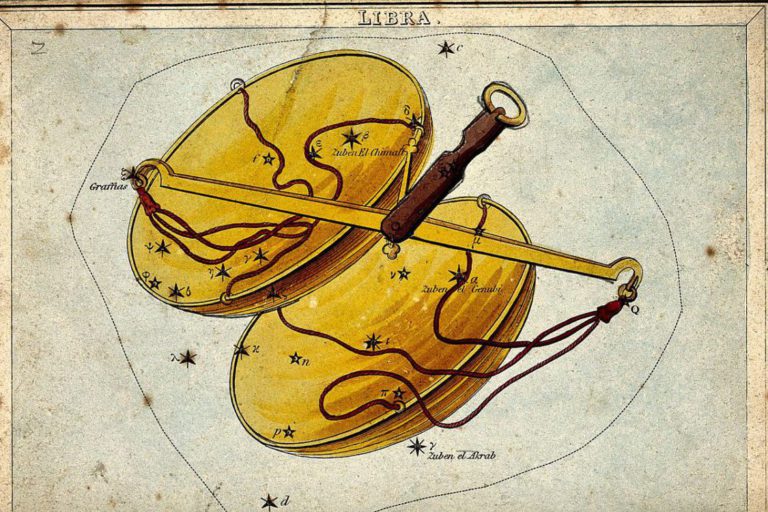
LIBRA (Sept. 23-Oct. 22): People in India were the first to discover diamonds buried in the earth. Most historians believe it happened in the 4th century BCE. For the next two millennia, India remained the only source of diamonds. Finally, new stashes were found in Brazil in 1725 and in South Africa in the 1870s. Let’s use this 2,000-year gap as a metaphor for your life. I suspect that far too many months have passed since you have located a fresh source of a certain treasure or bounty you crave. That will change in 2025. Here come long-delayed blessings!

SCORPIO (Oct. 23-Nov. 21): In my vision of your life in 2025, you will dramatically enhance how togetherness works for you. Below are four questions to help guide your explorations and breakthroughs. 1. Is it feasible to change yourself in ways that enable you to have a more satisfying relationship with romantic love? 2. Will you include your intimate relationships as an essential part of your spiritual path—and vice versa? 3. What work on yourself can you do to heal your old wounds and thereby make yourself a better partner and collaborator? 4. Can you help your best allies to heal their wounds and thereby become better partners and collaborators?

SAGITTARIUS (Nov. 22-Dec. 21): In Japanese, the word for “frog” sounds similar to the word meaning “to return.” That’s one reason frogs have been lucky in some circles of Japanese culture. They symbolize the blessing that occurs when travelers return home safely, or when health is restored, or when spent money is replenished. I bring this to your attention, Sagittarius, because I suspect 2025 will be a time when satisfying and enjoyable returns will be a key theme. Consider keeping the likeness of a lovable frog in your living space.

CAPRICORN (Dec. 22-Jan. 19): Since 1985, musician David Gilmour has led Pink Floyd. The band has sold over 250 million records. He’s in the Rock and Roll Hall of Fame in both the UK and the U.S. But my favorite thing about Gilmour is that he’s a passionate activist who has crusaded for animal rights, environmentalism, poverty and human rights. A few years ago, he auctioned off 120 of his guitars, raising over $21 million for an environmentalist charity. In accordance with astrological omens, I propose we make him one of your inspirational role models in 2025, Capricorn. May he mobilize you to use your stature and clout to perform an array of good works that are of service to your world.

AQUARIUS (Jan. 20-Feb. 18): Aquarian author Virginia Woolf extolled the virtues of cultivating a supple soul that thrives on change. She pledged to be relentless in her commitment to be authentically herself and not succumb to groupthink. I recommend you make these two of your featured themes in 2025. To inspire your efforts, I will quote her radical perspective at length: “Movement and change are the essence of our being; rigidity is death; conformity is death: let us say what comes into our heads, repeat ourselves, contradict ourselves, fling out the wildest nonsense, and follow the most fantastic fancies without caring what the world does or thinks or says.”

PISCES (Feb. 19-March 20): In 1992, two friends promised each other that if either of them ever won the lottery, they would share it with the other. Twenty-eight years later, that’s exactly what happened. In 2020, Thomas Cook bought a ticket that turned out to be the winner of the Powerhouse jackpot in Wisconsin. He called Joseph Feeney with the good news. After paying taxes, both men were $5.7 million richer. I am not predicting the exact same sequence for your future, Pisces. But like Cook and Feeney, I expect you will glean pleasing rewards generated from seeds planted in the past.

Your Letters, 12/25

Pledge Hedge

The incoming administration vowed on the campaign trail to do everything in its power to benefit American workers. “We will build American, buy American and hire American,” Trump said during a rally in August.

Despite that pledge, the Republican leader’s own businesses sought to hire more foreign guest workers this year than any other year on record, according to a review of government labor data. Companies linked to some of the Republicans’ top political backers and administration picks have also been given the green light to use guest workers this year.

Is it too early to call him a liar?  …. Oops, too late. America already KNEW he was a liar and a convict.

Gary Sciford

Santa Rosa

For Sale

To say that the structure of the economic policy Trump is planning will be “especially vulnerable to corruption” is like saying that being struck by an automobile moving at 70 mph in the 25 mph zone in front of my house might make my grandchildren “especially vulnerable to serious injury.”

Really? Is America for sale? 

Is that it? Are we done now?

Let me know. Thanks. 

Craig J. Corsini

San Rafael

We appreciate your letters to the editor—send them to le*****@******an.com and le*****@********un.com. Letters may be edited for clarity and space.

Locals Sue Their Congressional Representatives

Boyes Hot Springs resident Seth Donnelly has been trying for 14 months to convince his congressional representative, Mike Thompson, to vote against sending more military aid to Israel. 

The aid has supported Israel as it carries out an attack against the people of Gaza. This has been going on since Oct. 7, 2023, when Gaza militants crossed the border into Israel and laid siege, leaving some 1,200 Israelis dead and taking approximately 250 hostages. 

Israel responded by attacking Gaza, killing an estimated 45,000 Palestinians and displacing most of the region’s 2 million-plus residents. And, according to most reports, the U.S. has supplied some 70 percent of the weaponry for Israel to continue its assault.

“As a teacher, I went through the usual channels,” Donnelly said concerning his attempts to reach Thompson. 

Donnelly even invited Thompson to speak before a student human rights group at Rancho Cotate High School, where he taught until he retired. During that meeting students asked Thompson if he would agree to vote against more military aid and Thompson refused.

At that point Donnelly decided to try another tactic, one that is unprecedented as far as he knows. With the help of San Jose civil rights attorneys Dean Royer and Szeto Wong he drafted a class action lawsuit against Fourth District Rep. Mike Thompson and Second District Rep. Jared Huffman, claiming that both men are violating federal and international laws against providing military aid to entities committing human rights violations.

According to the complaint that Royer filed Dec. 19 in San Francisco’s federal district court, the two representatives allegedly “exceeded the constitutional limitations on their tax and spend authority by voting to authorize the funding of the Israeli military when they were aware, or should have been aware, that the Israeli military was committing genocide in Gaza.”

Specifically, the complaint cites the Leahy Law, the Foreign Assistance Law of 1961, and the Arms Export Control Act, all prohibiting aiding countries that commit human rights violations. The vote named in the complaint took place in April of this year and provided over $26 billion in military aid for Israel. 

Israel, however, contends that it is acting in self-defense and is not participating in genocide or human rights violations. And the U.S. administration appears to agree with this assertion.

The lawsuit further states that by allegedly violating these federal laws, Thompson and Huffman have caused emotional suffering to many of their constituents, and these constituents are seeking relief, including monetary compensation, which they would donate to the people of Gaza.

So far, 500 people in 10 northern California counties have signed on to the lawsuit as class members. The group formed to promote the lawsuit calls itself Taxpayers Against Genocide (TAG).

At a rally held outside the courthouse by the group, Tarik Kanaana, a Palestinian American who lives in Santa Rosa, explained his own distress. “Mike Thompson (Kanaana’s representative) has made me complicit in the killing of my own people and my own homeland,” he said.

Thompson responded to the lawsuit filing in a statement provided by a spokesperson. 

“Congressman Thompson understands that it has been the civilian population that has paid the cost of Hamas’ terrorist attack on Israel, and he remains gravely concerned about the scale of the civilian loss in this war. That’s why he has advocated, and continues to advocate, for the Biden Administration to work with the State Department and our allies to help secure a negotiated bilateral ceasefire, the immediate release of all hostages, and the establishment of a two-state solution to ensure peace and self-determination for the Palestinian and Israeli people. Achieving peace and securing the safety of civilians won’t be accomplished by filing a lawsuit.”

Donnelly agreed with Thompson’s last point, saying he didn’t expect a lawsuit to end shipments of arms to Israel but hoped that if it is successful, it would “send a clear message (that Congress is violating federal laws) and set a precedent.”

Jane Jewell, a member of the class action suit from Marin County, said she and others in the local organization 14 Friends of Palestine have been contacting Jared Huffman’s office daily with no results.  And through the lawsuit, they “want to raise awareness that our Congressmen are breaking the law by using our tax dollars to aid Israel’s assault on Gaza.”

Huffman’s office did not have a response. His press secretary said he was busy working to prevent a government shutdown, which was successful.

Royer said it could take months, or even years, before the court rules on the lawsuit.

Lost & Found: Project Censored Unearths Underreported Stories

With any list, there’s a natural tendency to look first at No. 1. And neither I nor Project Censored would discourage one from doing that when it comes to their annual list of the top censored stories of the year. 

This year, the top story is about workplace deaths and injuries—with striking racial disparities, particularly for much-maligned foreign-born workers. Injury rates for southern service workers—predominantly Black—are especially alarming. Sensationalized deaths and injuries make the news all the time, but workplace deaths and injuries are another matter altogether. They’re a non-story, even when advocates strive to shine a light on them.

Associate director Andy Lee Roth writes, “Readers can only appreciate the full significance of the Project’s annual listing of important but underreported stories by stepping back to perceive deeper, less obvious patterns of omission in corporate news coverage.”

This has always been a theme of mine as long as I’ve been reviewing their lists because the patterns of what’s being blocked out of the public conversation are the clearest way of seeing the censoring process at work—the process that Project Censored founder Carl Jensen described as “the suppression of information, whether purposeful or not, by any method … that prevents the public from fully knowing what is happening in its society.”

It’s not just that somehow all the news assignment editors in America overlooked this or that story. Where there are patterns of omission so consistently, year after year, they can only be explained by systemic biases rooted in the interests of particularly powerful special interests. 

As one does more than just simply read these stories—as they reflect on them, on why they’re censored, whose stories they are, what harms are being suffered, whose humanity is being denied—one will find themself seeing the world more from the point of view of those being excluded from the news, and from the point of view that one is interconnected with them at the least, if not one of them, too.

1. Thousands killed and injured on the job, with significant racial disparities in deaths and injuries 

Working in America is becoming more dangerous, especially for minorities, according to recent studies reported on by Truthout and Peoples Dispatch, while the same isn’t true for other developed nations.

Workplace fatalities increased 5.7% in the 2021-2022 period covered by the Bureau of Labor Statistics or BLS’s Census of Fatal Occupational Injuries, Tyler Walicek reported for Truthout. “Nearly 6,000 U.S. workers died on the job,” he wrote—a 10-year high—while “a startling total of 2.8 million were injured or sickened,” according to another BLS report.

The racial disparities were sharp. The average workplace death rate was 3.7 deaths per hundred thousand full-time workers, but it was 24.3% higher (4.6 deaths) for Latinx workers and 13.5% higher (4.2 deaths) for Black workers. The majority of Latinx deaths (63.5%) were of foreign-born workers, and 40% of those were in construction. “It’s not hard to imagine that communication lapses between workers on an active construction site could feasibly create dangerous situations,” Walicek noted.

The non-fatal injury rate for service workers in the South, particularly workers of color, is also alarmingly high, according to an April 5, 2023 report by Peoples Dispatch summarizing findings from a March 2023 survey by the Strategic Organizing Center or SOC. The poll of 347 workers, most of whom were Black, “found that a shocking 87 percent were injured on the job in the last year,” they reported. 

“Workers are increasingly organizing to fight back against hazardous working conditions,” Project Censored noted, citing a civil rights complaint against South Carolina’s Occupational Safety and Health Administration or SC OSHA filed by members of the recently-formed Union of Southern Service Workers or USSW “for failing to protect Black workers from hazardous working conditions,” as reported by the Post and Courier of Charleston, South Carolina. 

The USSW complaint alleged that “from 2018 to 2022, SC OSHA conducted no programmed inspections in the food/beverage and general merchandise industries, and only one such inspection in the food services and warehousing industries.” On April 4, 2023, when it filed the complaint, USSW went on a one-day strike in Georgia and the Carolinas, to expose unsafe working conditions in the service industry. It marked the anniversary of Martin Luther King’s assassination while supporting a sanitation workers strike in Memphis, Tennessee. 

Then on Dec. 7, USSW sent a petition to federal OSHA requesting that it revoke South Carolina’s state OSHA plan “because the Plan has failed to maintain an effective enforcement program.”

Neither the BLS findings nor the conflict between the USSW and SC OSHA have received much corporate media coverage. The BLS fatalities report was released in December 2023, with no U.S. daily newspaper coverage when Project Censored’s analysis was done. There was a story on the Minnesota findings by FOX in Minneapolis-St. Paul the month the report was released. And a full story on Green Bay ABC affiliate WBAY on April 12, 2024, “as part of its coverage of ‘Work Zone Safety Awareness Week,’” Project Censored noted.

“Corporate coverage of the conflict between the USSW and SC OSHA has also been scant,” they stated. While independent, nonprofits like DC Report “have consistently paid more attention,” there were but two corporate examples cited covering the second action: Associated Press and Bloomberg Law, but neither addressed the issue of racial disparities.

2. A ‘vicious circle’ of climate debt traps world’s most vulnerable nations

Low-income countries who contributed virtually nothing to the climate crisis are caught in a pattern described as a “climate debt trap” in a September 2023 World Resources Institute report authored by Natalia Alayza, Valerie Laxton and Carolyn Neunuebel.

“After years of pandemic, a global recession, and intensifying droughts, floods and other climate change impacts, many developing countries are operating on increasingly tight budgets and at risk of defaulting on loans,” they wrote. “High-interest rates, short repayment periods, and . . . the coexistence of multiple crises (like a pandemic paired with natural disasters) can all make it difficult for governments to meet their debt servicing obligations.”

“Global standards for climate resilience require immense national budgets,” Project Censored noted. “Developing countries borrow from international creditors, and as debt piles up, governments are unable to pay for essential needs, including public health programs, food security, and climate protections.”

In fact, The Guardian ran a story describing how global South nations are “forced to invest in fossil fuel projects to repay debts,” a process critics have characterized as a “new form of colonialism.” They cited a report from anti-debt campaigners Debt Justice and partners which found that “the debt owed by global south countries has increased by 150 percent since 2011 and 54 countries are in a debt crisis, having to spend five times more on repayments than on addressing the climate crisis.”

The concept of an ecological debt owed to the global South for the resource exploitation that fueled the global North’s development was first introduced “in the lead-up to the 1992 Earth Summit in Rio de Janeiro,” Ross noted. 

Subsequently, “The Kyoto Protocol laid the groundwork for such claims in 1997 by including the idea of ‘common but differentiated responsibilities’ among nations, but climate activists did not fully take up the call for debt justice until the Copenhagen summit in 2009,” continued Ross. Prior to that summit, in 2008, NASA climatologist James Hansen estimated the U.S. historical carbon debt at 27.5% of the world total, $31,035 per capita.

While a “loss and damage” fund “to assist developing countries that are particularly vulnerable to the adverse effects of climate change” was established at the 2022 Climate Summit, its current commitments ($800 million) fall far short of the $100 billion more each year by 2030 which the 14 developing countries on the fund’s board have argued for. Some estimates place the figure much higher, “at around $400 billion,” according to a Euronews story last June.

In May 2023, Bloomberg’s “analysis catered to the financial interests of international investors,” while a December 2023 New York Times report “focused primarily on defaults to the United States and China, with less focus on how poorer countries will combat deficits, especially as climate change escalates.”

3. Saltwater Intrusion Threatens U.S. Freshwater Supplies

Sea-level rise is an easy-to-grasp consequence of global warming, but the most immediate threat it poses—saltwater intrusion into freshwater systems—has only received sporadic localized treatment in the corporate press. 

“In fall 2023, saltwater traveling from the Gulf of Mexico up the Mississippi River infiltrated the freshwater systems of the delta region, contaminating drinking and agricultural water supplies as well as inland ecosystems,” Project Censored noted. “This crisis prompted a scramble to supply potable water to the region and motivated local and federal officials to issue emergency declarations.”

While outlets like Time, CNN and CBS News covered the saltwater intrusion at the time, they “focused almost exclusively on the threat to coastal Louisiana,” but “a pair of articles published in October 2023 by Delaney Nolan for The Guardian and [hydrogeologist] Holly Michael for The Conversation highlighted the escalating threat of saltwater intrusion across the United States and beyond.”

“Deep below our feet, along every coast, runs the salt line: the zone where fresh inland water meets salty seawater,” Nolan wrote. “That line naturally shifts back and forth all the time, and weather events like floods and storms can push it further out. But rising seas are gradually drawing the salt line in,” he warned. “In Miami, the salt line is creeping inland by about 330 feet per year. Severe drought—as the Gulf coast and midwest have been experiencing this year—draw the salt line even further in.”

“Seawater intrusion into groundwater is happening all over the world, but perhaps the most threatened places are communities on low-lying islands,” such as the Marshall Islands, which is “predicted to be uninhabitable by the end of the century,” Michael wrote. Here in the U.S., “Experts said the threat was widespread but they were especially concerned about cities in Louisiana, Florida, the Northeast, and California,” Nolan reported.

“Fresh water is essential for drinking, irrigation and healthy ecosystems,” Michael wrote. “When seawater moves inland, the salt it contains can wreak havoc on farmlands, ecosystems, lives and livelihoods.”

While Time, CNN and CBS News focused narrowly on coastal Louisiana, Project Censored noted that some news outlets, “including FOX Weather and Axios,” misreported the threat as “only temporary rather than a long-term problem.” 

4. Natural Gas Industry Hid Health and Climate Risks of Gas Stoves

While gas stoves erupted as a culture war issue in 2023, reporting by Vox and NPR (in partnership with the Climate Investigations Center) revealed a multi-decade campaign by the natural gas industry using the tobacco industry’s tactics to discredit evidence of harm, thwart regulation and promote the use of gas stoves. 

And while gas stoves are a health hazard, the amount of gas used isn’t that much, but “house builders and real estate agents say many buyers demand a gas stove,” which makes it more likely they’ll use more high-volume appliances, “such as a furnace, water heater and clothes dryer,” NPR explained. “That’s why some in the industry consider the stove a ‘gateway appliance.’”

In a series of articles for Vox, environmental journalist Rebecca Leber “documented how the gas utility industry used strategies previously employed by the tobacco industry to avoid regulation and undermine scientific evidence establishing the harmful health and climate effects of gas stoves,” Project Censored noted.

“The basic scientific understanding of why gas stoves are a problem for health and the climate is on solid footing,” she reported. “It’s also common sense. When you have a fire in the house, you need somewhere for all that smoke to go. Combust natural gas, and it’s not just smoke you need to worry about. There are dozens of other pollutants, including the greenhouse gas methane, that also fill the air.”

Documents obtained by NPR and CIC tell a similar story. The industry “focused on convincing consumers and regulators that cooking with gas is as risk-free as cooking with electricity,” they reported. “As the scientific evidence grew over time about the health effects from gas stoves, the industry used a playbook echoing the one that tobacco companies employed for decades to fend off regulation.”

“By covering gas stoves as a culture war controversy, corporate media have ignored the outsize role of the natural gas industry in influencing science, regulation, and consumer choice,” Project Censored noted. Instead, they’ve focused on individual actions, local moves to phase out gas hookups for new buildings and rightwing culture war opposition to improving home appliance safety and efficiency, including the GOP House-passed “Hands Off Our Home Appliances Act.”

5. Abortion Services Censored on Social Platforms Globally

On the first national election day after Dobbs, PlanC, a nonprofit that provides information about access to the abortion pill, posted a TikTok video encouraging people to vote to protect reproductive rights. Almost immediately, its account was suddenly banned.

“Access to online information about abortion is increasingly under threat both in the United States and around the world,” the Women’s Media Center or WMC reported in November 2023. “Both domestic and international reproductive health rights and justice organizations have reported facing censorship of their websites on social media platforms including Instagram, Facebook, and TikTok as well as on Google.” 

The governments of South Korea, Turkey and Spain have also blocked the website of Women on Web, which provides online abortion services and information in more than 200 countries. At the same time, abortion disinformation for fake abortion clinics remains widespread.

Within weeks of the decision, U.S. senators Elizabeth Warren of Massachusetts and Amy Klobuchar of Minnesota wrote to Meta, Ars Technica reported, questioning what the company was doing to stop abortion censorship on their platforms. “The senators also took issue with censorship of health care workers, Ars Technica wrote, “including a temporary account suspension of an ‘organization dedicated to informing people in the United States about their abortion rights.’”

Abortion disinformation is also a threat—particularly the promotion of “crisis pregnancy centers” or CPCs, which masquerade as reproductive healthcare clinics but discourage rather than provide abortion services. WMC reported on the June 2023 CCDH report, which “found that CPCs spent over $10 million on Google Search ads for their clinics over the past two years.” Google claimed to have “removed particular ads,” said Callum Hood, CCDH’s head of research, “but they did not take action on the systemic issues with fake clinic ads.”

As of June 2024, corporate coverage of abortion censorship has been limited. The sole CNN story it cited ran immediately after the Dobbs decision before most of the problems fully emerged. 

“There appeared to be more corporate media focus on abortion disinformation rather than censorship,” they added. “Independent reporting from Jezebel and Reproaction via Medium has done more to draw attention to this issue.”

Paul Rosenberg is a California-based writer/activist, senior editor for Random Lengths News and a columnist for Al Jazeera English and Salon.

How to Toast NYE: A Year in Cocktails (all at once)

Mixology has become so mainstream, in the best way possible, that it would not surprise me to see my New Year’s Eve host make their own infused simple syrup, ferment a shrub, and shake up a creative take on a classic. 

The home liquor cabinet has expanded along with our desire for the new and the nostalgic. In these uncertain times, I’m glad we still have a vibrant beverage culture to spur much-needed conversation and connection. 

In the face of micro-dosing, mocktails, and making America gr– I don’t even want to think about it; I’ll take a cocktail. 

I’ll probably need a few strong ones to wrap up a year like this. After all, it might be our democracy’s last. Although the kids these days have replaced sex and booze with doom scrolling and dab pens, I think mixology is here to stay as long as it continues to evolve and delight. To bring in the new year, let’s honor traditional cocktails, which had their renaissance in the late 90s, and bask in the wave of experimental mixology. 

I’ll start my night with an espresso martini, trendy, yes, but worthy of the hype, mixology at its finest. The flavor profile plays well with the enduring cocktail definition from 1806 as “a stimulating liquor composed of any kind of sugar, water, and bitters.” The caffeine should stimulate me the way Biden stimulated my bank account during COVID-19. Let’s just hope Trump’s tariffs don’t drive up coffee and Kahlua prices or I’ll be drinking cold vodka from a silly glass.    

From there, I’ll move into the one-two punch of an M&M, a shot of 50/50 mezcal and Amaro Montenegro, smokey, bitter, sophisticated. Both Mezcal and amaro are having their moments. Mezcal, older brother to tequila, put Oaxaca on the map and opened our palates to the bolder corners of the Mexican liquor repertoire. While amaros, a category of bittersweet botanical liqueurs, provide Old World familiarity.    

Around the holidays, I always want an aromatic dark purple drink redolent with baking spices. Think cranberry or pomegranate juice, red wine, cinnamon, cloves, rosemary, orange peel—you get the idea. A warm mulled wine steeped with a clove-studded orange or a cranberry martini sweetened with rosemary-infused simple syrup will do the trick. 

2024 saw a trend of savory cocktails, so I might get weird with a hot dog martini, a shot of whisky backed by a warm gulp of salty broth, or a bloody maria (tequila instead of vodka) well after brunch time. 

Join the “dirty” crowd and pour olive juice into anything you’d like. The hot dog martini is essentially an extra dirty martini, one can build those savory flavors into your drink with pickle juice, celery salt, mustard-flavored bitters, and garnish with a lil’ smokey, gherkin and a cherry tomato. It’s not weird when you think about how martinis used to be garnished with a pearl onion. Even throwing a micro pinch of salt in the shaker can enhance your cocktails in a way you didn’t know you needed.

If you’re tired of eggnog and still want something creamy yet bubbly and balanced, try my orange creamsicle gin fizz recipe:

2 oz gin

¾ oz orange vanilla simple syrup

1 oz lemon juice

1 egg white 

Splash of club soda

For the simple syrup, combine ½ cup of sugar with ½ cup of water, orange zest, and a Tablespoon of vanilla extract in a saucepot. Bring to a boil and strain. 

For the cocktail,l add the gin, simple syrup, lemon juice, and egg white to a shaker with no ice. Shake for 20 seconds. 

Add ice and shake for an additional 10 seconds

Pour into a glass and top with a splash of soda water

Enjoy.

Olive Me: A Meditation on a Dirty Martini or Two

Drinking red wine has kept me out of most trouble, or at least in the kind of trouble I can manage for most of my drinking career.

When it comes to cocktails, however, I’m a dabbler. I’m allergic to hipness and am a mixologist avoidant. 

But I know that one of the secret ingredients of a good cocktail is the ambiance in which it’s served, and I knew where to go for this assignment.

Tucked into a ’30s-era building in an inauspicious corner of Santa Rosa’s Historic Railroad Square is a structure with the distinction of being the oldest “freestanding, continuously operating restaurant in Santa Rosa.” This is per their PR. I’m not sure why “freestanding” is necessary, but it’s true—it’s freestanding.

Purchased and brushed up by restaurateurs Mark and Terri Stark, the spot reopened in 2008 as Stark’s Steakhouse and was later re-christened as Stark’s Steak & Seafood in 2011 when the tide rose and surf met turf. But what got me was the name of the restaurant’s holding company—Stark Reality—and their website had a journo-friendly “media center.” Those seeking the press would be wise to follow their example—this is how editorial decisions are really made. A decision I didn’t make, however, was what I was drinking—a dirty martini. 

“I have never understood how a serious martini fancier could destroy the drink’s sensual flavor by plopping in a salty pimiento-olive or one of those rancid miniature cocktail onions (which immediately transforms a Martini into a Gibson),” wrote James Villas for Esquire during its mid-’60s, Mad Men era heyday.

If Villas were on the bar stool next to mine at Starks, I’d explain the Gen X need for a certain kind of controlled corruption. As a generation, we’ve collectively mistaken transgression for transcendence. “It’s because we never went to war,” someone once tried to explain to me. 

For us, a dirty martini has the same attitude as Madonna spray-painting the genitals of classical statues in her “Borderline” video. Of course, we didn’t know that then or appreciate the classy iconography of the martini until the following year when Roger Moore ordered one as James Bond in A View to a Kill, adding his crabby admonishment that it be “shaken, not stirred.” Try this at a bar. Bartenders love it.

A bearded, Millennial-aged man took the stool next to mine. His wife sat on his other side. They each ordered martinis, confidently specifying both brand and garnish—Hendricks gin with a lemon twist for him and something else for her, which, though out of earshot, was redolent with syllables and seriousness. And gin.

Yes, gin. 

It’s made from a grain base and infused with juniper berries and other botanicals. Vodka, martini’s frequent and inferior interloper, is made from a tuber dug from the pitiless and frozen tundra. Gin is for wits and wags. Vodka is the spirit of potato-eating peasants. A vodka martini is a declaration that one expects less in life. A real martini (it’s frankly redundant to mention gin as an ingredient here) is the blood of the gods.

Some knew this intrinsically—Robert “Now I Am Become Death, The Destroyer of Worlds” Oppenheimer, father of the atom bomb, had his own martini recipe that included a glass rimmed with lime juice and honey (but conspicuously no uranium). For a Barbenheimer Martini, add a jigger of Pepto Bismol.

Curious, I asked the young bartender the make and model of the gin in my dirty martini. It was New Amsterdam, but she reminded me that it didn’t really matter since any nuance is effectively destroyed due to, as she put it, the “olive juice.”

Olive juice—by which she meant the brine that makes a dirty martini dirty. I’ve since learned it is now bottled and sold in “premium” form by such brands as Dirty Sue and Filthy. 

I first encountered the term “olive juice” at a film festival in 2001 when Survivor host Jeff Probst seized his career ascendency to direct a lukewarm thriller called Finder’s Fee. In it, there’s a poker game, a stolen lottery ticket and a morally troubled protagonist unable to say “I love you” to his girlfriend. 

Instead, he dramatically says “olive juice” through a rain-streaked window, which looks like “I love you” to her. It’s a maudlin, chicken shit moment I’ve never forgotten.

Splendor in the Glass

Though the martini’s invention can’t be pinpointed to a particular year (most experts agree it was sometime in the aughts of the 20th century), we do know when the iconic glassware was introduced to the culture. 

The martini glass as we know it, with its iconic V-shaped bowl and long stem, was first introduced at the 1925 Paris Exhibition. Thus, this coming year marks its 100th anniversary. If one needs a news peg, this is it. It’s an elegant glass for a more civilized age.

To properly operate the glass while writing, hold it by the stem like a pen. Bring it slowly to your lips (otherwise, you will wear its contents). Sip. With one’s other hand, jot down a bon mot. Sip. Scratch out the original bon mot and replace it with an improved version. Laugh out loud—to yourself. Repeat until you have 900 words.

With a martini in one hand and a pen in the other, one’s fingers may resemble the manner of the Buddha’s Vitarka mudra, which suggests the continuous flow of energy and wisdom. In time, this may become a continuous flow of gin and vermouth.

But as New Yorker writer James Thurber observed, “One martini is all right. Two are too many, and three are not enough.” I had two and was beginning to rethink the second. The man next to me ordered another. His wife, however, downshifted to a pinot noir. Smart. I should’ve done that. I was beginning to reel.

Because, in the end, this is wine country—and wine is our first love, or at least we say it is. After my dalliance at this end of the bar, I was ready to return to wine as well. 

Oh, wine. It’s you. It’s always been you. 

Olive juice.

2024’s Top Torn Tix: SoCo’s Best/Most Interesting Theater

It is time for this critic to take an end-of-year look back at local theater, and I am happy to report that no theaters have closed in this area. As a matter of fact, there’s a new company in town with the formation of Petaluma’s Mercury Theater. So, continuing on that positive note, here, in chronological order, are my “Top...

Housing Woes: Director Of SAVS Adrienne Lauby

It is almost Christmas day, the day of charity, the day of the gift. And it is almost the new year, in which change is newly possible.  In that convergence, the only topic this week and this minute can be homelessness and what we will do for them because 3,000 of our unsheltered neighbors will be out there this Christmas...

Words of the Year Selected by Prominent Dictionaries

Dictionaries have selected enshittification, brain-rot and polarization as their 2024 words of the year.  The publishers of the Oxford English Dictionary selected brain-rot as their Word of the Year. Oxford University Press defined the noun as the “supposed deterioration of a person’s mental or intellectual state, especially viewed as a result of overconsumption of material (now particularly online content) considered...

Tantalizing the Senses: Pizza, Bonsai, Music and Fine Art

North Bay Pizza Week Did somebody say “tri-county pizza party?” Yeah, that’s right—it’s time to celebrate the best thing that has happened since sliced bread with the very first North Bay Pizza Week. From Jan. 8 to 19, food lovers from Marin, Sonoma and Napa will unite for 12 days of cheesy, saucy, crusty goodness. Inspired by pizza festivals nationwide, this...

Free Will Astrology for Week of Dec. 25

ARIES (March 21-April 19): In 2025, I would love for you to specialize in making new connections and deepening your existing ones. I hope you will summon extra creativity and panache as you regularly blend your beautiful energies with others’ beautiful energies. I predict you will thrive on linking elements that should be linked but have never been before....

Your Letters, 12/25

Pledge Hedge The incoming administration vowed on the campaign trail to do everything in its power to benefit American workers. “We will build American, buy American and hire American,” Trump said during a rally in August. Despite that pledge, the Republican leader’s own businesses sought to hire more foreign guest workers this year than any other year on record, according to...

Locals Sue Their Congressional Representatives

Boyes Hot Springs resident Seth Donnelly has been trying for 14 months to convince his congressional representative, Mike Thompson, to vote against sending more military aid to Israel.  The aid has supported Israel as it carries out an attack against the people of Gaza. This has been going on since Oct. 7, 2023, when Gaza militants crossed the border into...

Lost & Found: Project Censored Unearths Underreported Stories

With any list, there’s a natural tendency to look first at No. 1. And neither I nor Project Censored would discourage one from doing that when it comes to their annual list of the top censored stories of the year.  This year, the top story is about workplace deaths and injuries—with striking racial disparities, particularly for much-maligned foreign-born workers. Injury...

How to Toast NYE: A Year in Cocktails (all at once)

Mixology has become so mainstream, in the best way possible, that it would not surprise me to see my New Year’s Eve host make their own infused simple syrup, ferment a shrub, and shake up a creative take on a classic.  The home liquor cabinet has expanded along with our desire for the new and the nostalgic. In these uncertain...

Olive Me: A Meditation on a Dirty Martini or Two

Drinking red wine has kept me out of most trouble, or at least in the kind of trouble I can manage for most of my drinking career. When it comes to cocktails, however, I’m a dabbler. I’m allergic to hipness and am a mixologist avoidant.  But I know that one of the secret ingredients of a good cocktail is the ambiance...
11,084FansLike
4,446FollowersFollow
6,928FollowersFollow