Oct. 15: Water World in Rutherford

0

The stunning black-and-white photographs from Wayne Levin look like they’re from another world, and in a way, they are. Since the 1970s, Levin has documented underwater scenes with grace and illuminating skill. Levin’s latest collection of images is on display in his new solo exhibit, “Through a Liquid Mirror,” which both celebrates the ocean worlds surrounding his adopted home of Hawaii and also warns against humanity’s increasingly disruptive influence on life below the waves. The show offers an opening reception on Saturday, Oct. 15, at Mumm Napa Winery, 8445 Silverado Trail, Rutherford. 6:30pm. Free, RSVP required. 800.686.6272.

Comedy Binge

0

It’s safe to say that with everything swirling around in 2016, we all need a good laugh. Thankfully, we don’t have to go far to get one.

Over 100 of today’s best comedians are descending upon Sonoma County this month for the second annual Sonoma Laughfest, a four-day event packed to the funny bone with standup, sketch and improvised shows, running Oct. 20–23 at the Sonoma Community Center.

Formed last year by actress-producer Brooke Tansley and actress-writer Kristen Rozanski, the event features many performers from the acclaimed comedy collective—originally co-founded by “SNL” and “Parks & Recreation” star Amy Poehler—known as the Upright Citizens Brigade.

Today, UCB is a live comedy institution in New York City and Los Angeles that acts as a master class environment and performance space for comedians to let loose with hilarious results.

In the last decade, entertainment executives have also discovered UCB, and many performers with the collective now work on shows and films as actors and writers.

Tansley first met Rozanski while performing on a sketch team at the UCB Theater in L.A. In 2011, Tansley came to Sonoma County as a performer with Transcendence Theatre Company. By 2013, she knew she was home. “I did an eight mile hike in Jack London State Park, and I just felt that I was going to stay,” she says. “And about six hours later, I met my husband.”

Wanting to transport her love of improv and sketch comedy to her new surroundings, Tansley says Sonoma Laughfest came about because “I wanted to keep doing what I love to do, and this is something I can give to the community.”

Teaming with Rozanski, who still lives in L.A., Tansley last year invited colleagues from the UCB Theater and comedians from around the country to make the trek to Sonoma County for a massive weekend of shows. That inaugural event was a well-received success.

“The performers all were really astounded by how sweet the audiences are here,” says Tansley. “They really felt they were able to reconnect with why they got into comedy to begin with.”

This year, Sonoma Laughfest’s lineup is even more diverse. While the roster is too big to list by name, the performers who will take the stage with spontaneous surprises boast résumés that include hit TV shows like “Modern Family,” “Curb Your Enthusiasm,” “Comedy Bang! Bang!” and “Key and Peele.”

The festival’s schedule features 14 different shows, all about an hour long and available multi-pass tickets let you binge-watch the fun like Netflix.

For Tansley, it couldn’t have come at a better time. With all the divisive political rhetoric in the air, she says now is an important time to laugh.

“I Googled ‘election stress disorder’ and it’s a thing,” she says. “For our health and sanity, we need to laugh and heal a bit, and do it together. We need to embrace the power of the collective consciousness, united in laughter.”

Of Char and Tar

0

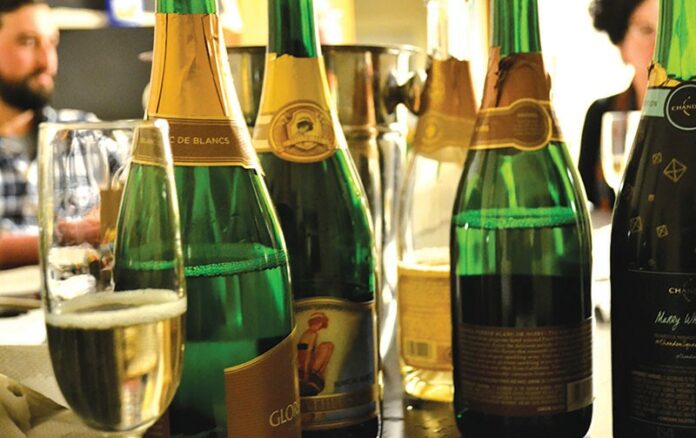
Char. Tar. Cigar. Graphite, pencil shavings and pipe tobacco. Isn’t it strange that while Cabernet Sauvignon is America’s favorite red wine, many of the varietal’s signature aromatics are probably not on top of most wine drinkers’ “love it!” lists? Or at least, as with pipe tobacco, are declining in favor.

Syrah, at least, sometimes smells like “animal fur” even when it’s really good, so why can’t a nation that smooches with schnauzers get with that great grape? Cab has more cachet is why, so let’s find out how some of Cabernet Sauvignon’s typical aromas and flavors play out in a lineup of recent North Coast vintages.

Hess Select 2014 North Coast Cabernet Sauvignon ($19)

The “green pepper” characteristic that Cab sometimes shares with Sauvignon Blanc is easier to understand when you know that Savvy is a parent of Cab. Curiously, the black currant flavor, which is the most typical analog to the varietal’s fruit and jam flavors, isn’t familiar to most Americans. After some searching I found one French brand of black currant jelly on a bottom shelf at Oliver’s Market and, sure enough, it’s got a sweet aroma similar to blackberry, but is more savory and earthy—just like Cab. This wine sweetens up to a more minty note, finishing on a firm note of iron.

★★

Educated Guess 2014 Napa Valley Cabernet Sauvignon ($25)

Cedar is nice, but it can’t just be the oak barrels that contribute this typical Cabernet aroma—after all, they’re oak, not cedar. But the char is all heavily toasted oak. Think barbecue—the stubborn meaty bits of char you’ve got to scrape off the grill. This wine coats the tongue with raspberry fruit-wrapped tannins, finishing on the hot side.

★★½

Jordan 2012 Alexander Valley Cabernet Sauvignon ($55)

True to house style, this is unforthcoming at first, showing only hints of gravel dust, and maybe a little sweet raspberry-flavored pipe tobacco—or “vape” flavor. But the Jordan’s shyness does not mean lack of substance—it finishes with a lingering hint of sweet raspberry fruit and spice, instead of austere bitterness. I recently had the 2013 Cabernet with roast chicken at one of Jordan’s harvest lunches, and it was a better pairing than the Chardonnay—go figure.

★★★

Charles Krug 2013 Napa Valley Cabernet Sauvignon ($30)

Bacon, green olive and cassis? Now we’re getting into something more…savory. The notes of bacon may come from oak barrels more refined in their toasting, while the savory, green olive notes are an elaboration on the green pepper trend. This wine has a silky body and intense flavors of red berries and cassis—the liqueur version of black currant. Pretty good price for the neighborhood.

★★★★

As for pencil lead, better luck next time.

Fifth Dimensions

0

At least it can be said that nobody is threatening to throw the loser in jail in the race for Sonoma County Supervisor in the 5th District.

But the race between Noreen Evans and Lynda Hopkins has featured all the negative bells and whistles of a political campaign in a season gone amok with the bitter and bilious: the open mom-shaming of Hopkins for supposedly abandoning her kids to political ambition; campaign commercials featuring literal piles of bullshit, Evans taking to Facebook to ask her supporters to stop vandalizing Hopkins’ signs with spray paint smears accusing her of being a one-percenter; and street-corner encounters in Sebastopol between supporters of the candidates—both of whom are, in the end, progressive Democrats, and kind empaths at that.

Pete Foppiano, the former Healdsburg mayor, city councilman and local political analyst who is a regular on Steve Jaxon’s KSRO radio program, says the race has unfurled just as he said it would months ago: The 30-something newcomer Hopkins has been relentlessly dinged by the veteran pol Evans and her supporters for the contributions and support she has received from Sonoma power brokers such as Doug Bosco (general counsel at the Press Democrat) and assorted entities such as the North Coast Builders Alliance and the gravel-mining industry. Hopkins insists she’ll be an independent voice on the board even as Evans highlights Hopkins’ well-documented base of support and what that might or might not say about how she would vote on issues before the board.

Beyond “experience” and “follow the money,” there are a few areas of apparent division between the candidates, or at least interesting jump-off points for further discussion: pensions, housing and cannabis.

PENSIONS

The pension debate may be the most starkly held and byzantine of the issues that have defined the West County race, and Hopkins’ supporters point to Paul Gullixson commentaries in the Press Democrat that have highlighted how legacy pensions are crushing the county’s books. The local paper of record has endorsed Hopkins, who herself says flat out of her opponent, “I think there is a pension problem and [Evans] does not,” as she highlights a nearly $1 billion in unfunded liabilities held by Sonoma County in a pension system that she says is not delivering on its promise.

“The system is predicated on a [return on investment] of 7.25 percent that is not attainable,” Hopkins says as she adds that it is “a huge issue that threatens local social services” and handicaps the county’s ability to, for example, enact living wage legislation. Evans has the support of the Service Employees International Union, which has been battling with the county over wage-equity issues for the past couple of years.

Hopkins’ supporters have emphasized that she brings a head full of new ideas to the table; detractors, including Evans, question the wisdom of some of her proposals, including her pension fix proposal. Evans notes that she has waded through the pension-reform debate for years and explains that wthere are two different mechanisms through which pension are paid: Very briefly: one is the legacy system for county workers; the other was implemented through state reforms that created a second tier that significantly cut benefits for new union employees. Hopkins’ new pension tier is designed to spread the investment risk—a hybrid between a public employee retirement account (401c3) and a pension.

The problem, says Evans, is that such hybrids are currently “illegal under California law. It’s not only disallowed under California law but it would cost the county a lot more to administer.” The issue is playing out in state court through a lawsuit in Marin County that seeks to overturn the so-called “California rule” that says municipalities can’t change the rules on pensions once they have been vested.

Hopkins is adamant about unaddressed abuses she says have gone on at the county—and which Evans has supported, she says—noting an especially high-profile pension of former county auditor Rod Dole who, by the time he had cashed in all his accrued sick time and paid vacation, was earning more as a retiree than he did as a county employee. Evans says that Dole’s case isn’t enough to upend the county pension system with a new tier. “There just aren’t enough Rod Dole’s in the system to solve the problem as she has defined it,” Evans says.

HOUSING

Some of the differences between the candidates appear to be based on a localized version of the national outbreak of bias confirmation that this nation has been enduring at the national level.

Sonoma County and Santa Rosa officials are pushing for an emphasis inclusionary zoning to promote affordable housing. That means requiring developers to build a mix of affordable and market-rate housing in new developments. Evans embraces that approach and she has also supported local efforts at rent control. Her critics have noted that Hopkins was late to support Santa Rosa’s rent-control measures. But Hopkins argues that that inclusionary zoning doesn’t go far enough. She and Evans support high-density, city-centered growth, but Hopkins points out that current funding models (i.e. inclusionary zoning) are inadequate to the crisis—and that “outside the box” solutions need to be embraced, including building tent cities and tiny-home communities.

The whisper-campaign knock on Hopkins is that in pursuit of those out-of-box solutions, the county’s unique urban-growth boundaries and community separators might be in play, given the insistence among some Evans supporters that Hopkins is the candidate of the so-called one percent. Hopkins brushes aside the critique and says she supports urban-growth boundaries. For her part, Evans is in favor of tiny homes, too. But in Sonoma County, any talk of rezoning agricultural land to accommodate workforce or affordable housing is going to be contentious and Evans says there’s a way to embrace tiny-home communities without opening the floodgates to the rampages of development upsetting the rural character of the area. “That always been the caveat—if we do it right.”

CANNABIS

The Sonoma County Gazette offered a handy candidates’ guide not long ago that featured editorial contributions from Evans and Hopkins about their view of Proposition 64, which would legalize recreational cannabis use statewide. Hopkins was an unequivocal supporter in her statement whereas Evans didn’t come out and say whether she supported 64 or not—only what she’d do in the event it passed insofar as leveraging economic opportunities and regulating at the county level.

“I addressed it that way because I am conflicted,” Evans says. “It’s a flawed initiative,” she adds but does note that even so, “I’ll probably vote for it and I expect it to pass.”

Evans adds that cannabis policy is an area “where experience really matters,” as she notes that it’s an entirely new industry with no set path on “how to make it work, how to tax it appropriately and use those taxes.” She cites her long history in writing regulations and experience with law enforcement and land-use planning issues to back her pitch as the county’s top pot official.

As an organic farmer, Hopkins says she is aware of the opportunities of a new cannabis economy and highlights her concern for small growers and medical users and how they might fare in a corporatized cannabis economy. “I’m concerned that small growers and fixed income users might get priced out of the system,” she says.

Hopkins criticizes Evans for viewing cannabis “as a source of funding that is going to solve a host of county ills—from roads to early childhood education.” Hopkins’ warning on cannabis tax dollars is that the anticipated revenue might not be there: “Don’t count your chickens before they are hatched.” Evans says just look at the tax hatchlings in Colorado—opportunities for similar tax bonanzas could be realized in Sonoma County.
“This is an entirely new economy,” she says. “We need to make it work, tax it appropriately, and use those taxes” for county services.

Both candidates say they have tried to run policy-focused campaigns and Hopkins says there’s little daylight between the two on environmental issues. Hopkins also concedes Evans has the jump on her when it comes to experience—but that’s just the problem.

“Noreen would work very well within the system that exists,” Hopkins says. “My goal is to go in and change the system.”

Hopkins says the inoculation against charges that she’s been pre-bought by developers and local Democratic power brokers like Bosco is transparency. And she flips the Bosco criticism back on Evans by noting that she “has a stronger relationship with Doug Bosco than I do—she served on the Coastal Conservancy with him.”

Evans pushes back against the implication. “Big donors give you the big money because they want you to act in a particular way,” she says, adding that if Hopkins wants to be a single-term supervisor, “she’ll take on all the interests that have taken her on so far” as she highlights the well-traveled list of local power centers that have been attracted to Hopkins’ campaign: the pro-business Sonoma County Alliance, the North Coast Builders’ Alliance, and others.

Evans concedes that “I have worked with various of them and they have given me money on some of my legislative campaigns but I’ve never been a part of that group.”

But Hopkins brushes back charges that she’s a vulnerable neophyte who doesn’t know what she’s gotten herself into by lining up with the Sonoma County power brokers. “I come from outside the political system,” she says during a meeting at the Sebastopol campaign headquarters. “I don’t have long-term political-type relationships.” Hopkins says she does have some good local political connections, but that she plans to push back against the Sonoma “politerati” as she calls it, through the ruthless pursuit of transparency.

“No meetings behind closed doors. I want to spend my time outside of the county administration and outside of the usual political social circles.”

Organic farmer Shepherd Bliss is supporting Evans in this race but is on hugging terms with both candidates and says “I don’t think Lynda fully understood what she was getting into, which is why I don’t approve of some of the attacks on her.”

Hopkins recently released a video where she rattles off the “bullshit” charges coming from Evans in a field dotted with cow plop. She calls out, for example, an Evans claim that Hopkins moved to the 5th in order to run for office—even as Evans moved from east Santa Rosa to Sebastopol to qualify as a candidate in this race.

Hopkins says the video is in the spirit of Jon Stewart but Evans doesn’t see the humor in the agit-plop effort. She calls it “raunchy” and says that Hopkins has “publicly implied that I am corrupt on three occasions. She called me a liar. It is hard to know how to respond to that kind of negativity, especially when she is producing a video like that and saying I’m negative.”

Still, as Bliss says, “they are both likable for a different set of reasons.”

Foppiano says the nasty tone of the race is tracking with “the pattern throughout the country. This seems to be more polarized or divided and it’s not along liberal or conservative or Democrat or Republican lines. Not to simplify, but it seems to be more about the one-percent versus everyone else. If you plopped this race down in the middle of Ohio somewhere, there’s not much of a difference between them. All the same, the lines have been drawn.”

New Rules

0

Last week, Sonoma County officials unveiled proposed regulations to govern medical cannabis business operating in the unincorporated areas of the county. Given that much of the county’s rural and agricultural land lies in these areas, these regulations will have a significant impact on the future of medical cannabis businesses—particularly those in cultivation—operating in Sonoma County. The proposed cultivation regulations have several key features:

Outdoor Cultivation

Outdoor cultivation would be limited to properties zoned for agriculture or “resources and rural development.” Outdoor cultivation would not be allowed in land zoned as “rural residential.”

Outdoor cultivation would require a minimum parcel size of
2, 3, 5, or 10 acres depending on the size of the cultivation operation.

The maximum size of any outdoor cultivation operation would be 1 acre.

Multiple operators could jointly cultivate outdoors, but only one agricultural parcel with the total canopy not to exceed the 1-acre limit.

Indoor Cultivation

Indoor cultivation would be allowed on industrial, agricultural and other residentially zoned properties; however, indoor cultivation operations larger than 5,000 square feet would be limited to industrial zoned properties.

No minimum parcel size would be required for indoor cultivation.

The maximum canopy size permitted in any indoor cultivation would be 22,000 square feet.

Multiple operators could jointly cultivate in a single indoor facility on agricultural or industrial zoned properties, but the total canopy could not exceed 5,000 square feet on agricultural parcels or 22,000 square feet on industrial properties.

At a meeting hosted by the county last week, many of the 200-plus attendees expressed concerns that regulations were too restrictive or that they would be unable to comply. That appears to be the unfortunate cost of transitioning into a highly regulated environment. There is no one-size-fits-all approach. The good news is that growers and other stakeholders still have a chance to voice their opinion before the Sonoma County Planning Commission starting Oct. 13 when they will discuss the proposed regulations.

Aaron Currie is an attorney with Dickenson, Peatman & Fogarty who assists cannabis businesses in compliance with state and local laws. Contact him at ac*****@*****aw.com

Letters to the Editor: October 12, 2016

Bright Idea

Thank you for a brilliant article (“BoBnb, Anyone?” Oct. 5) on the effects of online rental platforms in West Marin. Over the past years, I’ve watched a few places like Bolinas go from a quiet sanctuary with a beautiful community vibe to something completely different and disturbing. Is Airbnb destroying communities? You bet. When long-time residents get kicked out, who is going to be there to sustain a community? Probably not people who pay $1,200 a night so they can have as much fun as they can buy. For months we’ve been wondering, who are all these dressed up people strolling our (very laid-back) street in Sonoma, until we discovered there is an Airbnb rental two houses down. But in case of West Marin, it seems to have gone to an extreme. I think it’s a combination of online rental platforms and social media that spreads the word, often to a crowd of perfect strangers about places that would benefit from staying what they used to be—local sanctuaries. Obviously Airbnb cash is great, and I know plenty of people who only stay at short-term rentals when traveling. Yet the stories of landlords asking tenants to leave the premises every now and then so they can generate some money, are extremely worrying. This whole situation should be regulated on a local level. Thanks again for raising awareness about this issue.

Lana Kovalev

Sonoma

Strong Advocate

Some individuals are attempting to fool people into believing that environmental/land-use battles are vestiges of the past. One merely needs to conduct a perfunctory perusal of recent events to discover a radically different scenario. Those who espouse such inanity may not have the best interests of Fifth District voters in mind. Consider these: Dairyman Winery, Best Family Winery, coastal waters leases, Occidental Gateway plan, Spud Point Marina plan, Gualala River logging plan and development of coastal lands.

From a cursory review, it becomes clear that this is no time to place a novice at the helm who is long on platitudinal catchphrases, but short on specifics. We need a strong advocate with a proven track record who is unafraid to confront powerful interests. Leadership sometimes involves taking stances on issues long before public and legislative sentiment aligns with one’s own. Noreen Evans’ 2011 vote favoring overtime for farmworkers presents but one example of her political courage.

On Nov. 8, I will be proudly casting my vote for Evans to become our next Fifth District supervisor. I strongly urge others who share concerns about the preservation and future well-being of our beloved Fifth District to join me.

Thomas David Bonfigli

Sebastopol

The Stein Way

I enjoyed reading Elizabeth Whitney’s letter “Cosmic Forces” (Oct. 5) in which she righteously trashed Trump’s materialism and then spoke admiringly (without naming) of “the female who has shown up at this moment in time to challenge the false power of materialism.” Ms. Whitney is obviously referring to presidential candidate Jill Stein of the Green Party, since the other woman on the ballot for president is a Goldman Sachs-sponsored war hawk who calls black teenagers “super predators.” Go Jill!

Peter Byrne

Petaluma

Write to us at le*****@******an.com.

Big and Bad

0

The Reverend Josh Peyton learned a long time ago that there’s more to music than playing an instrument and writing songs.

“When I was a kid, I’d go to see shows and I started to figure some things out,” he said in a recent phone interview. “I realized early on to be good, you’ve got to be good on your instrument, you’ve got to be good at writing songs and you have to put on a show.”

That’s why the Reverend Peyton’s Big Damn Band brings not only its solid country blues songs, but also delivers a dynamic, high-energy and entertaining show each time it hits the stage.

When they hit the stage, Peyton, his washboard-playing wife Breezy and drummer Ben “Bird Dog” Russell aim at getting the audience moving rather than just standing and staring.

“You will never come to one of our shows and see us staring at our feet, acting like the audience isn’t there or we don’t care,” Peyton said. “When I see a band doing that, it makes me mad. I literally get mad. I get angry. That’s not at all what it’s about.”

Of course, good music doesn’t hurt, and the current release, So Delicious, is the band’s eighth full-length release and its first under a new deal with Yazoo Records. It’s the group’s best effort yet and the first album that captures what the trio, which formed in 2003 in the Indianapolis, Indiana, area, sounds like live.

“Our early records were like field recordings,” Peyton said “We’d throw up mics and play live. It actually takes more effort to make it feel live than just throwing up mics. Over the years, we’ve learned that.”

Among the most notable songs on the record are the charming down-home-in-the-kitchen ramble “Pot Roast and Kisses” — “If you can listen to that song and not at least smile, maybe you and I are so far apart we should see other people,” Peyton said — and the country blues march “Raise a Little Hell” on which the band is joined by a children’s choir.

There’s no kid’s choir on the road with the Big Damn Band. But Peyton is confident that the band will connect with audiences on multiple levels, just as it does on the record.

“The kind of stuff I like to go see, it really makes you feel something,” Peyton said. “There’s music for your head, for your heart and there’s music for your gut, too. I want to do it so it’s all of those, so you really feel something. I think the best stuff is that way.”

Reverend Peyton’s Big Damn Band plays the Mystic Theater Oct. 20–21 Petaluma Blvd North, Petaluma. 707.765.2121. $17.

Hooked

0

I’m a fan of Peter Lowell’s restaurant and when I learned owners Lowell Sheldon and Natalie Goble were opening a more casual fish taco and burger spot in the old Foster’s Freeze across town I couldn’t wait.

The concept is “coastal California”—ceviche, fish tacos, cioppino, oysters, farm fresh salads, and artfully prepared burgers all washed down with exceptionally good beer and wine.

Handline is easily the best looking restaurant in the West County. The idea was to echo the mid-century aesthetic of Foster’s Freeze and they’ve done that but much more. Inside the ceilings are high and light pours in. The roofline and street sign are reminiscent of the old burger joint. The wave-like wood patterns on the walls, the big, sliding rice paper-like panels and the beautiful outdoor patio with long, high-style picnic tables add a Japan-meets-California indoor-outdoor feel.

One of the most distinctive features of the restaurant is the fencing—heavy gauge wire frames filled with asphalt removed from the site. The monolithic structures serve as a sound and visual barrier to the busy Gravenstein Highway and are a tangible example of the owners’ commitment to reuse and recycle.

I ate my way through a good portion of the menu and everything I tried was good, some great.

I love fish tacos and am a stickler for technique, having eaten many a taco in San Felipe and Ensenada. Handline’s were delicious and generous. Ten bucks gets you two, heaped with lightly battered rock cod under a hillock of lime slaw squirted with chipotle aioli. My only quibble would be all that cabbage reduced the crunch of the fish, a pleasing textural contrast that makes fish tacos so satisfying.

Don’t miss the al pastor tacos ($12). They’re as good as any I’ve had north or south of the border. The succulent, spit-roasted pork plays off bits of porkified pineapple and piquant pickled onions.

Impressively, Handline mills the corn for its masa and makes the tortillas to order. No one does that, except Sonoma’s excellent El Molino Central, where Goble got a master class on masa.

Sheldon and Goble said they wanted to satisfy fans of Foster’s Freeze with a good burger. At $11 it doesn’t classify as a fast food price, but their burger is a great value. The pasture raised beef is topped with tangy St. Jorge cheese sauce, spicy sweet Calabrian pepper relish and thousand island dressing sandwiches between an outstanding toasted, brioche-like bun Goble makes herself. There’s also a fish sandwich ($14) and a housemade vegan burger ($11).

Handline does an elegant version of cioppino—the Pier 45 ($17). It’s loaded with clams, mussels, fish and calamari that swim in a thin, but rich tomato broth.

The handsome bar and eclectic selection of beer and wine will make it a destination in its own right.

I predict kids will love the place, too. The kids menu includes a downsized burger ($9), fish and chips ($9) a quesadilla made with more of that St. Jorge cheese ($6) and Mi Niño—chicken, beans, avocado and cheese ($8). And they’ll love the crazy under-the-sea terrarium filled with neon-colored coral and jelly fishes, Aquaman, Godzilla, Barbie dolls, turtles, squids, crab and more doo-dads and figurines that come into view the longer you look.

What’s for dessert? Soft-serve Straus ice cream, chocolate, vanilla or swirled ($4.50).

Reel me in. I’m hooked.

The Living Dead

0

The days grow short and the nights colder, longer. October, Halloween and the Day of the Dead are upon us. For our annual Fall Literature issue, we present two morbid, but very much alive excerpts from the just released Eternal Frankenstein, a collection of 16 stories published by Petaluma’s Word Horde, publisher of horror and fantasy books. The stories use the enduring legacy and power of Mary Shelley’s nearly 200-year-old novel Frankenstein, or the Modern Prometheus as a point of literary departure.

“Mary Shelley’s Frankenstein is many things,” writes editor Ross E. Lockhart in the book’s introduction. “A first novel. A philosophical work. The origin of science fiction. It is a reaction to volcanic dust obscuring the sun, and the apocalyptic skies that distinguished the year without a summer. It is a novel marked by the loss of a child, and the desire to write something more enduring than the poetry of Lord Byron and Percy Shelley. It is a story of technology and magic and the desire to challenge god’s and nature’s laws. It is a tale of dreamlike geographies, shifting topographies and finding one’s place in the universe…. Frankenstein, like its monster, its creature, its wretch, has taken on a life of its own. It reflects us. It defines us. It shows us what it means to be human.”

In these pages, we offer an excerpt from David Templeton’s novella-length “Mary Shelley’s Body,” which reveals how Shelley’s life overlapped with that of the creature she created, and a section from Amber-Rose Reed’s short story “Torso, Head, Heart,” the backstory to each of the creature’s various body parts. Enjoy.

— Stett Holbrook

Mary Shelley’s Body

I cannot breathe.

O! God! I cannot breathe!

There is thunder in my lungs, a whirlwind in my throat, bolts of lighting stabbing at my heart, shredding my flesh, shredding my soul like paper. I feel as thin as paper. I am burning! I try to breathe, but all I sense in my chest are those buzzing arcs of light, spreading out like veins of fire through my skin. And still I cannot breathe.

I wonder . . . should I stop trying?

I stop. There is a faint faraway exhalation, as if from behind a dark wet door. I let myself hear it, the sound of it, evaporating. It is an empty sound, as shallow and void as my body, my poor, sick, wrecked, half-paralyzed, once desirable, once fearless, once unstoppable body.

Ah, I begin to understand. As suddenly and certainly as those flashes of light I still see somewhere beyond what used to be my eyes, I see the truth now.

I no longer need to breathe. I am done with breathing.

I am dead.

Well great God, that took long enough!

The doctors are no doubt relieved to be rid of me, the crazy lady from London, wasting away with no obvious cause. For months, for years, there has been only a sense that something was wrong in the spongy muscle of my brain, something vital added or taken away.

And, now my life, my little life, is over.

My hapless heart, so long deluged in bitterness, is finally still.

I feel so much better now.

My head no longer hurts, for one thing.

And that terrible burning smell, like wet feathers set ablaze, that is gone too. How long has it been since it all began, the smell, the headaches, the fainting spells, then the failure of half my body to obey the simplest task?

No matter. I am free of it now.

Free of my body.

Free of my life.

This then, I surmise, is my grave?

This slab of cold carved stone I sense before me, after years of loneliness, is my lonely gray tomb? I cannot see, but I do perceive shapes and structures all around. I cannot feel, but I detect words here, carved into the rock slab before which I stand.

How am I standing?

My body, what is left of it, lies there in the grave.

Yet here I am. Standing.

Kneeling, even. Speaking, if speaking this is.

Had I fingers with which to feel I would caress these carved words, trace out their meaning with my fingertips—and yet, somehow I can. Somehow I do.

I can read the meaning of these etched lines.

Here lies Mary Wollstonecraft Shelley.

Yes. That was I.

Mary.

A wife. A mother. An author.

Daughter of William and Mary Wollstonecraft Godwin.

Those were my parents, yes . . . though he too much so, and she—dead almost upon looking at me—only my mother in that she conceived me, bore me, and birthed me. And still, in so many ways, Mary Wollstonecraft—the writer, the radical, beloved and despised by so many—gave me more with her life and words than my father, with his calm and silent disapproval, ever gave me with his.

The next line.

Widow of the late Percy Bysshe Shelley.

Shelley.

O, Shelley. My husband, my love, my savior, my only one!

I have no beating heart to ache with, no sense to feel with. How then does your name still stir me so? Almost thirty years have passed since you died, your soul set free beneath the waters of the Gulf of Spezia, your drowned body—with its speaking eyes and face unlike any other who ever walked Earth—burned to gray ashes on the shore. Since that day, O my love, I have missed you so, with only your memory to comfort me these many years.

That, and the singular divinity of your poems.

And, oh yes! I have had your heart.

It’s still in my desk.

Your friend Trelawney snatched it, charred and purple, from your funeral pyre. Your heart, dried and flattened, sits in my desk still, tucked way beneath my papers along with a lock of hair, one from each of our three dead children.

I wonder who will discover them, there in the drawer?

I suspect it will be our daughter-in-law, Jane.

It will give her a bit of a shock, that.

A final line.

Born August 30, 1797. Died February 1, 1851.

Odd. I feel as if I have only just died, but I am already buried. That was quickly done. I suspect it was Jane’s doing. Ever since she married my dear Percy Florence, that daughter-in-law of mine—whom I have loved with as much of my own heart as was left to love with—has proven nothing if not punctual. But then of course, she has had years to plan.

I have been dying for such a very long time.

And now I am dead.

I must be, for there is my name on this tomb.

Shelley used to joke that if I died before he, he would see to it that my marker proclaimed, “Here lies the body of Anonymous!”

It was a joke, but it came with a sting.

Anonymous was the word under which my first novel was published.

Afterwards followed years of ungenerous assumptions that another must have been the true author of my story, that I was not capable of it. Visitors to our house, when engaged in conversation with Shelley, oft interpreted my watchful silence as dullness, and whispered rumors that my husband likely wrote more of my prose than I. Shelley defended me. After that I saw to it that all of my subsequent works were published—if not always under my true name—then at least under a title which made my authorship clear.

For the rest of my days, all my published writing proclaimed, “By the author of Frankenstein.”

Frankenstein. My first great success, born of happier days, too briefly tasted.

Frankenstein.

My triumph . . . my curse . . . my hideous progeny.

— Excerpted from ‘Mary Shelley’s Body’ by David Templeton

Torso, Head, Heart

Left Arm, Right Arm

Your left arm blocks the swing; your right arm takes a swing of its own. Your knuckles crack against someone else’s nose. When you pull back your fist, you wiggle your fingers. Old Josef takes it as a slight and lets out a growl. He’s like a mutt going for a bone.

He charges again and you sidestep the cur. You didn’t start this fight, but he has a face fit for slapping and you’ve got fists made for hitting. He comes again. The tavern crowd around you buzzes and spits. The barmaid’s calling for someone to stop the brawling. You draw back your arm, ready to deliver a punch. It’ll be the last one you have to release tonight; sure thing, that.

Something crunches against the back of your head. Your vision goes black. You don’t feel any pain.

Torso

Your hammer hasn’t met the anvil yet when you hear the screaming. Women, mostly, and you pass the hammer to your apprentice and head out to the street to see what’s causing the noise. Down the way, a cart’s toppled over. You hear the screams as words as you get closer; there is a boy there, and the cart is crushing him.

The muck in the streets sucks at your feet as you rush over. You don’t trip. The crowd parts as you approach. There is none strong enough to help, save you.

The wood is splintered, but you find a grip. All you can see of the boy are his small child’s feet, shod in tattered shoes, and his legs, bare to the knee.

The muscles in your chest pull and twinge and you feel as though all of your upper self is on fire. But the cart gives way from the mud with a sucking sound, and as the boy slides from beneath the toppled vehicle, your eyes meet his. He has a strong gaze, blue eyes meeting yours.

You let go the cart, and mud squelches beneath it. You straighten and take deep breaths, waiting for the feeling of fire to leave your chest. But it doesn’t. You clutch your right hand over your heart. It feels, suddenly, like you are the one being crushed.

— Excerpted from ‘Torso, Head, Heart’ by Amber-Rose Reed

Just Say ‘Slow’

0

As an older teenager and a young adult who was a user of recreational marijuana, I remember that I always supported the legalization of marijuana. However, as a mature adult who has, hopefully, gained some wisdom over the years, I find my attitude toward legalization changing due to a few social and scientific realities.

First of all, what is pot? Pot is agriculture, and agriculture constitutes the number-one cause of water pollution due to three factors: sedimentation, nutrients and chemicals. And in the case of animal agriculture, add to that list pathogens. The difference between pot and most of the other vegetables used in agriculture is that most vegetables are used for nutrition to sustain human life. Marijuana agriculture is not necessary to sustain human life, in most cases.

We all are aware how money from the wine industry influences local politicians. We are also aware how the wine industry has hurt local biodiversity levels as well as the drain on the water supply and its effect on fish populations. If pot becomes legalized, the amount of money generated in the industry will help to spawn a whole new generation of lobbyists and the political prostitutes they so dearly love. Will all of the problems created by the wine industry be made worse by a bunch of money grubbing, nitrogen dumping, sediment creating, agricultural monstrosities likes Cargill, Archer Daniels Midland, Gallo, etc?

The term “unintended consequences” comes to mind when I ponder this subject. A recent study by the University of Mississippi concluded that legalization of marijuana in Colorado caused a substantial increase in housing prices. Is there any reason to think that wouldn’t happen here? Considering our already skyrocketing rents, how much will legalization exacerbate the problem?

As the (over)population of California approaches 40 million, voters need to be extra careful about what type of industry we permit to establish itself in a state already burdened by social and environmental problems. If there were only 4 million people in California, I might jump on the legalization train, but the infrastructure is already too strained. Let’s think of the big picture. Will we have to build a new desalination plant at Bodega Bay to support this industry? If we desire to be truly sustainable, at some point we have to stop making money the number one consideration. Perhaps this would be a good place to start.

Doug Haymaker is an environmental science student at Santa Rosa
Junior College and founder of the Clean Oceans Campaign.

Open mic is a weekly feature in the ‘The Bohemian.’ We welcome your
contribution. To have your topical essay of 350 words considered for
publication, write op*****@******an.com.

Oct. 15: Water World in Rutherford

The stunning black-and-white photographs from Wayne Levin look like they’re from another world, and in a way, they are. Since the 1970s, Levin has documented underwater scenes with grace and illuminating skill. Levin’s latest collection of images is on display in his new solo exhibit, “Through a Liquid Mirror,” which both celebrates the ocean worlds surrounding his adopted home...

Comedy Binge

It's safe to say that with everything swirling around in 2016, we all need a good laugh. Thankfully, we don't have to go far to get one. Over 100 of today's best comedians are descending upon Sonoma County this month for the second annual Sonoma Laughfest, a four-day event packed to the funny bone with standup, sketch and improvised shows,...

Of Char and Tar

Char. Tar. Cigar. Graphite, pencil shavings and pipe tobacco. Isn't it strange that while Cabernet Sauvignon is America's favorite red wine, many of the varietal's signature aromatics are probably not on top of most wine drinkers' "love it!" lists? Or at least, as with pipe tobacco, are declining in favor. Syrah, at least, sometimes smells like "animal fur" even when...

Fifth Dimensions

At least it can be said that nobody is threatening to throw the loser in jail in the race for Sonoma County Supervisor in the 5th District. But the race between Noreen Evans and Lynda Hopkins has featured all the negative bells and whistles of a political campaign in a season gone amok with the bitter and bilious: the open...

New Rules

Last week, Sonoma County officials unveiled proposed regulations to govern medical cannabis business operating in the unincorporated areas of the county. Given that much of the county's rural and agricultural land lies in these areas, these regulations will have a significant impact on the future of medical cannabis businesses—particularly those in cultivation—operating in Sonoma County. The proposed cultivation regulations...

Letters to the Editor: October 12, 2016

Bright Idea Thank you for a brilliant article ("BoBnb, Anyone?" Oct. 5) on the effects of online rental platforms in West Marin. Over the past years, I've watched a few places like Bolinas go from a quiet sanctuary with a beautiful community vibe to something completely different and disturbing. Is Airbnb destroying communities? You bet. When long-time residents get kicked...

Big and Bad

The Reverend Josh Peyton learned a long time ago that there's more to music than playing an instrument and writing songs. "When I was a kid, I'd go to see shows and I started to figure some things out," he said in a recent phone interview. "I realized early on to be good, you've got to be good on your...

Hooked

I'm a fan of Peter Lowell's restaurant and when I learned owners Lowell Sheldon and Natalie Goble were opening a more casual fish taco and burger spot in the old Foster's Freeze across town I couldn't wait. The concept is "coastal California"—ceviche, fish tacos, cioppino, oysters, farm fresh salads, and artfully prepared burgers all washed down with exceptionally good...

The Living Dead

The days grow short and the nights colder, longer. October, Halloween and the Day of the Dead are upon us. For our annual Fall Literature issue, we present two morbid, but very much alive excerpts from the just released Eternal Frankenstein, a collection of 16 stories published by Petaluma's Word Horde, publisher of horror and fantasy books. The stories...

Just Say ‘Slow’

As an older teenager and a young adult who was a user of recreational marijuana, I remember that I always supported the legalization of marijuana. However, as a mature adult who has, hopefully, gained some wisdom over the years, I find my attitude toward legalization changing due to a few social and scientific realities. First of all, what is pot?...
11,084FansLike
4,446FollowersFollow
6,928FollowersFollow