Volunteer to Be a Part of Railroad Square Music Festival


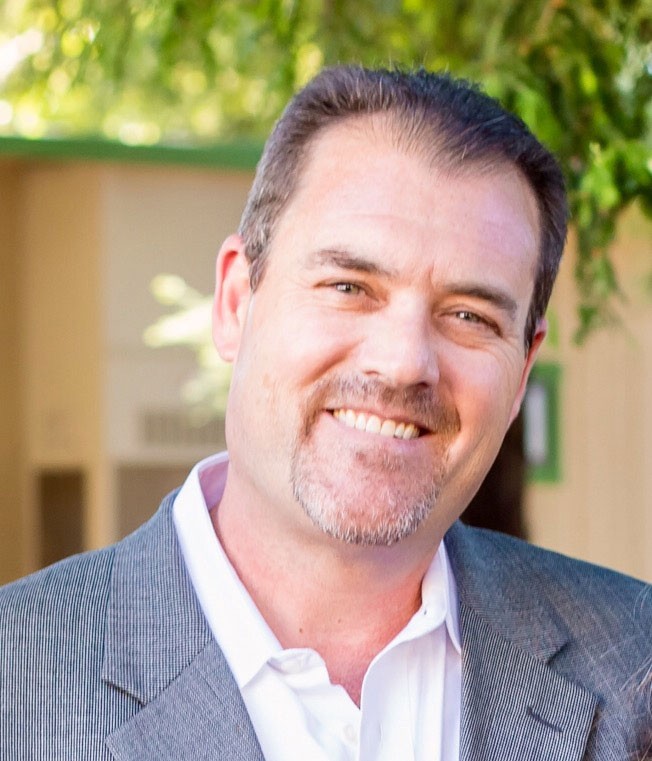
Returning this year for a third annual installment of great music in the heart of Santa Rosa, the Railroad Square Music Festival is looking for a few good volunteers.
The community event, run by the fine folks at the North Bay Hootenanny and supported by groups like Second Octave Entertainment, is going to be bigger than ever when it takes over the Railroad Square district on June 11, and you can lend a hand (or a couple of bucks) to ensure the show goes smoothly for the expected 5,000 people who will be attending.
Watch the video above to learn how you can volunteer. And then watch the video below to get more information on the festival’s Go Fund Me campaign. This event is going to be a blast, don’t miss out on the fun!


May 12: Throwback Horror in Cloverdale

0

When the original ‘Invasion of the Body Snatchers’ was released in 1956, America was a country of sock-hops, soda jerks and drive-in movies. Now, more than 60 years later, Body Snatchers remains one of the most memorable horror films to come out of the era of McCarthy and the Cold War, and the term “Pod People” still generates shivers down the backs of those who saw it. This week, the film lovers at Alexander Valley Film Society are dialing the clock back and presenting the film in true 1950s fashion, with a drive-in screening of the movie on Friday, May 12, at the Citrus Fairgrounds, 1 Citrus Drive, Cloverdale. Gates open at 6:30pm. $15–$60. avfilmsociety.org.

May 12-13: Space Mom in Yountville & St. Helena

0

Chemist, physician and former NASA astronaut Anna Lee Fisher became the first mom in space when she flew aboard Discovery in 1984. Her highly decorated career has inspired generations, and her empowering stories have made her a popular figure at events around the country. This week, Fisher is in the Napa Valley for a pair of appearances. First, she’ll be in conversation with her daughter, Emmy-winning newswoman Kristin Fisher, on Friday. Then, she appears at a screening and panel discussion of the film Hidden Figures on Saturday. Catch Fisher on May 12 at 7pm at the Napa Valley Museum (55 Presidents Circle, Yountville; $10–$20; 707.944.0500) and on May 13 at 2pm at Cameo Cinemas (1340 main St.,
St. Helena; $8–$15; 707.963.9779).

May 13: Home-style Helping in Rio Nido

0

The Clean River Alliance is all about talking trash—in the Russian River, that is. After seeing the flow of garbage that heads out into the ocean after heavy rains, founder Chris Bokate developed the alliance to remove trash from the lower Russian River and prevent it from devastating the local environment. This week, the Clean River Alliance is raising funds with an old-fashioned spaghetti cook-off that features family fun and lots of food. Vote for your favorite sauces, dance to the tunes of Midnight Sun, enter to win door prizes, bid on silent auctions and sign up to help the alliance on Saturday, May 13, at the Rio Nido Roadhouse, 14540 Canyon Two Road, Rio Nido. 4pm. $10–$20. cleanriveralliance.org.

May 13: Amazing Inks in Santa Rosa

0

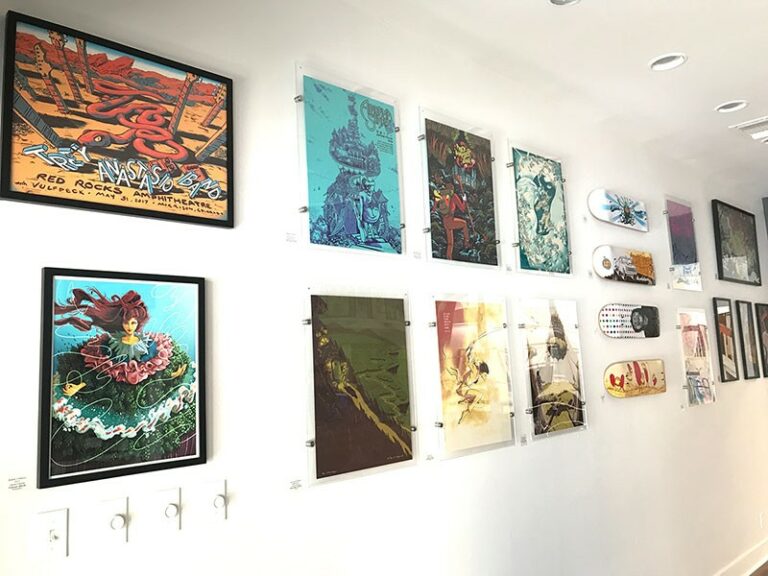
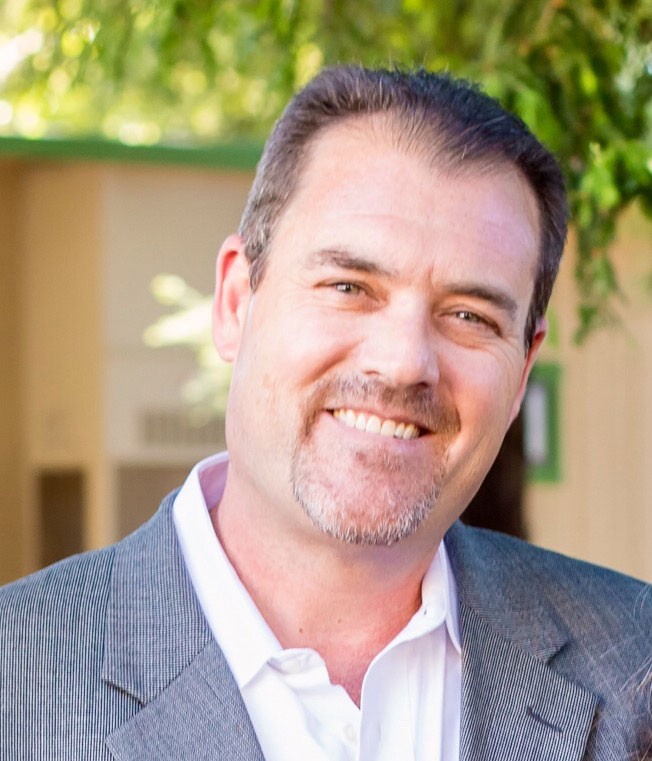
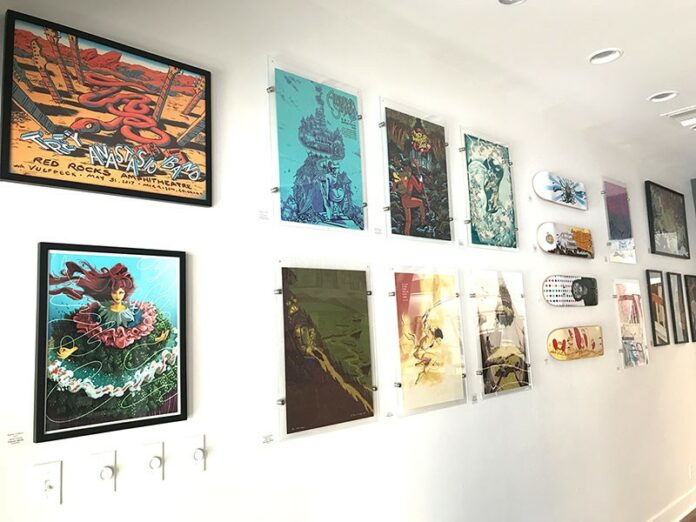
Graphic designer Curt Barnickel is a collector and creator of screen-printed works of art, and his eye for exceptional pieces is on display at his new Agent Ink Gallery in downtown Santa Rosa. Featuring limited-run posters and apparel, Agent Ink’s walls are adorned with works by some of the best poster artists and screen printers from around the world. This week, Agent Ink officially unveils its eclectic collection with a grand opening that lets you feast your eyes on new releases by several famed West Coast artists. Food, beer, wine and live music will also be on hand for the party on Saturday, May 13, at Agent Ink Gallery, 531 Fifth St., Santa Rosa. 6pm. Free admission. agentinkgallery.com.
—Charlie Swanson

Debriefer: May 10, 2017

FREITAS AND ICE

Jerry Threet has been taking a lot of grief from police accountability activists as head of Sonoma County’s Independent Office of Law Enforcement Review and Outreach, but he did manage to leverage a change in the Sonoma County Sheriff’s Office (SCSO) policy toward noncitizens who commit crimes.

As first reported in the Press Democrat on May 2, Freitas said he would release prisoners to Immigration and Customs Officials under guidelines set out by the 2013 Trust Act, which, as reporter Martin Espinoza noted, was supported by immigrant-rights groups. The California Trust Act set out conditions under which detainees could be released to ICE—and also under which conditions they could not.

Based on Threet’s recommendation, reported the PD, the SCSO will no longer contact ICE for non-serious crimes such as driving without a license, as Freitas pledged to abide the standards of the 2013 act.

Freitas had previously written to ICE to offer assistance to the federal agency as it warned of the Trust Act’s potential legal implications to the SCSO. In a May 7, 2014, letter to Craig Meyer, an assistant field director at the ICE office in San Francisco, Freitas noted that court cases that had been filed in the aftermath of the act’s passage had clarified that “local law enforcement agencies are free to disregard ICE detainers,” and highlighted that the court orders also suggested “that local law enforcement agencies may be exposed to potential civil rights actions for honoring ICE detainers, absent a showing of probable cause for detention.”

Freitas went on to inform Meyer that, given the risk of civil lawsuits, the SCSO would not honor ICE detainers absent proof of probable cause—such as an arrest warrant.

Then he offered to help ICE establish probable cause: “If you would like to meet to discuss possible other methods of providing probable cause, I would be happy to meet,” Freitas wrote.

The SCSO rejected any implication that Freitas had been working with ICE to assist the agency in deporting non-citizens charged with minor offenses. “The letter specifically states that we are no longer going to accept ICE detainers without probable cause,” says SCSO spokesman Sgt. Spencer Crum via email. “If there was another way to establish the probable cause without a warrant we would be willing to listen to Mr. Meyer’s ideas as we would consult with any other law enforcement agency. To this day, we reject all ICE detainers and will only hold people who we’d otherwise release if we have a valid warrant signed by a judge.”

POTOPOLY

A state Senate budget subcommittee met May 4 to discuss the implementation of Proposition 64. A rider bill to last year’s voter-approved legalization would address taxation and other issues, but the sticking point, says California Growers Association executive director Hezekiah Allen, is a proposed repeal of Section 26051, which gives officials latitude to deny canna-biz applicants if they are concerned they might “create or maintain monopoly powers.”

Proposition 64 protects local growers with a five-year window to grow their business and protect their flowers from corporate takeover. Section 26051 covers a range of deniable factors: Applications can be rejected if authorities believe they would encourage underage use or adult abuse; violate environmental protection laws; or contribute to the black market.

By every indication, the repeal-26051 effort is not being pushed by children, criminals, addicts or illicit streamside growers. Hmmm . . .

Fork in the Road

One of the big questions facing those who wish to participate in the emerging cannabis industry is whether to focus on the medical market or the adult-use market. The medical market in California is relatively mature, with existing infrastructure and patients used to going to the dispensary. However, it remains to be seen how that system survives the adult-use market which comes online Jan. 1, 2018.

Right now, in order to go to a dispensary and buy medical cannabis, one must get a recommendation from a doctor. Though this is a not a particularly difficult process, it still takes time and money—usually less than $100. When the adult-use market opens, one will be able to buy medical cannabis with a driver’s license. So who will go to a medical dispensary? Customer loyalty will only go so far if the adult-use market is more convenient.

I see two scenarios in which the medical-market survives. First, I expect a difference in how medical and adult-use cannabis is taxed. If the tax difference is significant, people may still find value in getting a recommendation and buying medical cannabis. Second, it is possible that the medical system obtains higher grades of cannabis, at least initially. While many Californians use cannabis, the adult-use market remains in its infancy, and it’s unclear how the industry will respond to this new system.

One concern is that, in either system, it is possible that the cost of cannabis will increase—or plummet. I think that this is a real tension in the system. There is no question that the cost of growing and producing is about to go way up. The draft of state regulations is out, and it is estimated that compliance will be hundreds of dollars per pound. Will growers operate on a much thinner margin, or will they try to pass those increases on to consumers? Will the average consumer be willing to pay $20 a gram, as has happened in other states? Given the availability of cannabis, and the right to grow six plants, I think consumers will push back. This may lead to a race to the bottom in pricing.

I think all of these problems are solvable. The market will mature and many of these questions will be answered. My fear is not that some people won’t be successful; my fear is that most of the people I know in the cannabis industry now will not be in it within a few years. To me the system seems to favor wealth and capital. Most small producers, unless they can find a niche market quickly or are doing it as a hobby, will soon find the cost of production too high to make a living. Again, I think this is a short-term problem, but by the time it gets sorted out, most of the small producers will have been driven out.

Ben Adams is a local attorney who specializes in cannabis law and compliance.

Freight Not?

Here’s a question: If the regional transportation goal is to eliminate gridlock on Highway 101, why doesn’t a plan for expanded freight service enjoy the same support as the long-delayed Sonoma-Marin Area Rail Transit (SMART) commuter train?

Doug Bosco, an investor and lawyer for Northwestern Pacific Railroad, sounded nonplussed over the phone the night before a significant hearing before the California State Supreme Court in late April. If anything, Bosco, the former North Coast congressman, sounded mildly annoyed.

“We’ve won in every court we’ve been in,” he said, referring to ongoing efforts to bring freight service to the North Coast.

This latest legal scrum wasn’t itself the source of Bosco’s annoyance, but the $1 million in legal fees and the ongoing obstacles to reviving freight train service in Northern California.

“As a practical matter, this is a difficult undertaking,” says the state’s North Coast Railroad Authority (NCRA) executive director Mitch Stogner on the notion of reviving a successful freight industry in northwestern California.

The authority was born in 1989 via the North Coast Railroad Authority Act, Stogner says, to provide for continued rail service in the region. Along the way, the state purchased lines or arranged deals with rail owners to eventually create a connection from Schellville (outside of the city of Sonoma) to Willits.

At one time, there was bipartisan support to finance the act, but the project was dealt its first blow when Gov. George Deukmejian nixed a funding bill; the project was eventually awarded $500 million to restore the train lines in 2007 under
Gov. Schwarzenegger.

Freight service was set to begin in 2009 until a lawsuit filed by Novato stopped the train in its tracks. “We’ve had our share of disappointments, but we’ve not given up,” Stogner says. “It’s just a struggling little freight entity.”

The agency inked a five-year deal in 2006, and a 99-year lease with the railroad was signed in 2011; the freight service dates back to 1907, but has historically been subjected to a litany of financial setbacks, multiple operators and serial stoppages in service.

Under the lease, Northwestern Pacific would be forced into a partnership with SMART, as the two would have to share the tracks.

The respective railroads have relied on the same marketing materials to sustain public support: they claim to be a safer and more environmentally sound means of transport than cars and trucks.

“Trains are much more effective than trucks,” Bosco says, as he cites the federal regulations ensuring safe rail transit, adding that trains emit “far less pollution” than trucks.

The similar marketing posture is about the only thing the two rail companies have in common.

SMART is funded by a voter-approved quarter-cent tax, and has had unwavering support despite budget overages and delays in service. A who’s who of Sonoma and Marin county officials comprise SMART’s governing board.

The freight game isn’t so cushy. “It all depends on getting customers,” Bosco says, explaining that Northwestern Pacific can only gradually expand northward as the SMART tracks are finalized, and paying customers materialize.

“Now that SMART is built, we can pick up customers,” Bosco says. “It’s a slow process.”

[page]

It will likely take up to five years to extend the freight route—currently functional from Schelville to Novato and up to Windsor—as far north as Cloverdale. For freight customers, rail is a viable alternative to trucks. Bosco says one dairy-feed client from Petaluma has already saved $1 million in transportation expenses.

There’s a joint-operating agreement between the commuter and freight lines, mostly agreeable but with maybe a tinge of sibling rivalry. “The challenge has been to share the line,” Stogner says. The two services have to coordinate maintenance and repair responsibilities, and determine a schedule to allow them both to flourish.

“Freight runs predominantly in the evenings, and does not currently conflict with SMART’s operating schedule,” says SMART spokesperson and marketing director Jeanne Mariani-Belding.

The plan is that SMART will rule the rails during the commuter hours; the freight service gets some track time in the middle of day, but primarily runs in the wee hours—currently Sunday through Thursday from 3am to 6am.

The two rail companies did have one public spat. Late last year, Northwestern Pacific allowed some cars to be parked on the tracks near its Schellville headquarters.

Locals sounded an alarm—what’s in those mysterious cars that never go anywhere?

Tanker cars filled with liquefied petroleum gas were being stored in the area, a lucrative practice that the rail relies upon to goose its revenue. The issue: the tracks in that area are owned by SMART, leading to a dispute that was finally resolved in February.

Stogner says safety was never much of a concern—the area is surrounded by remote dairy land, and the cars are heavily reinforced. “There’s not much that people can do to them,” he says, short of someone using “an Uzi or something akin to that.”

It’s also a common practice to store product on the track. “There’s never been a problem,” he says, adding that, after a legal standoff, “it was handled amicably.”

The squabble did engender a further question: while it was legislated that SMART would own those tracks near Schellville, shouldn’t they be the freight train’s responsibility, since they’re the ones using the track?

“It is a little bit nonsensical,” Stogner says. “They have no plans to ever use [the tracks]”—and that the freight rail is the only one that uses that branch.

“[SMART has] no immediate plans for any changes there,” says Mariani-Belding.

And then there’s the final obstacle, so far, for Northwestern Pacific: the aforementioned appearance in California Supreme Court.

This conflict has nothing to do with SMART, but with the Friends of the Eel River and Californians for Alternatives to Toxics, which filed the suit and wants to apply state safety standards that are in place for a high-speed commuter rail in central California to the freight trains—when Northwestern Pacific is under federal authority.

Bosco says it’s “very unusual not to uphold” federal authority and pledged to go to the Supreme Court if necessary. “It really is a federal issue.”

But Northwestern Pacific has already lost. Regardless of the outcome, they’re out more than $1 million in legal fees, with no SMART-style quarter-cent tax to rely on to offset the mounting legal costs.

Matrons of Music

0

Growing up, vocalist and songwriter Pamela Rose didn’t want to be Doris Day; she wanted to be Aretha Franklin.

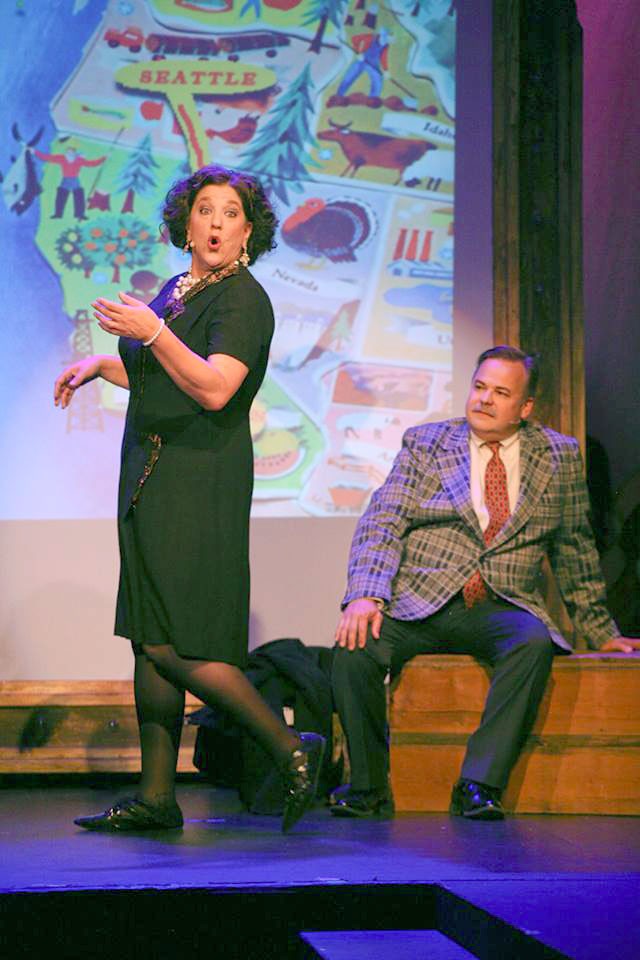
The San Francisco–based jazz and blues star celebrates several powerful female figures of music this weekend with her new show, “Blues Is a Woman,” that features a genre-spanning selection of music performed by a stellar ensemble.

Best known for her long-touring project “Wild Women of Song: Great Gal Composers of the Jazz Era,” Rose has spent the last two years creating “Blues Is a Woman” to shine a spotlight on often overlooked women singers and songwriters.

“Blues is thought of as a man’s world,” Rose says. “But the history shows that women really were the early popularizers of the form.”

Rose points to long-forgotten vaudeville and minstrel-show stars like Ma Rainey and Ida Cox, who toured the country at the turn of the 20th century, singing the earliest forms of blues and developing the genre’s emotional impact. From there, stars like Nina Simone and Etta James dominated charts in their time, though they rarely got the accolades that male contemporaries like B. B. King or Muddy Waters received.

Rose seeks to reintroduce these women to audiences with the new show, which traverses several eras of music, from boogie-woogie and big-band songs, to early R&B and even psychedelic protest songs made famous by vocalists like Janis Joplin.

“I knew when I wrote this show, I wanted an ensemble piece that was much more theatrical,” Rose says. In that vein, she recruited a cast of players to bring the blues to life. Her longtime accompanist, pianist Tammy Hall, joined the project as musical director, and theatrical director and writer Jayne Wenger took over staging duties. Rose also assembled a band that includes guitarist Pat Wilder, bassist Ruth Davies, drummer Daria “Shani” Johnson and saxophonist Kristen Strom.

Together the band has developed “Blues Is a Woman” into an engaging and inspirational concert experience that includes visuals and a rich theatrical arch, and Rose hopes to tour the show in the way she toured “Wild Women of Song” nationally for several years.

Just as women informed the lexicon of blues, Rose also notes that blues informed generations of women. “These songs have always been about freedom,” Rose says. “Blues really changed all American music, especially for women. It presented a very different view of what a woman could be: fierce, raw, feisty and independent. It made you feel that you were not the only one to feel that way.

“You were not alone. And that feels good.”

Dance Fever

0

Skylight Motion Picture sounds like something out of a flashy 1980s movie. The new Napa-based electronic dance trio utilize the era-appropriate synthesizers and effects for a jazzy, melodic and beat-driven pop that would have taken the charts by storm in the decade of Miami Vice and New Order.

This week, Skylight Motion Picture premieres their debut, self-titled EP, with a dance party in Napa that also features San Francisco electronic wizards Vice Reine.

Made up of Napa-based wine-industry professionals, Skylight Motion Picture was founded by keyboardist Ezekiel Hampton and drummer Joel Quigley as a bedroom project done in the after hours. The two focused on creating swirling synth-pop that carried emotional weight. Soon after their initial sessions, they brought in singer and bassist Lamar Engel to add those lyrical dimensions to their music, and the trio recorded their debut at Napa’s Humanitas Wines over the last year. The EP boasts hook-filled pop sensations as well as spacey, atmospheric gems for a truly cinematic texture.

Skylight Motion Picture’s flashback of sound pumps with energy on Thursday,
May 11, at Silo’s, 530 Main St., Napa. 7pm. $10–$15. 707.251.5833.

Volunteer to Be a Part of Railroad Square Music Festival

Returning this year for a third annual installment of great music in the heart of Santa Rosa, the Railroad Square Music Festival is looking for a few good volunteers. The community event, run by the fine folks at the North Bay Hootenanny and supported by groups like Second Octave Entertainment, is going to be bigger than ever when it takes...

May 12: Throwback Horror in Cloverdale

When the original ‘Invasion of the Body Snatchers’ was released in 1956, America was a country of sock-hops, soda jerks and drive-in movies. Now, more than 60 years later, Body Snatchers remains one of the most memorable horror films to come out of the era of McCarthy and the Cold War, and the term “Pod People” still generates shivers...

May 12-13: Space Mom in Yountville & St. Helena

Chemist, physician and former NASA astronaut Anna Lee Fisher became the first mom in space when she flew aboard Discovery in 1984. Her highly decorated career has inspired generations, and her empowering stories have made her a popular figure at events around the country. This week, Fisher is in the Napa Valley for a pair of appearances. First, she’ll...

May 13: Home-style Helping in Rio Nido

The Clean River Alliance is all about talking trash—in the Russian River, that is. After seeing the flow of garbage that heads out into the ocean after heavy rains, founder Chris Bokate developed the alliance to remove trash from the lower Russian River and prevent it from devastating the local environment. This week, the Clean River Alliance is raising...

May 13: Amazing Inks in Santa Rosa

Graphic designer Curt Barnickel is a collector and creator of screen-printed works of art, and his eye for exceptional pieces is on display at his new Agent Ink Gallery in downtown Santa Rosa. Featuring limited-run posters and apparel, Agent Ink’s walls are adorned with works by some of the best poster artists and screen printers from around the world....

Debriefer: May 10, 2017

FREITAS AND ICE Jerry Threet has been taking a lot of grief from police accountability activists as head of Sonoma County's Independent Office of Law Enforcement Review and Outreach, but he did manage to leverage a change in the Sonoma County Sheriff's Office (SCSO) policy toward noncitizens who commit crimes. As first reported in the Press Democrat on May 2, Freitas...

Fork in the Road

One of the big questions facing those who wish to participate in the emerging cannabis industry is whether to focus on the medical market or the adult-use market. The medical market in California is relatively mature, with existing infrastructure and patients used to going to the dispensary. However, it remains to be seen how that system survives the adult-use...

Freight Not?

Here's a question: If the regional transportation goal is to eliminate gridlock on Highway 101, why doesn't a plan for expanded freight service enjoy the same support as the long-delayed Sonoma-Marin Area Rail Transit (SMART) commuter train? Doug Bosco, an investor and lawyer for Northwestern Pacific Railroad, sounded nonplussed over the phone the night before a significant hearing before the...

Matrons of Music

Growing up, vocalist and songwriter Pamela Rose didn't want to be Doris Day; she wanted to be Aretha Franklin. The San Francisco–based jazz and blues star celebrates several powerful female figures of music this weekend with her new show, "Blues Is a Woman," that features a genre-spanning selection of music performed by a stellar ensemble. Best known for her long-touring project...

Dance Fever

Skylight Motion Picture sounds like something out of a flashy 1980s movie. The new Napa-based electronic dance trio utilize the era-appropriate synthesizers and effects for a jazzy, melodic and beat-driven pop that would have taken the charts by storm in the decade of Miami Vice and New Order. This week, Skylight Motion Picture premieres their debut, self-titled EP, with a...
11,084FansLike
4,606FollowersFollow
6,928FollowersFollow