June 10-11: Get Jazzed in Napa

0

The Napa Valley Jazz Getaway is back this week, and Napa’s Blue Note is getting in on the action with several shows featuring promising young talent and proven veterans. The club is also using the occasion to debut its new outdoor stage for a weekend of afternoon delights. On Saturday, contemporary saxophonist Chase Huna and New York–based soul singer Morgan James take it outside. On Sunday, music industry staple Curtis Brooks and smooth jazz keyboardist Cecil Ramirez keep the good times going. June 10–11, Blue Note Jazz Club, 1030 Main St., Napa. Set times run 2pm, 3:30pm, 5pm and 7pm both days. jazzgetaway.com/tickets.

June 14: Comedy Relief in Santa Rosa

0

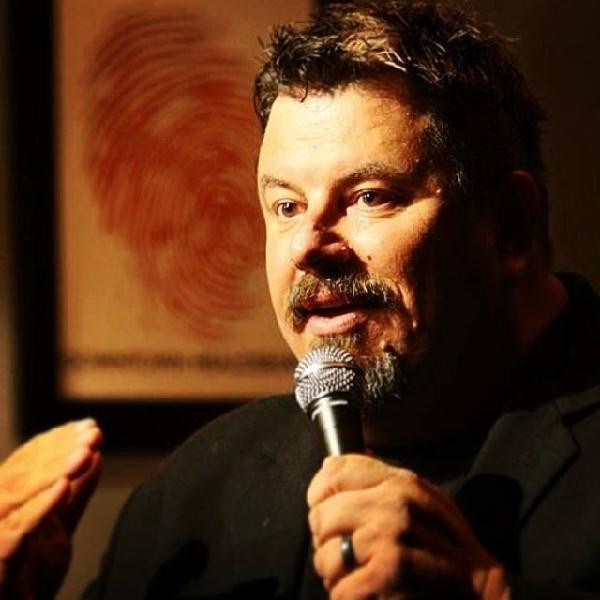
North Bay standup star and SRJC communications department professor Nick Hoffman likes to have a good time. And it shows. As a performer, Hoffman has shared his insightful perspectives and hilarious wit in clubs across the country, and this month he shares his antics with the local crowd for a special variety show, Professor Hoffman’s Humpday Comedy Circus. Midweek is typically the hardest time to crack a smile, so Hoffman’s got his work cut out for him, but the jolly fellow is up for the task, driving a night of laughs on Wednesday, June 14, at 6th Street Playhouse, 52 W. Sixth St., Santa Rosa. 8pm. $10–$15. profhoffcomedy.com.

Summer Lovin’

0

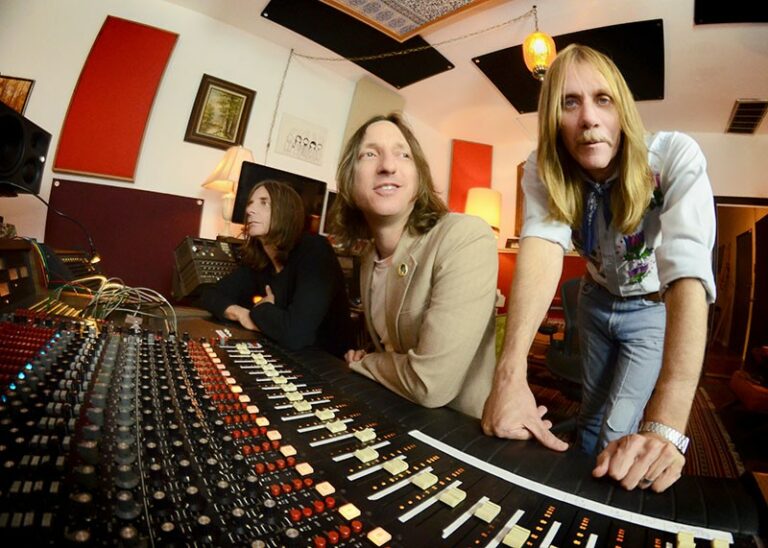
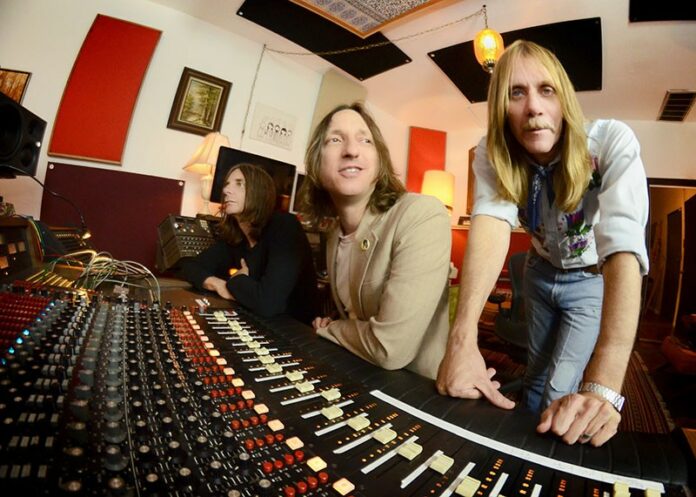
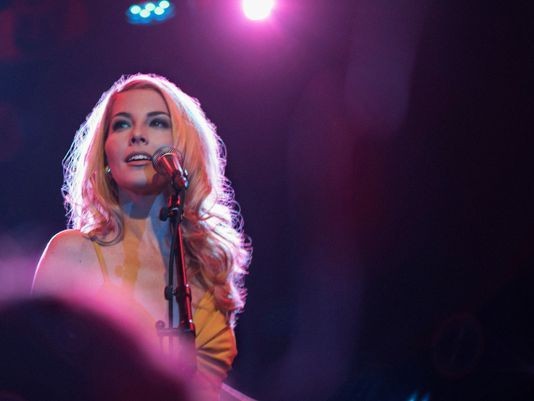
It’s going to be nearly impossible to miss Brent Rademaker at this year’s Huichica Music Festival in Sonoma.

The Los Angeles–based musician will be hitting the stage at least three times over the festival’s two days: with his country band Beachwood Sparks; alongside brother Darren in surf-psych project the Tyde; and leading his throwback folk-rock outfit GospelbeacH.

“I’m going to be like [David] Crosby at Monterey [Pop Festival],” Rademaker says. “Except that I’m not going to take acid.”

GospelbeacH is Rademaker’s main focus these days. The band’s sophomore album,

Another Summer of Love, is out June 16.

“I had been listening to so much ’70s rock over the last couple years,” he says, “I really wanted to make an album that sounded like it could have been from 1975–80.”

GospelbeacH succeeds wildly in capturing authentic-sounding analog atmospheres, and slight fuzz buffers the sunny acoustics throughout to form a hazy, ethereal bubble around the entire record.

Like the title implies, Another Summer of Love‘s classic folk and rock sound is in line with the likes of the Grateful Dead, though it’s not exactly a retread of 1967. “I wrote a song that referenced it about a year and a half ago, and I saw all the things coming up about the 50th anniversary, but [the album’s title] really wasn’t about that,” Rademaker says. Rather, the album is more accurately a nod to the nostalgic summers of the musician’s youth, and the soundtracks that accompany those memories. “Every summer you seem to fall in love.”

Rademaker also credits classic movies like Summer Lovers among his list of influences, lending a coming-of-age attitude to the new record. This weekend, GospelbeacH continues its own coming-of-age at Huichica, while Beachwood Sparks, which has largely been on hiatus since 2013, makes a rare appearance.

“With Beachwood, we never did anything for the fans,” Rademaker says with a laugh. “We never played encores or our singles. This time around, we thought about what people really want to hear, so we’re learning all the fan favorites and the hits.”

Rademaker is a veteran of Huichica, and he praises the venue’s unpretentious and intimate vibe. “We’ve played a lot of festivals, and they’re all giant herds of people,” he says. “Huichica is not like that.”

This year’s lineup also features Robyn Hitchcock, Cass McCombs, Marty O’Reilly, Allah-Las and Dean Wareham playing Galaxie 500 songs. “It’s like a giant mix tape,” Rademaker says. “If you can’t enjoy yourself there, something’s wrong.”

Gin Mill

0

Whiskey is hot, and it had better stay hot awhile, because somebody needs to drink the lake of whiskey that craft distilleries are busily filling, barrel by barrel.

You’d never know there was a lake of whiskey in downtown Graton, because the whiskey lake at Graton Distilling is hidden inside a lake of wine. Almost literally. The buildings of Purple Wine & Spirits, a custom crush, bottling and distribution facility, seem to go on for a mile, and surely contain enough wine to fill a small irrigation pond, at the least. If you’ve ever seen an unfamiliar, maybe whimsically titled brand of wine that was vinted in Graton, Calif., this is likely the source. I see familiar names on cases stacked to the sky here, too—these wines are being bottled, blended or otherwise reshuffled and warehoused. This sprawling labyrinth is the kind of place where quaint wine country gets business done.

The company was founded by Derek Benham, the brandmeister—with brother Courtney, who runs Martin Ray down the road—behind the Blackstone and Mark West labels. A big fan of Spanish gin, Benham added the spirits component in 2014. But first, on to the whiskey, as company president Aaron Webb at last opens the door to a barrel room packed with gray, crusty old casks that look very different than wine barrels.

These weren’t distilled in Graton, explains Webb, whose qualifications include 15 years experience at Kentucky spirits behemoth Brown-Forman, and the accent to match. They’re playing the market both ways, importing and aging Kentucky or Indiana-produced whiskey for a blend they’re calling—with some kind of smooth-sounding apologia lost to my notes—Redwood Empire American Whiskey. Yet to be released, the blend is quite smooth and tasty.

Behind another door, master distiller Jeff Duckhorn and crew are steadily filling barrels, four a day, four days a week, with the product of their column still. These whiskeys are made from a wash fermented from pre-milled grain, and are still a work in progress. Duckhorn, who actually started in the accounting department (and, yes, he’s related to the Napa wine folks), pours samples from a multi-hued collection that fills a wall in a stylish anteroom furnished with a rustic bar. Graton Distilling is not open for tasting, however, so don’t bother the folks at the front office about it.

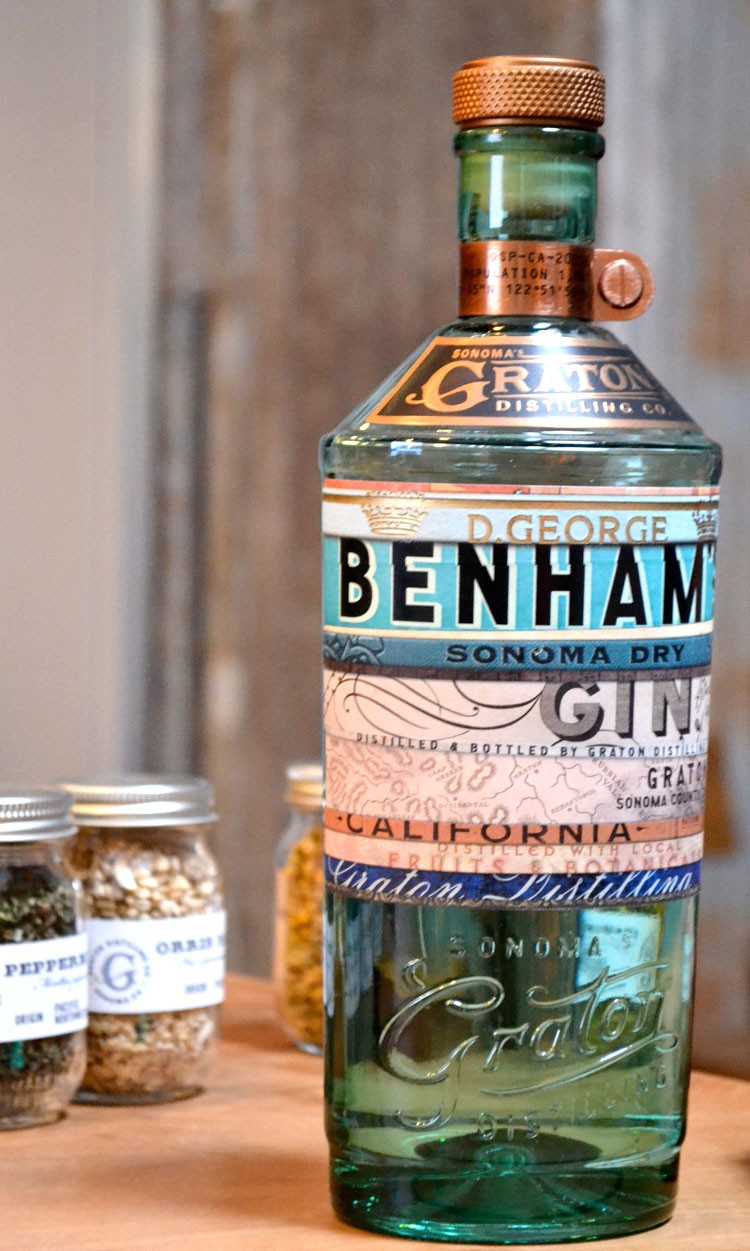
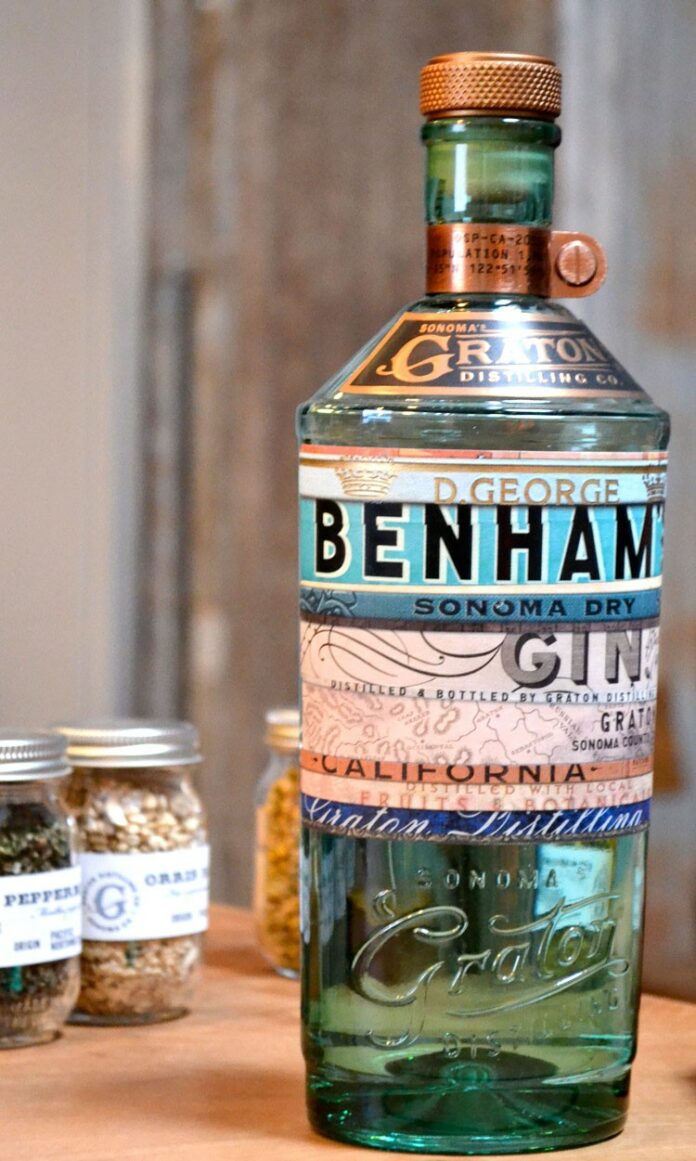
Made with neutral spirit that’s redistilled with a custom blend of aromatic spices and citrus in small batches, the attractively retro-labeled D. George Benham’s Sonoma Dry Gin is floral and spicy, with a nice sweet and dry balance, and can be found at local retailers and bars.

A Square Is Born

0

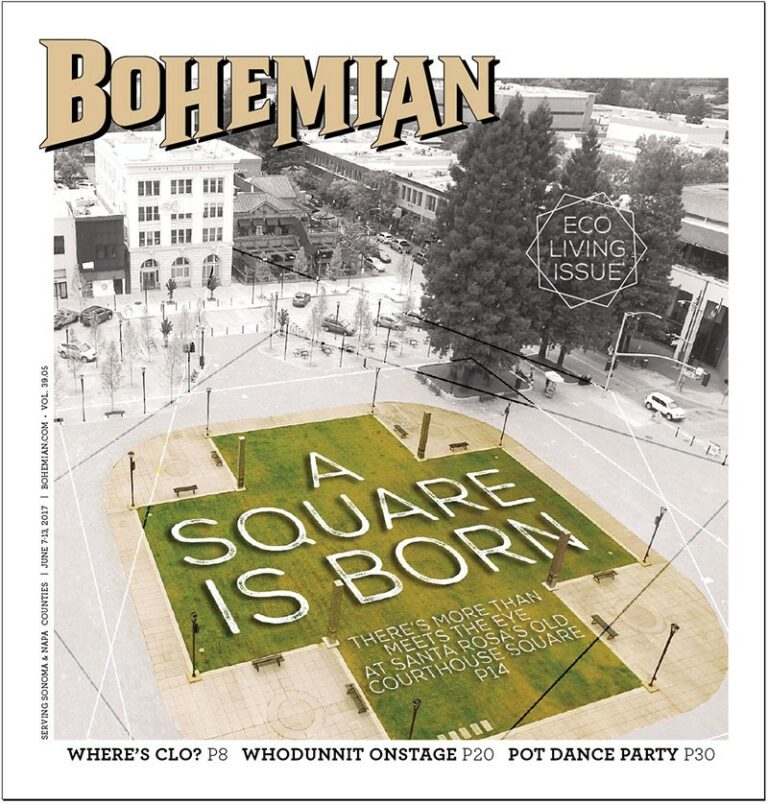
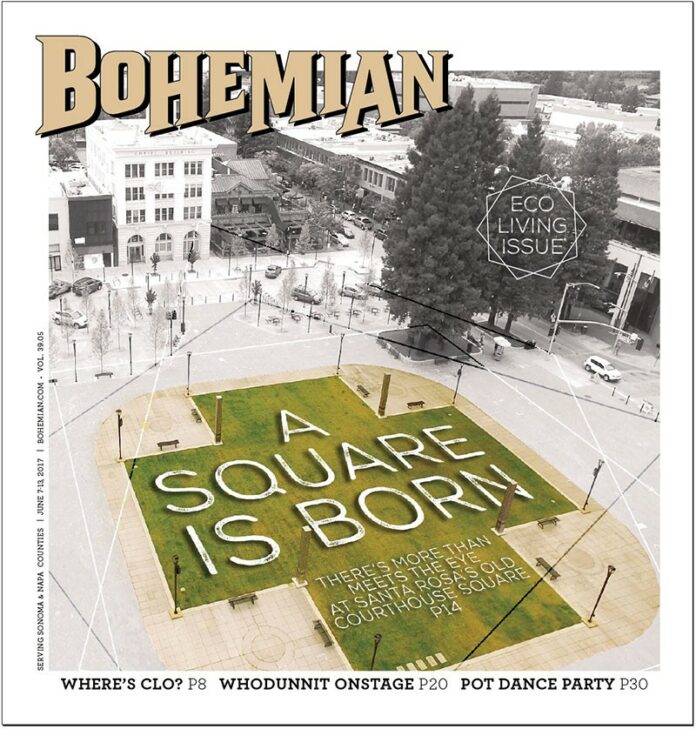
It’s a hot Friday afternoon in Santa Rosa and Old Courthouse Square is not yet an urban oasis of cool comfort, but the sycamore trees are starting to grow in as lunch-goers and downtown denizens make their way through and around Santa Rosa’s new center. The hot dog man is busy on the corner of Mendocino Avenue and Fourth Street. The place to be is on a shady bench near the remaining redwood trees that weren’t removed as the $10.5-million Square moved from concept to
build-out.

Some 30 years after the downtown business community conjured a reunited Courthouse Square, here it is, and it’s frankly too easy to throw shade on the shadeless expanse of civic space—but give it time. Designed as a multi-use civic gathering space, the Square is purposefully single-level and built without a gazebo or a permanent stage to prevent any restrictions for potential events.

“The idea was to create an open space for an event planner to come in and make it their space, reimagine it, re-create without having anything already established,” says Jaime Smedes, Transportation and Public Works marketing and outreach coordinator with the city of Santa Rosa.

The Square truly is a blank and inviting palette, says Jonathan Coe, director of the Santa Rosa Metro Chamber of Commerce, whose offices are along the Square, ready to be painted at the discretion and direction of the citizens of Santa Rosa and a proposed business district that would give surrounding business owners a role in the maintenance and security of the public space.

Coe says the chamber is in the process of putting together a property-based business improvement district (PBID) “that would enable us to provide services beyond what the city is doing and what it would be doing on its own.” These sorts of business districts were written into California code in 1994, and allow them to supplant, but not replace, services that are already provided by the city.

One of the key provisions of the law encourages nonprofits to deliver services normally provided by government, as a supplement to those services. These activities may include acting as an intermediary between Square-sitters and law enforcement, but Coe stresses that “it is not our intent to play a private security role per se. The team we hope to have on the streets will be a combination of litter picker-uppers and ‘liaisons’ to the various homeless services . . . so that they can make referrals and contacts, and then also to collaborate where needed [with law enforcement] on quality-of-life ordinance violations.”

There’s been significant support for the business district from merchants around the Square and adjoining blocks, as Coe acknowledges that past efforts to bring businesses together to better manage the downtown transient population “did not work out well.” But he says that because the initiators of the PBID are in large measure the same business owners who have pushed for the Courthouse Square unification, he’s confident the PBID will ultimately prevail. There’s first a process, however, that’s just getting off the ground.

As the PBID is considered, so too is a question: Should Santa Rosans be worried about a nongovernmental organization given wide latitude to manage a public space that was upgraded with public money, and where private security officials will be charged with interacting or engaging with vulnerable, homeless and/or mentally ill persons persons who may be creating a disturbance? Coe says not too worry, as does Santa Rosa vice mayor Jack Tibbetts, who insists that any downtown business district would come with city oversight and ample sensitivity to the rights of all citizens to use the Square.

Still, the proposed business district would stand in contrast to the roll-out of a revitalized and nearby Railroad Square, where business owners have an informal, “pass-the-hat” system to enhance security in the area, Coe says. Railroad Square business owners bypassed the formal and state-sanctioned PBID process.

Courthouse Square’s present, reunified status was years in the making—the Square itself is 133 years old but was bifurcated by Mendocino Avenue in 1967. The original courthouse was destroyed by the 1906 earthquake and a new one built in 1910; that courthouse was taken down in 1966 because it was declared seismically unfit.

That the Square is rather starkly appointed was by design. Jason Nutt, director of the Sonoma County Department of Transportation and Public Works, says the design goal for the Square—which necessitated the controversial removal of 90 trees—was to create a space that was “open, flexible and inviting.”

And right out of the gate the Square hosted the successful Ironman 70.3 Santa Rosa competition, whose organizer said the event was the best it’s seen in North America, says Nutt. Not bad for a brand-new venue.

Before it was redesigned, the Square was less than ideal and contained numerous “hiding spaces” that transient citizens made use of, Nutt says. “That really made people feel uncomfortable,” he says. But the new and improved plaza will be “the community’s living room,” he says.

Lesser-known design details give a sense of the local that’s not immediately observable through a simple stroll across the space. Nutt’s favorite design details are the light features, which are custom-fabricated by celebrated metal artist Michael Bondi.
The fixtures are sheathed in stainless steel and have programmable LEDs that can change color. Each of the lights has the figure of a plant created by Luther Burbank cut into it: the Santa Rosa plum, Shasta daisy, firefly poppy and the white blackberry. Nutt calls the lights the plaza’s “jewelry.”

The current reunification effort dates back to 2004 when a group called the Coalition to Restore Courthouse Square launched a then-quixotic journey that would pay off more than a decade later.

“It’s had quite a long history,” says Curtis Nichols, vice president and landscape architect at the Santa Rosa architectural firm Carlile Macy, which designed and executed the reunified Square. “We’re riding on the shoulders of a lot of people who have been trying to do this for the past 20 years,” Nichols says.

[page]

Delays and cost-overruns aren’t an unusual feature of any city-sponsored project, and Courthouse Square was no exception. Wet weather was one of the biggest obstacles, Nichols says.

“The biggest challenge was the tight time frame,” Nichols says. “There was a point in the beginning where it was like, ‘What did I sign up for!'”

Though it’s open to the public, the plaza isn’t complete. Yet to come is a redesigned water fountain on the south side featuring artist Ruth Asawa’s works of history and marine life that used to occupy the site, and an as-yet-to-be-determined art installation on the north side. Funds for those projects have not yet been raised.

But Nichols is proud of what he helped create.

“We took our charge seriously,” he says. “This is arguably the most important public space in Santa Rosa.”

The trees will grow quickly, Nichols says, as he highlights some of the other fun and funky decisions that give the plaza its character.

The permeable paver tiles will minimize stormwater runoff and help meet the plaza’s sustainability goals. One surprise for residents may have been the inclusion of parking around the plaza, with angled lots on the east and west sides that Nichols says are the best practices for new urban design that reflect and enhance a new effort to bring people back to downtown after an exodus that began nationwide in the 1960s.

The Square also encourages multi-use functions with the installation of 50 bike racks, free WiFi and “hydration stations,” plumbing formerly known as “water fountains.”

While Coe and local businesses are putting together their plan to provide security, services and overall management of the Square, he has no intention to use a heavy hand, especially when it comes to programming, which the PBID does not address.

“The programming in the Square at this point will remain with the city and with city parks,” he says. “They have a very clear process for getting permitted. That said, we will put together a variety of programming options that will go through the same process as anyone else.”

That process starts with Tara Thompson, arts coordinator with Santa Rosa’s Department of Recreation & Parks.

Event hosts need to apply for a permit with Thompson, who facilitates the review and approval process. The Square is currently hosting single-day events, such as the Luther Burbank Rose Parade and the IronMan triathlon, which both took place in May. The Wednesday Night Market now runs adjacent to the plaza and on June 7, three couples are getting married at the market.

Interest is in the plaza is high, Thompson says. “I’ve met with several people over the last month or so who see that the Square is now open and want to bring an event there.”

Recreation & Parks has
been drafting a revised permit policy that provides clear guidelines and restrictions for event producers. The revised policy was slated to go before the Santa Rosa City Council on June 6. Thompson hopes these new guidelines will help prevent occurrences like the spray-paint markings left on the paver stones after Rose Parade organizers thought they’d used water-soluble paint. Oops.

“That was just a total fluke,” says Thompson.

Event organizers, she says, ought to apply a minimum of one month, and up to a year, in advance, depending on the complexity of the proposed
event. Outdoor yoga has been going on in the Square since it opened last month, but permits for that don’t take a month to approve, she says, owing to the limited impact on surrounding traffic and parking.

Permits cost $75, though event producers will also have to pay general liability insurance and cover other costs such as reserving parking spaces. You want to serve booze or crank up some propane stoves? That will require additional permission from the city. You want to blow a doobie? Not a good idea.

‘We all see benefits to the PBID proposal,” says Tibbets, who adds that, while city officials are focused on affordable housing, the Roseland annexation, cannabis permits—all while short-staffed—the Courthouse Square business district can pick up some of the slack.

Still, the issue of Santa Rosa’s homeless population swirls around the future of Old Courthouse Square—and Tibbets says for that reason “everything is in kind of a limbo,” as the city awaits the petition and proposal. “They need to whip up the votes to actually form this thing,” Tibbets says, even as the city progresses on an anti-homeless plan that’s yet to be fully implemented. It appears that there’s a little bit of “wait and see” going on between business and the city.

“It’s true the business community didn’t want Courthouse Square to be a transient place for the homeless or indigent,” Tibbetts says. “But attitudes are changing around the Square once it opened—we are seeing homeless people utilize it, as they have a right to. But they are not, and have not been, an unwelcome presence.”

He says the business district proposal would be subject to review by the city council. Under state law, the PBID has to be renewed every five years, among other conditions of the designation. And if the group was in breach of contract, the city “would take control of Courthouse Square at any given time. This is not a gift of public property to private entities.”

Coe is aware and comfortable with the PBID’s proposed role,
but even moreso, he’s excited about the possibilities as he lists the ingredients for a well-managed plaza. The only
missing ingredient is time. He ticks of “the music concerts, a Friday-night market, special events, a place for First Amendment rights to be asserted. This is essentially a place for the community to convene and hopefully with that vitality comes increased business activity downtown. Stick around, enjoy the restaurants!”

Wake Up, America

0

Many Americans cite the economy as the most important issue today, but I believe that the environment and the dangers of Donald Trump’s proposed $1 trillion “upgrade” of the nuclear weapons system are the most critical issues we face.

The Massive Ordnance Air Blast Bomb (MOAB) dropped on Afghanistan April 13 is the most powerful conventional weapon, delivering a force of 11 tons of TNT. The atomic bombs dropped on Hiroshima and Nagasaki in August 1945 killed at least 215,000 civilians and had a force equal to 15 and 18 kilotons, respectively.

In contrast, the most common warheads in the U.S. arsenal, the W76 and W88, have an explosive power of 100 and 475 kilotons, 6 to 30 times the destructive force of rudimentary atomic bombs, and 9,000 to 43,000 times the force of the MOAB. America’s submarines carry 890 of these, and land-based Minuteman III ICBMs are armed with another 400, each one 300 to 500 kilotons.

A 2016 study found that a nuclear exchange between India and Pakistan, which has been threatened, would cause a nuclear winter severely reducing Asian monsoon rains and grain production, causing the starvation of 100 million or more people. And their weapons are less fearsome than America’s.

By most estimates, North Korea has about 20 nuclear weapons with the destructive power of the bomb that destroyed Hiroshima. The United States has about 6,800. Russia has about 7,000, and China has 260.

The United States currently spends more on its nuclear weapons program than all other countries combined. The first draft of the United Nations treaty to prohibit nuclear weapons, supported by over 120 nations, was presented May 22 and is expected to be voted on by the UN in July. The U.S. rejects the UN deliberations.

Aside from the nuclear peril, the dangers posed by anthropogenic climate change, and the massive amounts of pollutants dumped into our atmosphere, water and soil, are clear. If we continue to foul our own nest, as we are doing, there will be no economy as an issue.

The governments of the world and the common people here and all over Mother Earth need to demonstrate and take urgent action, doing everything we can individually and collectively to reverse these twin, interrelated threats to our existence.

Barry Barnett is a writer, health professional and musician living in Santa Rosa.

Open Mic is a weekly feature in the ‘Bohemian.’ We welcome your contribution. To have your topical essay of 350 words considered for publication, write op*****@******an.com.

Dinner with Friends

0

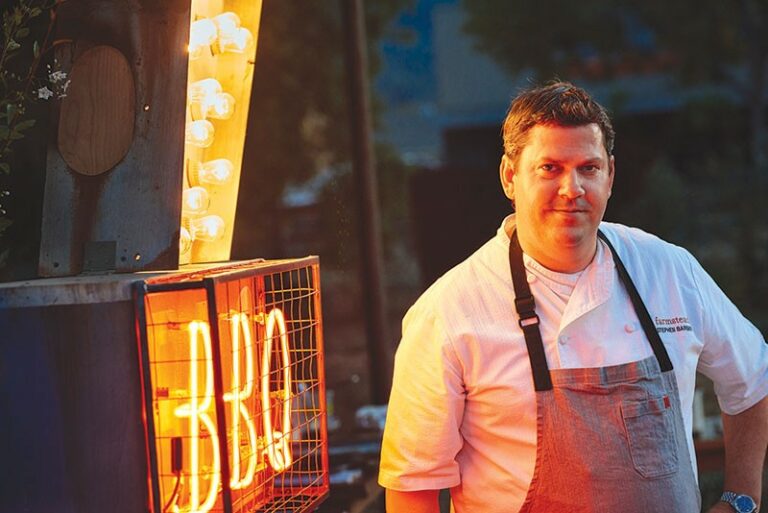
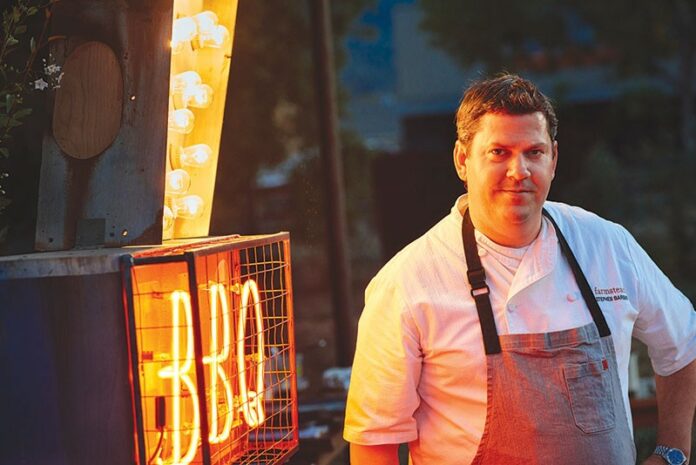
Last week, we wrote about pop-ups (“Popping Up,” May 31), and this week we’ve got another culinary trend: guest chefs. Farmstead, the seven-years-old restaurant at the Long Meadow Ranch in St. Helena, is trying the concept out this summer with a small series of dinners cooked in collaboration between chef Stephen Barber and friends.

Barber, who joined Farmstead soon after its opening in 2010, cooked in restaurants from Miami to Mississippi before landing in Napa County. Locals may know him from BarBersQ, now called the Q, which Barber opened in Napa in 2008. At Farmstead, he’s been serving tourists and regulars a familiar California fare of fresh vegetables, risotto and grilled mains from ingredients grown on the farm, as well as barbecue ribs true to his Southern roots.

“The series provides the opportunity for Stephen and the Farmstead team to partner with guest chefs and learn from their different techniques and flavors,” says owner Chris Hall, treating the summer project as a tradition in the making. Preparing for the dinners is no easy feat, he says.

“Stephen has several calls with our guest chefs prior to their arrival in Napa Valley to discuss how they’d like certain ingredients prepped,” he says. “Once the guest chef arrives, they work with our culinary team on final prep and execution.”

For the chef series, Barber is planning to expand on the grilling and smoking, his favorite summertime activity, and to open up the menu to some new flavors. His first guest of honor, Matt Bolus, hails from one of Nashville’s trendiest restaurants, 404 Kitchen. Situated in a converted shipping container in the hip Gulch neighborhood and serving dishes like uni salad alongside a very nontraditional chicken potpie, 404 Kitchen was a 2014 James Beard Foundation nominee for Best New Restaurant. For his guest dinner, Bolus is incorporating blistered spring radishes and grilled King Richard leeks from the farm, a whole heritage pig and his signature iron-skillet cornbread, paired with Long Meadow Ranch wines.

Calling other future participants “old and new likeminded friends,” Barber is preparing to host Charles Welch of Honey’s in Chicago (July 14); Jenn Louis of Ray, a Portland, Ore., restaurant (Aug. 18); and, from Stockholm, Johan Jureskog of AG and Rolf’s Kitchen (Sept. 15).

The lineup is nothing if not eclectic. Louis recently closed former fine-dining institution Lincoln to focus on Ray, a Portland-meets-Israel spot where she juggles sumac octopus and shawarma burgers. Welch opened Honey’s, an American-Mediterranean eatery, last year, and has been focusing on bright, bold flavors ever since. As for Jureskog, whom Barber got to know through winetastings and mutual friends, his résumé currently includes a tapas bar and meat-centric restaurant combo, co-ownership of a cooking school and a TV show.

The guest chefs are expected to bring their own interpretation of Californian cuisine to the table, and, given the group’s varying backgrounds and passions, variety is pretty much guaranteed.

Let’s Dance

Dancing by yourself in your room with the stereo on, busting moves only you can see, is analogous to being a single-plant molecule like, say, the cannabinoid known as cannabidiol, or CBD.

While your dance prowess and the sonic reach of the stereo system might be respectable, they are inherently limited. Now cut to the dance hall. Hundreds of dancers pulsate and move autonomously yet in unison to the music, creating an experience that is greater than the sum of its parts.

This is equivalent to the entourage effect, and it explains the efficacy of whole-plant cannabis therapy. The entourage effect was illuminated through discoveries of the endocannabinoid system, the master regulator for many of our physiological processes including the immune system, digestion and stress adaptation. When the system is deficient or poorly regulated, plants such as cannabis, which are rich in phytocannabinoids, can restore balance.

The understanding of this principle was furthered in two papers by neuroscientist Ethan Russo. Russo is medical director of Phytecs, a biotech company that focuses on the endocannabinoid system. One paper illustrated the possible synergistic effects of cannabinoids (CBD, THC) and terpenoids (the compounds that give cannabis its aroma) for a variety of conditions such as cancer, anxiety, depression and insomnia.

The second paper demonstrated that “CBD and perhaps other cannabis components achieve synergy with THC consisting of potentiation of benefits,” thus suggesting a “broad applicability in their future therapeutic application.” Translation: THC and CBD can work together to make you feel better.

If individual plant components create complementary therapeutic effects when combined, what does this mean in a practical sense when considering the goals of cannabis therapy?

In a crucial study titled “Overcoming the Bell-Shaped Dose-Response of Cannabidiol by Using Cannabis Extract Enriched in Cannabidiol,” a team of Israeli scientists demonstrated that whole-plant, CBD-rich cannabis extract possessed far greater therapeutic potential than single-molecule CBD in regards to anti-inflammatory and pain-relieving abilities.

The Israeli authors noted that “it is likely that other components in the extract synergize with CBD to achieve the desired anti-inflammatory action.”

This synergy is the entourage in full effect, a culmination of individual molecules moving harmoniously in a therapeutic dance party.

Patrick Anderson is a lead educator at Project CBD.

Letters to the Editor: June 6, 2017

Out of Business

I really enjoyed the article on local violin maker Anthony Lane (“Cue the Violins,” May 3); however, it contained an unfortunate howler. The author, Tom Gogola, referred to “old Stradivarius instruments, the standard-bearer and namesake family company that’s been making violins for more than 300 years.” After Antonio Stradivari died in 1737 at age 94, having made a few hundred violins, violas and cellos, two of his sons made fewer than 10 more instruments. But by 1743 these sons were also gone. Any violin with a Stradivarius label dated after 1743 either has an inexplicably inaccurate label, or (and this is far, far more likely) the instrument itself is just a “Stradivarius”-labeled factory fiddle from France or Germany, millions of which were produced over the decades. They bear about as much similarity to a real Strad as a grainy photo of a Rembrandt does to the actual painting. Which is to say, there is no Stradivarius “company” that’s still making violins.

Santa Rosa

Sex Crime

Existing law makes knowingly exposing an individual to HIV via unprotected sex a felony punishable by up to eight years in the state prison. Why repeal this, as SB 239 calls for? AIDS/HIV is a concern for millennials who have had unprotected sex and are now realizing their error. Reducing the penalty for individuals purposely spreading AIDS is wrong. For those of us who lived through the ’80s and ’90s seeing acquaintances die or be confined to a lifetime of life-saving cocktails, our confusion is made even more acute.

This is not a public health matter. Willfully spreading a life-threatening disease is a felony.

Santa Rosa

Repugnant Man

Trump has finally achieved the notoriety he wanted. Indeed, his name will go down in history, but what he will be remembered for is his ignorance, selfishness, diminished intellect and bad hair. His behavior clearly reveals what many already knew: that having piles of money is in no way an indication of intellectual ability, capacity to show leadership skills or an allegiance to American values.

That said, this repugnant, selfish, psychologically disturbed little man does represent elements of who, and how, we humans can be. He reminds me of the Vietnam-era Army captain who, in describing the justification for decimating a neutral rural village of farmers, women and children, remarked, “It was necessary to destroy the village in order to save it”.

Trump, manipulating the good will of desperate Americans, lied his way into office. And he has lied us out of the Paris Agreement, in effect, demonstrating to the world our refusal to stand together and deal with, perhaps, the greatest threat to human survival

To the Trump supporters out there, I ask this: What if he’s wrong? What if climate change is real, and your unwavering support allows him to saddle our children and our grandchildren with a less habitable planet? Are you really OK with making future generations pay for his mistake? Why would you support this man, riddled with greed and envy, and allow him to cripple your future family?

Sebastopol

Write to us at le*****@******an.com.

With the Revolver

0

In Lucky Penny Productions’ slight
but entertaining Clue:
The Musical
, audiences are encouraged to play along, competing to see who can guess which onstage character committed the murder, in which room and with which weapon.

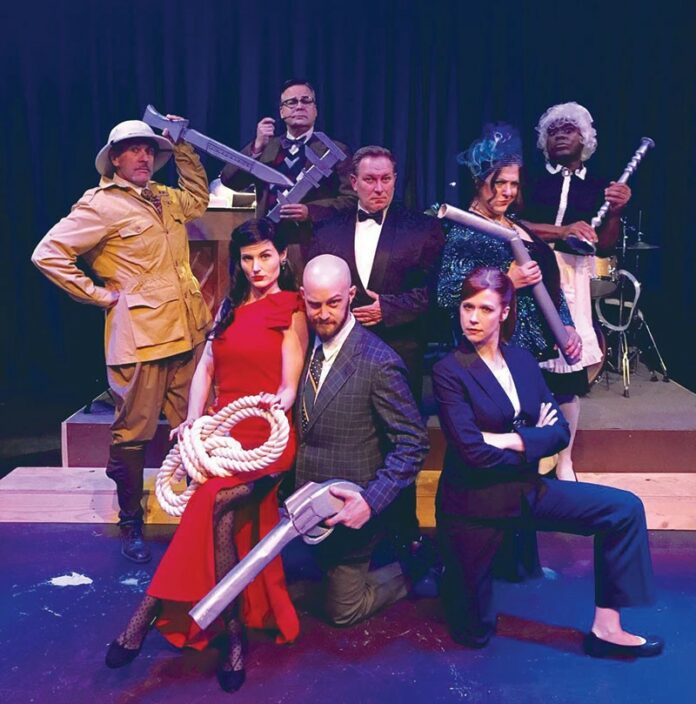
Based on the beloved board game (not the 1985 movie), Clue is packed with effective (but fairly unmemorable) tunes, with inspired choreography by Staci Arriaga, and a string of goofy gags. The plot (forgive me for using that word, Mr. Webster) is exactly what one might expect. There is a different ending with every performance, depending on the choices of three audience volunteers, who randomly choose cards depicting the victim, place and weapon. Those cards are then placed in an envelope hanging from the bandstand, where live musicians watch the action and sometimes become involved in it.

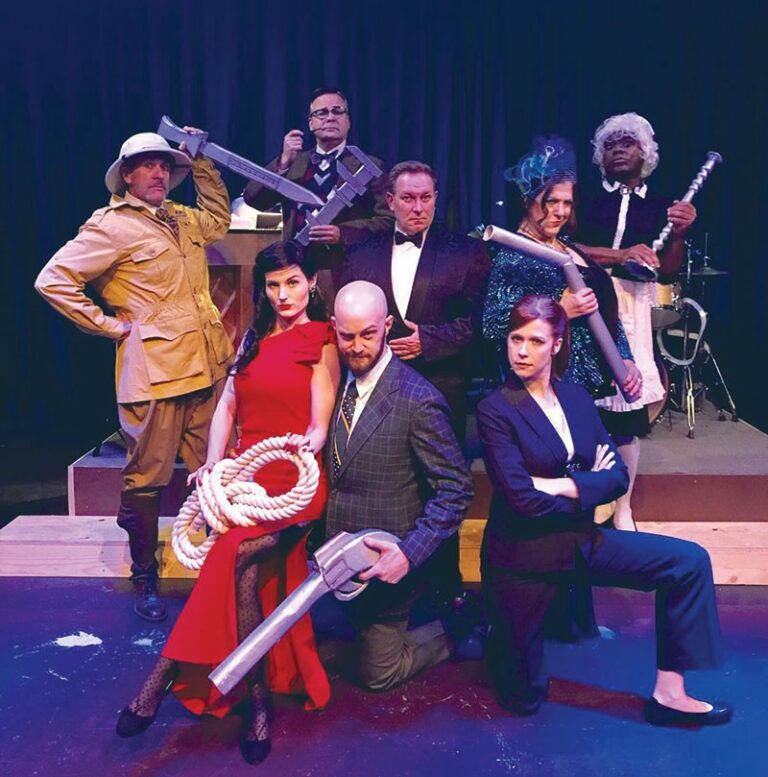
The “story” (sorry again, Mr. Webster!) is simple. At the home of the soon-to-be-dead Mr. Boddy (Barry Martin)—who acts as the narrator, before and after his murder—six colorful suspects have gathered: the conniving Colonel Mustard, the oft-married Mrs. Peacock, the grammar-obsessed Professor Plum, the social-climbing Miss Scarlett, the larcenous Mr. Green and the flat-out hilarious Mrs. White. They all have good reason to want Mr. Boddy dead, and when it finally happens, just before the intermission, it’s then up to the audience, with the “help” of a bizarro second-act detective (Heather Buck).

The dialogue is delightfully silly, packed with puns and bawdier than one might anticipate from a show inspired by a family board game.

This kind of theatrical lark is best played fast and loose, and under the bouncy direction of Taylor Bartolucci, the talented cast certainly handles the “loose” part of that equation. The pace, however, was a bit lackadaisical on opening night, stretching the thin, pleasantly pointless material to just over two hours (a time frame better suited to a Monopoly:
The Musica
l).

Still, there is a pleasingly nostalgic thrill to seeing these characters brought to life. That is especially apt of the true (and cartoonishly oversized) stars of the show: the Wrench, the Lead Pipe, the Dagger, the Candlestick, the Rope and the Revolver. On opening night, when those weapons appeared, some of the audience actually cheered.

Rating (out of 5): ★★★½

June 10-11: Get Jazzed in Napa

The Napa Valley Jazz Getaway is back this week, and Napa’s Blue Note is getting in on the action with several shows featuring promising young talent and proven veterans. The club is also using the occasion to debut its new outdoor stage for a weekend of afternoon delights. On Saturday, contemporary saxophonist Chase Huna and New York–based soul singer...

June 14: Comedy Relief in Santa Rosa

North Bay standup star and SRJC communications department professor Nick Hoffman likes to have a good time. And it shows. As a performer, Hoffman has shared his insightful perspectives and hilarious wit in clubs across the country, and this month he shares his antics with the local crowd for a special variety show, Professor Hoffman’s Humpday Comedy Circus. Midweek...

Summer Lovin’

It's going to be nearly impossible to miss Brent Rademaker at this year's Huichica Music Festival in Sonoma. The Los Angeles–based musician will be hitting the stage at least three times over the festival's two days: with his country band Beachwood Sparks; alongside brother Darren in surf-psych project the Tyde; and leading his throwback folk-rock outfit GospelbeacH. "I'm going to be...

Gin Mill

Whiskey is hot, and it had better stay hot awhile, because somebody needs to drink the lake of whiskey that craft distilleries are busily filling, barrel by barrel. You'd never know there was a lake of whiskey in downtown Graton, because the whiskey lake at Graton Distilling is hidden inside a lake of wine. Almost literally. The buildings of Purple...

A Square Is Born

It's a hot Friday afternoon in Santa Rosa and Old Courthouse Square is not yet an urban oasis of cool comfort, but the sycamore trees are starting to grow in as lunch-goers and downtown denizens make their way through and around Santa Rosa's new center. The hot dog man is busy on the corner of Mendocino Avenue and Fourth...

Wake Up, America

Many Americans cite the economy as the most important issue today, but I believe that the environment and the dangers of Donald Trump's proposed $1 trillion "upgrade" of the nuclear weapons system are the most critical issues we face. The Massive Ordnance Air Blast Bomb (MOAB) dropped on Afghanistan April 13 is the most powerful conventional weapon, delivering a force...

Dinner with Friends

Last week, we wrote about pop-ups ("Popping Up," May 31), and this week we've got another culinary trend: guest chefs. Farmstead, the seven-years-old restaurant at the Long Meadow Ranch in St. Helena, is trying the concept out this summer with a small series of dinners cooked in collaboration between chef Stephen Barber and friends. Barber, who joined Farmstead soon after...

Let’s Dance

Dancing by yourself in your room with the stereo on, busting moves only you can see, is analogous to being a single-plant molecule like, say, the cannabinoid known as cannabidiol, or CBD. While your dance prowess and the sonic reach of the stereo system might be respectable, they are inherently limited. Now cut to the dance hall. Hundreds of dancers...

Letters to the Editor: June 6, 2017

Out of Business I really enjoyed the article on local violin maker Anthony Lane ("Cue the Violins," May 3); however, it contained an unfortunate howler. The author, Tom Gogola, referred to "old Stradivarius instruments, the standard-bearer and namesake family company that's been making violins for more than 300 years." After Antonio Stradivari died in 1737 at age 94, having made...

With the Revolver

In Lucky Penny Productions' slight but entertaining Clue: The Musical, audiences are encouraged to play along, competing to see who can guess which onstage character committed the murder, in which room and with which weapon. Based on the beloved board game (not the 1985 movie), Clue is packed with effective (but fairly unmemorable) tunes, with inspired choreography by Staci Arriaga,...
11,084FansLike
4,606FollowersFollow
6,928FollowersFollow