Wine Country Secrets

0

There are dozens of North Bay restaurants, but there are many more you’ve probably never heard about, unbookable on OpenTable, but hiding in plain sight. How can that be? Well, you have to stretch the term “restaurant.”

Napa and Sonoma county wineries are waging a culinary arms race to outdo each other with offerings that go miles beyond cheese and crackers as they strive to distinguish themselves and attract customers. The winners are food and wine lovers looking to eat and drink in stunning surroundings.

Given wineries’ ample land holdings, many wineries grow produce on-site and employ culinary gardeners who make fresh vegetables available to winery chefs. That makes for some great farm-to-table eating and drinking. And wine needs food to shine. Some wines, like Pinot Noir, don’t show as well without a bite of food to punch up or accentuate their flavors and aromas, so wineries are doing themselves a favor by offering their wines alongside well-paired plates of food.

Many wineries offer exclusive dining opportunities to their club members, but it’s not always necessary to join to enjoy the food, though more elaborate meals will likely require reservations. Typically, wineries offer both lighter, appetizer plates and more elaborate prix fixe, multi-course meals. Since the experience is all about matching food with wine, there’s no need to choose which wines go with which course. They do that for you.

On the other side of the equation, being a winery chef is a plum job, given the wine and ingredients at their disposal. Plus, there’s one less obvious perk: nights off. Except for special events, local ordinances generally prohibit wineries from serving food past 5pm. That means you’ll have to rustle up dinner elsewhere, but given the opulent food and wine pairings, you may be ready for a nap instead of another meal.

What follows are some of our favorite winery dining options in Sonoma and Napa counties.

Chalk Hill

Passing through the gates of Healdsburg’s Chalk Hill winery feels like entering a private kingdom—which of course, it is. Billionaire William P. Foley II, chairman of Fidelity National, owns the winery, as well as 21 others in California, Oregon and New Zealand. He’s also majority owner of the Vegas Golden Knight’s NHL hockey team.

Foley’s private residence at Chalk Hill rises above the oak-covered hills that form a natural amphitheater. Above it sits the mammoth “pavilion,” a former horse-training center with soaring, arched ceilings. Attached to it is a series of modern, glass-walled cubes that house the winery’s 24-seat dining room and kitchen.

The two-and-a-half-hour culinary tours ($110 per person) begin at 10am with a tour of the winery’s garden and vineyard followed by a sit-down, four-course meal prepared by chef Annie Hongkham, paired with Chalk Hill wines. Diners don’t know what they’ll be eating until it arrives on the table. Hongkham changes the menu every few days, depending on what she gets from the winery’s four and a half acres of gardens. (The winery also operates Chalkboard and Brass Rabbit restaurants in Healdsburg; the restaurants get their produce from the winery’s gardens, too.)

“We make the meal around that,” says Hongkham. “We want [diners] to be intrigued and have fun.”

Recent dishes included compressed melon salad with mini aioli and toasted quinoa, house-cured king salmon tartare and roasted gulf snapper with coconut milk, ginger, rhubarb and tomato. chalkhill.com.

J Vineyards & Winery

J J Vineyards & Winery offers three different culinary experiences: a five-course meal paired with six wines in their Bubble Room, four tapas paired with four wines on their terrace with Russian River views and a cheese plate paired with creative accompaniments.

“I don’t mean to boast, but I think we have one of the most unique tasting experiences in wine country,” says executive chef Carl Shelton. He’s been at J for a year and comes to the winery from stints at the Michelin three-star-rated Meadowood restaurant in St. Helena and Spoonbar in Healdsburg.

The Bubble Room menu is the star of the show. One hundred and ten dollars equates to a roughly two-and-half-hour dining experience with Pinot Gris, Pinot Noir and the sparkling wines the winery is known for. And the food is not snack-sized.

“We like you to experience the food, drink the wine and keep trying it back and forth so you can get the nuances of the wine or what the food brings to the wine,” says Shelton. “We use the wine as an ingredient. It’s pretty fun to pair and blow people’s minds with food and wine pairings.”

Shelton is excited about his California white sturgeon grilled over Japanese binchotan charcoal and served with Sonoma County Galia melon that has been compressed in a vacuum and carbonated. It’s finished with a lemony sabayon sauce. The interplay of the flavors and textures are a great match for a J extra brut sparkling wine.

While wine and cheese is not unique, Shelton says he seeks out hard-to-come-by cheeses like Bleating Heart’s Death and Taxes beer-washed cheese. He serves it with a bacon-pretzel chocolate brittle for a riff off pretzels and beer. jwine.com.

Hamel Family Wines

For sheer wow factor, Hamel Family Wines in Sonoma is one of the most stunning wineries anywhere. Open by appointment only, this modern winery has incredible views of Sonoma Valley and Sonoma Mountain, and offers several “experiences.” There’s a custom experience, where you can dream up the food and wine experience of your choosing with “a charge commensurate with that experience.” The $100 reserve experience includes a tour and a tasting of four reserve wines paired with a small plate prepared by Executive Chef Clinton Huntsman. hamelfamilywines.com.

Del Dotto Vineyards

Del Dotto Vineyard’s St. Helena Venetian Estate Winery & Caves has multiple dining opportunities, for club members and hoi polloi alike. Executive chef Joshua Schwartz used to cook at the French Laundry and has some serious chops. He offers a five-course menu paired with four wines for $95 that includes dishes like “Everything Bagel” potato pavé with Tsar Nicoulai caviar, Smoked Sturgeon Tsar Nicoulai Caviar, Maine lobster roll and Hudson Valley foie gras terrine.

Not all of the action happens in the kitchen; some of it happens in the winery’s charcuterie aging room, a dimly lit locker at the end of a long hall in the winery’s Medieval rococo tasting room. Legs of sublimely delicious Mangalitsa pork are aged for months and years here, and result in some of the most exquisite cured-pork products you’ll have anywhere. But it’s only available at the winery’s private club events. It might be worth joining just to get a slice of that. deldottovineyards.com.

Pine Ridge Vineyards

Steeped in greenery and featuring romantic, cozy cellars and tasting rooms, Pine Ridge Vineyards is located in the Stags Leap District AVA of Napa and is home to some outstanding Cabernet Sauvignon. The food program, overseen by chef Susan Lassalette, is no slouch either. The Savor Pine Ridge tasting, held in the white-walled, low-ceiling, cave-like Cellar 47, goes for $125 and includes five estate Cabernet Sauvignons. The current menu to accompany the well-loved wine variety includes a Parmesan panna cotta with Cabernet cherries; Agoura Petit Brebis cheese with medjool dates and wildflower honey; pork rillettes with prunes and walnut toast; smoked duck “biscuit” with fig jam; and the ultimate combination of street food and hors d’oeuvres, a Niman Ranch beef empanada with pimentón glaze. pineridgevineyards.com.

Scribe Winery

Brothers Andrew and Adam Mariani founded Sonoma’s Scribe Winery with an eye toward the informed, millennial crowd. The winery’s food offerings, held in the picturesque “hacienda,” feature pop-ups and guest-chef series. One opportunity to wine and dine is the weekly, rotating chef-in-residence series. Sixty dollars gets you lunch and wines to match. The reservation-only event is held the month of July only and has included such standout guest chefs such as Steve and Julya Shin from Nokni in Oakland, who brought their California-Korean flavors, and Julia Sherman, author of Salad for President.

Scribe also hosts chef events and culinary-themed release parties, which are open to its Scribe Viticultural Society members first and non-members second. In the past, culinary guests have included Stuart Brioza from San Francisco’s lauded State Bird Provisions; Eric Werner and Mya Henry from Heartwood in Tulum, Mexico; and Brooklyn restaurateur Andrew Tarlow. To stay on top of the abundance, it’s wise to follow Scribe on Instagram (@scribewinery) or sign up for the newsletter on their website. scribewinery.com.

Robert Sinskey Vineyards

Robert Sinskey’s Napa Valley winery relies on chef Maria Helm Sinskey to match food to its wines. The winery’s website features original recipes paired with each wine, but upon visiting, there’s no cooking needed. There are plenty of options for nibbling and sipping.

Seventy dollars will get you a flight of wine paired with seasonal bites like asparagus with quail egg or crispy salmon cakes with crème fraîche. For $95, the Perfect Circle Tour includes a visit to the culinary gardens, a peek at the wine-production process and a wine-infused lunch. The $175 Chef’s Table is the most indulgent and includes a proper five-course lunch, served Saturday and Sunday at noon by appointment.

Looking for a one-time, special-occasion dining experience? July 22, the winery hosts a “mid-summer night’s dinner”, featuring fattoush salad, grilled sweet corn soup, rack of lamb with tomato fondue and buttermilk shortbread with garden strawberries. $250 per person. robertsinskey.com.

Fresh Catch

0

For seafood lovers, summertime in California used to mean lots of fresh king salmon on the grill. Tragically, those days are over.

The Golden State’s signature seafood is in short supply these days due to devastating impacts on the rivers the fish depends on to spawn. The state’s salmon industry is limping along, and what is available is limited and very expensive.

The good news is there are sustainably sourced alternatives, but you need to know where to look—and what to look for.

Sebastopol’s Handline restaurant is hosting a summer sustainability series aimed at educating consumers and the restaurant industry about locally sourced, sustainably harvested seafood. The first event was held July 16 under the shade of big oak trees on the restaurant’s patio. The one-hour session offered insight into seafood sourcing with a particular emphasis on California halibut. Attendees were a mix of people from the restaurant industry and curious consumers.

When it comes to seafood off the menu, “fresh” is a relative term, as is “California,” says Water2Table owner Joe Conti. Water2Table is a seafood purveyor that works with Bay Area hook-and-line fishermen.

Ninety-five percent of the halibut that appears in local restaurants comes from Mexico where fishing practices and regulations are not up to California standards, says Conti. Mexican fish is often not iced immediately after being caught and is shipped long distances, so it’s less than fresh. Fish from Canada is held to higher standards but still has to travel to local markets and restaurants.

Conti meets fishermen after they come back to harbor in the evening. The fish usually make it to market the next day, a practice that he says represents just 1 percent of local halibut in Bay Area restaurants. It’s a difference you can taste.

“Put it on the table, and you’ll see,” he says. “You can go raw with what we’re doing.”

In fact, that’s just what Handline did. They served halibut crudo made with fresh sliced plums, mint, edible flowers and cat’s tongue seaweed. The halibut, a pearly, translucent white, was wonderfully rich and silken.

Water2Table chef Ben Spiegel offered tips for identifying fresh fish. Look for fish that have clear eyes and flesh that springs back when pressed. And if the fish smells fishy instead of like the ocean, it’s not fresh, he says.

“This is hopefully an opportunity to build a conversation within the restaurant community about responsibly sourced seafood,” says Handline owner Lowell Sheldon.

Future sessions will focus on Tomales Bay oysters and farm-raised trout. The cost for the sessions $10.

For more information on the series, go to summersustainabilityseries.brownpapertickets.com.

Thai Winner

0

What? Another story about Ramen
Gaijin? Well, yes and no.

It’s true I’ve given a lot of ink to Sebastopol’s excellent Sonoma-County-meets-Japan ramen shop. But part of what makes the restaurant so compelling is its emergence as an incubator for new restaurant concepts.

May featured the second of two Mexican food pop-ups (Polanco), and this month co-owners Matthew Seven Oaks Williams and Moishe Hahn-Schuman debuted their long-gestating Thai food pop-up, Khom Loi. Ramen Gaijin was itself born as a pop-up at nearby Woodfour Brewing Co. If all goes well—and judging by what I ate and the full capacity crowds, it will—the duo may open a Thai restaurant in the near future. Hahn-Schuman is particularly passionate about Thai food, having spent several months in Thailand.

The idea behind Khom Loi is to give diners a taste of Thai food that goes beyond the same old dishes that turn up at American Thai restaurants. There’s nothing wrong with pad Thai, green, yellow and red curry or pad prik king, but there’s more to Thai food than these familiar dishes.

Thailand has jungle lowlands and mountains in the north; it borders Vietnam, Myanmar (Burma), Laos and Cambodia; and it has dozens of hill tribes and ethnic communities—all of which means we normally just get a hint of the country’s culinary diversity.

Williams and Hahn-Schuman are showcasing some of that diversity with a menu that focuses on northern-style Thai food, like that centered around Chiang Mai, with a sprinkling of Sonoma County ingredients to make it uniquely their own.

You may not think of mushrooms when you think of Thai food, but wild mushrooms are a staple, at least in the north. Khom Loi’s charcoal-grilled mushroom salad blends porcini, king trumpet and maitake mushrooms, lemon grass, shallots and northern Thai–style cilantro in an electric dressing of lime juice and fish sauce ($12). It’s outstanding.

Sausage is a hallmark of Laos and northern Thailand. At Khom Loi, the kaffir-lime-laced grilled link ($15) is made with pork, rabbit and sticky rice to create a sausage that has the fine texture of a hotdog but a wonderfully, bright, spicy and aromatic flavor.

The best dish by far is the whole fried rockfish ($29). Caught off the coast of Mendocino County, the crispy, sweet fish is slashed and sprinkled with an incendiary blend of Thai red chiles, tamarind and herbs. The flavors on this dish go up to 11.

Not everything on the menu is rarefied. The green papaya salad is a Thai classic, but here it gets a fresh look. It’s made in a giant mortar and pestle and served with braised octopus and pole beans ($13). It’s refreshing and delicious.

Khom Loi also serves Thai-inspired cocktails, too. My favorite is the boozy 3 Baht and a Dash, a blend of rum, allspice-infused liquer, Velvet Falernum, and a Rangpur and kaffir lime shrub served over crushed ice ($11).

“Thai food can be amazing, but there’s not much around here and we want to do it,” says Hahn-Schuman.

Lucky us.

Khom Loi, 6948 Sebastopol Ave., Sebastopol. 707.827.3609.

We’re No. 1?

0

I‘m sitting outside an office at Stanford University, waiting to speak with a man who shares a similar path to Barack Obama, law fellow Mugambi Jouet.

Much like the former president, Jouet spent a good deal of his youth in another country—Obama in Indonesia, Jouet in France—which provided a cultural immersion that deepened and broadened both men’s perspectives on America.

Jouet began working on his new book, Exceptional America: What Divides Americans from the World and from Each Other well before Trump’s election win, which the professor admits he didn’t foresee. Trump’s victory has amplified the book’s themes and timeliness.

Jouet’s book painstakingly attempts to answer a question on the minds of people from Pasadena to Paris: WTF is happening to America?

“Most people tend to think American exceptionalism means a faith in American superiority, the notion that the country is exceptional in the sense of ‘wonderful’ or ‘outstanding’ or ‘phenomenal,'” Jouet says.

“But historically, American exceptionalism has mainly meant something else, which is that America is an exception objectively and descriptively, especially when compared to other Western democracies.”

His book examines how the growing dark side of exceptionalism has driven the polarization of U.S. politics, its effect on other parts of the globe and the changing meaning of the phrase.

“It was not before the Obama era that the term was redefined as a political weapon to impugn Obama’s patriotism,” Jouet says.

“People began talking about American exceptionalism at the same time as there was this debate, that still exists today, about the great divide within American society. But people did not connect the two together as I did in my book, arguing that the great polarization of modern America is a dimension of American exceptionalism, in that it’s very peculiar by international standards.”

Trump, a vocal force behind the birther movement that dogged Obama, played off the same page in last year’s election by promising to “make America great again.” That’s a very different take on the original meaning of American exceptionalism.

The term didn’t really come into use at all until leader of the American Communist Party USA Jay Lovestone began using it in the 1920s. He employed it as an excuse to explain to Joseph Stalin why the “so-called universal laws of Marxism” weren’t taking hold in the United States.

Academics went on to use the term to describe how U.S. history, culture and society make the country so different from other advanced nations—from the legal and political systems to economics, race relations and religious attitudes, Jouet says.

He traces Trump’s rise to the full flowering of Christian fundamentalism, anti-intellectualism, radical anti-governmentalism and racial resentment—themes that were not new, but until more recently were much less prominent.

The more celebrated aspects
of this nation’s exceptionalism, adopted by other democracies—freedom of religion, women’s rights and demographic diversity, social welfare—started to be dismantled in the United States around the time of the Reagan years, Jouet says.

The result is the rise of a strengthened nativism, nationalism, anti-immigrant sentiment, distrust of institutions, lack of empathy for the poor, disdain for education and the rise of alternative facts.

“America is an exception,” says Jouet, “because Americans are clashing over a broad range of issues that are either not controversial or are much less controversial in the modern Western world, such as whether people should have a basic right to modern healthcare, whether special interests should be allowed to spend unlimited money on political campaigns and on lobbying, whether climate change is a hoax or a scientific reality, whether women should have a right to abortion, whether contraception should be covered by people’s health insurance, whether creationism or evolution should be taught in public schools, whether people should have an unbridled right to bear arms, whether to have the death penalty, whether to have mass incarceration, whether it’s appropriate to introduce torture into Western civilization as a means of fighting terrorism.”

The plus side of exceptionalism is that American social problems “partly have roots in admirable aspects of American society, such as its tradition of religious liberty and egalitarianism, as well as the country’s remarkable demographic diversity,” Jouet says. “But these positive aspects of American exceptionalism can manifest themselves in inspiring, contradictory and self-destructive ways.”

Parting Gift

0

Born and raised in the city of Sonoma, songwriter, guitarist and producer Sean Carscadden has been gigging constantly for nearly 20 years. His versatility as a musician reflects that of the greater North Bay scene, and was formed in those two decades working on numerous musical endeavors.

“I’ve been in a lot of different projects over the years,” Carscadden says, “from reggae to neo-soul to blues bands, bar bands—all sorts of stuff.”

Recently, Carscadden has focused his energy on two main outfits: throwback outlaw country band Miss Lonely Hearts, whom he often joins on tour on the West Coast, and his own solo project, a melting pot of blues, New Orleans funk and Americana.

This month marks a bittersweet chapter in Carscadden’s musical career, as he celebrates the release of his long-awaited solo debut album,

Delta Bound, just before packing up and heading north to Portland, Ore. Carscadden unveils the new album and bids farewell to Sonoma with a show on July 21 at the Sebastiani Theatre.

The core of Carscadden’s solo project is a trio including Cliff Hugo on bass and Mickey Lee Cannon on drums, a configuration that Carscadden has honed into a lean machine over the last five years, drawing from his past musical collaborations and experiences to form a familiar though wholly original blend of music.

“My tastes have always been pretty eclectic,” he says. “I feel like I’m channeling pieces of everything I’ve ever played.”

Carscadden also says that his affinity for blues and New Orleans music goes back through the decades, and his Delta sound incorporates elements of those genres from the ’20s through the ’60s and beyond.

Delta Bound is named for Carscadden’s musical styling, though it also share the title of his Sonoma-based recording studio, Delta Bound Records, which Carscadden co-owns with Andy Saks. Specializing in Americana and roots music recordings, Carscadden has produced records for several bands and artists, though that means he’s kept putting off his own album until last year.

“Moving up to Portland was a big impetus to get that done,” he says. “It finally lit a fire under me to put my stuff down on record.”

Carscadden is moving to Portland with his girlfriend as she pursues a new career, though his musical connections to the city through years of touring put him in a good spot to lay down new roots.

“I’m going in real grassroots,” he says of the mindset he’s cultivating for the move. “I hope to build something there.”

Art of Survival

0

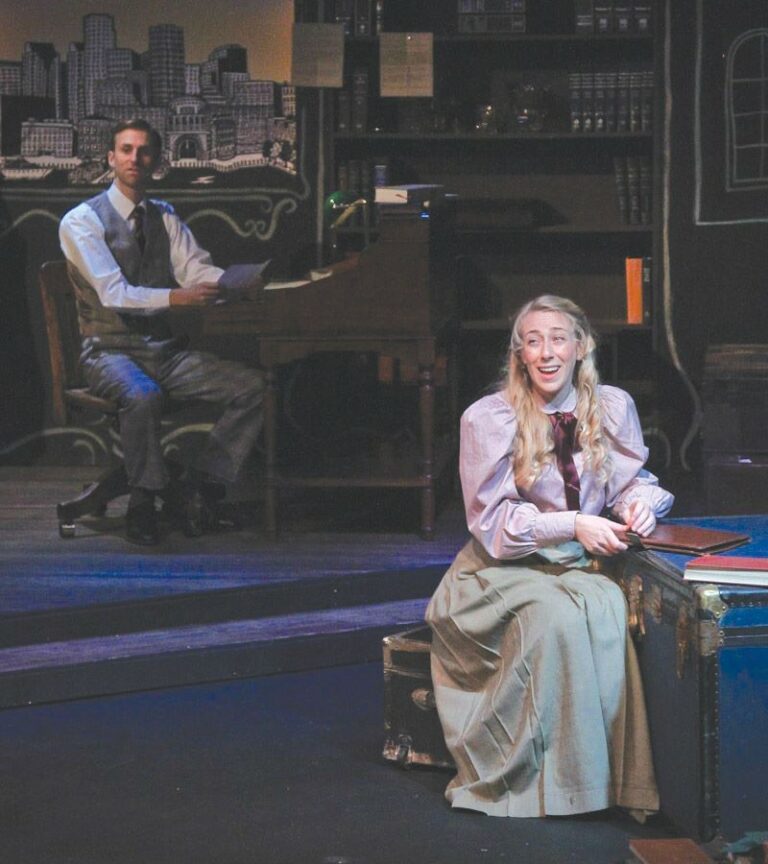
“I’m feeling energized, grateful, happy—and exhausted,” says Michal Victoria, on her first day off following the opening weekend of Shakespeare in the Cannery’s In the Mood, which puts a WWII, big-band musical spin on the playwright’s much-loved comedy Much Ado About Nothing.

In director David Lear’s thoroughly entertaining outdoor production, staged in crumbling “urban ruins” near Railroad Square, Victoria plays Antonia. It’s a small, meaty supporting role that requires her to dance, sing, run and (at one point) get very, very angry. All part of a large, constantly moving cast that includes David Yen (Benedick), Denise Elia Yen (Beatrice), Anthony Abatè (Don Pedro), Elizabeth Henry (Leonora), Isabella Peregrina (Hero and Constanza), Sam Coughlin (Claudio), Stefan Wenger (Don John), John Browning (Borachio), Brandon Wilson (Dogberry), and a live jazz band.

“It’s been such a wonderful thing, doing this show,” Victoria says, “since there was a time I really thought I’d never be able to step onstage again.”

This is Victoria’s first time performing in a production in nine years, since “retiring” to battle severe Lyme disease, an illness she’s be fighting for over 24 years, with long stretches where she’s been bedridden for months at a time. After reluctantly believing her acting days were over, recent alternative treatments have given Victoria just enough energy to return to the stage.

It hasn’t been easy.

“As I was preparing to do this show, I was thinking, ‘This is like training for a marathon,'” she says. “I literally started preparing months ahead, upping my exercise regimen, upping my immune support. I’ve totally been in training to do this.”

That gave Victoria the idea to use these performances to raise money for other sufferers of Lyme disease.

“I thought, ‘Wouldn’t it be great if people would sponsor me, making a pledge of $2 to $10 for each performance I complete, the way people pledge for every mile someone runs in a fundraising race?’ I can directly give that money to the GoFundMe campaigns of the neediest people I know with Lyme.”

She’s serious about those GoFundMe campaigns for people with Lyme disease.

“Everyone with Lyme has a GoFundMe,” she says. “It’s a devastating illness. As I said, doing In the Mood is definitely exhausting, but I’m grateful I’m healthy enough to do it at all, after all these years.

“And now I want to use these performances to help others who aren’t as lucky as I am.”

BOHEMIAN: This is the first show you’ve done in nine years, since you played Puck in A Midsummer Night’s Dream in Sebastopol?

MICHAL VICTORIA: Nine years, yes. That was a very physical show, too. It really was, and it was also a highlight of my life. In the nine years since, while I’ve been so sick, it’s often seemed like a whole different person did that show, someone other than me.

You were diagnosed previous to that show, right?

Yes. But no one knew. At the time I didn’t want to come out as having Lyme, and I didn’t tell [David Lear, director of that production, and also the director of In the Mood], because I didn’t want him to doubt I could do it. I knew I could, though I knew it would take a lot out of me. And it did. During one rehearsal I stopped, left the stage, threw up, and went back to rehearsal. I was struggling so hard, but I really wanted it. And I was surprised when people say my performance and said they couldn’t tell I was struggling.

At the time, I wasn’t under treatment, like I am now. But I knew that I had to be in life, you know. I had to live my life. At the time, I still didn’t fully understand what it meant to have Lyme disease. Lyme somehow makes you feel unreal.

When were you diagnosed?

Well, I’ve been sick for about 24 years. But I wasn’t really sure for a long time what it was, because testing for Lyme disease is very inaccurate. A lot of people go to a Lyme doctor, who specializes, and they have to look at these very specific tests. They call them “titers.” Because Lyme disease is so controversial, and there are so many differing opinions, I was always doubting that I had it. There was a part of me that kept saying, ‘Well, what if it isn’t Lyme? What if it’s something else?’

I’ve been to doctors who’ve tried to eliminate other possibilities. I’ve been tested for everything under the sun. I finally came out positive for what they call a co-infection of Lyme, which is . . .—OK, a quick Lyme tutorial.

Lyme disease is caused by bacteria. And sometimes these other things piggyback on those bacteria. When a tick bites you, it basically pukes out the bacteria into your bloodstream, and some people end up with co-infections. Some get the co-infection, but not Lyme; some get the Lyme, but no co-infection. I’ve got both. It’s kind of a lottery.

So I had all the classic symptoms, but the treatments are so expensive. And they aren’t covered by insurance. People lose their homes to pay for Lyme treatments—losing their life savings, becoming homeless.

None of the treatments I could afford were really working.

I’m so lucky that in the last year, I’ve found a treatment that has started giving me my life back. It’s working, and for me, it’s not that expensive. My boyfriend helped me with some of the treatment costs, and I’ve been able to raise the rest through a GoFundMe campaign, which is still operating.

Me and every other person with Lyme disease.

Really? It’s that common.

Oh, yeah, that’s totally true. Because the CDC does not yet recognize chronic Lyme disease, the medical community does not have up-to-date information on treating it. Insurance companies do not cover any treatments. Which is why people with Lyme are going broke, and why everyone has a GoFundMe.

I’m part of a number of Lyme support groups. There are people who are in far worse shape than me. There are homeless people with Lyme disease, who can’t afford any treatment and have to live on the street with it.

I don’t know how to better explain the torture of this disease than to say there is a famous doctor who treats Lyme, AIDS and cancer, and he’s said that, by far, his Lyme patients are in worse shape than his other patients. Lyme devastates you. I don’t want to make light of other diseases, but imagine you had Alzheimer’s and you knew it, and at the same time you had ALS, and were in constant pain while losing all of your motor abilities, and at the same time, your nervous system is on fire, and you constantly feel like there are bugs crawling all over you. Your heart has palpitations. Your eyesight starts to go, and you start feeling like a shell of yourself. These are all things that people with chronic Lyme disease experience.

You said earlier that you felt ‘unreal.’

Yes, that’s the best way to describe it. Like I’m here, but I’m not really here. Like I’m alive, but not really alive. And with Lyme, you can go on indefinitely like that, until your immune system breaks down so completely you get another secondary illness.

So Lyme disease can, in a way, be fatal, if the secondary illness is serious enough?

Absolutely. I’ve lost 13 friends since January, to Lyme disease. Most of those were suicides. That’s how hopeless people become, with this disease. I will tell you that a lot of people with Lyme are abandoned by their families and friends, because it’s very hard to deal with people who are suffering like crazy, and there’s no clear answer. The money lost devastates people. Most people with Lyme become isolated in their homes, if they are lucky to have homes.

And as common as it has become, so many doctors are not recognizing Lyme disease. They send people to neurologists or psychiatrists. It’s really very important that the CDC begin to recognize chronic Lyme disease, and people can pressure their representatives to take this seriously. Because, for those of us living with Lyme disease—or trying to—it’s very serious. Lyme is an international health crisis, and, in so many ways, it’s a life-or-death situation.

When you talk about friends who’ve died by suicide, are you talking about people you’ve met through your support groups?

Yes, mostly. In my communities, almost daily, someone posts something about how they are considering suicide, and the rest of us are talking them down, or trying to. And one day it was me being talked down. My community—strangers in online support groups, who are all I had left after my own family abandoned me—they are the ones who came through and talked me into giving life a chance again.

But that’s what I mean about how serious this is.

Four years ago, I applied to Final Exit, a group that helps people with “compassionate suicide,” for lack of a better phrase. It’s for people with terminal or chronic, untreatable illnesses. I didn’t believe in suicide for myself, but with no funds for treatment, and with no cure that is known, and being in so much neurological and mental pain, isolated and looking at maybe 30 years more of having to live with further degeneration, I was ready to go.

But then a series of small miracles happened that led me to finding the alternative treatment that is finally giving me some quality of life.

And here I am, performing outdoors in the heat and the cold, in a very vigorous musical.

Tell me a little more about your GoFundMe campaign, and the campaigns of other Lyme sufferers.

Yes, that’s been really important, not just for the money it’s provided, but as moral support. There have been times when I felt completely abandoned by everyone, feeling totally lost, and then someone would make a small donation to my GoFundMe. And I would think, “OK, OK. The universe is telling me to hang in there one more day.”

This is important for people to know. If you are able to donate anything at all to people’s GoFundMe accounts, even if it’s just a few dollars, it can still mean so much, because it can signal to people who are looking for some sign, that things are working for them, that there is hope.

So that’s part of your motivation for using the show as a way to raise money for other people with Lyme disease?

Yes. As I was preparing to do this show, I was thinking, “This is like training for a marathon.” I literally started preparing months ahead, upping my exercise regimen, upping my immune support. I’ve totally been in training to do this. And I thought, “Wouldn’t it be great if people would sponsor me, making a pledge for each performance I complete, the way people pledge for every mile people run in fundraising marathons?” And I can directly give that money to the GoFundMe’s of the neediest people I know with Lyme. I’ve already selected two people, one of whom is in a homeless shelter. I’m hoping people will donate between $2 and $10 per performance.

So how does it feel, being onstage again?

I’m feeling energized, grateful, happy—and exhausted. It’s been such a wonderful thing, doing this show, since there was a time I really thought I’d never be able to step onstage again.

There’s a scene where you really unload on someone, after your niece Hero has been wronged. Your anger was pretty impressive. What was that like?

That was really interesting, feeling all that. My character has to turn from being soothing and protective of her sister to a very quick, intense anger. But for a long time, because of the disease, I had no feelings. This disease takes away your feelings, your motivation, your creativity, and leaves you numb. I’ve just been starting to get those feelings back again.

The other part, which is actually a good thing, is that I’m so damn happy right now. I’m so grateful, that I’m kind of overwhelmed with joy, so it’s been hard for me to get to that place of anger. But when David [Lear] told me this play was about people coming back to life after a war, basically coming out of a coma, celebrating life after years of fear, I thought, “Wow! That’ show I feel! This is so cool that I can dovetail the way I’m feeling right now with this character who’s joyful after a long season of wartime.”

That really is how I feel. Like I’ve survived a war, the way people come out of that experience, when death was all around them, and how they just want to take the moment and suck its marrow. When I’m onstage, and I’m having a bad night, when it’s hard and exhausting and I hurt, I just take a moment to say, “Hey. Look at what you’re doing? This is so amazing. You’ve made it this far, you can make it through the show.”

THC TLC

The cannabis-infused candies from the Garden Society look delicious and they’re safe for Maureen Dowd to consume. Recall that the New York Times columnist overconsumed an edible in Colorado a couple of years ago, and wound up in a half-panicked stupor.

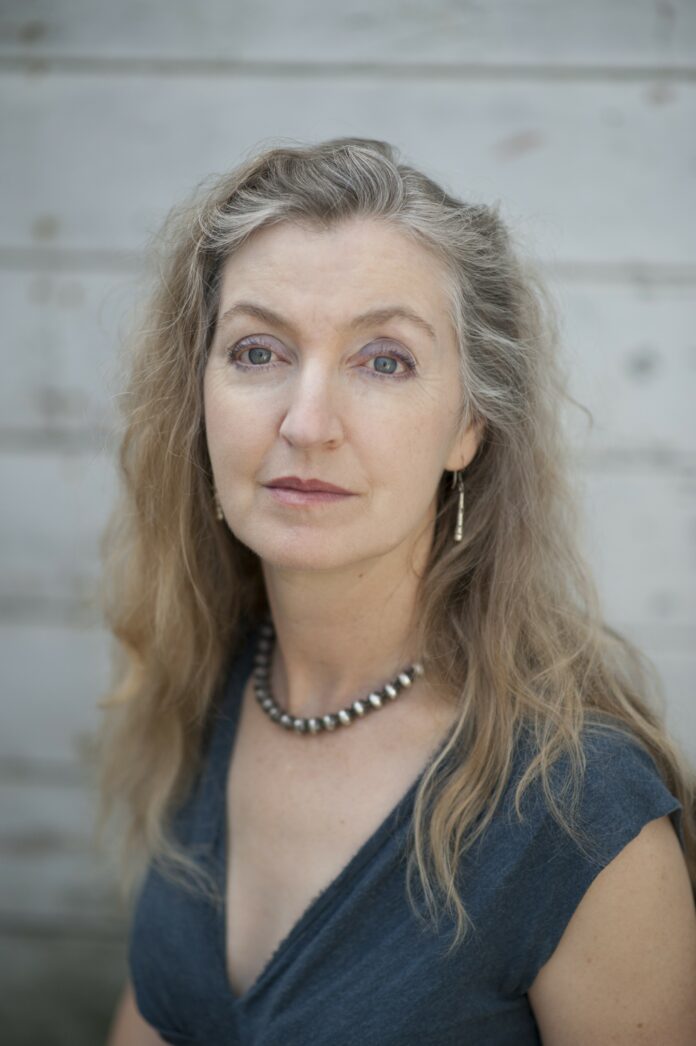
Company founder Erin Gore (pictured) suggests that Dowd should have consulted with her women-owned cannabis startup, which offers low-dose chocolates (the Bliss Blossom) and chewies (the Bright Blooms) to dispensaries and through delivery services. And the Garden Society offers educational workshops for medical-cannabis novices to guarantee a “safe way for women to experience cannabis for the first time,” Gore says.

“We need to respect the lack of experience that they have,” she adds—and the company goes to lengths to help new pot consumers find their tolerances for the product, and triple-tests the potency levels to make sure there’s not too little or too much THC in the mix.

As ever, the urgent suggestion is to take more later if the effects don’t manifest within a couple of hours to avoid a Dowdian outcome.

“The columnist will probably never try edibles again,” Gore says of Dowd, adding that her hotel-room meltdown would have been preventable with a responsible guide to her first encounter with medical edibles.

Gore says she started to use medical cannabis to understand and address various “pain points” associated with being a married and ambitious women (she worked 10 years as an executive in the corporate world) with various roles as supportive sister and aunt, friend to her partner, “everything that women are responsible for in our day-to-day lives.”

Gore turned to cannabis, she says, “to help me get through the rigors of life,” which meant finding a holistic avenue to a good night’s sleep and a low-stress day, and soon realized a critical need was not being addressed by the industry. “I felt there was a real gap in the industry for women-oriented products,” she says, which extended to the branding and the product itself. She starting hosting baking parties with female friends, and realized that all these women, no matter how successful they were, “all had these pain points, whether it was the job or their personal lives—everyone had a different reason for the pain.”

The parties grew exponentially, and a business was born. “There is a real need in this market to de-stigmatize and offer products targeted to women’s health and needs,” Gore says. And of course men can enjoy the confections, too, whose extracts are drawn from Mendo county’s Shine On Farms.

“Men are very supportive of women in this space,” Gore says, highlighting the male-dominant pioneers of California cannabis “who set the foundation for a new industry that really supports women.”

Letters to the Editor: July 19, 2017

Head Trips

I am glad that Silicon Valley billionaires are investing money into life extension (“Eternity 2.0,” July 12). Big Pharma only wants to make drugs for diseases. We need people with vision and millions to fund researchers. And, yes, freezing heads is definitely too old-school.

Two great fiction books to read on the subject of extending life and ending disease as we know it are Cory Doctorow’s Down and Out in the Magic Kingdom. I am sure that the pioneer boys in the chip valley all read this when they were younger. It’s all about having a copy of yourself and rebooting into a newer body. The other book is Unwind by Neal Shusterman. It’s a dystopic teen novel about harvesting parts from young adults—a much darker vision.

Sebastopol

“It has become appallingly obvious that our technology has exceeded our humanity.”—Albert Einstein

“We cannot solve our problems with the same thinking we used when we created them.”—Albert Einstein

So comically sad the tech billionaires chase such a vain and empty fountain of youth. All their wealth cannot conceal their fundamentally primitive, ignorant and arrogant conceits that are too typical of hubris-laden Homo sapiens. Technology is integral to the multitude of crises that surround all 7-plus billion of us, and yet they believe the same technologies will save us? Or at least their own sorry-assed sociopathic selves? They are so barking up the wrong tree.

Humanity’s design contains so much inherent untapped potential. A wiser earthling would invest in how to “install the drivers” that will activate so many wondrous yet still dormant faculties built into each and every one of us. Surely a quantum leap in evolution may potentially be nigh, but this sure isn’t it!

“Be grateful for death, grasshopper, without death, life has no value.”
—Reverend Ra Rabbi Roshi Rinpoche Ji

Occidental

Beautiful Place

Reuniting Courthouse Square has created a magical place in downtown Santa Rosa! I toast the city council members who finally made it happen! Most great cities have a downtown space that people love: Golden Gate Park in San Francisco, Central Park in New York City—and now the reunited Courthouse Square in Santa Rosa.

Anyone who’s been to Wednesday Night Market in Santa Rosa this summer, can see how people are drawn to it. While the homeless have needs for city funds, as well as single moms, addicts, mentally ill, veterans, and the elderly, spending money to create a beautiful public space will have far-reaching returns. It diverts traffic, and humanizes the downtown core, to create a place where people can slow down and enjoy this beautiful place.

Sebastopol

Write to us at le*****@******an.com.

July 14: Showstoppers in Santa Rosa

0

The North Bay’s long-running experimental theater troupe the Imaginists are putting the (bicycle) pedal to the metal again this summer for their annual bike-powered, bilingual Art Is Medicine Show at several park locations in Santa Rosa. This year’s original production, Stop That Show!, is a topical affair, as President Corn and Sen. Cracker sabotage the Imaginists in order to perform their own “Let’s Make America Pretty Good Again Summertime Extravaganza.” The touring show hits Juilliard Park and Howarth Park this weekend, and kicks off with a fundraiser on Friday, July 14, at 461 Sebastopol Ave., Santa Rosa. 7pm. $5–$100. theimaginists.org.

July 14-15: Family Fantasy in Glen Ellen

0

The spectacular Broadway Under the Stars summer series from Transcendence Theatre welcomes theater lovers of all ages for their upcoming Fantastical Family Night, happening among the ruins of Jack London’s estate for one weekend only. Show up early and indulge in pre-show activities, great food and wines from several local vendors. Then enjoy a show of Broadway classics, Disney musical numbers and more, performed by nearly two dozen nationally touring vocalists and actors, under the canopy of stars on Friday and Saturday, July 14–15, at Jack London State Park, 2400 London Ranch Road, Glen Ellen. Doors, 5pm; show, 7:30pm. $32 and up. transcendencetheatre.org.

Wine Country Secrets

There are dozens of North Bay restaurants, but there are many more you've probably never heard about, unbookable on OpenTable, but hiding in plain sight. How can that be? Well, you have to stretch the term "restaurant." Napa and Sonoma county wineries are waging a culinary arms race to outdo each other with offerings that go miles beyond cheese and...

Fresh Catch

For seafood lovers, summertime in California used to mean lots of fresh king salmon on the grill. Tragically, those days are over. The Golden State's signature seafood is in short supply these days due to devastating impacts on the rivers the fish depends on to spawn. The state's salmon industry is limping along, and what is available is limited and...

Thai Winner

What? Another story about Ramen Gaijin? Well, yes and no. It's true I've given a lot of ink to Sebastopol's excellent Sonoma-County-meets-Japan ramen shop. But part of what makes the restaurant so compelling is its emergence as an incubator for new restaurant concepts. May featured the second of two Mexican food pop-ups (Polanco), and this month co-owners Matthew Seven Oaks Williams...

We’re No. 1?

I'm sitting outside an office at Stanford University, waiting to speak with a man who shares a similar path to Barack Obama, law fellow Mugambi Jouet. Much like the former president, Jouet spent a good deal of his youth in another country—Obama in Indonesia, Jouet in France—which provided a cultural immersion that deepened and broadened both men's perspectives on America. Jouet...

Parting Gift

Born and raised in the city of Sonoma, songwriter, guitarist and producer Sean Carscadden has been gigging constantly for nearly 20 years. His versatility as a musician reflects that of the greater North Bay scene, and was formed in those two decades working on numerous musical endeavors. "I've been in a lot of different projects over the years," Carscadden says,...

Art of Survival

"I'm feeling energized, grateful, happy—and exhausted," says Michal Victoria, on her first day off following the opening weekend of Shakespeare in the Cannery's In the Mood, which puts a WWII, big-band musical spin on the playwright's much-loved comedy Much Ado About Nothing. In director David Lear's thoroughly entertaining outdoor production, staged in crumbling "urban ruins" near Railroad Square, Victoria plays...

THC TLC

The cannabis-infused candies from the Garden Society look delicious and they're safe for Maureen Dowd to consume. Recall that the New York Times columnist overconsumed an edible in Colorado a couple of years ago, and wound up in a half-panicked stupor. Company founder Erin Gore (pictured) suggests that Dowd should have consulted with her women-owned cannabis startup, which offers low-dose...

Letters to the Editor: July 19, 2017

Head Trips I am glad that Silicon Valley billionaires are investing money into life extension ("Eternity 2.0," July 12). Big Pharma only wants to make drugs for diseases. We need people with vision and millions to fund researchers. And, yes, freezing heads is definitely too old-school. Two great fiction books to read on the subject of extending life and ending disease...

July 14: Showstoppers in Santa Rosa

The North Bay’s long-running experimental theater troupe the Imaginists are putting the (bicycle) pedal to the metal again this summer for their annual bike-powered, bilingual Art Is Medicine Show at several park locations in Santa Rosa. This year’s original production, Stop That Show!, is a topical affair, as President Corn and Sen. Cracker sabotage the Imaginists in order to...

July 14-15: Family Fantasy in Glen Ellen

The spectacular Broadway Under the Stars summer series from Transcendence Theatre welcomes theater lovers of all ages for their upcoming Fantastical Family Night, happening among the ruins of Jack London’s estate for one weekend only. Show up early and indulge in pre-show activities, great food and wines from several local vendors. Then enjoy a show of Broadway classics, Disney...
11,084FansLike
4,606FollowersFollow
6,928FollowersFollow