Respect

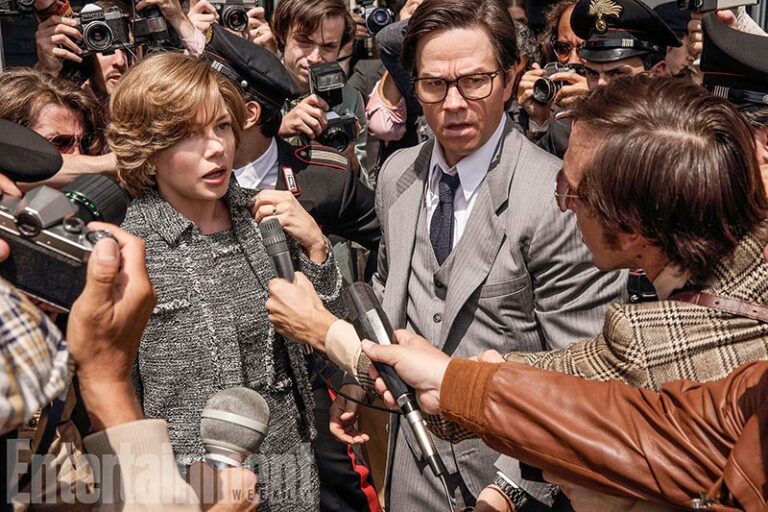
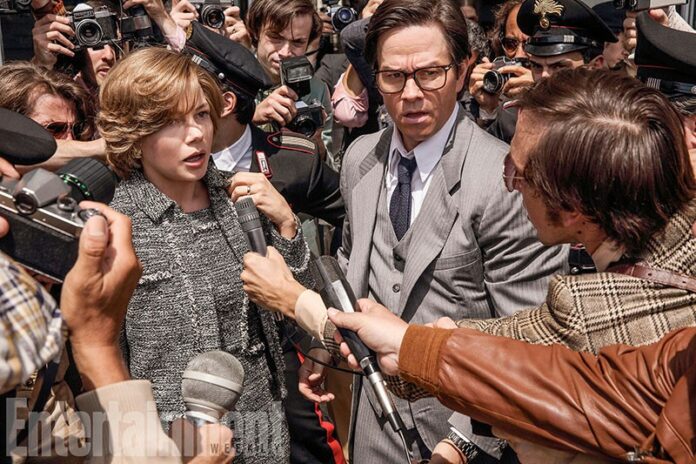
There are few reactors, let alone actors, as impressively cool as Robert Forster. Currently co-starring in Twin Peaks, Forster comes to Santa Rosa for an appearance at the Roxy’s screening of Jackie Brown (1997). He was nominated for an Oscar for his role in Quentin Tarantino’s adaptation of the Elmore Leonard novel Rum Punch.

Jackie Brown is an uncharacteristically pulp-free crime drama about weariness and risk. It enshrines actress Pam Grier, whos used to say at interviews, “I come from a long line of skillet-throwing women.” She can be fierce, but this is also about her grace: a woman walking against a background of walls covered with ceramic tiles, so that the reflected light gives her a little extra glow.

In the title role, Grier plays a $16k a year flight attendant on a puddle-jumper airline, who’s also a bagman for the ruthless gun dealer Ordell, played by Samuel L. Jackson. The man who—almost—gets Jackie Brown is Forster’s Max Cherry, an unruffled South L.A. bail bondsman. He has a walnut tan and hair transplants that show a little. Jackie perplexes him. It goes without saying that a stewardess is always going to be a flight risk. Yet Cherry is keen enough to tell the difference between an out-and-out criminal and a real lady in trouble with the police.

In its insistence that people only really get interesting when they’re on the unhappy side of 40, Jackie Brown paves the way for Breaking Bad and Better Call Saul. Forster’s quiet competence holds its own against Jackson’s remarkable force. When Ordell tries to jive him into sympathy, Cherry says quietly: “Is white guilt supposed to make me forget that I’m running a business?”

Forster is not only a first-rate actor, but an impressive public speaker—one hopes someone in the audience will ask Forster for his definition of the word “respect,” a Jackie Brown–worthy lesson for anyone who tries to impress through the act of oafishly threatening others.

Robert Forster appears at the Aug. 17 screening of ‘Jackie Brown’ at the Roxy Stadium 14, 85 Santa Rosa Ave., Santa Rosa. 707.525.8909.

Letters to the Editor: August 16, 2017

We Know Who You Are

Donald Trump is himself a white supremacist. The reason we are at all confused about that is simply because he doesn’t pursue white supremacy as a hobby; it is secondary to his primary interest, which is making money.

Let’s review the instances of blatant racism that President Trump has exhibited over the years:

•Discriminating against blacks in renting apartments during the 1970s

•Promoting the idea that Barack Obama was born in Kenya and is not a true American

•Sending out a tweet plastering Hillary Clinton’s face on a Star of David with piles of cash

•Mocking Asians by speaking in broken English at a campaign rally

•Appointing racially insensitive Jeff Sessions as Attorney General

•Hiring Steve Bannon as White House chief strategist (the former executive chairman of racist and anti-Semitic Breitbart News)

•Putting Sebastian Gorka into the role of White House deputy assistant—a man who strongly defends white supremacy

This isn’t even an exhaustive list. This is by far the worst president this country has ever had. He makes George W. Bush look ethical by contrast.

And Richard Nixon’s Watergate looks like child’s play in comparison to the neverending ethical breaches in the Trump administration.

The Republican Party should pay a big price in the Congressional elections in 2018—for being responsible for the disastrous Donald Trump reality-show presidency. Let’s make it happen with a good strong victory for the Democrats. And please don’t quibble over details.

Kentfield

America:
Great Again!

Wow! Our current administration has accomplished a great deal in its first six months. Look at all of the bans, sanctions, firings, resignations and investigations; budget cuts for art, education, health, science and the environment and budget increases for the military; no healthcare changes; penalties for sanctuary cities and marijuana use; pressuring neighboring countries, alienating allied nations and threatening major adversaries. Good goin’, guys!

Santa Rosa

Dept. of Corrections

Because of an editing error, last week’s Debriefer item about the sale of Star Route Farms misidentified the buyer as the University of California at San Francisco. The buyer is the University of California, a private Jesuit university unaffiliated with the state system.

Also, in last week’s cover story, “High Notes,” we errantly reported that Bill Graham produced the Last Waltz at the Great American Music Hall. He did not. The Last Waltz was produced at San Francisco’s Winterland Ballroom.

Write to us at le*****@******an.com.

Hyatt Times

0

Sonoma County’s numerous hotels servicing the luxe grape economy are mostly non-union shops—which only serves to highlight the breakthrough unionization effort last week at the Hyatt Vineyard Creek hotel in Santa Rosa.

More than 50 hotel workers joined Unite Here Local 2850, the regional hospitality union with 270,000 members in the United States and Canada.

According to a statement from Unite Here spokesman Ty Hudson, the Hyatt joins the Sheraton in Petaluma as one of only two hotels in Sonoma County to be unionized.

It’s high time, says Unite Here Local 2850 president Wei-Ling Huber, to give wine-industry workers the same opportunity to thrive as the wine industry itself enjoys.

Average wages for union hotel workers are way higher than non-union workers, and the majority of hotel-industry workers in San Francisco, San Jose and Oakland are unionized, reports Hudson in a Tuesday press release from Unite-Here.

“In Sonoma County, the median hourly wage for housekeepers is only $11.95,” Hudson notes in the release—you can’t even sniff the cork on a bottle of Véréte La Muse for that kind of scratch.

The hotel and resort rooms are themselves some of the most expensive in the country, while “many workers struggle with high housing costs and inconsistent access to healthcare,” says the Unite Here announcement.

Big-town hotel workers often earn more than $20 an hour.

The Hyatt workers join the union ranks with hundreds of employees at the Graton Casino who recently joined Unite Here.—Tom Gogola

Big Sky Country

0

Fifth-generation San Francisco native Danny Montana is old enough to remember seeing shows at the original Lion’s Share club in Sausalito, where he first saw legendary folk songwriter Ramblin’ Jack Elliott in 1968.

Nearly 50 years later, Montana has established himself in the North Bay as an authentic connection to bygone days, living in Woodacre in the San Geronimo Valley and often performing his style of country-western music at Marin watering holes like
the Papermill Creek Saloon and Nick’s Cove.

This week, Montana heads to Guerneville to open for a longtime hero of his, when Ramblin’ Jack Elliott performs at the River Theater on Aug. 18.

As countrified as Montana is today, he almost went in a different direction, growing up a fan of the Beatles and the Kinks. Montana’s love for country music began when the Columbia House record club mistakenly sent him a George Jones record instead of the Kinks when he was 12 years old.

“Eventually, Bob Dylan got me looking into folk and back in time to Woody Guthrie, who had a huge influence on me,” says Montana. “And that’s how I discovered Ramblin’ Jack, and he was always a huge influence as well.”

Born Danny Morrison, Montana got his name after he spent a year living in the state. “It was 1970, I was in Mill Valley at Camino Alto and East Blithedale, at the brand-new four-way traffic light,” remembers Montana. “And I was sitting there, going, ‘Wow, it’s too crowded here. I’m moving to Montana.’ It wasn’t nearly as crowded, of course.”

After experiencing a Montana winter, the musician decided it wasn’t too crowded in Marin after all. Upon his return, a young Mill Valley harmonica player named Huey Lewis insisted he start going by Danny Montana. “What am I going to do?” laughs Montana. “Say no to Huey Lewis?”

Throughout his musical career, Montana has stayed true to the outlaw country and classic folk that he fell in love with way back when that George Jones album made its way to him. Montana’s swinging sound will be on full display for the upcoming show.

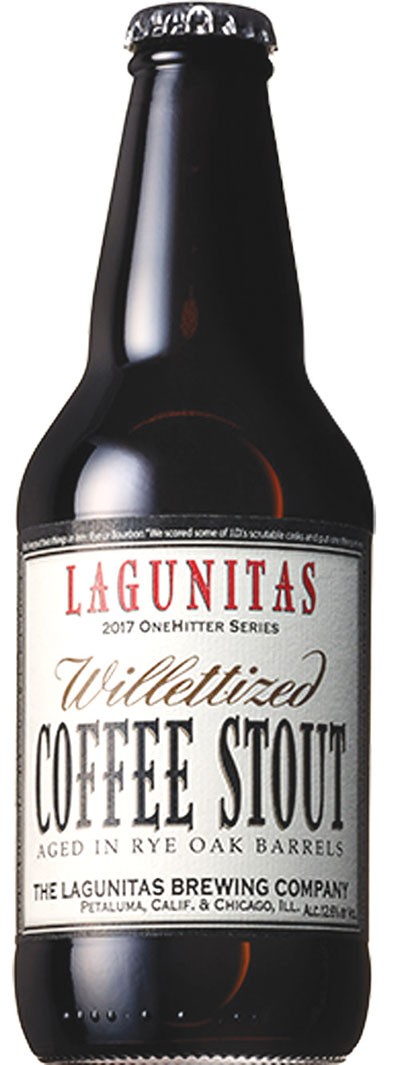
To open the evening, banjo and fiddle player Phil Richardson will join Montana for an intimate set. After Ramblin’ Jack’s headlining performance, Montana will return with a full band, including Lagunitas Brewing Company founder and guitarist Tony Magee, and party late into the night. “I’m just loving playing right now,” Montana says. “I just keep plugging along.”

Motor City Madness

0

The brave new film Detroit captures a real-life
slice of what happened to a group of ordinary teenagers caught up in the violent chaos of the 1967 rebellion. Unfortunately, the murderous cop culture it reveals is still operative. Yet film critics at several “liberal” publications, notably Richard Brody at The New Yorker, persist in trying to undermine that reality by attacking the film as “immoral” because its director Kathryn Bigelow is a culturally biased white woman!

Last year, Brody labeled black filmmaker Nate Parker as hopelessly “vain” for writing, directing and starring in his Birth of a Nation, which is about a slave-led rebellion in 1831. Brody wrote that his critical experience was colored by the (totally irrelevant) fact that Parker was acquitted of a rape charge 17 years ago and by the lack of women in the movie. Parker is a misogynist, Brody concluded. And he insinuates that Bigelow failed to give women their fair due, too. Attempting to invalidate a socially inconvenient message by attacking the perceived identity of the messenger is a familiar tactic of the guardians of the reactionary social status quo. But who are Detroit‘s liberal critics really lynching?

Driving Brody’s manly contempt for Bigelow’s biological identity is his attack on the artistic and political integrity of the hundreds of black actors and stars who made this cinematically innovative, culturally accurate, painfully constructed film sing with life and death. Contra Brody, Detroit is a creation in and of the black community, the blacks who lived through the rebellion and the actors who channel them in a film that relentlessly tackles the violent core of our racialized culture. Brody insinuates that the black actors were so disempowered by Ms. Whitey that they were suckered into going along with her self-hating, misogynist trip into Blacktopia, when, in reality, these fine actors consciously collaborated with white artists to make a great film.

Detroit is so ontologically unsettling and reflective of American society that the critique being magnified in the white-dominated, other-fearing media is a complaint about the biological identity of the director made by white critics. Pathetic.

Go see Detroit. It will change you.

Peter Byrne is an investigative reporter who lives in Petaluma.

Open Mic is a weekly feature in the ‘Bohemian.’ We welcome your contribution. To have your topical essay of 350 words considered for publication, write op*****@******an.com.

Eclipse Tips

0

It’s being called the Great American Solar Eclipse. On Monday, Aug. 21, the moon will cross in front of and completely block the sun along a path that stretches from Oregon to South Carolina.

While many astronomical enthusiasts are trekking to this “path of totality” to see the Continental U.S.’s first total solar eclipse in nearly a century, North Bay residents will see almost a full 80 percent of the sun eclipsed between 9am and noon. Not too shabby.

Got questions? Many will be addressed before the big day, when the Santa Rosa Junior College’s planetarium holds a one-night-only show, Eclipse!, on Saturday, Aug. 19. The history, cultural impacts and science behind the celestial event will inform and fascinate.

It’s not safe to stare at the sun without protection, and regular sunglasses won’t cut it. With that in mind, the Sonoma County Library is handing out free eclipse-viewing glasses for safe watching. Supplies are limited, so head to any branch of the library and get your fashionable accessory now.

On Monday, the best spot to watch the eclipse locally will be at the Robert Ferguson Observatory in Sugarloaf Ridge State Park, where filtered telescopes will give an up-close look. RFO, Shutterbug and KSRO also host a free viewing party at downtown Santa Rosa’s Courthouse Square. See for yourself!

For details, see Field Trips, adjacent page—or just look up, Monday, Aug. 21, 9am–noon.

Miller’s Time

0

After a months-long, nationwide search, the city of Rohnert Park has named Santa Rosa native Sheri Lee Miller as supervisor of Spreckels Performing Arts Center’s and artistic director of Spreckels Theater Company.

Miller follows in the footsteps of Gene Abravaya, who retired in June, and has since relocated to Tucson.

Miller, an Equity actor and an acclaimed stage director and theater administrator, says that it has been a lifelong dream to become artistic director of a thriving theater company.

Her early on-stage experiences were as a student at Piner High School, and then Santa Rosa Junior College, under the mentorship of the late Joan-Lee Woehler-LaSalle. “She’s the one who encouraged me to become a director,” Miller says. “Joan-Lee told me she loved casting me in her shows, but that she also saw the director in me and wanted to explore that.”

Miller went on to study acting and directing at San Diego State University, and over the ensuing years appeared on the professional stage in San Diego and understudied at the Seattle Repertory. After returning to Sonoma County, she’s worked as an actor and director at Cinnabar Theater, Main Stage West, Actors Theater, Sonoma County Repertory Theater, 6th Street Playhouse, Spreckels, and other venues. She earned her administrative chops as director of marketing and education at Cinnabar Theater, general manager of the Performing Arts Center at Napa Valley College, and operations manager of the Children’s Museum of Sonoma County. Most recently, she taught theater in the ArtQuest program at Santa Rosa High School.

It should come as no surprise that the 59-year-old Miller comes to the Spreckels position with plenty of ideas and enthusiasm.

“Oh, I have lots of plans!” she says. “I am very big on nurturing future and emerging artists. I want to build the Youth-in-Arts program into a year-round educational program. I would also like to develop a lab series to nurture artists who want to stretch themselves. For example, perhaps one of our awesome techs would like to try his or her hand at design. Or perhaps an actor wants to try directing. The lab could provide them with a forum in which to try their hand at developing that new skill.”

The lab won’t be happening this year, she says, “but it’s something I really want to explore.” Another plan is to embrace the original intention of the center’s small, 99-seat black box theater, the Bette Condiotti Experimental Theatre. “I don’t think anyone even notices that sign above the door anymore,” Miller says, “but one thing I hope is to make the experimental theater a bit more experimental.

The 2017–18 season at Spreckels was largely selected by Abravaya and begins in September with the Larry Shue comedy The Foreigner.

One of Miller’s first decisions was to cancel the planned May 2018 run of The Hunchback of Notre Dame—based on the animated Disney film—and replace it with the classic musical Peter Pan.

“It was not an easy decision at all,” she admits, “but I felt Peter Pan, for various reasons, was a stronger choice for the May slot. Peter Pan, also, was my favorite childhood story. Mary Martin may very well have been my first exposure to theatrical staging, albeit on television, and Peter Pan was definitely my first true love.

“As for future shows,”, she adds, “we will still do musicals, absolutely! But I think the large stage is also perfect for epic straight plays. It just might be time to bring Shakespeare indoors.”

Abravaya says the theater company is in great hands with Miller as he reflects on his run as artistic director. “My time at Spreckels was the happiest, most satisfying years of my professional life,” he writes in a recent email from the Arizona desert. “The relationships I developed with so many creative people will stay with me, and in my heart, forever. Knowing Sheri and the depth of her talent, the depth of her feelings and her integrity, I am confident that Spreckels Theater Company will continue to reach new heights. I wish her all the best.”

Abravaya racked up a number of notable accomplishments in his 17-year tenure. In 2010, he founded the Spreckels Theater Company and established a focus on elaborate musicals. He created the company’s signature Paradyne Projection System and saved the center thousands in construction costs by augmenting small, practical sets with opulent projections and animations.

He is also widely credited with keeping the center afloat during the Great Recession, as he simultaneously enhanced its reputation as one of the largest and best-appointed performance venues in Sonoma County—with 40,000 square feet, a 550 seat theater, and the 99-seat black box—all while remaining committed to the center’s original purpose: live performances of theater, music, and dance.

“It’s pretty well known that Gene saved live theater at Spreckels,” says Miller as she recalls the 2008 economic crisis, during which Rohnert Park considered eliminating theater productions and came close to closing the center altogether.

“But they gave Gene the opportunity to make it work,” Miller continues. “He dug deep, and with his amazing team, brought about a renaissance at the theater by producing big, splashy, Broadway-style extravaganzas. He brought in the projection system, which was genius, too. Gene really did Sonoma County a wonderful service.”

And now it’s Miller’s time to put her stamp on the continuing legacy of Spreckels. “I wish Joan-Lee was still here,” she says. “I’d love her to know that I did what she suggested. I think she’d be terribly happy.”

The Zero Wasteland

0

There’s an old joke that starts with a question. Guy asks a store owner, “Hey, how’s business?” Store owner pauses before delivering the punch line. “Well, as they say in the garbage-collection industry, ‘It stinks—but it’s picking up.'”

Get it? Recology gets it.

For the San Francisco–based Recology, the stinky business of garbology is really picking up. The pioneering trash company, a national and international pace-setter when it comes to landfill-diversion strategies (most notably through its composting initiatives), has just completed the purchase of the North Bay’s Ratto Group and is poised to start rolling the trucks and picking up the trash within the next few months, from Santa Rosa to the wilds of West Marin. The company’s been around for more than 100 years and started as a scrap-scavenging outfit in San Francisco, where, according to corporate materials, it still holds the exclusive contract to deal with that town’s epic waste stream.

The firm also recently signed off on a garbage-collection contract in Humboldt County, filling in a previously empty coastal zone on a company map that’s dotted with Recology outposts in Washington, Oregon, Nevada and California—but none in the North Bay. Until now.

The company has had its eye on the golden coastal swath that runs from San Francisco to Eureka, says Eric Potashner, the San Francisco–based vice president and senior director of strategic affairs at Recology as he notes that “these opportunities don’t come around that often.”

This particular opportunity arose in part out of Ratto subsidiary the North Bay Corporation’s failure to fulfill the terms of its contract in Santa Rosa—notably, the company’s dodgy track record on diverting recyclables out of landfills—and by extension, to all the other municipalities in Sonoma County who use the service. (The towns of Sonoma and Windsor are the only two municipalities in the county that don’t use the Ratto service; Windsor recently signed on with Sonoma County Resource Recovery after it ditched the Ratto affiliate that held the contract.)

And the process in Santa Rosa to replace Ratto with another firm has been a bit awkward, to say the least, as Recology was initially rejected in a request for bids sent out by Santa Rosa earlier this year, when it picked two other companies as finalists, even as Recology was negotiating to buy Ratto.

Santa Rosa—and the county as a whole—has cited multiple failures on Ratto’s part to fulfill the contract as their reason to not re-sign the locally based company, whose subsidiary trucks roll around the North Bay under the banner of Redwood Empire in Marin County. Those failures included a demonstrably poor track record of diverting recyclables from regional landfills.

In April, Santa Rosa was poised to pick between the nation’s number-one trash hauler, Waste Management, and local upstart GreenWaste Recovery, when Recology chimed in and told the city that they were in the final push to purchase the just-unionized Ratto, even as Santa Rosa was about to pick someone else to pick up the garbage.

The Santa Rosa City Council (SRCC) then nixed the two original finalists and allowed Recology to resubmit its bid, when it promptly became a finalist. As of Monday, Aug. 15, the Santa Rosa city manager’s office had recommended Recology to the SRCC, which will take up the recommendation and likely approve it at its Aug. 29 meeting, according to the city website and Joey Hejnowicz, the administrative analyst for the city manager’s office who is charged with the nitty-gritty of the Recology contract rollout.

Recology has made its bones in the trash business by preaching and practicing a philosophy of radical food-waste diversion, which it pioneered in San Francisco in the early aughts when it launched a composting program that would divert food and yard waste into composting facilities and then into the rows at local farms, providing top-notch soil for ground cover.

The company’s corporate
cri de coeur is “zero waste,” a laudable objective that’s been taken up by municipalities and counties around the state—but not by Sonoma County. Marin County has set its zero-waste goal for 2025.

Zero waste is a tough nut to crack given the practical limitations of current curbside, street-bin sorting systems. But industry leaders and garbologists have noted that the multiplier impacts in eliminating food and yard waste from the landfill stream goes far beyond any benefit that recycling provides.

The purchase (Potashner averred on offering the final sale price) included all of the Ratto assets, he says, including the machinery, trucks and real estate. The current garbage-collection matrix in Sonoma County has proven inadequate to the demands of residents and civic leadership to reduce landfill-bound waste and achieve a zero waste outcome. Even if the county hasn’t embraced the concept as a policy mandate, Sonoma County did host its first-ever zero-waste summit in May. It’s a start.

Compared with Ratto, the Recology business model appears better poised to deliver on recycling and composting, but will it? Potashner notes that the Ratto Group just upgraded its recycling facility in Santa Rosa. “That is in much better shape than it has been in 10 years,” he says, and notes that Recology plans “to add some capital improvements” to ensure that waste that winds up in those blue recycling bins stays out of the landfills.

The recycling and waste-transfer stations are where that particular rubber hits the zero-waste road, and a better recyclables yield, Potashner notes, comes through employing the latest technology, which for Recology includes optical-sorting scans and new screening tech. “That does move the needle forward insofar as what you can do on the recycling end.”

But landfills are typically filled with 30 to 40 percent organic matter that creates methane and all sorts of environmental havoc on the global-warming front. Composting food and yard waste is key to achieving the zero-waste goal.

“The other side is the composting,” says Potashner, “and we are going to expand those operations on the North Coast as well—we intend to provide an organic solution that frankly hasn’t been there.”

[page]

Recology’s landfill-diversion rates are the best in the country, and as the company expands into Marin and Sonoma counties, the challenge will be to maintain its industry edge while getting the North Bay up to speed on its wildly successful curbside-composting program, launched in San Francisco.

But Potashner cautions against an immediately apparent golden age of composting in the North Bay. “One thing to talk about is expectations,” he says. “This is not about just flipping a switch.” Even as there’s upcoming technology upgrades to the region’s current landfill-diversion facilities, the key human pieces have to fall into place, too. “You need a partnership with public works agencies and the customer, and it takes a little while to build up.”

And of course it’s far cheaper in the short term to just dump it all in the landfill, he says, but the long-term costs are untenable. A common refrain in most regional stories about the changing landscape of the North Bay garbage scene is that whoever is picking up the trash moving forward, it’s likely going to get more expensive.

But Potashner says there are ways the company provides incentives to its customer bases, so that rates can be adjusted downward (or at least not go up by as much as they might otherwise) based on the rate of return on composting and recycling. “Recycling programs are more expensive than throwing it in the landfill,” he says.

For the time being, Recology will inherit rates set by Ratto in the municipalities and areas that it currently serves, which includes Novato in Marin County, along with the whole of unincorporated West Marin.

While Trump was busy tending his various alt-right dumpster fires and tweeting from the sandbox, world leaders were digging into the dirt of carbon-emission-reduction and embracing the Recology model at the Paris Climate Summit in December.

The upshot of the climate conference was to highlight that creating healthy soil through composting could conspire to offset between half and all carbon emissions. The Recology model is custom-tailored to that end, collecting food and yard waste in its urban outposts and providing the ensuing soil to farms around the Bay Area.

The company’s Jepson Prairie Organics facility in Vacaville has emerged as a go-to facility for journalists and officials from other states and countries who want to get a glimpse of what a super-advanced compost facility can do.

Recology is among the largest waste-collection firms in the United States (Waste Management is the industry’s largest player and has contracts throughout Marin County municipalities), and business really hit its stride in the early aughts when the San Francisco food-scrap and yard-waste composting program demonstrated that the proof of concept was sound and economically viable. Since then, “the state has done a lot of regulation in this area,” says Potashner. “The whole world has looked at San Francisco and taken that model.”

As is often the case with wholesome and cutting-edge public policy, California has taken a lead and used the Recology success story to game out a future California where, by 2022, all state jurisdictions will have to have implemented a food-waste diversion program. The aggression is warranted, Potashner says, given that 30 to 40 percent of all compostable trash material currently winds up in landfills.

With the sale of Ratto finalized, the next step for Recology, Potashner says, will be to go through a contract-reassignment process at each of the North Bay jurisdictions that has a Ratto contract, including the Marin County contracts.

Interviewed on Aug. 11, Potashner said that work should be completed by mid-October. “These types of deals happen somewhat frequently,” he says. “We don’t expect any problems.”

North Bay labor activist Marty Bennett applauded the acquisition as he highlighted Recology’s unique status as an employee-owned company and one of the top-five largest garbage-collection outfits in the nation. Bennett labored mightily with the North Bay Jobs with Justice coalition to get Ratto workers under the Teamsters umbrella in May. “I would say that in terms of labor standards, Recology maintains perhaps the highest in the entire industry,” says Bennett as he notes that waste-collection is the fifth most hazardous industry in America. The only possible knock on Recology, he says, is that as an expanding business, it’s also in some way putting those labor and environmental standards somewhat at risk.

Recology currently boasts an average recyclable-retrieval rate of between 80 and 85 percent, Bennett says, but is entering a Sonoma County landscape where Ratto was “down there at around 39 percent.”

He credits the company with “expanding cautiously as it works to replicate the San Francisco model” as he notes (and the company website verifies) that Recology currently collects the garbage in 127 communities in California.

Locally, the multiple failures of Ratto to fulfill its contract led Santa Rosa to sue the company for more than $12 million. The Santa Rosa garbage contract alone is worth some $27 million.

The union-membership won by the 440-odd Ratto employees in Sonoma County is safe even if there’s a promised review of current Ratto personnel on the horizon. All of Recology’s numerous facilities in California are union shops, which makes for a better shop, overall, when there is labor buy-in to the overall prospects for the company.

“It’s an interesting dynamic,” says Potashner, “where you have union members that are also employee owners of the company. Yeah, they wear two hats, but at the end of the day, we do make it work.” He says that as the Ratto deal plays out, Recology’s personnel decisions moving forward will have a sorting-out process all its own. “We’re going to have everyone go through a pretty rigorous process to see who is going to be a good fit moving forward.”

The Recology push into Marin and Sonoma counties itself looks like a great fit on paper, given the North Bay’s position as the land of milk and honey and wine and weed, and cows, and Potashner says the high level of engagement on climate-aware environmental issues in the region is a particular opportunity for the company and North Bay residents to exploit to its maximal potential.

Still, he offered words of caution as the company veep stressed that buy-in from residents and the municipalities is critical to the company’s zero-waste calling card. Residents need ongoing education into which waste stream goes into which curbside container. “As I said, Recology is not a magic sauce where we can just do it on our own,” Potashner says as he highlights that buy-in from public works departments and the public is key to the zero-waste movement.

Part of the push will be the arrival in the North Bay of Recology’s squads of consumer educators. “They go door-to-door to educate people on the bins,” Bennett says, with a certain sense of awe and pleasure at the thought. “This is a sea change.”

In a quick interview on Tuesday, Aug. 15, Marin County supervisor Dennis Rodoni, whose district covers the Ratto-contracted West Marin townships now under the Recology umbrella, says he was unaware that the sale had been finalized, but was psyched to hear about it from a reporter.

“That’s good news,” Rodoni says. “I’m glad it is moving forward.”

Inside Outsider

0

In the art world, the term “outsider art” is a label created by those who live and work on the fringes of society. These artists often suffer from mental-health issues or disabilities, and their brilliant works are frequently only brought to light after their death.

In the North Bay, several mental-health-service providers are determined to put a positive spin on the term “outsider art” and recognize the contributions of otherwise marginalized community members through the Sonoma County Wellness Art Collaborative.

The organization hosts a new group exhibit, “Out of the Shadows: A Collection of Transformative Art,” opening Friday, Aug. 18, at the Steele Lane Community Center in Santa Rosa, with a reception featuring spoken-word and musical entertainment.

At the forefront of the collaborative is Adam Kahn, a licensed marriage and family therapist who has worked for the past 10 years at Buckelew Programs, a community-based service provider that helps people with mental-health challenges to live independently within the community. Now a supervisor at Buckelew, Kahn formed the Sonoma County Wellness Art Collaborative to promote the creative works of many of these individuals.

“Culturally, we appreciate our artists who have eccentricities, but I don’t know that we really appreciate our eccentrics who have artistic abilities,” says Kahn. “And a lot of the folks we work with do have those artistic abilities. Their way of being in the word is so unique, but oftentimes it’s not something that’s appreciated by the mainstream. A lot of that expression is shoved into corners or dark places.”

For the wellness art collaborative, Kahn reached out to other North Bay mental-health service providers, including Community Support Network, Telecare Sonoma ACT (Assertive Community Treatment) and
St. Joseph’s Health. Kahn says the partners all see the benefits of the intersection between arts and mental health.

“The arts brings in people from all different backgrounds, we’re really experiencing that while gearing up for this show,” says Kahn.

“Out of the Shadows” will include more than 60 pieces of art from over 30 participating artists. The range of art at the show runs the gamut of media, including painting, photography, sculpture and even puppetry. The subject matter of the work reflects the role that art plays in each artist’s life, be it for coping or to express the anguish of their situation. “The muse is as unique as the artist,” says Kahn.

All the artwork will be for sale, and the proceeds will go to the artists, many of whom live under the poverty line or are homeless, in addition to living with severe mental illnesses or traumatic brain injuries.

“To me, the sale of the artwork is almost secondary,” Kahn says. “Some of our artists might feel differently, but I’ve seen such a great response, not just from the public, but from the artists who have the opportunity to show their work and have that kind of interaction with the public.

“It really does create a sense of self-worth for them.”

Off the Booze …

Could cannabis act as a helping hand to alcoholics? If possible, it could be a watershed moment for the 33 million Americans who struggle with alcohol-use disorder.

Alcohol is the most commonly used addictive drug in the United States. The Centers for Disease Control estimate that approximately 88,000 Americans die as a result of excessive alcohol use each year.

Researchers are paying attention to an economics principle and how it may be relevant regarding people and drug choice. When prices rise or people have less income, they naturally substitute more expensive items with less expensive ones. Could people exhibit the same behavior when choosing an intoxicant? Would they choose one that is less dangerous just as they choose a product that is less expensive?

It’s not a pipe dream. After all, Medicare records have shown that in states with medical marijuana, prescription medicine use is down significantly. Additionally, death from opiate overdose is down by 25 percent in states with medical marijuana.

Studies have also shown that the same substitution happens in the relationship between alcohol and marijuana. One Canadian study surveyed over 400 medical marijuana patients and found that over 41 percent substituted cannabis for alcohol. The three reasons they gave were less withdrawal, fewer side effects and better symptom management.

In another study that looked at 350 medical marijuana patients in California, 40 percent said they had substituted cannabis for alcohol. Ironically, nearly half of those “reported using cannabis to relieve pain that they suffered as a result of an alcohol-related injury.”

Alcoholics Anonymous and thousands of private treatment centers nationwide that believe true sobriety is the answer may argue that encouraging the use of cannabis to someone with alcohol-use disorder is just offering a new vice and potentially a new danger to their lives, since nearly 9 percent of cannabis users may develop substance-use disorder.

However, not everyone connects with the religiosity of AA or is able to afford the cost of 28 days off work “drying out” in a treatment facility.

While not perfect, marijuana isn’t known to cause or contribute to liver disease, heart disease, stroke, sleep disorders, depression or a whole host of other problems associated with heavy drinking. And in the end, it may be simple economics that help make the decision.

Trey Reckling is the founder of the Academy of Cannabis Science, which is partnered with the Cannabis Institute at Seattle Central College to provide professional cannabis education and training for the industry.

Respect

There are few reactors, let alone actors, as impressively cool as Robert Forster. Currently co-starring in Twin Peaks, Forster comes to Santa Rosa for an appearance at the Roxy's screening of Jackie Brown (1997). He was nominated for an Oscar for his role in Quentin Tarantino's adaptation of the Elmore Leonard novel Rum Punch. Jackie Brown is an uncharacteristically pulp-free...

Letters to the Editor: August 16, 2017

We Know Who You Are Donald Trump is himself a white supremacist. The reason we are at all confused about that is simply because he doesn't pursue white supremacy as a hobby; it is secondary to his primary interest, which is making money. Let's review the instances of blatant racism that President Trump has exhibited over the years: •Discriminating against blacks in...

Hyatt Times

Sonoma County's numerous hotels servicing the luxe grape economy are mostly non-union shops—which only serves to highlight the breakthrough unionization effort last week at the Hyatt Vineyard Creek hotel in Santa Rosa. More than 50 hotel workers joined Unite Here Local 2850, the regional hospitality union with 270,000 members in the United States and Canada. According to a statement from Unite...

Big Sky Country

Fifth-generation San Francisco native Danny Montana is old enough to remember seeing shows at the original Lion's Share club in Sausalito, where he first saw legendary folk songwriter Ramblin' Jack Elliott in 1968. Nearly 50 years later, Montana has established himself in the North Bay as an authentic connection to bygone days, living in Woodacre in the San Geronimo Valley...

Motor City Madness

The brave new film Detroit captures a real-life slice of what happened to a group of ordinary teenagers caught up in the violent chaos of the 1967 rebellion. Unfortunately, the murderous cop culture it reveals is still operative. Yet film critics at several "liberal" publications, notably Richard Brody at The New Yorker, persist in trying to undermine that reality...

Eclipse Tips

It's being called the Great American Solar Eclipse. On Monday, Aug. 21, the moon will cross in front of and completely block the sun along a path that stretches from Oregon to South Carolina. While many astronomical enthusiasts are trekking to this "path of totality" to see the Continental U.S.'s first total solar eclipse in nearly a century, North Bay...

Miller’s Time

After a months-long, nationwide search, the city of Rohnert Park has named Santa Rosa native Sheri Lee Miller as supervisor of Spreckels Performing Arts Center's and artistic director of Spreckels Theater Company. Miller follows in the footsteps of Gene Abravaya, who retired in June, and has since relocated to Tucson. Miller, an Equity actor and an acclaimed stage director and theater...

The Zero Wasteland

There's an old joke that starts with a question. Guy asks a store owner, "Hey, how's business?" Store owner pauses before delivering the punch line. "Well, as they say in the garbage-collection industry, 'It stinks—but it's picking up.'" Get it? Recology gets it. For the San Francisco–based Recology, the stinky business of garbology is really picking up. The pioneering trash company,...

Inside Outsider

In the art world, the term "outsider art" is a label created by those who live and work on the fringes of society. These artists often suffer from mental-health issues or disabilities, and their brilliant works are frequently only brought to light after their death. In the North Bay, several mental-health-service providers are determined to put a positive spin on...

Off the Booze …

Could cannabis act as a helping hand to alcoholics? If possible, it could be a watershed moment for the 33 million Americans who struggle with alcohol-use disorder. Alcohol is the most commonly used addictive drug in the United States. The Centers for Disease Control estimate that approximately 88,000 Americans die as a result of excessive alcohol use each year. Researchers are...
11,084FansLike
4,606FollowersFollow
6,928FollowersFollow