Star Search

The election to select a new Sonoma County sheriff isn’t until next November and the primary isn’t until June, but the overflow audience at an forum held at the Santa Rosa Veterans Memorial Building told a story of its own.

This is a closely watched campaign for a hot-seat office with unusually high interest among citizens. It is shaping up as the first contested sheriff’s race in Sonoma County since 1992.

The event began with the crowd abuzz at the news that candidate Jay Foxworthy had departed the race, citing family health issues. Foxworthy, a gay sheriff’s deputy in San Francisco who lives in Santa Rosa, had been held out by activists as one of two bona fide “progressives” in the race.

The other, John Mutz, is a former high-ranking officer with the Los Angeles Police Department who left the force not long after the 1991 Rodney King beating to focus on officer training. As gauged by audience reactions, he was the most popular candidate.

The progressive Mutz was joined by Santa Rosa City Councilman Ernesto Olivares, who distinguished himself in the forum as the candidate with the most electoral experience—he’s a former mayor of Santa Rosa and, before that, was a lieutenant with the Santa Rosa Police Department.

As such, the genial Olivares stood out for his frequent invocation of cross-agency cooperation and coordination
on thorny county issues such
as homelessness and mental-health services.

Mark Essick, a captain in the Sonoma County Sheriff’s Office (SCSO), came across as the technocrat insider with a particularized skill set—executive experience and an MBA—that he said gave him a leg up on the other candidates.

Carlos Basurto, an SCSO lieutenant and the appointed police chief of Windsor, could be fairly described, based on the content of Thursday’s forum, as the hard-headed “sheriff’s-sheriff” pragmatist of the lot, especially given an especially tough-love comment he offered on homelessness and the sheriff department’s proper response to the issue.

Basurto asserted during the event that SCSO-led sweeps of homeless camps would continue unless and until social-service agencies ramped up their game. He was the only one of the four candidates to defend the round-ups (Essick provided some context to homeless raids when he noted that SCSO officers had swept homeless encampments along the Russian River last winter to keep people from drowning).

But Basurto’s comment hit a nerve. “Fuck you,” a voice from the back of the room responded to his comment about the sweeps, and resonated throughout the hall. The exchange highlighted the tension around law enforcement in the county and the extent to which the well of police trust has been poisoned by the SCSO “culture” that all candidates vowed to change.

The forum was hosted by a consortium of Sonoma County organizations from the North Bay Labor Council to North Bay Jobs with Justice to the Wine Country Young Voters association.

The crowd featured a cross-section of Sonoma County, from Ms. Sonoma County in a tiara locked in conversation with a man in an “Occupy Santa Rosa” T-shirt, to a man in the hallway who mumbled about how immigrants were under the gun, sure, but the white man can’t catch a break either these days.

There were screaming children and documentary filmmakers on hand, along with a smattering of elected officials from around the county who showed up (though no members of the Sonoma County Board of Supervisors were spotted, at least by this reporter).

Looming large over the forum, and frequently invoked by the sheriff’s candidates, was the issue of how to “reform” the “culture” of the SCSO. None of the candidates directly identified what the culture was, except to say that the force of 650 sworn officers is mostly white and mostly male and that they would work to change the culture.

And the thousand-pound elephant in the room—the 2013 death of Andy Lopez, who was shot and killed by a sheriff’s deputy—uneasily interacted with this notion of the “culture” and how to change it, given that local activists’ argument about the officer-involved shooting was that it resulted from an SCSO “warrior” culture that takes its cues from a military mindset and not a public-safety one. Lopez was shot by Iraq War veteran Erick Gelhaus while carrying an Airsoft replica AK-47 whose safety tip had been removed.

As the candidates were debating issues from immigration raids to cannabis policy, Sonoma County is proceeding in its defense of Gelhaus as it moved to appeal a ruling by the Ninth Circuit Court of Appeals that pushed a federal civil lawsuit against the county and Gelhaus back to a district trial court, where that whole issue of “police culture” may be put to a jury trial.

The county is under increasing pressure by activists to settle a federal civil lawsuit brought by the Lopez family while it has requested an “en banc” hearing from the Ninth Circuit last week following its latest court setback (“en banc” means that a panel of 11 federal judges will rule on the appeal after a three-judge panel shot it down, voting 2–1 to remand the case back to federal district court).

Essick was the first to give an opening statement and highlighted his executive experience and college bona fides. Fresh off a series of town-halls around the county, Essick spoke generally of accountability, of “getting back to basics” and of community engagement as he sought to distinguish himself as the only candidate with relevant law-enforcement executive experience, and a master’s in business administration to boot.

[page]

Basurto, the Windsor police chief, shot back that his 29 years of experience and current position is “pretty executive, if you ask me,” as he also offered bromides about “cooperation and trust” between officers and the communities they serve.

(Basurto, despite being the chief of police in Windsor, is actually below Essick in the SCSO hierarchy; he’s a lieutenant and Essick is a captain.)

Olivares promised to “build a new culture” if elected sheriff of SCSO, while highlighting his long-standing role as a community leader and elected official (and former local cop). He’s nabbed an endorsement from Blue Dog Democratic Congressman Mike Thompson.

Where candidates could highlight their strong local roots, they did. Where they couldn’t, they highlighted their outsider, reform-minded posture.

That describes Mutz, who elevated the rhetorical urgency of the occasion when he argued that the county was at a crossroads and that it had to make a choice to lead the way with 21st-century police reforms or not.

His activism was the result of the “horrific Rodney King beating” in 1991, which gave rise to a new training regimen in Los Angeles that, he said, replaced a system based on quotas and with one based on the ethic of respect.

He left the LAPD, he said, to focus on training. “I know it can be done, and I know how to do it.”

The candidates addressed a series of issues, from immigration and deportation changes under President Trump, to cannabis policy in the county, to mental health and criminality, to police accountability in light of the emergence of the Independent Office of Law Enforcement Review and Outreach (IOLERO), headed up by Jerry Threet.

On the immigration question, Basurto described it in personal terms as he vowed to protect so-called Dreamers (young people who were brought to the United States
by their undocumented parents, and who now face deportation under Trump) and positioned himself as the only candidate with active law enforcement experience who also comes out of the Latino community.

His supporters were out in force at the event—anecdotally, they seemed to be the most numerous and with the slickest campaign materials. “As a Latino sheriff, I feel I can build trust and protect them in times of uncertainty,” he said.

According to a recent report in the Press Democrat, Basurto was narrowly edged out by Essick to nab the endorsement of the Sonoma County Deputy Sheriff’s Association (SCDSA), 87 votes to 84.

Basurto has been endorsed by retired Sonoma County Sheriff Steve Freitas. Interim Sheriff Rob Giordano says he won’t make an endorsement and is staying out of politics.

Olivares, who earned four votes from the SCDSA, described the immigration problem as a federal issue that had been forced upon localities, such as Santa Rosa, as he pledged, if elected, to work with other agencies to protect immigrants, like the county’s public defender’s office. Olivares also took a shot at SB 64, the “state sanctuary” bill which he says “does not go far enough,” as he highlighted the need for a local sanctuary bill that the Santa Rosa electeds have yet to pass.

Mutz put the deportation question in its most direct light: “We are here to serve the people,” he said, “not the federal government,” as he too pushed back against county participation in deportation raids undertaken by the federal Immigration and Customs Enforcement agency.

Essick repeated a common mantra among active law enforcement officers, when he said, “I have never, ever asked for the immigration status” of a suspect. “We are guardians of the community.” He pledged to continue with town-hall meetings as sheriff as he drew out one of the big concerns from his “listening campaign,” centered on the question of diversity among the ranks at the SCSO, where fewer than 5 percent of the officers are female (a fact which popped up during a recent Sonoma County Board of Supervisors meetings) but 100 percent of the people onstage at the Veterans Memorial Building were men.

“Women in law enforcement change the culture,” Mutz said.

Basurto pledged to lead a sheriff’s department that “looks like the community we are trying to serve” as he pledged to move beyond the rhetoric of diversity: “You will see me out there, doing the recruiting.”

Olivares said that the “culture of the SCSO is set by the sheriff,” and that might presumably mean a culture that’s not grounded in a sort of warrior ethos around policing, though he did not elaborate.

As for the IOLERO, created in the aftermath of the Lopez shooting, the candidates struggled to outdo each other in their praise for the independent police auditor.

Essick drew on his experience as having been “deeply involved in the creation of IOLERO,” as he noted that he “loved the relationship with Jerry Threet and saw opportunities to expand its purview into sheriff’s policies and also expand the mandate for community engagement.

[page]

Basurto said simply that IOLERO is “one of the best things to come to the county in a long time,” and pledged to engage on a daily basis with Threet’s office.

In his praise of IOLERO, Olivares took a shot at the SCSO’s current management for its failure to leverage $600,000 in state grants that would help build trust, community and the audit services provided to SCSO by Threet (the annual SCSO budget is itself $150 million).

Mutz pledged to enhance the partnership with Threet as he stressed that transparency and accessibility have to spring from the SCSO if the auditor is to have any chance at doing its part to change the proverbial culture. “It’s just a step,” said Mutz. “More needs to be done.”

The candidates were also asked to address the issue of mental health in the county’s criminal justice system, and especially at the Main Adult Detention Facility where, as Essick noted, an estimated 440 of the jail’s 1,100 inmates struggle with some form of mental-health issue or another, often with drug addiction to go along with the mental illness.

Drawing a page from, of all people, former Senator Hillary Clinton, Essick said that dealing with the county’s outsized population of mentally ill prisoners “truly does take a village. We are the de facto largest mental health institution in the county.”

Basurto and Olivares both observed that the county has met the challenge through a new Behavioral Health Unit now under construction next to the jail.

But the plain-spoken and blunt Basurto observed that the new unit is essentially a capitulation to the very thing that nobody wants to see: mentally ill people winding up in jail when they ought to be in treatment centers.

Mutz picked up on the thread. “This is a justice issue, plain and simple,” he said, and an unreconciled one. “We have to stop criminalizing mental illness.”

When it came to cannabis and the various ongoing ironies of a federal ban and state legalization set to fully unfurl in 2018, the candidates generally agreed they’d leave pot smokers alone who were puffing or ingesting in compliance with state and local laws.

The currently employed SCSO lawmen, Basurto and Essick, both emphasized that the SCSO would always be faced with black market cannabis and that there was some violence that came along with it they’d work to end.

Legalization, said Basurto, is a “reality that we have to accept.” He noted that he was “going to follow the vision of the [Sonoma County Board of Supervisors]. Our job is to assist them with that vision.” (Their vision is basically to leverage the tax and business opportunities afforded by pot with an eye on public safety.)

Olivares pledged to work with other agencies to sort out the vast cannabis regulatory framework as he teased out a vision that would draw legal growers out of the shadows, but with public safety as the primary concern, given the preponderance of a national black market where, as he noted, a pound of cannabis that costs $1,000 in Sonoma County will fetch $5,000 on the East Coast.

Essick also highlighted safety issues when the data-savvy candidate noted that six of 10 homicides in Sonoma County this year “were directly related to marijuana.”

The candidates were also asked a series of “lightning round” questions of a yes-or-no variety, including whether the SCSO should accept military-issue equipment from the federal government.

But it turned out to be not quite the yes-or-no question. Essick said that “it happens that some things are very helpful,” such as tents and blankets that the SCSO distributes to the homeless. But he also said that the sheriff’s office has “heard loud and clear” that citizens don’t want armored personnel carriers in their midst, regardless of any law enforcement pledge that they’re used for officer protection only. He said SCSO has stopped accepting stuff like bayonets and rifles from the military. Olivares highlighted the “image problem” inherent in the so-called militarization of police and said simply that there “needs to be some controls.”

Mutz was characteristically soaring and unequivocal as he said that “accepting military equipment from the attorney general is not the direction” the county should be headed, as he envisioned an SCSO with “no militarization in our future.”

Mutz was also the only one of the four candidates who drew on his own history as a police accountability protester when the question came up about First Amendment rights in Sonoma County (part of the question asked whether the candidates had ever participated in a protest; he was the only one to say he had). “My mindset changed when I was on the other side,” he said.

The three other candidates expressed pride at Sonoma County’s respect for protesters and counter-protesters, and Olivares recalled the Occupy protests that took place while he was Santa Rosa mayor.

Basurto said, “We do a great job with protests,” and Essick went by the sheriff’s playbook when he said that “our responsibility is to ensure that people have the right to express themselves.”

The protest question also asked about use of force issues in the county.

Basurto said simply that it should be used when it needs to be used. Mutz said, “I have seen video of use of force [in Sonoma County], and we have to do more work in this area.”

Cue the inevitable audience question about Lopez, whose tragic death can be viewed as a jump-off point for greater SCSO accountability—and whose latest stop-off on that long road was this very meeting of the candidates.

Freitas was unpopular among local police-accountability and Latino communities at the time he retired for health reasons in August. Freitas was unequivocal in his support for Sgt. Gelhaus, who remains on the SCSO force. Audience members shouted, “Fire Gelhaus!” when the rhetorical question was raised about what is to be done in the aftermath of the incident.

Mutz said of the Lopez shooting that there’s “no greater unresolved issue in Sonoma County than this one,” and said future deaths such as Lopez’s were preventable with training reforms in use-of-force issues.

Sonoma County and the SCSO have taken the position that the shooting was justified under the circumstances, while concurrently employing a “use of force simulator” to better train officers in those split-second life-or-death decisions that they find themselves making on occasion. Mutz was the only one of the candidates at the forum to state that he’d go to the Lopez family and express deep regret for the incident.

Essick and Basurto both mentioned the use of force simulator in their responses to the Lopez question. Basurto noted that Lopez’s death did get the county to move on body cams for its officers and to get serious about community engagement, “everything we should have been doing but weren’t. . . . We also can’t keep going back to the same tragedy,” he added.

He was met with angry catcalls from the overflow crowd: “Then settle the lawsuit! Settle the lawsuit!”

RRV Redux

0

Is this a new heyday for Russian River Vineyards?

If you pay attention and have an aptitude for learning things over time, you may come to suspect that heydays are subjective. I’d always thought of the Topolos period of ownership as this iconic winery’s heyday, when richly extracted Zinfandel and Alicante Bouschet flowed in the tasting room downstairs, and while diners enjoyed countless good memories in the restaurant above. Then again, this paper’s review of that iteration of the restaurant—way back in 1996, kids!—found quality uneven, and the wines were sometimes controversial.

The old tasting room, which old-timers may recall as being sensibly located in a corner of the ground floor by the gravel parking lot, was the kind of cluttered, unfussy hangout that sold comic postcards that mocked wine tasters, and a wine called Stu Pedasso, and was sorely missed when a new, gaudy and awkwardly placed bar was briefly opened upstairs. Each time I checked in on the joint, I found a new bar set-up, shunted to a different corner of the building. Yet this place, built in the late 1960s and so rustic that it’s got actual bats living in the attic, rebuffs any attempts to fancify. On a recent visit, I was happy to find that the itinerant bar is now outdoors, attached to the former winery (which was styled to evoke both the area’s historic hop kilns and the chapel at the Russian colony at Fort Ross), and that wine quality and service were pretty darn spot-on.

Far enough removed from highway traffic, conversations in the garden seating area are only interrupted by the knock-knock of a woodpecker—an annoyance only to the colony of bats that tries to catch some sleep in the attic of the old winery loft—or, for feline fans, by the purposeful stride of a gray cat named Truffle. A floppy-eared dog, meanwhile, fails to keep up with its master as it pauses to gaze wistfully at a plate of appetizers that’s been set before a couple nearby.

Little wonder: the mussels swimming in buttery saffron sauce ($18) are eminently edible, the cheese plate is pricey but not same-old ($22), and the requisite shishito peppers ($12) spice up wines like the savory, sinewy 2014 Two Pisces Vineyard Sonoma Coast Pinot Noir ($65).

Is it a heyday at Russian River Vineyards? Hey, it’s a new day—and for right now, it’s a pretty good day.

Russian River Vineyards, 5700 Hwy. 116 N., Forestville. Open daily, noon–8pm. Tasting fee, $20. 707.887.3344.

Letters to the Editor: October 4, 2017

For Shame!

National Rifle Association executive vice president Wayne LaPierre represents a terrorist organization. The NRA does not represent the Second Amendment; it does not have any interest at all in the safety of humankind or the greater good for society. It is a business that masquerades as a patriotic entity. But the truth is, this business, like all businesses, has as its primary focus increasing profit. LaPierre and the NRA are shameless about exploiting human fear and without care about placing weapons into the hands of anyone, with no regard for their mental state or associations with hate groups. As we increasingly kill each other, their profit goes up.

Here’s a statistic you will never hear them cite: More Americans have died from guns in the United States since 1968 than on battlefields of all the wars in American history.

Shame on you, LaPierre! Shame on you, NRA!

Santa Rosa

Sheriff Shopping

Thank you for publishing Thomas Morabito’s outstanding letter (Sept. 26) regarding the glowing dichotomy exposed by candidate for Sonoma County Sheriff Mark Essick in his Open Mic piece from Sept. 20.

I agree with each of the observations reflected in his letter and am in a unique position to do so, since I, too, attended many of the same meetings of the Sonoma County Law Enforcement Task Force and was also able to observe and assess Mr. Essick’s conduct while he served as a member. However, I have some assessments of my own that I would like to add.

You do not “correct problems with oversight” by opposing the very vehicle advanced to fulfill this important purpose (the Independent Office of Law Enforcement Review and Outreach and the attendant Citizens’ Advisory Committee), as Mr. Essick did when he cast the lone vote (19–1) against sending a package of final recommendations from this task force to the board of supervisors. Interestingly, at a recent candidates forum on Sept. 28, Mr. Essick tried to give the public the impression that he favored the creation of the IOLERO and supported its mission all along, prompting me to ask: Will the real Mark Essick please stand up?

You don’t “correct problems with community relations” by bitterly and angrily rebuking individuals with whom one disagrees, such as Mr. Essick did when he publicly rebuked a fellow task force member on one particularly memorable occasion. And you sure as heck don’t engender “better community relations” by handling a scene to which law enforcement personnel have been summoned to respond in the abhorrent manner in which he handled the Glenn Swindell matter in Larkfield, which ultimately led to Mr. Swindell’s death.

If this sampling of Mr. Essick’s conduct represents the embodiment of his interpretation and embrace of what it takes to be a “community policeman,” then I’m afraid I’ll have to put my internal candidate-screening software into overdrive and start doing some serious sheriff-shopping for another candidate—that is, if one is left in the dwindling field that remains come election day.

Sebastopol

Write to us at le*****@******an.com.

Tears in Rain

August and quiet, violent and occasionally full of pity, Blade Runner 2049 overwhelms: it’s a technical juggernaut, orchestrated to the bone-rattling sonics of Hans Zimmer and Benjamin Wallfisch like the sound of some giant rubbing a pair of ocean liners together.

Director Denis Villenueve blends the solemnity of Soviet filmmaker Andrei Tarkovsky and the studied blandness of Stanley Kubrick with the same lack of dynamism he demonstrated in Arrival. The movie has very little running in it, but the soundscapes will keep people from drowsing, as Ryan Gosling—playing K, a synthetic cop—doubles-down on his minimalism in Drive.

Reprising his role as Deckard, a welcome Harrison Ford brings humanity to a movie peopled with grim synthetics. It’s been some 30 years since Deckard and Rachel (Sean Young) sensibly escaped L.A. and headed north. The sunless megalopolis has grown in vastness and darkness, the streets now about as wide as airshafts. It rains white ash; seawalls attempt to keep monsoons at bay.

K untangles the mystery of a box of bones found buried at the farmhouse of a dead replicant (Dave Bautista). These bones are the relics of a miraculous android. K’s cold, hard-drinking superior (Robin Wright) wants to know more. So does the omniscient replicant maker Niander Wallace (Jared Leto).

K investigates among the tsunami-wrecked ruins of San Diego, and goes deep in the desert, with dust storms, coppery light and giant nude statues—happily for some, the year 2049 looks like Burning Man.On K’s side is the helpful Joi (Ana De Armas), both Suri and electronic courtesan.

The film’s women are knowing and strong. They taunt the beaten up, past-haunted K. It’s a future-verse of femme fatales. The odd thing is that it’s all more grand than threatening. The misanthropy-prone geek bros won’t know what hit them.

‘Blade Runner 2049’ opens in wide release in the North Bay.

Baked Apples

0

While the 2017 grape crop seems to have survived the withering heat waves of summer, Sonoma County apples did not fare so well.

“It was incredible,” says Stan Devoto, who has been growing apples in West County for 42 years. “I’ve never seen anything like it.”

Heat stressed the fruit and caused trees to dump their fruit en masse. Early-season Gravensteins avoided the heat damage, but midseason varietals, like Jonathans and Jonagolds, ended up in the dirt, where they were destined for juice or cider—or left to rot on the ground.

“It’s the tree’s way of saying, ‘I’m tired,'” Devoto says.

The price for Grade A apples is already low—about $500 per ton—but apples destined for juice, vinegar or sauce fetch just pennies a pound.

Late-season apples still hanging from trees, like Arkansas Black, Golden Delicious, Rome and Pink Lady varietals, may turn out to be OK, Devoto says.

Apple farmer Dave Hale, whose family has been growing the fruit since 1860, estimates he lost as much as 30 percent of his crop this year. One hundred and twelve degree temperatures and apples don’t mix, he says.

“When you have record temperatures, you have record losses,” Hale says.

The heat damage comes atop bigger challenges for local apple growers. Low wholesale prices coupled with labor shortages make the apple business, once a mainstay of West County agriculture, a difficult one. There used to be about 14,000 acres of apples in West County. Now it’s down to about 2,100 acres, as farmers sell their land or convert to grapes.

“Grapes and cannabis are the only crops that have kept pace with inflation,” says Devoto.

To adapt, Hale has downsized from 90 acres of apples to 20. He abandoned the wholesale-commodity market because of the poor prices paid by processors in favor of direct-to-market sales—farmers markets and his farm stand on the Gravenstein Highway across from Andy’s Market— to keep him afloat. He’s also added pumpkins to his crop mix.

“It’s real people who support the farm,” says Hale.

The other challenge vexing apple growers is labor—or the lack thereof.

“Workers were never a challenge in the West County,” says Devoto. “There used to be carloads. Now there is nobody.” He has a crew of long-term workers who range in age from
58 to 76.

“That’s old,” he says, and because of tighter border security and an improving Mexican economy, there isn’t a new generation of workers to replace them.

The one bright spot in West County apples is cider. The growth of this Sonoma County industry means some cideries are willing to pay more for fruit than Manzana, the county’s sole apple processor.

Devoto says he gets a good price for his apples from his daughter’s cider companies, Devoto Orchards Cider and Golden State Cider. He’d like to see more cider houses support local agriculture and pay more.

“I’m hoping the cideries step up to the plate.”

Let It Fly

0

Darryl Ponicsan is keeping a low profile these days.

As film festivals and film critics and Oscar-watchers praise, dissect and prognosticate on the merits of Richard Linklater’s Last Flag Flying—the new film based on Ponicsan’s 2005 novel, itself a follow-up to his 1970 breakthrough novel
The Last Detail—the Sonoma resident has remained steadfastly out of the spotlight. Should predictions prove accurate, however, come Academy Awards time next January, the reclusive novelist and screenwriter may have to put on a tux and attend the show as a nominee for Best Adapted Screenplay.

Ponicsan has spent much of the last decade writing mystery books under the pseudonym Anne Argula (Homicide My Own, Krapp’s Last Cassette, The Other Romanian). When writing novels and screenplays under his own name, he has frequently leaned toward stories about the military (Cinderella Liberty, Taps, School Ties) and regular men facing self-defining challenges (Vision Quest). Those trends continue in Last Flag Flying.

The film features Bryan Cranston, Laurence Fishburne and Steve Carrell in an approximation of characters played under different names by Jack Nicholson, Otis Young, and Randy Quaid in Hal Ashby’s 1973 adaptation of The Last Detail. These and other changes make the film a kind of “spiritual sequel” to The Last Detail, rather than a literal one.

The Stars-and-Stripes is practically a lead character in the film, as it was in Ponicsan’s book. In its adaptation to the big screen, however, Ponicsan and co-screenwriter Linklater, have changed a number of key details. What remains is the story’s unflinching examination of America’s lagging claims at moral superiority over other nations. The time frame is the beginning of the post-911 Iraq invasion.

The plot follows Larry Meadows, played by Steve Carrell, as he reunites with the two men who once escorted him to military prison during the Vietnam War, asking them to accompany him to claim the body of his son, who’s been killed in action. When Meadows abruptly changes his plans to have his son buried at Arlington, the film becomes another kind of road movie, with the folded American flag presented to the dead soldier’s father a constant reminder of broken promises and unfulfilled dreams.

In a culture that has recently seen the president taking on NFL players in a war of words about how to best address our country’s flag and national anthem, and the rancid disappointment so many are feeling at having to salute the emblem of a society that ignores, excludes and kills them, Ponicsan’s Last Flag Flying may have been unfurled at exactly the right moment.

Firestorm

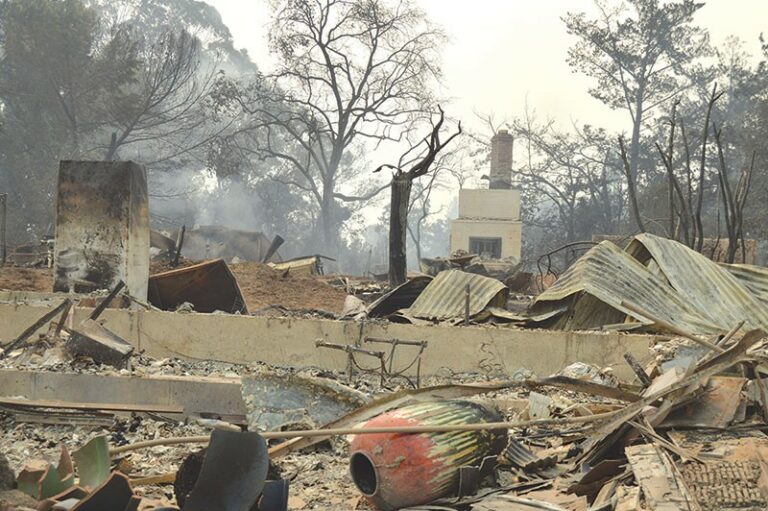
With fires still raging and thousands evacuated, the North Bay continues to reel from the worst natural disaster in the region’s history. Look for ongoing coverage in the days and weeks to come.

Hold the Alcohol

0

Sex, drugs and rock ‘n’ roll. The classic phrase suggests that rock music is best experienced when stoned or drunk. It’s a misconception that musician Stefanie Keys is eager to correct.

“In my experience, people in recovery, people who are clean and sober, tend to be having a whole a lot of fun,” says Keys. “We’ve lost our lives, and have somehow gotten them back. We’re ready to party. We’ve just learned how to party without the drugs and alcohol.”

Keys, formerly of Big Brother and the Holding Company, with whom she toured for five years, will be headlining the inaugural Clean & Sober Music Fest on Oct. 14 at the Mendocino Fairgrounds in Booneville. The event is the first of its kind in the area, a daylong, family-friendly celebration of music, sunshine and sobriety.

“Sobriety is growing by leaps and bounds,” says Jeffrey Trotter, a longtime North Bay theater director and the producer of the event. “The Grateful Dead always had clean and sober areas at their concerts. There are clean and sober sections at Burning Man. But there aren’t that many festivals where the whole thing is clean and sober.”

As someone who long ago took the path of sobriety, Trotter understands the need for such events.

“It’s basically just a darned good idea,” he says with a laugh. “This could easily be an annual thing.”

In addition to the Stefanie Keys Band, the lineup includes the Real Sarahs, Deep Blue Jam and the Cole Tate Band, along with inspirational appearances by clean-and-sober Buddhist speaker Kevin Griffin and others. Festive AA meetings will be part of the day, including meetings at the adjoining campgrounds on Friday and Sunday.

“Basically, it’s going to be a lot of very grateful people having a really good time together,” says Keys, noting that such events are a breath of fresh air for people who’ve chosen to put drugs and alcohol behind them.

“I’m in recovery myself,” she says. “I’ve been clean and sober for 16 years. I know it’s hard sometimes for people in recovery to go to these big music festivals where drinking and drugs is such a big part of the culture. And for people who are new to sobriety, an event like this allows them to come and have fun, and not have to worry about being surrounded by people drinking and using.

“And the music? The music’s going to be off the chain!”

Yes It Can

0

It can’t happen here. When Sinclair Lewis chose that phrase for the title of his satirical 1935 novel about a fascist American dictatorship taking control and essentially eradicating democracy, the title meant several things.

It was comforting, as we watched Hitler and others take power in Europe, to believe that our Constitution’s checks and balances would prohibit such tyrants from taking control in America. The title was also ironic, suggesting that, of course, it can happen here, a reminder that history is full of freedoms falling to self-serving despots.

Finally, it was meant as a plea—it cannot, must not, happen here—a call to resist the lure of political leaders offering safety and posterity in exchange for the sacrifice of a few “dangerous” freedoms.

The Santa Rosa Junior College is about to open a two-weekend run of Tony Taccone and Bennett Cohen’s 2016 adaptation of Lewis’ book. Like the novel, the play follows the presidency of the fear-mongering populist Berzelius “Buzz” Windrip (Neil Thollander), and attempts by liberal journalist Doremus Jessup (Khalid Shayota) to rally a resistance effort against him, as America rapidly falls into deeper and deeper levels of despair and fear.

Did I mention it’s a comedy?

“The play is highly entertaining and often very, very funny,” says Leslie McCauley, director of the production. In other words, there are laughs in It Can’t Happen Here.

But they come with a sting. Especially now under President Trump.

“The important thing to remember about this play is that it is not about a specific personality,” says McCauley. “It simply asks the question, ‘Why does America dally in fascism every 50 years or so? What is inherent in the American DNA that causes that? How do we protect this fragile thing called democracy? And what happens to a family when they are politically divided?'”

One of McCauley’s directorial touches is the addition of singer-songwriter Teresa Tudury as a kind of musical narrator to the action.

“This is a critical moment in our history,” McCauley says. “By comparing our contemporary political situation to a novel written in 1935, when fascism was on the rise worldwide, we can’t help but be struck by how prescient it was. Every day I read the headlines, and they parallel pretty exactly what happens in the play. I don’t think we’ve done a play here that feels quite as important as this one does, right now.”

Spotlight on Healdsburg

Healdsburg Jazz Festival turns 20

‘I love the ability to bring music to people,” says Healdsburg’s Jessica Felix, founder and artistic director of the Healdsburg Jazz Festival, which marks its 20th anniversary when it returns in June 2018.

From an initial three-day venture in 1999—which featured performances by hard-bop pianist Cedar Walton, free-jazz drummer Billy Higgins and vibraphone master Bobby Hutcherson—the Healdsburg Jazz Festival has grown into a massive 10-day affair that in recent years has boasted performances by revered jazz figures like the Heath Brothers, drummer Billy Hart and Blues Hall of Famer Charlie Musselwhite, who lives part-time in Healdsburg.

Born in Los Angeles, Felix got her first taste of Sonoma County attending college at Sonoma State University. “Even in college, I used to think Healdsburg was a great area,” Felix says. “I loved the river, and we’d always stop at the Singletree Cafe to have breakfast.”

After college, Felix lived in the Bay Area for over 20 years. The longtime jazz aficionado began producing events in the 1980s at a converted Victorian house in Oakland, and in 1990 she founded the popular Eddie Moore Jazz Festival at Yoshi’s, which she ran for five years.

A jewelry designer by trade, Felix relocated to Healdsburg full-time in 1994 and opened a shop and gallery for her jewelry studio called Art and All That Jazz.

“Something in my head said, ‘Go to Healdsburg,'” she says. “Then this storefront became available, and I couldn’t resist.”

“I’ve always loved small towns,” Felix says. “Being able to know people and feel like you’re part of a community is important to me.”

Felix founded the Healdsburg Jazz Festival as a way to bring the community together through music in the town’s intimate venues, with a commitment to represent the best in what she calls strong jazz, authentic representations of the genre’s multifaceted culture. “Jazz has always been an exploring music. It’s not supposed to stagnate; it’s supposed to grow and evolve and push boundaries,” Felix says. “It works with all the emotions. My true goal is to turn people on to the live jazz experience.”

In addition to the annual 10-day fest, the Healdsburg Jazz Festival offers an array of performances year-round. The festival hosts weekly jazz performances in the lobby lounge of Hotel Healdsburg, with jazz trios fronted by local talents like Susan Sutton and Bay Area–based drummer Lee Charlton, who performs with Norris Clement and Richard Saunders on Saturday, Oct. 7.

Saturday also marks the next in the Healdsburg Jazz Festival’s ongoing Parlor Series, presenting world-class talents at the Paul Mahder Gallery. This week, saxophonist Dayna Stephens returns to town with pianist Billy Childs, who makes his Healdsburg debut.

Education is also a huge factor in Felix’s mission to share the music she loves. Last year, she started the Student Jazz Combo Competition to encourage students to explore their creativity while learning from professional musicians and forming tight-knit combos to engage in friendly competition with other schools.

Looking ahead to next summer, the festival is also hosting a 20th-anniversary fundraising gala on Nov. 11 (see Spotlight events listings, p10) to support the upcoming 2018 festival and the ongoing music education programs.

“The 20th anniversary is going to be the biggest event we’ve ever done,” says Felix. “There’s going to be something for everybody.”

For more info, visit
healdsburgjazzfestival.org.

[page]

LOCAL KNOWLEDGE

Raven Theatre executive director
Tom Brand dishes on Healdsburg

Describe your perfect day in Healdsburg?

I would gather my family. After brunch at Flakey Cream, we would walk to the Healdsburg Plaza and people-watch the visitors from around the world. If, by chance, an establishment selling libations could be found, we would stop and perhaps have a drink. Then it would be time to experience real Americana. We would grab chairs and watch the Healdsburg Future Farmers Twilight Parade with all of its local politicians, schoolchildren, horses and fire trucks. Finally, we would saunter over to the Healdsburg Future Farmers Country Fair and have some of the best cotton candy in America.

Where is your favorite place to eat in Healdsburg and why?

This is a tie: Costeaux French Bakery and Bear Republic Brewing Company. Both feature high-quality, affordable food, a friendly staff and are owned by families that are huge supporters of all the not-for-profits in Healdsburg.

Where do you take first-time visitors to Healdsburg?

It is a little clichéd, but to the plaza, the river, and a few select wineries, then to Healdsburg Hotel to hear some jazz.

What do you know about Healdsburg that others don’t?

Healdsburg has the largest living moss wall in America at the Paul Mahder Contemporary Art Gallery.

If you could change one thing about Healdsburg what would it be?

The laws of economics. A wise person once told me that everyone’s perfect version of Healdsburg is the day they that they moved here. Currently, a very large percentage of all home sales in Healdsburg are to people buying a second, third, fourth home. This eliminates housing for people who will become part of our community, people who donate time, money, and energy to the elements that created our wonderful community.

Learn more about the Raven Performing Arts Theater at raventheater.org.

[page]

THINGS TO DO IN HEALDSBURG

Social Cause Films

Co-founded by photographer, musician and educator Kim Carroll and marketing professional Josie Gay, Healdsburg’s Social Cause Film Series kicks off this week with a goal of highlighting and benefiting an array of social causes. The series debuts with the screening of Unrest, in which documentarian Jennifer Brea turns the camera on herself for an intimate look at the often-misunderstood illness known as chronic fatigue syndrome. Unrest screens with Brea on hand for Q&A, followed by a hosted wine hour where the conversation continues. The screening benefits Brea’s Time for Unrest organization, helping those suffering from chronic fatigue get the recognition and help they need. In light of recent events, proceeds will also go to hurricane relief efforts. Social Cause Films presents Unrest
on Thursday, Oct. 5, at Raven Film Center, 415 Center St., Healdsburg. 6pm. $20–$40. Advance tickets required. socialcausefilms.org.

Healdsburg
Half Marathon

It’s hard to find a more scenic run than Dry Creek Valley in and around Healdsburg, where the annual Healdsburg Half Marathon takes place this weekend. Starting and ending in downtown Healdsburg, the epic 13.1-mile fully paved course winds through historical residential neighborhoods before setting out among picturesque vineyards and wineries. After the run, the fun continues with an Oktoberfest-style wine and beer tasting, featuring 10 local wine and beer purveyors and hot food to nourish those worn-out muscles. Both the half marathon and a 5K run take place Sunday, Oct. 8, and begin at Healdsburg City Hall,
401 Grove St., Healdsburg. 7:30am. Entry fee, $130–$135; 5K entry fee, $50. runwinecountry.com.

Shed Supper

The tight-knit kitchen staff at Healdsburg Shed, led by culinary director and chef Perry Hoffman, creates immaculate flavors from locally sourced foods at its monthly Shed Supper event. October’s supper embraces Latin flavors and traditional dishes of Mexico for a family-style meal accompanied by live entertainment. This special edition of the supper is also a fundraiser for Corazón, a Healdsburg nonprofit dedicated to supporting multiculturalism and bridging racial and economic division in the community by connecting residents to health programs and services to better their quality of life. Healdsburg Shed will match all proceeds from the event so give generously while enjoying a casual community meal and performance
by Ballet Folklorico El Valle,
St. Helena’s troupe of Oaxacan dancers. Sunday, Oct. 8, at Healdsburg Shed, 25 North St., Healdsburg. 6:30pm. $50 and up. healdsburgshed.com.

Get Downtown

Anchored by a massive gazebo and surrounded by world-class businesses, Healdsburg Plaza is the town’s favorite focal point for community events and gathering like the upcoming Get Downtown Business Showcase & Community Resource Fair. This fifth annual showcase features several local businesses and resource providers, as well as members of the city council. Learn more about the community, enjoy free samples and get lots of giveaways in this family friendly evening at the plaza on Wednesday, Oct. 11, Healdsburg Avenue and Matheson Street, Healdsburg. 4pm to 7pm. Free admission. healdsburg.com/events.

Dancing with the Stars

Just like the popular television show, Healdsburg’s own Dancing with the Stars annual fundraiser features local stars and professional dancers paired up for a rousing performance competition. This year’s theme is “Bubbles & Bling,” offering a lineup of local stars like school principal James Brandt, business owner Marsha Croft, disability advocate Lake Kowell, architect and real estate agent Bob Pennypacker and others. Audiences vote for their favorite teams by donating money to benefit the Raven nonprofit performing arts theater. Each dollar equals one vote, and there’s no limit to voting, so vote early and often at the preview show on Thursday,
Nov. 2, and the big dance on Saturday, Nov. 4, at the Raven Theater, 115 North St., Healdsburg. 7:30pm. $35–$45; preview, $10–$20. raventheater.org.

20th Anniversary
Jazz Festival Gala

Healdsburg Jazz Festival is marking two decades of bringing the best contemporary jazz music to town with a 20th Anniversary Jazz Festival Gala that celebrates the event’s enduring legacy and raises funds for the upcoming 2018 season. Turning the Paul Mahder Gallery into a Roaring Twenties speakeasy, the gala includes a sparkling wine reception and auction before showcasing Jazz Age hits from the likes of Duke Ellington and George Gershwin as performed by the Marcus Shelby Quintet and featuring guests Kenny Washington and Tiffany Austin. A sit-down dinner and late-night dancing completes the party, going down on Saturday, Nov. 11,
at the Paul Mahder Gallery,
222 Healdsburg Ave., Healdsburg. 6pm. $150. healdsburgjazzfestival.org.

Star Search

The election to select a new Sonoma County sheriff isn't until next November and the primary isn't until June, but the overflow audience at an forum held at the Santa Rosa Veterans Memorial Building told a story of its own. This is a closely watched campaign for a hot-seat office with unusually high interest among citizens. It is shaping up...

RRV Redux

Is this a new heyday for Russian River Vineyards? If you pay attention and have an aptitude for learning things over time, you may come to suspect that heydays are subjective. I'd always thought of the Topolos period of ownership as this iconic winery's heyday, when richly extracted Zinfandel and Alicante Bouschet flowed in the tasting room downstairs, and while...

Letters to the Editor: October 4, 2017

For Shame! National Rifle Association executive vice president Wayne LaPierre represents a terrorist organization. The NRA does not represent the Second Amendment; it does not have any interest at all in the safety of humankind or the greater good for society. It is a business that masquerades as a patriotic entity. But the truth is, this business, like all businesses,...

Tears in Rain

August and quiet, violent and occasionally full of pity, Blade Runner 2049 overwhelms: it's a technical juggernaut, orchestrated to the bone-rattling sonics of Hans Zimmer and Benjamin Wallfisch like the sound of some giant rubbing a pair of ocean liners together. Director Denis Villenueve blends the solemnity of Soviet filmmaker Andrei Tarkovsky and the studied blandness of Stanley Kubrick with...

Baked Apples

While the 2017 grape crop seems to have survived the withering heat waves of summer, Sonoma County apples did not fare so well. "It was incredible," says Stan Devoto, who has been growing apples in West County for 42 years. "I've never seen anything like it." Heat stressed the fruit and caused trees to dump their fruit en masse. Early-season Gravensteins...

Let It Fly

Darryl Ponicsan is keeping a low profile these days. As film festivals and film critics and Oscar-watchers praise, dissect and prognosticate on the merits of Richard Linklater's Last Flag Flying—the new film based on Ponicsan's 2005 novel, itself a follow-up to his 1970 breakthrough novel The Last Detail—the Sonoma resident has remained steadfastly out of the spotlight. Should predictions prove...

Firestorm

With fires still raging and thousands evacuated, the North Bay continues to reel from the worst natural disaster in the region's history. Look for ongoing coverage in the days and weeks to come.

Hold the Alcohol

Sex, drugs and rock 'n' roll. The classic phrase suggests that rock music is best experienced when stoned or drunk. It's a misconception that musician Stefanie Keys is eager to correct. "In my experience, people in recovery, people who are clean and sober, tend to be having a whole a lot of fun," says Keys. "We've lost our lives, and...

Yes It Can

It can't happen here. When Sinclair Lewis chose that phrase for the title of his satirical 1935 novel about a fascist American dictatorship taking control and essentially eradicating democracy, the title meant several things. It was comforting, as we watched Hitler and others take power in Europe, to believe that our Constitution's checks and balances would prohibit such tyrants from...

Spotlight on Healdsburg

Healdsburg Jazz Festival turns 20 'I love the ability to bring music to people," says Healdsburg's Jessica Felix, founder and artistic director of the Healdsburg Jazz Festival, which marks its 20th anniversary when it returns in June 2018. From an initial three-day venture in 1999—which featured performances by hard-bop pianist Cedar Walton, free-jazz drummer Billy Higgins and vibraphone master Bobby Hutcherson—the...
11,084FansLike
4,606FollowersFollow
6,928FollowersFollow