June 17: Community Crawl in Sebastopol

0

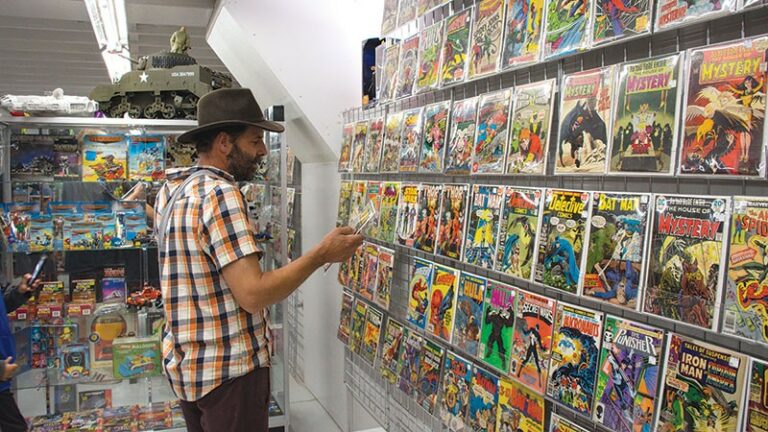
Sebastopol is going to see a lot of foot traffic this weekend, as the inaugural Lit & Art Crawl of Sebastopol covers ground between the Barlow Center and Main Street. Venues like Copperfield’s Books and HopMonk Tavern will host author and poetry readings, while art receptions and parties take place at locations like Sebastopol Gallery, Kitty Hawk Gallery and Sebastopol Center for the Arts. In addition to these events, drink specials at several of the town’s pubs, coffeehouses and cafes will keep the crowds engaged on Saturday, June 17, in downtown Sebastopol, Main Street and Bodega Avenue. 1pm. Free admission. lit-art-crawl-sebastopol.com.

June 21: Let’s Get Eggcited in Petaluma

0

The North Bay’s agricultural bounty is on full display at the annual Sonoma-Marin Fair, this year themed “Great Eggspectations” and featuring an eggcellent array of animal contests, garden exhibits, chef demonstrations and farm-fun activities. The fair also features the requisite carnival rides, games, food, the famous World’s Ugliest Dog Contest and concert performances from Tower of Power, Jana Kramer, Loverboy, John Michael Montgomery and the daylong Fiesta Latina. The Sonoma-Marin Fair opens Wednesday, June 21, at 175 Fairgrounds Drive, Petaluma. Gates open at noon. $12–$18 (includes concerts and unlimited rides). sonoma-marinfair.org.

Can Do

0

The seas are dying, say activists, scientists and watchers-of-the-apocalypse.

Some point to rising levels of toxins in the ocean and an array of environmental imbalances that have put whole species of aquatic life at risk of extinction. Others quote that scary part of Revelation that predicts one-third of the fish in the ocean will die, along with, by the way, one-third of its ships.

In the midst of all this aquatic doom-and-gloom, a small company headquartered in Sausalito is offering a much more optimistic view of the future of our oceans, along with a strong call to change our relationship with the sea, and the tasty creatures that live in it.

“I’m not sure it’s accurate to say the seas are dying, but they are definitely very seriously challenged,” says Sean Wittenberg, co-founder and president of Safe Catch, a fast-rising, ecologically minded and slightly quirky company producing canned and cooked tuna that is as nutritious for consumers as it is respectful of the oceans in which those fish are caught. “Certain parts of the ocean are more challenged than others, because of the impact of industrial pollution, and because of reckless human behavior.”

Wittenberg and his Safe Catch co-founder, Bryan Boches, are fully aware of the ironies and challenges of launching an environmentally friendly canned-tuna company. Still, both founders see the sustainable harvesting of fish as an important effort that—assuming industry practices and consumer attitudes change—brings a number of powerful plusses to counter its many minuses.

It comes down to the fact that healthy fish is healthy protein.

“The healthiest things on earth to put in your body still come from the ocean,” Wittenberg says. “There are plenty of healthy fish in the sea. You just have to be willing to pass on those that aren’t.”

And the healthier the oceans become, the safer the food we pull from it. Currently, Safe Catch produces a whole line of high-end, ecologically minded, health-conscious tuna products, packed in attractive cans and pouches bearing the lofty admonition “Eat Pure. Live Pure,” and the remarkably specific promise, “Made for Elite Athletes, Kids and Pregnancy.”

Each can carries a lot of printed information—short statements, positive affirmations and little icons identifying that the tuna was caught using dolphin-safe methods, with lines and poles; that it was hand-cut, sushi-grade fish when it was placed in the can; that it was cooked in its own juices; and, before any of that, that it was tested to the highest level of any canned tuna brand on the market.

“We’ve performed a million mercury tests to date,” Wittenberg says. “And that’s just the beginning.”

There was a time when tuna was among Americans’ favorite foods. But when reports of mercury levels in the canned variety began to become common, and doctors warned of mercury’s dangers—especially to pregnant women—American consumption of tuna plummeted.

According to Wittenberg, Safe Catch is the only brand of tuna that tests the mercury level of every fish before buying, cooking and canning it. Most companies test one or two fish out of a larger batch. This is not effective: two fish of the same size, caught at the same time, could have wildly varying levels of mercury.

As Wittenberg explains, the FDA has set a mercury limit in fish of 1.0 parts per million—meaning that mercury is safe as long as it’s consumed at that level or lower, according to the government. But that’s not good enough for Wittenberg and Boches.

Safe Catch set its own, stricter mercury limits, which the company says are between three and 10 times stricter than the government’s, depending on the fish and the product. Safe Catch’s wild albacore tuna, for example, is held to a safety standard of .3 ppm (three times stricter), while its Safe Catch Elite Wild Tuna must meet a standard of .1 ppm (10 times stricter that the FDA).

Using those standards, the company rejects an average of one out of every three tuna it tests—leaving one to ask, what happens to those other fish?

“They end up in the marketplace, probably purchased by some other company,” Wittenberg says. “If they’ve made it as far as testing, we know they’re basically good fish. They’re just not good enough for us.”

Before Safe Catch was called Safe Catch, it was a technology company devoted to developing new forms of testing fish for mercury levels. The process they developed, Wittenberg says, is a proprietary product, details of which he cannot legally reveal in too much detail.

Wittenberg and company set out to perfect the process more than a decade ago, then began presenting the new technology to seafood companies, offering to test and certify their catches. Safe Catch was then a testing company, but after a number of big tuna companies passed, the team decided to take the knowledge and the testing device and swim in a different direction.

The company’s goals are manifold: to produce healthier tuna and do it in a way that might restore populations of fish that are being unsustainably harvested by other companies; and, to a degree, put tuna back into the American consciousness as a healthful and relatively inexpensive staple.

“This actually all started,” Wittenberg says, “because my mom had mercury poisoning when I was a kid, and she became very sick. Before then, we ate a lot of tuna. Everyone ate a lot of tuna.”

He recalls his mother sending him to school every morning with a paper bag lunch. “There was always an apple or some other piece of fruit, a juice box, something sweet once in a while, and a sandwich,” he says. “And two days a week, that sandwich was tuna fish. Then my mom got sick. Then she read an article in Prevention magazine, talking about how pregnant women and children were at risk of mercury poisoning, and that so much of our tuna had become contaminated, we simply can’t trust any of it anymore. I remember my mom saying, ‘Well, Sean, you just lost 40 percent of your lunches.’ She never made tuna sandwiches again.”

During their time developing the company’s testing tools, Wittenberg and Boches worked with fisherman in Honolulu, Chile, the Philippines and throughout the continental United States and Canada.

“We established some very good relationships, gained some knowledge of the seafood supply chain,” Wittenberg says. “So in 2013, when we decided to transform ourselves from a testing company into a product company, we had a pretty good idea who we wanted to work with, and how the industry functioned.”

They created a plan that set out how their fish would be acquired and tested, placed into cold storage and shipped to Thailand, where the cooking and canning is done on manufacturing lines reserved solely for Safe Catch products.

“It was a pretty steep learning curve,” he says. “But we threw ourselves out there and learned how to do it. . . . It was tough, but we’re pleased with where we’ve arrived.”

Now the cans are on the shelves at thousands of locations, from health-food stores to grocery chains. They’ve used social media to get the word out, of course, and recruited major “influencers” around the world—elite athletes, scientists, actors, authors, moms and kids—to lend their own name and brand to tell people about Safe Catch.

And then there are the upside-down cans. “When you are doing as much as we are, and you are as poor as we are, you have to communicate about your product in any and every way you can,” Wittenberg says. “The best way to do that is on the grocery store shelves. We just have a lot to say, a lot of information we want to get out there, so we say it on our labels. And by turning the can upside-down, we can put a label on the top, and use it to say more stuff. That’s the reason for the upside-down can.”

And perhaps, metaphorically—it’s also a symbol of Safe Catch’s push to turn the industry upside-down as well?

“That’d be nice, but it’s going to take more than one company in California,” Wittenberg says. “We’ve enjoyed some success, definitely. And the industry is watching. So who knows? The product is catching on, so to speak, with health and wellness customers. We might be able to bring confidence back to the shelves, and put more tuna back in kids’ lunch bags.”

Grow Up

I was dealing with a debtor last week who had not responded to an offer to settle. Weeks had gone by, and I was feeling increasingly frustrated with the lack of response. Finally, I got an email that read, in part, “As you learned long ago, the cannabis industry doesn’t work on your timeline,” followed by more excuses. It was icing on the cake for how I feel lately.

In spite of all its promise, the cannabis industry is incredibly frustrating. After working with the industry for several years, I have yet to come across a single person with the business acumen or systems that a legitimate business requires. I’m sure they exist, but they haven’t presented themselves to me.

I have been yelled at in my office for asking questions like “Who will pay for that?” and “What is the projected return?” and “What system is being proposed for inventory control?” I have been fired by clients who tell me that I “don’t understand the cannabis culture” for asking such questions, and tell me that I have to wait for people to finish dabbing before a contract can be negotiated. At a business meeting!

I know things are going to change. I have been railing against a system that seems designed to crush the little people at the expense of the wealthy. But the truth of the matter is that the cannabis industry needs a good shake-up. It is not just a lack of business acumen. The amount of outright theft and graft is staggering. There seems to be an entitlement mindset that allows partners to steal from each other. Employees steal from gardens. Customers steal from suppliers. It goes on and on.

Those in the industry know exactly what I am talking about. Getting people to show up when they say, or to pay their bills is a constant challenge. I know many people who are getting out of the industry because of this.

The ironic thing is that everyone in the industry acknowledges that it is filled to the brim with people who shouldn’t be there. Honestly, when 90 percent of the people (or more) are driven out by the new regulations, I will completely understand. I will even applaud the departure of many who have cheated and stolen from others.

I don’t expect this article to make people more responsible, but I urge those in the industry to examine themselves and their business practices. Do you have what it takes operate a taxed and regulated business where you cannot do as you please with the effort and money of other people? Until the cannabis industry grows up, it will continue to alienate those few people who are actually honest and hard-working.

Ben Adams is a Santa Rosa attorney familiar with the cannabis industry.

Vine Time

0

I don’t know if it’s true, but I once heard a quote attributed to the Clash’s Mick Jones after he attended a Blue Öyster Cult concert in the 1980s. “They could fit more people in here, if everyone weren’t wearing bell bottoms,” said the peg-legged punk rocker in what I imagine was a droll tone.

That quip, real or not, came to mind as I attended Gundlach Bundschu Winery’s excellent Huichica Festival this past Saturday. The two-day event drew the skinny-jean masses to see a compelling lineup of indie rock/folk bands. But in spite of the crowds, it wasn’t crowded. The spacious winery and vineyard venue allowed fans to get as close to the four stages as they liked or to spread out and have a quiet picnic amid rows of ripening vines with bottles of GunBun wine in hand while still hearing tunes wafting in the air. That’s my kind of festival.

But the real fashion statement wasn’t skinny jeans or ironic kitten T-shirts, but the noise-cancelling headphones hipster parents had clapped on their kids’ ears. The headphones—and the kids—were everywhere. There were kid-friendly activities (hula hoops, boat races, garland making), but really the kid-friendliest activity was just being able to walk about with ease and enjoy the great music. The all-ages, laid-back crowd gave the event a feel-good vibe that reminded me of a summer day on the grass in Golden Gate Park, but with well-chosen food and beverage trucks to keep everyone fed and lubricated.

While I couldn’t stay to enjoy a full day of music, I heard some great stuff. The schedule and short sets were designed so that there was little overlap between one band and another. Very thoughtful.

I discovered a great new band playing in the Old Redwood Barn stage—the Cool Ghouls. Their ringing, compulsively rocking song “Sundial” is still playing in my head. I heard the excellent Darren Wareham, former frontman of Galaxie 500, a late ’80s, early ’90s lo-fi, post-punk pioneer I somehow missed on their first go-round. How is it that I never heard the great song “Tugboat” before? There was a twangy 1970s rock vibe that ran through several bands best showcased by Beachwood Sparks and the Tyde. Both bands are part of my personal summer soundtrack now.

Parking was a breeze. It was a bit of a hike from the outer vineyard parking lot to the venue, but the south facing views of Sonoma Valley made it pleasant walk. If you didn’t want to walk, yellow school buses ferried festival-goers to the entrance.

Too bad the winery doesn’t allow camping during the event. I’d come back next year and stake out a spot so I could enjoy the full lineup of what is my new favorite music festival.

The White Wail

0

A huge endangered blue whale washed up on the Marin coast a couple of weeks ago, a majestic female that had birthed a couple of whale-pups over the years, then got hit by a commercial ship and died. The beached whale provided an apt metaphor for the fate of the 2016 electoral vote loser—and also for the priorities of the minority-president “winner.”

One of the great and odious right-wing talking points of our time centers on this idea that Democrats and liberals care more about the rights and plights of sad-faced animals than about people, since liberals and Democrats support abortion rights and are therefore, as Eric Trump noted, a bunch of subhumans.

“They’re not even people,” says the big-game-slaying cretin.

Well, it’s true that Democrats and liberals generally care more about protecting animals than do Republicans and conservatives (though it’s not true that we’re not people). You don’t have to take the Bohemian‘s word when it comes to the animal kingdom’s best friends on the political spectrum—just take a gander at the man in the White House, who clearly hates animals, or at least sees them as nothing more than a pesky and irrelevant impediment to MAGA.

The White House resident decided this week that endangered whales should just go ahead and die, when he ordered federal fish officials to toss a regulation designed to help keep nontargeted-species from dying in commercial gill-nets off the California coast, where the targeted species is swordfish, and yet where lots of mammals and turtles get hung up and die.

The message from the White House is as clear as it is revolting: marine mammals are disgusting pigs, turtles and porpoises and dolphins are a bunch of losers for getting caught in the nets, and if there’s a reporter on the beat who doesn’t like that version of events in the fake-news American crackup gone to hell in a hand basket of crooked deal-making—well, maybe Montana’s newly minted Trumpian congressman, a real big-game slayer himself, will punch the reporter in the face to set him straight—straight out whale on him.

Tom Gogola is the news editor of the ‘Bohemian.’

Open Mic is a weekly feature in the ‘Bohemian.’ We welcome your contribution. To have your topical essay of 350 words considered for publication, write op*****@******an.com.

Spice World

0

If variety is the spice of life, then Sonoma County theater lovers are facing one spicy smorgasbord of wildly different plays.

6th Street Playhouse presents a rare revival of the 1968 musical George M! featuring the sensational singing and dancing of Joseph Favalora as mercurial Broadway legend George M. Cohan, with a strong assist from Abbey Lee as Josie Cohan. George M! is nostalgia squared, a dance-filled staging of an old-fashioned show, with spirited performances of beloved chestnuts, from “Give My Regards to Broadway” to “I’m a Yankee Doodle Dandy.” Rating (out of 5): ★★★½

A very different theatrical story, Ruggero Leoncavallo’s classic opera Pagliacci is now playing at Cinnabar Theater. Impressively directed by Elly Lichenstein, with co-direction from James Pelican, Pagliacci follows a hard-luck company of actors, torn apart by jealousy and bitterness.

Under the strong musical direction of Mary Chun, the show features a remarkable company of first-rate opera singers, including baritone Julio Ferrari as the villainous Tonio, the soprano Julia Hathaway (amazing) as the tragic actress Nedda, and tenor Mark Kratz as the iconic clown-turned-murderer Pagliacci. It’s one of Cinnabar’s most successful and entertaining opera productions in years. ★★★★

Paired with Pagliacci is the brilliant 20-minute, clown-themed one-act Rhapsody of Fools, written and performed by Christina Lewis, James Pelican and Lluis Valls. An inspired bit of physical comedy, it gives us three hapless backstage crew members, attempting to set up for an opera presentation, ultimately forced to improvise an opera of their own—with a bit of help from the rock band Queen. ★★★★

In terms of variety, the freshest of the pack is Steven Dietz’s marvelous Becky’s New Car, directed by Carl Jordan for Sonoma Arts Live. Hilarious and heartfelt, this inventive tale of a woman’s car-themed midlife crisis is crammed with twists, turns, laughs and tears. As Becky, torn between the life she loves and a new possibility she never dreamed possible, Melissa Claire is wonderful. Excellent supporting performances are delivered by Matt Witthaus as Becky’s stunningly understanding husband, and Mike Pavone as the wealthy car buyer who throws her a world-class curve.

Sweet and surprising, Becky is one of the best shows of 2017. ★★★★½

Geometric Movements

0

For more than 30 years, San Francisco’s acclaimed Margaret Jenkins Dance Company has redefined the limits of choreography with such innovative projects as the ongoing Site Series (Inside Outside), in which the company’s experimental dancers must adapt to and incorporate unusual environments into their work.

This weekend, the company does just that when they present Dancing in the Sculpture, a new show set among the dozen massive outdoor metal sculptures on display as part of the Voigt Family Sculpture Foundation’s exhibit “Geometric Reflections” at Paradise Ridge Winery’s hillside gallery Marijke’s Grove. For this unique recital, each dancer from the company has chosen a different piece of sculpture to perform with. After the choreographed presentation, the audience will be invited to join the dancers to discuss the creative process, a long-standing staple of the dance company’s vision for using art as a conversation starter.

Margaret Jenkins Dance Company’s “Dancing in the Sculpture” takes place on Sunday, June 18, at Paradise Ridge Winery, 4545 Thomas Lake Harris Drive, Santa Rosa. 5pm. $75; kids 12 and under, free. celebratesculpture.com.

New Classics

0

Lobster thermidor, lamb Wellington and Peking duck
a l’orange aren’t exactly cutting-edge, but Healdsburg chef Shane McAnelly wants to give the classic dishes and others like them their due at his new restaurant, the Brass Rabbit.

“When you’re in a culinary school, this is the stuff you do,” says McAnelly, who also runs the four-year-old Chalkboard nearby, “and you don’t see them anymore. It’s fun to prepare these dishes and share them with people who never had them before. They’re classic for a reason.”

While the name Brass Rabbit was inspired by British gastro-pubs, McAnelly says the concept is “classic Americana fine dining, seasonal with a California edge.” That might sound like a lot of restaurants, but the difference, McAnelly says, is to mix the classics with local ingredients.

“In the Wellington, for example, instead of beef, we’re using local Sonoma lamb,” he says. “When we serve a beef bourguignon, we make it using a traditional Julia Child recipe, but add fresh radishes and asparagus from the Chalk Hill farm.”

The lobster thermidor ($46), an impressive dish ordered by many on the night of my visit, is adorned with hackleback caviar provided by a young San Francisco venture—the Caviar Company—run by two sisters not yet in their 30s. The same caviar decorates the delicate eggs mimosa appetizer ($8), two deviled eggs filled with crème fraîche–whipped yolk and chives.

“We had to have deviled eggs on the menu,” McAnelly says.

Right next to the throwback party snack, and alongside a crispy toast with a heap of traditional rabbit rillettes ($10), is a creamy, tangy and rich salad made of burrata, coal-roasted beets and grilled avocado ($13). “Burrata by Di Stefano, out of Pomona, is the best domestic burrata I’ve ever had,” McAnelly says, “so I want to keep it throughout the year.”

The avocado, what McAnelly calls “a stand-out Californian ingredient,” had to be on the menu, too, he says. “I like to char avocado, as it’s so creamy and buttery, and its meatiness comes out when you grill it.”

The six-foot, Argentinian-style wood-burning grill is the centerpiece of the open kitchen, and features a rotisserie and plancha (griddle); it’s responsible for one of the best chicken dishes I’ve had in the North Bay. The lemony, chimichurri-rubbed half-chicken ($24) arrives with a fresh stone fruit and panzanella salad comprising crispy, grilled sourdough chunks, nectarines, plums, pickled onion and salty feta. The chicken skin is wonderfully crispy and the meat tender and juicy; the salad is a summery celebration that complements the savory chicken perfectly.

“You won’t always find chicken on fine dining menus,” says McAnelly. “But there are a couple of markets here that sell grilled chicken, and they were my inspiration. The chicken doesn’t usually look pretty, but when you bite into it, the flavor is crazy good.”

This casual, flavor-first approach to reinvented classics helps the Brass Rabbit stand out in a town filled with good restaurants.

The Brass Rabbit, 109 Plaza St., Healdsburg.707.473.8580.

Pipelines and Battle Lines

0

On a rainy weekday afternoon last November, about 20 people from Northern California joined a 200-person rally outside the Oregon capitol in Salem. They had assembled partly in support of the struggle against the Dakota Access Pipeline (DAPL) in North Dakota. In the weeks prior, police on the northern Great Plains had inflicted beatings on anti-DAPL protesters, shot hundreds with concussion grenades and rubber bullets, and even deployed military-surplus equipment such as armored vehicles and a long-range acoustic device, a noisy crowd-control device that reportedly shattered at least one person’s eardrums.

The main focus of the Salem demonstration, however, was an infrastructure project similar to the DAPL but much closer to home. Spurred by the newfound ability to extract vast shale deposits from the Rocky Mountains’ western slopes via hydrologic fracturing (fracking), a Canadian oil and gas company named Veresen has proposed to ship natural gas from the Rockies west to Asian markets via a newly constructed liquefied natural gas (LNG) terminal in Coos Bay, Ore., where gas would be chilled and liquefied for easier and cheaper storage and transport. Known as the Jordan Cove Energy Project, it would be the first Pacific Coast LNG terminal.

The terminal would be supplied by the 233-mile Pacific Connector Gas Pipeline, which would originate at a natural gas transport hub near Malin, Ore., and snake beneath five major rivers on its way to Coos Bay. One river beneath which the pipeline would be plumbed is the mighty Klamath, which rises in southern Oregon and meets the ocean roughly 240 miles away at the Humboldt-Del Norte county lines.

At the rally, indigenous people from the Klamath Basin talked about building a stronger interstate alliance against the project.

“We gotta help our neighbors, the Oregonians!” said a Hoopa Valley tribal member who identified herself as Missy who lives along the Klamath River in Northern California into a bullhorn. “They may not know they need our help. But they need our help!”

Missy then pondered whether opposition to the Jordan Cove Energy Project would require a direct-action campaign similar to the one at Standing Rock.

“I look at what’s going on over at Standing Rock, and it makes me scared. But if we have to do the same thing here, will you do that with us here?” she asked. The crowd let out an affirmative whoop.

FRACK ATTACK

The nationwide boom in horizontal fracturing (or “fracking”) has fostered numerous proposals to push oil and natural gas out to coastal ports through newly constructed pipelines, but resistance to these plans is also increasing, in part because thousands of people who visited Standing Rock last fall returned home and took up local fights.

In 2016, the Federal Energy Regulation Commission (FERC) twice rejected Veresen’s applications to build the Jordan Cove Energy Project. Leaders of Donald Trump’s administration, however, have vowed to see the project through. At a presentation to the Institute of International Finance forum in Washington on April 20th, Gary Cohn, director of the White House National Economic Council (and former Goldman Sachs president), vowed that Trump will step up approvals for LNG export terminals in the name of boosting the U.S. economy, and then specifically referred to the Jordan Cove project.

“The first thing we’re going to do is we’re going to permit an LNG export facility in the Northwest,” Cohn said.

California has a critical link to the Jordan Cove project: the 680-mile Ruby Pipeline, completed in 2011, which delivers the natural gas from the Rocky Mountain gas fields—the Jonah Field in Wyoming, the Piceance Basin in Colorado, the Uintah Basin in northern Utah—to Oregon. Northern California’s main electricity supplier, PG&E, is one of three companies that helped build the Ruby Pipeline and remains a part owner of it. PG&E’s network of pipelines deliver Ruby Pipeline gas to the North Bay and other regions of the Golden State.

The Pacific Connector Gas Pipeline, too, would tie into the Ruby Pipeline, without which the Jordan Cove Energy Project could not be built.

Opponents of the Jordan Cove project are mounting increasing pressure on Oregon’s elected officials to stop the project, but even the state’s Democratic Party leaders have either embraced the project or stood aside. So far, a combination of grassroots opposition and questionable economics have combined to delay the project, and now many opponents are talking about the possibility of mounting a massive direct action civil disobedience campaign.

Perry Chocktoot, a tribal council member of the Klamath Tribes in Chiloquin, Ore., says that indigenous people from throughout the region will be increasingly asserting themselves in the struggle from this point forward. “If this thing gets approved,” he says, “we’re going to call tribes from all over the U.S., Mexico and Canada, to ask for solidarity.”

A LONG TIME COMING

The struggle concerning the Jordan Cover project has been ongoing for more than a decade. The Federal Energy Regulation Commission first considered Jordan Cove in 2007. Back then, it was proposed as an import project, which would have funneled gas from Russia or the Middle East to consumers on the West Coast, especially California.

In 2009, FERC issued a permit, but vacated the decision in 2012 as import prospects sank. Then the meltdown at Japan’s Fukushima power plant created a different opportunity. After the disaster, Japan and other Asia Pacific countries began phasing out nuclear power and replacing it mostly with LNG. In 2013, a Veresen subsidiary resubmitted an application to FERC that re-envisioned Jordan Cove as an export terminal that could ship 1 billion cubic feet of gas a day. That’s enough to meet 8 percent of Japan’s current demand.

A March 2016 FERC order denying the application noted that Veresen and its partner at the time, Williams Companies of Oklahoma, failed to prove that adequate demand for its product exists in Asia and also noted the “significant opposition from directly-impacted landowners.”

In September, Trump alluded to the Jordan Cove project on the campaign trail, during a speech to an oil and gas drilling conference in Pittsburgh, FERC’s failure to support it as an alleged example of “the Obama/Clinton restriction agenda.” In February, Trump appointed Veresen CEO Don Althoff as a member of his “infrastructure team” that is developing recommendations on moving major building projects more quickly through regulatory reviews. He is in the process of nominating three new members to the five-member FERC, one of whom, Pennsylvania Public Utilities Commissioner Robert Powelson, a Republican, has stated that people opposing pipeline projects are engaged in a “jihad.”

For most of the past decade, landowners along the pipeline right-of-way have been the backbone of an opposition movement to it. This opposition runs the political gamut and includes conservatives concerned with private property rights and the damage to the land.

“This company, Veresen, has no concept of what the land means to us,” says Bill Gow, who labels himself a reluctant Donald Trump supporter and who owns a 2,500-acre ranch in Myrtle Creek, Ore., which the pipeline would cut through. “We didn’t choose to live in these places for the money, but that’s all the company cares about.”

Opponents note the economic damage the project would wreak on landowners along the pipeline route, as well as the far greater number of jobs that would result from investments in renewable energy. Moreover, the Jordan Cove terminal would be built in a region vulnerable to tsunamis and earthquakes, while the pipeline, full of high-pressure gas, would pass through an area with a high risk of wild fires. The pipeline would also entail a 100-foot-wide linear clear cut across more than 60 miles of mature second- and old-growth forests.

Other critics cite climate change as an overriding concern. Since the turn of the millennium, the planet has burned through global temperature records, meaning the sorts of harrowing scenarios climate scientists have long predicted—such as rising seas that swallow up cities, more wrathful storms and droughts, and an accelerating decline in global biodiversity—are increasingly close at hand or already occurring. While natural gas is often touted as a cleaner burning energy source than coal, fracking wells have been documented to leak substantial amounts of methane, a powerful greenhouse gas that makes gas-fired electricity a worse contributor to the global climate crisis than coal.

By giving Western producers access to the world’s largest gas market (consisting of Japan, the biggest consumer, South Korea, Taiwan and other Asia-Pacific countries), the Jordan Cove project could set off a new drilling boom on public lands, particularly in the Piceance Basin of the Rocky Mountains.

In a shocking announcement last July, the U.S. Geological Service deemed the western Colorado gas basin to have
the second largest reserve
of recoverable natural gas
in the United States. The announcement thrilled the region’s political and business leaders, who are increasingly clamoring for the Jordan Cove project’s approval.

[page]

EASY PICKINGS

If built, the project would pull 438 billion cubic feet of natural gas per year out of the ground—almost twice the amount Oregon as a whole consumed in 2015. Construction unions wield enormous power within Oregon’s Democratic Party. They highlight that the project would bring about 150 permanent jobs to the economically stagnant Coos Bay region, also paving the way for a significant expansion of the city’s port through dredging. It would also create an estimated 930 jobs during its four-year construction phase.

“There are thousands of qualified pipefitters, electricians, laborers, sheet metal workers, ironworkers and boilermakers across Oregon that will benefit from this work, receiving good wages with benefits for three years of construction,” says John Mohlis, Oregon State Building and Construction Trades Council executive secretary.

The port of Coos Bay was among the world’s largest shipping areas for lumber in the 1970s and ’80s, and the promise of new jobs at the declining port has elicited enthusiastic support from area business leaders. Jody McCaffree, a landowner outside of Coos Bay, sees the targeting of this economically depressed area as deliberate, saying that the Jordan Cove consortium chose Coos Bay because the residents in the pipeline route have fewer resources to oppose the project than places like the San Francisco Bay Area, which has larger ports than Coos Bay but doesn’t have “the large environmental groups or the resources like you [find] in California to fight destructive projects like this.

“Truth be known,” McCaffree continues, “Jordan Cove came to Coos Bay because every LNG import proposal in California—and there were quite a few at the time—had been derailed for some reason or another. The industry saw Coos Bay as easy pickings.”

Most of Oregon’s elected leaders—including most Democratic Party officials, many of whom support measures to reduce greenhouse gas pollution in other contexts—support the pipeline on economic grounds. Oregon’s State Land Board would need to issue Veresen a permit for the pipeline to be built through coastal Oregon. Gov. Kate Brown is a member of the Land Board and appoints its other two members, but she has largely stood aside as Veresen has attempted to muscle its way through state and local regulatory processes.

“It’s incredibly frustrating for communities that are most impacted by this pipeline to see our state government saying they are ready to take action on climate change, but not taking a stand on what could be the largest source of climate pollution in the state,” says Hannah Sohl, executive director of the Medford-based group Rogue Climate, a leading voice of opposition to the Jordan Cove project.

Even Democratic U.S. Sen. Jeff Merkley, who co-sponsored a bill earlier this year to eliminate 100 percent of U.S. fossil fuel consumption by the year 2050, has tepidly supported the Jordan Cove proposal.

CLIMATE DEFENDERS

In the absence of federal legislation to scale back the United States’ outsized role in causing and perpetuating the global climate crisis, the West Coast has emerged as one of the world’s most significant climate-change battlegrounds. In recent years, California, Oregon, Washington and British Columbia have faced a spate of new fossil-fuel infrastructure projects, but grassroots opposition has helped defeat most of them.

Eric de Place, director of the Seattle-based Sightline Institute, a climate-change think tank, conceives of the Pacific Northwest as a “thin green line,” since it stands squarely between Asia’s voracious energy markets and huge fossil-fuel deposits in North America’s interior.

Since 2010, Oregon, Washington and British Columbia have faced proposals for roughly 25 LNG terminals, along with six coal export terminals, 15 oil-by-rail facilities and several major new oil and gas pipelines.

A poor economic outlook dealt the fatal blow to many of these proposals, including all of the coal export proposals. De Place says “the Jordan Cove project is far from a slam dunk” for Veresen. That’s particularly the case, he notes, because it is competing for markets and investors with the swarm of British Columbia LNG export proposals, which are competing against it in a finite global market for LNG products.

De Place hastens to note that the Obama administration was also not particularly friendly to the cause of reining in fossil-fuel production. “If anything, the Obama administration was hostile to our cause,” de Place says. “Almost all of the victories we have won so far against new fossil-fuel infrastructure have been fought and won at the local level.”

Still, the Trump administration’s loud support for the project had made Versen increasingly optimistic about the project’s chances. On Dec. 9, hours after FERC denied Veresen’s application to build the project, company lobbyist Ray Bucheger wrote a conciliatory email to three Colorado-based oil and gas industry executives with a stake in the project, which were obtained for this story through a records request.

“We are currently evaluating our options, but I will say that we need Mr. Trump and his team now more than ever,” Bucheger stated.

Veresen has announced that it will resubmit its application to FERC in August, and that it is optimistic about receiving federal approval in 2018 or 2019.

INDIGENOUS OPPOSITION

As with the Dakota Access Pipeline and Keystone XL pipeline struggles, indigenous people are likely to play a key role in the project’s outcome. The Karuk, Yurok and Klamath tribes have all passed resolutions opposing it. They note that it threatens cultural resources, traditional tribal territories and burial grounds. Numerous individual members of the Confederated Tribes of Siletz Indians, the Cow Creek Band of the Umpqua Tribe and the Confederated Tribes of Coos, Lower Umpqua and Siuslaw Indians have also come forward to oppose it.

Within California, very few groups have defended water resources as strongly as Klamath Basin tribes, for whom the river’s storied fisheries form a basis of their survival as distinct cultures. Many have fought for years to remove four hydroelectric dams on the Klamath River. They had a major presence at the Dakota Access Pipeline struggle on the North Dakota plains, and around 75 traveled by bus to speak out at a series of open houses in Oregon in early March. They have expressed their concerns about the potential for damage to the river during both the pipeline construction process, as well as from potential leaks and spills.

Sammy Gensaw, a 22-year-old Yurok fisherman from Klamath Glen, Calif., notes that indigenous people have developed long-term resilience that is now lending itself to the struggle against the global climate crisis. Indigenous people know what it’s like to be pushed to the edge of survival, he says, and because of climate change, existential threats are now something that all of humanity shares in common.

“The first fight of my ancestors was to have blood flow though their veins and air in their lungs, because at one point, the U.S. government deemed it a crime to be native and punishment was death,” Gensaw says. “So my people know what it is to stand up for our very survival.”

June 17: Community Crawl in Sebastopol

Sebastopol is going to see a lot of foot traffic this weekend, as the inaugural Lit & Art Crawl of Sebastopol covers ground between the Barlow Center and Main Street. Venues like Copperfield’s Books and HopMonk Tavern will host author and poetry readings, while art receptions and parties take place at locations like Sebastopol Gallery, Kitty Hawk Gallery and...

June 21: Let’s Get Eggcited in Petaluma

The North Bay’s agricultural bounty is on full display at the annual Sonoma-Marin Fair, this year themed “Great Eggspectations” and featuring an eggcellent array of animal contests, garden exhibits, chef demonstrations and farm-fun activities. The fair also features the requisite carnival rides, games, food, the famous World’s Ugliest Dog Contest and concert performances from Tower of Power, Jana Kramer,...

Can Do

The seas are dying, say activists, scientists and watchers-of-the-apocalypse. Some point to rising levels of toxins in the ocean and an array of environmental imbalances that have put whole species of aquatic life at risk of extinction. Others quote that scary part of Revelation that predicts one-third of the fish in the ocean will die, along with, by the way,...

Grow Up

I was dealing with a debtor last week who had not responded to an offer to settle. Weeks had gone by, and I was feeling increasingly frustrated with the lack of response. Finally, I got an email that read, in part, "As you learned long ago, the cannabis industry doesn't work on your timeline," followed by more excuses. It...

Vine Time

I don't know if it's true, but I once heard a quote attributed to the Clash's Mick Jones after he attended a Blue Öyster Cult concert in the 1980s. "They could fit more people in here, if everyone weren't wearing bell bottoms," said the peg-legged punk rocker in what I imagine was a droll tone. That quip, real or not,...

The White Wail

A huge endangered blue whale washed up on the Marin coast a couple of weeks ago, a majestic female that had birthed a couple of whale-pups over the years, then got hit by a commercial ship and died. The beached whale provided an apt metaphor for the fate of the 2016 electoral vote loser—and also for the priorities of...

Spice World

If variety is the spice of life, then Sonoma County theater lovers are facing one spicy smorgasbord of wildly different plays. 6th Street Playhouse presents a rare revival of the 1968 musical George M! featuring the sensational singing and dancing of Joseph Favalora as mercurial Broadway legend George M. Cohan, with a strong assist from Abbey Lee as Josie Cohan....

Geometric Movements

For more than 30 years, San Francisco's acclaimed Margaret Jenkins Dance Company has redefined the limits of choreography with such innovative projects as the ongoing Site Series (Inside Outside), in which the company's experimental dancers must adapt to and incorporate unusual environments into their work. This weekend, the company does just that when they present Dancing in the Sculpture, a...

New Classics

Lobster thermidor, lamb Wellington and Peking duck a l'orange aren't exactly cutting-edge, but Healdsburg chef Shane McAnelly wants to give the classic dishes and others like them their due at his new restaurant, the Brass Rabbit. "When you're in a culinary school, this is the stuff you do," says McAnelly, who also runs the four-year-old Chalkboard nearby, "and you don't...

Pipelines and Battle Lines

On a rainy weekday afternoon last November, about 20 people from Northern California joined a 200-person rally outside the Oregon capitol in Salem. They had assembled partly in support of the struggle against the Dakota Access Pipeline (DAPL) in North Dakota. In the weeks prior, police on the northern Great Plains had inflicted beatings on anti-DAPL protesters, shot hundreds...
11,084FansLike
4,446FollowersFollow
6,928FollowersFollow